
Podcast
ADHD Mums
Hosted by Jane McFadden · EN
Being a mum is hard enough. Being a mum with ADHD — or raising neurodivergent kids is a whole different level.
ADHD Mums is the unfiltered, science-meets-reality podcast hosted by Jane McFadden, educational neuroscientist, advocate, and mother of three. This isn’t another polished parenting show with 'ten easy tips.' It’s real stories, confessions we’re not supposed to say out loud, and the research that explains why so many of us are running on empty.
Every week you’ll hear:
🎙️ Confessions — raw, anonymous truths from mums navigating rage, burnout, and survival.
🧠 Expert insights — from neuroscientists, clinicians, and policy leaders on ADHD, autism, and mental health.
💬 Advocacy in action — exposing ADHD medication shortages, NDIS red tape, and the hidden costs mothers carry.
With over 1 million downloads already tuning in from across the world, the podcast has already influenced ADHD reforms in Australia, been featured in national media, and pushed politicians to answer the questions mothers are asking.
If you’ve ever screamed in the car, forgotten every form until the night before, or wondered if you’re the only one falling apart — this podcast is your proof that you’re not broken, you’re just telling the truth.
64episodes
Episodes
Newest firstAll episodes
91. ‘When Someone Says “We Didn’t Have ADHD Back Then” — And You Start Defending Your Parenting’
Mar 1800:16:55Tap to summarizeThere is a moment at a family barbecue where your child isn’t sitting at the table.They’re walking.Talking.Eating on the move.And someone says it.'We didn’t have this ADHD thing when we had kids.'And just like that, it stops being about lunchand starts feeling like it’s about you.Because what sounds casuallands like doubt.WHAT WE COVER– Why 'we didn’t have ADHD back then' still shows up in families– What people see vs the invisible regulation work parents are doing– Familiarity bias and why ADHD gets dismissed as 'normal'– The concept of 'load blindness' in parenting– Why ADHD is more visible now (not more common)– How modern expectations make differences harder to hide– Why not forcing the battle is sometimes the most regulated choiceTHIS EPISODE IS FOR YOU IF– You’ve felt judged in everyday moments like meals or outings– Someone has questioned your child’s ADHD– You’re doing constant behind-the-scenes regulation work– You’ve second-guessed yourself after family comments– You’re trying to support your child without turning everything into a battleEPISODES MENTIONED IN THIS EPISODECamouflaging ADHD & Autistic Traits in Girls (with Millie Carr)https://adhdmums.com.au/podcast_episode/replay-s1-episode-41-camouflaging-adhd-autistic-traits-in-girls-with-millie-carr-re-release/CONFESSIONS: Things I Can’t Say at the Playgroundhttps://adhdmums.com.au/podcast_episode/episode-55-confessions-things-i-cant-say-at-the-playground/WHAT THE RESEARCH TELLS USADHD hasn’t suddenly appeared.One of the most cited global studies (175 studies analysed) shows prevalence has remained relatively stable — we’re just better at recognising it now.https://publications.aap.org/pediatrics/article/135/4/e994/33967/Prevalence-of-Attention-Deficit-HyperactivityAustralian data tells a similar story.Children are entering school with a wider range of developmental profiles — particularly in communication and regulation.https://www.aedc.gov.au/resources/detail/2021-aedc-national-reportThis isn’t about kids being 'worse'.It’s about environments, expectations and visibility.HELPFUL LINKSFree ADHD Resourceshttps://adhdmums.com.au/resources/Advocacy Hubhttps://adhdmums.com.au/advocacy/
Transcribe →
90. ‘When Someone Says “We Didn’t Have ADHD Back Then” — And You Start Questioning Yourself’
Mar 1600:21:26Tap to summarizeSomewhere in almost every ADHD conversation, someone eventually says it.'There weren't kids like this when I was at school.'Or the slightly more polite version:'Why are there suddenly so many ADHD kids now?'And if you're a parent of a neurodivergent child, you've probably heard this one too:'Maybe it's just screens.'This episode pulls that myth apart.Because the truth is far more complex — and far more interesting.ADHD didn't suddenly appear in the last 20 years.What has changed is how classrooms work, what children are expected to do inside them, and how visible neurodivergence becomes when the environment shifts.In this episode, we unpack one of the biggest myths about ADHD and neurodivergence:Are there actually more neurodivergent children now?Or are we finally recognising what was always there?WHAT WE COVER– The myth that 'there were no ADHD kids in the past'– Why increased diagnosis does not mean ADHD is suddenly more common– How modern classrooms have changed dramatically over the last 30 years– Why language demands in early schooling are much higher than they used to be– What happens when school expectations exceed a child's nervous system capacity– The difference between developmental opportunity and underlying neurodevelopmental differences– Why early learning environments play a crucial role in supporting neurodivergent kids– The societal changes affecting children's development, play and independence– How pandemic stress and modern family pressure has reshaped childhood environments– Why blaming screens oversimplifies a much bigger developmental conversationWHAT THE RESEARCH ACTUALLY SAYSOne of the most cited global studies on ADHD prevalence analysed 175 international studies and found that ADHD rates have remained relatively stable over time.What has changed is recognition and diagnosis, not the existence of neurodivergent children.Global prevalence research:https://publications.aap.org/pediatrics/article/135/4/e994/33967/Prevalence-of-Attention-Deficit-HyperactivityThis systematic review, published in Pediatrics, remains one of the most widely referenced papers estimating ADHD prevalence worldwide.WHAT WE ARE SEEING IN AUSTRALIAIn Australia, population-level data also tells an important story.The Australian Early Development Census tracks developmental vulnerability across the country and consistently shows that many children are entering school with developmental differences in communication, emotional regulation and social skills.AEDC National Report:https://www.aedc.gov.au/resources/detail/2021-aedc-national-reportImportantly, developmental vulnerability does not mean something is 'wrong' with a child.It tells us that children's environments, expectations and support systems all interact with how development unfolds.And when school expectations increase, differences often become more visible.THIS EPISODE IS FOR YOU IF– You have heard someone say 'there weren't kids like this when we were growing up'– You're navigating an ADHD diagnosis and feeling overwhelmed by misinformation– You're trying to explain neurodivergence to family members who don't understand– Your child struggles in modern classrooms but thrives in other environments– You've wondered whether society has changed more than children have– You want research-backed information about ADHD prevalenceMORE ABOUT SALLY GALLOWAY & KAT MARRINGTONKat Marrington (Speech Pathologist) at www.Talkiplay.comSally Galloway (Occupational Therapist) at www.sallygalloway.com.auFREE ADHD RESOURCESIf you're exploring ADHD for yourself or your child, these free tools can help.ADHD Self-TestA quick screening tool to help adults identify whether ADHD traits might be worth exploring further.https://adhdmums.com.au/adhd-self-test/Free ADHD ResourcesGuides, articles and practical support for ADHD families.https://adhdmums.com.au/resources/
Transcribe →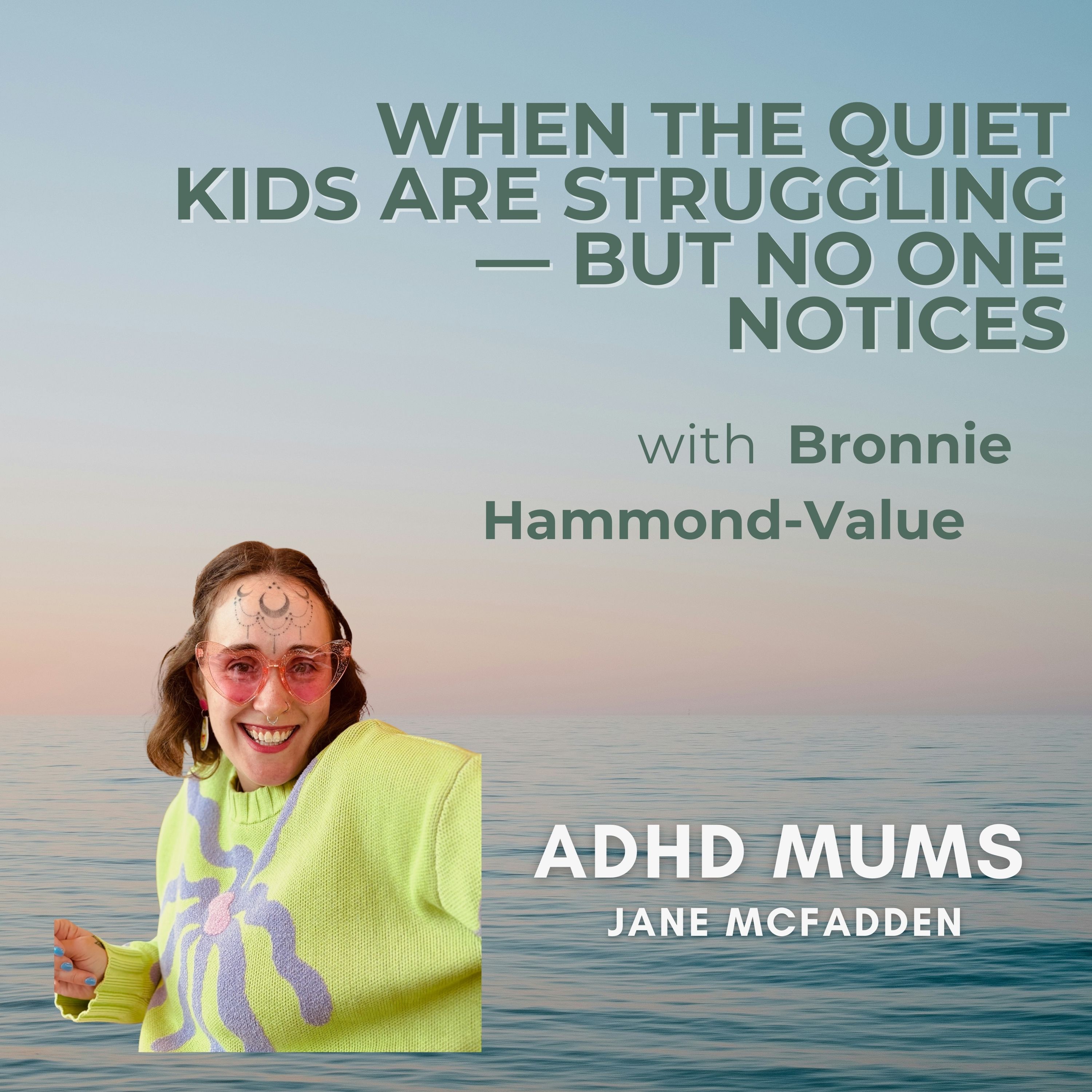
89. When the Quiet Kids Are Struggling — But No One Notices
Mar 1000:34:25Tap to summarizeSchool systems are built to notice disruption.The child throwing chairs.The child refusing to sit down.The child who can't stay quiet.But there is another group of kids.The ones who sit still.The ones who follow instructions.The ones teachers describe as 'lovely', 'polite', or 'no trouble at all'.And those are often the kids quietly falling apart.Because when a child internalises stress instead of showing it outwardly, the education system often doesn't see the struggle at all.In this episode we unpack what happens to internalising kids inside classrooms — why their needs are frequently missed, and what parents can actually do when the system isn't built to notice them.We also talk honestly about advocacy, complaints, and the uncomfortable reality that change inside the education system rarely happens unless parents create pressure.If your child looks fine at school but collapses at home, this conversation will likely feel very familiar.WHAT WE COVER– Why internalising kids are often invisible inside classroom systems– The difference between externalising behaviour and internalised stress– Why schools often rely on children to 'ask for help' even when that is neurologically difficult– Practical adjustments teachers can make that reduce invisible pressure for internalising students– How parents can translate what works at home into classroom supports– Why documenting school failures matters for long-term systemic change– How complaint processes to regional education offices actually work– Why data from parents is one of the only ways the education system changes– The difficult decision many families face when schools push children out– Why expulsion data matters for education policy reformTHIS EPISODE IS FOR YOU IF…– Your child looks like they are coping at school but falls apart at home– School says 'they seem fine here' but you know the effort it takes for your child to get through the day– You have an internalising child who doesn't speak up about their needs– You're navigating school refusal or burnout– You've considered making a complaint about your child's school but don't know where to start– You're trying to advocate for your child inside a system that feels impossible to changeFind out more about Bronnie Hammond Vale herehttps://www.honeycombadvocacy.com/📬 Check out my Free Resource Mentioned in THIS EPISODEThe School Complaint & Escalation Guide for Parentshttps://adhdmums.com.au/product/school-complaint-escalation-guide/School Advocacy Hub of Resourceshttps://adhdmums.com.au/advocacy/Episodes Mentioned in This EpisodeCamouflaging ADHD & Autistic Traits in Girls (with Millie Carr)https://adhdmums.com.au/podcast_episode/replay-s1-episode-41-camouflaging-adhd-autistic-traits-in-girls-with-millie-carr-re-release/Neurodiverse Classrooms (with Millie Carr)https://adhdmums.com.au/podcast_episode/episode-33-neurodiverse-classrooms-with-millie-carr/When School Becomes the Trauma – School Serieshttps://adhdmums.com.au/podcast_episode/s2-ep2-school-series-when-school-becomes-the-trauma-what-no-one-tells-adhd-parents/The Great Gaslighting: When Schools Say “We Don’t See It” – School Serieshttps://adhdmums.com.au/podcast_episode/episode-7-school-series-the-great-gaslighting-when-schools-say-we-dont-see-it/📬 Listener Questions & Community🎙️ Ask a Listener Question (voice)Voice notes are preferred when possible — hearing your voice helps add context — but you’re very welcome to submit a written question instead.Send me a WhatsApp voice message here:https://wa.me/61403457313✍️ Ask a Listener Question (written)https://form.jotform.com/251238118486864👥 Join the ADHD Mums Facebook GroupFor community, shared language, and conversations with other mums who get it.https://www.facebook.com/groups/adhdmumspodcast📬 Listener Questions & Community🎙️ Ask a Listener Question (voice)Voice notes are preferred when possible — hearing your voice helps add context — but you’re very welcome to submit a written question instead.Send me a WhatsApp voice message here:https://wa.me/61403457313✍️ Ask a Listener Question (written)https://form.jotform.com/251238118486864👥 Join the ADHD Mums Facebook GroupFor community, shared language, and conversations with other mums who get it.https://www.facebook.com/groups/adhdmumspodcast
Transcribe →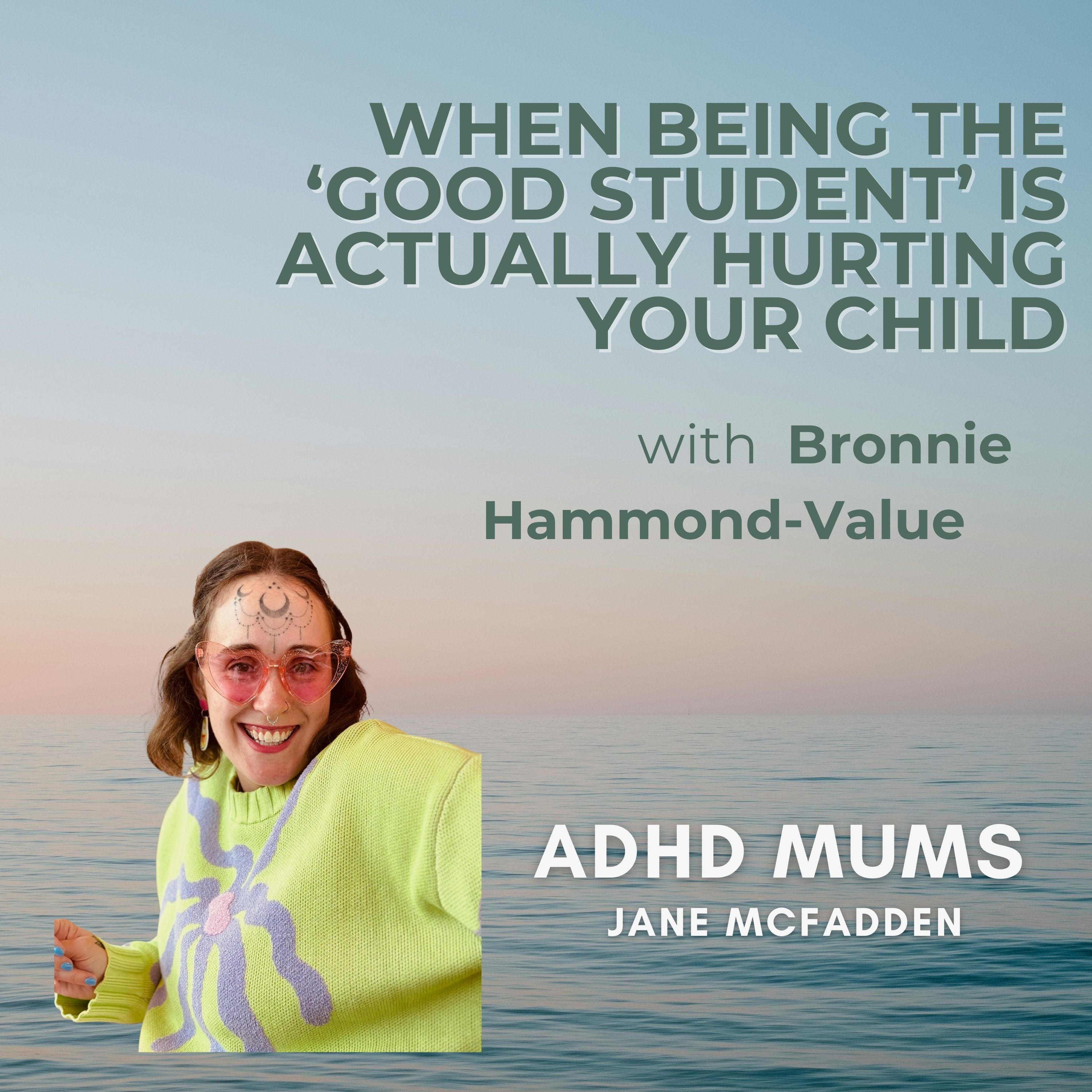
88. When Being the ‘Good Student’ Is Actually Hurting Your Child
Mar 900:46:10Tap to summarizeYou're told your child is doing great at school.'Wish I had more like her''No issues here.'But every afternoon at 3pm something else happens.The car door shuts.And the child who 'had a great day' collapses.The meltdown doesn't start at school.It starts when the mask comes off.For many Mums, this creates a strange kind of confusion.School says everything is fine.But home tells a completely different story.In this episode we unpack the cost of being the 'good' student — the child who holds it together in the classroom while quietly burning through their nervous system capacity all day.Because when struggle isn't loud, it often gets missed.And the kids who look like they are coping the best are sometimes the ones paying the highest price.WHAT WE COVER– Why the child who 'behaves well' can still be in serious distress– The difference between internalising and externalising stress in classrooms– How masking hides the real effort many neurodivergent kids are using just to get through the day– Why teachers often don't see the struggle happening under the surface– The after-school collapse and what it actually tells you about capacity– Why asking a child to 'just speak up' about their needs doesn't work for many autistic and ADHD kids– How small classroom adjustments can dramatically reduce invisible stress– Why trust between teacher and student matters more than most people realise– The structural limits inside school systems that leave internalising kids unsupportedTHIS EPISODE IS FOR YOU IF…– Your child is described as a 'model student' but falls apart the moment they get home– School says everything is fine but your child is exhausted, anxious or melting down daily– Your child masks heavily in public but collapses in safe spaces– You've been told your child just needs to 'ask for help' at school– You feel like your child's struggles aren't visible enough to be taken seriously– You're trying to support a child who carries everything internallyFind out more about Bronnie Hammond Vale herehttps://www.honeycombadvocacy.com/📬 Check out my Free Resources on Schools:The School Choice Kithttps://adhdmums.com.au/product/the-school-choice-kit/Quiet Exclusion Kithttps://adhdmums.com.au/product/quiet-exclusion-kit/📬 Check out my Paid Resource on Schools:Making School Work – Parent Guide https://adhdmums.com.au/product/making-school-work-parent-guide/📬 Listener Questions & Community🎙️ Ask a Listener Question (voice)Voice notes are preferred when possible — hearing your voice helps add context — but you’re very welcome to submit a written question instead.Send me a WhatsApp voice message here:https://wa.me/61403457313✍️ Ask a Listener Question (written)https://form.jotform.com/251238118486864👥 Join the ADHD Mums Facebook GroupFor community, shared language, and conversations with other mums who get it.https://www.facebook.com/groups/adhdmumspodcast
Transcribe →
87.When You Stay Calm at School — And Leave Feeling Like You Didn’t Do Enough
Mar 400:34:39Tap to summarizeYou’ve sent the emails.You’ve attended the meetings.You’ve tried to be calm, collaborative, reasonable.And nothing changes.Then suddenly something serious happens — a suspension, an incident, a formal complaint — and overnight the school moves quickly.So what just happened?This episode unpacks the moment many ADHD mums eventually hit: the point where being reasonable stops working — and why that happens inside the school system.Because for many families, the problem isn’t communication.It’s understanding what schools actually respond to, what they quietly ignore, and how the system itself shapes those responses.WHAT WE COVERWhy being calm, collaborative and ‘reasonable’ often doesn’t move schoolsWhat schools actually respond to — and what gets quietly ignoredWhy emotional emails and long explanations often backfireThe reality behind ‘reasonable adjustments’ under Australian education lawWhy some adjustments are refused even when they appear simpleThe funding model most parents have never heard of: NCCDWhy teachers may genuinely say they can’t do something — even when it seems obviousThe difference between fairness and inclusion in schoolsWhen escalating a complaint becomes necessary (and how to do it properly)Why documentation, meeting notes and evidence matter far more than emotionTHIS EPISODE IS FOR YOU IF…You feel like you’ve been polite, patient and collaborative… and nothing has changedYour child’s school says they ‘can’t’ implement adjustments that seem reasonableYou’ve asked for incident reports or documentation and never received themMeetings feel confusing or adversarialYou’re not sure when to keep negotiating and when to escalateYou’re trying to advocate for your child without becoming ‘that parent’ABOUT TODAY’S GUESTSara HockingEducational disability advocate supporting families navigating school discrimination, failed adjustments and escalation processes.Sarah works directly with families across Australia dealing with school-based disability support issues and understands both the legal framework and the practical realities of how schools respond.LEGISLATION REFERENCEDDisability Discrimination Act 1992 (Cth)Disability Standards for Education 2005 (Cth)These laws outline the obligation for Australian schools to provide reasonable adjustments for students with disability, provided those adjustments do not create an unjustifiable hardship for the school.FUNDING MODEL MENTIONEDNationally Consistent Collection of Data on School Students with Disability (NCCD)The NCCD is the Australian Government framework used to determine funding and support levels for students with disability in schools.Many parents assume funding follows their child directly to the school.In reality, the system is far more complex — and often much less transparent.FIND SARA HERESara Hocking – Educational Disability Advocatewww.seebeyondau.orgRELATED ADHD MUMS EPISODES🎧 When School Decides Your Child Is the Problemhttps://adhdmums.com.au/adhd-podcast-episodes/when-school-decides-your-child-is-the-problem/🎧 Raising Strong Children: How to Support Without Always Solving Their Problemshttps://adhdmums.com.au/raising-strong-children/FREE PARENT RESOURCES📘 The School Choice Kithttps://adhdmums.com.au/product/the-school-choice-kit/SHARE YOUR SCHOOL EXPERIENCEIf you’ve experienced school pushback, refused adjustments, or confusing processes around disability support, you can share your experience here:https://form.jotform.com/251238118486864Your experiences help shape future episodes and resources for other ADHD mums navigating the same systems.
Transcribe →
86. When the Teacher Is Trying — And You Still Leave the Meeting Questioning Everything
Mar 200:34:02Tap to summarizeThere is a particular kind of confusion that happens when your child likes their teacher.If you’ve ever thought, ‘But she’s so lovely… why isn’t this working?’ I explore this massive question wth Bronnie Hammond-Vale.This episode is for you.WHY THIS MATTERSSometimes the problem is the gap between teacher intention and system capacity.A teacher can care deeply.A teacher can try hard.A teacher can be doing their best in a room full of kids who all need something different.And still… your child keeps escalating, shutting down, falling apart, or being labelled as ‘behavioural’.Not because your kid is the problem.And not because the teacher doesn’t care.But because the system is rigid, under-resourced, and built for compliance — not regulation, flexibility, or neurodivergent reality.WHAT WE COVERThe ‘she’s lovely… but it’s still not working’ gap (teacher intention vs system capacity)Why teachers end up buying sensory tools and resources with their own moneyWhat school funding often gets spent on instead (and why it’s not always what kids need)Why neurodivergent supports should be universal, not ‘special’ (the wobble chair example)How rigid systems create the ‘bad behaviour’ narrative when teachers don’t have toolsWhy fear-based discipline ‘worked’ back then (and why it’s not motivation — it’s trauma)The missing piece: what teachers can do (scripts, toolkits, repair) when punishment is off the tableWhy a child walking out can be a skill, not ‘truancy’ — and what a supportive response looks likeTHIS EPISODE IS FOR YOU IF…Your child likes their teacher but school is still going downhillYou’re stuck between ‘they’re trying’ and ‘this is not working’You’re watching schools spend money on optics while teachers fund basicsYou’ve been told your child is ‘naughty’ when you know it’s dysregulationYou’re exhausted from advocating and still feel like nothing changesYou want practical, real-world strategies that work in a classroom of 30 — not theoryFind out more about Bronnie Hammond Vale herehttps://www.honeycombadvocacy.com/RELATED ADHD MUMS EPISODES🎙️ When Teachers Care — But the System Still Breaks Kids🎧 1️⃣ When School Decides Your Child Is the Problemhttps://adhdmums.com.au/adhd-podcast-episodes/when-school-decides-your-child-is-the-problem/🎧 2️⃣ SCHOOL SERIES – When School Becomes the Traumahttps://adhdmums.com.au/podcast_episode/s2-ep2-school-series-when-school-becomes-the-trauma-what-no-one-tells-adhd-parents/🎧 3️⃣ IEP Meetings Are Broken — Here’s What to Say Insteadhttps://adhdmums.com.au/podcast_episode/episode-9-when-the-iep-meeting-feels-like-a-battle-you-didnt-ask-for/🎧 4️⃣ Being Judged for Choosing Understanding Over Punishmenthttps://adhdmums.com.au/podcast_episode/being-judged-adhd-discipline-myth📬 Check out my Free Resources on Schools:Bullying Response Kit https://adhdmums.com.au/product/bullying-response-kit-adhd-mums/The School Choice Kithttps://adhdmums.com.au/product/the-school-choice-kit/ADHD School Prep Kithttps://adhdmums.com.au/product/adhd-school-prep-kit/Quiet Exclusion Kithttps://adhdmums.com.au/product/quiet-exclusion-kit/Explaining ADHD to Kids – Parents Guidehttps://adhdmums.com.au/product/explaining-adhd-to-kids-parents-guide/📬 Check out my Paid Resource on Schools:Making School Work – Parent Guide ($20)https://adhdmums.com.au/product/making-school-work-parent-guide/📬 Listener Questions & Community🎙️ Ask a Listener Question (voice)Voice notes are preferred when possible — hearing your voice helps add context — but you’re very welcome to submit a written question instead.Send me a WhatsApp voice message here:https://wa.me/61403457313✍️ Ask a Listener Question (written)https://form.jotform.com/251238118486864👥 Join the ADHD Mums Facebook GroupFor community, shared language, and conversations with other mums who get it.https://www.facebook.com/groups/adhdmumspodcast
Transcribe →
85. Is the Problem the Child — Or the Learning Plan?
Feb 2500:43:51Tap to summarizeYou’re sitting in a meeting thinking you’re here to talk about support.There’s a plan. There are ‘adjustments’.And yet your child is still escalating… and suddenly the school is hinting at removal, reduced hours, or ‘this isn’t the right setting’.This episode is the practical middle bit no one gives you:When a plan exists, but it’s either the wrong plan — or it’s not actually being applied.WHY THIS MATTERSWhen a school says ‘the plan isn’t working’, it often gets translated as ‘your child is the problem’.But plans fail for predictable reasons:they’re too big and unworkable in a class of 28no one is actually implementing them consistentlyteachers don’t understand the ‘why’ behind the strategiesthe plan ignores language processing, sensory load, or demand avoidancethere’s no review cycle, no accountability, no data, just documentationthe teacher doesn't have the capacity to implement the plan in the classroom due to numbers and workload.And when the plan becomes a ‘set and forget’ document, you get stuck in a dangerous loop:‘We tried everything’ → escalation continues → the child gets labelled → exclusion gets normalised.WHAT WE COVERWhy an IEP is a start, not a manualHow ‘too many strategies at once’ makes a plan fail fastWhat to ask when the school says ‘we’ve tried everything’How to check if staff actually understand what’s on the planWhy ‘accommodation’ can trigger teacher resistance — and how ‘considerations’ changes the toneThe missing piece in most behaviour plans: language processing and communication loadHow literal thinking, vague instructions, and high language demand can create ‘refusal’ and shutdownHow to build accountability into the plan (review dates, outcomes, roles, communication method)Red flags that the school has decided your child is ‘too hard’Green flags that the team is still in curiosity, collaboration, and problem-solvingOrchid vs dandelion kids: when pushing through builds resilience, and when it becomes traumaTHIS EPISODE IS FOR YOU IF…your child has a plan at school but behaviour is still escalatingyou keep hearing ‘we’re doing everything’ but nothing changesthe teacher looks overwhelmed and the plan feels impossible in real lifeyour child gets labelled ‘defiant’ or ‘refusing’ and you suspect it’s processing/demand/safetyyou’re trying to work out ‘do we persist or do we leave?’you want practical language for meetings without becoming ‘that mum’MORE ABOUT SALLY GALLOWAY & KAT MARRINGTONKat Marrington (Speech Pathologist) at www.Talkiplay.comSally Galloway (Occupational Therapist) at www.sallygalloway.com.au🎧 EPISODES MENTIONED IN THIS TRANSCRIPT1️⃣ When School Decides Your Child Is the Problemhttps://adhdmums.com.au/adhd-podcast-episodes/when-school-decides-your-child-is-the-problem/2️⃣ Vanessa LaPointe EpisodeGrieving the Child You Imagined — While Loving the One in Front of Youhttps://adhdmums.com.au/podcast_episode/parenting-grief-adhd-mums3️⃣ Resilience vs Trauma Episode (Emma Rose)Raising Strong Children: How to Support Without Always Solving Their Problemshttps://adhdmums.com.au/raising-strong-children/🌸 ORCHID & DANDELION REFERENCEDr W. Thomas BoyceDevelopmental paediatrician and author of The Orchid and the DandelionBoyce, W. T. (2019). The Orchid and the Dandelion: Why Sensitive Children Face Challenges and How All Can Thrive. Knopf.📬 Check out my Free Resources on Schools:Bullying Response Kit https://adhdmums.com.au/product/bullying-response-kit-adhd-mums/The School Choice Kithttps://adhdmums.com.au/product/the-school-choice-kit/Explaining ADHD to Kids – Parents Guidehttps://adhdmums.com.au/product/explaining-adhd-to-kids-parents-guide/📬 Check out my Paid Resource on Schools:Making School Work – Parent Guide ($20)https://adhdmums.com.au/product/making-school-work-parent-guide/📬 Listener Questions & Community🎙️ Ask a Listener Question (voice)Voice notes are preferred when possible — hearing your voice helps add context — but you’re very welcome to submit a written question instead.Send me a WhatsApp voice message here:https://wa.me/61403457313✍️ Ask a Listener Question (written)https://form.jotform.com/251238118486864👥 Join the ADHD Mums Facebook GroupFor community, shared language, and conversations with other mums who get it.https://www.facebook.com/groups/adhdmumspodcast
Transcribe →
84. When School Decides Your Child Is the Problem
Feb 2300:36:53Tap to summarizeThere is a moment in some school meetings where the language changes.You walk in expecting support. Adjustments. Solutions.But then different words start appearing.‘Safety.’‘Impact on others.’‘Capacity.’‘We’ve tried everything.’And you can feel the shift before you fully understand it.You start thinking:How did this go from help… to risk?WHY THIS MATTERSADHD mums are already carrying invisible labour, school advocacy, therapy coordination, and the emotional regulation of the entire household.So when a school meeting shifts tone, it doesn’t land as ‘this is complex.’It lands as threat.Threat that your child is being positioned as the problem.Threat that you’re about to be performance-managed as a parent.Threat that exclusion is quietly being prepared.And once the language moves from support to safety, your nervous system knows what’s coming — even if no one has said it yet.This episode unpacks that shift.What it actually means.And what you can do before the door quietly closes.WHAT WE COVERThe early signs a school is moving from inclusion to managing outHow ‘we’ve tried everything’ often means the plan was never implemented properlyWhy perceived defiance and PDA profiles trigger exclusion faster than quiet maskingWhat ‘regulated and choosing it’ misunderstands about neurodivergent distressThe difference between documentation for support and documentation for removalHow modified timetables, wellbeing days, and shortened hours become informal exclusionWhat to ask for when supports ‘aren’t working’How to request IEP reviews, fidelity checks, and functional behaviour assessmentsWhy building your own paper trail (including positives) mattersTHIS EPISODE IS FOR YOU IF…You’ve left a school meeting feeling blindsidedYou’re getting more ‘pick up’ calls and reduced hoursYour child is being described as ‘defiant’ rather than overwhelmedYou’re hearing leadership speak more than classroom teachersYou’re scared you’re about to lose your child’s placementYou’re trying to advocate without burning the entire system downRELATED ADHD MUMS EPISODES🎧 SCHOOL SERIES: When School Stops Feeling Safehttps://adhdmums.com.au/podcast_episode/episode-19-when-school-stops-being-safe/🎧 SCHOOL SERIES: Your Child Isn’t ‘Acting Out’ — They’re Burning Outhttps://adhdmums.com.au/podcast_episode/episode-5-school-series-your-child-isnt-acting-out-theyre-burning-out/🎧 You’re Not ‘That Mum’ — You Learned to Protect Your Child at Schoolhttps://adhdmums.com.au/podcast_episode/youre-not-that-mum-back-to-school-edition📬 Listener Questions & Community🎙️ Ask a Listener Question (voice)Voice notes are preferred when possible — hearing your voice helps add context — but you’re very welcome to submit a written question instead.Send me a WhatsApp voice message here:https://bit.ly/3ZQl0O8✍️ Ask a Listener Question (written)https://form.jotform.com/251238118486864👥 Join the ADHD Mums Facebook GroupFor community, shared language, and conversations with other mums who get it.https://www.facebook.com/groups/adhdmumspodcast
Transcribe →
83. When ADHD Becomes the Reason You Stop Trying...
Feb 1800:13:37Tap to summarizeYou’re not lying on the couch saying ‘poor me.’You’re functioning. Packing lunches. Showing up. Holding it together.But quietly, inside, you’ve started believing:‘This is just how it is for me.’WHY THIS MATTERSADHD mums carry more correction, more visible mistakes, more invisible labour, more system friction.So when something goes wrong, it doesn’t land as ‘that was hard.’It lands as proof.Proof you’re behind.Proof you’re failing.Proof this is who you are.And once shame becomes the explanation, your brain stops looking for options.Not because you don’t want change.Because the load is already too high.WHAT WE COVERThe difference between a victim moment and a victim identityWhy ADHD conditioning makes shame feel factualHow ‘nothing works in our house anyway’ protects you from hopeThe motherhood shame loop that quietly shrinks your lifeWhy waiting for fairness before you move will keep costing youResponsibility without blame — and why that mattersThe one question that reopens possibility without forcing actionTHIS EPISODE IS FOR YOU IF…You’ve stopped trying in one area because failing again feels unbearableYou feel resentful but also guilty for feeling resentfulYou avoid things before they even go wrongYou tell yourself you’re ‘just bad at this stage’Being validated feels relieving… but nothing changes afterwardsRELATED ADHD MUMS EPISODES🎧 Hidden Cost of Being The Good Girlhttps://adhdmums.com.au/podcast_episode/goodgirlcost/🎧 When You Can’t Relax Even When It’s Quiethttps://adhdmums.com.au/podcast_episode/why-adhd-mums-cant-relax/🎧 The ADHD Myth of ‘Just Try Harder’ (Quick Reset)https://adhdmums.com.au/podcast_episode/episode-24-quick-reset-the-adhd-myth-of-just-try-harder/📬 Listener Questions & Community🎙️ Ask a Listener Question (voice)Voice notes are preferred when possible — hearing your voice helps add context — but you’re very welcome to submit a written question instead.Send me a WhatsApp voice message here:https://bit.ly/3ZQl0O8✍️ Ask a Listener Question (written)https://form.jotform.com/251238118486864👥 Join the ADHD Mums Facebook GroupFor community, shared language, and conversations with other mums who get it.https://www.facebook.com/groups/adhdmumspodcast
Transcribe →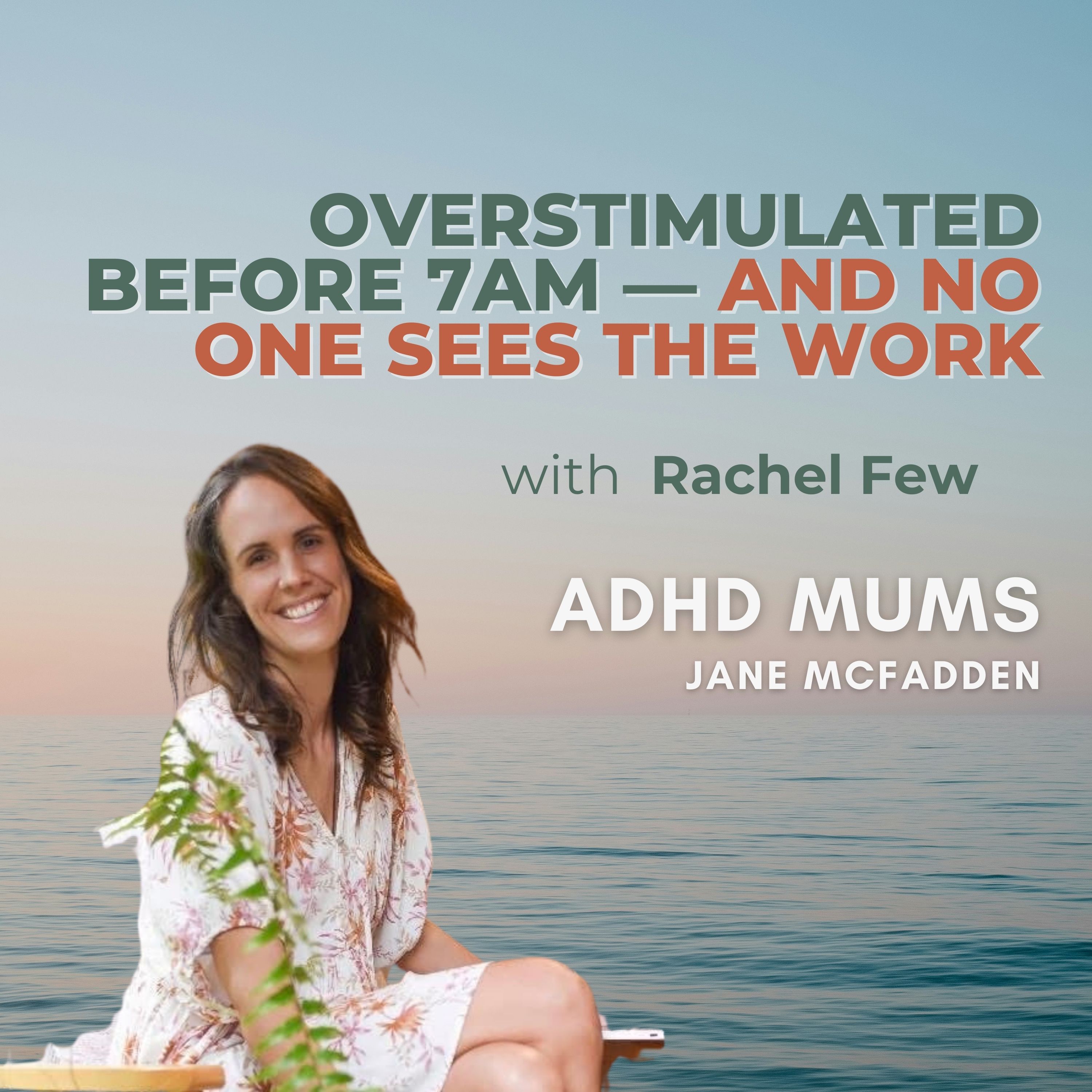
82. Overstimulated Before 7am — And No One Sees the Work
Feb 1600:54:42Tap to summarizeThis episode is for ADHD mums who feel like they’re living inside a nervous system experiment.The kind where everything is technically ‘fine’… until the TV is on, someone’s making mouth noises, a child is asking 400 questions, another one is humming, and your body is trying to exit the situation through the nearest wall.We talk a lot about overstimulation like it’s a personal flaw. Like you should be calmer. More patient. Better regulated. But what if you’re not failing at regulation… you’re just carrying too much regulation load?In this conversation with Rachel Few, we get painfully practical about what actually helps when you’re at the edge. Not in an ideal world. In a real ADHD household, with real kids, real noise, real time pressure, and real limits.WHAT WE COVER– Why overstimulation is not a single moment, but a build-up across days– The ‘therapy taxi’ burnout cycle and how it dysregulates the whole family– Why regulation strategies fail when they become another to-do list– Nervous system mapping: learning your early warning signs before the snap– ‘Recipe building’ for families: planning around needs, not just appointments– Why yelling and snapping usually starts earlier than you think– PDA-aware approaches: when direct help makes things worse– Side-step regulation tools that don’t rely on compliance– Real-life resets (including the candle trick, which sounds unhinged until you try it)– Why acceptance is sometimes the missing strategy, not another techniqueTHIS EPISODE IS FOR YOU IF…– you feel overstimulated before 7am and then blame yourself for it– your household escalates fast and you don’t know where it starts– you’re carrying the clean-up after every meltdown (emotional or literal)– you’re exhausted from scanning for hunger, sensory triggers, and ‘what could go wrong’– you’re parenting a PDA-ish child and standard advice backfires– you keep thinking ‘once we get the right support, it will all be fine’ and then it isn’t– you want tools that actually work when you’re already at your limitRELATED EPISODESSurviving the Mental Load of the School Yearhttps://adhdmums.com.au/podcast_episode/episode-63-surviving-the-mental-load-of-the-school-year/When You Can’t Relax Even When It’s Quiethttps://adhdmums.com.au/podcast_episode/why-adhd-mums-cant-relax/The ADHD Myth of ‘Just Try Harder’ (Quick Reset)https://adhdmums.com.au/podcast_episode/episode-24-quick-reset-the-adhd-myth-of-just-try-harder/RESOURCES & REFERENCES– For more information on Rachel Few - see here-PANDA (Perinatal Anxiety & Depression Australia) is mentioned in the episode– Maternal mental health research is referenced (mum’s mental health as a key predictor for child wellbeing)LISTENER QUESTIONS & COMMUNITYSubmit a Listener Question (anonymous option)If there’s something you want answered on the podcast, you can submit a question here — anonymously if you prefer.https://form.jotform.com/251238118486864Share Feedback or Topic RequestsHave a topic you’d like covered, or feedback you want to pass on?https://form.jotform.com/243189306607864Join the ADHD Mums Facebook GroupFor shared language, lived experience, and conversations with other mums who get it.https://www.facebook.com/groups/adhdmums
Transcribe →