Podcast
Believe in Balance Podcast
Hosted by David Dansereau · EN
Audio education on all things health and balance from the Substack for physical therapist David Dansereau's Free and Premium Achieve Balance Newsletter, Course & Coaching Community (intended to enhance learning on the go!)
achievebalance.substack.com
achievebalance.substack.com
20episodes
Episodes
Newest firstAll episodes

The New Horizon: The AgeTech Specialist
Mar 700:14:55Tap to summarizeTrusted Partners in AgeTechWhile older adults are adopting technology at increasing rates, several significant barriers still prevent widespread adoption. My most recent video helps explain how I use my smart ‘tech-ready’ checklist to help my aging clients and their family members solve both the critical trust and tech readiness care gaps to aging in place.If you missed my last podcast episode 18 I covered the key differences between a Certified Aging in Place Specialist (CAPS) and an Age Tech Specialist. You can listen on Substack via the link below or find it on your favorite podcast players.Trust, Privacy, and Security According to AARP’s 2026 Tech Trends report, data privacy remains the top-rated barrier to tech adoption. Older adults are highly concerned about what personal data is being collected, whether it is secure, and the risks of identity theft. These fears are especially pronounced with new tools like AI, where users worry about AI-generated scams (such as fake phone calls mimicking family members) and the overexposure of their personal information. Tip: A first step in ‘tech safety 101’ with my clients is always keep up with the latest software updates to all the devices they connect with online! The latest AARP report shows that the average 50 plus year old household owns over 7 connected devices, that’s great but it also presents increased safety risks if these devices are outdated.Thanks for reading Achieve Balance! This post is public so feel free to share it.Information Overload and Confusion The pace of innovation can be exhausting. The 2025 Linkage Connect report found that the single greatest barrier for older adults—particularly for women 75 and older—is simply keeping up with the latest technology and not knowing what to buy. Many older adults feel overwhelmed by the sheer number of options available on the market.Lack of Perceived Value Older adults tend to adopt technology based on clear “needs” rather than “wants”. If a device does not meet a practical need, they are unlikely to use it; for example, many skip smart home automation because they simply don’t see the benefit. AARP notes that understanding the relative value of a product—answering the question, “Why should I care?”—has become the second most significant barrier to adoption.One of the consulting roles I take seriously is to keep up with the latest technology trends (see the agetech map below) and help my clients understand why they should care when it comes to home safety and agetech solutions that can keep them thriving and independent in their homes. Finding effective and affordable agetech solutions extends to their families as well, as the latest caregiver report demonstrated the 63 million Americans now provide care to a family member, which has increased over 45% in recent years.Thanks for reading Achieve Balance! Subscribe for free to receive new posts and support my work.Coming Up Next in my Achieve Balance Agetech Series:My SmartMoves Home AgeTech Market Report with a focus on market drivers and health and wellness innovations.See correct answer to this poll in my tip section in this article! This is a public episode. If you'd like to discuss this with other subscribers or get access to bonus episodes, visit achievebalance.substack.com/subscribe
Transcribe →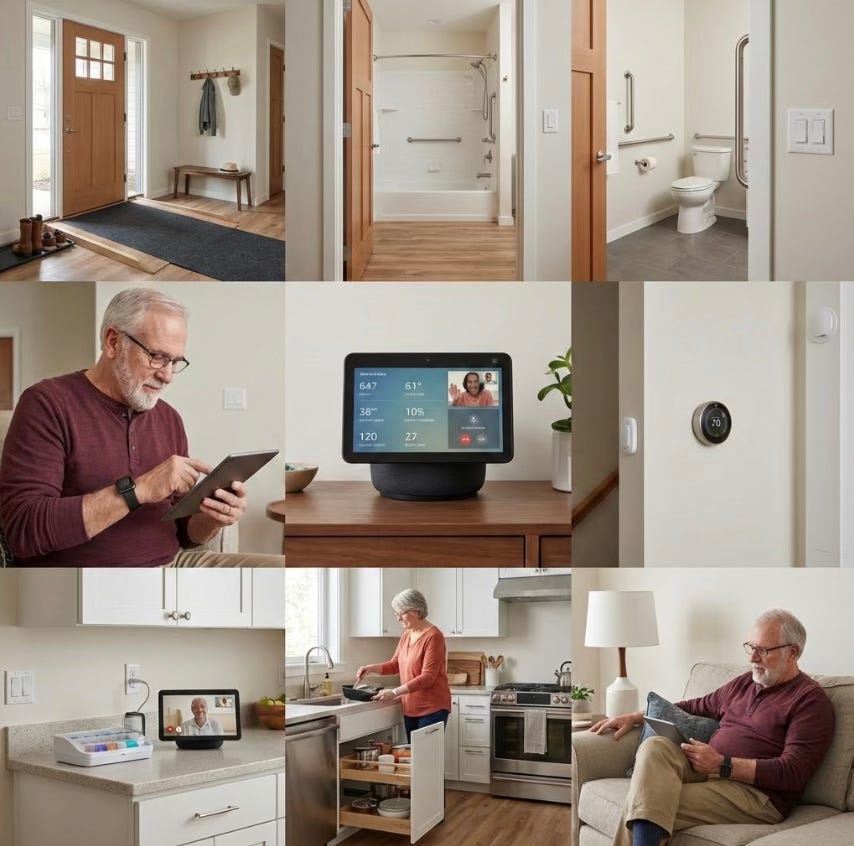
Let’s Talk Aging Well in the Home
Feb 1200:12:02Tap to summarizeWelcome back to Ep 18 of the Believe in Balance Podcast!I’m your host David Dansereau a physical therapist as well as both a Certified Aging in Place Specialist and a Certified Age Tech Specialist. Today, I’m diving into these specialties because with the different titles it can be confusing. After the last episode when I discussed Digital Frontiers in AgeTech, I was asked by someone at the event curious about my titles what an ‘AgeTech’ specialist does. There are indeed many similarities and it can be confusing so what’s the difference between these two key professionals who help older adults stay independent—the Certified Aging in Place Specialist, or CAPS, and the Certified AgeTech Specialist?While both are focused on improving the lives of seniors, their approaches, tools, and expertise are quite distinct. Understanding these roles is crucial for anyone looking to make informed decisions about home modifications and technology. Listen and learn in this episode!If you are short on time I included a key visual in this episode show notes:Show Mentions: This is a public episode. If you'd like to discuss this with other subscribers or get access to bonus episodes, visit achievebalance.substack.com/subscribe
Transcribe →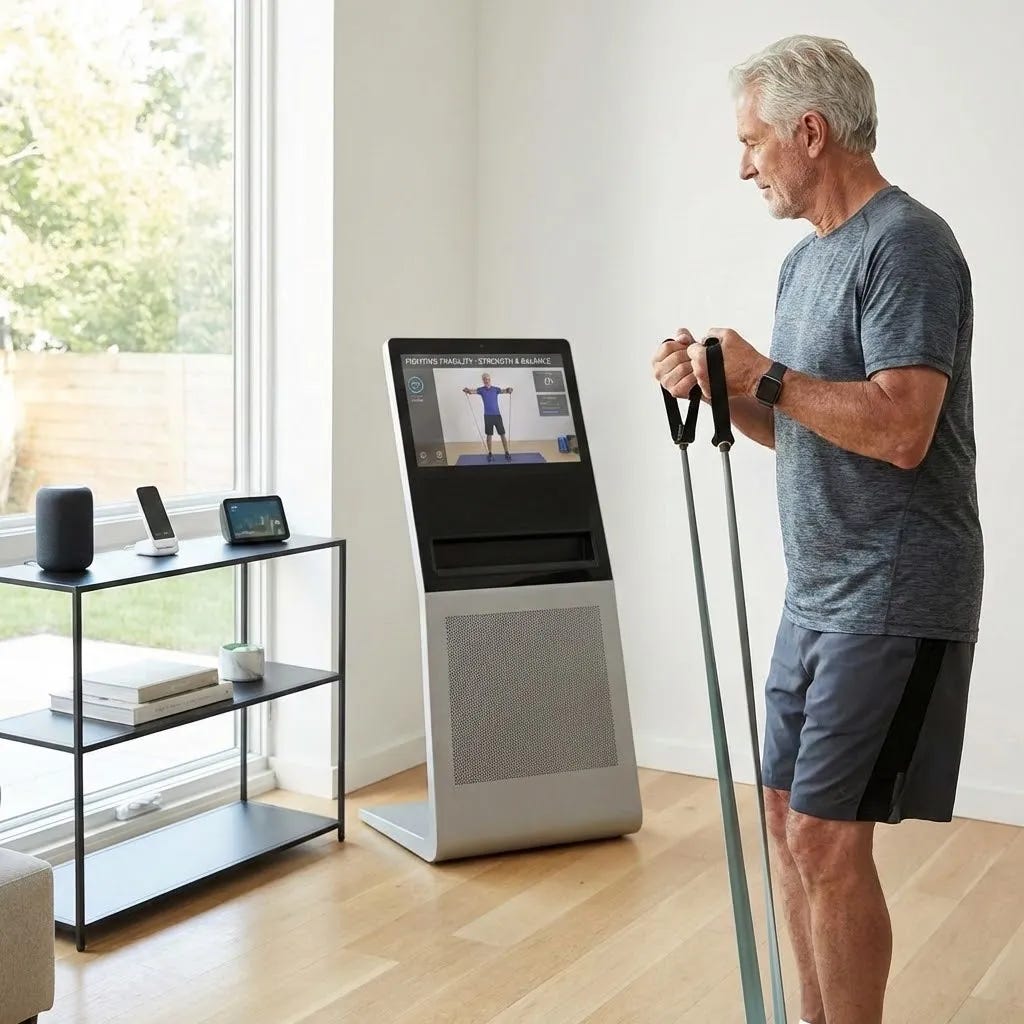
Digital Frontiers in AgeTech and Frailty
Jan 2800:19:15Tap to summarizeBelieve in Balance Podcast Episode 17Host: David Dansereau, MSPT, CAPSLast week I had the opportunity to attend Digital Frontiers in Frailty: Opportunities for Early Detection and Clinical Action, a hybrid full day workshop hosted by the Massachusetts AI & Technology Center (MassAITC) that brought together clinicians, engineers, researchers, and innovators to reimagine how we detect, monitor, and ultimately acton frailty in aging adults. The following episode and companion article linked below in these show notes is my review and takeaways from the workshop.As a physical therapist deeply invested in preserving independence, functional mobility, and strength across the lifespan for my clients, what struck me most was how consistently movement, exercise capacity, balance integrity, and strength emerged as central themes in every session — not just as outcomes to measure, but as actionable targets for intervention.Enjoy this episode and please chime in over on Substack or leave the show a review on your favorite podcast player!References: This is a public episode. If you'd like to discuss this with other subscribers or get access to bonus episodes, visit achievebalance.substack.com/subscribe
Transcribe →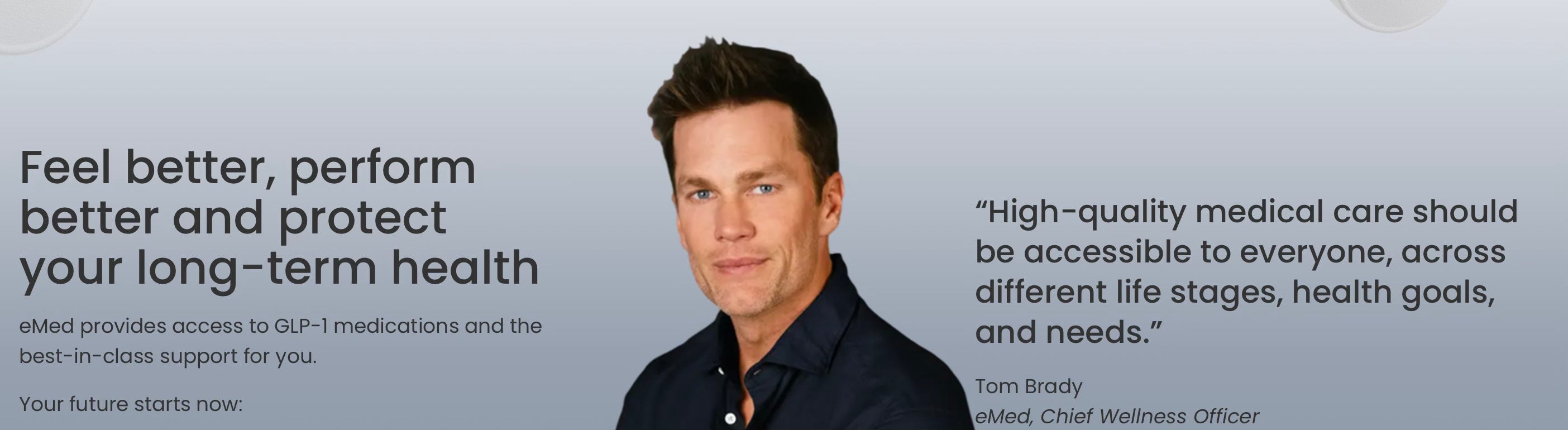
Do GLP-1s Now Have a New Quarterback and 'Chief Wellness Officer' To Champion Their Use?
Jan 1200:21:45Tap to summarizeIf you missed my last episode on The GLP Gold Rush listen to Episode 15 as it will give more context to this follow-up and latest episode on the state of GLP use.Here’s the press release announcement from eMed welcoming Brady as Chief Wellness Officer.I’ll let you know if they get back to me for an interview to help us understand why they are different and why we should all dive in with the GOAT on GLPs.Don’t hold your breath on my update on if Tom will join us, but if you don’t ask the answer is automatically no, so I asked.Mentions:Thanks for reading Achieve Balance and Listening to the Believe in Balance Podcast! This post and audio is public so feel free to share it.Chime In! This is a public episode. If you'd like to discuss this with other subscribers or get access to bonus episodes, visit achievebalance.substack.com/subscribe
Transcribe →
The GLP Gold Rush is Here (Now in Pill Form!)
Jan 600:13:46Tap to summarizeAs the New Year kicks off, so do weight loss resolutions—and right on cue, a new wave of GLP-1 medications has arrived, this time in pill form. Marketed as more convenient, more accessible, and easier than ever, these drugs are poised to open the floodgates for mass adoption. But behind the headlines is a familiar story: a high-stakes race for market share, billions in projected profits, and a pharmaceutical industry perfectly timed to capitalize on our collective desire for a fresh start. In today’s episode, I’m unpacking what the economic costs of GLP-1s really means—for patients, for the healthcare system, and perhaps for the future of weight loss and behavior change. Are we manufacturing a new generation of lighter but weaker adults— in other words an epidemic of “thin frailty.”Stay tuned I’ll unpack it in episode 15 from a PT perspective!This episode is based on my recent article on Substack Read and Listen to More on GLPTom Brady now a GLP ‘Chief Wellness officer’ at eMed-Episode 16 just released with this press announcement. (Oh boy, let’s Go?!?!) This is a public episode. If you'd like to discuss this with other subscribers or get access to bonus episodes, visit achievebalance.substack.com/subscribe
Transcribe →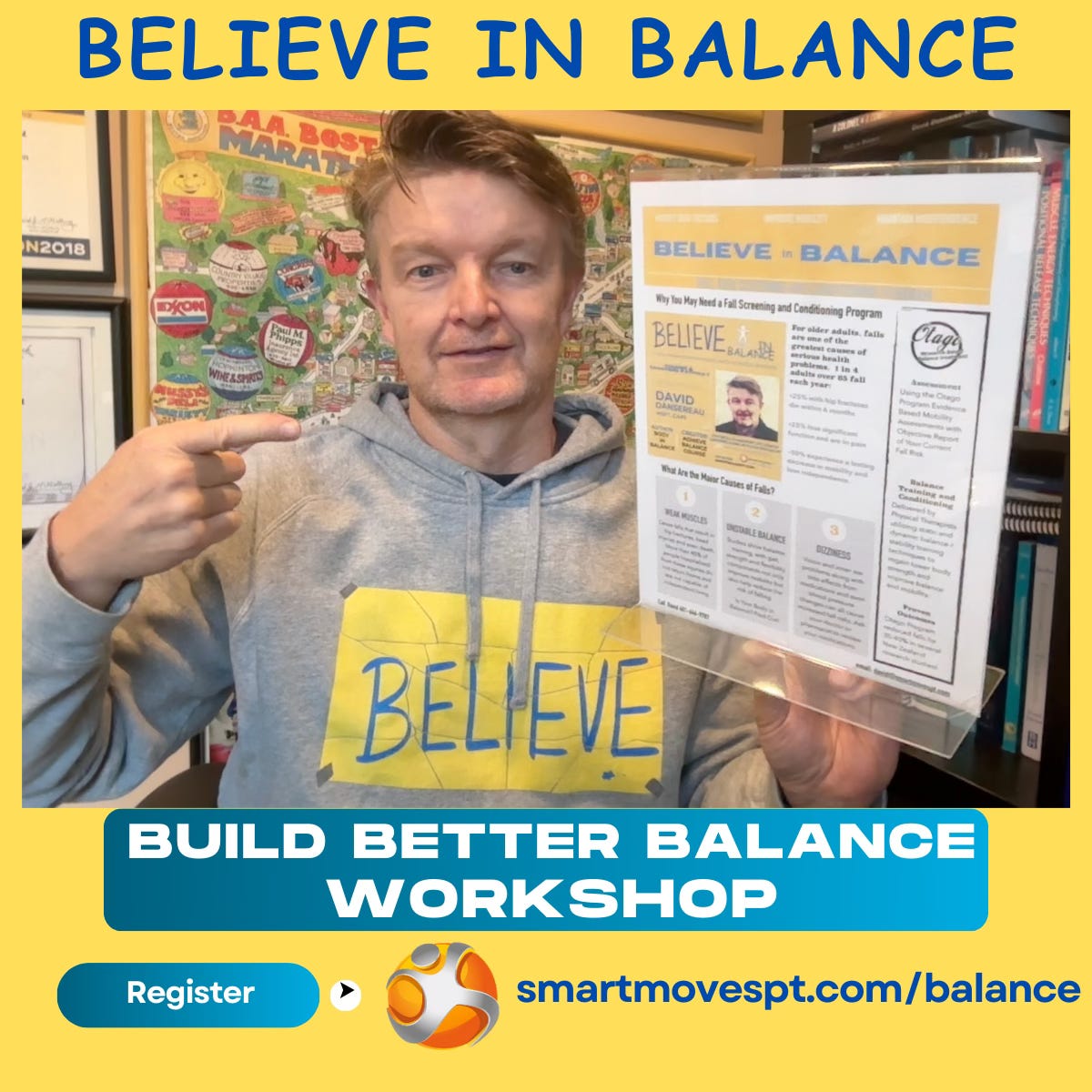
Protein, Muscle Mass, Balanced Fitness and Contributing to Your Moving Well Longevity 'Retirement Fund'
Oct 2400:22:01Tap to summarizeThe research on aging well and utilizing a balanced strength training program to offset sarcopenia (big word for-AGE ADJUSTED LOSS OF LEAN MUSCLE MASS) in our aging population is not new. In fact, the science behind staying strong into our 80s and beyond has been well documented for many years. One this episode: To highlight this fact, I’m going to jump into my ‘PT way back time machine’ to highlight a report on the science I presented while researching sarcopenia and the elderly back in my PT student training days. On this episode I’m reading my report I presented in PT graduate school from back in 2019 and comparing it to a recent podcast on the same topic some 25 years later by popular longevity expert, Dr. Peter Attia. After you listen to this episode, it hopefully begs the question to start thinking about why we aren’t doing more to boost senior fitness and health and longevity IQ.What hasn’t moved on this needle with all this new data is how we build programs to engage and encourage more seniors to contribute to their ‘longevity retirement fund’ (their muscle and strength levels) and get them building instead of breaking down muscle with age. My wish: I hope you listen to understand how to best prepare now to ‘fund’ your own healthy retirement and comment on this episode! We dove deep in to the financial impact of what it costs to remain inactive in retirement on my recent workshop.If you missed it:Here’s the Solution I’m Building to Address The Problem:During my Believe in Balance Workshop you’ll learn:* The key strength and balance exercises that reduced falls between 35 and 40% for sedentary older adults using the proven Otago research-based balance assessment and treatment pathway. Learn the secrets to performing these quick mobility assessments and exercises!* Which functional measurements are used to quickly screen for your current balance, lower body mobility and strength levels.* Home mobility and fall prevention safety checklist before you get started* New tech tools to remotely assess and engage you in your balance training* Nutrition? Yes, that plays a role in your balance performance for sure and we’ll be talking about it, especially your protein needs with aging!* Case Studies- 2 spotlights using the program from my clients’ experiences* How you can get started with free access to our balance training course starter program before the official launch and connect with me to guide you through getting started with the program to jump-start your success!Thanks for reading Achieve Balance! Subscribe for free to receive new posts and support my work.Show mentions:The Drive Podcast by Peter Attia: Rethinking protein needs for performance, muscle preservation and longevityIn this episode both guests make the case for a higher protein intake based on four fundamental tenets. They argued (with evidence) that the current RDA is too low for optimal muscle health, that higher protein intakes are not only better, but likely necessary to build and maintain muscle with age; that higher protein intakes are optimal for physically-active individuals; and that there are no health risks associated with higher protein intakes. Bottom line: Listen to my episode and theirs and make your own decision!Chime in below! This is a public episode. If you'd like to discuss this with other subscribers or get access to bonus episodes, visit achievebalance.substack.com/subscribe
Transcribe →
Build Better Balance
Oct 1500:09:52Tap to summarizeThis podcast references an article I wrote many years ago for Stroke Smart Magazine’s Mobility Column. I feel it is appropriate today to share and build on the resources from the recent pre-launch of my new balance course, Believe in Balance.Thanks for reading and listening to the Achieve Balance podcast! This post and podcast episode is public so feel free to share it.Balance, a task we mastered early in life seems simple enough, but as we age or encounter a neurological insult like a stroke or other challenge that impairs mobility, balance often needs to be relearned. This may mean that the brain has to find new pathways, or a new route to learn how to maintain balance. Scientists call this ability of the brain to be constantly reshaped when challenged, neuroplasticity.definition (noun)-The ability of the brain to form and reorganize synaptic connections, especially in response to learning or experience or following injury.Let’s break down that fancy word with a real world examples so you might learn how they can be applied to your current balance abilities.Resources mentioned in this episode:If you missed the first Believe in Balance Workshop here’s a link to learn more about this new program and how to get access to the rebroadcast.If you missed the follow-up live Q and A for questions that came in after the workshop you can access here: This is a public episode. If you'd like to discuss this with other subscribers or get access to bonus episodes, visit achievebalance.substack.com/subscribe
Transcribe →
Q&A: Your Believe in Balance Workshop Questions Answered
Oct 800:40:42Tap to summarizeHere’s the links mentioned during the Q and A session:Register for the Believe in Balance Workshop replay: https://smartmovespt.com/balanceTake the Workshop Survey to get access to the guidebook and app This is a public episode. If you'd like to discuss this with other subscribers or get access to bonus episodes, visit achievebalance.substack.com/subscribe
Transcribe →
Thank you! Great turnout for today's balance workshop-Believe in Balance
Oct 100:01:35Tap to summarizeHere’s the video for the free trial offer for my preferred app to access my Believe in Balance Program.Here’s how it works:* Complete the Workshop Survey* Accept the Free 7 Day Trial Offer* Access the complete Believe in Balance Exercise and Conditioning Program through my preferred client app free for one week. * No payment or appointment required. Pay $47/year thereafter if you decide it is working for you! * Allow 48 hours for App access- I had lots of interest!* I will email you or text you in the portal to request payment when free trial expires.Missed All This?Reach out to me in the comments or message me below, I’ll let you know when the rebroadcast goes live!Update: Great News- Workshop Rebroadcast is Now Available through October This is a public episode. If you'd like to discuss this with other subscribers or get access to bonus episodes, visit achievebalance.substack.com/subscribe
Transcribe →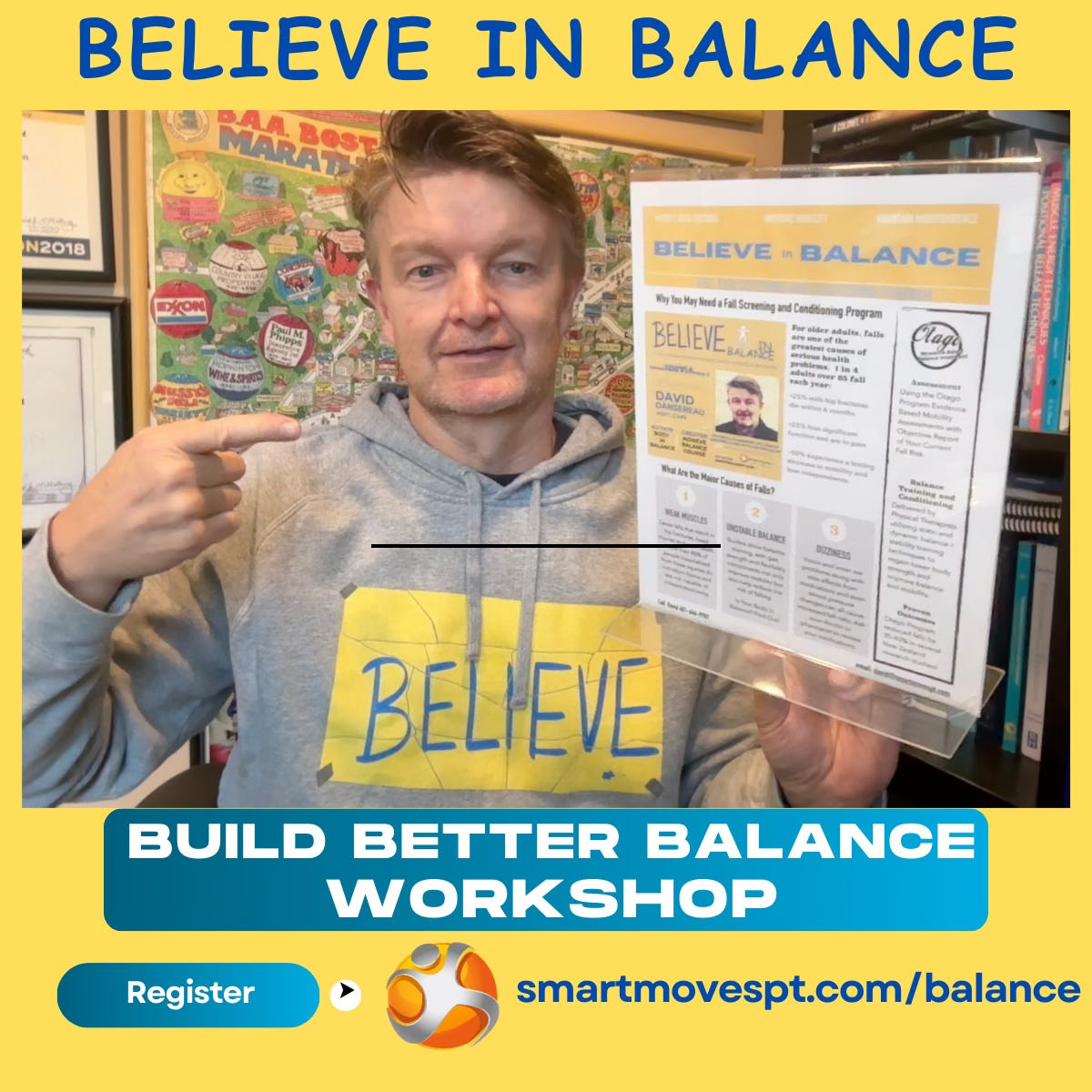
Shutting Down or Building?
Oct 100:13:46Tap to summarizeIf you are not building you are breaking down. Or perhaps shutting down in the case of our government (most likely) today:(But that’s not stopping us, we aren’t shutting down today. In fact we are talking about it on this podcast episode how we are going live in a few hours with our balance workshop.We are still going live in a few hours with our first Believe in Balance Workshop!Thanks for reading Achieve Balance! This post is public so feel free to share it.Here’s Why:Falls are NOT a normal part of aging - and many are preventable. Just like government shutdowns perhaps.Did you know? Preventing falls means more than avoiding injury, it’s about staying independent, confident, and engaged for our family members, patients, communities and ourselves!In this workshop I’ll cover how I’m building resources to support keeping you on your feet and the doors to your life open! I am committed to supporting this vision by making evidence-based program and assessments affordable and partner to offer falls prevention tools and workshops direct to consumer and to everyone who works with older adults.While the government is shutting down, slashing programs, and cutting services to veterans and seniors I’m commited to staying open and offering support.Learn more on my first Believe in Balance Workshop coming October 1st! This is a public episode. If you would like to discuss this with other subscribers or get access to bonus episodes, visit achievebalance.substack.com
Transcribe →