
Podcast
Big Ideas Lab
Hosted by Mission.org · EN
Your exploration inside Lawrence Livermore National Laboratory. Hear untold stories, meet boundary-pushing pioneers and get unparalleled access to groundbreaking science and technology. From national security challenges to computing revolutions, discover the innovations that are shaping tomorrow, today.
57episodes
Episodes
Newest firstAll episodes

Earthquake Modeling
Jan 21, 202500:20:30Summary readyThe ground beneath us is always moving—but what can it reveal about our future? At Lawrence Livermore National Laboratory, seismic monitoring has evolved into a cornerstone of national security and disaster preparedness. From detecting nuclear tests halfway across the globe to simulating the devastating effects of earthquakes before they strike, this episode explores how LLNL’s work is making the world a safer place—one seismic wave at a time.-- Big Ideas Lab is a Mission.org original series. Executive Produced by Lacey Peace. Sound Design, Music Edit and Mix by Daniel Brunelle. Story Editing by Daniel Brunelle. Audio Engineering and Editing by Matthew Powell. Narrated by Matthew Powell. Video Production by Levi Hanusch. Guests featured in this episode (in order of appearance): Bill Walter, Chief Physical Monitoring Programs Focus Area Lead, LLNLArben Pitarka, Seismologist and Group Leader of Seismology Group, LLNLBrought to you in partnership with Lawrence Livermore National Laboratory.
Summary
Next Gen Innovators
Jan 14, 202500:28:35Summary readyWhat happens when you bring a group of fifth graders into one of the world’s most advanced science labs? It’s not just magic—it’s mission-critical. At Lawrence Livermore National Laboratory, student outreach programs, from elementary school activities to graduate internships, are designed to spark curiosity and foster a lifelong love of science. These programs aren’t just about teaching; they’re about preparing the U.S. to tackle tomorrow’s greatest challenges. With the global stakes higher than ever, hear how sparking curiosity in young minds today is essential to developing the innovators, engineers, and problem-solvers who will lead the world tomorrow.-- Big Ideas Lab is a Mission.org original series. Executive Produced by Lacey Peace. Sound Design, Music Edit and Mix by Daniel Brunelle. Story Editing by Daniel Brunelle. Audio Engineering and Editing by Matthew Powell. Narrated by Matthew Powell. Video Production by Levi Hanusch. Guests featured in this episode (in order of appearance): Joanna Albala, Science Education Programmer at LLNLPatrick Poole, Experimental Physicist at LLNLBrought to you in partnership with Lawrence Livermore National Laboratory.
Summary
Roads to Removal
Jan 7, 202500:34:03Summary readyEntire communities erased by hurricanes. 240,000 square kilometers burned. Floodwaters swallowing towns. Extreme weather isn’t a distant threat—it’s reshaping our world. But here’s the good news: we’re not powerless. Enter the Roads to Removal report, a new strategy for combating climate change.In this episode, we delve into the science, strategy, and stories behind this effort. Join us as we explore how scientists, farmers, and policymakers are uniting to turn the tide on climate change. -- Big Ideas Lab is a Mission.org original series. Executive Produced by Lacey Peace. Sound Design, Music Edit and Mix by Daniel Brunelle. Story Editing by Daniel Brunelle. Audio Engineering and Editing by Matthew Powell. Narrated by Matthew Powell. Video Production by Levi Hanusch. Guests featured in this episode (in order of appearance): Jennifer Pett-Ridge, Lead of the LLNL Carbon InitiativeSimon Pang, Associate Group Leader in the Materials for Energy and Climate Security Group at LLNLKimberley Mayfield, Staff Scientist of Energy Equity & Carbon Management at LLNLBrought to you in partnership with Lawrence Livermore National Laboratory.
Summary
Additive Manufacturing
Dec 17, 202400:29:01Summary readyOnce a concept in 1940s science fiction, additive manufacturing—better known as 3D printing—has become a game-changer in modern production. Unlike traditional methods that cut away material, additive manufacturing builds components layer by layer, enabling intricate designs, reduced waste, and faster production.In this episode, we uncover how this technology evolved, why it’s transforming industries like aerospace and healthcare, and what the future holds as researchers push its boundaries.-- Big Ideas Lab is a Mission.org original series. Executive Produced by Lacey Peace. Sound Design, Music Edit and Mix by Daniel Brunelle. Story Editing by Daniel Brunelle. Audio Engineering and Editing by Matthew Powell. Narrated by Matthew Powell. Video Production by Levi Hanusch. Guests featured in this episode (in order of appearance): Hayden Taylor, Associate Professor of Mechanical Engineering, University of California, BerkeleyChris Spadaccini, Materials Engineering Division Leader, Engineering Directorate, LLNLCaitlyn Krikorian Cook, Polymer Engineer, LLNLMaxim Shusteff, Group Leader, Materials Engineering Division, LLNLBrought to you in partnership with Lawrence Livermore National Laboratory.
Summary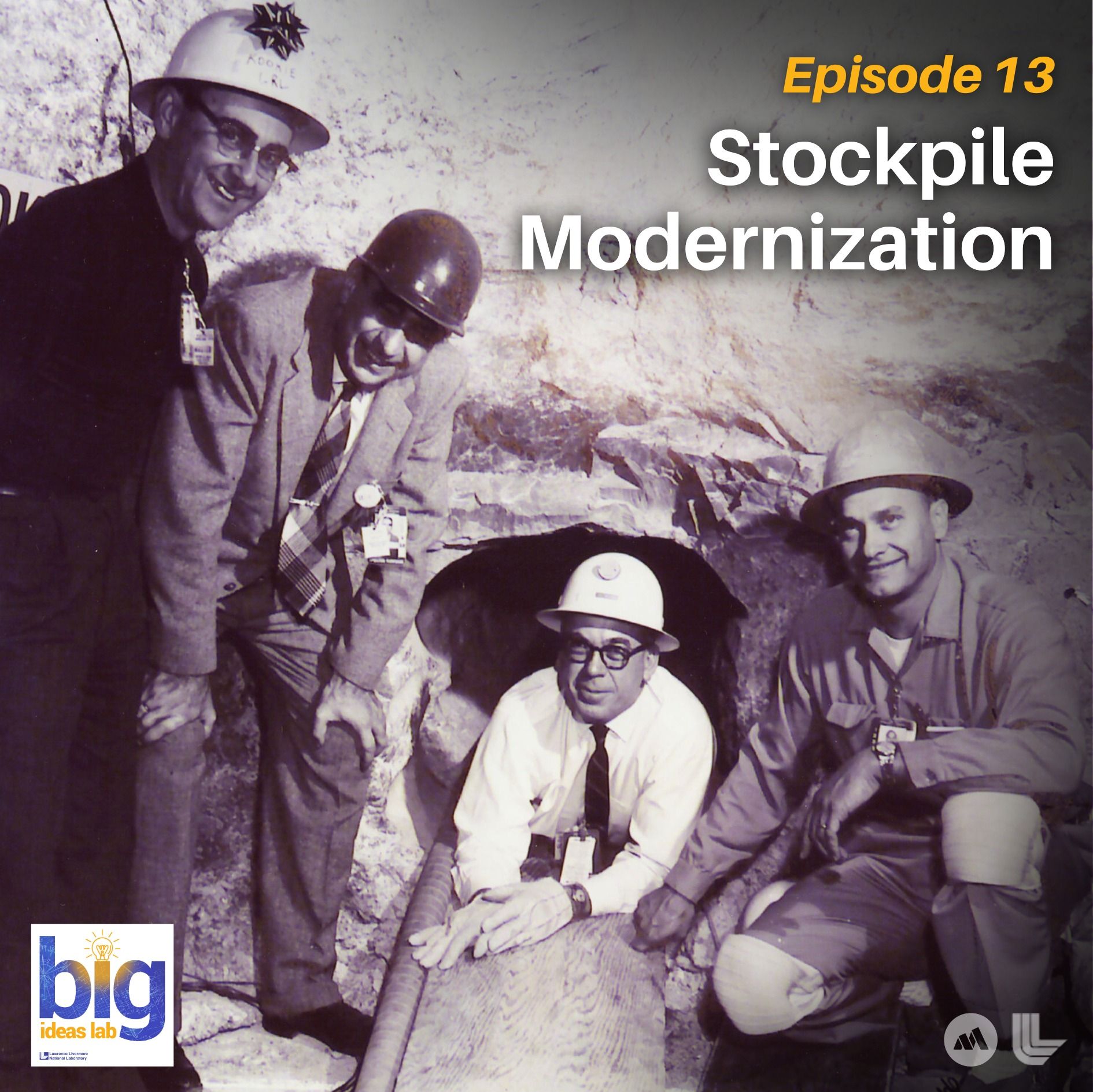
Stockpile Modernization
Dec 10, 202400:18:30Summary readyIn the mid-1990s, global treaties and a U.S. moratorium on nuclear testing marked a turning point in reducing the nuclear threat. As Cold War tensions eased, U.S. nuclear test and production sites fell silent for the first time since 1945. But, as the years passed, a new threat to U.S. nuclear deterrence emerged—one that no technology has ever escaped: time.To address this, the U.S. government launched the Stockpile Stewardship Program. This groundbreaking initiative shifted the focus from building new weapons to using cutting-edge science and technology to maintain the nation’s nuclear stockpile. By leveraging advanced, science-based methods, the program ensures the safety, security, and reliability of its aging weapons—all without the need for nuclear testing.Today, we’re taking you behind the scenes of a key component of the Stockpile Stewardship Program: modernization. We’ll explore how this effort works, why it’s essential, and what it means for the future of national security.-- Big Ideas Lab is a Mission.org original series. Executive Produced by Lacey Peace. Sound Design, Music Edit and Mix by Daniel Brunelle. Story Editing by Daniel Brunelle. Audio Engineering and Editing by Matthew Powell. Narrated by Matthew Powell. Video Production by Levi Hanusch. Guests featured in this episode (in order of appearance): Derek Wapman, Associate Deputy Director for Stockpile Modernization at LLNLPeter Raboin, Program Manager for the W80-4 Life Extension Program at LLNLJuliana Hsu, Program Manager for the W87-1 Warhead Modification Program at LLNLBrought to you in partnership with Lawrence Livermore National Laboratory.
Summary
Site 300
Dec 3, 202400:25:33Summary readyAfter the first successful atomic bomb test in 1945, code-named Trinity, a new era in global politics began. Unlocking the power of the atom sparked a race among world governments—not just to build bigger weapons, but smaller, cheaper, and more agile ones. Achieving this would require rapid iteration to stay ahead.In 1955, the Atomic Energy Commission purchased 3,400 acres of farmland near Livermore. This barren stretch, later known as Site 300, became the proving ground for the Lab’s most ambitious innovations. What unfolded there would shape the future of weapons development—and change the course of history.-- Big Ideas Lab is a Mission.org original series. Executive Produced and Written by Lacey Peace. Sound Design, Music Edit and Mix by Daniel Brunelle. Story Editing by Daniel Brunelle. Audio Engineering and Editing by Matthew Powell. Narrated by Matthew Powell. Video Production by Levi Hanusch. Guests featured in this episode (in order of appearance): Valerie Dibley, Site 300 Manager at LLNLBrian Cracchiola, Explosive Operations Manager for the Strategic Deterrence Directorate at LLNL Jeff Florando, Associate Program Director for Hydrodynamic and Subcritical Experiments in the Weapons Physics and Design Program at LLNLBrought to you in partnership with Lawrence Livermore National Laboratory.
Summary
NARAC
Nov 26, 202400:30:57Summary readyIn the 1960s and 70s, researchers at Lawrence Livermore National Laboratory were pushing the boundaries of nuclear weapons technology. But these breakthroughs came with a daunting question: Now that nuclear technologies existed, how could the world manage their risks and keep people safe?Enter NARAC, the National Atmospheric Release Advisory Center. Built on Livermore’s expertise in nuclear physics and supercomputing, NARAC was created to predict the spread of hazardous materials in the atmosphere during emergencies. From Chernobyl to Fukushima to Three Mile Island, NARAC’s scientists have worked on some of the hardest problems of our time—helping to assess risks, save lives, and inform critical decisions.This episode dives into the origins of NARAC, its groundbreaking mission, and how it continues to prepare for the unthinkable.-- Big Ideas Lab is a Mission.org original series. Executive Produced and Written by Lacey Peace. Sound Design, Music Edit and Mix by Daniel Brunelle. Story Editing by Daniel Brunelle. Audio Engineering and Editing by Matthew Powell. Narrated by Matthew Powell. Video Production by Levi Hanusch. Guests featured in this episode (in order of appearance): John Nasstrom, Chief Scientist for NARAC at LLNLLydia Tai, Health Physicist at LLNLLee Glascoe, Program Leader at LLNL for the Nuclear Emergency Support Team Katie Lundquist, Model Development Lead for NARAC at LLNLBrought to you in partnership with Lawrence Livermore National Laboratory.
Summary
El Capitan
Nov 19, 202400:31:27Summary readyFor decades, it was an ambitious dream: to create a supercomputer powerful enough to tackle humanity's most complex problems. Now, that dream is a reality. On November 18, 2024, El Capitan made history as the world’s fastest supercomputer, surpassing two exaflops of speed. Join us as we explore how this monumental achievement is set to redefine national security, revolutionize scientific research, and spark breakthroughs that could change the world as we know it.
Summary
DYNA3D
Nov 12, 202400:19:41Summary readyWhat does designing hurricane-proof buildings have to do with heart surgery and light beer? Surprisingly, the answer lies in a groundbreaking computer code developed more than 50 years ago.A code so powerful that automakers use it for car crash simulations, beer manufacturers rely on it to design cans, and surgeons turn to it to understand how fluid flows through the heart.This is the untold story of DYNA3D—a revolutionary code that transformed industries by simulating real-world physics and reshaped innovation as we know it.-- Big Ideas Lab is a Mission.org original series. Executive Produced and Written by Lacey Peace. Sound Design, Music Edit and Mix by Daniel Brunelle. Story Editing by Daniel Brunelle. Audio Engineering and Editing by Matthew Powell. Narrated by Matthew Powell. Video Production by Levi Hanusch. Guests featured in this episode (in order of appearance): John Hallquist, Inventor of DYNA3DRoger Werne, LLNL’s Senior Advisor for Innovation and PartnershipsKim Budil, Director of LLNLBrought to you in partnership with Lawrence Livermore National Laboratory.
Summary
Implantables
Oct 29, 202400:24:49Summary readyImagine an artificial retina that restores sight or micro-devices implanted to monitor health in real time. This isn’t science fiction—it’s our new reality.In this episode, we journey into the groundbreaking world of implantable technology. Discover the science driving these innovations, explore the life-changing devices already in use, and glimpse the remarkable advancements still on the horizon. How will these tiny marvels shape our understanding of human potential and redefine what it means to be human?--- Big Ideas Lab is a Mission.org original series. Executive Produced and Written by Lacey Peace. Sound Design, Music Edit and Mix by Daniel Brunelle. Story Editing by Daniel Brunelle. Audio Engineering and Editing by Matthew Powell. Narrated by Matthew Powell. Video Production by Levi Hanusch. Guests featured in this episode (in order of appearance): Alison Yorita, Staff Engineer for Lawrence Livermore’s Implantables Microsystem GroupMatthew Leonard, Associate Professor at the University of California, San Francisco in the Department of NeurosurgeryRazi Haque, Implantable Microsystems Group Lead at LLNLBrought to you in partnership with Lawrence Livermore National Laboratory.
Summary