
Podcast
ChinaTalk
Hosted by Jordan Schneider · EN
Conversations exploring China, technology, and US-China relations. Guests include a wide range of analysts, policymakers, and academics. Hosted by Jordan Schneider.
Check out the newsletter at https://www.chinatalk.media/
556episodes
Episodes
Newest firstAll episodes
Claude Mythos and National Power
Apr 1200:57:09Summary readyAnthropic’s new model found decades-old vulnerabilities in foundational open-source code that millions of automated tests and countless human experts had missed, presaging a potentially revolutionary moment in cyber. Ben Buchanan, former senior advisor for AI at the White House and author of The Hacker and the State, and Michael Sulmeyer, former Assistant Secretary of Defense for Cyber Policy, join the show to break it all down. Full disclosure: Ben advises Anthropic. We discuss… How Mythos found 27-year-old bugs in code everyone thought was secure The offense-defense balance: whether a Ukraine with Mythos and a Russia without it changes the war Project Glasswing and Anthropic’s attempt to build a private-sector vulnerabilities equities process Why critical infrastructure patching is about to become a nightmare What happens when ransomware gets vibe-coded Why bio won’t be far behind Learn more about your ad choices. Visit megaphone.fm/adchoices
Summary
WarTalk: Who Won the Iran War? (Second Breakfast Rebranded...)
Apr 1001:03:10Summary readyEric Robinson, Tony Stark , Justin Mc , and Secretary of Defense Rock join me to score the Iran conflict. We discuss… Whether Iran’s Strait of Hormuz toll booth is a Trump card or a wasting asset How the administration fumbled the messaging on the war’s most heroic moment — the JSOC pilot rescue deep inside Iran The Prussia 1806 parallel: are we a great military machine that’s forgotten how to fight? Colby’s bizarre knife fight with Pope Leo McMasterism, dereliction of duty, and why no one is pushing back song: https://suno.com/s/uGE7Es3ELd6r8ao5 Learn more about your ad choices. Visit megaphone.fm/adchoices
Summary
How Ukraine Makes Drones
Apr 701:04:20Summary readyUkrainian drone manufacturing. How has the country been able to build hundreds of thousands, even millions of drones over the past four years of conflict? What dependencies does its industrial base still have on China? And what lessons does its rapid scaling offer for the rest of the world? To discuss, we’re joined by Cat Buchatskiy, Director of Analytics at Snake Island, a military analytical group, along with Chris Miller Our conversation covers: How battlefield pressure forced Ukraine to build a drone war machine from scratch — from a handful of soldiers flying off-the-shelf drones to domestic assembly at a massive scale. Ukraine’s industrial legacy and whole-of-society mobilization repurposed its civilian tech sector into a wartime industrial base. Why modular design, frontline reassembly, and tight feedback loops allow Ukraine to iterate faster than traditional defense systems. The constraints of global supply chains, the impact of export controls, and how China is playing both sides of the war. Learn more about your ad choices. Visit megaphone.fm/adchoices
Summary
Second Breakfast: F-15, Pete's Purges, CENTCOM Hubris, War of 1812
Apr 301:11:09Summary readyAn F-15E is down in southern Iran. Justin, Tony, Eric and I talk through what combat search and rescue actually looks like, how a captured pilot changes the politics of ending this war, and why a hostage makes the "pack up and go home" play functionally impossible. Then: the AWACS that "only" lost a third of itself on a Saudi tarmac, why CENTCOM is still parking high-value aircraft like it's 2003, and what Operation Spiderweb and three years of Ukrainian drone warfare should have taught us but didn't. Plus Pete Hegseth's ongoing purge of the officer corps, the Enron theory of Pentagon innovation, and why the War of 1812 is the best analogy for where this is all heading. Tony's article on CENTCOM sucking: https://www.breakingbeijing.com/p/what-did-we-learn-centcom Justin on just war: https://justinmc.substack.com/p/just-war-theory song: https://suno.com/s/vroapDDimBnmCxdO Learn more about your ad choices. Visit megaphone.fm/adchoices
Summary
The American Federal Civil Service: A History
Apr 100:58:22Summary readyThe history of the American federal civil service — what can we learn from its past glories and failures, and where should we take this next? We have Kevin Hawickhorst of the Foundation for American Innovation to discuss: The Pendleton Act myth — Why civil service reform didn’t begin or end with Pendleton, and why starting the story there misses what actually made the system work. The rise of the subject-matter state — How early 20th-century agencies staffed with real experts — entomologists, engineers, agronomists — made the U.S. bureaucracy arguably the most capable in the world. From expertise to org charts — How mid-century functional reorganization hollowed out mission-driven agencies and replaced subject knowledge with process management. What competence delivered — From agricultural breakthroughs to infrastructure build-out, what a serious, technically grounded civil service was able to accomplish. Whether we can rebuild — DOGE, the abundance movement, state capacity, and why this might be the best time in decades to make the government work again. Learn more about your ad choices. Visit megaphone.fm/adchoices
Summary
The American Federal Civil Service: A History
Mar 3100:58:22Summary readyThe history of the American federal civil service — what can we learn from its past glories and failures, and where should we take this next? We have Kevin Hawickhorst of the Foundation for American Innovation to discuss: The Pendleton Act myth — Why civil service reform didn’t begin or end with Pendleton, and why starting the story there misses what actually made the system work. The rise of the subject-matter state — How early 20th-century agencies staffed with real experts — entomologists, engineers, agronomists — made the U.S. bureaucracy arguably the most capable in the world. From expertise to org charts — How mid-century functional reorganization hollowed out mission-driven agencies and replaced subject knowledge with process management. What competence delivered — From agricultural breakthroughs to infrastructure build-out, what a serious, technically grounded civil service was able to accomplish. Whether we can rebuild — DOGE, the abundance movement, state capacity, and why this might be the best time in decades to make the government work again. Learn more about your ad choices. Visit megaphone.fm/adchoices
Summary
Jen Pahlka on an Optimistic Vision for Government Renewal!
Mar 2700:59:14Summary readyJen Pahlka is an American Hero, in a past life the US Deputy Chief Technology Officer and member of the Defense Innovation Board. She wrote Recoding America and the wonderful Eating Policy substack (https://www.eatingpolicy.com/?utm_campaign=profile_chips). Learn more about your ad choices. Visit megaphone.fm/adchoices
Summary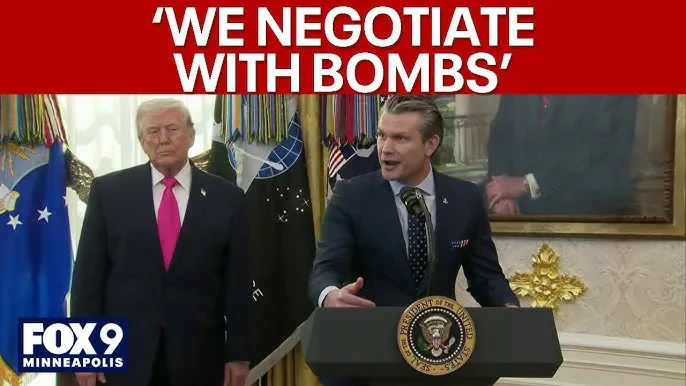
Second Breakfast: We Negotiate with Bombs, War by Brainrot
Mar 2500:53:17Summary readyFull house with Bryan, Eric, Tony and Justin. Learn more about your ad choices. Visit megaphone.fm/adchoices
Summary
Overfit is now ModelTalk! GPU Smuggling, OpenAI Cooked? + Open Models, AI Writing
Mar 2300:41:11Summary readyNathan Lambert of https://www.interconnects.ai/ and Jasmine Sun of https://jasmi.news/ catch up. Learn more about your ad choices. Visit megaphone.fm/adchoices
Summary
Second Breakfast: Taking Kharg Island, Terrorism, Grift
Mar 2001:18:51Summary readyThe administration is reportedly considering seizing Kharg Island, and the global economy is beginning to buckle under the pressure of disrupted energy flows. Eric Robinson is a lawyer now who worked in NCTC, a veteran of Joint Special Operations Command. He joins Second Breakfast regulars Bryan Clark, Tony Stark, and Justin McIntosh to break down the military and strategic realities of America's latest Middle Eastern war. We discuss… The Kharg Island fantasy and why a coup de main three weeks too late is a recipe for catastrophe "How are you going to take Kharg Island? You have no ships in the Persian Gulf." Why "lethality maxim" is not a theory of victory and the Iranians know it "A focus on a gunfight is why we're in this strategic mess to begin with. There's no amount of successful engagements that will become strategically meaningful if you don't have a vision of victory." The NCTC resignation, its anti-Semitic undertones, and the hollowing out of American counterterrorism infrastructure "An institution that was designed to fix the leaks that gave rise to 9/11, staffed with extraordinary analytic capacity, started chasing the Sinaloa cartel." Whether Iran can strike the US homeland — and why the dog hasn't barked "Did we build a titanium golem that was really a clay monster? Did we dramatically overestimate this operational capacity?" The naval escort nightmare: how keeping the Strait open would consume the entire destroyer fleet and gut Pacific deterrence "If you do this escort operation, it's going to take every available destroyer on the East Coast and in Europe for the duration." DHS corruption, Corey Lewandowski's hundreds of millions, and why American grift has graduated to a new level "Even in somewhere like China, you still have to kind of hide it. You can't just be tweeting out the deals that you're making to make yourself billions of dollars." Song: https://suno.com/s/FK4kifdAbVykiRax Learn more about your ad choices. Visit megaphone.fm/adchoices
Summary