Podcast
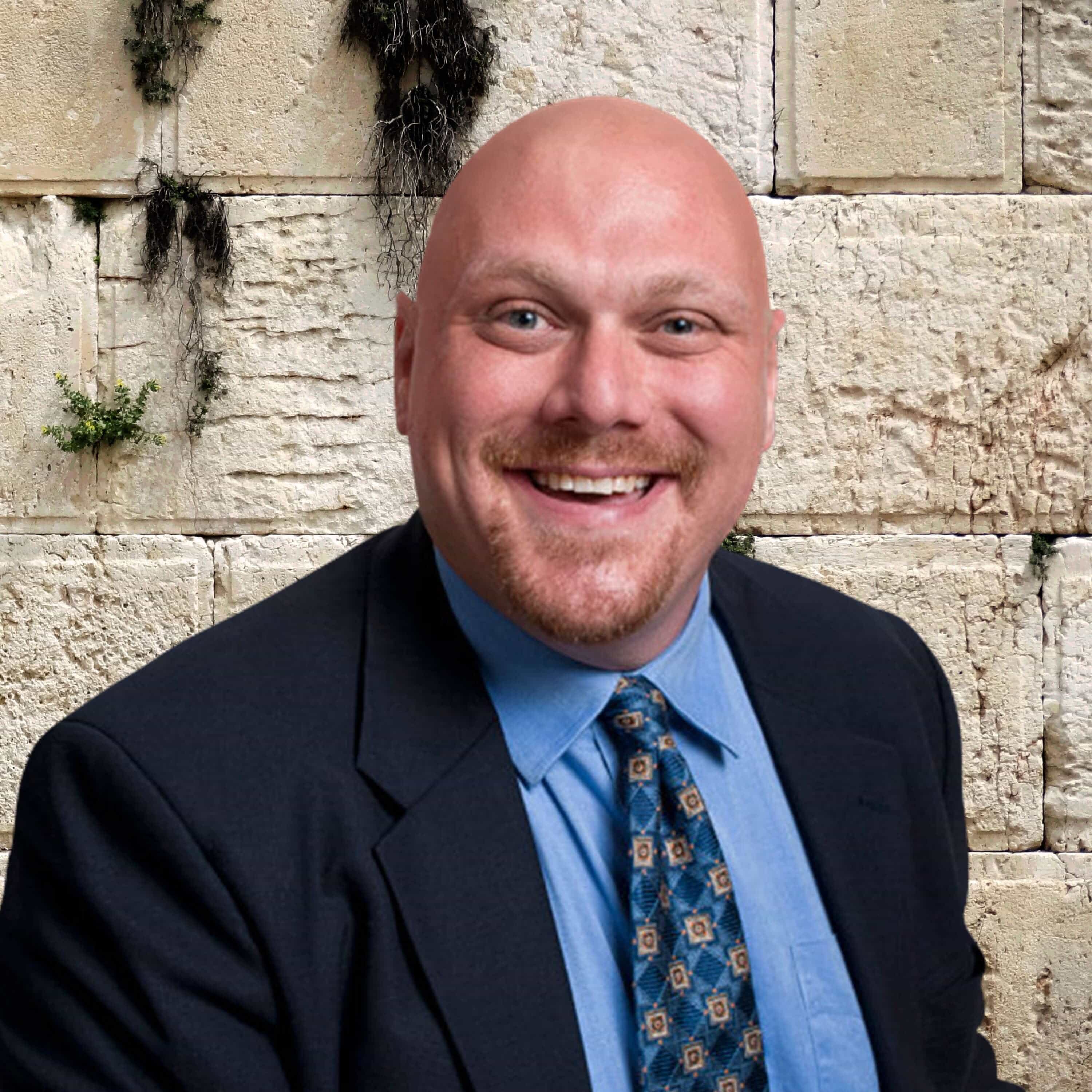
Dr. Nehemia Gordon - Bible Scholar at NehemiasWall.com
Hosted by Nehemia Gordon · EN
Nehemia Gordon uncovers ancient Hebrew sources to empower people with information to defend the Word of God and build their faith.
30episodes
Episodes
Newest firstAll episodes
Hebrew Voices #240 – The Chair of Moses: Part 1
Mar 401:03:41Tap to summarizeIn this episode of Hebrew Voices #240 - The Chair of Moses: Part 1, Nehemia is joined by Rev. Dr. Philip Thomas Mohr to discuss his doctoral dissertation on the infamous “Seat of Moses” in Matthew 23, how individuals project their own assumptions onto the person of Jesus, and how martyrdom functions as a powerful form of witness. I look forward to reading your comments! PODCAST VERSION: Download Audio Transcript Hebrew Voices #240 – The Chair of Moses: Part 1 You are listening to Hebrew Voices with Nehemia Gordon. Thank you for supporting Nehemia Gordon's Makor Hebrew Foundation. Learn more at NehemiasWall.com. Rev. Dr. Philip Thomas “Pip” Mohr: This project of doing that, you pick your favorite theology, and you cut away the things that you don’t like to get to the true Jesus, who looks just like you. That’s been going on for, well, a lot longer than the modern period, but definitely in the modern period. And so, these scholars who are doing that kind of thing with Matthew 23 are right in line with, “I’ve picked the Jesus I prefer. Let me get rid of the things I don’t like.” Nehemia: Look, I mean, there’s something about this Jesus fellow, I’ll just say it like that, where Mao Tse-Tung, who doesn’t come from a Christian culture, is making the early church and Jesus out to be like proto communists, right? And I don’t have an answer, I’m just thinking out loud. There’s something here where people from around the world are trying to engage with this historical figure and recast him in their own kind of, you know, mold. That’s really interesting. — Nehemia: Shalom, and welcome to Hebrew Voices. I’m here today with Reverend Dr. Philip Thomas Mohr, who goes by the name Pip. He is an assistant professor of biblical and theological studies at Erskine College in Due West, South Carolina. He’s also a Minister of the Word at the Associate Reformed Presbyterian Church. And… shalom, and welcome to the program, Pip. Thank you for joining us. Pip: Thank you. Good to be here. Nehemia: I don’t know if the audience sees this, but I noticed on your Zoom it says your name is Philip Thomas Mohr, and in parentheses, it has Nehemiah with vowels. And I thought to myself, “Oh, he put my name in there to remind himself who he’s talking to.” But, no, you actually used that name. So, tell the audience about that. Pip: Yeah, yeah. So, one of my roles I’ve been doing for a number of years, teaching Hebrew, the third level of Hebrew, for Westminster Theological Seminary online. So, students online would see me in Zoom, and I forgot to change it. But we have Hebrew names in the course because we, you know, talk to each other, and as I call on students… And so, they would call me Nehemiah… Nehemia: Okay. Oh, and you pronounced that even with the correct Tiberian… well, let’s say the correct emphasis. Pip: Yeah. Nehemia: NehemiAH, instead of the Eastern European, NeHEMiah. Pip: Yeah, yeah. Nehemia: So, it’s funny, I once interviewed a gentleman who told me his name was NeheMIah, and I said, “Wow, it’s very unusual for, you know, someone from your background.” He said, “Well, I went through a very difficult time in life, and my community gave me that name. My original name is…” I don’t remember, it was like Bill or something, right? Pip: Yeah, yeah. Nehemia: And I said, “The same thing happened to me. A man came at me with a scalpel when I was eight days old, and I was given the name Nehemia. Right? I went through a difficult thing.” Pip: A traumatic experience. Nehemia: Yeah, exactly. There you go. Because for those who don’t know, Jews are given their name at eight days old. So, the reason I wanted to interview you is, I get this, like, newsletter announcement from the Society of Biblical Literature, and they had an announcement about a new dissertation that had come out from one of their members, and it was you. I mean, there’s a bunch of them. I read through them and I’m usually not interested. And here I’m like, “I need to talk to this guy!” So, your dissertation for your PhD was called “The ‘Chair of Moses’ Saying (Matthew 23:2–3): Historical Concerns, Providential Applications, and Present Understanding; a Dissertation”. And it’s actually from the Catholic University of America, so, until five minutes ago, I thought you were Catholic. Then I found out you are part of the Associate Reformed Presbyterian Church, which I’ve never heard of until five minutes ago. So, Pip, tell us about the Chair of Moses. You probably don’t know this, but I have a profound and deep interest in that, both as an academic, but also from kind of a personal perspective, because I’ve approached the Chair of Moses from the Jewish perspective, which I don’t think you discussed that in your dissertation. I don’t remember. You had some interesting things in your dissertation which I wouldn&...
Transcribe →
SNEAK PEEK! Support Team Study – The Jewish Girl Who Died for Her Faith: Part 2
Feb 2400:05:10Tap to summarizeWatch the Sneak Peek of this Support Team Study – The Jewish Girl Who Died for Her Faith: Part 2, where Nehemia continues the story of Sol Hachuel, the 19th-century Moroccan Jewish girl martyred for her faith, and explores how the events surrounding her life and death resonate with the challenges and implications of a post–October 7th world. I look forward to reading your comments! PODCAST VERSION: Download Audio Watch the full episode TOMORROW plus hundreds of hours of other in-depth studies by becoming a Support Team Member! SHARE THIS TEACHING WITH YOUR FRIENDS! Subscribe to "Nehemia Gordon" on your favorite podcast app! Apple PodcastsSpotify--><!-- | <a href="https://www.youtube.com/playlist?list=PLWaplikTHGIi0lnV9ZBvakfDp_ewBlSV3" target="_blank" rel="noope...
Transcribe →Hebrew Voices #238 – The Jewish Girl Who Died for Her Faith: Part 1
Feb 1800:40:28Tap to summarizeIn this episode of Hebrew Voices #238 - The Jewish Girl Who Died for Her Faith: Part 1, Nehemia speaks with history professor Dr. Sharon Vance about a 19th-century Moroccan Jewish girl who was murdered for her faith and explores the broader history of how Jews were treated under Muslim rule. I look forward to reading your comments! PODCAST VERSION: Download Audio Transcript Hebrew Voices #238 – The Jewish Girl Who Died for Her Faith: Part 1 You are listening to Hebrew Voices with Nehemia Gordon. Thank you for supporting Nehemia Gordon's Makor Hebrew Foundation. Learn more at NehemiasWall.com. Nehemia: When you call her a martyr in the title of your book, that’s how the Jews viewed her. Sharon: Yes. Nehemia: What did that mean to the Jews? Sharon: That she died be’kiddush Hashem. She died sanctifying the name. Nehemia: Which means what? For my audience, who may not be familiar with that terminology… Sharon: Okay. So, that she died because she refused to convert, because she stayed faithful to her religion. And in a lot of the Jewish sources, she died while saying the Shema. — Nehemia: Shalom, and welcome to Hebrew Voices. I’m here today with Dr. Sharon Vance, who’s an associate professor at Northern Kentucky University, in the History and Geography Department, where she teaches courses in Middle Eastern and North African history, Jewish history, the Holocaust, history of the Arab-Israeli conflict, world history, and US history. She received her PhD from the University of Pennsylvania in 2005 from the Department of Near Eastern Languages and Civilizations. After working on anti-Semitism in France, in colonial Algeria, her current research now focuses on anti-Semitism in the US. Some of her publications included… and there’s a bunch of publications here. We’ll put links on the website. The one we’re going to talk about today is a book she wrote called The Martyrdom of a Moroccan Jewish Saint. And I heard about this relatively recently, and I was very surprised. I have a PhD in a field of Jewish studies, and I’d never heard of this person. I went to 12 years of Jewish school, day school, right? It wasn’t just the afternoon Hebrew school, and I’d never heard of this person. And there were Moroccan Jews in my school. I would imagine they might have heard of her, but I had not. So, tell us about this Moroccan Jewish martyr. I hope I’m pronouncing her name right; Sol Hachuel? Or how do you say her last name? Sharon: That’s okay. Sol Hachuel. Nehemia: All right. So, tell us about Sol Hachuel. Sharon: Okay. Well, she was born in Tangier, perhaps in 1817, and she was martyred in Fez in 1834, because her neighbor stated that she converted to Islam and she denied having converted. And so, she was first brought before the governor in Tangier, and then word got out that she was there and she was refusing, basically, to convert. And then the Sultan, who at the time was Mullah Abdul Rahman, demanded that she be brought to his court, where they tried to persuade her to convert, and she refused. And so, therefore, she was publicly executed by beheading in Fez in 1834. And she’s buried in the Jewish cemetery in Fez, and the book contains a photograph of her gravesite with a description on the tombstone of her. Nehemia: So, I think we have to set some context for the audience here, because, let’s say she had converted to Islam and changed her mind; why would that get her executed in Fez in 1834? I feel like the general audience is missing a piece of the picture. Sharon: Oh, yeah. Nehemia: Especially coming from America. Like, how is this possible? You get executed because… Explain, please. Sharon: Okay. So, a couple of things. There’s the fact that Jews had the status of dhimmah, which means they were a protected minority. So, they had autonomy within their community, but they were subordinate to Muslims, and that included subordinate to Islamic courts. So, for example, if there was a dispute between two Jews, it would stay within the Jewish court and the Jewish community. If there was a dispute between a Jew and a Muslim, it would go to Islamic courts, and Jews weren’t allowed to contradict Muslims. That was part of the subordination. Nehemia: Subordination is a really big word. Give us a more, like, regular English word. What do you mean by that? Sharon: Okay. So, that meant that there were restrictions. Jews were legally inferior to Muslims. Nehemia: By law. They were legally inferior before the law. Sharon: Yes, yes, yes. Nehemia: I know we talk a lot in America about systemic racism. This is systemic; maybe it’s not based on race. It depends what Jews are, right? That’s complicated. <p st...
Transcribe →SNEAK PEEK! Support Team Study – The Illustrated Cairo Genizah: Part 2
Feb 1000:05:10Tap to summarizeWatch the Sneak Peek of this Support Team Study - The Illustrated Cairo Genizah: Part 2, Nehemia and Dr. Melonie Schmierer-Lee continue their exploration of The Illustrated Cairo Genizah. This episode focuses on the "celebrity" manuscripts of the collection: the original writings of famous Jewish figures like Moses Maimonides, preserved for centuries in the Genizah. I look forward to reading your comments! PODCAST VERSION: Download Audio Watch the full episode TOMORROW plus hundreds of hours of other in-depth studies by becoming a Support Team Member! SHARE THIS TEACHING WITH YOUR FRIENDS! Subscribe to "Nehemia Gordon" on your favorite podcast app! Apple PodcastsSpotify-->YouTube Music--> | Amazon Music | TuneIn Pocket Casts | Podcast Addict | CastBox | iHeartRadio | Podchaser | Pandora SUPPORT NEHEMIA'S RESEARCH AND TEACHINGS<a hre...
Transcribe →Hebrew Voices #235 – The Illustrated Cairo Genizah: Part 1
Feb 401:17:23Tap to summarizeIn this episode of Hebrew Voices #235 - The Illustrated Cairo Genizah: Part 1, Nehemia interviews renowned expert Dr. Melonie Schmierer-Lee about her latest work. The discussion highlights the diverse range of manuscripts found in the Genizah - from the mundane details of daily life to the sacred preservation of Scripture. I look forward to reading your comments! PODCAST VERSION: Download Audio Transcript Hebrew Voices #235 – The Illustrated Cairo Genizah: Part 1 You are listening to Hebrew Voices with Nehemia Gordon. Thank you for supporting Nehemia Gordon's Makor Hebrew Foundation. Learn more at NehemiasWall.com. Dr. Melonie Schmierer-Lee: I almost always show this particular manuscript. It’s a prenuptial contract, a prenup from the 11th century, and it’s… I find it just very funny, because it’s a man, and before he gets married, he’s having to stand up in court and promise to behave himself, that he won’t have anything to do with his drunken, dissolute, idiotic friends. He won’t drink with them in the street. He won’t have anything to do with them. He won’t bring them back to his house. And he also promises that he won’t go off traveling anywhere unless his future wife gives him permission to do that. — Nehemia: Shalom, and welcome to Hebrew Voices. I am here today with Dr. Melonie Schmierer-Lee, who serves as the public education officer at the Genizah Research Unit at Cambridge University Library. Welcome to the program, Melonie. It’s great to have you. Melonie: Thank you, Nehemia. Nehemia: So, I think I was one of the first people to preorder your book, which is entitled The Illustrated Cairo Genizah. I don’t know if I was, but it seems like the day it was announced, I ordered it. And this is the book. You’ve coauthored it with Nick Posegay, who we’ve had on the program. He’s talked about the vowels. And you actually interviewed me once when I was doing work at Cambridge University Library. So, the tables have turned, or, as I think they say, comically, the turns have tabled or something. All right. So, it’s called The Illustrated Cairo Genizah. And I feel like we’ve done a bunch of programs on the Cairo Genizah. Can you give us, like, the, I don’t know, the two-minute version of, what is the Cairo Genizah from your perspective? Maybe it’s not two minutes, maybe it’s longer. But the audience has heard about the Cairo Genizah many times. Doesn’t mean they know what it is, but just give us, like, the short version. Melonie: Yes, I’ll try and be short. I can go for a few hours. So, the… Nehemia: A woman after my own heart. That’s what I do. So, I’ve been nicknamed Short Story Long. Melonie: So, the Cairo Genizah is a collection of almost 200,000 manuscripts that we have in Cambridge University Library. And they were stored away in a synagogue storeroom in Cairo for hundreds and hundreds of years where they were stashed away because they might have been sacred in some way. And eventually they came to the attention of the Cambridge scholar Solomon Schechter, and he got permission to bring them to Cambridge, and we’ve been working on them here ever since. And they shed enormous light on the daily life of the communities in the Middle Ages, as well as their religious practices and all the sort of religious and sacred texts that were found in this room as well. Nehemia: When you say the communities, like, let’s be more specific. Which communities are these? Melonie: Oh, so, I mean, in Egypt, in the Middle Ages, you have Jews, Muslims, Christians, and each of those can be broken down into different subgroups as well. So, for the Jews in medieval Cairo, there was a Jerusalemite community that looked towards the Jerusalem yeshiva for their religious leadership, the Babylonian community that looked towards the Babylonian academies for their guidance, and there’s a community of Karaites as well. Nehemia: Okay. And so, I didn’t know there were a whole lot of Christian… The Muslim documents, I feel like I’ve seen some fragments of, but, like, what would be the most interesting Christian document that is… and I know it’s a very subjective question. Interesting to you, I guess. Melonie: Yeah. Okay. So, there are Christian Arabic Bibles in the Genizah, but some of the most interesting ones, references to Christians, are when they’re sort of interacting with the Jewish community. And just one document comes to mind; it’s a record of these two Christian women who wanted to convert. Nehemia: Oh, wow. Melonie: “And we want to convert and become Jewish.” And they were told, “No, you can’t, you can’t, you shouldn’t.” And they kept insisting again and again that they wanted to convert. And then the rabbi said, “Okay, well if you’re going to convert then you’re going to need some husbands.” So, they threw it o...
Transcribe →SNEAK PEEK! Support Team Study – The Great “I AM” Revealed… Again
Jan 2700:05:10Tap to summarizeWatch the Sneak Peek of this episode of Support Team Study - The Great “I AM” Revealed… Again, where Nehemia expands on his classic study to compare the Biblical explanation for the meaning of God’s name with the secular academic explanation, and explain why the choice between pronunciations is fundamentally dependent on one’s view regarding the authority of Scripture. I look forward to reading your comments! PODCAST VERSION: Download Audio Watch the full episode TOMORROW plus hundreds of hours of other in-depth studies by becoming a Support Team Member! SHARE THIS TEACHING WITH YOUR FRIENDS! Subscribe to "Nehemia Gordon" on your favorite podcast app! Apple PodcastsSpotify-->YouTube Music--> | Amazon Music | TuneIn Pocket Casts | Podcast Addict | <a href="https://castbox.fm/channel...
Transcribe →SNEAK PEEK! Support Team Study – The Jewish Bible: Part 2
Jan 2000:05:10Tap to summarizeWatch the Sneak Peek of this Support Team Study - The Jewish Bible: Part 2, Nehemia and Dr. Avi Kadish dig down to the root of the word “Miqra” to understand its original meaning and how it ties into the commandments regarding Sabbaths and High Holy Days as well as the ancient transmission of the Hebrew Bible. I look forward to reading your comments! PODCAST VERSION: Download Audio Watch the full episode TOMORROW plus hundreds of hours of other in-depth studies by becoming a Support Team Member! SHARE THIS TEACHING WITH YOUR FRIENDS! Subscribe to "Nehemia Gordon" on your favorite podcast app! Apple PodcastsSpotify-->YouTube Music--> | Amazon Music | TuneIn Pocket Casts | Podcast Addict | CastBox | iHeartRadio | Podchaser | Pandora <!-- wp:image {"lightbox":{"enabled"...
Transcribe →Sneak Peek! – Support Team Study – Persia, the Bible & Free Iran: Part 2
Jan 1300:05:10Tap to summarizeWatch the Sneak Peek of this Support Team Study - Persia, the Bible & Free Iran: Part 2, Nehemia and Iran expert Dr. Thamar Gindin go deeper into the heart of ancient Persian culture. They explore the fascinating world of Zoroastrianism - uncovering its unique beliefs and surprising links to the biblical text. The conversation concludes with a powerful look at the current regime and the hopeful future of the Iranian people. I look forward to reading your comments! PODCAST VERSION: Download Audio Watch the full episode TOMORROW plus hundreds of hours of other in-depth studies by becoming a Support Team Member! SHARE THIS TEACHING WITH YOUR FRIENDS! Subscribe to "Nehemia Gordon" on your favorite podcast app! Apple PodcastsSpotify-->YouTube Music--> | Amazon Music | TuneIn Pocket Casts | Podcast Addict | CastBox | iHeartRadio | Podchaser | <a href="https://www.pandora.com/podcast/dr-nehemia-gordon-bible-scholar-at-n...
Transcribe →Hebrew Voices #239 – Persia, the Bible & Free Iran: Part 1
Jan 700:58:47Tap to summarizeIn this episode of Hebrew Voices #239 - Persia, the Bible & Free Iran: Part 1, Nehemia is joined by Dr. Thamar Gindin - often called the “Israeli attaché to Free Iran” - to explore the profound intersection of ancient Persian history and the Hebrew Bible. Together, they dive into the historical evidence that links these two worlds and discuss why these ancient connections still matter for a "Free Iran" today. I look forward to reading your comments! PODCAST VERSION: Download Audio Transcript Hebrew Voices #239 – Persia, the Bible & Free Iran: Part 1 You are listening to Hebrew Voices with Nehemia Gordon. Thank you for supporting Nehemia Gordon's Makor Hebrew Foundation. Learn more at NehemiasWall.com. Dr. Thamar Gindin: Some say… Nehemia: Did they? Thamar: “Amestris.” It sounds like Esther. Nehemia: It does sound like Esther. I was going to say that, yeah. Thamar: But her father is not Jewish. Nehemia: Yeah, but don’t people lie about their lineage? Thamar: And also, the things that Greek historians say about her we don’t want them to say about Esther. She was very vicious. Nehemia: Well, that sounds… I mean, how do I say this? If you look at what they say today in Greece about Israelis, they’re also pretty vicious. They’re not true. But I mean… — Nehemia: Shalom, and welcome to Hebrew Voices. I’m here today with Thamar Gindin. She’s Israel’s first cultural attache in free Iran. We’ll talk about what that means. And until Iran is free, she builds bridges between the Iranian and Israeli nations, opening eyes on both sides to see that the other side is human and that we are more similar than different. She does this by social media, mass media, and other network activity in Hebrew, English, and Persian, mostly about current affairs, in addition to lecturing and writing about pre-Islamic Iran, which I think we’ll probably spend most of the time on. Dr. Gindin is a disciple of world renowned Iranist… Iranist? Iranianist? I don’t know how… Thamar: Iranist. Nehemia: Iranist! Prof. Shaul Shaked, and a research fellow at Haifa University’s Ezri Center for Iran and Persian Gulf Research. Shalom, Thamar. Thamar, is it Doctor Thamar Gindin? Thamar: Yes, it’s doctor, but in Israel we usually don’t use it. Nehemia: Okay, wonderful. Yeah, people always try to call me Dr. Gordon, and I say, “I’m just Nehemia,” meaning you can call me that, but anyway… So, there’s a lot of things I want to talk about. And you’ve been very generous with your time, and you do a lot of programs. I’ve seen you on TikTok, and I’ve seen clips from Israeli television talking about… you know, we just had a 12-day war with Iran as we’re recording this. And you’re no doubt an expert in that. But I’m a Bible scholar, and I want to touch upon some Bible scholar subjects. But maybe let’s just… Thamar: I just want to say that my background… Nehemia: Yeah, tell us about that. Thamar: It’s presently in the Tehran Museum, but it was taken from the gates of Susa, which is Shushan Habira, the winter capital of the Achaemenid kings, the ones mentioned in the Bible. Nehemia: Okay. So, in the Book of Esther, the whole story takes place in Shushan Habira. I don’t know how it’s translated in English. Like, probably like Susa the Capital. Thamar: Shushan the Citadel. Nehemia: Oh, okay. So, wait, so, in the story, at least, when Mordecai is standing outside the gates and he overhears this conspiracy to assassinate Achashverosh, or Artaxerxes, or however that’s translated in English… Thamar: Xerxes. Nehemia: Xerxes! Oh, it’s Xerxes, okay. Thamar: Xerxes. Nehemia: Okay, we’re going to get to that. So, this is what he might have seen. And I know there’s some question about the historicity that we’ll talk about, but this is the gate he would have seen. Wow. All right. So, that’s very cool. So, the Jewish people, or, let’s say, Am Israel, the people of Israel, have this very long-standing connection with Iran, and I think most people don’t realize this. In 2 Kings 17, it talks about the exile; I’m pulling up here, the exile of the Ten Tribes, what we call the Ten Lost Tribes often today. And it mentions that they were sent to this… I believe it’s the cities of Persia… Thamar: Arei ...
Transcribe →Hebrew Voices #241 – Nick Fuentes & the Serpent Seed Doctrine
Dec 3102:11:01Tap to summarizeIn this episode of Hebrew Voices #241, Nick Fuentes & the Serpent Seed Doctrine, Nehemia is joined by Jake Hilton of The Sword of YHVH Ministries to examine a little-discussed political and religious movement gaining traction among America’s youth. Together, they explore its troubling parallels to interwar Germany and evaluate, through a biblical lens, the falsehoods it promotes. I look forward to reading your comments! PODCAST VERSION: Download Audio Transcript Hebrew Voices #241 – Nick Fuentes & the Serpent Seed Doctrine You are listening to Hebrew Voices with Nehemia Gordon. Thank you for supporting Nehemia Gordon's Makor Hebrew Foundation. Learn more at NehemiasWall.com. Nehemia: For years they said Trump is literally Hitler. That’s what… Jake: Yeah, exactly, yeah. Nehemia: …and they use those words: “literally Hitler”. And for years I was telling people, “This is a disaster, because one day we’re going to have a real Nazi and no one’s going to believe it anymore, or care, because you are the boy who cried wolf.” Guys, Nick Fuentes is the wolf. Jake: Yeah. Nehemia: Tell us about the wolf. Jake: Yeah. Nehemia: There’s a saying that all the optimists ended up at Auschwitz. And what that meant was that the pessimists fled. The optimists are like, “Yeah, this will pass over. It’ll be okay.” So, I have to be a pessimist. I can’t afford to be an optimist in a situation like this. And unfortunately, I think that Nick Fuentes is… there’s a chance he’s going to win, and we’ve got to speak out. — Nehemia: Shalom, and welcome to Hebrew Voices. I’m here today with Jake Hilton. He’s a Christian Zionist pastor with the Sword of Yehovah Ministries. He also hosts a podcast called Into the Forge that covers news and teaches the Word of God. And you explained it to me that you talk about the problems and you offer solutions from Scripture. I love that, that’s very cool. Jake: Well, yeah, it’s one of these things. First of all, wonderful to see you again, Nehemia. It’s been about a year-and-a-half since the last time I saw you and had a conversation with you, and that was back when I was working with A Rood Awakening International Ministries. We had a good conversation back then. But yeah, when it comes to Into the Forge, it is a new political channel. It’s something that I just started up only several months ago. And we have all of these podcasts and political commentators out there, and it’s one thing to focus on the problems in this very much so insane world, but what’s the point of focusing on the problems if we don’t actually offer solutions, like real solutions? And the ultimate solutions are always going to be the truth, the absolute truth, that we can learn from in the Word of God, the Holy Bible. Nehemia: So, today’s topic that I asked you to join me to talk about… it’s very unusual for me, because I don’t deal with politics. And I also have a policy; I don’t deal with individual people. Meaning, like, I come from an academic background; there’s something that’s called an ad hominem attack. Ad hominem is when you attack the person instead of their ideas. And I want us to try to be very careful in today’s discussion. You can say whatever you want. I want to try to be very careful and make this… So, we’re going to talk about Nick Fuentes. If you’ve never heard of Nick Fuentes, guys, pay attention. He’s been around for a while, but he’s really only broken through into, like, the mainstream, I think consciousness, awareness… Maybe you’ve never heard of him, but he is… I don’t even know where to begin. Why are we talking about an individual? This isn’t about attacking Nick Fuentes, but it’s about… for me, this is about why are his ideas being so widely received particularly in… well, like I said, I don’t know where to begin here. Who is Nick Fuentes? Can you tell us? Jake: Well, I can certainly… Nehemia: And guys, what’s important here isn’t who Nick Fuentes is, it’s about the ideas that he’s representing… Jake: Yeah, it’s one thing to… Nehemia: … that are being very widely received. Jake: Yeah. It’s one thing to focus on the individual, and be like, “Yeah, Nick Fuentes; overall scumbag.” And yes, I don’t have a problem with saying that because that’s really what he is. And I also don’t have a problem with accurately identifying him as a Nazi, because he is a Nazi. It’s one thing to insult so...
Transcribe →