Podcast
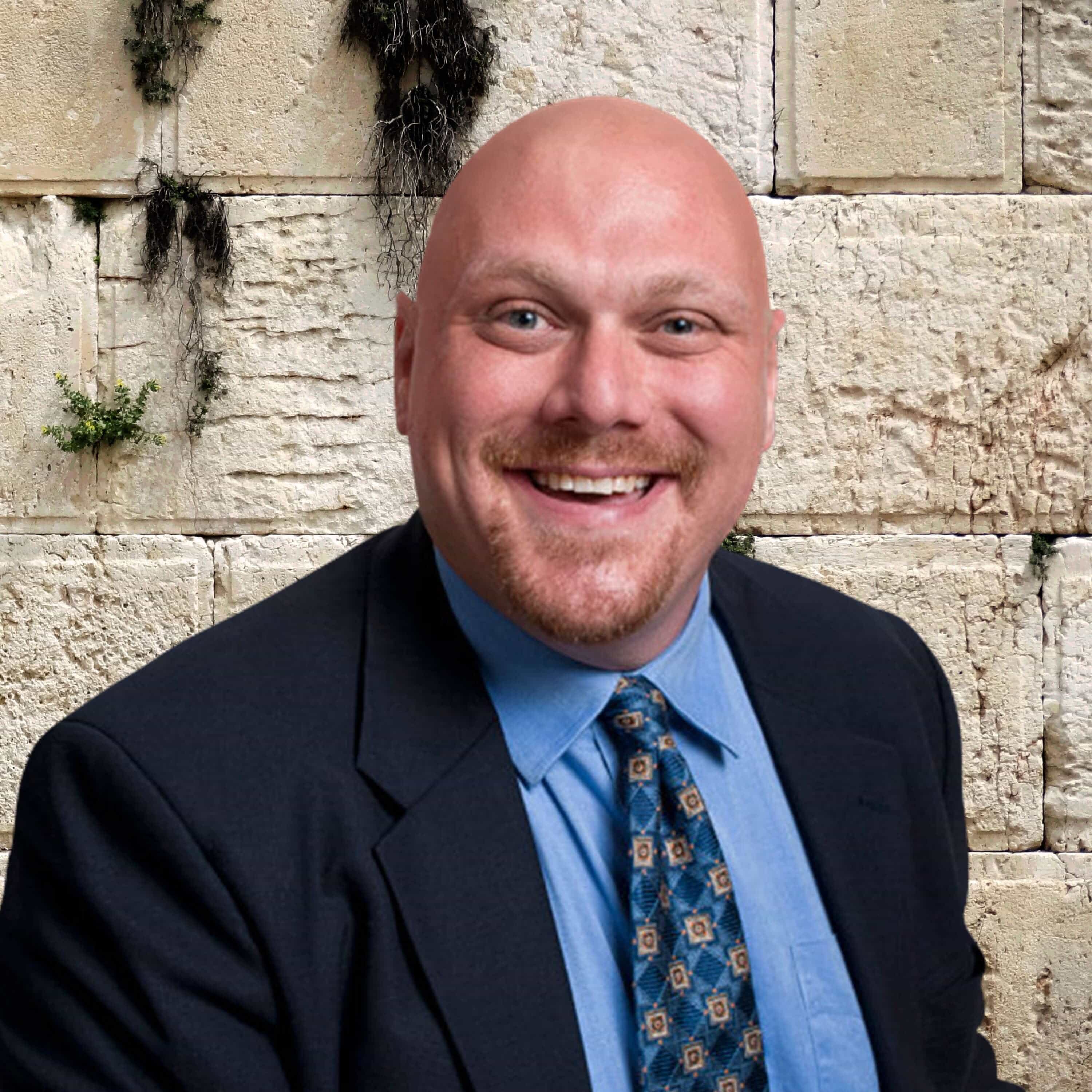
Dr. Nehemia Gordon - Bible Scholar at NehemiasWall.com
Hosted by Nehemia Gordon · EN
Nehemia Gordon uncovers ancient Hebrew sources to empower people with information to defend the Word of God and build their faith.
30episodes
Episodes
Newest firstAll episodes
SNEAK PEEK! Support Team Study – Halakhic Purist Rabbi: Part 4
Sep 200:00:54Tap to summarizeWatch the Sneak Peek of this Support Team Study - Halakhic Purist Rabbi: Part 4, where Nehemia asks Rabbi Asher Meza about a number of interesting issues including the irresponsibility of counter missionaries, Jewish secularism fueling the wild antisemitic conspiracy theories of Candace Owens, and why someone should consider becoming an Orthodox Jew. I look forward to reading your comments! PODCAST VERSION: Download Audio Watch the full episode TOMORROW plus hundreds of hours of other in-depth studies by becoming a Support Team Member! SHARE THIS TEACHING WITH YOUR FRIENDS! Subscribe to "Nehemia Gordon" on your favorite podcast app! Apple PodcastsSpotify-->YouTube Music--> | Amazon Music | TuneIn Pocket Casts | Podcast Addict | CastBox | iHeartRadio | Podchaser | <a href="h...
Transcribe →Hebrew Voices #223 – Halakhic Purist Rabbi: Part 3
Aug 2700:54:32Tap to summarizeIn this episode of Hebrew Voices #223 - Halakhic Purist Rabbi: Part 3, Nehemia brings back Rabbi Asher Meza to discuss proselytizing in 2nd Temple Judaism, how the conversion process has become dramatically more burdensome over time, and where believers in Yeshua fit in according to the Sanhedrin’s halakhic decrees. I look forward to reading your comments! PODCAST VERSION: Download Audio TranscriptCOMING SOON SHARE THIS TEACHING WITH YOUR FRIENDS! Subscribe to "Nehemia Gordon" on your favorite podcast app! Apple PodcastsSpotify-->YouTube Music--> | Amazon Music | TuneIn Pocket Casts | Podcast Addict | CastBox | iHeartRadio | Podchaser | Pandora If you have found Nehemia Gordon’s teachings to be of value, please consider supporting his efforts through his ministry Makor Hebrew Foundation. Make a lasting impact through the year by making your donation recurring. Please Donate Here <...
Transcribe →SNEAK PEEK! – Support Team Study – You Can’t Be Perfect—Can You?: Part 2
Aug 1900:05:10Tap to summarizeWatch the Sneak Peek of this Support Team Study - You Can’t Be Perfect—Can You?: Part 2, Nehemia and Pastor AJ Bernard continue discussing the Biblical concept of “perfection,” different types of sin, and why it’s worth striving to do your best. I look forward to reading your comments! PODCAST VERSION: Download Audio Watch the full episode TOMORROW plus hundreds of hours of other in-depth studies by becoming a Support Team Member! SHARE THIS TEACHING WITH YOUR FRIENDS! Subscribe to "Nehemia Gordon" on your favorite podcast app! Apple PodcastsSpotify-->YouTube Music--> | Amazon Music | TuneIn Pocket Casts | Podcast Addict | CastBox | <a href="https...
Transcribe →Hebrew Voices #222 – You Can’t Be Perfect—Can You? Part 1
Aug 1300:47:28Tap to summarizeIn this episode of Hebrew Voices #222 - You Can’t Be Perfect—Can You?: Part 1, Nehemia is joined by Pastor AJ Bernard to discuss what “being perfect” means in context of Scripture, as they debunk and reaffirm various perceptions about how people can attain Biblical “perfection.” I look forward to reading your comments! PODCAST VERSION: Download Audio TranscriptCOMING SOON SHARE THIS TEACHING WITH YOUR FRIENDS! Subscribe to "Nehemia Gordon" on your favorite podcast app! Apple PodcastsSpotify-->YouTube Music--> | Amazon Music | TuneIn Pocket Casts | Podcast Addict | CastBox | iHeartRadio | Podchaser | Pandora If you have found Nehemia Gordon’s teachings to be of value, please consider supporting his efforts through his ministry Makor Hebrew Foundation. Make a lasting impact through the year by making your donation recurring. <a class="wp-block-button__link has-background wp-el...
Transcribe →Hebrew Voices #221 – Section Breaks in Hebrew Bible Manuscripts: Part 1
Jul 30, 202500:56:15Tap to summarizeIn this episode of Hebrew Voices #221 - Section Breaks in Hebrew Bible Manuscripts: Part 1, Nehemia and research assistant Nelson Calvillo explain the section breaks found in Hebrew Bible manuscripts going all the way back to the Dead Sea Scrolls, explore why they vary between different manuscripts and how that can alter meaning. I look forward to reading your comments! PODCAST VERSION: Download Audio Transcript Hebrew Voices #221 – Section Breaks in Hebrew Bible Manuscripts: Part 1 You are listening to Hebrew Voices with Nehemia Gordon. Thank you for supporting Nehemia Gordon's Makor Hebrew Foundation. Learn more at NehemiasWall.com. Nehemia: It’s beautiful. “Anyone who makes a piska errs and he has not learned anything.” So, he’s not only removing the open section of the original scribe, he’s saying the original scribe is an ignoramus. That’s amazing! It’s like everybody’s got an opinion. He’s actually insulting the original scribe who wrote this manuscript. — Nehemia: Shalom, and welcome to Hebrew Voices. I’m here today with Nelson Calvillo, who is a research assistant at the Institute for Hebrew Bible Manuscript Research. Shalom, Nelson. Nelson: Shalom, Nehemia. Thank you so much for letting me join you today. Nehemia: I’m excited, Nelson. We both went to an academic conference in November… November 24th, 2024, and I presented there on The Correction of Parshiot in Medieval Hebrew Bible Manuscripts; that’s the big fancy name for this topic. And I wanted to share that with the audience. And you actually helped me with a lot of this research. I would set you loose and you would go find like, amazing things, and I want to share with the people some of the findings. And also, I want you to share the experience of what it was like. Because sometimes I wouldn’t say, you know, “Go find me this specific thing,” I would say, “Go look for stuff.” And who knows what you’re going to find, right? So, what was that like? Nelson: It was pretty exciting. There were times where you did ask me to find specific things. For example, I think one of our big topics today… you asked me to search through different manuscripts and look for basically things that seemed out of place or things that didn’t seem natural to the flow of the text. And then other times, you did say, “Find me something on this side of the page or that side of the page.” And I was essentially looking for the same kind of discrepancies; anything that seemed out of place, anything that seemed like it interrupted the flow of the text or any of what we call the marginal notes. So, it was a great experience for me because I learned so much more about manuscripts just by seeing things that weren’t supposed to be there, and then getting acclimated to the different hands, the different hand of each scribe in each manuscript. In a sense it’s a lot like today, when, even though we don’t really write, we type, mostly, but we don’t really hand write that much anymore. But it was a lot like trying to decipher someone’s handwriting just 1,500 years ago, give or take. So, it was very educational for me in that sense, and it allowed me to be really, really hands on in terms of observing the way some scribes worked, the way some scribes made mistakes and then either corrected their own mistakes or another scribe sometime later came along and corrected that mistake. So, it was really something I greatly appreciated. Even though I did spend a lot of time on it, I learned so much that I really don’t think I could learn while reading a book. Nehemia: Yeah, there’s definitely something to be said for that. Like, the experience of actually doing the work, you know, there’s no book that can teach you… like… It’s cliche, but the famous example is, you can write a PhD on chocolate and what it tastes like, and then you can taste it. And there’s no amount of writing that could explain what it tastes like. So, that’s very interesting. And I don’t think we should underestimate what a big deal it is for someone to say, “Go find me something which doesn’t fit.” Well, first you have to know what fits, right? You have to really understand the flow of the text… And so, anyway, it’s amazing things you found. We’re going to talk about the parshiyot, or the section divisions. So, section divisions… what do we mean about the… and really, what we call these in English is the open and closed sections. And, you know, often I’ll be studying with Lynell, and she’ll read a verse, and then she reads another verse, and another verse, and then she keeps reading. I’m like, “No, no, that’s a different prophecy.” She’s like, “Well, how do you know that?” Well, it’s right there in the manuscript, right? And then later, in printed editions, that’s recorded. Meaning, we have these chapter divisions that were cre...
Transcribe →SNEAK PEEK! Support Team Study – The Aramaic Dialect of Jesus: Part 2
Jul 22, 202500:05:10Tap to summarizeWatch the Sneak Peek of this Support Team Study - The Aramaic Dialect of Jesus: Part 2, Nehemia and Dr. Kim Phillips continue their conversation, showing us the power of multispectral imaging in recovering ancient texts, the names Jesus and Yeshua as written in ancient Aramaic, and the use of Greek loanwords in Christian Palestinian Aramaic. I look forward to reading your comments! PODCAST VERSION: Download Audio Watch the full episode TOMORROW plus hundreds of hours of other in-depth studies by becoming a Support Team Member! SHARE THIS TEACHING WITH YOUR FRIENDS! Subscribe to "Nehemia Gordon" on your favorite podcast app! Apple PodcastsSpotify-->YouTube Music--> | Amazon Music | TuneIn Pocket Casts | Podcast Addict | CastBox | iHeartRadio | <a href="https://w...
Transcribe →Hebrew Voices #220 – The Aramaic Dialect of Jesus: Part 1
Jul 16, 202500:56:58Tap to summarizeIn this episode of Hebrew Voices #220 - The Aramaic Dialect of Jesus: Part 1, Nehemia brings back Dr. Kim Phillips to discuss Gospel texts written in a form of Aramaic very close to what Jesus would have spoken, the various dialects of Aramaic, and how he managed to painstakingly revive an erased text using 21st-century imaging technology. I look forward to reading your comments! PODCAST VERSION: Download Audio Transcript Hebrew Voices #220 – The Aramaic Dialect of Jesus: Part 1 You are listening to Hebrew Voices with Nehemia Gordon. Thank you for supporting Nehemia Gordon's Makor Hebrew Foundation. Learn more at NehemiasWall.com. Nehemia: The text that’s written in the under text, the erased text that you were able to decipher… Kim: Yeah. Nehemia: That is even more interesting because it is… Kim: It is New Testament. New Testament in Christian Palestinian Aramaic. There we go. Nehemia: And it’s the New Testament written in a dialect of Aramaic, which would have been the dialect that Jesus spoke. — Nehemia: Shalom and welcome to Hebrew Voices. I am here once again with Dr. Kim Phillips, who is a research fellow at the Institute for Hebrew Bible Manuscript Research. He teaches Hebrew at University of Cambridge and has for the last decade. He’s also, now, recently become the host of the Hebrew Bible YouTube channel with Kim Phillips. We’re going to post a link to that on nehemiaswall.com. And what we’re going to talk about today is his recently published book on, and I hope I can pronounce this, Codex Climaci Rescriptus. Shalom, Kim. Kim: Hi, good to see you, Nehemia. Great to be with you again. Nehemia: Thanks for joining us, Kim. Kim, what is Codex Climaci… Can you say it for us? Kim: Codex Climaci Rescriptus. Yeah. Nehemia: So, what is that? Kim: So, it’s a good question. What it is in the, say, year 1000, is a codex written on parchment consisting of around about 150 folios, or about 300 pages, containing a Syriac translation of John Climacus’s book The Ladder of Divine Ascent, or hei climax in Greek. Nehemia: There’s a lot of terms to define there, but I’m going to let you keep going. Kim: Yeah. Nehemia: I’m making notes here. Kim: Okay. So, in effect, it, let’s say at around about the year 1000, it is a book written containing two very, very famous, very popular at the time, works on Christian discipleship, written in Syriac, which translated from… Nehemia: Tell us what Syriac is. Kim: Syriac is the most important language you’ve never heard of, probably. Nehemia: Well, I mean, I’ve heard of it, but I think some of my audience hasn’t. Kim: Yeah, yeah. Of course. Um… Nehemia: Or if they heard of it, what they heard is that the New Testament was originally written in Syriac. And I want you to give your opinion as someone with a PhD from the University of Cambridge. What is your view on that? Kim: Okay. Nehemia: Jesus spoke Syriac. That’s what I hear all the time, and the Peshitta is the original New Testament. Have you heard that? Kim: I have heard it, yes. Nehemia: Okay. Kim: I don’t think it’s right, but it’s got enough kind of half or quarter truths in it to mean that it’s a kind of myth that persists. So… Nehemia: And I think there was someone named George Lamsa who popularized that idea about several decades ago. Kim: I’ll take your word for it. Nehemia: Right. All right, anyway, go on. Kim: Sure. All the evidence points to the New Testament having originally been written in Greek. Which makes sense; it’s the lingua franca of the entire Levant region. It’s the language that got out to the most people as quickly as possible. So, logically, we would expect Greek, and in terms of the manuscripts, I mean, the early ones, the earliest ones we have are Greek. There’s no two ways about it. Jesus, though, yes, would have spoken a dialect of Aramaic. But it’s an open question, still, how much Greek he spoke. Some people ...
Transcribe →SNEAK PEEK! Support Team Study – Halakhic Purist Rabbi: Part 2
Jul 8, 202500:01:17Tap to summarizeWatch the Sneak Peek of this Support Team Study - Halakhic Purist Rabbi: Part 2, where Nehemia continues his discussion with Rabbi Asher Meza about how Kabbalah has corrupted and commandeered Judaism and ultimately set the stage for a third of Jews embracing a false messianic claimant. I look forward to reading your comments! PODCAST VERSION: Download Audio Watch the full episode TOMORROW plus hundreds of hours of other in-depth studies by becoming a Support Team Member! SHARE THIS TEACHING WITH YOUR FRIENDS! Subscribe to "Nehemia Gordon" on your favorite podcast app! Apple PodcastsSpotify-->YouTube Music--> | Amazon Music | TuneIn Pocket Casts | Podcast Addict | CastBox | iHeartRadio | Podchaser | Pandora</...
Transcribe →Hebrew Voices #219 – Halakhic Purist Rabbi: Part 1
Jul 2, 202500:51:04Tap to summarizeIn this episode of Hebrew Voices #219 - Halakhic Purist Rabbi: Part 1, Nehemia brings on “Halakhic purist” Rabbi Asher Meza to discuss the distinction between Jewish law and traditional folklore and how true Rabbinic ordination ended in the Mishnaic period, in some respect making all modern Rabbis “fake.” I look forward to reading your comments! PODCAST VERSION: Download Audio Transcript Hebrew Voices #219 – Halakhic Purist Rabbi: Part 1 You are listening to Hebrew Voices with Nehemia Gordon. Thank you for supporting Nehemia Gordon's Makor Hebrew Foundation. Learn more at NehemiasWall.com. Rabbi Asher Meza: When these stories were written, if you weren’t already sensitized by the Torah of Moses, you were essentially a pagan. And pagan back then was almost synonymous with unethical barbarian. So, it was easy to fall into the trap of seeing the world as us versus them. It’s a little hard to understand now, with the rise of Islam and Christianity, which are essentially offshoots of, like, of the Torah’s ethical system, and make the same claim. A Gentile back then wasn’t as civilized as a Gentile that has been sensitized by Torah values, which is what we have today. — Nehemia: Shalom and welcome to Hebrew Voices. I’m here today with Rabbi Asher Meza. He works in Jewish outreach; he’s a Bible enthusiast and a self-described halakhic purist. He’s the founder of Torah Judaism International. Shalom, Asher. How are you doing? Asher: Hi, hi. Thanks for having me. Thank you, Nehemia. Nehemia: Well, Asher, I like putting labels on people because it makes me feel more secure in myself. I like to put people in a box. But not everybody fits in a box, right? I’m saying that half-jokingly. What box can we put you in? Are you an Orthodox Jew? Are you… like, what’s the box? Just like, off the bat, so people can kind of have a shorthand of where you’re coming from. Asher: I think people in the Haredi community cringe every time they have to describe themselves as Orthodox. Just because I think, traditionally, that’s a role invented, or a title invented, by Reform, to in some way, make us look backward and primitive. So, I’m Orthodox, I guess. I’m an observant Jew. I keep Jewish law. I believe in what we now call Oral Law; I believe in the written law. So, I think that checks all the boxes for Orthodoxy, minus Kabbalah. But I guess nowadays you don’t have to be Orthodox to accept Kabbalah. Nehemia: I’m actually presenting in a conference in a couple of weeks on a rabbi named Shadal. Rabbi Samuel David Luzzatto, who was in Italy in the early 1800s, and he was an Orthodox rabbi, and he wrote an entire book against Kabbalah. Asher: One hundred percent. A big rationalist, big student of the Rambam. Yes. Nehemia: Yeah. That was one of his focuses, that the Kabbalah is pseudepigraphical. That it wasn’t really written by Rabbi Shimon Bar Yochai, because it has all these anachronisms. So, you could be anti-Kabbalah, or not. Let’s say, maybe a Kabbalah minimalist? What would you say? So, talk about Kabbalah… or maybe… let’s not start with Kabbalah. Look, I’ve seen videos of you where you travel to India and stuff like that, and tell people about… what does it mean that you’re in Jewish outreach? What did it mean in the past? And what does it mean today? Asher: We’re global, baby! So, from that perspective, my organization is called Torah Judaism International. If someone really wanted to confront actual idolatry, le’maisa, what’s done today? Where else would you want to go but India? That being said, the majority of our students there are former Christians than actual Hindus. But yeah, we try to kind of fill a void. The state of Israel has outlawed conversions in 98% of the world, which includes Latin America, Africa, India. That means if anyone from that part of the world wants to become Jewish, they would have to travel to Israel. So, what are you left with? With essentially thousands of people who’ve been living like Torah observant Jews for decades, who get ridiculed by Israelis when they go to India. That’s the only reason why there’s a Chabad there, to cater to Israelis. They’re called Gentiles who are, in some way, misappropriating Torah. So, my organization fundraises in their behalf. We’ve taken, so far, two sifrei Torah. We’ve built mikvahs. We’ve taken tefillin, books of all sorts, and we converted them, absolutely free of charge, from their perspective. I mean, it costs us money, but we fund raise for that. And that’s what we try to do all over the world. We’ve done it in Ecuador; we’ve done it in parts of Europe. Really to sort of just fill that void. We really don’t like getting involved in conversions, but people who have no other option, right? You know, because no one says, you know, “Don’t go. I’ll go.” Right? I mean, from that perspective, I’ll step in and perform a conversion. According to Jewish law, anyone could perform a conversion. I am a rabbi, but you don’t need to be a rabbi to...
Transcribe →Hebrew Voices #218 – Revealing the proof of Palestine through Ancient Maps – Part 1
Jun 18, 202500:42:05Tap to summarizeIn this episode of Hebrew Voices #218 “Revealing the Proof of Palestine Through Ancient Maps. Part 1”, Nehemia is joined by Josh (_j0sh_a_), an antiquities collector and content creator, to debunk various misguided popular claims regarding Palestine and Jewish history based on archaeological evidence and old maps. I look forward to reading your comments! PODCAST VERSION: Download Audio Transcript Hebrew Voices #218 – Revealing the proof of Palestine through Ancient Maps – Part 1 You are listening to Hebrew Voices with Nehemia Gordon. Thank you for supporting Nehemia Gordon's Makor Hebrew Foundation. Learn more at NehemiasWall.com. Nehemia: Well… and like you say, they’re not looking for truth, they’re looking to delegitimize the Jews. It’s really interesting, the olive tree argument, because from my little… and I have a lot of really bad allergies, right? I’m allergic to dust mites. So, you’re telling me I’m not native to any place that has dust mites, which is planet Earth… so I’m really an alien. Josh: Yeah. Nehemia: I’m a lizard person from the center of the Earth where there’s no dust, right? It’s a ridiculous argument. So, they acknowledge that we’re the same people, unless they’re talking to some, like, Western woke leftist. Then all of a sudden, the Jews are Europeans who have nothing to do with the 7th century Jews we killed. Josh: Yeah. — Nehemia: Shalom, and welcome to Hebrew Voices. I’m here today with Josh, who is an antique collector who creates content on Israeli archaeology and history. His name on Instagram and TikTok, and sometimes X, formerly Twitter, is _j0sh_a_. So, we’re going to throw that up on the screen… Josh: Yeah, yeah. Nehemia: …if you’re watching, because that’s a bit hard to follow otherwise. Anyway, on nehemiaswall.com we’ll also put in the link to his Instagram and TikTok and X. Josh, shalom and thank you for coming on the program. Josh: Thank you for inviting me. Nehemia: So, I’ve been following your content for a while, and I love what you’re doing because, you know, a lot of the discussions that are going on online about Israel, let’s say the Israel-Palestine conflict… Josh: Yeah. Nehemia: They’re dealing with… I don’t even know how to put it. They’re dealing with things that… look, I come from an academic background, and I hear their arguments, and I’m like, “This is ridiculous. Why would anybody even take that seriously?” But you take it seriously and you respond to it in such a concise way, and I love that. Josh: Thank you. Nehemia: Like, for example, there was some actress or something who was standing in front of a giant map that said “Palestine”, and you’re like, “Wait a minute! Let’s actually look at the details.” And her point was like, “Palestine has always existed. It’s been a land that was stolen by the Jews.” And so, talk about that example, because that actually kind of went viral in the broader world. I don’t even remember what her name was or what she does, but it’s probably not even important. So, you have right behind you… and I don’t know, I’m always confused… right? Josh: Yeah. Nehemia: Right. So, there’s a map. Does that map say Palestine on it? Josh: Yeah, it does. It’s a 1800s map of Palestine, and it’s like one of the many maps of Palestine that are spread online. And the interesting thing about it is that 99% of those Palestine maps are actually biblical maps. They were maps that were added to Bibles or shown, not to represent how Palestine looked when the map was created, but they were meant to represent how Palestine looked during biblical times. That’s why 99% of the times you’ll find the tribes of Israel. Or you’ll find the regions in the time of Jesus, so it will include Judea, Samaria and the Galilee. And that’s why it’s so easy for me to go and look at the map and say, “Okay, you saw the huge, big title, with Palestine, but then let’s look at the details and you’ll find the list of the tribes of Israel and Judah.” And some cases you have the separation of the kingdoms of Israel and Judah. So, it’s very easy to debunk those claims that are based on those biblical maps. Nehemia: So, am I correct from your accent that you were born in Israel, and… am I right about that? Or where are you originally from? Josh: I lived most of my life in Israel. I spent a few years in England, but… so, I have a combination of English and Israeli accent. But yeah, I mostly live in Israel. Nehemia: ...
Transcribe →