
Podcast
DTC Podcast
Hosted by DTC Newsletter and Podcast · EN
Weekly discussions between disruptive direct to consumer ecommerce brands and our amazing team about marketing, funnels, and everything scaling related. Subscribe to our newsletter for highlights and step by step tactical insights 👉🏻 📦 directtoconsumer.co
229episodes
Episodes
Newest firstAll episodes
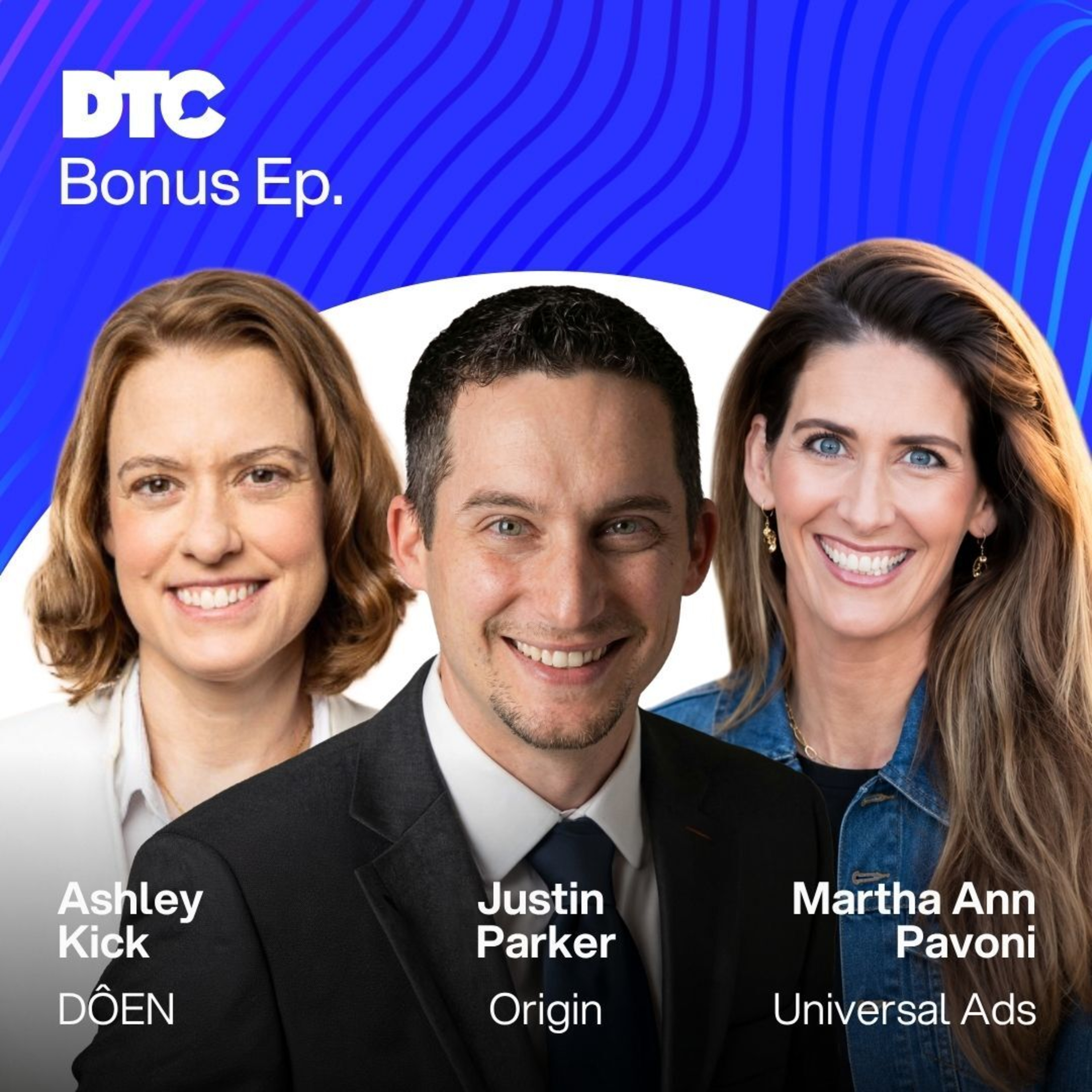
Bonus: How DÔEN, Origin & Universal Ads Actually Implement AI w/o Losing Their Brand | Whalies Panel
Jun 1000:32:41Summary readySubscribe to DTC Newsletter - https://dtcnews.link/signupRecorded live at The Whalies.Enterprise brands are past the prompt-and-generate phase of AI. The conversation has moved to connected data, agentic media buying, personalization, attribution, and the quiet operational wins that actually move the P&L.Eric Dyck sits down with Justin Parker (Origin), Ashley Kick (DÔEN), and Martha Ann Pavoni (Universal Ads) to unpack how leading ecommerce brands are embedding AI across the commerce stack — without losing trust, measurement, or human judgment.This episode is brought to you by Triple Whale. Much of the panel centers on Moby 2, Triple Whale's agentic operator for insights and media buying — Justin Parker runs all but three of his Meta campaigns through it and has been in the beta since the start.Learn more: Triple WhaleIn this episode:Why business context — not the model — is the missing ingredient in most AI implementationsHow DÔEN rolls out AI one workflow at a time to measure real incremental liftWhat happens when AI runs all but three of your Meta campaignsWhy connected TV and incrementality are eclipsing the clickThe retargeting decision where AI flatly contradicted itself a week laterWhere human oversight still matters most — and how to size it to riskWhat to steal:Build a trusted source of truth before you layer AI on topTest AI one workflow at a time so you can actually attribute the liftPoint AI at analysis and reporting first; hand it bigger decisions laterScale human-in-the-loop in proportion to dollars and customer exposureFor DTC operators managing multi-channel growth who need more output without adding headcount.Timestamps:0:00 AI Is Only As Good As The Data Behind It2:03 How Enterprise Brands Roll Out AI Without Breaking Things8:16 Why Some Brands Refuse To Use AI Creative18:28 Inside Agentic Media Buying And AI-Powered Marketing Teams30:03 The Biggest AI Opportunity Most Brands Are MissingSubscribe to DTC Newsletter - https://dtcnews.link/signupAdvertise on DTC - https://dtcnews.link/advertiseWork with Pilothouse - https://dtcnews.link/pilothouseFollow us on Instagram & Twitter - @dtcnewsletterWatch this interview on YouTube - https://dtcnews.link/video
Summary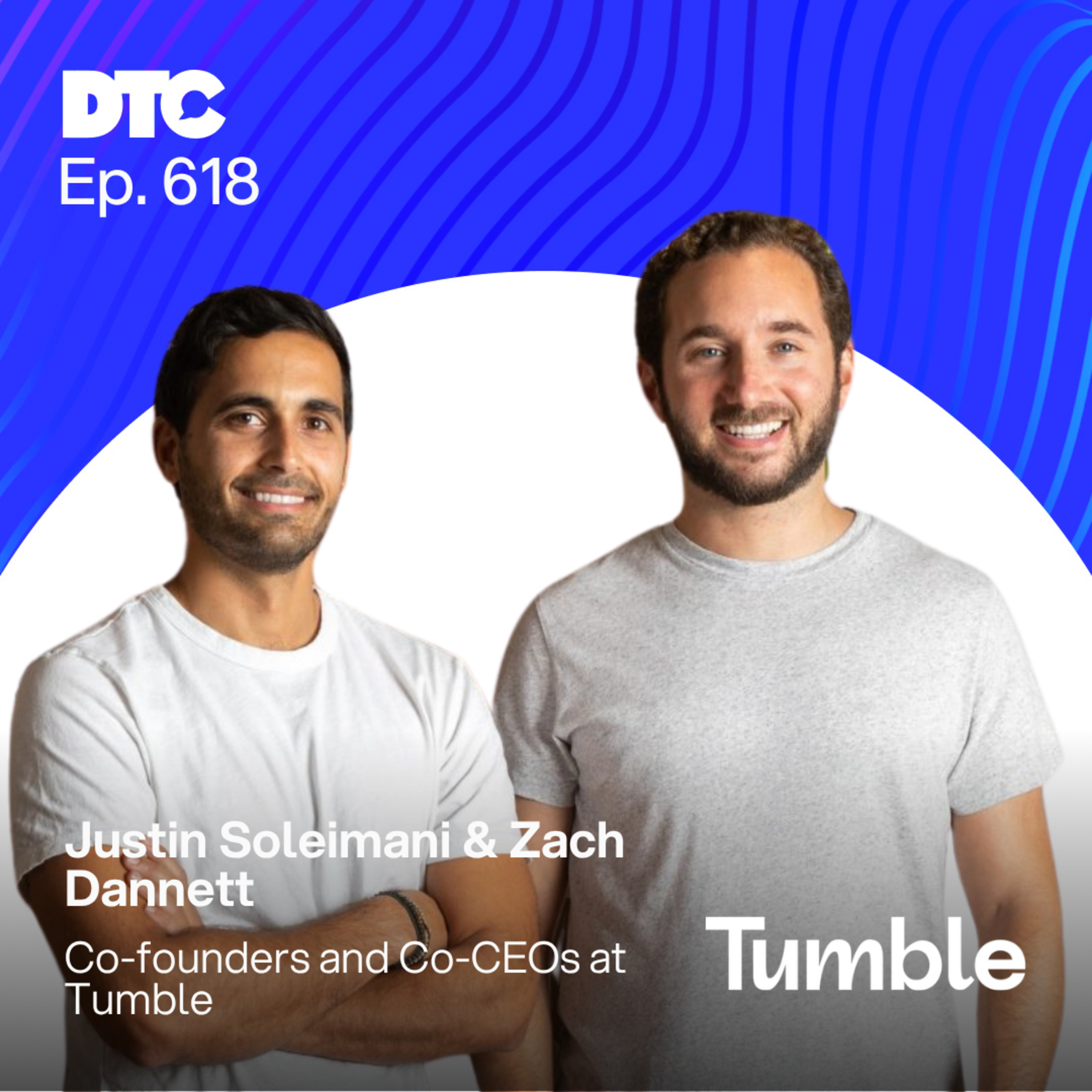
Ep 618: Inside Tumble – Scaling a Nine-Figure Rug Brand
Jun 800:45:57Summary readySubscribe to DTC Newsletter - https://dtcnews.link/signupMost founders want to be first in a category. Justin Soleimani and Zach Dannett did the opposite, and built Tumble into one of the standout washable rug brands without raising a dollar.In this episode, the Tumble co-founders and Co-CEOs break down how they entered a category Ruggable created, fixed the product complaints they found buried in thousands of reviews, and validated the whole thing on Indiegogo before opening a Shopify store. Then they get into the part most founders never have to survive: moving their entire supply chain out of China in 30 days when tariffs went from 25% to 175%.What's covered:Why they launched with 120 SKUs and used crowdfunding as a demand-forecasting tool, not just a fundraiserThe lot-number QC system that let them kill 90%+ of product defects within two yearsHow pre-orders and Shopify payouts gave them a negative cash conversion cycle while bootstrappingWhy they didn't hire a single full-time employee until they were well past $20M in revenueThe China-to-Thailand pivot and accidental Canada launch during the tariff crisisTheir YouTube incrementality test that ran head-to-head against Meta, and tiedJustin's contrarian take on vibe coding: automate manual tasks, don't rip out your tech stackWho this is for: Bootstrapped DTC founders, operators obsessed with margin and cash flow, and anyone building a physical-product brand in a competitive category.What to steal: The crowdfunding-as-validation playbook, the lot-tracking QC system, and the asset-light structure that let them move a supply chain overnight.Timestamps:00:00 Why Great Competitors Make You Better03:00 Launching 120 SKUs Through Crowdfunding10:00 Product Feedback at Scale18:00 Growing Past $20M With No Employees23:00 Surviving Tariffs and Moving ManufacturingSubscribe to DTC Newsletter - https://dtcnews.link/signupAdvertise on DTC - https://dtcnews.link/advertiseWork with Pilothouse - https://dtcnews.link/pilothouseFollow us on Instagram & Twitter - @dtcnewsletterWatch this interview on YouTube - https://dtcnews.link/video
Summary
Ep 617: How to Fix a Pooched Email Account: 10 Steps to Recover DTC Deliverability [TWBERP Preview]
Jun 500:27:14Summary readySubscribe to DTC Newsletter - https://dtcnews.link/signupThis Friday on AKNF we're handing over the feed for a special preview of The World's Best Email and Retention Podcast.Your email account doesn't break all at once. It rots. Open rates slide, a quarter of your sends quietly route to spam, your list keeps growing while the people who actually click disappear. Jordan Gordon calls that a pooched account, and in this episode he lays out the full ten-step recovery his team runs when a brand hands them one.If you own a DTC brand or run its email and retention, this is the playbook for the moment results go sluggish and your first instinct is to send more, the exact move that dug the hole.What's inside:How to tell whether you're in spam or your audience has simply checked outWhy opens are the weakest predictor of a future visit, and what to segment on insteadThe rewarm vs. soft rewarm decision, and how 5,000 addresses beat 150,000Why two campaigns a week plus real flows beats 22 sends a monthThe email-only promotion that rebuilds engagement and deliverability at onceTreating SMS like a paid channel with a real cost per clickThe stale-repeat-buyer metric that tells you recovery is workingWho this is for: DTC founders, operators, and email marketers inheriting or rescuing an underperforming Klaviyo account.What to steal: the open-rate floor, the two-campaigns-a-week cadence, and the stale-repeat-buyer segment you can build in Klaviyo this afternoon.Liked the preview? Subscribe to The World's Best Email and Retention Podcast.Timestamps:00:00 Fixing a Pooched Email Account03:02 Set Realistic Expectations for Recovery07:43 When to Rewarm Your Email List11:47 Why Opens Are a Bad Metric18:36 Email-Only Promotions to Boost Engagement24:25 The Stale Repeat Buyer MetricSubscribe to DTC Newsletter - https://dtcnews.link/signupAdvertise on DTC - https://dtcnews.link/advertiseWork with Pilothouse - https://www.pilothouse.co/?utm_source=AKNF617Follow us on Instagram & Twitter - @dtcnewsletterWatch this interview on YouTube - https://dtcnews.link/video
Summary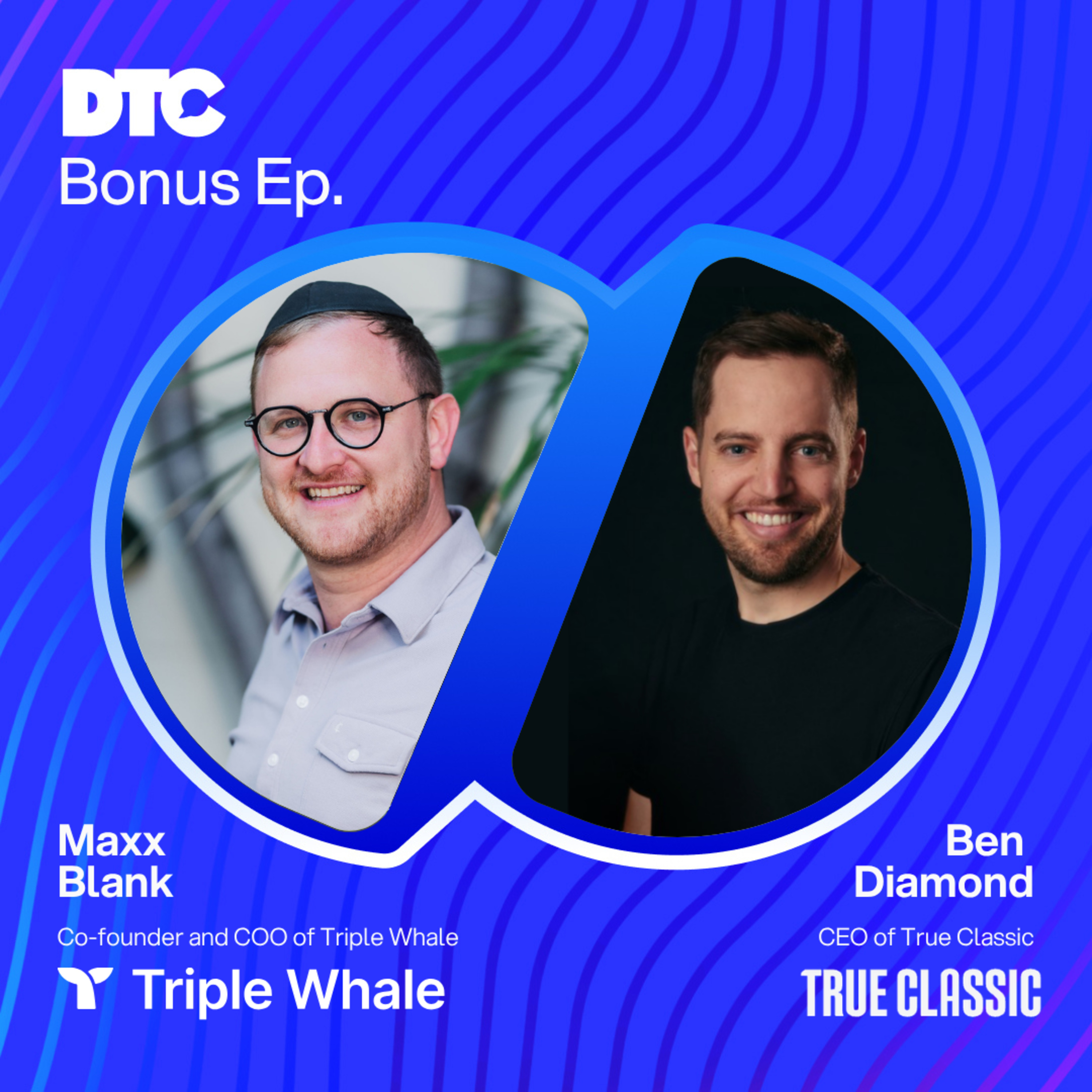
Bonus: 100% Agentic on Meta at a $1B Brand | True Classic's Ben Diamond & Triple Whale's Maxx Blank
Jun 300:48:24Summary readySubscribe to DTC Newsletter - https://dtcnews.link/signupRecorded live at True Classic HQ in Calabasas the day before the Whalies, this episode brings together two of the leaders most aggressively reshaping how ecommerce gets built.Ben Diamond is the CEO and co-founder of True Classic, the apparel brand that went from zero to over a billion in revenue in seven years and now ships to 190 countries. Maxx Blank is the co-founder and COO of Triple Whale, the AI operating system for ecommerce that he started with co-founder AJ Orbach, now running parts of media buying, creative, and conversion testing for over 60,000 brands.The conversation gets into the move that's reshaping the category: True Classic now runs 100 percent of its Meta spend through an autonomous media buyer, Moby 2, with AI agents acting as a CMO and creative strategist, reallocating budget daily based on whether the brand needs profit, inventory clearance, or launch defense.Maxx walks through what changed between Moby 1 and Moby 2, why the SaaS apocalypse doesn't touch infrastructure businesses, and the bigger industry shift from Software as a Service to Results as a Service. Ben talks about cutting millions in production costs by replacing in-office product photography with AI, the cultural mandate at True Classic to embrace AI, and where human judgment still belongs.If you're an operator wondering how far to push agentic into your business, or a founder wondering what the next decade of ecommerce actually looks like, this is the conversation for you.Find more about Triple Whale: https://www.triplewhale.com/?utm_source=dtc-newsletter&utm_medium=inf&utm_campaign=mkt-whaliesdtc-affiliate-426&utm_content=dtc Timestamps:00:00 AI Is Transforming Ecommerce Faster Than Ever02:14 What Moby 2 Actually Does for Brands11:20 Why True Classic Went All-In on AI16:10 Cutting Millions in Creative Production Costs24:38 The Future of One-to-One Marketing at Scale43:20 Predictions for the Future of Ecommerce and AISubscribe to DTC Newsletter - https://dtcnews.link/signupAdvertise on DTC - https://dtcnews.link/advertiseWork with Pilothouse - https://dtcnews.link/pilothouseFollow us on Instagram & Twitter - @dtcnewsletterWatch this interview on YouTube - https://dtcnews.link/video
Summary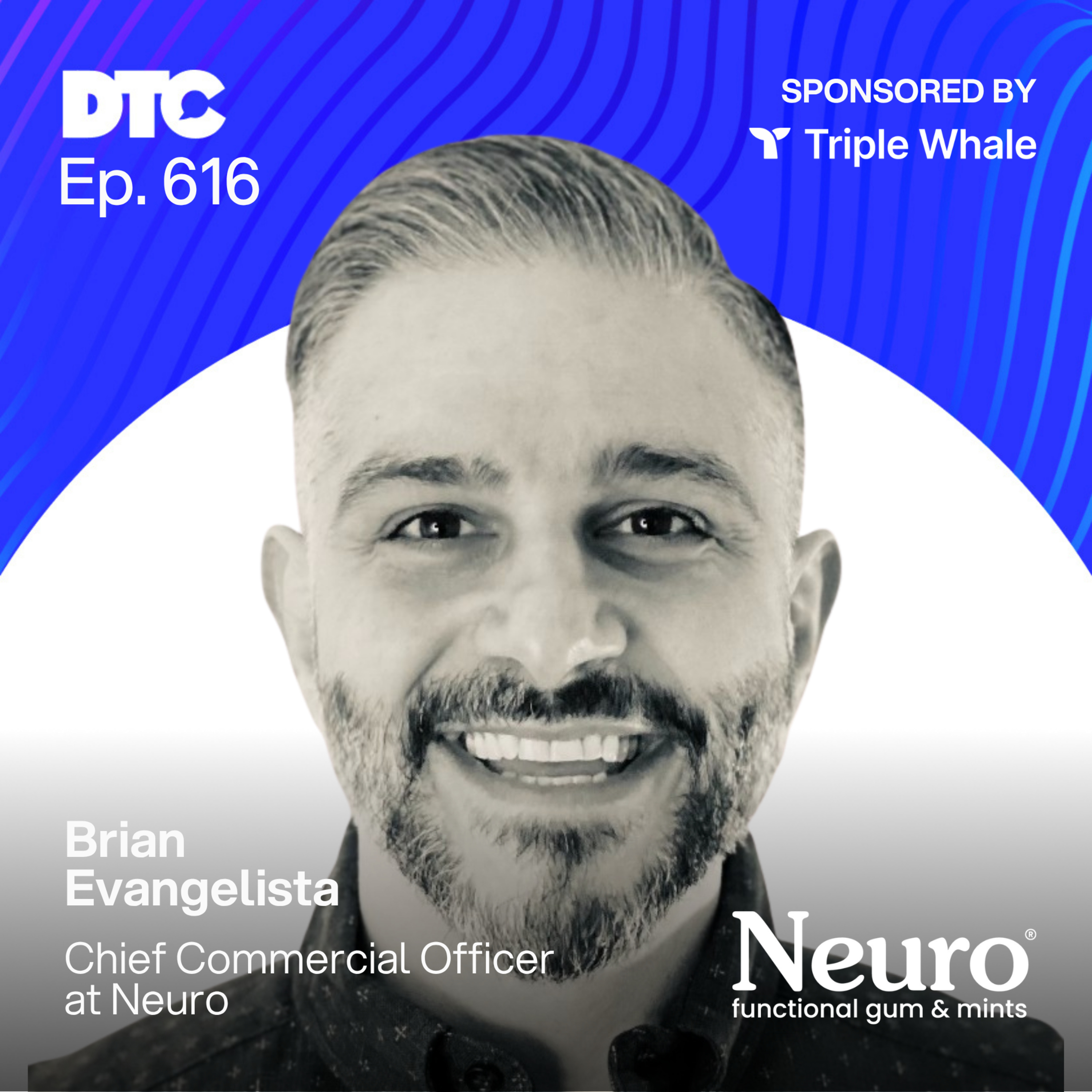
Ep 616: How Neuro Built a Nine-Figure Smart Gum Brand Before Expanding to Retail.
Jun 100:42:43Summary readySubscribe to DTC Newsletter - https://dtcnews.link/signupNeuro didn't fight for checkout shelf space first. They built a nine-figure online business through TikTok Shop, creator marketing, Amazon, and DTC, then used that momentum to walk into Walmart, Costco, CVS, and 7-Eleven with demand already proven.In this episode of the DTC Podcast, Eric talks with Brian Evangelista, Chief Commercial Officer at Neuro, about creating a category that didn't exist, running an affiliate program with tens of thousands of creators, and what actually changes when a digitally native brand wakes up as a real retail business.Built for DTC founders scaling from $5M–$100M who are trying to turn ecom momentum into retail distribution.We also get into:Why TikTok Shop worked so well early on, and what changed when it got pay-to-playHow creator incentives shifted once GMV Max rolled outThe retail launch strategy behind Walmart, Costco, CVS, and 7-ElevenWhy retail completely reshapes your P&L, ops, and marketing stackThe hidden operational tax of moving from DTC into omnichannelHow Neuro frames category creation vs stealing shareThe strategy behind the "Your Gum Is Dumb" sloth campaignWhy brand marketing started making sense only after retail expansionWho this episode is for: DTC founders, retail operators, consumer brand marketers, TikTok Shop teams, and brands considering omnichannel expansion.What to steal:Build demand digitally before asking retail to believe in your categoryUse creator momentum as proof for retail buyersTreat retail launches like media moments, not inventory placementSubscribe to DTC Newsletter - https://dtcnews.link/signupAdvertise on DTC - https://dtcnews.link/advertiseWork with Pilothouse - https://dtcnews.link/pilothouseFollow us on Instagram & Twitter - @dtcnewsletterWatch this interview on YouTube - https://dtcnews.link/video
Summary
Ep 615: Prepare Your Brand for Agentic Commerce (How LLMs Are Collapsing the Consideration Phase)
May 2900:36:26Summary readySubscribe to DTC Newsletter - https://dtcnews.link/signupThe consideration phase is collapsing thanks to LLM shopping.Awareness still happens on Meta. Conversion still happens on a PDP. But the comparison and research middle, the part brands have spent a decade optimizing, is increasingly happening inside an LLM the customer already trusts.20% of holiday shoppers used an LLM in their purchase path last Q4. Google I/O just demoed one-tap concert tickets from a photo. Amazon folded Rufus into Alexa for Shopping. The behavior is moving fast enough that operators need to start preparing for Q4 now.Eric sits down with Aves and Daniel from Pilothouse to unpack what's actually happening and the work brands can start this quarter.Inside the episode:Why customers trust their LLM more than your adDaniel on why he stopped going to Amazon to compare vitaminsThe persona mismatch that hurts brands more than it used toWhy reviews and earned media matter more than your landing pageWhat changes for abandon cart and retargetingTwo operator-tested audits to see if your brand shows up in ChatGPT, Claude, and GeminiFor founders and operators who want to be recommended when the customer asks.What to Steal:Three things you can do this week.Run the prompt audit. Take your top five Google queries, run them through ChatGPT, Claude, and Gemini. Track who gets recommended, who gets cited, and whether you show up at all. Daniel uses this as his baseline before any other AI-visibility work.Pick one brand truth and repeat it everywhere. Scattershot positioning loses to consistent positioning. If every ad pitches a different angle to a different persona, an LLM has nothing coherent to summarize about you.Add dates to your blog posts and PR pages. Recency factors into LLM citation. Old content gets de-prioritized even when it's accurate.Subscribe to DTC Newsletter - https://dtcnews.link/signupAdvertise on DTC - https://dtcnews.link/advertiseWork with Pilothouse - https://www.pilothouse.co/?utm_source=AKNF615Follow us on Instagram & Twitter - @dtcnewsletterWatch this interview on YouTube - https://dtcnews.link/video
Summary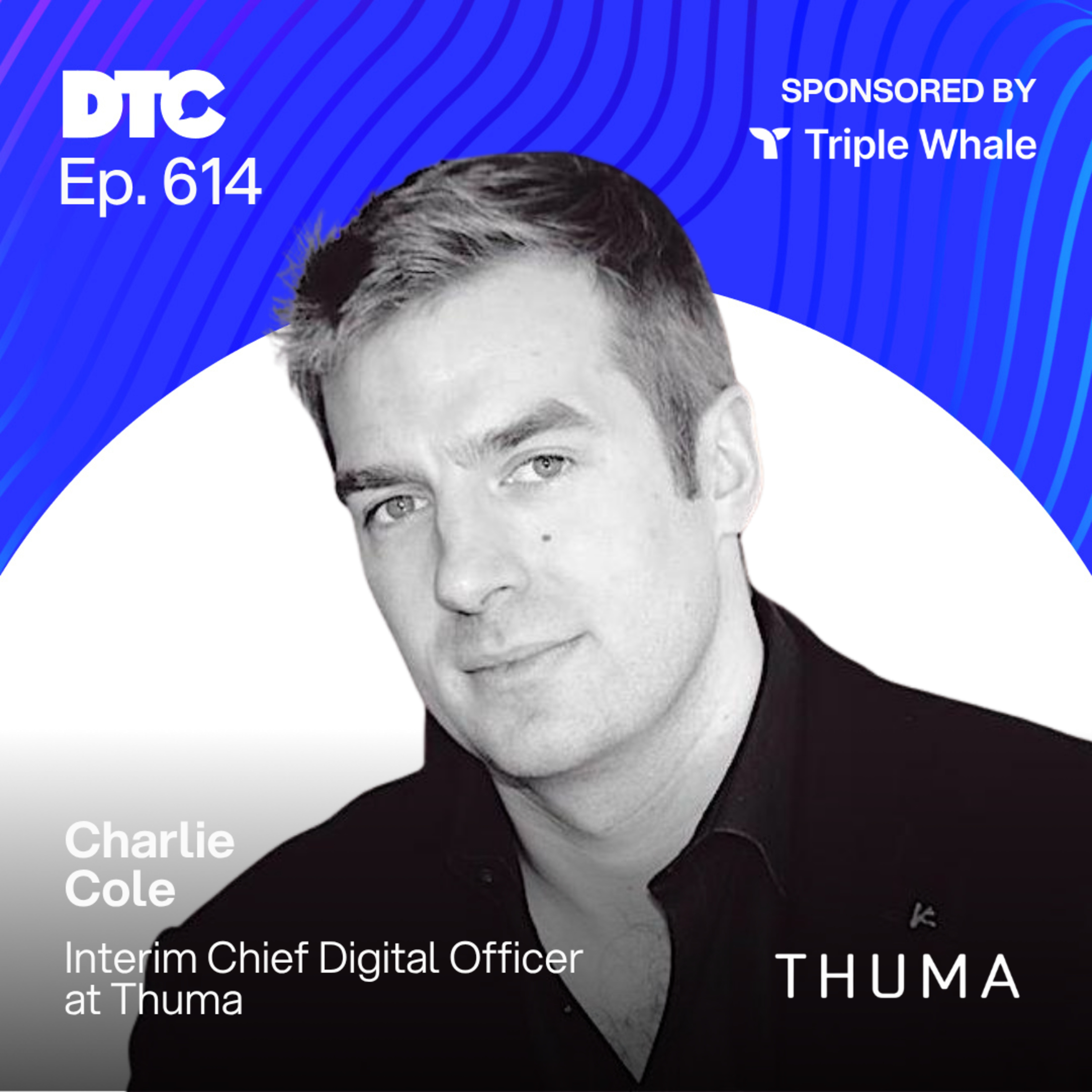
Ep 614: Creative Is the New Conversion, Not Just Targeting -- Charlie Cole, Thuma
May 2500:49:21Summary readySubscribe to DTC Newsletter - https://dtcnews.link/signupCharlie Cole watched FTD go from a $1.8 billion publicly traded company to a $60 million bankruptcy auction in eight months. His first day as CEO was March 23, 2020, the first day of national lockdown.Before that he ran digital at Tumi, Samsonite, Lucky Brand, and Shift Nutrition. Today he's interim Chief Digital Officer at Thuma.This episode is a tactical sit-down on what actually drives growth right now in a Meta + AI world.In this episode:Why "creative is the new targeting" is only half the answerThe exact death spiral most DTC brands follow on the way to margin collapse (no sale, semi-annual sale, sale page, sitewide 20%, Amazon, done)How Charlie engineered personas at FTD across customer, consumer, and eventThe florist's choice insight: highest NPS in the category, by 20-40%The 2011 Dr. Oz campaign that nailed funnel congruency before anyone called it thatWhy personalization was a misnomer until about two years agoThe three "swimsuit for vacation" shoppers who should never see the same pageWhy YouTube is still massively underutilized, and why most brands run it wrongThe product question that decides whether any of this mattersWho it's for: DTC founders and operators scaling from $10M to $250M who want to grow without turning their brand into a discount machine.What to steal:Build acquisition around your highest-LTV segments, not your lowest CACTreat creative and landing pages as one system, not two teamsStop letting platforms grade their own homework on attributionAudit where you sit on the discount death spiral before it owns youTimestamps:0:00 Career Journey Into Ecommerce2:48 Inside the FTD Turnaround14:20 How Customer Behavior Changed During COVID23:18 Creative Is The New Targeting36:05 AI’s Biggest Ecommerce Unlock43:02 Why Most Brands Test Creative WrongSubscribe to DTC Newsletter - https://dtcnews.link/signupAdvertise on DTC - https://dtcnews.link/advertiseWork with Pilothouse - https://dtcnews.link/pilothouseFollow us on Instagram & Twitter - @dtcnewsletterWatch this interview on YouTube - https://dtcnews.link/video
Summary
Ep 613: AI Is a Stack of Two-by-Fours. What Are You Building With It? (Plus Meet Gary and Blanche)
May 2200:25:10Summary readySubscribe to DTC Newsletter - https://dtcnews.link/signupBraydon's back on AKNF with the most tactical AI-for-agencies episode we've recorded.Eric opens with a Jeff Shannon line worth the whole listen: AI right now is a giant stack of two-by-fours that everyone got handed for free. By itself, it's not a chair, it's not a house, it's not a sofa. The value shows up when someone actually builds something with it.Then Braydon walks through what he's been building.Inside: connecting Claude to Motion to audit ad-to-landing-page mismatches, then having Claude vibe-code a new PDP in HTML in 6 hours instead of a week in Instapage. The Microsoft Clarity connector that nobody's talking about (free heatmaps, free recordings, API access). The Higgsfield connector for generating raw 4K assets through Claude with Nano Banana Pro and Seedance. Why Claude Design is worth experimenting with for brand-sensitive clients. And a peek behind the curtain at Gary and Blanche, the AI media buyer and creative strategist Jeff is running on DTC's own Meta account.Plus: why the em-dash is dead, the semicolon problem nobody's solved, and the actual reason Claude reads cleaner than ChatGPT for enterprise work.If you've been "playing with AI" and want to actually build something with it, this is the episode.Catch the DTC and Pilothouse crew at The Whalies May 19 in LA.Timestamps:00:00 AI Is Raw Material02:36 Why AI Needs Human Builders04:18 Claude Building Landing Pages10:02 AI-Powered Heatmap Analysis16:36 Higgsfield + Claude Creative WorkflowSubscribe to DTC Newsletter - https://dtcnews.link/signupAdvertise on DTC - https://dtcnews.link/advertiseWork with Pilothouse - https://www.pilothouse.co/?utm_source=AKNF613Follow us on Instagram & Twitter - @dtcnewsletterWatch this interview on YouTube - https://dtcnews.link/video
Summary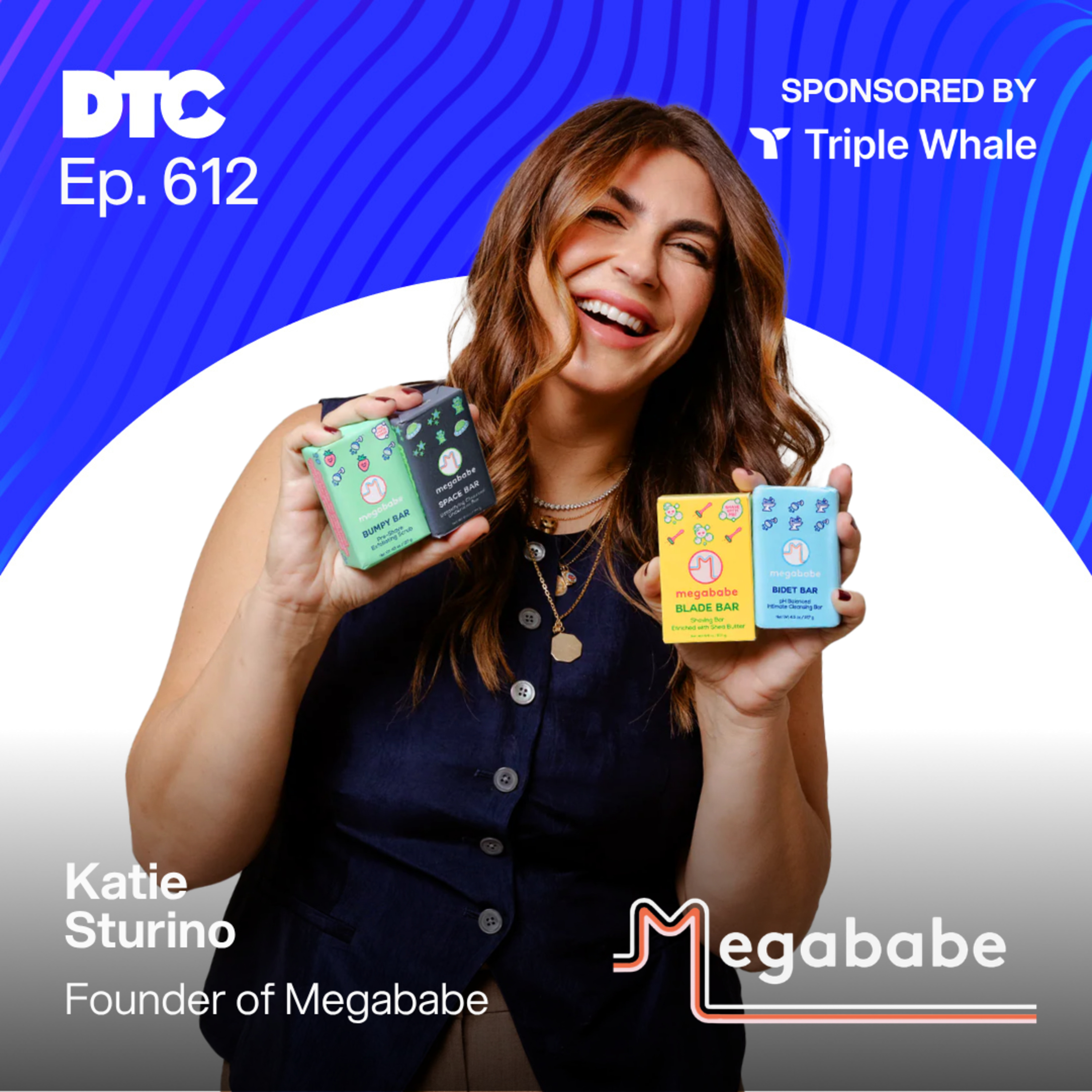
Ep 612: The Bootstrap Beauty Brand Going Up Against BlackRock in Target – Megababe
May 1800:36:47Summary readySubscribe to DTC Newsletter - https://dtcnews.link/signupKatie Sturino built Megababe with 60,000 followers, two co-founders who'd never had chafe, and an MOQ of 20,000 units stacked in her parents' garage. Eight years later it's profitable, in Target, Walmart, CVS, Nordstrom, Anthropologie, and on Amazon. Never raised a dollar. Never grew less than 33% year over year.In this episode Katie walks through how she built a category that didn't exist. Manufacturers didn't know what chafe was. Press didn't know what chafe was. The Today Show hit on June 30, 2017 and they sold out every unit by July 1. Then the real work started.Inside: why retail is when the grind begins (not when you've made it), why she still ranks "people just dealing with it" as her biggest competitor, the husband-given marketing fix that solved deodorant aisle confusion in one sticker, the accidental Amazon Super Bowl ad placement, why their hemorrhoid product is a top seller on Amazon, and the moment her sister convinced her soap was worth doing.Plus the new "I'm Not Fine Index" campaign, why NYC taxi ads outperform every digital channel they run, and the one piece of advice Katie has for anyone shipping a product in 2026.Catch the DTC and Pilothouse crew at The Whalies May 19 in LA.Timestamps:0:00 Building a brand around chafe2:58 How Megababe started11:00 Selling out after the Today Show14:10 Retail growth at Target and Walmart20:05 Why Megababe started advertising27:10 Building a real brand voiceSubscribe to DTC Newsletter - https://dtcnews.link/signupAdvertise on DTC - https://dtcnews.link/advertiseWork with Pilothouse - https://dtcnews.link/pilothouseFollow us on Instagram & Twitter - @dtcnewsletterWatch this interview on YouTube - https://dtcnews.link/video
Summary
Ep 611: Velocity Isn't Strategy – Pilothouse on the Andromeda Creative Trap
May 1500:24:10Summary readySubscribe to DTC Newsletter - https://dtcnews.link/signupAbby and Taylor from Pilothouse settle the loudest debate in media buying right now: does velocity equal strategy?Short answer: no. Long answer: this whole episode.Inside, Abby (art) and Taylor (science) break down what a real creative system looks like under Andromeda, how to spot AI slop in an ad library at a glance, and why the squint test is still the fastest way to audit your output. They get into the frequency spike that hit when one apparel brand over-segmented celebrity drops, why Taylor still runs legacy Advantage+ Shopping campaigns three years later, and how a Nick DiGiovanni partnership ran at 0.5 ROAS on platform but pulled a 6 ROAS once Northbeam's 60-day window kicked in.Plus: why gifting ads should still target women, three exercises to run on your ad account before Q4, and the difference between feeding the algorithm and spamming the button.If you're making 50 ads a week and not sure any of them are doing a job, this one's for you.Catch the Pilothouse and DTC crew at The Whalies May 19 in LA, and our DTC operator dinner May 20.Timestamps:0:00 Why velocity isn’t strategy2:38 The problem with endless ad variations5:12 Best Meta account structures today8:07 How to audit creative quality14:08 Building a real creative systemSubscribe to DTC Newsletter - https://dtcnews.link/signupAdvertise on DTC - https://dtcnews.link/advertiseWork with Pilothouse - https://www.pilothouse.co/?utm_source=AKNF611Follow us on Instagram & Twitter - @dtcnewsletterWatch this interview on YouTube - https://dtcnews.link/video
Summary