
Podcast
DTC Podcast
Hosted by DTC Newsletter and Podcast · EN
Weekly discussions between disruptive direct to consumer ecommerce brands and our amazing team about marketing, funnels, and everything scaling related. Subscribe to our newsletter for highlights and step by step tactical insights 👉🏻 📦 directtoconsumer.co
230episodes
Episodes
Newest firstAll episodes

Ep 611: Velocity Isn't Strategy – Pilothouse on the Andromeda Creative Trap
May 1500:24:10Summary readySubscribe to DTC Newsletter - https://dtcnews.link/signupAbby and Taylor from Pilothouse settle the loudest debate in media buying right now: does velocity equal strategy?Short answer: no. Long answer: this whole episode.Inside, Abby (art) and Taylor (science) break down what a real creative system looks like under Andromeda, how to spot AI slop in an ad library at a glance, and why the squint test is still the fastest way to audit your output. They get into the frequency spike that hit when one apparel brand over-segmented celebrity drops, why Taylor still runs legacy Advantage+ Shopping campaigns three years later, and how a Nick DiGiovanni partnership ran at 0.5 ROAS on platform but pulled a 6 ROAS once Northbeam's 60-day window kicked in.Plus: why gifting ads should still target women, three exercises to run on your ad account before Q4, and the difference between feeding the algorithm and spamming the button.If you're making 50 ads a week and not sure any of them are doing a job, this one's for you.Catch the Pilothouse and DTC crew at The Whalies May 19 in LA, and our DTC operator dinner May 20.Timestamps:0:00 Why velocity isn’t strategy2:38 The problem with endless ad variations5:12 Best Meta account structures today8:07 How to audit creative quality14:08 Building a real creative systemSubscribe to DTC Newsletter - https://dtcnews.link/signupAdvertise on DTC - https://dtcnews.link/advertiseWork with Pilothouse - https://www.pilothouse.co/?utm_source=AKNF611Follow us on Instagram & Twitter - @dtcnewsletterWatch this interview on YouTube - https://dtcnews.link/video
Summary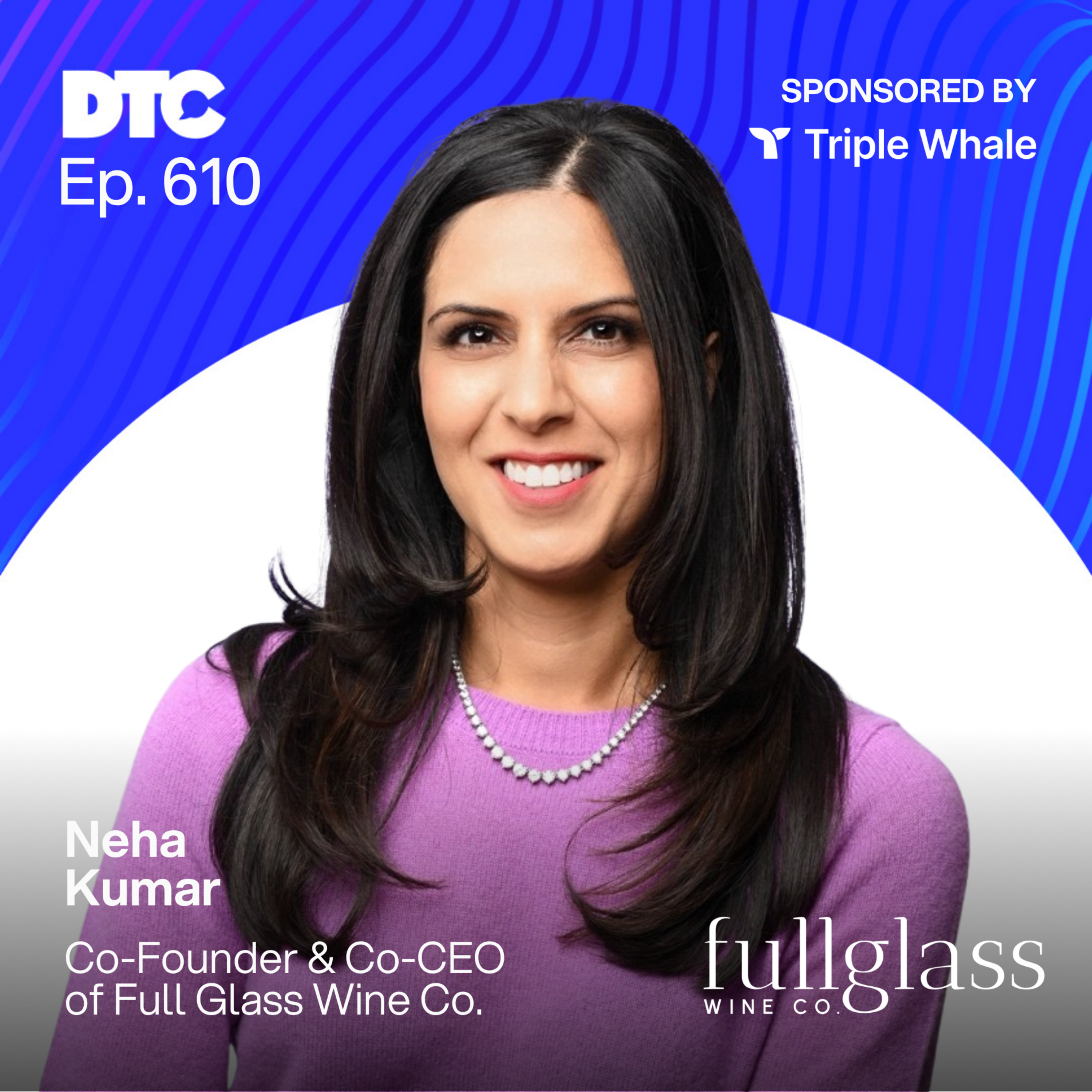
Ep 610: How Full Glass Built a $200M Wine Rollup by Fixing DTC Unit Economics
May 1100:46:28Summary readySubscribe to DTC Newsletter - https://dtcnews.link/signupGet your tickets to The Whalies: triplewhale.com/whalies?i=dtc&utm_source=dtc-newsletter&utm_medium=inf&utm_campaign=mkt-whaliesdtc-affiliate-426&utm_content=dtc Full Glass Wine Co.Neha Kumar joins the podcast to break down how Full Glass Wine Co. acquired 7 DTC wine companies, integrated them under one operating system, and scaled to a $200M platform in under two years.This wasn’t a “buy brands and hope” strategy. Neha explains how COVID-era DTC brands overbought inventory, ignored unit economics, and optimized for growth over profitability — creating one of the biggest acquisition opportunities in modern ecommerce.For DTC founders scaling from $5M–$50M who want to improve retention, fix unit economics, and build operational leverage across brands.Inside the episode:Why subscription models quietly broke a lot of DTC wine businesses The exact operational changes Full Glass uses to make acquisitions profitable in 60–120 days How they centralized shipping, finance, SMS, and retention while preserving each brand’s identity Why retention, not acquisition, became the core growth engine The hidden downside of emailing subscription customers too often How Wink’s 7M-email quiz funnel became a massive acquisition asset Why customer segmentation matters more than product assortment in brand acquisitions The “three legs of the tripod” framework for building durable DTC companies: marketing, finance, and operations Neha’s “Year of Yes” mindset shift inspired by Willy Wonka that changed how she built companies Who this is for:Operators, retention marketers, DTC founders, PE-backed ecommerce brands, acquisition entrepreneurs, and anyone trying to scale profitably after the cheap-CAC era ended.What to steal:Move from monthly shipments to higher-AOV quarterly bundles to fix shipping economics Centralize infrastructure, not brand voice Treat retention like the business engine, not an afterthought Timestamps:0:00 Intro to Full Glass Wine Co2:18 Why DTC wine brands struggled after COVID6:12 How Winc collapsed from inventory overload8:05 The 3-part formula for profitable DTC brands10:05 What Full Glass looks for in acquisitions13:05 Centralizing customer service across wine brands15:02 Building brands around customer identity17:42 The Willy Wonka “year of yes” mindset21:58 What happens after acquiring a company24:45 Why subscription models don’t work for wine29:12 Storytelling vs transactional retention emails32:18 How Full Glass approaches retention marketing35:05 Managing inventory and cash flow in wine37:15 Trusting intuition as an operator40:18 How Full Glass is using AI internally42:05 Are the next generation of entrepreneurs ready?45:00 What’s next for Full Glass Wine CoSubscribe to DTC Newsletter - https://dtcnews.link/signupAdvertise on DTC - https://dtcnews.link/advertiseWork with Pilothouse - https://dtcnews.link/pilothouseFollow us on Instagram & Twitter - @dtcnewsletterWatch this interview on YouTube - https://dtcnews.link/video
Summary
Ep 609: The New Rules for Meta Attribution (and the setting you need to test NOW)
May 800:25:05Summary readySubscribe to DTC Newsletter - https://dtcnews.link/signupGet your tickets to The Whalies: triplewhale.com/whalies?i=dtc&utm_source=dtc-newsletter&utm_medium=inf&utm_campaign=mkt-whaliesdtc-affiliate-426&utm_content=dtc Meta attribution has changed, and most brands are still reading performance the same way they were a year ago.Jacob, Head of Socials at Pilothouse, walks through what’s different now. Click-only attribution, incremental measurement, and how those shifts affect the way conversions show up in your dashboard.If you’ve noticed numbers feeling off lately, this will help you understand why and what to actually pay attention to.For DTC founders and marketers spending $50K–$500K/month on Meta who want to understand what’s actually driving conversions.What click-only attribution removes from reporting How incremental attribution works in practice (without the fluff) Why conversion numbers feel different even when performance hasn’t changed much Where Meta data and third-party tools start to diverge How Pilothouse is thinking about reporting and decision-making now Who this is for:DTC operators, performance marketers, founders scaling paid socialWhat to steal:Check incremental conversions alongside total before making changes Look at channel performance in context of total revenue, not in isolation Use Meta data as one input, not the final answer Timestamps:00:00 Intro02:28 Meta’s New Attribution Shift05:03 How Incremental Attribution Works08:11 Conversion Windows and Optimization10:15 Why Better Signals Improve Meta Performance13:02 Agentic Ads Explained16:02 AI Business Agents and Customer Conversations18:05 Setting Up Meta’s AI Agents19:28 AI Ad Automation and Testing Strategies21:14 Q2 Meta Performance Trends23:02 Why Meta Reduced Over-AttributionSubscribe to DTC Newsletter - https://dtcnews.link/signupAdvertise on DTC - https://dtcnews.link/advertiseWork with Pilothouse - https://www.pilothouse.co/?utm_source=AKNF609Follow us on Instagram & Twitter - @dtcnewsletterWatch this interview on YouTube - https://dtcnews.link/video
Summary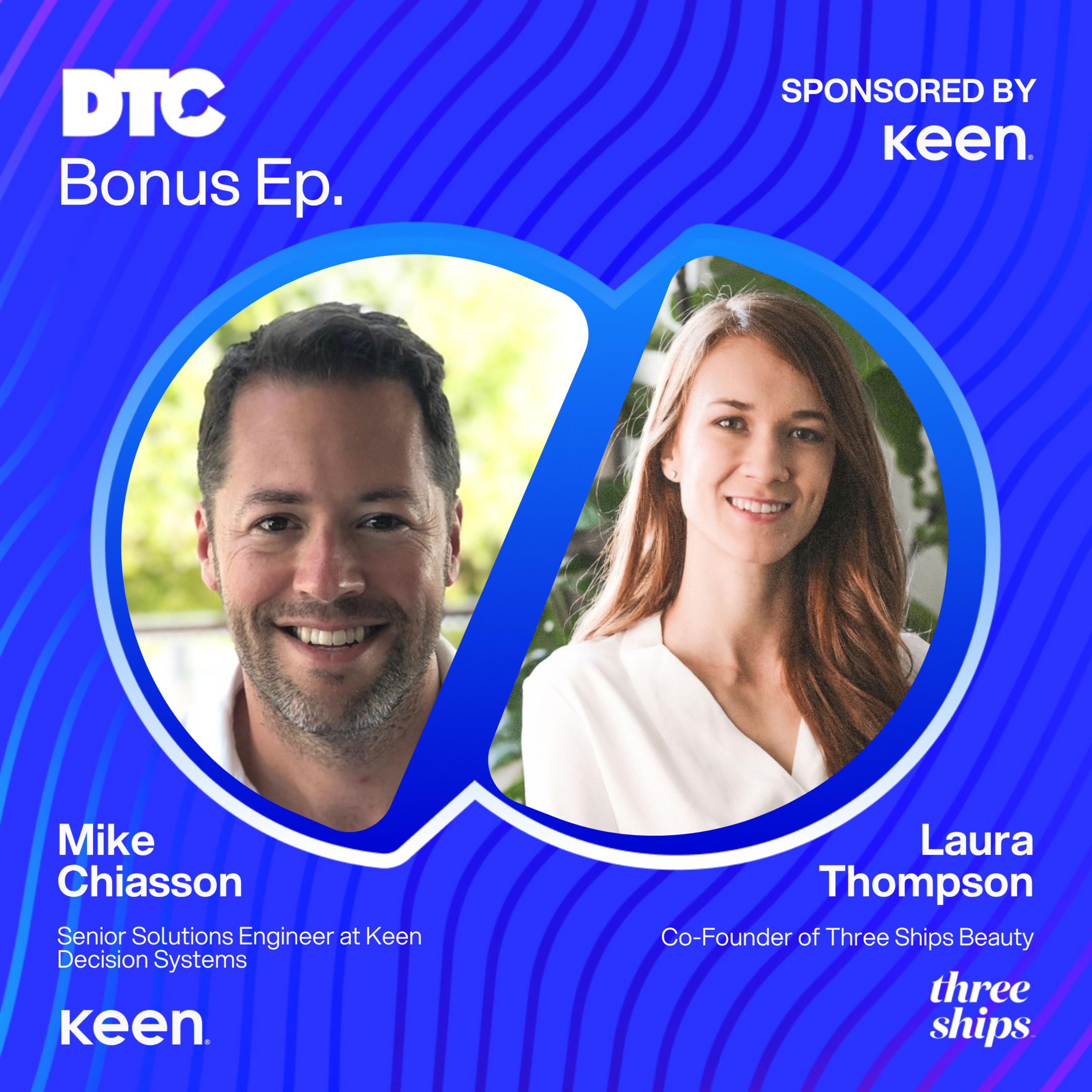
Bonus: Revenue Is Lying to You: Planning, Execution and What Actually Drives Growth with Three Ships and Keen's Brand Study
May 600:46:40Summary readySubscribe to DTC Newsletter - https://dtcnews.link/signupWe surveyed 540+ DTC operators on how they plan and forecast. This episode, we break down the data and see why most brands are stuck reacting. We’re joined by Laura Thompson, co-founder of Three Ships Beauty, one of the few who's figured out how to run a tight, fast, 8-figure brand without drifting into chaos, and Mike Chiasson, Senior Solutions Engineer from Keen Decision Systems, to pressure-test the Three Ships Beauty playbook against the data.Grab your free copy of the report here: https://www.directtoconsumer.co/thereactiveloopreportIn this episode:The biggest gaps in how DTC brands planWhy "revenue is a lagging indicator"The bottom-up forecasting Three Ships usesThe KPI ownership system across the whole teamWhen scenario planning is worth the time, and when it's just noiseIf you’re a DTC operator past $5M who wants to stop reacting and start running a solid plan, this episode is a must listen.Timestamps0:00 Planning vs reacting in ecommerce2:03 Why most brands only plan 1–6 months ahead4:02 Bottom-up forecasting vs top-down forecasting6:06 Scenario planning and external market risks9:02 When media spend actually works harder11:01 The reactive loop hurting DTC brands14:03 Why brands over-invest in bottom funnel15:06 Weekly KPI reviews and forecasting systems18:02 The danger of reacting to noisy data20:04 Leading vs lagging indicators in ecommerce23:02 How talent impacts business performance24:58 Product launch delays and forecasting pivots26:53 Scenario planning for tariffs and supply chain risk31:55 Should brands worry about oil shocks?35:34 The biggest gap between planning and execution38:02 KPI systems that drive accountability42:16 The right way to plan for growth44:02 Why reactive brands fall behindSubscribe to DTC Newsletter - https://dtcnews.link/signupAdvertise on DTC - https://dtcnews.link/advertiseWork with Pilothouse - https://dtcnews.link/pilothouseFollow us on Instagram & Twitter - @dtcnewsletterWatch this interview on YouTube - https://dtcnews.link/video
Summary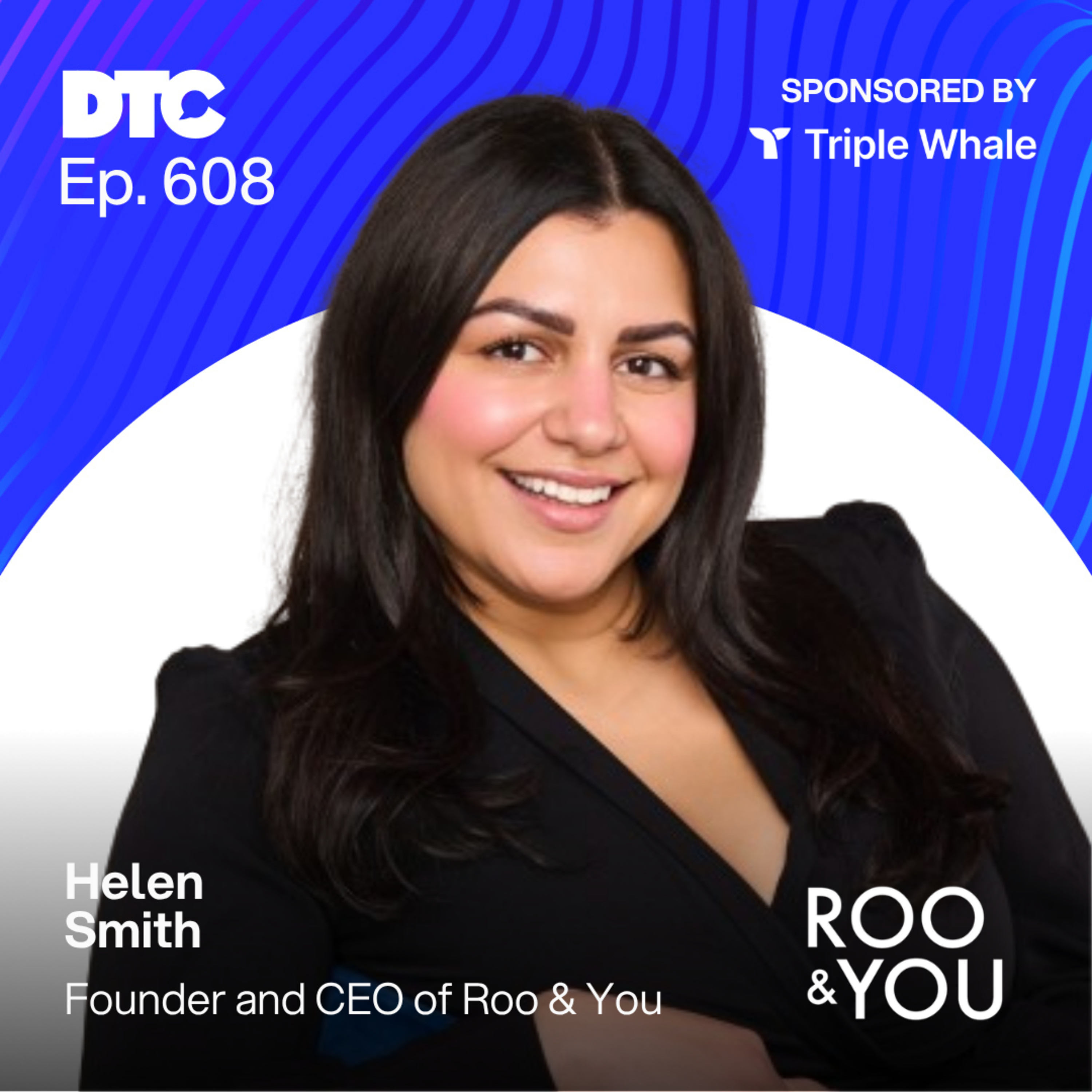
Ep 608: She Hit 100K Customers Without Running a Single Ad | Roo & You
May 400:49:47Summary readySubscribe to DTC Newsletter - https://dtcnews.link/signupGet your tickets to The Whalies: triplewhale.com/whalies?i=dtc&utm_source=dtc-newsletter&utm_medium=inf&utm_campaign=mkt-whaliesdtc-affiliate-426&utm_content=dtc Helen Smith built Roo & You from hand-sewn mask lanyards in 2020 into a 100,000+ customer brand, and didn't touch paid ads for the first 3.5 years. In this episode she walks through the Facebook community that became her growth engine, how she landed Warner Bros and Harry Potter as a licensing partner without a media buyer, and what scaling through a tariff war actually looks like behind the scenes.For DTC founders scaling from $1M to $10M who want to lower CAC and build a real retention moat.What we cover:The mask lanyard side hustle that funded her first container of play couchesHow a private Facebook group became Roo & You's primary growth engineThe one-strike kindness rule that keeps the community aliveCold-DMing Warner Bros on LinkedIn (and getting a yes)Why licensing is a marketing channel, not a revenue playAdding tariffs as a line item instead of a stealth price hikeLaunching an affiliate program in November for existing customersWho this is for: Founders leaning too hard on paid, or operators who want to build a community moat before they scale spend.What to steal:Show up in other people's communities for months before launching your ownSet strict community rules on day one, not after things go sidewaysMake tariffs a visible line item to keep customer trust intactHand affiliate codes to existing customers before paying creators who've never used the productTimestamps:00:00 Building a brand through community02:00 Using data to make better decisions04:00 Handling tariffs and margin pressure06:00 Launching through Facebook groups08:00 Early demand and product expansion10:00 Finding manufacturers and testing products12:00 Pricing, value, and product longevity14:00 Organic growth without paid ads16:00 Transitioning into paid advertising18:00 Leveraging community for content and growth20:00 Licensing deals and brand partnerships24:00 Structuring better partnership agreements27:00 Challenges with licensing approvals29:00 Why partnerships are for marketing not growth30:00 Founder confidence and building in public37:00 Expanding into the US market40:00 Choosing the right marketing agency42:00 Turning customers into advocates47:00 Advice for founders building a brandSubscribe to DTC Newsletter - https://dtcnews.link/signupAdvertise on DTC - https://dtcnews.link/advertiseWork with Pilothouse - https://dtcnews.link/pilothouseFollow us on Instagram & Twitter - @dtcnewsletterWatch this interview on YouTube - https://dtcnews.link/video
Summary
Ep 607: Rufus Reads Your Images – Why 40% of Amazon Searches Are Already AI-Driven
May 100:29:45Summary readySubscribe to DTC Newsletter - https://dtcnews.link/signupGet your tickets to The Whalies: triplewhale.com/whalies?i=dtc&utm_source=dtc-newsletter&utm_medium=inf&utm_campaign=mkt-whaliesdtc-affiliate-426&utm_content=dtc Amazon’s AI assistant Rufus is already in ~40% of shopping sessions, and according to Amazon CEO Andy Jassy, customers who use it are 60–100% more likely to purchase.Most brands haven’t adjusted.Tyler Mazur (Head of Amazon @ Pilothouse) breaks down what Rufus is actually changing inside Amazon — from how products get discovered to how listings are interpreted across text, images, and context.For DTC founders and Amazon operators who want to stay visible as AI-driven discovery becomes the defaultWhat we cover:What Rufus is actually doing inside the Amazon shopping experience Why product discovery is shifting from keywords → problems The marketing words that add zero value (and what to say instead) Why Rufus reads your product images for context How backend keywords should be used now A simple 3-part plan to improve visibility this week Who this is for:Brands selling on Amazon that want an edge beyond just spending more on adsWhat to steal:Replace vague adjectives with real use-case language Add context everywhere: PDP, backend, images Make your listings easier for AI to understand, not just humansSubscribe to DTC Newsletter - https://dtcnews.link/signupAdvertise on DTC - https://dtcnews.link/advertiseWork with Pilothouse - https://www.pilothouse.co/?utm_source=AKNF607Follow us on Instagram & Twitter - @dtcnewsletterWatch this interview on YouTube - https://dtcnews.link/video
Summary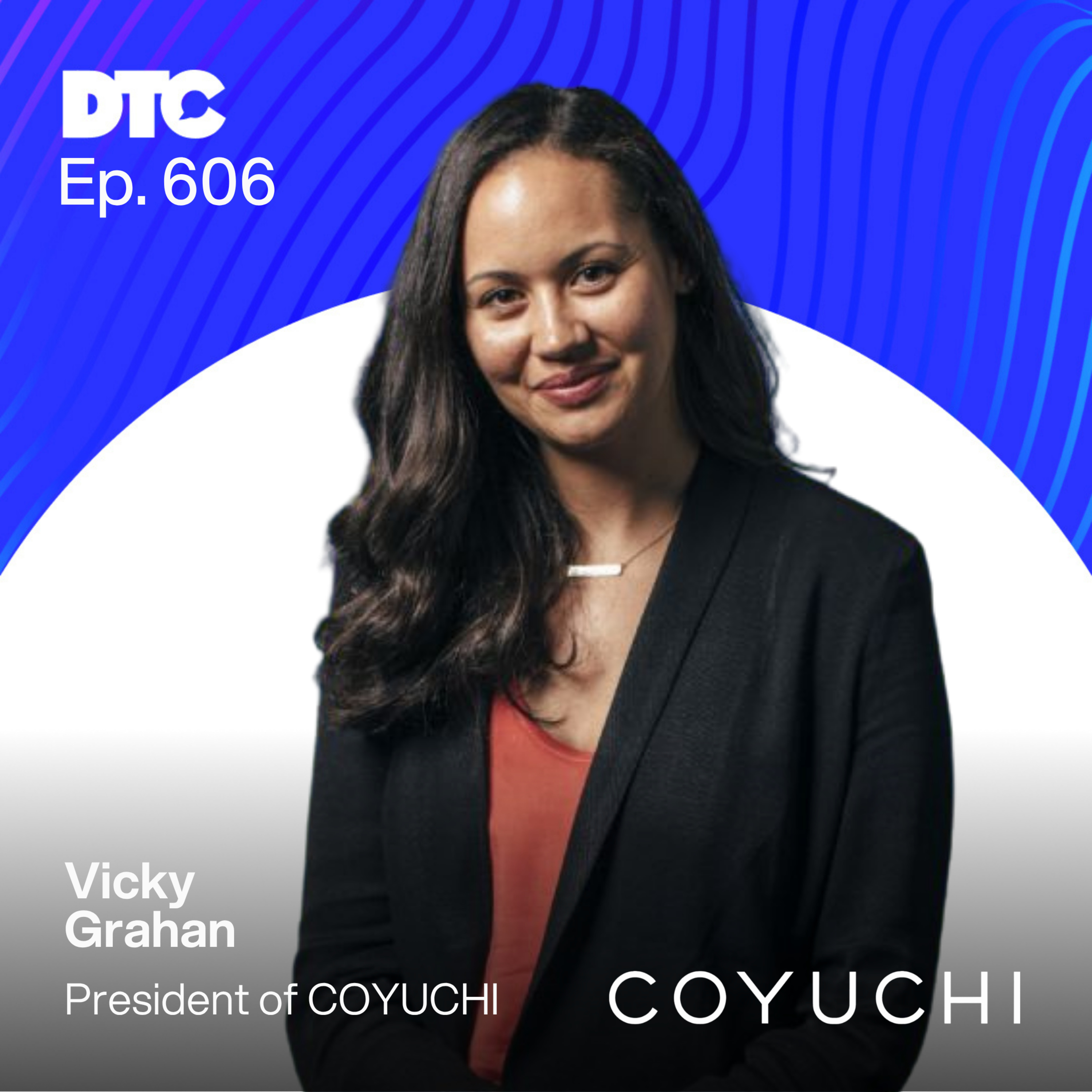
Ep 606: How Coyuchi Tested True Meta Incrementality (6-Week Blackout Results)
Apr 2700:40:23Summary readySubscribe to DTC Newsletter - https://dtcnews.link/signuphttp://coyuchi.comCoyuchi is a premium bedding brand with a long purchase cycle and high AOV. That changes how you approach growth, attribution, and retention.Vicki Williams-Grahan (Brand President) explains how they tested Meta’s impact by turning it off, how they think about LTV in a low-frequency category, and why product selection inside ads matters as much as creative.For DTC operators scaling high-AOV brands with long purchase cycles who need to rethink CAC, LTV, and attribution.In this episode:What happened when they turned off Meta for 6 weeks Why Google Analytics 4 underreported performance vs platform data How segmentation (via Decile) changed acquisition Why entry-level products lowered overall performance How they use daily forecasting and contribution profit Who this is for:Operators in high-AOV categories (home, furniture, luxury, etc.)What to steal:Run incrementality tests (or dim market tests) Prioritize high-LTV acquisition, not just conversion rate Track contribution profit daily Timestamps00:00 Introduction and evolving customer profile02:00 Coyuchi brand overview and DTC shift04:30 Challenges of high AOV and long purchase cycles07:00 Customer segmentation and tools like Decile09:30 Meta ads experiment and going dark13:00 Attribution insights and incrementality testing15:00 Daily forecasting and contribution profit focus17:30 Product strategy and high LTV vs entry products21:30 Retention storytelling and non-sales emails25:00 Brand repositioning beyond sustainability32:00 Bringing paid social in-house and creative speed35:00 Using AI in marketing and creative testing36:30 Channel testing including podcasts and CTVSubscribe to DTC Newsletter - https://dtcnews.link/signupAdvertise on DTC - https://dtcnews.link/advertiseWork with Pilothouse - https://dtcnews.link/pilothouseFollow us on Instagram & Twitter - @dtcnewsletterWatch this interview on YouTube - https://dtcnews.link/video
Summary
Ep 605: Meta Attribution Change – Why ROAS Dropped 40%
Apr 2400:24:48Summary readySubscribe to DTC Newsletter - https://dtcnews.link/signupMeta changed attribution in March — and suddenly every brand’s ROAS looks worse.Chris Richards from Pilothouse breaks down what actually happened, why performance appears to have dropped 30–45%, and how brands should respond without damaging long-term growth.For DTC founders and operators scaling from $5M–$50M who rely on Meta as a core channel.In this episode:What Meta’s attribution change actually did Why social proof no longer shows up the same way How to interpret rising CPA and falling ROAS Why MER is a better north star right now The risk of over-retargeting after performance dips Who this is for:DTC founders, CMOs, and media buyers trying to make sense of Meta performanceWhat to steal:Shift from ROAS to MER as your primary KPI Keep funding top-of-funnel even when numbers look worse Use consistent attribution (MTA) to guide spend decisions Timestamps00:00 Meta attribution change explained02:00 Click vs engaged attribution breakdown04:00 Impact on ROAS and CPA metrics06:00 Social proof and ad performance insights08:00 Why engagement optimization can backfire10:00 Importance of multi-touch attribution tools12:00 How campaign strategy is shifting14:00 MER as a new performance north star16:00 Omnichannel and ecosystem thinking18:00 Meta automation and future attribution trends20:00 What brands should do right now22:00 Strategy mistakes and growth risksSubscribe to DTC Newsletter - https://dtcnews.link/signupAdvertise on DTC - https://dtcnews.link/advertiseWork with Pilothouse - https://www.pilothouse.co/?utm_source=AKNF605Follow us on Instagram & Twitter - @dtcnewsletterWatch this interview on YouTube - https://dtcnews.link/video
Summary
Bonus: How DTC Brands Scale Affiliate Marketing Without Fraud or Bad Attribution
Apr 2200:38:33Summary readySubscribe to DTC Newsletter - https://dtcnews.link/signupAffiliate is getting a lot more attention in DTC right now, and for good reason. In this episode, Yash Chavan, Founder and CEO of SATHI & SARAL, breaks down why the channel looks so attractive on paper, where it falls apart in practice, and what brands can do to make it perform like a real growth engine.Claim your free trial and 20% across all pricing plans at mysathi.io. Don't forget to use the code DTC! Request your free trial: http://www.mysathi.io/?utm_source=partner&utm_medium=dtc&utm_campaign=dtc-podcastWe get into:Why affiliate is attractive to operators and finance teamsHow last-click attribution distorts performance dataWhat affiliate fraud actually looks like inside a real programHow to think about multi-touch attribution by product categoryWhy gamification matters if you want creators to stay activeHow affiliate fits alongside Meta, TikTok, and retargetingWhat to steal:Run a fraud scan on your current affiliate program and check for leaked codesBuild commission tiers and milestone bonuses to keep strong creators engagedChoose an attribution model based on how your product actually gets boughtIf you’re a DTC marketer, founder, or growth lead trying to lower CAC, improve measurement, and build a more durable acquisition program, this episode is essential listening.Timestamps00:00 Affiliate marketing explained02:00 Why affiliate is hard to scale04:00 The problem with last-click attribution06:00 Affiliate fraud examples and risks09:00 Influencers shifting to affiliate models11:00 Why reels + links change everything13:00 How modern affiliate tracking works16:00 Multi-touch attribution strategies19:00 Retargeting affiliate traffic21:00 Gamifying affiliate programs24:00 How to start and scale affiliates27:00 Program hygiene and key metrics30:00 Where affiliate fits in your funnel33:00 The future of affiliate marketingSubscribe to DTC Newsletter - https://dtcnews.link/signupAdvertise on DTC - https://dtcnews.link/advertiseWork with Pilothouse - https://dtcnews.link/pilothouseFollow us on Instagram & Twitter - @dtcnewsletterWatch this interview on YouTube - https://dtcnews.link/video
Summary
Ep 604: How Lexington Bakes Cut CAC From $180 to $25 With a Better First-Order Offer
Apr 2000:42:29Summary readySubscribe to DTC Newsletter - https://dtcnews.link/signuphttps://lexingtonbakes.com/Lex Evan built Lexington Bakes after years of baking for friends who kept telling him the same thing: they didn’t usually like desserts like this, but they loved his. That turned into a bootstrapped brand built on better ingredients, frozen and refrigerated distribution, and a refusal to follow the usual packaged dessert playbook.For CPG founders and DTC operators trying to improve conversion, CAC, and retail sell-through without watering down the product.In this episode, Lex breaks down:How Lexington Bakes went from a holiday presale to about 200 retail stores Why premium products can fail when value is not obvious at first glance How changing format, sizing, and offer structure helped bring CAC from roughly $180 down to $25 on a new-customer offer What “radical ingredient transparency” actually looks like in packaged food Why a product rename turned a weak SKU into one of the brand’s best retail performers Who this is for:DTC founders, CPG operators, grocery brands, and marketers working on pricing, offer design, retention, or retail expansion.What to steal:Build first-order offers around how cautious buyers actually shop Make value obvious without forcing customers to do math Use plain-language product naming until the brand has enough equity to get more creative Timestamps:00:00 From zero to shipping 500 brownies02:30 Why Lexington Bakes started05:00 No preservatives and cold chain strategy07:00 Manufacturing challenges and scaling09:30 Radical ingredient transparency explained13:00 Product evolution and Lexington Bakes 4.017:00 Pricing psychology and shelf perception21:00 Fixing DTC conversion and CAC24:00 Intro offer strategy and LTV thinking29:00 Retail behavior and repeat purchase patterns34:30 Naming mistake and SKU turnaround39:00 2026 growth strategy and manufacturing focusSubscribe to DTC Newsletter - https://dtcnews.link/signupAdvertise on DTC - https://dtcnews.link/advertiseWork with Pilothouse - https://dtcnews.link/pilothouseFollow us on Instagram & Twitter - @dtcnewsletterWatch this interview on YouTube - https://dtcnews.link/video
Summary