
Podcast
DTC Podcast
Hosted by DTC Newsletter and Podcast · EN
Weekly discussions between disruptive direct to consumer ecommerce brands and our amazing team about marketing, funnels, and everything scaling related. Subscribe to our newsletter for highlights and step by step tactical insights 👉🏻 📦 directtoconsumer.co
230episodes
Episodes
Newest firstAll episodes

Ep 603: Why Most DTC Brands Fail on YouTube (And How to Fix It in 60 Days)
Apr 1700:28:58Summary readySubscribe to DTC Newsletter - https://dtcnews.link/signupMost brands test YouTube, don’t see conversions, and shut it off.The problem isn’t the channel. It’s how they’re measuring it.Dougie from Pilothouse breaks down how YouTube actually drives growth for DTC brands, and why cost per brand search is one of the most useful signals to track early.For DTC founders and growth marketers spending $50K+/month and looking for a channel beyond Meta.What we get into:Why conversions lag on YouTube The 4-week window to judge early performance How cost per brand search shows real intent Budget levels needed to generate signal Targeting mistakes that kill campaigns Who this is for:Brands hitting a ceiling on Meta and testing new acquisition channelsWhat to steal:Track brand search before and after launching YouTube Use cost per brand search to judge efficiency Run geo tests to validate lift Timestamps0:00 YouTube as awareness vs conversion channel2:00 Why DTC brands fail testing YouTube4:00 Creative and audience readiness for YouTube6:00 Why YouTube attribution is broken8:00 Cost per brand search as key metric10:00 YouTube campaign setup basics12:00 Targeting mistakes and audience signals14:00 Excluding existing customers properly16:00 Setting expectations and measuring success18:00 Budget requirements and testing timelines20:00 Fixing struggling YouTube accounts22:00 Low quality placements and wasted spend24:00 Creative strategy and frequency on YouTube26:00 The first 5 seconds rule for adsSubscribe to DTC Newsletter - https://dtcnews.link/signupAdvertise on DTC - https://dtcnews.link/advertiseWork with Pilothouse - https://www.pilothouse.co/?utm_source=AKNF603Follow us on Instagram & Twitter - @dtcnewsletterWatch this interview on YouTube - https://dtcnews.link/video
Summary
Bonus: How to Scale Amazon in 2026 – 3 Data Plays DTC Brands Are Still Missing
Apr 1500:39:18Summary readySubscribe to DTC Newsletter - https://dtcnews.link/signupBradley Sutton from Helium 10 joins the pod to break down how serious brands should be thinking about Amazon now: not as a backup channel, but as a core retail growth engine. We get into where Amazon fits in an omni-channel stack, how PPC has gotten way more complex, why Walmart and TikTok Shop matter more than most brands admit, and where sellers can actually use AI for efficiency.Sign Up for Helium 10: https://www.helium10.com/?utm_source=DTC&utm_medium=Podcast&utm_campaign=homepageIn this episode, we cover:Why Amazon has shifted from “nice to have” to a core acquisition and retention channelHow top sellers use PPC automation, dayparting, and keyword harvesting to manage spend without blowing budgetWhat Helium 10 actually helps with, from product research and listing optimization to competitive intel and campaign managementWhy TikTok Shop and Walmart aren’t side quests anymoreHow to think about Rufus, AI shopping tools, and what actually matters right nowIf you’re a DTC founder or an ecommerce operator scaling across Amazon, Walmart, and TikTok Shop and you want cleaner CAC, better retail media performance, and fewer wasted ad dollars, this episode is a must listen.Helium 10 is a platform that brings research, operations, Amazon advertising, and performance insights together so you can scale faster across marketplaces.Timestamps00:00 Amazon beyond a traffic source02:00 Amazon as a core growth channel03:30 Multi-channel fulfillment and expansion06:30 Why Amazon ads are now critical08:00 Organic vs paid growth on Amazon12:00 Product research and competitor analysis15:00 Validating demand before launching19:00 Amazon vs TikTok vs Walmart strategy23:00 AI impact on Amazon shopping behavior28:00 Branded keyword bidding strategy32:00 Automation and dayparting for ads36:00 Biggest mistakes Amazon advertisers makeSubscribe to DTC Newsletter - https://dtcnews.link/signupAdvertise on DTC - https://dtcnews.link/advertiseWork with Pilothouse - https://dtcnews.link/pilothouseFollow us on Instagram & Twitter - @dtcnewsletterWatch this interview on YouTube - https://dtcnews.link/video
Summary
Ep 602: How Bobbie Won 91% of the Conversation With 4% Market Share | Building the Brand
Apr 1300:36:59Summary readySubscribe to DTC Newsletter - https://dtcnews.link/signupKim Chappell is Chief Brand Officer at Bobbie, the mom-founded infant formula brand that’s crossed $100M in revenue and is trying to change how formula gets talked about in America. In this episode, she breaks down how Bobbie built a brand parents are proud to buy in a category that used to be driven by guilt, and why trust beats sheer creative volume when the old Meta scale-button playbook stops working. For DTC founders, CMOs, and performance marketers scaling a trust-heavy product in a crowded category.Inside the episode:Why Bobbie treated infant formula as a culture problem, not just a product problem How the team thinks about brand vs performance now that the old Meta-only growth playbook has weakened What “learn more” looks like when your customer journey is messy, delayed, and omnichannel How Bobbie chooses the few advocacy lanes it can credibly own, then actually follows through Why the Cardi B partnership worked, and how it turned celebrity into conversation share, trust, and policy momentum Who this is for: Operators building in regulated, trust-sensitive, or education-heavy categories where brand has to do real work before performance can convert.What to steal:Put performance, organic, creator, and lifecycle under one brand story Treat education as part of conversion, not a nice-to-have Pick fewer cultural or political lanes, but show up with receipts when you enter them Timestamps00:00 Performance marketing has changed03:00 Building Bobbie from scratch06:00 Removing the stigma around formula08:00 Why Bobbie understood the customer10:00 Transparency as brand strategy12:00 Brand vs performance15:00 The omnichannel customer journey18:00 Choosing the right advocacy lanes21:00 Community-led brand action23:00 Building awareness in a small market26:00 How the Cardi B partnership happened29:00 Measuring the campaign’s impactSubscribe to DTC Newsletter - https://dtcnews.link/signupAdvertise on DTC - https://dtcnews.link/advertiseWork with Pilothouse - https://dtcnews.link/pilothouseFollow us on Instagram & Twitter - @dtcnewsletterWatch this interview on YouTube - https://dtcnews.link/video
Summary
Ep 601: 25% of Your List Drives 75% of Revenue. The Dangers of AI Email Segmentation
Apr 1000:21:21Summary readySubscribe to DTC Newsletter - https://dtcnews.link/signupJordan Gordon from Pilothouse comes back to the DTC Podcast with a sharp warning for brands buying into AI-powered customer segmentation.The promise sounds good: send to the “best” people, cut waste, let the machine find hidden revenue. The problem is what happens after that.Jordan breaks down why over-segmentation can shrink your active list, cut click volume, hurt inbox placement, and quietly bleed revenue over time.For DTC founders, retention leads, and CRM operators trying to grow email revenue without slowly choking list health.In this episode, Jordan gets into:Why inbox placement still sits upstream of almost every retention result How “smart” segmentation can reduce sends so much that your list starts decaying The real risk of AI tools unsuppressing bad or low-quality addresses Why cleaner funnels usually beat clever segmentation The 15 lifecycle touchpoints most brands should actually be auditing across site, pop-up, landing pages, and email Who this is for:DTC operators, lifecycle marketers, Klaviyo teams, retention agencies, and founders trying to scale email without tanking deliverability.What to steal:Audit whether your segmentation strategy is growing revenue or just shrinking mail volume Map your top lifecycle touchpoints and check them for message, persona, and offer consistency Prioritize tools that increase high-intent capture and safe inbox placement instead of just “optimizing” who gets excluded Timestamps00:00 AI segmentation buyer beware02:20 Inbox placement vs message quality04:40 Why sending less can shrink revenue08:05 When AI unsuppresses bad addresses10:55 Has anyone cracked AI segmentation13:10 One clean funnel beats micro-segmentation15:35 The 15 lifecycle touchpoints to audit17:45 Persona mismatch kills conversion19:55 If everybody owns it, nobody owns itSubscribe to DTC Newsletter - https://dtcnews.link/signupAdvertise on DTC - https://dtcnews.link/advertiseWork with Pilothouse - https://www.pilothouse.co/?utm_source=AKNF601Follow us on Instagram & Twitter - @dtcnewsletterWatch this interview on YouTube - https://dtcnews.link/video
Summary
Ep 600: How Acid Buddy Got 1,000+ Orders in Its First 6 Weeks, Creating a New Category Behind the Bar
Apr 600:32:13Summary readySubscribe to DTC Newsletter - https://dtcnews.link/signuphttp://cocktailbuddies.comTao, founder of Acid Buddy, joined the show to talk about a product that feels early, unusual, and potentially huge: flavored acids.After years working in bars and consulting, he kept running into the same issue. Citrus was inconsistent, messy, expensive, and limiting. So instead of treating acid like a background ingredient, he turned it into the product itself. That’s the bet behind Acid Buddy, and early traction suggests the market is paying attention: 1,000+ orders in the first 6 weeks, with customers in more than 75 countries. For DTC founders creating new categories, and beverage operators who want more consistency, speed, and flexibility behind the bar.In this episode, we get into:Why Tao believes flavored acids could become a real new category in beverages How Acid Buddy gives bars another place to build flavor, outside the usual syrup-heavy approach Why the product works for cocktails, mocktails, coffee, tea, and other drinks How this can help with half-sweet and skinny-style drinks that still feel balanced What the first 6 weeks looked like, including 1,000+ orders and strong pull without paid ads Who this is for: DTC founders, beverage brands, bar owners, operators, and anyone interested in category creation inside food and drink.What to steal:Build around a problem professionals already deal with every day Make the use case obvious fast, especially when the category is new Let early traction validate the story, then widen the market Timestamps00:00 Why Acid Buddy exists02:10 Solving consistency behind the bar04:12 Turning flavored acid into a product06:14 Why the cocktail market is huge08:24 What makes Acid Buddy different10:31 Mocktails, coffee, and drink less better13:08 The bar lime hygiene problem15:18 1,000 orders in the first six weeks18:03 The content and ambassador strategy21:12 Why TikTok Shop could be big23:35 Tao’s Netflix and Drink Masters story28:42 The Cocktail Buddy long-term visionSubscribe to DTC Newsletter - https://dtcnews.link/signupAdvertise on DTC - https://dtcnews.link/advertiseWork with Pilothouse - https://dtcnews.link/pilothouseFollow us on Instagram & Twitter - @dtcnewsletterWatch this interview on YouTube - https://dtcnews.link/video
Summary
Ep 599: 3 Claude AI Workflows DTC Marketers Can Use to Save Hours Every Week
Apr 300:16:06Summary readyTo Subscribe to DTC Newsletter - https://dtcnews.link/signupBraydon Germain from Pilot House is back on AKNF to break down how AI is changing the actual day-to-day of marketing work. This episode isn’t about shiny demos or abstract AI hype. It’s about using Claude like a real coworker: building skills, breaking work into micro-tasks, automating repeatable steps, and keeping human taste where it matters.For DTC founders, agency operators, media buyers, and creative strategists trying to turn AI from a novelty into a real workflow.In this episode, Eric and Braden get into:How Claude shifts from “chat tool” to “coworker” why the best AI workflows start by breaking work into smaller repeatable tasks How teams can build shared skills for more consistent copy across channels Where auto-research and always-on optimization could actually change how marketers work Why human judgment still matters most in taste, positioning, and creative direction Who this is for: Marketers and operators who already use AI a little, but know they’re still nowhere near the ceiling.What to steal:Break one recurring workflow into micro-tasks before trying to automate all of it Build shared AI skills around tone of voice, reference examples, and approval standards Keep AI on structure and repetition, keep humans on taste and final judgment Timestamps00:00 Claude as a real coworker02:21 Why most people use AI too simply04:22 Breaking ad work into micro tasks06:26 Standardizing copy across client accounts08:01 Building Claude skills with Skill Builder10:06 Auto research and KPI-based optimization12:08 Always-on execution with AI agents14:15 Best Claude skill libraries on GitHubSubscribe to DTC Newsletter - https://dtcnews.link/signupAdvertise on DTC - https://dtcnews.link/advertiseWork with Pilothouse - https://www.pilothouse.co/?utm_source=AKNF599Follow us on Instagram & Twitter - @dtcnewsletterWatch this interview on YouTube - https://dtcnews.link/video
Summary
Ep 598: 5 Content Pipes That Scale DTC Growth Beyond Meta Ads | Cherene Aubert
Mar 3000:41:03Summary readySubscribe to DTC Newsletter - https://dtcnews.link/signupCherene Aubert, founder of growthcapital.co and former growth leader at ILIA and Bobbie, breaks down why so many DTC brands hit a wall after early traction. The problem usually is not media buying. It’s weak creative systems, lazy offer strategy, and too much faith in Meta to do the marketing for you.For DTC founders and growth leads moving from scrappy traction to real scale, this episode is a blueprint for building a creative engine instead of leaning harder on Meta.We cover:Why Cherene is bearish on Meta dependency even though it still drives scaleThe 5 content pipes modern brands need to keep creative fresh and performance stableWhy most popup offers and funnel journeys are paint-by-numbersWhen TikTok ads and TikTok Shop can beat Meta for Gen Z brandsHow Cherene’s AI agent, OpenClaw, is automating reporting, analysis, and presentationsTimestamps:00:00 Why Growth Marketing Is Breaking01:19 Cherene’s Shift From Operator to Consultant05:12 When Testing Stops Driving Growth07:35 Why Cherene Is Bearish on Meta09:23 From One Funnel to Content Pipes12:33 The Real Lever Offer and Customer Journey19:32 Organic Content vs Paid Advantage27:01 What AI Actually Helps With and What It Does NotSubscribe to DTC Newsletter - https://dtcnews.link/signupAdvertise on DTC - https://dtcnews.link/advertiseWork with Pilothouse - https://dtcnews.link/pilothouseFollow us on Instagram & Twitter - @dtcnewsletter
Summary
Ep 597: How Jon Bond Built a $90M Agency with 27% Margins (and the “Tip of the Spear” Playbook)
Mar 2700:42:42Summary readySubscribe to DTC Newsletter - https://dtcnews.link/signupJoinAgency.coJon Bond has been in the agency game since the 1980s. He co-built Kirshenbaum Bond + Partners (K/B/B) from “two guys in New York” into one of the most talked-about independent agencies in the U.S., with peak scale hitting $90M revenue and 27% margins, and over $1B in billings (per the episode). In this conversation, Jon breaks down what actually drives agency growth when you’re past the scrappy phase and trying to scale without turning into a “we do everything” shop.Role-based hook: For agency founders scaling from $5–20M who want clearer positioning, better margins, and a path to bigger clients without chaos.What we get into:The “tip of the spear” framework: why clients don’t hire you for everything you can do, they hire you for the one thing you’re known for (then expand scope after trust is built)How they moved from low single-digit profit to 27% margins with discipline, forecasts, and real consequences (without killing culture)Culture as an actual growth lever: why “acceptance” made the agency sticky and hard to replicateWord of mouth at scale: the difference between “what you want people to say” and “what makes people talk”Building marketing assets that regenerate (vs renting attention that dies the second you stop paying)Who this is for:Agency owners and operators who feel stuck in “full-service mush,” want to land bigger clients, and want a smarter way to expand scope without blowing up delivery.What to steal:A simple positioning test: can you name the 1–2 things you do better than anyone, in one sentence, without listing services?A profitability rule that forces clarity: “If we invest X, what revenue shows up by month Y, and what gets cut if it doesn’t?”A growth path that doesn’t whiplash your team: expand one step away from your current strength, ideally funded by the clientTimestamps00:00 Agency Confidential preview03:00 Jon Bond on starting young06:00 Faking it till you make it08:00 Making the agency feel hot12:00 Culture built the agency17:00 Word of mouth that scales22:00 Growing with real margins27:00 Hiring people built for change30:00 Make your agency the top client33:00 The near future advantage37:00 Find your tip of the spear39:00 Why agencies still winSubscribe to DTC Newsletter - https://dtcnews.link/signupAdvertise on DTC - https://dtcnews.link/advertiseWork with Pilothouse - https://www.pilothouse.co/?utm_source=AKNF597Follow us on Instagram & Twitter - @dtcnewsletterWatch this interview on YouTube - https://dtcnews.link/video
Summary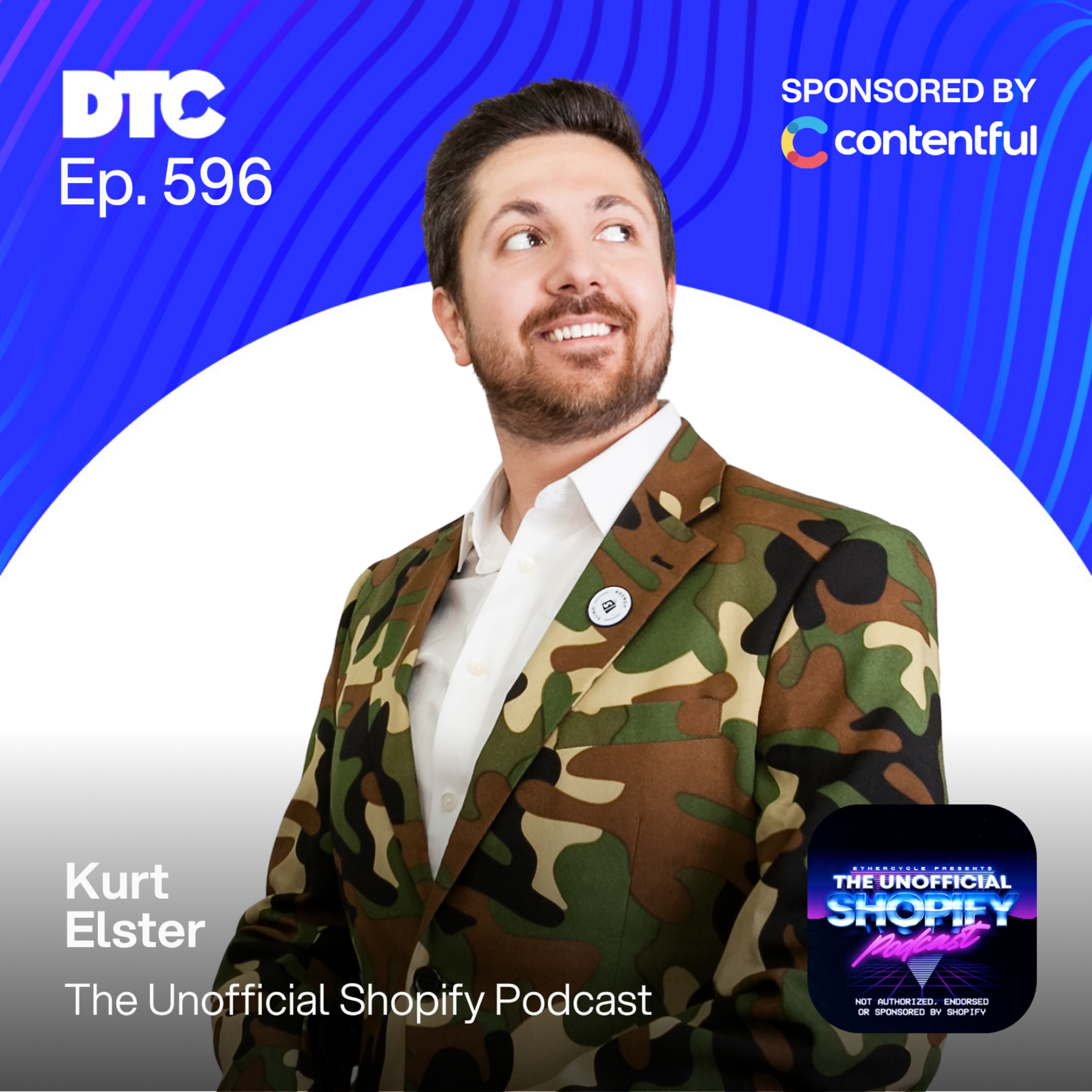
Ep 596: 3 Shopify Hot-Fixes for AI Shopping: Kurt Elster on UCP, ChatGPT Referrals, and TikTok Shop
Mar 2300:40:56Summary readySubscribe to DTC Newsletter - https://dtcnews.link/signupKurt Elster is back to talk about what Shopify brands should actually be doing right now as AI starts influencing search, product discovery, and ecommerce workflows.For Shopify operators, DTC founders, and ecommerce marketers trying to stay ahead of rising CAC and AI-driven product discovery.This episode covers the stuff that’s easy to ignore until it’s suddenly important: Shopify category fields, structured data, AI referrals, TikTok Shop growth, and how vibe coding is already changing the SaaS and app ecosystem.We get into:Why Shopify category fields and category metafields matter more than most merchants realizeWhat ChatGPT referral traffic looks like todayHow structured data can help brands show up in answer enginesWhy TikTok Shop is becoming a real growth channel for some brandsWhat AI means for app sprawl, custom builds, and leaner ecommerce teamsKurt’s thinking on free gift with purchase and the app he built, Promo Party ProTimestamps:00:00 Ads Feel Broken Right Now (Here’s Why)01:17 The Shopify Feature Everyone Ignored02:14 This Powers AI Shopping (No One Realized)05:08 Why In-App Checkout Keeps Failing07:05 The Easiest Growth Lever You’re Missing09:28 SEO Is Dead. This Replaces It12:22 How AI Chooses Which Products Win16:15 The AI Mistake Breaking Your Builds26:01 Why CAC Keeps Getting Worse28:22 The Real TikTok Shop PlaybookSubscribe to DTC Newsletter - https://dtcnews.link/signupAdvertise on DTC - https://dtcnews.link/advertiseWork with Pilothouse - https://dtcnews.link/pilothouseFollow us on Instagram & Twitter - @dtcnewsletter
Summary
Ep 595: Where Will Your Growth Come From This Year? The 5-Message Creative System for Scaling DTC Strategically
Mar 2000:28:47Summary readySubscribe to DTC Newsletter - https://dtcnews.link/signupDuncan Ferguson, Strategy Lead at Pilothouse, breaks down why so many DTC brands are stuck in the tactical spin cycle, always testing, tweaking, and “optimizing” without a clear answer for where growth will actually come from. This episode gets into the difference between platform-centric marketing and a real growth system built around the customer journey, message sequencing, and repeatable creative.For DTC founders, CMOs, and heads of growth who are tired of channel optimization masquerading as strategy.In this episode, we get into:The simplest question that exposes whether your brand has a strategy or just a pile of channel tasksWhy Meta, Google, email, and landing pages should work as a coordinated customer journey, not separate departmentsHow to identify the 3 to 5 messages a customer needs to hear before they buyWhy brands should stop doing light work on 300 ads and start doing real work on 5 to 10How a creative system makes scaling new channels, collections, and audiences way more repeatableWho this is for:DTC founders, ecommerce CMOs, retention leads, media buyers, and creative strategists trying to scale past the easy wins.What to steal:Ask your team: “Where will growth come from this year?” If nobody can answer it cleanly, you’ve got a strategy problem.Build creative around customer journey stages, not around whatever ad format the team feels like making this week.Create a 5-message creative system you can reuse across channels, audiences, and product lines.Timestamps:0:00 Why growth hacks stop working2:00 What a real brand growth system is4:00 Building customer journeys and message maps6:00 Inspiration not iteration in creative8:00 Finding objections that block purchase10:00 How channels work together in the journey12:00 Why most brands are stuck in the tactical spin cycle14:00 The question every founder should ask16:00 Customer-centric vs platform-centric growth18:00 Why optimization alone is limited20:00 How to find the right growth opportunity24:00 What a creative system actually looks like26:00 The five-message framework for conversionSubscribe to DTC Newsletter - https://dtcnews.link/signupAdvertise on DTC - https://dtcnews.link/advertiseWork with Pilothouse - https://www.pilothouse.co/?utm_source=AKNF595Follow us on Instagram & Twitter - @dtcnewsletterWatch this interview on YouTube - https://dtcnews.link/video
Summary