Podcast
Early Childhood Chapters
Hosted by Gryphon House Books · EN
This is the podcast for educators, childcare professionals, and parents who work with children ages 0-5. Hosted by Gryphon House Books, each episode features interviews with leading authors and experts who break down the latest research into practical, actionable strategies for the classroom and home.
11episodes
Episodes
Newest firstAll episodes

Before Behavior Comes Connection: The Trust First Approach
1w ago00:53:18Tap to summarizeWhat if the key to changing children's behavior isn't control at all? In this episode of Early Childhood Chapters, host Emily Garman sits down with Dr. Deborah Bergeron and Rhonda Conn-Parent, coauthors of Trust First, to explore a powerful shift in how educators approach behavior. Instead of focusing on managing or correcting children, this conversation reframes behavior as communication—and an opportunity for learning. Deborah and Rhonda share how leading with trust can transform classroom culture, reduce stress for educators, and create environments where children truly thrive. From redefining "challenging behaviors" to introducing the KIDS framework (Kindness, Independence, Delight, Success), this episode offers practical, actionable strategies educators can start using right away. In This Episode, You'll Learn: Why behavior should be seen as something that challenges us, not something wrong with the child How trust serves as the foundation for learning and brain development The KIDS framework and how it helps decode behavior Why respect must be modeled, not demanded How small mindset shifts can dramatically change classroom dynamics What "double happiness" means for both children and teachers The "pit stop" strategy (pause, inhale, think) and how it supports regulation Key Takeaway: When educators shift from control to connection, behavior becomes information—and every moment becomes an opportunity to teach, learn, and build trust. Learn More: Trust First: Turn Behaviors that Challenge Us into Opportunities to Learn by Dr. Deborah Bergeron and Rhonda Conn-Parent is available now from Gryphon House.
Transcribe →
When Fathers Feel Welcome, Children Thrive
Jun 1700:24:30Tap to summarizeWhat if the key to stronger family partnerships isn't getting fathers to show up more, but creating environments where they feel genuinely welcomed, valued, and included? In this episode of Early Childhood Chapters, host Emily Garman sits down with Dr. Jawan Burwell, author of Engaging Fathers: Strategies for Inclusive Family Partnerships in Early Childhood, to discuss why father engagement matters and how early childhood programs can move beyond one-time events to build meaningful, lasting partnerships with fathers and father figures. Dr. Burwell shares insights from his research and experience as an educator, administrator, and father advocate, exploring the barriers that often prevent fathers from feeling fully included in early childhood settings. Dr. Burwell discusses practical, no-cost strategies educators can implement immediately, the importance of representation and intentionality, and how schools can better support diverse family structures while creating welcoming environments for all caregivers. Topics discussed in this episode include: • Why fathers are often unintentionally overlooked in family engagement efforts • Common barriers that prevent father participation • The impact of engaged fathers on children's academic, social, and emotional development • The experiences of Black fathers in educational settings • Why father engagement is about relationships, not events • Practical ways educators can make fathers feel more welcomed and included • How broadening our definition of fatherhood creates stronger support systems for children Whether you're a teacher, administrator, family engagement specialist, or caregiver, this conversation offers valuable insights for building stronger partnerships that help children, families, and communities thrive.
Transcribe →
Rediscovering Kindergarten with Laura Bornfreund
Jun 900:37:24Tap to summarizeWhat happened to kindergarten? In this episode of Early Childhood Chapters, host Emily Garman sits down with education policy expert, former teacher, and author Laura Bornfreund to explore how kindergarten has changed over the past several decades and why many classrooms have drifted away from what young children need most. Drawing from research, classroom observations, and her new book, Rediscovering Kindergarten: Embracing Play and Joy in Learning, Laura explains how accountability systems, academic pressure, and misconceptions about play have transformed the kindergarten experience. She shares why play and academic rigor are not opposites, how relationships drive learning, and what school leaders can do to create environments where young children thrive. The conversation also explores behavior challenges, the science behind play-based learning, family engagement, and Laura's vision for an ideal kindergarten classroom. In This Episode How kindergarten became the "new first grade" The impact of standards, testing, and accountability on early learning Why parents often feel pressure to push academics earlier The difference between compliance and genuine engagement How guided play supports academic learning What classroom observations reveal about thriving kindergarten programs Practical strategies for teachers who want to incorporate more play The science of learning, development, movement, and exploration Common misconceptions school leaders have about young children Why some behavior challenges are actually developmental mismatches Laura's vision for a joyful, developmentally appropriate kindergarten Featured Book Rediscovering Kindergarten: Embracing Play and Joy in Learning by Laura Bornfreund About the Guest Laura Bornfreund is an education policy expert, former elementary teacher, and nationally recognized advocate for developmentally appropriate early learning. Her work focuses on strengthening the transition from pre-K through the early elementary years and ensuring that kindergarten remains a place where young children can learn through play, relationships, exploration, and joy.
Transcribe →
Building Readers Through Play, Language, and Connection: The Science of Reading
May 1900:50:24Tap to summarizeThe "science of reading" has become one of the biggest conversations in education—but what does it actually mean in early childhood classrooms? In this episode of Early Childhood Chapters, host Emily Garman is joined by Dr. LaTisha Hayes, editor of Ready to Read: Using the Science of Reading in Pre-K and Kindergarten, along with contributors Muriel Rand and Dr. Lesley Morrow, for a thoughtful conversation about how young children truly develop literacy. Together, they explore why early literacy is about much more than memorizing letters or sounding out words. From oral language and background knowledge to storytelling, dramatic play, and meaningful interaction, this episode unpacks how children build the foundations for reading long before they can read independently. The conversation also tackles: What the "science of reading" really means in early childhood Why play is essential—not separate from literacy learning How oral language and vocabulary shape future reading success The teacher's role during play-based learning Ways to create literacy-rich classrooms without expensive materials Why motivation, curiosity, and joyful learning matter Whether you're a preschool teacher, administrator, caregiver, or parent, this episode offers practical, research-based insight into supporting young readers in developmentally appropriate ways. Featuring: Dr. LaTisha Hayes Muriel Rand Dr. Lesley Morrow Book featured: Ready to Read: Using the Science of Reading in Pre-K and Kindergarten from Gryphon House Books
Transcribe →
What Multilingual Classrooms Really Need (and how to get there) with Karen Nemeth
Apr 1600:44:41Tap to summarizeIn today's early childhood classrooms, children are learning two, three, sometimes even four languages at once. The question isn't whether multilingual learners will be in your classroom—it's how you'll support them. In this episode of Early Childhood Chapters, Karen Nemeth—author of Many Languages, One Classroom, 2nd Edition—shares practical, research-informed strategies for creating classrooms where every child's language and culture are valued. From rethinking how we define language development to building stronger partnerships with families, this conversation offers clear, actionable guidance for educators and leaders alike. In this episode, we discuss: Why language must be connected to meaning—not just speech sounds—to support development How shifting from a "deficit" view to a strengths-based view changes everything for multilingual learners The "4 Cs" framework: comprehension, communication, connection, and collaboration—and how they work together Why relationships and belonging are essential for language and literacy growth Practical strategies for connecting with families—even when you don't share a language How to use play, storytelling, and everyday routines to support language development Why supporting a child's home language actually strengthens English learning Key takeaway: Start with what's familiar to each child—and build from there.
Transcribe →
Let Nature Lead: Rethinking Creativity in Early Childhood
Apr 900:31:26Tap to summarizeBefore children ever pick up a paintbrush, nature has already given them a palette. In this episode of Early Childhood Chapters, we talk with Janine Kloiber, author of Nature's Palette, about how natural materials can spark creativity, deepen sensory experiences, and help children build meaningful connections with the world around them. Janine shares how slowing down, following children's interests, and embracing open-ended exploration can transform both teaching and learning. Whether you're in a nature-rich environment or a city classroom, this conversation offers practical, accessible ways to bring the natural world into children's daily experiences. What You'll Learn: Why nature-based learning supports creativity, focus, and emotional regulation How Montessori principles align with outdoor and sensory exploration The difference between process art and product-driven activities How to follow children's curiosity and become a co-explorer Simple ways to bring nature into any classroom (even without outdoor access) How these experiences build confidence, collaboration, and early literacy skills Key Takeaway: When we slow down and truly observe the natural world with children, we open the door to deeper learning, creativity, and connection.
Transcribe →
Understanding Transitions in Early Childhood With Rae Pica
Apr 100:41:20Tap to summarizeTransitions are one of the most challenging parts of the day in early childhood settings—but what if we've been thinking about them all wrong? In this episode of Early Childhood Chapters, host Emily Garman sits down with early childhood expert Rae Pica, author of Teachable Transitions, to explore why transitions continue to be a daily struggle and how educators can approach them differently. Together, they unpack what's really happening for young children during transitions, why these moments are so developmentally demanding, and how simple shifts in practice can transform stress into meaningful learning. In this episode, you'll learn: Why transitions are developmental challenges, not behavior problems What skills children are actually using during transitions How predictability and preparation reduce stress and resistance Why movement, music, and play are powerful tools for smoother transitions Common mistakes educators make—and how to avoid them How transitions can build self-regulation, cooperation, and problem-solving skills Key Takeaway: Transitions aren't something to rush through—they are opportunities to support development, build skills, and create more joyful classrooms. About the Guest: Rae Pica is an early childhood expert and author of Teachable Transitions, a widely respected resource that helps educators turn everyday transitions into engaging, developmentally appropriate learning experiences. Learn More: Explore Teachable Transitions and more at Gryphon House.
Transcribe →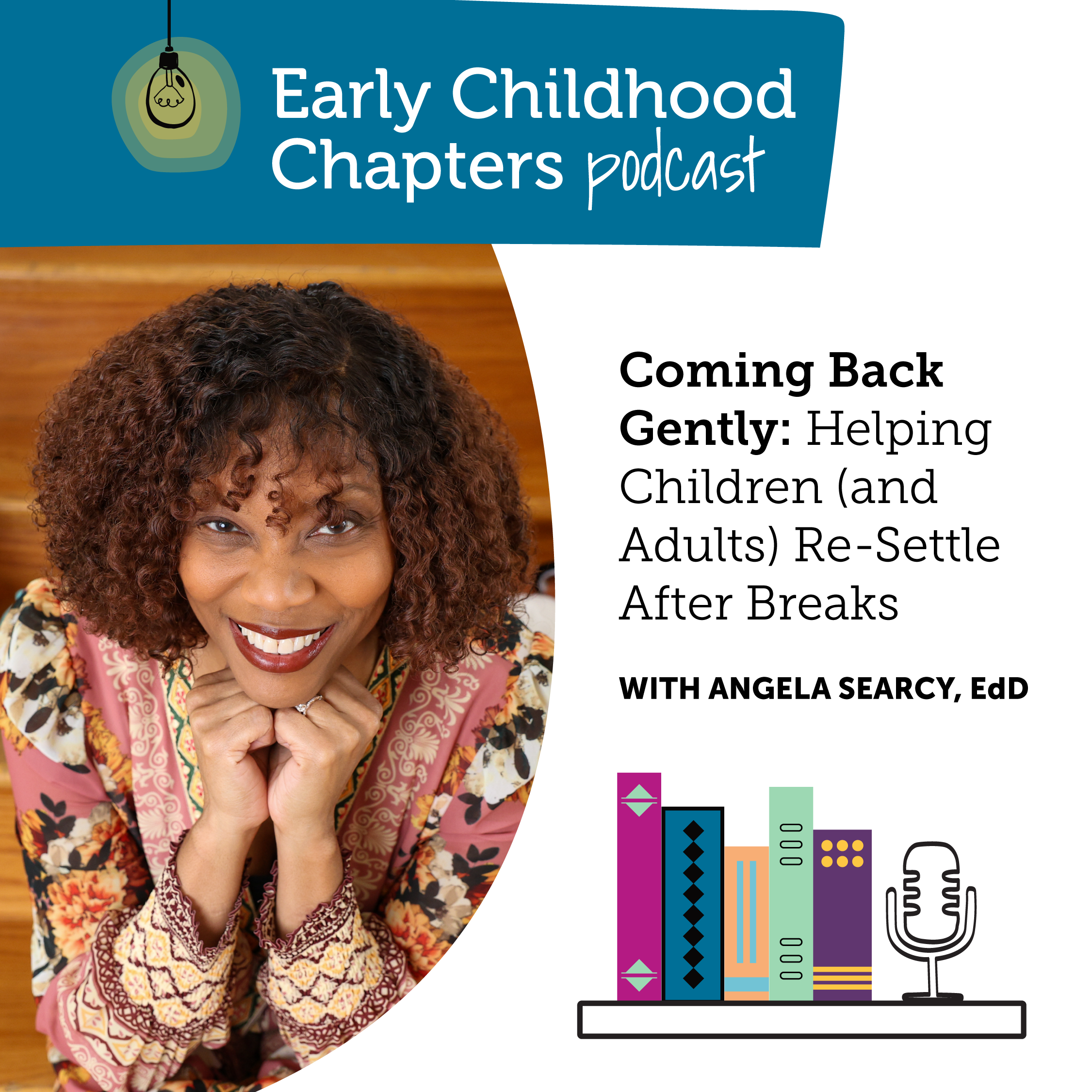
Coming Back Gently: Helping Children (and Adults) Re-Settle After Breaks
Feb 300:48:08Tap to summarizeJanuary is often framed as a "fresh start," but for early childhood educators, it's something very different—it's the middle of the year. After winter break, classrooms are filled with children (and adults) who may feel tired, dysregulated, emotionally tender, or disconnected from routines that once felt familiar. In this episode of Early Childhood Chapters, host Emily Garman is joined by Angela Searcy, early childhood consultant and author of Push Past It and Elevating Equity, for a deeply affirming conversation about what a true mid-year reset can look like—one rooted in compassion, realism, and care rather than pressure or perfection. Together, Emily and Angela explore how children, educators, families, and entire school systems experience reentry after winter break—and why regulation, routines, and relationships matter more than rigid expectations during this season. In this episode, you'll hear about: Why post–winter break behavior shifts are normal—for children and adults How sensory-rich, calming environments support reentry and regulation Why routines should be engaging, relational, and playful—not punitive The importance of being visually quiet in classroom spaces How educators can reset without "starting over" or feeling like they've failed What equitable (not equal) responses look like when children return from very different home experiences Why adult regulation and co-regulation are always the starting point How systems, leadership, and colleagues can support educator well-being Practical ways to communicate compassionately with families during a challenging season Mindset shifts that help educators move through heavy, human moments—without shame This episode offers reassurance, practical tools, and a powerful reminder: midyear isn't about pushing harder. It's about slowing down, reconnecting, and giving ourselves—and the children in our care—what we truly need. Listen now and take a deep breath. You're not behind. You're human.
Transcribe →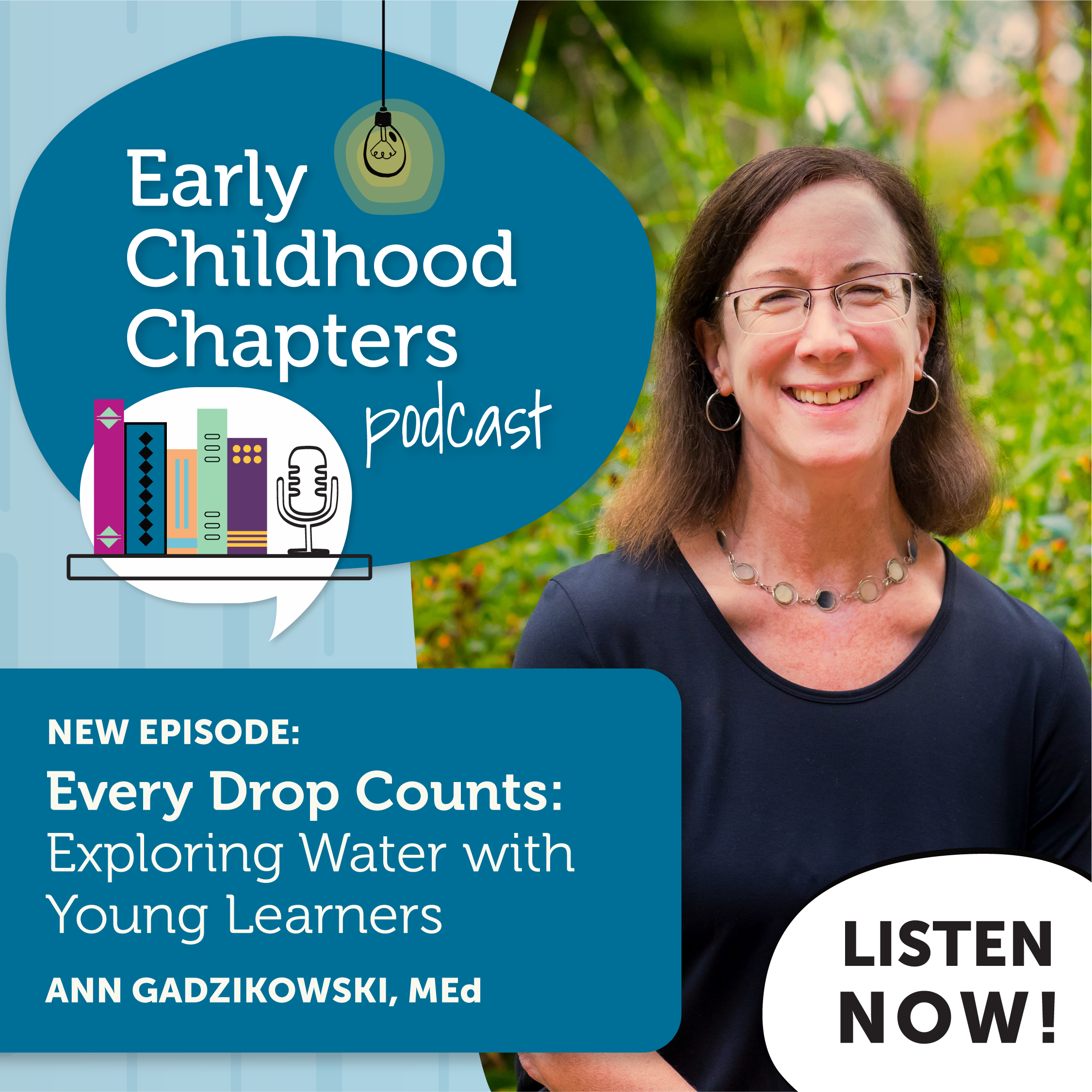
Every Drop Counts: Exploring Water with Young Learners
Oct 2800:29:41Tap to summarizeWhat can water teach young children about science, curiosity, and caring for the planet? Author and educator Ann Gadzikowski, MEd, joins host Emily Garman to discuss her new book, Every Drop Counts: Exploring Water Science with Young Children in a Changing Climate (Gryphon House, 2025). Drawing on her collaboration with her daughter, a water scientist, Ann shares how educators can inspire scientific thinking and environmental stewardship—beginning with joyful, hands-on play. In This Episode, You'll Learn: How simple water play helps children develop curiosity, problem-solving, and early STEM thinking. Ways to introduce environmental awareness and stewardship through age-appropriate exploration. How the book aligns with the Head Start Early Learning Outcomes Framework and Next Generation Science Standards. Strategies for addressing children's (and adults') eco-anxiety with reassurance and curiosity. Why play—and time outdoors—is the foundation for future scientific and environmental understanding. Practical classroom ideas for introducing water systems, the water cycle, and conservation through play. Key Quote: "Go outside and play as much as you can. Get wet, play in the mud, and get messy—that's the most important thing." — Ann Gadzikowski Guest: Ann Gadzikowski, MEd is an award-winning educator, author, and curriculum designer specializing in early childhood STEM and critical thinking. Her latest book, Every Drop Counts, empowers educators to teach science through wonder, play, and environmental care. Learn More: Explore Every Drop Counts: Exploring Water Science with Young Children in a Changing Climate at gryphonhouse.com.
Transcribe →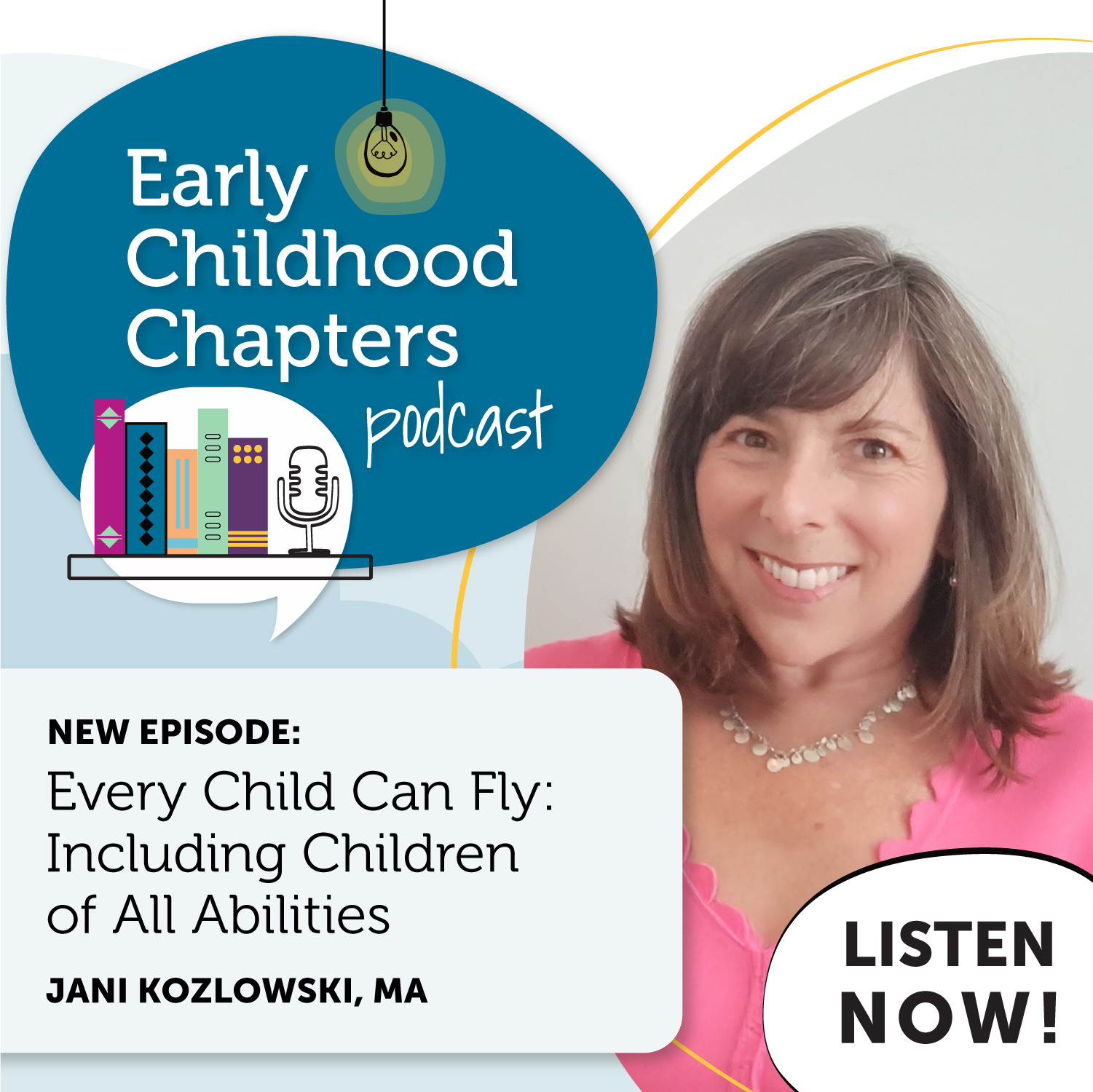
Every Child Can Fly: Including Children of All Abilities
Oct 900:38:03Tap to summarizeIn this inspiring conversation, author and educator Jani Kozlowski shares her personal and professional journey toward creating more inclusive early learning environments. Drawing from her own experience as a person with a disability—and as the parent of a child with a disability—Jani helps educators and families see that inclusion is not a place, but a culture of belonging. She offers practical advice for educators who want to welcome every child, explains the importance of people-first language, and highlights how high expectations paired with support help all children grow and thrive. Listeners will walk away with a renewed sense of confidence and compassion for creating classrooms where every child can fly. Key Topics: Jani's personal story and how it shaped her work in early childhood inclusion Why inclusion is a culture of belonging, not just a setting People-first language and how words shape perceptions How teachers and families can partner to support each child's success The benefits of inclusive classrooms for all children Balancing high expectations with appropriate support How educators can start building inclusive practices today Featured Guest: Jani Kozlowski, MEd Author of Every Child Can Fly: An Early Childhood Educator's Guide to Inclusion and Empowering Your Child to Fly: A Parent's Guide to Inclusion (Gryphon House Books)
Transcribe →