Podcast
Fertility Cafe
Hosted by Eloise Drane · EN
Fertility Café explores the evolving world of reproductive health, infertility, and modern family building. Hosted by Eloise Drane, fertility expert, agency founder, past surrogate and egg donor, and mom of five, the show unpacks the medical, emotional, and ethical sides of today’s fertility care.
From IVF, surrogacy, egg and sperm donation, embryo donation, infertility treatment, men’s fertility, hormones, and fertility preservation, each episode dives into every part of assisted reproduction. Hear real stories and expert insights from fertility doctors, surrogates, and intended parents in open conversations.
Whether you are navigating infertility, exploring surrogacy or donation, or curious about reproductive wellness, Fertility Café helps you find clarity, confidence, and hope.
Connect with us: www.thefertilitycafe.com
33episodes
Episodes
Newest firstAll episodes
What It’s Really Like to Be an Egg Donor
5d ago00:44:26Tap to summarizeWhat does it actually feel like to donate your eggs including the parts nobody talks about? In this episode, Eloise Drane sits down with Rai Hyde, a six-time egg donor who is proud of her donations and the families she helped create and who also experienced long-term health complications as a result. Rai shares her story with honesty and without sugarcoating, because she believes every woman considering donation deserves the full picture before she decides. This conversation covers what motivated Rai to donate, what the experience felt like from the inside, how she navigated known versus anonymous arrangements, and what she wishes she had known before her first cycle. It is a rare, candid account from someone who has done it six times and still looks back on it with pride while also being clear-eyed about the risks. If you are considering becoming an egg donor, this is the episode to listen to before you take the next step. “I’m proud to be an egg donor. And I want every woman who’s considering it to make the right decision for herself, knowing the real risks.” - Rai Hyde Guest Bio Rai Hyde is a six-time egg donor who, despite experiencing long-term health complications from her donations, looks back on the process and the families she helped create with pride and fondness. She is passionate about helping other donors and potential donors make informed decisions with a clear understanding of the health risks involved. This episode is for women who are considering becoming an egg donor and want an honest, first-hand account from someone who has done it six times and experienced both the rewards and the complications. What You’ll Learn • What motivated Rai to become an egg donor and to do it six times • What the egg donation experience really feels like from a donor’s perspective • The long-term health complications Rai experienced and what potential donors should know • How Rai navigated known versus anonymous donation arrangements • What she wishes she had known before her first cycle • Why she is still proud of her donations despite the challenges Episode Resources Rai Hyde on Instagram @cornellcontentmarketing Rai Hyde on LinkedIn linkedin.com/in/raicornell Will Being an Egg Donor Impact My Own Fertility? familyinceptions.com IVF Injections: What to Expect & How to Deal With Them familyinceptions.com Related Episodes Ep 63: Meeting My Egg Donor Baby Ep 15: Egg Donor, Do You REALLY Understand the Egg Donation Process? Thinking About Becoming an Egg Donor? If becoming an egg donor is something you’re exploring, visit familyinceptions.eggdonorconnect.com/donorprescreen to learn what’s involved. This episode is part of our Between Seasons series, where we’re bringing back some of the most-loved and most-needed conversations from the Fertility Café archive while we work on our next full season. Stay Connected Instagram https://www.instagram.com/fertilitycafe Facebook https://www.facebook.com/fertilitycafe LinkedIn linkedin.com/company/fertility-cafe More Resources Learn more about surrogacy & fertility https://familyinceptions.com/ Listen to past episodes https://www.youtube.com/@FertilityCafe Get expert insights & updates thefertilitycafe.com/resources
Transcribe →
What Donor-Conceived Adults Want Parents to Know
2w ago00:41:31Tap to summarizeWhat does it feel like to grow up donor-conceived and find out at age 35 that everything you thought you knew about your origins was incomplete? In this episode, Eloise Drane sits down with Erin Jackson, a freelance writer and donor-conceived rights advocate who discovered at 35 that she was conceived using donated sperm. The experience was shocking and it sparked a mission. Erin went on to create We Are Donor Conceived, a community and resource hub built to support others navigating the same discovery. This conversation is an essential listen for any intended parent considering egg donation, sperm donation, or embryo donation. Erin shares what donor-conceived adults wish their parents had known, how the conversation around disclosure has shifted, and what the rise of consumer DNA testing has changed about donor anonymity forever. If you’re building your family through donor conception, this episode gives you the perspective that matters most the one from the child’s point of view. “Donor-conceived people deserve to know their own story.” - Erin Jackson Guest Bio Erin Jackson is a freelance writer and donor-conceived rights advocate. At age 35, she discovered she was conceived using donated sperm a revelation that transformed her life and her purpose. She founded We Are Donor Conceived, a community and resource platform created to support donor-conceived people in their search for identity, community, and answers. This episode is for intended parents considering egg donation, sperm donation, or embryo donation who want to understand the long-term impact of donor conception from the perspective of the people who have lived it. What You’ll Learn • What it’s like to discover you’re donor-conceived as an adult and why late disclosure causes lasting harm • What donor-conceived people most want parents to know and do differently • Why donor anonymity is no longer a realistic promise in the age of consumer DNA testing • How to approach disclosure with your child in a way that is honest, age-appropriate, and empowering • What resources exist for donor-conceived people and the families who love them Episode Resources We Are Donor Conceived wearedonorconceived.com Family Inceptions familyinceptions.com Start Your Family-Building Journey If you’re considering building your family through surrogacy or egg donation, visit familyinceptions.com to talk with our team. This episode is part of our Between Seasons series, where we’re bringing back some of the most-loved and most-needed conversations from the Fertility Café archive while we work on our next full season. Stay Connected Instagram https://www.instagram.com/fertilitycafe Facebook https://www.facebook.com/fertilitycafe LinkedIn linkedin.com/company/fertility-cafe More Resources Learn more about surrogacy & fertility https://familyinceptions.com/ Listen to past episodes https://www.youtube.com/@FertilityCafe Get expert insights & updates thefertilitycafe.com/resources
Transcribe →
What It’s Really Like to Be a Surrogate
3w ago00:48:43Tap to summarizeWhat does it actually feel like to carry a baby for someone else? Not the polished version the real one. In this episode, Eloise Drane sits down with Heathyr Suhr, a two-time gestational surrogate and single mom, to talk honestly about what the surrogacy journey looks and feels like from the inside. Heathyr shares her motivations, her experiences with intended parents, what she needed most from her agency, and the parts of surrogacy that nobody tells you about upfront. This is a first-hand account from someone who has done it twice and loves it and who is passionate about helping other women understand what they’re really signing up for before they begin. If you’re considering surrogacy and wondering what the experience is truly like for the surrogate, this episode gives you an honest, grounded answer straight from someone who has lived it. “I love pregnancy, I love helping create families, and I love educating other women on the ups and downs of this journey.” - Heathyr Suhr Guest Bio Heathyr Suhr is a single mom and two-time gestational surrogate who loves pregnancy, helping create families, and educating other women on the realities of surrogacy. She brings a candid, warm perspective to one of the most personal decisions a woman can make. This episode is for women who are considering surrogacy and want to hear an honest, first-hand account of what the journey actually feels like. What You’ll Learn • What motivated Heathyr to become a surrogate and do it again • What the day-to-day reality of being a gestational carrier actually feels like • How Heathyr navigated her relationship with her intended parents • What surrogates need most from their agency and their IPs • The emotional ups and downs no one prepares you for • What Heathyr wishes more women knew before starting the process Episode Resources Becoming a Surrogate: What’s Carrying Someone Else’s Baby Like? familyinceptions.com 6 Red Flags When Selecting a Surrogacy Agency familyinceptions.com Related Episodes Ep 8: Six-Time Egg Donor & Three-Time Surrogate Eloise Shares Her Story Ep 2: Surrogacy 101: When It Takes a Village to Start a Family Thinking About Becoming a Surrogate? If you’re thinking about becoming a surrogate and want to talk with a team that’s been doing this for over two decades, visit familyinceptions.com. This episode is part of our Between Seasons series, where we’re bringing back some of the most-loved and most-needed conversations from the Fertility Café archive while we work on our next full season. Stay Connected Instagram https://www.instagram.com/fertilitycafe Facebook https://www.facebook.com/fertilitycafe LinkedIn linkedin.com/company/fertility-cafe More Resources Learn more about surrogacy & fertility https://familyinceptions.com/ Listen to past episodes https://www.youtube.com/@FertilityCafe Get expert insights & updates thefertilitycafe.com/resources
Transcribe →
The Truth About Birth Control, Ovulation, and Your Hormones
4w ago00:52:54Tap to summarizeWhy are we taught so little about something that happens every single month for decades of our lives? In this episode, Eloise Drane sits down with fertility awareness educator and author Lisa Hendrickson-Jack to unpack one of the most overlooked truths in women’s health: the menstrual cycle is not just about getting pregnant. It is a vital sign. From heavy periods and birth control prescriptions in her teens to becoming a pioneer in fertility awareness education and podcasting, Lisa shares how charting her cycle transformed her understanding of her body and ultimately her career. This conversation goes far beyond basic sex education. It breaks down what is actually happening during your cycle, how ovulation impacts overall health, what hormonal birth control really does to the body, and why so many women feel confused or dismissed when something feels “off.” “Your menstrual cycle is not an inconvenience. It’s information.” - Lisa Hendrickson-Jack Guest Bio Lisa Hendrickson-Jack is a certified fertility awareness educator, host of the Fertility Friday podcast, and author of The Fifth Vital Sign and Real Food for Fertility (co-authored with Lily Nichols, RDN). Lisa has been charting her cycle since age 18 and was one of the first voices to bring fertility awareness education to the podcast space in 2014. Today her work focuses on educating women directly and training health practitioners to use the menstrual cycle as a diagnostic and health tool. This episode is for any woman who wants to understand her cycle more deeply whether she’s on hormonal birth control, recently come off it, or simply trying to make sense of what her body is doing every month. What You’ll Learn • What it really means when we say “the menstrual cycle is a vital sign” • What’s happening hormonally from your period to ovulation to the luteal phase • Why the 28-day cycle myth is misleading and what is actually normal • How cervical fluid works, and why most of us were never taught about it • The key role ovulation plays in bone density, mood, and long-term health • How hormonal birth control suppresses ovulation and what that means for your body Episode Resources Fertility Friday Podcast fertilityfriday.com The Fifth Vital Sign fertilityfriday.com/book Real Food for Fertility (free first chapter) realfoodforfertility.com Lisa on Instagram @fertilityfriday Related Episodes Ep 129: Acupuncture for Fertility: Supporting Hormones, Cycles & IVF Success Ep 126: What Your OBGYN Isn’t Telling You This episode is part of our Between Seasons series, where we’re bringing back some of the most-loved and most-needed conversations from the Fertility Café archive while we work on our next full season. Stay Connected Instagram https://www.instagram.com/fertilitycafe Facebook https://www.facebook.com/fertilitycafe More Resources Learn more about surrogacy & fertility https://familyinceptions.com/ Listen to past episodes https://www.youtube.com/@FertilityCafe Get expert insights & updates thefertilitycafe.com/resourcesLinkedIn linkedin.com/company/fertility-cafe
Transcribe →
Egg Donation 101: How It Works
Jul 700:32:10Tap to summarizeHow does egg donation actually work, and what do you need to know before you start? In this solo episode, Eloise Drane, founder of Family Inceptions and a six-time egg donor, breaks down everything you need to know about egg donation. She covers the biology behind the process, the different types of donor arrangements (anonymous, semi-anonymous, known, and informational), how to choose the right program, and what the process actually looks like for both donors and intended parents. Eloise also addresses the questions she hears most often: Is anonymous donation even possible in the age of DNA testing? What are the real risks for donors? How has cryopreservation changed the fresh vs. frozen debate? And how do you choose between a fertility clinic’s in-house program, a frozen egg bank, an agency, or going independent? Whether you’re an intended parent who’s already decided to use egg donation or someone just starting to explore your options, this episode gives you the foundation you need. “The egg donation process doesn’t need to be overwhelming, you just need the right information.” - Eloise Drane This episode is for intended parents considering egg donation as a path to parenthood, and for women who are curious about becoming a donor and want to understand the full picture. What You’ll Learn • The biology behind egg donation and the key terms you’ll encounter • The four types of donor arrangements anonymous, semi-anonymous, known, and informational and what each means today • Whether true anonymous donation is still possible given advances in genetic testing • What qualifies someone to be an egg donor, and what the real risks are • How to choose between a frozen egg bank, fertility clinic program, egg donation agency, or independent route • Why the fresh vs. frozen cycle debate has largely been settled by advances in cryopreservation • How Eloise’s own donation journey led her to found Family Inceptions Episode Resources Family Inceptions familyinceptions.com Related: Ep 144: Becoming an Egg Donor: The Real Process Start Your Family-Building Journey If you’re considering building your family through surrogacy or egg donation, visit familyinceptions.com/start to talk with our team. This episode is part of our Between Seasons series, where we’re bringing back some of the most-loved and most-needed conversations from the Fertility Café archive while we work on our next full season. Stay Connected Instagram https://www.instagram.com/fertilitycafe Facebook https://www.facebook.com/fertilitycafe LinkedIn linkedin.com/company/fertility-cafe More Resources Learn more about surrogacy & fertility https://familyinceptions.com/ Listen to past episodes https://www.youtube.com/@FertilityCafe Get expert insights & updates familyinceptions.com/resources
Transcribe →
Becoming an Egg Donor: The Real Process
Jun 3000:30:34Tap to summarizeThinking about becoming an egg donor? Before you take the first step, here’s what the process actually looks like from your first application to the day you receive your compensation check. In this solo episode, Eloise Drane a six-time egg donor herself and founder of Family Inceptions takes you through the entire egg donation journey in detail. She covers how to choose the right program, what medical screening and monitoring really involves, the legal agreements that protect you, and what compensation looks like at every level. Eloise doesn’t sugarcoat it. She talks about OHSS, the emotional weight of the decision, what anonymity actually means in the age of 23andMe, and the questions most potential donors don’t know to ask until it’s too late. If becoming an egg donor is calling you, this is the episode to start with. “She is a kind and compassionate human being who wants to give a family a part of herself so they can feel whole.” — Eloise Drane This episode is for women who are curious about egg donation and want an honest, detailed look at the process before they decide whether it’s right for them. What You’ll Learn • How to decide if egg donation is right for you and how to get clear on your ‘why’ • The qualifying criteria every egg donor must meet • The four types of egg donation programs and how to choose between them • What the application, matching, and medical screening process looks like step by step • The medications you’ll take, what to expect, and what OHSS actually is • Legal agreements: what the Egg Donor Agreement covers and why you need your own attorney Episode Resources Family Inceptions Thinking About Becoming an Egg Donor? If becoming an egg donor is something you’re exploring, visit https://familyinceptions.com/egg-donors/ to learn what’s involved. This episode is part of our Between Seasons series, where we’re bringing back some of the most-loved and most-needed conversations from the Fertility Café archive while we work on our next full season. Stay Connected Instagram https://www.instagram.com/fertilitycafe Facebook https://www.facebook.com/fertilitycafe LinkedIn linkedin.com/company/fertility-cafe More Resources Learn more about surrogacy & fertility https://familyinceptions.com/ Listen to past episodes https://www.youtube.com/@FertilityCafe Get expert insights & updates thefertilitycafe.com/resources
Transcribe →
Should I Freeze My Eggs? What to Know Before You Decide
Jun 2300:24:01Tap to summarizeShould you freeze your eggs? It’s one of the most searched fertility questions online and one of the most misunderstood. In this solo episode, Eloise Drane cuts through the noise and gives you an honest, grounded look at egg freezing: what the process actually involves, what it costs (financially and emotionally), who it’s right for, and what the conversation often leaves out. Egg freezing has moved from a niche medical intervention to a mainstream choice but popularity hasn’t made it simpler or more accessible for everyone. Eloise explores how the technology evolved, what a real cycle looks like, and why access and equity still matter in this conversation. Whether you’re seriously considering it or just trying to understand your options, this episode gives you real talk and the clarity to make a decision that’s actually right for you. “Your timeline, your body, and your decisions deserve clarity and care.” - Eloise Drane This episode is for women at any stage of life who are weighing egg freezing as an option and want honest, practical information before making a decision. What You’ll Learn • How egg freezing evolved from a last-resort treatment to a proactive choice • What a real egg freezing cycle looks like, step by step • The true cost of egg freezing financial, physical, and emotional • Who egg freezing tends to work well for, and who it may not be right for • Why access to egg freezing remains unequal despite growing mainstream interest • How to think through the decision clearly, on your own timeline Episode Resources American Society for Reproductive Medicine FertilityIQ Stay Connected Instagram https://www.instagram.com/fertilitycafe Facebook https://www.facebook.com/fertilitycafe LinkedIn linkedin.com/company/fertility-cafe More Resources Learn more about surrogacy & fertility https://familyinceptions.com/ Listen to past episodes https://www.youtube.com/@FertilityCafe Get expert insights & updates thefertilitycafe.com/resources
Transcribe →
Does Your Job Cover IVF? Fertility Benefits at Work
Jun 1600:30:46Tap to summarizeDoes your employer cover IVF, surrogacy, or egg donation? Most people have no idea what fertility benefits they’re entitled to, or how to ask for them. In this episode, Eloise Drane sits down with Brooke Bartholomay Quinn, COO of Carrot Fertility and fertility benefits expert, to explore how companies are building fertility and family-building benefits into their packages, what those benefits actually cover, and how employees can advocate for themselves if those benefits don’t yet exist at their workplace. They cover why family-building benefits have taken so long to become standard, how many current offerings still fall short on inclusion, and what it looks like when an employer gets it right. If you’re navigating surrogacy or egg donation and wondering whether your employer could help cover the costs, this episode is essential listening. “Fertility benefits aren’t a perk. They’re a signal of who your employer thinks deserves to build a family.” – Brooke Bartholomay Quinn Guest Bio Brooke Bartholomay Quinn is COO of Carrot Fertility and a fertility benefits expert with extensive experience helping companies build family-building support programs for employees navigating IVF, surrogacy, egg donation, adoption, and more. This episode is for intended parents and anyone exploring family-building who wants to understand whether their workplace benefits can help offset the cost. What You’ll Learn Why fertility and family-building benefits have lagged behind other workplace benefits How many current fertility benefit offerings still aren’t fully inclusive What employers gain by offering family-building support How to start the conversation with your HR team or employer What employees should ask when reviewing their benefits package Episode Resources Brooke on LinkedIn – linkedin.com/in/brooke-bartholomay-quinn A History of Employer-Sponsored Healthcare – griffinbenefits.com Related Episodes Ep 35: Infertility Epidemic Start Your Family-Building Journey If you’re considering building your family through surrogacy or egg donation, visit thefertilitycafe.com/start to talk with our team. This episode is part of our Between Seasons series, where we’re bringing back some of the most-loved and most-needed conversations from the Fertility Café archive while we work on our next full season. Stay Connected Instagram – https://www.instagram.com/fertilitycafe Facebook – https://www.facebook.com/fertilitycafe LinkedIn – linkedin.com/company/fertility-cafe More Resources Learn more about surrogacy & fertility – https://familyinceptions.com/ Listen to past episodes – youtube.com/@FertilityCafePodcast/playlists Get expert insights & updates – thefertilitycafe.com/resources
Transcribe →
What I Wish I Knew Before Becoming a Surrogate
Jun 900:31:40Tap to summarizeWhat do you wish someone had told you before you became a surrogate? In this episode of Fertility Café, Eloise Drane opens up the conversation surrogates rarely get to have out loud: the strange facts, surprising details, and small things nobody warns you about before a surrogacy journey begins. Drawing on years of stories from surrogates past and present, the Family Inceptions team, and friends across the field, this episode gathers the honest, behind-the-scenes truths -- from what not to do during the application process (hint: don’t assume one answer will disqualify you) to the surprisingly common “crying husband” moment on delivery day. It is candid, funny, and full of the kind of insight you only get from people who have actually been through it. If you are thinking about becoming a surrogate and want the real story, not the brochure version... If you have already started your journey and want to know what is coming next... If you simply want a behind-the-scenes look at how surrogacy really works... This episode is for you. Chapters You’ll Learn How long the screening process really takes, and how to be choosy about your agency Why this is your journey too, and you choose your intended parents as much as they choose you Why surrogacy is not just a side hustle, plus what to expect for compensation Why a little fertility biology goes a long way before clinic meetings Why kids often grasp surrogacy faster than adults, and how to field their questions About Our Host Eloise Drane is the founder of Family Inceptions, a full-service surrogacy and egg donation agency she launched in 2008, and the host of Fertility Café. A six-time egg donor and three-time gestational surrogate herself, Eloise built her agency around informed empowerment, transparency, and care for everyone involved in the family-building process. She is also the creator of Surrogacy Roadmap, a course for intended parents pursuing independent surrogacy. Her mission is simple but powerful: to give surrogates, egg donors, and intended parents the honest information they deserve before they begin. Resources & Links Learn more about the podcast: Fertility Café Learn more about our surrogacy and egg donation agency: Family Inceptions Learn more about independent surrogacy: Surrogacy Roadmap How to apply to be a surrogate: The Application Process On the blog: Ten Things That Make You an Ideal Surrogate Thinking about becoming a surrogate and want to talk with a team that has been doing this for over two decades? Visit https://quiz.familyinceptions.com Connect with Eloise & Family Inceptions: familyinceptions.com Related Episodes Ep 78 -- What It’s Really Like to Be a Surrogate A firsthand look at the day-to-day reality of carrying for someone else, from matching through delivery. Ep 13 -- Becoming a Surrogate: The Real Process A step-by-step walk through what the surrogacy process actually involves, start to finish.
Transcribe →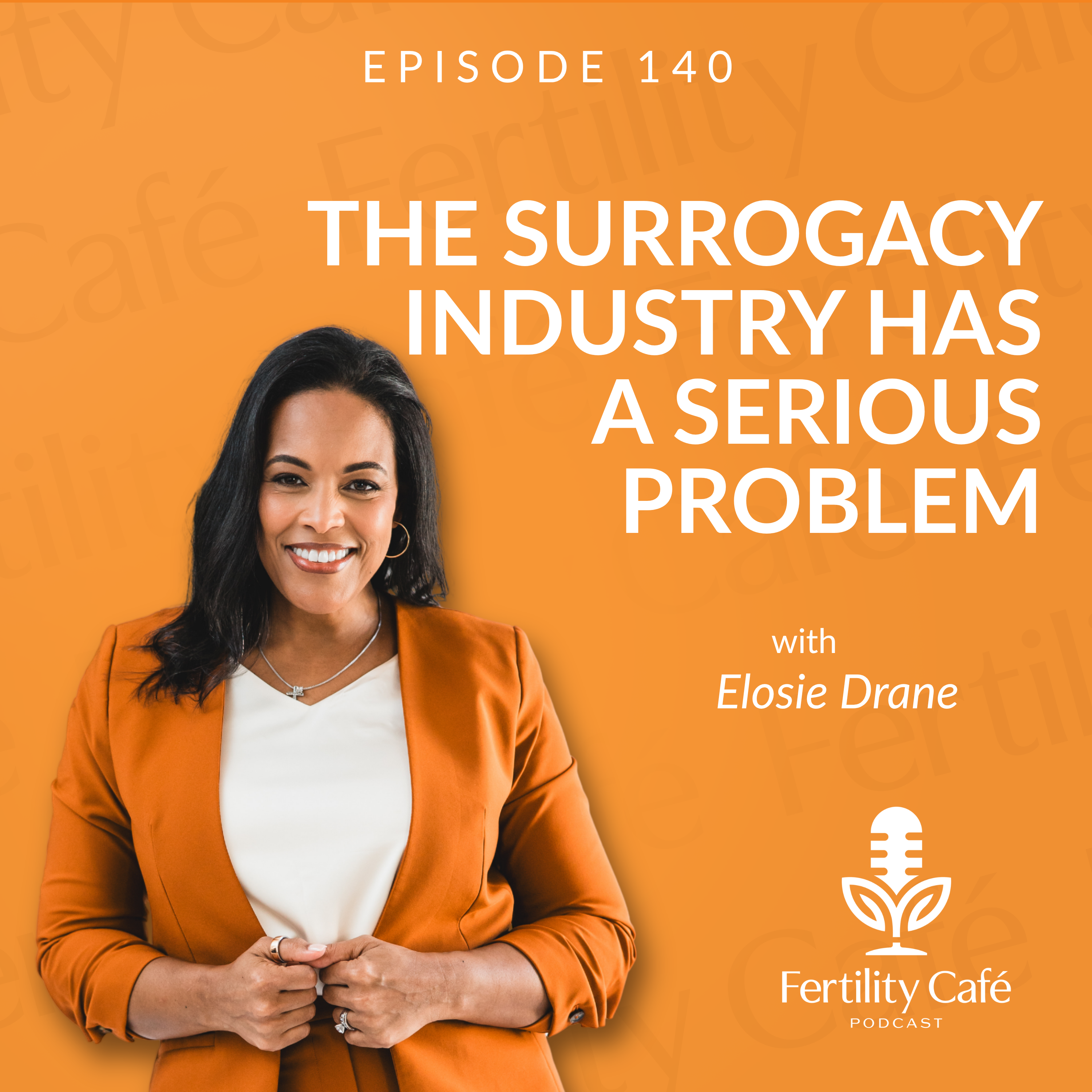
The Surrogacy Industry Has a Serious Problem
Apr 700:34:45Tap to summarizeWhat happens when an industry built to help people build families starts failing the very people it's supposed to serve? In this season seven finale of Fertility Café, host Eloise Drane steps out from behind the interview chair to speak directly about what's been happening in the fertility and surrogacy space: the progress worth celebrating, the structural failures that keep producing real harm, and the political forces reshaping access to care right now. Eloise draws on nineteen episodes of conversations, years of experience inside this industry, and her own story as a former surrogate to give an honest assessment of where things stand and why so many people are getting hurt along the way. From agencies collapsing mid-pregnancy to embryo mix-ups with no federal reporting requirement, from the California surrogacy fraud case to billionaires fathering over 100 children through the American surrogacy system, Eloise names what's happening and why it keeps happening. If you've ever trusted this industry and wondered whether your trust was well placed... If you're considering surrogacy or egg donation and want to go in with your eyes open... If you believe that the people building families through these paths deserve better than what the system is currently offering... This episode is for you. You'll Learn Why the surrogacy industry's lack of licensing requirements is at the root of its most serious failures What the 2025 California surrogacy fraud case revealed about how women are being deceived What is happening when wealthy men use the American surrogacy system to father dozens or hundreds of children Why embryo mix-ups keep occurring and why there is still no federal requirement to report them How fertility fraud by doctors using their own sperm without patient consent is still being uncovered today Where federal policy is moving on IVF access and why progress on one side is being undercut on the other Which states are leading on fertility insurance mandates and what those laws actually cover What the push for restorative reproductive medicine in federal policy actually means for patients Why Eloise believes a federal insurance mandate is the only thing that will truly move the needle on access What the Vatican's call for a global surrogacy ban gets wrong about ethical, supported surrogacy How to thoroughly vet an agency, clinic, or donor situation before you commit to anything What the stories that never make the news say about what this industry looks like when it works About Eloise Drane Eloise Drane is the founder of Family Inceptions, a licensed surrogacy and egg donation agency, and the host of Fertility Café. She has spent over two decades working across every facet of third-party reproduction as a professional, an advocate, and a former 3x surrogate herself. She brings that full picture to every conversation on this show, including this one. Resources & Links Website: familyinceptions.com Instagram: @fertilitycafepodcast YouTube: Fertility Café Related Episodes Ep 136: When the Donor and the Donor-Conceived Meet: One Remarkable StoryA sperm donor from the 1980s, a fertility specialist, and the sitting senator who came looking for him. Ep 135: I Carried Two Babies for Other Families: The Truth About Becoming a Surrogate TwiceDarnae Pitts on what surrogacy really looks like from the inside, twice. Ep 138: The Egg Donation Screening Process: What to Expect from Application to RetrievalChristina Alicea, a five-time egg donor and fertility field professional, demystifies the process from start to finish.
Transcribe →