Podcast
Growing Older Living Younger: About longevity, wellness, healthspan,
Hosted by Dr. Gillian Lockitch · EN
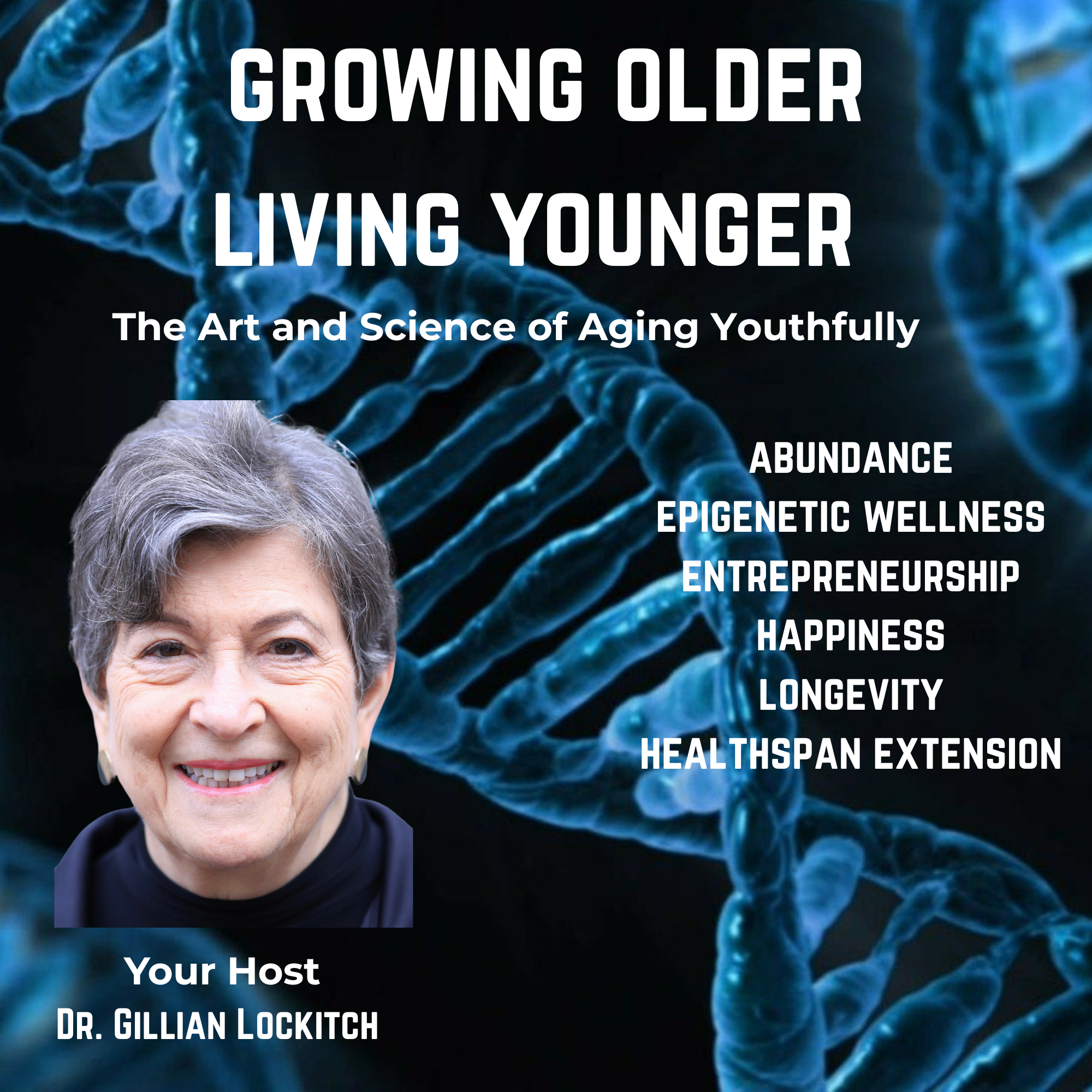
Welcome to Growing Older, Living Younger, the podcast where you will discover ways to boost your metabolism, enhance your mental and physical energy, and ward off disorders we wrongly think are inevitable as we age. Hosted by Dr. Gillian Lockitch, former specialist in Medical Biochemistry, professor, researcher and international speaker, the show airs weekly every Monday. Each episode is a 30 - 45 minutes, exploring ways in which genetic and epigenetic (gene expression) science and medicine may intersect with ancient, non-western wellness practices to help you extend your health span to live younger. The show features practitioners in mental and physical health, fitness, nutrition, personal care, community, networking and entrepreneurship, to help you create your personal roadmap to aging youthfully.
53episodes
Episodes
Newest firstAll episodes

176 Dr. Wayne Gradman. Don't Fall! The Fall Guy Tells You Why
Apr 1700:38:27Tap to summarizeFlashback Friday's EPISODE 176 of GROWING OLDER LIVING YOUNGER focuses on a vital topic for all who want to age in good health, namely preventing falls, and potential fractures. Falls are a leading cause of injury, disability and loss of independence among seniors, often resulting in fractures, hospitalizations and long term health complications. Maintaining mobility and preventing falls is absolutely key to promoting a healthier, independent form of aging. My guest today is Dr Wayne Gradman, author of The Fall Guy, How to Keep Gravity from Ruining your Day. Dr Gradman obtained his MD from Harvard Medical School, followed by postgraduate work, interrupted by military service, at UCLA and Cedars Sinai Medical Center in Los Angeles. His private practice was in vascular surgery. He has been married for 52 years, and credits his wife for a very practical point, The 20-Foot Rule. 0:01 Introduction and Overview of the Podcast 2:17 Introduction of Dr. Wayne Gradman 3:54 Intrinsic and Extrinsic Fall Factors 8:48 Personal Experiences and Practical Tips 9:05 Practical Tips for Preventing Falls 14:18 Home Safety and Bathroom Precautions 18:27 Stairs and Banisters 22:09 Outdoor Safety and Exercise 29:00 Exercise for Fall Prevention 33:31 Key Takeaways and Conclusion Contact Dr. Lockitch ar askdrgill@gmail.com Check out the website for Dr. Gradman https://wgradman.com And if you have not already done so, please follow, rate and review this Growing Older Living Younger podcast.
Transcribe →
263 Why Your Scale Lies - The Truth About Body Fat, Wearables and Aging with Cheryl McColgan
Apr 1300:39:50Tap to summarizeHave you ever stepped on a scale and questioned whether the numbers truly reflect what is happening inside your body? In this episode, Dr. Gillian Lockitch speaks with nutrition expert Cheryl McColgan to unpack the confusion around body composition data, wearable devices, and the science behind tracking your health as you age. Together, they explore how to interpret trends rather than obsess over absolute numbers, and how lifestyle habits like sleep, stress management, and nutrition influence the data we see. This conversation empowers listeners to use technology wisely while focusing on the foundational habits that support vibrant, healthy aging. Cheryl McColgan is an author, coach, and the founder of Heal Nourish Grow, a wellness platform focused on nutrition, metabolic health, and sustainable lifestyle practices. With over 25 years of experience in psychology, addiction studies, fitness, yoga, and nutrition, Cheryl brings a multidisciplinary approach to health optimization. She is also the host of the Heal Nourish Grow podcast and has authored multiple books on keto nutrition and fat loss. At age 52, she became a competitive bodybuilder, demonstrating her commitment to strength, longevity, and aging powerfully. Episode Timeline: 00:00 – Welcome and introduction 00:30 – A personal story of unexplained weight gain Dr. Gillian shares her experience with atrial fibrillation, weight gain, and confusion over body composition data 06:35 – Cheryl's journey into health, nutrition, and bodybuilding From early exposure to fitness to becoming a competitor in her 50s 10:48 – Can we trust wearable and scale data? Why body composition devices vary and how to approach their accuracy 12:27 – The problem with body fat readings Why scales may underestimate fat and how algorithms affect results 16:08 – Hydration, inflammation, and measurement variability How fluid shifts, illness, and exercise impact bioimpedance readings 18:46 – Daily vs weekly tracking Why trends over time matter more than isolated measurements 21:38 – How wearables measure stress, sleep, and recovery Understanding HRV, skin signals, and algorithm-driven insights 24:16 – Are we becoming obsessed with health data? Balancing measurement with mindset and wellbeing 29:04 – The most important habits for healthy aging Sleep, stress management, and aligning exercise with life demands 31:32 – Rethinking productivity and rest The importance of giving yourself permission to recover 33:18 – Keto, metabolic health, and personalized nutrition Cheryl's journey from vegetarian to keto and evolving dietary flexibility 36:58 – Final reflections and practical takeaways Using tools wisely while focusing on foundational health behaviors Call to Action: Download Guide to nature's Colourful Antioxidants Find "Growing Older Living Younger: The Science of Aging Gracefully and the Art of Retiring Comfortably" at www.gillianlockitch.com (N.America only) Subscribe to Growing Older Living Younger on your favorite podcast platform and leave a 5 star review to help others discover the show. Join the Growing Older Living Younger Community Connect with Dr. Gillian Lockitch at https://www.askdrgill.com/ or email: askdrgill@gmail.com to book a one-on-one call. Learn more about Cheryl's work at https://healnourishgrow.com Instagram: https://instagram.com/healnourishgrow Twitter: https://twitter.com/healnourishgrow Pinterest: https://pinterest.com/healnourishgrow YouTube: https://youtube.com/healnourishgrow Facebook: https://facebook.com/healnourishgrow
Transcribe →
132 Dr. Michael Breus: Sleep Times and Chronotypes: Are You a Lion, Bear, Wolf or Dolphin
Apr 1000:37:11Tap to summarizeTHIS FLASHBACK FRIDAY EPISODE 132 OF GROWING OLDER LIVING YOUNGER focuses on understanding how our unique internal circadian rhythms, derived from interaction of genotype with environment, define our chronotype, which can help us optimize the times at which we should sleep, eat, exercise, interact with others and much more. Today's Featured Expert is Dr. Michael Breus, Clinical Psychologist, diplomate of the American Board of Sleep Medicine, and a fellow of the American Academy of Sleep Medicine. Dr. Breus is the author of The Power of When, a biohacking guidebook showing that, based on your genetic, biological chronotype, there is an optimal time to do everything from eating to exercising, to even asking for a raise. He is the author of two other books, focusing on sleep, The Sleep Doctors Four Week Program to Better Sleep and Better Health, and The Sleep Doctor's Diet Plan. Known as the Sleep Doctor, Dr. Breus is recognised for his characterization of 4 chronotypes, Lion, Bear, Wolf and Dolphin. Episode Timeline: 0.11 Intro to Sleep medicine and chronobiology 5:41 Genetics, time zones and personality traits 10:20 Circadian science and biological clocks. 21:06 Sleep disturbances and muscle cramps 26:55 Sleep apnea and its impact on daily life. 32:57 A Sleep Doctor's approach to Aging, Wellness and Genetics About this episode's Featured Expert: Dr. Michael Breus Website: www.sleepdoctor.com https://www.linkedin.com/in/thesleepdoctor/ About Your Host: Dr. Gillian Lockitch Download your free Guide to Living Younger Longer. Schedule a free Discovery Call with Dr. Gill Email Dr. Gill at askdrgill@gmail.com About Your Host: Dr. Gillian Lockitch website: https://www.askdrgill.com/ Facebook: https://www.facebook.com/gillian.lockitch/ https://www.facebook.com/groups/growingolderlivingyounger Order Growing Older Living Younger: The Science of Aging Gracefully and the Art of Retiring Comfortably And if you have not already done so, please follow, rate and review the podcast Growing Older Living Younger.
Transcribe →
262 Strong Bones for Life: Preventing Osteoporosis and Fractures as You Age with Kyle Zagrodzky
Apr 600:39:56Tap to summarizeBone density loss and osteoporosis are among the biggest threats to independence after 50. In this episode, bone health expert Kyle Zagrodzky explains the science of bone remodeling, skeletal strength, fracture prevention, and how mechanical loading can help build stronger bones as we age. Bone health is often overlooked until a fracture occurs, yet skeletal strength is one of the most important factors determining mobility as we age. In this episode, Dr. Gillian Lockitch speaks with Kyle about how modern lifestyles contribute to declining bone density and muscle strength across generations, and why traditional approaches to bone health often miss a crucial biological trigger. The conversation explores practical strategies for strengthening bone, improving balance, and reducing fracture risk so that listeners can remain active, resilient, and independent throughout later life. Kyle Zagrodzky is the Founder and CEO of OsteoStrong, an international wellness franchise dedicated to improving skeletal health and preventing fractures through science-based conditioning protocols. A seasoned entrepreneur with more than three decades of experience building high-performance companies, he shifted his focus toward bone health in 2012 after discovering breakthrough bone density technology developed by inventor Dr. John Jaquish. Today OsteoStrong operates in more than 200 locations across multiple countries and serves hundreds of thousands of members seeking stronger bones, better balance, and improved musculoskeletal health. Kyle also hosted the Unbreakable Me podcast and is a leading advocate for proactive skeletal health as a central pillar of longevity. Episode Timeline 00:00 – Welcome and introduction Dr. Gillian Lockitch introduces the episode and highlights why bone health is essential for maintaining independence, mobility, and an active lifestyle as we age. 00:30 – Why bone health is often overlooked Dr. Lockitch explains how bone loss develops silently, particularly during menopause and aging, and why strengthening the skeletal system is critical for healthy longevity. 04:57 – Kyle Zagrodzky's entrepreneurial journey Kyle shares his background as a bootstrap entrepreneur, his experience in the fitness industry, and the turning point that led him to focus on bone health innovation. 06:30 – Discovering breakthrough bone density technology Kyle describes meeting scientist Dr. John Jaquish and learning about a prototype device designed to stimulate bone growth through mechanical loading. 08:47 – From prototype to global OsteoStrong franchise The discussion explores how Kyle helped transform a scientific concept into an international network of skeletal conditioning centers. 10:13 – The fundamentals of longevity Both hosts discuss the importance of focusing on core lifestyle practices such as movement, nutrition, resistance training, and social connection rather than chasing every new biohacking trend. 15:23 – Why bone density is declining in modern society Kyle explains research showing that younger generations are developing lower bone mass due to sedentary lifestyles and insufficient mechanical loading. 18:00 – The science of bone remodeling The conversation explores Wolff's Law and how bones respond to mechanical stress, along with the level of force required to stimulate new bone growth. 21:50 – How OsteoStrong works Kyle explains the technology behind OsteoStrong devices and how controlled high force loading can stimulate bone growth safely without traditional impact exercise. 26:21 – Practical solutions for people without access to OsteoStrong Kyle shares alternative strategies including resistance training, variable resistance systems such as the X3 bar, and the importance of balance and strength training. 30:45 – The overlooked role of protein Kyle discusses why adequate protein intake is critical for maintaining muscle mass and supporting skeletal health as we age. 32:13 – Dr. Lockitch's personal bone health journey Dr. Lockitch shares her experience with osteoporosis, maintaining bone health through lifestyle approaches, and rebuilding strength after atrial fibrillation limited her activity. 33:59 – The pros and cons of common osteoporosis medications Kyle explains how bisphosphonate drugs work, potential risks associated with long-term use, and why bone remodeling balance is important. 37:11 – Extending healthspan, not just lifespan Dr. Lockitch emphasizes the importance of maintaining vitality, independence, and quality of life rather than simply living longer. 37:50 – Final insights and closing thoughts Kyle and Dr. Lockitch reflect on the importance of empowering people to strengthen their bones and extend their healthy years. Connect with Osteostrong https://osteostrong.me https://x3bar.com Connect with Dr. Gillian Lockitch https://www.askdrgill.com askdrgill@gmail.com Find "Growing Older Living Younger: The Science of Aging Gracefully and the Art of Retiring Comfortably" at www.gillianlockitch.com or on Kindle. Subscribe to Growing Older Living Younger on your favorite podcast platform and leave a review to help others discover the show. Join the Growing Older Living Younger Community
Transcribe →
073 Jayne Buxton. Is Plant-Based Nutrition Really Good for Your Health and Our Planet?
Apr 300:39:49Tap to summarizeOne of the most important personal choices you can make about your health and about aging well, centres on nutrition. The reality is that we are what we eat. Food and the social aspects of eating together is an important aspect of daily life. And society's hunger for knowledge about food and health is reflected in the tsunami of contradictory information that floods our newspapers, magazines, computers and televisions every day. It's hard for even a dedicated researcher like me to make sense of it. Sadly, as for many important issues of the day, discussion about nutrition and health has become a battleground rather than arena where investigation and thoughtful debate occurs so that we can make informed choices. And the key word is choice.As a medical specialist in human biochemistry with a particular focus on nutrition and micronutrients, I have been perplexed by the drive to force consumers onto a diet based solely on plants, with claims that this would be good for our health and the only solution to save our planet. Where in the battleground of extremes between vegans and carnivores is there a place for those of us who believe that we should have access to fresh, whole foods, meat, fish, poultry, eggs, vegetables, nuts, seeds, healthy fats, cheese or yogurt, and choose what feels right for us? Today I talk to Jayne Buxton, journalist, former business analyst, entrepreneur and author of The Great Plant-Based Con: Why eating a Plants-only diet won't improve your health or save the planet. There is much to unpack in this extensively researched and referenced book, but our conversation focuses on 3 key areas. How a plant-only diet affects human health, the mythology that asserts that a plant-only diet is best for the planet, and what are the powerful forces propelling us towards a plant-only diet, and away from the freedom to choose what we put in our bodies. In this conversation we could only touch on highlights from the book. Learn more about "The Great Plant-Based Con: Why eating a Plants-only diet won't improve your health or save the planet" at www.jaynereesbuxton.com Find Jayne at @jaynereesbuxt Contact Dr. Gillian Lockitch to discover how you can create your own roadmap to living younger as you grow older, You can schedule a free Discovery Call with me Order your copy of Growing Older Living Younger: The Science of Aging Gracefully and The Art of Retiring Comfortably at www.gillianlockitch.com. And join our private Growing Older Living Younger Community, to meet people, who like you, are discovering and sharing ways to age in great health. Help spread the word by subscribing, rating and reviewing the show. Here is how to do it in 7 easy steps on Apple Podcasts 1. Open the Podcasts app on your iPhone, iPad, or Mac. 2.Search for Growing Older Living Younger podcast and select it. Navigate to the show page which lists all the episodes - 3. Scroll down to find "Ratings & Reviews." 4. Select "Write a Review." and rate between one and five stars. 5. Pick a title for your review. Write your review - no longer than 300 words. 6. Don't forget to "Send" or "Save" 7. Enter a nickname.
Transcribe →
261 Protect Your Brain, Eyes, Heart, Skin and Body: Oxidative Stress, Antioxidants and a Unique Biomarker with Dr. Gillian Lockitch
Mar 3000:20:46Tap to summarizeWhat if everything you're doing to stay healthy—your diet, your supplements, your exercise routine—is only part of the story? What if the real question is whether your body is actually absorbing, using, and benefiting at the cellular level? In this powerful solo episode, Dr. Gillian Lockitch invites you to rethink how you measure wellness and healthy aging by introducing a biomarker that is both completely personal and scientifically valid: your antioxidant protection score.Drawing from her background as a physician and specialist medical biochemist, as well as a life-changing personal health scare, Dr. Lockitch explains the invisible but relentless process of oxidative stress—the cellular damage caused by free radicals that accumulates over time and contributes to aging and chronic disease. Through a vivid and emotional story of her sudden diagnosis of myopic macular degeneration, she brings home the reality that aging is not just about time passing, but about what is happening inside your body every single day. This episode goes beyond theory to illuminate the science of antioxidants as your body's essential defense system. You will learn how endogenous antioxidants produced within your cells work in partnership with dietary antioxidants like carotenoids, and why this balance is critical for protecting your brain, eyes, heart, skin, and overall vitality. Dr. Lockitch also explains why nutrient intake alone is not enough—what truly matters is bioavailability, absorption, and delivery to target tissues.Most importantly, this conversation introduces a breakthrough in personalized health: the ability to measure your antioxidant status quickly, non-invasively, and in real time. By tracking carotenoid levels in your skin, with the new Prysm io, you gain a window into your body's internal resilience against oxidative stress. This transforms your approach from guessing and hoping to knowing and acting. If you've ever wondered whether your healthy lifestyle is truly making a difference, this episode will shift your perspective. It is both a call to awareness and a message of empowerment: when you understand what is happening inside your body, you gain the ability to change it—and to take control of how you age, from the inside out. Episode Timeline: 00:00 – Welcome and introduction Dr. Gillian introduces the episode and poses the powerful question: do you know your antioxidant score? 01:10 – Why antioxidant protection matters Explores the gap between healthy habits and measurable protection against oxidative stress. 03:30 – A personal turning point Dr. Gillian shares her diagnosis of myopic macular degeneration and the urgent treatment that followed. 06:10 – Lessons from the AREDS study How targeted nutrients support eye health and why prevention is more powerful than treatment. 08:20 – Measuring what matters Introduction to antioxidant scanning and the surprising results from early testing. 10:30 – Understanding oxidative stress Clear explanation of free radicals, cellular damage, and environmental contributors. 13:00 – Internal vs dietary antioxidants How your body's own defense systems work alongside nutrients from food and supplements. 15:10 – The role of carotenoids in healthy aging How these plant compounds support the eyes, brain, heart, and skin. 17:00 – Introducing the Prysm iO device How this non-invasive technology measures antioxidant levels in seconds. 18:30 – From guessing to knowing Why tracking your antioxidant score empowers better aging decisions. 19:30 – Final thoughts and invitation Call to action to measure, monitor, and take control of your biological aging. Connect with Dr. Gillian Lockitch Download your Guide to Nature's Colouful Antioxidants Connect with Dr. Gillian Lockitch at askdrgill@gmail.com to request a zoom call to demo the Prysm io: Email Subject: Prysm Podcast Join the Growing Older Living Younger Facebook Community here Share the Growing Older Living Younger podcast link for anyone you care about and invite them to subscribe
Transcribe →
107 Lori Aloisio: Holistic Harmony: Secrets of Lasting Weightloss
Mar 2700:30:42Tap to summarizeIn this Flashback Friday EPISODE OF GROWING OLDER LIVING YOUNGER, we focus on helping women to achieve sustainable weight loss through uncovering the underlying beliefs leading to excess weight gain. Today's Featured Guest is Lori Aloisio, holistic health coach and registered nurse. Lori's passion for helping and healing initially led her to become a registered nurse but she always viewed health and well being from a holistic perspective. Knowing that she needed to look at a larger picture to understand the many factors that contribute to illness and disease, Lori went on to study alternative healing practices, including ancient Chinese medicine, therapeutic and other nutrition techniques. In helping women struggle with weight loss problems, she's focused on showing that there are sustainable options. Episode Timeline0:11 Introduction to today's episode 3:40 What led Lori to become a registered nurse? 6:29 Why Lori moved to Brazil 11:44 How to learn what the body wants to tell us. 14:47 The importance of choosing a healthy lifestyle. 18:52 How to embody who you truly want to be. 20:45 How long does it take to recover from the effects of weight gain? 23:39 Balancing the feminine and masculine in us. Key TakeawayThat there's always a reason behind excess weight and one needs to uncover the underlying cause. Why would my body think that I would need this excess weight? Was there maybe some trauma or some negative event in my life that makes me want to hide behind this protective shield as well? Learn more about Lori here:https://www.instagram.com/lorialoisio/ https://www.facebook.com/groups/manifestingweightlossnow https://www.youtube.com/healthyandfreelife Coupon Code ALIGNED for 11% off all my 1:1 programs Contact Dr. Gillian LockitchChange Your Aging Masterplan: Reversing Aging to Live Younger Longer :For more information book a free Discovery Call with Dr. Gill or email at askdrgill@gmail.com To get your copy of Growing Older Living Younger: The Science of Aging Gracefully and The Art of Retiring Comfortably click here And if you have not already done so, follow, rate and review the show.
Transcribe →
260 From Self Doubt to Self Trust: Reframing Midlife through Biology, Beauty and Brain Science with Natalya Borakowski
Mar 2300:36:00Tap to summarizeIn this conversation with Dr. Gillian Lockitch, Dr. Natalya Borakowski explains the neurological remodeling and hormonal shifts that occur during perimenopause and menopause — and why these changes can trigger identity disruption and appearance anxiety. You'll learn how understanding the biology behind midlife can restore self-trust, reduce fear, and support aging youthfully. Midlife often arrives with an unexpected sense of instability. Women describe feeling anxious, self-critical, emotionally reactive, or disconnected from their reflection — even when medical tests show nothing "wrong." Estrogen and progesterone influence neurotransmitters like GABA, dopamine, and serotonin, and hormonal shifts temporarily alter emotional regulation, stress response, and self-perception This experience is not psychological weakness or hysteria. It is a biological and neurological transition that most women are never prepared for. If we misinterpret midlife symptoms as personal failure, we amplify stress and self-judgment — two drivers of accelerated aging. For women committed to healthy longevity and extending healthspan, understanding the hormonal remodeling of the brain is essential. When we understand what is happening, fear lessens. And when fear lessens, physiology follows. Natalya Borakowski is a naturopathic physician and founder of Desert Bloom Skincare. Her upcoming book, Emotional Esthetics: The Story of Aging, The Biology of Beauty, and the Art of Self-Trust, reframes midlife distress as a natural neurological transition rather than a cosmetic crisis. Episode Timeline: 00:00 — Opening question: Is midlife distress biological, not psychological? 03:45 — Natalya's journey into medicine and skin health 07:30 — Cultural pressures, appearance & identity 13:15 — The "identity perception split" explained 18:40 — Hormones, neurotransmitters & brain remodeling 23:50 — Wellness vs performance and self-surveillance 26:30 — Personal stories: health crises & device tracking 31:10 — Nervous system safety and the vagus nerve 32:10 — The essential mindset shift: aging as transformation 34:10 — Closing reflections and resources Connect with Natalya Borakowski We are happy to offer a complimentary download The Aging Out Loud Starter kit https://free-gift.unveilyou.life/ Instagram accounts @unveilyou.life @natalyaborakowski LinkedIn www.linkedin.com/in/natalyaborakowski Connect with Dr. Gillian Lockitch Download your guide toBuild Back a Better Body: Strengthen Bones, Muscles, Joint and Fascia Connect with Dr. Gillian Lockitch at askdrgill@gmail.com to request a phone conversation or zoom call Join the Growing Older Living Younger Facebook Community here Share the Growing Older Living Younger podcast link for anyone you care about and invite them to subscribe
Transcribe →
105 Dr. Vera Tarman: Food Addiction- A Silent Killer.
Mar 2000:40:23Tap to summarizeTHIS Flashback Friday EPISODE OF GROWING OLDER LIVING YOUNGER focuses on food addiction, in particular addiction to sugar and refined carbohydrates.Today's Featured Expert is Dr. Vera Tarman, author of Food Junkies: Recovery from Food Addiction, cohost of the popular Food Junkies Podcast and founder of the Facebook group called "I'm Sweet Enough: Sugar-Free for Life."We discuss the reality and the pathophysiology of sugar addiction, how to know whether you have an addiction and the impact that corporate sponsorship of research and disease-focused organizations have on the common narrative. Episode Timeline0:11 Introduction to today's episode. 2:58 The difference between pleasure seeking and addiction. 7:45 How to decide if you have a true sugar addiction? 12:29 Dopamine re-uptake. 17:08 Are there genetic predispositions to addiction? 21:28 The connection between diabetes and sugar addiction. 25:27 You are what you eat 31:41 Why sponsorship of research by corporations is problematic. 37:52 Training yourself to say no to sugar addiction. Speaker Bio: Dr, Vera Tarman. MD, MSc, FCFP, ABAM, is a specialist in addiction medicine, Medical Director of Renascent and a senior staff physician at Salvation Army. she is author of Food Junkies: Recovery from Food Addiction and cohosts the Food Junkies Podcast Learn more about Dr. Tarman's work, and sugar addiction at the links in the show notes. Facebook: www.fb.com/groups/SugarFreeForLife Website: veratarmanMD.com and addictionsunplugged.com; You tube: https://www.youtube.com/c/VeraTarmanMD Linked In: https://www.linkedin.com/in/drveratarman/ Change Your Aging Masterplan: Seven Keys to Reversing Aging to Live Younger Longer - with Dr. Gillian Lockitch, starts May 30th. For more information Email Dr. Gill at askdrgill@gmail.com or book a free Discovery Call with me. To get your copy of Growing Older Living Younger: The Science of Aging Gracefully and The Art of Retiring Comfortably click here And if you have not already done so, follow, rate and review the show.
Transcribe →
259 Food, Metabolism, Weight Gain: Why Calorie Counts, Willpower and Diets Keep Failing Us as We Age
Mar 1600:37:08Tap to summarizeWhy does weight loss feel harder with age—even when we "do everything right"? In this episode, award-winning health journalist Julia Belluz challenges the calorie-centric narrative of weight control and explains how metabolism, hormones, food environments, and ultra-processed foods shape how—and why—we eat. This conversation reframes weight, aging, and health through evidence rather than diet dogma.For decades, we've been told that weight control is simply a matter of discipline: eat less, move more, and the scale will comply. Yet for many people—especially as they age—this advice fails repeatedly, leading to frustration, guilt, and confusion. Midlife and beyond bring hormonal shifts, metabolic adaptation, and increasing exposure to highly engineered food environments. Understanding why our bodies resist weight loss—and how our environment pushes us toward overeating—is essential for protecting healthspan rather than blaming ourselves for biology. My guest, Julia Belluz, is an award-winning health and science journalist, New York Times opinion contributor, and co-author of Food Intelligence, written with metabolic researcher Kevin Hall. Together, they unpack decades of misunderstood nutrition science and explain what actually drives hunger, metabolism, and eating behavior.Listeners will learn why metabolism slows as a response—not a cause—of weight loss, what The Biggest Loser study revealed about long-term metabolic adaptation, how hormones interact with ultra-processed foods, and why environment often overrides conscious food choices. Episode Timeline: 00:00 — Why weight loss feels harder with age 03:50 — Julia's path into nutrition journalism 07:45 — The Biggest Loser metabolism findings 11:10 — "It's not metabolism, stupid" 15:55 — Hormones, hunger, and eating behavior 22:15 — Food environments and ultra-processed foods 27:30 — Nutrition studies: signal vs noise 30:40 — Supplements, misinformation, and risks 32:55 — What is hopeful moving forward ? Connect with Julia Belluz https://www.juliabelluz.com/ Find the Book "Food Intelligence" by Julia Belluz and Kevin Hall PhD. Call to Action: Order the book Growing Older Living Younger: The Science of Aging Gracefully and the Art of Retiring Comfortably (North America only ) or find it on kindle Subscribe to Growing Older Living Younger on your favorite podcast platform and leave a review to help others discover the show. Join the Growing Older Living Younger Community Website: https://www.askdrgill.com/
Transcribe →