
Podcast
High-Impact Growth
Hosted by Dimagi · EN
A podcast for social entrepreneurs, global development funders, nonprofit leaders and anyone grappling with the challenge of how to build solutions that are both immensely impactful and also achieve high-growth. Join Dimagi CEO and co-founder, Jonathan Jackson, along with co-host Amie Vaccaro as we unpack learnings from 20 years building digital solutions for global health and development, explore barriers to and opportunities for high-impact growth, and speak with industry leaders from around the world.
Find us at: https://dimagi.com/podcast/
27episodes
Episodes
Newest firstAll episodes
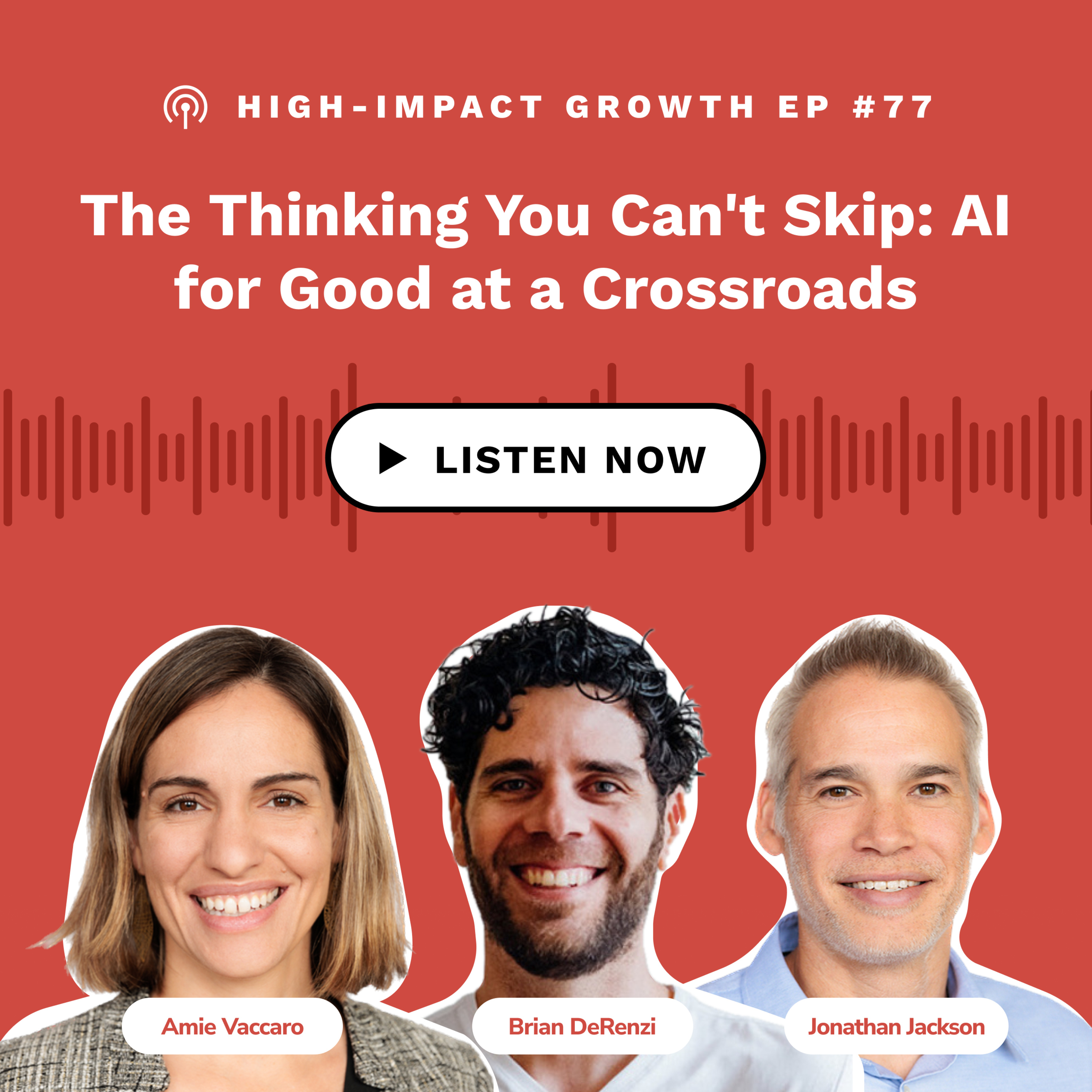
The Thinking You Can't Skip: AI for Good at a Crossroads
Nov 1300:53:55Summary readyIn part four of our AI for Good series, hosts Jonathan Jackson and Amie Vaccaro reconnect with Brian DeRenzi, Dimagi's VP of AI and Research, to explore how AI is evolving—and what it still can't do. Since our last conversation, technology has made staggering leaps, but the global health sector has also been rocked by funding cuts, creating massive tension between potential and reality.Brian shares why AI accelerates human intention but can never replace critical thinking. And we dig into Dimagi's research on hidden bias in frontier models and AI’s performance in low resource languages. We explore the risks of "AI pilotitus," why you must review transcripts by hand, and Jonathan's advice: only build AI projects you're ready to leave on at scale.This conversation offers practical wisdom for anyone wondering how to responsibly apply AI right now. Essential listening for global health professionals, social entrepreneurs, funders, and tech leaders navigating the AI revolution.Related Resources:Previous AI for Good series: Part 1: Equity and AI in Global Health: Exploring Large Language Models, Building Chatbots and Embracing DiscomfortPart 2 : Equity and AI in Global Health: leveraging AI to benefit underserved populations and dispel Inequitable Dystopia Part 3: What’s New in AI: Equity-enhancing use cases and Open Chat StudioSign up to our newsletter, and stay informed of Dimagi’s workWe are on social media - follow us for the latest from Dimagi: LinkedIn, Twitter, Facebook, YoutubeIf you enjoy this show, please leave us a 5-Star Review and share your favorite episodes with friends. Hosts: Jonathan Jackson and Amie Vaccaro
Summary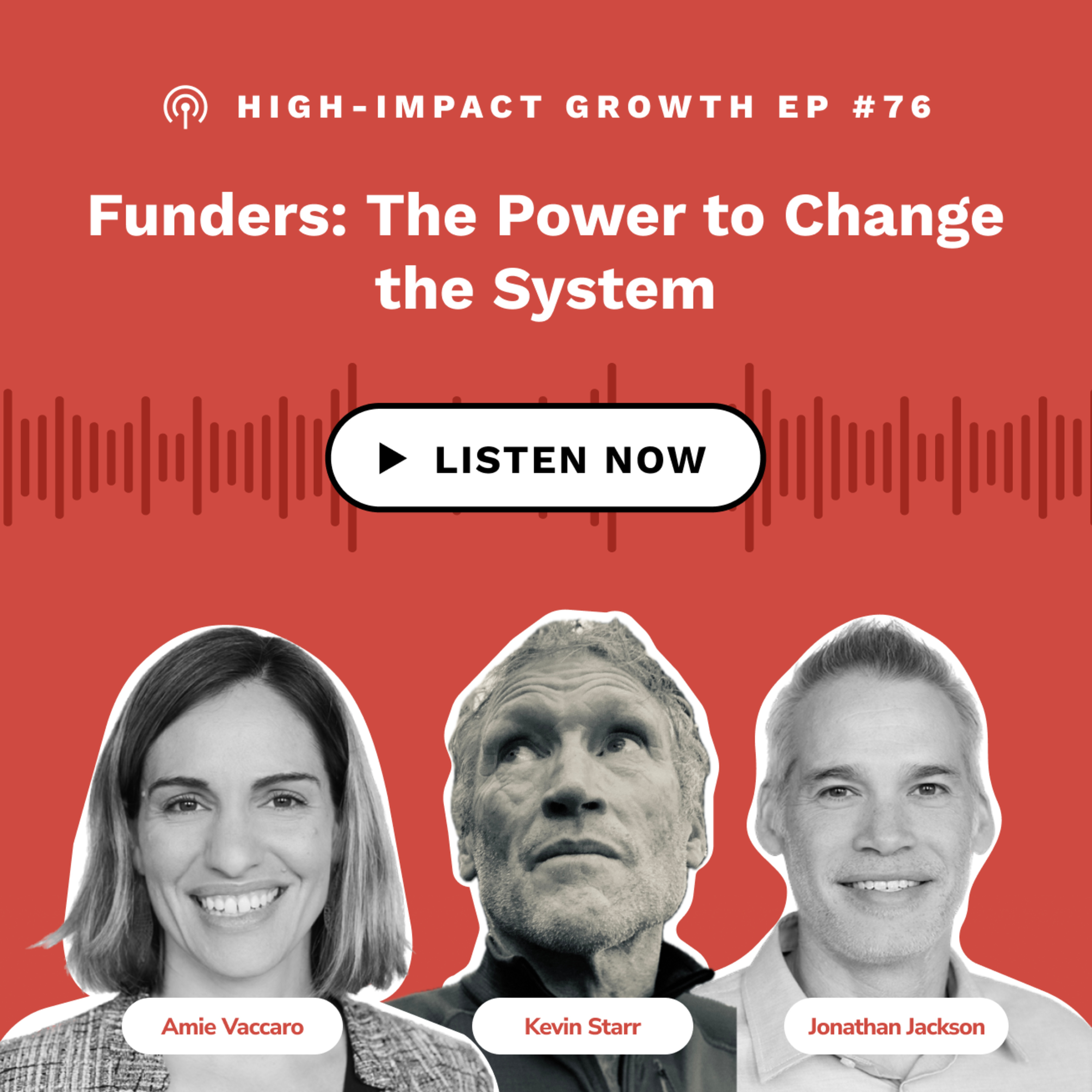
Funders: The Power to Change the System
Oct 2700:49:47Summary readyWhat comes next in a world where old funding models are breaking down? Our guest, Dr. Kevin Starr, CEO of the Mulago Foundation, argues this shift isn't a crisis but a "much needed reality bath". After a personal tragedy sent him stumbling from medicine into philanthropy, Kevin built one of the most respected impact-focused foundations. In this conversation, we explore Mulago's unique model of providing unrestricted, continued funding to "irrepressible" entrepreneurs through their Rainer Arnhold Fellows Program. Kevin shares his sharp critique of "zombie organizations" and why he believes "Big Aid was never a real path to scale". We dig into his core frameworks for impact, including designing for "no additional spend" and identifying the "payer and doer at scale". He makes a powerful case that funders hold the "ultimate power" to create an effective market for impact, if they choose to use it.
Summary
A Radical Bet on Simplicity and Affordability
Oct 900:48:45Summary readyIn early 2025, massive funding cuts from USAID sent shockwaves through the global development sector, leaving many to wonder what would come next. The money was gone, but the problems remained. In this follow-up conversation, Dimagi Managing Directors Gillian Javetski and Ismaïla Diene rejoin the podcast to discuss the aftermath and the unexpected "diamonds" created from the pressure. They share how the crisis forced a pivot from large, custom-built projects to a new model centered on radical simplicity, focus, and affordability. This candid discussion explores the divergence happening among digital public goods, the necessity of sustainable business models, and why the most important question is no longer "what new feature can we build?" but "can we make the existing value radically cheaper?". Discover how this shift led Dimagi to a bold new offering: a national-scale community health information system (eCHIS) for just $5,000 a month—a fraction of the historical cost.Related Resources:What’s New in CommCare Webinar recordingThe Next Generation Electronic Community Health Information System (eCHIS) DeckCommCare Provider programBig Enough. Simple Enough. Cheap Enough by Kevin Starr in the Stanford Social Innovation ReviewSign up to our newsletter, and stay informed of Dimagi’s workWe are on social media - follow us for the latest from Dimagi: LinkedIn, Twitter, Facebook, YoutubeIf you enjoy this show, please leave us a 5-Star Review and share your favorite episodes with friends. Hosts: Jonathan Jackson and Amie Vaccaro
Summary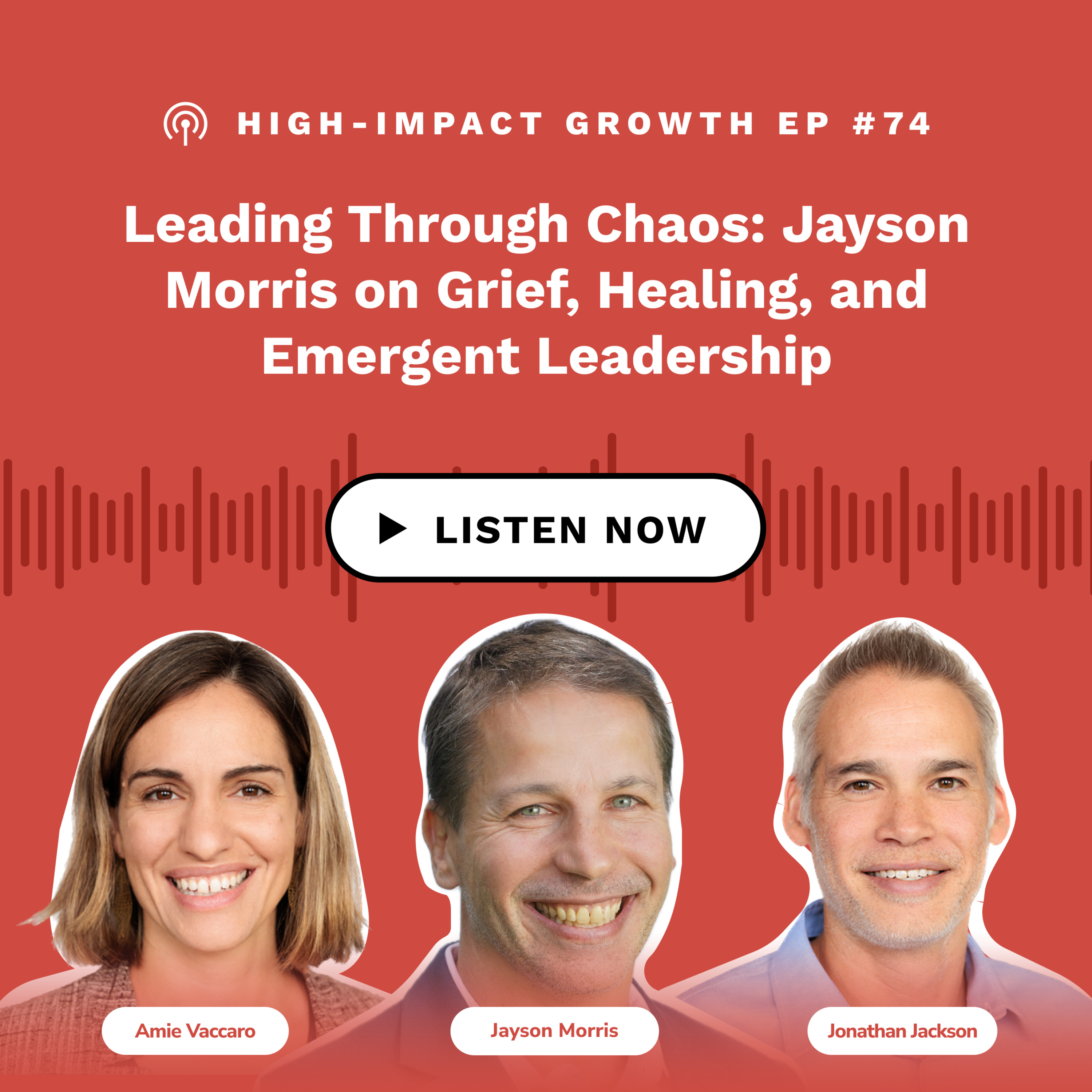
Leading Through Chaos: Jayson Morris on Grief, Healing, and Emergent Leadership
Sep 2200:54:57Summary readyWhat happens when the leadership skills that once fueled success no longer serve in today’s climate of uncertainty? In this episode of High Impact Growth, leadership coach Jayson Morris returns for a candid conversation with Dimagi CEO Jonathan Jackson and host Amie Vaccaro. Together, they explore how leaders can navigate grief, anger, and fear while still showing up with authenticity and resilience.Jayson unpacks the idea of the “leader as healer,” the power of embracing emergence over rigid strategic plans, and why slowing down can actually help teams move faster. You’ll also hear honest reflections on burnout, balancing boldness with humility, and the struggle between “going down swinging” versus pivoting to new opportunities.If you’re leading a team through turbulent times, this conversation offers practical wisdom, and much-needed reassurance, that you’re not alone.
Summary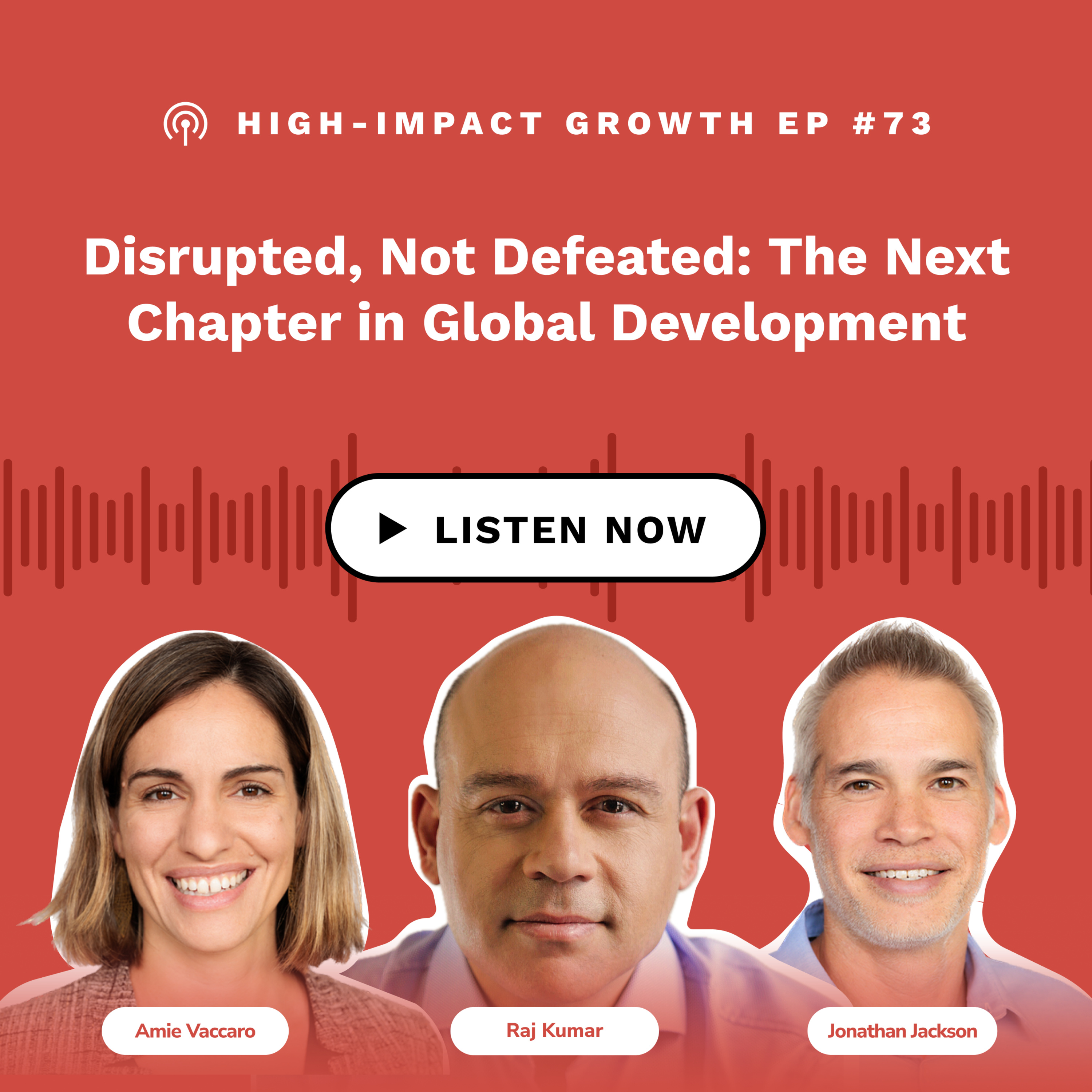
Disrupted, Not Defeated: The Next Chapter in Global Development
Aug 2700:57:48Summary readyRaj Kumar, President and Editor-in-Chief of Devex, returns to High Impact Growth for a candid and insightful conversation about the future of global development. In a world reeling from sudden aid cuts and structural overhauls, Raj joins co-hosts Jonathan Jackson and Amie Vaccaro to unpack what this era of uncertainty means for NGOs, governments, and social enterprises alike.They explore:- The fallout from peak Official Development Assistance (ODA) and what it means for program funding- Why value-for-money is now a survival imperative, not a nice-to-have- How social enterprises can adapt to a world led by MDBs, DFIs, and outcome-based models.- The future of localizationThis episode is a must-listen for anyone navigating the evolving landscape of development funding — from social entrepreneurs and INGO leaders to funders and policymakers. Don’t miss Raj’s sharp insights on what needs to change and how organizations can shape the future before it hardens.
Summary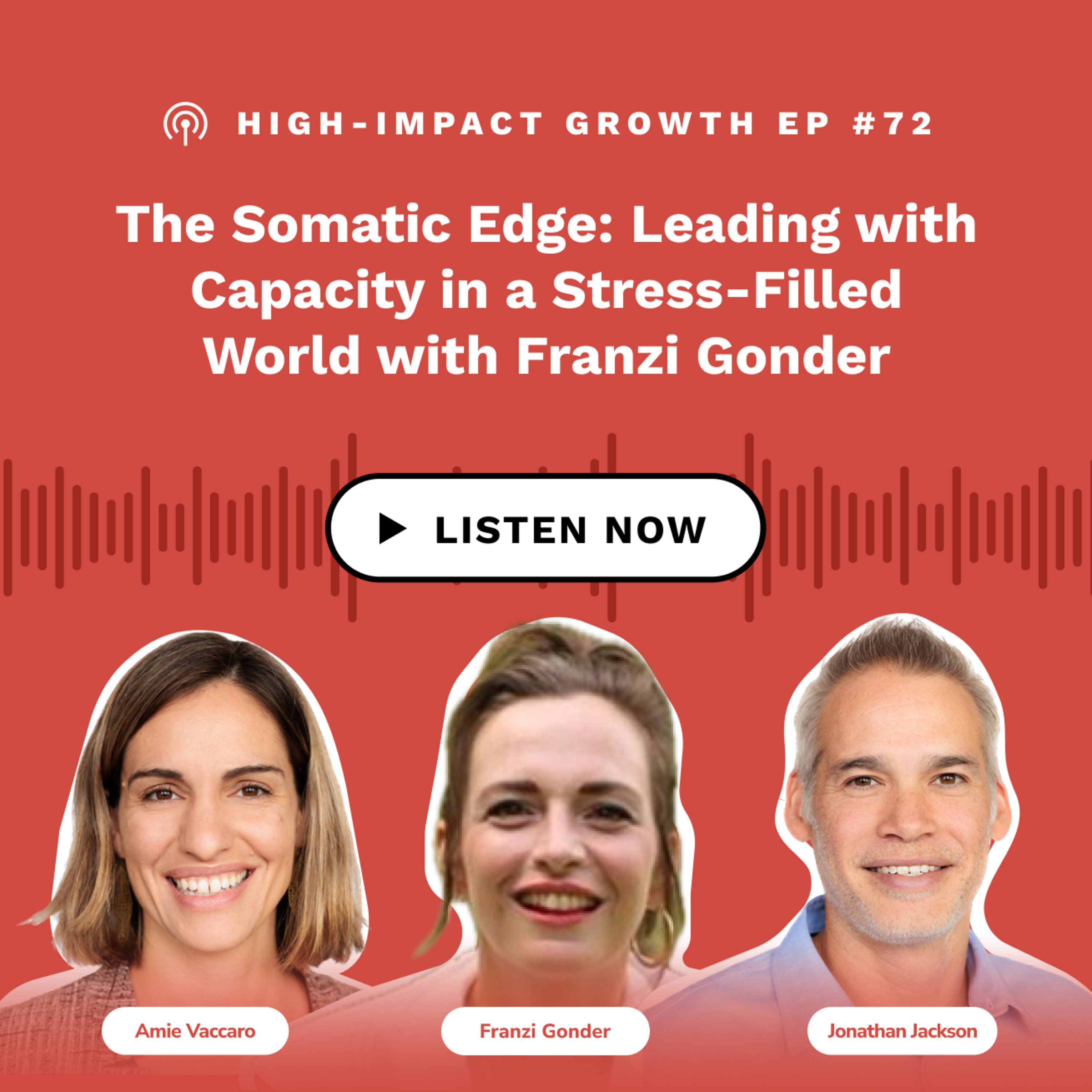
The Somatic Edge: Leading with Capacity in a Stress-Filled World with Franzi Gonder
Jul 18, 202500:50:30Summary readyIn this insightful episode, hosts Amie Vaccaro and Jonathan Jackson welcome Franzi Gonder, a renowned somatic leadership coach and entrepreneur. Franzi shares her personal journey into somatic work, emphasizing how understanding our bodies can profoundly shape our leadership. The conversation delves into the pervasive "beginner's mindset" in high-performance environments and its impact on growth, as well as strategies for building resilience and expanding our capacity to handle stress. Franzi introduces the "Still Point" exercise as a practical tool for grounding during challenging times and discusses the critical role of co-regulation in leadership, particularly in an era dominated by AI. This episode offers invaluable insights for leaders, high-achievers, and anyone seeking to cultivate greater presence and sustainable performance in their professional and personal lives.
SummaryThe Future of Aid: Adapting to a Changing Funding Landscape
Mar 7, 202500:34:28Summary readyThe landscape of international aid is shifting rapidly, leaving organizations and communities facing unprecedented challenges. In this episode, hosts Jonathan Jackson and Amie Vaccaro are joined by Gillian Javetski, Managing Director of Dimagi’s Software-as-a-Service division, and Ismaïla Diene, Managing Director of Dimagi's Solutions division, to unpack the impact of massive funding cuts on global health and development efforts.What does it mean when critical aid funding disappears overnight? How are frontline organizations adapting to continue their life-saving work? And how is Dimagi stepping up to support partners in this time of uncertainty?Join us for an honest and insightful conversation about the human side of these changes, the resilience of global health partners, and the role of digital solutions in navigating this crisis.Related Resources: How Dimagi is supporting partners through changes in funding : https://dimagi.com/supporting-our-partners/Sign up to our newsletter, and stay informed of Dimagi’s workWe are on social media - follow us for the latest from Dimagi: LinkedIn, Twitter, Facebook, YoutubeIf you enjoy this show, please leave us a 5-Star Review and share your favorite episodes with friends. Hosts: Jonathan Jackson and Amie Vaccaro
SummaryBuilding SaaS Products for Global Health: Lessons from CommCare & SureAdhere
Dec 19, 202400:51:37Summary readyIn this episode, Dimagi product leaders Danny Roberts, Kai Cowger, and Matthew Hayto delve into the challenges and opportunities of building SaaS products for global health. This insightful conversation explores transitioning from donor-driven funding to a product-driven model, focusing on user needs, product sustainability, and scaling for impact. The episode highlights the complexity of aligning revenue and impact in resource-constrained settings, the importance of product marketing, and the lessons learned from scaling solutions like CommCare and SureAdhere. Tune in to discover practical strategies for creating technology that drives meaningful, lasting change in global health.
SummaryFrom Extractive Data Collection to Inclusive Data Sharing: Nora Lindström on the Evolution of ICT4D
Nov 27, 202400:59:36Summary readyIn this episode, Nora Lindström, Senior Director of ICT4D at Catholic Relief Services (CRS), and Erin Quinn, Senior Director of Customer Success at Dimagi join the podcast to discuss the evolving role of the iNGO in the context of localization and advancing local leadership, the intersection of technology and localization in global development, and the ways that technologists in global development can center the people we serve in our work. In the conversation, we learn Nora’s journey and insights into the transformative power of technology in global development. From empowering local communities with data to navigating the challenges of localization, Nora offers her thinking on balancing tech innovation with human-centered practices. Key topics: Tech as an Enabler, Not the Goal Nora emphasizes the importance of listening deeply to identify real problems before introducing technology. Successful ICT4D involves tailoring solutions to local contexts and needs. Different Approaches to Enabling Programs with Technology Erin shares the ways that iNGOs across the sector are equipping their teams with tech tools. Nora shares how it adapts its approach based on the partner and context. Empowering Communities with Data Nota notes global development’s tendency towards extractive data collection practices and highlights her work making data useful for the people it’s about. For example, in Malawi, village committees use CRS-provided data to advocate for local changes. The Evolving Role of INGOs As localization gains momentum, CRS is evolving into a capacity-building and knowledge-sharing role, preparing local organizations to lead development initiatives independently. Building Diverse Teams Nora highlights the value of diversity within CRS’s ICT4D team, bringing together cross-disciplinary expertise to solve global challenges creatively and effectively. Show Notes: CRS Digital Development Guidebook CRS | ICT4D Program Area
SummaryThe Strategic Role of Data Management in Cure Violence Global’s Work
Oct 17, 202400:53:53Summary readyIn this episode of High-Impact Growth, hosts Jonathan Jackson and Amie Vaccaro talk with Dr. Charles Elliott, Director of Data Management at Cure Violence Global (CVG), an organization using a public health approach to prevent violence. Dr. Elliott shares insights into how CVG views violence like an epidemic, applying data-driven methods to map and reduce violence in communities around the world. Dr. Elliott articulates the value of a thoughtful data strategy using a tool like CommCare to measure and track critical indicators such as violence interruption, behavior change, and norm change. Dr. Elliott highlights that for Cure Violence, technology is not just a tool but a long-term investment that powers program funding, staffing, and programmatic decisions. The conversation covers the challenges of quantifying the impact of violence prevention, the significance of trust-building in communities, and the role of data in driving both local and national violence prevention strategies. Dr. Elliott also touches on his personal journey from military service to data management, emphasizing the importance of creating systems that empower community workers, who often play a crucial role in violence prevention programs. Dr. Elliott shares his guidance for other organizations looking to leverage data as a strategic advantage and impact accelerant: Start with Clear Goals: Define your program with specific goals and key performance indicators (KPIs) to effectively measure progress. For Cure Violence, they measure metrics like violence interruption, behavior change, and norm change. Build Relationships: Foster strong relationships with data users to understand their needs and communicate the value of the data being collected. Create User-Centric Tools: Ensure that data collection tools are easy to use and enhance, rather than hinder, workflows. For example, Cure Violence uses the CommCare application to map violence, track follow-ups, and access reports. Prioritize Data Privacy and Security: Building trust with users and stakeholders is crucial, so ensure privacy and security in data collection. Invest for the Long Term: Treat your tech platform as a long-term investment to ensure lasting impact, rather than a short-term expense. For Cure Violence, this data helps drive funding decisions and program design. Related Resources: Cure Violence Global website The Interrupters - PBS Documentary featuring Cobe Williams, CVG’s National Training Director Interrupting Violence by Cobe Williams Sign up to our newsletter, and stay informed of Dimagi’s work We are on social media - follow us for the latest from Dimagi: LinkedIn, Twitter, Facebook, Youtube If you enjoy this show, please leave us a 5-Star Review and share your favorite episodes with friends. Hosts: Jonathan Jackson and Amie Vaccaro
Summary