
Podcast
HistoryExtra podcast
Hosted by Immediate · EN
The HistoryExtra podcast brings you gripping stories from the past and fascinating historical conversations with the world's leading historical experts.
HistoryExtra is a free history podcast, with episodes released six times a week. Subscribe now for the real stories behind your favourite films, TV shows and period dramas, as well as compelling insights into lesser-known aspects of the past.
We delve into global history stories spanning the ancient world right up to the modern day. You’ll hear deep dives into the lives of famous historical figures like Cleopatra, Anne Boleyn and Winston Churchill, and explorations of intriguing events from the past, such as the Salem witch trials, the battle of Waterloo and D-Day.
Expect fresh takes on history, helping you get to grips with the latest research, as we explore everything from ancient Roman archaeology and Viking mythology to Renaissance royals and Tudor kings and queens.
Our episodes touch on a wide range of historical eras – from the Normans and Saxons to the Stuarts, Victorians and the Regency period. We cover the most popular historical subjects, from the medieval world to the Second World War, but you’ll also hear conversations on lesser-known parts of our past, including black history and women’s history.
Looking at the history behind today’s headlines, we consider the forces that have shaped today’s world, from the imposing empires that dominated continents, to the revolutions that brought them crashing down. We also examine the impact of conflict across the centuries, from the crusades of the Middle Ages and the battles of the ancient Egyptians to World War One, World War Two and the Cold War.
Plus, we uncover the real history behind myths, legends and conspiracy theories, from the medieval murder mystery of the Princes in the Tower, to the assassination of JFK.
Featuring interviews with notable historians including Mary Beard, Tracy Borman, James Holland and Dan Jones, we cover a range of social, political and military history, with the aim to start conversations about some of the most fascinating areas of the past.
Unlock full access to HistoryExtra.com for 6 months for just 99p https://www.historyextra.com/join/
536episodes
Episodes
Newest firstAll episodes
The death of Adolf Hitler
May 1000:35:04Summary readyWhat do we really know about Adolf Hitler’s death? In this episode of the HistoryExtra podcast, historian and author Caroline Sharples tells Charlotte Vosper about the reporting that surrounded Hitler's final days in April 1945, the subsequent discoveries of biological evidence, and our ongoing fascination with finding out more – ultimately revealing what really happened in the Führerbunker in 1945. ----- GO BEYOND THE PODCAST If you’d like to find out more about the ongoing biomedical investigation into Hitler, then check out this HistoryExtra article about the recent testing of his DNA, extracted from a blood stain left in the bunker: https://bit.ly/414nl8w Learn more about your ad choices. Visit podcastchoices.com/adchoices
Summary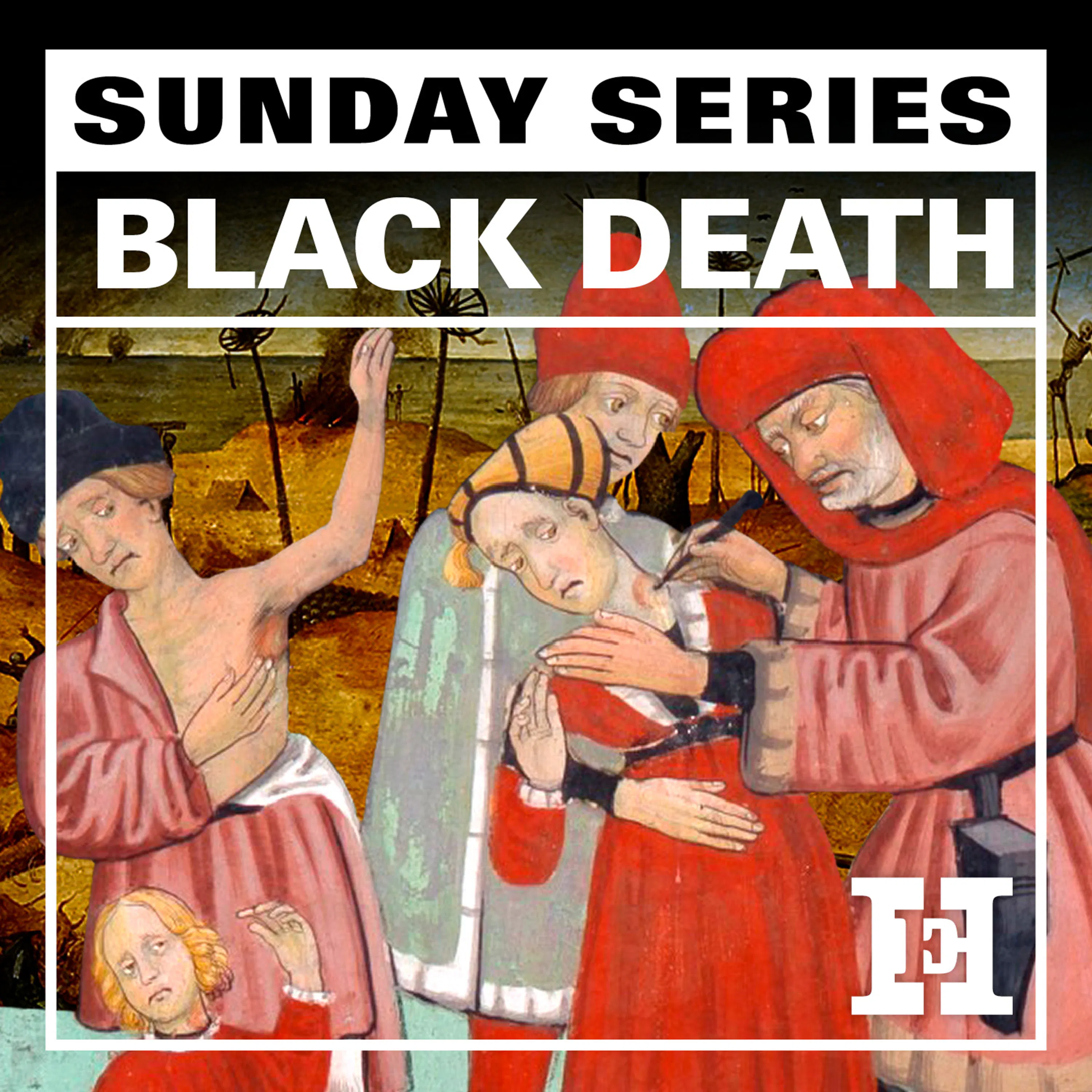
Fear and faith: coping with the Black Death
May 900:45:24Summary readyFor those who lived through it, the Black Death left a legacy of fear, loss and uncertainty. But how did people cope with such overwhelming catastrophe? And what do contemporary records reveal about the disease’s emotional impact? In this second episode of our three-part Sunday Series on the devastating disease, Emily Briffett and historian Thomas Asbridge – author of new book The Black Death: A Global History, published by Allen Lane – step into the medieval world at the height of the pandemic to explore human stories of despair, hope and survival. ––––– GO BEYOND THE PODCAST If you’d like to find out more about the Black Death and its impact on the medieval world, Emily Briffett has put together some essential reading, listening and viewing from the HistoryExtra archive to help deepen your understanding: https://bit.ly/4mVQu01 Learn more about your ad choices. Visit podcastchoices.com/adchoices
SummaryAttenborough: a life on screen
May 700:46:44Summary readyThis May marks the 100th birthday of leading British documentary-maker and natural historian David Attenborough. But what's the longer history of wildlife broadcasting? What inspired Attenborough to report back from the frontlines of the natural world? And how has he shaped our understanding of the climate crisis? Matt Elton spoke to media and cultural historian David Hendy to find out. ----- GO BEYOND THE PODCAST Historian Peter Frankopan and broadcaster and activist Chris Packham shared their thoughts on how history might be able to tackle the climate crisis in this 2024 episode of the HistoryExtra podcast: https://bit.ly/4mK3x4o Learn more about your ad choices. Visit podcastchoices.com/adchoices
SummaryA worker's eye-view of ancient Rome
May 500:38:38Summary readyWe know plenty about the lives of rich and powerful Romans – men such as Julius Caesar and Augustus. But Kim Bowes is more interested in those who worked for a living: the so-called 90 per cent. In this episode of the HistoryExtra podcast, Kim tells Spencer Mizen about her endeavours to unearth the lost voices of the Roman empire's working people – from Egyptian farmers and entrepreneurial barmen to profit-hungry pimps. ––––– GO BEYOND THE PODCAST Don't miss this Life of the Week podcast featuring Edward Watts telling Spencer Mizen about Rome’s cruel and brilliant first emperor, Augustus: https://bit.ly/4bLFLQD Learn more about your ad choices. Visit podcastchoices.com/adchoices
SummaryNiccolò Machiavelli: life of the week
May 400:49:50Summary readyFrom obscure beginnings to torture, exile, and desperate reinvention, the biography of Renaissance diplomat and author Niccolò Machiavelli reads like political theatre at its most brutal. In this episode, Alexander Lee speaks to Danny Bird about the man behind the myth. He presents Machiavelli as an 'everyman', who loved his family and friends, sang poetry, drank, gambled, and wrote by night, producing one of the most contentious books ever: The Prince. Long condemned as a manual for tyrants, might it instead be better to see it as a clear-eyed guide to political survival in unstable times? Learn more about your ad choices. Visit podcastchoices.com/adchoices
SummaryHow to pull off a Georgian dinner party
May 300:33:47Summary readyA dinner party in a beautifully decorated Georgian dining room might sound sophisticated, even romantic – but planning such events was not for the faint-hearted. Amy Boyington advises Lauren Good on how to host a perfect dinner party during the period, from what to serve to how to serve it. What was the most peculiar Georgian dish? What was the ultimate faux pas? And why was public urination a more likely prospect than you might have thought? ----- GO BEYOND THE PODCAST Don't miss another discussion between Amy Boyington and Lauren Good, revealing women's forgotten contributions to Georgian architecture – from Queen Charlotte's technical drawing lessons to Sarah Churchill's involvement in building Blenheim Palace: https://bit.ly/4sPhhwn Learn more about your ad choices. Visit podcastchoices.com/adchoices
Summary
The Black Death: a global contagion
May 200:34:09Summary readyThe Black Death is remembered as one of the most devastating catastrophes in human history – a pandemic that swept across continents and killed millions. But where did it come from? How did it travel so quickly through towns and countryside? And did people at the time understand just how terrifying the illness would be? In this first episode of our three-part series on the deadly disease, Emily Briffett and historian Thomas Asbridge – author of new book The Black Death: A Global History, published by Allen Lane – trace the origins and spread of the Black Death. ––––– GO BEYOND THE PODCAST If you’d like to find out more about the Black Death and its impact on the medieval world, Emily Briffett has put together some essential reading, listening and viewing from the HistoryExtra archive to help deepen your understanding: https://bit.ly/4mVQu01 Learn more about your ad choices. Visit podcastchoices.com/adchoices
SummaryGeorge Orwell's final chapter
Apr 3000:40:12Summary readyDid you know that George Orwell only found national acclaim as an author in the final years of his life, as his health was worsening? Or that, with the growing prospect of death looming increasingly large, he sought refuge on a remote Scottish island? Historian Robert Colls tells James Osborne about these last stages of Orwell's life, and the toll that writing his two most celebrated works – Animal Farm and Nineteen Eighty-Four – took on the author. ----- GO BEYOND THE PODCAST To find out more about George Orwell, listen to our Life of the Week episode profiling the author, with historian Laura Beers: https://bit.ly/4d6ka7D Learn more about your ad choices. Visit podcastchoices.com/adchoices
SummaryWas Elizabeth II's reign a golden age?
Apr 2800:37:45Summary readyWhen the late Queen acceded to the throne in 1952, Britain, though left bankrupt and reeling from the Second World War, was still a major global power. By the end of Elizabeth II’s reign in 2022 – the longest in Britain’s history – the nation and its place in the world was markedly different. Sir David Cannadine guides Danny Bird through the contours of the Second Elizabethan Age – from 'de-Victorianisation' to deindustrialisation – and the ways in which the monarchy responded to such dizzying change. Learn more about your ad choices. Visit podcastchoices.com/adchoices
SummaryJohannes Vermeer: life of the week
Apr 2700:42:29Summary readyJohannes Vermeer is now regarded as one of the leading lights of the Dutch Golden Age, and indeed one of the greatest artists of all time. But in his own lifetime he was hardly known outside his own circle, and made so little money that he could barely afford to feed his large family. In this episode of the HistoryExtra podcast, Andrew Graham-Dixon, author of a new biography of Vermeer, chronicles the artist’s life – and argues that to fully understand the man and his work, we need to explore the religious milieu of the Dutch Republic in the 17th century. He was joined in conversation by Rob Attar. Learn more about your ad choices. Visit podcastchoices.com/adchoices
Summary