Podcast
HistoryExtra podcast
Hosted by Immediate · EN
The HistoryExtra podcast brings you gripping stories from the past and fascinating historical conversations with the world's leading historical experts.
HistoryExtra is a free history podcast, with episodes released six times a week. Subscribe now for the real stories behind your favourite films, TV shows and period dramas, as well as compelling insights into lesser-known aspects of the past.
We delve into global history stories spanning the ancient world right up to the modern day. You’ll hear deep dives into the lives of famous historical figures like Cleopatra, Anne Boleyn and Winston Churchill, and explorations of intriguing events from the past, such as the Salem witch trials, the battle of Waterloo and D-Day.
Expect fresh takes on history, helping you get to grips with the latest research, as we explore everything from ancient Roman archaeology and Viking mythology to Renaissance royals and Tudor kings and queens.
Our episodes touch on a wide range of historical eras – from the Normans and Saxons to the Stuarts, Victorians and the Regency period. We cover the most popular historical subjects, from the medieval world to the Second World War, but you’ll also hear conversations on lesser-known parts of our past, including black history and women’s history.
Looking at the history behind today’s headlines, we consider the forces that have shaped today’s world, from the imposing empires that dominated continents, to the revolutions that brought them crashing down. We also examine the impact of conflict across the centuries, from the crusades of the Middle Ages and the battles of the ancient Egyptians to World War One, World War Two and the Cold War.
Plus, we uncover the real history behind myths, legends and conspiracy theories, from the medieval murder mystery of the Princes in the Tower, to the assassination of JFK.
Featuring interviews with notable historians including Mary Beard, Tracy Borman, James Holland and Dan Jones, we cover a range of social, political and military history, with the aim to start conversations about some of the most fascinating areas of the past.
Unlock full access to HistoryExtra.com for 6 months for just 99p https://www.historyextra.com/join/
535episodes
Episodes
Newest firstAll episodes

Young Cleopatra: the making of a queen
May 2300:29:19Summary readyThousands of years ago, a woman emerged on to the world stage whose name would echo down through the centuries: Cleopatra. But what we do we know about her youth? How did the geography, politics and society of her early life shape her personality? And why would you not want to get on the wrong side of her family? In this first instalment of our four-part Sunday Series chronicling Cleopatra’s life and cultural afterlife, Islam Issa – professor of public humanities at Birmingham City University – tells Matt Elton about the queen’s formative years. ----- GO BEYOND THE PODCAST Captivated by Cleopatra? Matt Elton has curated a collection of essential reading, listening and viewing from the HistoryExtra vaults to help bring the ancient queen to life: https://bit.ly/3Pgs3hv And don’t miss our HistoryExtra Academy, Royal Women with Professor Kate Williams, for more on some of the past’s most powerful female leaders – from Cleopatra to Elizabeth II: https://bit.ly/3PRpwue Learn more about your ad choices. Visit podcastchoices.com/adchoices
SummaryA history of Christian sacrifice
May 2100:36:06Summary readyWhat's the role that sacrifice has played in the history of Christianity? It's a history that might be more complex, and more surprising, than we think. Jonathan Sheehan's latest book is On the Altar: A History of Sacrifice from the Sacred to the Secular, and in this episode he tells Charlotte Vosper about how sacrifice has sat at the centre of Christianity from its very beginnings. ----- GO BEYOND THE PODCAST If you’d like to find out more about sacrifice beyond Christian Europe, then check out this HistoryExtra Q&A with Caroline Dodds Pennock about how and why Aztecs practiced human sacrifice: https://bit.ly/3MlQ31g Learn more about your ad choices. Visit podcastchoices.com/adchoices
SummaryRedefining historical mothers
May 1900:46:35Summary readyMotherhood has long been considered as something expected, rather than extraordinary. Yet from midwives questioning the status quo to pregnant women predicting their futures, there are plenty of historical stories that reveal this not to be the case. In this episode, historian, writer and researcher Elinor Cleghorn – whose latest book is A Woman's Work: Reclaiming the Radical History of Mothering – tells Lauren Good about some of the remarkable experiences of mothers, and the networks that offered them invaluable support. Learn more about your ad choices. Visit podcastchoices.com/adchoices
SummaryLady Jane Grey: life of the week
May 1800:48:48Summary readyThink of Lady Jane Grey, and your mind probably goes straight to her legacy as the Nine Days’ Queen. But what do we really know about her life? She might have been a young girl catapulted into the line of succession amid the tumultuous battle of religion in the Tudor period, but Jane was more than merely a victim of circumstance. In this episode of the HistoryExtra podcast, Isabel King is joined by historian Nicola Tallis to explore Jane’s remarkable life and death. ----- GO BEYOND THE PODCAST To find out more about life in the Tudor period, don't miss our HistoryExtra Academy series with historian Ruth Goodman: https://bit.ly/48froDi Learn more about your ad choices. Visit podcastchoices.com/adchoices
SummaryThe peacemakers of WW2
May 1700:41:20Summary readyPoliticians and generals today talk a lot about the need for exit plans to be established if conflict erupts between nations. In the middle of the horrors of the Second World War, Britain's diplomats were doing exactly that – working hard to think what the peace would look like after the fighting. Lord Peter Ricketts, the former head of Britain's diplomatic service and author of new book Peace Makers, explores what happened in conversation with David Musgrove. ----- GO BEYOND THE PODCAST Curious to find our more about the Arctic convoys? Check out our podcast episode with Hugh Sebag Montefiore here: https://bit.ly/4eojBqA Learn more about your ad choices. Visit podcastchoices.com/adchoices
Summary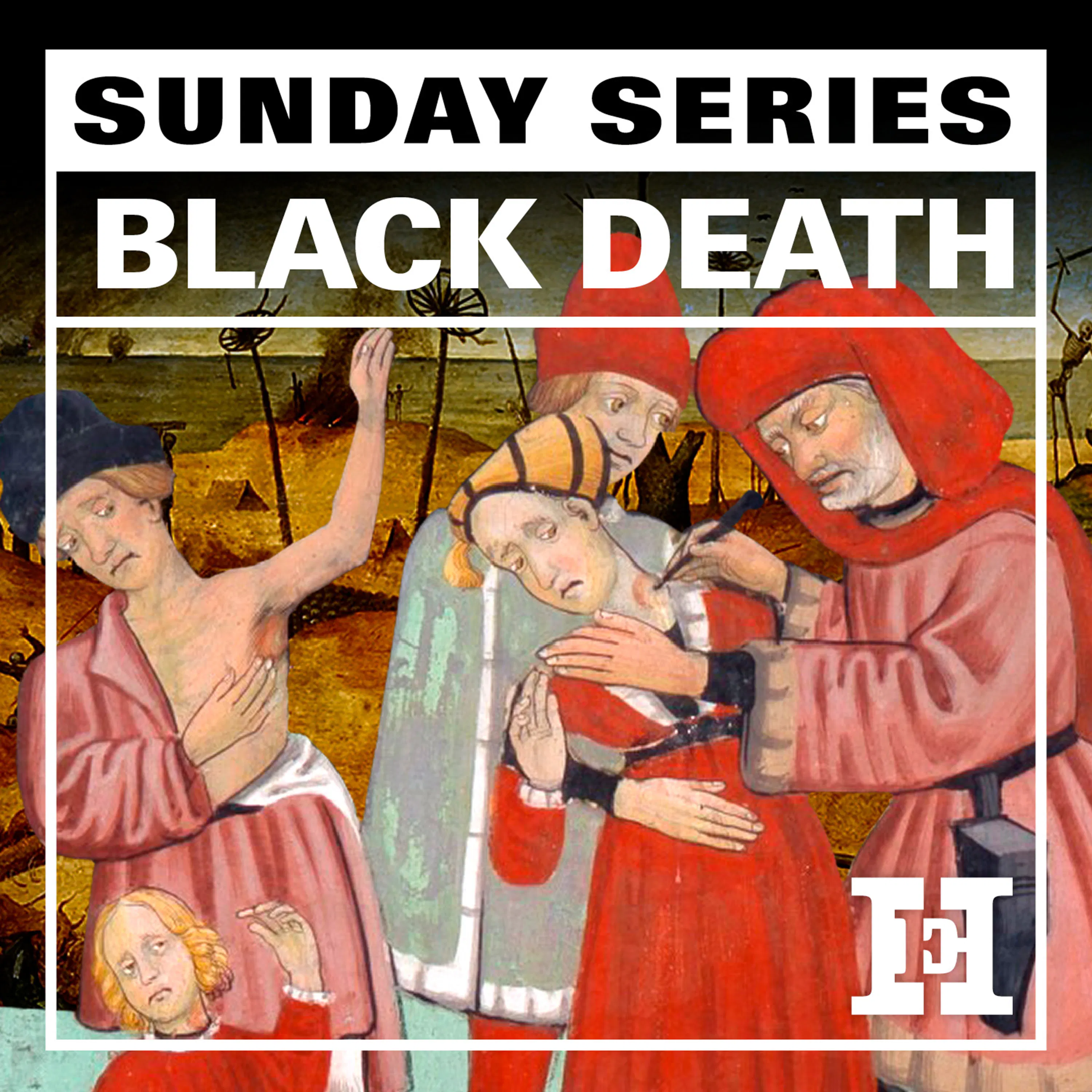
The long shadow of the Black Death
May 1600:37:55Summary readyWhen the first wave of the Black Death finally subsided, what sort of world did it leave behind? How did societies adapt in the decades that followed? And what lessons did this medieval catastrophe hold for future generations? In this final episode of our Sunday Series on the deadly disease, Emily Briffett and historian Thomas Asbridge – author of new book The Black Death: A Global History, published by Allen Lane –consider how the pandemic transformed economies, beliefs and everyday life, and assess its longer legacy. ––––– GO BEYOND THE PODCAST If you’d like to find out more about the Black Death and its impact on the medieval world, Emily Briffett has put together some essential reading, listening and viewing from the HistoryExtra archive to help deepen your understanding: https://bit.ly/4mVQu01 Learn more about your ad choices. Visit podcastchoices.com/adchoices
SummaryThe secret plot to end Scottish independence
May 1400:34:37Summary readyHow did the union of England and Scotland come to fruition? From failed Scottish colonies to anti-independence espionage, Marc Mierowsky's book A Spy Amongst Us reveals how union wasn't inevitable, and how many Scottish people tried to choose their own future. In this episode of the HistoryExtra podcast, Marc joins Isabel King to explore the complicated journey towards the Acts of Union 1707. ----- GO BEYOND THE PODCAST To find out more about the revolution of 1688 and its impact on the monarchy and religion, read our interview with Professor Ted Vallance about what might have happened if James II and VII hadn't been usurped: https://bit.ly/4qB8Pj0 Learn more about your ad choices. Visit podcastchoices.com/adchoices
SummaryHow did communism conquer China?
May 1200:44:53Summary readyHow did a tiny band of guerrillas come to rule a quarter of humanity? And was the outcome of the Chinese Civil War really the ‘heroic’ popular uprising that the People’s Republic portrays? In this episode of the HistoryExtra podcast, Danny Bird speaks to Frank Dikötter about the surprising reality behind the rise of the Communist Party of China – from its marginal beginnings in the 1920s and the myth of the Long March, to the decisive role of Stalin and the Soviet invasion of Manchuria in 1945. Together they explore how violence, propaganda and military conquest – rather than mass popular support – culminated in the raising of the red flag over the Forbidden City in 1949. Learn more about your ad choices. Visit podcastchoices.com/adchoices
SummaryOlaf Tryggvason: life of the week
May 1100:46:25Summary readyFrom thrall to king; from pagan to Christian: Olaf Tryggvason was one of the titanic figures of the Viking Age, whose story straddles the line between fantasy and fiction. Speaking to James Osborne about his life for this episode of the HistoryExtra podcast, Don Hollway steps back into the 10th century to give an account of the drama and violence that defined the Norse warlord. ----- GO BEYOND THE PODCAST To find out more about the Vikings who settled in Europe's eastern lands, read this feature on the Rus, and learn why their story is still so important today: https://bit.ly/47depBu Learn more about your ad choices. Visit podcastchoices.com/adchoices
SummaryThe death of Adolf Hitler
May 1000:35:04Summary readyWhat do we really know about Adolf Hitler’s death? In this episode of the HistoryExtra podcast, historian and author Caroline Sharples tells Charlotte Vosper about the reporting that surrounded Hitler's final days in April 1945, the subsequent discoveries of biological evidence, and our ongoing fascination with finding out more – ultimately revealing what really happened in the Führerbunker in 1945. ----- GO BEYOND THE PODCAST If you’d like to find out more about the ongoing biomedical investigation into Hitler, then check out this HistoryExtra article about the recent testing of his DNA, extracted from a blood stain left in the bunker: https://bit.ly/414nl8w Learn more about your ad choices. Visit podcastchoices.com/adchoices
Summary