Podcast
Humanity At Scale: Redefining Leadership
Hosted by Bruce Temkin · EN
Welcome to Humanity at Scale: Redefining Leadership Podcast! Join Bruce Temkin, a trailblazer in human experience management, as he reimagines leadership for today’s dynamic world—proving that true success begins with prioritizing people, including employees, customers, and the communities you serve.
In each episode, Bruce dives into the practices, mindsets, and stories that help leaders drive exceptional success—while creating a more humane and impactful world. How can neuroscience and behavioral economics shape better decisions? How are successful leaders balancing organizational goals with positive human impact? And how can we lead in ways that truly inspire humanity?
From candid conversations with executives to breakthrough insights from experts, Humanity at Scale is your ultimate guide to leading with purpose and empathy. Whether you’re a seasoned executive or an emerging leader, it will equip you with the tools and inspiration to redefine success—for yourself, your organization, and humanity.
24episodes
Episodes
Newest firstAll episodes
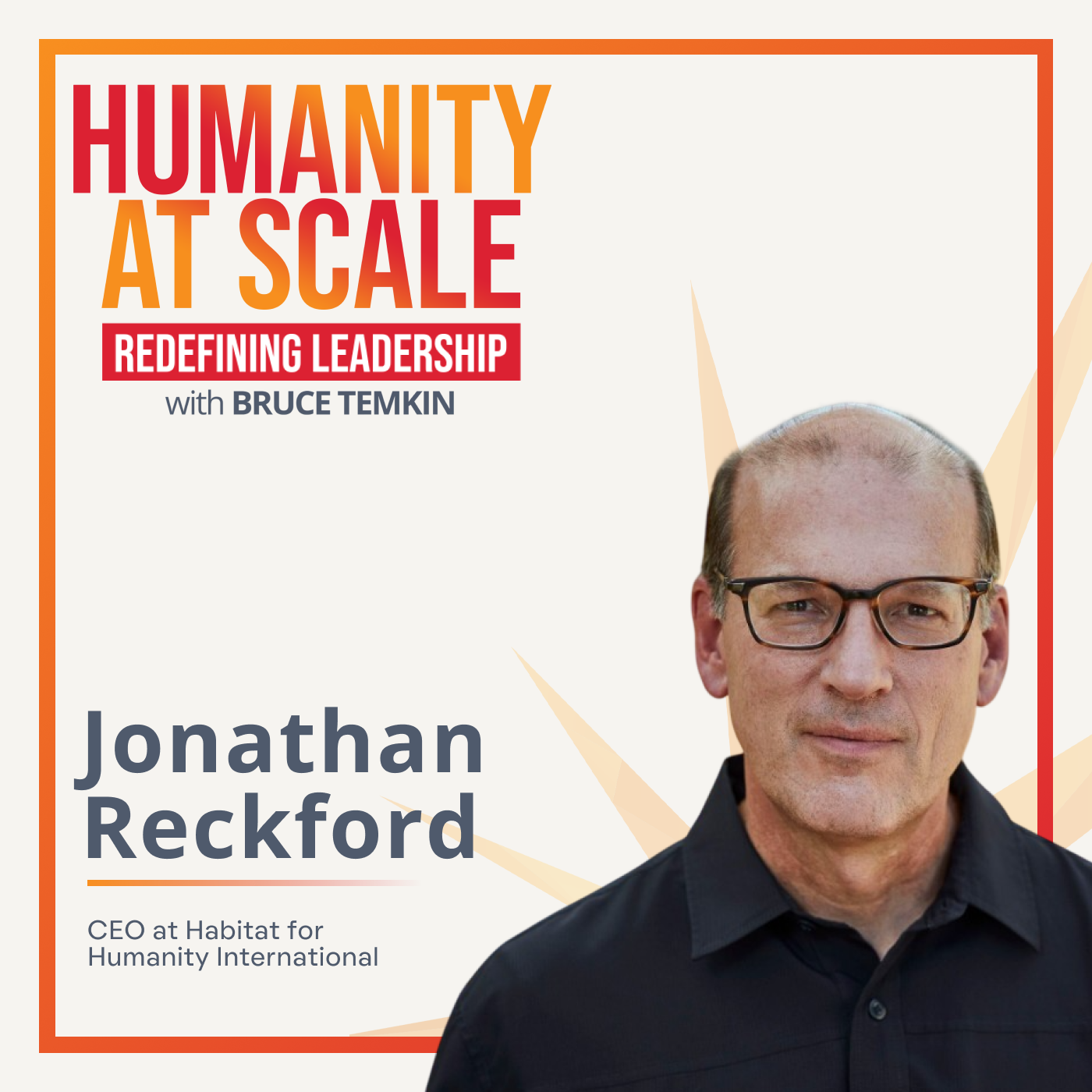
Leading Habitat for Humanity: Purpose, Service, and Faith with Jonathan Reckford
Apr 1600:44:10Tap to summarizeWhat if the world's biggest problems required leading across sectors you don't control?In this episode of Humanity at Scale, host Bruce Temkin welcomes Jonathan Reckford, CEO of Habitat for Humanity International, about leading without authority in a divided world. They explore servant leadership, managing systemic tensions instead of chasing quick fixes, and aligning government, markets, and civil society around shared purpose. Reckford shares why clarity is kindness, how faith-driven values scale globally, and why the most powerful leaders focus on being useful rather than powerful.Here are some of the topics that Bruce and Jonathan explore:How to Lead Through Influence Over AuthorityThe "Problems vs. Tensions" FrameworkWhy Clear Communication is Actually an Act of KindnessThe Potluck Supper Model for Inclusive Leadership.How Purpose Becomes Your Foundation in a Storm The Multi-Sector Bridge-Builder's RoleJonathan Reckford is CEO of Habitat for Humanity International, a global Christian housing organisation that has helped more than 59 million people build, rehabilitate or preserve their homes. Since 2005, he has expanded Habitat’s reach across all 50 U.S. states and more than 70 countries, growing annual impact from 125,000 to nearly 13.4 million people. A UNC Morehead Scholar and Stanford MBA, he previously held leadership roles at Goldman Sachs, Marriott, Disney, and Best Buy, and is the author of Our Better Angels.Episode Resources:Jonathan Reckford on LinkedInHabitat for Humanity International Website Bruce Temkin on LinkedInHumanity at Scale on Apple PodcastsHumanity at Scale on SpotifyHumanity at Scale on YouTubeHumanity At Scale: Redefining Leadership is handcrafted by our friends over at: fame.so
Transcribe →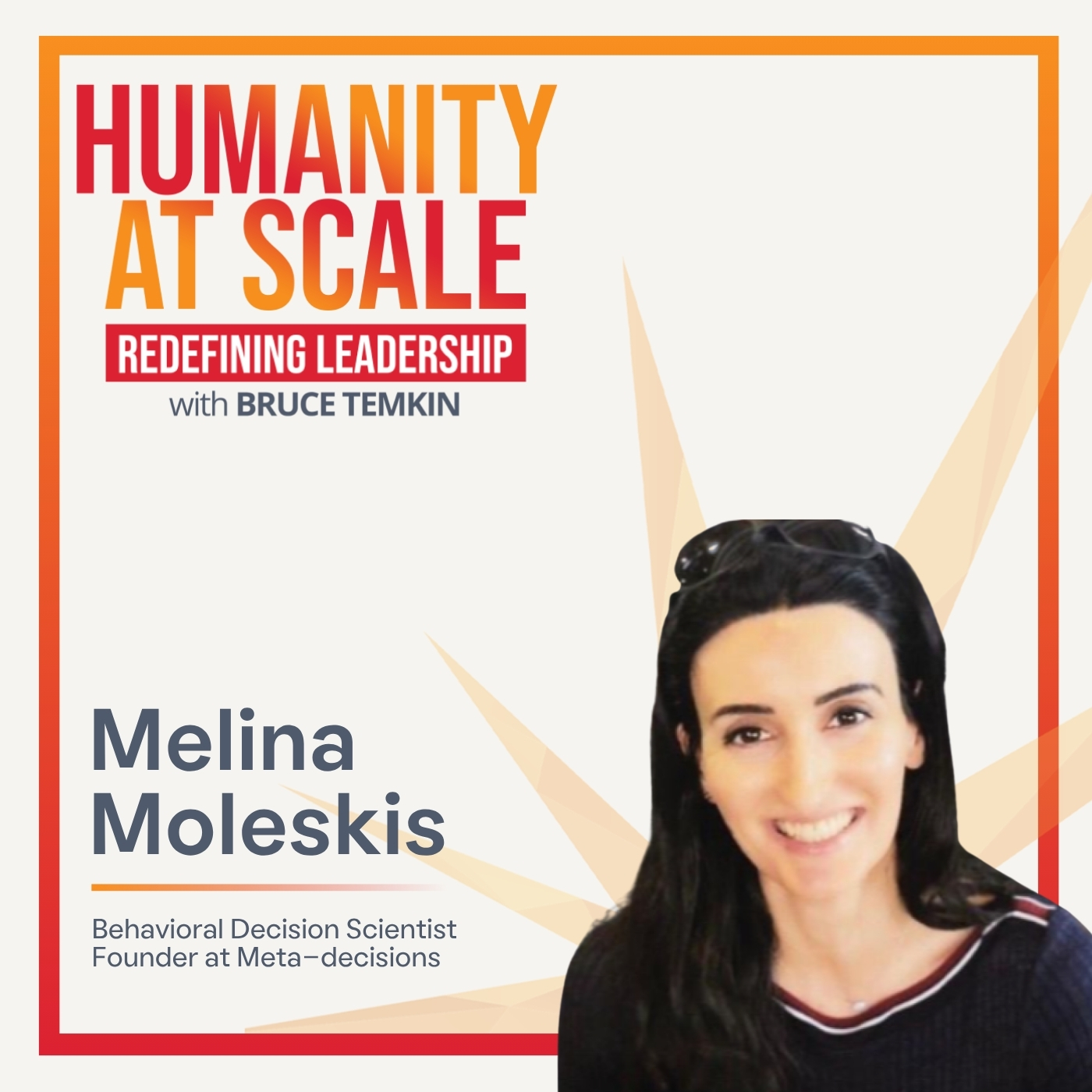
Confidence Isn’t Competence: Better Decision Systems With Melina Moleskis
Mar 2700:53:51Tap to summarizeIn this episode of Humanity at Scale, host Bruce Temkin speaks with Melina Moleskis about the science of sound judgment and building better decision systems.Drawing on behavioral decision science, Melina explains why years of experience don't always translate into expertise and how "decision friction" quietly undermines even the most capable teams. From the "basketball analogy" of feedback loops to the power of a "premortem," she shares practical strategies for shifting focus from outcomes to processes and designing environments where collective intelligence can flourish.Here are some of the topics that Bruce and Melina explore:Why 91% of leaders believe they are above-average decision-makers while simultaneously skipping structured processes.The three critical layers of decision-making: cognitive skills, interactive dynamics, and structural context.How to use "awkward" tools like the premortem to test for psychological safety and risk.The "Decision Friction" trap: Identifying where information gets stuck in hallways and meetings.Why "Outcome Bias" leads organizations to reward luck rather than repeatable processes.Using AI as a "thinking sparring partner" without outsourcing human judgment and values.Melina Moleskis is a behavioral decision scientist and the founder of Meta Decisions, a firm that helps organizations strengthen group decision practices and design behavior change strategies. She serves as the Director of Research at the Global Association for Applied Behavioral Scientists (GAABS) and advises both public and private institutions on the practical application of decision science. With a background in mathematics, economics, and a PhD in decision science, Melina is on a mission to treat decision-making as a foundational skill that should be taught from a young age.Episode Highlights:00:00 Intro: Decision making is a foreign language, not an innate ability.02:36 From Mathematician to Observer: A journey into the behavioral side of models.05:30 Confident Humility: Why leadership should be about direction, not blind trust.06:41 The Confidence-Competence Gap: Relying on memory over data.09:44 The Basketball Analogy: Why business environments lack stable feedback loops.12:00 The Three Layers: Cognitive, Interactive, and Contextual failures.14:30 The Premortem Test: Using "pessimism" to identify hidden risks.20:27 Decision Friction: What happens when teams get stuck in the "hallway track".24:30 Process vs. Outcome: Why elite coaches applaud the "play," not just the basket.29:30 Five Minutes of Discipline: Framing decisions in fast-moving environments.33:30 The Education Gap: Why we should teach decision-making to five-year-olds.41:30 AI as "System Three": Automating tasks without losing human values.47:53 Final Wisdom: Human-centricity, inclusivity, and the surrounding environment.49:28 Key Takeaways: Lessons on psychological safety and the discipline of judgment.Guest Resources:Melina Moleskis on LinkedIn: https://www.linkedin.com/in/melina-moleskis/Meta Decisions Website: https://metadecisions.com/Global Association for Applied Behavioral Scientists (GAABS): https://gaabs.org/Links:Apple Podcasts: https://podcasts.apple.com/us/podcast/confidence-isnt-competence-better-decision-systems/id1798239022?i=1000757656436Spotify: https://open.spotify.com/episode/6or1Z5Bo5UiCGQiwDwo6rm?si=41Inl9yXR5yks-v86qEK5wYouTube: https://youtu.be/6SfHUpqoeyQHumanity At Scale: Redefining Leadership is handcrafted by our friends over at: fame.so
Transcribe →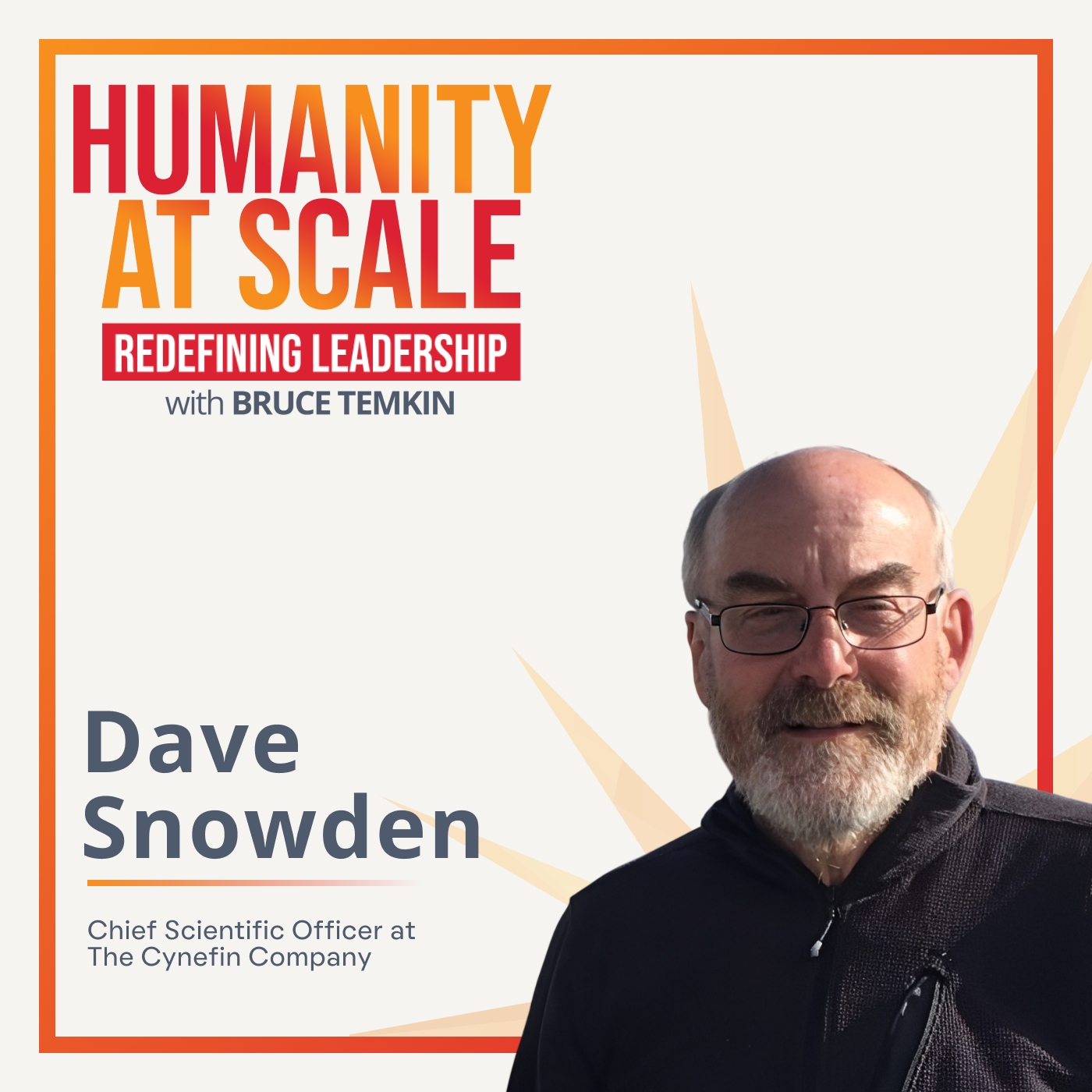
Sense-Making Through Uncertainty: Stories, Signals, and Swarms with Dave Snowden
Mar 500:44:36Tap to summarizeWhat if the way you lead your family holds the secret to leading organizations through uncertainty?In this episode of Humanity at Scale, host Bruce Temkin speaks with Dave Snowden about complexity leadership and leading under uncertainty. Drawing on complexity science and the Cynefin framework, Dave explains why traditional planning fails in complex adaptive systems and how sense-making in organizations enables better organizational decision-making. From swarm intelligence to narrative at scale, he shares practical approaches to navigating ambiguity, detecting weak signals, and shaping resilient cultures through adaptive systems management rather than rigid transformation.Here are some of the topics that Bruce and Dave explore:How to recognize when your organization is a complex adaptive system The "Do the Next Right Thing" strategy for replacing long-term vision statements Why sense-making is more valuable than perfect informationHow to leverage informal networks and "rhizomic" organizational structures The critical difference between human abductive thinking and AI inductive thinking How to shape environments where virtue becomes easier and vice becomes harderDavid Snowden is a leadership strategist and complexity scientist renowned for creating the Cynefin Framework, a decision-making model that helps leaders recognize when problems can be analyzed versus explored in real time. With a background spanning NGOs, technology implementation, and global institutions, Dave has spent decades studying how people and organizations make decisions under uncertainty.Episode Resources:Dave Snowden on LinkedInCynefin Company Website Bruce Temkin on LinkedInHumanity at Scale on Apple PodcastsHumanity at Scale on SpotifyHumanity at Scale on YouTubeHumanity At Scale: Redefining Leadership is handcrafted by our friends over at: fame.so
Transcribe →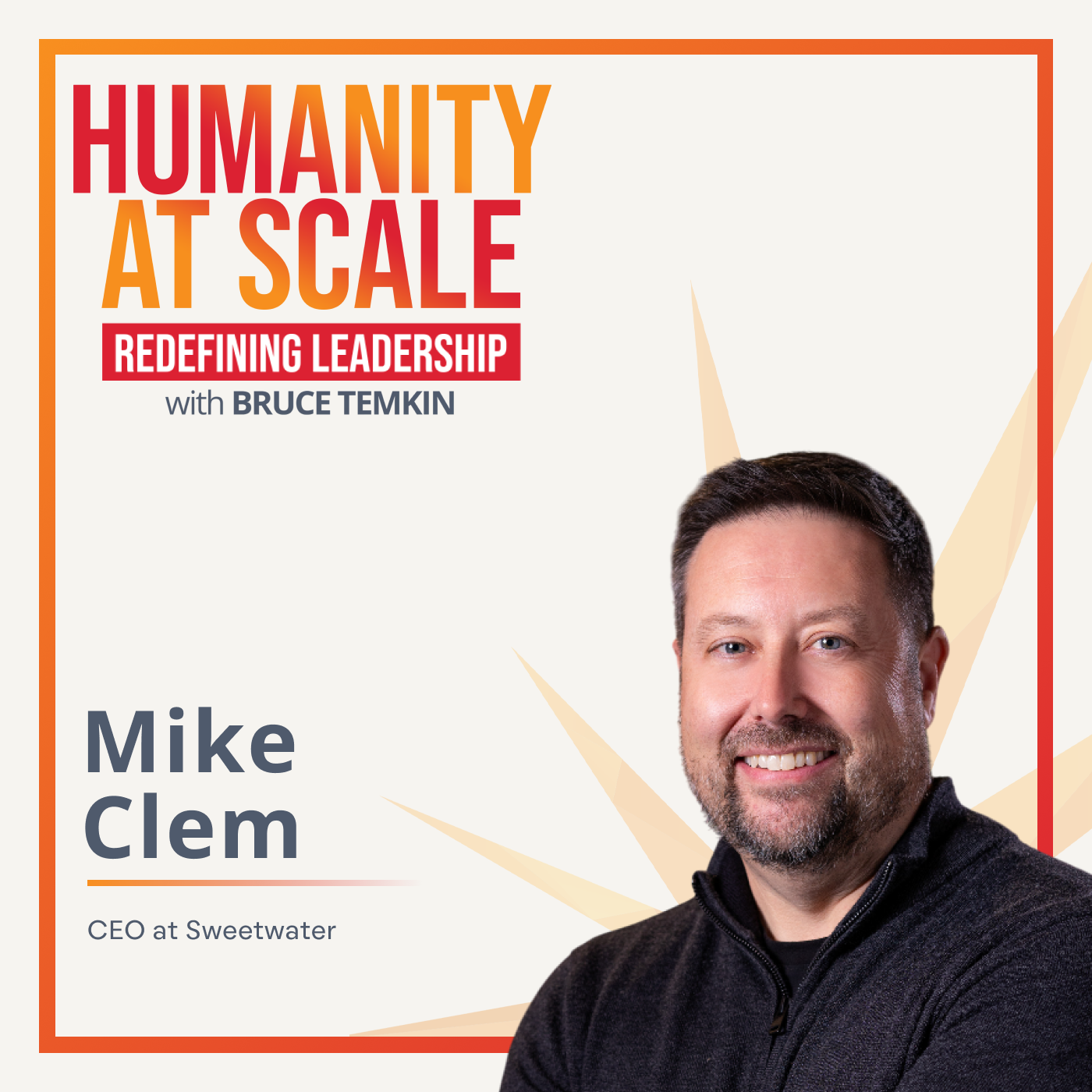
Scaling White-Glove Service: Sweetwater's $2 Billion Success Story with Mike Clem
Feb 1900:36:47Tap to summarizeWhat if scaling a business didn't require sacrificing the human relationships that made it successful?In this episode of Humanity at Scale, host Bruce Temkin speaks with Mike Clem, CEO of Sweetwater, about building a near–$2B business without sacrificing trust, care, or relationships. Mike shares how Sweetwater scales through human connection, disciplined growth, and culture designed into systems, not slogans. From white-glove service and deep listening to thoughtful use of AI, this conversation shows why leading with humanity isn’t soft; it’s a serious competitive advantage.Here are some of the topics that Bruce and Mike explore:How to build a scalable business model on relationships, not transactionsWhy controlling growth pace is a competitive advantage, not a limitationThe "Solve the Customer, Solve the Problem, Solve the System" frameworkHow to embed culture through design, not slogans.Why leaders must stay close to reality by listening directlyHow AI augments human expertise instead of replacing itMike Clem is the CEO of Sweetwater, the largest online retailer of musical instruments and professional audio equipment in the United States. With a background in engineering and early ecommerce technology, he has spent over two decades at Sweetwater, growing the company from a $4 million website in 2003 to approaching $2 billion in revenue. Episode Resources:Mike Clem on LinkedInSweetwater Website Bruce Temkin on LinkedInHumanity at Scale on Apple PodcastsHumanity at Scale on SpotifyHumanity at Scale on YouTubeHumanity At Scale: Redefining Leadership is handcrafted by our friends over at: fame.so
Transcribe →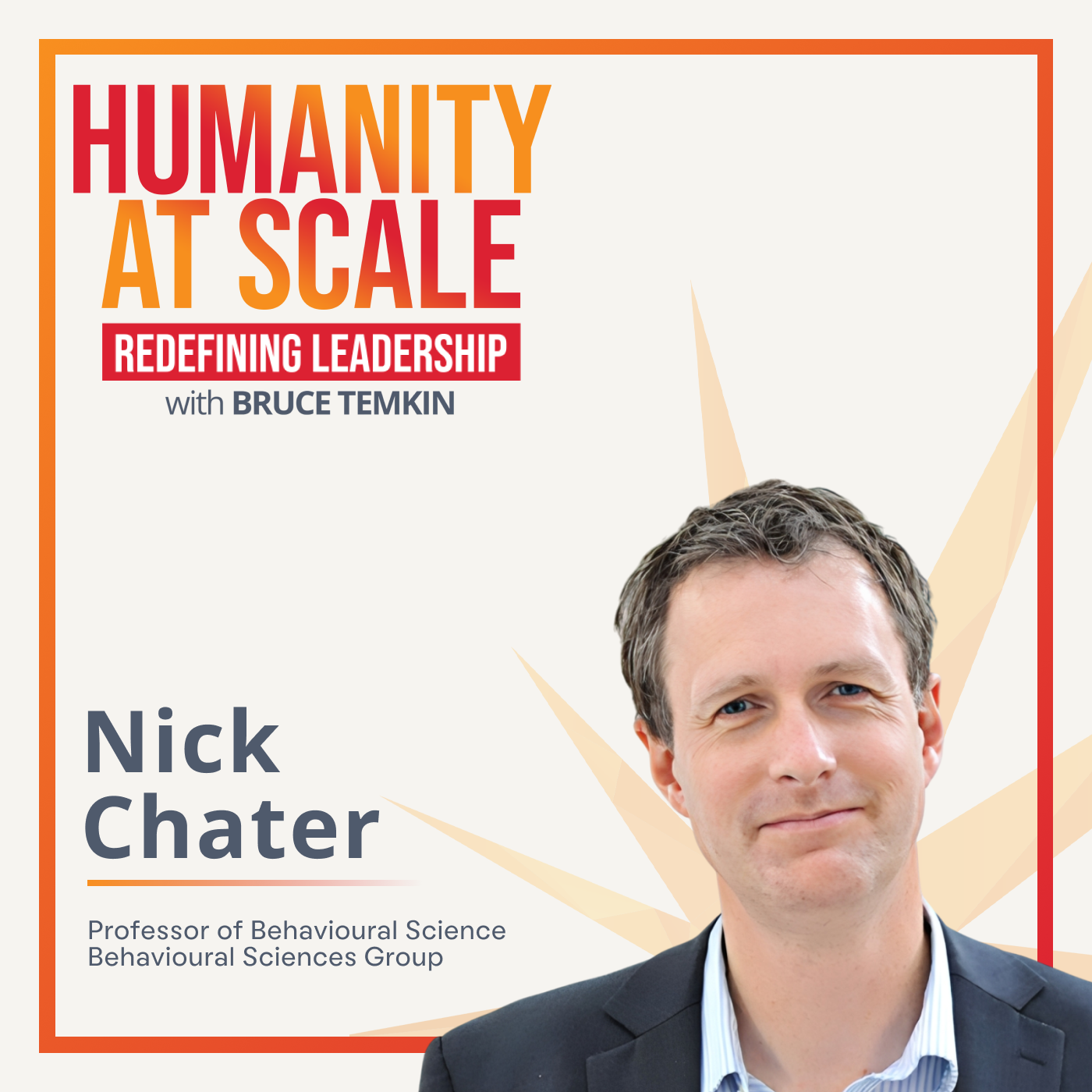
The Myth of Deep Beliefs: Leading in a World of Improvisation with Nick Chater
Feb 1200:46:06Tap to summarizeWhat if your mind isn’t a warehouse of beliefs, but a live improvisation happening moment to moment?In this episode of Humanity at Scale, host Bruce Temkin speaks with Nick Chater, Professor of Behavioral Science at Warwick Business School, about why human preferences are constructed on the fly, and what that means for leadership. Drawing on ideas from The Mind Is Flat, Chater challenges fixed models of motivation, engagement, and culture. The conversation reframes leadership as direction-setting rather than belief-installation, explains why surveys reveal context, not truth, and shows how shared norms outperform rigid rules. A sharp, liberating rethink of how humans and organizations actually work.Here are some of the topics that Bruce and Nick explore:How to stop treating preferences as fixed and start recognizing them as constructed in the momentWhy engagement surveys and values assessments reveal only surface-level signalsThe director-not-dictator leadership modelHow to use small, contextual leadership moments to embed direction into real decisions Why do merger failures and cultural clashes stem from conflicting unspoken normsThe competitive advantage of human flexibility: why humans will remain essential in organizationsNick Chater is a Professor of Behavioral Science at Warwick Business School and a leading authority on human decision-making and rationality. With a background spanning psychology, philosophy, and behavioral economics, Nick challenges conventional assumptions about how the human mind works. He is the author of *The Mind is Flat*, which dismantles the myth of deep, stable beliefs and preferences, and co-author of *The Language Game* (with Morten Christiansen) on how humans improvise language and social conventions. His research on choice blindness, preference reversals, and collective decision-making has transformed how we understand cognition, culture, and organizational behavior.Episode Resources:Nick Chater at Warwick Business SchoolWarwick Business School Website Bruce Temkin on LinkedInHumanity at Scale on Apple PodcastsHumanity at Scale on SpotifyHumanity at Scale on YouTubeHumanity At Scale: Redefining Leadership is handcrafted by our friends over at: fame.so
Transcribe →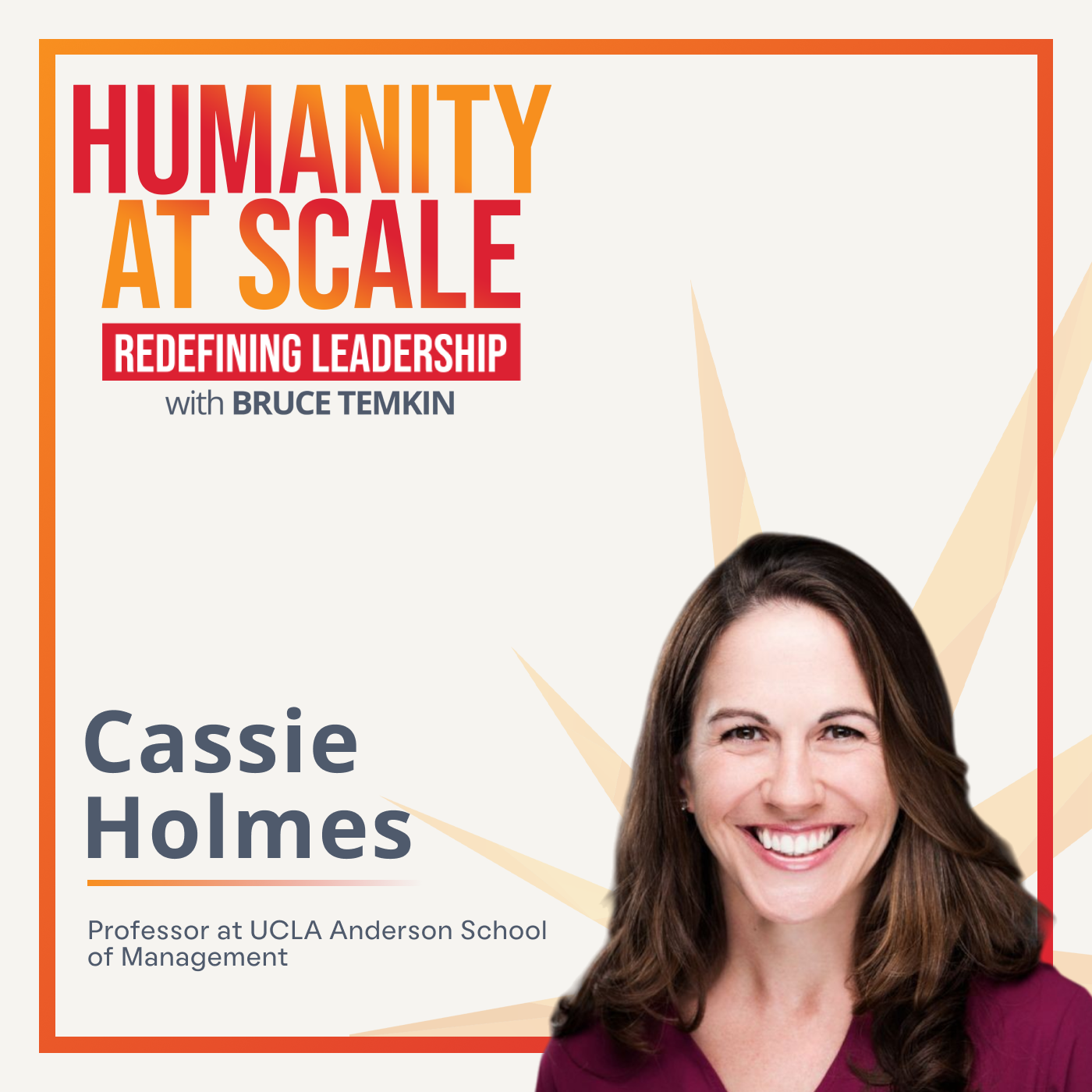
Escaping the Time Poverty Trap: From Constant Urgency to Intentional Living with Cassie Holmes
Feb 500:43:52Tap to summarizeWhat if the secret to sustainable high performance wasn't working harder, but rethinking how you experience time?In this episode of Humanity at Scale, host Bruce Temkin speaks with Cassie Holmes, Chaired Professor at UCLA Anderson School of Management, and best-selling author about why time, and not money, is the true currency of sustainable performance. Together they unpack the concept of time poverty, how constant urgency fuels burnout, and why small, intentional shifts in how we experience time can dramatically improve well-being. From zooming out to clarify purpose and protecting focus time at work, the conversation shows how leaders and individuals can achieve extraordinary results while supporting genuine human flourishing.Here are some of the topics that Bruce and Cassie explore:How to recognize time poverty as the root cause of burnoutWhy shifting focus from money to time as your critical resource measurably improves happiness and intentionThe perspective principle: zoom out to reduce anxiety, zoom in to create itHow to use the "five whys" exercise to uncover intrinsic purpose Why protecting focus time and meeting-free blocks are structural leadership choicesHow quality of time, not quantity, creates extraordinary happiness in ordinary momentsCassie Holmes is a chaired professor at UCLA’s Anderson School of Management and a leading expert on time and happiness. She is the author of the bestselling book Happier Hour, based on her popular MBA course, Life Design for Happiness. Her research on how time shapes well-being has earned multiple Early Career Awards and wide media coverage. Previously, she was a tenured, award-winning professor at Wharton and holds a PhD from Stanford.Episode Resources:Cassie Holmes on LinkedInUCLA Anderson School of Management Website Bruce Temkin on LinkedInHumanity at Scale on Apple PodcastsHumanity at Scale on SpotifyHumanity at Scale on YouTubeHumanity At Scale: Redefining Leadership is handcrafted by our friends over at: fame.so
Transcribe →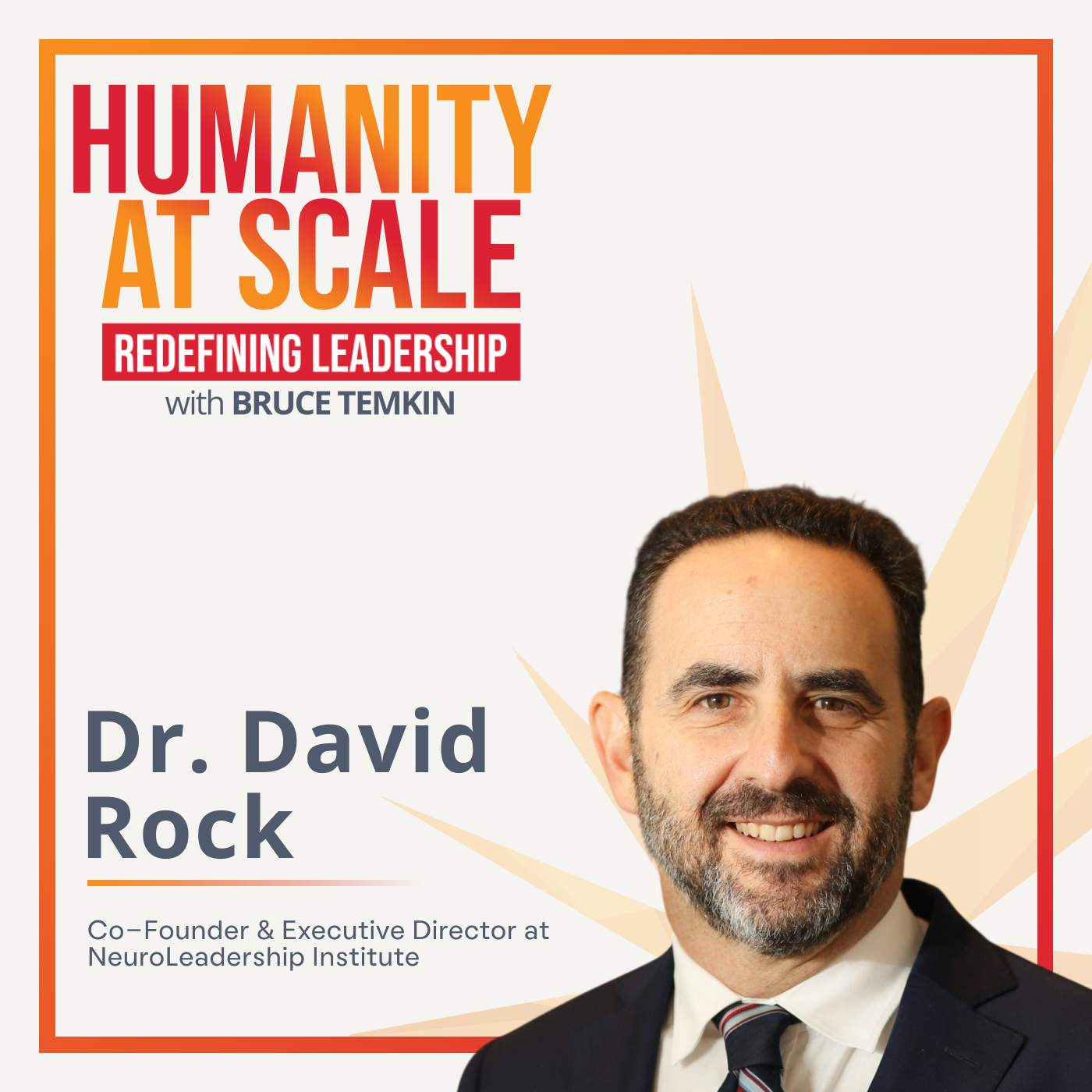
Why Leadership Is a Brain Game: Unlocking the Neuroscience Cheat Code with Dr. David Rock
Jan 2900:44:02Tap to summarizeWhat if your biggest leadership challenges were actually neuroscience challenges in disguise?In this episode of Humanity at Scale, host Bruce Temkin speaks with Dr. David Rock, founder of the NeuroLeadership Institute, about how neuroscience reshapes modern leadership. They explore why leaders unintentionally trigger threat responses, how the SCARF model explains hidden workplace friction, and what it takes to create psychologically safe environments where people think clearly under pressure. From bias reduction to habit-based culture change, this conversation shows how leading with empathy, trust, and brain-aware practices helps organisations perform better, without losing their humanity.Here are some of the topics that Bruce and Dr. David explore:How the SCARF model reveals five hidden threat states leaders can avoidWhy leaders accidentally make their teams less intelligent The three-habit framework that scales behavioral change Why traditional bias training fails and how the SEEDS model (Similarity, Experience, Expedience, Distance, Safety) enables teams How to measure leadership impact on both the "what" and "how"Why metacognition and thinking about thinking will become a critical leadership skill in an AI-driven futureDavid Rock is the Co-Founder and CEO of the NeuroLeadership Institute, recognized globally as a pioneer in applying neuroscience to organizational leadership. With nearly two decades of research and practice, he coined the term "neuroleadership" and has developed evidence-based frameworks like SCARF and SEEDS that help leaders understand human behavior through a brain-science lens. His work has reached approximately 20 million managers and leaders worldwide, transforming how organizations approach talent development, psychological safety, bias mitigation, and change management.Episode Resources:Dr. David Rock on LinkedInNeuroLeadership Institute Website Bruce Temkin on LinkedInHumanity at Scale on Apple PodcastsHumanity at Scale on SpotifyHumanity at Scale on YouTubeHumanity At Scale: Redefining Leadership is handcrafted by our friends over at: fame.so
Transcribe →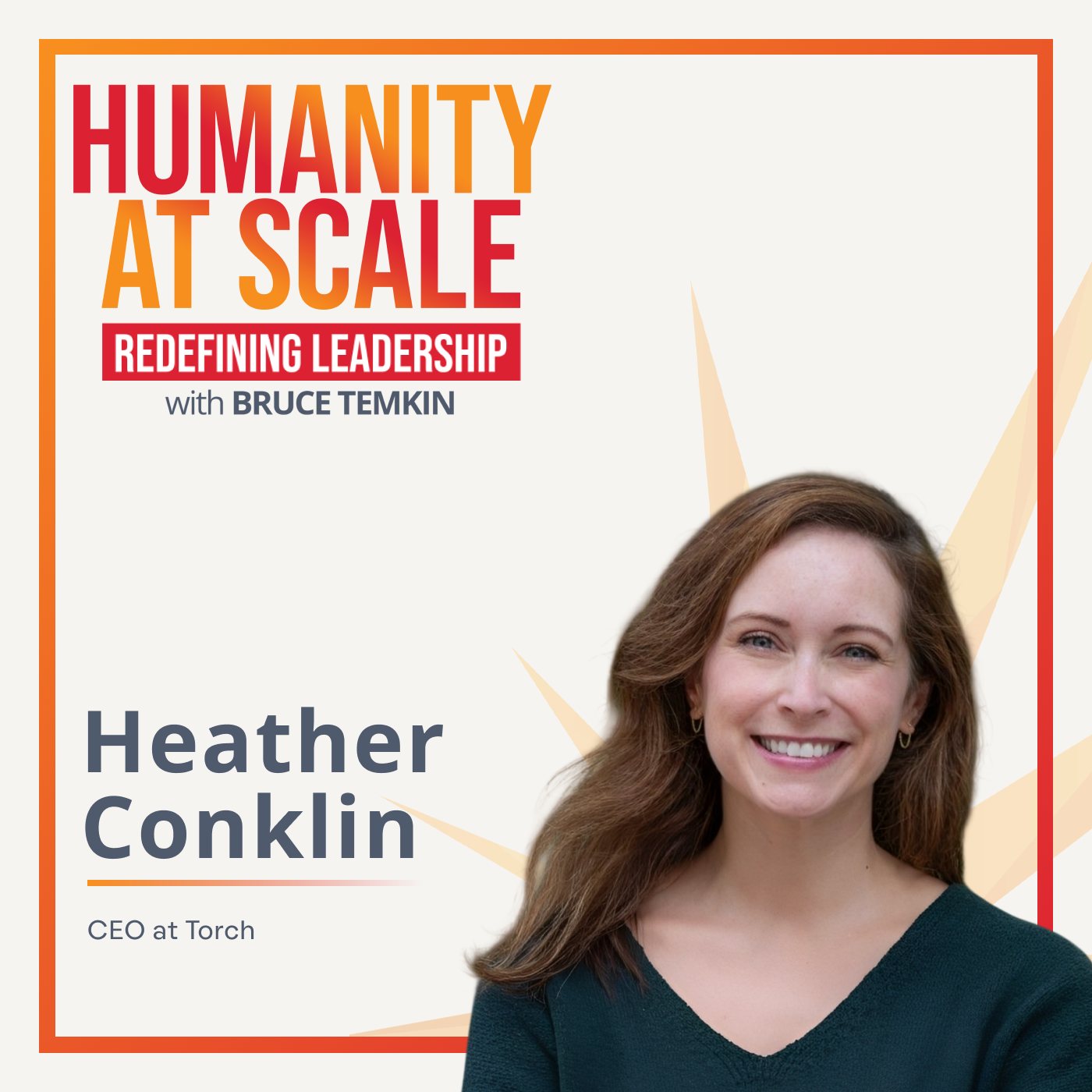
Leadership Development, Reimagined: Beyond Workshops and Static Learning with Heather Conklin
Jan 2200:48:20Tap to summarizeWhat if the leadership development approach your organization built five years ago is already obsolete?In this episode of Humanity at Scale, host Bruce Temkin sits down with Heather Conklin, CEO of Torch, about why leadership development models built for stability are no longer fit for today’s complexity. They explore why human skills are a true competitive advantage, how coaching and feedback must be embedded into daily work, and why one-off workshops fall short. The conversation unpacks systems thinking, AI-driven uncertainty, and the need for continuous, human-centred support to help leaders adapt, connect, and lead effectively at scale.Here are some of the topics that Bruce and Heather explore:Why Human Skills Aren't Soft at AllHow to Identify When Your Leadership Development Model Is ObsoleteThe Critical Difference Between Hard Skills and Human Skills LearningHow to Design Leadership Development Around Business Outcomes, Not Generic ProgramsWhy AI Is Amplifying Leadership Complexity Rather Than Simplifying ItThe "Two-Way Feedback Loop" Model for Modern Leadership DevelopmentHeather Conklin is CEO of Torch, a leadership development platform specializing in coaching, feedback, and behavior-based support integrated into the rhythm of work. With nearly a decade at Salesforce, where she led Trailhead, a learning platform used by millions, and created the Associate Product Manager program for early-career leadership development, Conklin brings deep expertise in scaling human-centric learning.Episode Resources:Heather Conklin on LinkedInTorch Website Bruce Temkin on LinkedInHumanity at Scale on Apple PodcastsHumanity at Scale on SpotifyHumanity at Scale on YouTubeHumanity At Scale: Redefining Leadership is handcrafted by our friends over at: fame.so
Transcribe →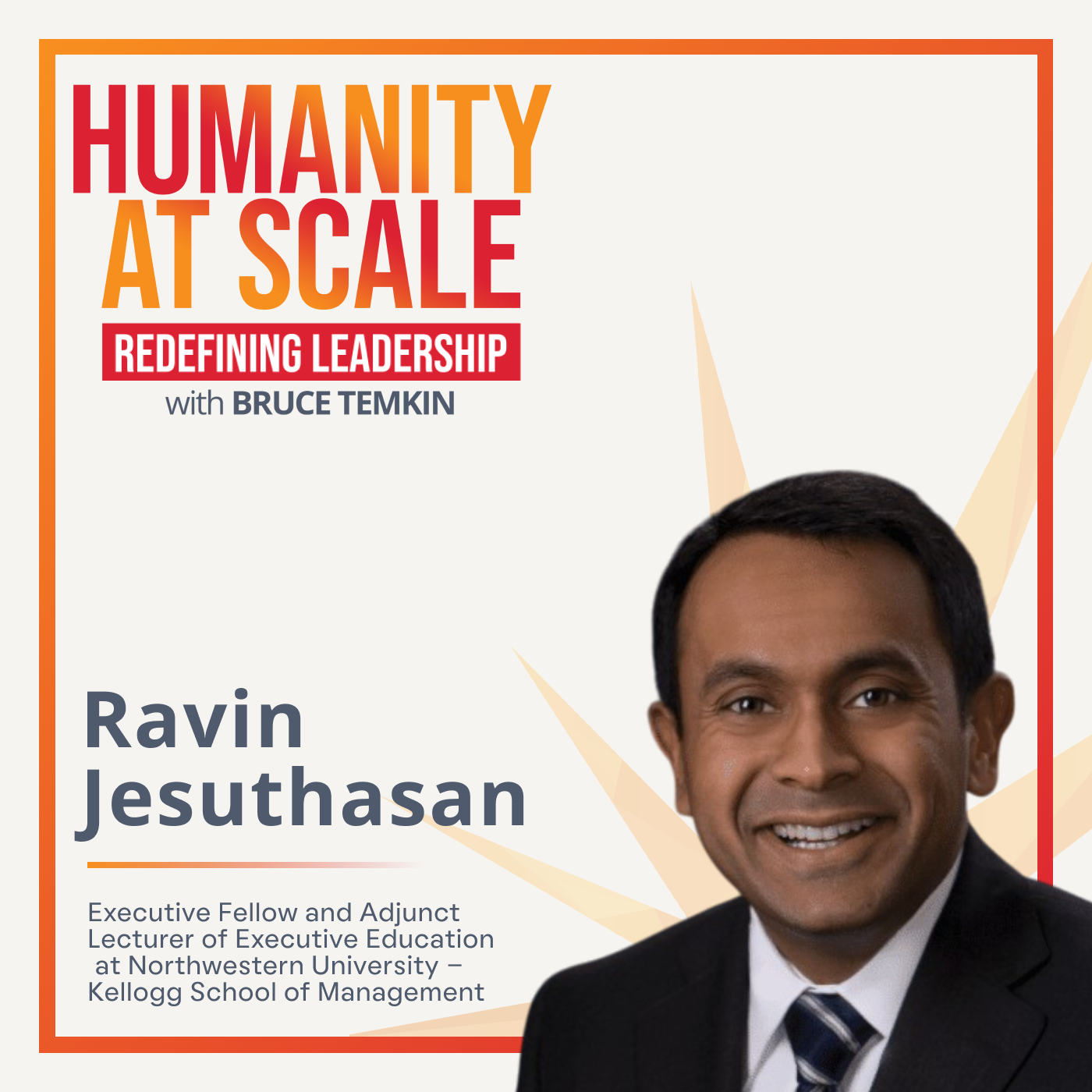
Why Skills Beat Job Titles: How AI Is Reshaping Work with Ravin Jesuthasan
Jan 1500:41:59Tap to summarizeHow can organisations future-proof work by hiring for potential, not roles, while using AI to unlock human skills at scale?In this episode of Humanity at Scale, host Bruce Temkin speaks with Ravin Jesuthasan, global leader for transformation services at Mercer and author of The Skills-Powered Organization. Together, they unpack why skills, not static job descriptions, are becoming the true currency of performance. Ravin explains how AI can surface hidden capabilities, match people to work dynamically, and make reskilling cheaper than constant rehiring. The conversation explores shifting from rigid roles to flow-based work, building learning agility into hiring, and empowering employees to co-create their futures alongside machines. Here are some of the topics that Bruce and Ravin explore:How to pivot from hiring for technical credentials to hiring for learning agility The £50,000 economic advantage of reskilling over churningThe three-part AI intelligence layer for skills managementHow to transition from fixed jobs to flexible and flow work modelsWhy the education system must partner with corporations to produce "work-ready" talentHow to make reskilling a front-line, bottom-up effort rather than a top-down mandateRavin Jesuthasan is a globally recognised thought leader, futurist, and bestselling author on the future of work, AI, and human capital. He leads Mercer’s Transformation Services globally and serves as Executive Fellow and Adjunct Faculty at Northwestern’s Kellogg School of Management. A Thinkers50-ranked management thinker, Ravin is the author of six books, including Work Without Jobs and The Skills-Powered Organization, both number one bestsellers.Episode Resources:Ravin Jesuthasan on LinkedInMercer Website Bruce Temkin on LinkedInHumanity at Scale on Apple PodcastsHumanity at Scale on SpotifyHumanity at Scale on YouTubeHumanity At Scale: Redefining Leadership is handcrafted by our friends over at: fame.so
Transcribe →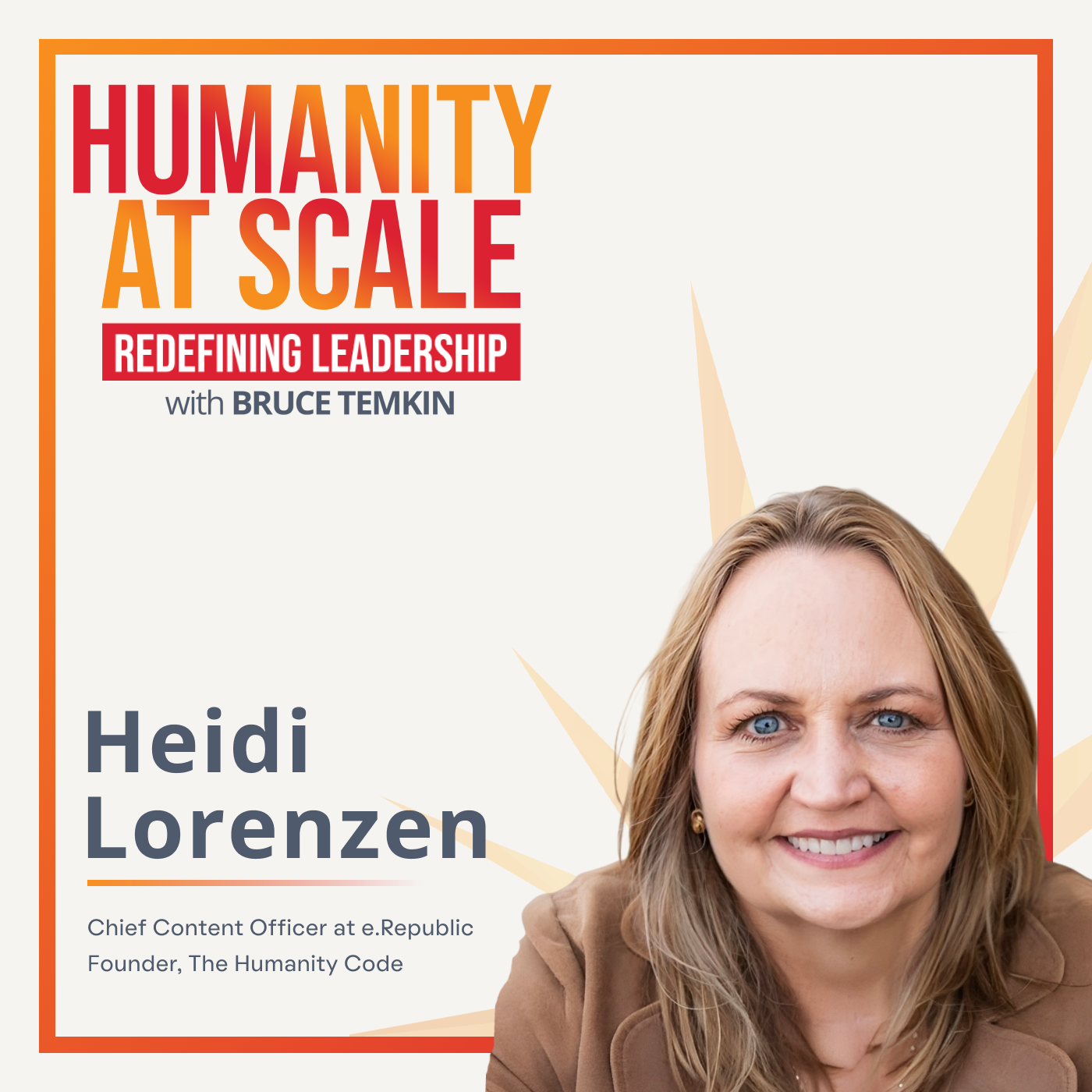
The Humanity Code: Teaching AI What Matters Most with Heidi Lorenzen
Jan 800:36:54Tap to summarizeWhat if the most important question leaders ask about AI isn’t “How fast can we use it?” but “What future are we training it to build?”On this episode of Humanity at Scale, host Bruce Temkin sits down with Heidi Lorenzen, Chief Content Officer at e.Republic and founder and executive producer of The Humanity Code, a documentary and global impact campaign focused on aligning AI with humanity’s highest values.With a career spanning Polycom, Autonomy, BusinessWeek, and years helping executives understand exponential technology at Singularity University, Heidi has seen firsthand how technology scales faster than leadership, governance, and reflection. She argues that AI doesn’t create our values, it amplifies them and leaders are already shaping AI far more than they realize through their daily choices, incentives, and behaviors.This is not a conversation about hype or fear. It’s about stewardship, responsibility, and agency during a pivotal moment in history and how leaders can ensure AI helps us build the kind of society we actually want.What you will learn:Why AI is less about efficiency and more about intentional stewardshipHow everyday leadership choices quietly “train” AI at global scaleWhy technology amplifies existing values instead of fixing broken systemsHow to shift from “What can we automate?” to “What are we trying to create?”Practical steps leaders can take to keep human judgment at the centerWhy embracing adaptability is now a foundational leadership skillHow using AI to elevate people not replace them drives greater impact and performanceWhy this moment forces leaders to confront long-avoided questions about humanity, purpose, and valuesAbout Heidi LorenzenHeidi Lorenzen is Chief Content Officer at e.Republic and the founder and executive producer of The Humanity Code, a documentary film and impact initiative dedicated to ensuring humanity’s core values are intentionally embedded into AI and emerging technologies. Named one of the Top 50 Most Powerful Women in Technology, Heidi brings three decades of leadership experience across global technology, communications, and innovation. Her work challenges leaders to see themselves not just as operators of organizations but as stewards helping shape the trajectory of civilization at a moment when our choices matter more than ever.Episode Resources:Heidi Lorenzen on LinkedIne.Republic WebsiteThe Humanity Code WebsiteBruce Temkin on LinkedInHumanity At Scale: Redefining Leadership is handcrafted by our friends over at: fame.so
Transcribe →