
Podcast
Insights Unlocked
Hosted by UserTesting · EN
What does it take to create experiences customers love, craft campaigns that captivate, and drive measurable results?
Insights Unlocked features candid conversations with the builders, creators, and innovators driving some of the world’s most impactful digital transformations. Tailored for marketing, product, UX and CX leaders, each episode delivers actionable insights to help you create customer-first strategies and stay ahead in today’s competitive landscape. Each episode is about 30 minutes long.
From optimizing product launches to leveraging AI for smarter workflows, Insights Unlocked is your go-to resource for designing experiences that resonate, drive loyalty, and achieve business results. Guests include influential leaders like Brian Solis, April Dunford, Kate Towsey, Jacob Nielsen, Teresa Torres, and Judd Antin among others, offering their expertise in CX, UX, and innovation. The podcast also highlights strategies and success stories from leading brands such as Verizon, Signet Jewelers, Figma, Microsoft, Tesco Bank, and more.
UserTesting leaders and industry experts join as guest hosts, alongside show producer Nathan Isaacs, award-winning journalist and Senior Manager of Content Production at UserTesting.
Brought to you by UserTesting, the leader in human insights and proactive customer experience strategies, Insights Unlocked empowers CMOs and marketing teams to craft experiences that drive growth, loyalty, and impact.
Listen and subscribe wherever you get your podcasts. Show notes, curated clips and more at usertesting.com/podcast.
81episodes
Episodes
Newest firstAll episodes

How to avoid cultural blind spots in AI-powered customer research
1w ago00:48:21Summary readyEpisode web page: https://bit.ly/4besnoH Episode summary AI can summarize customer feedback in seconds—but can it truly understand what customers mean? In this episode of Insights Unlocked, Jason Giles sits down with Chui Chui Tan, cultural strategist, founder of Beyō Global, and author of Research for Global Growth and International User Research, to explore why the biggest challenge in AI-powered customer research isn't analyzing data—it's interpreting it. Drawing on nearly two decades of experience conducting research across more than 50 markets, Chui Chui explains why themes like "trust," "convenience," and "it's too expensive" can mean entirely different things depending on cultural context. She argues that while AI excels at identifying patterns, human researchers remain essential for uncovering the motivations behind those patterns and translating them into better business decisions. The conversation explores how global teams can avoid costly misinterpretations, why translation alone isn't enough for international research, and how slowing down at the right moments can lead to more accurate insights—even in an AI-driven world. You'll learn: Why AI has shifted the research bottleneck from synthesis to interpretation How cultural context changes the meaning behind common customer feedback Why recurring themes aren't the same as actionable customer insights How to uncover the real drivers behind comments like "it's too expensive" or "I don't trust it" Why translation alone can't capture cultural meaning in global research A practical framework for moving from AI-generated signals to better business decisions How research teams can build simple checks into AI-assisted workflows to avoid costly mistakes Resources & links: Chui Chui Tan on LinkedIn: https://www.linkedin.com/in/chuichuitan/ Beyō Global: https://beyo.global/ Research for Global Growth: https://www.amazon.co.uk/Research-Global-Growth-Strategies-Cross-Cultural/dp/1068601701 Chui Chui Tan on YouTube: https://www.youtube.com/@chuichuitan Jason Giles on LinkedIn: https://www.linkedin.com/in/jaygiles/ Learn more about Insights Unlocked: https://www.usertesting.com/podcast
Summary
The mindset shift that turns UX research into a strategic business advantage
2w ago00:40:20Summary readyEpisode web page: https://bit.ly/4fsY5jb Episode summary What does it really mean for UX research to have "a seat at the table"? According to Paul Humphrey, head of UX Research Practice at Next, it has less to do with presenting to executives and more to do with helping the people making product decisions achieve measurable business outcomes. In this episode of Insights Unlocked, host Amrit Bhachu sits down with Paul to discuss how he transformed UX research at Next from a reactive support function into a strategic driver of product and e-commerce decisions. Paul shares how empowering designers to conduct their own research, aligning studies with business metrics, and building relationships with stakeholders helped the team dramatically increase research adoption while demonstrating clear business impact. The conversation explores what it takes to prove the value of UX research, including a case study that contributed to reducing call center training and handling times, resulting in an estimated £2.75 million in savings. Paul also explains why researchers need to speak the language of the business—not just the language of usability—and why understanding stakeholder goals is often more important than delivering another research report. Finally, Paul and Amrit discuss the growing role of AI in UX research. Paul shares how Next is using AI to accelerate workflows while maintaining rigorous validation and quality standards, why researchers should embrace experimentation, and how curiosity remains the most valuable skill in an AI-powered future. You'll learn: What "having a seat at the table" actually means for UX researchers How to align UX research with business goals and stakeholder metrics Ways to demonstrate the business impact and ROI of UX research Why empowering designers to conduct research helps research scale How to build stronger partnerships with product and business leaders Lessons from Next's transformation from reactive to strategic research Practical approaches to measuring research success with business outcomes How AI is accelerating UX research while preserving quality and trust Why curiosity and adaptability are essential skills for the future of UX research Resources & links Paul Humphrey on LinkedIn (https://www.linkedin.com/in/paul-humphrey-7865a570/) Next (https://www.next.co.uk/) Amrit Bhachu on LinkedIn (https://www.linkedin.com/in/amritsbhachu/) Nathan Isaacs on LinkedIn (https://www.linkedin.com/in/nathanisaacs/) Learn more about Insights Unlocked (https://www.usertesting.com/podcast)
Summary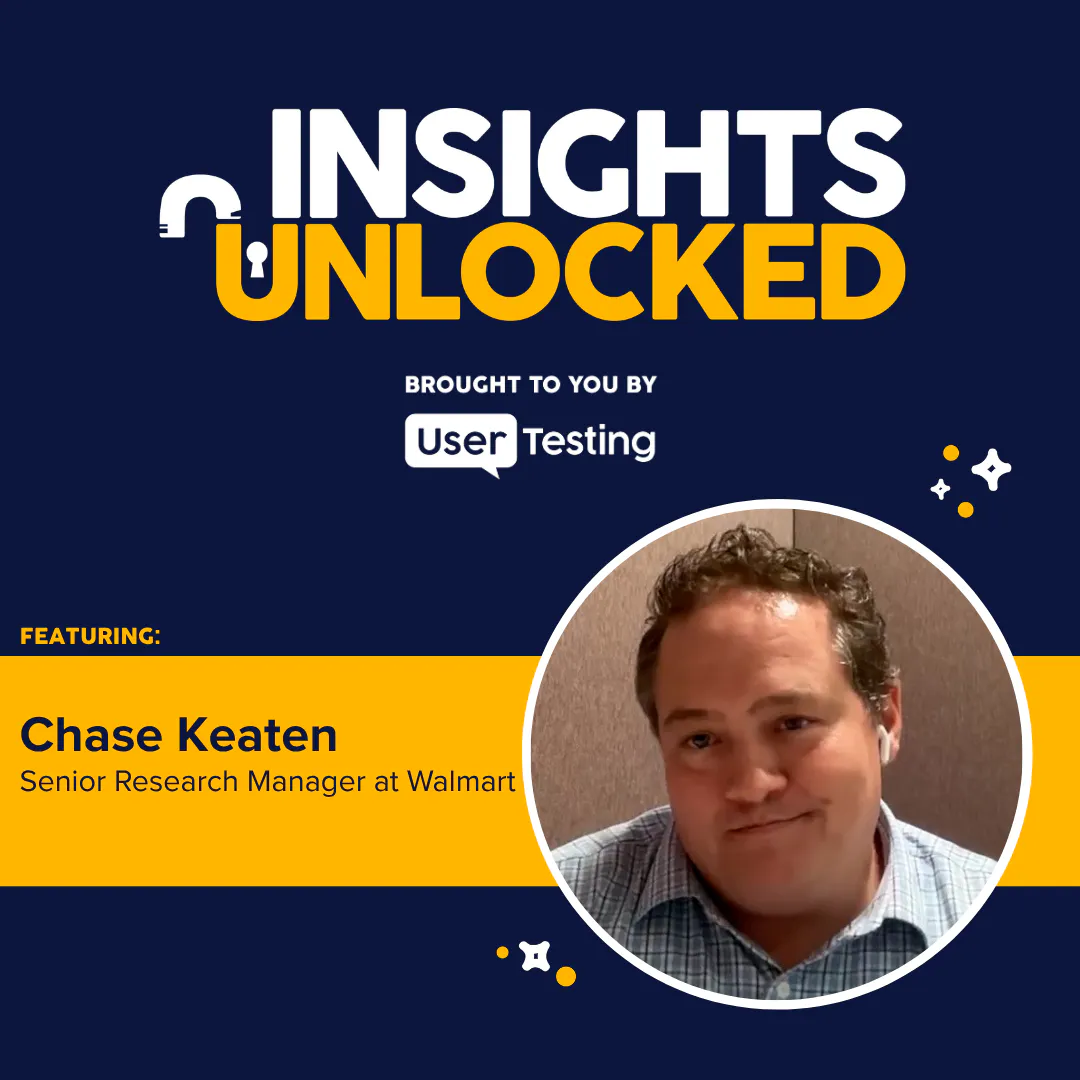
How to build agentic AI your customers will actually trust
3w ago00:53:40Summary readyEpisode web page: https://bit.ly/4fjSOKR Episode summary: In this episode of Insights Unlocked, Mike Mace chats with Chase Keaten, senior research manager at Walmart, about the tension shaping how researchers, designers, and builders are learning to work with AI. Chase shares why he thinks the sharpest divide in tech right now isn't about tools—it's about two competing mindsets: an "always push forward" view of AI and a more cautious, human-centered one. He explains why holding both views at once, rather than picking a side, tends to lead to better decisions. The conversation also digs into the much-hyped "builder model," where one person plus a stack of AI agents is expected to replace a whole product team. Chase makes the case for why healthy conflict between humans—not simulated conflict from AI—is often what actually makes products better. He and Mike also explore why trust, not usability, may be the real currency of agentic AI, and Chase closes with practical advice for researchers and designers under pressure to "do something with AI" right now. You'll learn: Why two opposing views of AI—full-speed-ahead and human-centered caution—can coexist productively Why the "builder model" struggles to replicate the healthy conflict that makes products better How AI is reshaping design work, and why speed often comes at the cost of context and novelty Why trust, not usability, is becoming the key metric for agentic AI How a "personalization butler" could change the relationship between retailers and customers Practical advice for researchers and designers who feel pressure to use AI without a clear plan Resources & links Chase Keaton on LinkedIn (https://www.linkedin.com/in/chasekeaten/) Mike Mace on LinkedIn (https://www.linkedin.com/in/mikemace/) Nathan Isaacs on LinkedIn (https://www.linkedin.com/in/nathanisaacs/) Learn more about Insights Unlocked: https://www.usertesting.com/podcast
Summary
AI can build anything. It still needs someone to point the way.
4w ago00:53:50Summary readyEpisode web page: https://bit.ly/4fvszkT Episode summary: In this episode of Insights Unlocked, Nathan Isaacs sits down with three UserTesting voices—Lija Hogan, Amrit Bhachu, and Mike Mace—for a roundtable on the conversations they're hearing most often from enterprise leaders in the back half of 2026. Drawing on months of customer calls and industry events, the group unpacks where AI is actually changing how teams work, where the hype has gotten ahead of reality, and why human judgment keeps showing up as the differentiator no matter how capable the models get. The conversation moves from the "next bottleneck" debate—is it code, is it customers?—to the growing skills gap facing junior researchers and designers, the fading subsidies behind "token maxing," and why AI in the loop, not human in the loop, might be the better way to think about accountability. They also dig into agentic AI and the emerging question of whether customers will engage brands directly or through their own AI "info butler," why testing the personality and relationship of an AI product matters as much as testing its accuracy, and what leaders should actually prioritize as they head into 2027. You'll learn: Why "what's the next bottleneck" is dividing opinion among AI's loudest voices How shrinking model subsidies are forcing leaders to rethink where AI actually saves money Why the panel prefers "AI in the loop" over "human in the loop" How agentic AI and MCP could reshape whether customers deal with your brand or their own AI assistant Why evaluating the personality and relationship of an AI product matters as much as evaluating its correctness What UX research and design teams should prioritize in the second half of 2026 Resources & links Lija Hogan on LinkedIn ( https://www.linkedin.com/in/lija-hogan-894769/) Amrit Bhachu on LinkedIn ( https://www.linkedin.com/in/amritsbhachu/) Mike Mace on LinkedIn (https://www.linkedin.com/in/mikemace/) Nathan Isaacs on LinkedIn (https://www.linkedin.com/in/nathanisaacs/) Learn more about Insights Unlocked: https://www.usertesting.com/podcast
Summary
Who owns the customer when AI does the shopping?
Jul 600:27:02Summary readyEpisode web page: https://bit.ly/4vcJe2e Episode summary: In this episode of Insights Unlocked, Nathan Isaacs sits down with Matt Howland, president and chief product/engineering officer at Cordial and chair of the working group behind the Shopper Context Protocol (SCP), to unpack what's really at stake as AI agents start shopping on our behalf. Drawing on his years on both the vendor and retailer sides of martech, Matt explains why SCP was created to keep brands from being cut out of the customer relationship as agent commerce protocols like ACP and UCP take hold. Matt walks through why "context-less transactions" are a problem for both shoppers and brands, why he believes standards like SCP need to preserve loyalty and intent rather than flatten every purchase into a generic transaction, and why he's optimistic that customer behavior—not platform incentives—will ultimately steer where these protocols land. The conversation also covers what Cordial is building as a customer context engine for brands like Levi's and Abercrombie, and closes with practical advice for leaders who want to start experimenting with AI internally before standards like SCP fully take shape. You'll learn: What the Shopper Context Protocol is and why Matt's working group built it Why "context-less transactions" break the shopping experience for both brands and customers How SCP relates to competing agent commerce protocols like ACP and UCP What's at risk for retailers and loyalty programs if they don't engage with emerging standards How Cordial uses AI to turn unstructured customer data into a "fiber uplink" of intent One practical step leaders can take today to prepare their organizations for agentic commerce Resources & links Matt Howland on LinkedIn (https://www.linkedin.com/in/mhowland/) Cordial (https://cordial.com/) Shopper Context Protocol website (https://shoppercontextprotocol.io/) Nathan Isaacs on LinkedIn (https://www.linkedin.com/in/nathanisaacs/) Learn more about Insights Unlocked: https://www.usertesting.com/podcast
Summary
How to close the growth gap: turning customer insights into business results with Robyn Bolton
Jun 2900:30:10Summary readyEpisode summary: In this episode of Insights Unlocked, Nathan Isaacs sits down with Robyn Bolton, founder of Mile Zero and author of Unlocking Innovation: A Leader's Guide to Turning Bold Ideas into Tangible Results, to explore why innovation fails so often inside successful companies—and what leaders can do about it. Drawing on her experience at P&G, BCG, and Innosight (Clayton Christensen's firm), Robyn shares the frameworks, mindset shifts, and leadership behaviors that separate real innovation from the illusion of it. Robyn makes the case that innovation isn't an idea problem—it's a leadership problem. She dives into how to set the right conditions before any brainstorming begins, why "innovation theater" breeds cynicism rather than creativity, and how customer insights are the most underutilized asset in most organizations. She also weighs in on AI: what separates the companies genuinely benefiting from it versus those just chasing the next shiny object. You'll learn: Why innovation is a leadership problem, not an idea problem How to define a "growth gap" before you ever go to the whiteboard What "innovation theater" looks like and why it backfires Why customer insights are everyone's job—not just the research team's How to build a culture of innovation (and why it takes years, not events) What separates companies getting real value from AI from those just experimenting A practical "George Costanza" leadership habit you can try this week Innovation starts with leadership, not ideas Robyn Bolton has spent her career helping large, successful companies do something that doesn't come naturally to them: innovate. From launching Swiffer at P&G to working with companies like Medtronic, Nike, and Sanofi, she's seen firsthand what makes innovation work—and what kills it. Her core argument is simple but counterintuitive: innovation doesn't fail because companies run out of ideas. It fails because leaders don't create the conditions for those ideas to survive. Culture, she says, is "the perception of what matters, as evidenced by the actions of executives." If you want a culture of innovation, you have to invest in it consistently for years—not just run an annual hackathon and hope for the best. Customer insights are everyone's job Few topics generate more conviction from Robyn than customer insights. She believes deeply that understanding customers—not just gathering data about them—is a responsibility that belongs to everyone in an organization, including executives. Her prescription is simple: get out of the office, be present with customers in their actual environment, and have the humility to listen rather than explain. Too many "insight sessions" turn into selling sessions, she notes. Real discovery means asking open-ended questions and resisting the urge to justify why the product works the way it does. She shared a vivid example: while working with a medical device company, she and the president of the business unit watched video footage of patients using their products. Within ten minutes, R&D team members were shouting at the screen—convinced the patients were doing it wrong. "They're not wrong," Robyn said. "They're teaching us." Resources & links Robyn’s website, Mile Zero (https://www.milezero.io/) Robyn’s book, Unlocking Innovation (https://www.amazon.com/Unlocking-Innovation-Leaders-Turning-Tangible/dp/1774585618) Robyn’s personal website (https://robynmbolton.com/) Robyn on LinkedIn (https://www.linkedin.com/in/robynmbolton/) Nathan Isaacs on LinkedIn (https://www.linkedin.com/in/nathanisaacs/) Learn more about Insights Unlocked: https://www.usertesting.com/podcast
Summary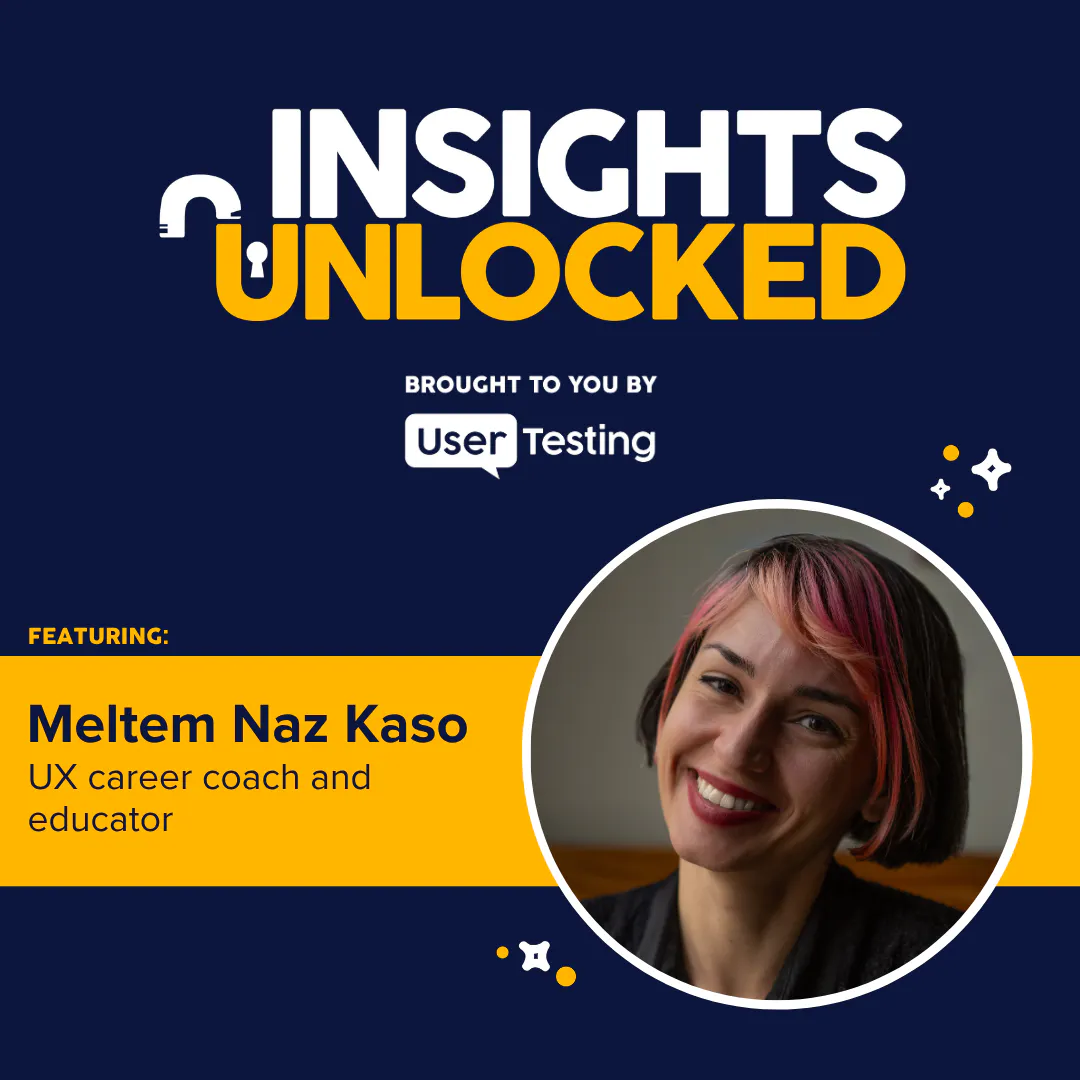
Future-proofing your UX research career with Meltem Naz Kaso
Jun 2200:42:14Summary readyEpisode web page: https://bit.ly/4uBmCIp Episode summary: In this episode of Insights Unlocked, host Amrit Bhachu sits down with Meltem Naz Kaso—UX career coach, former UX research leader, and educator—to explore what it takes to build a resilient and meaningful career in an era of rapid technological change. Drawing on her background in UX research, psychology, journalism, and coaching, Mel shares why trust, adaptability, and entrepreneurial thinking are becoming more valuable than technical expertise alone. She discusses the growing uncertainty many researchers and product professionals are facing as AI reshapes the workplace and explains why the future belongs to those who can connect customer understanding with business outcomes. Mel and Amrit dive into the evolving role of UX research, the importance of influencing without authority, and why researchers must move beyond advocacy alone to become translators between customer needs and organizational goals. They also discuss how building trust, developing business acumen, and taking proactive ownership can help professionals create lasting impact regardless of their title or discipline. The conversation offers practical advice for both experienced practitioners and those early in their careers, highlighting the human skills that remain essential in a world increasingly shaped by AI. You’ll learn: ● Why trust is becoming one of the most valuable professional assets in the age of AI ● How UX researchers can strengthen their influence by understanding business goals ● What separates thriving researchers from those who feel stuck or overlooked ● Why entrepreneurial thinking and proactive ownership are critical career skills ● How to build stronger relationships with stakeholders and influence decisions without authority ● The role of storytelling, empathy, and business translation in driving organizational impact ● Why early-career professionals should focus on curiosity, trust-building, and adaptability ● How to identify and communicate the unique value you bring to your organization Resources & links ● Mel Naz Kaso on LinkedIn: https://www.linkedin.com/in/meltem-naz/ ● Career with Mel: https://careerwithmel.com ● Amrit Bhachu on LinkedIn: https://www.linkedin.com/in/amritbhachu/ ● Learn more about Insights Unlocked: https://www.usertesting.com/podcast
Summary
AI can build almost anything now. That’s the problem.
Jun 1500:43:35Summary readyEpisode web page: https://bit.ly/4v2S1Vf Episode summary: In this episode of Insights Unlocked, host Mike Mace sits down with product operations and AI strategy leader Katie Robblee to explore how artificial intelligence is reshaping the product development lifecycle (PDLC)—and why many organizations are approaching it the wrong way. Katie shares lessons from her work helping companies build AI-powered products and agents, revealing how the rapid adoption of AI has exposed gaps in organizational processes, product team responsibilities, and decision-making frameworks. While AI dramatically lowers the barriers to building software, she argues that organizations risk creating more noise than value if they focus on building faster instead of understanding what customers actually need. The conversation dives into the rise of AI agents, the importance of human-in-the-loop evaluation systems, and why discovery and customer research are becoming even more critical in an AI-enabled world. Katie also explains why everyone—from product managers to executives—should experiment with building AI agents to better understand both the opportunities and risks of this emerging technology. You'll learn: Why building faster with AI doesn't automatically create better products How AI agents differ from traditional large language models The risks of deploying AI without governance, training, and clear ownership Why customer discovery becomes more important—not less—in the age of AI How human-in-the-loop evaluations help improve AI outputs and decision-making The emerging challenge of training future product leaders when AI handles more tactical work Why every professional should experiment with building an AI agent Practical advice for getting started with AI agent development, even without technical experience Resources & links Katie Robblee on LinkedIn (https://www.linkedin.com/in/katierobblee/) Mike Mace on LinkedIn (https://www.linkedin.com/in/mikemace/) Nathan Isaacs on LinkedIn: https://www.linkedin.com/in/nathanisaacs/ Learn more about Insights Unlocked: https://www.usertesting.com/podcast
Summary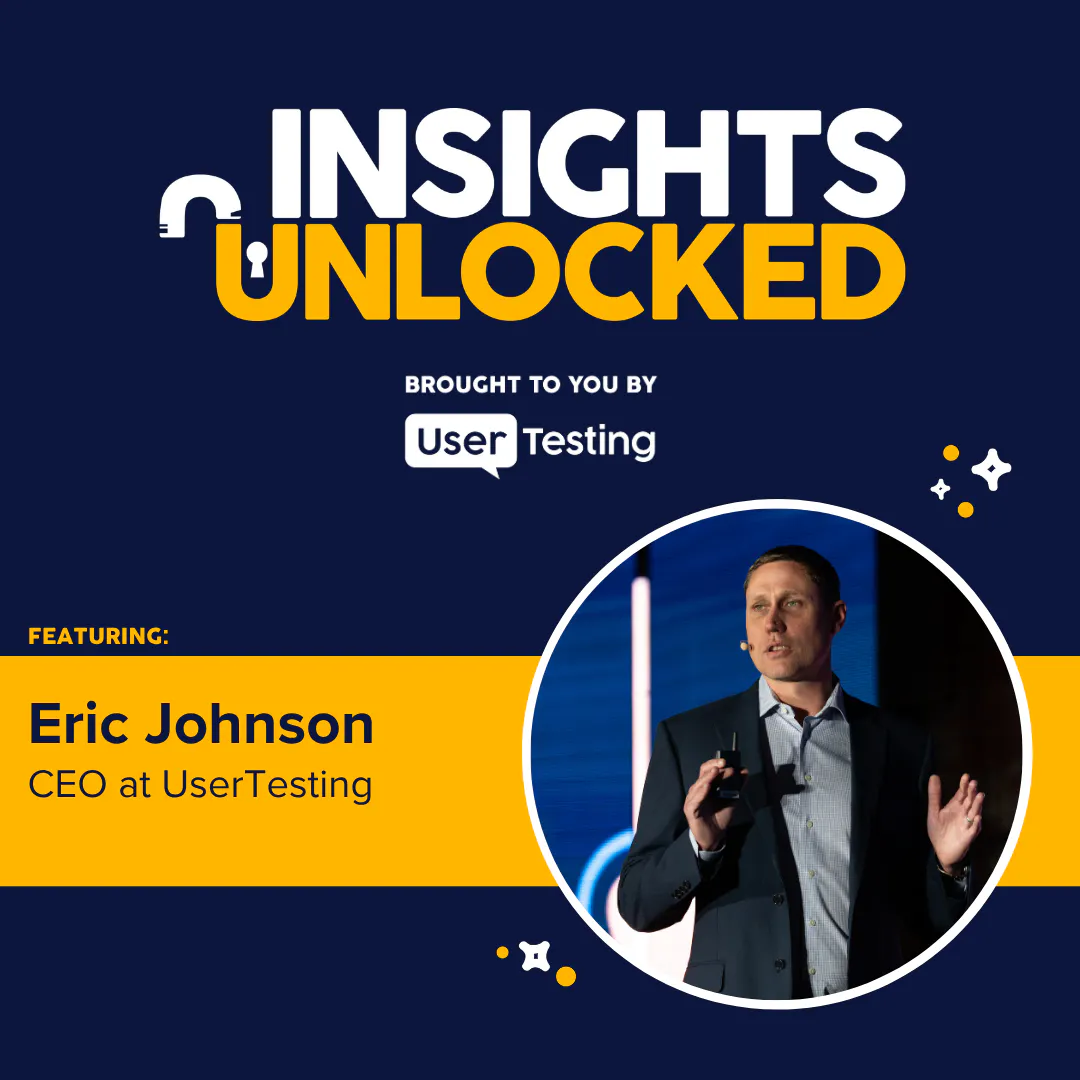
When AI can build anything, knowing what to build is everything
Jun 800:15:47Summary readyEpisode web page: https://bit.ly/3QpApnq Episode summary: In this special recap episode of Insights Unlocked, host Nathan Isaacs shares key insights and standout moments from Crafted Seattle, UserTesting's annual event for product leaders, designers, researchers, and customer experience professionals. As AI dramatically accelerates the speed of product creation, speakers across the event explored a critical question: if anyone can build almost anything, what becomes the true competitive advantage? The answer, according to leaders from UserTesting, Cisco, McDonald's, and other leading organizations, is a deeper understanding of people. Featuring perspectives from Eric Johnson, Baran Erkel, Travis Isaacs, Jessa Parette, Jason Giles, Eliel Johnson, Brad Carrera, Nikkia Reveillac, Jennifer Aaker, and others, this episode examines how AI is reshaping the roles of researchers, designers, and product teams. From maintaining human judgment in an automated world to creating alignment through customer understanding, the conversation highlights why empathy, curiosity, storytelling, and human connection remain essential as technology evolves. The episode also explores how researchers can expand their influence, why asking better questions matters more than having more data, and how organizations can use AI to amplify human creativity rather than replace it. You'll learn: Why understanding customer needs becomes more important as AI makes building easier How designers and researchers can create greater impact by focusing on judgment, decision-making, and influence Why human-centered research remains a competitive advantage in the age of AI How AI is shifting teams from makers to supervisors and strategic decision-makers Why researchers should focus on creating shared understanding, not just delivering reports How asking better questions can be more valuable than collecting more data Why alignment—not just speed—is becoming a critical success factor for organizations How empathy, authenticity, creativity, and storytelling help teams thrive alongside AI Why human connection and purpose remain essential in a technology-driven future Resources & links Crafted Seattle presentations on demand via UserTesting Insights+ (https://www.usertesting.com/insight-plus) Nathan Isaacs on LinkedIn (https://www.linkedin.com/in/nathanisaacs/) Learn more about Insights Unlocked: https://www.usertesting.com/podcast
Summary
Designing trustworthy AI with the Sense, Shape, Steer framework
Jun 100:40:35Summary readyEpisode web page: Episode summary: In this episode of Insights Unlocked, Nathan Isaacs sits down with Bansi Mehta, founder and CEO of Koru UX, to explore how product and UX teams can design more thoughtful, trustworthy AI experiences using her Sense, Shape, Steer framework. As organizations race to incorporate AI into products and workflows, Bansi explains why many teams fall into the trap of starting with the technology instead of the user problem. She shares practical guidance for slowing down, identifying meaningful AI opportunities, and balancing automation with human oversight—especially in complex enterprise and healthcare environments. Bansi walks through each phase of the framework, from understanding user needs and AI constraints in the “Sense” phase, to prototyping AI behaviors in “Shape,” to continuously evaluating trust, usefulness, and adoption in “Steer.” Along the way, she discusses why transparency alone doesn’t guarantee trust, how AI products require ongoing tuning after launch, and why successful AI experiences depend as much on psychology and workflow design as they do on model accuracy. The conversation also explores the challenges product teams face under pressure to “add AI,” the risks of feature creep, and why teams should treat AI implementation as an evolving feedback loop rather than a one-time release. You'll learn: Why AI initiatives often fail when teams start with the solution instead of the problem How the Sense, Shape, Steer framework helps teams design human-centered AI experiences The importance of defining user needs, constraints, and guardrails before building AI features How to determine when AI should automate tasks versus assist humans Why trust and perceived usefulness matter more than raw AI accuracy How continuous feedback and iteration shape successful AI adoption The role of transparency, oversight, and user psychology in AI product design Why enterprise and healthcare AI experiences require careful workflow and risk management Resources and links: Bansi Mehta on LinkedIn (https://www.linkedin.com/in/bansi-mehta/) Koru UX (https://www.koruux.com/) Sense, Shape, Steer framework article and video (https://www.koruux.com/ux-for-ai-training/) Nathan Isaacs on LinkedIn (https://www.linkedin.com/in/nathanisaacs/) Learn more about Insights Unlocked: (https://www.usertesting.com/podcast)
Summary