
Podcast
Interesting Times with Ross Douthat
Hosted by New York Times Opinion · EN
The first draft of our future. Mapping the new world order through interviews and conversations. Every Thursday, from New York Times Opinion.
Subscribe today at nytimes.com/podcasts or on Apple Podcasts and Spotify. You can also subscribe via your favorite podcast app here https://www.nytimes.com/activate-access/audio?source=podcatcher. For more podcasts and narrated articles, download The New York Times app at nytimes.com/app.
107episodes
Episodes
Newest firstAll episodes

Did Women Ruin the Workplace?
Nov 601:01:46Summary readyIs society too feminine or not feminine enough? Two conservative writers, Helen Andrews and Leah Libresco Sargeant, disagree on the answer. They join Ross Douthat to debate whether the feminization of institutions led to wokeism and a greater divide between men and women.01:33 “Wokeness is distinctively feminine.”06:17 - Has liberal feminism failed women?16:26 - The feminization of institutions20:47 - Defining feminine and masculine vices24:09 - Toxic femininity 39:09 - Defeminization in the workplace(A full transcript of this episode is available on the Times website.)Thoughts? Email us at interestingtimes@nytimes.com. Please subscribe to our YouTube Channel, Interesting Times with Ross Douthat. Subscribe today at nytimes.com/podcasts or on Apple Podcasts and Spotify. You can also subscribe via your favorite podcast app here https://www.nytimes.com/activate-access/audio?source=podcatcher. For more podcasts and narrated articles, download The New York Times app at nytimes.com/app.
Summary
Mamdani’s Victory Is Less Significant Than You Think
Nov 500:04:34Summary readyDoes Zohran Mamdani’s win mean a new dawn for the Democratic Party? Not exactly, Ross Douthat argues. In this mini-episode of “Interesting Times,” Ross explains that the New York mayor’s office has historically been a “springboard to nowhere,” rather than a precursor for national politics.(A full transcript of this episode is available on the Times website.)Thoughts? Email us at interestingtimes@nytimes.com. Please subscribe to our YouTube Channel, Interesting Times with Ross Douthat. Subscribe today at nytimes.com/podcasts or on Apple Podcasts and Spotify. You can also subscribe via your favorite podcast app here https://www.nytimes.com/activate-access/audio?source=podcatcher. For more podcasts and narrated articles, download The New York Times app at nytimes.com/app.
Summary
What Palantir Sees
Oct 3000:58:14Summary readyWho’s afraid of Palantir? The company’s chief technology officer, Shyam Sankar, joins Ross Douthat for a conversation about what the shadowy company actually does — and the thorny political and ethical questions it faces. They also discuss the new era of collaboration between Silicon Valley and the military, a personal project for Sankar, who was recently commissioned as a lieutenant colonel in the U.S. Army Reserve.01:37 - So, what does Palantir do?07:45 - The “kill chain”13:27 - The tech company’s relationship with I.C.E.18:09 - What happens to privacy?25:30 - Palantir and Israel27:22 - Sankar’s personal military journey34:43 - Silicon Valley’s militarization43:09 - TITAN, A.I. and the “Iron Man” suit(A full transcript of this episode is available on the Times website.)Thoughts? Email us at interestingtimes@nytimes.com. Please subscribe to our YouTube Channel, Interesting Times with Ross Douthat. Subscribe today at nytimes.com/podcasts or on Apple Podcasts and Spotify. You can also subscribe via your favorite podcast app here https://www.nytimes.com/activate-access/audio?source=podcatcher. For more podcasts and narrated articles, download The New York Times app at nytimes.com/app.
Summary
Taylor Swift’s Trad Turn
Oct 2900:04:20Summary readyIs Taylor Swift’s “The Life of a Showgirl” the soundtrack for the Trump era? Self-titled “conservative dad” Ross Douthat thinks so, and explains why in this mini-episode of “Interesting Times.Thoughts? Email us at interestingtimes@nytimes.com. Please subscribe to our YouTube Channel, Interesting Times with Ross Douthat. Subscribe today at nytimes.com/podcasts or on Apple Podcasts and Spotify. You can also subscribe via your favorite podcast app here https://www.nytimes.com/activate-access/audio?source=podcatcher. For more podcasts and narrated articles, download The New York Times app at nytimes.com/app.
Summary
We Can Survive an A.I. Bust
Oct 2300:53:24Summary readyIs the artificial intelligence revolution keeping the entire economy afloat? This week on “Interesting Times,” Ross talks with Jason Furman, an economist from the Harvard Kennedy School and a contributing writer for Times Opinion, about how investors, policymakers and consumers should think about the boom — and potential bust — of the fastest growing segment of the American economy and look to past bubbles for answers.01:12 - Okay, so are we in a bubble?08:51 - Historical comparisons of past bubbles12:45 - The case for an A.I. bubble22:07 - The case against an A.I. bubble29:44 - What if it bursts?34:15 - The economic health of the Trump administration45:08 - “I'm reasonably optimistic.”(A full transcript of this episode is available on the Times website.)Thoughts? Email us at interestingtimes@nytimes.com. Please subscribe to our YouTube Channel, Interesting Times with Ross Douthat. Subscribe today at nytimes.com/podcasts or on Apple Podcasts and Spotify. You can also subscribe via your favorite podcast app here https://www.nytimes.com/activate-access/audio?source=podcatcher. For more podcasts and narrated articles, download The New York Times app at nytimes.com/app.
Summary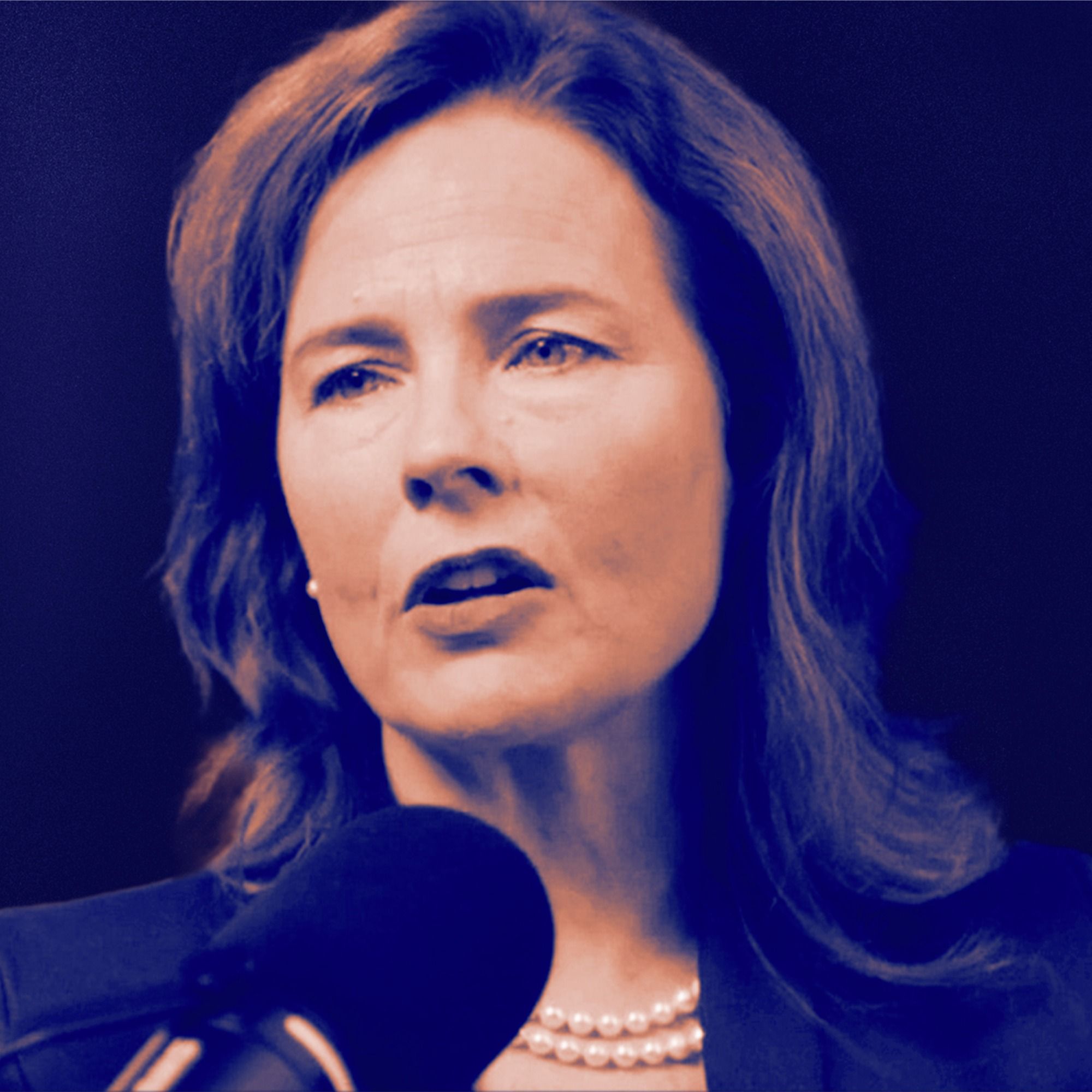
Amy Coney Barrett Is Looking Beyond the Trump Era
Oct 1601:04:19Summary readyJustice Amy Coney Barrett is playing the long game. In this week’s “Interesting Times,” she walks us through the current court’s most controversial rulings, why she believes that her originalist interpretations are resistant to ideological pressures and why she’s not comfortable thinking of herself as a cultural icon.02:19 - Balancing the personal and the professional11:45 - The theory and practice of originalism18:00 - Why was Roe. v. Wade overruled?27:19 - Stare Decisis and Overruling Decisions35:29 - “Judges are human and judges are fallible.”42:49 - The Supreme Court is taking the long view53:20 - The Court's relationship with the executive branch(A full transcript of this episode is available on the Times website.)Thoughts? Email us at interestingtimes@nytimes.com. Please subscribe to our YouTube Channel, Interesting Times with Ross Douthat. Subscribe today at nytimes.com/podcasts or on Apple Podcasts and Spotify. You can also subscribe via your favorite podcast app here https://www.nytimes.com/activate-access/audio?source=podcatcher. For more podcasts and narrated articles, download The New York Times app at nytimes.com/app.
Summary
He Believes America Should Be a Theocracy. He Says His Influence Is Growing.
Oct 901:14:36Summary readyEvangelical pastor and self-proclaimed Christian nationalist Doug Wilson has been preaching for decades that America needs to reclaim its Puritan past. But in 2025, he believes he’s “significantly” more influential. Does that mean America is closer to Wilson’s goal of theocracy? In this episode, nothing is off limits — even Ross’s own salvation.01:36 - Doug Wilson's vision for a Christian nation08:37 - Wilson’s ideal theocratic republic19:12 - Theocracy and religious diversity30:50 - Do women have rights in this new republic?36:59 - Christendom and slavery46:50 - How far does Wilson’s influence go in a “clown world”?59:54 - Calvinism activism and quietism(A full transcript of this episode is available on the Times website.)Thoughts? Email us at interestingtimes@nytimes.com. Please subscribe to our YouTube Channel, Interesting Times with Ross Douthat. Subscribe today at nytimes.com/podcasts or on Apple Podcasts and Spotify. You can also subscribe via your favorite podcast app here https://www.nytimes.com/activate-access/audio?source=podcatcher. For more podcasts and narrated articles, download The New York Times app at nytimes.com/app.
Summary
How Radical Is Hasan Piker? The Twitch Star’s Flirtation With Violence.
Oct 201:13:02Summary readyThe Twitch and YouTube star Hasan Piker understands what pushes people to commit acts of political violence. But does that understanding tip over into appreciation? In this episode of “Interesting Times,” Ross Douthat and Piker debate why Piker’s post-liberal rhetoric attracts criticism from the right (and results in the occasional platform suspension) and why Americans’ changing attitudes on Israel feed his “revolutionary optimism.”02:14 - Life during and after Twitch10:45 - The Hasan Piker worldview15:57 - “Revolutionary violence”20:13 - Is it hyperbole or incitement?30:48 - Hasan’s Luigi Mangione coverage41:35 - The danger in pushing taboos51:52 - Anti-Zionist advocacy and Hasan’s Turkish background1:08:00 - “Revolutionary optimism”Thoughts? Email us at interestingtimes@nytimes.com. Please subscribe to our YouTube Channel, Interesting Times with Ross Douthat.A full transcript of this episode is also available on the Times website. Subscribe today at nytimes.com/podcasts or on Apple Podcasts and Spotify. You can also subscribe via your favorite podcast app here https://www.nytimes.com/activate-access/audio?source=podcatcher. For more podcasts and narrated articles, download The New York Times app at nytimes.com/app.
Summary
The Grand Strategy Behind Trump’s Crackdown on Academia
Sep 2500:59:01Summary readyWhat is wrong with higher education in America? According to many on the right, a lot. This week, Ross Douthat talks to May Mailman, the lawyer behind President Trump’s battles with Harvard and Columbia, about the administration’s assault on the Ivy League and why “a glorification of victimhood” is changing the relationship between universities and the federal government.02:51 - What is a “culture of victimhood”?07:38 - Mailman’s political awakening11:44 - Social media and protest culture in the 2010s19:39 - The Trump administration’s strategy against universities26:33 - The financial levers that could ensure compliance36:09 - Ideological diversity and free speech47:56 - How legal is all this?52:25 - Higher education in 2030Thoughts? Email us at interestingtimes@nytimes.com. Please subscribe to our YouTube Channel, Interesting Times with Ross Douthat.A full transcript of this episode is also available on the Times website. Unlock full access to New York Times podcasts and explore everything from politics to pop culture. Subscribe today at nytimes.com/podcasts or on Apple Podcasts and Spotify.
Summary
Ezra Klein Is Worried — but Not About a Radicalized Left
Sep 1800:47:53Summary readyEzra Klein argues that the left desperately needs a unifying project — for its own survival and for the sake of the country. In this episode of Ross Douthat’s “Interesting Times,” Ross and Ezra assess the aftermath of Charlie Kirk’s assassination and debate whether the left has taken a dark turn.00:25 How liberalism became “uncertain and exhausted”08:37 The void in the Democratic Party12:21 Does progressive despair lead to radicalism?15:04 “Violence is contagious"19:24 Can the left be more malleable?28:20 The hippies, Peter Thiel and technology32:11 Does the American left need cosmic hope?41:59 A vision of the “good life”Thoughts? Email us at interestingtimes@nytimes.com. Please subscribe to our YouTube Channel, Interesting Times with Ross Douthat.A full transcript of this episode is also available on the Times website. Unlock full access to New York Times podcasts and explore everything from politics to pop culture. Subscribe today at nytimes.com/podcasts or on Apple Podcasts and Spotify.
Summary