
Podcast
Kate Cullen Styling & Photography
Hosted by Kate Cullen Styling & Photography · EN
How to launch a creative business
10episodes
Episodes
Newest firstAll episodes
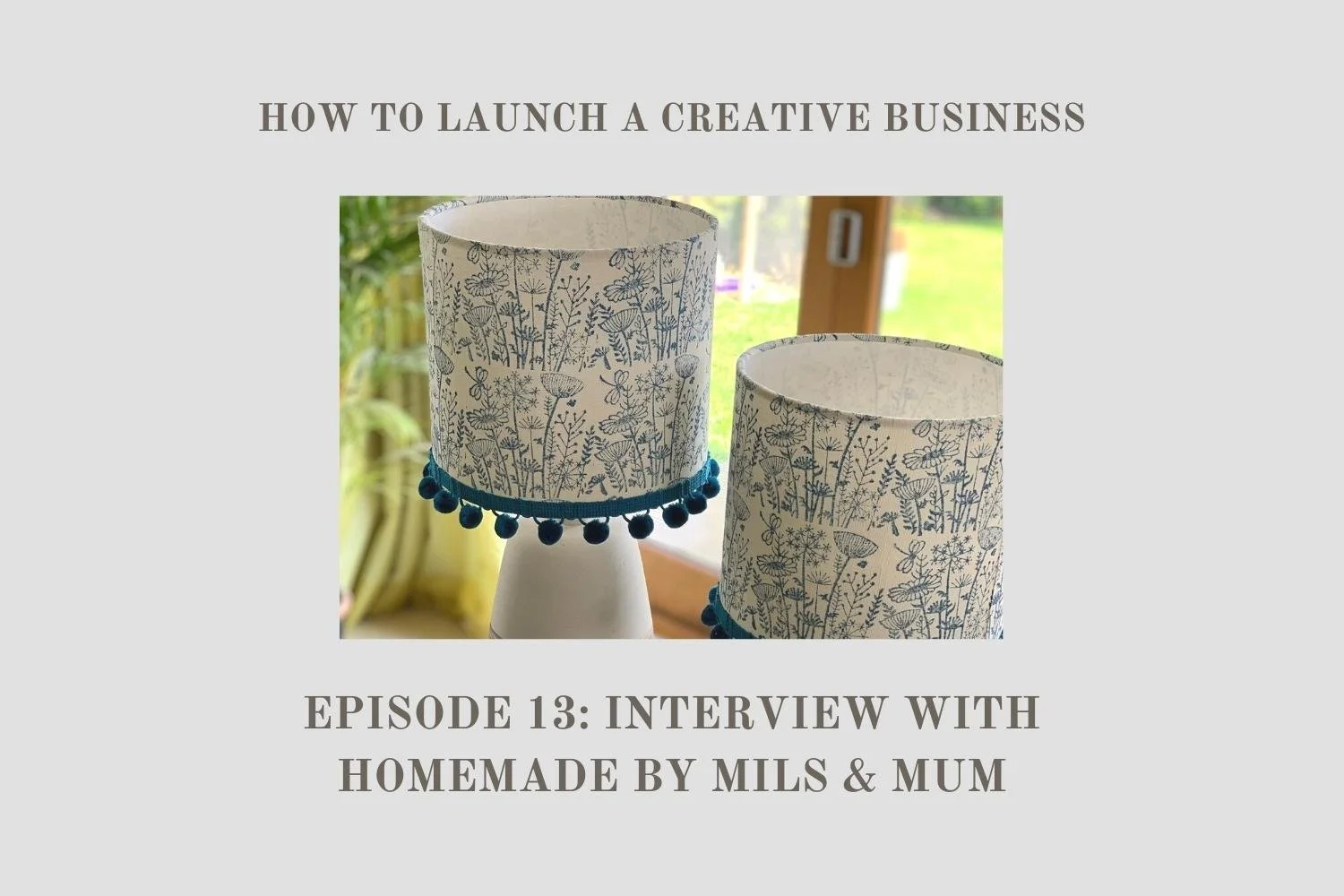
Episode 13: Interview with Homemade by Mils & Mum
Oct 5, 202200:39:01Tap to summarizeEpisode 13: Interview with Homemade by Mils & MumFind them here:https://homemadebymilsandmum.com/and on Instagram https://www.instagram.com/homemade_by_mils_and_mum/and on Facebook https://www.facebook.com/profile.php?id=100083012546417
Transcribe →
Episode 12: The importance of setting goals in your creative business
Jul 28, 202200:12:57Tap to summarizeHow to launch a creative business: Episode 12: The importance of setting goals in your creative businessFurther help and support:https://www.katecullen.co.uk/book
Transcribe →
Episode 11: You don’t need Instagram to run a successful creative business
Jul 12, 202200:16:22Tap to summarizeHow to launch a creative business: Episode 11: You don’t need Instagram to run a successful creative business There I said it. You really don’t need Instagram to run a successful creative business. Can it be one tool in your sales and marketing arsenal? Absolutely, but it doesn’t have to be.If you spend any time on any social media channel lately (not just Instagram), then you will have almost certainly seen the complaints of engagement and reach being strangled for small businesses, the obsession with faster, louder and the move away from the things that made Instagram so popular in the beginning – fun and often beautiful photography, and ways to connect with your friends and family in an uncomplicated, easy-to-use space. Since then it’s become a flagship of small business marketing and things have changed irrevocably – whether we like it or not. It has become exhausting and anxiety-inducing. It has led to a noticeable number of creative entrepreneurs saying ‘no, I’m not doing this anymore’ and leaving to somewhere that feels more connective like Patreon. Or building their own forums and membership spaces. Smaller numbers yes. But more engaged and like-minded.Recommended Reading:https://www.katecullen.co.uk/journal/passive-income-ideas-for-your-creative-businesshttps://www.katecullen.co.uk/journal/patreon-or-facebook-group-for-your-creative-business
Transcribe →
Episode 10: How to launch a new product
Jun 16, 202200:27:52Tap to summarizeHow to launch a creative business: Episode 10: How to launch a new productHi and welcome again. Today I’m going to be covering how to launch a new product – this might be a physical item or a new service, course or workshop – it doesn’t matter which, the processes are still the same.Now, if you’ve read my book (available in my website shop by the way!) then really you can apply all the same principles I teach there relating to an entire business, to this new product or offering.Firstly, you need an audience of people that are ready to buy – I think we can all agree on that. And hopefully if your brand voice and messaging have been on point up until now with an existing business, then you know what they want and how they want it delivered. If your audience is still very small and new (eg a handful of social media followers, a hundred or so email subscribers etc) then you will almost certainly want to consider an ad launch budget to be able to reach more people that are not yet currently aware of your business.And this brings me to a little aside – if you truly want your business to be successful, then building your audience is absolutely vital, and to do this you will almost certainly need to invest in some sort of advertising or PR strategy. It comes down to numbers at the end of the day. Now if your core messaging and brand identity (including your voice – how you relate to your potential customers) is really on point then you will no doubt get a higher conversion rate and sell more with a small audience. However, it often takes us a little while to get there, to truly understand and speak to our niche (see my blog post from last week for more info on that), so setting aside some budget for advertising (be it Facebook, Google, or placements on blogs or in magazines or podcasts) will be something you will need to invest in.And nearly all successful businesses will have relied on advertising in some form somewhere along the way – recognised that they need to reach more people and invested appropriately. And this is where understanding your ideal client profile is so important. So you can set the parameters of your ad to maximise your spend. Correctly identifying who to sell to and what their interests are.But let’s assume you know your audience, know what they want, you’ve tested it with a small number of people, know it works for them, what now?Now you need to have a solid marketing plan in place that will convert your lookers into buyers.1. A good, well-thought-out sales page<p class...
Transcribe →
Episode 9: Meditation & Manifesting with Emily from Luna Circle
Jun 2, 202200:53:28Tap to summarizeHow to Launch a Creative Business Podcast Episode 9: Meditation & Manifesting with Emily from Luna CircleIn this episode Kate talks to Emily from Luna Circle about the value of meditation and manifesting as a creative entrepreneur and how it can help focus, relax and inspire you. With some fantastic suggestions on daily practices, as well as an insight into how and why Emily began her own business.At the end of our chat, Emily also demonstrates a short meditation to bring more calm and peace to your day. A great session to repeat daily or whenever you need to rest, reset and tune out from the outside world. About EmilyEmily Aitcheson has over 17 years’ experience teaching and facilitating training in movement, meditation and personal development. She has led workshops internationally, produced sold out entertainment events for top London venues and collaborated with brands such as Lululemon, Neom Organics and Move Your Frame. With her company Luna Circle, she delivers sessions on meditation and manifestation, as well as providing intuitive soul readings. Luna Circle runs regular wellness events across the UK. Links:Website: www.thelunacircle.comInstagram: https://www.instagram.com/lunacirclewellness/Full Moon Women’s Circle Event: Thursday 14th July 2022. 7.30-9.30pm at The Mount Without, Upper Church Lane, St. Michaels Hill; Bristol, Somerset, BS2 8DT https://www.thelunacircle.com/events Rose Retreatshttps://alicerosewellness.com/rose-retreats Little Wedding Hubhttps://www.thelittleweddinghub.co.uk/
Transcribe →
Episode 8: Creating purposeful content for your creative business
May 19, 202200:20:07Tap to summarizeHow to launch a creative business: Episode 8: Creating purposeful content for your creative businessIn my blog post last week I spoke about WHY blogging is such an effective tool in marketing your business, the benefits of creating consistent, high-quality content that educates, informs and inspires your potential clients about your products or services. Expressing the benefits of your offerings in a compelling way that truly engages your readers or listeners.Today I’m going to talk in more detail about HOW you can go about this. Your content creation and posting lifecycle, from blog posts to social media and email newsletters.I follow a broad 5 step process myself which helps me to create content with ease.Step 1: is the blog post (or podcast in my case) itself – the longest, main piece of content that you are creating say on a weekly basis. The piece that will take you the biggest effort and time to research and create.I have a spreadsheet that I use and that I help my clients to use too that covers things like choosing blog post titles, blog categories, and most important of all what the PURPOSE of this point of content is. eg is it to speak about the benefits of a product or service (for example with social proof and testimonials from happy clients), is it to educate your readers about features of your products or services that they perhaps might not know, are you encouraging them to sign up for a piece of free content like an email newsletter lead magnet, are you leading them to sign up for a course or workshop, or to buy a specific product? Every piece of content you create should have a purpose. Even if it’s not a specific action as such, then it should be to build trust or to encourage relationship-building through discussion of a relevant topic.Once you know the purpose of your blog post or podcast it’s so much easier to write that piece with a beginning, middle and end – like you are telling a story. Stories are interesting, stories compel and engage.Step 2: for me is Pinterest, I’ve been an avid user since 2011 when it was new and small all the way through the huge visual search engine it has since become. For me Pinterest goes hand in hand with my blogging supporting my SEO efforts. As a photographer now and as a stylist and product creator previously, the visual search capabilities of Pinterest have been vital in helping me grow my business. I use my blog post categories as Pinterest board names, so every blog post again has a purpose and at least one place within my Pinterest boards. I al...
Transcribe →
Episode 7: Why you need an email list in your creative business
May 4, 202200:25:09Tap to summarizeEpisode 7: Why you need an email list in your creative businessWorking on email list building and content is often one of the key things that my clients want my help with, or they haven’t considered how vital it is to creative businesses at all and we explore why, what and how to harness this amazing sales channel, without feeling icky, repetitive or boring. So why do you need an email list?A well-crafted, purposeful email is still one of the best ways to engage with your audience and create those all-important connections with your ideal clients. If you can create a relationship where you are regularly providing considered, helpful or enjoyable content that can only be accessed by being on your email list, you are much more likely to be creating future customers and clients.It’s an opportunity for you to establish your authority in your niche, to allow your potential customers to get a feel for your approach, knowledge and skills and hence how or why they might wish to buy from or book you.The key to building any part of your customer relationship is consistency. So decide when and how often you can commit to creating your email content and stick to it.An email list will also always be yours – it’s not subject to algorithm changes like social media or Google – you own and control it.How do you get sign ups?There are 3 areas you can create maximum opportunities for potential customers to see your email subscription opportunities:1. Ads eg Facebook, Instagram, Google etc which present your ‘newsletters’ for sign up – usually by offering a freebie or lead magnet.2. Social media – talking about it on your posts as well as adding a sign-up link in your profile bios.3. On your website – eg with pop-ups, sign up areas on your website and so on.How do you decide what content to include?The content of your newsletters will vary based on your business model, whether you are selling products or services, and how many types of ideal clients you have.If you have different ideal client profiles you may want to consider segmenting your subscribers into differen...
Transcribe →
Episode 6: Editorial shoots for your creative business
Apr 21, 202200:19:15Tap to summarizeEpisode 6: Editorial shoots for your creative businessHi, today I’m talking about styled shoots, or editorials – what they are, why you should do them and how to go about organising or participating in one should you be invited.First things first, I want to be clear what we’re talking about today:So the difference between a Brand shoot and a Collaborative Styled Shoot – a brand shoot is for YOU, you should expect to pay for it – from photographer to stylist, make up artists, models and hiring of other elements like furniture or location. This is solely to promote you and your business, the images might be used in blogs and magazines as well as on your own website and social media for PR purposes. Collaborative shoots are usually organised by one or two people, but everyone gives their time in exchange for the images and share costs. The end goal is usually to have the images published on a blog or in a magazine that is suitable for all the brands involved, with later on the ability to use the images on each of the participants websites and blogs and social media. Today I’m focussing on collaborative styled shoots (or editorials). I’ve been styling and managing these (from concept to mood boards and on the day styling and direction) for over a decade now (with close to 100 shoots featured on blogs and in magazines around the world). And of course, I’ve been photographing them more recently too alongside my creative direction skills. I also used to run online courses and live workshops on this topic (I’m pondering on a new one soon too – watch this space).But anyway today I’m sharing some of my top tips for getting the most out of collaborative editorial shoots, whether you’re the one organising it or you’ve been invited to take part in one. The First questions to ask are always: WHERE will it be published This is core to understanding the PURPOSE of the shoot – (which is always ultimately to attract your attract IDEAL clients – what do they want to see and where are they likely to look for it? WHO else is involved – do their businesses align with your look, style and ethosThis is all about the right TEAM building - you all need to be on the same page...
Transcribe →
Episode 5: How to avoid your new creative business failing
Apr 6, 202200:15:56Tap to summarizeStarting up a new creative business can be exciting yet daunting. Today I’m going to talk about the best things you can do for yours to ensure success and to avoid being one of the 6 in 10 businesses that fail in the first 3 years.According to the Small Business administration statistics around 20% of start-ups fail in the first year. So how can you avoid being one of them? 1. Lack of business planCreatives are often in business because they have arrived there by accident. They may have started selling their art as and when the opportunity arose, but there was never a clear intention to become a business. And that’s ok, not every creative outlet needs or wants to become a full time business. But if you do intend on it becoming your main source of income then a vision for what you want your business to become, and how you plan on achieving that is really important.We all know how fickle the world can be, with one thing being really big one year and disappearing to be overtaken by the ‘next big thing’ in the blink of an eye. So strategically planning for a sustainable business, business growth, doing your market research, and really understanding how many sales or leads you need each week or month to allow your income to be predictable and sustained is a vital part of the process.Creatives especially are often drawn into the trap of reacting rather than planning ahead. And it doesn’t always have to be just financial either, it might be getting featured somewhere you admire and getting recognition for your talents, being invited to collaborate with your heroes, or being able to do something to promote and support your causes and beliefs. 2. Lack of investmentThis can be lack of investment in yourself, eg your skills, the tools you need to grow your business in terms of knowledge or the real physical tools that allow you to scale or improve. eg for me as a photographer being able to upgrade my kit as I add to my skills base and experience, or courses that teach me how to improve my artificial lighting abilities, or perhaps a marketing course, or business coach to help you get there faster. This could also be investment in real terms such as a grant or business loan that enables you to get set up from the start. For this you will usually need a strong business plan with the SMART goals embe...
Transcribe →
Episode 4: Choosing and designing your website as a creative entrepreneur
Mar 23, 202200:19:56Tap to summarizeEpisode 4: Choosing and designing your website as a creative entrepreneurOne of the main stumbling blocks for creative people is technology, often this puts people off starting their own business, or taking it beyond an Etsy or Instagram feed.So today I thought I’d give you some top tips on choosing and implementing your own website with minimum fuss.Now I’ve had my own website in various forms for 11 years, I began with Wordpress and then a couple of years ago I switched to Shopify for my products and Squarespace for my coaching, branding and photography services. I no longer have my products so am just on Squarespace now.So, first off, why did I switch from Wordpress?To be honest because I’d had the website so long, I had added to it and changed it bit by bit so that the design had become a bit diluted, everything was a bit clunky – I had loads of plugins all doing different things, and to be frank it was costing a lot more than it needed to. It also broke, a lot. Again, mostly because it had been through so many iterations it was no longer fit for purpose.So I decided to have a clean start, split my shop off onto Shopify (SO easy for ecommerce) and my services onto Squarespace – beautiful sleek design, easy to use and really intuitive to build. And even running both these websites it was STILL CHEAPER than my Wordpress.So, how do you go about choosing the right platform for you:So (and no affiliate financial benefits for me saying this I might add), I would always now go Squarespace for portfolio or service businesses, and Shopify for product-based businesses.Yes Squarespace does have a shop facility, which is fine if you have a handful of say digital products that complement your services, but Shopify is hands down the easiest ecommerce solution right now for anyone who is selling products.The first thing I do with my coaching clients if they want help with their websites is get them to write down a list of ‘must haves’ for their website, eg an About page, sales page, shop, portfolio etc etc, and then a ‘nice to have’ eg podcast modules, video options, integrations with other platforms (eg your email list, Zoom, teaching platforms, meeting booking systems and so on). These are things that you feel you might like to have later on, but aren’t necessarily essential to the website right now.So, let’s focus on Squarespace for a moment.<p class="" style="white-spa...
Transcribe →