
Podcast
Korea JoongAng Daily - Daily News from Korea
Hosted by Newsroom of the Korea JoongAng Daily · EN
Audio recordings of the Korea JoongAng Daily's in-depth, on-the-scene news articles and features informing readers around the world of the issues of the day in Korea.
Under the slogan "Your window to Korea", the Korea JoongAng Daily is an English-language news organization focused on Korea that strives to publish factual, timely and unbiased articles.
65episodes
Episodes
Newest firstAll episodes

Test article - KJD - Can AI resolve Korea's college entrance exam's difficulty problem?
Mar 1900:03:22Tap to summarizeTest for beyondwords Could using AI to write Korea's college entrance exam help with setting an "appropriate" level of difficulty? After criticism that the English section of the 2026 College Scholastic Ability Test (CSAT), or suneung, contained extremely difficult questions, the Ministry of Education proposed a new approach last month to bring AI into the test-making process. Officials said the unusually high level of difficulty stemmed in part from a late-stage overhaul of the exam. Around 42 percent of the questions were replaced shortly before the exam date, leaving authorities with limited time to review the test. The ministry now plans to develop an AI-based system to generate English reading passages, which are typically adapted from published materials. System development is scheduled to begin in the second half of this year, with pilot use in mock exams to start as early as next year. Why it matters Last year, the CSAT English section became the center of controversy when only 15,154 students received a Grade 1, the highest mark on a scale from one to nine. At 3.11 percent of test takers, that figure is the lowest since the absolute grading system was introduced for the English portion of the exam in 2018. The English selection, unlike the Korean language and math sections, is graded on an absolute scale. That grade carries weight not only for students in the regular admissions track, known as jeongsi, but also for those admitted early with conditional offers that hinge on a minimum CSAT score. More generally, the suneung, administered once a year in November, is considered a decisive gateway to the country's top universities, which, in turn, is widely viewed as a guarantee of future success. As a result, even small shifts in difficulty can provoke intense scrutiny, so much so that Oh Seung-keol, then-head of the Korea Institute for Curriculum and Evaluation (KICE), issued a public apology and resigned following public backlash last year over the notoriously difficult exam. A temporary fix Some experts say AI could help — at least in the margins. According to Lee Byung-min, a professor of English language education at Seoul National University, the technology could improve the quality of the exam questions. "There have been issues with selecting passages, with texts sometimes being incoherent, overly abstract or too short to provide context," he said. "If AI can help evaluate and refine these aspects, that could certainly be beneficial." However, others warn that AI will not resolve more fundamental issues. "The adoption of AI could help adjust the difficulty of the exam, given that test makers currently select the passages themselves," said Yoon Hee-cheol, a professor of English language and literature at Duksung Women's University. "But it also raises many concerns. Since the [...] writing is artificially generated, without extremely precise AI prompts, the passages themselves could become problematic." The Education Ministry plans to create a support center to develop educational test items, including AI-generated English passages. It also proposed using AI to review questions and predict their level of difficulty.
Transcribe →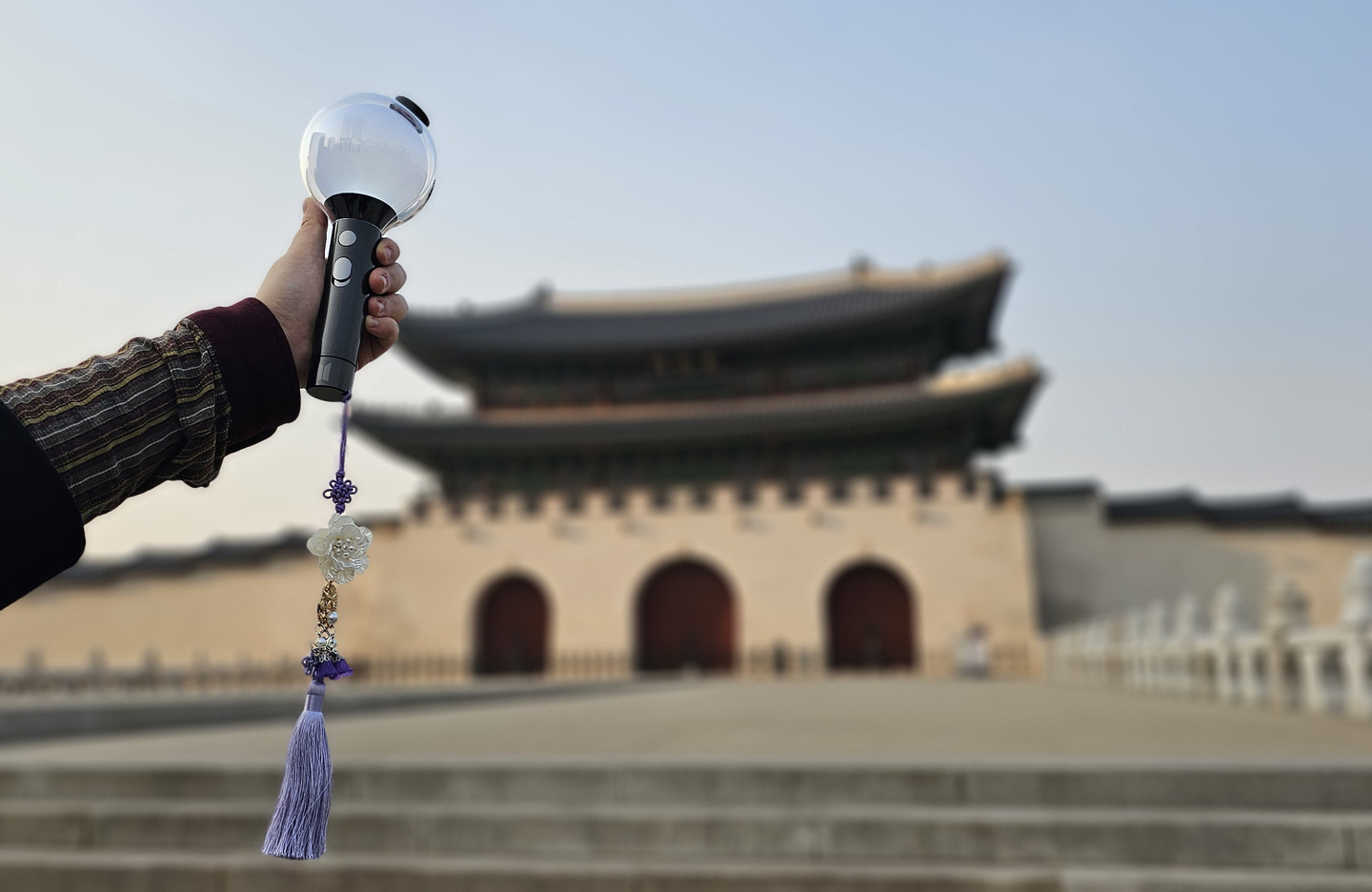
Where to be and what to do 24 hours before BTS’s Gwanghwamun show
Mar 1900:07:11Tap to summarizeThis article is by Shin Ha-nee and read by an artificial voice. [GIVE IT A GO] I knew that BTS's upcoming "Arirang" comeback performance would be anything but small, obviously. But as a Seoulite who passes through Gwanghwamun every week, I've had a few thoughts as I've watched the preparations unfold over the past month. First: Well, this escalated quickly. Second: What a time to be an ARMY — and what a place to be one. And third: Fans flying in for the concert probably need a game plan. A good one because there's just so much to absorb and see in a limited amount of time. For those who don't know where to start, I spent a day traveling across the city and doing my best to see it through the eyes of a visiting fan, hopping between BTS-related landmarks that have turned the capital into a treasure hunt for ARMY. Let's gear up: Insa-dong At the start of the journey, I decided that I needed to gear up — and maybe have some hands-on fun while doing it. With an ARMY Bomb and a dream, I made my first stop at Insa-dong in Jongno District, central Seoul, a neighborhood known for its traditional clothing boutiques and antique shops. I left with a handmade norigae, a traditional Korean tassel, attached to my ARMY Bomb, as well as a small piece of wisdom. "Life is about stories," said Seo Yoon-deok, who manages the modern hanbok (traditional Korean attire) brand Leesle's Insa-dong branch. "A life without stories would be no fun, right?" She told me this while recommending that I add a cute heart-shaped charm to the silver turtle ornament that I had chosen for my norigae. A DIY norigae at Leesle consists of three components: a head, a body and a tail. Customers can choose from an assortment of knots, beads and charms to create their own design. Once the pieces are selected, the real work begins, as you need to sit down with pliers and carefully attach everything through tiny metal rings, which is much easier said than done. Still, the process is fun and requires just enough effort that you're satisfied and proud of yourself for the result, not exhausted. According to Leesle, there has been a noticeable increase in ARMY customers as they visit the store ahead of the Gwanghwamun performance. Many gravitate toward purple charms — BTS's signature color — such as bell-shaped flowers and butterflies. I ended up with two tassels: a purple norigae for my ARMY Bomb and another featuring traditional Korean motifs, inspired by the upcoming album "Arirang," which shares the same name as the centuries-old Korean folk song. Together, the two norigae cost about 80,000 won ($53), though a simpler version would typically range between 15,000 and 30,000 won, starting with a basic 5,000 won knotted body. A reconnaissance: Gwanghwamun Even if you're not one of the lucky ARMYs who secured a ticket to Saturday's performance, it's still worth visiting Gwanghwamun Square before or after the show. About a 15-minute walk from Insa-dong, the area surrounding Gwanghwamun and Gyeongbok Palace — Seoul's main royal palace — is where BTS will stage its monumental return. When I visited the square, it appeared more than ready to greet the world's biggest boy band, even though its comeback was still days away. Media facades, alongside fan-funded displays for each member, surround the digital advertisement board for the Netflix livestream of the show. At a nearby Kyobo Book Centre branch — this one known for featuring literary quotes on its exterior — a massive banner reads, "Until the story that started with me resonates around the world," accompanied by the red "Arirang" logo. International fans were already gathered at the spot, filming videos and snapping photos of the displays. "It's amazing. BTS has such a massive impact," said Selena, a lucky ARMY from Miami who managed to secure a ticket for the show. "I think it's more than the music. You can see the impact they've made on the country and on the world. It's beautiful." Obviously: HYBE, Yongsan District ...
Transcribe →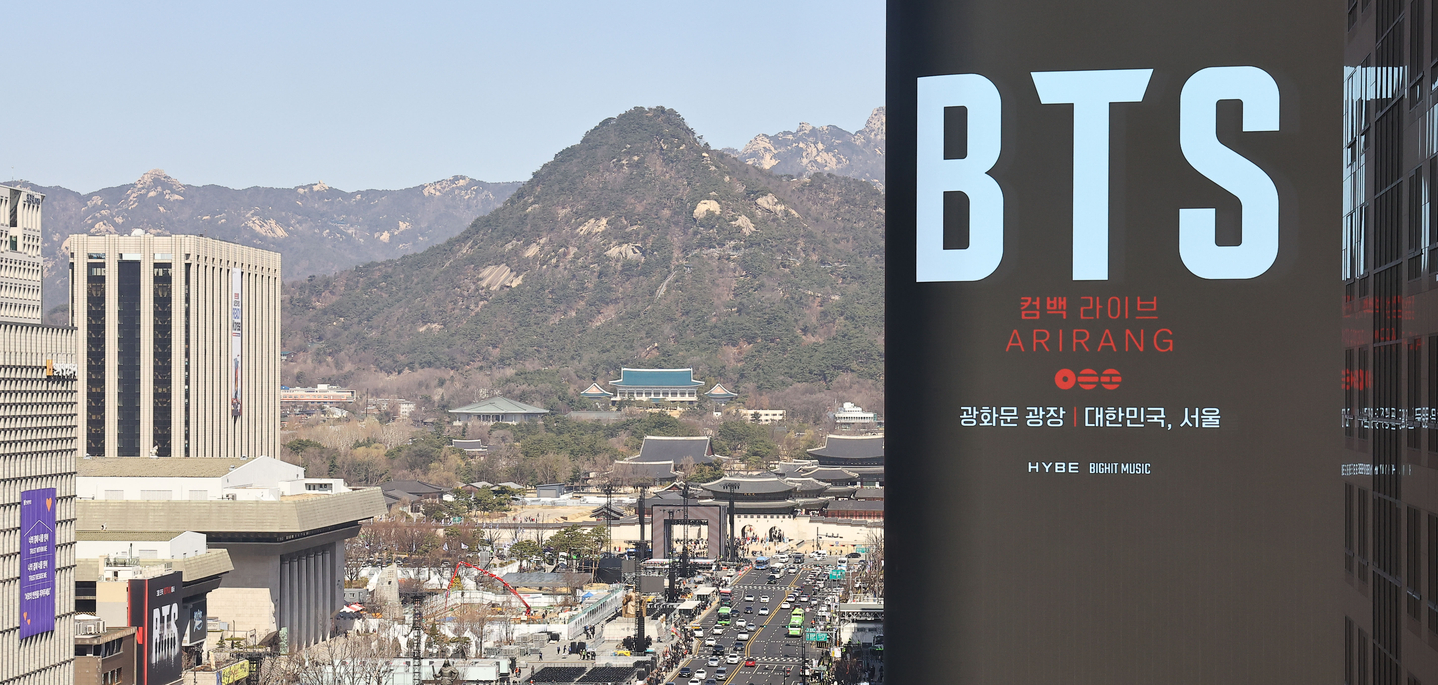
K-pop juggernaut BTS to finally make long-awaited comeback
Mar 1900:03:50Tap to summarizeThis article is by Shin Ha-nee and read by an artificial voice. K-pop juggernaut BTS is finally making its long-awaited comeback with its fifth full-length album, "Arirang," set to be released at 1 p.m. on Friday after months of buildup. "Arirang" marks the group's first new album release in three years and nine months since its anthology album "Proof" (2022) and the first full-group release after the members completed their mandatory military services. The title, "Arirang," draws its name from a collection of Korea's traditional folk songs and follows the group's reflection of its roots and identity, according to its agency BigHit Music. The 14-track album will also contain what BigHit Music describes as "genuine stories that BTS wished to share with ARMY, who have been waiting for the group's comeback," referring to the band's official fandom. The album garnered more than 4 million preorders in its first week of availability in January, breaking the group's previous first-week preorder record of 3.42 million units of its fourth full-length album "Map of the Soul: 7" (2020). Led by "Swim," the track list includes "Body to Body," "Hooligan," "Aliens," "FYA," "2.0," "No. 29," "Merry Go Round," "Normal," "Like Animals," "they don't know 'bout us," "One More Night," "Please" and "Into the Sun," with a star-studded lineup of producers such as Diplo, Ryan Tedder, El Guincho and BTS's longtime musical partner, Pdogg. Produced by Tyler Spry and Leclair, the lead track, "Swim," is an alternative pop song centered on BTS's determination to keep moving forward despite life's challenges. Leader RM contributed to the song's lyrics. The music video was directed by Tanu Muino, who previously worked with member Jungkook on the music video for his 2023 solo track "Standing Next to You." A day after the album's release, BTS will mark its return with what is expected to be a monumental moment in K-pop history: a live performance, titled "BTS The Comeback Live: Arirang," at Gwanghwamun Square in central Seoul on Saturday. The free show, slated to begin at 8 p.m. and livestreamed on Netflix, is estimated to draw up to 260,000 people in the area, according to police. About 20,000 tickets have been issued for the performance. "We're truly excited to meet everyone at Gwanghwamun," RM wrote on the fan community platform Weverse on Thursday. "Since this will be a gathering with many people, we ask for your cooperation for everyone to be able to enjoy the show safely." The rapper stressed the importance of safety and thanked police and government authorities for their preparations. Coinciding with the comeback, BigHit Music is hosting a series of fan events, called "BTS the City Arirang Seoul," to mark the occasion, such as media displays at Seoul's major landmarks, including N Seoul Tower, Sungnyemun, Dongdaemun Design Plaza and Banpo Bridge, as well as a drone light show at Ttukseom Han River Park in eastern Seoul on Friday. Meanwhile, authorities have stepped up efforts to tackle ticket scalping for the BTS show as part of a broader crackdown on unfair ticket transactions. "BTS, the proud artists of Korea, will hold a performance on Saturday," President Lee Jae Myung wrote on his social media account on Tuesday. "I hope this will be a meaningful moment for us to share and enjoy the beauty of our cultural heritage and K-culture." The president called for a safe concert environment and urged the public to report illegal ticket resales that disrupt market order. Following the Gwanghwamun performance, BTS will embark on what is expected to be K-pop's largest world tour yet, with at least 82 shows across 34 stops, starting with three shows at Goyang Stadium in Gyeonggi on April 9, 11 and 12.
Transcribe →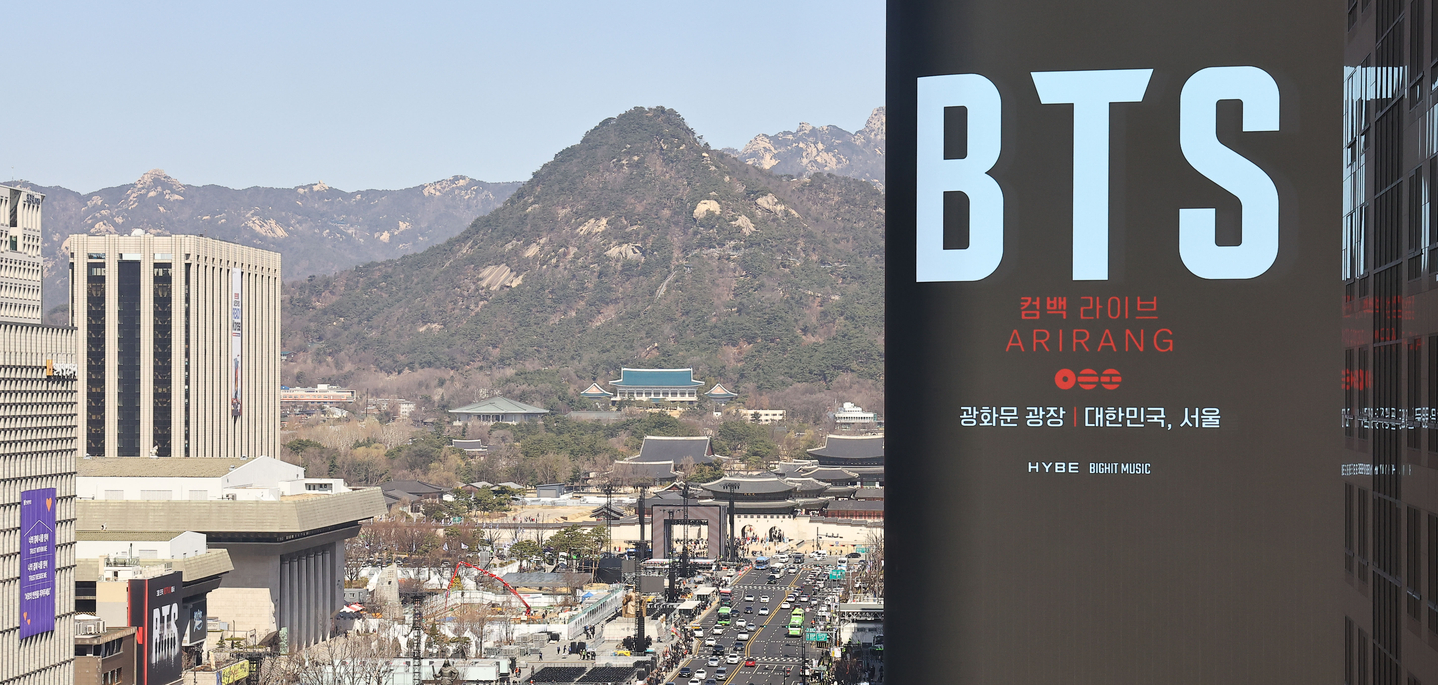
No scribbling on palace walls or camping out on day of BTS show, heritage chief says
Mar 1900:03:09Tap to summarizeThis article is by Jin Eun-soo and read by an artificial voice. "Scribbles on the walls," "damages to the giwa [Korean traditional roofs]," and "camping outside the palace" are some of the most-concerning factors among others, according to Huh who conducted an on-site safety inspection of the performance venues including Gwanghwamun Plaza and Sungnyemun on Thursday. "A total of 71 personnel from the agency are taking shifts to monitor the heritage sites' safety 24 hours for the week," he said. "We have multilingual agents that will guide the crowd and real-time monitoring system set up." BTS's comeback performance scheduled for Saturday evening will unfold against Seoul's most symbolic heritage sites including Gyeongbok Palace, Gwanghwamun Plaza and Sungnyemun as a way of conveying a message about the group's roots and identity. With some 260,000 people expected to gather at the venue, concerns are growing over safety and possible damage to the heritage sites. "What I am mostly worried about is the exterior of the Gwanghwamun wall when the venue gets overcrowded and everyone will want to secure a good spot for a nice view," Huh said. The Korea Heritage Service said it has set up a situation room at the National Palace Museum of Korea inside Gyeongbok Palace to respond immediately to any incident that could cause damage. It has also expanded the number of patrol personnel near Sungnyemun by three times. Sungnyemun, Korea's National Treasure No.1, was destroyed almost completely in 2008 due to an arson attack. HYBE said it has also deployed more than 200 patrol personnel near Sungnyemun for the media facade event. "As the world turns its attention towards Gwanghwamun and Sungnyemun which are spaces that embody the soul of the Korean people, I hope visitors will also show orderly manners and a sense of civic responsibility in protecting our heritage," Huh said. Meanwhile, the Ministry of Culture, Sports and Tourism announced a list of special programs in collaboration with state-run insititutions that the performance attendees can enjoy. The National Museum of Modern and Contemporary Art will run "MMCA: Meet the K-Art," which offers free entry and English-language guided tours led by professional docents of permanent exhibitions. The program starts from Friday. The National Folk Museum of Korea, located right next to the Gyeongbok Palace, is presenting a wide range of Korean cultural experiences under the theme "K-Culture Folk Traditions with BTS" from Friday through April 30, except Saturday. The museum will provide exhibition docent program focused on artifacts that BTS members have shown interest in, including items such as sangyeo (bier decorations). The program is available in English, Japanese and Chinese. Visitors can also take part in traditional games featured in the holiday episodes of BTS's YouTube series "Run BTS!," such as tuho (arrow throwing), paengichigi (spinning tops) and jegichagi (Korean shuttlecock kicking), at the K-zone outside the exit of Permanent Exhibition Hall 1.
Transcribe →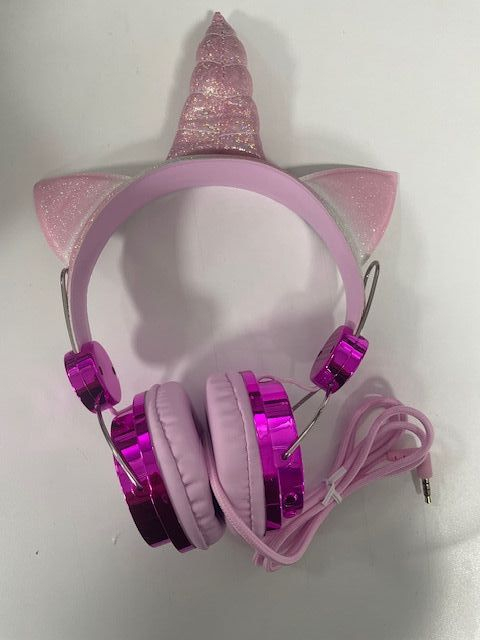
Thirty-five percent of children's headphones sold online fail to meet safety requirements: Consumer agency
Mar 1900:01:58Tap to summarizeThis article is by Han Young-hye and read by an artificial voice. More than a third of children's headphones tested from AliExpress, Temu and Amazon contain harmful substances far exceeding Korean safety limits, a government agency said on Thursday. Tests conducted by the Korea Consumer Agency found that of 20 children's headphones sold on such platforms, 35 percent failed to meet safety requirements. Seven products contained phthalate plasticizers, known to cause adverse effects on human health, at levels up to 200 times higher than the domestic limit of 0.1 percent. Four of those products also exceeded the lead limit of 100 milligrams per kilogram (1 part per million) by up to 39 times. Phthalates, classified as endocrine disruptors, can harm reproductive function and development, while lead — a carcinogen — can cause reduced cognitive development, loss of appetite, anemia and muscle weakness. Children's headphones sold in Korea must obtain safety certification under the Special Act on the Safety of Children's Products. However, overseas purchases for personal use can be made without separate safety verification. The agency said it has shared the findings with the platforms and recommended blocking sales of the products. AliExpress and Temu said they have halted sales of the items, while Amazon did not respond. The agency noted that headphone use among children has been rising due to online learning, gaming and long-distance travel, and said it will continue monitoring overseas products to prevent the distribution of unsafe items in Korea. This article was originally written in Korean and translated by a bilingual reporter with the help of generative AI tools. It was then edited by a native English-speaking editor. All AI-assisted translations are reviewed and refined by our newsroom.
Transcribe →
Porsche doubles down on Korea’s EV market with Cayenne Electric
Mar 1900:02:40Tap to summarizeThis article is by Sarah Chea and read by an artificial voice. Alongside the Cayenne, the luxury German marque also plans to roll out four models in Korea this year alone, including a Korea-exclusive Panamera variant and 911 Turbo S. The EV-focused strategy comes as Korea has become a particularly robust market for Porsche's electrified portfolio, where more than 60 percent of all Porsches sold last year were electrified, nearly double the global average of 35 percent. The Cayenne Electric, which will hit the Korean road in the second half, produces up to 1,156 horsepower, while peak torque reaches up to 153 kilogram-meters (1106 pound-feet). It sprints from a standstill to 100 kilometers per hour (62 miles per hour) in a mere 2.5 seconds, and achieves a top speed of 260 kilometers per hour. Most notably, all Porsche EVs in Korea will exclusively use Korean-made battery cells. Cayenne Electric is topped with batteries from LG Energy Solution, while the Macan Electric, previously fitted with cells from CATL, has been switched to Samsung SDI batteries. A defining visual feature is the sweeping curved display, which employs advanced panel technology from LG Display. "Korea's share within our region has increased from 24 percent in 2018 to 19 percent in 2025, which reflects the strong customer loyalty and deep brand trust that Porsche has built in the Korean market," Dr. Christiane Zorn, vice president of overseas and emerging markets region at Porsche AG at the unveiling media event on Thursday in eastern Seoul. "Korea is a market with a strong passion for individual expression and personal taste," Zorn added. In response, we are further increasing our exclusive option rate and strengthening our individualization programs." Above all, the sticker price of Cayenne Electric has been set at 163.8 million won ($109,000) in Korea, undercutting both its hybrid and internal-combustion counterparts. "It was an extraordinarily difficult decision to bring the vehicle in at this price point, given oil prices and exchange-rate pressures," said Stephan Cho, director of product and service at Porsche Korea. "But it also proves Porsche's commitment to staking its future on electrification in the Korean market." Porsche Korea also said it will double its service network by 2030. Porsche sold 10,746 vehicles in Korea last year, up 30 percent on year, making it the brand's fifth-largest market worldwide.
Transcribe →
Meanwhile : Beware of hubris
Mar 1100:02:35Tap to summarizeKim Myung-hwa The author is a playwright and director. Iran's old name was Persia. An ancient Greek tragedy titled "The Persians" (472 BCE) tells part of that story. Written by Aeschylus, the playwright who helped establish the basic structure of drama by introducing a second actor, the work depicts the Persian Wars that shaped the fate of early civilizations. After winning the conflict, Greece emerged as a starting point of Western civilization and for centuries exerted a profound influence on human thought and culture. One cannot help wondering how history might have unfolded if Persia had prevailed instead. Aeschylus himself fought as a soldier in the battles of Marathon and Salamis. His firsthand experience allowed him to portray the Battle of Salamis with unusual immediacy, giving the play lasting value as a historical source. He describes how Greek warships used bronze rams mounted on their prows to smash the far larger but slower fleet of the Persian Empire. In modern terms the tactic resembles the use of inexpensive yet agile new weapons, something like drones used in contemporary warfare. Yet Aeschylus did not revel in the arrogance of victory. Greeks of the time valued restraint and harmony and warned against hubris, the human arrogance that trespasses into the domain of the gods. They also tried to take responsibility for catastrophe caused by errors of judgment, what tragedy calls hamartia. Aeschylus was especially sensitive to the danger of hubris. His works repeatedly reflect on how the pride of heroes who lose self control can lead to bloodshed and madness. "The Persians" follows the same path. The play focuses not on the triumph of Greece but on the suffering and lament of the defeated Persians. It also reflects on the arrogance of a ruler who, in his zeal for conquest, even ordered a bridge built across the Hellespont, an act many in the ancient world saw as defying the order of nature and the gods. As war continues in Ukraine and violence again spreads across the Middle East, the ancient warning sounds newly relevant. Cities burn, dark smoke fills the sky and cluster munitions fall on neighborhoods. In such brutal conflict it is hard to imagine a true victor. The spirit of Greek tragedy, which cautions against hubris and reminds rulers of the limits of human power, feels more urgent than ever. This article was originally written in Korean and translated by a bilingual reporter with the help of generative AI tools. It was then edited by a native English-speaking editor. All AI-assisted translations are reviewed and refined by our newsroom.
Transcribe →
Public demand for constitutional reform can no longer be delayed
Mar 1100:05:34Tap to summarizeThe author is a professor emeritus at Sungkyunkwan University Law School and former co-chair of the National Future Constitutional Reform Advisory Committee. A recent survey has revealed the strong public demand for constitutional reform in Korea. According to a study of 12,000 respondents released by the National Assembly, about seven in 10 people, or 68.3 percent, said they support amending the Constitution. Support for revision exceeded opposition across all age groups, regions and political orientations. Among those who said they understood the issue well, the level of support was even higher. Particularly noteworthy is the reason cited by supporters of constitutional reform. Among those who favor revision, 70.4 percent said it is necessary to respond to social change and new challenges. The Constitution is the supreme legal norm designed to guarantee the basic rights of citizens. When the social environment surrounding those rights changes, the system that protects them must also evolve. Korea now faces an unprecedented set of overlapping crises. Rapid advances in artificial intelligence are transforming the social and economic landscape. At the same time, the country confronts a demographic cliff, regional population decline and the accelerating impact of climate change. None of these developments could have been anticipated in 1987 when the current Constitution was last amended. These structural shifts require a review of whether constitutional rights are adequately protected under new conditions and whether the Constitution should be redesigned for the future. Public opinion regarding specific reform agendas reflects this trend. Broad support emerged for explicitly recognizing new constitutional rights, including the right to life at 85.9 percent, the right to safety at 87.2 percent and the right to informational self-determination at 79.9 percent. These responses suggest a strong public desire for a Constitution that more clearly safeguards the dignity and security of citizens in an era of rapid change. Public awareness of forward-looking constitutional issues also appears to be growing. In the survey, 74.8 percent supported including a principle that national governance should consider the interests of future generations, including responses to the climate crisis. Meanwhile, 85.7 percent agreed that scientific and technological development should be harmonized with human dignity and fundamental rights. No country in the world has yet incorporated provisions directly addressing artificial intelligence into its Constitution. If Korea were to draft constitutional provisions reflecting the realities of the AI era, it could provide a global precedent. Rather than responding passively to social transformation, constitutional reform should actively shape the future. Many citizens also supported proposals to expand references to democratization movements in the Constitution's preamble. Among the events proposed, references to the May 18 Democratization Movement of 1980 received the highest level of support at 90.6 percent, followed by the June 10 pro-democracy uprising of 1987 at 73.9 percent and the Busan-Masan democratic protests of 1979 at 58.2 percent. Another 83 percent supported including the state's responsibility for balanced regional development in the Constitution, reflecting concern over widening regional disparities and the decline of local communities. Debate over constitutional reform has continued for decades. Over the past 40 years, the issue has been widely discussed in academic circles and in the National Assembly. Including the most recent National Future Constitutional Reform Advisory Committee, the Assembly has established six advisory bodies on constitutional reform. The survey results suggest that most citizens no longer want the issue postponed. Some 69.5 percent said the National Assembly should pursue a step-by-step reform approach, focusing first on areas where political agreement is possible...
Transcribe →
Classrooms are becoming small courtrooms
Mar 1100:05:49Tap to summarizeKim Ye-won The author is a lawyer at the Disability Rights Law Center. Ten days have passed since the new school year began. I recently spoke with a lawyer acquaintance who has long handled school violence cases. When I asked whether she was still busy these days, she replied that the number of cases keeps increasing. During the conversation I asked a sudden question: Her own child is in middle school. If her child became involved in a school violence case, how would she respond? Her answer came without hesitation, and was unexpected. She said she would withdraw her child from school before the situation escalated into a formal school violence case. I asked why someone who understands the system better than most and has extensive experience responding to such cases would think that way. She answered firmly that she knows too well the suffering a child would endure through the process and would not want her child to go through it. Her words seemed to reveal the stark reality of Korea's school violence system. More than 20 years have passed since the enactment of the School Violence Prevention Act. The law increased public awareness of school violence. Yet each time a major incident has occurred, lawmakers have responded with partial revisions. As a result, the system has gradually become difficult for schools to manage. In many ways, schools are turning into small courtrooms. When conflicts between students are reported as school violence cases, procedures begin immediately: investigations, written statements and records. Regardless of the severity of the incident, responses are increasingly shaped by the expectation of possible legal disputes. Schools must produce extensive documentation, and many cases are transferred to the School Violence Countermeasures Deliberation Committee under local education offices. More than half of reported cases now move beyond the school into external review processes. Appeals are also rising, leading to administrative petitions and lawsuits. Problems that should be resolved in classrooms are turning into legal battles. A policy that imposes disadvantages in college admissions on students found responsible for school violence adds further pressure. While the policy is often framed as promoting justice, its practical effects can be complicated. Because records of school violence can directly influence university admissions, cases increasingly revolve around collecting evidence and managing official records rather than pursuing educational solutions. Students accused of violence may choose counter complaints or legal strategies instead of apologies and reconciliation. As the process escalates, the recovery of victims can become secondary. Schools, meanwhile, face growing complaints and disputes, and teachers feel increasing pressure when intervening in conflicts. Given this environment, more families now hire lawyers even before reporting school violence. This trend widens the gap in response capabilities. Families with financial resources often consult lawyers early and develop strategies before a case formally begins. They receive detailed advice on how to organize evidence and what statements to provide. Students from families with less access to information or legal support struggle simply to navigate the complicated procedures. When supporting cases involving children with disabilities or migrant backgrounds the disparity becomes even more apparent. A system designed to protect students can in reality place vulnerable children at a disadvantage. Schools should not function like courtrooms. Children who are still growing inevitably make mistakes and poor decisions. Violence cannot be justified. Yet the goal of education cannot be limited to punishment alone. Education should also help students acknowledge wrongdoing, restore relationships and continue growing within their community. The current system is gradually losing that balance. It may be time to reconsider the structure of the scho...
Transcribe →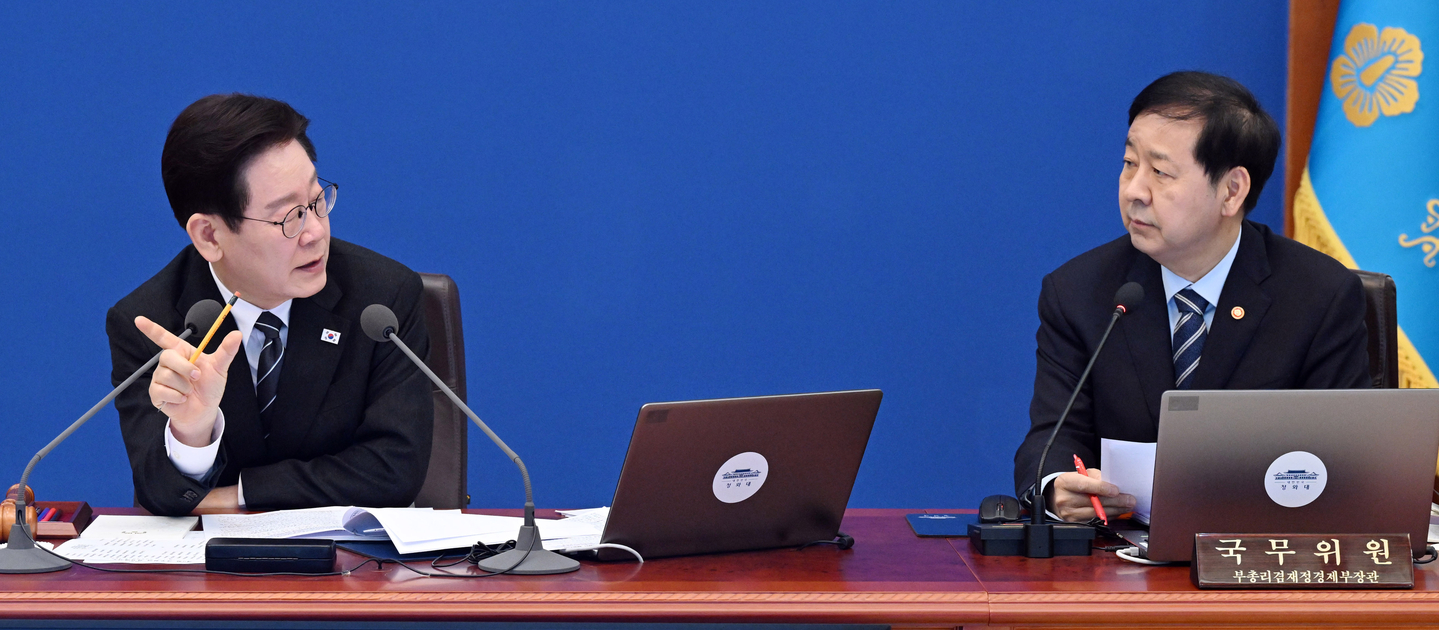
A ‘cherry blossom’ supplementary budget must not become election spending
Mar 1100:02:58Tap to summarizeFinancial markets remain volatile in the wake of tensions in the Middle East, and borrowing costs for households and businesses are rising. Fixed mortgage rates at commercial banks are approaching 6 percent, and corporate bond yields are climbing; on Monday, yields on AA-rated corporate bonds reached the 4 percent range. Higher global oil prices have also fueled inflation concerns and pushed up government bond yields, adding upward pressure to market interest rates. Government bond yields had already been rising due to the rapidly growing public debt. The yield on the 10-year Treasury bond climbed from 2.76 percent a year ago to 3.739 percent on Monday, and the yield on three-year bonds rose from 2.56 percent to 3.43 percent during that same period. The increase reflects the expanding government bond issuance driven by fiscal deficits. The national debt is expected to reach 1.415 trillion won ($962 million) by the end of this year, which means the government's interest burden will continue to grow. Despite this backdrop, the government and the ruling Democratic Party are considering a supplementary budget. President Lee Jae Myung signaled the possibility of an early supplementary budget during a Cabinet meeting on Tuesday, citing the need for additional fiscal support for small business owners and financially vulnerable firms. Deputy Prime Minister and Finance Minister Koo Yun-cheol also said that the government will use all available policy tools, including a supplementary budget, to minimize any economic shocks and support livelihoods. The Democratic Party has pledged to swiftly review and pass such a plan. Given concerns over the "three highs" of oil prices, inflation and interest rates following the Middle East conflict, fiscal support for vulnerable groups and struggling businesses may be necessary. As Koo noted, improvements in the semiconductor industry and higher securities transaction tax revenues could allow a supplementary budget without the issuance of new government bonds. But fiscal caution remains essential. Using excess tax revenue for stimulus rather than for reducing debt could undermine fiscal stability. Talk of a "cherry blossom supplementary budget," referring to an early spring spending package, should be approached carefully while monitoring international developments and oil prices. If a supplementary budget follows recent moves to ease the procedures for preliminary feasibility studies, which have long served as a safeguard against wasteful public spending, it may appear to be a pre-election spending measure ahead of the June local elections. A supplementary budget intended to support people's livelihoods must not become a tool for political giveaways. Public funds should not expand the national debt while being diverted into local projects designed to win votes. This article was originally written in Korean and translated by a bilingual reporter with the help of generative AI tools. It was then edited by a native English-speaking editor. All AI-assisted translations are reviewed and refined by our newsroom.
Transcribe →