← Mayim Bialik's Breakdown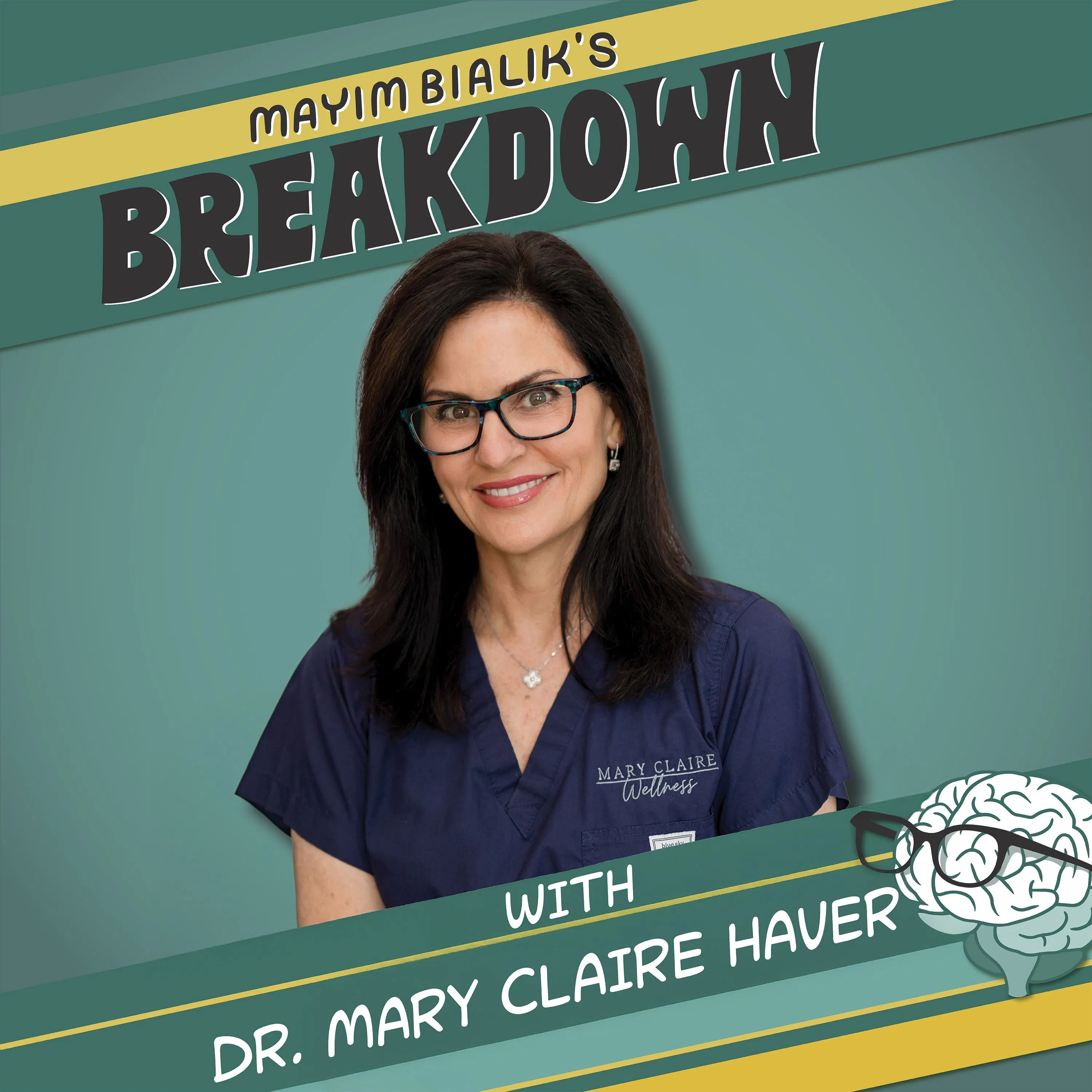
Mayim Bialik's Breakdown
#1 Menopause Doctor: How to Lose Fat, Improve Sleep, & Feel Better Now
01:21:57
You won't believe the latest research on menopause. And, sadly, most doctors aren’t telling you what you need to know. Think menopause is just about hot flashes? Think again! Dr. Mary Claire Haver, MD, FACOG, CMP (board-certified Obstetrician & Gynecologist) is here to expose the hidden truths about menopause and perimenopause– weight gain, mood swings, anxiety, depression, sleep disruptions, how perimenopause can often be worse than menopause, and the myths surrounding hormone replacement therapy! Most doctors only had one hour of study on menopause education. Dr. Haver also reveals proactive steps you can take TODAY to lessen future symptoms including how hormone replacement therapy (HRT) can tackle brain fog, fatigue, and how to avoid losing muscle mass which is critical to healthy aging. Dr. Haver tells Mayim the best exercises for menopause weight loss and shares perimenopause and menopause success stories! Plus, get the lowdown on gut health myths, including why women's g...
Loading summary
Transcript242 lines
- [00:00]
A
We're not focusing on women's health after reproduction ends at all.
- [00:06]
B
You know, 6,000 women reach menopause every day in the United States. This is something that affects 51% of the humans on this planet. And yet your training provided for a dismal amount of education.
- [00:21]
A
To be completely honest, I was a terrible menopause doctor. If any of my former patients are listening, please forgive me. I'm doing everything I can to rectify that.
- [00:29]
B
What were you trained to tell people?
- [00:31]
A
This is a normal part of life. More women will go through perimenopause and menopause than have children. Only 87 ish percent of women bear children. This is the reality of where we are today. The divorce rate. The highest time for a woman to commit suicide is between the ages of 45 and 55. The most likely time for her to have a new autoimmune diagnosis is in perimenopause. We have the most rapid loss of muscle mass through the perimenopause transition. The most rapid expansion of visceral fat in the perimenopause transition. That's a big deal.
- [01:06]
B
Hi, I'm Mayim Bialik.
- [01:08]
C
I'm Jonathan Cohen.
- [01:08]
B
And welcome to our Breakdown. Today we're breaking down pretty much every symptom you may have ever experienced as a woman, which, guess what, might be related to hormones.
- [01:21]
C
And if you're a man listening to this episode and you have a mom or you have a sister or a girlfriend or any woman in your life and they say to you, hey, something may be off, I may not be feeling right, I'm going through something and I can't put my finger on it.
- [01:37]
B
Chances are you may not need them to say it because this is what they're acting like. They may be having unmanageable night sweats, changes in body temperature. They may be having hair thinning. They may not be interested in sex. They may be experiencing brain fog, not knowing kind of what to do with themselves. They may be waking up probably around 2am reviewing every horrible thing they've ever done and feeling completely helpless to change anything about the misery that is their life. If you know someone experiencing any of these symptoms, guess what it could be? The 10 year phase of life known as perimenopause. And you're not powerless over what's happening to you.
- [02:20]
C
This episode is going to cover one of the biggest misnomers in medical history. This guest explains how a study changed the course of treating women that has still not been corrected.
- [02:34]
B
Hormone replacement therapy is something that many of us were raised to fear, we were told that it caused cancer. Guess what? We have the expert. Mary Claire Haver, board certified OBGYN. She established in 2021 Mary Claire Wellness, a clinic dedicated to providing comprehensive care for menopausal patients. She's written a citizen's guide to menopause advocacy, simple steps for transformative change, as well as the new menopause Navigating your path through hormonal change with purpose, power and facts. And we get to speak to her. It's like having your own personalized menopause specialist right in your ears.
- [03:10]
C
And if you're thinking, I don't want to talk more about hormone therapy, well, there are practical things that people can be doing well before they get to menopause to keep themselves healthy, Strategies to approach that transition to decrease your symptoms, as well as very tangible things, vitamins and supplements that everyone should be taking.
- [03:31]
B
While every woman will experience perimenopause and menopause, we don't have to suffer through it. And there are things that you can do to prevent some of the worst and most troublesome symptoms. We're also gonna spend a lot of time talking about weight gain and the particular kind of weight gain that happens in this phase of life. Also not inevitable. Let's welcome to the breakdown, Dr. Mary Claire Haver. Break it down. Dr. Mary Claire Haver, welcome to the breakdown.
- [03:58]
A
Thanks for having me.
- [03:59]
B
We've been waiting for you for a very long time, some might say through all of menopause. I wonder if you can sort of give us a little bit of an overview. How, how did you get here? How did you become the lady that everyone asks about menopause?
- [04:14]
A
I was a very well trained but very basic obgyn. So I went through medical school residency, the whole traditional route, and went into initially three years of private practice in Houston, which is the area that I've kind of lived for the last almost 30 years. And then I went back into academics and became a professor back at where I did my residency program starting in 2005, I ran the residency program. I had a private practice through the university. I taught, you know, kind of in. And I would have considered myself a really amazing doctor. You know, I still do, but until I went through my own menopause journey, I realized there was a humongous gap in my knowledge. So when I really think about it, and I've talked to multiple people across the country, I got one hour of menopause in medical school, in a four year curriculum, one lecture, and in my ob gyn residency, of which I am insanely proud of. Everything I learned. I had six hours of menopause. There were no menopause clinics. There was no real clinical training. We had six one hour lectures during reproductive endocrinology in my second year and that was it. We talked a little bit about osteoporosis and medications to treat that, but we didn't talk much about prevention if I really think about it. I had one professor who I ended up going into practice with when I came back who had a very special interest. So everything I kind of knew about menopause and perimenopause, I learned from him. Cause I would run down the hall and be like, what do I do with this? You know? So when I went through my journey, I got completely blindsided and realized this is I can't survive, I cannot live like this. And I very reluctantly went on hormone replacement therapy, absolutely terrified that I would kill myself with breast cancer, because that's what I understood. My last year of my residency, my chief year is when the Women's Health Initiative study. I'm kind of the last group of residents who even thought about prescribing hormone therapy. And then our hands were slapped when the WHI came out. So I kind of moved forward with that thought process of, well, it's more harmful than good and we really only want to give it if there's absolutely nothing else that's going to work for her, including antidepressants and Neurontin and other medications. So here I am, very menopausal, and I had been on birth control pills for a really long time to treat polycystic ovarian syndrome. And I did really well on them. I had nothing bad to say about that. And when I got off, my brother passed away. All this kind of happened at once. And I was really grieving his death. And then I was having horrible hot flashes, incredible bouts of depression, incredible bouts of anxiety, like getting up at 2 in the morning. And everything I've ever done, you know, every person I've ever hurt, you know, all of that's just swirling and I couldn't turn it off. And I just thought, oh, I'm grieving. This is normal for my life stage. And then when the grief fog started to lift at about month six after his death, June of 2016, I started realizing I'm still not okay. Like I feel the grief leaving and I'm able to not think about him constantly and, you know, all the regrets, but I'm still struggling. And then I realized when was my Last period, okay, I'm the expert. Like, I gaslit myself for months and I never had regular periods, but I started putting two and two together and then the hot flashes were just absolutely hammering me. And we pretty much know in medicine that a hot flash is almost always menopause if you're a certain age. You know, I was like, well, my God, I am in menopause. And so I went and got the blood work to confirm it and then really struggled with, what do I do about these hot flashes? I can't sleep, I can't live like this. And I went on the medication, I went on estradiol or combipatch was my first, my practitioner, I had a nurse practitioner I worked with and we went on combi patch and the hot flashes went away and I was sleeping like a baby. And then all of a sudden all these other things got, got better. My joint pain got better, my resilience got better. I stopped snapping at the kids as much. My relationship with my husband improved and my kids were teenagers while all this is going on. So, you know, help us all when that's. I was at you, we're at your exact stage right now. And so I mean, like, I was like, wait a minute, okay. And then I was also dealing with new weight gain, which as a thin person my whole life, who had then privileged this was not okay. You know, I had really so much of my self worth was tied into my weight and suddenly that was taken away from me. And you know, it sounds very vain, but like, that was what all of my patients were complaining about. And I had given them all the same advice. Work out more, eat less, just try a little harder. Come on, honey, you got this. And it wasn't working for me, it wasn't working for anyone else. So when I kind of first started looking into menopause, it really was from the lens of why are so many of my patients gaining weight? And I didn't understand the body composition change. It was just the scale, right? So I called the PhD Nutrition Department and half of them were my patients. At the time, I was working at a big university and I was like, what the hell is going on? They're like, yeah, there's some new studies coming out about body composition, how it's tied to menopause. So they're shoving articles at me and I'm going down rabbit hole after rabbit hole and I'm realizing, wait a minute, there's a ton of data here about menopause that, you know, American College of objn, the American Board is not putting in front of me for my cme. I'm learning all kinds of important stuff, but there's nothing about menopause, and all of this stuff is important. All of my patients are going through this. So I started talking about it on social media, really start about weight gain and menopause and body fat and belly fat and all the things. And things started exploding just because I said the word menopause. I mean, I started like all of us did, with zero followers, Right. And my dopamine's going off because I'm getting so many views, and I, you know, they're sharing, and I'm like, wait, all of a. You know. So it wasn't with this grand intention that I would become this TikTok famous or whatever famous. I really started on Facebook, just sharing with friends and family. And then it got so big, I developed a business account just to separate, you know, pictures of my children from, you know, talking about medical things and started getting friendly with other people who were growing on social and using that, learning how to use it as a tool for massive education. So from Facebook, then Covid hit, and my kids were like, mom, you should do this TikTok thing. And they're showing me videos of doctors kind of dancing but teaching and pointing to, like.
- [10:47]
B
So.
- [10:47]
A
So that's how I started. I was literally, like, shaking to music and pointing to informational slack. You know, I put in the little floating words of belly fat, weight gain, and you started talking about nutrition and vitamin D, and that really exploded. So in the first year of me being on TikTok, and again, everyone was on social because of COVID we grew to a million followers. And it just. I was letting my followers inform, you know, ask the questions. They're like, could my frozen shoulder be related to menopause? And instead of me saying no, I would be like, I don't know. Let me check. Yeah, Actually, there's an article here. And so as I'm growing, learning myself, teaching everything I'm learning on social, I'm making more friends in the space, finding other experts, people who are really focusing on this. So it really just grew organically.
- [11:33]
C
I'm fascinated about the frozen shoulder.
- [11:35]
A
Yeah.
- [11:36]
C
Because it speaks to A lot of people are having symptoms that they are not related.
- [11:43]
A
Right. Or they don't realize. Yeah. So let's go back to the lack of education problem. Right. We're not focusing on women's health after reproduction ends at all. And what most clinicians don't realize, there's a few pockets that do Is that we have estrogen receptors everywhere in our body, in our brains and our bones and our muscle and our gut and our lungs, kidneys, you know, and when those estrogen levels fluctuate in perimenopause and decline post, multiple organ systems can be affected. And it looks very different. So instead of the cliche hot flashes, which 85% of us have, because that thermoregulatory center in the hypothalamus is kicking in, perimenopause and menopause, you know, we can stabilize that with neurontin, can do it sometimes. And, you know, some of the SSRIs might do it, but giving the woman back estrogen will fix that problem. But guess what? Her genital urinary system gets better, her brain fog decreases, her rate of mental health challenges decrease. I mean, it's. You know, and so many clinicians don't know this. I did not know this until three years ago.
- [12:47]
B
There's so much to get into with kind of the practical aspect. Right. But I. I do want to talk about, you know, 6,000 women reach menopause every day in the United States. This is something that affects 50%.
- [13:02]
A
51.
- [13:02]
B
Right. 51% of the humans on this planet. And yet your training provided for a dismal amount of education.
- [13:12]
A
Tiniest sliver.
- [13:13]
B
And you were someone specializing in women's health. You look at vaginas all day, you're delivering babies, you're helping people regulate their hormones during pregnancy. And yet the one aspect of life.
- [13:29]
A
That just falls off a cliff.
- [13:31]
B
Falls off a cliff. You were given so little training about.
- [13:33]
A
It's such a source of rage for me when I think about, you know, and shame that it took my own menopause. And, you know, to be completely honest, I was a terrible menopause doctor for most of my career. And I'm so sorry if any of my former patients are listening. Please forgive me. I'm doing everything I can to rectify that.
- [13:52]
B
What were you trained to tell people?
- [13:53]
A
This is a normal part of life, you know, only to recognize hot flashes or vasomotor symptoms as truly a symptom of menopause. We did learn about the loss of bone and bone density, but almost as a natural part of aging, not so much as a menopause thing. It just happens to happen to women in menopause. And here's some medication to grow the bone back. Right? Nothing about prevention other than rolling up the rub so she doesn't fall. Okay. And then genital urinary system. We were learning a little Bit about that, but almost like you wait till it breaks and then we fix it. We have a very reactive healthcare system. And, you know, I'm super proud of what I learned, but, man, massive gaps. And it's a. It's not an individual clinician problem. It is a systemic problem rooted in the history of women in medicine.
- [14:36]
B
So considering that, yes, women, we're not.
- [14:39]
A
Men with uteruses and breasts and women.
- [14:42]
B
Women used to die earlier, that's true. But it's been a minute since women died in childbirth actively as a routine.
- [14:51]
A
Part of our infection of childhood diseases, infections and childbirth. Death from, you know, from being pregnant, are having a baby. Then you get, you know, most of those women actually lived past menopause.
- [15:02]
B
Right. So this is what's fascinating to me. We've had hundreds of years, if not thousands, right, where we've had women living into this phase of life. And I just, I mean, forget about rage. It's like the, the sorrow that I feel for women who were just told, oh, this is your existence. You marry someone that you likely don't love. You were told to marry him, or it's expected that you marry him because culturally for, you know, then you're kind of his property. You have to take care of his parents. P. S. Right. Half your kids may die of some disease unless you're in a certain echelon, you know, of income earning and access to health care. And then you raise these kids. You probably don't have a career. No one really seems to care what your interests are. And then once they leave the house, you're stuck with this dude who still wants three meals a day and two snacks. And then things will happen to your body and your mind that just feel miserable.
- [16:01]
A
Miserable and out of your control. Right.
- [16:04]
B
And you're just told that's what being a woman is.
- [16:08]
A
Yeah. And there are certain parts of the world today and a lot of parts of medicine today, how we practice western medicine that say the same thing, including a lot of the people who controlled the menopause microphone. You know, if you go right now to PubMed, which you and I know, you know, which is a clearinghouse for medical research articles that are vetted. And you type in the word pregnancy right now you get a little over 1.1 million articles. Important stuff. They're studying everything. Right. We know lots about pregnancy. We probably have a lot more to learn, but, you know, great. But what those number of articles read, that's the number of times the word pregnancy is mentioned in an article. 1.1 million times. So that's brain power, NIH funding, research, $. You know, all the things that it takes to crank out that amount of research. If you type in the word menopause, it is a little over 98,000. So more than 10 to 1. So we're one tenth of where we are for pregnancy. You type in the word perimenopause, it is about 6,800.
- [17:18]
B
That's a 10 year process. You're in perimenopause a lot longer than you're pregnant.
- [17:22]
A
I have an alert on my phone every day. More women will go through perimenopause and menopause than have children. Only 87 ish percent of women bear children. So for whatever reason, choice, or they just can't. So, you know, I'm like, am I only worth. Is this part of my life, the last third of my life when I am living my best life? I'm my smartest, most full of wisdom. I'm ready to lean in and kick ass. I'm not worth all this money we spent on getting me pregnant, which I'm very grateful for keeping me pregnant. So there's so many reasons why this is happening and it's not a quick fix, but, you know, this is the reality of where we are today.
- [17:58]
B
I'm gonna ask kind of a, this is a human question. I'm asking you less as a doctor and more as a human. When I hear these things as a woman, how can I not feel a tremendous amount of disappointment and despair about how medicine has evolved to either ignore me, tell me I'm crazy, or just ignore the fact that I have needs?
- [18:25]
A
It's so weird.
- [18:26]
B
And I'm not trying to make a conspiracy of it, right? No, like, oh, they hate women and they don't want, but it's like, that's crazy.
- [18:32]
A
So awesome. Books on the subject, Unwell Women by Eleanor Cleghorn. And then it's all in Her Head by Elizabeth Komen. So Elizabeth is a breast oncologist and she looks at it from, you know, so we've got one woman who's a social scientist. Incredible work. And both of them shook me to my core. Because I see it like you have to step back from your training. It is what it is you go through. And then you realize it's all in her head was a thing, you know, was it written in the chart? But I was taught that women tend to somaticize their feelings and men, what.
- [19:13]
B
Does that mean to you as a clinician?
- [19:15]
A
It's all in her head. You know, she's a little bit crazy. Oh, God. You know, I'd see the laundry list of problems coming in. So I have this really sad story from my residency. If you read the book, it's called the ww. And WW was a code we used for something called the whiny woman. And if she was Caucasian, the whiny white woman WWW dot and ww. So I was an intern. I just finished labor and delivery nights. You know, rocking, sucking all night, delivering babies. It's this crazy high energy, sleep all day, party all night, you know, kind of thing. And then boom. Next block is gynecology. And we had two days in the OR and three days in clinic. And then we'd rotate. So my clinic days, you rush to the clinic. Now this is I'm dating myself paper chart days. So there'd be stacks, like 70 charts of all the patients we had to see that day. And these poor ladies are all waiting in the waiting room. And the upper level. So the third and fourth year residents run to grab the surgery cases because they wanna operate, right? They get to get their numbers, and that leaves everything else for the lower levels. And the interns get the dregs, right? So I'm just like picking through the last few charts, and I pulled this woman's chart. She's in her 40s. She has a laundry list of complaints. Weight gain, not feeling great, brain fog, you know, some joint pain, doesn't wanna have sex. Vagina hurts a little bit, but her periods are still regular.
- [20:31]
B
Just sounds like yesterday for me, so.
- [20:32]
A
So. And I'm like, huh. So my upper level comes up. Cause they're in charge of me to make sure I don't kill anybody. And it's a dude, and he's super sweet and I love him, but he's in cowboy boots. I mean, like, total Texan. I grew up, you know, I did my training in Texas. Cowboy boots with scrubs. That's a thing. With his long white coat, he's got what you got? And I said, oh, patient, blah, blah, blah, blah, blah, blah. And he goes, did you check her thyroid? I said, yeah, she had that checked a couple weeks ago in family medicine. It was normal. And he asked for a few things, reasonable things. And he goes, well, you got a whiny woman, you got a ww. And I said, excuse me. He said, whiny woman. And he said, this is just what women go through at this age. Pat her on the knee, tell her it's gonna be okay. Check a few more labs, but probably they're gonna be Normal. And this is just what it is. This was taught to him. I am not putting laying this at the blame of any individual doctor. Cause these are. Most docs are good people who wanna help people. But this is how, this is the mindset of how we were trained. Now, we didn't write that in the chart. That was not taught to me by my professors. This was lore handed down from upper to lower level. So I internalized that.
- [21:36]
B
I was gonna say. So when you, when you hear someone bubbled up, right. Someone says to me. When I was right, when someone says to you, you've got a whiny woman as a doctor, you're thinking, there's nothing I can do for her.
- [21:47]
A
There's really not. I'm just gonna hold her hand and be sweet to her and tell her it'll be okay, it'll pass, or whatever. What I can do, have some wine, go for a jog, you know. You know, just some nebulous, ridiculous advice. And I just didn't know enough to know that this woman was probably in perimenopause.
- [22:03]
C
That's the most powerful part. You didn't know enough.
- [22:06]
A
Right.
- [22:06]
C
Because as painful as that story is, we want to get angry at the doctor, but literally, he.
- [22:12]
A
He has no effing clue, no framework in order to. We were taught nothing about perimenopause. Like when I say we got six hours of menopause, that was what happens when you go into ovarian failure. Right. And so nothing about the transition between the two. Absolutely nothing.
- [22:28]
B
So not dissimilar, you know, And I'm a. I'm a home birth, you know, that kind of birth. Hippie. So we see the same, you know, often in sort of pregnancy and OBGYN circles in that we're treating this as a crisis about to happen. Right. A lot of women are kind of taught, here are all the things that could go wrong.
- [22:47]
A
Right?
- [22:48]
B
Right. This is like, we know what to do if you hemorrhage. We know what to do. God forbid, if you need a C section, an emergency C section, or we know how to prepare all these things. But in terms of seeing this as a part of life, that's normal, natural, beautiful, you know, has ups and downs, complexity. That's kind of the way we've looked at perimenopause and menopause. Right. What's the crisis like? Oh, if their bones start breaking and if they're falling and if they're, if they have prolapse, right. And their uterus, like falls out on.
- [23:17]
A
The floor, we have a 40% increased risk of increasing diagnosis of mental health disorders. The divorce rate. The highest time for a woman to commit suicide is between the ages of 45 and 55. The most likely time for her to have a new autoimmune diagnosis is in perimenopause. We have the most rapid loss of muscle mass through the perimenopause transition. The most rapid expansion of visceral fat in the perimenopause transition. That's a big fucking deal. It's not beautiful.
- [23:46]
B
So, and I'm gonna say this, I'm saying this.
- [23:48]
A
I love being menopausal, right? Kiss my period goodbye. I am living my best life. But had I not rethought the process and made some significant changes to my life, I would not be here.
- [23:59]
B
So let's talk about some of these significant changes. Less than 4% of eligible menopausal women use hormones approved by the FDA.
- [24:06]
A
Approved by the FDA. So we think that the actual use is probably double when you add in compounded options, which are impossible to track.
- [24:13]
B
I'm sorry, that's not enough.
- [24:14]
A
Still 8%. Yeah.
- [24:15]
B
Even. Even if I'm being generous with the statistic, even if you told me 10% of eligible women, even if you told me 50% of eligible women, that's not enough.
- [24:25]
A
So before the WHI, we were at about 38 to 40% FDA usage, and it was mostly prem and prempro.
- [24:31]
B
Talk about the whi. People still.
- [24:34]
A
Still.
- [24:34]
B
People still believe. Let's just say it. What? I'll let you say it. You're the doctor. What do people believe about hormone replacement.
- [24:43]
A
Therapy that is dangerous? That it's more harmful than good. It's not true.
- [24:47]
B
It's going to give you cancer.
- [24:49]
A
That it's going to give you cancer.
- [24:50]
B
I'm going to get.
- [24:51]
A
It will cause.
- [24:51]
B
This is what I hear. Do I want to get breast cancer?
- [24:54]
A
That it will somehow cause a malignant transformation from a healthy cell into a cancerous cell? That is not how cancer biology works. We have estrogen, you know, premature ovarian insufficiency or ovarian failure. Right. Women going through menopause before the age of 40 have a 50% increased risk of breast cancer.
- [25:09]
B
Sure. That's a thing, though, that we know and we know about it.
- [25:12]
A
So, you know, I have a million statistics I can throw at you, but the hysteria that the misrepresentation and the announcement it was estrogen causing breast cancer was the number two medical news story in 2002. It went viral before the Internet. Right. It was on the COVID of every big major newspaper. It was on all the big magazines. That's how people shared information back then. It's. I was a chief resident. Like, it scared the hell out of us. And then no one. And it's been walked back. All the findings have been walked back. We still don't know.
- [25:45]
B
So I'm giving you.
- [25:46]
A
I'm giving you the opportunity that shared the hysteria has not shared. So I did not know this information until. So I had already written Galveston Diet. I was sitting at my first big menopause conference, which is in San Diego, and I saw Avrin Blooming and Sharon Malone and Carol Tavris. Avrin and Carol wrote Estrogen Matters, and Sharon was the emcee, and they were talking about everything from the WHI and the statistics and everything being walked back. And I sat in the audience, and I was on hrt, very reluctantly at the time, knowing I was gonna kill myself, but I couldn't live either way, so I might as well die of breast cancer. And. But happy and tears. My daughter was sitting. She'd just got accepted to med school, and tears are running down my face of, what the fuck? I did not know this. I have been practicing medicine for how many years? This was not put in front of me by acog, by the American Board of OB gyn. What the hell is going on? I didn't even know the Menopause Society existed.
- [26:52]
B
You also were living life, considering you were on borrowed time because you chose to use hormone replacement therapy for yourself.
- [26:59]
A
And so I was like. And that. That moment, sitting in that audience, my life changed. And I thought, I've. And I'm. You know, I probably had a couple hundred thousand followers, which is amazing. You know, back then, I was like, for the rest of my life, my job is to spread this message about the safety and efficacy of hormone replacement therapy and how. And then finally, in 2022, the Menopause Society changed the guidelines. But American culture of OBGYN has not changed there since 2014. It still says more dangerous. Lowest amount for the shortest time possible.
- [27:32]
B
I. I sometimes wonder if there's a danger to everything being thrown into the perimenopause menopause bucket.
- [27:39]
A
Yeah. And I'm sure, as my critics love to talk about that.
- [27:42]
B
Here's the thing. A lot of random things will happen to you as a human being on this planet, whether you're a woman, whether you're a man. Exactly. So what is. What is aging? What is some.
- [27:53]
A
How do you untangle the two?
- [27:54]
B
And some people are just kind of like unicorns and have like a bunch of crazy symptoms that now a lot of times people are like, well, you're in perimenopause.
- [28:01]
A
So, so what we are learning. So when. Let me take you through a patient experience in my clinic, she comes in her laundry. Usually by the time they get to me, they've been to six, eight doctors, they've been gaslit, they are on multiple medications for. They're individually treating each symptom that they have. No one has kind of put it together that this might all be estrogen related or she's just coming in de novo, not on anything like, please help me, I'm dying. You know, I feel horrible. Or I just want to be proactive and set me up for success through the next 30 years. I'm like, okay, so I do do a lot of blood work because a lot of these symptoms are similar to hypothyroidism, nutrition deficiencies. You know, I don't want to miss diabetes. I've diagnosed lupus twice this year. So, you know, I'm doing a lot of blood work to rule out concomitant causes or overlapping causes. And then for a lot of patients, we start a trial of hormone therapy and see what gets better. And then we kind of pursue so. So many things are related to aging, but we know we have acceleration. So for example, we tend to develop atherosclerotic plaques as humans, as at, you know, once we get older. But that process accelerates through menopause. So a woman's LDL cholesterol tends to go up dramatically through the menopause transition with not a change in diet and exercise that freaks women out. Like, that's one of my most viral videos.
- [29:24]
B
They're telling me that I must be literally eating fried food all day because I don't eat meat or dairy. And they're like, what are you eating? I'm like, I promise nothing has changed.
- [29:33]
A
Insulin resistance goes up. So we have new pre diabetes, we have homa, IRS scores going up, you know, with no changes. So a woman's visceral fat, which is cosmetically why they come to see me sometimes, which is the intra abdominal fat and this, you know, subcutaneous fat, cosmetically distressing. Gives us curves really. Not by that biologically active. Right. It's. It is not pro inflammatory, not nearly as much as the intra abdominal fat. Very different forms of fat. A woman in pre menopause body fat Percentage, total body fat 8% is visceral. Age matched women take her through the transition. It goes up to 23%. 23. That's a huge change. That's a huge change.
- [30:11]
B
That's like you're not fitting into your clothes. You look like a different person.
- [30:14]
A
And I don't have to tell a woman this is happening. She knows.
- [30:16]
B
Right?
- [30:17]
A
So. And now in our clinic, I have a body scanner, so I can actually measure her muscle mass, measure her visceral fat, measure her total body fat, and give her, you know, then we start talking about the next 30 years. And, you know, what are your risks? What's your mom. Let's talk about your women and your family diseases and how we're gonna move you away from that path.
- [30:34]
B
Is there a one size fits all answer here? So how do you get around that as a patient?
- [30:40]
A
As a patient. So I ask for permission and then forgiveness. You know, I tell them in perimenopause, it's like pinning the tail on a moving donkey, because you are going through this very dramatic fluctuations on the downward trend of your hormones, and it is wreaking havoc. Symptoms are probably worse in peri than full, especially the cognitive and mental health changes. They do tend to stabilize post menopause. And then in postmenopause, it's easy. Cause they bottom out and I'm just replacing. Right. But in Perry, it's a lot more challenging. So I say, you know, we have a lot of options here. We have multiple formulations, we have multiple doses, we have multiple ways to get it in your body. And so we are gonna have to figure out what is right for you. And I don't have a magic wand to figure that out. So let's be patient. You know, let's give this X amount of time. And then if this isn't working or you develop X, Y and Z, then we're gonna consider another formulation, dose adjustment, whatever we need to do.
- [31:36]
B
You just identified why most women are not getting appropriate care. Like, that's it. I mean, and I don't training our clinicians well. Well, first of all, we're not training our clinicians. And also, you know, I love to give my example. I grew up at Kaiser. You know, my dad was a public school teacher, and that was the insurance I was given. And we had, you know, I. I rail a lot about just sort of the system here, because I know what it's like to be given a 10 or 15 minute slot by a doctor who will probably say to someone, I've got a whiny woman, I'm gonna put her on SSRIs or I'm gonna sedate her. I'm gonna give her Xanax and hope that she stops complaining.
- [32:17]
A
So a woman, you know, across the menopause transition, we double the rate of SSRI use. And beautiful data coming out of Australia in the last couple of years looking at treating mental health changes in perimenopause with hormone therapy. Wow. And they are doing great. And they're. They're responding much better than they are to SSRIs, are kind of resistant in perimenopause.
- [32:41]
B
So what does that look like? I mean, obviously big pharma doesn't love this story.
- [32:44]
A
So when we look at treatment, you know, you're in perimenopause, you have kind of two branches of options. We have replace, like suppress and replace, which is the doses found in contraceptives. If you think about contraceptives were made to stop pregnancy, Right. They have multiple other uses, but they're off label, like acne, like heavy periods, et cetera. We use them for a ton of stuff because they suppress the hypothalamic pituitary, ovarian axis, Right? They shut the whole thing down. And then by using hormones, and you have those hormones in your system. So suppress and replace versus support, which is give menopause hormone therapy doses, which stabilizes for a lot of women, doesn't provide contraception, will not control her heavy periods, and will not suppress all ovulations. But it is enough, we think, to feed back to the brain to say, calm the fuck down. Because if you think about why we ovulate each month, it starts in the brain, not the ovary. The ovary is just a machine that pumps out hormones and eggs. You know, each month, our hypothalamus is constantly sensing our blood from puberty till death, looking for estradiol. And when those levels decline, it will send a signal to the pituitary gland saying, hey, it's called GnRH. You know, hey, dude, we're getting low. Pump out. You know, tell the ovaries to do their job. Pituitary pumps out LH and fsh. I'm simplifying something very complicated. And then we have these little cells around the egg, the follicular and granulosa cells that are bound, you know, they have receptors. Then that's where the steroid hormones are made, our sex hormones. So we pump out estrogen with ovulation that spikes. And then after the ovulation, the corpus luteum creates progesterone, and that cycle goes monthly, beautifully, like an EKG every month in a healthy woman. Very predictable. On day 14, she's gonna do this. Day 21, she's gonna do that. We've all seen the curves. Perimenopause is when you reach a critical egg threshold level. Cause surprise. Females are born with their entire egg supply and it runs out. Men get to make their stuff fresh. He's like, don't look at me. Every day until they die. It gets harder. But they can still produce sperm and all the things till death usually. So we fall off this cliff. So in perimenopause, the feedback cycle to the brain goes cattywampus. So the brain is like, where the hell is my estrogen? I sent the signal. And so we get bigger bursts of GnRH, which makes bigger bursts of FSH and LH, which then causes these massive dumps of estradiol. So we get these wildly fluctuating on the downward trend levels of estradiol. Progesterone never kind of catches up. The brain hates, directly affects our neurotransmitters and throws a wrench in things. So. And our cognition, adhd, new diagnosis. The world goes crazy every time I even say that. All these women on the Internet, like.
- [35:30]
B
Is it social media or is it perimenopause?
- [35:32]
A
Right.
- [35:33]
C
I don't actually know how to ask this question because I think it may be controversial, is that of course women are having massive health changes going through this process. However, a lot of just humans in general aren't in the best health to start with.
- [35:49]
A
Right. How you show up health wise when you start going through this change is a tendency. Right? So if you are on the healthier end, if you are already eating low processed, you know, foods and you are exercising regularly and you are prioritizing your sleep and you're getting therapy and you're doing all the things right, you tend to have an easier transition as far as your basic symptoms. And you, you know, we all have a genetic shelf life of our egg supply. We can speed that shit up if we smoke, if we're stressed.
- [36:20]
B
If you look at trauma.
- [36:22]
A
So there was a study done on women who were sexually abused, who then had kids who were sexually abused and they go through menopause nine years, eight to nine years sooner than they would have, like had they had a twin, okay, an identical twin who did not have trauma.
- [36:35]
B
Can you talk a little bit about that mechanism?
- [36:37]
A
So this was the only study where they looked at this. And what we are seeing now that people are actually looking at this is whatever your trauma, you know, whatever your cortisol levels and your stress, the ovaries will take a hit. So if you're inflamed either through radiation, surgery, smoking, you are decreasing your follicular counter and rapidly. You know, you were shaving off years of life off of your ovaries. Now what we don't know is if you were genetically programmed, if everything was perfect in your world and you had no stress and you ate perfectly, then your ovaries are still gonna die at 51. Can we extend that? Now there's a lot of research in the fertility world going, are there ways to extend the life of the ovaries? Should we all be getting one ovary removed at 25 and then re implanted at 50? You know, is that a thing? Are we going to create a superhuman race of females, you know, who live forever?
- [37:35]
C
So one way to think about this is women are racing towards this process and this change. And almost like a professional athlete, I want to prepare as much as humanly possible for that added stress, because it's going to help as I go through that, maximize or minimize actually the effects. And yes, of course medicine should support, but what can people be doing before they get into that change to best prepare them?
- [38:02]
A
So we look at, you know, what are the long term effects of menopause as far as muscle mass loss and visceral fat gain? So high fiber diet. So if I could go back and talk to my 35 year old self, right? Or even my kids are in their 20s, what do I tell them? Nutrition over calories. You know, I grew up in the, in my medical life, thin is healthy. Thin is healthy. Thin is healthy. What I didn't realize I was chipping away at my bone and muscle strength, which I will desperately need in my 70s and 80s. We reach our maximum bones, you know, natural bone and muscle strength, we can improve on that. But it is work. You can't just like live a normal life, you know, like not work out. So like prioritize protein, prioritize plants, limit your processed foods, you know, all the things, because that's going to keep your cardio metabolic system healthier, all of that. And so I'm telling my kids that now because in my mind, back in my 30s, I was doing aerobics and I never lifted a weight until I was in my late 40s.
- [38:59]
B
It's like fat burning stuff. That's what we were told to do.
- [39:02]
A
Yeah, work out more, eat less. That was the key to health and happiness. And looking cute in a bikini. And I'm like, God, if I could just go back and lift some damn weights, you know, in my 30s, because now I'm fighting low, genetically low muscle mass. And my mom. I mean, all of this. I'm so selfish. But, you know, my mother has Alzheimer's and fell at New Year's and broke her hip. And so it is horrific what this disease process is doing to her. And no one in her life talked to her about prevention. No one talked to her about what she needed to do at 30, at 40, at 50 to decrease her rate. My mother jogged, which is why her heart is probably so healthy. And she's not going to die, but she's going to have this long, protracted course in her elder years of complete loss of independence, which is ultimately once you get through the fire of menopause and you get back your shit together. Now my patients are like, I don't wanna be like, my mom, help me. What do we need to do? I'm like, okay, reasonable. Let's, you know, get to the gym, lift weights, protein. You know, keep your brain active, keep your community connections, get your friend group going. You know, like, all these things we know decrease the rates of dementia as we age. Cause my patients are like, let's put out the fire now. We're gonna build a path for the next 30 years. So you, you know, no one expects to live forever. That's the other thing. All the Wellness bros are like, we're Gonna Live to 120. Da, da, da, da. And I'm like, no woman wants to live to 120.
- [40:31]
B
Not like this.
- [40:32]
A
They're like, I just wanna not break. I just want my brain not to break. I don't wanna lose my independence. I don't wanna be peeing in the bed. You know, I don't want to lose my continents. Like, that's all they want. And I'm like, okay, there's definitely things we can do, because guess what? Women will live longer than men by four to five years. But it's not. We live 25% of that life in poorer health than a male twin would.
- [40:55]
B
The trauma piece is so fascinating, and I really. I want to know so much more about that. Is it true that, you know, even in kind of a normal menstrual cycle and a normal kind of variability that women who have trauma or more difficult backgrounds struggle more on a monthly basis as well? Is this something anecdotally you've seen?
- [41:14]
A
Anecdotally, and I'm sure there's data. I just. I've been so focused on menopause that I haven't looked at, you know.
- [41:21]
B
Yeah, well, No, I guess the reason.
- [41:23]
A
I was asking is pms. PMDD is a real thing. Absolutely. A real thing.
- [41:28]
B
Well, so I think that was sort of. That's sort of the question I'm getting at. You know, um, for women who, like, never could get through a cycle without feeling suicidally depressed. Right. For women who have these kinds of patterns where kind of, like your whole life you feel like you're struggling hormonally, and you tried the pill and you tried this and all these things.
- [41:48]
A
I see them in perimenopause. Absolutely collapse because it's so much worse. Right. Because what used to look like the EKG and they could, like, you know, now it's so much bigger, higher, faster, longer, and they're really, really struggling. Wow. Or, you know, they had a little bit and they could manage, and then all of a sudden it's like, wham.
- [42:11]
B
Yeah, I've heard. And what my hope was, which hasn't been my experience, was that, you know, once you stop getting your period, for a lot of women, there's a tremendous amount of relief.
- [42:21]
A
Oh, yeah.
- [42:21]
B
Women who experience.
- [42:22]
A
So if you have traumatic periods.
- [42:24]
B
Well, right. So can you talk about. For women who, let's say, have had a lot of depression with periods, who find relief in menopause, who are those women versus the ones who are like, all of a sudden, I'm depressed. What do I do?
- [42:36]
A
Yeah. So we have a subset of women, you know, with pms, pmdd, really heavy, heavy periods, you know, once. And very traumatic things associated with their menstrual cycles that, you know, it's almost like after hysterectomy, if. If that's their course. You know, they're like, I got my life back. I don't. This is not a thing for me to worry about anymore. And I'm just, ugh. And I wish I would have done this sooner. And so we do see women who really struggled with those things. Once we take the fluctuations out and they base, they. They flatline, they feel better, those things are removed now their bones are still deteriorating and their brain fog and, you know, all the things, but their cholesterol's going up, but they're just so much happier that they don't have that monthly traumatic experience.
- [43:22]
B
I wonder if you can talk a little bit about, you know, this increase in autoimmune diagnosis. You know, a lot of women, and I think social media has been a place where a lot of people can share a lot of this. A lot of women are. Are surprised that there are actually categorizations and, and diagnoses for what used to be a kind of a conglomeration of symptoms that many people were told were just in your head. What's happening during perimenopause and menopause that is contributing to these autoimmune diagnoses.
- [43:54]
A
So estrogen is a really powerful anti inflammatory hormone and it's very, very protective. And when those levels. Wait now there's kind of two schools, because some autoimmune diseases, like in pregnancy, if you have an autoimmune disease, the tendency in pregnancy is you get a honeymoon period. And then when the hormones crash postpartum, we see not only they come back, they come back with a vengeance. So I'm always watching. When I did obstetrics, I've given up that part of my practice. I was always, you know, warning, watching, checking levels, labs looking for inflammatory markers for my lupus patients are like, really good though. Pregnancy is really stressful on the whole body system. Lupus patients tend to not do well, you know, in pregnancy. But if she kind of ran the gauntlet, then I'm like really checking postpartum. So estrogen seems to be protective for a lot, not all of autoimmune diseases. So we take that protection away and then boom, here they come.
- [44:50]
B
Is it possible that with the appropriate replacement of estrogen, that we might be able to prevent autoimmune diseases or would? Well, no, but, you know, but I'm saying, is this a technique or at least to ameliorate some symptoms?
- [45:03]
A
It's definitely an area we should invest a lot of money into studying. But, you know, menopause got. There's not even a division and that. Who knows what's happening with the NIH, you know, right now. But historically, in 2023, there may be an NIH for the $5 billion budget, 15 million went to menopause. There's not even a menopause section. All women go through menopause. It affects all of us. 15 million, it's.003% of the budget went to studying women after reproduction ends.
- [45:36]
B
So when you think of all these symptoms, you know, in particular, the, the special kind of weight gain, you think of thinning hair, you know, decreased libido.
- [45:49]
A
And, you know, those are the most distressing fatigue. Fatigue is the other most fatigue brain fog.
- [45:55]
B
So are there women listening who, upon receiving appropriate hormone replacement therapy, might see those things literally go away?
- [46:04]
A
Absolutely. In my clinical practice and in the menopause, like my little ragtag group of menopause friends who are doing clinical care, you know, we have a group chat every day. We're sharing articles, information. You know, it's our own little think tank. And we. It. It just is astounding to us. I can show you patient letter after patient letter. I've got my life back. You know, it's not perfect. You're not 25 again, but you're back to your level of resilience where you've got this. You built this life with stresses that you took on. You knew you had children, you have aging parents, you had all the things. You had it, you had it, you were kicking it. And then all of a sudden you can't. That has been taken away. And giving a woman back the ability to manage the life she built is the greatest gift I could ever give her.
- [46:51]
C
What about adhd? Yeah, we talk about brain fog. Obviously, people are experiencing low energy brain fog, making it hard to concentrate, it seems.
- [47:02]
A
So. The brain fog seems to be the worst in perimenopause. So when the fluctuations happen, that is really jacking with neurotransmitters and how signals are going across and how we're processing in the brain. And Lisa Moscone, who has written the Menopause Brain and done tons of research, she actually has now moved into the private sector with funding, and she's doing a ton on Alzheimer's. So if you're not on the path to developing Alzheimer's, it does tend to get better. Unfortunately, it can take years. And a lot of women, like 1 in 5 in the UK and at least 1 in 10 in the US are leaving their jobs because of this, because they don't feel like they can do their job safely or adequately because of this disruption. And so what we're seeing with hormone replacement therapy, and then they go in and they have what, a 4% chance right now of being treated with hormone therapy. So we got 96% of women who are raw dogging menopause and, you know, they're quitting their jobs, they're moving on to. And maybe that's good, maybe it was a job that was toxic or, you know, they're leaving marriages, they're doing a lot of things that had they been given a chance and maybe it was a marriage that she didn't need to be in. But, you know, this is changing decisions and changing what a woman feels like she can do.
- [48:25]
C
And just thinking about the economic cost.
- [48:27]
A
Like, yeah, so McKinsey report. They actually looked at what the economic and. Oh, God, who was it? One of the big menopause researchers coming out of the Chicago I think looked at what they feel like the economic impact is and it is billions. When you look at time off, when you look at women who are having to go to the doctor and what the economic cost of all of this is, it's astounding. I mean, just the loss from the workforce is astounding.
- [48:54]
C
The trade off for actually taking the money for preventative care would have such huge downstream benefit. It's so short sighted to not have the research, to not have the preventative care.
- [49:06]
A
So that's been looked at as well. And what they feel like the economic impact would be if all women who were candidates were offered and say half accepted, the cost savings to Medicare and Medicaid and insurance would be unbelievable because oral estradiol is $2. Estradiol patches are 20 for the month. I mean, this is not, we're not talking ozempic prices. This is like affordable for the vast majority of women, you know, and mostly covered by insurance. They're not being offered.
- [49:36]
C
What's stopping the mainstream from adopting this?
- [49:39]
A
Fear. Fear of breast cancer. Still the Women's Health Initiative, it has, you know, Peter ati, I'm stealing his words. He feels like it is the big and Marty Macri the biggest F up in the history of medicine is the Women's Health Initiative. How the misinterpretation and just the hysteria around, you know, was propagated and never walked back in a reasonable fashion. And guidelines are still struggling. The NIH database now says we've prevented X amount of cases of breast cancer, which they did not. We've prevented heart disease. Jesus God almighty. It's protective against heart disease. You know, we know that it is so protective of the endothelium, it decreases the rate at which we form clots and plaques and calcifications and atherosclerosis. It cuts year by year. If you start between the ages of 50 and 60, we can cut your risk of heart disease 50% per year. Given that window of opportunity, how do.
- [50:39]
B
We get people to trust the doctors that they do have to see?
- [50:44]
A
So again, they weren't trained. So this is not your doctor being an asshole. This is your doctor who was not allowed to receive this information in a timely fashion. This is a doctor who. I was that doctor, right? And I didn't have the time to go seek training outside of what was put in front of me. I was forced to see patients in a 10, 15 minute window, including a pelvic exam. So with their legs and stirrups while I'm still talking and getting a history.
- [51:09]
B
I need 15 minutes to get into the stirrups and feel comfortable.
- [51:11]
A
I was expected to do all of my charting on my own time at home. When I'm trying to be a mom and a wife and stay married and do all the things like what this medical system has evolved into is sick care. Very little prevention. You know, it is what it is and you know, for that reason. And there's no medical model that will support what take it takes to do good menopause care, you know, in the current insurance system, which is an hour long visit really, because there's a lot of stuff.
- [51:40]
B
My symptoms take 15 minutes just for me to list them.
- [51:43]
A
The, you know, and I don't think, and let me be clear to your listeners, I don't think all of women's health after reproduction ends should be dumped in the lap of the poor busy obgyn. This should be mandatory education for every medical student, for every clinician, for any clinician who touches a female menopause. You know, what happens to the human body after estrogen walks out the door and ovaries fail should be part of cardiology, nephrology. I mean, it affects everything.
- [52:09]
B
I've been told more about Kegel exercises than anything after literally giving birth to two humans. That's kind of what is offered, you know, And I used midwifery care, obviously. Cause I was a home birth person.
- [52:21]
A
Has anyone ever talked to you about pelvic floor physical therapy and all the fabulous. No.
- [52:25]
B
I mean that's the thing. Like even beyond that, it's something we need to start telling women in their 20s and 30s, like while they're out like partying and having a good time. Also, this is the way to.
- [52:38]
A
Your vagina is going to expand to the size of a bowling ball. You're going to push a human through a layer of muscle and tendons that, you know, you were designed to do this, but it, it's not going to be the same.
- [52:52]
C
We were also designed to run marathons. We got to prep for that.
- [52:55]
A
Yeah, yeah, exactly.
- [52:56]
B
Well, and I think, and I think sort of, you know, what I'm sort of reflecting on is there was so much more attention paid to like getting your uterus back to its size and making sure your vagina's in good shape after having kids instead of, you know, every OB visit that I had after that was like, are you doing your Kegels? Instead of. You're on the cusp of a 10 year process that is going to rock your body and your brain in ways.
- [53:23]
A
That we're not screening for perimenopause. We're not, you know, it's not built into the well woman exam. And then if you so say you find a provider, one of the 4%. Right. That is educated and willing and knows what they're doing, usually midwives are the.
- [53:38]
B
Only ones who was, who were knowing this. They were the only ones willing to talk about it.
- [53:42]
A
It really, you know, it's just, it's a systemic issue.
- [53:46]
B
Yeah.
- [53:47]
C
Let's talk about gut health.
- [53:48]
A
Yeah.
- [53:49]
C
What should people know? What are the misconceptions that are leading people astray?
- [53:55]
A
My God. Well, I learned zero about it in medical school. Zero about it in residency. Everything I've learned, it's like through other providers and through CME and through, you know, but it's really, it was considered. Woo woo. I remember learning about the transmutation, watching a, like a little bacterium go through the wall of the, the colon. And it took 10 years for that paper to get even recognized. And you know that that could actually happen. And the whole gut health thing was met with such skepticism. And now it's becoming more widely accepted. But you have this whole generation of physicians that don't know anything about it and don't know how to talk about it or treat it. And so it was me going back to school, well, training and getting the culinary medicine certification where I really learned about the gut health. And you know, I've worked with Zoe who and I did the Zoe test. Had to collect my own stool sample and send it off and get everything tested super fine. I had to eat the blue cookie and wait till my poop turned blue. And that was a party. But, but I science, you know, I did it for science. And the female gut microbiome completely changes to that of a man's after menopause. The gut, the estrobolome, which is the subsection of gut bacteria that recirculate estrogen through the gut, is dramatically affected by menopause. I did not know that was a thing. I did not understand the metabolism of estrogen. We get a boy gut, we get a boy gut. And then with that comes all the boy things like increasing risk of heart disease. I'm glad I'm not the only one. So that is one surprise of perimenopause was false.
- [55:35]
C
So what else. What are the other symptoms that women develop that are more similar to men after the, their change in gut?
- [55:41]
A
Well, there's symptoms and then there's, there's, you know, the cholesterol that so before. So let's talk about heart disease right before menopause. A woman enjoys a much lower risk of cardiovascular disease once she goes through menopause. We pass you guys up and we, we massively pass you guys up. So our risk factors increase and gut health is part of it. Right. And just looking at the quality of the gut microbiome of the number of species, you know, so we lose the amount, the overall how many we have and the amount of species. So females tend to have healthier guts and they feel like it's part of the circulation of estrogen. The estrogen helps to keep the gut healthier. The inflammatory, the whole nine yards, take that away and disrupt it. We tend to be less healthy.
- [56:28]
C
And hormone replacement then allows them to maintain their female gut. Or it still changes.
- [56:34]
A
Just starting to look at that. But Zoe, who was studying, doing stool samples, there's looking at gut health for women on HRT versus not. And they're seeing what appears to be a healthier gut, you know, maintaining the health of the gut microbiome with hrt. And it's like oral more than cystic. You know, there's pros and cons to everything because if you're ingesting the estradiol, it's going through the gut versus transdermal. So you know, the first pass effect of the liver, you know, we have pros and cons to both methods.
- [57:03]
C
And there are other things that women should be doing, obviously, eating a diverse range.
- [57:07]
A
Absolutely.
- [57:08]
C
Fiber is a huge plants and protein.
- [57:09]
A
Plants and protein. That's what I preach to my patients, especially on a GLP1.
- [57:14]
C
What about probiotics?
- [57:16]
A
I'm a fan, so I'd prefer for them to get them. Okay. So when I look at the data on inflammatory markers in postmenopause and gut health in postmenopause, it's hard to find study that doesn't include probiotics either. Eating something rich in probiotics. So when you look at cultures that have a diet rich in probiotics, like a lot of Asia, they don't do dairy, but they're doing fermented foods heavily. So they're getting their probiotics that way. Most in the U.S. the main source of probiotics is yogurt. But unfortunately, the way we create yogurt, commercially available yogurt in this country, they dump so much shit in there that it just unless cancels out anything healthy. So you know what, I talk to my followers, patients, whatever is, I do plain Greek yogurt, just straight up nothing in it, and you add your stuff to it. So I'm like hemp, flax, chia nuts, seeds, berries, whatever you need. Drizzle of honey if that's your jam. But to then you can add in the additives and make sure that they're healthier. But that's a great source of probiotics. Studies are done though with probiotic supplementation and they're kind of all over the place. So there was one done on obese women with hypertension and they, they supplemented with bifidobacterum and maybe lactobacillus and they saw better blood pressure, better gut health. So I always quote to my patients, you know, women who eat diets rich and probiotics plus or minus a supplement if you need it, have lower visceral fat. But you're just restocking the pond. You can't like take a round of probiotics and expect woo. You know, if you're cranking that stuff, it goes straight through.
- [58:45]
B
And for the portion of the population that doesn't eat dairy or can't process, there are also non dairy, non veggie. Right. There are other versions.
- [58:52]
A
Tofu, there's lots of fermented foods. It's, it's a taste thing sometimes. So if you just can't do it, you might want to consider. So the days I don't have yogurt, I'll take my probiotic supplement.
- [59:02]
B
People still think that tofu gives you cancer also you can throw that in.
- [59:06]
A
With the diets rich in soy have either actually anti carcinogenic. So yeah, vitamin D. Huge fan.
- [59:14]
B
Most people are deficient in vitamin D. Yes.
- [59:16]
A
So when you get into menopause, we're up in the 80% range and that tracks with my patient population. So we're looking at if you use 60 as optimal. Probably 90% of my patients are suboptimal and it's really hard to get enough in our diets. The way our absorption goes down, all of that gets harder.
- [59:35]
B
Talk a little bit about vitamin D for people who may not know about this magic.
- [59:38]
A
Vitamin D is a vitamin, it's also a hormone and it has multiple receptors throughout the body almost as much as estrogen. And it's just a cofactor in so many enzymatic processes in the body. And so we know people who are deficient in vitamin D, which is most people have, you know, hair loss, weight gain, increasing cardiovascular disease risk, like all of the cardio metabolic risk factors tend to get worse and bone density. Right. With low vitamin D intake, really tough to get enough in your diet. You know, I always Say diet first, you know, get it through nutrition.
- [60:09]
B
Where is it?
- [60:10]
A
Oh, sorry, fatty fish. Salmon, tuna, mackerel, you gotta eat a crap ton of mushrooms. But they're there, you know, to get enough.
- [60:18]
B
And a lot of people don't want to eat fish because it's also full of mercury and metals and other things. So where else is vitamin D?
- [60:24]
A
So mushrooms.
- [60:25]
B
Mushrooms.
- [60:27]
A
And those are kind of the two real main sources. So we don't have a, like a plethora of places. We can get it from some dairy. So yeah, you can get it from dairy.
- [60:34]
C
And some people are like, well, I'm out in the sun all the time. But they're not out enough. With enough exposed skin at the right periods of time. And so few people live in that small bracket of the world.
- [60:46]
A
Right.
- [60:46]
C
You can actually metabolize it.
- [60:47]
A
Effective. And metabolize it. And then what if you're not complected? You're not doing much of that either. That melanin that's protecting you against cancer is also decreasing the amount that you can convert in the skin. So I see a lot of argument, you know, based, oh, I'm out in the sun. I'm like, are you naked? Are you in this latitude range? You know, and they're.
- [61:06]
C
And not that this is prescriptive, but what are the general ranges of supplementation that someone should be looking at?
- [61:12]
A
So, sure, you should get a baseline before you start. So if for whatever reason you are jamming on your own without needing to be supplemented, then don't take it, you know. However, that's not most people. So get your level checked, see where you're at. If you're deficient, you can go up to four and some papers say 5,000 without worries of toxicity. Any vitamin that's stored in fat can. You can become toxic. So there's the rando person who got the 50,000 once a week and took it every day for a month. She's a little toxic. Okay, so it's hard to become toxic on vitamin D, but it can happen. So we always caution. And that 50,000 is prescriptive strength. So over the counter, you know, I'm giving. I'm starting at 4 to 5,000 a day. That's. But if they're already deficient, I'm giving them 50,000 a week. So as a loading dose, taking the 45, you know, ours is four. I have one commercially available, that's 4,000 on the other six days of the week. We recheck in 12 weeks. See if they're like back up in A nice great range. And then we maintain a lot of my patients in me included. Once or twice a year I'll have to go back on the higher dose to boost me back up, you know, get me to where I need to be with the 50,000 a week.
- [62:23]
C
What about magnesium? Everyone talks about it.
- [62:26]
A
It's like I'm a fan, I take it.
- [62:28]
C
And there's a thousand different types. Not really, but there's a lot.
- [62:31]
A
There's a lot. So there are different forms of magnesium. So magnesium is a mineral and people are like oh, I checked my magnesium level, it's fine. Well that's great. It's a water based mineral that you pee out every day. So a one time blood test is not telling you what your stores look like or you know, we don't use a one time blood test of magnesium on it to see if you're severely hypo or hyper, you know, which can happen in cardio. It's important in cardiovascular disease. So most people dietarily with the standard American diet are not getting enough magnesium in their diet. It's something that fluctuates minute to minute in our bloodstream. And people, what's it in? Magnesium is in. I like pumpkin seeds for my favorite source of magnesium. But a lot of people supplement. So milk of magnesia, we've all heard of it doesn't really absorb well until the bloodstream stays in the gut, pulls water into the gut and induces bowel movements, diarrhea. That's why we take it for constipation. It's why it's in mags, you know, it's why we use it and go lightly for getting prepped for a bowel if you haven't had a colonoscopy, remember very important. So you know you're going to have a lot of magnesium but it's not going to get into your bloodstream. Then there's other forms that absorb rapidly into the bloodstream and raise the the levels but doesn't really cross the blood brain barrier that well. And then there's magal theranate, Magtine neuromag that does cross the blood brain barrier, has great studies for SSRI resistant depression that it looks really promising for that. I've taken it for sleep. They just, they did a comp or my oura ring. So they did some studies. Aura's starting to do a lot of studies in sleep and menopause. I'm actually flirting with them for their scientific board to get involved in some of those studies because sleep disruption is real and hormone therapy does not help everybody. For, you know, progesterone is actually estrogen. We'll stop the hot flash if that's what's waking you up. But for people who are having the middle of the night awakenings or restless legs or the anxiety at night, progesterone is magical.
- [64:30]
C
And so just as an overview, if, what are the names? Cause you went, you listed them really quickly.
- [64:35]
A
Yeah, there's, oh gosh, there's so many magnesium L theonate. So that's magti Neuromaga the name. So that, that one's very specific. It crosses the blood brain barrier. Well, so they're studying it in kind of neurological things. Then there's mag citrate, mag oxide, mag glycinate. You know, there's probably 12 out there that are being used and they are all touting specific benefits. A lot of cherry picking of data going. But I'm like, you know, if you're trying to raise your magnesium levels, fine. You just don't want to become, you know, take too much of it. And people are finding relief from X, Y and Z. I, I wonder if.
- [65:14]
B
You know, I, I don't, I don't mean to, you know, be this downer person, but I know a lot of people listening are not going to have access to the kind of care of. Let's do blood work and, and then let's set a Zoom appointment for 15 minutes to go over your blood work and make changes. And just in my own journey through perimenopause and menopause, like it's taken, I mean I've been to like three different specialists, tried like at least a dozen different combinations of things. Right. And it takes this kind of tinkering.
- [65:42]
A
Right.
- [65:42]
B
So let's, let's say for someone listening, if they don't have access to that, and that may not be in their life plan, what are the five recommendations you would make nutritionally for people to take on? You know, that they can go to the market, you know, go to whole foods, go to wherever that. What would be the five things you would suggest people take?
- [66:03]
A
Limit processed foods as much as possible.
- [66:05]
B
Okay.
- [66:05]
A
Okay. That is just never gonna serve you. You know, occasionally it's fine. We all have emergencies. I was eating processed food yesterday. I was stuck in a car for four hours. You know, but that should not be the main source of your diet. Fast food should not be the main source of your diet. You know, really dial in on an anti inflammatory kind of program, whatever that looks like, whether it be Mediterranean, we kind of Base Galveston diet on that. Like, like really avoid processed foods as much as possible. Make sure you are getting enough protein. Most women are not. So when we looked at the whi, WHI is just a data set. There's great information in there. It's just kind of how things were interpreted and things that were blown out of proport. But when we looked at frailty scores for women living in nursing homes who were on the WHI and they looked at protein intake, they found that women with the Highest quartile, like 1.6 grams for every kilogram of lean body mass were much less likely to be frail.
- [67:01]
B
You know, you need protein to be strong. Like that's just the like third grader.
- [67:06]
A
And when you grew up in the mind of caloric restriction is the way to be healthy. Protein for most women in the US took a backseat.
- [67:13]
B
Right.
- [67:13]
A
We weren't focusing on, you know, most women in the US right now have no protein with breakfast, a little bit with lunch, and they kind of stack evening and they're only getting 30 to 40 grams, maybe 50, 60 total for the day. And that's likely less than half.
- [67:26]
B
So things that people, so things that people can do if they're not gonna eat, let's say a breast of chicken or a piece of fish.
- [67:31]
A
Some days I feel like I'm gnawing on a chicken breast all day.
- [67:34]
B
Right. But you can, you can supplement with healthy protein powders. You can put those in smoothies, you can sneak it in other ways. Okay, so upping protein. Okay, so that's two.
- [67:43]
A
I need three more. Upping protein. Yeah. Look at your movement, your exercise. Okay, well you're talking. You want me to go nutrition?
- [67:50]
B
Yeah. I didn't know if you'd be like everyone should take vitamin D or you know.
- [67:52]
A
Yeah, get your vitamin D level checked and absolutely supplement if you are low, it will turn your life around. If you're running around with a vitamin d level of 15, I can rock your world just by giving you vitamin D. So get that vitamin D level checked and supplement, you know, if you feel like it's necessary. Fiber. Fiber. Most women are getting 10 grams of fiber per day. 10 to 12 maybe. We need 25 minimum, 35 for optimal cardiovascular health.
- [68:22]
B
Can you measure fiber by poops?
- [68:24]
A
No.
- [68:24]
B
No, no. Okay.
- [68:25]
A
I mean, you can have a general, you know, but you've seen those poop videos where they're showing all the different consistencies of poop. A lot of stuff goes into that, but you know, you should be having something like toothpaste or you know, the consistency of toothpaste. Ish. Every day a formed stool. Not diarrhea.
- [68:42]
B
But you know, but fiber is, it's vegetables. Like when I, when I think of fiber, I'm always like, oh, eating my rice and my grains.
- [68:48]
A
But it's foods that are high in fiber. Seeds, it's avocado, you know, those are like, I'm like chia seeds, seeds, nuts, avocado, beans. Those are going to be like the biggest bang for your buck. Okay. To make sure. And oh, surprise, they're also packed with a whole lot of other shit that makes you healthy. So vitamins, minerals, nutrients. So you're like, you're looking for plant based sources for fiber. Well, that's where they come from. But you know, doing like really zooming in on high fiber foods is going to really click a lot of buttons at the same time. Okay. And then limited added sugars. So keto movement, everybody stopped eating sugar. Oh my God, it's horrible. It's horrible. It turns out things that contain sugar from God, fruits and vegetables are not that bad for you, you know, but it's when we add sugar or drink soda, or drink soda or alcohol, which are high sugar contents, we are seeing tremendous effects to multiple, you know, your insulin, your cortisol, your cholesterol, like all of that. So women who limit their added sugars to less than 25 grams a day, not to say you can never have a occasional treat or, you know, your coffee with however you like it, but if you limit those, you are going to do way better. You're going to have less insulin resistance, you're going to have lower visceral fat, and you're going to have less cardiovascular disease.
- [70:01]
B
The other thing I wanted to ask you about, let's say someone is ready to go to their doctor to try and bring this issue up, right? A woman feels like she hasn't been listened to. So, yeah, what would you recommend?
- [70:16]
A
It is shameful to say you cannot expect your fabulous obgyn, who did incredible care, who you have adored your entire life when you cross this threshold and this is the new phase of your life, they most likely did not receive enough training to be helpful. And they may be wonderful. And I hope for your sake that they admit it, that they say, I have no time. This is not my area of expertise.
- [70:42]
B
So what's a way that someone can advocate for themselves in this arena?
- [70:45]
A
So on our website, you know, and if you go on Instagram, you go to my link in bio, we have the Menopause Empowerment Guide and the first Two things are how to find a doctor who went, who got more training. You go to the Menopause Society, menopause.org, you look for a certified provider. Not everybody on the list is taking the test, right? It's not perfect. On our website, we have crowdsourced testimonials from our followers. Did you have amazing care? And they write this beautiful paragraph or whatever, and then we look them up by city and state and we organize it. So that's another way to do it. There's some fabulous online companies, telemedicine companies that have been developed just for menopause care. And they're female founded. They saw a gap, they saw a need, and they decided to fix it. And I've looked at some of their protocols and I agree with what they're doing.
- [71:33]
B
And if you're someone who, let's say, maybe doesn't have an OBGYN that's treating them at this phase of life, but you're kind of going to your regular doctor and you're complaining.
- [71:42]
A
Articles. The latest position statement from the Menopause Society on menopause hormone therapy that they can print out the article from the cardiology, from Circulation, the journal of Circulation, that listed the, you know, safety and efficacy and heart protective values. Those two articles together, you can just slide them if your doctor's willing to learn. If they admit they don't know, say, here, get started here. And I'm like, listen, just tell them this. Use this script. Hi, I would like to try this for three months and I'll come back and tell you how I'm doing. Does that sound fair? That works for most.
- [72:22]
B
Yeah. I think a lot of people have trouble and just from the questions that we, you know, have kind of gotten from our, from our listeners and our viewers, I think a lot of people don't feel listened to. And many women, you know, also separate issue, but it's concurrent with this. We're not taught to be advocates for ourselves, and especially if it's. If it's an authority figure, in many cases, if it's a man, you know, we sometimes can feel pushed aside or like we don't know how to advocate for ourselves. If you could give kind of your sort of like minute of empowerment to women, what would that sound like?
- [72:54]
A
You have to advocate for yourself at this time of your life because if you're not the CEO of your own healthcare, the system was not built to serve a woman in menopause. And I'm fighting to change that, but we're not there yet. So you have got to take the reins here or bring an advocate with you who's gonna fight for you if you can't do it.
- [73:12]
B
This is really gonna help a lot of people. Where can people go to find all of the things that you just talked.
- [73:17]
A
About, Dr. Dr. Mary Claire. All one word, D, R, M, A, R, Y, C, Larry. And then we have a website, the PAWS Life, where we have blogs, tools, AIDS guides. It's all free. Go check it out. You know, lots of resources for you to advocate for yourself and all the science behind it.
- [73:33]
B
So thank you so much.
- [73:35]
A
You're welcome.
- [73:39]
B
I really appreciate not only the information, but the sort of the encouragement of advocating for yourself. Because while the information is fantastic, if you can't communicate that to a person, it goes nowhere. You know, she has created a citizen's guide to menopause advocacy. Simple steps for transformative change. It's something that is so important for practitioners, but also for patients to be able to say, this is happening to me. It's not in my head. It's a thing. And hormones can help me and I have the right to have access to them. And obviously there are women for whom that is not an option because of cancer and, you know, certain genetic profiles. But you know what? What she's speaking to is the vast majority of women should have access to this and deserve to get more information about it.
- [74:30]
C
It's not an overstatement to say that there's a revolution happening, a revolution in understanding what's really going on for people. And the list, just a really long list of symptoms that people think are disparate but are actually underlying, have an underlying related cause that can be solved, that can be addressed for sure. People don't need to suffer this extent without getting help. And the fact that the medical system just had no information about this, well.
- [75:01]
B
51% of people appreciate you saying that. So thank you.
- [75:04]
C
The book she mentioned, the subtitle is Truth and Lies. Early medicine taught us about women's bodies and why it matters today. It still does matter today that outdated information has not caught up to mainstream care.
- [75:18]
B
Hope you enjoyed this episode. Sure. Grateful that we had Dr. Haver on. From our breakdown to the one we hope you never have. We'll see you next time.
- [75:24]
A
It's Mayan BX breakdown. She's going to break it down for you. She's got a neuroscience PhD or two fiction. And now she's going to break down. It's a breakdown. She's going to break it down.