← Mayim Bialik's Breakdown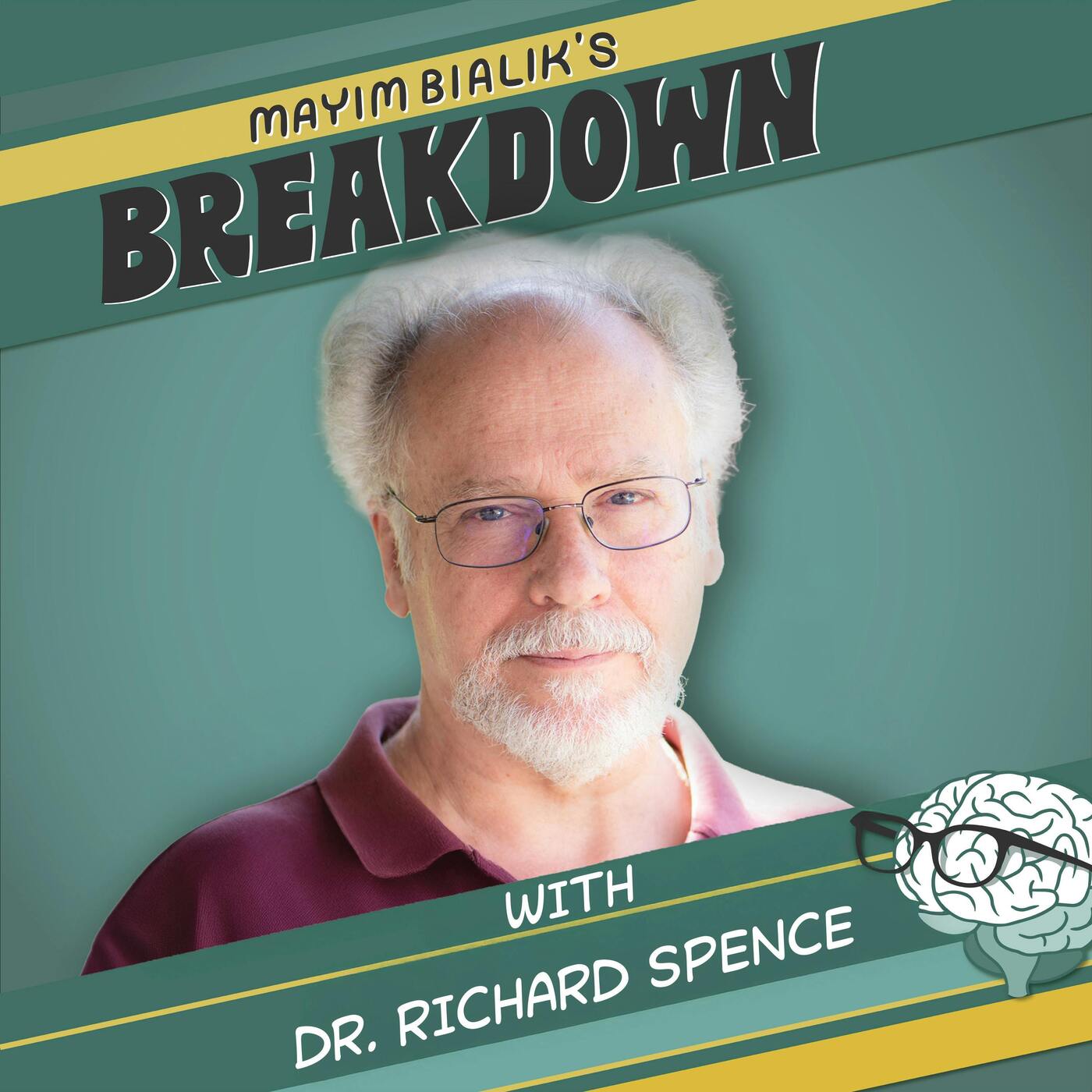
Mayim Bialik's Breakdown
Inside the Hidden World of Secret Societies: Dr. Richard Spence On How They Form & How They're Still Influencing Our Politics
01:04:55
Loading summary
Transcript164 lines
- [00:01]
A
Someone has spent a great deal of time and effort putting this all together with the specific purpose of deceiving you.
- [00:11]
B
Dr. Rick Spence is an expert on secret societies. Espionage, cults, the occult, the Illuminati and how secret societies influence modern politics in ways that we don't even fully understand.
- [00:27]
A
In a secret society, a group of like minded people can plot to overthrow the government. There have been whole revolutions plotted within lodges and that's not conspiracy theory.
- [00:40]
B
Talk about the CIA.
- [00:42]
A
What's everything about secrecy? You exist as an agency to protect the secrets of your government and to acquire the secrets of opposing governments.
- [00:55]
B
What I've been told is the founders of this country, many of them were Freemasons. Is that a sentence? That is true.
- [01:02]
A
George Washington was definitely. Benjamin Franklin was Thomas Jefferson. The relationship historically between Freemasonry and Catholicism is hostile.
- [01:14]
B
Are we creating a system where no one can trust each other?
- [01:18]
A
If you mention the occult, that immediately leads you to Satan. But all the term really means is that it's hidden. It is a system of control.
- [01:29]
B
Our secret societies breeding grounds for training a type of leadership that we should be afraid of.
- [01:37]
A
So.
- [01:44]
B
Hi, I'm Ayan Bialik.
- [01:46]
C
I'm Jonathan Cohen.
- [01:47]
B
And welcome to our Breakdown.
- [01:48]
C
This is a secret breakdown. We're swearing everyone to secrecy.
- [01:53]
B
It is a very secret breakdown. Why do we keep secrets? Why do we like secrets? What is the benefit of being part of a group that has secrets that only, only you know about?
- [02:05]
C
And are there secret societies from the beginning of time that are controlling our world, including potentially influencing the founding of the United States? What is their mandate? What do they want? What is their influence now?
- [02:23]
B
Dr. Rick Spence is a professor emeritus of history at the University of Idaho. He is an expert in all things secret society and espionage cults, the occult, the Illuminati and Hitler and how secret societies influence modern politics in ways that we don't even fully understand. Before we welcome Dr. Spence, want to ask a quick favor. If you are not subscribed, please do so now. It helps us tremendously. You'll be the first to know when new episodes drop and it helps us continue on this journey to telling you everything that you want to know about what is happening in your life and in the world at large from a breakdown perspective. And with that, let's welcome to the breakdown Dr. Rick Spence. Break it down.
- [03:12]
A
Well, thank you.
- [03:13]
B
The first thing that I want you to sort of introduce for us is what should we know about secret societies that impact the way we function?
- [03:26]
A
Now why should you worry about them or what should you think about them? Well, secret societies, one usually aren't particularly secret. The, the secret apart in secret societies is what goes on inside. It's usually not the existence of the organization. So, for instance, you know, to pick everybody's sort of, you know, I always pick on the Freemasons because, well, they're out there first on my list. So that's one of the things to note is that they advertise. They've got a sign on the building, there's a sign going into town that telling you, so they're not hiding their existence. When you get around to asking what actually goes on, what. What do you believe? How do the rituals work? Do you take the, you know, how much of this do you take seriously or, or not? Well, that's where you're going. The, the answers are going to vary quite a bit. And I am not now, nor have I ever been a member of a Masonic lodge. I'm not interested in becoming one. I. I'd like to put them under a microscope and look at them. I guess that's the whole idea. I mean, the way that I come at secret societies is that at some level, I just don't understand why people want to do that. And that's what it is that I think that I'm always trying to figure out, is that why I'm not an organization guy. And I have a kind of natural aversion to placing myself in an organization where I am under the authority of other people. I think a lot of us can relate to that. I mean, we have to submit to some of it.
- [05:04]
B
Well, you have the Woody Allen perspective of not wanting to be part of any club that would have you as a member.
- [05:10]
A
Yes, that is exactly right. Do not want to be a member of any club that would have me.
- [05:15]
B
Or as Bob Dylan would say, you gotta serve somebody. It might be the devil or it might be the Lord, but you're gonna have to serve somebody.
- [05:23]
A
You're gonna. The minute there are people telling me what to do, I'm. I'm one foot out the door. I couldn't even hack the Boy Scouts, right? That was, that was. That was too much for me. Which give you an idea?
- [05:34]
B
Well, for. Can I just ask, though?
- [05:36]
A
Sure.
- [05:37]
B
I. I don't know. To me, this seems to be the part that I do understand.
- [05:42]
C
It's because you like rules, I like rules.
- [05:45]
B
But as humans, we. We want a sense of. I mean, the word is fraternity, which is gendered. But we want a brotherhood, we want a sisterhood. It provides protection, it keeps you know, being attacked, it, it maintains a boundary against vulnerability. I mean, to me that actually makes sense. What doesn't make sense is, with all due respect, all the weird shit that goes on in these secret societies.
- [06:16]
A
Well, you know, it's like someone who was. There was an interview. We were talking about the Bohemian Club, not Bohemian Grove. Grove is where they meet. The group is the club. And the question that came up was that, well, you know, I can understand a lot of rich guys having a club and they want to get off in the woods and sort of kick back. You know, that makes a certain amount of sense. But why the robes, the chanting and the owl? Okay, why, why is that necessary? Because, you know, I understand summer camps and I never went to a summer camp. I did do that, that had a giant owl and we had to dress in robes and, and chant to the owl. That just didn't, that wasn't part of it. There's, there's an appeal to mysticism. Everybody likes a. In fact, one of the founders and leaders of a short lived but very influential secret society in the 18th century, a fellow by the name of Adam Weishaupt, who founded a thing called the Illuminati, said that nothing so appeals to the human mind than a concealed mystery. So as setting up the whole Illuminati, which had a very kind of political purpose. He knew that there was an appeal to making things mysterious into swearing oaths and having the robes and you know, rather than turn on electric lights, how about some torches? That adds, it adds an ambiance to these things and it adds a certain aesthetic to it that you don't have, don't have otherwise. But going back, we were talking about the, the Freemasons. I was giving an example of a secret society and you know, whether you should be afraid of something. Freemasons advertise their existence. But there was the local lodge here in, in the town that I live in has been having a recruiting drive and they have a sign up in front of the lodge and in addition to the sign that tells you that they're there and it says secret society. Question mark, not so much. Okay, now the interesting thing about that, then I go, no, no, we're not a secret society. So we are kind of. But how much do you want to come in and find out? It's a kind of interesting teaser in that regard. What you'll often get from Freemasons is they'll tell you this is a boilerplate response, which is that, no, we're not a secret society. We're A society with secret secrets. You join the organization, you're admitted. Remember, you're chosen. This is one of the things about if you wanted to figure out, is this a secret society? Well, first of all, you get picked or you don't get picked. Use another example, a fraternity or sorority at college. Some people get in, some people don't get in. The reasons for that are sometimes obvious or they're concealed, but some people don't make the cut for one reason or another.
- [09:19]
B
Well, and that gives, you know, exclusivity is attractive.
- [09:23]
A
Yes. Okay. Always that you've become part of something that other people or most people can't get into. And Weishoft would say that that appeals to something else in people. Vanity. Okay. One of the quickest ways to segue your into some, into someone is to, is to appeal to their vanity, appeal to their preferred aesthetics. But once you get into the group, you, you're sworn, you have to swear an oath, and the oath is generally to secrecy. So you don't talk about what goes on within the organization because that's not for non members. You know, you may be getting the secrets of the universe explained to you here, and most people just can't handle that. So you have been chosen to receive particular wisdom or information that other mere mortals will not have, which probably makes it sound a lot more interesting than it actually is, but that's part of the appeal. So on its own, there's nothing that odd about people being selected for a group. I'm special. I've now been chosen to be part of the group. And you go through the oaths of secrecy to keep things hopefully within it. Although as I've pointed out to more than one Masonic acquaintance of mine, I, look, I can, I can figure out all of your secrets. I don't even know what they are. I'm what's in Masonic circles known as a cowan. That is a, a nosy outsider who pries around trying to find out the secrets of the order without becoming a member. And yeah, that's, that's what I do. But, but for scholarly purposes, and I said I can go and find all of your rituals. There's nothing really secret about it. So what are all of these terrible oaths of secrecy? The whole idea of I cross my heart and hope to die. That's a condensed version of a secret society oath. But there's always the threat of death, horrible death if you betray the secret.
- [11:28]
B
It's a good motivator. Fear of death.
- [11:30]
A
It's a good motivator. I said look, we know that if somebody betrays this, they're not going to be tied to a steak and eat by crabs at low tide, okay? That's, that's just not going to happen. So why go, why bother to do that? He goes, well, the whole thing is a test of character. If you swear an oath and you break it, what have you demonstrated that you never were trustworthy to begin with. You have shown yourself to be a bad brother and you will be cast out. We're not going to kill you, probably, but that would be against the law, among other things. This is what bothers people who are outside of these organizations. They're a group of people who meet under rules of secrecy, who do something which we on the outside aren't somehow privileged to know. And we don't like that. You know, just as there's a desire to be part of a group, there's also the resentment that comes with being excluded from it. So again, if you were to go to a university environment that I spent way too much time around, you got your fraternities and sororities which live in their own little Greek world on campus. And I think it's probably fair to say that most other students. Students have a somewhat negative attitude towards the Greek world. Not in ones in terms of outright hostility, but there's a certain suspicion and dislike of them, partly because it's something that, that you are excluded from. And they've set themselves up as a kind of separate organization. So there's always that kind of tension between the people who are those who are chosen to be part of it and those who are excluded mind.
- [13:26]
C
Biox Breakdown is supported by Bioptimizers.
- [13:29]
B
I struggled to get good quality sleep and I just thought like, ugh, it's stress. But I learned during perimenopause and menopause, your hormones shift and it affects your magnesium levels. Low magnesium makes everything harder. Not just sleep, but focus, mood, stress tolerance. That's why we added Magnesium Breakthrough by Bio Optimizers to our nightly routine. It's a blend of seven different forms of magnesium designed to support relaxation and overall sleep quality. Try it. See if you wake up more rested and refreshed, you've got nothing to lose and a lot to gain. Bio Optimizers offers a 365 day, no questions asked money back guarantee. Magnesium Breakthrough is a fantastic way to improve that hormonal imbalance that especially happens with magnesium. And then you have better focus, you have better sleep hygiene in general. Bioptimizers makes it so easy. Here's what you get when you go to bioptimizers.com breaker and use the code breaker. 15% off your entire order and a free bottle of Mass Signs. That's Bio Optimizer's best selling digestive enzyme added to your order automatically when you use our exclusive code. That's a $20 product, free on top of your discount. This is a limited time offer while supplies last. You cannot get this on Amazon. You can't get it in stores. The offer exists in one place. Our link, our code. That's it. So if you were already thinking about trying it, this is the sign. Go to bioptimizers.com breaker use the code breaker. Grab it before it's gone.
- [14:54]
C
Make 2026 the year you finally start sleeping again. Mind Bialix Breakdown is supported by Bioptimizers.
- [15:01]
B
You know, I struggled to get good quality sleep and I just assumed it was stress. But as I learned during perimenopause and menopause, your hormones shift in a way that affects your magnesium levels. And low magnesium, it makes everything harder. Not just sleep, focus, mood, your tolerance for stress. That's why I have added magnesium Breakthrough Bye bye Optimizers to my nightly routine. It's a blend of seven different forms of magnesium designed to support relaxation and overall sleep quality. Try it. See if you wake up more rested and refreshed, you've got nothing to lose and a lot to gain. BIOptimizers offers a 365 day no questions asked money back guarantee. Magnesium Breakthrough is a huge breakthrough to improve hormonal balance to help with focus, decrease brain fog, improve sleep hygiene. Overall, Bioptimizers makes it very easy. Jonathan, what do they get when they go to bioptimizers.com breaker and use the code breaker?
- [15:54]
C
You get 50% off your entire order and a free bottle of MAS Bioptimizer's
- [15:59]
B
best selling digestive enzyme that'll be added to your order automatically when you use our exclusive code.
- [16:04]
C
That's a $20 product free on top of your discount already.
- [16:09]
B
This is a limited time offer and while supplies last, you can't get it on Amazon. You can't get it in stores. This offer exists in one place. Our link, our code. That's it. So maybe you were already thinking about it. This is the sign. Go to bioptimizers.com breaker use the code breaker. Grab it before it's gone. Make 2026 the year you finally start sleeping again. Well, it's interesting that you that you talk about the Greek system because that's one of the only places that women actually are mentioned as having a secret society is in the Greek world. Meaning when we talk about Freemasons, when we talk about, you know, Rosicrucians, we talk about even mafia, you know, when we talk about all these different Illuminati, I mostly think, and I think my grandfather was a Knight of Templar. I think, like, when you talk about these things, I only think of men. I think of men and their secret societies. I know some people of the bohemian variety. I. It's men, right? It's all these dudes getting together. And sororities is one of the only. I mean, I literally can't think of another where you. Besides witches, where you have a bunch of women getting together to do things that nobody's invited to, or midwives.
- [17:23]
A
Well, yeah, there. There are, of course, when you look deeper, there are exceptions to that. In. In witchcraft, it's not all women, unless they wanted to beat me. There's always warlocks. And strangely enough, if you go back to classical, if you go back to, say, old style. Yes. You know, Vincent Price style witchcraft, you have to imagine him as the witch hunter. You do often find that. Yeah, if you looked around, it's usually the warlock who's in charge. There was often. While most of the parishioners would be female, women seemed to predominate. In traditional witchcraft, there were men, and the men were often in the position of either being a kind of consort to the witch or being the devil. There was always someone in these groups who would play the position of the devil, and that usually went to the male. But in Freemasonry, for instance, although it's generally a boys club, there exists and there has always existed within Freemasonry, irregular lodges who admitted women.
- [18:30]
B
Did you say irregular lodges who admitted women?
- [18:35]
A
That is the term which. The regular. Now, who are the regular lodges? Well, they're, you know, they're. Most of them.
- [18:41]
B
I think you're underselling the male aspect of this. Like, can you actually. Can you give us a Freemason primer? Because what I've been told is, like, the founders of this country, yes, many of them were Freemasons. Is that a sentence that is true?
- [18:59]
A
Well, you'd have to define many. It's sometimes argued that they all were. I've heard this before, and in fact, I've heard a prominent local Freemason stand up in front of a. In a public ceremony and argue that this country was founded by Freemasons on Masonic principles and it is a Masonic republic. He said that. I asked another Freemason who was there later. Do you agree with that? And he goes, I think maybe he's kind of overstating it. There's an influence. This is one of the things about Freemasonry. Nobody owns the rights to this thing. There is no origin to it. Nobody knows how it originated.
- [19:43]
B
Okay, but like George Washington, yes or no?
- [19:46]
A
George Washington was definitely a member. Absolutely.
- [19:49]
B
Okay, I'm gonna give you another one. Benjamin Franklin.
- [19:51]
A
Benjamin Franklin was, but Thomas Jefferson, maybe. Now, everything that came out of Thomas and Thomas Jefferson's mouth regarding Freemasonry was favorable. But what you can't do is actually demonstrate what lodge he was a member of.
- [20:14]
B
Alexander Hamilton.
- [20:18]
A
I don't think so.
- [20:19]
B
I mean, he got his own play.
- [20:21]
A
He got his own play. But that is, you know, sometimes there. There could be other groups. It's. So it can go from the extreme of arguing that, yes, the whole country was founded by Freemasons, which is not true.
- [20:34]
B
Let's go with George Washington, the first president of the these United States. If I hear that there was a club that the first president of the United States was part of that still exists to this day and has a lot of, like, interesting ritual rituals, secret things. I'm fascinated. I'm fascinated. And I want to know what was going on. Was it part of the foundation of why they wanted to create the United States? Was it part of the. The declaring of independence from England? Were the Freemasons what is actually underlying our desire to pull away from a monarchy and form a free nation? That seems like something important that we may want to know about.
- [21:20]
A
If you go through and look at the. The Founding Fathers. There's that word again. And you can find that simplest way to put it is that there weren't a lot of Freemasons in colonial America. There's a relative. There were 3 million people who lived in the. In the British colonies. And out of those 3 million people around 1776 or during the Revolution, less than 5,000 were Freemasons. So that's a very small number of people. Now, keep in mind those 5,000 are one almost exclusively male. There might have been a few lodges that admitted women, but there weren't many. There never were. But there were some. But they were also like Washington. Washington, keep in mind, is not an average guy. Was he?
- [22:13]
B
I should certainly hope not.
- [22:15]
A
What did he do before he became president? He was a soldier and he was a large landowner. He was a wealthy, influential man.
- [22:24]
B
The kind of man who'd be part of a secret society.
- [22:27]
A
The kind of man who would be Part of. Of people like himself. And particularly in that place in time, Freemasonry was a kind of rich guy's club.
- [22:38]
B
What'd they do there? What'd they do in. In the 1700s? What's happening in a Freemason club that might lead to, oh, let's be the leaders of a new country that's declaring independence from England.
- [22:50]
A
So Washington, before he became president, was a man of wealth and influence. Most of the other people who were involved in the Continental Congress remember the one thing, if you look around, you don't find a lot of working men and dirt farmers involved in that. You find people who. Of wealth, property, usually connected to that wealth and also education. They were literate, which much of the population was not.
- [23:22]
B
So, Dr. Spence, I feel like this interview is a little bit of its own secret society in that you're giving me little. Little hints that might make me think that I could understand, for example, what secret societies could be. Because if you're describing all of these characteristics and then I'm looking at what freemasonry is like now, I guess that's my question. How do secret societies kind of shift and get molded to do the different things they need to do in different eras of our society?
- [23:56]
A
One of the, again, boilerplate answers you're likely to get if you were to ask a Freemason, is that, why did you join this? What do you get out of this organization? They can say that, well, what we do is that we take good men and we make. We turn them into better men. It's often sort of styled as a program of self improvement. You learn about yourself. You learn how to be a better person. You cooperate with your brothers in various charitable actions. You go through a series of ritual initiations, which, again, are supposed to teach you something about yourself. And then you learn other things. And that's what you have to be a member to find out. There is a spiritual dimension to it which is outside any kind of formal religious sense. Now, by tradition, there were always two things in a lodge that you were never supposed to talk about during the lodge meeting. Those were politics and religion. Why? Because that's the quickest way to start a disagreement. And one of the things you want to do within the lodge is to not have disagreements. So the lodge isn't going in and having a political discussion and arguing about is to find fellowship. This is the term that will be used again. It's all about fellowship. It's all about brotherhood. It's all about self improvement.
- [25:23]
B
But why'd they have to do it there. They got the whole world. Women were just at home chillaxing and getting pregnant. They had the whole world and then they had to make these secret societies.
- [25:35]
C
Because I think there's something that's unsaid in, in this, which is we're going to help you become the best version of yourself.
- [25:42]
A
Oh, there you go.
- [25:43]
C
But there's an overarching ideology behind the organization that they're going to guide people towards. And that is unspoken that each of these societies want something and believes something particular that they may not be overtly communicating. And they're promising this self improvement. They're promising some sort of unlocking your potential or spiritual experience. But ultimately the end goal people believe anyway is more nefarious than that or is going towards the group's overarching philosophy that may be kept much closer to a few founding members.
- [26:25]
B
And also the two areas that in theory, we're supposed to leave outside of secret societies, politics and religion are exactly the places that so many of us are learning about secret societies having influence. You know, the Family being one example, an incredibly influential conservative Christian fellowship that is in charge of many, many aspects of things that we do not have purview into, and they are specifically political and religious. So I'm curious also where that divide occurs.
- [27:02]
A
Well, Trailer says that this is another explanation. A. A formal description of freemasonry from within the organization. And Freemasonry, according to this, is a system of morality veiled in allegory and illustrated by symbols.
- [27:23]
B
Can you say that again?
- [27:25]
A
A system of morality veiled in allegory and illustrated by symbols. Now my question back to you is what the hell does that mean to
- [27:37]
C
me that just screams, we're gonna control the way you think towards some end, and you're gonna become a form of Manchurian Candidate minus the killing or religion.
- [27:48]
B
Like insert religion. Like I literally live and practice a religion that is. I think that we're all about allegory, mythology, symbols. Like that's what a lot of religion is.
- [28:01]
A
Well, it's, it's. It's a response that I would argue, and I argue this when it was told to me once, is that. That's an answer that tells me nothing. That's a non answer. All right, you're just. It's just further obscurantism that you're throwing out. And it's designed. First of all, you would have to know what the morality is, what the allegories are and the symbols that are used in this. So you can see those things working. But see you know, Jonathan, I think you've, you've sort of put forward the basic idea that people outside, whether it's freemason or other oathbound orders have, is that these people are up to something. Right?
- [28:37]
C
They're up to something like the Bohemian Club. Potentially choosing presidents is what people, people believe.
- [28:44]
B
I've seen the documentary, I know what they say.
- [28:47]
A
And, and they will of course deny that. They'll say, you know, we don't remember at the Bohemian Club the whole idea is that what's the little motto outside the grove? Weaving Spiders come not here. The last thing we want to do is to talk about business. Oh no, no, no, no, we never want to do that. Now I think that's probably self serving bs. It's as simple as what you are going to talk about business no matter what you do. Now remember, in the case of something like Amazonic lodge meeting, you don't talk about religion or politics during the lodge meeting. Now but the lodge meeting ends, the gavel comes down, it's over. And it's the same group of people who are in the room, right? Well you're also not supposed to drink during lodge meetings for the same reason. You know, getting drunk and talking about religion and politics will lead to an
- [29:45]
B
argument or a baby.
- [29:47]
A
Or a baby. Or maybe some revelation, but probably an argument. But once the lodge meeting is formally ended, well now you can all have a beer and you can talk about religion and politics. So what goes on very often is that what you've created in a secret society, particularly through deciding who's going to get into the fraternity and swearing and creating and cultating a loyalty to the group, you've generally created a group of like minded people. I mean that's, that's how you're going to get in there. You know, sometimes groups like to have diversity of opinion, but generally people like to hang out with people whose opinions are pretty much like their own. Once you've got that, you then have a kind of petri dish to create all other sorts of things. So you can have a regular lodge meeting and you can go through your lodge business and you can get some self improvement out of it, maybe get some secrets of the universe. And then when that's over, the same group of people can plot to overthrow the government which at various points in time in history that's exactly what they done. There have been whole revolutions plotted within lodges. And that's not conspiracy theory. I can give you the basic. The, the prime example of it is the Young Turk revolution In the early 20th century, the one that overthrew the Sultan of the Ottoman Empire. And there was one. And they used the lodge as a cover for political activity because people would argue, oh yeah, these guys are kind of harmless. They're not doing it. Yes, they are doing something. They're plotting a coup d' etat to overthrow the government. And they did so in the Macedonia Resorta Masonic Lodge in Salonika. You can name the lodge and the town it was in, and you could probably determine the meetings where they plotted the revolution. And that's not the first time something like that has happened. So it's this thing of that you can have whatever the particular activities involved with Freemasonry or whatever the organization may be in and of itself, the same group of people, the same assembly, the same fraternity of the like minded can be turned to another purpose.
- [32:31]
C
Well, it's a great cover. If your organization claims not to be religious or political, that's the perfect place to hide secret political activity.
- [32:40]
A
Yeah.
- [32:41]
C
This episode is sponsored by Wondering Jews, an open door media brand.
- [32:46]
B
If you've ever found yourself feeling like you have more questions than answers, you're in good company. The Jewish people have been like that for thousands of years. Wondering Jews with Michal and Noam is a podcast where two of today's most dynamic Jewish voices, Michal Bittone and Noam Weissman, dig into the biggest questions about life through a Jewish lens. It's the kind of conversation where you'll laugh, learn something new, and probably shout in disagreement at least once. Michal and Noam tackle the tough topics like anti Semitism in America, what happens after we die, and the future of religion with guests like Bret Stephens, Michael Rapoport and Sarah Hurwitz. And this past month, in honor of Jewish American Heritage Month, they've been celebrating some of the Jewish lives and institutions that have shaped American life, from food to music and comedy. Thoughtful, joyful and always honest. That's Wondering Jews with Michal and Noam, a production of Unpacked. Find it on your favorite podcast app or on YouTube and make sure to hit subscribe Check out Wondering Jews with Michal and Noam podcast and subscribe at Unpacked Bio nmx. Wherever you go, whatever they get into, from chill time to everyday adventures, protect your dog from parasites with Cridelio Guattro. For full safety information, side effects and warnings, visit credelioquattrolabel.com consult your vet or call 1-888-545-55973, ask your vet for Cordelio Cuatro and visit quattrodog.com which are the
- [34:17]
C
most active and influential now. Or can it be said because of, you know, the lack of information that's available.
- [34:27]
A
There was a thing called the golden age of fraternal orders in the US which was pretty much the. From around 1870 to probably around 1940, maybe 1950. And if you go back to the period, say in the 1920s, something like one out of every five adults, mostly men. But remember women. There were always women as auxiliaries to these groups. Well, about 20% of the population belong to a fraternal order, and that was Freemason's Odd Fellows Order of Retinue. You had dozens of different groups. Many of those have now long since disappeared. There was a huge drop off in membership after the Second World War, and that drop off in membership has continued, although apparently there's been a certain uptick. And this is one of the reasons why I was saying that the local Masonic lodge was trying to have a membership drive because there were fewer, fewer people there.
- [35:33]
B
There's also a lot of secret societies, I think, that are now forming online.
- [35:38]
A
Online. Okay.
- [35:39]
B
I mean, is QANON a secret society? It's not so secret, but they hold a lot of beliefs that, I don't know, make me nervous.
- [35:49]
A
And it's usually not that their existence is secret, it's exactly. Well, oftentimes it's who they are and where they are. But in other cases, what they believe is secret. What are they doing? What's the purpose of the organization? So I was talking about the kind of female auxiliary organization, so American Freemasonry, at least there's the Order of the Eastern Star. The Order of the Eastern Star is roughly the women's auxiliary to Freemasonry. So while I said I was never part of this, I did have one whole half of my family that was about as Masonic as you could probably. You know, grandfather was some sort of Grand Poobah, not an actual title. And my grandmother was always in the Eastern Star and always described this stuff. And in the Job's Daughters, which is the, the Girls Auxiliary. And then there's the Demoles, which in American Freemasonry are the Boys Auxiliary. So you would actually start sort of grooming people for membership early on. I always thought that the Demoles was, was particularly fascinating because of their name, who they're named after. So remember that that sort of dates from around, roughly around 1910. That was created. It's fairly. So the idea was that we're going to create Masonic Logis, would create A kind of boys club within the organization, hopefully for, for prospective members. And we're going to call it the Demoles. What's the de. Well, what we're going to do. American Freemasons in the early 20th century created a boys auxiliary and they named it after Jacques de Molay, who was the last grand master of the Knights Templar, burned at the stake as a heretic in 1314. Of all the people you would pick, why that guy? Any guesses?
- [38:13]
B
No, I have no idea.
- [38:16]
A
Why would you pick a 14th century heretic to be the symbol, to be the name attached to a 20th century Masonic boy's auxiliary? Because there's this weird connection which goes Back to the 18th century of people within Freemasonry believing, being absolutely convinced that they are in some way the heirs to the medieval Knights Templar, yet no one can show you a piece of paper or any definite proof that such thing exists. And, and because they, they view him as a martyr. A martyr because he was killed by the Church that he served for having betrayed it. But from their view, it was. It was proof of the, the evil of the Church itself, of its failure, and that he was a righteous man who was destroyed by the organization he served. And it's a, it's kind of an interesting choice.
- [39:27]
B
Yeah. What message are you sending by naming a children's youth group after a man whose very existence was challenged by the largest power on earth at that time?
- [39:42]
A
You're arguing that this is a man worthy of emulation. So if you, as a boy, as a young man, are admitted to an organization named after Jacques du Molay. Jacques du Millet is a person who is an honorable person that you should emulate. And what are you going to emulate? Being burned at the stake? Well, hopefully not. But then what did he represent? He was seen as a victim of tyranny and oppression by an illegitimate institution. So this is one of the things that would appeal to people. There was a very strong element. It's one of those things that wasn't universal in Freemasonry, but there was a strong element of it, of anti clericalism, or to put in the simple fact, they hated the Catholic Church. The Catholic Church was seen as essentially being a corrupt, evil institution. Does that sound vaguely familiar? What did Protestants tend to think? So there's, there's a. And this is, this is part of the struggle. The, the issue between Freemasonry and Catholicism. The relationship historically is hostile. I think every pope between about 1738 and the early 20th century said something bad about Freemasonry. They generally condemned it. It was condemned for the first time in 1738, and pretty much every Pope following condemned it again and again and again and argued that a good Catholic cannot be a Freemason.
- [41:24]
B
So this is my question for you. What were they so afraid of? And what should we be afraid of now?
- [41:32]
A
Okay, and why did the Pope say that this was a bad. Because the thing that they would generally single out is secrecy, because the best
- [41:40]
B
secret keepers is the Catholic Church, and no one should keep more secrets than they do.
- [41:47]
A
According to. In the Pope version of this, that's our secrecy is okay, because that's ordained by God. We don't know what this secrecy is about. Was one of them, but one of the Popes who said, you know, if. If there's nothing to be hidden, you know, the idea was that secrecy oaths of secrecy are a way of hiding something. That's the only reason you do that. You swear people not to talk about something because if they talked about it, presumably something bad would happen. You'd give something away. So you're hiding something. And so the only reason you're staying in the dark, he said, is because you're afraid of the light. There's something you don't want people outside to know, and that's why you hide this behind secrecy. And therefore, that's a clear sign that this is the work of the devil,
- [42:36]
B
basically, or the work of a rebellious force.
- [42:40]
A
A rebellious force? Yes, the force of rebellion. And who would that be? Who's the biggest figure? The force of rebellion, the eternal rebel?
- [42:55]
B
Jesus?
- [42:58]
A
Satan.
- [42:59]
B
Sorry, I was going the wrong direction.
- [43:02]
A
Who just. Well, you know. No, Satan lived. I meant rebel in a good way. He led an entire rebellion against God. He tried to seize. He tried to carry out a coup d' etat in heaven, and that didn't work out.
- [43:15]
B
So this has to be the work of. Not to sound like the Church, lady. This has to be the work of. Of Satan. That was the conclusion.
- [43:23]
A
And in the view of much of the papacy, yes, the Vatican's view is that there's something. There's something bad going on here. And if there's anything bad going on, you're going to pick up, you know, there's going to be some brimstone going on somewhere. Certainly from the Masonic view, that would be completely, completely denied. There is a. There's a very interesting figure in American Freemasonry, and this name will probably come up if you poke around it. A guy named Albert Pike. Anybody ever heard of him? P I K E Albert pike lived in the 19th century. He was an interesting character. He was a lawyer. He was also an early advocate for Native American rights and he was also a Confederate general, so. And he until recently actually had a statue in Washington D.C. it was toppled quite recently. Put up by his fellow Freemasons, by the way. And Albert pike is an interesting guy because he wrote a book about a 900 page book called Morals and Dogma. Okay, so you want. So supposedly you want to understand what Freemasonry actually stands for and what all of these initiations actually mean. Well, he explained it to you in Morals and Dogma. There's no index to the book, so. But it's basically an explanation. At the higher levels of Freemasonry, there's the three lower degrees that everybody goes through. You know, you start out, you're the apprentice, and then you become a fellow craft, and then you become a master. That's it. One, two, three, and you're done. Not exactly. You can if you wish. If you seek higher knowledge, you can go into the higher orders, the higher rights, like the Scottish rite or the York Rite.
- [45:27]
B
What happens in the higher rites?
- [45:29]
A
You get more merit badges. It's a bit like.
- [45:32]
B
No, it sounds weird. I understand this is what you study for a living.
- [45:36]
C
It's like every video game. You just go through the levels, collecting badges and then moving up and ascending Also. How is that different than Scientology?
- [45:45]
B
It sounds like Scientology. It sounds like Dungeons and Dragons. It sounds like World of Warcraft. Like, what this. This formed the United States of America as we know it. It sounds like a weird after school boys club where, like, sometimes girls are allowed if they bring the bubble gum that you like.
- [46:06]
A
Well, yeah, I think you. You've described it pretty well. It again, it just kind of sounds weird and I mean, why again? Why the robes and the owl? Why. Why do you need. What do you need those things? But people, like has a powerful appeal. Not to everyone. Look, it doesn't appeal to me other than as an object of curiosity, because what I tend to sense out of it is that it is a system of control, that once I'm within the organization, I then become subject to the organization. It's like anything else. Look, I spent years in school. I know how these things are run, okay? They got the bells. They're always going to control you by time. Which is odd for a person who's basically spent his entire career in a school. I remember as a kid I would see movies about prisons. And at some point early on, I decided those must be schools for adults. Because that's what school. There was this kind of connection between the two. So, no, I was not a kid who liked school, and yet I became a school teacher. So there you go, going back to Albert Pike. The thing about Albert pike is that if you take morals and dogma and you were to read through that, in which he goes through all the different higher levels of the Scottish Rite, which go up to 32, and he describes what each one of them is about, and he tries to describe all the symbolism and that this, this is what you, the candidate, will be learning, learning and experiencing as you enter this higher degree. But it's still basically just gobbledygook, these very detailed, dense descriptions of things that, again, if you don't know the ideas behind it, makes no particular sense.
- [48:10]
B
Except that, as you said, if this is to be used as a method of control, I think the next question that we have to ask is what are we controlling and what is the ultimate purpose?
- [48:26]
A
Well, the ultimate purpose is to. Well, it goes back to this idea of taking good men and turning them into better men.
- [48:35]
B
Well, like, does better men mean so that we can elect the president that serves our needs? Does better men mean so that we can take over the world with a kind of information or religious or political persuasion that we think everyone should share? You know, like, what is the Illuminati? Like, what's the purpose of the Illuminati, then? Like, I. I want to know if secret societies are all working towards their own purpose or if there's some larger, you know, picture that all of these different societies are looking to serve. You know, from an outside perspective, from a feminist perspective, it seems like what they're looking to serv is a group of men having places where women are excluded and weird shit happens, and it makes the men feel special, secret. Like, I don't know. But when I learn about things like the family and when I start seeing that some of these secret societies there. There is a. A nefarious, you know, kind of undertone of we have the right way to behave and the purpose of this society is to help other people basically come along with us, even if they don't realize they're coming along with us.
- [49:52]
A
If you talk about taking good men and turning them into better men, that sounds like a simple answer. But then there are two things that are. What's good? Define good. What's your definition of what a good man would be? And then what's your definition of what better means? You see, again, it doesn't tell you anything. If we Go back to the Bavarian Illuminati. This group, which was formed in the 18th century, which is real. It's not a figment of anyone's imagination. And there is. We know who founded it, and we know the day he founded it. Adam Weishaupt, a professor of religious law at a Catholic university, Interestingly enough, on the 1st of May, 1776, proclaimed initially what he called the Order of Perfectibilists.
- [50:43]
B
What? That's not even a word.
- [50:45]
A
Okay, and that was in German. Okay. The Order of Perfectibilists. He then changed to the Order of the Enlightened, which is the Illuminati. But see, again, you're playing the same game here. All right? We're the Order of the Enlightened. Enlightened to what? I have been enlightened. Enlightened to what? What exactly was the piece of information that was enlightening? But Weishaupt was very clear about what the goal of his organization was. And the goal of the organization, unabashedly, was world domination.
- [51:26]
B
Great. You're walking us right down the Hitler path. Was Hitler part of the Bavarian Illuminati?
- [51:33]
A
No.
- [51:34]
B
Was he part of a different secret society?
- [51:36]
A
Actually, he was connected to a secret society on the fringes of one, a thing called the Thule Society.
- [51:45]
B
The what?
- [51:46]
A
T H U L E. You see it on ski equipment?
- [51:50]
B
Yes.
- [51:51]
A
Usually we say Thule, but it's Thule, which referred to a kind of arctic Atlantis. But that's a rabbit hole we won't jump into Now.
- [52:02]
B
Did you just say arctic Atlantis?
- [52:04]
A
Arctic Atlantis. Yes. An idea of a lost civilization and arctic. Why? I don't know.
- [52:11]
B
This is what men did before video games.
- [52:14]
A
Ultima. Ultima Thule. I'm sure it's in a video game at some point.
- [52:18]
C
And just to clarify for people, this is the same organization that builds the roof racks and.
- [52:24]
A
No, no, no. It's not the same organization. Okay, Just make sure. Name. There was a legend of some ancient civilization called Ultima Tula.
- [52:34]
B
Yeah, it's a Nordic thing. Yes.
- [52:35]
A
Yeah. It's kind of a Viking Atlantis. If you. It's. It's a very overly simplistic explanation.
- [52:43]
B
But if this is a secret occult organization, what does that mean? What does a cult mean? When I think about secret societies, are some secret societies a cult and others are not? What does a cult mean?
- [52:54]
A
What does a cult mean? Very simple. It means hidden. Hidden from sight. Always go back to the Latin. So occult means hidden? Well, you know, you go back to the people who invented the word and see what they meant by it, and then it changes over time. But it's always good to figure out what it originally meant and then how it becomes something else. But occult today, basically, people tend to think of it as diabolical because again, if you mention the occult, that immediately leads you to what? Satan. Okay, there are those who argue that there's. The devil is always lurking behind everything, which is a cult, and that's why it's hidden. But all the term really means is that it's hidden. And what is hidden is a hidden world. So occultism is based, which is the system of manipulating this hidden world, is that we live in a reality which is much bigger than the one that we can see and hear and smell, which is absolutely true. Just ask your dog,
- [54:01]
B
or any friend
- [54:02]
A
who's done mushrooms or any friend who's done mushroom. DMT in particular, dmt. Well, there's a bigger world.
- [54:09]
B
They've seen the elves. The elves that are running the algorithm.
- [54:13]
A
There you go. And they're the ones with the special knowledge.
- [54:16]
B
Okay, so take us back to Hitler's secret society, which it looks like formed at a very interesting time, 1917. 1918, which, for those of you historians out there, was the end of World War I, a very rough time for Germany.
- [54:31]
A
Yes, the war was not going well, it wasn't over yet. But there. There was a fellow who, who had been off. Remember I mentioned before about those Masonic lodges in the Balkans that were used to plot revolutions? Well, he was a German, but he was part of that. He was mixed. He was initiated into those very same revolutionary lodges off in the Balkans. And his fellow, you'll love his name, his name was Rudolph von Zeboltendorf.
- [54:59]
B
Stop it.
- [55:01]
A
Well, actually his name was Adam Glower, but he changed it to Rudolph.
- [55:07]
B
I think we're all on DMT right now.
- [55:09]
A
No, no, no. Okay, this happens. All I do in a lot of my research, I'm constantly studying people and then one of the things you figure out is the name they're known by. That's not their real name.
- [55:20]
B
They have a secret name.
- [55:22]
A
Okay, they have a secret name. So he became Rudolf von Zeboltendorf. And he was initiated into about every secret group in the Balkans that existed in the early 20th century.
- [55:34]
B
Everybody wanted him in their secret society.
- [55:36]
A
Everybody. And then he shows up, he just comes back to Munich in 1917. Why? Nobody's entirely sure. He's also got a lot of money. Where did that money come from? Nobody really knows they'd ever do, do they? But he's got a lot of money. See, how many times can you begin this story? In different places, a mysterious figure sort of shows up in town. He's got a lot of money and he's got spiritual wisdom to dispense. And he begins to gather a group of people around him.
- [56:12]
B
Hang on, I also need, I need to add something about Adam Glower. Rudolph von Sebettendorf, he was a Freemason, says Wikipedia. He was a Sufi of the Baktashi order. He converted to Islam. He was a practitioner of meditation and then astrology, numerology, alchemy, very important things if you're working on being an occultist. In addition, he worked as a technician in Egypt, Egypt in the late 1800s. Like, who are these magical people who are forming these secret societies? Also, I'm not skipping over the fact that it says he was a Freemason.
- [56:52]
A
No, I said, I mentioned he was. He was initiated into the, what were called the sort of Eastern Masonic lodges and what was then the Ottoman Empire in the Near East. And they're all, they're all connected to the European lodges, but they were, they were a highly politicized group because it's, if you, if you look at the Balkans of the near east in this period, there are national movements and revolutions taking place all the time. And they're all basically being organized within Masonic lodges because as Jonathan noted, they were an excellent cover for that type of activity. So one of the things about Sibotendorf, along with all the mystical doctrines he had absorbed, he'd also gotten a, a front row seat examination in political conspiracy. That was one of the things. So in involving a mystical group, you could also build a political group. So what happens when he gets back to Munich? He takes over an existing lodge that existed there, which was a thing called the German Order. What a surprise in Germany, the Germanen Order. But for some reason he decided he wanted to disguise that group behind another name. And he then renamed that group the Thule Gesellschaft. The Thule Society. See, it sounds much more sinister in German, the Thule Gesellschaft. And they all, and what they, what they pretended to be, what they were outwardly were a mystical, an occult study group group. They studied German mysticism and folklore and they met at a fashionable hotel. There was a hotel called the Four Seasons Hotel, and they met there. And outwardly it appeared to be a bunch of dilettante weirdos. Okay, that's, that's that to the police it looked like a bunch of weirdos, you know, playing around with tarot cards. I mean, nobody's going to pay Much attention to that, them. But he had other plans and he's already in connection, he's getting money from some of his activities. From who? From the German army. So the German army is concerned about, you know, the war's not going that well. There's political unrest, there's Bolshevism, you know, which we also kind of helped start. But now it's kind of coming back on us. And, and we want some groups that could kind of influence things in society. So what Zubotendorf does is he very carefully begins to create. So he's got his core group, which are the bunch of weirdos at the hotel. And then he begins to create what he calls the Rings of Thule, which are satellite groups, groups that are sort of wholly owned subsidiaries of the society, but separate from it.
- [59:54]
B
Like it's a franchise.
- [59:56]
A
A franchise. And one of the things we need to do, he decides, is that with this growing threat of Bolshevism and communism, who does that appeal to? It appeals to the workers. So the workers are kind of pissed off. So we need to have a group that will appeal to the workers to keep them away from the commies. And what we need to do in this is not to create something which is, is anti communist. We need to create something which is counter communist, that is, which is a form of communism. So this is a difficult concept in some way, but the idea is that in anti communism, you simply oppose everything that communists stand for. In counter Communism, you basically approve everything communists stand for, but you do it under different terms. Terms, you know, you don't call it communism, you call it National Socialism. Ever wonder why that term came in? But what he eventually creates is the, what he was. One of his spin off groups is a thing called the German Workers Party. That sounds, you know, that sounds pretty pinko German Workers Party. So if you were going, I don't know, if you were a disgruntled worker and you're thinking about, I don't know, should I join the Bolsheviks? Well, there's this other thing called the German Workers Party and they stand for everything the commies do. But they also say that they're patriotic and mystical. So maybe I should check them out. So the German Workers Party, which will a year down the road change its name to the National Socialist German Workers Party, the Nazi Party. So the Nazi Party is a direct evolution of this spin off of the Thule Society. And that is the group which Adolf Hitler in 1919 is sent by the army to infiltrate. And he attends the. When he goes to the first meeting that he attends of the German Workers Party, he listens to a lecture and that lecture is titled how and why Capitalism is to be Destroyed. So if you were kind of inclined towards communism or thought Bolshevism sounded attractive, now you've got this other group which is kind of selling you the same thing but with a different agenda overall, that is to create a kind of parallel communism that will then be guided towards pay. Now why was Hitler sent into this group? Because the German army had trained him as a propagandist. That was the first real job he ever had. So when, when the war is over, you often get this idea that Hitler is this. He's just one of these discharged veterans wandering around the country. No, he's never, he doesn't, doesn't leave the army. He doesn't leave the army until 1921. He's still getting a paycheck from the army. And they bring him in. One of his superior officers, a fellow by the name of Karl Meyer, who once described Hitler as a dog looking for a master, decided to become his master. And he decided, you know, this guy has some, he has speaking ability and therefore he has the potential to have influence over other soldiers. So we're going to take him in and we're going to train him in terms of how to give pep talks and speeches, also how to become a spy to figure it out if there are any commies among the soldiers. And then once he's trained, we're going to actually. Well, they really don't send him into the German Workers Party to spy on it. That's the way it's written about it. They send him in to take over the leadership of it. And when Hitler shows up and becomes a prominent figure, Zabotendorf is cast aside. He leaves his, his job has been accomplished. He sort of started this group and now there's another fellow who is sent in to manage it.
- [64:33]
B
The question is then, are secret societies breeding grounds for training a type of leadership that we should be afraid of,
- [64:43]
C
but the tool can be used for good or evil, right? Like they trained him to have influence and it was only they didn't say what the influence should necessarily be. It's the, it's the philosophy of the guiding organization that's then going to drive what the influence is. So we should be more concerned about what the philosophy of these guiding organizations are. And for the most part those are the parts of the secret society that are kept the most secret.
- [65:09]
A
But the guiding hand in this is the army that's it. It's the remnants of the German General Staff in the post war era that wanted to keep itself around and continue to have influence. So when you're looking at the Thule Society and you focus on that, you're looking at the wrong thing. Your attention is being diverted because the people who are actually pulling the strings on the whole thing, who are paying for this, who are training Hitler to be a propagandist, who funded the creation of the German Workers Party, who probably were paying for everything Zurbotendorf did, is the army because they wished to maintain social influence and control and thereafter, and then trace it all the way through, who eventually makes Hitler Chancellor of Germany, the army, the guy who will anoint him with that office is Paul von Hindenburg. The German army in the Weimar period, which was constantly struggling to maintain its old, you know, what it felt was its rightful position in society, and who, of course, desperately wanted to eventually rearm and refight that war again and win it, were looking for someone who could fulfill that purpose and could play the role, which they couldn't do because they were generally soldiers and aristocrats. They're not politicians. What they needed to do was to create a politician that would serve their interests. And in the case of Hitler, that's what they thought they had done. In the process of that, though, they made the classical mistake that so many human beings do when they plot and plan. You create what you think is a servant which will become your master. They created someone who they thought would be a tool which they could use, and that tool eventually overpowers them. They lose control. It's Frankenstein. Or if you prefer Frankenstein or Frankenstein, you've now created a thing which is supposed to do your bidding, like AI, but which will then begin to think on its own.
- [67:44]
C
Interesting to find someone with this great capability to influence people and then training him, giving him the opportunities to practice that skill set and then that getting away from them in that way.
- [68:03]
B
We're going to hit pause on our conversation with Dr. Spence because we've got a lot more to share with you. In part two, we're going to talk about the CIA and how intelligence agencies are manufacturing conspiracy theories and things that we should be very suspicious about. We're also going to do a deeper dive into the difference between cults and religions, the role of brainwashing and mind control, and how our current political situation is actually influenced by so many components of secret societies. We're also going to be talking in this episode about what it means to make America great again and how that relates to the foundation of what established these United States of America? What did greatness mean then? What does it mean now? And how are we all being influenced by this notion of an ideal that secret societies seem to have a proprietary ownership over?
- [68:57]
C
If you want to join our not so secret society, check us out on substack. Mayim Bialik's breakdown on Substack where we explore the intersection of science, spirituality, and so much more to help you navigate yourself and the world around you. Mayim Bialik's breakdown on Substack and from
- [69:15]
B
our breakdown to the one we hope you never have. We'll see you next time.
- [69:18]
A
It's Maya Bialik's breakdown. She's gonna break it down for you. She's got a neuroscience PhD or two, non fiction. And now she's gonna break down, so break down. She's gonna break it down.