← Mayim Bialik's Breakdown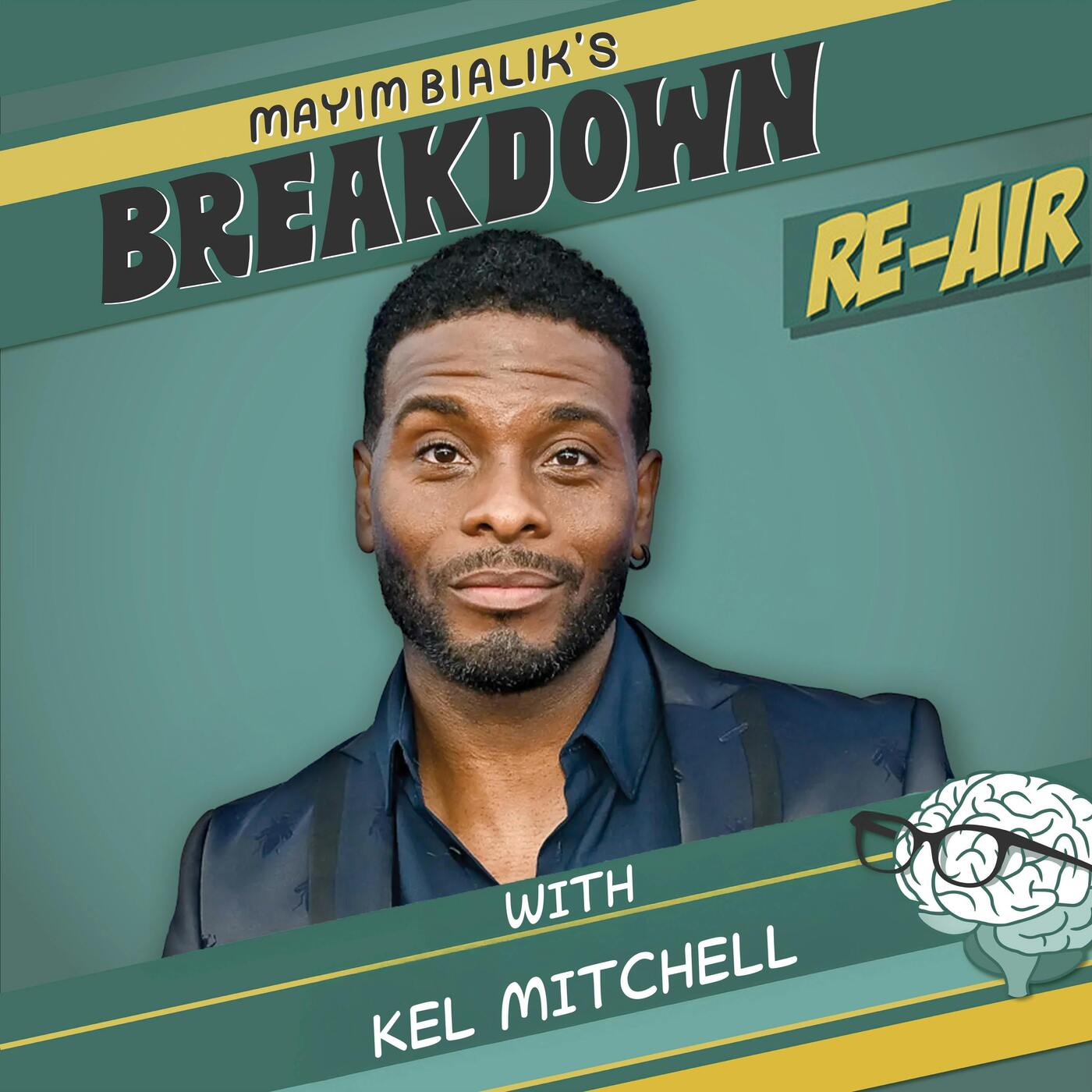
Loading summary
Transcript217 lines
- [00:04]
A
Hi, I'm Mayim Bialik.
- [00:05]
B
I'm Jonathan Cohen.
- [00:06]
A
And welcome to our breakdown. It is National Suicide Prevention Month this September, and in order to honor this month, we want to revisit our episode with a comedian and beloved 90s Nickelodeon star, Kel Mitchell. You probably know him from shows like all that or Kenan and Kel or the movie Good Burger. We were really, really blown away. Kel opened up on our podcast about something very, very intimate. His suicide attempt a few years ago and his journey from that time in his life and how faith has guided him on a path towards mental wellness and his decision to become a youth pastor. We really, really love this conversation. We think it's so special, and we hope that people will resonate with some of the insights that he draws on. And it's just a really beautiful episode, and we're so grateful we get to bring it to you. Before we do that, we. We want to remind you to follow us on Substack. Jonathan, tell the folks what they'll find over on Substack.
- [01:05]
B
It's a growing community of breakers, people listening to this podcast and reflecting on the ideas. We also share exclusive content there that you can't get anywhere else. Check out Mayim Bialik's breakdown on Substack.
- [01:18]
A
And now we hope you enjoy taking a look back at our episode with Cal Mitchell. Break it down. Welcome to Mayimbialik's Breakdown. It's so nice to meet you.
- [01:28]
C
It's so nice to meet you. How are you? It's a pleasure.
- [01:32]
A
We're good. This is. This is very exciting because I. I know a lot about you. There's a lot to know. But the, The. Here's the truth.
- [01:43]
C
Okay.
- [01:44]
A
When you started being famous on the television, I was in college and I was like, I'm just enough older than you that I was not. I didn't have a tv.
- [01:57]
B
Like, you weren't watching Nickelodeon.
- [01:59]
A
I was not watching Nickelodeon. However, I know that you're very, very famous. And one of the things that's amazing about you is, like, you've done a million things. Like you've constantly been working.
- [02:14]
C
Yes.
- [02:16]
A
Like that's. I mean, well, I do. I have some questions. You know, I started acting at. And then I kind of started regularly working from the time I was 14, but to like 19. And then I took 12 years off. But you didn't. You haven't taken 12 years off. So tell us when you started kind of your child acting career. You know, obviously you became well known as a teenager, but tell us A little bit. You're from Chicago, correct?
- [02:44]
C
Yes, I'm from Chicago. South side of Chicago.
- [02:47]
A
I was gonna say, what part of Chicago? It's important.
- [02:50]
C
Yeah. And I got started in a business in theater. And it wasn't a thing of, like, I grew up in the family where it was like, oh, you're gonna be a star, and you're this star kid, and we're gonna get commercials and tv. No, it was. I literally did it for a hobby. It was a good hobby. That was a positive hobby to do because my parents tried everything. Cause I used to be in class, like, just doing stand up. And so I would get in trouble. And so they were like, we need to get this kid into something. And then I had friends that were on the up and up, and then I had friends that weren't. And I was getting to that age where it's like, okay, we gotta find them something. So we tried everything. Kung fu, guitar lessons, science classes, everything. And what, like, really kicked off was acting. It was a community theater in my hometown, and I just fell in love with it. I remember I just took a summer course. I took the summer course because I got in trouble in summer school. And so my parents were like, let's try this. And so I did that, and I was like, yo, this is it. Like, I found what I really enjoyed doing, and it was a hobby. And I wasn't acting up as much in school anymore because I started doing plays, like, theater plays and stuff like that with adults. And so I was learning, you know, lines and stuff like that. But when I, you know, when I got into that, I was like, about. I want to say, like, 13, 14. So I was still a kid going to school and everything like that. Just do it. Just doing theater.
- [04:15]
A
Yeah. So talk a little bit about sort of what you were like as a kid. Maybe tell us what your folks did. Or, like, did you have siblings? I mean, I know a little bit about your story, but tell us a little bit about sort of like, who was this kid who became funny in class? Like, what were you like?
- [04:34]
C
I was the kid that would do a cartwheel to throw away something in the garbage.
- [04:39]
A
I hated that kid. I hated that kid.
- [04:42]
C
Yes, you would have. Yeah. Just to get a laugh. You know what I mean? I kept tabs on the teachers because I wanted to know them personally so I could tell jokes about them in class, which was crazy. And I just get in trouble because they're like, how did you even know that? Find information about the teachers. And it was crazy because my mom, she's a teacher and she's retired now, but she was a teacher at the time. So she. I didn't go to her school, but her coming home and then she's saying, I'm dealing with crazy kids all day and then I have to come home and find out you're in trouble. And then my dad was a psychologist, so I had like two different spectrums. And it was funny growing up cause my mom would give me a spanking and then my dad would be like, how do you feel? Spanking? How do you feel? So it was just like weird growing up that way. But I enjoyed it. And our family, we love putting on shows when we're all together. And like we would do. Everybody had a talent show during our family meetings and stuff like that. So we're just a loving, fun family. And I just had a lot of energy and I'm getting it all back now with my kids. I totally see it now. But yeah, I just had a bunch of energy. But shout out to my parents for like letting me kind of spread my wings and find what I want to do. They did that with me and my sisters, which I think is super awesome. You know.
- [06:04]
A
Who did you like? Like, who were your kind of comedy influences? Because I'm going to date myself here. Um, you know, like, I, I really got into In Living Color, for example, when I was like in junior high and in high school. And you know, that comedy really spoke to me. You know, I had been like staying up late to watch snl. You know, I'd say from. Yeah, like in middle school on.
- [06:26]
C
Yeah.
- [06:26]
A
But I also was raised on like Fawlty Towers and Monty Python. So I'm curious, like, who were your influences? Who, who were you impersonating when you were being this guy in school? If you were like, you know, doing a stand up bit.
- [06:38]
C
Okay. So definitely I agree with you. In Living Color. I was a huge fan of Unlimited Color. Watched everything. Martin Lawrence, that's another one. I loved Martin's show. And then too, I'm gonna say this. John Ritter. Okay. And I got to work with. She said, huh?
- [06:56]
A
Right.
- [06:57]
C
Exactly. See, and here's the thing. John Ritter, it's like his physical comedy was.
- [07:02]
A
No, I totally. Yeah, absolutely.
- [07:04]
C
And the thing about it is that I used to stay up at night before school. Like, you know, I was supposed to be bed, but I had TV that was in my room and you know, back in the day, that type of channel. And what would come on was Three's Company reruns. And I would watch him, like, do this crazy stuff in that apartment, being physical and stuff like that, where there was one episode where he played his cousin and played himself, and he had to be his cousin in himself and fool Mr. Furley behind the couch. Genius, right? In my little mind, that was like, dude, this is what I want to do. Like, this dude is hilarious. And I got to work with him years later. I know we're in the kid part, but when Clifford the Big Red Dog, I got to work with him, but it was just, like, amazing for me. So, yeah, that and then the Rat Pack. I love the Rat Pack because I'm a theater kid. I really love, like, being a triple threat. So it's like, the music, you know, Sammy Davis Jr. All of that dancing. I'm really into that. Yeah.
- [08:08]
A
That's really awesome. So tell us about your relationship with Kenan, because you guys. You guys grew up and then ended up. You had. You basically grew up together on television. Did y' all know each other before? Like, how did that. How did you become. Because you were, you know, you were a powerful duo, you know, for comedy. And so many people, you know, really resonated with your style of comedy and the way the two of you played off each other. So how do you get a comedy buddy that.
- [08:38]
C
Yeah, that's a blessing with that happening. We all want that as far as, like, having a cast that just works well together. But we started out on all that. All that was our first show, which was like, a. A lot of people say SNL for kids, but I really say A Living Color for kids because of our musical guests. And just how. For Nickelodeon, it was like a first with them trying hip hop and having kids that were all diverse on one show, bringing this comedy. So, yeah, it was just. We worked together on that. And what was funny was when I got into television, I was at the age where it was time to get a job. So I wasn't like, the kid, like, Hollywood stars. That's like, at, like, 5. I was on TV. I was like, you know, 15 when I got on TV, same. So it was like, you have a similar experience. Yeah. So it was like, you know, I remember, like, I had midterms when I auditioned for all that, and in the room, I just went super blank. You know what I mean? And I never do that, but I was like, midterms on mine in school, and so I remember I just was like. And they said, hey, you want to go out in the hallway, practice it? Come back in? And as I walked out, I knocked over a Whole bunch of camera cords. And when I knocked it over. But I did it in a physical way to, like, try to fix it. And they thought that was hilarious. And I came back in and they said, you know what? Instead of the monologue, just do impersonations. And instead of, like, impersonating celebs, I impersonated my teachers, my uncles and people I knew riding the CTA and riding the L train in Chicago. That's where a lot of stuff was birthed. Like, Good Burger was birthed in there. You know, I did that voice. I did Coach Creighton, because that was based on a coach that I had in high school that was very, very mean. He hated everybody. He was like, it's Valentine's. I don't care, love. Don't nobody care about that. And he'd throw a volleyball at our head. And so, like, that was kind of like where that came from. So a lot of characters were birthed in there. But then Mini Keenan, because I know she's like, I asked you about Keenan, but Mini Keenan.
- [10:46]
A
No, no. But this is what I was curious about. Yeah, curious about you, but also, like, how you get a buddy like that. Like, you know, to be a comedian with. Yeah, yeah.
- [10:54]
C
So he was on. He had already done Mighty Ducks, right?
- [10:59]
A
Ah, yes. Mighty Ducks, right?
- [11:01]
C
Mighty Ducks, right. The knuckle puck, I think it was. And he was already doing that. And it was a nationwide search for all that. So they got kids from everywhere. And I remember. I don't know if they set this up, but after our auditions, which was like, the Avengers, like, every funny kid from everywhere with their funny superpowers going against each other. After we got it, they put us in a hotel, right? Hotel room, lobby. Hotel lobby. And we all came down at different times. I don't know if they figured out how they were gonna do it, but we were all standing there and we'll see that kid. I'm like, okay, cool. I'll hang out with that kid. That kid. I don't know, maybe. And then it's. They're all coming down. And I remember Kenan was the last one, and he rolled in on his Rollerblades. Mighty Ducks Rollerblades. Did a trick and had all his Mighty Duck swag and was like, hey,
- [11:52]
A
kids today don't know how easy they have it. Back then, you had to have Mighty Ducks rollerblades. You had to do tricks to impress people. You had to knock shit over and pretend like you meant to do it.
- [12:02]
C
It was a show, man. Really. And so I saw this kid And I'm like, yo, I gotta hang out with him. And we would hang out off set and people would see that while we were shooting off all that, and they thought that we were funny offset in on. And I remember when we introduced tlc, and this moment is big for us because it was the moment we saw, like, oh, like, I was telling a joke, and then he would know what I was gonna say next. And I knew what he was gonna say next. It was like, it was just working very well. And we introduced TLC as two old men. And I remember that was the one where we were like, the show's over. Oh, yeah, kick it. And that's what they used as the tag at the end of every. All that. So, yeah, crazy moment.
- [12:45]
A
Yeah. I want to. If you don't mind, I want to poke at something you mentioned because I think. I think it does relate to, you know, sort of the impact you had and continue to have, you know, as a comedian and as a public person. This was a time in television where you didn't often see shows starring black people like that, meaning this was like a. It was a significant and important show that you were part of in terms of visibility. And I wanna know, you know, for me, you know, when I was that age, I was on Blossom, and, you know, we were on after the Fresh Prince of Bel Air, and we were the second highest rated show among black families at that time. Like, go figure. That was just like.
- [13:28]
C
I watched it.
- [13:28]
A
There you go.
- [13:29]
C
Constantly. We rushed home, like, thank you. Gotta watch Blossom. That's how we said it.
- [13:34]
A
No, but. But, no, there was, you know, kind of, like the beginnings of conversations about, like, we had Salt N Pepa on and we had, like, CNC Music Factory, and there's kind of the beginning of this, like, blending of cultures, which, like, you know, seemed very crazy in, like, the early 90s. Like, oh, my gosh. Like, anyway, you get it. But I am curious, was there conversation about that either in your family or with friends of yours? Was there a consciousness of, like, wow, this is a really bold, awesome thing, which now I think young people would look and be like, oh, that's cool. Like, great show. But at the time, like, it was really significant.
- [14:11]
C
Yeah. So my parents were very conscious of that. And so they always reminded me of this opportunity. But then also the kids that were watching me that I could enlighten and empower with being on this show. And that was cool for me. And so I always walked into it like, okay, I'm a role model, even if I don't want to be, but this is what I'm gonna be. And so I always looked at it like that. And then even now. Cause you know, when you're a kid, you don't really see it as much. But as we got, as we even now are older and we look back and we're just like, wow. Like, the amount of, like, kids that come up to me and say, like, it was awesome seeing two African American boys that just, you know, show this friendship, that was so awesome. And then just having this show that was so fun. And then even with all that, would it be so diverse? And then all the different acts that we had on the show, it was big. And even for kids, it was big. Cause even with Blossom, like, with us all being kids, that was a different thing too. So, yeah, I just, I love being a part of that. And for it to still kick, you know, like where people still can go back and watch those shows from the 90s and still go, hey, it still makes me laugh. Which is awesome.
- [15:29]
A
No, it's really awesome.
- [15:31]
B
Mind Bialix Breakdown is supported by Bio Optimizers.
- [15:34]
A
I struggled to get good quality sleep and I just thought, like, ugh, it's stress. But I learned during perimenopause and menopause, your hormones shift and it affects your magnesium levels. Low magnesium makes everything harder. Not just sleep, but focus, mood, stress tolerance. That's why we added Magnesium Breakthrough by Bioptimizers to our nightly routine. It's a blend of seven different forms of magnesium designed to support relaxation and overall sleep quality. Try it. See if you wake up more rested and refreshed, you've got nothing to lose and a lot to gain. BIOptimizers offers a 365 day, no questions asked money back guarantee. Magnesium Breakthrough is a fantastic way to improve that hormonal imbalance that especially happens with magnesium. And then you have better focus, you have better sleep hygiene in general. Bioptimizers makes it so easy. Here's what you get when you go to Biopt Optimizers.com breaker and use the code breaker 15 off your entire order and a free bottle of mass signs. That's Bioptimizer's best selling digestive enzyme added to your order automatically when you use our exclusive code. That's a $20 product, free on top of your discount. This is a limited time offer. While supplies last. You cannot get this on Amazon. You can't get it in stores. The offer exists in one place. Our link, our code, that's it. So if you were already thinking about Trying it. This is the sign. Go to bioptimizers.com breaker. Use the code breaker. Grab it before it's gone.
- [16:59]
B
Make 2026 the year you finally start sleeping again. Mind Bialix breakdown is supported by Bioptimizers.
- [17:06]
A
You know, I struggled to get good quality sleep and I just assumed it was stress. But as I learned during perimenopause and menopause, your hormones shift in a way that affects your your magnesium levels and low magnesium. It makes everything harder. Not just sleep, focus, mood, your tolerance for stress. That's why I have added Magnesium Breakthrough by by Optimizers to my nightly routine. It's a blend of seven different forms of magnesium designed to support relaxation and overall sleep quality. Try it. See if you wake up more rested and refreshed. You've got nothing to lose and a lot to gain. Bio Optimizers offers a 365 day no questions asked money back guarantee. Magnesium Breakthrough is a huge breakthrough to improve hormonal balance, to help focus, decrease brain fog, improve sleep hygiene. Overall, Bioptimizers makes it very easy. Jonathan, what do they get when they go to bioptimizers.com breaker and use the code breaker?
- [17:59]
B
You get 15% off your entire order and a free bottle of Mass Zymes
- [18:03]
A
Bioptimizers best selling digestive enzyme that'll be added to your order automatically when you use our exclusive code.
- [18:09]
B
That's a $20 product, free on top of your discount. Already.
- [18:14]
A
This is a limited time offer and while supplies last, you can't get it on Amazon, you can't get it in stores. This offer exists in one place. Our link, our code. That's it. So maybe you were already thinking about it. This is the sign. Go to buyoptimizers.com breaker use the code breaker. Grab it before it's gone. Make 2026 the year you finally start sleeping again.
- [18:32]
B
To put Kel on the spot. But given that he's a big Blossom fan. Does he have a Blossom impersonation?
- [18:37]
A
He's not going to do a Blossom impersonation.
- [18:40]
C
I got one of your dance moves.
- [18:41]
A
Oh my God.
- [18:42]
C
You were here with it. You said bow, bow with the bucket hat. With the bucket hat and used to flip the bucket hat. Flowers. I was a fan. Okay, listen, listen. You had the Jodeci boots with the dress and you said, look, you said
- [18:56]
B
the original OG hipster right here.
- [19:00]
A
That's me. I feel really old right now because I was three years old when you were 14. Now we've actually had a lot of guests on who have had early fame. And, you know, it's in my experience, just both my personal experience and also with people we've talked to. It's a mixed bag. And that's kind of like, what it's gonna be. And I think that, you know, for a lot of people, it's much more convenient to be like, oh, I did tons of drugs, and it was a mess. And then I went to rehab. Like, that's often not, like, what stories sound like. And stories are often also. They're not like, it was amazing, and I never saw anything bad, and I always felt positive and good about my. Like, it's a complete mix. And on one day, you feel really honored to be this public person. And on and by sundown, you feel completely overwhelmed, and you just want to hang out with your normal friends, but they don't treat you like you're a normal person anymore. And just like, whatever. It's a whole mix. Did you get married young? Cause, like, I'm. When I read your bio, I'm like, first of all, you've done so many. I'm like, is he 86? Like, how did he do this? You got married young, though, correct?
- [20:04]
C
Yeah, my. My first marriage. Yeah.
- [20:05]
A
Right.
- [20:06]
C
That's right. I was. I was married very young. Yeah. Yeah, very young.
- [20:09]
A
So after Keenan and Kel was no longer on the air, you had sort of a rough period. It was probably your first time kind of not working right. In. In a long time. Do you talk about sobriety? Like, how do you like to sort of frame that part of your life?
- [20:28]
C
Yeah, here's the thing. It's like, when you're in this business, right, and you get it as a kid, and it comes all, like, fast, right? And there are a lot of ups and downs. And there's a thing where you get to a point where do they love me for my character or for who I am, my regular person?
- [20:51]
A
And so I think they love you for your character. And here we are.
- [20:55]
C
Exactly. And so. And that's the thing that a lot of young celebs get mixed up. So then when the show stops, then it's like, well, who are you? You know what I mean? So you have to have a good sense of self and, like, not be like, oh, I'm my character. Cause a lot of people so much on the character.
- [21:13]
A
A lot of people think using them is the solution. It's like, oh, if I'm just the same person on and off camera, I'll never have to worry. Like, a lot of people do that.
- [21:21]
C
I know and you can't because of the fact that what happens is that you think, okay, these producers, these people, this is like. And you don't realize this a job. And then they go to the next job and you go to the next job, and it's a journey. Some. You know, I was in the mindset of like, okay, this is. This is it. This is what I'm doing forever. You know what I mean? And I can't be stopped. And there were things. But then there were times where it was like, I didn't know who to trust and I didn't know who was out for me for certain things. And that gave me a lot of anxiety. And then growing up in Chicago as well, I grew up around gang violence and things of that nature. And then I got to LA and it was like, oh, thankful to be here. But then there were things that I saw behind the scenes with a lot of different celebs that were very similar to what I saw growing up. You know what I mean? So it was just like, oh, boy. So it was a lot where that. I think people don't know the pressures that a lot of celebrities go through and within anxiety with finding a good sense of self.
- [22:26]
A
And those are things that all humans experience. Right. We're not saying like, oh, my gosh, you should feel bad for celebrities. But the fact is. Oh, no, celebrities are people too, who are experiencing anxiety. Like, we're whatever. Like, celebrities are people too. We're susceptible to the same pitfalls. It might be on a different scale, a larger scale, a more expensive scale, like, whatever it is, but those things are real. And it sounds like you're a very sensitive person. If you're a sensitive person, you're gonna be sensitive to that.
- [22:54]
C
Yeah. And you're adulting in front of the entire world. You know what I'm saying? So. And it's like, once you're in the public eye, you know, you're gonna get opinions by all kind of people, and some of those could be negative as well. And so as a kid in adulting, within that, it's very hard to digest a lot of that because you're trying to find out who you even are, and you're growing up very fast trying to figure that out. And so for me, what helped me grounded be grounded in that was my faith. You know what I mean? My faith in God, my parents drilling that with me when I came home, it was like, hey, I'm still Kel. But at the same time, you know, you still deal with the things that you Go through the ups and downs in life and decisions that you make. But I would never trade it because I feel like the things that I've went through in my life and the things that I've learned, there's no mistakes, there's just lessons. You know what I mean? And it made me the man that I am today. You know what I mean? Yeah.
- [23:54]
A
You're the grandson of a pastor, correct?
- [23:56]
C
Uh huh. Yeah.
- [23:57]
A
And what's the correct term? Have you taken on the ministry? What's it. I don't know what to call it.
- [24:06]
C
Yeah, well, I'm actually a pastor. I'm a youth pastor.
- [24:08]
A
Okay, got it.
- [24:09]
C
You're a youth pastor. Yeah, yeah, yeah, I'm a youth pastor. So yeah, I know. We just jumped over a whole like so many.
- [24:14]
A
No, no, no, no. I'll get back to it. No, because I did want to ackn that like I knew this about you and the faith thing, so.
- [24:21]
C
Of course, of course.
- [24:22]
A
So yeah, you've been open. Like obviously People magazine gets people to be open about all sorts of things, but you've been open. You know, I like to make a distinction between people who like had a good time partying and people who literally were living a life that they didn't want to live anymore. And it sounds like yours was more like, I don't want to live this life anymore. And you've also talked about a balcony in Canada. Something we also talk about a lot here is that oftentimes drugs and alcohol, they're not the problem, they're an attempted solution to, to you know, a deeper and often more complicated, I don't want to say problem, but set of issues that deserve to be held. So maybe you can talk a little bit, you know, and also knowing kind of the, you know, the position that you have as a, as a youth pastor, I'm sure this is something that comes up. Talk a little bit about sort of how it got out of control and then what that moment was like when you decided like, I don't want to do this anymore.
- [25:17]
C
Okay. So it was really finding, like I said before, that good sense of self. I was lost within. Okay. When I was in Vancouver, I was at, I remember I was at the Sutton hotel. This was 2006, I believe. And I had friends that had been murdered in Chicago while I was in, you know, la. I had, my uncle was murdered. I was. Had a marriage that was falling apart because we didn't really know each other. We were very young, we didn't know each other at all. It was a Situation where that. That was falling apart, looking at divorce. And so I had divorce. I had that going on grief. And I got to a point where it was just like, man, I'm just gonna push the off button. I'm just gonna literally just push the off button. And at the time, I was shooting, like, Mike 2 in Vancouver, and I remember. Which is really deep in the Sutton Hotel, if, you know, they shoot. They put a lot of celebs there when they shoot shows in Vancouver. But I remember Amanda Bynes was there. She was doing a movie. Kenan was there doing Snakes on the Plane, and I was there shooting my show, my mo. But this is what I'm talking about when it's. Yeah, you could be shooting something and you could be, you know, working a job. You can be, you know, this. Have whatever job it is. But a lot of times, you don't know what people are really going through personally in their life. And for me, I learned later in life that that is why it's so important to treat everybody kind, treat people how you want to be treated. But around this time, I didn't really know that. Around this time, I wanted to mask everything. And as far as my emotions, I really didn't show that a. I really didn't want to show people what I was really going through. I was embarrassed at what was happening. It was a situation where it was kind of like, I saw my parents have this beautiful relationship, and this was like, I had a list. It was like, oh, I'm getting married at this point. I'm gonna do this. I'm gonna do this. And it didn't turn out that way. And so it's like, oh, with that not turning out that way, what do you do? And I literally had a breakdown, and I was over it on a balcony. I was smoking, and I was literally about to jump. And a voice told me, no doubt at all, which was the Lord. It was telling me, look, get off that balcony, go into the bathroom, lock the door, and stay in there the entire night. Right? And I just stayed in there the entire night. And when I woke up in the bathroom off the floor, I said to myself, I got to make a change. I got to literally make a change. And I did that. And what was really deep about it is that when I came back, I filed for divorce. You know what I mean? Did that. Went through that process.
- [28:12]
A
That was a whole nother clean at that time.
- [28:14]
C
Yeah. I mean, I wasn't on, like, hard, you know, drugs, like that.
- [28:19]
A
But there's all different definitions of Clean.
- [28:21]
C
Yeah. But, yeah, I can do a lot
- [28:22]
A
of damage with just a couple mojitos, let me tell you.
- [28:25]
C
Exactly. But, yeah, but it was. We're talking about, like, drinking and smoking, right? And so, you know, weed, marijuana, all that stuff. And so, like, with. With that, it was more of like, no, I didn't get. I wasn't clean right then and there. No, not at all. And so this was definitely a journey. But within that, at that moment, it was me going, okay, all right, let me change my life around. Let me start taking the steps to making it happen. The steps. And so I came back home and filed for divorce. Did that. Changed my life around. And that was crazy, too, as far as that whole process. It went on for years.
- [29:07]
A
It does. It'll keep going on.
- [29:09]
C
Yeah, that went on for years. But here's what's deep about all this, right? Recently, I just filmed a Christmas movie in Vancouver, and I flew. I was just in Vancouver two weeks ago, and I went out walking. And what's funny is that they put me in the Sutton Hotel.
- [29:30]
A
No, they didn't. No.
- [29:32]
C
Which is real. Yes. So they put me in this hotel. And it was such a moment, because then looking through it through different eyes now, looking through it through godly eyes and who I am now and what I've been through, you're talking about. That was many years ago. That was 2006. And now that I'm looking at it, I'm going, wow. And I walked and went to a church that was down the street from Vancouver that I went to around that time. When I came out of that bathroom, I went to the church and I started reading devotional books and all that stuff, getting back to my faith. And I did all that at the Sutton Hotel. And so it was just such a surreal moment for me to go back there all these years later, you know, now having my beautiful wife, all my children, you know, all this love that we have, and knowing the things that I have defeated in my life, emotional walls that I have broken down. Like, in every emotional wall, there is an opening for people. And I'm so thankful that I found that. That opening, because it was really finding the love that God has for me and me showing the love to others and with me doing that was me saying, hey, I got through this. Let me show you how to get through it. Because I've been with a lot of celebs that want to find love, want to find just acceptance, and you would never know it. It's literally like they're just like, hey, you Know what I mean? But they're going through certain things in their life. And even with people that are not celebs, they're going through certain things. So if you can, at some point just be someone that will give someone a hug that maybe never gets a hug to say something kind to someone that never gets something kind said to them during the day, that's what's important to me. I feel like you meet everybody for a reason. And what's so deep about this is that now knowing the things that. The blessings that have happened, if I would have killed myself at that moment and decided to say, this is the off button, that's what the enemy wants, that's what, you know, would happen, and I would have never been able to tell my story. That's why it's so important that we actually tell our story. Mental health is very important right now for everyone, especially with going through quarantine and, you know, this pandemic. A lot of people have these, you know, alone time where they have to deal with their own demons and things from their past and things that they need to deal with that have come up. And that's going on a lot right now with mental health. And that's how I feel. That moment was when I was in that room alone out there at the Sutton Hotel. I had to deal with all those things. I had to be plucked out of this sea of sadness that I was in and plucked and put in one area by myself to deal with it. And when I did, I came out of it more blessed. And it was a journey.
- [32:26]
A
When this happened in the middle of you working the night that you locked yourself in the bathroom, did you have to go to work the next day?
- [32:34]
C
Oh, let me tell you. Let me tell you that, because that's
- [32:37]
A
what I'm trying to wrap my head around.
- [32:38]
C
Like, it was like 3, 8, like around 2 or 3am When I was doing that, right? And then I went into the. And I had to be on set at like 9:00am no. And I literally went in there with a glazed. Like, not. Yeah, I wasn't there. You know what I mean? But I played my part, right?
- [32:59]
A
We don't get sick days like that. We don't get mental health days as actors. So. So what I wanna know. This is just a personal thing. I wanna know what scenes you filmed that day, and I wanna look them up and I wanna psychoanalyze them. No, because what I'm probably sure of is that nobody could tell, right?
- [33:22]
C
Yeah, no one could tell. And I didn't Tell anybody anything.
- [33:26]
A
Right.
- [33:27]
C
And also, too, now, you gotta remember now, this is not. This wasn't just the moment. There's moments in Kenan and Kel and Good Burger when I had to be like, welcome to Good Burger, home of the Good Burger. You can't take your order. That I was really dealing with a lot of pain around that time. You know what I mean? So within that, that was going on too. So it seems that I watch Akia Nikhil, and I know people laugh and everything, but I know what happened right before I even arrived to shoot that first scene. You know what I mean? You just never know. You just never know what someone is going through. And it's always good to just show up and show God's love and show love to them. Cause you just never know.
- [34:09]
A
Yeah. You said something kind of in passing that I was wondering if you could elaborate on a little bit. And I really hope you don't feel uncomfortable about this question, but I think it is an important forum to give you the opportunity to talk more about the violence that you witnessed or saw growing up. Okay. I mean, you don't have to if you don't want to. But for young people, especially who grow up in situations where they see difficult things going on that they're completely powerless over in their community, in their world, that has a really large impact on the mental health, not only of individuals, but of communities. And, you know, this is something that, you know, I think a lot of people don't remember that, like, oh, Black Lives Matter. Also, like, had this country on its knees, like, even before COVID Rightfully so. But for a lot of us, part of quarantine, part of, you know, the pandemic and the isolation, was also watching an ongoing struggle that's been going on for hundreds and hundreds and hundreds of years kind of playing out in front of us. And I think that. That there's, you know, as helpless as I feel, the people who grow up in communities that are touched by violence. And I'm not just talking about black people. I'm talking about people who grow up in communities that are touched by violence or by drug abuse. Those have an impact. And, you know, there have been many wonderful documentaries that I force my children to watch, the 13th being one of them. But maybe you can speak a little bit about kind of what it was like for you, because you mentioned things in passing that many of us could never imagine having to deal with, like losing loved ones to this kind of violence. Like, can you talk a little bit about how you compartmentalize that as a kid or as an adult, definitely.
- [35:58]
C
So in the early 90s, growing up on the south side of Chicago, we dealt with a lot where in my household it was love, which was beautiful, and my parents keeping us covered and praying with us. But then when we go outside that door, what was really deep was how prayer covering us and them covering us. Because I lost a lot of friends, you know what I mean, to gang violence. One of my best friends was murdered, shot in the head. And I talked about that on when I did Dancing with the Stars around that time because I felt it was so important because we were having so much gun violence that was going around in 2019. And what touched my heart so much was that, man, I've been dealing with this since I was a tween, you know what I mean? And I've seen it and it hit so home because as I was pastoring, one of my youth were at one of the high schools where a shooting happened. And I was on, had just preached, went to Dancing with the Stars. But in that time, I was praying for her because she called me up and her family called me up and told me what happened. And so it was like the perfect. I was thankful that I had been through it because I was there to console her and let her know that she'll be able to get through this because I had been through it and then two. To have both of my uncles murdered, that was deep because of the fact that to see my father's two brothers murdered and these are my uncles that I loved very dearly. And all this stuff was happening, like shortly before all that, during all that, these were things that I was dealing with. So when I came to Nickelodeon, when I got on the show, it was like some. Some of the kids I couldn't really relate to. You know what I mean? You know what I mean? So, because it was kind of like the lifestyle was very, you know, very different. But then it was others that. But they had their own journey too, you know what I mean? The things that they were dealing with too, which showed me a lot too, in our conversation.
- [38:02]
A
But you.
- [38:03]
B
This episode is sponsored by Wandering Jews, an open door media brand.
- [38:08]
A
If you've ever found yourself feeling like you have more questions than answers, you're in good company. The Jewish people have been like that for thousands of years. Wandering Jews with Michal and Noam is a podcast where two of today's most dynamic Jewish voices, Michal Bittone and Noam Weissman, dig into the biggest questions about life through a Jewish lens. It's the kind of conversation where you'll laugh, learn something new, and probably shout in disagreement at least once. Michal and Noam tackle the tough topics like antisemitism in America, what happens after we die, and the future of religion with guests like Brett Stevens, Michael Rapoport and Sarah Hurwitz. And this past month, in honor of Jewish American Heritage Month, they've been celebrating some of the Jewish lives and institutions that have shaped American life, from food to music and comedy. Thoughtful, joyful, and always honest. That's Wondering Jews with Michal and Noam, a production of Unpacked. Find it on your favorite podcast app or on YouTube and make sure to hit subscribe. Check out Wondering Jews with Michal and Noam podcast and subscribe at Unpacked Bio nmx. Wherever you go, whatever they get into, from chill time to everyday adventures, protect your dog from parasites with Credelio Guide Quattro. For full safety information, side effects and warnings, visit cordelioquattrolabel.com consult your vet or call 1-888-545-5973. Ask your vet for Cordelio Cuatro and visit quattrodog.com you had kind of. You kind of gain an adult consciousness, I think when you have to deal with adult things like that, meaning having a sense of loss like that and a sense of fracturing of your own community and your own family and your social structure, it gives you a worldliness that a lot of kids probably can't relate to. And that's, you know, kind of what I was, was. Was thinking about, like, you carry all that with you, you know?
- [40:04]
C
Yeah. Like when I was on the. Not to cut you off, but like, when I was on the show, it was a situation for me where it was like, you know, I'm doing this for my city. You know what I mean? Like, I really was carrying, carrying that. I had a moment where I told my dad, when we were adults, we were just, you know, I was an adult. He was adult already. But I was talking, I was talking to my dad and one time, and he didn't know that this, this happened. I remember when I got on all that, my uncle, who loved to work out, you know, he was super strong and he asked me, he was like, yo, you, you need a bodyguard? I see like Michael Jackson Autumn, you know, people like that, they got bodyguards. And I was thinking to myself, I was just getting started. I think I've been on the show like maybe two months or whatever. It just aired. And I was like, nah, I mean, I ain't like that. You know what I mean? It's not like I need this bodyguard. But what was crazy was that that summer he was murdered. And so for me, I took that. I took it and I never told anybody. And I took it as if. If he would have been the bodyguard for me, then I. This wouldn't have happened. And I broke down to my dad and he was just like, no, like, I didn't even know that you were carrying that. No, like, he. You know, his lifestyle and what he was into and all this. I was like, yeah, I know, I know. But that was still my, you know, I loved him. I was still my uncle. So it's like if. If he was with me, then this. You know what I mean? And so as a kid dealing with that and then going to set and then, you know, and it was, you know, little things were, you know, kids on set. Like, I don't like the way the camera's on me like this. You know what I mean? Like, it's like, yo, like, come on, man.
- [41:51]
A
Yeah, there's a lot of other things.
- [41:53]
C
Shoot the scene, man. It's not that serious. You know what I mean? And so. But then it was like, you know, and then stuff with producers and things of that nature where it's like, when you start seeing the other side of the entertainment business, that's where was telling you with that trust. Because you gain an anxiety when people are. You're losing people around you, and then it's like, well, who can I trust? And then even with relationships, you pick the wrong type of people as well, you know, within. Very true. Within that. Because you haven't found a good sense of your own self. And how can I trust and letting go of a lot of things. And I dealt with a lot of that in my journey of just life. You know what I mean? I won't even say through my career, but just in. Just in life, you know.
- [42:43]
A
I have a question. It's kind of about two things, but I was thinking of you as a youth pastor. Where do you mainly pasteurize? What's the word?
- [42:55]
C
Oh, that's hilarious.
- [42:56]
A
It's a different word. Where do you.
- [42:59]
C
I get it, I get it.
- [43:01]
A
Where are your youth?
- [43:03]
C
We're at Spirit Food Christian Center. And where is that?
- [43:08]
A
What city are you in?
- [43:08]
C
It's in Winnetka, California.
- [43:10]
A
Oh, it's in California. Okay.
- [43:11]
C
Yeah, it's in California. And here's what's deep. It's like, I didn't just wake up and go, hey, I'M gonna be a passive.
- [43:17]
A
No, I wanted to hear what. I actually wanted to hear what's involved, like. Yeah, how do you do that?
- [43:22]
C
Yeah. So it's. I was in. I know you said in the beginning, like, you know, you've consistently worked, but there were a lot of ups and downs within it, too. Very thankful for working, but also, too, there was a lot of ups and downs. And so within that time and those downs, the Lord was there with me, you know, as far as my prayer and my faith and keeping me going. Because there was a lot that I had to go through. Like, even through when the divorce started, going through court systems, and then even when there was no more work and there was no more money and no more cars and totally starting over. And it's like, literally, hey, I didn't have, like, the whole, like, oh, I have this savings. No, it was, like, start over from square one. And it was really during that time where the church was there for me, and I had a lot of people that pray for me, pull me through. Like, literally, when I say pray for me, I mean, like, calling me on the phone, hey, Kel, I know you just went to the club, but I'm going to pray for you right now. I want you to pray right now.
- [44:28]
A
People always pray for me when I go to the club, but for a different reason.
- [44:32]
C
Right. And so, like, this was literally, literally going on in my life, and I was trying to, like, my dad calls this apartment that I had at one point called it the Cave, because it was just like this bachelor pad. But it was, like, really much nothing in it, but it was like a cave. And it went from, like, me just saying, hey, I'm single. I'm trying to figure out my life after divorce and all this stuff. But then it started to switch and turn into, like, this, my story. Like, I had index cards and Bible verses taped everywhere around the house so that when I walked out, I would have this with me. You know what I mean? So it was something that I could honestly go to at any point, became
- [45:19]
A
a whole different kind of cave.
- [45:20]
C
Yeah, a whole different type of cave. You know what I mean? And so what was crazy is that I had gotten to Help's ministry. I remember there was a friend of mine who I worked with on a project that didn't go through. You know, if you're an actor, that happens. And so. But she said, hey, I'm gonna send you an email, and I want you to just check it out. All right, I'll check the email out. And I Checked this email out, and it was the Church Spirit Food Christian Center. So I went to the church and checked it out and loved the pastor. Love his realness about who he was and his faith. And I got into HELP's ministry after being there for a couple of years. And within that, meaning helping wherever I saw that there was something going on, I wanted to help. Didn't do it for any money or anything like that. I was literally helping. And I asked. I saw that they needed help as far as stage management. And I was just like, you guys might want to do that. Because it was a lot of choir members arguing about time and stuff. And I said, you know what? Maybe I need a stage manager. And they were like, what? What's that? And I was like, let me help out. And so I literally became like, the stage manager. And I would do the video announcements and all this stuff. And wherever I was at, like, when work started to come in and I was traveling, I would have a setup like this with cameras and everything. Would do video announcements for the church, because I put the church in the forefront and God in the forefront, and that was just awesome. And I always had this calling on me to go to actually speak and be a pastor, because I was always speaking in my lowest of times. I remember I didn't have a car, and I was taking meetings. I remember I was taking a meeting with Cedric the Entertainer. And I would just. I was like. I put a restaurant that was close to the Cave apartment. And so then I was just like. It was like, yeah. He was like, this is an interesting restaurant. Why'd you pick this place? I was like, oh, no, it's all good. They have great food, man. They have great food. And then. So I'm doing that there. And then everybody gets out from the meeting, and I wait. Cause everybody's getting in their cars, and I just wait and I walk back to where I was staying. But it was like, literally moments like that that I go, oh, I love those moments. Because it really just made me just tap into enjoying the moment and enjoying life at whatever stage you are at. Because I wasn't always like that. And I think it's very important to do that. There's things that I look back now with the shows and stuff like that where I wasn't really enjoying the moment. It was more of a. Of, I gotta do this. I gotta be the funniest one here. I gotta do this for this. I gotta do this for this. I gotta do. And it was more of like, no, like, really understand the Blessing of just you waking up this morning and breathing is a blessing within this. But, yeah, I know I'm talking a
- [48:06]
A
lot, but no, I'm enjoying it. I just wanna know how you become a youth pastor.
- [48:10]
C
But, yeah, so within this and all the things that I was going through, within me speaking, that was really deep because it was like, in my time of prayer, the Lord said, I want you to go and speak to other youth about what you're going through. And I was like, well, I need somebody to speak to me. Like, I'm trying to get to places that I need to get in life, and I haven't got there yet. And he's like, no, go speak to youth. So I would go to youth groups and I would go to juvie halls. I would go everywhere and just tell my story of growing up in Chicago, growing up in la, growing up with all these things and showing how my faith brought me through. And as I was doing this, it was empowering me and empowering the kids. And a lot of things came out of that as I'm doing this. We did a show, me and my wife, we were dating at the time, and I'll say that, too, which is beautiful. When you work on yourself and you work on who you are, God gives you the person that you're supposed to be with, right? And so my beautiful wife, my best friend, when we were dating, I remember we started a show called the Back House Party. It was a live show for kids in Carson, California, right next to Compton, South Central. They all come through. We saw kids dancing during the Jerk movement, where they were just dancing in the street and they were doing videos in the street. And I was like, yo, it'd be dope if they had a place where they could have a competition and actually, like, battle, and that would be cool. And then we, like, you know, have vendors come. And then based on the money from the vendors and the tickets, we'll give them money, give the kids who want, and so. And it would be great for the vendors, you know, the community. And we actually did this, and we did it for, like, three, four years, which was super awesome. The kids loved it. And at the beginning of each one, it was a positive place for kids to come in the community. And we would pray right before they would go. And my pastor came to one of them, and he was so moved. He was like, man, these youth that you just, you know, ministering to, you know, I wasn't a minister yet, but he was just like, I want you to. I think you should preach Right. And be a vista right at the church and run a youth group. And I was like, no, absolutely not. I don't think that's what. I don't think that's what the Lord told you. I'm like, because I'm in. I'm in the like, I'm this like celebrity, you know, trying to figure my way out. And I'm like, how am I going to preach and then be on tv? And I have no one to really look at to get advice on that. I don't want to do it. And what was crazy was that a lot of people have been telling me me this for years. And I was also doing stand up at the time, which is another really deep thing. And within stand up, I was doing stand up and having great crowds and I had to learn how to be very good at it. But then when I would go up and bend the back to the green rooms and I would talk to the comedians and it's like, man, this 45 minutes or this five minutes on stage that I have or whatever, how long my set is, takes me away from the pain that I'm really going through. But what's happening with the mother hours of the day? And it was a point where I ended up praying with guys in the green room while we were doing stand up. And so I got to a point where I was just like, yeah, let me talk to the Lord about this. For real, for real. Because he's pulling at my heart and a lot of people are telling me this. And the Lord said, I want you to do it. And he said, but when you do it, I'm going to continue to. I want you to continue to stay in the business and in your career because there's people that need it in Hollywood too, and in la, you know what I mean? And I said, okay, all right, I'll do it. It's going to be rough. And so it was. And it was, it was like. It was like doing both at the same time. But then the blessings that come from it is so awesome. Like now when I walk on a set, I don't walk on a set, like, hey, you know what I mean? Like, I'm here cause I got this gig. No, I here for a reason. We're all here to tell a story. But I'm also here to meet these people, everyone that's here on the crew and the actors for a reason. Because we're all family and all from our heart.
- [52:12]
A
One of the things that I'm hearing, because obviously not everybody believes in God, or has to. You know, I'm the kind of person who believes that, like, there's one gravity you don't have to believe in. It just kind of is. And if you don't want to think about it, you don't want to pray about it, that's fine. But it exists whether you like it or not. That's sort of my view of, like, God. One of the things that I'm picking up on is that kind of. As your religious consciousness increased, as your commitment to your faith and that kind of notion of faith became more prominent for you, I'm noticing trends of, like, you being more present, you being more grateful, you doing more in your community. You're becoming more the person you want to be. And I'm not saying that, like, this is an advertisement for religion and, like, you should believe in God because of all those things. There are a lot of ways that people get to that. You know, many of us find that structured religion has a pretty strong formula and it's been around for a long time. So it's a. You know, it's an in. But one of the main things that I'm hearing you talk about changed, you know, as you had this kind of consciousness business, is you seem to understand your feelings better or more or maybe at all. We recently spoke to Nikki Glaser, who. A comedian who. You may know her, and she literally talked about, like, she didn't even. She still doesn't even really, like, know what her feelings are all the time when she's feeling them. So I'm thinking about kind of like the you that had all this fame and. And success. I don't wanna say fame, but, like, you had all this success and you were doing. You were doing really good, fun, smart comedy. You know, you were having this whole life. And sure, you were a teenager, but even it sounds like into your 20s, like, you weren't really dialed in to how you were feeling or what was happening to you. So can you talk a little bit? You know, less from a religious angle, but more from kind of what religion kind of gave you in terms of understanding your feelings and how that impacts your mental wellness?
- [54:10]
C
Yeah, well, to really. It's a. It's my spiritual. I gotta be honest with that. Because we're all. We're all spirits, you know what I mean? In the inside, like, this is just, you know, flesh, right? So in here is our real. Our real self. So I really had to tap in to that. And what's really deep is that I had a situation that happened where there was this evangelist that prayed over me and got a lot off of me and this might be too deep, you know what I mean? But it was okay. But yeah, so literally it was like,
- [54:47]
A
you don't mean you were praying at the same time and like he prayed over you and you were trying to be heard and he prayed. You mean he literally prayed over your being?
- [54:55]
C
Yeah, well, there was a lot of demonicness that was going on.
- [54:58]
A
Oh, wow. Oh, wow.
- [54:59]
C
And so within this. That's what I mean by deep. So in the demonic, it was like, I'm gonna pull this off of you. And so within our praying, we're praying in tongues. We're praying. And I literally had a situation where each one came out, introduced themselves, came out, and so literally. And all my buddies, they were there when this was going on too. And we were praying and just like I physically, like I was there, but I wasn't there, you know what I mean? And I was on the ground, all this stuff spitting up and all of this coming out.
- [55:38]
A
And.
- [55:38]
C
And when that happened, I physically would see, like they come out, they say their name and then it was gone. Right? And that happened multiple times to the point where I felt like I did a cardio session. After it was over, I went in the mirror and my skin looked different. Everything looked different. And in that moment I was like, yo, okay, there is a spiritual realm. There's a spiritual realm. In that moment I knew there's a spiritual realm. Now. Was I a pastor then? No. No. Was I going through who I am now? No. And so I had to learn this, what you're talking about, as far as those feelings and that love. And so I was hard headed at that time. Well, then it was kind of like, okay, well, that happened. And then I went through in and out of different relationships and went through all this craziness. And then it was just like I was still struggling, you know, trying to figure it out. And then I went right, like, right back to like this crazy lifestyle. And then it wasn't until I said, you know what, Kayl? As far as, like, love is concerned, as far as like career is concerned, you need to find out and tap into your real spiritual self. And you're gonna have to do that. And that means you're gonna have to be your honest self, be honest with your feelings. Don't put a bandaid over how you really feel. Because so many of us put a band aid over how we feel and we're walking around wounded and people are not really seeing the real us. You know what I mean? It's almost like with actors, they gotta put on, like, hey, I'm such and such. And then they turn off all the lights and Dylan. But it's kind of like, no, like, remember you said earlier where people are the characters, so if they stay, like, true to their character, then that's who they are. But I say, flip that around. I say, if you are being your true. You know what I'm saying? Your true self, whatever you bring into a room, you change the atmosphere. You know what I mean? So you change the atmosphere of being who you are and showing the God in you. And that's what just really happened to me, where I realized that this is a, you know, spiritual warfare that's going on. You know what I mean? A lot of people have generational curses. A lot of people are dealing with a lot of generational things. And it's like, okay, you have to know how to powerfully pray that off. So going through my life, I learned how to do that. And I've seen it happen to. Even with myself, and I've seen it happen with others. And now it was a. It was a situation where I would look at people and I could tell, you know, like, just like, no, they're going through certain things. I don't think this is. God showed me that discernment. You know what I mean? And what was really good about that is that now having that discernment, I can understand and go through my journey in life a lot better now. You know, people would say energy and stuff like that, but it's really. For me, it's like, really understanding that and grasping ahold of.
- [58:32]
A
That's a fantastic explanation. And also, like, I know that. That what you just shared is not something that you likely share with a lot of people, and I appreciate you sharing it with us because many people hear, like, praying over, speaking in tongues, like, on the floor, things coming out. Like what?
- [58:49]
B
Generational curses.
- [58:50]
A
Generational curses. But I have to say that, like, you know, Jonathan and I, you know, our paths towards healing in general, while they may not be of the Christian variety or the evangelical variety, we've done a lot of similar work in holistic realms. We just. I mean, we call it different things, but it's a very similar. It's a very similar process. And it kind of like, I'm giving myself chills because it makes me feel, like, more unified, like, whatever you believe, right? There's still this process that as humans, we have to undergo. We have to. If we want to live a True, authentic self. Right. Free of whatever demons. Like, and for everybody, it's different. Right. There's this kind of process, and some people may get to it a different way. Like, for me, my path has not been linear, and I don't appreciate that. But, you know, trusting God is trusting God's timing, right? Like, it's not me getting to design it. That's why, like, this notion of, like, it's not my will. If I prayed for my will. I don't know what Scott needs to do with his life. Scott's sitting over there. But, like, I know that in the universe, Scott will be taken on whatever path he needs to be taken on. Right. It's being able to, like, take your hands also off of, like. Like what you think the world should be like.
- [60:02]
B
When I hear generational curse, we talk a lot about intergenerational trauma and how those things get passed from one to the next. And so I think there's a lot of similarities that are maybe slightly different language, but have a lot of overlap.
- [60:15]
A
Yeah, but I've done past life regressions. I've been. I've laid on a table and had them talk to me about what they see. I don't know if it's real. I don't if it works, but it sure brings out some really interesting realizations and feelings. And it's always been a place of growth, even if I didn't understand it at the time.
- [60:32]
B
What I resonate when Kel says your. Your skin looked different after, you know, you have a significant spiritual experience and. Or you have a major shift. And what I also heard is that, you know, you began to feel like, more synchronized. You didn't use that word. But when you talked about, like, showing up to set and having that energy because we're there and you don't know what's going to happen, but you're sort of have a sense of being present and that there is some magic to be gained in the moment and that there is more of a divine process of life. To me, that's like, oh, we start to be more synchronized. We start to be in the flow state, as other people call it. And, you know, as those signs, did you sort of start to experience more ease or that, like, life began to unfold in a different way for you?
- [61:20]
C
You. He's got a wife.
- [61:21]
A
He seems really happy. He's got pretty shit hanging behind him. He's got a guitar. Look at his necklace.
- [61:28]
C
Yeah, it's this. It's this love. Like I said, it's this. Is this Joy. That happens. And it happened over time with me getting more and more in tune with it and more connected with my spiritual self, which has been super beautiful. And then the words that we say, how we talk about ourselves, because that's very important, too. Words have power. You know what I mean? And I talk about that all the time. And, you know, people can say things, like, about themselves, you know, and just like. And don't realize that in the spiritual realm, you're stopping yourself from getting to a certain area because you've prayed, you know, in church, and go, yeah, I agree with you, Lord. I want this to happen. And then as soon as you step out of there, something happens within your life. A distraction comes up, and then you go right back to that area in your life where you start talking bad about yourself and talking yourself out of the blessing that is on the way. So it's very important to speak. You know what I mean? And to speak before you even see it. That's what faith is about. You know what I mean? You know, if you have to say it and believe it, you got to believe that it will manifest.
- [62:34]
A
You take the first step in faith. You don't have to see the whole staircase. It's credited.
- [62:38]
B
We talk a lot about inner narrative.
- [62:40]
A
I was gonna say that's credited to the Reverend Dr. Martin Luther King James. We need to say that when we say the steps thing, before we let you go, here's a weird question to end with. What is a bad day for you now? A bad day meaning, like, you still get down. Like, you still have days where you feel sad. Like, what is your. What do you do?
- [63:00]
C
Okay, so the way that I get out of it is because I get up early in the morning and I spend time with Christ. I spend time with just praying. But what I do is that within that praying, within that meditating, it's keeping my family protected and whatever I'm gonna come up against, because he knows, I don't know, just like you said earlier, and it's very true. So what I do is I go, whatever's gonna come up, I'm gonna keep my joy no matter what.
- [63:29]
A
How long do you take in the morning?
- [63:31]
C
I take. Well, I work out, too. So I spend, like, two hours in the morning. I spend two hours in the morning. I stay first. The first thing is prayer time. Meditating.
- [63:41]
A
How do you meditate? We're very curious. What's your. What style of meditation do you do? Like, you just breathe. You breathe and count. What do you do?
- [63:48]
C
Well, no. Yeah, well, definitely Praying first.
- [63:51]
A
Right.
- [63:51]
C
Taking it to Christ, and then also with adding a Bible verse to whatever I might be dealing with. Right. So I add a Bible verse to whatever situation that I might be dealing with.
- [64:02]
A
You're just, like. You're just thinking about it. Like, you think hard.
- [64:05]
C
No, no, no, no, no. I have the Bible. I have the Bible. Got it. Okay. Yeah, yeah, I have the Bible there with me. And let's say it's a financial thing that I want to go through, and then I'll look for a verse for that first. It's like anxiety I'm going through. I look forward with that. Right. And then I spend time just soaking, meaning just to stand in the Holy Spirit and just really take time to pray, you know, for whatever will come up in my day. And that's like a form of meditating, right? Where you're standing there and you're just like, really just letting him speak to your heart.
- [64:36]
A
Heart.
- [64:36]
C
And I do that while I'm there. And then when I get up, if. When situations happen, then I can tap in immediately and go, oh, okay. There's no mistakes. There's just lessons. Okay, I understand. And I'm gonna walk in my faith. Whatever I talked about earlier, I'm going to do. You know, I could do all things through Christ who strengthens me. So in this time of my weakness, I'm gonna have strength in this time of my weakness. And you can stop and pray at any point. It doesn't have to just be in the morning. It's like, I've been in.
- [65:05]
A
You can pray all day if you want to.
- [65:07]
C
Yeah, I've been in meetings and just, you know, I stopped and prayed. I'm praying. You know, I pray while I'm smiling, looking at everybody, but I'm praying for my next word. What am I going to say next? Lord, is this. Should I do this? Should I. Should I do this? I'm going to take it to him. I always talk about taking the Lord and your faith in everything you do. Everything you do. That means your career, your family, your marriage and everything.
- [65:30]
A
Yeah, that's really. So this is super duper awesome to get to talk to you about. About such a variety of things. And you're. You're a very interesting person. I kind of want to talk more.
- [65:39]
B
Kel, sometimes we ask for a little retrospective advice. If you could reach out to someone right now who maybe is, you know, has. Has been near that balcony in Canada, metaphorically speaking, who has sort of been in a state where they've taken on grief, the Way that you describe taking on grief with your uncle, you know, now that you have that distance from it, looking back, what would you say to someone who is, you know, in. In a place similar to where you were.
- [66:11]
C
You were born for a reason. You have a purpose and you are loved. Everyone has a purpose. And the thing about it is that don't throw your life away. I am such a great example of that that. Because if you see. If you look at me and see the things that have happened and if I just said no. You know what I mean? If I said no, and what would have happened? And I'm looking at, like, now my kids that were born after that. You know what I mean? And to see them and to hug them and to kiss them and see them grow up and learn life. And just. And then meeting my beautiful wife after that, and just. And the things that have come up with conversations, it's just like life is. When you look around, life will be beautiful. You have to find the joy in everything. And I know that could be hard right now because what you're looking around at is like, I don't really see that right now, but you have to create that joy within your heart. Loving yourself first. And one way of doing that is talking about yourself in that way. Mostly when we really look at it, there's a hurt that's there, and I had a lot of hurt. I really would take myself, like, you know, going, oh, if I didn't do this, okay, you did this. Oh, this happened, this happened. And I would put myself under the microscope and just be really mean to myself. And it's really. You got to love yourself first. That's what it's really about. Love yourself first and make yourself say loving things about yourself. Write it down. Say it out loud. Say it out. Say it out loud that I love myself. I'm beautiful. I can make this happen. I can do this. Because if you do that, you start doing that, it starts to happen. It's those great affirmations that you just keep saying about yourself every day. And it is a kickstart for your day, and you'll start seeing things kind of change around in your life. Real talk.
- [68:09]
A
I love that. I believe it. That's it. He made me a believer. Kel Mitchell, this has been a really fascinating, lovely conversation with you. You're awesome. You do so many beautiful things as a comedian and with the lives that you touch, and it's such an amazing journey. And thank you for letting us be part of it.
- [68:26]
C
Thank you. Get my book too. It's coming out December 14th. I have a book called Blessed Mode.
- [68:32]
A
Oh, I love it.
- [68:34]
C
Super excited about that Blessed Mode. You know, I'm a gamer too. I like video games like that. And you know, there was a thing in video games where it called God Mode. Right. Where like if you get, if you get this, you start to understand like the people that design the video game, they would use this so they can go through the video games really quickly and see what's wrong. Right. So with Blessed Mode, it's that same way where now you can also be connected to the creator who created you and start to navigate life in that same way. A lot of people need that pre workout to get them excited for the day, to find that joy. So I created a devotional which is a 90 day challenge.
- [69:14]
A
That's so cool.
- [69:15]
C
In that book, it's stories of my life, things that we covered here. And then it's a Bible verse that goes along with it. It's really what you asked me what I do in the morning. I created it for everybody else to be able to do. And then at the end of it I have an apply where they can apply it into their life. So I have them do a challenge at the end of it all. So blessed mode, December 14th. Pre orders are open right now, so we're up on Amazon and every week.
- [69:40]
A
Oh, that's so awesome. Okay, we will also. We'll make sure.
- [69:44]
B
We'll link to it.
- [69:45]
A
Yeah, we'll make sure to link to and give it a special shout out. We'd love to get a copy also. I mean, I can also preorder. That would be amazing. We get a little stack of books by our guests and I would love to see it. And as a person of faith, I especially would be interested to see. So thank you so much. I liked him. Every minute we talked to him, I liked him more and more. He's very likable.
- [70:07]
B
The idea that we're all walking around wounded and that we have to take off the band aid to show our true selves I think is like, like so, so unavoidably true. And I used to look at adults as like when I was a little person and I forget what age I was. I was probably in my mid teens somewhere. And I realized that all adults weren't really fully grown and evolved human beings.
- [70:32]
A
No, they're just taller kids.
- [70:34]
C
Yeah.
- [70:34]
B
And so I was like, I wonder how old that adult is. And it's not like, it's not that they're not their age, it's just like emotionally, in different moments, we are not always the age we are. We kind of revert wherever we've been, you know, stunted or wounded. And I just think that if we were to identify more that a lot of us are walking around in these states, we don't know what other people are going through, but good chance they're going through something because it's almost impossible not to. We would have a lot more tolerance and kindness for each other.
- [71:05]
A
I mean, his path is so unusual, you know, that he was like this child actor who had already come from so much complexity and loss and challenges. You know, it sounds like his family was a really interesting unit, you know, but then to kind of have this journey of sort of like losing that fame connection and then kind of feeling like you're losing yourself. Right. And then to like keep having these opportunities to come back and. And, you know, I am a person of faith, but I generally don't resonate just in general. I don't resonate with people who tend to be very, very Christian based because a lot of the language is just. I can't really find the universal nature of it. But there was a lot that he said, like when he started talking about his experience, his evangelical experience, like, we're watching a documentary that's talking about these kinds of things in South America. Like, we've experienced these things from holistic practitioners. Like there was a sense of universality, you know, to what he was saying. And this was a very interesting and very kind of developed concept of how God fits into his life. And, you know, again, doesn't have to be for everybody, but it seems to really work for him. And I found him very authentic.
- [72:25]
B
You know, I'm going to tie together a couple things that he talked about about. One, about the things that we carry and how when he was describing being prayed over and having those things released in him, I think if you said so, I think a lot of people or some people might totally understand that. And other people would be like, well, I don't know if I understand, like, what does that mean?
- [72:46]
A
And oh, a lot of people would be like, what? That, that's insane. That's what a lot of people are going to say.
- [72:51]
B
And my approach to that is that we can have a lot of different things that could be classified as that. You know, you could do the. You could do the standard definition, which is like spiritual warfare. And there are bad entities that are attached to us and those have to be removed. Another thing can be like, there are aspects of ourselves that are unresolved and when he talks about, you know, again, his uncle and. And what I heard in my interpretation of it was like, him making sense of that enormous loss and grief.
- [73:19]
A
Well, he was carrying so. So much guilt, you know, misplaced.
- [73:23]
B
So this is what I was going at, is this misplacement as we try to make sense, because we're all processing and trying to make sense of our experience, and so we make these connections that don't necessarily hold water. I had an experience, and, you know, I've talked to you about this in more detail, but the summarized version is I had this bodywork treatment with someone who used a very specific breathing technique that was like a very fast breathing, including tapping. And I was put back into a. Almost a hip.
- [73:54]
A
Tapping is a holistic kind of alternative method of healing, too.
- [73:58]
B
And it was with someone I knew for a while and trusted greatly. And I ended up going into a meditative, hypnotic space where I went back and I saw my brother. It was like I was watching almost a scene unfold before me. And, like, I was the observer and you were awake. I was. I was conscious.
- [74:17]
A
Right, right. You weren't asleep. It wasn't a dream.
- [74:19]
B
It wasn't a dream, but it was as though it was a dream that I was awake for. And I was able to see kind
- [74:26]
A
of like our relationship.
- [74:28]
B
I was able to see my brother in the hospital bed days after he had had this injury where he was, like, connected to all these tubes. And this is a horrific scene. And I could see myself watching him, and I could see the emotional impact that that had. And I, like, I had this intense, visceral experience, and I couldn't move my body for a while. Changed.
- [74:51]
A
It changed you forever, that experience.
- [74:53]
B
And so, you know, I can go into more detail at another time, but the short version is that coming out of that, I felt like I had something lifted from me. A level of grief, a level of trauma that I had been carrying. And this is like, many decades after the injury that I thought I had processed and I thought I had talked about and I thought I had cried about and was angry about and looked at it from every different angle. And then to still have that sort of sitting in me in that way, it totally transformed me. I felt lighter afterwards. I had a depression that lifted. I ended up changing my life in very short order afterwards. And I just think that. That whether it's a. Whatever you call it, there are so many things that people are carrying that they don't necessarily have a way to process. And we talk a lot about therapy, it's amazing. But, you know, there are people who are being. Using prayer and using meditation and using breath work in ways that. And I think we're just at the beginning of our understanding of what are all the things that are impacting us and all the ways that they impact us. Like, that's where I. I interpret his notion of the spiritual realm. And there's a whole other dynamic that's going on.
- [76:05]
A
The other thing that I really like that he talked about, which I've. I've heard, but I've never heard someone talk about it this much was the notion of. Of us having, like, being spiritual beings, like having a spiritual self. And, you know, a lot of people say, like, I'm not religious, I'm spiritual. But what that often means is that they're not religious or like to be very spiritual. But some people are spiritual and not religious. I'm not saying it's not possible, but a lot of people kind of use it as a default. But I like the way he spoke about it because even in the most, like, scientific description of our existence, right, we have a physical embodiment, and then we have us, like, who we are, our personality, like our mind, our heart, like the things that we bring to people, you know? You know, the. The Jewish concept is that the soul is separate. You know, like, this is literally a vessel. It was actually when my father passed away, it was like the first time that I understood it when I saw his body, and I was like, that's not him. Like, it really felt like that, you know, that's the vessel that we understood as him. But our existence really is this other realm, like, of who we actually are. So I really like that. It didn't feel like he was, like, trying to sneak in religion, like you have a spiritual self, but really that means accept God. What he meant is that, like, there is a. There's an understanding of our positioning in the world. And a lot of people don't want to go there.
- [77:34]
B
There's another layer to our experience.
- [77:36]
A
But a lot of people don't want to go there. I mean, I have friends who literally say, like, I don't want to cry. I don't want to feel things. I just, like, move through life. I'm just like, I'm a bulldozer. And that's just how I like to be until something happens or you have to feel your feelings and then they catch up with you. You can't run from feelings. They're like pee pee. You can try and hold them in, but they're gonna come out.
- [78:00]
B
The other thing that's really beneficial about doing this type of work is what he mentioned about knowing himself and being really connected to his intuition. Like, I remember earlier in.
- [78:10]
A
You like that a lot?
- [78:11]
B
Well, I like it because I remember as a teenager just being so in my head about a decision that I couldn't tell how I felt about it. Absence of some rational undermine understanding and obviously using reason and rationale is really important. But being able to feel into what something feels like to you.
- [78:29]
A
I don't trust my feelings. So I don't. I can't relate to that. I mean, I just, I'm being super honest. I can't relate to that.
- [78:35]
B
So I, I did relate because I feel now more than ever that I can have a gut instinct about something.
- [78:41]
A
And sometimes you just want your way.
- [78:45]
B
Says the person who doesn't have gut instinct.
- [78:49]
A
No, we go by your gut instinct. That's how we do.
- [78:52]
B
That's almost always right. Speaking of always right, let's do an Ask Mayim anything.
- [78:56]
A
Ask Mayim anything.
- [78:58]
C
Yeah.
- [78:59]
D
Hi Mayim, my name is Meg. Obviously you don't know me, but I have a question about grief and how our brain works specifically around complicated grief, long term grief. And I'm curious because I. I have gone through many phases of healing with grief around therapy, emdr, non traditional healing with energy and shamanic healing sessions. Lots of different versions of this. And there are periods right around the major loss in my life that I call blackout sadness, where there are things I just don't remember that happened that other people were present for. And so I'm just real curious, kind of those long term effects of grief on the brain and functionality and then the ways that our brain kind of either shuts down or works over time to get through that process.
- [79:51]
A
Thank you, Meg. G. This was fun. We haven't had an audio AMA in a minute. First of all, I just want to sort of acknowledge and honor all of the different modalities that you just mentioned for dealing with grief. Many people don't know what complicated grief is. You know, the short answer is complicated grief is the kind that often takes a lot of modalities to sort of allow you to function through. Complicated grief usually comes from the generic colloquialism is unresolved issues with the person who has passed. And I'm not, I know nothing about Meg's story, but I'm just talking in general about complicated grief. This could refer to someone who also was your abuser. This could refer to someone you've Been estranged from. This could refer to someone who was a very complicated personality or had a lot of personal challenges. That makes it hard to sort of have a generic grief experience about. I mean, there's no generic grief, but you know, if someone had, for example, a criminal background or some large moral challenge that they experienced, it might make that kind of grief complicated. So. I can't speak. I'm sure there is research on sort of the long term effects of, of grief. You know, I, I would imagine they're not significantly different from kind of the long term impacts of depression, you know, or, or something kind of that's low level or that can spike. All the things that we can do to improve our mental wellness are things that will benefit a general system that's under any sort of strain, especially from long term and, or complicated grief. And complicated grief doesn't have to be long term, but sometimes it is. You know, the brain is generally protective. The mind, you could say, is also protective. And you know, the general kind of notion in the, in the academic industry is that your brain will release things to you when you're ready to receive them. You know, most therapists will not, that will intentionally not try and force memories or force you to kind of bring out things that are periods of blackness. So there's a level of acceptance, I think. I mean, Jonathan, I don't know if you have anything to add because, you know, you're right here. There's a level of acceptance with things that you don't remember that many people need to come to, you know, kind of having some, I mean, this might sound strange, but having some sort of ritual around whatever those memories are, are, you know, some people can visual, do a visualization where you're wrapping them up and you're, you know, putting them somewhere safe or, or you're sending them down a gentle river, you know, to go to where they need to go until they need to come back to you. Do you have anything you want to add, Jonathan?
- [82:33]
B
Yeah, I've had an experience of doing a reconnection to the self ceremony.
- [82:38]
C
Oh.
- [82:38]
B
Where, you know, because the question is like what parts of the brain shut down or work overtime. I can't speak specifically to the brain, but I have in my own life have experienced like a disconnection from, from part of my capability or.
- [82:51]
A
Yeah, it's a limbic system, if anyone's curious.
- [82:53]
B
But yes, less creativity, less sort of overall, you know what I think. Exactly. And so in, you know, I've done some shamanic soul retrieval work and in that if you could only see her face. And in those ceremonies, before you actually do the actual work, there's like a preparation for them and there's an intention that you set for sort of a week or two ahead of time that says, whatever parts of me have been lost, I'm sort of, I. I welcome them back. And you're beginning to set the intention. So if you have these suppressed memories, you're sort of setting the stage or suppressed emotion around a specific issue. You don't have to know what the issue is. You just have to open the channel for this parts of you that you've lost.
- [83:39]
A
If something is supposed to come through, it will, and if it doesn't, it's not supposed to. Supposed to.
- [83:42]
B
Exactly. And a little bit of context is that in the shamanic belief system is that when we experience a traumatic event, we lose a little part of ourselves, and so we get separated. And that, you know, obviously is not about the brain function, but it, it's that a different explanation about it.
- [83:56]
A
That's a kabbalistic concept as well. I hope that was helpful, Meg. And we wish you continued healing. And you know, I think in complicated grief also, it does become part of you. And in some ways that's hard, but in some ways it's also okay because the notion of kind of like fighting grief and feeling like there's going to be an end to it also is not true. I don't think of any grief. So thank you for your question.
- [84:22]
B
If you want to ask Miam anything, you could do, so@bialikbreakdown.com that's B I A L I K breakdown dot com. Also check out the Instagram page. Ialikbreak.
- [84:30]
A
Follow our Instagram page.
- [84:32]
B
Don't just check it out.
- [84:33]
A
Don't just check it. You keep telling people, check it out. Follow it.
- [84:36]
B
Follow.
- [84:36]
A
Follow us on Instagram is what you're supposed to say. Bialik breakdownbreakdownbreakdown. From our breakdown to the one we hope you never have. We'll see you next time.
- [84:45]
C
It's Mayan Bialik's breakdown. She's going to break it down for you. She's got a neuroscience PhD or two, and now she's going to break down. It's a breakdown. She's going to break it down.