← Mayim Bialik's Breakdown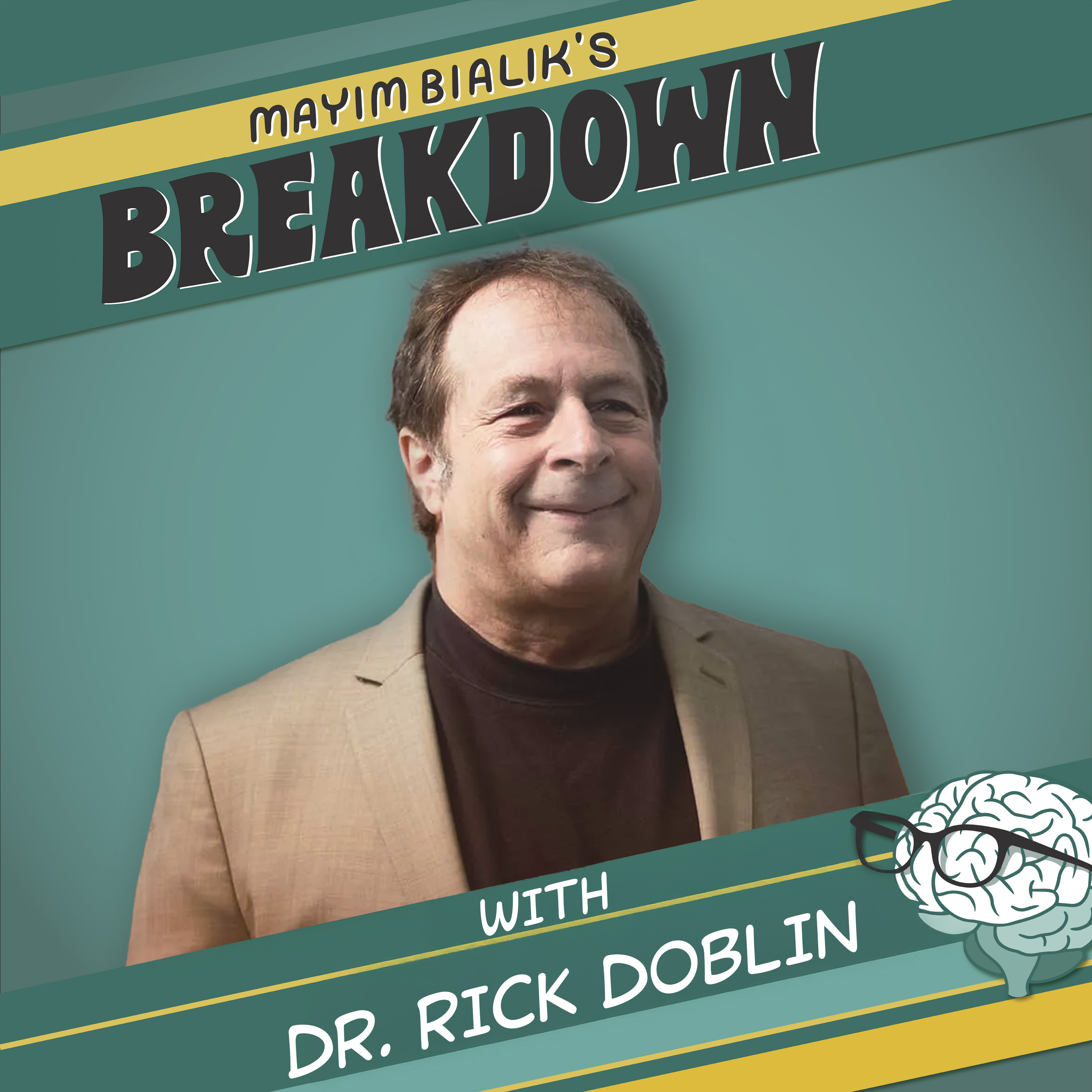
Mayim Bialik's Breakdown
50 Million in Funding, 10,000 New Clinics, and the Mistake That Could Kill the Psychedelic Revolution | Dr. Rick Doblin
00:47:38
Loading summary
Transcript90 lines
- [00:00]
Dr. Rick Doblin
We're at a moment that has been building for well over half a century. Psychedelics were blossoming in the 60s. And then we have the Nixon crackdown. What's just happened for the first time is that the Republicans have become champions of psychedelics.
- [00:15]
Jonathan Cohen
We're not talking about tripping balls. We have the power to change your brain.
- [00:19]
Dr. Rick Doblin
There will be $50 million coming out of the federal government for psychedelic research. My prediction would be five to 10 years. There'll be 10,000 psychedelic clinics all over America.
- [00:30]
Jonathan Cohen
Dr. Rick Doblin is the founder and president, MAPS, the Multidisciplinary association for psychedelic Studies. His goal is to harness psychedelics to change the way we think, feel and live.
- [00:41]
Dr. Rick Doblin
One in six Americans is on an ssri. New drugs for mental illnesses are about controlling symptoms and not getting to the root cause. The goal is for therapists to be cross trained in lsd, mdma, psilocybin, and then they customize treatments. The big worry about the for profit psychedelic companies is they want to run away from therapy. When you don't do therapy, you don't take advantage of the neuroplasticity. People need to buy more of the drug. That's this capitalism versus altruism. We want a psychedelically literate population that has learned about psychedelics for prevention, spirituality, connection. You don't change an old model by criticizing it. You change it by creating a better new model.
- [01:24]
Jonathan Cohen
What is that?
- [01:25]
Dr. Rick Doblin
Oh yeah, it's a World cup holder.
- [01:27]
Jonathan Cohen
Like the soccer tournament.
- [01:29]
Dr. Rick Doblin
World cup holder for the world. Fits every car, holds every cup.
- [01:32]
Jonathan Cohen
It has a Carvana logo.
- [01:34]
Dr. Rick Doblin
Carvana made it.
- [01:35]
Jonathan Cohen
They buy and sell cars, so they
- [01:37]
Dr. Rick Doblin
made a car cup holder. So. Got any good cups lately?
- [01:41]
Jonathan Cohen
Used to. Just couldn't figure out where in the
- [01:43]
Dr. Rick Doblin
world to put them.
- [01:44]
Jonathan Cohen
The World Cup Holder brought to you by Carvana.
- [01:46]
Dr. Rick Doblin
Proud sponsors of the World cup holder,
- [01:48]
Mayim Bialik
sign up today to win yours@cup-holder2026.com not
- [01:51]
Jonathan Cohen
authorized or endorsed by FIFA.
- [01:52]
Mayim Bialik
Not a real product for parity and various purposes only.
- [01:55]
Dr. Rick Doblin
Support comes from Wise. The smart way to manage the currencies you need around the globe. Fed up with losing out to hidden fees when you send money abroad with your everyday bank, choose the smart way Wise you can count on the exchange rate you'd usually find on Google. No unwelcome surprises. Plus, ditch that where's my money feeling. Most transfers arrive in under 20 seconds. Join millions saving billions on hidden fees. Be smart, get wise. Download the Wise app today. T's and C's apply.
- [02:34]
Jonathan Cohen
Hi, I'm Mayim B. Alec And I'm Jonathan Cohen, and welcome to our breakdown. There's a huge set of changes occurring in the government and in our lives regarding the use of psychedelic therapy.
- [02:47]
Mayim Bialik
Recently there was an executive order that fast tracked the FDA to research these medicines, increasing the timeline that they could be available.
- [02:57]
Jonathan Cohen
Are we on the cusp of possibly tens of thousands of psychedelic clinics across the United States? Or are the pharmaceutical companies setting us up for their profit over our healing? Our guest today is Dr. Rick Doblin. We've spoken to him before. He's the founder and president of maps, the multidisciplinary association for psychedelic Studies. He his professional goal is to help develop legal context for the beneficial uses of psychedelics, primarily as prescription medicines, and for a very, very specific and fascinating set of cases. Dr. Doblin's going to explain how MAPS just celebrated its 40th anniversary. So much has changed even in the last five years in terms of how we understand trauma, trust, treatment, resistant depression, and how these medications are actually tapping into the neuroplasticity that the human brain is utilizing to change the way we think, the way we feel, the way we live. And in particular for veterans and for underserved populations where rates of addiction, rates of abuse, rates of trauma are higher. How can we get more people the help they need without falling into a pharmaceutical mess?
- [04:12]
Mayim Bialik
There is so much potential on the horizon. But Rick highlights the one major mistake people are making with psychedelics. You do not want to miss that.
- [04:22]
Jonathan Cohen
We're also going to talk about ibogaine and the recent conversation about can this medicine actually change the way we see the opioid crisis, the way we view addiction in general? Or is it another way that we're opening ourselves up into a world that we don't yet fully understand? We. We're so excited to welcome back to the Breakdown, Dr. Rick Doblin. Break it down.
- [04:47]
Dr. Rick Doblin
Maima, it's fantastic to be here.
- [04:49]
Jonathan Cohen
I'm really delighted, always excited to talk to you. But we're especially excited to talk to you in this moment. Can you start us off by sort of giving us a lay of the land of where psychedelic research is and in particular, what moment we are in at this time in history?
- [05:09]
Dr. Rick Doblin
Well, we're at a moment that has been building, I would say, for well over half a century. So 1970, we have the Controlled Substances act and criminalizes psychedelics, and then Nixon decides to really launch a global international war on drugs, and that wipes out psychedelic research. So for decades, there was no psychedelic research anywhere in the entire world. That was Sort of the peak of American power. And one of our worst exports was the drug war. So beginning in 1992, a new group of people took hold at the FDA that were reviewing psychedelics. And actually it shows how different social justice movements sort of intersect with each other. Because it was the AIDS movement, the Act up, that felt that the FDA in the 80s, when people were dying right and left from AIDS, that they felt that the FDA was overly focused on risk and not enough on potential benefits, particularly for life threatening diseases. And so they had a protest ACT up around the FDA building, which they'd never ever seen before. And then in response to that, the FDA created this group called the Pilot Drug Evaluation Staff that was to pilot new ways to evaluate drugs more quickly and in a way, kind of like the national priority vouchers that Trump has just awarded in this executive order. But anyway, that group decided to open up the door to psychedelic research for beneficial uses. That happened in 92. So then we were really maps, at least was doing safety studies with MDMA. Then research started in the end of the 90s with psilocybin. And then we basically had about 25 years of enormous investments. Right now, the nonprofits which began this research have raised somewhere in the neighborhood of $300 million in donations to bring us to this point. But the pharma industry has now put in investors close to $6 billion. So we are at this stage where there's just an enormous amount of psychedelic research taking place, not just in the U.S. but in many, many places of the world. Not in certain places like Russia, China, North Korea, places tragically, like Ukraine, which we've gotten a $240,000 donation from the Open Society foundation, from George Soros foundation to train Ukrainian therapists. But Ukrainian laws are left over from Russia and they criminalize research with Schedule 1 drugs. So until MDMA has made a medicine somewhere else, or psilocybin, or until they change the law, nothing can be done in Ukraine. But we've got an enormous amount of research, and I'd like to refer people to Psychedelic Alpha if they're interested in. It's a newsletter for investors in this area, but it does the best to track what's going on. And they have what's called the Bullseye chart, which I'd never seen before till they did it, which was great. Which is at the center of the bullseye is FDA approval. And the only thing that's in the center of the bullseye is sprav, an isomer of ketamine by Johnson and Johnson which was approved without therapy and I think is a real bad model for what's best for patients. But it's a great model for what's best for shareholders because when you provide ketamine without therapy, the results not very durable and then you just keep needing to buy more and more ketamine. You provide it with therapy, the results are more durable but the pharma company doesn't make any money on the therapy. Okay, so we've got the bullseye is only Spravato, but in the inner ring of phase three studies that are either been completed or national priority vouchers, we have quite a few entries in there. Usona, which is a nonprofit that's working out of Madison, Wisconsin on psilocybin for major depressive disorder, Compass Pathways, which is psilocybin for treatment resistant disorder. They're probably going to be the first one through right now. Then there's LSD for generalized anxiety disorder 5 Meo, DMT for depression. There's a series of these that are either close to completed or completed with phase three or in the review process. And then in phase two there's a lot more phase one preclinical. So there's just an enormous. And I think what's just happened for the first time, which I think would, you know, shock many people if they haven't heard about it, is that President Trump, the Republicans have become champions of psychedelics. And I think that's because of the strategy that we embarked on a long time ago to try to get bipartisan support in part through working with veterans and others.
- [10:11]
Jonathan Cohen
Why has psychedelic research become a political tool? What is actually happening?
- [10:19]
Dr. Rick Doblin
Well, I would say the opposite in a sense is that our strategy was to take psychedelics out of the culture war so that they would not be, you could say coated red or coated blue or that they would. So psychedelics were definitely counterculture, anti Vietnam War, pro environmental rights, pro civil rights, pro women's rights.
- [10:40]
Jonathan Cohen
And also the reason being expanded consciousness allows for a lot of opening. And if you were to, if you had to decide which kind of politics would more align with opening consciousness, more love, more sex, more beautiful in touch with your body, you would say, okay, that feels like a, like a Democratic or a liberal or a progressive kind of thing. So that sort of pitted, right, that movement against people like Nixon who were known for wanting to keep things the way they were, keep the sort of conservative order, whatever that means, American values, whatever that means, the patriarchy, right. All that stuff. So, so then you have this alignment of people associating this kind of movement and consciousness opening with, let's say, the Democratic Party. So explain now what's flipping.
- [11:33]
Dr. Rick Doblin
Okay, so one of my favorite moments of the White House hour long signing ceremony with Trump signing this executive order was this other podcaster, Joe Rogan, standing behind Trump and over his shoulder explaining to him why Nixon criminalized psychedelics. And what Joe Rogan was explaining to Trump was that. And this comes from a quote from John Ehrlichman at the end of the 70s in an interview with journalist Dan Baum, where what Ehrlichman said is that the two main enemies of the Nixon White House were the hippies and the civil rights movement and he couldn't stop them from protesting. But if they could criminalize the drugs that they were using, and use the drug war to bust up their meetings, arrest their leaders, stick them in jail, that they would do that. And then Ehrlichman said, did we know that we were exaggerating the risks of drugs? Of course we did. So the psychedelics have been underground for thousands of years. And let's just go back. A very beginning, which was from 1600 BC to 396 AD was the Eleusinian Mysteries. And this is the foundation of Western culture, the Greeks.
- [12:53]
Jonathan Cohen
Brian Murarescu wrote an entire book about this mysterious kind of. Yeah. Cadre of humans who opened their consciousness in a variety of ways to understand the mysteries of our existence and the universe.
- [13:07]
Dr. Rick Doblin
Well, a variety of ways, yes. But they all drank a potion called. Called Kykeon.
- [13:12]
Jonathan Cohen
Yes.
- [13:12]
Dr. Rick Doblin
And then they marched a couple hours to El, where they had the ceremony. It was under pain of death. You couldn't say what was in it. And to show what they really thought about it. This is kind of amazing, speaking of the patriarchy, but they said that women and slaves could participate in the Eleusinian Mysteries, but it involved the psychedelics. And it's not exactly clear what was in the Kykeon, but Albert Hoffman, Gordon Wasson, who helped bring us, you know, LSD and mushrooms, they speculated that it was an air gut, a fungus on the wheat and rye, and that it had LSD like opponents, and that they were all tripping. And everybody that we think of, from the history of the Greeks, Pythagoras, Aristotle, Plato, Socrates, all these people, Archimedes, they all had these experiences. And it was wiped out by the Catholic Church because the power structures in many cases don't want you to have a direct connection to spirituality.
- [14:07]
Jonathan Cohen
Of course. Right. And also, you know, drinking, drinking the blood of Christ. What Brian Morescu talks about is that is one of these remnants, right. Of a time when ingesting something meant you became one with it. And I remember as a kid I was like, how could they think that Christ is in the the liquid? And then when I read Brian Morescu, it made sense. Because the only other time that happens is when you break through the realm of consciousness and you become one with the universe and then you are drinking the blood of God and and it all makes sense. And you have a revelation.
- [14:41]
Dr. Rick Doblin
So yes, it all makes sense. Yeah. So then we have the conquistadors and all that. We have the Middle Ages, the burning of the witches. We have the conquistadors who see peyote and mushrooms as sign of the devil. But also those were often the center of the community. So those would be the first people that would be killed would be the shamans and the people that worked with
- [15:03]
Mayim Bialik
Non Ordinary My MBIAlex breakdown is supported by IQ Bar, one of our absolute favorite snack hydration and coffee sponsors.
- [15:11]
Jonathan Cohen
IQ Bar Protein Bars, IQ Mix Hydration Mixes and IQ Joe Mushroom Coffees are the delicious low sugar brain and body fuel that you need to win your day. The Ultimate Sampler Pack is a great way to try all IQ Bar products and flavors. You get nine IQ Bars, eight IQ Mix Sticks and four IQ Joe sticks packed with clean, delicious ingredients that keep you physically and mentally fit like magnesium, lion's mane and more. There are plenty of flavor combinations to choose from. Mint chocolate chip protein bars, blueberry Pomegranate hydration mixes, Vanilla spice coffee, even limited edition and seasonal flavors too.
- [15:44]
Mayim Bialik
I'm extremely excited that they have updated their Ultimate Sampler Pack. It's a new color, it has amazing things in it and I'm going to go out on a limb here and disclose something about myself that no one knows. I'm a big coffee snob and I have been drinking their coffee. I open it, it mixes so quickly. The flavors are delicious and the caffeine is non jittery. I totally feel a difference between normal
- [16:12]
Jonathan Cohen
coffee that is terrific and I love to grab an IQ Bar as an on the go snack. It satisfies hunger with no sugar crash and they're super easy to just throw in your bag. Right now IQ Bar is offering our special podcast listeners 20% off all IQ Bar products including the Ultimate Sampler Pack plus free shipping to get your 20 off. Text breakdown to 64, 000 Text breakdown to 64000 that's breakdown to 64000 messenger data rates may apply. See terms for details may be Alex
- [16:40]
Mayim Bialik
Breakdown is supported by Rula.
- [16:42]
Jonathan Cohen
No matter how you handle emotional stress or life's challenges, everyone can benefit from therapy. Affordable and accessible mental health care shouldn't be out of reach, but too often it is. That's where most online therapy platforms fall short. Rula does things differently. They partner with over 100 insurance plans with an average co pay of just $15 per session. That's real therapy from licensed professionals at a price that actually makes sense. And Rula's tailored around you. They consider your goals, preferences and background to provide you a curated list of licensed in network therapists who align with what you need and make it easy to find a mental health provider who is accepting new patients with appointments available as soon as tomorrow. Plus, Rula sticks with you throughout your journey, checking in to make sure your care is helping you move forward. Thousands of people are already using Rula to get affordable, high quality therapy that's actually covered by Insurance. Visit rula.combreak to get started. That's R U L A.com break.
- [17:36]
Mayim Bialik
You deserve mental health care that works with you, not against your budget. This episode is sponsored by Wandering Jews, an open door media brand.
- [17:46]
Jonathan Cohen
If you've ever found yourself feeling like you have more questions than answers, you're in good company. The Jewish people have been like that for thousands of years. Wandering Jews with Michal and Noam is a podcast where two of today's most dynamic Jewish voices, Michal Bittone and Noam Weissman, dig into the biggest questions about life through a Jewish lens. It's the kind of conversation where you'll laugh, learn something new, and probably shout in disagreement at least once. Michal and Noam tackle the tough topics like antisemitism in America, what happens after we die, and the future of religion with guests and like Bret Stephens, Michael Rapoport and Sarah Hurwitz. And this past month, in honor of Jewish American Heritage Month, they've been celebrating some of the Jewish lives and institutions that have shaped American life, from food to music and comedy. Thoughtful, joyful, and always honest. That's Wondering Jews with Michal and Noam, a production of Unpacked. Find it on your favorite podcast app or on YouTube and make sure to hit subscribe. Check out Wondering Jews with Michal and Noam podcast and subscribe at Unpacked.
- [18:48]
Dr. Rick Doblin
Traits of Consciousness. Then we have this blossoming in the 60s and then we have the Nixon crackdown. And so I think what's happened since then has been two major things. One has been in some ways, the tremendous success of the Pharma industry in coming up with new drugs for mental illnesses. But then the recognition that these drugs almost always are about controlling symptoms and not getting to the root cause. And conveniently, for the pharma industry, there's stuff you gotta take every day, often for the rest forever. Yeah, there was a great article actually today in the New York Times about psychiatry, starting to talk about how to teach people about tapering off of their psychiatric medicines. One in six Americans is on an SSRI of some kind. It's just enormous. But there was this growing recognition of the. The limitations of that approach and also this sense that there was a lot of people that didn't even get symptom control, that were treatment resistant, that didn't get help or more prone to suicide. And then we have the rise of what, what. Actually, when I started maps in 86, the big focus for, for me, for this bipartisan support, was Vietnam War veterans. At the time, there was several hundred thousand of them who had PTSD. And it was costing the VA, you know, in the neighborhood of $4 billion now because of Iraq and Afghanistan wars, and who knows what's going to happen because of this Iran war and other wars. There's over a million veterans on disability for PTSD. It cost the VA somewhere in the neighborhood of $17 billion a year just on disability payments. So what I like to say is that MAPS, the nonprofit that I started in 86, we just had our 40th anniversary on April 8th. Well, conveniently, we had our 40th anniversary party in San Francisco on April 18th, which was the exact same day the executive order came out. And just this. It really added a lot.
- [20:55]
Jonathan Cohen
Almost 420. Almost 420.
- [20:57]
Dr. Rick Doblin
Almost 420. But it really. Well, and 420 is more about marijuana. 419 is bicycle day, which is more about psychedelics. And so this was 418. And that's when our party. And so what we've had is this growing use of psychedelics by veterans. And I think one of the more notable ones that led to this White House meeting was the drug ibogaine, which I had the. I was about to say I had the pleasure, but I wouldn't say it was a pleasure. I had the grueling experience of having a highly beneficial experience, which is one of the most important experiences of my ever life, of my. My whole life with psychedelics, which was a mixture of LSD and ibogaine, which I did in 1985, given to me by this fellow Leo Zeff, who he called the secret Chief. So he was the leader of the underground psychedelic therapy movement. And actually ibogaine had been introduced in the US in the 60s by Claudio Naranjo, who was also a Jewish psychiatrist from Chile. And so it was then in the 60s that Howard Lotsoff, who was addicted to heroin but also interested in psychedelics, tried ibogaine and woke up without any withdrawal symptoms after he did the ibogaine. So we've had a lot of Navy seals go down to Mexico and other special operators, receive ibogaine, and then often some of These clinics would give 5 Meo DMT, which is the toad, which is very short acting, you know, days after the ibogaine. So that really developed this incredible constituency, including Marcus and Morgan Luttrell, brothers who are both Navy SEALs, one of which is in Congress. And they've had their own experiences with ibogaine. And I think the big transformation has been Rick Perry, who was the former governor of Texas in Trump's first cabinet. And he and I have become allies, and he's become really allies of this entire movement to the point where he himself has gone down to take ibogaine. And so they were able to get $50 million from Texas for ibogaine research.
- [23:05]
Jonathan Cohen
Obviously, you know, consistent with our disclaimer, this is a very. It's a very. You know, it's a. I want to say that it's a complicated medicine in that, you know, we're still sort of learning what and how the sort of mechanisms are. And also there's tremendous variability. You know, and this is one of the things about the kind of research that you do and support is that we're. We're taking medicines, Right. That are tapping into, in many cases, your deepest kind of wounds, your deepest loves, you know, your formative memories, you know, some might even say ancestral memories. And those things don't follow a predictable course, which makes them so special and interesting to study. And that's why integration and therapy is so important, because it's not like taking ibuprofen. Right. It's not like taking a medication where, okay, this is, generally speaking, what's going to happen. Many things get opened up. Right. So when we talk about ibogaine, maybe you can tell us a little bit about its history. What was unique about your kind of therapeutic experience you had with it. Also, maybe you can explain a little bit what it means to. To have ibogaine and LSD and sort of what that chemical compound opened up.
- [24:25]
Dr. Rick Doblin
Yeah. Although, just to clarify, so I had iboga, the root, not ibogaine, the extract and the clinics now are using ibogaine, the extract, and it has really unusual properties. I mean, the thing that ibogaine does or iboga does, that no other psychedelic does that we know of helps people go through the withdrawal from opiates and resets your brain so that even in a couple days, you are no longer addicted. That's actually a danger in some ways, because if people then relapse and they use the same dose they'd used before, now their brain is reset and they can overdose and die. And that has happened sometimes. So ibogaine has that unique property in other aspects. It's like other psychedelics in the sense that it opens the. You could say that there's a membrane in a way between conscious and unconscious mind that we all experience during our dreams at night. But through meditation, through fasting, through all different mechanisms, people have found that there are ways to sort of open up this permeable membrane. And if things emerge, you know, artists talk about it or being in flow, people talk about being in flow. So that when things emerge with psychedelics in general, people talk about ibogaine as more about connection to ancestral memories. I didn't actually have that experience, but I do want to just briefly speak about Rachel Yehuda, and she's done work with Holocaust survivors and their children and identified epigenetic mechanisms by which stress levels, anxiety levels, are passed on from parents to child.
- [26:13]
Jonathan Cohen
Yeah, we've talked about this intergenerational trauma and how there actually is a science to it. It's not just anecdotal. And she obviously is, you know, someone we've spoken about a lot in terms of this research, so.
- [26:23]
Dr. Rick Doblin
Yeah, yeah. And then she's also been doing some studies recently to show does successful therapy change these epigenetic markers? And there's preliminary evidence that it does, so that it doesn't mean MDMA therapy, which is what she's looked at, but just successful therapy of any kind. Just to say we're also getting ready. This is a slight tangent, but we're getting ready to work with mdma, with couples therapy, where nobody has a diagnosis. So we've got a project at Columbia University, which is to interview underground MDMA therapists all over the world to see how they work with couples with mdma. And the most unusual one is a husband, wife team outside of Mexico City, and they specialize in working with couples before they conceive a child.
- [27:11]
Jonathan Cohen
Oh, my goodness.
- [27:13]
Dr. Rick Doblin
In order to work through the traumas that produce these epigenetic mechanisms so that they don't pass on multi generational trauma to their kids.
- [27:21]
Jonathan Cohen
I mean, talk about a longitudinal study. Like when my kid is 60, do I have a right to say it didn't work? It didn't work,
- [27:31]
Dr. Rick Doblin
perhaps. Yeah. And, you know, again, they need their own therapy as well. But so with ibogaine, so to zero to zero in on ibogaine. Ibogaine is also the most dangerous of all the psychedelics in that it has an impact on the heart, on QT prolongation. And one of the challenges and one of the things that we're going to see about this executive order White House, what it really means is that the FDA has a cutoff for QT prolongation. And it's, I think it's 500 milliseconds or something. And if anything is over that amount, then they'll say it's too dangerous to use. However, ibone almost always produces something that's over that amount. And so currently the FDA has put an ibogaine project on clinical hold.
- [28:25]
Jonathan Cohen
Wait, and you're, you're talking about cutesy prolongation in terms of heart, correct?
- [28:30]
Dr. Rick Doblin
Yeah, yes, in terms of heart, yes.
- [28:32]
Jonathan Cohen
Yeah. So one of the things that happens with a lot of these medications that people may not, you know, realize until they're kind of in it and think they're dying. A lot of these medicines do have physiological effects, which in some people can be dangerous.
- [28:46]
Dr. Rick Doblin
Yeah, I think so. I think that in the Bwiti. So ibogaine was really. It's from Gabon, western Africa. It's used in this Bwiti religion. It goes back hundreds, if not thousands of years. And they have various techniques to try to keep people safe. You know, they make people stand up and walk around and do various things instead of just lie down the whole
- [29:12]
Jonathan Cohen
time to regulate some of these interesting ventricle and heart things that can happen.
- [29:18]
Dr. Rick Doblin
Yeah, yeah, yeah. So ibogaine in the clinics that are responsible is administered under medical supervision, often with an iv and often magnesium or things are given in order to try to help with this QT prolongation issue. So I believe that ibone can be administered safely under medical supervision. There's clinics that have had thousands of people without anybody dying, but occasionally somebody will die. So it's not 100% you can eliminate this. It's a little bit of an unknown. However, many, many medical procedures have a risk of fatality. Knee operations are not so great for, you know, sometimes people die under knee operation, knee replacement operations. So what you need to do is what the FDA always supposed to do is balancing Risks and benefits. So what is the risk of untreat opiate dependence? It's often fatal. So any case, I believe that a rational risk benefit analysis with ibogaine under medical supervision can pass the risk benefit test. I think there's going to need to be a challenge to the FDA about what they have is a unreasonably low cutoff point and they're ignoring evidence that unfortunately was not gathered under FDA clinical studies, but gathered in these clinics in Mexico, New Zealand. So around 12 to 15 years ago, MAPS did two studies with ibogaine. It had never really been studied because it was always being used outside the United States. Ibogaine is criminalized in the United States, but it's legal in most of the world. So in our zeal to criminalize things in the US we criminalize ibogaine, which does not have an abuse liability. People, you know, Brian Hubbard said something really funny which was, you know, if, if your idea of lying down for 12 hours, vomiting and not being able to walk for another 24 hours is the idea of fun, yeah, then ibogaine has abuse potential. But you know, people, people don't abuse it. But any case, it's scheduled one in the US but it's legal and, or not illegal in most of the world. So it's not illegal in Mexico. And so we did the first study ever at these clinics, one in Mexico, one in New Zealand, and we used the Addiction Severity Index, which is the standard measure for addiction. And we would test people at baseline in these clinics and then one month every month for a year to see the long term follow up. So this was called an observational study. We were not administering the ibogaine so we could do this with IRB approval. And we showed that it was pretty promising. I think the idea of one dose miracle cure and people are done forever is not true. Occasionally that works, but often people talk about wanting to get another treatment a year later, six months later, or, you know, treatment of other kinds. But it really does reset people from the dependence and gives them this psychological experience of getting to the root causes.
- [32:29]
Jonathan Cohen
So I think one of the things that, that comes up, and this is absolutely not my perspective, but I think one of the things that we're up against with a lot of psychedelic research, at least, you know, from a layperson's perspective, is there are certain kinds of people that many individuals are comfortable helping, and there are certain kinds of people that the powers that be kind of want to push off to the side. And you know, I was born in 1975, right. So kind of after the Vietnam War and, you know, you would meet people and my parents would very lovingly say, like, that's called shell shocked, right? Or we would meet someone and they would say like, you know, he went to Vietnam and, you know, he didn't come back the same. Right. And I think there's sort of this notion and, and I think veterans is one category, right, where people kind of just think like, oh, you went to war and now you're old and crazy and like, sorry. And then when we talk about, you know, addiction, I think that a lot of people still view this kind of addiction, opioid addiction in particular, as a moral failing. Like, these are, these are people that made a lot of bad decisions and they're poor. And this is also where we do get a partisan conversation, which I think is kind of ironic, right? Whereas, you know, the Democratic Party or that kind of progressive liberalism says the system has wronged you and it is our party's responsibility to help make that right with a variety of programs and support. And the sort of Republican or more conservative perspective is pull yourself up by your bootstraps and like, trickle down economy and all these things. And if you can't cut it, that means you're not supposed to be a CEO, right? So I wonder if you can speak a little bit about some of the kind of heart opening that this kind of research allows for us to be able to say. There's a much more complicated story as to how we got here. And in many cases, it was the government's support of opioid drugs and distribution that got us into the situation. And I don't mean to be that hippie, but like a little bit, I'm that hippie. So yeah, Alex.
- [34:33]
Mayim Bialik
My Alex breakdown is supported by Superpower.
- [34:36]
Jonathan Cohen
We all know what it's like to leave a doctor's appointment feeling like you have more questions than answers. There's no real data. There's no game plan. This has happened to me countless times, especially when I started my perimenopause journey. That's why we love Superpower. It's one simple blood draw with over 100 biomarkers, way more than an average test. Superpower even sends a licensed professional to your home or you can visit a nearby lab. Their app includes detailed information on your heart, liver, thyroid, hormones, metabolism, vitamin and mineral levels, even environmental toxins. Superpower is the most comprehensive and advanced system out there. And Superpower doesn't just give you a one time snapshot. It tracks your results over your lifetime. Each Test builds on the last so you can see progress year after year. Instead of starting over every January, stop only reacting to health problems and start proactively improving your health based on real personalized data. Other testing services can charge up to $500 $1,000, sometimes more for similar or less. Make this the year that you stop guessing about your health with Superpower. Not only did Superpower reduce their price to just $199, but for a limited time our listeners get an additional $20 off with the code BREAK. So head to superpower.com use the code BREAK at checkout for $20 off your membership. After you sign up, they'll ask how you heard about them. Make sure to mention maybe Alex Breakdown
- [35:52]
Mayim Bialik
to support our show Mind biox Breakdown is supported by Bioptimizers.
- [35:57]
Jonathan Cohen
You know, I struggled to get good quality sleep and I just assumed it was stress. But as I learned during perimenopause and menopause, your hormones shift in a way that affects your magnesium levels. And low magnesium, it makes everything harder. Not just sleep, focus, mood, your tolerance for stress. That's why I have added Magnesium Breakthrough Bye bye Optimizers to my nightly routine. It's a blend of seven different forms of magnesium designed to support relaxation and overall sleep quality. Try it. See if you wake up more rested, refreshed, you've got nothing to lose and a lot to gain. Bio Optimizers offers a 365 day no questions asked money back guarantee. Magnesium Breakthrough is a huge breakthrough to improve hormonal balance, to help with focus, decrease brain fog, improve sleep hygiene. Overall, Bio Optimizers makes it very easy. Jonathan, what do they get when they go to bioptimizers.com breaker and use the code breaker?
- [36:49]
Mayim Bialik
You get 50% off your entire order and a free bottle of Mass Zymes
- [36:53]
Jonathan Cohen
Bioptimizer's best selling digestive enzyme that'll be added to your order automatically when you use our exclusive code.
- [36:59]
Mayim Bialik
That's a $20 product, free on top of your discount already.
- [37:04]
Jonathan Cohen
This is a limited time offer and while supplies last, you can't get it on Amazon, you can't get it in stores. This offer exists in one place. Our link, our code. That's it. So maybe you were already thinking about it. This is the sign. Go to buyoptimizers.com breaker. Use the code breaker. Grab it before it's gone. Make 2026 the year you finally start sleeping again.
- [37:23]
Dr. Rick Doblin
Well, let's go back a little bit to the pilot drug evaluation staff which I mentioned was formed after Act up that was the group that formed around 1990, and I think around 1996, it was eliminated at the FDA. But during its short history in 1992, as I said, it opened the door to psychedelics, but it also opened the door to OxyContin. And so it's the same sense of sort of reducing layers of review. And then this scandal sort of is that the fellow from the FDA then went to work for Purdue Pharma after he left the fda. So the idea that these opiates have addictive potential, it's really an enormous scandal about this sort of collusion in a way between the pharma industry, the FDA and all about what's best for shareholders, which is just sell more stuff.
- [38:24]
Jonathan Cohen
I mean, it makes me want to burn it all down, like literally. Like, I. I mean, I've watched every single documentary and every single non documentary, you know, about this. Like, this is one of those things, like we should be rioting in the streets. And also when you mentioned ACT up, you know, let's include in that category of. Of people that at that time in particular, no one cared about. There was a crisis that was striking deep into the homosexual community, the lgbt, you know, what we now see is the LGBTQ kind of larger community. And no one cared. Like, I mean, some people cared, but no one that could actually have done anything cared. And we're kind of seeing that play out. So it's interesting you mentioned that, like there are these populations that people are happy to dismiss. And I think now we're having this reckoning of what does it actually mean to have these crises?
- [39:17]
Dr. Rick Doblin
Yeah, I think so. I mean, I think that was this idea that AIDS is a plague from God for being non ordinary, you know, in your sexuality. So I think, I think that this raises really an important issue about. What I like to say about Maps is that we don't just do science, we do political science. So most of the people that have addiction, you know, we think of them as the other. So psychedelics can be great for addiction. So the fact that now we're talking about ibogaine, although it's mostly in the form of PTSD and traumatic brain injury, not so much in the form of opiate addiction, so. Cause many of the veterans have traumatic brain injury from all these explosions and they have PTSD from what they've been through. And many of them are also addicted to the pain meds and stuff. But the focus has been. So addicts are generally the other most. That's why MAPS chose mdma of being the most gentle of all the psychedelics, but deeply profound and the most ideal, I think, for PTSD and veterans as being a sympathetic patient population. However, most of the people in America that have PTSD are women survivors of sexual abuse or domestic violence. But there's not one single woman's group that I'm aware of that supports research into the treatment of ptsd. Not one. And there are loads that support research for veterans. So veterans were the way in which we really began to get bipartisan support. And I think that that was again, both a political decision, but also a compassionate decision. But when you have a culture that has demonized psychedelics, has spread enormous myth, misinformation, you need to go to where the suffering is and where people care about that suffering. And so that became MDMA for ptsd. We began, our first study was women survivors of sexual assault. And near the end of that study started to be the Afghanistan wars and then, then Iraq. And so then we started adding veterans into our studies and then for political reasons, but also again, this idea of working on all sides of the conflict. We did veterans, firefighters and police officers. And we didn't think we would actually get any police officers in the study, but we just wanted to say, hey, it's open to police officers because they have terribly traumatic jobs and they're told to just go back to work, to not think about it. They see the worst of humanity and they've, they're given no support. So many of them are alcoholics, they commit lots, commit suicide. So in the end we did get both firefighters and police officers as well as veterans. So that was the way we started building bipartisan support. And I think that the work that was done initially with psilocybin was trying to do this in a similar way, but with people who had cancer or other life threatening illnesses. So we're all going to be facing death one day, except for these tech people who think they can live forever, you know, who are utterly disconnected from the reality of human life, you know, But I think, and I think they'll end up dying too. But working with people who are dying is another way to talk about sympathetic patients. So while MAPs began with MDMA for PTSD, this group, Hefner Research Council on Spiritual Practices, working with Johns Hopkins, with Roland Griffiths and others, Tony Bosas and others at nyu, they focused on cancer patients and people with other life threatening illnesses. So there's always been a political element to this, but the ibogaine is the one that also people were going outside of America to get treatment and they were saying we're giving our service to America and now we have to leave the country to get treatment. And nothing you're doing is helping us. And you're just over medicating us and giving us all these multiple prescriptions for SSRIs that interact with each other. They have serious side effects. And so it was really this rise of the ibogaine movement. But I would say what also led to the White House executive order was all of these settlements. So this is the upside of tragedy, you could say, is the billions and billions of dollars that the pharma industry had to pay to states to deal with the opiate dilemmas that they caused the opiate problems. And then we were up to, you know, 100,000 plus a year, people dying from fentanyl and opiate overdoses. It's declined a little bit since the last couple of years where it was that high. But that, that led to all these billions of dollars going to states. And then Brian Hubbard in Kentucky was working with the Attorney General's office and he decided to try to allocate some of the money that was going for treatment of symptoms of people to turn it into research with ibogaine.
- [44:42]
Jonathan Cohen
I think a lot of people don't want to think about this, which I completely understand. But can, can you sort of explain, you know, what. What was going on that led
- [44:53]
Dr. Rick Doblin
the
- [44:54]
Jonathan Cohen
pinch of this, that made a conversation about actually trying to get to the root cause of some of these problems possible?
- [45:02]
Dr. Rick Doblin
Well, what was going on in many areas of the country, not just the cities, but often in rural areas where jobs were disappearing and where people had jobs that they often had to physically do work and that would like in mining and stuff, and they would end up having different kinds of pain. So there was starting to be pain meds in a lot of these places. And then what happened was pain pill mills. And so it was pretty obvious that the amount of prescriptions that were being filled in certain areas were way more than everybody in the whole county or whole city could, could reasonably use.
- [45:43]
Jonathan Cohen
Dopesick shows this very well. And I think this is something even just to frame what you just said, you know, for people who, who. Who have blue collar jobs, right. For people who are doing manual labor and with less jobs being available, people are working extra shifts. People are over, literally overexerting, which is leading to the kind of things that most people don't want to think about. It's leaving, it's leading to physical pain and injury and a need to get back to work quicker. Right. We don't have that luxury. If you're in a, you know, a single parent family and you have a blue collar job, you do not have the luxury to recover right from an injury. So we need medications that make you able to literally get back to work so that you can try and put food on the table. So you get this sort of like dynamic in these places where blue collar jobs and manual labor is kind of the mainstay. And you get these enormous needs, which obviously is very, very addictive. And you need higher and higher doses.
- [46:46]
Dr. Rick Doblin
Yeah. And then the pharma companies are more than happy to provide higher and higher doses. Escalating every way without, without any kind of real thought about the addictive potential of it.
- [46:56]
Jonathan Cohen
This, this created, this created the epidemic.
- [47:00]
Dr. Rick Doblin
Yeah, yeah. It was very much a pharmaceutical company empowered by FDA with very limited oversight. But what was happening was the shareholders were happy. And so one of potential donors spoke to us about how he said MAPS was walking the tightrope between capitalism and altruism. And so I would say in general, the pharmaceutical industry is not about altruism. It's not about what's best for patients, it's about capitalism. It's about what's best for shareholders. When MAPS created the MAPS Public Benefit Corp. The for profit company that we thought would move MDMA through the system and then be able to market it, we created it as a public benefit corporation. So just as a brief sideline here, the public benefit corporation is a modification of capitalism where with a traditional company you have to maximize profits. And minority shareholders can sue the management if they don't think they're maximizing profits, because that's their mission. So you get. It's like cancer, this growth without any kind of concern about externalities, the growth that eventually kills the host. But with this public benefit corporations, you put whatever you define as public benefit over making profits so that you can maximize public benefit. And the way I interpret that is public benefit is what's best for patients, not what's best for the shareholders. It's what's best for patients and it can still be good for shareholders. But we had capitalism run amok. And then we had Purdue Pharma and other companies along the distribution chain just pumping out enormous amounts of these pills that any person looking at it would say, these are not going to the people that are getting the prescriptions. They can't use that much. This little town can't have that many people that need it. So the recognition then started showing up in deaths and what's been called deaths of despair. Now this is often in rural areas, but it's not only, I mean, rich people get addicted and also die, but this was deaths of despair, were deaths from alcoholism, suicide and drug overdoses. And they just kept rising and rising and rising as the shareholders get making more and more money. And finally it became clear that there was this nexus between the over prescription of pain meds and the opiate epidemic. And so the Purdue Pharma and other pharma entities were then sued by various entities, either the government or individuals, and they were forced to disgorge billions and billions and billions of dollars of ill gotten gains and give them to the states to try to remedy the damage that they had caused. And so this money, you know, Kentucky actually got $840 million one state. And so Brian Hubbard, working in the attorney general's office had heard about ibogaine as more of a cure for the Soviet dependence, which it is. Whether it's a cure for the underlying issues depends on the integration. It's not just here's the pill and and then that part's cured. But Brian tried to get, you know, 42 million 5% of the money that was going to ibogaine. And he got a long way at hearings, he went a long way to do that. And then the attorney general who and other people in the administration who had been involved previously as lawyers for the pharma industry, killed it and fired Brian. But fortunately he kept working in other states and eventually through these connections with Marcus and Amber Capone from a group called Vets that was sending a lot of veterans down to Mexico for ibogaine. Rick Perry heard about it. Rick Perry heard about our work with mdma, with veterans, with ptsd and so we started building this support. And then over time, what's culminated now is, is $50 million from the state of Texas and it looks like it's going to be matched by $50 million from federal money to develop ibogaine. And then there's other states that are trying to come through. The problem, as I would see here, is what is the entity that's going to be the pharma company. And so what we see so many times is public money is turned into private profit. So what I'm hoping, and I don't know if this is going to happen, is that there be a public benefit pharma company created just for ibogaine to be the one that collaborates with all the states. And the federal money combines the data and then turns ibogaine into a generic drug, meaning that it will be commercial sales at a competitive price based on the manufacturing cost rather. Now, I don't actually, I don't think that's likely, but I think that would be the best outcome and that's what we need to watch out for because it's now $100 million plus other states of public money and it shouldn't just be enriching some for profit company. And in fact, earlier on there is a company called Gilgamesh that has developed an ibogaine like molecule that they claim they've never tested it in humans, but it doesn't have the impact on the heart as much. And so they said, oh, let's forget about ibogaine, let's use our molecules. And fortunately, Texas decided not to do that, that they're going to focus on ibogaine. Meanwhile, the FDA has put a clinical hold on a study that was for ibogaine because of this QT prolongation limit. But I think that will be overcome and I think that there will be research in the US on ibogaine and I think that it will end up becoming approved.
- [53:02]
Jonathan Cohen
Gilgamesh, you know, is partnering with Abbvie and Columbia University and you know, NIH
- [53:08]
Dr. Rick Doblin
so well, let's just say what that means is Gilgamesh sold a short acting psilocybin molecule to AbbVie for $1.2 billion. And that's because in part because it's a patented substance, whereas psilocybin and these others are in the public domain. And even the uses of psilocybin, mdma, LSD for a lot of different things are in the public domain. But the other part of it is that they're claiming, and this is, I think the big concern that I have about the whole industry right now is most of these companies are saying you don't need therapy, you don't need therapists, you just need medical monitors, dosing cysts, dosing session monitors, or they're trying to dumb down the qualifications of the person that are with you. They're trying to pretend that they don't do therapy and they're trying to grab all of the value as much as they can for the drug and not for the context, not for the therapists.
- [54:13]
Jonathan Cohen
We're gonna hit pause here on our conversation with Dr. Doblin. There is so much more in part two that we cannot wait for you to hear. We're gonna be talking about some of the incredible research using octopuses to help us understand the mechanisms of MDMA as well as the longevity of neuroplasticity. We're going to talk about what it means to integrate a psychedelic experience as opposed to recreational use. And we'll talk more specifically about MDMA assisted couples therapy.
- [54:42]
Mayim Bialik
We're also going to discuss Trump's new executive order directing federal agencies to expand research and accelerate how quickly these therapies can be available to us.
- [54:52]
Jonathan Cohen
Also, what does it take to be a member in a psychedelic church? All of that in part two of our conversation with Dr. Doblin. From our breakdown to the one we hope you never have. We'll see you next time.
- [55:02]
Dr. Rick Doblin
It's Mayim Bialik's breakdown. She's gonna break it down for you. She's got a neuroscience PhD or two, and now she's gonna break down. It's a breakdown. She's gonna break it down.