← Mayim Bialik's Breakdown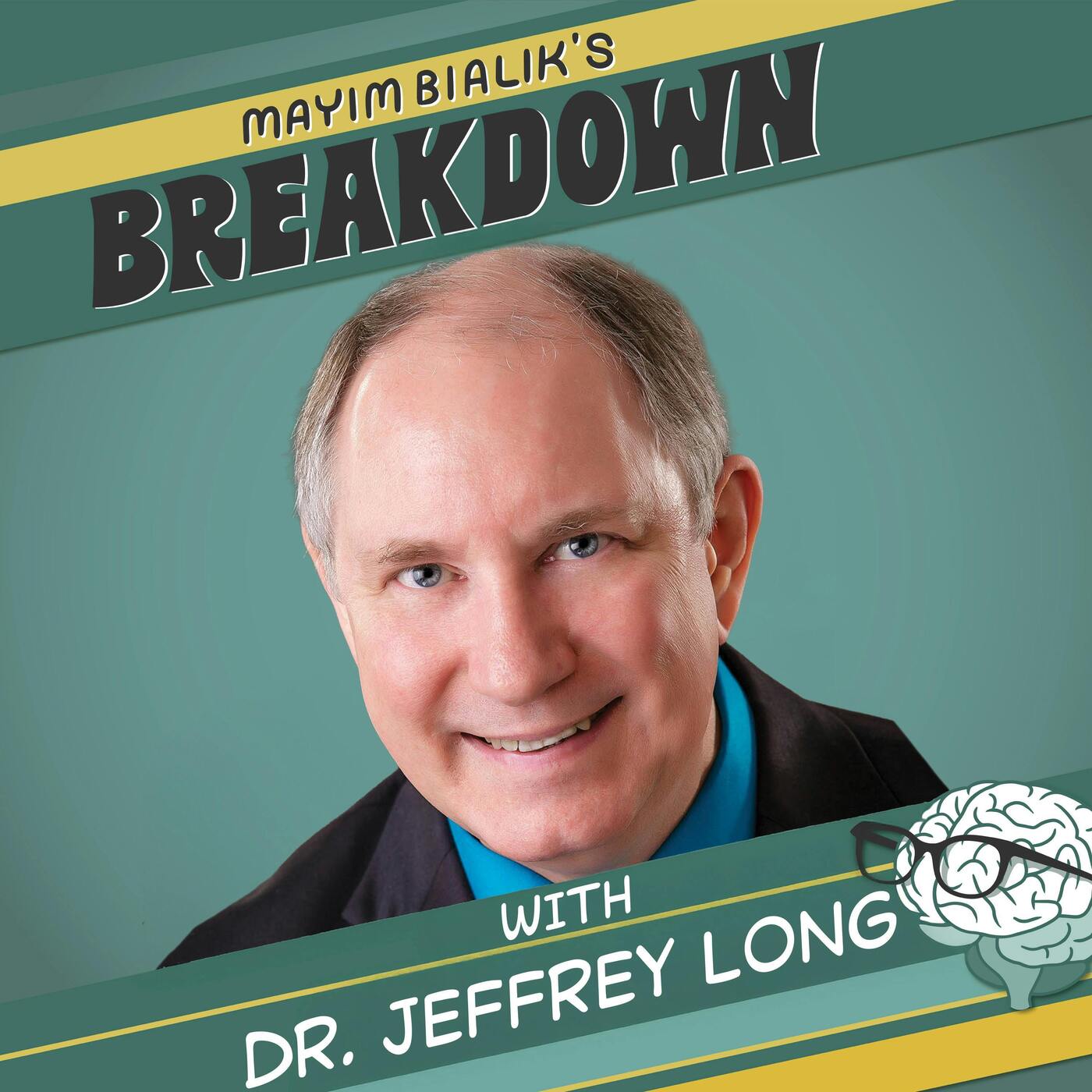
Mayim Bialik's Breakdown
5000 Near-Death Experiences: Exploring God, Precognition, & The Science Behind the Afterlife
01:05:28
Loading summary
Transcript87 lines
- [00:00]
Mayim Bialik
To say that consciousness lifts itself out of a body is a very bold statement.
- [00:07]
Dr. Jeffrey Long
Yes, near death experiences are for real. About 45% of people having an NDE do indeed describe consciousness above their body. By the time I see that in thousands of experiences. You've got to go back to that core scientific principle that what is consistently observed is real. We have scores and scores of these out of body experiences where the consciousness can travel city blocks observing ongoing earthly events, retaining that information of what they saw, almost invariably accurate down to the finest details.
- [00:41]
Mayim Bialik
Now Dr. Long, you're very comfortable talking about these things because you've studied this for decades and decades, but any one of those things sounds unbelievable.
- [00:51]
Dr. Jeffrey Long
I've studied over 150 times in near death experiences where they described awareness or encounter with Jesus. Jesus is very different from how people would understand Jesus reading the Bible. Jesus is essentially never giving the commandments. Jesus just simply wants to convey that love, that peace, that presence. That was a person born totally deaf. He had a remarkably vivid near death experience. He was communicating as virtually everybody communicates when they're in a non physical, non earthly realm. And that's telepathically like if this is
- [01:23]
Mayim Bialik
true, what's going on?
- [01:25]
Dr. Jeffrey Long
The implications of consciousness apart from the body are just radically important. Is there any way that we can duplicate that without having a life threatening event? What does that say about to be a human?
- [01:41]
Mayim Bialik
Hi, I'm Mayim Bialik.
- [01:42]
Jonathan Cohen
I'm Jonathan Cohen.
- [01:44]
Mayim Bialik
And welcome to our breakdown. What happens after we die?
- [01:50]
Jonathan Cohen
We have all the answers clear as day.
- [01:53]
Mayim Bialik
This is a different kind of dive into our understanding of NDEs. We're going to be speaking with Dr. Jeffrey Long. He's a radiation oncology physician practicing in Kentucky and he founded the Near Death Experience Research Foundation. N d e r f dot org. It's a website that's available in over 30 languages and it serves a global audience. It has allowed him to study over 4,000 counts of people having near death experiences. And the intricacy and the complexity of near death experiences is what we're gonna talk about today. We're also gonna talk about some of the possibilities for explanations for near death experiences, as well as a deep discussion about what it could mean to have consciousness leave the body, what it could mean for consciousness to leave the room and travel outside of our physical being. And what does it mean that thousands and thousands of people report such similar phenomenal experiences in a brain and a body that is not producing any cognitive information?
- [03:07]
Jonathan Cohen
Mime and Dr. Long explain and give anecdotes of Very powerful near death experiences. Someone who is able to see even though they are blind and have sight unlike anything anyone has ever had before. Someone who has telepathy as their near death experience. And people who have come back with extra sensory abilities that are really hard to explain.
- [03:34]
Mayim Bialik
We're going to be discussing evidence of the afterlife, the science of near death experiences. We'll also talk about Dr. Long's other book, which is God and the Afterlife.
- [03:45]
Jonathan Cohen
At one point in this episode, Mayim starts to ask about complicated relationships people have in the physical realm and how those change when people have a near death experience, go to the afterlife and they're greeted by love and compassion. She starts to talk about the power of God and the ability to forgive and love. And literally lightning strikes Dr. Long's hotel and shuts off the power. Bear with us, you don't want to miss what happens next.
- [04:18]
Mayim Bialik
Yeah, it's pretty remarkable, the timing of this lightning strike. So the episode gets a little bit truncated at that point, but we hit all the points that we wanted to discussing God, love and experiences in the afterlife. And please stay tuned for this incredible conversation. Break it down. Hi Dr. Long, welcome to the Breakdown.
- [04:40]
Dr. Jeffrey Long
Hey, greetings, it's the breakdown crew. This is awesome.
- [04:43]
Mayim Bialik
I wonder if you can tell us what was your first introduction to the fact that people encounter something extraordinary in some cases when they are near death?
- [04:57]
Dr. Jeffrey Long
Absolutely. It was over 30 years ago. I was in my medical residency training. I'm a full time practicing radiation oncology physician still. But decades ago I was in residency training and this was so long ago we didn't have Internet. If you wanted to look up a cancer related article for taking care of patients, you had to go to the medical library and there are these big thick bound medical journals. So here I am flipping through a medical journal and completely by accident, I run across an article that has the title Near Death Experience and it was in the journal of the American Medical association, one of the world's more prestigious medical journals. But I'd never heard of that topic before. So I, I brought everything I knew as a doctor in my training. You're either dead or you're not dead. So what's this near death experience? So fascinated I read the article and was immediately astonished. Here was a cardiologist, Dr. Sabaum, who was at a number of his patients who had cardiac arrest. Their heart stopped and they should be comatose, completely unconscious. And yet many of them had a near death experience and described consciousness apart from their body, where they were able to see and hear ongoing earthly events and they were accurate down to the finest detail. I was astonished. I remember thinking vividly, if this is real, if this is true, this changes my whole view of the universe. And I remember also thinking somewhat prophetically, why aren't more people studying these fascinating experiences? So several years later, when I had a college friend and his wife visiting me where I was at in Iowa City, Iowa, I heard my first in person near death experience and I was hooked. I said, I have got to study this. I set up my research website, enderf n-dot org and started out with a very detailed survey using the best scientific methods to study near death experiences and answer that burning question that I had. Are near death experiences for real? Well, that was about 5,000 near death experiences ago that have been shared on my website, so I can answer that. My burning question I had then unequivocally, today, yes, near death experiences are for real. We have a lot to talk about regarding that.
- [07:13]
Mayim Bialik
One of the things I wonder if you can sort of start us out to help people understand, you know, when people think about that statement like, you're either conscious or you're not, you're either comatose or you're not, you're either awake or you're not. So there's a number of different fascinating regions of the brain and nervous system that are extremely important for things like breathing, things like, you know, respiration patterns and changes and temperature regulation. There's all sorts of different regions. Can you, from a clinical perspective, describe what is happening when someone is, in theory, let's just say unconscious under anesthesia? Because many people have near death experiences from being under anesthesia. And this isn't the case where it's, quote, not enough anesthesia and people are waking up and you know, kind of screaming inside. The people who report NDEs under anesthesia are reporting very similar NDEs as people who have an accident or, you know, something like that. But can you describe from a clinical perspective what's going on in the brain and nervous system that makes us say, okay, that person's conscious and they're awake or they're not?
- [08:35]
Dr. Jeffrey Long
Right? That's a great question. I've actually studied near death experiences under anesthesia and I have about 60 of them. And, and just exactly like you said there, the content of what occurs in a near death experience while under general anesthesia is basically the same as near death experiences under all other circumstances. And by the way, when they have a near death experience while they're under general anesthesia, where they shouldn't have any conscious remembrance, the near death experience is generally, nearly always induced by cardiac arrest. The heart stops. And of course that's very carefully monitored when you're under general anesthesia because that's the job of the anesthesiologist and others in the room there. So at that point in time it should be, if you will, with a heart stopping under and being under general anesthesia, it should be doubly impossible to have a conscious remembrance. It's actually had, there's been a, a fairly large number of good medical studies that under general anesthesia had EEG electroencephalogram measurements of brain activity under general anesthesia. Very clear. From the EEG measurements. The cortical brain electrical activity, which is what it measures, is absolutely off the chart, distorted, incoherent, nothing like what's observed in a conscious state. So we know darn good and well, not only clinically from talking to patients that have been under general anesthesia or I'm certain a lot of the viewers here, you know that you are under general anesthesia, it's a blank spot and then you walk, wake up. But we know that clinically validated also through EEG measurements under general anesthesia, there's absolutely no coherent cortical function which should even begin to allow even fragmentary conscious experience. And of course you add in the heart stopping and that's also been by the way studied. When the heart stops immediately, blood stops flowing to the brain and 10 to 20 seconds after that event, that EEG measurement of brain electrical cortical activity goes absolutely flat. Again, no measurable coherent cortical brain activity that is necessary for an organized conscious experience. So especially under, under general anesthesia with near death experiences, it should be doubly impossible to have any kind of conscious experience. And yet by the scores, people that have near death experiences do report that phenomenon, I might add that's some of the strongest single line of evidence for the reality of near death experiences not being due to physical brain function that I can think of.
- [11:10]
Jonathan Cohen
My ambiox breakdown is supported by bioptimizers.
- [11:13]
Mayim Bialik
I struggled to get good quality sleep and I just thought like, ugh, it's stress. But I learned during perimenopause and menopause your hormones shift and it affects your magnesium levels. Low magnesium makes everything harder. Not just sleep, but focus, mood, stress tolerance. That's why we added magnesium Breakthrough by bioptimizers to our nightly routine. It's a blend of seven different forms of magnesium designed to support relaxation and overall sleep quality. Try it. See if you wake up more rested and refreshed, you've got nothing to lose and a lot to gain. BIOptimizers offers a 365 day, no questions asked money back guarantee. Magnesium Breakthrough is a fantastic way to improve that hormonal imbalance that especially happens with magnesium. And then you have better focus, you have better sleep hygiene in general. Bioptimizers makes it so easy. Here's what you get when you go to bioptimizers.com breaker and use the code breaker. 15% off your entire order and a free bottle of mass signs. That's bio Optimizer's bestselling digestive enzyme added to your order automatically when you use our exclusive code. That's a $20 product, free on top of your discount. This is a limited time offer. While supplies last. You cannot get this on Amazon. You can't get it in stores. The offer exists in one place. Our link, our code. That's it. So if you were already thinking about trying it, this is the sign. Go to bioptimizers.com breaker use the code breaker. Grab it before it's gone.
- [12:38]
Jonathan Cohen
Make 2026 the year you finally start sleeping again. This episode is sponsored by Wandering Jews, an open door media brand.
- [12:48]
Mayim Bialik
If you've ever found yourself feeling like you have more questions than answers, you're in good company. The Jewish people have been like that for thousands of years. Wandering Jews with Michal and Noam is a podcast where two of today's most dynamic Jewish voices, Michal Bittone and Noam Weissman, dig into the biggest questions about life through a Jewish lens. It's the kind of conversation where you'll laugh, learn something new, and probably shout in disagreement at least once. Michal and Noam tackle the tough topics like antisemitism in America, what happens after we die, and the future of religion with guests like Bret Stephens, Michael Rapoport and Sarah Hurwitz. And this past month, in honor of Jewish American Heritage Month, they've been celebrating some of the Jewish lives and institutions that have shaped American life, from food to music and comedy. Thoughtful, joyful, and always honest. That's Wondering Jews with Michal and Noam, a production of Unpacked. Find it on your favorite podcast app or on YouTube and make sure to hit subscribe. Check out Wondering Jews with Michal and Noam podcast and subscribe at Unpacked Bio nmx. When we had Elizabeth Crone on the episode, you know, she was struck by lightning. She was on the pavement for a couple minutes, right? And she had, I mean, an experience that that takes hours to explain in terms of what she encountered. So obviously there's this sort of notion of, you know, what is happening in this short period of time that could lead to such a tremendous download of information. So I'm gonna go ahead and ask, you know, these kinds of questions. Could it be that there's activity? You know, is the thalamus kind of un. Filtering? Right. Thalamus is a region that sort of filters. Is the thalamus unreleased from the normal filtration system and everything's just flooding through? Is there a possibility for brainstem activity? Are there any other regions of the brain besides the cortex? Right, because there's so many different regions. I'm just trying to, like, play the skeptic here. Is there any other brain region? Because for short term recall, you need certain regions of the hippocampus. You need to be coding information that in some way is being stored in a way that you can then present it linguistically upon awakening.
- [14:59]
Dr. Jeffrey Long
Right, right. Okay, let's talk about some of the terms you use. The thalamus is a portion of the upper part of the brain stem, and you've mentioned brainstem. That's sort of the deeper part of the brain we all have, that results in feel, automatic bodily functions, heartbeat, respiration. Could activity in those areas and not in the cortex produce conscious, lucid experiences like we see in NDEs? Absolutely not. Let me give you a good line of evidence for that. Don't forget, when you're under general anesthesia, you're shut down to the level of the brainstem. You're not breathing spontaneously. And that's why, generally, under adequate anesthesia, you're artificially being ventilated. I mean, you may have a mask on. And people, I've done this a lot. You sit here squeezing a bag because if you didn't, you'd die. So literally, under general anesthesia, you're shut down all the way. Literally, the portion of the brainstem left functioning is that allowing heartbeat. But there's absolutely no chance that that could account for any kind of conscious experience, period, let alone the highly lucid, organized experience, often with conscious remembrance, that, as Elizabeth vividly described, could last for over an hour while you're unconscious or clinically dead for minutes. So there's absolutely no way hippocampus, thalamus, brainstem, in function alone or in combination with those lower brain activities could possibly account for any kind of lucid, organized, conscious experience. That's literally medically impossible.
- [16:33]
Mayim Bialik
It's not even a question for you to say that NDEs are real. What would it mean to say they're not real? Meaning, what do skeptics say about what people report when they return from having a near death experience? Like what could explain that?
- [16:53]
Dr. Jeffrey Long
Yeah, that's a great question. Skeptics over decades have proposed over 30 different skeptical explanations of how near death experiences can occur as a result of physical brain function. Now you might say, gosh, over 30. Why are there so many skeptical explanations? And the answer to that is very simple. There's no one or several of these skeptical explanations attempting, purportedly trying to justify how NDEs occur due to physical brain function. That makes sense even to the skeptics as a group. I mean, think about it. If the skeptics had any explanation for how near death experiences occur from physical brain function, you wouldn't have over 30 different explanations floating around and seeming a new one every year or two. But if we get into the details of what happened during a near death experience, and Elizabeth was a real good example of that, I think virtually everyone listening is going to understand what physical brain function can't explain any of the details of the content that happens during a near death experience, let alone the totality of the multiple types of things that are observed. Technically skeptical explanations are best conceptualized as a hypothesis. In other words, they're saying, okay, skeptics say, could it be due to reduced oxygen levels, hypoxia, increased carbon dioxide, hypercarbia, electrical activity, seizure activity, brainstem function? Those are all reasonable things to postulate as a hypothesis. I've studied pretty much every skeptic explanation I get my hands on and they don't even begin to explain what is described in a dearness near death experience. In other words, the empirical evidence is what's so consistently described in my own series of thousands of near death experiences concordant with what thousands of other near death experiences have been reported. The skeptics just simply can't, can't begin to explain physical brain functioning accounting for near death experiences.
- [18:54]
Mayim Bialik
Now obviously, you know, one could posit, and I am not this person, but one could posit that people are writing these beautiful creative stories and they share common themes because the themes of near death experiences are known. Right? I think that you have to put that aside. Right. If you're going to engage.
- [19:19]
Dr. Jeffrey Long
I don't. I think that's another very legitimate skeptic concern and I think it's worth addressing. One of the glorious things about the research I do on the ndf.org website is we post the full text of every near death experience. So people all around the world by the way we have the website and the experiences posted in over 30 different languages. So literally anyone on the world can look at those near death experiences and decide for themselves. Is there any reason to believe they're copycat experiences? Is there any reason to believe a theme or themes or language reporting a specific aspect of near death experience is propagated over and over and over again, suggesting that people are reading experiences, hearing experiences, and then incorporating that into their own experience and propagating it and what they share. Answer, A vivid no. Anybody? That's curious. All you have to do is read near death experiences from my website or literally, or from published scholarly review articles on near death experiences that have examples. But vividly near death experiences, while over and over we say they're strikingly similar in the content, and they absolutely are. And yet each person, it's a unique experience. No two near death experiences are the same. And you can vividly see that when you read a large number of near death experiences. In the 25 years we've had our research website up, anybody who's read any number of the near death experiences has never approached me and said, gee, I think I see a copycat. I see a recurrent theme. This sounds redundant, like it would be a copycat. Absolutely no shred of evidence to justify that concern.
- [21:01]
Mayim Bialik
So talk to us about some of these incredible common themes, common threads that run through, I mean, NDEs across cultures, languages, age demographics, you know, how do we distinguish this from other phenomenon?
- [21:22]
Dr. Jeffrey Long
Sure. Well, let's talk about what happens during, if you will, a typical detailed nde. Just so everybody's up to speed here. If they're not as familiar with nde, first thing is that life threatening event so severe is the physical compromise that they're unconscious or maybe clinically dead with an absent heartbeat. So at that time when they should be. Well, the dictionary definition of unconscious is not conscious. So literally they shouldn't be having any remembrance. But at the beginning of a near death experience, a common theme described is what's called an out of body experience. Consciousness rises up from their physical body, you know, often laying on the ground. And from that vantage point they can see and often hear ongoing earthly events. I might add, when they check out the accuracy, what they saw later, almost always they're accurate down to the finest detail from that conscious vantage point up above. And by the way, that's even true if they're making conscious observations far from their physical body.
- [22:21]
Mayim Bialik
But this is the point when like in a hospital scene, they're like, we lost this patient, like People report seeing the scurrying of nurses and doctors being like, we lost them. And they're like shocking. Like they are witnessing what happens when they're coding, basically. Right?
- [22:39]
Dr. Jeffrey Long
Yeah, absolutely. And it's, it's not like Hollywood. There's going to be crash carts don't magically appear. There's a lot of panic, a lot of unprofessional behavior. Unfortunately, it's often doctors, they're freaking the
- [22:53]
Mayim Bialik
fuck out because they just lost a patient.
- [22:55]
Dr. Jeffrey Long
Yeah. Oh, yeah. I mean, thank you. That's exactly what is the reality of an unexpected code. So again, as a physician, you know, I've been through a number of codes. I get it. That's not like Hollywood. That is the reality, the gripping drama in all its complexity and emotion of a real code. Just jumping ahead a little bit. Get back to your prior question after that. They may pass into or through a tunnel, variably described. Often at the end of the tunnel there may be a bright mystical light. It's described some frequently as being bright, even more brilliant than the sun, and yet never hurts their eyes during the near death experience. When they pass into this light, they're in an unearthly, often called a heavenly realm. And that's probably aptly described because it's beautiful, beautiful beyond anything on earth. There can be buildings there, there can be unearthly in their beauty landscapes there. People have described colors that are so beautiful in this realm that there's literally no earthly correlates beyond description at this time. They're typically feeling overwhelming love and peace, two of the most common descriptive words to talk about near death experiences that they share. This is when they may have a life review, see part or all of their prior life. They may at this point encounter deceased loved ones. These are joyous reunions. There can be a lot of dialogue and I might add, part of encountering deceased loved ones. It's not at all unusual that they encounter deceased beloved pets. And then often at the end of the near death experience, there's that moment of decision where they have to make a decision. Typically there's other beings around them at that time, and many of them, not always, actually most of them are returned to their physical body involuntarily at the end of the experience. For the minority that have a choice, that moment of decision. Interestingly, the great majority of people having a near death experience do not want to return to that physical earthly body that they were so familiar with for literally the decades of their life. They want to stay in that beautiful heavenly realm. If you will feeling love and peace and often describing that as being a sense of their real home. So that's if. Well, no two near death experiences are the same. That would be a very detailed near death experience with a lot of the common elements or trimmings of what happens.
- [25:16]
Mayim Bialik
Now, Dr. Long, you're very comfortable talking about these things because you've studied this for decades and decades, but any one of those things sounds unbelievable, not just in the experience itself, but in the fact that it's replicated across so many different experiences and cultures. So again, I'm thinking like, oh, oh, light at the end of the tunnel. Like, we all know about that. If this is some sort of psychological artifact, there is absolutely no reason why there should be so much coherence across thousands and thousands of reports. It just doesn't exist. And if it's not a neuroanatomical, you know, phenomenon, then the only other option is that it is this other category of realness as you describe it. You know, you say in evidence of the afterlife, this is real. If you weren't sure, like, this is real. And you know, when we talk to Jeffrey Kripal and he explains what it means to think impossibly, right, that instead of saying, that's impossible, it didn't happen, which is, forgive me, what my teenagers say when I try to talk to them about these things, you know, what if we open up our perceptive ability to say, what if the impossible is possible and how do we then fit ourselves into this world? But there's one thing that you mentioned with such a ease that I think we need to talk about. To say that consciousness lifts itself out of a body is a very bold statement. Meaning when we think of the words that you're using, those verbs are applied to physical objects. I'm lifting this glass off the table, right? I'm lifting my child up off the floor. How would you like us to understand consciousness? Right, if we know that it needs, for example, a neuroanatomical substrate for us to be able to say, yes, this is a conscious experience. Yes, this is an experience that's, you know, being encoded and filtered through thalamic regions and there's limbic system input and then it's getting coded in the hippocampus and then it's being transported to, you know, a, a conscious available verbal communication center in. If I don't have anatomy and I don't have a place where I can say this is conscious, we have an unconscious being that you're telling me has a consciousness separate from it? How do I wrap my head around it?
- [27:56]
Dr. Jeffrey Long
Yeah, I can sympathize with that greatly because the very first time I read that article we discussed before I even started my research, I was astonished. I literally started my studies as a bit of a skeptic for exactly that concern. I mean, this just seems so apart from anything that we know during our earthly everyday life. It just seems, as you've said, impossible. So that's why you use the scientific method. A core of science anywhere in any discipline starts with observation. So you start with observing, recording what people have with a near death experience. And it's about 45% of people having an NDE do indeed describe consciousness above their body. For the people that experienced that and shared that, like Elizabeth and many others, that's easy because that that was what they experienced and there's no question in their mind what happened. From the scientist, I don't, I look beyond like literally anecdotal or single experiences and by the time I see that in thousands of experiences, you've got to go back to that core again, scientific principle that what is consistently observed is real. And so again, not only in my study of thousands, but again thousands of other NDEs reported, no question about that. As amazing as it seems, as, as counterintuitive as it sounds for those of us that, that live a conscious existence in our life using our physical brain, that is the reality of near death experiences that is extremely well documented. And it's not just a matter of consciousness being over the body. I studied that, I've studied hundreds and looked for any possible error in their out of body observations. Me and other researchers that do that have a very high bar of evidentiality. If there's even one observation that's off from what reality would be, that kind of goes into the not real box. But even with that stringent criteria, I find 98% of these out of body experiences are describing things that appear to have no error, either the near death experiencer or to myself. Moreover, we have scores and scores of these out of body experiences where the consciousness just isn't just above the physical body, it actually can travel city blocks. We have scores where it's like literally even over a mile away from their physical body. And here they are again observing ongoing earthly events and aware of that, retaining that information of what they saw in great detail. And for even those that had consciousness vastly far from their physical body, no way they could see or hear anything that far away where their consciousness is when they check it out again, almost invariably accurate. Down to the finest detail. Kimberly Clark Sharp. She was in Seattle at that time and a social worker and she was in the hospital and she had a patient who, whose heart stopped and recovered from that. But then the patient told Kimberly, gosh, while I had that consciousness apart from the body, I actually had my consciousness travel outside the walls of the hospital, but nearby my hospital room. And from that vantage point I saw a shoe on the ledge. And she described the shoe on the ledge in terms of location, color and the, the shoelace position. And Kimberly just had never heard of near death experiences. No dang way. And so Kimberly went out and got. And you couldn't see it by the way from the outside. Very important. This was like up a floor. So it's not like you had any way to know that even walking around the hospital grounds. So Kimberly fascinated, got a ladder and you know where this is headed. The shoe is exactly as that lady described, exactly that position, color, and the shoelace kind of oddly positioned sitting on the ledge of a hospital outside of any possible external to the hospital view. That lady. Absolutely. And by the way, Kimberly of course checked carefully to see if you could observe that part of the ledge from that room through a window or any other adjacent room in the hospital. Absolutely no way. So just a vivid example of one more out of a myriad of highly documented out of body observations during near death experiences.
- [32:12]
Jonathan Cohen
Mind B Alex Breakdown is supported by Bio Optimizers.
- [32:15]
Mayim Bialik
You know, I struggled to get good quality sleep and I just assumed it was stress. But as I learned during perimenopause and menopause, your hormones shift in a way that affects your magnesium levels. And low magnesium, it makes everything harder. Not just sleep, focus, mood, your tolerance for stress. That's why I have added Magnesium Breakthrough bye bye Optimizers to my nightly routine. It's a blend of seven different forms of magnesium designed to support relaxation and overall sleep quality. Try it. See if you wake up more rested and refreshed, you've got nothing to lose and a lot to gain. Bio Optimizers offers a 365 day no questions asked money back guarantee. Magnesium Breakthrough is a huge breakthrough to improve hormonal balance, to help with focus, decrease brain fog, improve sleep hygiene overall. Bio Optimizers makes it very easy. Jonathan, what do they get when they go to bioptimizers.com breaker and use the code breaker?
- [33:08]
Jonathan Cohen
You get 50% off your entire order and a free bottle of MAS, Bioptimizer's
- [33:13]
Mayim Bialik
best selling digestive enzyme that'll be added to your order automatically when you use our exclusive code.
- [33:18]
Jonathan Cohen
That's a $20 product, free on top of your discount already.
- [33:23]
Mayim Bialik
This is a limited time offer and while supplies last, you can't get it on Amazon, you can't get it in stores. This offer exists in one place. Our link, our code. That's it. So maybe you were already thinking about it. This is the sign. Go to buyoptimizers.com breaker. Use the code breaker. Grab it before it's gone. Make 2026 the year. Finally start sleeping again.
- [33:41]
Ad Read Announcer
Whether it's a birthday trip, a family reunion, or just a fun getaway, booking a VRBO vacation rental means no worrying about surprises. Verbo care and 247 life support have your back if something's off. The Loved by guest filter helps you find top rated homes. And verified reviews mean real feedback from real VRBO guests. So you know exactly what you're booking.
- [34:00]
Mayim Bialik
Honestly, I just booked my VRBO because there was a sweet wine fridge.
- [34:04]
Ad Read Announcer
Hey, we all have our reasons. Don't walk into a surprise if you know you Verbo terms apply. See verbo.com trust for details.
- [34:11]
Mayim Bialik
And a play. I'm going to play skeptic here, even though this is not, you know, sort of again, my take on it. But, you know, as came up when we were discussing the telepathy tapes, for example, you know, because someone says something doesn't mean that it's true. And even this example, you could say any number of things. You could say Kimberly made it up. You could say all those things. But if we're going to put that aside, I'm going to put that aside for now. Okay, I'm going to say that this woman told Kimberly and Kimberly found the shoe. Exactly. I'm. I'm into it. I'm now going to recruit Jonathan. Jonathan, who is more versed, I think, in conversations about a consciousness plane. You know, akashic records, we've had enough theoretical physicists on that. I think Jonathan might even be able to. To frame some of this. Jonathan, I'm gonna put you on the spot. I want you to give us the kind of consciousness exists as a fractal plane perspective of what's happening. How did she see that shoe? Like, I want you to describe it and I wanna see. I think Dr. Long's probably gonna agree with you to some extent.
- [35:20]
Jonathan Cohen
The simplest example is she left her body, traveled around, had a look, saw that came back. And maybe the shoe is like the smallest example I actually get stuck on. Like why a shoe? You know, she couldn't have seen something
- [35:38]
Dr. Jeffrey Long
more interesting why not?
- [35:41]
Mayim Bialik
If you were, let's say, teaching a class on energy work, and people would say, what does it mean to leave your body and travel? And outside of the. How do you do that? Because consciousness is a grid, and you just travel on the grid. What is it?
- [35:59]
Jonathan Cohen
Yeah, you know, you just. You just go. I mean, we've spoken to a variety of people here who, in physical waking life, claim to have the ability to separate their consciousness from their physical being. And I would posit that a lot of people are moving around in some form where their consciousness is not solely focused or tethered directly to their conscious, to their physical experience.
- [36:27]
Mayim Bialik
Like people who do remote viewing.
- [36:29]
Jonathan Cohen
I would say remote viewing is an example of someone who is trained to go traveling. But I would actually take it one step further and say that we are often in one physical location, and our mental activity is not in that physical location. Whether or not that is clairvoyance or the ability to look around in a situ, in a different environment and bring back that information with clarity is. Is, I think, another. Another point entirely. What I'm struck by in the experiences of people who have near death where they're able to have such clarity in the information that comes back. Often what I would say is that people are traveling and moving around in an unconscious way without being able to have clarity in what they're seeing when they come back. But the fact that these people are disconnecting consciousness from their physical bodies, moving around the world, and then having such clarity of remembrance is really, really striking. So on a theoretical level, yeah, I think it is becoming understood either in. Through physics or in energy work, that we do have the ability to have sight through our imaginative capability, through shifting our consciousness to be able to focus on something else in waking life. I think people get that information differently. Maybe it's an intuitive sense of something going on, or they use their body as a mirror where they tune their consciousness to someone remotely and tap in and say, well, how is this person doing? And you can get information. But to see so clearly with your normal senses as though you are there is truly quite profound.
- [38:28]
Mayim Bialik
I mean, I think they should take back my PhD in neuroscience. I don't know what to do with it. Like, if this is true, like, if this is true, maybe they could update it. I mean, look, there's people. I mean, I went to school with Sam Harris. Like, there's people studying all sorts of amazing things, but I. I just. Like, I'm trying to. I really want to wrap my head around it. Dr. Long, how close Is Jonathan to sort of an understanding, you know, from your experience and your research in explaining what it means for consciousness to leave the body and travel outside of the room that even the body that's housing it is in.
- [39:07]
Dr. Jeffrey Long
Okay, I love what Jonathan just shared and let me explain why. When you start talking about thousands of examples of well documented and consistently observed among children, older people and cultures all around the world, once you have that body of evidence, you really have a phenomenon that is just begging for further understanding, clarification about mechanisms, processes. And I love that Jonathan just shared that insight. What we don't know about near death experiences far exceeds what we do know. So having that dialogue, that discussion about possibilities, about what could happen is still very, very important. I, you know, again, I, I'm giving you descriptions of consciousness apart from the body, but the implications of that are just radically important. I mean, how can we. And Jonathan was getting into this, you know, is there any way that we can duplicate that without having a life threatening event? How often can people do, you know, is there any use like remote viewing? Is there something that we could use for the good of humanity in terms of having consciousness apart from the body? And what does that say about to be a human, about being who we are beyond just physical, bodily, brain functioning individuals? I mean, these are just radically important concepts. I don't know why everyone on the planet's not just absolutely fascinated. And I think the more consideration of possibilities and discussion and options we get into, the better. So thanks, Jonathan.
- [40:32]
Jonathan Cohen
Absolutely. And the point of having these experiences without having a near fatal experience for me is key because what happens is that these people are, their lives are in danger, in jeopardy in some way, and it feels like they're messengers. They go through that very difficult time in order to bring back this information, to indicate, wait a second, there's more possible without having to almost die.
- [41:02]
Mayim Bialik
Well, I mean, that's kind of where I wanted to go next. And you know, there's sort of two questions in here. You know, the first we know from Elizabeth Crone. She experienced sexual abuse as a child and was forced to learn to dissociate as a young child, which she feels possibly helped her. And by helped her, I'm thinking of, you know, laid down neurological pathways perhaps, you know, that were in some way, I don't know, primed her to be able to access that when she had this near death experience. So this was sort of, you know, one of the questions. And this is sort of like, this is the million dollar question. Not everybody who, you know, flatlines and is brought back reports a near death experience, right? Although it could be like dreams, right? Some people are like, I don't remember my dreams, but everybody's having them, so it could be right that. But not everybody is reporting nd even if they're coming back, some people are just like, whoa, what happened? And of the people though, who are experiencing them, it seems that there's a tremendous amount of commonality in the richness, the complexity, the emotional depth of the experience. What is it right about these people that allows them access to it? And this comes up throughout the book, here and there, throughout evidence of the afterlife. You know, some people do recall having traumatic experiences where they knew how to dissociate or where they had been placed in situations where they had to leave their body, right? When we think about, you know, historically, what prophecy is, right? When we think about people who are gifted in certain communities, when you think about shamans, when you think about medicine men and medicine women in communities, these are people who typically have access to leaving this plane of conscious experience in order to deliver a message that they are bringing back from some beyond, right? Is it possible that people who are reporting these NDEs are containing some,
- [43:25]
Dr. Jeffrey Long
you
- [43:26]
Mayim Bialik
know, neuroanatomical or neuropsychological capabilities that are allowing them to deliver this message? Is that what's going on?
- [43:36]
Dr. Jeffrey Long
Well, let's start with dissociation, which is, as Elizabeth had a protective mechanism when she faced this horrific abuse. People have actually studied large numbers of near death experiences to see if they have a common commonality of dissociation. And the answer is no. Even with very careful prior published scholarly literature, number one, the great, great majority of people that have a near death experience have no prior life history of dissociation. Number two, even the skeptics would agree about this. Near death experiences are nothing like a pathological psychological origin. I mean, that's really pretty much off the plate, even among the dyed in the wool skeptics. So we've got all that going on. But then thirdly, some time ago I co authored a scholarly book chapter where we asked that very question is can we identify anything, demographic, psychological, any predisposing factor to help explain why it's about 10 to 20% of people have a near death experience where they nearly die, meaning 80 to 90% of people don't have a near death experience. Or can we find anything that would help explain who's going to have a near death experience? Or for those that have a near death experience, can we predict what the content will be and so I'll tell you, with the review of the all published literature that we had at that time and two other scholarly co authors I had on that chapter, the bottom line is no, even after reviewing everything, there didn't seem to be any demographic, age, belief system, religious upbringing, thinking, or even whether they'd even heard of near death experience previously that predicted if they were going to have one. And certainly dissociation. You know, mercifully that's a very uncommon pathologic psychological diagnosis, but you know, certainly nowhere close to explaining near death experiences for among the great, great majority. I hope that answered your question.
- [45:35]
Mayim Bialik
Yeah, no, that's great. So my next question is, and you know we've had a lot of people here talking about various methods of transcendental experiences, some of which are achieved through rigorous and very specific meditation practices and many are achieved through psychedelic means. So I'm gonna ask the question this way. What part of a near death experience has not been reported from a transformative psychedelic experience?
- [46:15]
Dr. Jeffrey Long
Okay, right. Well let's talk about psychedelics and do they or are they not related to what happens during a near death experience? Okay, Number one, there is the most common in this day and age psychedelic drug that is most people point to as potentially recapitulating what happens in a near death experience is dmt. So that's sort of the, the, the psychedelic drug that seems to be the most active and that people talk about the most. So for anybody that's interested in comparing the content of near death experiences to the content of DMT experiences, I've got a great resource I've got. Here's your homework folks. If you're interested you can go read any number of near death experiences that were posted on my website nd erf.org and compare that directly with first person shared DMT experiences on the website arrowit.org e r o wid.org they literally have thousands of first person shared DMT experiences. And for anybody that goes through that effort of reading a number of near death experiences and a number of DMT experiences, you, as I will discover, be absolutely struck at the striking difference between what the difference is DMT experiences like other are common among psychotropic brain acting drugs like that. They're far more likely to be frightening than near death experiences. The what is described is hallucinatory. In other words, There may be DMT's talk about elves, machine like beings which is essentially unknown in near death experiences, psychedelic experiences as with dreams, have the events skip around. It's not like you have in near Death experiences, that continuity, logical flow of events which would be like, you know, the life is without any gaps or breaks or you know, completely changes in environment. So DMT experience is radically different for anybody that wants to compare head to head first person accounts. But second of all, we've had a number of people that have shared with my website with their near death experiences and then will volunteer that they've taken psychedelic experiences. I asked a survey question, has anything in your life reproduced any part of the near death experience? And some people volunteer. Well yes, I use psychedelics. We may get, you name it, I've heard it. Lsd, dmt, psilocybin, askwash. I mean they do it. But in general for those people that had a near death experience and then compare it to their own personal experience, they will generally say no, these were two completely different experiences. And in fact one of the leading academic near death experience researchers, a Dr. Eben Alexander, who was a Harvard neurosurgeon, had a very vivid near death experience. It's not widely known that as part of an investigation he actually took DMT as on a controlled basis in order to see and write up in a scholarly journal the comparison of his near death experience with dmt. And I read the article and I've actually talked to Eben directly, not related at all, radically different experiences. So there doesn't seem. And then last but not leastly, I know I don't want to beat this one to death, but I will, I guess a little bit because it keeps coming up. Several years ago I co authored a scholarly article published in the Proceedings of the New York Academy of Sciences. And in this major journal there was a huge effort to study the published scholarly reports of psychedelic drugs. And in this very meticulous scholarly comparison they compared that to like over 40 different things that they found in near death experiences, predominantly on my website, so published in that scholarly journal. Very clear. The conclusion, the experiences of near death experiences, radically different, radically unlike psychedelic drugs, based on review of the scholarly literature. So you can see for all those three points there's really not much left standing for DMT to reproduce. Indies.
- [50:27]
Mayim Bialik
Well, first of all, you know, highlights the exquisite uniqueness of the near death experience, which I think is important. But you know, obviously the reason that I want there to be overlap is because we can more easily and ethically study the mechanisms of what's going on, you know, under the influence of these kinds of drugs. And you know, many people are using therapeutic environments, right, to explore trauma and healing and you know, all these things. So we have kind of a way that we can try and look at them. So I guess that would be a question. So the difference between, let's say, and I want to get into the blind NDEs and deaf NDEs, one of the things that distinguishes those experiences is there's a difference between hallucinations and visions, right? I guess you could say. So hallucinations are going to engage. If they're visual hallucinations, they're going to engage the occipital cortex. Right. If they're auditory hallucinations, you're going to see activation in the auditory cortex. But when we have an nde, when people are reliably reporting sights, sounds, there's no activation of these cortices. Right. Like, they're, they're, they're. I mean, obviously we can't put them in a scanner while they're having the nde. But, but presumably, given the electroencephalographic data, given all of the other measurements that are done when a person is dead or has flatlined or coded, we, we, we know that, you know, the only other explanation would be some sort of, like, explosive set of, you know, neuronal cascades. But that would not account for the linearity. It would not account for the. The review of life events. The way that people describe them, it's like insane. It's like a Rolodex of your entire life flashes before you. But what almost everybody reports is that they are experiencing the emotional content of what happened at each of those events, both for themselves and other people. So even negative things that they experienced, they're processing both sides of it simultaneously in this sort of like, like, you can't say, oh, when the brain dies, it's like, here. Here's everything I've got. It would not line up in any linear fashion because we know enough about how computers work. And the brain is essentially a very, very fleshy, delicious computer. Right. So if you were to say to a computer, I'm gonna unplug you, what would happen? All I picture, because I was born in 1975, is like a green cursor just blinking that box, you know, that's all I would picture. You wouldn't picture, like, oh, the computer's gonna generate a soliloquy about the meaning of its life as a computer. You wouldn't present and be able to recount that kind of information from the computer. That is the brain.
- [53:45]
Dr. Jeffrey Long
Correct. Right. That's a great analogy. I love it. Yeah.
- [53:50]
Mayim Bialik
One of the most kind of. I, I don't even understand how to think about this, which I'm sure that for someone who's been blind from birth, they also had a tremendous difficulty. And you can tell in how you recount this and how they wrote about their experience. Imagine if you've never seen and then you have an experience where you have visual perception. It's, I mean the phenomenology of just like understanding what is even happening and how you describe that is amazing. And to have someone who's deaf from birth have auditory experiences and they're trying to explain it, but it's like I don't even know what I think it was seeing and hearing. Right. Can you talk about how we can wrap our heads around the realness of NDEs and the support of people who are blind and deaf having essentially the same experience that people who can see and hear from birth are having?
- [54:52]
Dr. Jeffrey Long
Sure. The lady I interviewed that was born blind was Vicki. She was born blind and to her vision was unknown and unknowable. And she went along with her life until her early 20s when she was, well, she was a very talented singer and that was her vocation. She would sing at bars and one night she finished up her act at the bar and an inebriated patron was trying to drive her home and unfortunately had a severe auto accident. So the first time Vicki had vision, she was in that. Well, we talked about this, that out of body experience. Her consciousness was over her body and she saw, and she was in the emergency room at that time and she saw down below a body laying on, on a gurney. And her initial emotional reaction was to be horrified because this vision was so unknown and unknowable to her. She just, she didn't know what was going on and she literally didn't know who that was down there until she correlated. What she'd only known her entire life by sense of feel was her long hair. And interestingly, she felt a ring that her father had given her. And then finally she correlated with her newfound vision that that was really her down there.
- [56:08]
Mayim Bialik
She got to see herself for the first time in a near death experience.
- [56:14]
Dr. Jeffrey Long
Yeah. So this was, I mean, she was, after she calmed down from, from her shock at having vision, she went through a tunnel and she had a life review like we talked about about. And but with Vicki, interestingly enough, she had what is described in many near death experiences. She had super normal vision. She had what we call 360 degree vision, which means throughout her near death experience, she was simultaneously aware of visual information in front of her, behind her right, left, up, down. The proper geometric term would probably be spherical vision, but that's the term of art in the literature. So she was literally seeing, aware of spherical vision around her. And when I talked to Vicki about this, I said, well, you know, Vicki, for those of us living our earthly everyday life, our vision is constrained to basically a pie shaped visual field because of the location of our eyes anatomically in our brain and in our bone sockets. And Vicki literally laughed at me. She said, that's, that can't be. She says vision, I mean, it's vision is vision. And I said, well, no, no. So I don't know if Vicki ever understood how we see vision. And so you can certainly understand how complex it would be for us to understand Vicki's 360 degree vision. But it's not just Vicki. We have many, many, you know, again, we're up to scores, many scores of people that also during their near death experience have that exact same phenomena. They're seeing 360 degrees and once again, what they're seeing from all directions vividly accurate down to the finest details. If they check it out, there doesn't seem to be any constraining of their vision by the physical limitations we have in our location of eyes and our earthly everyday vision. Oh, and getting back to deaf. Yeah, we could. I'll jump onto that real quickly. The only person who's been reported in the scholarly literature, to the best of my knowledge, was reported in my book. And that was a person born totally deaf. And he had a remarkably vivid near death experience. Very detailed. But as part of that he was communicating as virtually everybody communicates when they're in an unearthly heaven, non physical, non earthly realm, and that's telepathically. So he was as virtually everybody else that has a near death experience. The best human English word is telepathy, but it goes beyond that. There's an instantaneous communication with other beings of all thoughts and concepts and context of those thoughts and emotions underlying those thoughts extremely quickly and in a way of such accuracy that there's no way for confusion or ambiguity. So we hear that routinely in people that have near death experiences. And that's what he described. So here he was never having heard or communicated through auditory function in his life. And yet here he is through that telepathic communication. Full, complete, absolute telepathic communication. Just like so many, vastly many other near death experiencers of it.
- [59:10]
Jonathan Cohen
Who is he communicating telepathically with?
- [59:13]
Mayim Bialik
I, I could tell you, it's in the book.
- [59:16]
Dr. Jeffrey Long
Yeah, it's. It was he. Generally when you're in this Non earthly realm. You're not roaming around there alone and wondering what's going on. By the time you're in that realm, it, you know, there could be landscapes, buildings, we described. There's almost invariably you got your deceased loved ones there for about 20% of near death experiences. But if they're not there, there's almost invariably going to be other beings. They've been called spiritual beings. They can be humanoid, not humanoid. They can have a variety of appearances. They can look similar to humans, quite different, different heights, et cetera. But the one thing that is almost universal when they encounter these beings in the near death experience, they're almost always described as loving. They can feel that sense of love, they can, can feel that sense of connection. There's never a fear of being around these other beings. And so it's, it's common in near death experiences that there could be often be some very detailed communication. And you can certainly imagine all the questions, you know, what's going on? Where am I? You know, what am I dead? You know, can I stay here? So these are a lot of the kind of, or, or interestingly just deep spiritual questions that were on their mind for their earthly life. So there's a lot of communication, a lot of sharing, a lot of information that goes on there virtually always through what's recognized as telepathic community, analogous to, best word, we have telepathic communication.
- [60:44]
Mayim Bialik
The way Elizabeth Crone described it is as soon as the question arose the answer came. And this was sort of where she came up with this notion of like timelessness, like everything was like happening all at once. And especially with some of these experiences, you know, some of them do go on for quite some time. You know, this is a more widely known case. The woman who was in, I think it was a kayaking accident and she was trapped under the water. And this was in a documentary series as well. And she essentially saw the escape that they were trying to facilitate for her and was able to it be told in her. I have chills up the back of my head in her nde. Like they told her basically where to hold on to to save herself. This often happens, people get instructions about. One woman was in a car accident, a horrible car accident, which I really don't want to talk about because I think the details are too graphic for this. But she was told extremely specifically how to help the person in the car who was in the accident with her. Like with extreme detail. She was able to help him in a way that there's no other way that she would have known how to extricate herself from the car with him. And it is, I mean, unbelievable.
- [62:04]
Jonathan Cohen
Talk about the details of how she helped him.
- [62:06]
Mayim Bialik
He lost a part of his body and she was told precisely where to locate it and how to help him not forever be without that part. Correct.
- [62:21]
Dr. Jeffrey Long
Okay, I think the viewers may be able to guess and that connect the dots, but, but yeah, you raise a really good point there, by the way, that the communication is instantaneous and you, you got into a real critical aspect of near death experiences, especially when they're in that unearthly beautiful realm and that's a sense of timelessness. We have a very direct survey question about the sense of time during their near death experience. And virtually all of them will say, especially within that unearthly realm, time is either radically different from earthly everyday life or much more commonly, they'll just simply say time doesn't exist, it's that much of a different realm. So it's one of the myriad of descriptors of that unearthly realm that makes it completely different from their entire prior life experience. And it's, you know, literally one of the minor lines of evidence for the evidentiality of near death experiences. It's not anything they could have imagined or even even conceived unless they actually had a near death experience.
- [63:18]
Mayim Bialik
Yeah, and I remember, you know, Elizabeth Crone who said she had no concept of quantum, you know, or theoretical physics when she was a, you know, 28 year old housewife, like struck by lightning and having this nde. She said she all of a sudden understood things about the nature of time and the universe, that there's, it was a download. There's no way that she, like people study for years to understand the nature of time as a seven layer cake and what it means to slice into it. That's some of, for me, the most kind of compelling, you know, kind of evidence is that people are coming out of these experiences with an ability and an understanding and we'll get into special abilities in a minute. But I wanted to, I wanted to touch on one thing and I have an explanation as a person of faith, but I don't know what the sort of general explanation is in, you know, kind of the, the literature or in, in your understanding. So, you know, Gabor Mate estimates that, you know, roughly 60% of people have had adverse childhood experiences. And, you know, having an adverse child childhood experience, you know, significantly increases your chances for all sorts of challenges in life. And when I looked at the list, you know, obviously some of them is, you know, was Someone in your family incarcerated, you know, some of them I did not relate to. But many, if not all of the people that I know, and I know a lot of people would probably check many off of the ACE list. Meaning were you around fighting, divorce, moving homes? Did you know, did you experience abuse? Did you see anyone be abused? Did you live in a neighborhood where these things happened? If, if we're, and, and I don't mean to like kind of play the stats game, right, because we're dealing with, you know, a small percentage of people who have episodes where their heart stops. Right. Who are even having NDEs. But if trauma, either with a capital T or a lowercase T is as widespread as people like Gabor Mate talk about and many, many others, what would be the explanation for a pretty much globally positive, loving, optimistic, warm experience in these NDEs, especially in situations where people are dying, bleeding out? I mean, one woman, God forbid, had a, a ruptured ovarian cyst that bled into her abdomen. Right. Like these are just people going about their lives. But what, what is your explanation for why there seems to be, I mean, no, no reports in the thousands that we've heard of from you, from Dr. Grayson, from Dr. Tucker, like from these conversations. We're not hearing I, you know, met my abusive grandfather. We're not hearing it was horrendous and I was damned to hell. We're not hearing that. All those visions, you know, that were the source of, you know, art for thousands of years. Right. Since Christianity, you know, and since this notion of. Right. Like hell, like, like no one's reporting that what's going on.
- [66:29]
Dr. Jeffrey Long
Yeah, that's interesting. You know, first of all, when we, you know, certainly, you know, tragically, there's so many people that have had so many difficult childhood experiences, often at the hands of parents, guardians or neighbors. When there's encountering deceased loved ones or deceased acquaintances when they're having a near death experience. There's an overriding theme of forgiveness. I mean, these, even if the relationship was strained in the earthly life, it's not strained virtually ever when these persons are encountered deceased interactions in a near death experience. So that's really interesting. That would certainly be a lot different from what a lot of people would think. I mean, there's almost never any apologies. There's just an overwhelming sense that we're all in this together and forgiveness seems to be huge. In fact, you know, you know, if they encounter other beings, people are often shocked and thinking, gosh, during this nde, I've done things I'm not proud of in my earthly life. What if I'm judged? And there's essentially never a situation in an NDE where they feel external judgment even during that life review, where they may be seeing a part or even all of their prior life. Like we discussed,
- [67:44]
Mayim Bialik
we're going to hit pause here. We have an entire other part of this conversation that we can't wait to share with you with Dr. Jeffrey Long. We're going to be talking in more detail in part two about some really, really exceptional near death experiences and some of the lessons we can learn from that. In terms of religious imagery that people see during NDEs. Are you chosen for the life that you are living? What is the general overall lesson to be learned from thousands of stories? And and in addition, we talk about God, we talk about what we're getting right about God, what these near death experiences can teach us about what we're getting wrong about God, including a fantastic interruption by God themself. A lightning thunderstrike interrupts our recording and we actually have to pick up a subsequent day when the storm is over.
- [68:39]
Jonathan Cohen
We also talk about the shocking and very common experience that people have after a near death experience where they come back with supernatural abilities. It can be clairvoyance, it can be seeing energy, it could be precognition. And Dr. Long and I discuss what are the mechanisms that are happening and what might be going on with this unbelievable phenomenon. Additionally, Mime shares an unbelievable near death experience precognitive psychic moment.
- [69:15]
Mayim Bialik
It's an after death communication.
- [69:18]
Jonathan Cohen
It is an after death communication and this was so unbelievable that we had to talk about it, but it did not fit into part two. So if you want to check that out, make sure to come over to Substack where we release exclusive content that we don't release anywhere else. It's where the Breaker community is able to dive deeper and connect more than anywhere else. So come on over and join us on Substack and make sure you are subscribed to the podcast feed so you don't miss part two. Releasing on audio to everyone for more
- [69:50]
Mayim Bialik
breakdowns of the one we hope you never have. We'll see you next time.
- [69:53]
Jonathan Cohen
It's Maya Bialix Breakdown.
- [69:55]
Mayim Bialik
She's gonna break it down for you.
- [69:57]
Jonathan Cohen
She's got a neuroscience PhD HD or
- [70:00]
Mayim Bialik
two fiction and now she's going to break down to break down.
- [70:04]
Jonathan Cohen
She's going to break it down.