← Mayim Bialik's Breakdown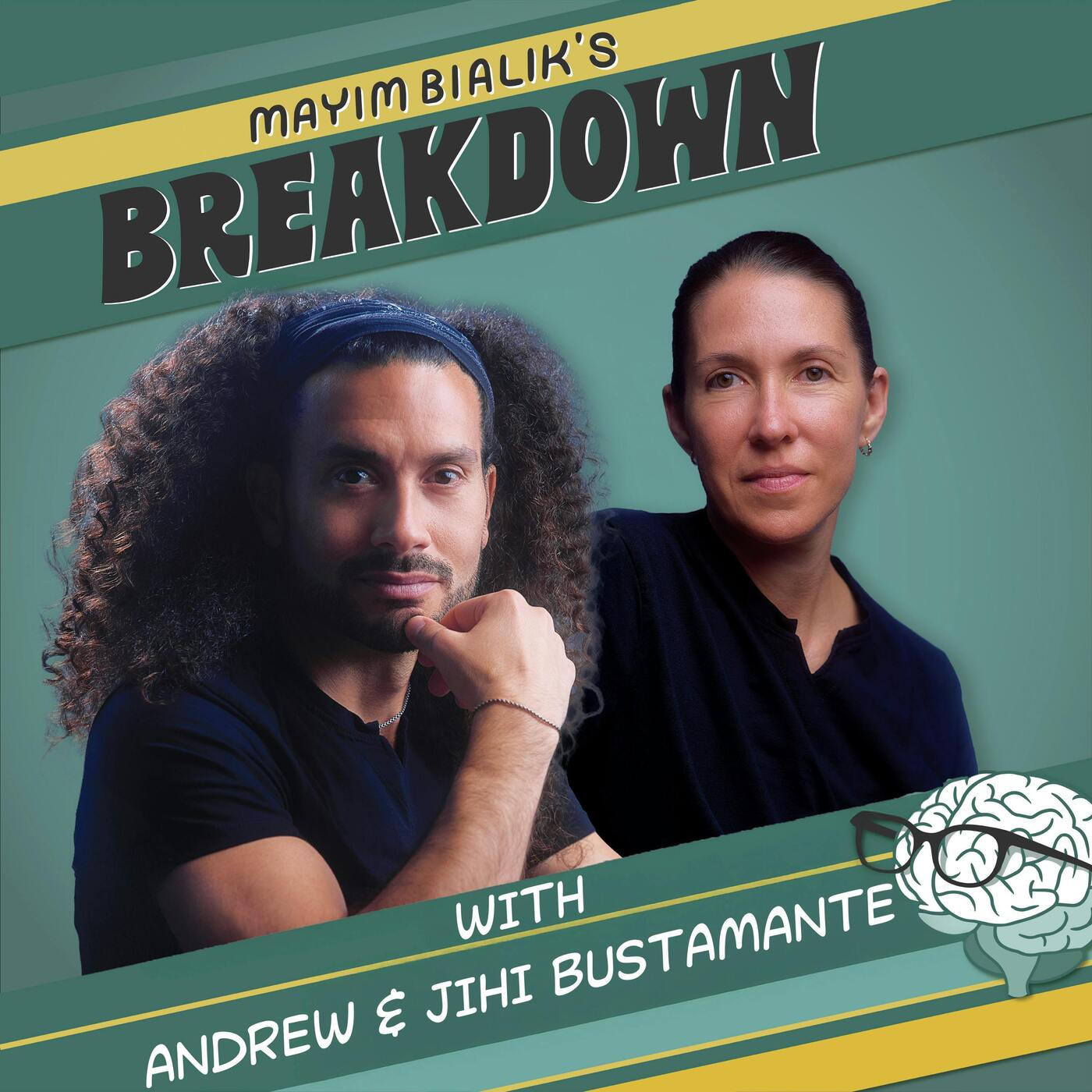
Mayim Bialik's Breakdown
Part Two: Former CIA Spies on America’s Decline, The Potential of WW3, & What’s Really Happening Behind the Scenes in the US Government
00:48:12
Loading summary
Transcript275 lines
- [00:00]
Jonathan Cohen
My Nbialix breakdown is supported by Helix Sleep.
- [00:04]
Mayim Bialik
Spring is in the air and so are all of the allergens that come with it. Spring allergens means you need more sleep, but there are a ton of factors that can prevent us from getting a good night's rest. Night sweats, back pain, feeling the person next to you when they roll over a million times. We were so excited to hear that Helix wanted to partner with us. I've had my Helix mattress for about five years now and I have been sleeping so much better. Jonathan and also our kids love their Helix mattresses and all of those issues. Night sweats, back pain, motion transfer. Those things are significantly better with a Helix mattress. Helix delivers your mattress right to your door, which is so much fun. With free shipping in the US they have a 120 night sleep trial and limited lifetime warranty. Plus they're happy with Helix Guarantee Rest easy with seamless returns and exchanges. The Happy with Helix Guarantee offers a risk free customer first experience designed to ensure that you're completely satisfied with your new Mattress. Go to helixsleep do for 27% off site wide that's helixsleep.com breakdown for 27% off site wide. Helixsleep.com breakdown now.
- [01:10]
Andrew Bustamante
Audible gives you audiobooks, podcasts, Audible originals and more all in one place. Whether you want to dive into a series, listen to a popular bestseller, or check out the latest episode of a great new podcast, Audible has you covered. Enjoy genres you love like motivation, mysteries and sci fi, follow names you know in comedy or true crime podcasts, or discover the Audible exclusive. Everyone's talking about the Sandman. The new Audible is your playlist for life. Try it for 30 days on us. Visit audible.com.
- [01:44]
Mayim Bialik
Hi, I'm Mayan Bialik.
- [01:45]
Jonathan Cohen
And I'm Jonathan Cohen.
- [01:46]
Mayim Bialik
And welcome to part two of our conversation with Everyday Spy. Andy Bustamante and Jihy Bustamante, authors of Shadow Cell An Insider Account of America's New Spy War. We spoke to Andrew Bustamante bit over a year ago on the podcast, but this time we have him and his wife, both former CIA operatives, in the studio. Uh, we're going to talk about their book, but in part two we get into some very heavy hitting questions about World War three, about Iran, about complacency as the biggest problem facing the United States, and ways to titrate your energy and your time and your attention so that you're functioning optimally. Something that Jihee talks about learning from Andy as part of their journey into the CIA.
- [02:31]
Jonathan Cohen
We also talk about Practical ways to influence people, how to use dialogue to bridge the gap and to get your points across to people that you want to have influence over, how to ensure that you're constantly growing, learning otherwise you're dying, and how to ensure that you're getting the real news, not just what the social media algorithms are promoting.
- [02:56]
Mayim Bialik
And we really hope you enjoy part two of our conversation with Andrew and Jihy Bustamante. Break it down.
- [03:04]
Jonathan Cohen
Are we on the verge or already moving into a third world war?
- [03:11]
Andrew Bustamante
I want your opinion on this because I know my opinion on this.
- [03:16]
Jihy Bustamante
I would say no. Do I think China is going to take Taiwan? Yes. Do I think Russia's and Ukraine is going to end up the way everybody would like it to? No. But the world war where we are all involved? No, I don't think so. I think there are certain countries that will take other countries, but I think, especially right now, I don't think, I don't think the, the former allies will get involved the way they did in World War II.
- [03:42]
Andrew Bustamante
And I would agree with Jihee's answer in terms of traditional World War conceptual thinking. People think of a world war as Axis and allies. People think of it like World War I and World War II.
- [03:52]
Jonathan Cohen
I mean, we're done with trench warfare, we would hope, although we're not at all.
- [03:55]
Andrew Bustamante
It's in Ukraine, alive and well in
- [03:57]
Jonathan Cohen
Ukraine, but that's what I thought, you
- [03:58]
Andrew Bustamante
know, isn't that crazy?
- [03:59]
Jonathan Cohen
And the reason I'm asking is because I think a lot of people, myself included, thought we were sort of beyond these hot wars with trench warfare and sort of some of the. What feels almost medieval that you see only in World War II movies. And yet there have been these hotspots that have sprung up around the world that make people feel like we're increasingly unstable.
- [04:21]
Andrew Bustamante
So I'm of the opinion that World War III will look nothing like World War II and that we are very likely in the early stages, if not in full out World War III as it is now.
- [04:32]
Jonathan Cohen
This is a divide in the couple.
- [04:33]
Andrew Bustamante
Correct. This is where we see it differently. And that's because I. I don't actually know why that is. Ji, he just has a very. For, for all the villainy that lives inside, I still have hope, she still has hope. And I'm just, I'm absolutely.
- [04:49]
Mayim Bialik
Well, actually, I'd like to know how each half of this couple interpreted Iran. That was not a fun week, you know, with the U.S. i don't know. Knee deep.
- [05:02]
Andrew Bustamante
Yeah.
- [05:03]
Mayim Bialik
You know, in Iran. So what happened? What was dinner like? That week in your house, I know
- [05:09]
Jihy Bustamante
that I can't affect any of what's going on in the world right now. And so I usually take things from the perspective of this is really interesting. And then I ask Andy his opinion. So Andy gets his opinion asked a lot. But the interesting things I thought was. I thought it was really dangerous
- [05:30]
Andrew Bustamante
for
- [05:30]
Jihy Bustamante
both Israel and the United States because I feel like Iran. I feel like we were underestimating what Iran might do. And I don't think that it's over. I think that Iran plays a long game because it can, and it worries me now what the consequences might be for Israel in the future.
- [05:53]
Andrew Bustamante
It was a. It was an interesting day for us because I think we were surprised to see that the United States would send American troops into harm's way in Iran.
- [06:05]
Jihy Bustamante
I wasn't surprised.
- [06:07]
Mayim Bialik
Also done without a larger conversation. I mean, that, I think was also very surprising.
- [06:13]
Jihy Bustamante
Soon as Trump said, which was a week before, like, we're thinking about it, I was like, oh, they're gonna bomb Iran. Yeah.
- [06:19]
Andrew Bustamante
And I wasn't so sure at that point. What I. What I. I do think that what Jihee's saying is the most interesting piece of it, is that the bombing of Iran was less interesting, actually, than the manipulation of the American president. And that was what was so powerful because. And you.
- [06:34]
Mayim Bialik
Well, he's easily manipulatable because when you have someone who is sensitive, who is volatile, who does not like to be humiliated and doesn't do well with international trash talking, which is the currency of Iran. Yeah. It's a real. That's like a firecracker in a barrel.
- [06:52]
Andrew Bustamante
And then to think that we did all that for questionable outcomes.
- [06:55]
Jihy Bustamante
Yeah.
- [06:56]
Andrew Bustamante
Is tough. And that's. I think that's what we agree on for sure, is just what actions are we taking right now that are really benefiting the American people? What actions are we taking? What expenses are we incurring that are actually making for a bigger, stronger American future for our children and for our children's children?
- [07:12]
Mayim Bialik
I mean, my favorite thing was that Sacha Baron Cohen just kept posting clips of the dictator because literally the whole movie was playing out in real time. He just kept posting clips.
- [07:24]
Jonathan Cohen
I mean, it was a prophetic movie.
- [07:27]
Mayim Bialik
It was.
- [07:28]
Jonathan Cohen
Tell us about the divide in your perspective about World War 3 and how you see the future of war playing out.
- [07:35]
Andrew Bustamante
So I think it's. Because I think a lot of it's tied to the fact that I'm former military and GE is not. And from my experience in the military, what I've learned is that the military is a, is a giant brainwashing engine. And once you're in it, the system is so effective at basically forcing you to believe or forcing you out. But the system is very powerful. So once you're in it, everybody's hungry to use their skills. Everybody's hungry to fly their plane, drop their bomb, shoot their gun.
- [08:03]
Jonathan Cohen
You don't want to just wash the plane, you want to fly it.
- [08:05]
Andrew Bustamante
Yeah, yeah, yeah. I mean, I can't tell you how many times I've heard people celebrate, take the fight to the enemy. And I'm just like, you know, there's other ways to resolve things besides taking the fight to the enemy. And especially when you're talking about, you know, lives being lost and flame emojis
- [08:20]
Mayim Bialik
are foreign signal so that our government can be like, go get them boys.
- [08:23]
Andrew Bustamante
Sorry, side note, but it's fair, but it's valid, right? And that's what we've become now. We've, we've become so disconnected from what war really is because we've been riding the benefit of technology for so long now. We can just launch a drone. Even Ukraine now is launching drones. We're investing in drones. It just dehumanizes conflict, which makes us that much more eager to engage in conflict. What we don't realize is that on the back end of the conflict there's all sorts of economic benefits that make it so that the powers that be want more conflict, they want to sell more guns, they want to do more bullying. And it's really, really difficult. So what we've learned through the schools of military is that there's interstate war and intra state war. Interstate war is when I go to war with you and you're a different national. Like you're, you're a sovereign nation. Interstate war is expensive. Interstate war creates political backlash, creates international backlash. It's, it's difficult and costly and ugly to do what Russia did to Ukraine. Intra state war conflict that exists inside of a sovereign state is much easier to manipulate. That's what you had in Libya, that's what you had in Syria. In some arguments, that's what you have inside Gaza Strip. You have a conflict inside of a country and then those conflicts are so much easier to fund, to participate with a shadow hand to capitalize on without putting your own troops and your own weapons at risk. So because of the shift in attitude at a geopolitical level, people want more intra state war. Just like every venture capitalist is looking for the new high ROI business, every global power competitor is looking for the next highest roi, intrastate conflict. Whether that's happening in Africa or South America or whether it's happening in. In the Caribbean islands or whether it's happening here in the United States. They're looking for a place where a country's at war with itself. Because then all you do is pour fuel on the fire and benefit from the outcome.
- [10:18]
Mayim Bialik
I just. First of all, I don't like this game we're playing. I don't like it. I don't like it at all. Because you know what I'm thinking about? The people that usually sit in these chairs are people talking about collective consciousness. And we're talking about that like, God is overseeing everything. And we're all just like sparkly light and we're just like an embodiment. We're just a physical body. Having a spiritual experience is the goal.
- [10:42]
Jonathan Cohen
That's a lot of our episodes lately.
- [10:45]
Mayim Bialik
And it's like a lot of like, I almost died, but then God told me, come back so I can save the world. So, like, I like those games, you know, And I like the games where it's like we're all living in the Matrix, but, like, everybody just wants what's good. And, like, even murderers are hurt. And so like just, you know, like a liberal, open, loving consciousness, like, there's no gender. We're all just being orbs of light
- [11:08]
Jonathan Cohen
that are just happen to be in human suits.
- [11:11]
Mayim Bialik
I like that game of, like, take lion's mane and you'll feel better.
- [11:16]
Andrew Bustamante
I think a lot of people like that game, which is what makes it so good.
- [11:19]
Mayim Bialik
I mean, I don't like this part of the Matrix, meaning, like, I believe this is true. I also do believe, like, this is all sort of like a projection and we're like receiving all this information from the universe. But, yeah, these are negative energies, not you. But, you know, when we talk about these things, it's like, you know, you know, I believe that, like, what is, you know, kind of like subsuming all of this is sort of a spark of like, goodness and holiness and like, oh, my gosh, we all exist and we have consciousness, right? And the notion that we've evolved as, you know, this species, you know, to be having these kinds of elaborate and complicated, you know, it's like a lot of people want to check out from it. Hence drugs, alcohol, porn, you know, work, like, whatever your drug is. So it's kind of. It's very interesting because I think, you know, for a lot of people, this is why people have stopped watching the news. You don't know what to believe. I mean, look, when I stopped reading the New York Times because I couldn't handle the, the conflict with truth that I often saw, it made my life a lot simpler because I was no longer sifting through and getting outraged and getting sick and like, I get acid reflux if I read the news and scroll on Instagram, right? So it's like, yeah, so many people just want to like, check out from this because it feels.
- [12:40]
Andrew Bustamante
The thing to remember is there are people who want you to check out. You've got to keep that in mind too. Checking out is not taking.
- [12:46]
Mayim Bialik
Now I can't even check out.
- [12:48]
Jihy Bustamante
No, I, I definitely check out because I check out also. And then what I do is I just strategically read, check in. I just strategically check in. Like I'll, I'll pull up AP like once or twice a week and be like, is there anything big that I
- [13:00]
Andrew Bustamante
missed when she's, when she's like energized, when she's put on her armor to put up with the boys, when I
- [13:06]
Jihy Bustamante
have the mental capacity to do so. But I think that's something else that people need to remember, is that when Andy talks about these big powers that are earning money off of war and starting wars, these aren't masses of people, these are governments. And the governments are being controlled by a small group of people. So the majority of people, I believe, because, because I'm a peace loving Buddhist that are good and have hope and don't want these things. Right? They just want to raise their kids and to be able to feed them and clothe them and educate them and have a nice home for them. I think that's what most people want. Have their friends and their neighbors and everybody get along. So I think if the majority of people remember that it's the government and certain economic powers that are making these bad decisions, these decisions that do not benefit us, you know, then they can have, they can retain the hope that humanity is good and that we can collectively change things. It might take time. It may take a lot of effort. But I mean, part of the reason we shouldn't completely check out is because it's up to us to make these changes. If we completely check out, they're all in power and they make the decisions that they want to.
- [14:23]
Jonathan Cohen
She's a very good balance for you, sir.
- [14:25]
Mayim Bialik
She's a very good balance.
- [14:27]
Jonathan Cohen
I mean, if you took her away, we would be cycling in war and destruction. And then I wonder, you get off camera and then I'm very concerned for your Mental sanity. But then you can go back and connect with your beautiful wife and she's, Andrew, let's have some hope together.
- [14:42]
Jihy Bustamante
Yes.
- [14:42]
Andrew Bustamante
And what's funny is, you know, it does go back and forth because there are hopeless moments for her too. But I. I can't help but think of the. The experience of parents and I don't know your children, but, but my children, I have one that is kind and hopeful and generous, and I have one that is not those things who will
- [15:06]
Jihy Bustamante
be a dictator if allowed.
- [15:08]
Andrew Bustamante
And when I think about the future, I have to protect one and I have to protect others from the other. When you look at the world, it's not that different from looking at the family. There are many, many people who need to be protected, who are kind, who are generous, who are open, who are sensitive. And there are a fewer group that you need to protect others from. That group of feisty, ambitious, ruthless people always go much farther in what they can accomplish than the group of sensitive people. Because the sensitive people need collective support. They need resources, they need patience. Whereas the feisty group will literally take almost nothing and just charge their way forward.
- [15:52]
Mayim Bialik
Well, and for those of us with sensitive children, we would say that those children also have the capacity to influence others with their, you know, empathy, their intuitiveness, their connection to something larger that hopefully, you know, they can sort of bring down to us. I mean, you know, there's been people who are been saying this is the age of Aquarius, you know, for decades now. But many people believe there's a shift in consciousness. A lot of people saw Covid as sort of like a wake up call. So, you know, there's also, I think there's evolution on both sides. Right.
- [16:24]
Andrew Bustamante
What I'm saying is just that the traditional way that we've watched geopolitics play out, there's the person who can influence you to open the door, and that takes time. And then there's a person who just breaks down the door, or the person who just twists the doorknob, sees that it's unlocked and walks right through. And that has been the person that we have turned into the hero. Right. Our action movies, our dramas, our war movies, you name it, are all about bold, risk taking, assertive people. So we've glorified that attitude and we've marginalized the sensitive, patient, influential person. It we have to decide now, is that how we're going to move forward?
- [17:06]
Jonathan Cohen
We all have to rewatch Aaron Brockovich.
- [17:10]
Mayim Bialik
I mean, what.
- [17:11]
Andrew Bustamante
That's a statement I never thought I'd hear.
- [17:13]
Mayim Bialik
You're going to name another delightful Julia Roberts movie or one of your Sandra Bullock rom coms.
- [17:20]
Jonathan Cohen
The reason being she saw a problem, she took legal action, she pursued a way in order to pursue protect people who needed protecting. No one believed her. She had a lot of resilience. My mbal breakdown is supported by Bio Optimizers.
- [17:36]
Mayim Bialik
You know, I struggled to get good quality sleep and I just assumed it was stress. But as I learned during perimenopause and menopause, your hormones shift in a way that affects your magnesium levels. And low magnesium, it makes everything harder. Not just sleep. Focus, mood, your tolerance for stress. That's why I have added Magnesium Breakthrough Bye bye Optimizers to my nightly routine. It's a blend of seven different forms of magnesium designed to support relaxation and overall sleep quality. Try it. See if you wake up more rested and refreshed. You've got nothing to lose and a lot to gain. BIOptimizers offers a 365 day no questions asked money back guarantee. Magnesium Breakthrough is a huge breakthrough to improve hormonal balance to help with focus, decrease brain fog, increase improve sleep hygiene Overall Bioptimizers makes it very easy. Jonathan what do they get when they go to bioptimizers.com breaker and use the code breaker?
- [18:28]
Jonathan Cohen
You get 50% off your entire order and a free bottle of MAS Bioptimizers,
- [18:33]
Mayim Bialik
bestselling digestive enzyme that'll be added to your order automatically when you use our exclusive code.
- [18:39]
Jonathan Cohen
That's a $20 product, free on top of your discount already.
- [18:44]
Mayim Bialik
This is a limited time offer and while supplies last, you can't get it on Amazon, you can't get it in stores. This offer exists in one place. Our link Our code that' so maybe you were already thinking about it. This is the sign. Go to buyoptimizers.com breaker use the code breaker. Grab it before it's gone. Make 2026 the year you finally start sleeping again.
- [19:02]
Jonathan Cohen
This episode is sponsored by Wondering Jews, an open door media brand.
- [19:07]
Mayim Bialik
If you've ever found yourself feeling like you have more questions than answers, you're in good company. The Jewish people have been like that for thousands of years. Wondering Jews with Michal and Noam is a podcast where two of today's most dynamic Jewish voices, Michal Bittone and Noam Weissman, dig into the biggest questions about life through a Jewish lens. It's the kind of conversation where you'll laugh, learn something new, and probably shout in disagreement at least once. Michal and Noam tackle the tough topics like anti Semitism In America, what Happens After We Die, and the Future of religion. With guests like Bret Stephens, Michael Rapoport and Sarah Hurwitz. And this past month, in honor of Jewish American Heritage Month, they've been celebrating some of the Jewish lives and institutions that have shaped American life, from food to music and comedy. Thoughtful, joyful, and always honest. That's Wondering Jews with Michal and Noam, a production of Unpacked. Find it on your favorite podcast app or on YouTube and make sure to hit subscribe. Check out Wondering Jews with Michal and Noam podcast and subscribe at Unpacked Bio nmx
- [20:10]
Jonathan Cohen
GE how do you see the evolution? You know, you talked about your parents and their background. Do you see it as a change in the collective conscience and, you know, sort of reef frame? It also is like if we talk about a lot of the power dynamics profiting off of war and a few people in government especially, who need war in order to fuel this massive economic engine. And without it, there's a huge transition, right? Like without that, the people employed in those areas, there's a massive amount of displacement and change. Same is true in health. You know, there's a crazy map that went around recently that showed the number of people employed by state in healthcare and the change in the last 20 years and basically the, the increase now it's like the largest employer in almost every single state. And so you need sick people in order to employ all the people in health care. How do you see sort of the global war machine as it relates to what I, you know, for lack of a better word, would call a collective conscience, that or consciousness that wants to live in a different way?
- [21:15]
Jihy Bustamante
I mean, I think, I think the biggest problem with, in particular with people in the United States is complacency. I think that we have just as a nation, as the population of the nation of the United States have become completely complacent. So I think there's lots of people out there who don't want the war machine, who don't want the violence and all of the negative things they're seeing happening, but they're too complacent to do anything about it. They just want to check out. They just want to scroll through, scroll through Instagram. They just want to go have a drink with their friends. They don't want to think about it. And it's a shame because nothing will change that way. In fact, things will change not the way that they want it to. And that's the route we're going down right now. And I think people Just need to wake up and learn how to. I mean, to live life properly, you have to make an effort. You cannot coast through life, right? Life is full of changes. Life is full of learning. You have to learn the skills of civil discourse. You have to learn how to get along with people who don't have the same opinions. You have to learn how to influence other people to try to get them to see your perspective.
- [22:25]
Andrew Bustamante
And that's the game. That's the game that Jihee was saying. It's a dirty trick, treacherous, tricky game, but it's a game. Whether you want to influence your kids to brush their teeth or whether you want to influence your in laws to vote for a different candidate. You have to understand there is a recipe for influence and there is a process for influence. And you might feel sticky in the process, but if it gets you the outcome that you're trying to achieve, is it really dirty at all?
- [22:49]
Jihy Bustamante
Influence doesn't equal bad, right? Like if you influence your children to brush their teeth, that's not bad.
- [22:54]
Mayim Bialik
I think it's oppressive.
- [22:57]
Jihy Bustamante
My daughter would say so too.
- [23:00]
Jonathan Cohen
So practical takeaways for people who don't want to check out but don't know where to start. What are some ways that they can learn the subtle art of influence or the not so subtle art?
- [23:10]
Jihy Bustamante
So I think the first thing that people can work on is just dialogue. There's so much done with these short messages over Instagram or Facebook or texting. People don't actually have conversations anymore. So more in person conversations. Pick a topic, discuss, disagree. Use your phone to look up facts instead of scrolling through your Facebook while, you know, while you're sitting with your friends. I mean, I think step number one is practice dialogue in person with another human being.
- [23:42]
Andrew Bustamante
A big part of the reason Jihee and I created the business that we run is because these skills didn't exist. There's no place to go to learn dialogue. I would argue the vast majority of people don't even know the definition of dialogue. How it's different than a conversation, how it's different than an explanation. Right? Because dialogue is the exchange of ideas. So you can't just sit there and be spoken to and call that a dialogue, even though that's what many, you know, college professors tend to think they're doing is having. We're going to have a dialogue here today, folks. No, you're going to talk to a classroom of 150 people and they're not going to talk back. And maybe you'll get five questions about what you're Saying, not an exchange of new ideas. And dialogue is very powerful because in a proper dialogue, dialogue creates a sense of relationship between two people. When I hear your position on something and you hear my position on something, even if we disagree, we both feel heard, that triggers a sense of connection in our brain. That triggers the opening for persuasion and influence. You can't persuade or influence people without that opening. The way that we see all this mass propaganda take over, like you talk about, and the way that we see this mass influence take hold is because people are pulling on emotional triggers, which is why you create these echo chambers of the far left and the far right. You already know what words will trigger emotions, and then you can just feed in whatever you want to feed in next once you have that person triggered.
- [25:04]
Mayim Bialik
Well, and I think that also sort of leads to, you know, your social media is not where you should be getting news, right?
- [25:11]
Jihy Bustamante
No.
- [25:12]
Andrew Bustamante
And the amount of people who do it is.
- [25:13]
Mayim Bialik
Well, I mean, look down there, I have teenagers, so I kind of dismissed it as like, oh, well, you know, when I was that age, I mean, look, I was reading the newspaper, I was learning to read the newspaper and like, that was a thing that I wouldn't, you know, necessarily encourage my kids to do. But I think, like, what if you did not listen to the news that was on social media? Because also, and there's some really fascinating studies about this, the proportion of perspectives that are reflected on social media is often driven by bots. It's often driven by countries like Qatar. So, you know, what you're actually seeing is not even a proportional representation of even what most people are thinking about or needing to learn about. So I love this notion of also, like, give up the notion of getting news from social media. And some of those legacy media places that you used to rely on, guess what? They're, they're not impartial. And if you want to read what your perspective is, great, go those places. But if you want to read what an actual kind of reflection of perspectives is, you do have to seek out, like you said, places like AP News, places that are kind of reporting from a more old school news reporting place. We spoke to Connie Chung here and I remember that was one of our questions. And she was saying that like, even during Watergate, it didn't matter if you were a Republican or if you were a Democrat, you saw what was happening. And this is not okay. We do not tap phone, like all those things. But it was so interesting because now it feels like I don't even know how reporters are supposed to report because of the larger. You know. So I think that's also an important kind of practical tip.
- [26:53]
Jihy Bustamante
Yeah. And reading more than one news source. I would never advocate for somebody to just rely on one news source. You have to have multiple. So if you want the New York Times, fine, but also read Reuters or AP News. And then also I would even suggest read something that's a conservative news source.
- [27:09]
Mayim Bialik
You can be uncomfortable without it being triggering.
- [27:12]
Jihy Bustamante
Yeah.
- [27:13]
Mayim Bialik
You can be mad without it being ptsd, right?
- [27:17]
Jihy Bustamante
Yeah.
- [27:17]
Mayim Bialik
Like, what does it feel like to learn to tolerate? And look, I reached a certain point where it's like, I do not need to talk to people about X, Y, or z. So, like, we all have those points, but generally speaking, if you're learning about the economy, if you're learning about what's going on in government, you get to learn how to tolerate being uncomfortable and saying, they have their reasons. But I'm not just gonna siphon it off and be like, I'm blocking you from my feed.
- [27:42]
Jonathan Cohen
I mean, even on this podcast, it's interesting. We get comments of. Of listeners who are like, I don't agree with every guest. Great. Don't agree with every guest. That doesn't mean that you should listen to every episode necessarily.
- [27:55]
Mayim Bialik
I don't agree with Jonathan. Most of the time.
- [27:56]
Andrew Bustamante
Here we are.
- [27:58]
Jonathan Cohen
But I think it's important to be able to hear at least part of someone's perspective and not just be like, no, you're wrong. That only divides us. We don't get anywhere in that you don't grow.
- [28:10]
Jihy Bustamante
Yes.
- [28:11]
Andrew Bustamante
And that's the thing that Jihy and I. I mean, I'm less worried about division and more worried about growth. Because I had a very wise CIA friend who once told me, if you're not growing, you're dying. And I. I didn't really understood. I didn't understand that at the time, But I understand it much better as I get older. Because when you stop growing, when you become complacent, when you just coast, I
- [28:34]
Jonathan Cohen
mean, you don't take in any new ideas. This is my perspective. I mean, that's very hard because, you know, everyone also talks about that in science. They're like, this is the science. But science is constantly changing and evolving and learning new things.
- [28:47]
Andrew Bustamante
Correct?
- [28:47]
Jihy Bustamante
Yes. So same thing with dialogue. If you can't take in other people's perspectives and understand where other people are coming from, how can you have any new ideas about how to get better?
- [28:57]
Jonathan Cohen
How does that relate, though, to people who may be so far on a spectrum as to be Somewhat radical, or people who are, like, they are drinking the blood of children. Where does it end?
- [29:11]
Andrew Bustamante
That becomes a personal question about how much. What the level of effort is that you want to put into it. Yeah, and if it was my child that was drinking the blood of children, there, I would have a lot more, like, effort that I'd be willing to put into it.
- [29:24]
Jonathan Cohen
Because you'd want to connect. You don't want to sever the connection.
- [29:26]
Andrew Bustamante
What it is, is. I mean, there are people that you just have to. We kind of. Again, I'm the very pragmatic one. There are either productive or destructive relationships that you're in at any given time. And you want to continue to contribute to productive relationships because they are productive. Productive to who? Productive to you. But then there are also destructive relationships. And every. Every ounce of effort that you put into a destructive relationship is destructive to who? To you. So if you could take back your resources from all the destructive relationships and put them into the productive relationships, where would you go? Stop being obligated to your mom. Stop answering the phone when your sister's calling to complain. Stop worrying about your old college friend who has no hope. Like, stop dealing with these people. You're only dealing with them because you feel like you have to. You're a bad person if you ignore them. That's not how. That's not how I was trained to see it at all. How I was trained to see it is you have a certain number of gold coins in your purse. And for every gold coin you put into a destructive relationship, you lose the return on investment. If you would have put in product
- [30:25]
Mayim Bialik
therapy with Andy, now, he sounds like all the mystics, right? He sounds like every translation dental psilocybin tripper we've had. Like, don't give away your energy, man. Like, keep it for yourself.
- [30:38]
Jonathan Cohen
You have to prioritize yourself.
- [30:40]
Mayim Bialik
Correct.
- [30:40]
Jonathan Cohen
He has the hair of a mystic. He should be able to speak like that
- [30:46]
Andrew Bustamante
one day.
- [30:47]
Jonathan Cohen
I mean, what's interesting is that I think a lot of men speak like this. And we know that from therapists and female therapists, they also speak like this. But what we've heard and Mayim talks about is that women are conditioned sometimes to not have that perspective, to be much more accommodating, to give up their own wants and desires to be supportive.
- [31:09]
Mayim Bialik
I don't know if it's that a lot of men say that. I think a lot of men in many cases, and you can tell me if you disagree. A lot of men have the liberty to be able to. I Don't wanna say abdicate, but to be able to delegate emotional labor to women, because we tend to culturally be expected to do that. Especially if you come from a. A traditional or patriarchal society or cultural or religion. It's really, you know, kind of built in. So, yeah, we're the ones who get the autoimmune disorders. We're the ones, you know, who are kind of like, bearing the brunt of a lot of that and.
- [31:44]
Jonathan Cohen
Yeah, well, Jihee, did you share his gold coin? Limiting your gold coin expenditure model?
- [31:51]
Jihy Bustamante
I had to learn that because I was raised in a patriarchal household where the woman took on everything. And you were expected to hold space for everybody, where Andy can just literally walk away from a conversation and nobody says anything. I mean, whether anybody would have said anything or not, I would have felt guilty about it because of the way I was raised. So over time, I was in a bad relationship. And it was after that that I learned you cannot change everybody. That maybe there's a person that can change another person, but that's not necessarily you, and you can walk away. And so it took me seven years and a lot of debt and an anxiety disorder to learn that you only have a certain number of coins, and you need to invest those wisely.
- [32:40]
Andrew Bustamante
And now nobody gets Jihee's coins. It's hilarious because she just avoids everybody, even, like, even the people she really, really loves. She's like, I just don't want to spend that coin.
- [32:51]
Jonathan Cohen
Now tell us a little bit about the process to get there. You mentioned an anxiety disorder. Tell us about the process.
- [32:58]
Jihy Bustamante
Yeah. So I was diagnosed with anxiety disorder, like, the second week I was at the CIA.
- [33:05]
Mayim Bialik
This is actually a phenomenal story. She was a copious vomiter.
- [33:08]
Jihy Bustamante
Yes. It was terrible.
- [33:10]
Jonathan Cohen
No connection to it.
- [33:11]
Mayim Bialik
Like, didn't. Like was nervous to eat on their first date because she might have thrown up all over him.
- [33:15]
Jonathan Cohen
From anxiety.
- [33:16]
Jihy Bustamante
Yes, from anxiety. Like, our first kiss, he was like, you're not gonna throw up on me, are you?
- [33:22]
Mayim Bialik
How else do you know you really someone?
- [33:23]
Jihy Bustamante
Exactly.
- [33:24]
Jonathan Cohen
Okay, well, hold on one second.
- [33:26]
Jihy Bustamante
Yes.
- [33:28]
Jonathan Cohen
You're going into a job that requires an enormous level of stress. Secrets. And they didn't sort of say, maybe this isn't constitutionally appropriate for you.
- [33:40]
Jihy Bustamante
So none of us knew because I was. Other than my physical symptoms, I was handling it well. So I was very functional.
- [33:47]
Mayim Bialik
Also, this was a while ago. People weren't so into talking about these things.
- [33:51]
Jihy Bustamante
No. And even with all, like, the psychological batteries that they give you. And I talked to a psychologist, and all of that like, none of it came up because I didn't know I had it. So I'd been. I'd ended my relationship. And six months after the end of that relationship, I was sick. But I couldn't figure out what it was. I just knew, like, I was having trouble keeping food down. So I had all these tests done. Nothing came up. So I started my new job. And then it was when Andy asked me out on a date and he called to pick me up and I was like, I can't go. And he was like, oh, we could just get coffee. I was like, I can't. But then I went and threw up. And I was like, oh my gosh, I have an anxiety disorder. So I diagnosed myself. I go to my doctor and they're like, oh, yeah, that makes a lot of sense. So then I went to the agency because I ended up in the ER because I couldn't hold food down. I just wasn't so.
- [34:38]
Jonathan Cohen
Couldn't eat at all.
- [34:39]
Jihy Bustamante
Couldn't eat, couldn't drink. I just was throwing up all the time.
- [34:42]
Mayim Bialik
Andy's love makes people want to die. I was really happy. He wasted away to nothing because of his love.
- [34:49]
Jihy Bustamante
Y.
- [34:49]
Andrew Bustamante
It was really hard at the time for me to. This is a bad sign.
- [34:53]
Jonathan Cohen
Poor guy. Bad sign.
- [34:55]
Jihy Bustamante
But I missed a few days of work and I didn't have a phone number to call. And so I was like, well, security's gonna find me no matter what.
- [35:03]
Mayim Bialik
It can't just disappear from the ca.
- [35:05]
Jihy Bustamante
So finally the HR lady calls me and I tell her and I think I'm done. I'm like, just like you said, there's no way CIA is gonna keep me on with an anxiety disorder. And immediately they were like, you can see our in house psychologist. She'll hook you up with an outside therapist who's cleared, who knows where you work. And we'll make, we'll put you on an easy assignment. We'll make space for you to go to your therapy appointments twice a week. And I was like, I mean, they
- [35:28]
Jonathan Cohen
trained you so they don't want to lose you because they put all this money and time into getting you there.
- [35:33]
Andrew Bustamante
Exactly.
- [35:33]
Mayim Bialik
I don't know people. That makes me nervous though, when they see because then you're being sent to. You're being sent to places all over the world in life threatening situations.
- [35:43]
Jihy Bustamante
Every time I went overseas, I had to go talk to a psychiatrist before I left to make sure that I was ready.
- [35:48]
Jonathan Cohen
Yeah, every before every podcast we have a little consult.
- [35:54]
Jihy Bustamante
Yeah.
- [35:56]
Jonathan Cohen
See mind Bialix breakdown is supported By Bioptimizers.
- [36:00]
Mayim Bialik
I struggled to get good quality sleep and I just thought like, ugh, it's stress. But I learned during perimenopause and menopause your hormones shift and it affects your magnesium levels. Low magnesium makes everything harder. Not just sleep, but focus, mood, stress tolerance. That's why we added Magnesium Breakthrough by Bioptimizing to our nightly routine. It's a blend of seven different forms of magnesium designed to support relaxation and overall sleep quality. Try it. See if you wake up more rested and refreshed, you've got nothing to lose and a lot to gain. BIOptimizers offers a 365 day, no questions asked money back guarantee. Magnesium Breakthrough is a fantastic way to improve that hormonal imbalance that especially happens with magnesium. And then you have better focus, better you have better sleep hygiene in general. Bioptimizers makes it so easy. Here's what you get when you go to bioptimizers.com breaker and use the code breaker. 15% off your entire order and a free bottle of Mass Times. That's Bioptimizer's best selling digestive enzyme added to your order automatically when you use our exclusive code. That's a $20 product, free on top of your discount. This is a limited time offer. While supplies last. You cannot get this on Amazon. You can't get it in stores. The offer exists in one place. Our link, our code. That's it. So if you were already thinking about trying it, this is the sign. Go to buyoptimizers.com breaker. Use the code breaker. Grab it before it's gone.
- [37:25]
Jonathan Cohen
Make 2026 the year you finally start sleeping again.
- [37:30]
Andrew Bustamante
Book a loved by guest property with VRBO and you get a top rated vacation rental that's loved for all the right reasons like being in a great location or having great amenities.
- [37:38]
Mayim Bialik
Oh, I love my VRBO for the view.
- [37:41]
Andrew Bustamante
Good reason.
- [37:41]
Jonathan Cohen
Ooh, and the sauna.
- [37:43]
Mayim Bialik
Sweet.
- [37:44]
Andrew Bustamante
Another good reason.
- [37:45]
Mayim Bialik
And that it's one of those good saunas with the hot rock thing.
- [37:48]
Andrew Bustamante
Ugh. Love a good hot rock thing.
- [37:50]
Jihy Bustamante
Fancy.
- [37:51]
Andrew Bustamante
That's also a reason. Don't worry about surprises. Book a verbo you'll love with the love by guest filter. If you know you've erbo a sees it as a benefit, a benefit professionally and a benefit organizationally to them to have people with high anxiety. Those are the people who are going to identify a risk before the risk is present.
- [38:11]
Mayim Bialik
Stop it.
- [38:12]
Andrew Bustamante
Those are the people who are going to marry the job. Those are the people who will not say no when you're asked to go do something like we were asked to do for Shadow Cell.
- [38:19]
Mayim Bialik
My anxiety just got me this podcast. I think it's a work for the CIA and be a secret agent.
- [38:25]
Jonathan Cohen
So you get this. You get the diagnosis. You're now getting treatment.
- [38:29]
Jihy Bustamante
Yeah.
- [38:30]
Jonathan Cohen
Then what happens?
- [38:32]
Jihy Bustamante
So I just did all the things that you were supposed to do. You know, I. I made sure I. I was having. I couldn't sleep. So, you know, I started taking medication for, like, all the GI issues that I had that were caused by the anxiety. I started trying to put weight back on. I started exercising.
- [38:49]
Andrew Bustamante
I wasn't dating.
- [38:51]
Jihy Bustamante
Wasn't dating. I avoid. I avoided Andy like the plague for, like two months. We worked on the same floor. And I was like, I would not go by where I thought his office was until one day we ended up in an all hands meeting. So, like, the whole. Couldn't avoid him and I couldn't av. And I thought, oh, I gotta say something. Because up until then, I'd been. Every time I tried to write him, like an I'm sorry email, I would want to go throw up. So there was nothing.
- [39:14]
Jonathan Cohen
That's how you know it's love.
- [39:16]
Mayim Bialik
Yes, exactly.
- [39:18]
Jonathan Cohen
Butterflies are next level with these two.
- [39:20]
Mayim Bialik
Yes.
- [39:20]
Jihy Bustamante
So at the all hands, it was so quick, I didn't have time to get anxious. So I was like, I'm really sorry. And then he was very kind to me.
- [39:28]
Mayim Bialik
He's like, I want that wounded bird.
- [39:31]
Andrew Bustamante
It was quite the opposite.
- [39:32]
Mayim Bialik
She can't fly away. She's holding out one functioning wing.
- [39:35]
Andrew Bustamante
So women's. Women's perspectives aside, let's talk about the men's perspective for a second. Because when a girl completely avoids you in the workplace, immediately you're like, oh, am I gonna get reported for hr? Am I about to get reported for sexual harassment? Because I called her and said, do you want me to pick you up? And she said, no. And then I kind of pushed and I was like, do you want to just do tea or coffee? And did she see that as, like an affront? And I was like, oh, shit. I'm waiting for the day that I get called in by my supervisor and handed, like, a letter that says, you've been accused of sexual harassment. And I'm just like, oh. And especially at the time when that kind of stuff was really ill defined and nobody knew what to expect. So for two months, I was terrified.
- [40:15]
Jonathan Cohen
Both of you are suffering with massive amounts of anxiety. It's contagious. How do you go from that to learning not to give your coins away?
- [40:25]
Jihy Bustamante
So Andy was really helpful because Andy kind of doesn't give a shit about other people. So
- [40:36]
Andrew Bustamante
a glowing review for me today.
- [40:38]
Jonathan Cohen
You should bring her on all your podcasts.
- [40:42]
Jihy Bustamante
So he was really helpful in helping me heal and being somebody I could really talk to him, be there for. But he also was. He helped me grow as a person. He was this great model for me in how to be confident in yourself and stand your ground and you don't have to feel obligated. That was something we had a lot of conversations about because I come from a family of obligation and that's. It's just very traditional. Right. You were obligated to do certain things as part of the family. And he was like, you don't have
- [41:14]
Mayim Bialik
to like, suffer and be miserable. Yeah.
- [41:16]
Jihy Bustamante
It's like show up to everything and be involved in every, you know, everybody's conversation.
- [41:21]
Jonathan Cohen
So you knew, I would guess you knew what people expected of you before it was ever spoken.
- [41:26]
Jihy Bustamante
Oh, yeah. And you would go above and beyond, just in case, because you knew if
- [41:32]
Jonathan Cohen
you said no to this person that this is gonna be their reaction and this. And so anytime anyone is asking anything of you, you're immediately going into preventative.
- [41:41]
Mayim Bialik
Jonathan, think about what it's like when you've been at like, formal family meals at my house where like, the women never sit. Yeah, they never sit. And we serve the man first. And like, that's literally. It's what we're trained for. And when we're not like cooking and serving, we're cleaning up or making sure the kids are okay. Like, like that's what it's like. It's so funny that they have to ask. It's just like you pre anticipate everyone's needs and anxiety. Keep this one away from that one. Don't serve him a second drink because he's gonna get weird. Right? Like, it's like, no, come on.
- [42:08]
Jonathan Cohen
This is not only a female condition, this is a condition of anyone who has a high level of scanning sensitivity. I had to work very hard to get my parents expectations out of my head, especially in my early 20s and 30s, because I knew exactly what they wanted and I knew if I said no to them, this is going to be the response and they're going to think that I'm saying this. So I think a lot of people can relate to this. So you're growing and changing, but, you know, can you tell us a bit about the process of, you know, do you start to then identify when the should is happening or when you start using that anticipatory quality to. To act. And are you sort of, you know, I guess, practical cbt. Just expanding the time between the stimulus and response.
- [42:53]
Jihy Bustamante
Yeah. So I started saying. I started practicing saying no more often. And in the beginning, that really looked like me saying yes and then calling back to say. Not calling back to say no. That's giving myself too much credit. But calling, saying yes, send an email, and then. Yeah, and then sending a text with some kind of lame excuse to get out of it. That's how it started. And it was very embarrassing for me because I didn't like doing that. But over time, as I felt the benefits of having my own time and having my own life back and not having to do things that I felt obligated to do, that positive reinforcement started helping me to be like, you know what? I can't. And I would still make up these lame excuses because I still felt guilty. But over the years, I mean, it's been. I've known you as long as you've been there. 17 years now. Yeah. So over 17 years, I am now at a point where I can say, I don't want to do that.
- [43:47]
Andrew Bustamante
And I also. I mean, I want to give Jihee credit where credit is due, but I also want to make sure that practically what she has done is she's taken a hammer instead of a scalpel, and she's just. Momentum was at the core of it all. Once she saw the benefit of saying no once or twice, she kind of got hooked. She got hooked on It's a rush on the better sleep, additional reading time.
- [44:12]
Jihy Bustamante
Right.
- [44:12]
Andrew Bustamante
House projects that she's been putting off, and she just got hooked on it. And then all of a sudden, everybody was no. And then all of a sudden, she just stopped taking phone calls. And then she stopped checking emails. And then she was just like.
- [44:22]
Mayim Bialik
And she moved out of the house.
- [44:24]
Jihy Bustamante
I wish there's.
- [44:27]
Andrew Bustamante
There's like an element of it that is. That I would never claim is helpful or healthy that we're still working through, where I'm just kind of like, you know, you do still have to live in the same house as the kids because we have had the conversation about a second apartment where she can go stay at the apartment. The apartment can also be at the same time. And then I have to, like.
- [44:45]
Mayim Bialik
I like that idea. I can come meet her for tea. She and I can have ladies time.
- [44:49]
Jonathan Cohen
No, she's gonna say no. She won't answer the door.
- [44:53]
Andrew Bustamante
But that's. That's where we kind of are now. And. And when I have to pick between the two for sure. I pick this 100% of the time because she always has time for the people that she truly, truly cares about, which makes us feel really good. Right. It makes the kids feel good. It makes me feel good. It makes our closest friends feel good because they understand Jihee will make space for us. Us, but she's not going to make space for our problems. So we've learned not to give her.
- [45:15]
Jonathan Cohen
You don't.
- [45:15]
Andrew Bustamante
G's not the one you go to to bitch. I'm the one you go to when you want to complain. Gee, he's the one you go to when you want to have a hopeful conversation about something.
- [45:22]
Jonathan Cohen
It's actually quite profound, the amount of energy you get back. And profound how much energy gets drained when we're in those interactions that are not fueling us.
- [45:35]
Jihy Bustamante
Right. And I think right now, Now I've gotten to a point where I have, like, a mental calculator of my energy for the day. Like, if I wake up tired or if I wake up really energetic or whatever, like I have this mental calculator and then I look at my day or when people ask me to do things, I start to calculate, am I going to have enough energy at the end of the day or am I going to burn myself? And I think that has been a really helpful tool for me along the way to not overextend. And I'm very careful not to overextend anymore.
- [46:01]
Andrew Bustamante
And just to tie it to the book for just a second, this book was four years in the making. Not because it took us so long to write it, but because CIA fought with us for three years about publishing this book.
- [46:13]
Jonathan Cohen
Wow.
- [46:14]
Andrew Bustamante
So I very much appreciate that you read it and that you enjoyed it because it took so much effort to get it across the finish line because we were fighting the US Government to get it published. And this. The reason I bring it up is because it's such a strong example of Jihy's coins. She wrote the book. She participated in the writing of the book. She submitted it like she was supposed to. And then CIA came back and said, everything you wrote is classified.
- [46:37]
Jonathan Cohen
Wow.
- [46:38]
Andrew Bustamante
And once. Once they said that, Jihee was like, I know that's bullshit. Because we took great care to make sure that nothing in here.
- [46:44]
Jihy Bustamante
Yeah.
- [46:44]
Andrew Bustamante
Validate. Violates sources or methods. And then CIA just came back with a. With a blanket statement. Everything's classified. You cannot publish. So Jihee went into her. She went into her hole and she's like, I'm not gonna participate anymore. Said, no And I don't want to deal with that because I don't want to think about jail time. I don't want to think about lawsuits. I don't want to think about all this stuff. I had the opposite effect. I was like, fuck that.
- [47:07]
Jihy Bustamante
Yeah.
- [47:08]
Andrew Bustamante
So then I start, I push back. I argue with them via email. I go up to CIA's headquarters, I argue with them in person. I end up hiring an attorney. And I'm like this. Somebody needs to look at this because I'm willing to publish this book without their approval, which will violate contractual agreements, but not like criminal agreements, et cetera, et cetera. So jihy came back and she was like, I don't want you just to cause all this ruckus. So she started getting a little bit more involved and a little bit more involved. And eventually she did everything that she thought was reasonable and fair, took it to CIA and they came back and said, no, it's classified. And then she lost it at that point. She was like, this is bullshit. And then the full force of ji he came into effect and she charged forward. And really that's what got us across the nation.
- [47:53]
Jihy Bustamante
I was like, we're gonna sue you.
- [47:55]
Andrew Bustamante
Her willingness to sue CIA through a cutout attorney, when that news got to them, they were like, you know what?
- [48:02]
Jonathan Cohen
We also classified anymore?
- [48:04]
Mayim Bialik
No. And I think this is a good kind of button, you know, you. I mean, while I enjoyed the backstory, which is, you know, kind of like. I mean, at least I have a pre published edition where it talks about it. And from what you said, I will say it doesn't suffer, meaning I don't know what all you would have liked to include, but I have to say that, I mean, it's fantastic. Like, in terms of the arc that you go on, and I don't feel like you're missing, meaning the story is still fleshed out enough. And I know that you had to create some fictional things, and I kept being like, I wonder where this is, and I wonder what they mean. But it doesn't suffer in terms of the arc of the. The story that you tell, and all of the meat is there. So I'm glad that you struggled through kind of like getting it pushed through. But also whatever was removed, it really. It's a fully fleshed out kind of experience that you take us on.
- [48:57]
Andrew Bustamante
So thank you. Thank you, and thank you to my wife. Thank you for coming out of your hole in enough time to get it across the finish line, because I would have just banged my head against a brick wall. She's the only one that knows how to actually break through that place.
- [49:10]
Mayim Bialik
Yeah.
- [49:10]
Jonathan Cohen
Well, thank you both for coming. Thank you for spending your coins with us today.
- [49:15]
Jihy Bustamante
You're welcome.
- [49:16]
Jonathan Cohen
Really, it's a pleasure to speak with both of you.
- [49:18]
Mayim Bialik
And where can people find out more about all the other incredible, fun work that you do?
- [49:22]
Andrew Bustamante
Absolutely. You can find us at our website anytime. Everyday Spy dot com. Our book Shadow Sell is available everywhere that books are sold. So you'll see it in the airport, you can find it on Amazon, you can find it on Barnes and Noble, any place in the us, the uk, all over the world. And on social media, you'll find us at Everyday Spy.
- [49:38]
Jonathan Cohen
The book will also be found anywhere you go next when you relocate.
- [49:41]
Andrew Bustamante
That's true too.
- [49:46]
Mayim Bialik
So many new things. I'm back in my seat now.
- [49:48]
Jonathan Cohen
We changed everything for people who are watching. We were all in the wrong seats.
- [49:52]
Mayim Bialik
Two guests. You know what? It was actually very comfortable. This table was a good size for them to sit there. I did not enjoy sitting in your seat.
- [50:00]
Jonathan Cohen
What? Really?
- [50:01]
Mayim Bialik
No.
- [50:02]
Jonathan Cohen
Why?
- [50:02]
Mayim Bialik
Just felt weird.
- [50:03]
Jonathan Cohen
I liked. I like sitting across from you because I could see your face.
- [50:07]
Mayim Bialik
I had to keep checking my hair. I had to keep turning this way. I can be like, oh, needs a fluff.
- [50:11]
Jonathan Cohen
You know what? I noticed you were a lot less distracted sitting in this seat because you are not looking at the monitor right now in your seat. You're basically just like front facing them. Can we turn the TV off? Do we need that?
- [50:25]
Mayim Bialik
No, we do. We need it.
- [50:26]
Jonathan Cohen
No, we don't.
- [50:26]
Mayim Bialik
Because knowing me, I'll have like one hair sticking out this way and I'll want to fix it.
- [50:31]
Jonathan Cohen
Follow us on substackmind Be Alex Breakdown on Substack because. Because we're gonna do a behind the scenes of what the studio looks like and what I have to compete with in order to get.
- [50:41]
Mayim Bialik
It's pretty funny. I think I would have been good working for the CIA had I not been a famous television actress.
- [50:49]
Jonathan Cohen
Yeah, you would have a really hard time now.
- [50:51]
Mayim Bialik
Hedy Lamarr did it. She was a very famous starlet and she spied during World War II.
- [50:57]
Jonathan Cohen
Or it could be no one would suspect you because they would be like, oh, why is this TV actor in Barcelona investigating something that she has no business in? You'll be like, I'm just learning about a TV role that I'm playing.
- [51:12]
Mayim Bialik
Oh, I could have such good cover. I could be like, I'm here doing press for my movie that doesn't exist. I'm doing a photo shoot.
- [51:19]
Jonathan Cohen
I Got really excited about the idea of creating backstories for people and, like, we could build websites for the businesses that they run. The business that Mime runs is a miniature cat. Creating, like, what? Like she creates little cat miniatures, Cabbage pats for miniature cats.
- [51:41]
Mayim Bialik
It also didn't occur to me how much more elaborate because of computers. And we didn't even get to talk
- [51:45]
Jonathan Cohen
about a whole social media backstory.
- [51:48]
Mayim Bialik
Right. Like, if someone's like, oh, my cover is that I'm a blah, blah, blah. They'd be like, well, you have to have a. And you have to have a this. And it is fake friends.
- [51:57]
Jonathan Cohen
AI can create for you.
- [51:58]
Mayim Bialik
It's creating many, many jobs. CIA people, they're just creating so many jobs.
- [52:05]
Jonathan Cohen
The whole world is talking about all the jobs that AI is going to take away. We just added some, we just created some. That's important.
- [52:12]
Mayim Bialik
I have a friend and we always suspected that her husband worked for the CIA.
- [52:17]
Jonathan Cohen
Oh, this is the friend that you were telling me. He's a professor, but he's like constantly traveling around the world. You're like, strange places. I am an account. I teach accounting, but somehow I'm in Dubai for like 80% of the year. And you're like, wait a second. You either have a second family or you're a spy.
- [52:36]
Mayim Bialik
He's very mild mannered. He's a lovely man. He's very plain.
- [52:40]
Jonathan Cohen
He has three families. One in Morocco, one in Dubai.
- [52:42]
Mayim Bialik
And his wife is like, if he's getting paid, I would know. Like, I'm the family accountant. It's not coming in through regular accounts. I'm like, well, well, he's got secret offshore accounts. It's been a running joke for approximately 30 years.
- [53:00]
Jonathan Cohen
You never know what people are up to.
- [53:02]
Mayim Bialik
You never know what people are up to. Trust no one. That's what Jihee says.
- [53:05]
Jonathan Cohen
She doesn't even trust Andrew. Look, if people haven't listened to our first Andrew Bustamante episode, he's much more
- [53:12]
Mayim Bialik
mild mannered with his wife in the room.
- [53:13]
Jonathan Cohen
Totally different guy.
- [53:14]
Mayim Bialik
He's so sweet with her.
- [53:16]
Jonathan Cohen
And they're such a good balance for each other.
- [53:18]
Mayim Bialik
Yeah, they're very. They're very interesting balance.
- [53:20]
Jonathan Cohen
Sometimes when you text me, I feel like I'm gonna vomit. That's how I know the emotions are real.
- [53:28]
Mayim Bialik
I think you and I should play them in the movie version of this.
- [53:31]
Jonathan Cohen
I'm gonna become an actor just so I can play Andrew Bustamante because I just want to wear the wig that is his hair.
- [53:37]
Mayim Bialik
His hair is amazing.
- [53:39]
Jonathan Cohen
I think we should get a wig that looks like that and just to see what I would look like.
- [53:43]
Mayim Bialik
I think he recently said somewhere that, like, oh, people would love me no matter what my hair looked like. I'm like, really? I don't know. It's like a big part of the appeal for me with the bandana. I love it. They're a really, really fun couple. I'm really glad that we got to speak to both of them. Recommend Shadow an insider account of America's new spy war. It's very, very. It's very intense, and it really goes through all the twists and turns of their unbelievable life, specifically establishing this particular cell in an undisclosed country that is called hostile to the United States, which they can't name. Okay, from our breakdown to the one we hope we never have. We'll see you next time.
- [54:16]
Andrew Bustamante
It's Maya Bialix. Breakdown. She's going to break it down for you. She's got a neuroscience PhD or two, and now she's going to break down. It's a breakdown. She's going to break it down.