← Mayim Bialik's Breakdown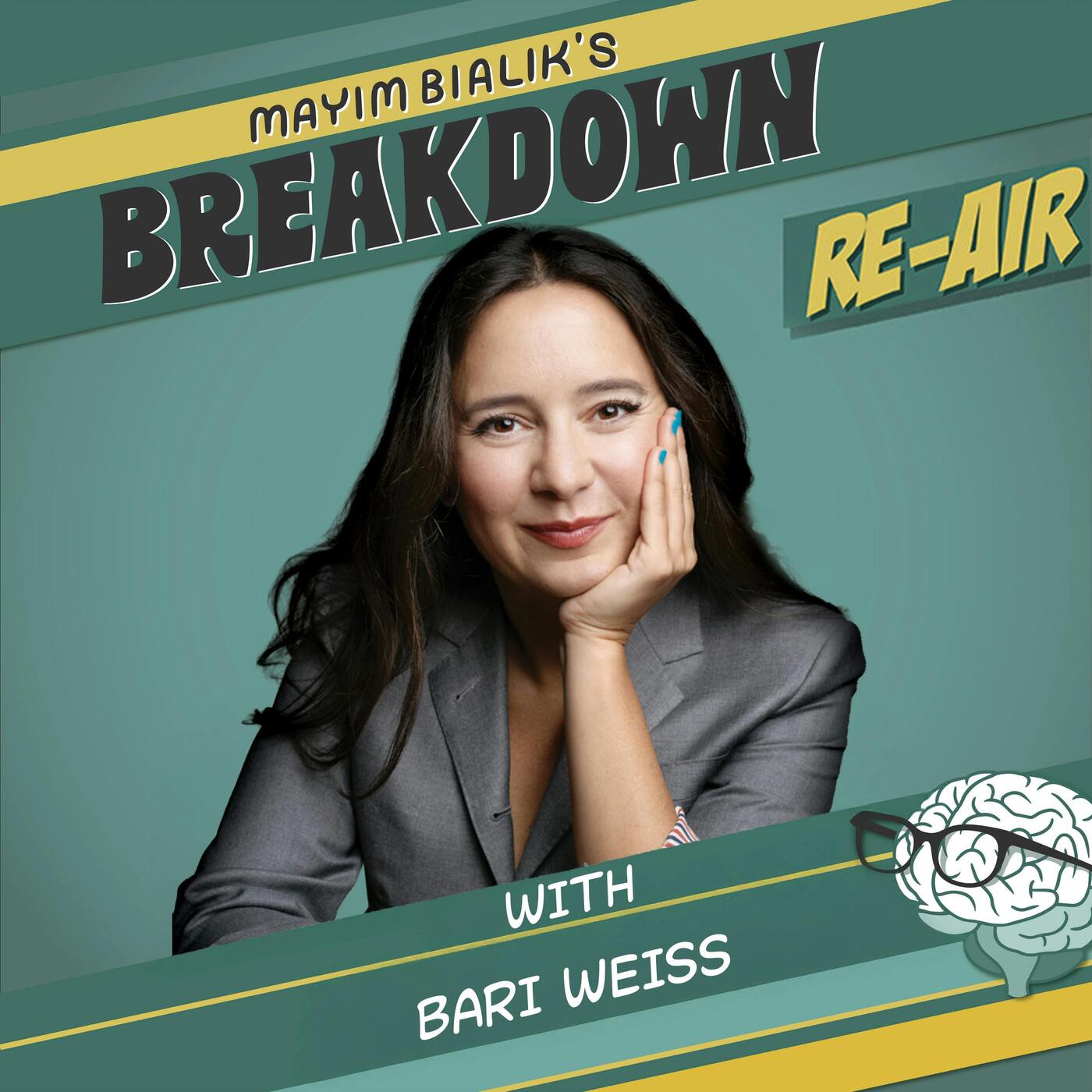
Loading summary
Transcript134 lines
- [00:00]
A
Mind Breakdown is supported by Helix Sleep
- [00:04]
B
Spring is in the air and so are all of the allergens that come with it. Spring allergens means you need more sleep, but there are a ton of factors that can prevent us from getting a good night's rest. Night sweats, back pain, feeling the person next to you when they roll over a million times. We were so excited to hear that Helix wanted to partner with us. I've had my Helix mattress for about five years now and I have been sleeping so much better. Jonathan and also our kids love their Helix mattresses and all of those issues. Night sweats, back pain, motion transfer. Those things are significantly better with a Helix mattress. Helix delivers your mattress right to your door which is so much fun. With free shipping in the US they have a 120 night sleep trial and limited lifetime warranty plus their Happy With Helix guarantee. Rest easy with seamless returns and exchanges. The Happy with Helix guarantee offers a risk free customer first experience designed to ensure that you're completely satisfied with your new Mattress. Go to helixsleep do for 27% off site wide that's helixsleep.com breakdown for 27% off site wide helixsleep.com breakdown vrbo makes
- [01:10]
C
it easy to claim your dream summer spot with early booking deals from homes with pools to poolside loungers. When you book a vrbo, you don't have to reserve any loungers. They're all yours. All you have to do is book early book with vrbo.
- [01:28]
B
Hi, I'm Mayim Bialik.
- [01:29]
A
And I'm Jonathan Cohen.
- [01:31]
B
And welcome to our breakdown. Very exciting news. Barry Weiss, who runs the Free Press, has just been named the editor in chief of CBS News as Paramount acquires the Free Press. And you might know Barry because she's been on our podcast. She obviously has her own podcast, but she's a friend of the podcast, a former editor of mine, and we were so excited to hear this news for her. As we've talked about before, we don't all have to agree with all news that's published anywhere, but we really appreciate the voice that the Free Press has brought to our understanding of the lens of news, and we thought this was a great time to let you hear our conversation with Barry, where we talk about a lot of the things that led to the acquisition that's just in the news this week.
- [02:18]
A
One of the things that is unique about Barry is that she left the New York Times seeking a more transparent, honest and balanced approach to news, and we respect everything that she's built. How she's been able to collect a unique variety of voices and explore topics from both sides of the aisle, and she's going to continue that work now with cbs.
- [02:41]
B
Friendly reminder to check us out on substack. We've got fun exclusive content there. We actually have some other Bari Weiss content that we'll probably be posting there as well, so make sure to check that out. And we hope you enjoy taking a look back at our episode on Conversation with Bari Weiss. Break it down.
- [02:57]
C
Hi, guys. I'm so excited.
- [02:59]
B
We're very excited. Welcome Bari Weiss to our breakdown. Jonathan. We're talking to Bari Weiss. It's like a really big deal.
- [03:05]
A
I. It's huge. It's a very big deal.
- [03:07]
C
I'm big among the juice. That's about it.
- [03:09]
B
Well, you're. You're big among the humans. What a tremendous honor it is to just to know you and get to watch the journey that you've been on. I mean, you obviously created things at the the New York Times, which is, you know, one of the many things you did before what you do now. But you have created something that is incredibly special and necessary. And I am a huge, huge fan of the free press, and I'm a huge fan of what you do when I agree with you, and I'm a huge fan of what you do when I don't agree with you. And that is, I think, sort of one of the. The main things about what you have decided to do. So let's say someone you're.
- [03:48]
C
I'm so happy. Thank you.
- [03:51]
B
We're very happy to have you. If people don't know who you are, I know it's weird to do it like this, but can you explain to people, you know, in roughly 10 sentences, who are you?
- [04:04]
C
I am a girl from Pittsburgh. I'm the oldest of four daughters. I am a longtime journalist who spent her career at fancy prestige publications like the Wall Street Journal and the New York Times. And in the very hot, I would say, hot politically summer of 2020, I left the New York Times in a very public way with a very public resignation letter, a little a la Jerry Maguire, and really sounded the alarm on things that were happening inside the most important journalistic institution in the country. I left without a plan. I've subsequently, which is very foolish for anyone considering leaving their job. You should definitely have a plan. And after several months of drinking too much wine and taking way too many phone calls while pacing the sidewalk of Los Angeles, I decided to build the thing I felt was missing in the world. And I now Run a company called the Free Press. We have an incredible team of more than a dozen people and growing, I should say, I'm like the opposite of an entrepreneur. I am not someone that is in any way cut out. Like, I don't know what ROI is, I don't know what EBITDA is. I mean, I know, but like, I don't. And I'm. I'm trying to pick up the flag that I feel other legacy publications have put down, which is really simple proposition. It's to do honest, fearless and dogged journalism that tells the truth even when it's politically inconvenient and even when it's uncomfortable. And so a lot of times what that means is pursuing stories that other people are either papering over or, or averting their eyes from because of what the social or political ramifications of those stories would be. And so we're doing that on our podcast. Honestly, we're doing that every single day in the reporting we do on the Free Press. To be honest, like kind of astonished at everything that's happened over the past two years of my life, I should say. I'm also a new mom. My wife gave birth to our daughter five months ago and I'm a relatively new religion resident of Los Angeles.
- [06:09]
B
What was going on or what is going on at these kinds of, you know, organizations that again are really the. For many. I mean, I was raised reading the New York Times, you know, more than I was raised reading the Torah like it was you know, every day. My, my dad, like we had. I had the newspaper delivered all through college to my front door into grad school. I had the New York Times delivered and I was taught to read the newspaper. That was an activity that my father would teach me to do and he would teach me, where's the topic sentence and how do you know and how do you do the section? Like it was an art, you know, that. And that publication in particular, you know, held a very specific place in many families homes, especially if you were a New Yorker, an east coaster. But if you had to say in the least paranoid, least, you know, fear mongering, least, you know, biased way, what is going on with the news? And I'm just going to call it the news. Jonathan was using all these terms. What was he saying? Like the ideological structure. What were you calling it?
- [07:13]
C
Ideological capture.
- [07:14]
B
Yeah, he had all these things. I'm like, are we talking about just like the paper?
- [07:18]
A
I mean, the pre pod meeting for this interview is probably one of our best. Where I say a sentence like I got so mad. You talk about ideological narratives in mainstream media.
- [07:28]
B
I was outraged, outraged.
- [07:30]
A
What's mainstream media?
- [07:32]
C
Right?
- [07:32]
A
It's like, okay, we're going to slow.
- [07:34]
B
Do you mean the paper.
- [07:35]
C
I am. Is stuck in another generation. She doesn't even know like the Internet exists. I got you.
- [07:40]
A
Explain this like it's to your 70 year old Bobby.
- [07:43]
C
This is what I have to do. Because frankly, the day that I joined the New York Times was probably the happiest day of my grandmother's life. She reads the paper religiously. She sobbed tears of joy. And when I told her I was leaving, and I should add like her media diet is the New York Times everything sold at her super progressive bookstore in Pittsburgh. She loves supporting independent bookstores, which I do too. And Rachel Maddow. So like when I told her I was leaving, she was like, oh, I saw it on the news like you're a right wing fascist. And I'm like, no, no grandma, like that's, that's not what's going on. Here's the long and short of it. Institutions are just people, right? And what happens when strong minority of people join an institution and don't have fealty to the state admission of that institution? This is not a story that's unique to the New York Times. It's a story like you could easily look at the story of the Trump White House and conclude the same thing. Like, like institutions, the culture of institutions are only as good as the people that are working for them. So let me kind of do it in two buckets. The first is like the pure financial model, which is Mayim. I know you don't know this because you think that there's just like a physical newspaper that we get every day and you're probably like, don't even know what. Like, do you have Spotify? It's like terrestrial. Like she's stuck in radio. No, I got it from another podcast. You've never heard a podcast in your life. So it used to be back in the day that advertisers paid the bills of newspapers, right? And you had to worry about printing a swear word because it might piss off Procter and Gamble and they might pull their ads to take tell you the story of sort of the digital revolution. The way and the way that the Internet transformed that business model is now it's not the advertisers that the New York Times or the Washington Post or the Wall Street Journal fears isolating because their business model has changed. Now the people that determine the news are the readers are the subscribers as it has shifted from a primarily ad based business to a subscription based business. You have to think about it just from a purely financial incentive. Oh, well, who are our readers? What will satisfy them? And it turns out that something like 95% of paying new York Times readers are people like my grandmother and people maybe mime, like yours or Jonathan, like yours. In other words, there are people who will never tire to use only like the crudest example of hearing about how Donald Trump is a moral monster. And so it takes a tremendous amount of sort of principle and discipline to resist that.
- [10:21]
B
What I know that you and the many writers you know who, who write for you, what I know is that places like the New York Times, or even places like many colleges and universities, have a demographic that often skews the kind of information that you're allowed to talk about and how you're allowed to talk about it. Is that fair?
- [10:44]
C
Yeah, that's a great way of putting it. Very fair.
- [10:47]
B
And that's not saying like, I love Trump and I want you to talk about Trump. The notion is news places, what are the big words? Media conglomerates, ideological, blah, blah, blah. Those used to be places where there was a variety of information and you would sometimes read things you like or sometimes you read things you don't. But the idea was that you were hearing what was going on without the lens of, let's say, a political ideology, right?
- [11:13]
C
And the thing is, that was always sort of a myth, right? Like there was always sort of a bent. But the objective, the thing that everyone was striving for was to tell the public the world as it actually was and not as they wished it to be. It's all the news that's fit to print, right? And that has morphed into all the news that fits the, Sorry, I'm gonna use those words, ideological narrative. And that transformation, I think, is really shocking, especially to an older generation that, you know, as mime, as you said in your family, like you trusted it more than you trusted the Bible itself. And I think that that's one of the great untold stories of our time, is the transformation of institutions, not just like the New York Times, but like college campuses across the country, like publishing houses, like production studios. What it's about is, it really is not about partisan politics in the way we typically think about it. It is about actively trying to narrow the window of what is socially and politically acceptable to talk about, to say, and the viewpoints that you're allowed to hold on any given subject.
- [12:24]
B
I felt like I was More anxious, more sick, more confused, more fearful, and increasingly more paranoid during, especially the early years of COVID because of what was happening in the press. And Jonathan is Canadian, so I always tell him about, like when Canadians, you know, are on free press. Like, Jonathan has a very different, you know, he has a very different lens with which to see how people take care of their people. But, you know, a lot of the things that were coming out of Canada, which also made their way to Tara Henley and to your world, you know, a lot of those things, I mean, people were violently, violently opposed to so much of the information. The way that they were violently opposed to talking about Trump or talking about Sanders. You know, it became like incredibly polarized. So I see what you've done as such a parallel to sort of the mental health journey that our country has been on and that kind of the world has been on. So given what you're kind of telling us, how does that impact our wellness as a society when you have this kind of thing happening?
- [13:37]
C
Most people look at the options that they get in the news media and they just are either appalled or tune out entirely because they see that their options are like a total right wing caricature or a total left wing caricature. And most people are, are somewhere in what I think of as the self silencing majority. Like they, they are judging things based on their merits, meaning they're taking things issue by issue. They're increasingly disgusted by both parties and the grandstanding and the narcissism. And I could go on like, I, I really hate partisan. I increasingly just like despise partisan politics and don't understand why anyone would want to do that for their life. Although I know, I know we need good people to do it. And I think people are just desperate for some sanity. And that's like, broadly, I think what we're offering. Like, it's not, I don't have like some silver bullet or some genius business based on gaming the Google algorithm. It's like, no, the business model is super simple. It's to treat readers like adults and to trust them with complicated information and to trust that a large number of Americans don't simply want political heroin that like feeds their fix, but they actually want real stories about the world. And the world is a complicated place when it comes to the mental health part of it. I feel you like, I, I think that every, everyone I know was more anxious, more depressed, drinking too much, eating too much, like sent into spirals by what they were seeing on TV and in the paper over the past few years. Like I don't know anyone that was immune from that. And certainly not journalists aren't immune from that.
- [15:29]
A
Mayim Bialix breakdown is supported by Bio Optimizers.
- [15:32]
B
I struggled to get good quality sleep and I just thought like, ugh, it's stress. But I learned during perimenopause and menopause, your hormones shift and it affects your magnesium levels. Low magnesium makes everything harder. Not just sleep, but focus, mood, stress tolerance. That's why why we added Magnesium Breakthrough by Bioptimizers to our nightly routine. It's a blend of seven different forms of magnesium designed to support relaxation and overall sleep quality. Try it. See if you wake up more rested and refreshed, you've got nothing to lose and a lot to gain. Bio Optimizers offers a 365 day, no questions asked money back guarantee. Magnesium Breakthrough is a fantastic way to improve that hormonal imbalance that especially happens with magnesium. And then you have better focus, you have better sleep hygiene in general. Bio optimizers make it so easy. Here's what you get when you go to bioptimizers.com breaker and use the code breaker. 15% off your entire order and a free bottle of Mass Signs. That's bioptimizer's best selling digestive enzyme added to your order automatically when you use our exclusive code. That's a $20 product, free on top of your discount. This is a limited time offer. While supplies last. You cannot get this on Amazon. You can't get it in stores. The offer exists in one place and our link, our code, that's it. So if you were already thinking about trying it, this is the sign. Go to bioptimizers.com breaker use the code breaker. Grab it before it's gone.
- [16:56]
A
Make 2026. The year you finally start sleeping again. My imbalance breakdown is supported by Bioptimizers.
- [17:04]
B
You know, I struggled to get good quality sleep and I just assumed it was stress. But as I learned during perimenopause and menopause, your hormones shift in a way that affects your magnesium levels. And low magnesium, it makes everything harder. Not just sleep. Focus, mood, your tolerance for stress. That's why I have added Magnesium Breakthrough by by optimizers to my nightly routine. It's a blend of seven different forms of magnesium designed to support relaxation and overall sleep quality. Try it. See if you wake up more rested and refreshed, you've got nothing to lose and a lot to gain. Bio Optimizers offers a 365 day no questions asked Money back guarantee magnesium breakthrough is a huge breakthrough to improve hormonal balance, to help with focus, decrease brain fog, improve sleep hygiene. Overall. Bioptimizers makes it very easy. Jonathan, what do they get when they go to bioptimizers.com breaker and use the code breaker?
- [17:56]
A
You get 50% off your entire order and a free bottle of Mass Zymes
- [18:00]
B
Bioptimizers, bestselling digestive enzyme that'll be added to your order automatically when you use our exclusive code.
- [18:07]
A
That's a $20 product, free on top of your discount already.
- [18:12]
B
This is a limited time offer and while supplies last, you can't get it on Amazon, you can't get it in stores. This offer exists in one place. Our link, our code. That's it. So maybe you were already thinking about it. This is the sign. Go to buyoptimizers.com breaker. Use the code breaker. Grab it before it's gone. Make 2026 the year you finally start sleeping again. And I think that's kind of what my next question is. And I'm not trying to come down on the cdc, I'm not trying to come down on the government. I'm just saying, like, even those people who were gathering information for us, like, of course there's ulterior motives, and I'm not trying to be this, like, crazy paranoid person, but I think that's what a lot of people think when I tell them about the kind of work that you do. Like, there's a place where things are unearthed that we know have been tucked away and studies are released in their entirety. You know, I'm reading Johann Hari's book Lost Connections. Like, the research about what actually goes on with SSRIs. Like, the actual research from the companies in their entirety reveals a completely different story than what. What I was told at 16. Here we found the pill. And I feel like this makes me very anxious and agitated, and it. I become that person who's like, I can't read anything. And until I started understanding what you were doing with Free Press, like, I had really. I had come. I had to turn off because it felt cuckoo. Can you speak to that a little bit?
- [19:41]
C
Yeah. I mean, I think everyone has their issue or their moment, right? So, like, I think for a lot of parents, I knew the idea that arguing against school lockdowns made you for a very long moment in mainstream American culture, let's call it mainstream, even though I think it does not actually represent the mainstream. But let's just call it those legacy institutions, those people who said, you Know what? The unintended consequences of this policy are worse than the so called cure. They were called grandma killers, right? They were accused of not wanting to protect their neighbors, not wanting to protect their fellow Americans. Well, it turns out three years on, if you look at all of the reporting on this, and I think the very best of it is being done by Alec McGillis at ProPublica, the effects of school lockdowns, especially on poor and minority children in this country, are devastating. Does not begin to cover it, right? And so if you're, if you were one of those moms and you were raising the alarm, sounding the alarm, and you were, oh, people called for your head.
- [20:46]
B
They called for your head.
- [20:48]
C
And there was no. There was. There's like never a reckoning. It's like, well, the beat just kind of goes on, right? And I think that that's what's alarming to people. I think if, let's say, you know, Fauci, who, who admitted to telling a noble lie about masks because he's worrying about, worried about a run on masks, if he had then subsequently said, you know what, we got it wrong, or, you know what? This is an evolving pandemic and the science changed, I think people would have a really different reaction to the past few years. But it's like that. That correction never came, that apology never came.
- [21:20]
B
It felt like a parent who lied to you, and when you found out they were lying, they still lied. It was like, I know there's no Easter Bunny, but there is. No but, there's not, and we know it. And it's like, it's so Emperor's clothes.
- [21:33]
C
The really alarming thing that happens to most people, not most people, let's say some people when they feel like they've been lied to is all of a sudden they're looking over their shoulder and they have this deeply paranoid feeling about everything they're reading, everything they're watching, everything they're listening to. People make fun of the Americans who claim they're doing their own research. Well, why are they driven to do their own research? It's because the institutions that they were meant to trust, including our public health institutions, have revealed themselves to be, let's say, at the very least, politically motivated or ideologically motivated. That is really bad, right? It is really, really bad to live in a huge democracy like ours and not be able to trust institutions that need our trust, right? Not be able to trust one another. And so I think often what happens when you have that first moment, right, if it was over masks or over School lockdowns or over, you know, the famous CNN chyron. Right. The thing at the bottom of the screen, Mayim, where flames were shooting out in the background, you know, at a. At a violent riot. And the chiron said, you know, fiery but mostly peaceful protests. Right. It was unbelievable. It was like, you're literally telling me not to believe my own eyes with the words at the bottom of the screen. It's Orwellian. And so what a lot of people do then is they unplug or they say, you know what? I'm not trusting any of this. And all of a sudden, they're tumbling down the rabbit hole right into very, very dark, fringe corners of the Internet. It's not a coincidence that we're living in an age of rising conspiracy theorizing, you know, that that has roots in lots of different places. But I think one of the culprits is. Is the fact that places that used to have our trust, that we used to look to as authoritative no longer do. And so now you have all of these people spinning off into all these different corners. And that's where I think that if there's a silver lining to this moment, it's that there's a huge opening for people that actually are unafraid to look at where the facts lead. Right. We had a story today that I'm extremely proud that we ran. It is a. It is a story of a. A woman, queer woman, very politically on the left. She describes herself as to the left of Bernie Sanders. She was in an anarchist collective.
- [23:55]
B
I didn't know there was. That could be to the left of
- [23:57]
C
him, exactly like that kind of thing. And happens to be, by the way, married herself to a transgender man. They're raising five kids between the two of them. She worked for the past four years in Missouri at a pediatric gender clinic. And she went into that work because she believed that she would be saving the lives of children with gender dysphoria. And she came out today with this absolute bombshell personal essay exposing what she saw there, just very, very plainly laying out the facts in the hours subsequent to her publishing this story. And I'm really happy to get into what she published. The Attorney General of Missouri announced an investigation. One of the senators of Missouri announced an investigation. Washington University, where the gender clinic is located, announced how alarmed they were at the story, and they're looking into it. And yet no one in the legacy press yet has touched this story. And it's a little bit like it's alarming, really, because by any normal Measure the fact that America has its sort of first whistleblower in this space. And if you look right at the uk, if you look at Sweden, if you look at Finland, whistleblowers have transformed the way that they think about pediatric gender care. Wherever you fall on this issue, this is a news story.
- [25:15]
B
No, but this is the thing, and that's the point. Wherever you fall on the issue. I want to live in a world where we can talk about things without it leading to the kind of. I don't even know what the word is, like polarization, hostility. I mean, in many cases, like litigation,
- [25:34]
A
reality is highly nuanced and people just gravitate towards these very clear definitions of good and bad. It's like, it's beyond simplicity and it doesn't serve any of us.
- [25:47]
C
The world isn't two dimensional. The world isn't black and white. The world is highly complicated. And yet why does it feel so much of the time when we're reading about the world that it becomes on the page black and white or two dimensional, or just contrary to what it actually is in our lived experience, to use that parlance.
- [26:05]
B
So the topics, and just for people who may not know, the kind of topics that I'd say in the last couple years seem to be featured prominently. Obviously there a lot of COVID stuff. Free Press also does delve very deep into some of the complexity of race relations. A lot about the gender space and also a lot about what happens at academic institutions. But the question I had for you, like, those are all really. Those are enormous topics. These are enormously complicated, nuanced, controversial topics. Why are you not afraid?
- [26:47]
C
I wish I knew the answer to that. It's not that I'm not afraid. It's that I have a certain set of principles that I'm very clear about and that I've put myself on the hook for in many ways, publicly. So when I meet the moment where I feel scared, I'm able to ask myself what really matters to me, if that makes sense. So, like, when I meet a moment where it's like, oh, I could lose maybe some friendly acquaintances, maybe even friends over this, or I might be called really bad names for publishing this kind of piece. Or I might suffer, or people might lie about me on the Internet. If I do X or Y or Z thing, I can overcome that and make the. What I think is the right choice and the choice that. That honors my conscience. Because I know that what's more important to me than popularity or prestige are values that I hold much more precious than those things. I think that if your life is about, like, fitting in or being cool or. And you might not even be aware of it, it's really, really hard to do the right thing in those moments. And also a lot of it is frankly, like, just building up the muscle. It's always. Can be hard. It's. It always is painful when you see someone say something about you that has a prominent platform that, like, bears no resemblance to who you know yourself to be. But I will say, looking back on my career, there were, like, probably six years ago, I was probably trending on Twitter for the first time in a negative way, and I couldn't get out of bed. I mean, it would be a lie to say otherwise. Like, I think that I'd have to be a sociopath not to have that reaction. So what happens on the Internet is very much real life, and it affects your actual real life. And I've experienced that. But then you also realize a news cycle lasts, like, 48 hours, and then everyone moves on to the next scapegoat or the next villain of the day or the next hero or whatever. And, you know, you go on with your life, to be honest with you. Also, like, not to sound too Jewy here, but, like, Judaism is a big part of it for me.
- [29:04]
B
You know, a lot of people might say, like, how do you know what your values are? And I'm not saying that just because you're Jewish or anyone is a certain kind of Jew or an observant Jew, I'm not saying that that's a guarantee. But I do know. And your first book discusses specifically anti Semitism, you know, from a very, very interesting lens. But what are some of those values that you hold? You know, like, where. Where. Where do they come from, especially in. In light of sort of your upbringing?
- [29:33]
C
I believe in the dignity and equality of all human beings. And so that makes me allergic when I encounter any ideology or political movement that tries to suggest that some people have some kind of original sin and some people have some kind of original salvation. Like, I just don't believe that. I think that everyone is created in the image of God. Everyone is created equal, and we don't judge people based on the sins of their ancestors. I believe that, you know, the way to get to truth and the only way to avoid physical violence and conflict is conversation. And I come from a people and a culture with a cultural DNA that is built on that premise. And so any ideology that tells me that arguing with people that disagree with me is somehow crossing a line or nefarious in some way. Again, I'm running in the other direction. I'm from a people like you, Mayim, that's like, you know, we're the underdogs throughout history. And so that makes me allergic to bullies. And any group that needs to rely on or political movement or ideology that relies on bullying and scapegoating as a primary tactic of persuasion, I am running in the opposite direction. Anytime I see a group of people running one way without questioning, I'm like, I have a deep, visceral spidey sense that hold on, like, let's take a second look. I believe that people have personal choice and responsibility and freedom in the most foundational way. It doesn't mean that some people aren't born with a leg up. Of course I believe that. That's just true. But that we have the ability to shape our own lives. That is a core foundational belief that I have. You know, the belief that your character and your actions and your deeds matter more than any immutable characteristic. And anyone that tells me otherwise, I'm going to be skeptical of the next thing that comes out of their mouth. So those are some of the core
- [31:45]
A
things I believe this episode is sponsored by Wandering Jews, an open door media brand.
- [31:51]
B
If you've ever found yourself feeling like you have more questions than answers, you're in good company. The Jewish people have been like that for thousands of years. Wondering Jews with Michal and Noam is a podcast where two of today's most dynamic Jewish voices, Michal Bittone and Noam Weissman, dig into the biggest questions about life through a Jewish lens. It's the kind of conversation where you'll laugh, learn something new, and probably shout in disagreement at least once. Michal and Noam tackle the tough topics like antisemitism in America, what happens after we die, and the future of religion, with guests like Bret Stephens, Michael Rapoport and Sarah Hurwitz. And this past month, in honor of Jewish American Heritage Month, they've been celebrating some of the Jewish lives and institutions that have shaped American life, from food to music and comedy. Thoughtful, joyful, and always honest. That's Wondering Jews with Michal and Noam, a production of Unpacked. Find it on your favorite podcast app or on YouTube and make sure to hit subscribe. Check out Wondering Jews with Michal and Noam podcast and subscribe at Unpacked Bio nmx.
- [32:55]
C
Wherever you go, whatever they get into, from chill time to everyday adventures, protect your dog from parasites with Cridellio guattro for Full safety information, side effects and warnings. Visit cordelioquatrolabel.com consult your vet, or call 1-888-545-5973. Ask your vet for Cordelio Cuatro and visit quattrodog.com the other thing that I believe, you know, that I. I almost don't even know how to articulate it is just a, like, profound sense of gratitude that colors everything about the way I see my life and see my position. So, like, I live in a world where I'm married to a woman, we have a child. I am able to walk down the street with them without being physically assaulted or even heckled, at least most of the time. And when someone says something, it's usually nice. I'm sorry. Like, in no other context in human history was that possible. And so, like, there's a lot that's really broken about this world, and a lot of what my work is about as an editor and a publisher and a writer is exposing that. I hold that in one hand, and in the other hand, I hold like, I am the luckiest person that was ever born. And, like, I really feel that. And so part of that, like, historical perspective, I guess, would be a way to put it, also allows me to do the right thing. Because when you think about just, like, what two generations ago, our great grandparents endured. I'm sorry. Like, the idea of sacrificing, being able to tell people I work at the New York Times, it's like, okay. Like, it's just. It's just so not a big deal in comparison. Those are some of the values I hold dear. And. And those are. Those are, like my north stars. And I don't know if Miami, you've experienced this in your life, but sometimes in periods of a lot of noise and a lot of negative noise, there's, like, this one voice that emerges that feels like that still small voice. That is true. And that has also really happened for me in critical moments of my life. I don't know what to call that other than luck or blessing, but that's also been really important to me is to know that I'm very lucky to have a handful of people in my life that I just deeply, deeply admire and turn to for wisdom and guidance and to know if I'm doing the right thing and to check myself and to make sure that my motivations are right. And that's also been really important to me and people that are real friends and will tell me the truth, even if I don't want to hear it.
- [35:32]
A
I listen to a lot of. Honestly, I hear you interview a wide variety of people. And just listening to you for this last little stretch. Have you always been so organized in your thinking?
- [35:44]
C
You guys are crazy. I'm off, right? I slept like three hours last night. That's so nice of you. No, I do think that, you know, I come from a. Like my parents are, are politically mixed. My dad is a conservative, my mom is a liberal. I'm the oldest of four daughters. My divorced grandparents lived with us. That's like a script for another time and a possible sitcom. Like, I grew up in a house where we argued and talked a lot and that was a part of our family culture. And you know, I'm really comfortable in that environment. But I also think that, you know, what, whatever it is like that 10,000 hour rule of writing a lot like, what is good writing? Good writing is good thinking, is clear thinking. If and. And those two things are just inextricable. And the more I've strengthened my muscle to be able to write clearly, I think the more I able to think clearly. I also think a really big part of it is just not being scared anymore. I mean, not being scared anymore is a huge part of it. And I don't think I was ever scared scared. But I definitely, when I was at the times, thought a little bit more about, like, wait, is how is this going to be heard by my colleagues? Is this going to get me in hot water? Is this something where I could lose bupa ba ba ba ba ba, which are all normal things.
- [36:58]
B
You did an unbelievable thing, which is that you created a place where you didn't have to be afraid.
- [37:04]
C
Someone who I worked with said something just really nice. The other he just, like in my old place of work, like, I worried every day about saying the wrong thing. And now I never worry. And I know that if I put my foot in my mouth, like, it won't be heard. Like, it will be heard in the most generous way and the most good faith way. And I'm really proud of that.
- [37:26]
A
Mime in the outro. I'm going to ask you what you stand for, and I'd like to measure the clarity.
- [37:31]
B
I stand for what Barry Weiss stands for.
- [37:34]
C
I mean, I'll take it. I'm going to put that blurb on a T shirt.
- [37:38]
A
It's a very long T shirt, but it's very accurate.
- [37:41]
C
It's very, very long.
- [37:43]
A
The other part that I was going to ask is about sort of the ideological narratives that are circulating. It used to be as a Canadian. You saw America and it was the land of opportunity and it had a narrative to it. It was, you're going to own a home, you're going to get a gun, you're going to make $10 million and it's all going to be easier.
- [38:05]
C
I like that. Get a gun is the second step there. Yes.
- [38:08]
A
Can you speak to how mainstream media particularly has been perpetuating or circulating different types of ideological narratives? Like, what is there to believe in these days? And, you know, if you were to propagate a new set of things for young people to believe in. Do you have that manifesto also?
- [38:28]
C
I, look, I'm not saying anything new or anything that it doesn't sound like you cover regularly on this show that, like, we're living through a crisis of meaning. And of course we are, because we're living through may might not know it, but like a major technological revolution that is like, maybe the biggest one that's ever happened.
- [38:47]
B
I still don't know how to work the microwave and I don't know how it works.
- [38:51]
C
And that's great and good for you. But like, most kids in school right now, like, don't even have to write a paper because they can ask Chat GPT to do it for them.
- [39:00]
B
I just learned about this this week and I'm astounded and I'm shocked and I'm outraged.
- [39:04]
C
This is definitely going to come jeopardy. And you, you need to know this. So, yeah, like, we're, we're living through a crisis of meaning, people. You know, on the one hand, we're living objectively in like the most comfortable, privileged, wealthy time ever. I could go on my phone right now and order Ben and Jerry's and it can be at my door in 30 minutes. Everything is available to us. And yet it feels like we're missing some core aspects of what it is to be human being and live a life of meaning. Like I, I, I am. I will not be surprised if we live through right now politics is religion, but if we live through a kind of religious revival in the next few decades, because I think people are thirsty for the things that human beings always need, like a higher purpose, like community, like sacrifice, like duty, like honor. Like, I know those things aren't cool to talk about anymore, but those are really important to living a life of meaning. We ran this incredible piece earlier this week by this young social scientist who I so admire named Rob Henderson about why people are jealous when they watch the Last of Us. It's like this post apocalyptic dystopia and yet they have things like connection and looking out for one another. And when you're living in the world that we're living in, like, you could go days, many, many days, weeks, playing your video game, getting your doordash, watching your Netflix, and never interacting with another human being, like, that is just not a good recipe for a good, meaningful life. And I think that for all of our comforts, and they're amazing, like, what are. What do we lose in the balance? What do we lose when the whole purpose of life becomes about achieving luxury and achieving comfort? Like, there's a lot of things that are missing in that, actually. And that's one of the. That's like, one of many subjects that I'm deeply interested in, in writing about and that we publish lots of people on. I did give a talk. I'm on the board of this new university that's starting in Austin, and I gave a talk to them last summer. It was the most intimidating group of students I've ever spoken to. It was like, the brightest group ever and, like, very skeptical politically, all over the map. And it was called the New Founders America Needs. And it was. It was really. It was really the answer to this question, like, what are the kind of values and principles and virtues that we need to stand for to live a meaningful, good life that has that. That is, those are questions that are so far above politics that I think are so much more pressing in a way than whatever goes on in Washington.
- [41:43]
A
Well, do you think media outlets are perpetuating that? Do you think they're feeding this notion of we're all isolated? And so in our isolated bubbles, we're also going to tell stories about how all the things that you once aspired towards are no longer attainable. You're never going to have a job that's going to give you any sort of security. You're going to potentially live in an environment where it may not be inhabitable for your kids. So this level of propagation of dystopian futures sort of feeding this cycle, which then only makes us hunker down and isolate more and ultimately consume more.
- [42:19]
C
Well, you guys know, like, bad news sells. And the thing that makes you want to keep scrolling, keep clicking, as every single documentary investigation, et cetera, et cetera, et cetera, has shown is anxiety and outrage. It's not like love and kindness and fellow feeling. And so it's a good business model to make people really outraged. There is also a lot to genuinely be outraged about. Like, there. There is. The world is very broken in some fundamental ways. I I just think that one of the ways that it is that desperately needs to be repaired and remedied that is not really talked about because it's kind of ineffable. And there's not, like, an easy solution is loneliness and the crisis of meaning and the loss of trust in the things we used to trust. Like, those are really big ones. And it's way easier to be, like, go support the Green New Deal or whatever the policy is than to talk about, like, what do we do about the fact that a lot of young people are deeply lonely, deeply depressed, deeply anxious, aren't even interested in sex, aren't even interested in, like, drugs, like, all the normal things. Those are two really good things.
- [43:25]
B
So, like, I don't know what's happening, people.
- [43:28]
C
Yeah, I just think those are enormous stories, and there's something deep about, like, the human animal that makes those things that maybe we thought we could live without. Like, we can't live without those things. We just can't. We can't live without community. You can't live without a bigger purpose. You can't just, like, be a slave to your phone and be content or happy or joyful. It just. It won't work.
- [43:53]
B
I'm fascinated by the fascination of Q and on people with the things that they're fascinated with. You know, like, if there's a documentary, like, I want to learn, that's just fascinating to me that there's this entire, you know, universe of, let's say, that kind of set of thinking. But the other thing that is happening is much more fun. It's much less scary, I think, you know, when you think about it sort of colloquially, but I find it very disturbing. And it's something that Jonathan and I kind of. I don't want to say that we disagree on, but I have a feeling you're going to be able to articulate why I have a problem with it. So I brought you here today.
- [44:30]
C
I hope so.
- [44:31]
B
What is it? It's Gurus and the.
- [44:36]
C
There's a really great new podcast about this.
- [44:38]
B
I know Jonathan, my personal guru. Jonathan is one of those people who spends a lot more time. Sorry, spends time. Because I really don't. Like, he spends time on social media, not a ton. Like, he's a working person, very productive, wonderful, creative, who does many wonderful things. But he often sends me, like, the dude, the lady, the. Not the diet, but, like, the. The protocol, the piece of equipment, you know, like, he wants me to get a sled. You push it. That's all that. You just push it in your yard. And he's like a sledge.
- [45:17]
A
You pull it too.
- [45:18]
B
It's like the sled. It's the thing. It's the cold plunge. It's the this, it's the nmn. It's like. And in many cases, God bless this Canadian. He's right. And those, like, I totally get it. But there's something that I. And I do think it is part of my. I mean, I don't think it's just my, you know, my. The itchiness in me when people try and impose something on me from a large leader. But I feel that kind of allergy to a lot of this stuff because it's all often packaged really sleek, you know, like most of the things he sends me, it's like everybody's half naked and they have these amazing bodies. And it's like you too will be this person. What is it? Because I feel like it's. It's kind of a satellite thing to what you're talking about with kind of what we're craving.
- [46:07]
C
Well, it's adjacent to it, right? If you're untethered from the institutions and like, we don't live in a world without the Internet where we all watch Walter Cronkite. We all had a shared. I'm going to use a fancy word, epistemological reality, like, that world is over. You don't trust the institutions anymore. So now you're in this wild west, right? But people need leaders. People need to know. People need something to trust. And so it's like we're now living in a world in which we have, like, we're all these little tribes following around these little leaders, like waving their particular hyper specific flag. Whether it's like the drinking your own urine flag or the pulling the sled flag or the goji berries make you skinny flag. Like, there's. There's untold numbers of these people. And so I. I think it probably makes you nervous because when the thing that you are venerating or looking up to is a human being and you start to look to that human being as a kind of like almost demigod,
- [47:08]
B
that that is just an idol, a
- [47:09]
C
scary reality, it's set up to fail because human beings are fallible. And so I think that like, maybe part of your spidey sense is turning you off to that. I also think that a huge part of like the model for a lot of these people is built on selling you on something that's not just selling you on an idea. It might be selling you on A sled. And maybe the sled is great, I don't know. The rise of the gurus speaks to the deeper phenomena. It's like, why are we living in an age of conspiracies, theories? Why are we living in an age where everyone needs a guru? Well, sure, part of it is that, like, we're deeply religious people, traditional religion is dead and people need to like, fill the God shaped hole in their heart and they're going to look to goi berries, goddamn it, if they have to, or they're going to look to Trump or they're going to look to, you know, like woke politics. Like, you need to fill that hole. Everyone does. And so I think to me, it's less about the rise of the guru, it's more about what does the rise of the guru tell me about what is so screwed up about our era? Look, and I also think there's like, there's better gurus and worse gurus also. Like, I think that there's a huge spectrum and some gurus are, you know, the Dalai Lama is a guru. Like, his wisdom's kind of worth following on a lot of scores.
- [48:27]
A
If you take away guru from this conversation and you just say there are people who are actually have really valuable information and there are people who have some potential information that may offer some value, but it's couched in their own incentives to try to sell you shit. That's a big divide. And there are people out there right now who like the popularization, for example, that Andrew Huberman has given Morning Light.
- [48:54]
C
He taught me about that.
- [48:55]
A
Yeah, right. So like, he's a guru, he's a science guru, but he's actually popularizing and democratizing information about how our bodies work. We've never had. And now all of a sudden, because of the rise of the quote unquote guru that has all the snake oil, while you have someone else who's taking really valuable information about how the human body works and saying, look, everyone, you're kind of sick and feeling horrible because you're not doing the basic things that are needed to survive as a human animal.
- [49:25]
C
Like, we have this incredibly exciting Wild west space of independent creators and independent experts, independent journalism, podcast. Like, it's a explosion and it's amazing. And there's people that I follow that are like, have 50 Twitter fault. Like, you would never even know who they are. And I think they're absolutely brilliant and that's phenomenal and amazing. I think one of the things, though, that will ultimately probably change, but is very emblematic of the current moment is like, it's hard sometimes to suss out who is worthy of paying attention to who actually has good information and who doesn't. And we used to have like a really simple way of doing that. It was like, oh, that institution has that logo or that font or that name. I trust them. It's Harvard, right? And now, like, we don't have that luxury as much anymore. And so now every person is going out there with a flashlight, trying to be like, oh, is there something good there? Maybe. Oh, oh, no, wait, I, I only saw like half of it. The other half is horrifying, like running in the opposite direction. And so I think that like the, the great news about our moment is the democratization of the Internet has allowed us to find unbelievable people, voices, experts, creators all over the world. Like, I couldn't do my job without the Internet and social media. The, the people it has connected me to, the people who are able to get in touch with me, including the woman today whose story we ran like underground pastors in China, survivors, like, you name it, it would not be possible without the, without the Internet. So that's the great part. The bad part is like, there's not a lot of gatekeeping or fact checking in the new space. And the question is, and not to like take it back to the free press, but I do think that the thing we do that is unique is we're trying to marry the standards of the old world with like fact checking and reading everything and having a great, clear, honest headline that doesn't spin you like all of those old school values that you expect from premium news without the bullshit politics that are currently overlaid on that. Right? So it's like marrying the standards or the used to be standards of the old world with the freedom of the new world of the independent. And I think like bridging the, like bringing the best values of each world into one new place is really important. Like to me that's the key because freedom is good, but you also need responsibility and you need both of those things to have an institution that is worthy of trust. And that's really what I'm trying to do.
- [51:59]
B
You know, I remember when I found out that Nelly was your wife, I near lost my mind because one of my favorite things is what happens on Fridays in my inbox.
- [52:10]
C
My, you are like making me so happy.
- [52:13]
B
I'm like your biggest fan. I'm obsessed. Because what's so important is that even with the seriousness that you have to bring to what you do, there's no way to be light about what you're doing, because by definition, what you're doing is stepping outside of a realm that does not want you to step outside of it. It's a serious matter. But there is so much that is ridiculous and hilarious about the way that we as Homo sapiens are functioning right now. And so the breakdown of the news is like the. It is the most helpful for me. And I started sending it to my 17 year old because he's a really bright kid, but he is flooded with an Internet of information that is not helpful to him. It's mostly depressing or it's confusing, or he has me in his ear being like, but is that really true? Look at that. So he's like, I don't have the energy to do it. So I started sharing that with him. But I think. And I. And then when I realized that you're married, I was like, that's an amazing couple. And I just think that's incredible. Can you just talk a little bit about sort of how you've built, you know, a relationship, meaning a structure of personal trust, and are able to sort of work together to build a larger trust?
- [53:27]
C
We met at the New York Times. We met in the fifth floor. It's not even cafeteria, like the little coffee alcove. And as she would say if she were here, she said to her editor at the time, I'm gonna go meet Barry Weiss and I'm gonna set her politics straight. Because I had already, like, put my neck out there on, you know, things that now are common sensical wisdom, but at the time were heresy, like, you know, my Aziz Ansari piece and other things like that. And we, we met and, you know, she wasn't sure if I just, like, needed a friend or if we actually. Because I did. Or if we had chemistry. And anyway, we met a few weeks later and. And kind of the rest is history. And I will just be forever grateful to the New York Times for introducing me to, to Nelly. I could never in my wildest dreams, when we met that day at the Times, have imagined what we would be doing together now. Like, we moved across the country together. She's. She's a sixth generation Californian. She's like, die hard California. I know, it's crazy. Like, we moved across the country, we had a baby, we bought a house. Like, I never bought a house. Like, I got my first credit card, I became an adult. And like, now the person that is my wife and the mother of our daughter is also building a company with me along with our other. I should also say, you know, with our other close friends. And also my sister works with us, too, one of my sisters. So, like it. You got the whole mishpacha here. And listen, it's not for everybody. Like, there are people who really believe in things that are foreign to me, like work, Work, life balance. I'm like, I don't know what that means. Like, I come from a family that was a family business that is still a family business in Pittsburgh. It's kind of like a furniture store and flooring store. There was a time in my life where I would go into the store, and it was like, my grandpa, my dad and his two sisters, and then my mom all in one place. So it's very normal to me for other people. And I totally get this. This would seem, like, absolutely insane, but I think it's the most rewarding, exciting thing in the ever. Like, yeah, we have to put moratorium sometimes on. Like, I actually cannot discuss XYZ tonight. Like, it's done. We're gonna watch the Last of Us or the Sex Lives of College Girls, which was the other show we were watching recently. But, like, in general, I love it. I. You know, I'm gonna edit. I edit TGIF every week. I'm gonna edit tgif.
- [55:58]
B
So jealous.
- [55:58]
C
I'm so jealous. I can't wait to see what happens in my inbox.
- [56:01]
B
I mean, but don't.
- [56:02]
C
Don't you guys love, like, I. I don't know. Like, for me, like, the core of a relationship is, like, the ongoing conversation that never ends. And, like, that's what we get to
- [56:12]
B
do for our work.
- [56:13]
C
It's like a fantasy to me.
- [56:15]
B
Did you always want to be a parent?
- [56:17]
C
Yes. I always wanted a family. I did not necessarily know if I would be the one to give birth. But I will say, having seen it, I really want to do it now. I really want to do it. It's a real hoot. It was the most magic.
- [56:34]
B
I mean, it's magic.
- [56:35]
C
It was. It was. It just, like, still blows. Like, I. I still think about it every day, which is maybe a little weird five months on. I just thought it was. I just thought it was amazing. And I'll say it was really incredible because the doctor who was there was herself 37 weeks pregnant that delivered the baby.
- [56:51]
B
Oh, stop it. That's the best story ever.
- [56:54]
C
It was the best story. She was pregnant with her fifth child.
- [56:56]
B
I mean, the only better thing is
- [56:58]
C
if she would have gone into labor
- [56:59]
B
because the hormones were just, like, flowing and everybody Gives birth at the same time.
- [57:03]
C
Exactly.
- [57:04]
B
It has been really such a pleasure to talk to you. I respect you so much. Like I said, even when I don't agree with you, I respect you. And that is what you have taught me is possible. And really, I had really given up. I had really given up, and I was feeling a tremendous amount of despair. And in particular, as a Jewish person and a Zionist and a liberal Zionist and a progressive Zionist, you've really helped clarify a lot of the core values that drive the labels that we have. And it's really. It's tremendously helpful. And I really just think that if you are a person who is feeling stuck, lost, disillusioned, and confused by what is going on in the news, as. As we simpletons call it, there are people who are trying to do it differently. Right? There are people who are trying to do it differently. And it's okay to listen to people and to read things that you don't agree with. It doesn't change you. It doesn't change the core of your heart or your brain. It is such, such a pleasure to speak to you. We're so glad we got to talk to you, Barry.
- [58:12]
C
Oh, it was so much fun. Thank you guys so much.
- [58:18]
B
I am very grateful that she spoke to us because she's a very busy person and she's pulled in many, many different directions, and she has a very specific category of expertise that I feel like so suits the work that we do, you know, meaning talking about things that you and I are interested in on much more of kind of like the micro level. She works on this, like, huge level of, like, how do we trust? How do we get information? She really articulates things a way that makes sense to me. Like when she says, you cannot be truly joyful with your life, you know, planted in a phone. You can't. We are made to interact with.
- [58:57]
A
Can't have meaning.
- [58:58]
B
Right.
- [58:59]
C
And that.
- [58:59]
B
That's. And that. That's a crisis. Like, that's a. That is a. It's a mental health crisis. And when you think of teenagers, I can't tell you how much time I spend debating with them, how much time they should be devoting to looking at that screen. And, like, I just want to be like, I'm. It's so. She makes it sound super clear. It is really. Anyway. But take their phones away.
- [59:25]
A
She mentioned sacrifice and that we don't have sacrifice anymore. So the notion of it's not just hard work, but what are you giving up in order to work hard and pursue the things that you want and that being a necessary part of, not just the creation of dopamine and pleasure and reward, but to feel meaningful and to feel like you're having a purpose in the world, sacrifice has to be a part of that.
- [59:51]
B
But don't you think a lot of people. I mean, I. I don't want to say young people, but when I even think about the conversations, like, I can. I get eyes rolled at me a lot just by the humans that I literally gave birth to. You know, when I try and talk about this, and that's their job, but I'm saying, yeah, but people who are not my children also roll their eyes at me.
- [60:10]
A
She started by saying at the beginning of the podcast about how, you know, there are some core things missing in the world. And she set out to try and address those, but she didn't say specifically what the core things that were missing were. I mean, she circled back to them, talking about meaning, talking about purpose, talking about connection. The epidemic of loneliness, which is, you know, we talked about at the beginning of this podcast, we said there was an epidemic of loneliness. And we had looked at all that research together, and we said, you know, part of the reason that we needed to have conversations about mental health is that loneliness may not be considered mental health, but it's the fact that, you know, the need for human connection and normalizing every type of experience from being sad and what does that look like? To be okay with an emotion to being lonely.
- [61:02]
B
Yeah.
- [61:02]
A
Was essential.
- [61:03]
B
Yeah. I think when I. When I think about documentaries and books and things that I've read about, sort of what makes people happy, meaning, like, by objective measures of. Of happiness, you know. Yeah. It's a sense of purpose, which often comes from interacting with people of a variety of different ages and, you know, knowing old people, seeing babies, and also knowing old people. Socialization, meaning not living a life of loneliness or isolation, that's, you know, hugely important. And, you know, a community and by extension, a government that seeks to facilitate those things. And I think it's really hard because from a very privileged, Western, you know, perspective, I want people to live only under governments where they have freedom, no matter what. Like, I really want that. I don't like that there are places where women are not allowed to drive cars or go outside. Like, that just feels so hard. Meaning it feels so hard that that exists. Like, I. I can't even wrap my head around that. So when I think about, like, what's missing in the world, I want people to be compassionate in a way that allows for more freedom and more dignity and more life choices, even if you don't agree with them, you know?
- [62:29]
A
Well said. And what about your personal values that you live by?
- [62:33]
B
Great. Like a sense of grace, like being gracious. Compassion, patience, kindness, faithfulness, Loving, forgiving. Gold star for anyone who knows where those come from. But we'll just leave that as a mystery for now.
- [62:52]
A
All right, check us out on apialic Breakdown to try and sleuth to see where mime's purpose and meaning in her life is being delivered from.
- [63:04]
B
From our breakdown to the one we hope you never have. We'll see you next time.
- [63:07]
A
It's Mayim Bialix Breakdown. She's going to break it down for you. She's got a neuroscience PhD or two, non fiction. And now she's going to break down.
- [63:17]
B
So break down.
- [63:18]
A
She's going to break it down.