← Mayim Bialik's Breakdown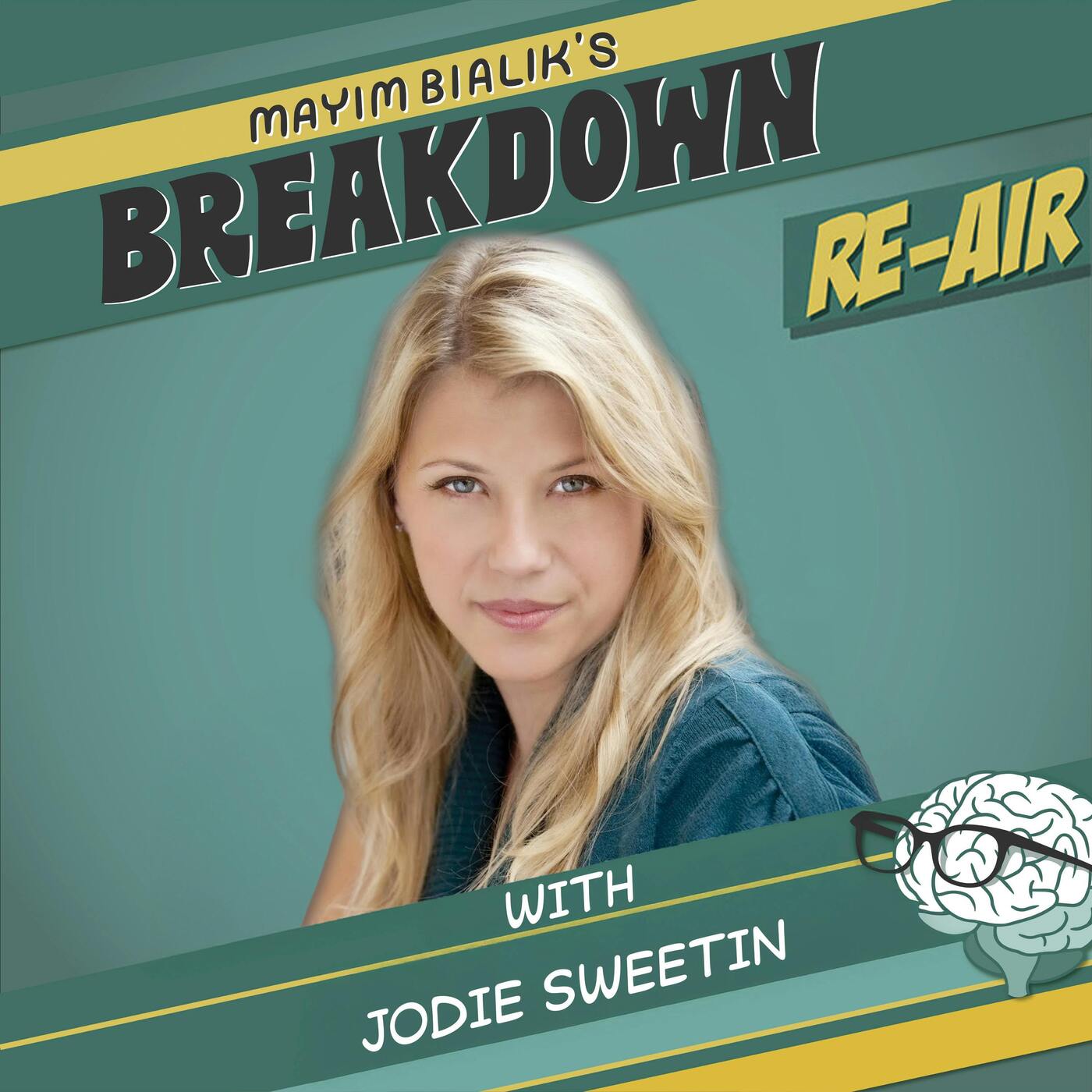
Loading summary
Transcript523 lines
- [00:03]
A
Hi, I'm Mayim Bialik.
- [00:04]
B
And I'm Jonathan Cohen.
- [00:06]
A
And welcome to our Breakdown. Today, in honor of ADHD Awareness Month, we're going to revisit one of our very popular episodes from 2023 with a very, very popular actress, Jody Sweeten. You may know her as her most legendary role was Stephanie Tanner on foot, Full House, and also the spin off Fuller House. She's also a producer, she's a host, she's an author, she's an activist.
- [00:33]
B
We speak to Jody not only about living with ADHD and how she thinks it has actually helped her, but what being diagnosed later in life meant for her and how it has informed her parenting style. Really interesting.
- [00:47]
A
Back when we talked to Jody, I would say obviously ADHD was part of the conversation people were having, but. But since we recorded this episode, it's become even more talked about and understood, especially diagnoses later in life. So that's why we're airing it now in honor of ADHD Awareness Month.
- [01:06]
B
Spoiler alert. Mayim and I actually took an ADHD quiz after speaking with Jody. It wasn't the next day, but we explored it and we had some fascinating results. I think there's an episode about ADHD and. And highly sensitive people out there on the Internet.
- [01:23]
A
There's some overlap that we talked about. Here's the other Spoiler alert. Jonathan thinks that I have more ADHD than he does, which I think is hilarious. Jonathan has a lot more of the externalizing features of adhd. I have a lot more of the internalizing features, as it were.
- [01:40]
B
You should watch what happens when Mayim and I try to sit down and complete a task together. Neither of us.
- [01:46]
A
That's not true.
- [01:47]
B
We focus in very different ways.
- [01:49]
C
Correct.
- [01:49]
A
We focus in different ways and we get things done.
- [01:52]
B
A friendly reminder to check out Substack, where we release exclusive content that you can't get anywhere else. There's an amazing community there of breakers talking about the episodes. We can't wait for you to check it out as well.
- [02:05]
A
We hope you enjoy taking a look back at our episode or maybe hearing it for the first time with Jodie Sweetin. Break it down.
- [02:12]
C
Jodi, welcome to the Breakdown.
- [02:14]
A
Good to meet you. It's very exciting to sit with you because, first of all, you look amazing and you look like you're still a teenager.
- [02:24]
C
I appreciate that.
- [02:25]
A
Which is how I, you know, I still sort of. I mean, I know you get this a lot and you still.
- [02:31]
C
I was on tv.
- [02:32]
A
I know, but you look at me.
- [02:34]
C
So that.
- [02:36]
A
And we recently Had Candace Cameron Bure on. And people just love this era. People love Full House. Like, so it's actually. It's really fun to have you on here. And I don't want to say that I've been wanting to speak to you even before I wanted to speak to her, but, you know, I've followed so much of your life and your journey and was just very excited to get to talk to you.
- [02:57]
C
Thank you.
- [02:58]
A
Also, as I mentioned to Candace, my first audition ever was to play DJ in Full House.
- [03:05]
C
Really?
- [03:05]
A
Yes. And I know you're, like, doing the math.
- [03:07]
C
That's amazing.
- [03:08]
A
So I'm 47. I started acting when I was 11, and that was the first audition I went on.
- [03:15]
C
Oh, wow.
- [03:15]
A
You had been acting long before 11, but I had just started acting at 11. What are some of the common notes that casting directors will give feedback to an agent about either.
- [03:25]
C
It's usually either one of two things. Either they're overly theatrical and they need to tone it down, and they're, like, playing it, like, to the back of the theater.
- [03:34]
A
Or.
- [03:34]
C
Or. Or they go in and just don't really. They're just kind of really shy and
- [03:42]
A
put on the more different than you thought.
- [03:45]
C
Okay. Okay. I just feel like that's oftentimes, like, kids are like, I love this. And then you send them into an audition and they're like, no, no, no.
- [03:52]
A
I Just rushing.
- [03:54]
C
Just speaking way too fast. Oh, God. Oh, story of my life. I get it today. Still. That's. Yeah.
- [04:00]
A
No, so that was the note. Also, I don't.
- [04:03]
C
I'm gonna. I'm even gonna venture to say something. I know for me, my brain works 5,000 miles an hour, and I have a feeling yours might as well. And I feel like sometimes that's why we talk really fast. Cause I'm like, if I don't talk fast and get all of this out quickly, I'm gonna distract myself. Well, I'm gonna lose interest.
- [04:24]
A
It's part of my delicate psychiatric profile, which I think is very charming girl.
- [04:30]
C
It is part of my charm. Now, at nearly 41, I've incorporated it to be charming. But it's nice to be invited to someone else's breakdown, by the way.
- [04:38]
A
Oh, yeah.
- [04:39]
C
Yes. And not mine.
- [04:40]
A
Always.
- [04:40]
C
Yeah.
- [04:41]
A
Welcome to our breakdown, where you get to share things that are not currently breaking down for you while we just share our current breakdowns. No, but the other thing I was gonna say is that, you know, a funny thing happened on the Forum. Pretty much a funny thing happened, you know, when I started acting in 1986. I looked pretty much then like I do now. Meaning, like, I had prominent features. You know, I had like a. Whatever. This is my face. And, you know, I remember when I told my parents I wanted.
- [05:10]
C
I love your face.
- [05:11]
A
Thank you.
- [05:11]
C
It's an awesome.
- [05:12]
A
I'm growing to love it.
- [05:14]
C
See, I love. I love unique faces. Thank you. I like faces with, like, unique. Yeah, no, but I mean, like, faces. That character.
- [05:22]
A
I've got character.
- [05:23]
C
Yes. Yes.
- [05:23]
A
Well, in 1986, though, you can imagine that when I said to my parents, I want to be an actress. Like, they looked at the television and looked at me and looked. And they must have been like, what does she think she's going to do? Because this, like, ethnic features were not popular in the 80s and I had blonde hair and blue eyes. I could have been your sister. But from another Mr. No, no, I don't think so.
- [05:46]
C
I think actually from the Mr. That we were supposed to have all been from Mayhem. Like, I'm just saying I look more
- [05:53]
A
like the late, beloved Bob Saget than any of you.
- [05:57]
C
And I don't mean this, but he
- [06:00]
A
was from my tribe. Like, right. In any event, you know, obviously that show and the cast that was put together, you know, became an iconic part, you know, of so many lives and also the lives of the actual humans like you who were living it. And you know, and also just with the resurgence, you know, and with Fuller House, which actually, I think films right next to Call Me Kat. I also work at Warner Brothers. So it's just been what a fascinating, you know, kind of bookending of your life. I mean, you were a little one.
- [06:35]
C
I was started. I was four years old when I started working in the business. I started doing commercials and things like that. And it was like, for a little over four and a half when I did my first television appearance on Valerie, which was the Valerie Harper Show.
- [06:51]
A
Yeah.
- [06:52]
C
And then. And then I got cast from doing that on the Full House at, like, barely 5.
- [06:59]
A
What do you remember of being that? Like, do you. Because I barely remember things. Like, I was in. I did square dancing in kindergarten when I. So, like, I remember some things, but, like, how much do you remember kind of of that period of your life?
- [07:13]
C
I think oftentimes what we remember, we have flashes of what we remember. And we also have lots of flashes of what our photographs tell us. And luckily that was a pretty well documented period of my life. So I have, like, these really great reference points to be like, oh, yeah, yeah, yeah, I remember that. Or like, these pictures either that, you know, were behind the scenes that my mom took or whatever. Behind the scene, you know, video. And John Stamos took tons and tons of video. So we've got all this video of growing up. Like, I actually am fortunate. Cause I not only remember it fairly well, but I have all of these reference points to, like, trigger those memories. So it was. I mean, I don't remember much of my life before being on film, which
- [07:59]
A
most of us, you know, likely don't. I mean, that's the biggest thing, right?
- [08:01]
C
Prior to 5 years old. I mean, most of us are like, I don't know.
- [08:05]
A
So I imagine that, you know, you spent those kind of formative elementary school years and really into your junior high years.
- [08:12]
C
Yeah.
- [08:12]
A
All through middle school.
- [08:13]
C
It wasn't until I started high school that I was going to school full time.
- [08:17]
A
Wow. So what. Gosh. What was education like for you? Cause, like, again, I started working regularly, you know, when I was 14, which is, like, a very different phase of life. Like, you have different tutors for subjects, and it's like you're in algebra two, and, like, there's a lot to, like, hold onto.
- [08:31]
C
Right.
- [08:32]
A
But, you know, you had to kind of, like, learn all the basic stuff that happens in elementary school, like, in a very different environment.
- [08:39]
C
Yes and no. I. You know, it's. I was really fortunate. So the first season of Full House, I was five years old. I had just started kindergarten. Now I was in kindergarten for about three days and got moved out and tested out of kindergarten.
- [08:53]
A
You're like, peace out.
- [08:54]
C
Peace out.
- [08:55]
A
See you later.
- [08:55]
C
They were gonna move me into second, but moving into first grade. So they moved me into first grade. And I.
- [09:01]
A
So you were precocious. I mean, that's. Yeah, yeah.
- [09:04]
C
I mean, and I don't say that. It's like, that sounds like I'm writing. I skipped kindergarten. The finger painting. You know what I mean?
- [09:09]
A
The big stuff. No, but something about you. Because, like, whatever. My brother skipped second grade. Like, but there was something about you at that age where they were like, not.
- [09:17]
C
I was reading. By the time before I was four, I could pick up most any book and read it. I, you know, was out of. I was. Yes. Precocious is a good way to put it. So I started first grade, and I was doing Full House. And that first season, I think, like, the first season and a half, it was the usual sitcom work schedule. It was five days a week work, three weeks off, one week. So the weeks I was off, I would go to regular school, and then I would be tutored on set because we were kind of still, you know, figuring it out. By the time, I wanna say, the second season, second or third season rolled around, maybe even, yeah, about third season, I was able to go to school in the morning and then my mom would pick me up. Cause I lived in Orange county back in the days when you could make it from Orange county to LA in under an hour, you know, oh, so very long ago. And my mom would pick me up from school at lunch. I'd work on my script in the car. I'd come to work and I'd rehearse and stuff in the afternoon. And then Thursdays and Fridays were like block and shoot and audience tape days. And then those days I would be exclusively on set because we had to go later. So I would have to start.
- [10:27]
A
And that was just normal for you. Like, it was just like, I go to school and this is my after school thing I do.
- [10:32]
C
I would do that. I got used to, like traveling on weekends and doing homework in the car or, you know, on set or like banking three hours, you know, so you could. The next day, you wouldn't have to do as much school or whatever. But I think, honestly, for the way my brain works, having gotten diagnosed with ADHD later in life, I have found that looking at all of those ways that I grew up, I think were actually the perfect environment for someone like me, because I was constantly stimulated and doing something different and learning something new and balancing three or four different things and going in different directions. So, yeah, I think if anything, that was. It was like the best place for my brain to flourish.
- [11:14]
B
What made you initially be like, maybe I should explore this as a potential diagnosis or label?
- [11:21]
C
My girls were struggling with it, and I was reading more and more about girls and how ADHD affects them, and
- [11:30]
A
I was going, it's different than in boys, Very different. Tell us a little bit about what you learned.
- [11:35]
C
It looks like talking a lot. It looks like not being able to shut up in class. And let me tell you, that was the number one thing I got in trouble for. Like, name on the board every day. Teachers hated me, but they loved me. But they were like, she can't. I don't physically think she can stop talking.
- [11:58]
A
Wow.
- [11:59]
C
And I was like, I can't. I can't right now.
- [12:03]
B
Yeah, it's good for podcast hosts.
- [12:06]
C
Yeah. Terrible.
- [12:07]
A
You know what?
- [12:08]
C
It's true.
- [12:08]
A
You're gonna be in town tomorrow and I'm gonna give you the what for about that comment.
- [12:15]
C
What?
- [12:15]
B
It's a positive. So I just had a friend of mine 65 years old, just recently talk and realized that she had adhd. And now she's looking back at her entire life wondering, like, oh, my gosh, so many things don't make sense.
- [12:28]
A
Don't talk about me when I'm right in the room, Jonathan, you don't look
- [12:33]
C
a day over 60.
- [12:36]
B
And then also, the flip side was she was asking, like, okay, now that I have that, like, how do I know what my superpowers are? Because it does come with extra abilities in certain areas. The one thing that drove me a little bit crazy about realizing that Mayim has as much or more ADHD than I do is that she used to get annoyed with me for, like, you're not focused. You're doing too many things. But really it was that she needs me to just be like this totally still, because it distracts her.
- [13:07]
C
Right? That's the. That's the problem. Put two ADHD people in a room together and watch 17 things not get done simultaneously. But no, I, you know, or if
- [13:18]
B
you can channel it.
- [13:19]
C
Well, that's the thing is my area. What I realized is, you know, people on set would. I mean, you would not know it. Even now, like, I've moved into directing and I've done. I can keep 9,000 plates spinning in my head on set. I know what hand I picked up, what with, like, I know where something was. Like, every single detail I can remember as an actor and or director. I get home, I can't find my keys. And what I realized is most people with ADHD have an area of hyper focus. Mine is what I love to do, which is perform and be on set. And so the reason I never feel more at home than when I do on set is, one, because I literally grew up there from the age of four. And two, because it's the area where my brain is like, yes. Like, I'm in the place where I thrive. So I think, you know, it's interesting to go along and learn these things about yourself and kind of go back and piece things together and you get to give yourself a little break and go, oh, I didn't know that then. So I felt like something was wrong with me because I didn't have it figured out until now.
- [14:29]
B
Mime, I've heard you describe something similar. The way you break down a script, the way, you know, where everyone is supposed to be in a scene, the way that, like, everything tracks and you're tracking every part and it's all making sense to you. Like, that level of diligence and focus definitely comes out and I've seen you talk about directing and be in the same zone where you're just like. It just all is, like, clear to you.
- [14:50]
A
Well, I mean, I think. Look, I can't speak for you or for you. You know, for me, there's a. There's also a real safety in that level of vigilance about details because it means that the focus is anywhere but on me. Do I have to pee? Do I have to eat? It doesn't matter.
- [15:06]
C
Right. I'm just like, yeah, what is.
- [15:08]
A
I'm dialed into, you know, everything else. So it really is. It's. I mean, in some ways I think it's like, you know, it's compensating for something. It's like, it's right. It's like a defense.
- [15:18]
C
It is, right? Look, you pull the thread of this sweater and it's complicated. The whole thing's gonna unravel.
- [15:22]
A
Yeah, but it is.
- [15:23]
C
It's. It's part of so much of what makes us really good at what we do.
- [15:29]
A
Yeah.
- [15:29]
C
And then in other areas, be like, oh, my God, did I. I don't. Did I take my meds this morning?
- [15:34]
A
No, I. For most of my adult life, I've had a bell on my keys and on my wallet because I lose them all the time. So at least I know to like, jingle jangle every jacket because it's almost always like, somewhere like that.
- [15:49]
B
My ambialix breakdown is supported by Bioptimizers.
- [15:52]
A
I struggled to get good quality sleep and I just thought, like, ugh, it's stress. But I learned during perimenopause and menopause, your hormones shift and it affects your magnesium levels. Low magnesium makes everything harder. Not just sleep, but focus, mood, stress tolerance. That's why we added Magnesium Breakthrough by Bioptimizers to our nightly routine. It's a blend of seven different forms of magnesium. Magnesium designed to support relaxation and overall sleep quality. Try it. See if you wake up more rested and refreshed, you've got nothing to lose and a lot to gain. BIOptimizers offers a 365 day, no questions asked money back guarantee. Magnesium Breakthrough is a fantastic way to improve that hormonal imbalance that especially happens with magnesium. And then you have better focus, you have better sleep hygiene in general. Bioptimizers makes it so easy. Here's what you get when you go to bioptimizers.com breaker and use the code breaker. 5015 off your entire order and a free bottle of mass times. That's bio Optimizer's best selling digestive. Enzyme added to your order automatically when you use our exclusive code. That's a 20 product free on top of your discount. This is a limited time offer. While supplies last. You cannot get this on Amazon. You can't get it in stores. The offer exists in one place. Our link, our code. That's it. So if you were already thinking about trying it, this is the sign. Go to buyoptimizers.com breaker use the code breaker. Grab it before it's gone.
- [17:17]
B
Make 2026, the year you finally start sleeping again. Mind Bialix Breakdown is supported by Bioptimizers.
- [17:24]
A
You know, I struggled to get good quality sleep and I just assumed it was stress. But as I learned during perimenopause and menopause, your hormones shift in a way that affects your magnesium levels. And low magnesium, it makes everything harder. Not just sleep, focus, mood, your tolerance for stress. That's why I have added Magnesium Breakthrough Bye bye Optimizers to my nightly routine. It's a blend of seven different forms of magnesium designed to support relaxation and overall sleep quality. Try it. See if you wake up more rested and refreshed, you've got nothing to lose and a lot to gain. Bio Optimizers offers a 365 day no questions asked money back guarantee. Magnesium Breakthrough is a huge breakthrough to improve hormonal balance, to help with focus, decrease brain fog, improve sleep hygiene. Overall Bioptimizers makes it very easy. Jonathan, what do they get when they go to bioptimizers optimizers.com breaker and use the code breaker.
- [18:17]
B
You get 50 off your entire order and a free bottle of Mass Zymes
- [18:21]
A
Buy Optimizers best selling digestive enzyme that'll be added to your order automatically when you use our exclusive code.
- [18:27]
B
That's a 20 product free on top of your discount already.
- [18:32]
A
This is a limited time offer and while supplies last, you can't get it on Amazon, you can't get it in stores. This offer exists in one place. Our link, our code. That's it. So maybe you were already thinking about it. This is the sign. Go to buyoptimizers.com breaker use the code breaker. Grab it, it's gone. Make 2026 the year you finally start sleeping again.
- [18:50]
B
One of the biggest misunderstandings that we had was when you were writing your script and rewriting your script, you were in like the later phases of the redrafts. And when she like we would talk about a note and then she would be like, got it. Okay, I'm going to sit and write. Rewrite this scene. And then we weren't in the same room. We were hanging out over zoom. And then I would go and start scrolling, and that scrolling would be distracting her. So she wanted me to just sit and watch.
- [19:24]
A
I'm a very quick writer. Very quick writer.
- [19:26]
B
But, like, that was agony for me. Like, I'm.
- [19:29]
C
Yeah, I couldn't. I'd be dead. I'd be dead. Yeah. Yeah, that would be a lot. Also, I love how we have sidetracked this conversation into a full ADHD bloat.
- [19:38]
A
Well, not really an ADHD episode when I think about also your Full House life and then your Fuller House life. And I didn't mean to say, like, it's bookended. Cause you have a long life and career ahead of you, but I know you've been asked so many things about so many aspects of Full House and Fuller House, so I'm trying to, like, find different ways to, like, talk about things that maybe you haven't, you know, maybe explored the same way. And one of the things I was thinking about is what are sort of your reflections that, like, kind of, you know, this very early moment of your career was essentially rebooted, you know, so many decades later. Like, what is that? Obviously, it speaks to the popularity of the show and the interest, but kind of personally, I would imagine it must be so interesting to, like, you're playing, you know, you get to have a character grow up.
- [20:29]
C
Right.
- [20:30]
A
So what is that, like, as an actor, like, to get to, you know, have a character grow up and you don't see all those years in between, but you're. What happened after this whole time has been off.
- [20:40]
C
Right. I mean, you know, I was always really excited to get to come and bring Stefanie sort of back to life. Stephanie was such a fun character to play as a kid. And, you know, it's so weird because, I don't know, oftentimes I feel like, I don't know, sort of where Steph ends and I begin. Like, we have this very blurred self. I mean, I'm very clear that I am not Stephanie, but I.
- [21:07]
A
No, but I get what you mean,
- [21:08]
C
but you know what I mean. Like, I.
- [21:09]
A
It's your voice.
- [21:12]
C
As a kid, they. They really used so much of who I was to inform who Stephanie was. And who Stephanie was was this kind of amplified version of who I was. So it. It. It. I liked her. I liked being her. And. And that made me, I think, like me, because it was, you know, these things. And this person that I sort of was anyway, and so getting to come back and Play that person decades later and have Steph have. You know, like, I gave Steph some backstory, you know, yes, it was a sitcom and it's whatever, but I was like, what happened to Steph in between? Like, you know, why was Steph kind of away from her family for a while? Like, what. You know, Steph kind of went and did her own thing, and, like, this is hard for her to come back to and, you know, this adjustment and all of this kind of stuff.
- [21:55]
A
What's the craziest part of her backstory that you gave her in your head? Like, did she join the circus for a minute?
- [22:01]
C
I mean, Steph. Steph, basically, it's in. In a way, she was, you know, DJing in Europe. Like, she basically. I. I feel like Steph got it, like, moved to Europe probably for a dude or a relationship, and the guy, like, some. Some. Some idiot guy, and, like, did you
- [22:21]
A
give her ecstasy at a party and he told her water would taste good
- [22:24]
C
or something like that? Or like, he or he was just kind of a douchebag, like, music producer, you know what I mean? And then. And then she wound up staying there in Europe and being like, you know what? Screw this guy. Like, I'm gonna do my thing. And she did that. And that's why she had been gone from family so long. But also, like, it was kind of a shitty relationship. So she was. She was really like, I didn't want to be with anybody. She wanted to do her own thing. And, like, you know, her sister, obviously with her happy family was like, I just. It really hurt, right? You know, there was a lot going. There's a lot of layers, and probably none of that ever showed up. I love it. And if it did, it was probably in the episode where I argued with a clown, because God knows that was some hard hitting emotional topic.
- [23:04]
A
I love that. I love that notion also that, you know, you each had to have, you know, kind of a journey, right? And I think, you know, another kind of interesting challenge. And, you know, you were. You were so young. So, like, whereas, like, the DJ character, you know, she was, like, older and, like, doing, like, already, like, tweeny things, teeny things, like, it's different. And, you know, my mom is the middle of three girls, okay? So whenever I see, like, a show with, like, you know, three girls, or whenever I, like, meet people who are, like, one of three girls, like, I'm always like, tell me all the things. My mother was the middle child, okay? And so there's, like, a huge dynamic also to your character. That was like, so the middle child, meaning, like in. In the most, I think, helpful and appropriate ways for a TV show to inform, like, about birth order and especially, like, with the dads and like, all good, right. But then I also think about your identities also in real life, in that you were different people. Like, you had. I mean, I don't mean to group Mary Kate and Ashley, because they were playing one person. You know, they were very little. But let's say we had these, like, three Personas, right? And like, you know, Candace was like. She was Candace. And like, they were like the little ones. And then here you are and you're really like, also in terms of, like, the public eye, like, you are. You're like that middle child. Because it's like, look. So tell me, tell me what it was like to sort of like, play the middle child, but also feeling even in your, like, celebrity presence, you were the middle child.
- [24:30]
C
I have a great middle child story from Full House that is literally. It is. It was unintentional, but is completely the epitome of middle child moment. So there's an episode in Full House where Jesse and Becky are moving out of the house.
- [24:47]
A
Okay.
- [24:49]
C
And you know, when Jesse moved into the house, he moved into Stephanie's old bedroom.
- [24:54]
A
Correct.
- [24:54]
C
With the pink bunnies. Now, the pink bunnies were supposedly hand cut by Pamela, Stephanie's mom, Jesse's sister, and placed on Stephanie's room when she was a baby. That was her room. So those pink bunnies were Stephanie's room.
- [25:09]
A
Okay.
- [25:11]
C
The episode where Jessie moves out. Yes. I believe Michelle gives Jesse the pink bunny or vice versa. No, Michelle gives Jesse the pink bunny or vice versa. Something happened and I was like,
- [25:27]
A
wow.
- [25:28]
C
But those are not. Not like in real life. Like, now looking back on it, I'm like, but that was like. It's just so funny. I was like, oh, what a true. Now I do. I actually know what it's like, like
- [25:40]
A
to be a middle child.
- [25:41]
C
Well, but it was cuter if Michelle did it right, you know? And the EP where Steph moves into the bathroom. I died hysterically laughing because my younger daughter did that several years ago. And, like, just went and camped out in the bathroom, like, brought pillows, blankets, like, just went and was like, I like it in here and I'm moving in. And her sister was like, get out of the bathroom. So, yeah, that was interesting. But yeah, it was. It was. You know, there were definitely those times as an only child, I really was like, oh, so this is the in between experience, you know, and it was Fun to have that faux family, but not gonna lie, it was nice to be able to go home as an only child and be like, I just have to meet me to worry about.
- [26:29]
A
Right. It's interesting because, you know, we just. We lost Leslie Jordan recently, you know, from our show, and it's, you know, very, very interesting to try.
- [26:39]
C
And it was in the first commercial I was in.
- [26:41]
B
Wow.
- [26:41]
A
What was it for?
- [26:44]
C
It was a. Oh, my gosh. Was it the Sizzler or the Oscar Mayer commercial?
- [26:51]
A
I mean, these are two excellent choices.
- [26:52]
C
Excellent choices. And I'm trying to remember whichever. But I. Anyway, it was one of those. And he played. I actually wasn't in it in my scene with him.
- [27:01]
A
Okay.
- [27:02]
C
But for ever, like, almost my entire career, every time I would see Leslie Jordan, the first thought was, like, oh, my God, there's this man who's had this amazing career who is a genius. And I love. But was like, oh, that was from a commercial. Like, you know what I mean? Like, as like, a little kid, that sense of, like, you know, it's all about me, sort of.
- [27:22]
A
No, I get it.
- [27:22]
C
But, yeah, I loved him.
- [27:24]
A
No, he was a really, very special man. Thank you. But, you know, the thing that's, like, hard to kind of articulate without sounding like a crazy Hollywood person and I think you'll totally get it is like, I wish there was a different word for the kind of family that's created on a set. Because it's not a family in the sense of, like, it's not your family. Meaning you don't share family trauma. You don't share, you know, holidays or you don't share, like, people in common that, like, oh, aunt, whatever, you know.
- [27:53]
C
Right.
- [27:53]
A
You don't share a rhythm of a calendar where it's like, when are we going on? When am I gonna see my cousins? It's not that kind of family, but it is. It feels as, you know, as connected and not in, like, a Hollywood way of, like, oh, my God, we all love each other. But, like, we spent. You spent more time with the people at work than you did with your home family.
- [28:14]
C
Yeah. And, you know, honestly, I look at it like we did. We would plan vacations together. We would go. Our teachers would plan, like, field trips for us because we'd always miss out on the field. So, like, you know, my school field trips were with them, and we would go. And we'd go on location, and we'd go travel together or, you know, I grew up, and I spent a lot of time with Bob's daughters. I would go spend a weekend at his house, and we'd all go to John's, and his sisters were always there, and his mom and dad. We all knew each other's families. Our families would get together for, you know, weddings, funerals, celebrations, holidays, wrap parties. So we did know each other's families. We did share, like, I mean, it was.
- [28:56]
A
Right.
- [28:57]
C
It was really, really deep.
- [29:00]
A
Yeah. And also, like, that's an extension of the fact that you start with this working relationship that's very intense and you're with each other. And I know, you know, when I was acting and, you know, there are hours that you're allowed to work when you're little, but still you're spending, like, most of your waking hours. Like, these are often the first people you see in the morning. They're the people that you, you know, have breakfast with, you have lunch with, you sometimes have dinner even, you know, and if it's a late night with
- [29:27]
C
when you don't feel well. Totally. They're the people as a kid.
- [29:30]
A
Right.
- [29:31]
C
Who have to take that in. Like, they are the people who, you know, are around you every day as a kid. Like, they are.
- [29:39]
A
Well, and I think also for. For people like you and me who, like, literally spent, like, formative years. Yeah, those were the people that, like, knew me when I, you know, was a kid and then watched me, like, become a teen or a tween. Like, they're part of your life. And.
- [29:56]
C
Yeah.
- [29:56]
A
You know, it's almost like the way that I kind of think about it is, like, if you have distant family that you see a couple times a year or once a year, you know, they can be like, oh, my God, and you grew so much. But with your set family, no one really notices that stuff because you're together all the time, meaning you're just all growing together. There's none of that. Like, you know, people would sometimes ask, like, Ted was, you know, who played my dad on Blossom, like, what was it like to watch the kids grow up? And he's like, it was like watching my own kids grow up. They were like, it's fine.
- [30:21]
C
Oh, my God.
- [30:22]
A
Right?
- [30:22]
C
Like. Or the best. The crazy part was, I remember when we would come back from hiatus, that was the ones I was like, oh, my God. Like, you know, and it wasn't like, hiatuses were really long. It was maybe two and a half months, six weeks. And, you know, kids. If you had kids on a show, man, they come back and they're. They're like, you know, we'd come back to the show. And the kids had, like. Till they, you know, their voices changed and they're. Yeah, puberty and having. We're like, oh, my God, now what? All the ideas for this show don't work. Jonathan, are you doing okay over there? Do you need anything?
- [30:51]
B
That's very sensitive of you, Jodi. I appreciate that.
- [30:55]
C
I want to check in on you and make sure I know that mime doesn't listen to you. So I just want to be your new favorite. Really?
- [31:01]
B
Finally. I feel seen, I feel heard, I feel accepted.
- [31:06]
A
Let's talk a little bit about your. Let's talk a little bit about your kids, because I believe we all have a child born the same year. You have a child born in 2008.
- [31:15]
C
I have an 08 and a 10.
- [31:17]
A
Okay. So I have a 05 and an 8 and he has an 08. So we all share 14 or 15 times.
- [31:24]
C
The only time I ever hear this like, 08 is in reference to my kids soccer teams when they're like, oh, they're an 08, because it goes by what year they're born. So.
- [31:32]
A
Yes. So we're building a soccer team. So you have two girls.
- [31:35]
C
I do.
- [31:37]
A
You have two girls, 12 and 14. You are just in it is my guess.
- [31:42]
C
I am seventh and ninth grade. And, you know, I have to say
- [31:46]
A
those were both horrible years for me. Just want you to know.
- [31:49]
C
I mean, they were hard and horrible years for me and for most people, too. But I will say my ninth grader is in a much better position than she was, I think, in middle school. And my younger one is just kind of in the thick of it now. I feel like seventh grade, just as a rule, is, like, really, really terrible. I remember very, very few redeeming things about my seventh grade year. Like, it was the first year of middle school. It was just constant bullying and harassment and, like, everyone was terrible. We were terrible to each other. We were terrible to teachers. We were terrible to our parents. We were just terrible. And thank God we made it through.
- [32:32]
A
Right?
- [32:33]
C
But I see it now, and I would say I have apologized to my mom more in the last couple of years than I have ever in my entire life. I just call my mom. I'm like, I'm so sorry. Oh, my God. I had no idea. You're right.
- [32:49]
A
This was.
- [32:49]
C
This is you. You're right. You did know. I thought you didn't know. You knew. I know. They don't know that I know.
- [32:56]
A
Right?
- [32:56]
C
Like, it's fun, isn't it?
- [32:59]
B
This episode is sponsored by Wondering Jews an open door media brand if you've
- [33:04]
A
ever found yourself feeling like you have more questions than answers, you're in good company. The Jewish people have been like that for thousands of years. Wondering Jews with Michal and Noam is a podcast where two of today's most dynamic Jewish voices, Michal Bittone and Noam Weissman, dig into the biggest questions about life through a Jewish lens. It's the kind of conversation where you'll laugh, learn something new, and probably shout in disagreement at least once. Michal and Noam tackle the tough topics like antisemitism in America, what happens after we die, and the future of religion with guests like Bret Stephens, Michael Rapoport and Sarah Hurwick. And this past month, in honor of Jewish American Heritage Month, they've been celebrating some of the Jewish lives and institutions that have shaped American life, from food to music and comedy. Thoughtful, joyful, and always honest. That's Wondering Jews with Michal and Noam a production of Unpacked. Find it on your favorite podcast app or on YouTube and make sure to hit subscribe. Check out Wondering Jews with Michal and Noam podcast and subscribe at Unpacked. Bio NMX Premier hosts on VRBO deliver quality vacation rental stays with fast responses and clear instructions so you don't have to worry about surprises.
- [34:13]
C
I asked our host a question about the house last night and he got back to me super quick.
- [34:19]
A
See, that's the premier host move right there.
- [34:21]
C
I wish I had a premier group chat. I asked them where we should have dinner last night and they left me on red. I know you saw it. It says it.
- [34:28]
B
Classic group chat move.
- [34:29]
A
Don't walk into a surprise book. A top rated verbo. Stay with a premier host. If you know you verbo and you live in la. I mean the LA area.
- [34:38]
C
Yeah.
- [34:39]
A
Yeah. Okay. So you, you're raising them in la, which also is its own. And people are like, well, if you don't like it, get out. And it's like, it's not that I don't like it, it's just like it's very different from raising children. I think many other places.
- [34:49]
C
Absolutely. Look, city kids are. City kids are different than suburbia kids. And I say that having sort of had a foot in both. I grew up in Orange county in like suburbia land. Like very, very normal outside of la. Childhood, blue collar, working parent. You know, like that was my upbringing but then also had this foot in like this really sort of weird, fun, over the top like, you know, LA experience. So I do know that it is different and I do know that my growing up in Orange county was a different experience than growing up. Up in my kids here in la. But by that same token, I know that so much of my experience growing up here in LA and growing up in this business and being exposed to so many different people really helped shape me into the person that I am today. And so in that regard, I do feel like my kids still have that experience of just the world is very big around them, and sometimes that's a terrible thing, and sometimes that's a great thing. And unfortunately, these days, I don't know that any of us are safe from some of the scary stuff that happens, whether you're in a city or a suburb. So totally. You know, there's some of that that you just kind of go, I guess, you know, some of it has to. It's just kind of the world that they live in now. But I love that my girls have had this experience, and, you know, they have grown up in ways and around people and experiences, I think that are gonna really serve to make them interesting people in your life. Yeah, for sure.
- [36:26]
A
The other thing I wanted to mention, something Jonathan and I talk about a lot. You know, there's. Being a parent is like, its own. Like what? It's its own journey. And mostly I really feel like I wish someone had told me, like, hey, guess what? Everything you didn't work out from your childhood. Right.
- [36:44]
C
We're right.
- [36:44]
A
When you have kids, you're gonna have to go through it, like, to the nth degree with, like, a time limit and with someone shouting at you and throwing food at you, like, everything comes up.
- [36:52]
C
Yeah, yeah, yeah. It's gon. You get to learn how you wish you would have been parented.
- [36:58]
A
Right.
- [36:58]
C
You get to learn how helpless your poor parents were, you know, and how overwhelmed they were.
- [37:06]
A
Right. Well. And, you know, I can't help but, like, think about the timeline your kids are about the age you were when Full House kind of was ending. Am I doing the math right? Yeah, yeah, yeah. And also, you know, a lot of the challenges that you've been incredibly brave about in talking about and incredibly helpful, I think, to so many people in being open about a lot of those things, you know, for. You did start to kind of, like, bubble and simmer when you were their age. And I wonder, do you feel like you have special, like, protective insight, you know, about those years for them, you know, or do you have fears about it? Because, like, for me, and I think for Jonathan as well, it's like a combination of, like, when we get to like big milestones or things that were hard. It's like part of me is like, oh, but I don't have to live it again. But then it's like, oh, but I kind of.
- [37:54]
C
Right. I mean, that's the terrifying part. As a parent, I think that the realization that your heart now lives outside of your body and actually conducts its business completely separate from you and really doesn't ask you if it's okay, but is fully capable of breaking you without any of your input. And that's what parenting is in a lot of ways. It is trusting your heart to be outside of your body and just hoping that nothing goes wrong. You know, I'd like to think that because of what I've been through, I have the ability to see it coming quicker. My kids are gonna realize and know better. I'm gonna be more aware because I worked in treatment for years, you know, and I have spent enough time in my own sobriety, in my own therapy and in life to know that unfortunately, none of those things guarantee anything. And that if people who got sober could see it coming any sooner than their kids, there would be never any, you know, generational families celebrating.
- [39:03]
A
I always say that they're together at
- [39:05]
C
a 12 step meeting.
- [39:06]
A
I always say that I'm like, if we had figured out forget about sobriety, like, if we had figured out parenting, we wouldn't have to fight about it.
- [39:13]
C
Like the fact that it wouldn't be 9,000 books.
- [39:17]
A
Like the fact that anyone, including myself, you know, the fact that anyone might feel it any point certain that they know what to do with anyone else's child. The only time you know what to do with someone else's child is when you don't have children. Then you know everything.
- [39:29]
C
I know so much. I knew so much. And, you know, I got my degree in elementary education. I was gonna be a teacher and so I worked in classrooms and stuff when I had graduated college. And let me tell you, man, other people's kids, they love you. They listen to you. I mean, not all of them, but a majority of them. There's.
- [39:47]
A
It's cause kids don't wanna listen to little parents, right?
- [39:50]
C
Get those same kids at home with their own parents and my kids. And I'm like, what?
- [39:55]
A
Oh, I used to take my kids to my friend Nancy's house. So he would eat a vegetable, right?
- [40:00]
C
Yeah.
- [40:00]
A
If Nancy put it in a soup, it was like sent from God.
- [40:03]
C
I try and put it in the same soup.
- [40:05]
A
Caramel.
- [40:05]
C
I don't like it. This is shit. Right, right, right.
- [40:07]
A
It's dog food Mama.
- [40:08]
C
Right. I don't like it. Right. It's always someone else. But the one thing I have, for better or worse, always said that I want to be with my kids is honest and open. And so, you know, while there are not. There are lots of details about my story and who I am that my kids don't know, there are lots that they do know. And, you know, my daughter actually told me the other day that she's, like, so grateful that she and I have such an open relationship and that she tells me everything, which probably means she doesn't tell me everything, but she tells. But that means she might tell me a good portion. And I tell her, I know you're not gonna tell me everything. And I make sure that there are people in her life that she trusts that I trust that she can go to, you know, whether they're my parents or my best girlfriends or my husband or whatever, so that she knows. Like, look, sometimes mom doesn't have all the answers. And I will tell my kids that, like, look, I don't know. I'm doing my best. I realize that may not make you feel, like, super great, but I'm just trying to figure it out, too.
- [41:08]
A
Yeah. Well, I think that's so helpful. It's one of the things, you know, that I think is a foundation of a really healthy dialogue, you know, for kids to know. Like, I'm not perfect, you know? And many of us were raised with this notion of, like, father knows best or mother knows best, and, like. And in many cases, that does make you feel secure. Cause, like, oh, they know. But then, like.
- [41:30]
C
But then you feel betrayed. Cause you're like, they didn't know.
- [41:32]
A
No, this is a good one. So I grew up. Well, my parents. My parents are from the Bronx.
- [41:37]
C
Okay.
- [41:38]
A
In New York. It's a place and.
- [41:39]
C
Oh, I know. They're the Bronx. Yeah, yeah, yeah, yeah, yeah.
- [41:41]
A
It's where the Yankees are from.
- [41:42]
C
Yes.
- [41:42]
A
So I grew up with this. It wasn't even a belief. It was a truth.
- [41:48]
C
Right.
- [41:48]
A
That stores were closed on Sundays. Okay.
- [41:50]
C
Just all sorts. Right, Right. Everything was closed.
- [41:53]
A
Everything's closed on Sundays. So my whole life was kind of geared around, like, we did things during the week or, like, on Saturday. I didn't grow up observing the Sabbath. I grew up kosher. It's a long story. Anyway, everything's closed on Sundays. And I start, like, going out into the world, doing things, being a human, and turns out, things are not closed on Sundays.
- [42:12]
C
They're not.
- [42:13]
A
They're not. But in the 1940s and 50s in New York, things were closed on Sundays. It was called Blue Laws. And there's still a district of New Jersey where actually I filmed my movie, where things are closed on Sundays.
- [42:28]
C
Yes.
- [42:29]
A
However, that's only true in this, like, one region of New Jersey that's not where my parents were from. They had never been to that part of New Jersey. So the thing technically wasn't alive, but it wasn't at a point. Right. But that to me, like, that's even. What's funnier is that, like, there was no need for anyone to ever look into anything because things are closed on Sundays. So here I am, like, spending my whole life on Sundays. I'm bored on Sundays. I watch a lot of Twilight Zone. And it's not that they were keeping it from me. There's no maliciousness in this.
- [42:59]
C
Right, right.
- [42:59]
A
But it was just like, that was my life is that things are closed on Sundays.
- [43:03]
C
I wish someone could tell me now that things were closed on Sundays.
- [43:06]
A
And I believe it.
- [43:07]
C
And I just tell you, I mean, to be honest, I don't leave my house much on these days anyway. Who am I kidding?
- [43:11]
A
But that's a great example of, like, we could. I mean, sure, there was no Google, but I'm sure we could have asked someone, is this a rule in California, 3,000 miles from where my parents were raised?
- [43:24]
C
But what it is, what happens is that it becomes. And then you go, no, my parents said, and then you get into an argument at school, and then you end
- [43:32]
A
up in therapy at 16.
- [43:34]
C
Look who you waited till you were 16. Oh, how lucky. No, I. Look, I. First of all, I think everyone needs therapy. It is.
- [43:45]
A
You're right.
- [43:46]
C
I love my therapist. Oh, thank God for therapy. I love my therapist.
- [43:51]
A
What do you love about therapy?
- [43:53]
C
You know what my therapist said to me recently? She said, and it sort of ties into being a parent yourself is. She said that parenting is learning how to reparent yourself, and it's learning how to be the parent that you needed to show up for you in good ways and bad. Like, in all of the ways that, you know, maybe didn't happen. And that there's nothing wrong with your parents and it's okay that they did things wrong or different.
- [44:26]
A
Or different.
- [44:27]
C
Right, right, right. That it doesn't make you a bad person for then talking about it and being like, that kind of fucked me up. You know what I mean? Like, because I think that there's so much we have this weird parental thing tied into, like, oh, I can't. I don't wanna, like, think that they did a bad job. They didn't do a bad job, you know? And. But yet, at the same time, like, I know, right? And I'm very open about. I go, look, you guys, I say this to my kids, I go, you are gonna need therapy. I know it. Not because I'm a terrible parent, but because I am a parent.
- [44:57]
A
A human. Yeah.
- [44:58]
C
And that's.
- [44:59]
A
Why do you think that our experience. Cause I have a very, like. That's a very similar script to what's in my head. And I wonder if. If there's something about also growing up in the industry where kind of, like, everyone was my parent. Meaning I was sort of in a situation where I was really constantly sort of, like, monitored and protected. Right. And. And just, like, more monitored and hopefully protected. I mean, I. I had a very. Thank God. I had a very positive experience.
- [45:25]
C
As did I. Yeah. So, like, I. People, like, did you hate. I was like, no, I loved it.
- [45:29]
A
Yeah.
- [45:29]
C
But I know not everyone had that. But I'm.
- [45:32]
A
I know Your set.
- [45:33]
C
Yeah.
- [45:33]
A
I think your set was known to be a very clean set, and ours was as well. Meaning I. Some people grew up watching. Like, people were doing, like, drugs and making it work. And, like, I didn't see any of that. But even so, like, it was kind of always like, someone was watching.
- [45:46]
C
You know, there was a studio teacher.
- [45:48]
A
There was. Or just, like, a PA or an ad. Someone was always like, if I had to pee, it was like, okay, well, we're gonna, like, wait outside your door, make sure, like, you come right back out. And I'm wondering, though, if that also, like, it's like, we had this, like, uber parental. Like, everybody was our parent. So there's this notion that, like, if I speak badly, everyone's gonna hear. Like, it feels like the audience is bigger in my head, maybe.
- [46:09]
C
I think also that was something that was at least in my house. And not in a bad way like that. My. But as a reality of growing up in this business, what my mom always reminded me of, and I can't imagine it these days, but what my mom would always remind me is, people are watching you.
- [46:27]
A
Yeah. Oh, that's creepy. It's true.
- [46:30]
C
And I knew from a young age that I didn't have the luxury to go out and do stupid things or. Well, I did and I did. I had the luxury and I did them. But I.
- [46:45]
A
But we didn't have the ease.
- [46:46]
C
But I didn't have the ease. But I think, you know, I grew up with that being the voice in my head of you just, you know, be. Just be agreeable, be. And I heard someone say it too recently that growing up in this business, you're often taught that being agreeable is the most important part of your mindset. And I think most people have the opposite expectation of this business that you're taught to be difficult. As a child actor. As a child actor, you, you know, part of what your job is and what makes you a good child actor is that you're like, I will stand here, get it right, I get it right. Just do what's asked the first time. And that's it. None of that, like, you know, it sounds sort of whatever, but like that wasn't necessarily a bad thing growing up. Like, it was just sort of my experience and it was like being in class, go pee before you go to school, whatever. But I always knew that my life wasn't private. And you know, the first time I was in a tabloid was I think 9 or 10 years old. And it was completely fabricated. It was saying that I was a problem on set and that Bob was trying to get me fired. And, and this was at a time when, like I said, I was very close with Bob's family and his daughters and was spending time with like his family on weekends. And like, and so I remember, yeah, and I remember it was Star magazine and I remember at like 9 or 10 years old having to come to terms with and understand the reality of sometimes you don't get to be heard and that, you know, and that you just have to continue on regardless of what the external is that, that you have to just kind of keep going through that. And I don't think a lot of 9 or 10 year olds have to learn that lesson.
- [48:38]
A
Sure.
- [48:39]
C
But I look at that also as like, that idea has served me well in a lot of ways too. But it definitely, I've had to dissect it as I get older. It's made me able to do my job without getting sucked into my feelings. But then when it comes time to like, to like, oh, what are my feelings? It's like, I don't know. Those are so locked away right now.
- [49:02]
A
It's interesting and I'm sure you get this a lot more than you should. Meaning I don't think anyone should ask really anyone this, but, but I'm sure we both have gotten asked this many, many times. I was asked it just today I had a speaking engagement and someone was like, why do so many child actors turn to drugs and alcohol? And I don't love that Question. Because what I like to point out to people is, why do so many humans turn out?
- [49:30]
C
That's always what I turn to point out.
- [49:32]
A
And I say, I went to public school in Los Angeles. I was part of the busing program. Like, plenty of kids were trying to fill that God shaped hole with whatever they could. And for some people it's food. And for some people. But I do wanna say, and like, it's not my business to speak for anyone. And also, you know, I've known many actors who did not make it. You know, I've worked with many actors and socialized with many people who are no longer with us. So I always felt like when people ask me that, it's like, it's not for me to speak to their memory or to their families who are grieving for the rest of their lives, you know, for me to say like, well, my parents did this and that's why. Or like, or even to be like, you know, and for me, my story happens to be like, I'm a second generation American. My parents were very, very strict. But I have no idea really the intricacies of anyone's human experience. So I would always say, I would always say, like, like it's much more complicated than that. It's more of a mental health issue and like a crisis of a denial that mental health exists. But when you talk about what you just mentioned, that for me doesn't relate to drugs and alcohol, it relates to just our human experience when we've been through the kind of thing. And this is not specific to actors. This isn't like, ooh, Mayim and Jodi talking, you know, about actors. This is just like, we're all under different kinds of pressure. There's pressure in the family, there's pressure outside.
- [50:57]
C
If you play sports. Correct. If you're, you know, whatever, you're a dance. Yeah, right.
- [51:02]
A
So our experience is absolutely more magnified, more observed. But that pressure of it really is most convenient if you have the fewest needs possible. That happens to a lot of kids. It's just in the industry, it's our go to. Right, it's our go to. Like, there's literally. We don't get sick days.
- [51:26]
C
Yeah, yeah, exactly. You're like, are you dying? Like, yeah, maybe. Well, right, come in.
- [51:32]
A
We'll see if we can get a
- [51:33]
C
doctor to come in. Right, yeah, exactly.
- [51:35]
A
And I remember, like, I, I am, I've had.
- [51:37]
C
But to this day.
- [51:37]
A
Yeah.
- [51:38]
C
Taking a sick day is for like, I have to be.
- [51:40]
A
Yep.
- [51:41]
C
Crawling near dead crawling. And only with the Pandemic. Did I finally go, you know what? Take a sick day because a. It's not worth it and be like, no one wants your sick ass around. Go stay home. You know what I mean?
- [51:54]
A
But it was.
- [51:56]
C
That felt like. That was just a part of, like, you just. You don't. You don't get to take a sick dance well.
- [52:02]
A
And also, it reminds me of when we talk to people who grew up, you know, people who grew up in alcoholism or with active addiction in their homes, there's often not room to have needs because it's like, it's always about who else. And that's really what it's like to be a kid on a set, even if you're the star of the show. That's what it's like. Like, what do you need? What does he need? Okay, there's not room for me.
- [52:22]
C
It's also.
- [52:23]
A
Did I just compare being on a sitcom to growing up in alcoholism? You did.
- [52:26]
C
I didn't. You did.
- [52:28]
A
But I just meant, like, having. Having to take into account everybody else's needs because they're important.
- [52:33]
C
That's called codependency.
- [52:34]
A
Yeah.
- [52:35]
C
No
- [52:37]
A
title. My own episode.
- [52:38]
C
I have none. No.
- [52:39]
A
Yeah.
- [52:40]
C
Here's the thing. Sort of tying all of it together. I, too, say the same thing about addiction and growing up in this business. You know, I grew up again, went to a public school, had lived in a great neighborhood with, you know, great schools and great education and parents all had jobs and all, you know, families living together and quote, unquote, you know, happy families, whatever you want to call it. And there were kids in my neighborhood that OD'd and died in their homes and that, you know, that went to jail and that went and had their own struggles with addiction and that wound up on the streets. But the other, you know, five or six kids in my neighborhood, you don't hear about them, but you hear about me because people grew up watching me so much. Like what you said, I don't know that it's necessarily. It's hard to gauge. Right. It's hard to say, does this affect child actors or people who have grown up in this business more, or do we just know about it? Because every time it happens to one of those people, we hear. So it seems like it's more often. And then, you know, also, is it the personality type that's drawn to doing this? Great question. Is it the, you know, the personality type of a kid that makes it. That does well, in this business is a kid that probably has a little touch of adhd? And maybe a little like neurodivergent narcissism, but maybe. Maybe either a little narcissism or the opposite and extreme people pleasing and codependency and all of these things that as
- [54:10]
A
a kid makes for a good actor.
- [54:13]
C
You don't necessarily. They're not. As a kid, they're not yet maladaptive practices. They're just who you are. And then you grow up and you go, oh, I let those things. I never learned how to unlearn some of those things. But I don't think that it's because I was on tv. I think that was who I was anyway. But that. You know what I mean?
- [54:36]
A
It's like this fascinating.
- [54:37]
C
You can't pull them apart, I don't think. I think the person that I was maybe interested in entertainment, I think entertainment at a young age shaped who I became. I think who I became was, you know, the path I was on anyway, but also, you know, largely shaped by a lot of weird things that happened growing up. So, you know, it's. It is. We're complicated personalities and child actors are, you know, we're a little different.
- [55:06]
A
Well said. Really. I honestly, I'll be honest. I've been talking about these things. I mean, I'm 47, so, you know, I've been acting. You know, I started Blossom when I was 14. You know, I don't know if I've had this level of analysis and camaraderie around this. You know, I'm always very nervous to say, like, I'm always very nervous to, like, blame the industry on problems that we might have, but also, like, very, you know, very reluctant to also be like, I made it out because also, like, you don't. Like, people don't know.
- [55:39]
C
The reason, honestly, the reason that this. We started talking about this. Cause I was talking about. About therapy. And only in the last maybe year or so have I really started going like, oh, wait, I get to pick this stuff apart and realize that life is that gray area, right? Nobody has a perfect childhood. Nobody has a perfect experience. And there are also great things that happen in terrible circumstances, right? And all of those shades of gray are true. And until I'm willing to look at the pluses and minuses and the gray areas of all of the things of my life, I don't think I can really adequately get down to the bottom of the shit that I need to until I can go, oh, that was kind of good. But that kind of was weird. But that was awesome, you know, like, that's life. It's all very complicated. And, you know, I think remembering that and pulling those things apart without feeling that guilt and the shame and feeling like I had a wonderful experience, I still struggled with addiction. I don't think it was entirely the business's fault, but there was a layer of it.
- [56:51]
A
Do you share your sobriety date or your current sobriety or even, roughly speaking, like.
- [56:56]
C
Yeah, I.
- [56:57]
A
Are you a toddler?
- [57:00]
C
No, I'm not. I'm double digits.
- [57:01]
A
Okay.
- [57:02]
C
I'm double digits and I. Are you a teenager?
- [57:05]
A
Not yet. No. You're not old enough to be a teen?
- [57:06]
C
No, no, not yet.
- [57:07]
A
Okay, so you're a kid. You're still. You're like, you're in elementary school and trying to get to junior high.
- [57:13]
C
Right. And, you know, and I will say, like, recovery looks a lot different these days than it did in the beginning. And I think for me, my experience and my practice of sobriety, of 12 step principles and programs and what that looks like for me, like, it's changed a little bit over the years, but it is still the through line that, like, I try, you know, practice these principles and all my affairs because I learned to just be a much better human. Yeah. And I find myself to be a better human today because I still look at what is my part in things. How do I, you know, can I keep my side of the street clean? If I, you know, something up, can
- [57:55]
A
I go back and how do I do this better? It's a tense step that we can do every night, you know. You know, when we talk about, like, our personalities when we're little and especially, you know, thinking of you starting so young and, you know, as someone who started late, I mean, I was considered late. And people think that's ridiculous. Until I, like, talk to people like you who, like, literally, like, it's what, you know, like, for me, I had like a normal. I mean, it wasn't so normal, but yeah, I had like a. I had my version of normal.
- [58:19]
C
A normal. Right. A normal messed up childhood, you know, I do.
- [58:23]
A
I wanna ask a little bit. When you talk about, you know, your mom and dad. So I didn't know this about you. So you were adopted?
- [58:30]
C
Yes.
- [58:30]
A
As a little, tiny one.
- [58:31]
C
As a little, tiny one. You're a little.
- [58:34]
A
Okay. And you were raised by. Is it your uncle?
- [58:37]
C
No. Well, okay, so it's my. It's. It's complicated. It sometimes requires a diagram, but I'll do my best to so. And I talk about it in the book. My adoptive parents, my mom and dad, Sam and Janice.
- [58:51]
A
Okay.
- [58:53]
C
Sam's ex wife.
- [58:55]
A
Okay.
- [58:57]
C
His ex wife is my biological dad, Sam aunt.
- [59:03]
A
Oh, okay.
- [59:04]
C
So my adopted dad's ex wife is my biological great aunt.
- [59:09]
A
Got it.
- [59:10]
C
And my dad has three kids with her.
- [59:13]
A
Okay.
- [59:14]
C
So technically they are my cousins by blood, my half siblings by adoption.
- [59:19]
A
So basically.
- [59:20]
C
But they were all like adults, like my dad's.
- [59:23]
A
So you were essentially adopted into extended family is kind of how it is.
- [59:27]
C
Yeah, exactly. And it was. Yeah, there were connections there. And it was, you know, and I was fortunate that I did not have to. That I. And I had family that, you know, had brought me home from the hospital when I was an infant. Not my adopted parents, but, you know, other family and friends that had taken me home. You know, I was lucky that I didn't wind up in the system and that I did have people.
- [59:52]
A
Were you born in the system as a woman?
- [59:53]
C
I was. I was born in LA County Jail in LA County. Well, I mean, technically I was born at USC County Medical Center.
- [59:59]
A
Okay. But as part of that. That's fascinating. I mean, I'm just being honest. I don't know that I've ever spoken to someone, you know. No. Who was really part of the system like that.
- [60:09]
C
Yeah. And then my. Yeah, my biological dad was actually in Soledad State Prison when I was young, which was a reason that other family had to take me home as well. And that it was family on his side, but he was in prison and was actually stabbed and killed in a prison riot when I was about nine months old. So, you know, it's.
- [60:30]
A
Did you know you're bio mom?
- [60:32]
C
No, I did not. It wasn't ever anything that was kept from me, but it was something. And I think, honestly, as, again, the healing that happened as I got older and became a mom and suddenly had this different understanding of what. What being a parent is and what being a mom is and a human being and experiencing all of those things. The amount of forgiveness that I had for my biological mom was huge and really life changing.
- [61:06]
A
You know what we know about the prison system, which many of us have talked about for many, many years, or as I've been recently pointing out, the hippies were talking about in the 60s, and everyone was like, you're crazy, you're on drugs. Well, guess what?
- [61:19]
C
Prison Reforms has been around.
- [61:20]
A
Exactly.
- [61:21]
C
If you look at Victorian time, you know, you've been like, it's so weird. It's like the same things happening for like 200 years.
- [61:28]
A
But what we know, you know, about a huge percentage of people, you know, who struggle with mental health challenges or who are often products of abuse, you know, who end up in a system that then places an extraordinary amount of psychological pressure. And in many cases, I'm just gonna say it's torture.
- [61:50]
C
You take traumatized individuals and you put them in further traumatizing situations, and then you wonder why they traumatize people when they get out in environments that are conducive to trauma. And then people. And then you throw more money at traumatizing them on the back end instead of preventing it from happening in the first place.
- [62:06]
A
But that's where we're at.
- [62:09]
C
But I do.
- [62:10]
A
No, I mean, I'm not dismissing it.
- [62:12]
C
No, no. It's something that I'm really passionate about.
- [62:13]
A
No. And when I. When I showed my kids the 13th, the Ava DuVernay, you know, documentary, and it was like, you know, first of all, it was shocking to. I mean, there. I showed it in an age appropriate, you know, fashion, but, you know, the notion, like, of educating kids and saying, like, this is not new. Like, this has been going on and it's a. You know, But I'm just. I'm sort of interested because as we think about sort of how we end up, you know, the way we end up and, like, the path that we take, and obviously it sounds like your parents did a really. A really one. I mean, I think you're amazing.
- [62:44]
C
Thank you.
- [62:45]
A
And I'm.
- [62:46]
C
My mom and dad. They took on something and a situation and a kid that needed it.
- [62:51]
A
Yeah.
- [62:52]
C
And my parents have been the most amazing mom and dad. I mean, they have stood by me, you know, when I've really, really, really, really pushed them to the limit.
- [63:02]
A
Right. Well, and I guess that was sort of my question because, you know, obviously we're a product of so many things, but I do wonder, and I'm sure this is part of, you know, the work that you get to. And that we all get to keep doing when we go to therapy. You know, do you. Do you think about sort of, you know, what we come from in terms of, you know, there's a lot that is nurture. There's a lot that is nature. You know, when people are like, oh, is this. And, you know, as a sciency person, people ask me, well, is this sciencey person? Is this inherited? Is it? I'm like, well, here's what's inherited coping mechanisms, the way people talk, the way people act. And also you do get, you know, genetic shaped by.
- [63:39]
C
Right, exactly. You can't. It's.
- [63:41]
A
So do you. Do you think about that or. I mean, I'm sure When you were, I'm sure when you were a teen and when you were kind of like starting to struggle. We don't always make those connections.
- [63:49]
C
Well, by the time I was 15, I knew that I like, I drank differently than other people. I knew I was already. I knew I had an issue with addiction. I just knew it made me feel different than other people. And I've always been pretty self aware.
- [64:00]
A
You knew that you drank differently than other people. You knew that you came from kind of like a history of that. But also that's not necessarily. And what people don't understand, this is not really. It's not a choice making process that we undergo. It's a very. Especially when your brain is still developing. And so I was just kind of curious. I would imagine that at that young age you may not have realized, like, I think I'm repeating patterns that might have been, you know.
- [64:22]
C
Well, and I look at it now, you know, and I see, I'm like, oh, you know, oh, some attachment issues, some, you know, things that I, that I didn't realize I had until I was like, why is it that like, you know, my relationships are failures. Why is it that this is happening? You know, And I was, as an adoptee and as someone who is now much more vocal about that experience, I think one of the things that happens with adoptees is that we discount ourselves and think, well, all that happened before I remember, right? You know what I mean? Like, that was like the first year of my life. Like, what the hell was it? You know what I mean? Like, all the rest of it was fine.
- [65:03]
A
The Body keeps score.
- [65:05]
C
The Body Keeps the Score. Such a great book. And I read that book and recommended to me by my wonderful husband who is a therapist and social worker. You know, I read that book and I was like, oh, oh, I get it. Like, so again, those are going be
- [65:21]
A
to explain it to people who may not know, you know, what happens. Let's say for in anyone, not yours, but like in anyone's first year, like, what does. What happens?
- [65:29]
C
Well, basically, I mean, I am in no way a scientist, nor did I write this book, but according to my layman's brain and its understanding, you know, in the first year of life, you are forming all those important connective responses. You know, it's the reason that Rhys's monkeys will cuddle a furry thing that doesn't give them food and starve to death over something that feeds them. But that is wired. They are hardwired to go for something that comforts them, even if it is actually detrimental to themselves. So I think, you know, in that first year of life, we are just looking to figure out how to survive really in the world. And so so many of the basic things we learn about how to survive, of crying to get attention or that our needs will be met, that we are not alone, that we all those sorts of things, if there is a disruption in those, and sometimes there is for any period of time, the longer that happens, the less of those connections are made in the brain. And so then the brain starts figuring out how to find other ways to cope. And thank God the brain is something that is malleable and will change and rewire itself. But those things are still affected, right? So people like me that maybe, you know, I and I talk about the story. I was left alone for a certain amount of time as an infant and I got pneumonia and all sorts of things. Those are things I don't remember, but my body does. And so, you know, for me, living a life long battle with anxiety and depression and all of those things, you know, I had to really stop and look at and reconsider the importance of those things and not use them as an excuse, but allow them to enter, right? To enter my brain as part of the information of, oh, this is what's affecting me. And again, until I look at it, I can't do anything about it. So if I'm constantly going, well, that's stupid, there's no way that could be it. And how do I know unless I look at it, you know, and so I've been looking at it and I'm like, I think there's a thing, it's
- [67:39]
B
more than the first year. They're showing that it's prenatal, that the child is wired to the nervous system of the mother, and that the state of the mother and the emotional state of the mother during the time of pregnancy is actually the first wiring.
- [67:54]
C
Yeah.
- [67:55]
A
Well, Jonathan, I also wondered, since you were the one who recommended Peter Levine's book to me, which is literally behind me in an unspoken voice over a decade ago.
- [68:03]
C
Oh, yes, that's also a book that's sitting on my office bookshelf. Yes.
- [68:08]
A
Jonathan, I wonder if you could speak a little bit to kind of what Jodi just alluded to, you know, like, I don't remember that, but my body does. Can you speak kind of from a somatic perspective about either your experience with that as a, you know, as a practitioner person or just as a person who's done that kind of bodywork?
- [68:25]
B
You articulated it perfectly. There's a whole set of influences that most people are not aware of that are shaping how they experience the present. And most of us are like, if I don't remember it, it doesn't exist. But our precognition, our pre memory, even in utero, we are discovering that our experiences, our connection to them, to a caregiver, our mother's voice is the mother experiencing her own trauma. While that then gets passed, those hormones get passed to the baby and then everything. Like, even you could take it even further that it's not only about the pre memory years. There's lots of stuff that happens to us now that we don't remember.
- [69:13]
C
I mean, absolutely all kinds of trauma that doesn't. That I'm, you know, will happen and go, oh, my God. You know, that's not always a fun experience when that comes back.
- [69:22]
A
I don't want to get too deep into this because I do want to finish, like.
- [69:24]
C
And were you finished, Jonathan, by the way, I'm so sorry. Sorry.
- [69:27]
B
It's okay. Keep going.
- [69:28]
C
We will see. I. I'm trying to get better at remembering.
- [69:30]
A
I am never gonna hear the end of this.
- [69:32]
C
I'm sorry. Now, I've been looking at it a little bit now.
- [69:35]
A
It's okay.
- [69:35]
C
I'm gonna go work this out in my video.
- [69:37]
B
I'm just wondering.
- [69:38]
A
I need to speak to your husband.
- [69:39]
B
A couple of episodes coming up. Would you like to just sit in and moderate for us?
- [69:45]
A
She's our guest co host to keep.
- [69:47]
C
She's good at this because I've been trying to get better at doing it myself. Thank you.
- [69:52]
A
She is a desirable co host on many reputable talk shows because of. She's good at this. Yes.
- [69:57]
C
Thank you.
- [69:58]
B
She's. We've never had such a conscientious, attentive, aware.
- [70:05]
C
I am just living my best dependent life right now. Tell me more. No, I'm just kidding.
- [70:10]
A
No, I was gonna say I. I don't feel. I don't wanna get like, too deep because there's a couple more things I wanna talk about that are specific to you. But when we talk about the things that we choose to remember and the things we choose to forget, yes, as a female person, I know that I definitely have accused. And yes, this is a gendered statement. I'm just saying it. I've accused more men than women in my life of not remembering things that I cannot believe they don't remember because they have real emotional significance to me. And I also know that there are things that, like, I don't remember that literally happened. So there's this notion also, and it may be gendered, it may not be. Might have been an unnecessary brooch of topic. But the notion also of like memory's not so simple. It's not just like I remember it because it happened and then the things that happened that I don't remember don't affect me. It's so much more complicated.
- [71:06]
C
Your memory is based on your perception. You see the world how you've experienced the world. So a scenario that looks to you one way is going to look a completely different way to another person. Which is why witness testimony is a mess. And wearing all this kind of stuff. Yes.
- [71:19]
B
What are each of your earliest memories?
- [71:21]
A
I remember preschool.
- [71:23]
C
Yeah, I remember like preschool thing. I mean a couple things I remember. Oh, I can. I mean I can smell the grape, the juice that was served at my preschool. Like smells, I mean, are obviously always very important. But like, oh, I can smell it even when it's not there.
- [71:41]
A
I have an early one and it's not something that there's a photo of. That's I always check. Cause that was a really good point you made. Like sometimes we remember things cause people told us about them or there's pictures or we're on television for a number of years.
- [71:53]
C
Right.
- [71:53]
A
No, I have a memory of playing with. What's that? Like kind of goopy. It's not play doh. But it's that goopy stuff that you play with in preschool that's made of like cornstarch and flour and water.
- [72:03]
C
Oh, geck gak gak gak.
- [72:08]
A
I love that Scott was like more certain than anything he's ever been certain of.
- [72:11]
C
That that's g. Like basically it's like
- [72:13]
A
you touch it, you touch it and it moves, but then you put it down. I remember playing with that. I don't really remember like anything else. And then I'm always like, did something terrible happen after that? Like I don't know. Right. So remember that. And I remember it was at a preschool. It was at a church. I didn't go to a church preschool, but we rented a space on Hollywood Boulevard east of La Brea is where my mom said that that memory took place. So that's pretty early.
- [72:38]
C
Yeah, I remember I just the other day had a flash of a memory from preschool of. And again it started with a smell of like it was a classroom. And I think I walked into one of my kids classrooms recently for a. Whatever open house. And it was like the smell of old desks and old books and whatever. And I was like, oh, my God, I know the smell. And I instantly flashed to me at a play kitchen, like in the back of this preschool room. Or maybe. Yeah, Whatever it was.
- [73:10]
A
I want to know, if you had to name. Let's call it five things. What are five things you would say you do to kind of keep your center?
- [73:21]
C
I meditate.
- [73:22]
A
What kind of meditation?
- [73:24]
C
Whatever is on my phone app. Got it.
- [73:27]
A
And I do it like guided meditations.
- [73:29]
C
Guided meditations. Or sometimes just music at night. Theta waves. Whatever.
- [73:33]
A
Hold on one second. Theta waves or whatever?
- [73:37]
C
Yeah. What is that? Theta waves are just really good to have help calm anxiety.
- [73:42]
A
Is it like white noise?
- [73:43]
C
Similar. Yeah, it's just. I don't know.
- [73:46]
A
It's a neutral sound.
- [73:47]
C
Exactly.
- [73:47]
A
You could Google it.
- [73:49]
C
But I also like guided meditations. I listen to.
- [73:52]
A
Jonathan just pulled him up. He apparently has been listening the whole time.
- [73:55]
C
I listen to the prophet by reading by Kahlil Gibran.
- [73:59]
B
Whoa.
- [74:00]
C
As I fall asleep or the Velveteen Rabbit a lot. I know, weird.
- [74:05]
A
No, Lovely.
- [74:06]
C
And then one of my favorite books is a kid. Velveteen Rabbit's a. Yeah. I have. I have a quote on my wall hanging about the Velveteen Rabbit about that become. About becoming real and that you're, you know, once your. Your eyes have been loved off and your hair worn out and all this. It's one of my favorite. One of my favorite quotes about how becoming real doesn't always look pretty on the outside, but it's the best on the inside. So.
- [74:31]
A
Okay, so that's two things so far. Meditation.
- [74:33]
C
Meditation. Reading books.
- [74:35]
A
Right. Books that you listen to, too. Therapy. It feels like reading therapy. Okay, and what kind of therapy do you do?
- [74:42]
C
I just do talk.
- [74:43]
A
Psychotherapy.
- [74:44]
C
Just psychotherapy? Yeah. Yeah. I've tried emdr. My brain, it gets too distracted. And it was also hard because it was during COVID so it was like trying to do it online. I just. Okay, but therapy, reading.
- [74:55]
A
Do you. Are you a medication person?
- [74:57]
C
I am a medication person.
- [74:58]
A
Would you consider that one of the things.
- [75:00]
C
Oh, my God. Yeah. I would put that probably in the top three. That has been life changing for me. And I'm a huge advocate for getting medication if you need it and letting go of that judgment. And then maybe there's only four.
- [75:16]
A
Whatever you want.
- [75:18]
C
Oh, God. And then I'm like, well, no, there's more than five. Well, no. My family and my dog. My dog's a big one.
- [75:25]
A
Okay.
- [75:26]
C
I have a dog. I mean, my dog is like, I love my dog, and she is big and fluffy and what does she give you?
- [75:33]
A
Cause what's the thing she gives me?
- [75:36]
C
Absolutely. She needs nothing from me. Although she is a needy creature. She doesn't ask anything of me. I don't have to explain myself. I don't have to tell her what's going on in my head when it's going so fast. I can't put it into words. I can just, just lay on top of the dog and pet her big fluffy neck.
- [76:00]
A
It's comfort.
- [76:01]
C
Very much so comfort. It's unconditional, unjudgmental comfort that is in a way sort of selfish. Cuz it doesn't. It's all really self serving, like petting the dog.
- [76:12]
A
But you have to, you have to like feed the dog and walk.
- [76:14]
C
Oh my God. No, I. The dog is spoiling a couple things. I mean, I got it. No, look, the dog.
- [76:19]
A
What's her name?
- [76:19]
C
Her name is Issa. Oh, pretty. She is a. She's a German shepherd husky Chow chow mix. She's a big fluffy. Yeah. If I really think about the things that I do 100% solely for myself, I would say those are the things. Like I just unapologetically like those five things.
- [76:39]
A
I love that. I have one more question before we let you go. I'm wondering if there have been times when you just kind of wanted to run away.
- [76:51]
C
Like just like 10am today.
- [76:54]
A
No, but like I'm thinking especially to kind of like the harder times, you know. And like, you know, even when my kids were like little, you know, when it just felt like it just everything felt like really unmanageable and I, you know, I know you've had, you, you've had, as you mentioned, you've had relationships.
- [77:10]
C
You're.
- [77:11]
A
You're currently in what we hope is a happy and beautiful and really happy married in July.
- [77:15]
C
It's amazing.
- [77:15]
A
Yeah. You, you're a newlywed.
- [77:17]
C
I am. He's amazing.
- [77:18]
A
I love him. But, but you know, kind of like all of that stuff aside, like when things were harder, like did you ever have that feeling of just like. I wish I could just like turn it all off and just like start a new anonymous life elsewhere.
- [77:31]
C
I, no joke, probably feel that currently at least once a month. What is it? And not because I am ungrateful for my life and not because I, I don't love what I do or my kids or any of that. But I oftentimes my anxiety, my anxiety and depression will get so bad that, and this is, I'm being very honest about this, my anxiety and depression will get so bad. And it happens definitely at Least once to twice a month that I just, I want a tiny home in the middle of nowhere. I want no electronics. I want to read books and take walks with my dog and do jigsaw puzzles and write in a journal and watch whatever the hell I want to watch and that's it. And listen to music. And I want no outside external noise because it's overwhelming. Sometimes I think I feel that way more now than I probably did when I was young and things were uncomfortable. Comfortable, I think, because now I'm asking myself to, in response to feeling that way, what do I do?
- [78:56]
A
I was going to say, what takes
- [78:57]
C
that when you're young and you're like, oh, whatever. I just feel that I have, you know, and you're just kind of messy and all over the place now I'm like, I feel it and I go, oh, this requires me to reprioritize some things. Or, or maybe my boundaries aren't strong enough. Maybe I need to say no to some things or maybe I need to put certain things down and do, you know, and I'm one of these days I may just do it and run away to my tiny home if I didn't do it during COVID which was a really, really hard time for me. I had a real mental breakdown during COVID Lost 37 pounds, just really struggled. I don't do well under stress, stress and worry. And now when I have those thoughts of running away, it makes me question how I can listen to myself to hold better boundaries for myself and do a little better self care, you know,
- [80:02]
A
and it's oftentimes, I guess, to revisit, you know, that, that list, you know, that we talked about. There's so many things I didn't get to. You have so many other credits and I don't know, maybe you'd come back and play some more another time because also, like, you have so many fun things that you do and you know, you've branched into producing and just like so many, so many cool things that I didn't really get to talk to you about. But I do want to say that you. Do you have a podcast, correct?
- [80:35]
C
I do, I have a podcast and
- [80:36]
A
I wanted to give that a special shout out.
- [80:38]
C
Yes. Never thought I'd say this, which is
- [80:40]
A
you're in your fifth season.
- [80:42]
C
We finished our fifth season. We are coming back for a sixth that I think is gonna look a little bit different. And I'm also branching out into potentially another podcast, more of a comedy related
- [80:52]
A
one, because you also do comedy, which is like, it's only the thing I'm terrified of doing, but I do.
- [80:59]
C
Yeah. I just did a show at the Comedy Store this week.
- [81:01]
A
Oh, my God.
- [81:02]
C
It wasn't pure standup. It was me and three other standups and, like, a panel show.
- [81:06]
A
That's amazing. Wow, that's really awesome. I'd love to also come see you because sometimes I leave this room. Yeah, right.
- [81:12]
C
Sometimes I do, too, but.
- [81:14]
A
No, but we're just. We're so grateful to have you on, and we will tell everybody many more good things. Jonathan, anything else you want to say before we let this lady go?
- [81:23]
B
I'm just ready to post my Velveteen Rabbit quote on Instagram. I have it here.
- [81:28]
A
Yeah. Will you read it? Will you read it?
- [81:30]
C
It's one of my favorites, and I'd love for people to listen. Listen to it.
- [81:35]
B
Generally, by the time you are real, most of your hair has been loved off and your eyes dropped out and you get loose in the joints and very shabby. But these things don't really matter at all. Because once you are real, you can't be ugly. Except to people who don't understand the Velveteen Rabbit.
- [81:58]
A
So after the Velveteen Rabbit made me cry, you're welcome. I hugged Jodi goodbye. And we kind of did that off camera. Cause I wanted some time to kind of unpack with you. This is a really, really interesting conversation that we just had. I don't think I've ever really considered the way she kind of presented that. That pressure element. I'm always so quick to say, like, don't look at child stars any different than other people, because it's true. Drug addiction, alcoholism, all those things happen to everybody. But the. The uniqueness of that kind of pressure, it was really interest. I don't know if you resonated. You know, you also come from a family with a lot of pressure, and you weren't in the public eye.
- [82:37]
B
No, but we've talked about the industry and how it breeds an intensity for not having needs. And was covered in the Raymond Vin Simone episode. And it was talked about a bit in the Wil Wheaton episode, in the Jeanette McCurdy episode also. And there's this running theme of how that environment is a mirror to what we all grew up with or many of us grow up with, where. Where having no needs is the safest choice. And then what do we give up? What parts of ourselves do we start to get disconnected from? You know, you call me out on this sometimes. You know, I grew up in the aftermath of my brother's accident, and My sister before that was extremely sick and had undiagnosed fibromyalgia and had back surgery when she was 11 and had all these mysterious conditions. So as the kid who had, you know, quote unquote, nothing wrong with him, you didn't want to make a fuss. But then there's almost a joke in my family that, like, the kids took turns hurting themselves or being hurt. Like, my brother broke his leg, okay? So now the family is focused on him. And in the absence of being able to have. And I don't mean to simplify it like this, because it's much more complicated, but in the absence of sort of having space for emotions, well, if you're physically hurt, then you're able to get attached to attention or you're able to have a need, because then there's something actually wrong with you.
- [84:01]
A
Well, not surprisingly, we just went from me asking how you felt about the episode and sort of my reflections on the industry. It went straight. No, no, no.
- [84:11]
C
I.
- [84:11]
A
But I think it's interesting. It went. It went. Got even more specific. I was hoping that you would kind of pull something general out of it, like, oh, all families have pressure. But I think that's really interesting that you use. Used a very specific example in your case, because I think that's sort of. That's what I'm, I guess, alluding to. You know, there's all these other elements that we don't realize kind of make us, you know, who we are. And there's also this notion of, like, is there enough attention to go around? And I think when you're working on a set, you know, that's one example of, like, well, there's clearly, there's a lot of attention, but not necessarily for the things that I need. Right. So how can I be of service? How can I help other people? But then also, you know, for you as a kid, when there's all of that attention not going to you, of course there's a tendency to not want to, like, make trouble, but there's still a deep need to be seen. And you know what? You. You did a lot of covert operations. I think, you know, you did a lot of things privately. You had a lot of sort of things that you. You shoved away. You know, it's almost like, look, I hurt too, but no one can know. Does that. I mean, does that sound kind of right? Right?
- [85:21]
B
Yeah, absolutely. That need doesn't go away, even if there isn't an outlet that it can be received. So then we start to find ways to express it. In, in other areas. And I think the extrapolation is that very few families, well, maybe that's an over an exaggeration, but I don't know that many families that had a rich dialogue where the child's internal world got to get explored and mirrored and seen and held and expressed and. And there was a lot of space for processing and teaching emotional vocabulary and the fact that sometimes your body hurts and that can be stress induced. And that didn't happen where I grew up. I mean, I'm sure there are places where that did. And I know people who had maybe parents who had done that type of work. But our parents grew up in a different generation. They did the best they could. They tried and provided for us. And we also, as you begin to have a child and begin to parent, parent, you learn, oh, wait a second. There are all these things that we either don't know how to do, and I say this often is like you learn more about how you were raised by how you react to your child in pain.
- [86:35]
A
It's true. So the choices are how could you do this to me?
- [86:40]
C
Right?
- [86:40]
A
How could you do this? Or how can I.
- [86:43]
B
What's wrong with you? Be quiet, stop what you're doing, stop crying. Or like the level of like, like internal angst that happens when the child
- [86:52]
A
is unconsolable or blaming yourself. Right. Like how could I not control this? It's so, I mean, you're so powerless.
- [87:00]
B
I remember, what are other people going to think depending on where you are? Like that whole range of thinking shows you so much about what was prioritized in your home when you freaked out.
- [87:09]
A
I don't even know if if my ex husband and I like even knew what the word blame was until we had children. And then all of a sudden it just became a contest of who can blame the other. Like I would find ways to be like, you're breathing in the living room woke him for the sixth time. It's like that's not even true. But you find ways like, well, if you hadn't eaten beans at 4am yesterday, he wouldn't have, you know, poop. Now like it was, it just becomes this gigantic blame game. And it's like that tells a child hurts themselves.
- [87:46]
B
Oh, or like falls off a jungle gym.
- [87:51]
A
Miles has a scar. He literally to this day 17, he has a scar across his nose because Mike literally like accidentally scratched it. Like he was like picking him up and it was just like it was this day that like, whatever, you know, sometimes you forget to trim your nails if you're not a nail biter like me. He shouldn't have been a nail biter like me and then he wouldn't have scratched our child. And he literally has a scar to this day.
- [88:14]
B
Mike, I have a question for you that's going to circle back to something you said previously. You talked about the amount of people watching you on set. Not just like, your performance, but, like, monitoring you and like, what are she doing? Oh, you have to go to the bathroom. Let me take you there. Let me, let me wait outside. Let me make sure you come back.
- [88:33]
A
Do not ask what I think you're going to ask. Do not go to that ask. Stop it.
- [88:38]
B
What do you think I'm going to ask? What do you think I'm going to ask? What do you think?
- [88:41]
C
Stop it.
- [88:43]
A
You're going to ask if that's what I always want you around watching me do things. That's.
- [88:48]
B
I was going to ask. No, I was going to ask. What do you think it brings up for you in the absence of that,
- [88:56]
A
do you think it's asking why I want you around all the time watching me do things?
- [89:01]
B
That's why you wanted me to watch you type your script even though I wasn't helping anymore. And you didn't want me searching the Internet because you were like, oh, if he just like you wanted that.
- [89:11]
A
Jonathan, what's your favorite thing for me to do with you?
- [89:15]
B
I don't know. What?
- [89:16]
A
Go to the supermarket with you.
- [89:19]
B
That's just a good activity.
- [89:21]
A
But I, I, we have the same disease. You spot it, you got it. That's what it's called. You spot it, you got it.
- [89:27]
B
All right.
- [89:28]
A
And no, that's not why I wanted you to pay attention when I was writing. I wanted you to pay attention because we were in the middle of a writing session. Session. And I wanted to have at least a glimmer of hope that we might be able to finish something without you doing seven other things. While also making a list of sporting activities you need to purchase supplies for for next summer.
- [89:46]
B
From our breakdown to the one we hope you never have, this has been a lot of fun.
- [89:50]
A
We'll see you next time.
- [89:51]
B
It's Maya Bialix.
- [89:53]
C
Breakdown.
- [89:53]
A
She's gonna break it down for you.
- [89:55]
C
She's got a neuroscience PhD or two.
- [89:58]
B
One. Fiction one.
- [89:59]
C
And now she's gonna break down.
- [90:01]
A
It's a breakdown.