← Mayim Bialik's Breakdown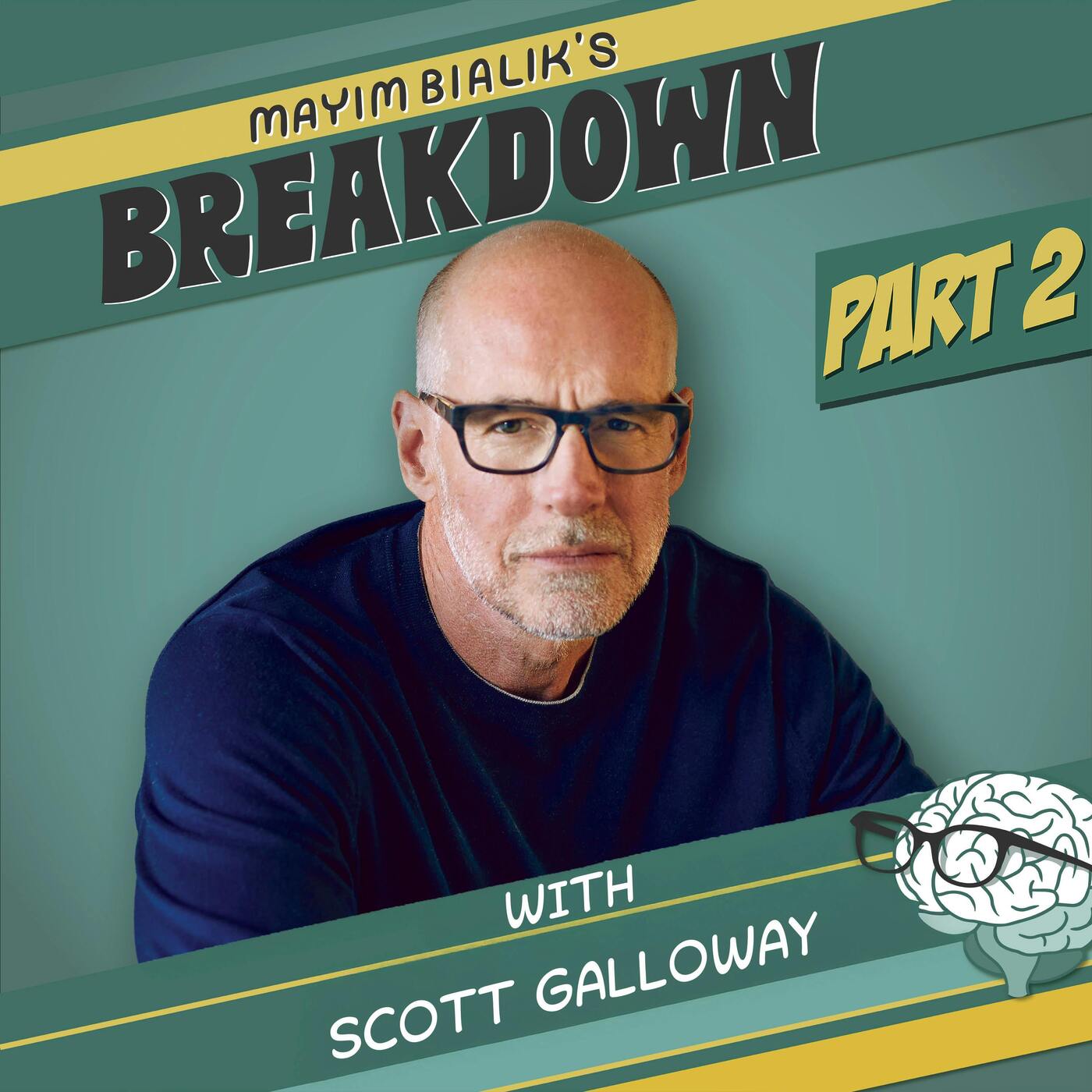
Mayim Bialik's Breakdown
Part Two: America Is Facing a Five-Alarm Crisis and It’s Affecting Men, Women, and the Future of Us All. The New Digital Opioid Crisis, AI’s God-Like Tech, & The Dangers of AI Girlfriends | Scott Galloway
00:52:14
Loading summary
Transcript167 lines
- [00:00]
A
Mind Breakdown is supported by Helix Sleep.
- [00:04]
B
Spring is in the air and so are all of the allergens that come with it. Spring allergens means you need more sleep, but there are a ton of factors that can prevent us from getting a good night's rest. Night sweats, back pain, feeling the person next to you when they roll over a million times. We were so excited to hear that Helix wanted to partner with us. I've had my Helix mattress for about five years now and I have been sleeping so much better. Jonathan and also our kids love their Helix mattresses and all of those issues. Night sweats, back pain, motion transfer. Those things are significantly better with a Helix mattress. Helix delivers your mattress right to your door which is so much fun. With free shipping in the US they have a 120 night sleep trial and limited lifetime warranty plus their Happy With Helix guarantee. Rest easy with seamless returns and exchanges. The Happy with Helix guarantee offers a risk free customer first experience designed to ensure that you're completely satisfied with your new Mattress. Go to helixsleep do slbreakdown for 27% off site wide that's helixsleep.com breakdown for 27% off site wide helixsleep.com breakdown. Hi, I'm I am B. Alik.
- [01:16]
A
And I'm Jonathan Cohen.
- [01:17]
B
And welcome to part two of our conversation with Scott Galloway. In part one of our conversation, we talked about notes on being a man. We talked about the biggest threat of AI as loneliness.
- [01:28]
A
The episode also talks about what women are actually looking for in partnership and what the three top things are that they are attracted to in potential mates.
- [01:39]
B
In this part of our conversation, we're going to go a little bit deeper into what partnership actually provides both for men and for women, as well as the differences in how men and women interact with kids and what men can learn about stepping up into their sensitivity.
- [01:55]
A
Deeper in the conversation, Mayim and I unpack some of our own experiences navigating divorce and what does it really mean to be emotionally available and able to connect. We also talk about one of the biggest new emerging technological risks facing men especially. We also talk about what the one biggest political action could be to keep men safe and a rising threat that most people aren't aware of yet that faces men disproportionately. The risk is almost incalculable.
- [02:33]
B
And here is part two of our conversation with Scott Galloway. Break it down.
- [02:39]
A
I want to talk about shoulder to shoulder connection because it's, it's actually a pretty profound and insightful statement. I have a 17 year old, as I mentioned. And if I try to ask him a question or engage in a face to face conversation with him, it will not succeed. I will get almost no information. And you know, his mom and I are divorced and went early in the divorce. I would pick him up, I would spend time with him on the weekend and he wouldn't start talking to me until like the last hour of the third day that we were hanging out.
- [03:17]
B
He's a quiet fellow. He wasn't shutting down around you.
- [03:20]
A
He's a quiet fellow, but he would pick these moments to interact and start to open up when I least expected it. And nowadays usually that interaction happens while I'm driving on a road trip. And we have many hours to kill. And even at the end of a week, all of a sudden he'll just start telling me about his internal world and things that are happening in school. And if I ask him point blank, I get it was fine, we did nothing, nothing happened. I don't remember.
- [03:45]
B
Are you gonna talk about how much he talks to me?
- [03:47]
A
He talks to her an unbelievable amount. I don't understand it, but talk to us about the difference about how men and women interact and what does it mean to show up for a young man and try to just let them connect when they're ready.
- [04:05]
C
I don't feel as if I have the domain expertise to really unpack the different ways the genders communicate. I can just speak anecdotally to what it's like to be a dad. And it's exactly what you said, John. It's random moments of connection when you're not looking for it. And again, my hack is to be the Uber driver because you're not looking at them and they'll just start talking. The other thing I do with my 15 year old is I lie down with him at night and we just talk. We just kind of debrief on the day and he'll start asking me questions about my parents and my upbringing. And he's just in a state of calm, he's in a state of Zen. And the rest of the day he's just assessing the household for vulnerability so he can attack at our weakest points. He's a terrorist, but there's something about. And every kid's different, right? There's something about when he lies down at night. I lie down for the first 10 or 15 minutes until he falls asleep and like one out of three nights he asks something and we have a moment of connection. But I love the term that Ryan Holiday coined of garbage time. The Most important thing you can do. I think what I've tried to practice is I just try to have a lot of time with my kids. I try to be present and I try to be around and you know, there a lot and obvious and constantly re. I travel a lot. So every day at the same time I facetime them. Even if it's just to check in and say hi and it's like a 30 second call. But I find also kids like ritual kids really enjoy, like every Friday night is family night or the first day dad gets home, we go and we always get dim sum. It's just, it's non negotiable. We go get dim sum, right. And I. They hate it. For different, know, parts of their lives, they hate it. But I think that's what they'll talk about when, you know, they're reheating my soup.
- [05:58]
A
And I, I fully agree. It is about those cons, that consistency, having some expectation. Also having enough time and space where we slow down, enough where you can lie down with them and you can give them the space to ask those questions. I am a person who doesn't volunteer a lot of information unless it's asked of me. And I have learned from Mayim that just sharing about things that I wouldn't normally share about is helpful to open up that landscape of conversation. Talking about my parents, telling them stories about things that they may not otherwise have known about. In those quiet moments too, I've tried to do a lot.
- [06:39]
B
It's funny because I always had this fear about having girls because I felt like I wouldn't know what to do with them because I was always kind of a tomboy and I don't really understand jewelry, makeup, fashion, any of those things. And you know, in many ways it is easier, right, to have a boy. It's just a different emotion. You know, friends of mine with daughters say that it's like everyone having their period. From the time that the girl is like four years old, it's like everyone is like screaming and crying and it's very intense and it's very emotional. And you know, a lot of it is girls tend to be more verbal, more social, you know, their interactions with other females tend to make their way, you know, into your life as well. But, but when you frame it this way in terms of kind of the statistics and in terms of sort of the, the challenges, you know, is it that hard to get it right? Meaning, like how, how, how close, how much do we need to sort of hit this mark? You know, can, can we can we be roughly available? What does it look like for young boys? Like what are we aiming for, I guess is the question.
- [07:49]
C
I don't know if I'm able to put a metric on it. I mean, unfortunately a lot of these problems are inversely correlated to income of the household. In a capitalist society, money solves a lot of these problems. Not all of them, but I mean, I was just looking at data on public schools. The average public school spends $15,000 per student. The average public school in a poor neighborhood spends 8 to 10,000. The average elite private school spends $75,000 a year per child, 50 to 60 in tuition and another 15 in gifts and endowments. So just think about, you have this infrastructure called education. Whether you think it's a good infrastructure or not, it is an infrastructure that has scale for a reason. And there's one kid we're spending $150,000 on and there's another we're spending a million on. And what do you know, the outcomes are much different. So just the level, I mean, I just think about the resources we're pouring into these kids around everything and some of it's not good. But I used to leave my mom's house at 9am on a Saturday morning with a Schwinn bike and Abu Zaba bar and 35 cents and she wouldn't see me for 14 hours.
- [09:02]
A
Sure.
- [09:03]
C
And now my kids are 10 minutes late from school and we call MI6 and the CIA. I mean, it's just so. They're so over. They're so over parented. I don't know if I have an exact metric for what we're trying to get to. What I would just say is the basics are presence, especially for men with boys. And the other thing I just zeroed in on, which I have some data on, is being really good to their mother, that that teaches them to have healthier relationships and be happier themselves later in life with women.
- [09:40]
A
I know you're a staunch atheist in your worldview.
- [09:43]
C
Well, let me say this. I'm not a staunch atheist. I'm the reluctant atheist because one of the things I think is a shame is that people are spending less time at religious institutions and that is a form of community. And although I'm an atheist, I do sometimes when I mentor young men, really encourage them if they're involved in a church group or temple. I think it's great. I think people getting together on a regular basis to be in the, in the agency of something bigger than them and, you know, wish each other well. I think that's. I think that's a good thing. I have not found faith. It just never struck me. But I think it's a good thing. I'm. I don't say I'm envious of it, but I respect it. And also I say to people, I'm an atheist, but I'm Jewish. And that is, I'm what Dan Senor calls. I don't know if you know Dan. He has this great call me back.
- [10:34]
B
Yep.
- [10:34]
C
He calls me affectionately. We're friends in October 8th Jew. And I never felt very strong connection to Judaism or to Israel, but now I'm a full. People in my comment section accuse me of being a Zionist and I respond, I'm a raging Zionist. So I consider myself Jewish, but I'm not. I don't. I do believe that there will be a point where I look into my son's eyes and know our relationship is coming to an end. And my atheism, for me, and I'm not saying this is true of everybody, has given me tremendous courage to be more emotive, to tell people that I love them, to take risks I may not otherwise take, because I just genuinely believe that this is not a dress rehearsal and that it's going to go faster than we think or I think. And there's no reason why I wouldn't take risks, be more emotional and squeeze as much juice out of this lime called life. So for me, atheism has been a real unlock. I'm not saying it's for everybody. I don't force it on anybody else. And I have a lot of respect for religion and religious institutions and I now more often than not talk about my Jewish heritage and my connection. But yeah, I have not found faith, so to speak.
- [11:43]
B
Thank you, Scott, so much and really, really enjoyed notes on being a man. And thank you so much for joining us again.
- [11:49]
C
Thanks and congrats on your success.
- [11:51]
B
Good luck with college applications.
- [11:54]
C
God.
- [11:54]
A
Yeah, exactly.
- [11:55]
C
Make it end.
- [11:56]
B
Oh, yeah. Let's just say if anyone is still curious if it matters what's going on with men, maybe listen to the episode again because I'm convinced. At first I was like, oh, wah wah, men. But after reading the book, after talking to Scott today, it's absolutely true that if those statistics exist in terms of suicide, in terms of the time outdoors, in terms of friendship, in terms of meaning, we, we would be very, very worried. Right? These are very, very worrisome stats.
- [12:40]
A
Also. There has never been a safe society where that number, potentially that number of men are displaced, despondent, have no meaning, have no family or personal connections. That breeds violence. It breeds instability.
- [13:00]
B
Yeah, I mean, I started sort of like running through and I'm not great. I'm great with certain portions of history or at least I have some knowledge of certain portions of history. But I'm like thinking about, like the Bolshevik Revolution. Like, I'm thinking about the French Revolution. You know, I'm thinking scrolling in my mind as to like, where are these places where we can see. And, you know, I know more about World War II than others just from, you know, what I studied in college. You know, this notion of this sort of energy brewing right when men are unemployed or when men are isolated, that makes sense to me. And when we think about the trends that many of us are seeing, and this is not a, this should not be a partisan conversation. You know, when we think about January 6th, I've read some really interesting interviews with some of the men who stormed the Capitol and, you know, kind of learning what is driving for many people this sense of a need to, quote, take back our country. And as Scott points out, that so often turns against immigrants, it turns against women. That I know does not have an historical good track. When we're looking for a scapegoat, when we're looking for who can we blame for what is going on? Nothing good happens in a society.
- [14:23]
A
My ambiox breakdown is supported by Bioptimizers.
- [14:26]
B
I struggled to get good quality sleep and I just thought like, ugh, it's stress. But I learned during perimenopause and menopause, your hormones shift and it affects your magnesium levels. Low magnesium makes everything harder. Not just sleep, but focus, mood, stress tolerance. That's why we added Magnesium Breakthrough by Bioptimizers to our nightly routine. It's a blend of seven different forms of magnesium designed to support relaxation and overall sleep quality. Try it. See if you wake up more rested and refreshed, you've got nothing to lose and a lot to gain. BIOptimizers offers a 365 day, no questions asked money back guarantee. Magnesium Breakthrough is a fantastic way to improve that hormonal imbalance that especially happens with magnesium. And then you have better focus, you have better sleep hygiene in general. Bioptimizers makes it so easy. Here's what you get when you go to bioptimizers.com breaker and use the code breaker. 15% off your entire order and a free bottle of Mass signs. That's Bio Optimizers box. Bestselling digestive enzyme added to your order automatically when you use Our exclusive code. That's a $20 product, free on top of your discount. This is a limited time offer. While supplies last. You cannot get this on Amazon. You can't get it in stores. The offer exists in one place. Our link, our code. That's it. So if you were already thinking about trying it, this is the sign. Go to buyoptimizers.com breaker. Use the code breaker. Grab it before it's gone.
- [15:51]
A
Make 2026 the year you finally start sleeping again. This episode is sponsored by Wandering Jews, an open door media brand.
- [16:01]
B
If you've ever found yourself feeling like you have more questions than answers, you're in good company. The Jewish people have been like that for thousands of years. Wandering Jews with Michal and Noam is a podcast where two of today's most dynamic Jewish voices, Michal Bitton and Noam Weissman, dig into the biggest questions about life through a Jewish lens. It's the kind of conversation where you'll laugh, learn something new, and probably shout in disagreement at least once. Michal and Noam tackled the tough topics like antisemitism in America, what happens after we die, and the future of religion with guests like Bret Stephens, Michael Rapoport and Sarah Hurwitz. And this past month, in honor of Jewish American Heritage Month, they've been celebrating some of the Jewish lives and institutions that have shaped American life, from food to music and comedy. Thoughtful, joyful, and always honest. That's Wondering Jews with Michal and a production of Unpacked. Find it on your favorite podcast app or on YouTube and make sure to hit subscribe. Check out Wondering Jews with Michal and Noam podcast and subscribe at Unpacked Bio nmx.
- [17:03]
A
When I had a child, I was emotionally cracked open in a way that I didn't anticipate. I didn't anticipate. I couldn't have foreseen.
- [17:11]
B
Maybe you're too sensitive, Scott Galloway would say. You're too sensitive.
- [17:14]
A
It was so intense to see this little tiny. Like, I had spent a little bit of time with my nephew who was born. I was at his birth and yeah, I held him, but like, it was different. It was different than my own child. It was different than, you know, his mom and I did it by ourselves, without family around. And like, all of a sudden I have this like. And then like the next day I remember just changing his diaper and I was like, where did this creature come from? And there was something inside of me that just like, totally changed. And it's like, oh, my entire existence now revolves around what this creature is doing, what he will be, what he needs, like, everything shifts. And in absence of that, or in absence of being emotionally connected deeply to other human beings, I don't think people will actually just sit in their basements being unconnected. Some. Some might, but what will happen is that they will find the need, or they were channel the need for that type of connection into rage, into rage against the society, into rage against perceived injustice, into rage against a minority class or a. An immigrant population. They're going to create, like, that need that they have is going to mutate and come out in ways that we do not want.
- [18:41]
B
Yeah. This doesn't feel like a scientific exploration we're doing.
- [18:45]
A
It's not.
- [18:45]
B
But. But in terms of, like, an energy transfer, you know, conversation, I think that's true. I mean, look, I also, you know, I do this a lot here, and I, you know, I try not to be. I mean, Scott Galloway both, you know, enthralls me and depresses me. You know, it's very scary to think of some of these things.
- [19:06]
A
That's why he's a little depressed.
- [19:07]
B
Yeah.
- [19:08]
A
He knows all this, all these facts.
- [19:10]
B
No, but I do. I. There's an entire. And really, in the first episode we did with Scott, we talked a little bit more about this, you know, the socioeconomic factor, you know, which really, it lives throughout this issue and so many others. And like, that just feels like the most obvious thing to say. But the notion that it is a privilege to be present enough to be present for men in particular, and, you know, part of that does come from the fact that men historically have been the providers. And as he argues, he feels that's a very important, a critically important part of the male experience, at least the cis. Hetero male experience. Right. In. In some of this context. But that notion that there are men who are not able to be present or they have been raised themselves in an environment where you have an historical lack of. Of the presence of a father in it makes it a completely different. A completely different conversation. And that is sort of what keeps building on itself in the ways that we're seeing this, you know, kind of devastating set of statistics.
- [20:31]
A
And if we just like, take it down to a micro level, you can be physically there and not emotionally there.
- [20:37]
B
Sure.
- [20:38]
A
Right, sure.
- [20:38]
B
Well, and also, you know what it reminded me of? When you watch movies or TV shows set in, like, the 1700s, the 1800s, and, like, sadly, babies die all the time. Right. Like, women would have a lot of kids because, like, half of them would like Get, I don't know, name a disease. Like, they'd get dysentery or they'd die of the flu or like, you know, little infection, right? The things that, that people had to get used to. And it did cause a certain amount of emotional distance. And it's really, I mean, in many cases it's through women writers, right, through all of history that we've been able to get, really get a window into what was the emotional experience of parenting, of loss, right? And for men, even more so they were removed from a lot of that. You know, men weren't necessarily in women's spaces that way. It's why midwifery was the way that women gave birth, right. And it wasn't until it moved to obstetrics that men became part of the conversation. So I also wonder, you know, in that Alan Alda male generation in the 70s, when Alan Alda was sort of presenting as like, what can the new man be like? He can be like that, right? What's that sort of balance that we're striking? Because that doesn't come naturally to a lot of man. Even my dad, my dad was an artist. My dad was very, you know, romantic and he loved poetry and all these things. But when it came down to it, like, he was not very domestic. He was, he was a man's man in a lot of ways. He had a lot of old fashioned skills. He could dance, he could open a door for a lady, right? But he wasn't like, how was everybody's day? What's the emotional, you know, vibe?
- [22:12]
A
Am I gonna read everyone accurately?
- [22:14]
B
Right? Like, ooh, I see this person need. No, it was like, I had a really shitty day at work. When is dinner and then I'm gonna grade papers and then go to sleep. And my mom was the one being like, what does everyone need? Is your homework done? Let's get dinner. Here's lunch. Do this like, and with a smile.
- [22:29]
A
You know, Pete Holmes and Mike Barbiglia have a very funny bit. I think we were listening to it this weekend, where they were like, when they were growing up, your dad was to be feared.
- [22:39]
B
That's right.
- [22:40]
A
And now your dad is like supposed to like play with all the toys and understand how your day was and like connect emotionally.
- [22:47]
B
Yeah. They were talking about the, the different demands and expectations. And again, a lot of this is, is in many ways determined as a luxury, I think for women as well. And I think we forget that for single, for single parent homes, something like 80%. You know, Scott said is, is women. Those women Typically are also working. These are not women of luxury who are home, you know, being supported by some outside force. These are women who are single moms. I mean, his mom, right. They are out working. You're letting yourself in at the end of the day, like, when your mom is still at work, right? You're taking care of yourself until your mom gets home. So even for. For mothers to have that notion of, like, this was a. It's a luxury. And so much of it connects to economics, which is why, even though I don't agree with Scott on all things, and I do think this is a very heteronormative kind of conversation, which is still important to have, I do think he's kind of right on in tracking the connection between the economics and the. The sociology.
- [23:51]
A
We used to joke that my dad would be so emotionally aware at work. Like, he had 200 people that he was all navigating, you know, what this person needs, that person. And he would come home, he would play. But I wouldn't say that he was, like, gauging the emotional reality of the house in a moment by, like, he. He had just worked. He was. Been out of the house from 8 to, you know, 6:30. He comes home. He was very consistent about, like, when he came home, we would go downstairs and we played floor hockey. We had, like, this basement rec room, and he would. I remember I have one of my first memories as I don't know how old I would have been, maybe probably three, four years old, is we had these nets in the basement. And my brother was, like, moving around three and a half years older than me. And my dad would always make, like, time for, like, me to take the shot too, and be inclusive.
- [24:44]
B
So, like, what was your mom doing?
- [24:46]
A
Well, she was working at the time also. Right, right. She was. She was a teacher. And so she would be out of the house and come back, but she was, you know, she had dinner on the table.
- [24:54]
B
Right.
- [24:54]
A
And it was like, when your dad gets home. But, like, I think we would have eaten first at that age. It's a little fuzzy, the memory. But, like, we had eaten and then he would come home. But, like, dad coming home was, like, a really big deal.
- [25:04]
B
And your family also. You had help, right?
- [25:07]
A
We had help as well. Two working parents. And then we had. We had support in the house. But I do remember also that if we were too bad, like, causing my mother. And this is years later, like, do
- [25:20]
B
you mean having too many needs?
- [25:21]
A
No, if we were like, my brother and I were fighting.
- [25:25]
B
Yes.
- [25:25]
A
We weren't like, so if we weren't, like, helping around the house, it was when your father gets home.
- [25:31]
B
There was a point that Scott talked about. His first marriage ended. And the way that he describes it in his book, he said that they went into couples therapy. It's actually. It's a very funny part of the book. He and his first wife went into couples therapy, and they started, you know, talk the way you do in couples therapy, like, here's my complaints, and here's my. And the therapist was like, she wants
- [25:53]
A
too many Sesame street band aids. I can't provide them.
- [25:56]
B
The therapist said, it's really not as important. Like, who said what, who needs what? Blahbity blue. He said to the therapist, said to Scott, there's a town called Marytown, and there's a town called Singletown. You get to decide which you want to live in. Marytown gets you a person sleeping next to you, a person who will gauge your needs, a person who will be available to you. The. The price is you also have to be available to them. And generally speaking, it. It's gonna. It's not gonna feel like a 10. It'll be a seven or eight. That's Marytown. That person's always gonna be there. Singletown. There is a very high probability that most of the time, it's not even gonna be a 7. Sometimes you'll get a 10, but we're not sure, and you'll be by yourself. And the therapist said to him, do you want Marytown or do you want Singletown? And he said, I want Singletown. And that was the end of therapy, and they got divorced. And he said that looking back, he sees how he just wasn't ready to be married. They were probably too young. But I think that's very interesting because I think so many of us, especially for those of us who got married young, we're trying to. To fit right what we think we want. We want this or we want that, or he wants this or he wants that. If you're with someone who clearly wants to be in Singletown, don't try and make them want to be in Marytown. I think that goes for also when you're dating someone too, because it doesn't
- [27:23]
A
matter what the details of the conflict are correct.
- [27:25]
B
If ultimately he's like, I'll just eat leftover pizza, drink beer, with the possibility that I'll get to have, like, amazing, anonymous sex with someone once a. I don't know, once a month, once every three months. I don't know how much people have sex some People just want that. And other people would be like, I'd rather have a more, you know, mediocre kind of existence, but knowing that someone's there for me when I'm hurt, when I'm scared, when I'm sad. I could have kids with them in a different way.
- [27:51]
A
So I think it's emotional maturity. Obviously, there's a dynamic between the two people.
- [27:55]
B
Yes.
- [27:56]
A
Has a big part in it, but sometimes, especially men who haven't gone through this need to experience how empty singletown is for a period of time. Because he described. He was in New York. He was only leaving his house for a certain amount of time.
- [28:14]
B
But the Internet has changed what singletown looks like. That's what I think he's talking about, is that the. The scope of what alone looks like. You don't suffer as much because you can have this more access to people. You have more access to it. Well, you can have a fake relationship with a chat bot. You can even have some sort of sexual interaction. We didn't even get into talking about porn and what he sees as porn affecting relationships and online porn in particular, and how that, you know, shifts things. But, yeah, I think single doesn't feel like single. Used to.
- [28:46]
A
It's easier to distract from how lonely it is.
- [28:49]
B
Correct. Well, and. And you can, for a price. You. You won't feel that loneliness the same
- [28:55]
A
way for a certain period of time, for sure.
- [28:57]
B
Yeah. And by the time you get tired of it, you don't have the skills, because you should have developed them in your teens and in your 20s to be able to interact with real people, deal with rejection, deal with all those things that come with being out in the world trying to have sex with people. What did he say? Pursue sex.
- [29:16]
A
That's actually one of the most terrifying warnings that if you weren't totally tracking, you may have missed, which is you're going to distract yourself for a while. It's not going to feel bad. You're going to avoid the immediate pain of rejection by placating yourself, by distracting yourself, by going looking at digital content, whatever that may be, a chat bot or videos or whatever. And you're not going to feel the rejection. You're not going to have your heart race and be like, what am I going to say? I'm going to look stupid. But by the time you figure out how empty it is, years can have gone by, a decade could go by. You could have wasted all of those moments and opportunities. You can't just replicate that well.
- [30:01]
B
And I think that's sort of the point, you cannot play catch up if you've missed that sort of critical period for many men, as he's talking about for many men, you cannot just get that back. It's not like, oh well, I wanted to fudge around in my 20s. Now that I'm 35, I'm going to see what it's like. No, because you haven't built that muscle of resilience or you know, the ability to kind of engage in that way.
- [30:24]
A
Mind blocks Breakdown is supported by bio optimizers.
- [30:27]
B
You know, I struggled to get good quality sleep and I just assumed it was stress. But as I learned during perimenopause and menopause, your hormones shift in a way that affects your magnesium levels. And low magnesium, it makes everything harder. Not just sleep, focus, mood, your tolerance for stress. That's why I have added Magnesium Breakthrough bye bye optimizers to my nightly routine. It's a blend of seven different forms of magnesium designed to support relaxation and overall sleep quality. Try it. See if you wake up more rested and refreshed, you've got nothing to lose and a lot to gain. BIOptimizers offers a 365 day, no questions asked money back guarantee. Magnesium Breakthrough is, is a huge breakthrough to improve hormonal balance, to help with focus, decrease brain fog, improve sleep hygiene. Overall, Bioptimizers makes it very easy. Jonathan, what do they get when they go to bioptimizers.com breaker and use the code breaker?
- [31:19]
A
You get 15 off your entire order and a free bottle of Massymes Bioptimizer's
- [31:24]
B
best selling digestive enzyme that'll be added to your order automatically when you use our exclusive code.
- [31:29]
A
That's a $20 product, free on top of your discount already.
- [31:34]
B
This is a limited time offer and while supplies last, you can't get it on Amazon, you can't get it in stores. This offer exists in one place. Our link, our code. That's it. So maybe you were already thinking about it. This is the sign. Go to buyoptimizers.com breaker use the code breaker. Grab it before it's gone. Make 2026 the year you finally start sleeping again.
- [31:53]
A
Not to make this so hopeless like I do think that if you are in your early 30s, 35 and you've spent your 20s not being able to activate those social skills, I don't think you're lost. I don't think that's where you end up forever. But no, you have to recognize you are taking work. It does take work. It does take catch up. You may have emotional atrophy almost.
- [32:17]
B
Yeah.
- [32:18]
A
You've sort of lacked some of that ability to connect and, and, and get real feedback. Like, you know, you can text someone anything and you don't know what their facial reaction is. You don't see it land when you actually have to have a conversation.
- [32:33]
B
And yeah, and he does talk about that. Like you have to, you have to lean in to emotions. You have to learn essentially how to have emotional reactions and how to, you know, kind of to experience that, to experience it in a way that, you know, doesn't just make you attractive to other people, but makes you a, you know, more well rounded person.
- [33:01]
A
I'm going to touch on divorce for a minute. We both went through it. I think the biggest misnomer that some people have in divorce is that when you get divorced that conflict or the thing that you're trying to end is over. Especially if you have children. I mean, it's very different actually if you don't have children. But if you have children, it doesn't end.
- [33:28]
B
Being divorced is just like being married, except generally speaking, you don't live in the same building.
- [33:33]
A
Right. Like that. I don't think a lot of people go into divorce with that understanding.
- [33:38]
B
Well, I think a lot of people feel like, well, especially if you have young kids, which is no, you know, party. Yeah. I think there is a notion. I mean, I've heard women say to me, like, why is he being like that, you know, after the divorce? And I'm like, because that's exactly how he was in the marriage. You think that divorcing him was going to change. He's the same person that he was. It's just now you can say to me like, oh, why is he still being like this?
- [33:57]
A
And sometimes it's worse because the way that they were was somewhat how mitigated by your closeness with them. Right. Like we balance each other out. And now each person is more the extreme version of one another.
- [34:10]
B
It's no, it's no party.
- [34:11]
A
The other thing about divorce that changes a lot, especially for men if they are not the primary parent and they have visitation, is that you lose that garbage time. You lose that unstructured time because you pick up your child. You, you have them for a little bit, you want to like do all the stuff. There's a warm up, there's a transition.
- [34:31]
B
Yeah.
- [34:31]
A
You know, like there's a, there's an emotional tax that happens when a child has to pack a bag. Even if you have all the stuff at their house, you know, they have to grab Something they have to grab their homework, they have to like think about being and sleeping in a different spot. There's a warmup period that happens. And you know, one of the saddest moments when I knew I was about to get divorced or that that's the path that we were on. I was at the shared house. We had still, we still had this apartment and my son was 6 at the time and he was running around. I don't know why he was in his underwear. But like it often happens, it just happens. And he was helping do the laundry and it was a top loading machine and all the wet. And he loved helping to do laundry. He just was like super into doing chore around the house. So I wish that was still the case. And he had climbed up into the washing machine. He was standing with his feet in the washing machine so he could reach the wet clothes. And then he was taking the wet clothes and leaning over and throwing them into the dryer. And I was like, that's the type of thing that you miss as a parent when you don't have that unstructured time is these unexpected moments where your kids are just doing random things that it's just hard to replicate when they're not totally free and carefree and you know, when they're not thinking about all the things they have to manage. I want to talk about two more pieces. One is mandatory community service and the other is shoulder to shoulder connection that he talks about. He describes how men often connect shoulder to shoulder versus face to face. And it's interesting because I, I started to think about that with male friends and female friends. Yeah, female friends are. You walk into a coffee shop, they're sitting cross legged on the pillow in the window and they're looking at each other and talking, they're staring at each other and they're holding each other's gaze and they're connecting about all the difficult things they have and all the dreams and hopes. And men are sitting playing video games, talking about something or they're doing sports together, doing sports together or they're sitting watching something and it's less. Do I have moments with my male friends where like even I have a couple dog friend dads and when we're hanging out, usually we're sitting next to each other on a park bench or when we're standing, we're kind of standing almost like at an angle. And you know, female dog friends, they're kind of, they square up differently. I don't, not everyone, of course. It's a generalization.
- [37:11]
B
I mean, look, part of it is the difference between kind of male and female socialization. I don't think the goal is to make them the same. But I think what Scott's talking about and what we're talking about is if there's less and less opportunity for men to even be shoulder to shoulder, what does that do in terms of how they structure their lives around their sense of loneliness? Right. And, you know, when you look at, you know, the activities that men do tend to do. Yeah, they do tend to be those kind of like shoulder to shoulder. I mean, he talks a lot about, you know, the role of some compulsory service that, you know, for men to. He talks about Boy Scouts and things like that, but that there's meaningful, you know, kind of work. And also, you know, he believes in sort of honing those protective mechanisms that he believes are kind of innate to men. And those kinds of activities will stimulate that working together, building things together, building towards something. You know, he talks also about, you know, labor, the kind of labor like shop. Right. When he talked about, like, wood shop and metal shop, which was typically like guys like, that's what I mean, we still had that when I was in. When I was in school. That's, you know, how long ago it was.
- [38:34]
A
The two activities that have replicated that for me have been. When I was younger, I got the chance to go on a canoe trip.
- [38:43]
B
Oh, yes.
- [38:44]
A
With. There was nine people, three boats. You're carrying everything on your back for five days. You go in with your food in your backpack, your tents, everything, and you are together in that activity. Right. Like your survival, your ability to navigate. If one person gets injured, you, like, you can't carry the other things.
- [39:03]
B
You gotta figure it out.
- [39:04]
A
You gotta figure it out. And there was something about working together in that way that creates a pair bond across the entire group that is unlike anything else. And I had such a good time
- [39:14]
B
doing a pair bond. If it's a group bond.
- [39:17]
A
Yeah, you're right. That it was so emotionally connecting that I just like, I loved it. I love being out in nature. I like the hard work, your long, long days. I mean, those are three components.
- [39:30]
B
Being outdoors, you know, physical activity and being in a brotherhood, a little bit of danger. Right.
- [39:36]
A
Because you're navigating the elements, there's sometimes you're wins. You're getting.
- [39:40]
B
It builds resilience. It builds the feeling of, I can do this, I can fix this. I can, you know, surpass this tent pole breaks.
- [39:48]
A
You got to figure it out.
- [39:49]
B
And look, it's a lot A lot of military service does incorporate that, and. And that's true for women as well, who joined the military. You know, these kind of notions of. Of team building and those, you know, kind of quote, masculine qualities, as it were.
- [40:03]
A
When I found filmmaking many years later, it replicated that group activity in some ways. In some ways, not every way. Not. Not the camping, not the blah, blah, but like independent filmmaking where we had no money, we had to figure it out. We had to beg, borrow and steal. You had to ask people for favors. It was like a small, ragtag group of people all on the same mission. That's kind of what fed that for me. So when he talks about compulsory service, I think it solves actually a few problems. I think people get very scared about anything that's mandated and they have to do it.
- [40:37]
B
Right now, we don't have an opinion about it. We're just talking about it. Well, no, because I think it brings up a lot of other issues.
- [40:44]
A
Absolutely. There's an enormous amount of potential issues and how is it managed and, you know, access. But I think it. The upside is, is that in sense of meaning, the sense of purpose, the connection to other people and also connection to country.
- [41:03]
B
And I think in talks about patriotism,
- [41:06]
A
of having some form of way where we have a larger connection and believe that the place we are has value and that you can connect with other people who also feel like that we're. We're in a difficult, difficult place.
- [41:21]
B
There's something that I also feel like needs a lot more refinement, really, for people in relationships. The difference between, you know, a sensitive partner and what he described as kind of a overly sensitive partner.
- [41:39]
A
You know, we were conflating two things in the language there.
- [41:42]
B
His example was funny, but I do think it's a semantic distinction because I don't think most women would say, I want someone who's not sensitive. Right. When I say sensitivity, what do you think? When I say, I'd like a sensitive man to be my partner, what does that mean?
- [41:59]
A
It's actually tied back to what we were talking about in how the role of the father has evolved.
- [42:05]
B
Nope.
- [42:05]
A
Yeah, it is. Just listen. Follow me here for a second. Follow me here for a second. Doesn't feel like when we were misbehaving as children, dad would come down and sometimes he would just like, yell and throw something. And I'm not saying my dad per se. I'm saying dads in general. Like, there was a lot more tolerance for, like, dads to just, like, they're gonna stop whatever's happening in the house through having a larger emotional outburst than the people having the emotional outbursts. And what I would say sensitivity is, is being able to allow someone to have an emotional experience and having the wherewithal to navigate your reaction to that and not telling them they're wrong, not telling them to stop it, not telling them they're crazy. To be able to actually connect with them enough to be able to say there's an emotion that's happening, there's a need that may be unmet here. And how am I gonna navigate that?
- [43:00]
B
Right. I mean, Yes. I think that is a concise and astute set of observations. I think. Yeah. I want someone who doesn't shut down my feelings. Yeah. Who kind of allows me to have my feelings. They don't have to be that person's feelings, but they're mine. And I think also I'm interested in someone who's aware of the world around them enough to pick up on things. I'm looking to the other ladies in the room like I want. Yeah. I'm looking for. And not just a man, but a partner. Right. A partner who is sensitive to the world around them, you know, world being
- [43:40]
A
other people around them.
- [43:42]
B
Yeah. Yeah, I think so. And you know, there's obviously a lot of variability here in what people want from relationships in general. But yeah, I think, and I do, I have friends who have very close relationships with gay men. And one of the things that sometimes people say is I like being friends with a gay man because he is, he's as emotional as I am. You know, if it's someone who's on that spectrum of emotion.
- [44:11]
A
And that's not to say that just because they're all like just the ones that they found.
- [44:17]
B
But I'm saying that a lot of, a lot of women enjoy the company of. Of a man in that sense because it's not the same as the sensitivity of a woman, but it has many benefits. I don't know if that's a weird point to make.
- [44:30]
A
One of the things that having a child helped me do was to tolerate someone who has having a high level of emotion that I did not have a solution for. And there's something like. I forget the phrase exactly. But it's like you can't allow what you can't experience or what you haven't allowed yourself to experience. So I think many men may be able to relate to a female friend or partner having a large emotional experience and them wanting it to stop.
- [45:03]
B
Whether we're talking about same sex partners or opposite Sex partners. I do not want to be in a situation where the person that I'm with is as emotional as I am at any given time.
- [45:15]
A
That's just your profile.
- [45:17]
B
Meaning some people would like to both be sitting in the car crying.
- [45:20]
A
Well, just some people may. It's possible, maybe their profile isn't sitting in the car crying. Their profile is feeling deeply, and they want someone else to feel as deeply as them at and match them.
- [45:30]
B
And look, this brings up a much larger issue of, like, in any relationship, whether it's two women, two men, a man and a woman. Non binary people, like, whatever it is. We. We want to. We're allowed to have a difference in how we want relationships to function. So some women might be like, I really want to date someone, male or female, who's as emotionally sensitive as I am, because that satisfies something. And I think a balance is good, which is why historically, you know, masculine men and feminine women have paired up. That's off, you know, but it's a spectrum.
- [46:10]
A
Where are you going with this?
- [46:11]
B
I think that what Scott is talking about in this book is primarily, you know, a heteronormative situation where it is assumed that you do not want two people who are completely unemotional and you don't want two people who are completely very, very, very, very emotional. And so somewhere in between is what we're looking for. And he really is asking for men, in this case, for men to step up, lean more into their emotions so that they are viable partners and good partners, while still being able to maintain a lot of these what he calls masculine qualities of being able to provide and protect and those sorts of things. I'm also an excellent parallel parker.
- [46:49]
A
You are fantastic, actually. Very impressive. Even without a backup camera.
- [46:53]
B
There's also very few things that I brag about. I'm a good parallel parker. I'm an excellent whistler.
- [46:59]
A
You are a very good whistler. You blow a good shofar.
- [47:04]
B
Yeah, but I'm not as good as other people.
- [47:05]
A
Okay.
- [47:06]
B
I know that parallel parking is like, It's a thing.
- [47:08]
A
I want to connect the emotional availability to synthetic relationships, pornography, and what may be the largest risk yet that is potent, that has the potential to influence men. That and needs to be warned about. If you're in a synthetic relationship that is constantly only one way and requires no emotional bandwidth from you, and it is positive, reinforcing and giving you that hit of dopamine every single time. Anytime you ask a question, it's there. It's giving it to you. Your ability to Change the speed at which you're operating and then be bidirectional instead of unidirectional, I think increases in difficulty. The same is true if you are watching sexual content and your brain is lighting up and you're driving dopamine from that switching to a different speed of real human interaction where you have to be vulnerable. We've heard experts describe that people who are watching a lot of sexual content, it's not often even about the sexual content. It's actually a mask to avoid feeling emotionally. It's a band aid. And so if you are constantly in a state where you're emotionally numbing out, whether it be through that content or through a synthetic relationship, it's gonna be harder for you. And that's really what interacting is, is a unidirectional relationship where you have to feel and you have to be in emotional interactions.
- [48:47]
B
And more specifically, you have to hear no. And I think that's really. I think it's very terrifying for men and for women. And one of the things that. That I'm learning about AI is that it doesn't say no. And so anytime you're in a relationship or in an interaction, like he said, sometimes you need to be told, like, you smoke too much weed. I don't want to have sex with you. Right. And that's not going to come from this kind of synthetic, as you're calling it, relationship. And it's all the more problematic when you think of young people who are being primed on this. You know, one of the examples that he gave is, what if the child is young enough that they really don't understand the difference between a person and a character that is terrifying. And you think about that age of wonder and imagination that kids have that we all had, right? Imagine putting on that, this film. Right. Of desirability and agreeability and all these things. That's terrifying. And there's devastating, devastating suicides. And the reports that parents are making is that this relationship convinced my child that there was something waiting for them on the other side that they believed in.
- [50:11]
A
Oh, and when the AI or the chatbot adopts the Persona of a film character that they have a relationship with through the film, right? All of a sudden it's like, well, didn't you want your characters, your My Little Ponies or Care Bears to come to life? And now all of a sudden they're communicating with you in a similar way that the.
- [50:33]
B
I mean, now it sounds like a horror film.
- [50:36]
A
It kind of is. Yes, there can be regulation. Yes, they need and we have to push politicians to age gate so that these are not available for people under the age of 18.
- [50:46]
B
We've been talking about that with porn for years. It doesn't work. I mean, does it work? I don't know.
- [50:50]
A
I don't know. There's VPNs and I guess there's ways to get around it. But of course, at least there should
- [50:55]
B
be some way to get around something.
- [50:58]
A
Valerie just said that in Arizona they just launched a law that you have to upload a picture of your ID in order to prove who you are. So that it's an attempt to limit access. Yes. We want governments to act, we want there to be safety nets. And also we need to be able to educate ourselves and warn about the potential use even for people who are older and of age. Right. We can't control people who are adults, but we can like cigarettes, warn about the potential impacts that are still really being understood about these digital systems. And then, you know, the one that's on the rise right now is, and Scott calls it the potential next opioid crisis, which is prediction markets and online gambling, which is basically you can make a bet on anything. I could bet what the next Mayan Bialix breakdown guest would be. I could make a bet on like how many times mime says a certain word. That's a bingo game I play. But sports betting, world life events, is this person on trial going to get off with this number of like. It expands betting to the point where it becomes so addictive that it, you know, it's already addiction, it's already addictive in the current forms, but they're expanding access, expanding availability and expanding what it is that you can bet on. And you know, talk about maybe the underdeveloped male brain that is even more susceptible to this.
- [52:32]
B
I don't want to say underdeveloped, but it develops at a different pace. And that's actually something I was thinking about. I was like, I mean, I have this, you know, global theory that people used to get married much younger. You know, the culture sort of allowed for it. It was the only way out of your parents home. Especially if you were female and you would get married and you would hope that you grew together. I mean, that's the best way to describe it. When I think of my mom getting married at 18, just before she turned 19, she was not pregnant. My dad was two, you know, two and a half years older than her. You know, the hope was that you grow together. You're kind of like siblings though. You're basically like roommates in college who are gonna be together forever. Right. Like, that's the sort of dream. And what I know is that my parents came from a similar enough background, a similar enough structuring, that they grew together and they were together for 53 years. And other people that I know whose parents kind of, you know, experienced that kind of like young marriage, some of them, they didn't really grow together. And it was very, very upsetting. And there wasn't an option for divorce. And then you're just like, kind of raised in that. But I think of that still with how many women. I mean, the cost of divorce he listed as, you know, about $8,000. I know so many people who cannot get divorced, they cannot support themselves. They cannot even afford to do that kind of paperwork. And usually the story is he won't leave, he won't get out. Right. That notion also of what does it look like for relationships shift, especially as we talk about the maturation. It's not that the male brain has changed that significantly. It's that the culture surrounding it. Right. Has provided a different set of opportunities both for men and for women. You know, take home message from this episode. We needed the women's movement to get us where, where we're at. And it's incredibly significant, powerful and important that women have the roles that they have. It should not be in place of men also being supported so that, that they have outcomes that are also advantageous, not just for them, but for the relationships that they will be in.
- [54:38]
A
What did you think about him saying boys are emotionally and neurologically weaker?
- [54:44]
B
I mean, I think, I think that that's true. I think it's true in terms of kind of, you know, hormonal development. You know, girls being more mature than boys is something anecdotally that many of us experience. If you've, you know, looked at a group of 15 year old boys and a group of 15 year old girls, it's true. It kind of looks like women and, you know, and children and, and I think, you know, the notion that the frontal lobe is not going to develop by 25 for, for men, there, there is a reason, you know, and I think anybody who's tried to date someone under 25 can probably vouch for that. Like, if you can't rent a car, should you really be dating?
- [55:24]
A
I'll leave that to the audience.
- [55:26]
B
Well, it's something I talk about with my, with my sons. I mean, I'm kind of saying this tongue in cheek, but I try and explain how what are the things that, you know that our society has made rules about. One of them is that your car insurance is exorbitantly expensive. If you're a MALE before you're 25, that's telling us something about the decision making, the impulse control, and, you know, the ability to kind of orient. And yes, that is reflected, you know, for many people in the dating arena,
- [55:55]
A
in academics, avoid drugs, avoid alcohol, and
- [55:59]
B
avoid gambling and avoid driving before you're 25 late at night.
- [56:05]
A
The last thing about these prediction markets, and I would say this is for synthetic relationships too. Is it a neurological weapon? Are these exploiting biological disadvantages in men?
- [56:19]
B
You know, I think of Kyra Bobinet and the, you know, this kind of hack, right, that we have, we have an ability to kind of stop this sort of dopamine craving. And, yeah, neurologically, there's definitely something different to the male brain, especially in these developmental phases that Scott is talking about. You know, I think there is an opportunity there, and one of the main opportunities, guess what, Is to try and get them off their phones to get them less attached to a synthetic relationship in the first place, even if it's one that is providing information flow.
- [56:58]
A
So, yeah, I know you're all listening to us digitally, but we're not synthetic. We're real people. And we encourage you to go have relationships with other real people. You can also find more of our relationship and the relationships with each of you on substack. Mayimbialik's breakdown on substack.
- [57:15]
B
And from our breakdown to the one we hope you never have. We'll see you next time.
- [57:18]
A
It's Maya Bialik's breakdown. She's gonna break it down for you.
- [57:22]
C
She's got a neuroscience female,
- [57:26]
A
and now she's going to break down. It's a breakdown. She's going to break it down.