← Mayim Bialik's Breakdown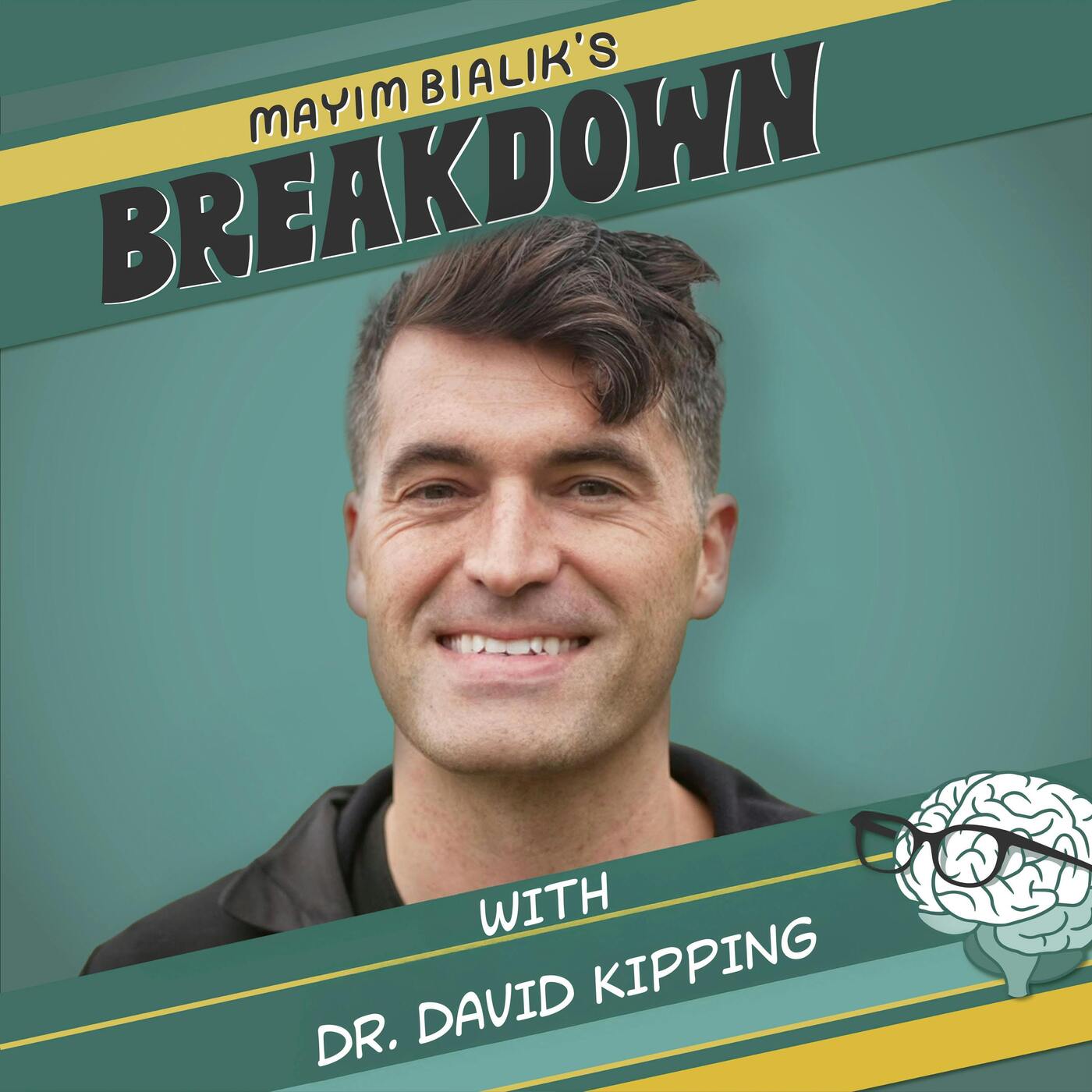
Mayim Bialik's Breakdown
Searching for Alien Life, the UFO Disclosure Era, the Great Filter & How Much Time Earth Has Left | Dr. David Kipping
00:55:20
Loading summary
Transcript69 lines
- [00:00]
Maya B
Do we have definitive proof of life on other planets?
- [00:04]
Dr. David Kipping
That's been the question I've been excited about since I was a little kid looking up at the stars and wondering who else might be out there. A lot of my work also asks that next question of who's living there? Is anyone living there? Could we actually try and find life? And there are many interesting ideas for how life could have begun. It does seem like life started very quickly. But the thing you have to be careful with that is that it took 4 billion years to go from whatever that first creature was all the way to us. And if that's typical, then Earth doesn't have that long left and it's terrifying.
- [00:33]
Maya B
Dr. David Kipping is a professor of astronomy and astrophysics at Columbia University. He's here to definitively answer the question, is there life on other planets? And what can we be doing to prepare?
- [00:46]
Dr. David Kipping
I try to remain very open minded about what the real answer is. We have no idea what the motives of an alien would be.
- [00:51]
Maya B
We seem to have evidence of ancient microbial life on Mars.
- [00:56]
Dr. David Kipping
When we talk about biosignatures like the Martian rocks or looking for gases and alien atmospheres, why do scientists feel comfortable calling that legitimate science? But we feel uncomfortable talking about UFOs as legitimate ways of looking for aliens. For astronomers, it's not a question of if, surely there's someone out there. But it does raise the question, why would they have any interest in communicating with us?
- [01:25]
Maya B
Hi, I'm, I am B. Alec.
- [01:26]
Jonathan Cohen
And I'm Jonathan Cohen.
- [01:27]
Maya B
And welcome to our breakdown. We're very honored today to feature, literally, the guy whose job it is to search for life on other planets. We're talking to Professor David Kipping. And Dr. Kipping is a professor of astronomy and astrophysics at Columbia. He's the director of the Cool Worlds lab. He also has a YouTube channel by the same name, Cool Worlds, with over a million subscribers. And Dr. Kipping is here to definitively answer the question, is there life on other planets? And what can we be doing to prepare for that information?
- [02:07]
Jonathan Cohen
He also discusses the evolution of human life, how we got to this point, and what Earth will look like in a billion years. Just a blink of an eye in evolutionary terms.
- [02:18]
Maya B
He's also going to talk about black holes, wormholes, the multiverse and baby universes. All that and so much more. We are thrilled to have Dr. David Kipping join us. Dr. Kipping, welcome to the Breakdown. Break it down.
- [02:33]
Dr. David Kipping
Thank you so much for having me. It's great to finally be here.
- [02:35]
Maya B
We would love for you to start us off with, what are you most excited about in terms of the work you do and what it means for the larger universe?
- [02:46]
Dr. David Kipping
That's a great question. I mean, that's a very broad question. It's a very fair one. I do so many things that excite me, to be honest. My daytime job is looking for planets outside the solar system and ideally trying to find moons around those planets as well. So we call the these exoplanets. There's just planets outside the solar system. Technically you could call planets inside the solar system endo planets. Endo, like inside, but nobody ever calls them that. And then the moons around those planets we call exomoons. So we've been on this journey for the last 25, 30 years of going from absolutely no information whatsoever about planets outside our solar system. So maybe, you know, for all we know, it could have just been the eight that we have in our backyard and maybe that was it. I mean, people did seriously speculate about that. They looked at other stars and they said, you know, there could be something special about our own star. And now we know when you look up at the sky that on average every star has at least one planet around it, often much more than that. So it's totally blown us away with just the, the numbers that are out there and then yet more the diversity. So we're just discovering every day you pick up one of the latest astronomy journals and you see what's being found. It blows our mind over and over again. We're finding so many planets that are in between the size of Earth and Neptune, for instance, and we just don't know what they are. Are they scaled up versions of a rocky Earth, super earths, or are they scaled down versions of a gas giant, a gas dwarf? And we're still just totally in the dark really about the nature of those. Or maybe there could be something else entirely, like a water world or something. You know, these are the questions that get a lot of exoplanet scientists very excited. And then of course, a lot of my work also asks that next question of, well, you know, who's living there? Is anyone living there? Could we actually try and find life? And for me, I mean, that's been the question I've been excited about since I was a little kid, was, was looking up at the stars and wondering who else might be out there. So, you know, we could talk about all of those things. But that's a broad brush of all the stuff that gets me excited.
- [04:52]
Maya B
I mean, is Kevin Costner on the water World, planet is what I want to know, but that's probably outside of the scope of this conversation.
- [04:58]
Dr. David Kipping
I mean, if the universe is infinite, then everything happens somewhere, right? So. So Kevin Costner's out there somewhere.
- [05:06]
Jonathan Cohen
I just like thinking about David taking his lunch pail to work and being like, did I find life on other planets today? No. All right, not the best day. Let's keep going back.
- [05:16]
Dr. David Kipping
It is often a journey of. I mean, that's what discovery is. Science is often like that of highs and lows. So there's an emotional roller coaster involved in all of this, but generally, I think a very exciting time to be alive.
- [05:25]
Maya B
This is actually something I was discussing with my. My older son, who's 20, because we were stargazing the other night, and I was telling him that story that, you know, we old people, meaning someone who's over 40, will tell that, you know, memorizing the nine planets was my main job in terms of my relationship to astronomy or the universe. That was my job as a kid. Right. And that's sort of where things stopped for us. There was no Internet for us to be looking things up. Our knowledge about the universe was incredibly vast and incredibly limited. And in just this one generation, I have a child who very casually understands that, oh, there's trillions and trillions of. Of stars and planets and other galaxies, and, like, wor. Not alone, you know, that's just like a normal thing. Right. For this next generation to be experiencing. Can you talk a little bit about sort of the bridge? What would you say is kind of like the most definitive breakthrough that we have seen that allows us to go from there are nine planets to there's actually only eight. And also there is so much beyond that we can now actually search for biosignatures. We can search for what it looks like when other planets possibly had life. What's that bridge? What happened in this generation?
- [06:59]
Dr. David Kipping
Yeah, you know what? I think there's actually two. There's two bridges. One is conceptual, which is just purely in our own heads, really. We could have found planets, much exoplanets, much sooner than we did. But it was. It was us that got in the way, and in other words, technological, which is the obvious answer. So I'll give you the. The conceptual one first. So the. Even in the 1970s and even, arguably in the 60s, we had the capability with our telescopes to measure the wobbles of stars at a level of precision which was enough to detect some existing known exoplanets that we've detected in the recent years. So to be able to do that, you have to be able to see a star move back and forth and see its speed change order of hundreds of meters per second. And the very biggest planets which are really close to the star because obviously the closer the planet gets to the star and the heavier it is, the more it can tug, it can tug that and make it move around and oscillate very fast. A good example is like if you get a coin drop and you throw a coin down one of those charity worlds and it speeds up as it gets closer and closer and closer and closer. And it's the same thing with planets, the closer in they get, the faster they orbit. And so the faster they took the star that they go around. So some of those speeds were approaching thousands of meters per second. And we could have detected them back in the 60s and 70s. And actually in the 1950s there was one astronomer, his name was Struve, Otto Struve. And he's, he was completely forgotten about at the time. But now everybody cites him as kind of this genius who had this insight. But he pointed out that hey, maybe sometimes Jupiter mass planets don't live really far away from their star like Jupiter does and Saturn does. Maybe sometimes they get really close. And of course everybody thought he was crazy. It was like, how? No, that doesn't make any sense. Like we think we understand how Jupiter forms. You need lots of ices to make these gas giants and ice would, would not be stable that close to a star. So you know, just, it'll be too hot. So you can't possibly make a Jupiter that close. So everybody just kind of dismissed them. But we now know of many, many, many hundreds of these so called hot Jupiters that were lurking in our data for years, even decades without anybody just looking for them. So I think there's just a conceptual barrier that we grow up, as you say, man, like we grow up reading this textbook. Here's the solar system, here's what it looks like. And I think for a generation or more of astronomers it became ingrained in our minds that that was the template. Like everything else would look like that, more or less. And then when we found it was totally different, we went back and we're like, oh damn, we could have found this stuff a long time ago. And then the big technological breakthrough was just ccd. So you know, the same camera technology that we use in our iPhones and in video photography, like my DSLR camera, I'm talking to you right now. That chip technology enabled a much higher quantum efficiency of capture. Of photons. And so we were able to go from basically maybe capturing 10% of the photons to nearly 100% of the photons. So overnight with that technology, you get basically 10 times more photons and thus square root 10, higher signal to noise in your data. So that was a huge breakthrough as well.
- [10:15]
Maya B
Now I'd like you to take us to something that happened very recently where we seem to have evidence of some sort of ancient microbial life on Mars. And this was something that, when you posted about it, you said something very tender, you know, for scientists among us. And what you said is like, my heart can't take it if this is not evidence of life on Mars. Can, can you talk a little bit about, you know, if I were to ask you the basic question, do we have definitive proof of life on other planets? Where would this Mars data fit into that?
- [10:53]
Dr. David Kipping
So speaking to my Mars colleagues, because I don't study Mars, you know, I'm not a solar system planetary scientist, but speaking to my colleagues about this, the data is very tantalizing. So you see these kind of speckles, which look like the sorts of things that you get from microbial, from bacteria inside rocks. So that's enticing. But of course, we don't have direct evidence of the bacteria in those rocks. We haven't collected a sample, we haven't brought it back to Earth, we haven't dissected it and pulled apart its DNA. And it's been like, okay, now we're 100% sure this is life. So it is another example of a biosignature, I think would be fair to say a very nice biosignature, but still an example of a biosignature. So that means a indirect telltale sign of life. But we've seen that before with Mars. So years ago, there was methane on Mars. That was claimed. It's still what's still there, and it's still a very provocative potential signal of life. But a lot of debate has started since then that maybe this is geological. Maybe there are methane traps deep inside underneath the crust that are leaking out sometimes. And it looks like this seasonal biological activity, but in fact, it could just be something geological going on. As, you know, the crust warms up, it releases some of this gas seasonally. We've also seen it, most famously, I remember as a kid going back, you have to be able to remember this Bill Clinton stood on the White House lawn and talking about this famous meteor called the Allen Hills meteor. And it had these little worm like fossils on it. And Everybody was just so excited. Like, this seemed like the real deal of life on, on a Martian rock. This was. But, yeah, this wasn't actually collected Mars directly. This was a rock knocked off Mars that then traveled to the Earth, came through the atmosphere, landed in Antarctica, and someone picked it up and put it under a microscope. And that meteor still is very enticing. But in the years that followed, other laboratories were able to show that you could make something that looked very, very similar to those little worm like things without any biology involved. Just kind of passing water and the minerals that you find on Mars together, you can sometimes get things that look like that. So that's always the. It's the story. And he took this, like, broken heart. This is this recurring tale that we've had over and over again where we see something that looks like something we see with life on Earth. And then years pass sometimes, and scientists do all of that due diligence, and they find out there is another way of producing that signature. Now, that in itself doesn't prove it's not life, because it could. Just because you can make it without life means it still could be life, but it provides an alternative, rational explanation that doesn't require the aliens to be invoked. And normally, as you know, scientists tend to lean on, like, the simplest, dumbest idea we can get away with, the least sensational idea we can get away with. And so for these reasons, you know, Allen Hills, Martian methane, and, you know, who knows what will happen with this one. But there has been a recurring story, so we just have to kind of be braced for that. Like, the lessons of history teach us that. That we often do get disappointed.
- [14:08]
Jonathan Cohen
This episode is sponsored by Wondering Jews, an Open Door media brand.
- [14:13]
Maya B
If you've ever found yourself feeling like you have more questions than answers, you're in good company. The Jewish people have been like that for thousands of years. Wondering Jews with Michal and Noam is a podcast where two of today's most dynamic Jewish voices, Michal Bittone and Noam Weissman, dig into the biggest questions about life through a Jewish lens. It's the kind of conversation where you'll laugh, learn something new, and probably shout in disagreement at least once. Michal and Noam tackled the tough topics like antisemitism in America, what happens after we die, and the future of religion, with guests like Bret Stephens, Michael Rapoport and Sarah Hurwitz. And this past month, in honor of Jewish American Heritage Month, they've been celebrating some of the Jewish lives and institutions that have shaped American life, from food to Music and comedy. Thoughtful, joyful and always honest. That's Wondering Jews with Michal and a production of Unpacked. Find it on your favorite podcast app or on YouTube and make sure to hit subscribe. Check out Wondering Jews with Michal and Noam podcast and subscribe at Unpacked Bio NMX
- [15:15]
Jonathan Cohen
Mind Bialix Breakdown is supported by Bioptimizers.
- [15:18]
Maya B
You know, I struggled to get good quality sleep and I just assumed it was stress. But as I learned during perimenopause and menopause, your hormones shift in a way that affects your magnesium levels. And low magnesium, it makes everything harder. Not just sleep, focus, mood, your tolerance for stress. That's why I have have added magnesium breakthrough by by optimizers to my nightly routine. It's a blend of seven different forms of magnesium designed to support relaxation and overall sleep quality. Try it. See if you wake up more rested and refreshed. You've got nothing to lose and a lot to gain. BIOptimizers offers a 365 day no questions asked money back guarantee. Magnesium breakthrough is a huge breakthrough to improve hormonal balance, to help with focus, decrease brain fog, improve sleep hygiene. Overall, Bioptimizers makes it very easy. Jonathan what do they get when they go to bioptimizers.com breaker and use the code breaker?
- [16:10]
Jonathan Cohen
You get 50% off your entire order and a free bottle of Masymes Bioptimizer's
- [16:15]
Maya B
best selling digestive enzyme that'll be added to your order automatically when you use our exclusive code.
- [16:21]
Jonathan Cohen
That's a $20 product free on top of your discount already.
- [16:25]
Maya B
This is a limited time offer and while supplies last, you can't get it on Amazon, you can't get it in stores. This offer exists in one place. Our link, our code. That' so maybe you were already thinking about it. This is the sign. Go to buyoptimizers.com breaker use the code breaker. Grab it before it's gone. Make 2026 the year you finally start sleeping again. We have a strong interest and as you said, we now have the technological capability to explore these things. Let's, let's go to life on this planet though before we sort of, you know, kind of continue our, our pursuit of life on other planets. You know, I, I remember sort of in basic biology lab. You know, one of the first things we were, were taught about was, you know, how do we try and create essentially us from nothing, right? And the model that was taught when I went to school when I was an Undergrad in the 90s, you know, there was some unlikely, you know, unexpected thunderstorm, and there were enough organic, you know, ions floating around in a. Some sort of primordial stew. Right. That's what taught. And maybe lightning struck, which also, you know, brings into this notion the, the luck hypothesis. Right? Lightning struck. And now, you know, we are human and there's a lot of steps in between. Can you talk a little bit about. I mean, obviously we've, We've spoken to. To Robin Hansen and to people about, like, the panspermia hypothesis. What, what is it about the creation of life on this planet that seems to defy a lot of the sort of logical approaches we have to trying to understand how here, I think the.
- [18:05]
Dr. David Kipping
The most challenging thing about trying to make any inference about life more generally based off us is that is this anthropic principle. So we are only here because we are here. There is a survivorship bias. So it's kind of like, you know, taking all the lottery winners and putting them in a room and asking them, you know, what. How. How lucky do you feel about playing the lottery again? And they'll be like, oh, yeah, it's easy. Like, you just buy a ticket and after 100 tries, you. You win the lottery. But that's not representative of most people. Like, most people will play the lottery, the life and never win. So there's a. There's a enormous bias in just taking winners, and we are a winner in this game of biological evolution and even the start of life itself. This story of how life started, of course, is. Is a big mystery because, you know, frankly, we don't have a time machine, and there's very little relics left over from that long ago. We're talking basically 4.4 billion years ago, when the oceans first formed on the Earth. There are very, very, very few rocks left from that time. And of course, if we are really arguing for a very simple microbial life form, perhaps it was the first thing to emerge that would not leave much of a fossilized imprint for us to detect. So this, this is why this detective story is so difficult. And there are many interesting ideas for how life could have begun. I think we desperately just need another sample in terms of that origin story. And I've. I've looked at this myself in my own research. I've asked the question. It does seem like life started very quickly. That seems like a good thing. We believe, like, within the first few hundred million years, it looks like life was on the Earth. And so it's tempting to lean on that and say, therefore, whenever you have Earth like conditions, it must be easy because otherwise how did it happen so quickly? But the thing you have to be careful with that is that it took 4 billion years to go from whatever that that first creature was all the way to us. And if that's typical, if it typically takes 4 billion years, then actually surprisingly, the Earth doesn't have that long left. You kind of have to start life quickly in order to get to us. So maybe on most other planets life starts, but it takes 2 billion years, 3 billion years, 4 billion years, that's fine. But those creatures would never have time, at least for a sun like star to develop into a creature like us, because the Earth will become uninhabitable to complex life in probably less than a billion years. We are already in the last chapter of the Earth's biological history. I think that's kind of a striking fact that we don't talk about enough. It's shocking. We're at the end of the story, not the beginning of Earth's history. It is even on geological timescales, it is kind of a shocking thing to note. And so perhaps that explains why life started early is that it was necessity to our existence. And in most places that doesn't happen. So this, this anthropic effect makes it very difficult for us to say anything with firm confidence, except for the fact we know for sure it did happen.
- [21:11]
Maya B
That leads us back to this question about life elsewhere. Obviously the Fermi paradox is one of the easiest hard ways to think about this. But you know, there's something that is so precious and also, you know, in a, in a culture of this planet, right, that has, you know, kind of created religious organization. In order to explain the things that we can't explain, many people turn to something divine, something, you know, for lack of a better word, alien, that must have had a hand in our evolution. How else would you explain it? Right. And a lot of, you know, sort of people from the religious perspective say, well, if you can't recreate it in a lab, it's because you can't, because it needed God. Right? So I, I wonder also, is there something special about us? And you know, how big is your God? Is your God big enough to extend outside of this galaxy? Right. That's sort of the question. Do we need that specialness to create life elsewhere? Or can life exist right outside of our, you know, sort of conscious perception of how things are created? Can you spe a little bit to that complexity, you know, that we create?
- [22:28]
Dr. David Kipping
Yeah, there's certainly a lot of things about Even our solar system that we can say because of the work we're doing with exoplanets. That is unusual. And the question is to how much does that extend? How far does that rabbit hole go of uniqueness of specialty? The Earth has a large moon, so that's already pretty weird. No other planet in the solar system out of the 8. 8 planets if you count Pluto. Maybe this goes out the window because Pluto has a very big moon comparatively as well. But out of the main eight planets, no other planet has such a large moon. And it's thought to influence the tides. It's thought to influence the obliquity of the Earth. So that seems positive. Jupiter's influence has often been invoked as something that appears unusual. Less than 10% of sun like stars have a Jupiter. And we can tell that from the exoplanet work we're doing. That means that just having two Jupiters in your backyard is actually pretty special already. Having nice circular orbits, coplanar orbits is unusual. Having eight planets is pretty unusual. Having a star which is as quiet as our star is unusual. If there was aliens looking for us, we'd be really easy to find. Our star is bizarrely quiet. It's like that's what gets in the way most of the time of us finding other planets is the star misbehaving. Our star is almost like a light bulb. It's very easy to find us for an alien. So all these things are interesting and they raise questions about uniqueness. And I love this connection that you bring up to religion and to theocracy. Because, you know, we have this tendency in science and it's one of the things I complain about sometimes amongst my colleagues is that we see anomalies. We see something strange that looks special like the Earth does. Maybe it's an interstellar asteroid, maybe it's a star that's doing something strange. And we see it and it's an anomaly. And so we, like a burning bush, we inject a miracle to explain it, which is aliens. We say, you know, there's this creature which can do anything. And that's kind of the problem with aliens, like a God. They can explain any observation I give, you know. Why did your alarm not go off this morning on time? Oh, aliens did that, you know. Why did you not feel well last night? Was it the alcohol? No, it was aliens that did that. You can, you can explain everything with aliens. And that's a problem for aliens as a hypothesis because it shares that ability with a God. And so time and time again we Talked about Mars earlier on with these anomalies, these like methane or these, these worm like fossils that were detected. But those were all anomalies that were later explained or explainable with other scientific rational explanations. And that has been this recurring theme in alien hunting for so long. There have been over a dozen claims and in science of, of aliens out there. And every time it's taken a few years, but other people have come along and said, hey, I think we just don't understand the astrophysics well enough. Here's a, here's a way you can do that. So that is, that is a weakness a little bit of the alien hypothesis that we don't talk about enough. That it's just, it's too malleable as a theory. But it is very rational to think that they, they could be someone out there doing this stuff. It's just that. But it's, it's almost intellectually lazy to invoke it because you can get away with murder when you invoke aliens. You can just. It's just like, oh, aliens did that. And, and you're done. You don't have to think anymore.
- [25:53]
Maya B
This notion that, you know, the things that religion has allowed us to fantasize about in our culture, we've kind of replaced it with aliens. With energy, right. With spirituality, right? Like all of these things that are basically like, guess what? If you can't explain something, sometimes it just means we need more science. You know, it's kind of an amateur here, but I'm really torn between, you know, on the daily being freaked out that we are conscious beings. Meaning, you know, I'm one of those people who throughout the day will have these moments of, oh my goodness, like, I exist and like, what's happening? And, you know, I made a child into a adult. Like, how did that happen? Like, how am I here? So I, I spend a lot of time in that space. But when you expand that out and you say, like, how are we here? And we're on a hurling rock that's like, kept in orbit because of this, like, moon. What? So when you then take that, like, that's enough for me, like, I stopped in the 90s, that was plenty. But now we're living in this world again where we get to say, why would we be the only one? What would give us the idea that we would be the only intelligent beings in this universe? Or why do I have to assume that life is carbon based? It is here. But the whole point of something that's unfathomable is that it's unfathomable. So I'm kind of asking you, you know, less as, you know, an astrophysics astronomy specialist, but more as, like, a human. What do you imagine? Like, what do you really imagine is going on outside of this galaxy?
- [27:44]
Dr. David Kipping
Well, I don't know. I mean, I have. I have ideas about what I, what I hope to be true. What is. I think we all kind of have these facts or facts that we believe in, because that's, that's always debatable as well, what you consider to be a fat. But we have this set of facts, and then within those set of facts, we try to construct ideas which fit within all the information that we have in hand. So when I look at the information I have in hand, it's that, okay, we've been listening for aliens with radio waves for 70 years now, and we haven't seen anything. But that's okay because maybe they're not using radio. Maybe, you know, this is an antiquated technology for them. Who knows? So you can maybe just exclude that very narrow idea. There's probably not a lot of aliens out there who are screaming into the dark with radio waves, otherwise we probably would have detected something by now.
- [28:36]
Maya B
They're not, like, listening to Elvis Costello, like, why am I alive? Why can no one hear me? My life is so miserable.
- [28:44]
Dr. David Kipping
Right? There's, I think, just more broadly, there's not obvious aliens, and there's not like, stars which are flashing on and off in a, in a given the prime number sequence or something. There's not laser pulses smashing at us every, every second, right? We very, very bright, obvious aliens are not out there. We don't see stars that have mega engineering structures around them. We don't see some kind of giant manufacturing plant in the center of our galaxy, which, you know, Carl Sagan speculated about for Sagittarius A, the supermassive black hole. There's, like, lots of ideas we've had of, like, big, obvious stuff, and we don't see any big, obvious stuff. And so it is weird that everything we know from an astronomy perspective about the universe is totally consistent with it just being us, which is terrifying. There's. There's zero sign anywhere of, of anything as far as we can tell, which is, which is disturbing.
- [29:37]
Maya B
It almost makes one believe in God. It almost makes you believe in God.
- [29:41]
Dr. David Kipping
You could, you could definitely lean on that, or you could say there, there's. What they're doing is just not detectable yet. You know, we'll, we'll get there. It could be that there's plenty of worlds filled with microbes, for instance. And that might also fit into a, a view of, you know, your religion. You could say that there's microbial life everywhere. Sure. But the idea of something getting as advanced as us is maybe very rare. And I think you can make a really strong argument scientifically that you would expect something like us to be pretty rare. There's so many strange flukes of evolution that led to us that it's easy to pull away one of those like Keplunk, and you would just be left with, with, you know, something very simple again. So it's easy to make that case. But in, in cosmology at least, we believe the universe doesn't really have an end. It just goes on and on and on and on and on. And so like Kevin Costner with Waterworld, he will be out there and there will be someone, including basically us out there again. So I think for astronomers, it's not a question of if I think we, we generally think that, yeah, surely there's someone out there, but maybe we are effectively alone. Maybe in our galaxy there's no one else. Maybe there was no one else right now, but in the past there was someone else and they've died off or in the future they'll come around. I often think about communicating with aliens as a challenge to talk through time, not through space. That we, I think our best bet of communicating with another intelligence. This is pretty provocative, but I think our best bet is to talk to future intelligences that will evolve on Earth because the Earth has hundreds of millions of years left to go.
- [31:24]
Maya B
Wait, wait, talk us, talk us through that?
- [31:27]
Dr. David Kipping
Yeah, yeah. So, you know, think about the last major mass extinction was the, was when the dinosaurs got knocked off. This was 65 million years ago. That's, that's very quick. In evolutionary time scales, that's not that long. So you've gone from rodents, you know, these very simple mammals evolving all the way up to us in tens of millions of years. Not that long on astronomical, geological time scales. So my provocative. And it is, it is a, a, I'm not an evolutionary biologist. This is just a pet theory I have, is that intelligence will come back. I don't know what's going to happen to us. Maybe we'll spread towards the stars, maybe we'll extinguish ourselves. I don't know. But I do think the, that intelligence is in enough places in the animal kingdom at this point. It's in dolphins, it's in octopi, it's in birds, it's in, it's in mammals that I think intelligence has an evolutionary advantage that will somehow persist. And so I would bet it's much more likely than us hearing from an alien in, you know, from the other side of the galaxy that we could build a time capsule, place it on the moon, that maybe some advanced future descendant on the Earth would detect that and pick it up and learn about us. I think my bet is that the, that's a more likely way of us having a one way communication with an alien species effectively, even though it's still descended from Earth, than, than actually getting a two way communication through a radio pulse or something. With Alpha Centauri, that's just a pet theory, but that's, that's what I tend to lead on.
- [33:00]
Maya B
I, I think you would have made a terrific evolutionary biologist. I'm really digging this. Well, I'm also thinking I've, I've actually, I've never used AI which is something I'm still proud to say. But if I were to create an image or ask AI to help me, I would want them to show me an image of a dolphin, an octopus, you know, in a time capsule that I'm placing on another planet. That's like a visual that I want, I want all those creatures together.
- [33:27]
Jonathan Cohen
AI can do it, AI can do
- [33:29]
Maya B
that, but I'm not going to try it out.
- [33:30]
Jonathan Cohen
Mind B Alix Breakdown is supported by
- [33:32]
Maya B
bioptimizers I struggled to get good quality sleep and I just thought like, ugh, it's stress. But I learned during perimenopause and menopause, your hormones shift and it affects your magnesium levels. Low magnesium makes everything harder. Not just sleep, but focus, mood, stress tolerance. That's why we added Magnesium Breakthrough by Bioptimizers to our nightly routine. It's a blend of seven different forms of magnesium designed to support relaxation and overall sleep quality. Try it. See if you wake up more rested and refreshed, you've got nothing to lose and a lot to gain. BIOptimizers offers a 365 day no questions asked money back guarantee. Magnesium Breakthrough is a fantastic way to improve that hormonal imbalance that especially happens with magnesium. And then you have better focus, you have better sleep hygiene in general. Bioptimizers makes it so easy. Here's what you get when you go to bioptimizers.com breaker and use the code breaker. 15% off your entire order and a free bottle of Mass Signs. That's Bio Optimizer's best selling digestive enzyme added to your order automatically when you use our exclusive code, that's a $20 product, free on top of your discount. This is a limited time offer. While supplies last. You cannot get this on Amazon. You can't get it in stores. The offer exists in one place. Our link, our code. That's it. So if you were already thinking about trying it, this is the sign. Go to buyoptimizers.com breaker. Use the code breaker. Grab it before it's gone.
- [34:58]
Jonathan Cohen
Make 2026, the year you finally start sleeping again.
- [35:03]
Maya B
The other thing that I was hoping maybe you could help us understand, because I think that's, that's helpful for what might be brewing. But, you know, we've spoken to Adam Frank, we've spoken to, you know, all these people who have helped us sort of entertain the what, what could have been. And obviously people like Robin Hansen who are a little more out there. But what about the notion that if we assume that there could be other intelligent life, it likely has been around for a much longer time than us and may have even advanced to a level of. I mean, like, I'm thinking like, I'm kind of like a Jetsons. You know, I was. I was raised on the Jetsons, right? So I'm thinking like, yeah, it's like. Right. So I'm thinking like, it's like a computer with legs, you know, like, that's what I'm thinking. But whatever version of advanced artificial intelligence that. Something that has been alive for, I don't know, pick a number, hundreds of millions of years, is it possible that we are the most primitive life form and that there's something that has already existed and we're just at the tail end and the beginning of our exploration, for sure.
- [36:19]
Dr. David Kipping
I mean, yeah, Carl Sagan would often comment on that, that it's very unlikely if there is another intelligence out there, that it would be in technological lockstep with us, right? It's either going to be far behind us, in which case there's not really much prospect of communication, or far ahead of us. And in fact, me and Adam Frank actually wrote a paper about that together saying that, you know, if you. If you look at the neighborhood of stars around us and assume there is someone else out there, they're almost certainly going to be far ahead of us. And so we should just sort of brace for that in communication. But it does raise the question, would maybe that's the explanation to the film paradox. Why would they have any interest in communicating with us? Right? Because we'd be so. So simple and primitive to them that there's would be maybe interesting in the sense of putting us in a test tube and seeing what happens, but not for like an actual sentient communication. Maybe there's some higher plane of consciousness we've not achieved yet. So they just don't even consider us like worthy of empathy and all of these things. Maybe that's even an alien concept to them. So you know, that's, that's, that's very worrying that the, the case I worry most about is that you can imagine a planet that has a single celled life form that forms a colony on that planet. Like a fungus that just kind of spreads over the whole planet. And like a neural network, it could be very intelligent. You know, we know that, you know, bees collectively and ants collectively have this kind of collective sense of intelligence that can emerge. And so there might be hyper intelligences out there that just have no concept of, of, of mutual understanding with us. Like even the idea of another species to them wouldn't make any sense because they're the only thing they've ever known. So even the, the idea of individuals and, and consciousness wouldn't make any sense to them. And so there might be lots of aliens out there, but they're just so alien that this, this, this science fiction dream we have of like shaking hands and, and talking to each other over a dinner table, that's all bs. There's no way that's going to happen. They're not humanoid. They're not, they're probably not even, you know, made of the same stuff of us, as you say. So I think we have to change our expectations about what, what that really might look like. And that worries me because then what prospect is there really of this, of this fantasy that we all probably have deep down of that, of that learning from, from another species?
- [38:47]
Maya B
You also could be talking about men and women trying to communicate in any reasonable way.
- [38:54]
Dr. David Kipping
Isn't that, that was, that was exactly what I was talking about.
- [38:56]
Maya B
No, but I was thinking like 60 years ago this conversation was probably had about I know you're gonna try and communicate with women, but it's just not gonna happen. They're like made of different stuff. But. No, but I was thinking of like, you know, what are those differences and how much can we magnify them. Many people are talking about the age of disclosure and not just the documentary, but the sort of era that we are in. And, and you know, when I was a kid, when we were all kids, there was always like a lone person who was featured in let's say the National Enquirer or maybe they made it onto, you know, the evening news on some special, and they claimed that they had contact or information or evidence. And, you know, these things were fairly sporadic and I'd say over the last, you know, fill in the number of decades you'd like. And also with the proliferation of information and the ability to distribute that information, we've had a huge explosion in people talking about not only experiences, abductions, you know, evidence, all these things. There's been a huge emphasis on what the government knows, what the government doesn't know. You know, as far as I'm concerned, I've stopped being alarmed when I hear that the CIA or FBI has looked into something. Apparently they look into everything like the local 711 and also, you know, bio signatures. So it's not so much like, oh, the government has a department. And. But what we're learning is that there are larger networks, both of conspiracies and also truths about things that our government has placed tax dollars to fund and to support. You know, we've spoken to the vast variety of people you can imagine who talk about this. What is your understanding of the. The elements of the Age of Disclosure that we're in? What is actually going on? What might be going on? What should we be worried about? And how does it affect the actual science? Science?
- [40:57]
Dr. David Kipping
Yeah. I mean, it's. I get asked this all the time. And the thing I've been thinking a lot about with this growing era of UFO stories and Age of disclosure is, is. Is how do we pass that as scientists? And I think for a long time the public has been frustrated with scientists because we just kind of dodge the question and we say, well, that's silly, that's ridiculous. You know, I'm not going to even talk about that. And that. I don't think that's the right approach. But at the same time, I think a lot of scientists do have this kind of spider sense that something doesn't make sense about this. I mean, as astronomers, for instance, it's hard to find people that look up at the sky more than astronomers, professional astronomers, and yet none of us, very few of us seem to. To see this compared to the bulk population. So what's going. Why is it that trained professionals see UFOs less often than members of the public who are untrained at looking at things? So that. That already might raise some like, like red flags, like what. What's going on here? But I don't want to discount it. I think there is, you know, obviously, when you see these videos and you see like the Pentagon videos and you hear these reports of like the, the radar operators and the pilots. You know, these are, these are very well trained people as well. Right. And so they're seeing stuff in, in US Airspace or just off the coast of US Airspace that clearly something is going on and it's totally reasonable. And I support the government trying to figure out what that is because at a minimum, it poses a potential threat to U. S. Defense. Right. If there's, if there's vehicles traveling through our airspace while I was knowing about it, we, we probably should find out what they are. Whether they're drones or some alien spacecraft, we probably want to know what they are. So we need, we certainly want to pursue it. I wouldn't, I wouldn't be one of those science that said this is so ridiculous. Let's just close that case and forget about it. But I've also been trying to ask myself the question, why is it that when we talk about biosignatures like the Martian rocks or looking for gases in alien atmospheres, we do that with exoplanets? We look for gases that are signatures of life as well. Why do scientists feel comfortable calling that legitimate science, but we feel uncomfortable talking about UFOs as legitimate ways of looking for aliens. You know, it's not like suddenly as soon as you cross the Earth's atmosphere, something stops being science that doesn't make any sen. Must be. There's no, there's no boundary like that. And I, for me, I've been thinking about this really hard. I think what it comes down to is there's a little bit of a technical explanation, but I think it comes down to knowing how often you're wrong and how often you're right. What in science we would call the true positive rate and your false positive rate. And in any experiment you have to know those two numbers. If I'm going to do a search for life on exoplanet atmospheres using whatever method I want, I need to know how often do I expect this method to be successful? If all of those plants had life on it, is it 50, is it 100, or is it 1%? So that's the true positive, right? How often you're going to be right, assuming life is there. And you also have to know how often you're going to be wrong. Like assuming none of the planets had life, how often would you erroneously turn around and claim that you found life? You have to know those two numbers. And I think the problem, problem with these reports I've seen At least is that there's no way I can think of to measure those two numbers and thus even, even ingest UFOs into the framework of science. I don't even know that it's compatible with science without those two numbers because you'd have to know, for instance, with pilots. Put pilots in an airspace where you knew with certainty there was no aliens and ask how often do they erroneously claim aliens? And you just, you can't do that. It's not, it's not possible. You can put them in the simulator or something, but even that wouldn't be realistic compared to actually flying the vehicle in, in an atmosphere, in a real physical atmosphere. And likewise, there's no way to know if you put them in an airspace with aliens, how often do they correctly identify them as aliens? There's no way you could do that. So the problem is just from an experimental perspective, it's a, it's a, it's all anecdotal and it's very difficult to have the controlled lab like conditions where we can evaluate those numbers, ask these questions in a meaningful way. It could be possible in some cases to ask those things. We could imagine networks of mobile phones tracking these things, everyone's cell phone capturing them in real time, getting trigonometry of their locations, having magnetometers in everyone's phone. And I think the NASA UAP task force advocated for that. They said, look, we could turn everyone's phones into UFO collecting devices and there's even some apps that on the app store now that you can sort of use to try and do this. But, and that's the kind of level of fidelity you need, you need like lots of data from independent sources and then you'd be able to measure some of these rates in a more controlled set of conditions. But at the moment, just with these kind of one off anecdotes, I just, I just don't know what to make of them.
- [45:53]
Jonathan Cohen
Were there are two sides to this, right? It's like the scientific evidence. And then how do you make sense of these group of professionals, seemingly all all credible in their own way, like it's a big conspiracy that they've all had these unbelievable experiences and they're just doing it to go on talking tours of podcasts and they're sitting in front of congressional hearings claiming that there's undisputed evidence that is being withheld. Like how do you we reconcile those two things?
- [46:24]
Dr. David Kipping
I don't know. Yeah, I really don't know. I mean, I'm not, I, I wouldn't Accept personal testimony as evidence for aliens. Personally, I think my bar of evidence is higher than, than, than Dave said. So even if Dave, I really believe Dave, even if Dave's my best friend and, you know, he's got a PhD in, in whatever, that's still not enough. Just personal, just because someone said so. So, you know, it's like Jerry Maguire, show me the money. Like then, then, then I'll believe it. Like if you actually, if there are alien vehicles in some warehouse, some government warehouse, then just present them and we'll, we'll, we'll all be convinced. And I think that's the point of, of, of not just science, but in society more generally, when you, if you want to convince someone of an idea, then you, you for it to be convincing and to become factual, then there has to be no, no room for, for wiggle room, right? There can't be. And that's how scientists work. We always try and find. Okay, did you think about this? What about this assumption? What about this? And we, we attack it from all, all, from all angles until whatever the idea is, it's like a crucible. You've burnt away all the irrelevances and you've just got this like, pure fact that's left over. And is. It is undeniable that this new gravity is undeniable? Because we've all done the experiment millions of times and it always falls down to the ground. There's no denying at this point we've tried every way we can deny it and we're a long way from that with, with the, the current claims. But I would like us to get there because I, I like everybody else, just want to know the answer. But in terms of like, what's personally going on with these people, I have no idea. I think you need probably a psychologist to figure that out. Not, not an astronomer. But it's also possible they're all right and there is something going on and we just. The evidence, for whatever reason is, is constantly being withheld from, from scientists. And yet paradoxically, all these SETI scientists and astronomers doing all this work, for whatever reason, we never see a UFO in our telescope data, which is, I find that hard to make sense of, but you could imagine some contrived situations where that's true.
- [48:29]
Maya B
I'm struck by sort of, you know, both Jonathan's, you know, kind of question and sort of the explanation that, that you have. I mean, I think it hadn't occurred to me that there would be ways that we could actually legitimately try and track these this stuff, like, meaning when you said that about like phones and like real time, like that makes a lot of sense. It had never occurred to me. But I think that sort of is the place where we can bridge the sort of conversations of people who say the things that I'm experiencing and observing cannot be measured. And you either have faith or you don't. Right. Which actually just isn't the way that science works. And if you'd like to believe in angels and fairies, like, that's totally fine. But if we're going to try and have a conversation about how we bring that into a larger conversation, that it has to have some sort of rigor, it has to have data, it has to have the ability for us to run stats on it. That's just true. And it reminds me, I mean, we made you an evolutionary biologist. Maybe we'll make you a therapist today. You know, it, it does remind me of a lot of the things that, that, say, want to lean into regarding extrasensory perception, you know, the ability to telepathically communicate. You know, all of these things that are sort of outside of the realms of what, you know, science is able to articulate. You know, I'm just curious what those other, you know, kind of connection points might be for us to be able to say this can exist as an independent experience. But that's not the same thing as us being able to understand it, it from a global, human, scientifically rigorous perspective.
- [50:21]
Dr. David Kipping
Yeah, I mean, I, I always like to, to remind people of, of that, of human biases. And, and this is one of those very difficult situations where a lot of us have strong biases. Most people, I think, tend to favor. They, they would like there to be an alien species out there. But many people feel the opposite way as well. But there's, you know, there's, but there's, there's a polarizing view about what they want to be true. And we've seen, seen time and time again in science. I mean, I can think of one of the very first claims of alien life was in, it was on the front page of the New York Times in 1908 or 1906, maybe it was. And it said there it was in New York Times, it said there is life on Mars. That was the headline. There's no, there's no two ways about that headline that that's an unambiguous statement of fact. There is life on Mars because this astronomer at the time in the, you know, over 100 years ago, Percival Lowell was looking through a telescope and he saw lines on Mars and he thought those lines were canals. And now we look back and say that's ridiculous. Like why would aliens build canals? That's an antiquated technology. But at the time that was a technology that was, was emerging and he, he was surrounded by canals because the Erie Canal was just going up. So to him it made sense that that's what an advanced species would do. But of course this is this idea of like the alien, the alien could be so alien that that's just laughable. The idea of flying vehicles through space might be a joke to a very advanced civilization. Why would they do that, such a thing, when you could just learn everything from a neutron probing telescope from the other side of the universe? Why do you even need to visit them like these if we have to kind of open our mind a little bit about how advanced they really could be? And of course he was wrong. You know, personal law was wrong, but he just didn't know what he didn't know. And what he didn't know was that these, these psychological effects, it's called gesture reconfiguration where if you see like three, three dots in a row, you kind of connect a line between them and his brain just filled in the gaps. And that just wasn't understood at the time that this was an effect. And so time after time, it's the stuff we don't yet know about. And even in our own atmosphere, this stuff we don't know about. During the, the NASA UAP task force led by Dave Spergel, who's an astronomer, they talked about this upside down lightning effect. I think it's called jellyfish or red lightning. And it goes, goes, it shoots up and it's only in the upper, very upper atmosphere. And pilots have been reporting it for years. Commercial pilots have been saying there's this weird lightning, but it was never recorded. No one had ever had a camera fast enough to capture this inverted red lightning. And then once cameras got fast enough, they, they finally proved that it was real. But nobody thought it was real until, until it was done. And so that's both the case of maybe the aliens are real because we don't have the, the quality of cameras yet. But it's also a case of that there's natural phenomena in our own atmosphere that we're still, still like learning about that we don't understand. So we have to be humble and admit that our understanding of even our atmosphere is, is probably going to advance a lot more in the next century. And there may be stuff going on we just don't understand that we, that we will come to understand because that's how science works. Or it could be aliens. But I'm, I, I do think we should just be a little bit humble that time and time again through history we've got over excited because we want it to be true, we want it to be aliens. And very often, at least so far in history, it has not been that case. It has been, it's just a lack of our current understanding of what's going on.
- [53:45]
Maya B
I mean, you could also make that argument for, you know, everything we've ascribed to God, everything again that we're ascribing to energetic fields that we just can't measure yet. You could ascribe it to telepathy or what seems like telepathic communication. You know, Jonathan and I are sort of, you know, recreationally fascinated with things that people used to think weren't a thing, that are a thing. Right? So, you know, when, when we discovered that, oh, fascia actually exists in your body and it's really important and releasing, you know, pain from, let's say a traumatic accident to your shoulder can actually be felt throughout your body and cause, cause changes like that that blew, you know, the world of bodywork wide open.
- [54:35]
Jonathan Cohen
It also changed, you know, medical doctors who once said that nothing you thought in your head had any physiological impact, which is now quite silly.
- [54:45]
Maya B
So we're, we're just sort of, you know, we're fascinated that, you know, you can pick up radio waves through a filling in your tooth. But before we realize that's what was going on, there were people who were like, I'm hearing voices in my head. And you know that that's a thing, that's. And in addition, just to throw the government under the bus a little more, the government has done some really shady, messed up experiments with people and convinced them that nothing is implanted in your head. And these people have, you know, shown up at VA hospitals saying they implanted something in my head and they're put on Thorazine and we hope we never hear from them again. And then it comes out that the government indeed was doing psychological research and sometimes implants things in people's brains, right? So I think that there's also this notion of like, aliens is sort of our next stop, right? It's the next stop for I can't explain this and maybe you just can't measure it yet. But I love this notion that this is why we are human. This is the way that evolution works. This is the way that we Create things. This is the way that we create the environments with which we continue doing research so we can find out more. And we may not find out, for example, when we study telepathy, that people are telepathically communicating on a different plane of conscience that can be accessed, you know, through their heart. But we may learn other things about human communication, about non verbal communication and about so many other things that will add, you know, to sort of the, the stew that is our scientific knowledge.
- [56:14]
Dr. David Kipping
Yeah, I mean like trees communicating through the fungal network. I mean that's like an example that just seemed crazy when you first hear about it. But example in my world I think of is, is meteors actually like the idea of in the 18th century of rocks falling, raining from the sky is such a weird thing. It's like pigs flying and nobody believed. We're like, come on, like how could a rock fall out of the sky into your backyard? That doesn't make any sense.
- [56:41]
Maya B
Right.
- [56:41]
Dr. David Kipping
And then of course now we accept it as common fat because in, in northern France, I think it was near Normandy, there was like thousands of them in one meteor shower. And it was just like at that point there was no, no, there was no escaping the conclusion.
- [56:54]
Maya B
It was a bunch of farmers and everyone was like, those crazy farmers, they're so dumb. That's literally what people said.
- [57:00]
Dr. David Kipping
Right? But what, but the, the evidence got to us to, I think this is what we always want in science is the evidence got so overwhelming that the naysayers had no route of escape. Right. The evidence in that crucible, it became undeniable. And that's always what we're chasing. I think in science is we want to, we want to remove all of that uncertainty until we're left with something that really looks like a factual point point. And I hope we get there with, with this. I think in 50 years from now maybe we'll look back and we'll be like, okay, that's what all the UFOs were. It was either aliens or maybe something else. But we're obviously a long way from that. At this point we do not understand what these things are. It's being reported at such a high rate that it demands some investigation. But is the evidence at a level for me to say that therefore means aliens? No, it's not. But I, I, I'm open to the idea and I think that the lesson from history over and over again is that we're often wrong. You talked to wrong. So I just tried to remain open minded about the possibilities and say the evidence isn't there to convince me yet. But that doesn't mean I'm saying you're wrong. I'm, I'm trying to be, keep the, everything on the table and just collect data until we get to the point where it's overwhelming and that's, that's what we want to achieve. And for some people, that's frustrating because they just want to make the call now. Just, just make the shot. Just, just say I want the, want the certainty. But science isn't like that. Science, science builds confidence progressively through experiments and it takes those kind of windfall detection, sometimes like those thousand meters in northern France, to truly convince everyone that that is real.
- [58:37]
Maya B
We're going to hit pause here on our conversation with Dr. David Kipping. But there is so much more coming up in part two, including what might aliens want with our DNA? Is Havana Syndrome real? And what's the impact of AI on the world of science? Both positive, negative.
- [58:56]
Jonathan Cohen
We're also going to talk about black holes and baby universes. You do not want to miss part two of our conversation.
- [59:03]
Maya B
Please join us over on Substack for more conversation about all things alien, spiritual and everything in between, from our breakdown to the one we hope you never have. We'll see you next time.
- [59:14]
Dr. David Kipping
It's Maya BX Breakdown. She's going to break it down for you. She's got a neuroscience PhD or two fiction. And now she's going to break down. To break down. She's going to break it down.