← Mayim Bialik's Breakdown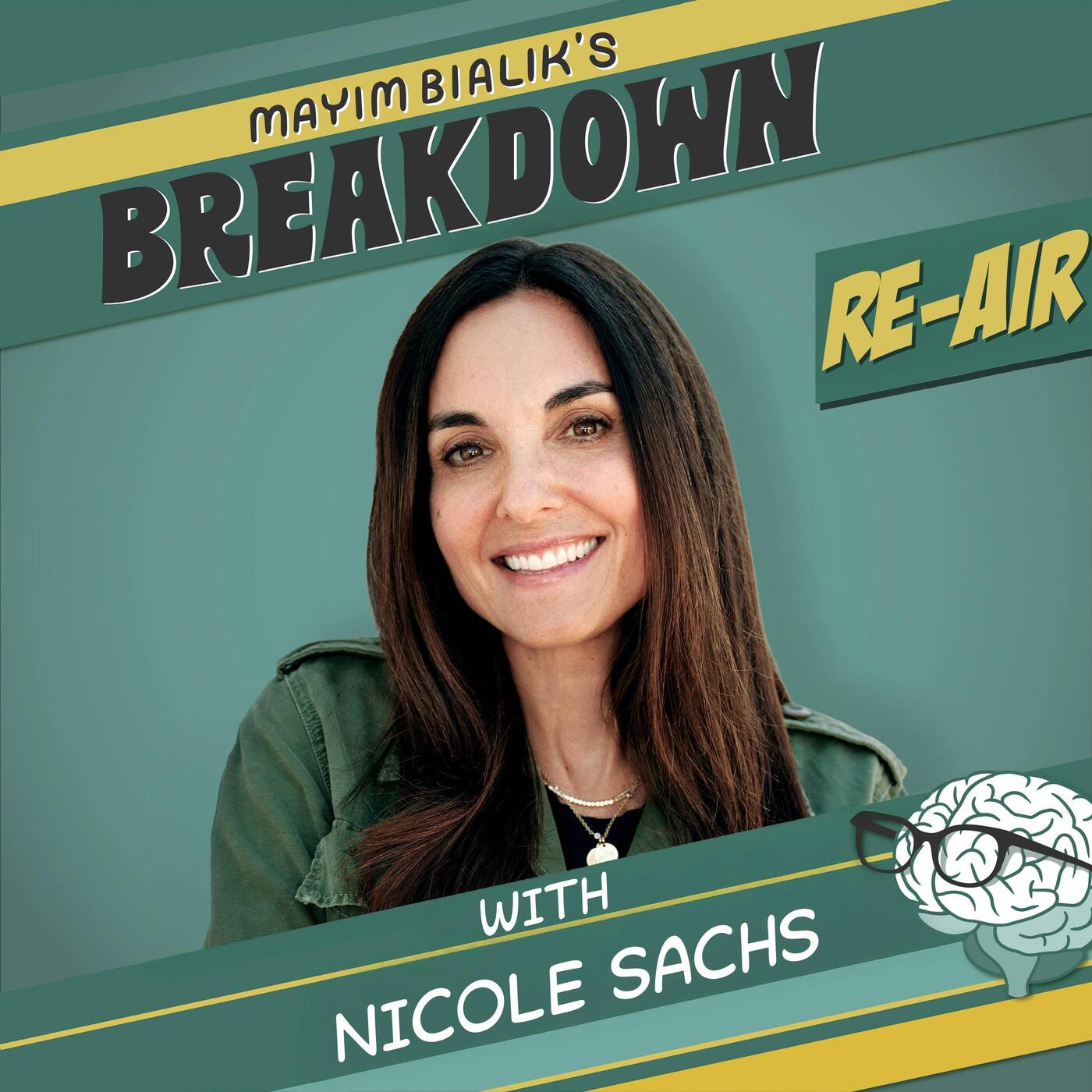
Mayim Bialik's Breakdown
Substack Live Re-Air: The Emotional Journey to a Pain Free Life | Nicole Sachs
00:51:35
Loading summary
Transcript83 lines
- [00:00]
A
Mind Breakdown is supported by Helix Sleep.
- [00:04]
B
Spring is in the air and so are all of the allergens that come with it. Spring allergens means you need more sleep, but there are a ton of factors that can prevent us from getting a good night's rest. Night sweats, back pain, feeling the person next to you when they roll over a million times. We were so excited to hear that Helix wanted to partner with us. I've had my Helix mattress for about five years now and I have been sleeping so much better. Jonathan and also our kids love their Helix mattresses and all of those issues. Night sweats, back pain, motion transfer. Those things are significantly better with a Helix mattress. Helix delivers your mattress right to your door which is so much fun. With free shipping in the US they have a 120 night sleep trial and limited lifetime warranty plus their happy with Helix guarantee. Rest easy with seamless returns and exchanges. The Happy with Helix guarantee offers a risk free customer first experience designed to ensure that you're completely satisfied with your new mattress. Go to helixsleep do slbreakdown for 27 off site wide that's helixsleep.com breakdown for 27 off site wide helixsleep.com breakdown booking
- [01:10]
C
a verbo vacation rental means you get
- [01:12]
B
Verbo Care and 24.
- [01:13]
C
7 Life Support, Verified Reviews from real
- [01:15]
B
guests and top rated homes with the
- [01:16]
C
Love by Guest filter.
- [01:17]
B
I just booked my verbo because there was a sweet wine fridge.
- [01:20]
C
We all have our reasons. If you know you've erbo terms apply seeverbo.com trust for details.
- [01:29]
B
Hi, I'm Mayim Bialik.
- [01:30]
A
And I'm Jonathan Cohen.
- [01:31]
B
And welcome to our Breakdown. Today we are sharing a special episode that was previously only available to our Breaker community over on our Substack page. It was a conversation that Jonathan and I had with leading Mind Body expert Nicole Sachs about the emotional journey to a pain free life. Now Nicole Sachs is a licensed clinical social worker who started her work with the very famous Dr. John Sarno who revolutionized the way we look at mind body pain. She worked directly with Dr. Sarno and she's the architect of the Journal Speak method and the host of the Cure for Chronic Pain podcast. She has changed so many lives. The work that she does is absolutely incredible. She treats patients suffering from chronic pain, autoimmune conditions, long Covid things that people were told they would live with forever that literally disappear in a matter of months in many cases.
- [02:32]
A
We can't wait for you to hear this episode. Nicole talks about her personal miraculous story of healing as well as dives deep into her healing method with many examples of the kinds of transformations that people experience.
- [02:47]
B
The approach that Nicole is going to talk with us about has helped people struggling with fibromyalgia, irritable bowel syndrome, migraines, anxiety, ptsd, addiction. As Nicole says, pain isn't a broken part of you. It is information. And once you learn how to listen to what your body's trying to say, the possibilities for your life are really endless. It's a fantastic episode. We can't wait to share it with you.
- [03:08]
A
If you haven't already, come check us out on Substack. Moimbialik's breakdown on Substack, where you can get ad free versions of the episode as well as bonus content you can't receive anywhere else.
- [03:19]
B
We really hope you enjoy our conversation with Nicole Sachs and we'll see you over on Substack. Break it down.
- [03:27]
A
We talk a lot about extra sensory ability, how we change our perspective, how the reality that we think we're living in is malleable, how much we co create our reality. And never is that more applicable than when we are in physical pain. Like when we experience physical pain. I can speak for myself. That's as real as it gets. You're like, this is pain. It's objective. Our minds go to think like, how do I fix this thing? There must be something wrong because I'm getting this sensation. But the reality is actually far larger than that that we're going to unpack today. And there is a connection to psi phenomenon, intuition, extrasensory ability, because it is about our perceptual system. It is about how we are calm in our bodies, how we feel safe, we. What we're able to perceive when we are regulated, and how pain interfaces with that. Nicole, start to help us understand this idea of mind body connection. And I do want to get into your story, because when you and I first met and we started talking, I was just incredibly moved by your own personal transformation. But how do you like to begin?
- [04:44]
C
So much of what you guys discuss on your podcast is like hand in glove with everything that I talk about. And in fact, one of the things that has me screaming and looking like I have schizophrenia when I'm walking around with your podcast in my ears is that so many of the conversations get right up against what I'm doing. And then I want to be like, yes, and this is what's next. Yes, this is how to live in the solution. So I'm. I'm just thrilled to be in the conversation because I think that it will be impactful in terms of the mind, body connection. Because you guys, you really do talk about it all the time. You know, the mind, body and spirit.
- [05:23]
A
What was your worst moment? What. Where did you get to? And then tell us how you got there.
- [05:28]
B
And also seeing a lot of comments, people saying, nicole has saved my life. So it sounds like also a lot of people who have really benefited from places where sometimes traditional medicine. Right, Meaning Western medicine. And that sort of model is. Is not fitting the needs of a lot of people's descriptions of a pain that often is highly related to psychological processes, trauma, things like that.
- [05:54]
C
Okay, well, thank you for sharing that. Cause I am not able to keep up with the comments. Okay, so my personal story, and I will truncate it, because it obviously is a very long story, is that when I was 19, my back went out. So that's the best way I can describe it. I was doing something very, you know, not an extreme thing. And I bent down and I stood up and my back was so out. I actually needed to be physically brought home from college. My parents had to come bring me home. And like any responsible parents, I underwent every test, you know, the x rays, the MRIs, the orthopedic surgery consult. And I actually have a very, very significant structural finding, and it's called degenerative spondylolisthesis. It's a mouthful. And essentially what it means in layman's terms is I have a pretty severe abnormality in my lower spine that was correspond exactly to where my pain was at the time. So it was 1990. And we certainly can't be angry at any doctor who was like, okay, with my condolences. And really, it was like a very uncomfortable moment with a teenager. This is a very, very serious situation. And you're otherwise healthy. So you'll live to 40 without spinal fusion surgery if you can. But here's how we're gonna do it. Because at the time, spinal fusion surgery was a very, very ext procedure that they didn't want to recommend. And they were like, so here's the deal. No worries. Just no more exercise, no more travel, no more riding in the car for more than an hour, because the bouncing motion could destabilize your back. Very specific sleeping positions. And here's the kicker. The likelihood that you'll have a biological child is slim to none because it would require, like seven months plus of bed rest to not really put yourself in an extreme situation. So I'm 19, and I am like, whatever's happening with me like, denial. Denial. Hear one word. Denial. Denial. My mother, who is like the quintessential Jewish mother, is like this, you know, just like next to me in the surgery suite, you know, just freaking out with this consult. And essentially what I can say is that I took most of it and I took it seriously. I took the most extreme stuff, and I put it on the side burner, like not having kids, you know, it was. It was too crazy to think about. And I altered my life. You know, I sort of lived through the lens of fear. And with enough steroids and muscle relaxers and whatever they used, I was able to return to school. They gave me a little handicap thing to put on my car. My friends loved it. Cause I could drive to class. And I went to Lehigh, which is built on a hill that's like this trajectory. So I was. I was popular. But the long and the short of it is I went through life knowing that I was the girl with a severe problem, bad back. I defined my life as such. When I was in graduate school and I was studying to be a therapist, so obviously I was minded for this kind of conversation. My mother came across the work of Dr. John Sarno. Now, I know that you guys have heard of Dr. Sarno. She called me in, like, a rather hysterical moment. It was like, I know what's wrong with you. And I was just like, all right. And she said, you're very angry. And I was just like, all right, tell me more. Didn't really think so. And she said, get this book. It's called Healing Back Pain. So I got the book. And I always admit I was 24. I skimmed it. I read the back cover. I was like, I get it. I get it. And because I was psychologically minded and in graduate school studying to be a therapist, I realized this is not such a huge leap. I'm having pain. And maybe if this doctor is correct, there are big emotions that can also channel as pain through the body. It was a little crazy in my opinion, but I was like, whatever. So I decided to do a science experiment with myself, which was every time I was experiencing any sort of like a big back zing, I would pause and I would say, why am I angry? And I would start just this very, very little seed of like a one level down of more honesty with myself.
- [10:05]
B
For people who have no idea who Dr. Sarno is, can you give the gist? And We've talked about Dr. Sarno, and I used to do this kind of therapy, like, meaning as a prac. Not as a practitioner, but As a client, just for people who don't know. Give us the thumbnail sketch of how Dr. Sarno kind of revolutionized the way we think about back pain.
- [10:27]
C
Okay. So I always say when I do this little speech, that part of the things that I'm going to say came from what he created. And then some of it is my work, because I have sort of evolved his work over many years because he passed away quite a while ago. But he and I were. He began as my doctor. We became. He became my mentor, and then we became colleagues, and we lectured together for years at NYU, where he was an attending physician for 50 years. So he is the grandfather of Mind Body medicine. He was a doctor of rehabilitative medicine in the 1950s. And when he started to see that his patients weren't getting better, they weren't getting better through surgery, they. They. They might get surgery and they had. Might have a temporary cessation of pain, but then for some reason, it would be like, in their upper back when it had been in their lower back before. He was doing rehabilitation with people. And so they would rehabilitate from, like, their torn acl. And then, like, two years later, they're like, why do I still have knee pain?
- [11:24]
B
Sarno was also one of the first people to. To identify and quantify that many people who had herniated discs, bulging discs, actually reported zero pain. So what he said is, if everyone who is told, you have pain because you have a herniated disc, if that is true, you should not have a significant proportion of people who have herniated and bulging discs by a scan reporting no pain. There's something else going on. And that was what his sort of revelation was.
- [11:58]
C
Yes. And so what was sort of genius and amazing is that he took that information and he started talking to people, like, revolutionary idea. He started connecting with his patients, and he started finding out that people were reporting, my pain really spikes when, you know, I'm in a fight with my husband. Or my pain really spikes when I have to make a big decision and I feel like I have no voice. And so he started sort of honing these stories and this anecdotal evidence at first, you know, now the science has completely caught up, which is so exciting. And he wrote several books. Mind Over Back Pain, Healing Back Pain, the Mind Body Prescription, the Divided Mind. And so he was evolving it himself. And then we, as his patients, we started coming together, and we would get these huge lecture halls together at nyu, and we would sit on the stage and tell our stories. And then there'd be this robust Q and A and all this stuff. So he essentially was. He's the grandfather of the theories that I teach. And through this process of understanding his work, I started to feel different. I started to notice 10 minutes later, after this little science experiment I did that when I identified the reasons that I was, like, really pissed that I couldn't say. I was like, what? Just my back doesn't hurt as badly.
- [13:14]
B
My back would go out usually on the anniversary of my father's death or right around my father's birthday. And it was like clockwork every year. And I was like, what is happening? Meaning, sure, you could say it's coincidence once, maybe twice. If this keeps happening, it means that there's some process in your mind, in your heart, that is impacting your body.
- [13:38]
C
Yes, indeed. And you know what? I know, Jonathan, the part of the story that you want me to tell. And I want to tell it, but I want to say something about the neuroscience first, especially because I'm sitting here with Mayim, which is. Although this is all a very relatable notion, especially in 2026 and the conversations that anyone is having who wants to watch this live, there is solid neuroscience behind why this is happening. And I want to say it really quickly and clearly, because one of the things I'm most proud of is that I want to teach people themselves. Teach yourself yourself. It's so confusing being a human being. The body is doing all these things all the time. So essentially, the easiest way I can explain it is what I'm teaching people they already believe. You know, I could be lecturing to a room of a thousand people and I could say, raise your hand if you've ever had a stressful day and been really overwhelmed and gotten a headache, right? Every single hand will go up and I get very excited and I go, okay, okay, okay. Keep your hand raised. If you ran to the ER that night for a CT scan because you thought you had a brain tumor, and everybody laughs and they put their hands down, and I'm like, you see, you already believe that an emotional stimulus, stress, overwhelm a lot of people on your freaking case causes a headache, right? And then I'm like, you know, raise your hand if you've ever been through a breakup and you lost your appetite. Did you go for an upper gi? Did you try to find out, do you have, you know, some sort of horrible. You know, the examples go on and on. And the bottom line is we all know that emotional stimuli, what happens when you're really sad or moved water falls out of your face, right? We are constantly in the mind body connection. So first of all, any skepticism, any like, I don't know if I can believe that, Nicole. I invite it to sit beside you, not to leave it out in the in the rain. It sits beside you because that is the way we don't feel threatened by what it is that we knew or know.
- [15:35]
A
This episode is sponsored by Wandering Jews, an open door media brand.
- [15:40]
B
If you've ever found yourself feeling like you have more questions than answers, you're in good company. The Jewish people have been like that for thousands of years. Thousands of years. Wondering Jews with Michal and Noam is a podcast where two of today's most dynamic Jewish voices, Michal Bittone and Noam Weissman, dig into the biggest questions about life through a Jewish lens. It's the kind of conversation where you'll laugh, learn something new, and probably shout in disagreement at least once. Michal and Noam tackle the tough topics like anti Semitism in America, what happens after we die, and the future of religion with guests like Bret Stevens, Michael Rapoport and Sarah Hurwitz. And this past month, in honor of Jewish American Heritage Month, they've been celebrating some of the Jewish lives and institutions that have shaped American life, from food to music and comedy. Thoughtful, joyful, and always honest. That's Wondering Jews with Michal and Noam, a production of Unpacked. Find it on your favorite podcast app or on YouTube and make sure to hit subscribe. Check out Wondering Jews with Michal and Noam podcast and subscribe at Unpacked. Bio NMX
- [16:41]
A
Mind Balx Breakdown is supported by Bio Optimizers.
- [16:44]
B
You know, I struggled to get good quality sleep and I just assumed it was stress. But as I learned during perimenopause and menopause, your hormones shift in a way that affects your magnesium levels. And low magnesium, it makes everything harder. Not just sleep. Focus, mood, your tolerance for stress. That's why I have added Magnesium Breakthrough Bye bye Optimizers to my nightly routine. It's a blend of seven different forms of magnesium designed to support relaxation and overall sleep. Sleep quality. Try it. See if you wake up more rested and refreshed, you've got nothing to lose and a lot to gain. Bio Optimizers offers a 365 day no questions asked money back guarantee. Magnesium Breakthrough is a huge breakthrough to improve hormonal balance, to help with focus, decrease brain fog, improve sleep hygiene. Overall, bioptimizers makes it very easy. Jonathan what do they get when they go to bioptimizers.com breaker and use the code breaker.
- [17:37]
A
You get 50% off your entire order and a free bottle of Masymes Bioptimizer's
- [17:42]
B
best selling digestive enzyme that'll be added to your order automatically when you use our exclusive code.
- [17:47]
A
That's a $20 product, free on top of your discount already.
- [17:52]
B
This is a limited time offer and while supplies last, you can't get it on Amazon, you can't get it in stores. This offer exists in one place. Our link, our code. That's it. So maybe you were already thinking about it. This is the sign. Go to buyoptimizers.com breaker. Use the code breaker. Grab it before it's gone. Make 2026 the year you finally start sleeping again. Comments are amazing because people are like, oh, maybe people just have a different pain tolerance. That's not it. People are like, what's this weird fusion? The answer. And also, this is not like a we're going to tease this and then you have to pay a million dollars. This information is available. There are obviously courses and things, but we are going to talk about it. Nicole is going to talk about it. And it's literally like it's one of these things that once you learn it, it's unbelievable, the magic that already is contained in your body.
- [18:38]
C
Thank you. You're like the best. Because you're like ping ponging it right back to me. No, this is the truth. And so here is the most simple relatable way I can explain it to you. You're living in a human body and you are a victim of the human condition. Which means we're big feelers. We care deeply about things, we want to connect with each other and we're our own worst critics. We're perfectionistic, we're people pleasing, we're a mess. Okay, here you are. Welcome to every single person on the now. What happens is the brain and the nervous system perceive your repressed emotional world as a greater predator to your life than your physical pain. Why? Because physical pain is protective by its very nature. Pain allows us to stop all the chaos, pause, slow down and attend to ourselves. Right. And what's amazing about the brain, I know I'm speaking to the person who knows the most, is that it can. No, I mean, I know you really understand this stuff, which is a pleasure to be able to discuss it. That the brain can giveth pain, but the brain can also taketh away. Meaning if you are running from a predator and you break your ankle, you will be able to run on that broken Ankle without pain until you perceive yourself to be safe, at which point your body is brilliant and a genius and knows, blow up that ankle with pain because now your. Your life is at risk if you don't pause and take care of it.
- [20:05]
B
But none of us are taught to think about emotional stress, emotional trauma, intergenerational trauma, like all the things none of us are taught to believe that those things have a cumulative weight on us. And at a certain point, if it is not attended to, rage, anger, resentment, fear, anxiety, it will manifest in whatever your particular weak spot is. And as I'm sure you will talk about, it will move around. It won't make sense. Doctors will say, I don't know, it's all in your head. People will throw the word psychosomatic at you. It is undeniably unbelievable, the creativity. Your brain will have to say, I'm trying to tell you there's something wrong.
- [20:53]
C
Exactly. And that brings us to a perfect place for me to talk about why I live in the solution. So I want you to picture that we each have an imagined emotional reservoir, like a clear science beaker, and it sits between your belly and your chest, and it is the container for the big ones. You mentioned some of them. Rage, shame, grief, terror, despair. Like the things, like over coffee, you might say to your friends, like, oh, I'm so bummed out. But you wouldn't say, I'm drowning in grief. Or you might say, I'm pissed off. You wouldn't say, I'm so enraged, I'm ready to grab a weapon. Like, we don't feel safe, you know, rightfully so, really expressing these big emotions. And your nervous system hears you. They say, hmm, it seems to be that I get a whisper that these big feelings are dangerous. They are. If you were to feel all of your rage or all of your shame, you might shut down so completely that you're not going to care for your young. You're not going to be able to go out and, you know, hunt and gather and, like, grab what you need for your. For your life. And so what happens is, and we all know about the defense mechanism, repression. You know, Freud might have been a lot of things, but defense mechanisms are actually very good because they protect us. So we repress unconsciously. You feel a tiny bit. You feel like the tip of the iceberg of your feelings. The rest of it goes into the reservoir. So here's what happens.
- [22:20]
B
I put cake on top of it. I put cake and french fries. I put all the things on top.
- [22:26]
A
I want to touch on this Because I. I think for men especially, and I'm sure for others as well, most of us are like, I'm not angry. You're angry.
- [22:37]
C
Yeah.
- [22:39]
A
And we. We truly have compartmentalized to a point where we do not understand the emotions that we're sitting on. And I think you knew what I was wanting you to tell about was that moment where you were in the doctor's office and you were confronted with that. Because for me, that is the moment where if you can't even access, because you've created such amazing defense mechanisms, you've compartmentalized so well, we can't find the emotion that we. Now, what you're describing, the mechanism that's
- [23:12]
C
harming us, it's not harming us. It's trying to speak to us. Pain is not inherently negative. Pain is information and strong stimulation. We are the people that determine whether something is positive or negative. Think about if you ever go skiing and the next day you're like, really sore. But it's like the good hurt, you know? But if you didn't do anything and you walked, woke up and you couldn't walk, you'd be like, this is a problem. Right? And so our perception is our reality. And if we see ourselves as safe, our nervous systems regulate and we're safe. But when we're confused and out of control, we stay in stuck in fight or flight. And that is when all of these pain signals are mistakenly fired out of this confusion fuse dance between the mind and the body.
- [23:54]
B
Okay, wait, so get back to the container that I put all the cake and the french fries.
- [23:57]
C
Yes. Okay. And the cake and the french fries are also very important because you're using the cake and the french fries to not feel your feelings. And also they're making you feel worse. Not that there isn't a space for cake and french fries, because two of my faves. But I totally get it. So here's what happens. The reservoir. And by the way, this is not for people in chronic pain. This is not for anybody. Except if you're a human being and you live and breathe, the reservoir starts bubbling up. Here's what happens. It knocks on the door of consciousness because the reservoir is all unconscious and it threatens to tell you the walking around Mayim. And Jonathan, I'm gonna tell you how angry you are. You're so angry at your mother that if she says one more thing at the family gathering on Sunday, you are going to lose your mind and throw something across the table and all of the family is gonna hate you. Okay?
- [24:46]
B
So this Is what I've done, that I done it.
- [24:49]
C
This is what's happening. It's knocking. Now, here's what happens on Sunday when you're getting ready to go to your mother's where the family is going to be. You get a sense and you're like, I think I have a migraine coming on. And then you're on the bathroom, and now you're throwing up and all the lights are off and all the shades are closed and you have to cancel. But guess what? Whose fault is it? No one's fault because you're sick. And who could blame you? Your mom can't blame you. I mean, she could blame you behind your back, but you're not going to get that much shit because you're sick. Now, you're not making it up. It's not in your head. You're not hysterical. You're not oversensitive. I'm going to tell you what you are. You are being protected. As if a lion had walked onto the savannah and you were at the watering hole. There is a fight or flight response that happens when this reservoir starts to overflow. It's knocking at the door of consciousness. Your brain hears it, and what it says is, danger, danger, danger. Okay, what do we do to protect this human? We send pain. Because what pain does is it allows them to calm down, get quiet, and take care of themselves. It is avoiding the predator of your mother at the dinner party.
- [25:58]
B
And also what Western medicine tells us to do is take a pill and go anyway. We're going to come up with the best pharmaceuticals so that you never have to feel.
- [26:09]
C
Feel anything.
- [26:10]
B
You don't have to feel anything. You can still go, and you can have a smile on your face. And you know what? The stronger the drugs, the more you can endure. Right? Like, how much do I have to take, Right. To be able to take what the world is giving me.
- [26:24]
A
I'm going to play devil's advocate here because I agree with absolutely everything. And I think there is a scenario whereby someone who is in chronic pain of some kind for long enough is in a cycle whereby they're experiencing an onset and they're like, I actually really want to go to the thing, but I can't. Right?
- [26:44]
C
Yes.
- [26:44]
A
It's no longer about these immediate triggers that are protective. Now you're just in a cycle of that reservoir not being metabolized so much that you don't see the cause and effect anymore.
- [26:57]
C
So I'm going to be devil's advocate right back at you. So our devils are going to Go like this. Okay, here's the thing. You do want to go. You always want to go in a sense. First of all, nobody wants to be sick and in their room with their shades drawn. I call it safe in the unsafest way. But here's another thing. This scenario that I just described, you don't have full consciousness of it. You have the tiniest tip of the iceberg. So you might be saying to your partner or your kids, no, I can't wait for the dinner at Grandma's. And you actually can't. That's the thing. Your nervous system. So here's another thing that I think is important to say. Our nervous systems, as human beings, protect us without our permission and without asking our opinion. Why? Because if they didn't, we'd all be dead. We do not respond quickly enough to stimulus in order to protect ourselves. So if you put your hand on the hot stove and you were like, huh, Wait, I'm not so sure. Wait, I'm distracted. What did you say? Honey, your skin would melt off. That's why we have these cat like reflexes where immediately you're off the stove. And the same thing happens whenever a predator is afoot. I would say my work has three facets, like three legs of a stool. And all three have to be on the ground for the stool to stand. The first I call believe, but it's really not the best word for it. It's really knowledge, education, understanding. Like believe just means listen with openness. Replace your skepticism and your fear and your resistance with just curiosity. I don't want you to believe me. I want you to say, hmm. I want you to say, I wonder, because this is interesting to me, even if it's making you feel defensive. So that's the first thing. Believe. Open yourself to a paradigm shift, because most likely you're sick and tired of being sick and tired, right? Like whatever you are doing isn't working. Okay. The next leg of the stool I call, do the work. So let me talk a little bit about how we unearth these emotions so you get to be in control of your body to the extent that any of us have control of anything. We have control of ourselves to the extent that we do. So this is where the story comes in, Jonathan, that I know you and I connected with, which is my recovery story, if we're going to call it that, comes in two distinct chapters. The first chapter is that I was this kid. I was brought home from college. I had this crazy diagnosis. I lived in fear and pain and. And then I discovered Dr. Sarno's work and through the mindset change of being willing to even accept that there's a mind body connection, my back pain went away completely. I had two of the three of my children. I exercised till the day they were born. And I am married. I'm living in Westchester County. I'm like having this life that I thought I wanted. And Mayim, I love you. You're a great audience.
- [29:44]
B
We all want the life in Westchester, sir. We all do it at some point.
- [29:48]
C
Yeah, until you live it anyway. No, not no shit, no. No shame, no hate, no shame. I love. I love Westchester. I love it. It's just I was in a spot. So my son, who is now 21, was 10 months and he was toddling around in his little baby walker. And I didn't want him to go over like the little two steps that went from the deck to the driveway. So I lean over the walker and I pick it up. But I should be able to, but I couldn't because my reservoir was up to here. Did not know it. Did not know it all unconscious. It feels like there is a hot knife dragging through my back. It feels electric. It takes my breath away. I almost vomit. I go into the house in the shape of an L. And this begins the worst year of my life. I am in physical therapy three days a week. Electric stim treatments on my back, opioids. Now they add opioids into the mix. Muscle relaxers, steroids, everything you can think of, I am doing. And I am depressed. I can't take proper care of my children. I'm definitely like in a very, very low place. One day I am at a deli. I am paying for our meal. I've got the diaper bag over my shoulder. I have two toddlers. One just started to walk and one is two and a half. And they are doing what toddlers love to do in the impulse buy section when you're paying, which is picking up the gummy worms and the chocolate covered pretzels.
- [31:09]
A
Mime every time we go to a checkout counter.
- [31:11]
C
Well, you know, the cake is pretzels. So I am standing there and I am feeling my back start to lock up. And I am now with the diaper bag and two toddlers. And I can't just stand there. And I think to myself, if I make a run for it and get to the car, maybe I can like deal with myself. Whatever. I start walking to the car and the kid and it's a very active parking lot. So I have them by the wrists and we get to the car, and I am now so locked up and in such screaming pain, I cannot get my children into the car. I cannot let go of either of their wrists in an active parking lot. And there's no one to help me. I can't get my phone. I can't get my keys. So now I'm standing there and I have this moment where I just lean my head up on the window of the driver's side of my car and I just started to cry. And, like, my kids, even though they had just been so rambunctious, are like, go limp. Like, it's like when the kid has that sort of telepathic, like, this is not good.
- [32:17]
B
Mommy's crying and leaning against the car.
- [32:20]
C
Mommy's having a nervous breakdown. Like, you know, not good. And I don't know how long I stood there. I really don't to this day. But somehow, by the grace of all there is, I was able to get them in the car and get them home. And when I got them to bed, I had this incredibly powerful spiritual moment where I sat on my bed and I kind of looked out onto the stars and the trees and I surrendered. And I said, I don't know if Dr. Sarno's right with all this stuff that feels like woo woo bullshit. Cause that's where I was at that time. I threw all of it out the window. And I went into such a shame spiral, which is, you did this to yourself. You should. You're weak. You're. You're weak.
- [33:00]
B
You're gonna be fixed. You're broken.
- [33:03]
C
A, you're broken. And B, it's totally your fault because a doctor told you when you were 19 not to have these kids. And now, not only are you the reason for your own pain, you've ruined two other people's lives.
- [33:14]
B
You're convincing me. Nicole, you gotta turn this car around.
- [33:17]
C
All right? You just wait. That's what makes this story so good.
- [33:20]
A
Mind Bialix breakdown is supported by bioptimizers.
- [33:24]
B
I struggled to get good, quality sleep, and I just thought, like, ugh, it's stre. But I learned during perimenopause and menopause, your hormones shift and it affects your magnesium levels. Low magnesium makes everything harder. Not just sleep, but focus, mood, stress tolerance. That's why we added Magnesium Breakthrough by Bioptimizers to our nightly routine. It's a blend of seven different forms of magnesium designed to support relaxation and overall sleep quality. Try it. See if you wake up more rested and refreshed, you've got Nothing to lose and a lot to gain. BIOptimizers offers a 365 day, no questions asked money back guarantee. Magnesium breakthrough is a fantastic way to improve that hormonal imbalance that especially happens with magnesium. And then you have better focus, you have better sleep hygiene in general. Bioptimizers makes it so easy. Here's what you get when you go to bioptimizers.com breaker and use the code breaker. 15 off your entire order and a free bottle of Mass sign. That's Bioptimizer's best selling digestive enzyme added to your order automatically when you use our exclusive code. That's a $20 product free on top of your discount. This is a limited time offer while supplies last. You cannot get this on Amazon. You can't get it in stores. The offer exists in one place. Our link, our code. That's it. So if you were already thinking about trying it, this is the sign. Go to buyoptimizers.com breaker, use the code breaker. Grab it before it's gone.
- [34:48]
A
Make 2026 the year you finally start sleeping again.
- [34:53]
C
So I go, I call my mother. My mother, she's really. She probably is watching. Mom, are you watching? She's a real thread through this. And I said, I think I need to go to New York City and see this Dr. Sarno. I need to see this man in person. I need to say to him, explain this to me. And he was very expensive and at the time I didn't have the money. And she said, I'll pay for it. Go. So thank you, Mommy. So I go to Dr. Sarno, I write, oh, Mayim, you're going to relate to this. I write a freaking novel, okay? I have a stack like this of every time I move this. I move this way. When I eat this, when I do this.
- [35:27]
B
Well, you're in. We become an expert in our pain. Yes. Like, we have a PhD in our own symptomology. When you do this, if I pray this way, if I wear the color green, we know every angle of our pain.
- [35:43]
C
Anything. I would do anything. Which is really funny because when people come to me and they say, I'd do anything, I'm like, will you feel your feelings? Like, will you even do that? But so anyway, I'm in his office. I very solemnly slide this novel over and he takes it. And I freaking love this man. And he doesn't lose my gaze and he throws it in the garbage, which was this metal garbage can in like, the like, NYU building, you know, and it goes boom. Because I think it had, like, one of those big clippy things on it. And he goes, let's go and let me examine you. I mean, he's a full medical doctor, so I am, like, in the gown. And he does all. He's got my. My mri, my X rays on the thing. And he looks at me and he goes, you could go to Mayo Clinic. You can go to Hopkins. You can go to Harvard. Nobody is going to tell you this is a gnarly abnormality. Nobody is going to tell you that. The way you describe your pain, up your leg, down your butt, into your shoulders, left side, right side. He said, nobody is going to tell you that it is possible for this structural abnormality. He's like, get dressed. Come back to my office. We sit down, and he says, you are in this process. We're, you know, everything we're talking about today. And he says, we need to get your feelings out of that reservoir. And I said, all right. I really was. I love it when your scorecard reads zero. I just love it. I love it when you're like, help me. I actually. I shouldn't say you. I'll speak for myself. I love it when I'm like that, because the moment I can say, I don't know, the world of possibilities opens up. There is something that. I don't know. I'm freaking thrilled. So I said to him, okay, what do I do? And then he says, well, a really good way to learn about your feelings is to journal. Now, here's where I was a total asshole in my mind, where I was like, buddy, I don't think that you understand that I can't lift my kids. I can't put them in the crib. You want me to journal? And he. I said it, probably not that rudely, but I said, huh? And he said, it's a really good way to get the feelings out. And he gave me sort of like a way that he thought I should do it. And here's what happened. I sat down and I made my lists of the things that were triggering me, and I started to journal about them. And it felt like a whole lot of nothing. I was playing my tapes, all my Nicole, blah, blah, blah, sad childhood moment, My dad, my dad, my dad, you know, all this stuff. And I didn't feel like it wasn't significant. I just felt like it was nothing new. And I. And I. I was looking through my daily list, daily life checklist, and I put motherhood at the top of the page. And I'd start writing. I'm Very tired. I'm overwhelmed. Two kids in diapers, two kids in cribs. This wasn't the plan. I wasn't going to have them so soon, close together. And then I had what I would say is my second very significant spiritual experience of this, which is a voice. You guys were just talking about clairaudience on the podcast this week. A voice. I didn't actually hear it, just letting you guys know, but it occurred to me. And what the voice said was, you're lying. And I kind of looked up at the voice, and I was like, no, I'm not. I have these two kids, and then two. And then I'm tired. And it said, this isn't it. This isn't the thing that is going. The darkness in there, whatever it is that's causing your nervous system to be in such fight or flight that it's protecting you for your life. It's not this. And it's like I felt it rising. I say it's like, you gotta throw up, and you don't want to throw up. And you feel it. You know, I felt it rising. And you know what, guys? And this is about anything. This is not just about chronic pain or even what we're talking about now. My unsolicited advice to every single person who will hear this is when you get an opportunity to just say, lfg, let's go. Let's do something differently, I invite you to take it. Because something happened to me in that moment, and I said, all right, I'm going to do it. And I wrote on that paper the first line of journal speak ever penned, which was, I hate being a mother. I hate this. I'm terrible at it. I'm failing. I'm ruining it. I don't like my children. They're not the ones I ordered. They don't smile enough. You know, my daughter doesn't look like me. Like, I started to go so ham on this situation, and I was like, all right. The gates came down, the gloves came off, and I started writing and in the most unacceptable, awful way about everything in my life. And what happened, which was really amazing, is it transformed. So it began with all of this, I hate, I hate, I hate outward. And then it went, sorry, mom, right over to my parents, which is like, you know, f these two, they made so many horrible choices. And now I'm stuck with all this trauma and all this blah, blah, blah, and the generational this and that. So I start really, you know, going. Going off on them. And then, my goodness. And I don't know how long I did this, by the way, so just. I have no idea how long. I sat in this deli with my yellow legal pad. The lens turned onto me and it was like, actually, yeah, those are babies. So do you really hate your babies? And I'm like, no, no, that doesn't feel right. Do you really hate your parents? And I'm like, ah, they made mistakes. But, you know, I get. I understand what they were going through. It's you. You're a complete loser. Failure. Everyone can be a parent. You can't do this. You can't do this. What's wrong with you? And what happened to me on that day was something that you could have put. You could have given me a lie detector test, truth serum, and my hand on a stack of Bibles, and I wouldn't have been able to tell you the following which came to me after all of this dumping, which was when I was about 11 years old, I made a very sacred, solemn promise to myself. It was very subtle. Not like a childhood memory that you would remember, but something that really came in strong, which was, one day I will have my own family, and one day I will be a mother. And all of this pain and all of this suffering that has been imposed upon me by decisions I didn't make, by things I didn't ask for, will be in my control, and it's going to be beautiful. In that moment, I thought that it would heal the wounds of my childhood. When I got there, when it was finally my turn, and, oh, my God, you guys, I was flooded with such compassion for myself. Like, toddlers are not the recipe for healing the wounds of your childhood. But I didn't know that. I didn't know any of this was going on. It was so deep, it was so buried. And what came to me was just not only compassion for myself and, like, this burst of love for my beautiful babies who are just being themselves, it was understanding of my parents. It was understanding of all things and a closer connection to, quite frankly, every human being who is just suffering. This is the part that I want everybody to understand. It's not everybody's story, but it's mine. I woke up the next morning and my back pain was 80% gone, never to return. And then I said, I'm onto something. And I called Dr. Sarno and I said, you're never going to believe it. And he said, try me. And I said, I did that journaling thing, but I kind of did it differently. And I kind of did it my own, my own way. And I'm like, really? A lot better. And he goes, yeah, that's how it works.
- [43:14]
B
This work, that. That Nicole is talking about. This work can be applied to things that you think. It cannot apply to everyone who has suffered from chronic pain, from autoimmune stuff, from gastro stuff. Everyone wants to believe that we are the exception to Nicole's story. We want. Well, you don't understand my genetics. You don't understand what my doctor said. You don't understand what runs in my family, right? But fibromyalgia, irritable bowel syndrome, even features of things like Crohn's, right? Features of those kinds of things that we are told there's one way to treat it, we know best. Here's the medication. This is your life forever. Those kinds of things. You can use these methods that Nicole teaches and that, you know, this school of mind body syndrome, understanding. You can use this for depression, you can use it for anxiety, you can use it for ptsd. You can use it for addiction. You think you're getting migraines because. And look, people get migraines because of hormones. It's a thing. However, things like that, that you think there's only one solution to. This field of mind body syndrome is mind blowing. And as Dr. Sarno talked about with his original research, how much money do we spend in this country for people to have back surgery, right? My father had back surgery. He had all of the symptomology that you are describing. This was my dad always throwing his back out, always on a heating pad. It was always after a stressful day at work or after the union was striking or whatever it was, and he ended up being given the diagnosis. Many are given, right? And we have to fuse your spine. Guess what? It didn't really help. And for some people, it does. But you know, what if they drill a hole in your skull and tell you they're implanting some deep brain stimulation and they don't. Placebo also works. Like, you see incredible things that happen with placebo and with nocebo. So I just want to mention this, and obviously I want people to go to all the places to learn. And also, the way you teach is very, very particular, speaks to so many of us. But I just want people to understand this is not just for back pain. It is for a wide range of conditions that we think are incurable. Or you don't understand or. My doctor said it's different. I'm not a medical doctor, so I am also not saying, like, go to your doctor. That's the number one thing they tell you with this kind of work, rule everything out.
- [45:46]
C
Always first, always.
- [45:47]
B
You have to rule. That's why Dr. Sarno said, Let me do an exam. You have to rule out anything else. When Jonathan needed his hip replaced, I was like, it's in your head. Sure enough, I think the man needed a hip replacement.
- [46:01]
A
Nicole, can you give us a bit of a introduction to journal speak? How do people start this process if they're in a place where they're like, how do I get this reservoir? How do I access it? How do I start to find the way to drain it?
- [46:16]
C
It really is a three legged stool. So yes, journal speak, but also, yes, education. And the third leg of the school stool is self compassion. And this is something that I've actually come to very late in life, but I've been incorporating it deeply into my work because doing any healing work without understanding the imperative of a self compassion practice is like bailing out a boat with a hole in the bottom. It is so unreal. Once we slow down and realize how we talk to ourselves and that like Michael Singer voice that is always in our head, always telling us, you know, it's the constant narrator, we need to slow down and realize that that is something that can absolutely be altered. So I mean, that's just wanting to just make sure I say it is a three legged stool. In terms of journal speak, in terms of learning how to enter into this work, here's what I'll say. The first thing you need to do is any, any curiosity that is in the form of defensiveness, resistance, anger, you know, oh, my God, what is Nicole thinking? You don't, she's, you know, she's saying she doesn't understand me. All the things that Mayim just said, okay, take all of them, hold them with true love and compassion and, and strap them into the back of the car. You know, I love how Elizabeth Gilbert says, how do we talk to fear? She always says fear gets to come because if you leave fear on the side, you're just going to be plagued, plagued, plagued by it constantly. It gets to come, but it's not driving the car, it's not mapping the route, and it's not picking the snacks. Okay? So any big, any big feeling you have when you hear this where you're like, that offends me. Please give yourself the gift of being curious and just bring it, but bring it and strap it into the car. So that's the first thing I want to say because. Because when you start to learn, basically when you start to hear me and the way I talk about my own life and then the thousands and thousands. I mean, I have a podcast with hundreds of episodes of people all around the world and I promise you, you will relate to at least 50 of them. Like, it's just there's so many, so many symptomologies. So, okay, the first thing is, take your skepticism, replace it with curiosity and come sit with us in the. In it, I'm a love bucket. I mean, there's nothing I'm going to do except for invite you in. That's the first. The second is if you want to learn to journal speak. Journal speak is not regular journaling at all. At all. In fact, in the rear view, I kind of regret putting journal in the name because I think it really confuses people. But such is life and it's been 20 years, so I have to keep it. But the point is that it is a very specific practice and the key aspects of it are. It's a 20 minute practice followed by a 10 minute grounding meditation of your choice. So it's 30 minutes a day. I know you're busy. I know you're busy. Everyone has 30 minutes a day to save your own life. And it is characterized by. Picture a child who wants a cookie before dinner. And they're four years old and you say, no, they're gonna tell you everything that they think about you. Everything. They think about everything. And they know they're right. The voice of Journal speak is an unbridled rant. It is. You can be as angry as you want, as pathetic as you want, as needy as you want, all the things you hide from other people. This is the place for it. And after the 20 minutes, you select all and you delete. You rip it up into a public garbage can. This is like blowing your nose in a tissue. You're getting something out. You do not need to look at it again. It's not. If you, you know. And people ask me all the time, well, what if I have a crazy epiphany that I want to remember? Fantastic. Select that line, I type or. Or write it into, you know, put it in your notes app. You want to remember this? You want to have this. This epiphany you had. Other than that, it's a whole lot of blah, blah, blah. If you go to my website, there is a button at the top that says learn to journal speak. It is totally free. Click on it and it. The instructions will be like, laid out. So. So. And, and plus, if you go to my podcast the second ever episode of my podcast, the Cure for Chronic Pain, is called Meet Journal, Speak youk New Best Friend. So the first episode is my story, which is gonna be what we talked about today, but long form and then you can go and learn.
- [50:21]
B
I want you to tell us from the heart, why do you do what you do? Because this is not, oh, I came up with this clever thing and now I get to make a lot of money. That's not what we're talking about, right? I. I want you to explain what you feel. Your pain and your journey have allowed you to communicate to people like, why do you get on this, live with us? Why do you make this your life mission? How much is it worth it, not just for you, but for what you've been placed here to do.
- [50:53]
C
Thank you. You're the first person who has ever asked me that. And I have been interviewed by a lot of people. So really, thank you for asking me that. And I'm just gonna, like, you know, like when you. When you empty and just like, allow it to not be something I think about. Cause it's so important to me through my own, let's call it suffering. I have been given a gift that is not in the package I thought it was gonna come, and not something that made sense at the time. And in looking back, the enormity of that and its effect on my life is just the beginning. And I have to say, it's embarrassing to ever transmit any grandiosity. So please, just. What I'm about to say, please put it through the lens of that, because I really do struggle. My issue, not yours. You say, oh, people in the comments, they're writing, nicole, you saved my life. I have gotten those emails a hundred times a week for the last 10 years. And those are only the people I hear from. And so there is a combination of urgency and panic and enormous gratitude that kind of come together in this stew that make me a person that spends pretty much every breathing moment alongside my partner, Lisa. So I have a Jonathan, I have my partner, Lisa Eisenpresser, who's in it with me. We take it out to the world. Because here's the thing, I also get another kind of email, okay? And it's triggering, but I need to say it because it's important. And the email is, I figured to myself that if I wasn't feeling better by Christmas, I was gonna take my life because I cannot continue to go on like this. And Nicole, I'm writing you because at three in the morning, on a deep dive in Google I found an interview you gave, and because of that, I did your work. And I'm writing to tell you I'm having a second baby. I'm back to work full time. I'm getting married. I'm in a new career, or I'm going back to school to be a therapist. I'm going back, you know. And the last line of the email is always the same. I can't believe I didn't know this work was an option for me. Because as we are all acknowledging and as you guys acknowledge every week on your podcast, not everybody is gonna pick up what I'm putting down. But I want them to know it's an option because it has created my life. It has brought three full humans into this world who never would have been here. And God knows what they're gonna do. It's all so huge. So thank you for asking me that. Cause it gives me the privilege of saying there is nothing in this life like being given a reason to be on your knees in desperation and then find something that changes you so profoundly that you spend every minute of the rest of your life trying to share it.
- [53:47]
B
And there I am just learning that this exists, this mind body connection. Just learning it and even doing nothing more than learning it and understanding it already helps. I can't remember what the stats are. It's like upwards of 75% of people or something. Yes, Are. Are literally changed. Their relationship with how they think about their body has changed. It changes for that many people. There are those of us who need a little more work, and that's what you can. Actually, I'd love for you to tell us, where can people find you? You obviously brought with you an army of people, but where can people find you? Obviously you're on substack, but what's the best place for people to find out about your book and all of the incredible work you do?
- [54:36]
C
My website is just Nicole Sachs dot com.
- [54:39]
B
No, you're sacks with a C. C
- [54:41]
C
H. So yes, yes. So it's N I C o L E S A C-H-S.com Nicole Sachs.com and everything is on the website at Instagram. I'm at Nicole Sachs LCSW here on Substack. The same. My book is called Mind you'd Body. I will say it's a little pitch for the book, and trust me, it's not like it's making me any money, but it'll help you. It's the instruction manual of how to do this. And so it's a great place to Start and it just came out this past year. We have membership communities global all over the world where people are doing this with me. I do meet live with one section of our community every month. I answer questions, I spend time with everybody. We have coaches, we have people who are walk you through this work. We have done everything and Lisa and I continue to think creatively about ideas to get it out there that just want you to come. It's kind of like the original Statue of Liberty, right? Like, bring your huddled masses yearning to be pain free. Like, like, come and sit here. We will hold you and we will take you through this because it's scary, it's confusing, it's not a straight line. But it can be done and the results can be really amazing, incredible.
- [55:57]
B
And people are asking all sorts of which I'm sure you can take to Nicole. Like, is there a Facebook page? Like, you can find everything you need what Nicole just told you. But also, you know, people are asking like, can I text it? The the concept is more important than sort of us answering answering individual, practical questions here. So learn about it from Nicole. Go to the source. You can understand the purpose. This is not something to shortcut. If you've been living with pain, if you have chronic pain, if you have pain that moves from limb to limb and is moving around your body and like sometimes it's a shoulder and sometime you need to go to Nicole. So Nicole, thank you so, so much. Thank you for picking your head up off that window in the parking lot and we're so grateful to you and can't wait to do more with you because I think people really need to keep hearing about this and finding new applications. So we'd love to talk to you more and just thank you so much.
- [56:51]
C
Thank you both. It's been so fun. You. She's got a neuroscience PhD or two and now she's going to break down. It's a breakdown. She's going to break it down.