← Mayim Bialik's Breakdown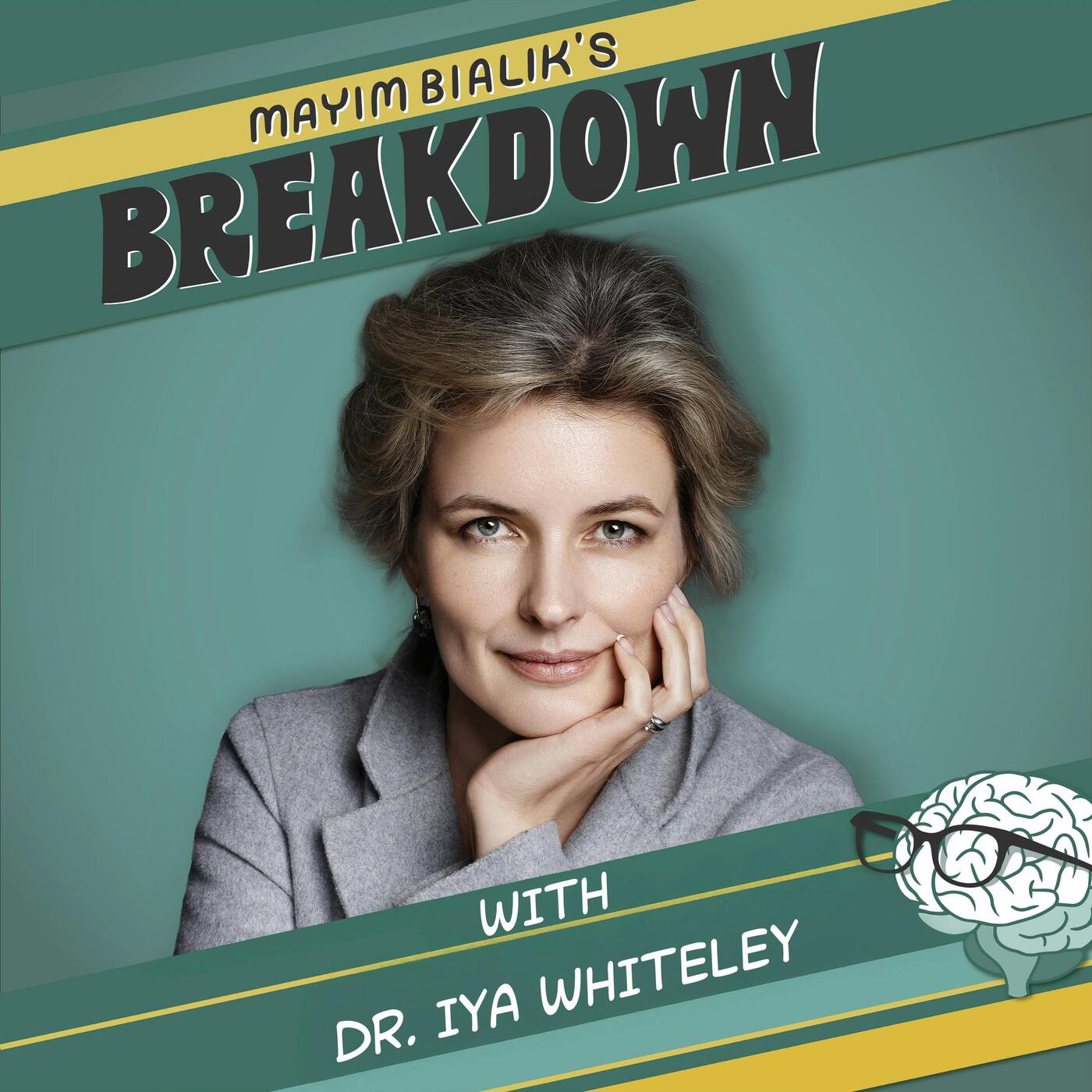
Mayim Bialik's Breakdown
The Science of Messages From Your Soul: NASA Scientist on Telepathy, Mind Reading & What Astronauts Can Teach Us About High-Performance Intuition | Dr. Iya Whiteley
01:06:49
Loading summary
Transcript71 lines
- [00:00]
Dr. I.A. Whiteley
When they realize that other people can read the mind, especially children, it's frightening.
- [00:06]
Mayim Bialik
We're capable of much more than we even know.
- [00:10]
Dr. I.A. Whiteley
We have a power of thought. We can change our environment, affect other people just by thinking or even breathing.
- [00:18]
Mayim Bialik
Dr. I.A. whiteley. She has a PhD in cognitive engineering and 25 years spent exploring human performance at the edge of capability. She spent decades designing training for astronauts advising space agencies. How can Dr. Whiteley's wisdom inform how we see telepathy? The possibility of aliens, the possibility of a field of consciousness where every soul is reachable through a plane of guess what?
- [00:46]
Dr. I.A. Whiteley
Love? Extraordinary things happen.
- [00:48]
Mayim Bialik
Are there experiences that astronauts are afraid to talk about?
- [00:53]
Dr. I.A. Whiteley
Astronauts were trying to understand what they were perceiving. Ghost in the cockpit. That's what people were calling things that were happening with the aircraft. I would ask them, where did you get that information? And I knew they didn't get it in flight. They intuited the number. As soon as we let go, the opportunity opens. The perceptual capacity.
- [01:12]
Mayim Bialik
Is there a set of skills that is innate to all of us that we simply need to hone?
- [01:19]
Dr. I.A. Whiteley
It's not far off to say that.
- [01:29]
Mayim Bialik
Hi, I'm Imbialik.
- [01:30]
Jonathan Cohen
And I'm Jonathan Cohen.
- [01:31]
Mayim Bialik
And welcome to our breakdown. What if the wisdom of astronauts and cosmonauts could give us a window into the nature of consciousness, Special abilities, perception, even what we might dismiss as coincidence? Is there a way of seeing the world that opens up the possibility for seeing the unseen in the world? Who better to answer these questions than Dr. I.A. whiteley? She spent decades designing training for astronauts advising space agencies. Dr. Whiteley has a PhD in cognitive engineering and 25 years spent exploring human performance at the edge of capability. But as Jonathan and I talk about at Mayim Bialik's breakdown all the time, we. We're capable of much more than we even know. How can Dr. Whiteley's wisdom about our capabilities inform how we see telepathy? The possibility of aliens, the possibility of a field of consciousness where every piece of information and every soul that has ever existed and ever will exist is reachable through a plane of guess what?
- [02:47]
Jonathan Cohen
Love.
- [02:48]
Mayim Bialik
All of this comes together in such a beautiful way. We're going to also talk about born knowing, how children arrive as natural masters of presence, and she teaches a bunch of courses around this. But we're going to focus our conversation with Dr. Whiteley on extraterrestrial phenomenon, a consciousness field, and 150 kinds of synesthesia. We are capable of so much more than we realize, Dr. Whiteley. Is going to break it all down. Dr. I.A. whiteley, welcome to the breakdown. Break it down.
- [03:22]
Dr. I.A. Whiteley
Thank you. I'm delighted to be here.
- [03:25]
Mayim Bialik
So we've introduced you using your bio and some of the incredible work that you do, but I wonder if you could explain kind of in your own words, what role have you played? What role do you play in our understanding, in particular of the, the boundaries of space and our capacity to exist in it?
- [03:46]
Dr. I.A. Whiteley
I'm interested in human performance, so I'm more interested in what our capacity and capability is. And that's what took me, I guess, from one task to another and eventually working with pilots and then developing technology and tools to support astronauts and developing training, something that would tap into our tools. And that is my current and I guess ongoing interest on what kind of inner tools that we have that we can take anywhere and you know, without taking a backpack.
- [04:31]
Mayim Bialik
I think of the work of Temple Grandin and how she intuitively understood things about, in her particular case, animals and an aspect of autism that allowed her to sort of increase capability and increase ability for an aspect that many people didn't understand. Where does your particular interest, expertise and intuition come into understanding these kinds of systems?
- [04:59]
Dr. I.A. Whiteley
I think it is self discovery and I would encourage everyone to, to tap in. And mostly it comes from putting ourselves into all sorts of precarious situations to discover what we're capable of. And that was my interest as well, in diving into working with people who for some reason self select to put themselves in challenging and difficult situations that they would just wanted to see, can I do it? Or it's like, you know, the curiosity drove the cat, let's say it's still alive.
- [05:41]
Mayim Bialik
I wonder if you can give us some specific examples of some of the work that you've done to help us understand the exceptional situation that people who are tasked with traveling into space find themselves in.
- [05:56]
Dr. I.A. Whiteley
So what was interesting to me is when astronauts, you know, putting themselves into a situation, including pilots, you know, they, they go into places like landing in Antarctica and unprepared runways. And so it's not your typical commercial flight, but it's sort of taking off into space or a medium that we actually not prepared to survive, should we not have something mechanical surrounding us or even a piece of cloth, you know, above our head, you know, to land afterwards. And I was wondering, you know, how do they feel going into it? Is it scary? Is it exciting? Is it, you know, why, you know, do we put ourselves through that? And when I asked that question and a number of astronauts and cosmonauts they said, you know, we feel like superheroes when we, you know, go up to the rocket. And I said, why? And they said, well, that's actually. It's because of our instructors and all the support system that we have. So instructors do all sorts of scenarios that would potentially prepare them for. Be prepared for unthinkable, you know, for the scenarios that will probably never, ever come up. But because we went mentally through that, when we do come to the situation, we're not frozen, which is our first reaction to unexpected or somewhere where we can move. So they almost train over that surprise factor. And I thought, that's amazing, you know, that you go in, you know, to be blasted off and, you know, literally exploded into space or going into an aircraft that, you know, should something go wrong, it's not like you can land it everywhere. Even the helicopter, you know, it's not, although it will have the rotation to go down, that it still needs to be somewhere safe to land. So I was. I wanted to understand what are they coming into? And when I was working with pilots, when I just began, I understood that I actually need to think like they are in order to cognitively appreciate and design system for them. And this is a luxury to learn to fly. It's expensive, but I thought, I can't do it. So in my graduate school, I actually started learning. And part of that, when you get to work with pilots, they are very. A curious bunch. And one way to kind of learn to fly and actually have the experience. I was in United Arab Emirates at the start, and there was a Russian Sukhoi airplane, which is an aerobatic plane that would, you know, it will go into positions that you wouldn't want to be flying in if you aren't prepared. And I was. And so they said if you polish the cockpit with the glass, which gets blasted with sand because of the, you know, where it is, it gets scratched quite quickly. So I would polish it and the heat is like 40 degrees up to 50. And anyway, so because I polished it, I had a chance to go up and I wanted to understand how, you know, why would they put an aircraft, you know, in unsupported air, unsupported positions. So, for example, there it's. This particular pilot was a South African aerobatic team. And so let's say you're flying with your wings level and then suddenly, literally, like you can't even think of a split second, but suddenly it would be completely like that, you know, so you would think it would just drop down, but for some Reason on this little blades that are right at the front. It kept propelling forward and that will go completely inverted and then twist again and. And I think it's. I don't know. I've asked, you know, what drives you and there wasn't an answer of what, you know, what, why would he do that? Why would he do that? And that particular pilot, he was also a deep sea diver, so he would go commercial deep sea diver. So they will go for weeks at a time without coming up into a canister, you know, several. I think it's 100 meters of down. So. And they would breathe a specific gas that will make your voice sound funny. So they would not even talk to each other much because it will make them sound. And you can't really talk on topics. And you also rotate. So people who are inside sleeping and those who are outside are working. And it's kind of an interesting lifestyle. And then he would come back up right to the surface and he will go up doing aerobatic flights. And that's the life of a person. And I thought that's such an interesting way of spend your time on Earth, you know, exploring these dimensions of, I don't know, being an unusual situations where you can't really survive without the equipment. But so I was just interested on how they think and so I pursued flying to understand that.
- [11:55]
Mayim Bialik
Did you complete a pilot's license?
- [11:58]
Dr. I.A. Whiteley
Yes, I've completed a private pilot license and gained a night flying license because that's also different type of perception. And it feels like you've got the sky above and below. If you've got a city lights or not city, but like not more dispersed lighting, you can't quite. Well, you can tell obviously where the ground and the sky is, but it feels like there is this space between. And only when I was able to fly, the pilots actually began opening up and talking. Otherwise my work detangling what they're thinking and what I would ask them, for example, how was your landing? How was your landing? You know, what were the difficulties? What were you thinking? Where are you looking? And none of those questions. I couldn't get any answers. And so the question I would have, like, how did your landing go? And they say, fine. And my task was to compare a cockpit with an analog display which was a C130 Hercules, which is like a massive cargo airplane and it will have clock dials. So this is like year 2000 and Australian air Force was swapping for a completely new glass cockpit where all of the screens and computers are and they Were looking for see what would be difference in performance because the Lockheed Martin was stating that they could have fewer people in the cockpit which is of course reduces force people in the cockpit cockpit. But they were convinced that they don't need those extra minds, you know, or human wit in the cockpit as they do the operation. And so we were. I was the youngest on the team because I was a student. But we were collecting data and I just couldn't get much out of the pilots. They would say how was the landing? And I would say it was fine. It's like, well how fine? I didn't have the vocabulary. But as soon as I start flying I was able to say well how did that feel? You know, how did you position? What did you look? And it suddenly started making sense because I could see what they were processing and that was my joy I guess to dive into these peculiarities on what sparks your intuition into the next action
- [14:30]
Jonathan Cohen
mind Biox Breakdown is supported by Bioptimizers
- [14:33]
Mayim Bialik
I struggled to get good quality sleep and I just thought like ugh, it's stress. But I learned during perimenopause and menopause your hormones shift and it affects your magnesium levels. Low magnesium makes everything harder. Not just sleep, but focus, mood, stress, tolerance. That's why we added Magnesium Breakthrough by Bioptimizers to our nightly routine. It's a blend of seven different forms of magnesium designed to support relaxation and overall sleep quality. Try it. See if you wake up more rested and refreshed, you've got nothing to lose and a lot to gain. BIOptimizers offers a 365 day no questions asked money back guarantee. Magnesium Breakthrough is a fantastic way to improve that hormonal imbalance that especially happens with magnesium. And then you have better focus, you have better sleep hygiene in general. Bioptimizers makes it so easy. Here's what you get when you go to bioptimizers.com breaker and use the code breaker. 15% off your entire order and a free bottle have Mass Times. That's BioPhimizer's best selling digestive enzyme added to your order automatically when you use our exclusive code. That's a $20 product, free on top of your discount. This is a limited time offer while supplies last. You cannot get this on Amazon. You can't get it in stores. The offer exists in one place. Our link, our code, that's it. So if you were already thinking about trying it, this is the sign. Go to buyoptimizers.com breaker use the code breaker. Grab it before it's gone.
- [15:58]
Jonathan Cohen
Make 2026 the year you finally start sleeping again. Mind Bialix breakdown is supported by bioptimizers.
- [16:05]
Mayim Bialik
You know, I struggled to get good quality sleep and I just assumed it was stress. But as I learned during perimenopause and menopause, your hormones shift in a way that affects your magnesium levels. And low magnesium, it makes everything harder. Not just sleep, focus, mood, your tolerance for stress. That's why I have added Magnesium Breakthrough bye bye Optimizers to my nightly routine. It's a blend of seven different forms of magnesium designed to support relaxation and overall sleep quality. Try it. See if you wake up more rested and refreshed, you've got nothing to lose and a lot to gain. BIOptimizers offers a 365 day no questions asked money back guarantee. Magnesium Breakthrough is a huge breakthrough to improve hormonal balance, to help with focus, decrease brain fog, improve sleep hygiene.
- [16:50]
Dr. I.A. Whiteley
Overall.
- [16:51]
Mayim Bialik
Bioptimizers makes it very easy. Jonathan, what do they get when they go to bioptimizers optimizers.com breaker and use the code breaker.
- [16:57]
Jonathan Cohen
You get 50% off your entire order and a free bottle of Mass Zymes.
- [17:01]
Mayim Bialik
Buy Optimizers best selling digestive enzyme that'll be added to your order automatically when you use our exclusive code.
- [17:08]
Jonathan Cohen
That's a 20 product free on top of your discount already.
- [17:12]
Mayim Bialik
This is a limited time offer and while supplies last, you can't get it on Amazon, you can't get it in stores. This offer exists in one place. Our link, our code. That's it. So maybe you were already thinking about it. This is the sign. Go to buyoptimizers.com breaker use the code breaker. Grab it, it's gone. Make 2026 the year you finally start sleeping again. When I think about, for example, like competitive athletes, we know that there's something different about them and often it's something different physiologically. It's a different distribution of, let's say slower fast twitch fibers or you know, Michael Phelps has this kind of webbing, right? Supposedly he's got this, you know, ridiculous arm span. And there's all these very special things that make athletes in many cases, you know, particularly suited to what they do. What can you tell us about in particular people who go into space, people who dedicate their lives into that kind of travel. What is it about them spiritually or conceptually that makes them maybe more open to these experiences or more comfortable in the places that many of us would not be?
- [18:24]
Dr. I.A. Whiteley
That's, you know, a question. I guess a lot of Astronauts gets asked, is that why did you choose it or what inspired you? And I think a beautiful example is Alexei Leonov, who was the first person to walk in space. So did the first spacewalk. And I happened to have a conversation with him and I asked him, why did you start flying? And he said, I wanted to see the clouds closer. Because at that time there was no space flight when he began. And he's actually driven by art, so he's an artist at the start. And he wanted to draw and I guess capture his fascination with what clouds are. And I guess there was not many. Well, there's I guess not much description of what the clouds were at the time when he was younger. So he wanted to just be among the clouds because he wanted to draw them. And that's how he became a pilot. And then a pilot who was, you know, working on special planes. And then he got selected to go to space. And he was in space. He developed a method of. On how we to date when the seasons change, the color change in agricultural settings. And so he was the first one to bring colored pencils into space and actually colored on how the changes were happening across I guess, the fields of view that he could observe. And that's when the, you know, Earth observation direction became. And because he had special color perception as an artist, he brought that in, I guess that talent. And I found when speaking with astronauts, a lot of them are multi talented. Majority of them play an instrument. A lot of them, you know, would do different kinds of sports. They could be engineers. But they will have a flair for, you know, philosophy or arts. And if they, you know, sometimes they come from. Well, there are medical flow, right. People who are medical professionals. But also there are technical people. But no matter whom you cross, they are thriving to solve a challenge. There's no task small enough, I guess the Soviet aspect of the cosmonauts. They would say that they have to repair all, all the equipment in the house before they go up. Because as soon as they leave the house, something will go wrong in the house. And so there is always like a backup family and they leave in Star City and they look after each other. Because as soon as. Well, there used to be majority. Well, actually until very, very recently, there were mostly men in USSR and Russian Federation, the cosmonaut core. And so something would go wrong, but they would always repair and do everything by hand. Because of course in space you can't, you know, call a plumber or somebody else or. And, and. But also what's interesting is they are equally really good at following instructions and being so clear on detail oriented as also driving the situation or the problem solving. So it's quite interesting to have this in a sense leadership and also humbleness and appreciation of the team. That's quite interesting too.
- [22:20]
Jonathan Cohen
I had a good friend who was a five time world champion kickboxer and she described that when she was fighting she would lose sense of time and space. And there was a part of her brain that started to operate purely from instinct. And when she thought back to the fight, some of them she couldn't remember. And it was only the moment right before a knockout where she would snap to and have an awareness of whether or not she should strike or not. And I'm curious about the extrasensory perception that happens in high pressure situations and what you've learned about people developing and extra sense or multiple senses to either be aware of incoming danger. How does, what insight have you gleaned about additional senses for people in these situations?
- [23:13]
Dr. I.A. Whiteley
This is usually not explored in kind of classical science, but I am have been always interested and that was my interest grown from martial art because you rely on your spider senses or extra sensors or you know, your vision and perception behind you. And we did a lot of work with eyes closed and also having kind of, you know, contact where you don't lose contact, but you had to guess and work together in seeing, you know, determining the flow without pushing or pulling. And that gave me an interest in understanding how do I know where you know, what this person is likely to do next. And also what is interesting in that perception, if we are worried, if we've got a sense of fear, then the perception narrows and there is a gap in our spider sense or in our perceptual capacity, whatever we may call it extrasensory perception, intuition, interoception in some capacity. And so I found that and similar with astronauts that we discussed before, like, you know, there is no fear, it's a healthy risk management. And as soon as we become worried we seem to unable to almost like take that extra sensory perception. And I don't know. Have you met Din Radin?
- [24:56]
Jonathan Cohen
We haven't, but we've spoken to a lot of people in extrasensory abilities and psi phenomenon and telepathy.
- [25:04]
Dr. I.A. Whiteley
Cool. So that bunch, you know, from ions and they have done experiments about perception and that our body to different capacity can predict what would be the next event in milliseconds up front. And it's different from so our brain waves that we can measure, you know, encephalogram, cardiogram, and also galvanic skin response. And so that was interesting to me also to understand on how can we extend that time perception, widen that gap of how can we do it. And I've actually did put a grant together which I never thought will go through but. But it did go through, but I fell pregnant and it didn't. I wasn't able. I had high expectation that, you know, I'll have the baby and you know, do the contract and work perfectly well. But that was first time being mom and that was not realistic. So that did not happen. So there was a people who are dismantling dangerous equipment that could blow up in the field and they were clearly successful because they were doing it over and over and they did not know how to teach that because also the training is so challenging that people who would come to come to train would with time will leave the training because they would understand the seriousness and the problem of what they're getting into that they wanted to know for one, you know, to find the capability of something that you can't predict. You know, that intuitive sense of what to do despite I guess, the pressure, the circumstance, and also reading the clues that you don't know what are the clues. And so the idea was to get into and maybe extend those tests that they did at ions and repeated across the globe on that millisecond prediction of doing it or not doing it. And how does this work and tapping into those sensations and allowing other people to scan for the clues. Because part of our previous work was to do designing problem solving tools for long duration missions. And the idea was, is that people have to solve problems with minimum resources. And what that entails is that we need to be systematic but also be creative and be open to opportunity. And if we can do, if we can be systematic in creativity, which sounds awkward, right? How could you be systematic in creativity? But it's almost like you direct your attention to one field at a time and allow the time for creativity to unfold before you move on to the next thing. Because our mind has this capacity sort of once you've got the solution, that's done, you know, I don't want to be working anymore on that. But in actual fact, if we can be systematic, we can work out the solutions and then find the more practical or the one that we have resources rather than just having one. So that was the idea. And part of that I wanted to merge part of that inner innate sensing plus the systematic observation skills. So I wanted to see if they do have that scan intuitively. So and the idea is to use that pre verbal knowing which I was using for designing aircraft cockpits and allowing the people to articulate the intuition. So something that we deeply know but don't know how to explain, or we don't even realize we know, but because. Or we think everybody knows it. You know, it's a common sense, which often it isn't.
- [29:20]
Jonathan Cohen
Well, I think this is one of the most interesting and applicable areas is having a deep knowing or a sense of knowing or being able to anticipate something that may happen either milliseconds or further in the future. And how do we develop that? And I think people who are listening, there's a mix. Some people who are deep down the rabbit hole of developing their extra senses and some people who are listening to this conversation for the first time and trying to make sense of is this really possible? How does it work on a practical level? I hear people who talk about intuition, but I can't really figure it out. So I want to try and walk through this and I think we're. One way to do that would be to hear a little bit more about your personal experience. I've heard you talk about aikido, which is an, you know, a martial arts. But you can describe a little bit about what it is and how you started to develop this, as you call it spidey sense. And. And that will take us, I think, into how it progresses for people like what's possible in practicing this martial arts and how it translates to our everyday lives.
- [30:28]
Dr. I.A. Whiteley
Good point. Everybody should do martial art, I think, and find their, you know, inspiration from the spirit of art. Because it's foremost, it's about exploration of, you know, who we are and also collaborating with the environment. And what I loved about aikido is that it was about first of all observation and then allowing things to happen without forcing or intervening. And it was allowing to take what's coming and work with that. And I thought the whole concept of being kind of is not non judgmental but allowing for whatever motion to happen and just join with that flow and work with that flow and that not knowing of what will happen despite having some, you know, I guess moves that we would learn. But the idea is that you then once you practice them, you are watching where the energy would take you and you would be intuitively following. Especially if there is a weight difference, you know, whoever is coming onto you and allowing for that to circle. And the idea is, is that you look for where the energy would want to go. Meaning the weight for example. Yeah. Or Speed or momentum and where you can carry it in such a way that it's deflecting.
- [32:05]
Jonathan Cohen
And if someone has not ever seen aikido, I'll try to explain it to them and you can correct me. It's unlike other martial arts, you're not like going through and practicing or demonstrating. My understanding of it is that you're in an interaction with someone. Someone comes towards you. So that's the motion coming towards you, and you transfer that forward motion either into bypassing it or flipping or rolling together. So in, you know, a metaphor for life, life is coming at you. You don't get to decide what's coming at you. And you have to then respond and react to that force to transmute it, keep yourself safe. Is that accurate?
- [32:50]
Dr. I.A. Whiteley
Yes. Yes. The idea is that you step away slightly or step back and allow for that momentum to come, and then you take that, whatever is coming. If you can step away completely, that's ideal, right? But if you can, then you just take it and you move across. So you almost like step away and let's say by pulling the hand, you then circle around you because that's how you can redirect the momentum and person gets out of balance. So it's about spiraling and seeing where the weight will fall. So you're looking to create this balance while yourself maintaining grounding.
- [33:37]
Jonathan Cohen
I think where I was leading so that people can understand it. And a little bit, I think about Neo from the Matrix with the bullets. He's like, you know, time slows down a little bit. And this connects to what you are saying about fear. If you're in a feared state and someone is rushing towards you, you don't have an instinct. Right. It's not a logical set of decisions that you need to make to say, oh, if this person is coming, then I see this angle. There's something happening very, very quickly in our processing to know where to move. And it's almost beyond the rational mind. This episode is sponsored by Wandering Jews, an open door media brand.
- [34:17]
Mayim Bialik
If you've ever found yourself feeling like you have more questions than answers, you're in good company. The Jewish people have been like that for thousands of years. Wondering Jews with Michal and Noam is a podcast where two of today's most dynamic Jewish voices, Michal Bittone and Noam Weissman, dig into the biggest questions about life through a Jewish lens. It's the kind of conversation where you'll laugh, learn something new, and probably shout in disagreement at least once. Michal and Noam tackle the tough topics like Anti Semitism in America, what Happens after we Die, and the future of religion. With guests like Bret Stephens, Michael Rapoport and Sarah Hurwitz. And this past month, in honor of Jewish American Heritage Month, they've been celebrating some of the Jewish lives and institutions that have shaped American life, from food to music and comedy. Thoughtful, joyful, and always honest. That's Wondering Jews with Michal and Noam, a production of Unpacked. Find it on your favorite podcast app or on YouTube and make sure to hit subscribe. Check out Wondering Jews with Michal and Noam podcast and subscribe at Unpacked BIO NMX
- [35:20]
Dr. I.A. Whiteley
VRBO, we understand that even the best of plans sometimes need a little support. So we plan for the plot twists. Every booking is all automatically backed by our VRBO Care guarantee, giving you confidence from the very start. Whenever you need help, it's ready before your stay, through the moments in between and after your trip. Because a great trip starts with peace of mind and maybe a good playlist, but we've got the peace of mind part covered.
- [35:47]
Mayim Bialik
Can we learn to anticipate things that we previously thought we could not? Is there a set of skills that is innate to all of us that we simply need to hone? I mean, what you're describing is, is any complicated conversation, right? If someone is coming at you and you receive that with an equal and opposite force, that actually is not the way towards harmony. That's the way towards conflict. So what you're talking about is really, it sounds like, you know, a metaphor for human interaction. Where do I step out of the way and let this person's momentum pass me by? What does it mean about me being able to hone the ability to understand energetic movement?
- [36:34]
Dr. I.A. Whiteley
Yes. So it's about expectation, right? And seeing what we can. How can we anticipate? So I guess if we're taking analogy of Aikido is we are looking at being open to whatever is coming, having no expectation, and also being open to open to the environmental signals. And then whatever comes, you are allowing it to be, which is very much a lot of Eastern Taoism and Buddhism. It's allowing for the flow to take its place and you find the place where you belong and in your qualities. So and so it's always observation first. And so when we are coming with an agenda to a conversation or, you know, wanting a particular outcome, then we, we are almost like not allowing the field to unfold. When we have concern or fear or stress, we call the tunnel vision in, in a pilot kind of sense, or people Working in extreme environments, they or sports people as well. And then when we're in a tunnel vision, it specifically narrows us to survive, really. So to actually put our most critical tasks to the muscles, but not to the brain. So what we want to do is to stay open and relaxed. And that only happens when we feel comfortable in ourselves or comfortable in the situation or comfortable for things to change.
- [38:17]
Mayim Bialik
Yeah, that also sounds eerily similar to the way we are instructed to learn to drop into a meditative state or a state of altered consciousness. Right. These are the same kind of things. I mean, tunnel vision also happens in trauma. Right. And learning to kind of expand that out. So it seems that, you know, you do so many different things, but there is this thread, right, of kind of our state of awareness, consciousness and perception.
- [38:47]
Dr. I.A. Whiteley
Yes, beautiful.
- [38:49]
Jonathan Cohen
In aikido also, and in other martial arts, we can begin to sense even behind us, what isn't there. So we're not even using our eyes, in a way. And other athletes, you know, I've had this experience. You're just in the right spot at the right time, not even realizing how you got there. You didn't make a plan to move four feet to the right, but that's exactly where you need to be in order to do the next move. Can you talk a little bit about what intellect is living in the muscle that's allowing us to be there where we need to be, or sensing behind us.
- [39:23]
Dr. I.A. Whiteley
You know, I wish I knew the answer and. But the. The only way that I was tapping into that is through doing this method, which is called Iview expert or what. I Learned it from two brilliant scientists, Mary. Dr. Mary Ommedy and Dr. Jim McLennan in Australia, where they were studying decision making in firefighters. Well, they were faced with a problem where the Australian fires that, you know, bushfires like you do have also in California, they spread very quickly, and you need to anticipate and know what to do or when to pull people out, especially if it touches living structures. Some of them were really good firefighters, and some would just, you know, literally seconds before, pull the entire crew out of the building before it lose its structural capacity. And how do they know that? You know, how do they know that? Because, you know, they could have stayed there literally a second later and not only not been able to get what they were, I guess, looking for, but they will also lose the crew. So. And when they were doing retrospective interview, which is what we had for a long time in studying decision making and understanding how to teach others, is that we, when we're faced with other people, we start putting on filters. So I'm speaking with you and I have my understanding, you know, who's sitting in front of me, maybe what you know, or what I think you might be interested in or who will be watching this, you know, me not going too far out of what I know. You know, all of these little things that I don't filter, but they are actually veils that are happening. But if I was for example, describing me, I don't know, cooking, let's say something very simple and it's something I do fast and some pancakes or something like that and you know, you don't measure afterwards and you just anticipate the texture and anticipate how it should flow and when to flip the pancake and when you can actually flip it and when you don't want to try it and things like that. So then in that flow when I'm describing it to let's say children or to a friend, it would be very different. Or if I am, let's say deciding to doing teaching video or describing it to someone who doesn't speak the same language and that would completely kind of change what I say. So in firefighters, when they were describing it, they were filtering it by the researcher who was in front of them. So they're not firefighters. They have no idea what it is to be in that environment. They have no idea the terminology they use and they have no idea. Well, they don't appreciate the danger if it makes sense. Not that necessarily, you know, that person would elevate themselves that they are superior in any capacity, but in. So they're being gentle, careful in how they describe and hence we lost loads of information because they just can't articulate it. So what they've come up with is that to use a footage from their head mounted camera that will be on the eye level and they would put it under all of their equipment, which is heat protection and of course eye protection. And they would record everything that was happening. And as soon as they came out and that would be usually training scenarios, they will debrief them by watching the video. And when the person is watching from their own point of view, it's like first, well, observer's point of view. And when there is no external view imposed on us, we suddenly remove a lot of filters so we don't feel that we're being watched and we are literally describing what we are looking at. And suddenly all these veils fell off in terms of. And they're just saying what they're seeing. And we don't need to cue them because our capacity to ask is limited by what we think we need to know. But the whole idea is that we find out what we don't know, but we can't ask the right question. So by having those cues, but also by then learning their terminology and the more you talk, and that's why I learned to be a pilot, so I have the kind of inner perception of what else I'm looking at and what else I'm. They don't need to filter that. I don't understand the terminology or I don't understand where they are, what they're doing and what they're going to do next. And that allowed to find out in this firefighters situation is that they actually lift the protection that the heat protection from the ears and they listen to the sound and the wind, the temperature that they sense with their ear. So as soon as there's change in temperature and wind flow, they do a certain action. And that's something they should not do. And they don't of course, teach newbies if you wish because that's dangerous, because that's removing protection. So they would never share that, but the experienced people would do that. And that's something they don't even think about saying. So the idea is, and this is that professional intuition that the people don't even realize that they're doing it. And they only remember doing that by, let's say they would see the flip of their hand and they'd say, well, what did you do? And they would say, well I did and how did you know? Well, I felt and how did you feel? And it's that non judgmental questions that allow just descriptive language and encouragement. And what I found out that people will talk for five minutes with a five second footage of what actually went through their head.
- [45:54]
Mayim Bialik
So this opens up kind of a different set of questions that you're also really competent to speak to. What you're describing is things that we may not even realize that we're doing that change the perception really of the world. So one of the things you, you talk about with pilots, you know this, this notion of spherical awareness, right, that, that pilots are experiencing space and effectively time. Right. In a different way than we are. They're not just sort of thinking forward facing, right. They're, they're seeing and sensing in all these different dimensions. You know, Jonathan and I are particularly interested in, in different kinds of perception. And what does it mean also to try and put words to some of these kind of phenomenal differences in perception. I wonder if you can use synesthesia as, as a good way in for us. You know, we've talked about synesthesia as we've had many, many interesting conversations about acquired synesthesia after a near death experience. Elizabeth Crone is someone who had a near death experience and one of the abilities she came back with was synesthesia. But you've talked about synesthesia as a model for kind of expanded perception. Can you talk about really kind of what it is and what the varieties are and what it can tell us sort of about the human capacity. Right, for perceiving things that many of us think are much simpler than they are?
- [47:30]
Dr. I.A. Whiteley
Yes. So synesthesia is extraordinary ability to perceive like a cross modal sensory perception where it allows you to hear things but let's say recognize them as color or see things and feel them in your stomach. And like there was a beautiful example of somebody cooking a chicken and they, I think they put something pointy into the chicken and they said what? It's five points and says, what does that mean? That needs another two points to cook. But for them it's that sensation of putting it through the chicken and also the aroma that came out as they were doing that and I don't know all other perception that it says that he, he could feel inside the body of that it's ready or not, you know, and that, that's all I've got, you know, so like I couldn't pick up of. And the chicken was perfect every time, but it wasn't. I tried, you know, you, you know, you try to repeat but because you don't have that experience, but you're trying like I'm interested to perceive, to see if I can get into it. But I clearly don't have that cross sensory perception like most people think of
- [49:04]
Mayim Bialik
synesthesia as sort of also, you know, with LSD you get this, this sort of crossing of modalities. But what you're saying is that synesthesia is any cross modality, so it could be that sensation. Is this similar to, you know, when people get an ick feeling when they look at certain things, Is that also a form of a difference in perception?
- [49:24]
Dr. I.A. Whiteley
You and your neuroscience background, we classically have so many perceptions that are listed in the book, you know, that we teach in biology and in psychology, but actually we can sense, you know, temperature, we can sense humidity, we've got, you know, kinesthetic sense, we've got the, you know, with our inner ear variety of sensory perceptions. And so all of that for some reason we discount as sensors. But They're, I mean we navigate with them especially in martial art or in any sports that we do. And you know, when you're juggling two children as well.
- [50:02]
Mayim Bialik
Well, I was just going to say, you know, these are, these are all times also of, you know, kind of heightened hormonal and endorphin situations. Right. A lot of the behavior of new mothers can look very, very much like certain kinds of obsessive compulsive disorder because there's this extreme focus. Right. So and these are all physiologically regulated. So I guess my, my sort of follow up question is what can you offer us regarding abilities that we don't experience with our five senses? You know, synesthesia obviously is, is based in, in many of the modalities that many of us acknowledge are concrete or discreet. But there are people who report incredible ability to receive information, to intuit things. We've recently been discussing, you know, not just clairvoyance but you know, clairaudience and clairsentience and all the Claire's as I call them. You know, these are opening us up into a conversation of there are things that exist that we may not even be able to measure yet, but that strongly influence our behavior and our perception of the world. What can you sort of offer us to understand that kind of perception?
- [51:22]
Dr. I.A. Whiteley
So I am interested in, in that perception, in that cross modality as cues that we pick up. But what I was trying to do in the research is I was trying for people to articulate what they sense and where that information comes from. And a lot of the times the problem that we have is that the people I work with work in safety critical environment. So they are cautious to say that I've intuit that I knew that. So they would, that's the filter that they will try to justify to appear scientific or safe or appropriate. And you know, we're working through that in the field. But what it feels like it's a logic coming in rather than what has actually been happening. And when it comes to saving people's lives then you know, there is this tension that we have. Like I've worked with surgeons and people who do, you know, very critical diagnostics in the medical field and you know, they equally, they could make a mistake, but equally they could save people's lives. And what is interesting in, in the outcomes is that there was a study I believe in Boston where the surgeons who attended regular art exhibits, they had a better patient outcome overall. So which is interesting. So but I don't believe that there was a conclusion whether it was Just let's say relaxation or interest in art, let's say having that time to be off or the link that was being made that they were more observant and more abstract. Field of view or not field of view. Like when they're doing surgery, they are studying surgical field and for clues to come up. And of course, well, not of course, but I didn't realize how different we all are inside. How actually the liver, our internal organs are not quite the same and they are very different inside. It's like looking at a completely different terrain when you're going in. And so for them to detect a minor change even in the corner of their eye, whether it's synesthesia or not, they would not put it to that when they will be describing it to a student. And that's why it's not helpful to study their intuitive decision making or transfer expertise if, if it's a teaching scenario. But if they're doing it themselves and they are feeling that this is, you know, a discovery journey. And of course they will only be comfortable doing that on a successful outcome because otherwise, you know, you don't, you don't know they're opening themselves up for problems as experts. So I feel like I keep diverting from your question about this extrasensory perception, but I guess I was trying to tap into it as, as, as the science would allow. And my, my best understanding was is that, that people try, the all experts that I work with, they try to justify it, they would not give it out to intuition. And I thought that was interesting that I could see that they were just like pilots, for example, they said I would ask them where did you get that information? And I knew they didn't get it in flight. They intuited the number, literally intuited the number that was not in flight. And they were convinced they did that because they had to justify of how they knew that information. But when we both looked back, we all were surprised, you know, that they actually knew the data that wasn't there and nobody had an answer to that and no explanation. But I couldn't touch it in my scientific approach. I couldn't touch that with a scientific method apart from allowing to articulate people something that they do, they didn't realize they do and using that footage then to transfer that expertise to another experts who have done that operation but never done it like that. And what we found is that the surgeons were doing things that were not, would say, not permitted, but were typically not a procedure. And they almost didn't realize they done it that way. But it was like a new shortcut that they've developed to allow them to either have a better outcome or quicker outcome or a new trick, which we know that the outliers, the way that you don't do become like a new procedure and a new innovation. But I found that they work in such a tight frame where in a sense, we want innovation, but we don't allow the intuitive knowing to percolate because it's not safe. And they have to do all sorts of procedures which occupy your intuitive mind. You remember, like if you worry about things, you don't have that field of view and perception that allows it for you to create and to intuit it through your other perceptual sensors.
- [57:00]
Jonathan Cohen
I mean, very hard to not be worried when you're navigating someone's internal cavity and messing with their organs.
- [57:08]
Dr. I.A. Whiteley
Well, that's their day to day thing. I mean, it's extraordinary, you know, what they do and then, you know, go on to their regular day. I mean, I found this very humbling
- [57:18]
Mayim Bialik
something that's come to a lot of people's attention, this notion of telepathy and communicating on, you know, I guess a non localized plane of consciousness. Many of us were, you know, kind of captivated by the telepathy tapes and you know, arguably a lot of anecdotal reports and a lot of, you know, questions as well about the use of facilitated communication, which I usually like to set aside since there's a lot of complexity and controversy surrounding facilitated communication. But suffice it to say, there are many ways that people who are non speaking can communicate at various levels of cognitive functioning. And so we know that that exists. But what is your take on this notion that one of the untapped abilities that many of us have is involve accessing information that exists in a plane that apparently we can learn to access but most of us don't on a daily basis.
- [58:24]
Dr. I.A. Whiteley
Well, I think it's also something that we believe, grow up starting to believe that it's not possible. For example, I have that, you know, with children and friends and that where, you know, you text them and they know, right, that you said, well, I was just thinking of you or they will call you and you were thinking of them. And Rupert Sheldrake, you know, popularized that in his book, I think it's was it seven Experiments that will Change the World or something like that, where he talks about the common knowing that, you know, who will call you and the pets know when you're coming home and, and you know, we all come across that phenomenon, we cannot deny it. Or when somebody's looking at you directly or even through the camera, through the surveillance camera and you would know. So that's why they put a person, you know, in surveillance room in some places because there is an eye perception rather than just cameras that are capturing everything anyway and now can be detected automatically. So I personally experienced that. I cannot deny it. I have that intuition and knowing so many times that it's just impossible to not look. I have not work with people who are non speakers, but I'm delighted that Kai Dickens has. I love her quote that she put on the website is assume competence. And I think it's such a strong thing to come in like to have it in our vocabulary that wherever you go in, like when you go in to talk to children, assume competence, you know, or you go into the shop, you know, you are talking to anyone, just assume competence. You just have no idea where people come from, what their walk of life is and you just don't know. Maybe they are telepathic, equally so. And what I found very interesting that people's response when they realize that other people can read the mind, especially children and adults like non speakers. It's frightening for some people that they feel that, you know, that they would be. That our mind will be read. And I think that's such a beautiful wake up call for all of us to start clearing that space, you know, of, of, you know, whatever comes into our perception. I grew up with almost becoming. I wanted to level with the ground if I would think a bad thought because I would feel as if somebody ever heard what I think. Right now I just don't want to exist at all. So for me I don't know where that come from, but for me a culture of thought, that's how I termed it for me was so important. And I knew somewhere inside that if I think bad, I would never have any abilities whatsoever. Because if I with my mind can imagine something and it could come true. And if that's what Eastern masters, you know, are thinking and they're able to make it true, what if I think something bad, you know, and I inflicted on somebody else? So somewhere very early on in this very preteen, you know, martial art, it really dawned on me that we have a power of thought and that we can change our environment, affect other people just by thinking or even breathing. You know, if we breathe a certain way, we can puncture somebody's, you know, internal organs by, you know, directing this qi in certain ways and throwing Them across the room, no matter what your size is. And I just thought, you know, if we've got this capacity, we, we have to harness it. So I grew up with that awareness that it's possible and I wanted to go to science to pursue that, but I was not allowed to touch it, if you wish. But what I'm seeing is that people who do work in extreme environments and people who I come across who work in, in the military, they thrive with that ability and they're known for that. People will respect and follow their advice because there is no other intuitive perception or like I know now several, you know, cases from mothers that intuited something and they heard the baby say something and they would run and then find it that the dog, you know, which was safe but drugged the baby where the baby didn't want it to be on the carpet, for example. And you know, so these like little intuition. So when you wake up in the night and you know, you come to the baby and you came just on time or you know, having that urge in the night and you would wake up at the same time when the baby, you know, needed assistance or something like that. I don't know where that comes from, but I've experienced that. So I think it's beautiful that we're touching that. But what I'm hoping that this telepathy tapes is actually changing us as human beings and making us consider what we think in the first place, what we think every day and let us go down with embarrassment of what we do think and let that be our, you know, morning thought. You know, what if somebody is reading my thoughts? You know, what if, you know, somebody can act or something will change given my thoughts. Yeah.
- [64:29]
Mayim Bialik
I think a follow up question is what can change? Right. If we, if we're paying attention to those kinds of thoughts. We've, you know, spoken to Bruce Lipton and Joe Dispenza and you know, people who really believe that, you know, manifesting. Right. Positive affirmations that those things are not just lip service, that they can actually change the physiology. Right. Of our bodies. So by the same token, if we can imagine ourselves into more health, more openness, more positivity, it would, it would absolutely follow that thinking negatively can spiral us into pain, discomfort, suffering and maybe even disease.
- [65:13]
Dr. I.A. Whiteley
Yeah. So the Dr. Lipton talking about the environment, you know, affecting the cells. And I think that's beautiful example and I think everyone can imagine when we are in a setting, you know, when we're in the meeting and somebody comes in and there is an ear about them. And the room either like goes into silence because it's. You feel, I don't know, the tremor that something will happen, or somebody comes in and it's just like a light. The mood lifts and suddenly people exhale and relax. And we know the Heart Math Institute as well. They look into heart, brain coherence and by breathing and also aligning with which is in a way like biofeedback. They say that they could measure how far the field extends and that we bounce almost into each other and cross these bubbles of our electromagnetic field, which we do know because in medicine we use electro, you know, magnetic measuring of, you know, our brain and heart. So it's not far off to say that how we feel affects other people. And it's just like when you come in and the pet meets you, you know, or a child runs into your ar or a partner or somebody you deeply respect smiles and your day has changes and suddenly everything goes well. So where does that come from? Is that because of our state or is that the environment responding to us? And I certainly know that when I come in and if I don't change my attitude, the day will go very differently. So, you know, whatever that may be, whether it's, you know, an energetic effect or my, you know, human doing and being an attitude in terms of our perception. So even on physiology level, we understand if we worry, we can't perceive things. So which means we won't see, we won't notice nice things or good things that could change us. And also we have something called selective perception, which is, you know, kind of the science touches all of this, right? We can almost like circle around it, but we can't explain it. And our selective attention, you know, that famous experiment of the person in a monkey suit, gorilla suit coming across the screen and people are playing, you know, passing basketball in white T shirts. And if we are focusing on how many times the two the ball was passed between people in white T shirts, nobody sees somebody coming to the middle of the screen and you know, and then walking past. And that is selective attention. So what else are we not seeing? So, and that's also interesting. So I think I'm not trying to trail back from our extra sensory perception and intuition. I'm just saying that we are only starting to pick up with science and we should maintain curiosity to keep going. And like, you know, Joe Dispenser, you know, has thousands of examples, you know, happening right there, you know, in a regular, I don't know, regular intervals, if you wish, during the events when people, they needed that moment of belief and that moment of clarity and relaxation. And we know if we just go for a walk, the problem solves in our head. If as soon as we let go, the opportunity opens the perceptual capacity, be it intuition, better logic, I don't know our better oxygenation and clarity, but to me it's dropping that state, whatever that is, to allow the perception to be better. Be it physiological or intuitive, it doesn't matter. The whole point is fine tuning. Where do you feel it? And the idea is to notice, to sort of almost be realistic in the expectation. So not in our own exploration investigation to say, oh, I actually knew that a split second before. So let me write it down so that my brain that's been trained scientifically not to consider this as a possibility, I actually did know it didn't happen after it happened before. And by extending that time and allowing our brain to walk that path or our mind, rather our mind to be convinced more often, we allow that possibility that we have that ability.
- [70:09]
Mayim Bialik
We're going to hit pause on our conversation with Dr. I.A. whiteley, but there is so much more. In part two, we're going to talk about how to frame coincidence as a much larger pattern of noticing and engaging in the world. We're also going to do a deep dive into Family Constellation therapy.
- [70:29]
Jonathan Cohen
What is it? How it works, and some of the very powerful transformations people can get when they break an intergenerational cycle through the power of love and acceptance.
- [70:41]
Mayim Bialik
Jonathan's also going to share some of his personal experience with Family Constellation therapy, which you do not want to miss. And we're also going to talk about why astronauts are afraid to report what they actually might be seeing when they are floating about in space. That's all in part two of our conversation with Dr. I.A. whiteley.
- [71:01]
Jonathan Cohen
As you wait for part two of this episode. Find us on Substack Mind Bialik's breakdown on Substack where we're continuing the conversation.
- [71:08]
Mayim Bialik
And from our breakdown to the one we hope you never have, we'll see you next time.
- [71:11]
Dr. I.A. Whiteley
It's Maya Bialik's breakdown. She's going to break it down for you.
- [71:16]
Mayim Bialik
She's got a neuroscience PhD or two now.
- [71:20]
Dr. I.A. Whiteley
She's going to break down, to break down. She's going to break it down.