← Mayim Bialik's Breakdown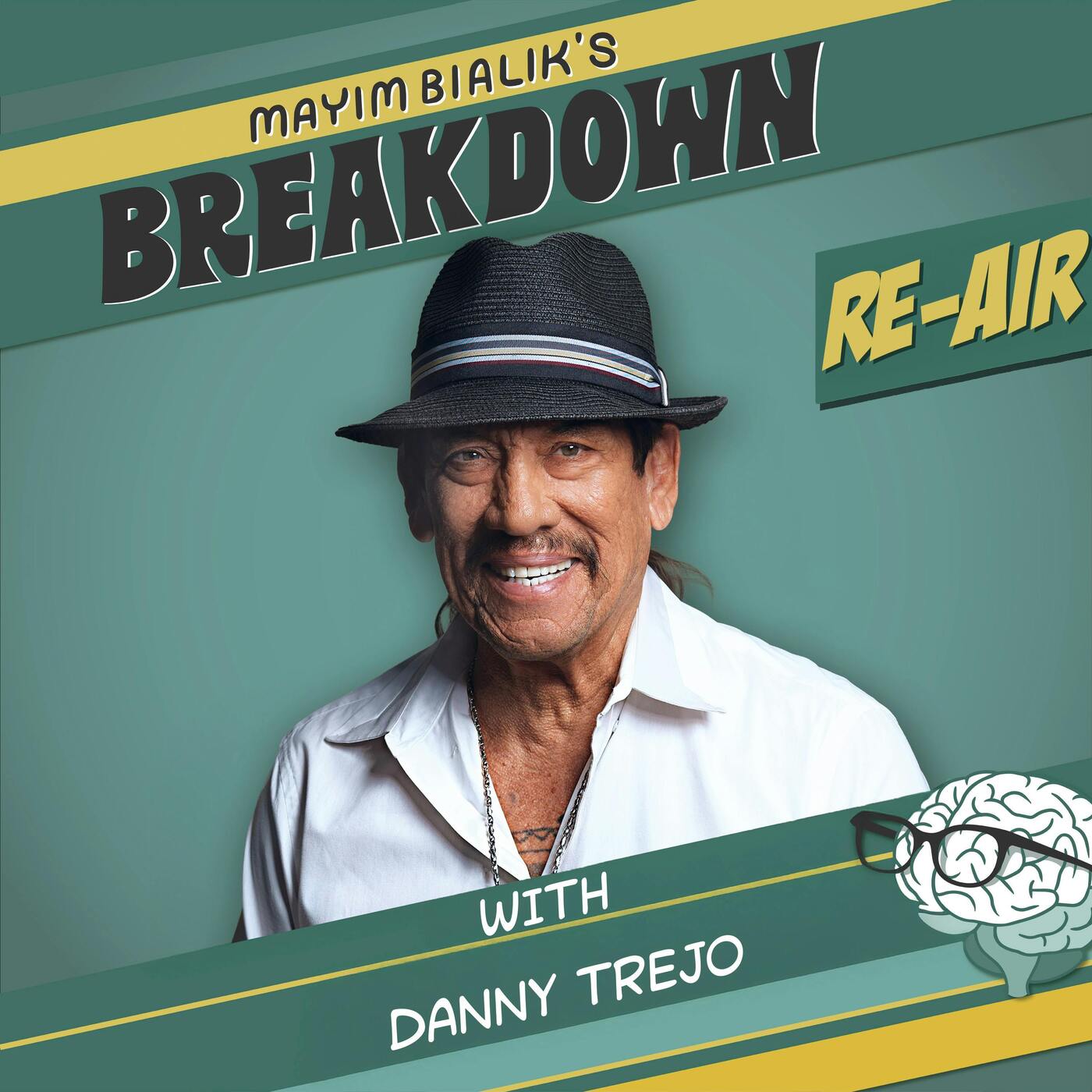
Loading summary
Transcript256 lines
- [00:00]
Danny Trejo
Foreign
- [00:04]
Mayim Bialik
Hi, I'm Ayan Bialik.
- [00:05]
Jonathan Cohen
And I'm Jonathan Cohen.
- [00:06]
Mayim Bialik
And welcome to our Breakdown. You know, today we wanted to do something special. It's Alcohol Awareness Month. So we'd like to revisit a very special episode from 2023 with the one and only Danny Trejo. Now you may know Danny from obviously the Machete films from Breaking Bad, Boba Fett, and if you're an LA local, Trejo's Tacos, Trejo's Cantina, Trejo's Donuts, as well as his cookbooks. Danny open with us in a way that really we hadn't heard him talk about before, about the culture that he was raised in, how he began his alcohol use at a very early age, what early sobriety taught him and his transformation from convict, someone who was in solitary confinement, to a beloved actor, author and restaurateur.
- [00:55]
Jonathan Cohen
He also opens up about his relationship with a higher power, how he developed that and his role as an inmate social catalyst while he was in prison, as well as the negative effects of toxic masculinity.
- [01:08]
Mayim Bialik
We really thought this would be an appropriate conversation to re air during Alcohol Awareness Month where we're obviously focusing on the complexity around alcohol misuse and preventing alcohol related problems as well as reducing the stigma around help. If you or someone you know is struggling, please seek out peer support. There are recovery communities like Alcoholics Anonymous as well as Al Anon. There's professional treatment organizations. Check out the National Institute on Alcohol Abuse and Alcoholism or many other rehab programs. You do not have to suffer alone. Also, friendly reminder, check us out on substack.
- [01:44]
Jonathan Cohen
Mayim Bialix breakdown on substack and now
- [01:47]
Mayim Bialik
we hope you enjoy taking a listen to our episode with Danny Trejo. Break it down. Danny Trejo. What. What an incredible honor it is to have you here. First of all, I read your book. I'm just gonna say I read it is called My Life of Crime, Redemption and Hollywood. And I read it and I have to say, and this is a completely superficial thing to say, you look freaking amazing for the life that you lived. I expected you to crawl in here. You look like a young man. You were born during World War II.
- [02:22]
Danny Trejo
Yeah, yeah. In fact, the reason I was born in Maywood is because in 1944, the General Hospital downtown was full of soldiers.
- [02:32]
Mayim Bialik
Right.
- [02:32]
Danny Trejo
When they took my mom to have me, it was full. So they had to take me to Maywood.
- [02:37]
Mayim Bialik
I don't even know I'm from Los Angeles. Where's Maywood?
- [02:42]
Danny Trejo
Well, they used to call it Billy Goat Acres. Now it's out by Compton, out that way, you know.
- [02:48]
Mayim Bialik
Wow. So there's so many places that we could start. I want to say, first of all, I know you as an actor, because I've seen most every movie I think that you've been in pretty much. And you were also in a lot of films. At a time in my life when, as a person who grew up in la, you were part of many films that really described a lot of the complexity of the Chicano. We called it Chicano then, but the Latino American experience and the Mexican American experience here, which is a huge part of Los Angeles. And then I knew that you had a restaurant, and I kind of was like, how did that all come together? But then I read the book, and I think that there were things I knew about you kind of here and there. But, you know, the first half of the book is very difficult. It is very painful.
- [03:50]
Danny Trejo
Yeah.
- [03:51]
Mayim Bialik
You. You wrote it with. I don't know how to pronounce his name.
- [03:54]
Danny Trejo
Donald Logue.
- [03:55]
Mayim Bialik
Donald Logue.
- [03:55]
Danny Trejo
Donald. Donald.
- [03:57]
Mayim Bialik
Is that Irish?
- [03:58]
Danny Trejo
Yeah.
- [03:58]
Mayim Bialik
Okay, so you wrote it. You. You. You wrote it with someone, as it were. But, you know, you have.
- [04:06]
Danny Trejo
Who is a great writer.
- [04:07]
Mayim Bialik
A great writer, but awesome. But a great writer is only as good as the stories that Danny's bringing in.
- [04:13]
Danny Trejo
And I gotta say that when I gave the two chapters to Maeve, my kid's mom. Right. That's who I was with the longest. And she read it. She's the one that said, it's like talking to you. So that's what. Cause people have been telling me to write a book for years, and I don't use the word. I'm prolific. I don't know what that means. But they would always, like, change stuff. Donald just caught the essence.
- [04:41]
Mayim Bialik
No, it's really. It is. It's beautifully written. And, you know, the first half, I mean, it, you know, my heart kept catching in my throat because, you know, you describe, you know, a legacy in your family that had a lot of beauty and a lot of richness and a lot of incredible personalities. And also, you know, as. As you said, a lot of. A lot of pain. And you, you know, you. I don't want to say you were victimized as a child, because I know you don't like that word, but things happened to you before you were 11 years old that set you on a course, you know, that many don't come back from and that many in your family did not come back from.
- [05:27]
Danny Trejo
No.
- [05:29]
Mayim Bialik
And, you know, I'm not gonna ask you to sort of, like, recount, like, this is a book that people should read. And also the pain. You know, what you reap. You know, what you reap in tragedy, you sow joy from. And there is a redemptive aspect to both your life and your story. But for people who don't know what, let's say the first 25 years of your life were like. Can you just kind of walk us through.
- [06:03]
Danny Trejo
The first 25 years of my life were full of secrets, full of shame, full of violence, full of crime, full of drugs. I mean, that was just. I had an uncle that turned me onto grass when I was 8, gave me a fix of heroin when I was 12. And it's funny because when I talk to, like, psychiatrists, well, that was abuse. Oh, I thought it was sharing. I mean, it was like, you know, he was sharing his cause. You know, especially if an older sibling in your family is smoking weed, you know, he's not turning the younger siblings on to be mean or vicious. He is doing what he does, and he didn't do it viciously. It was like I was there, hey, let's get him loaded. And that's what happens, you know, and people don't, you know, I could never. It was funny. I remember when my uncle tried to make amends to me, right. Right before he died, trying to make amends. I said, shut up, man. If you wouldn't have turned me on the grass, I'd have probably been a Republican somewhere, you know, reading the paper, telling my kid to shut up. I don't know, you know, but I don't know what would have happened. But everything that happened to me happened the way it was supposed to, to get me to where I. And I realized that, like, when I go to a high school and I step onto a stage, it gets quiet, no matter what. High school, because they want to hear what I have to say because they know I've been where they've been. It's. You know, you can be a therapist, a psychiatrist, anything. And you have to get kids attention. And it's impossible because they don't have any. You know, and then you have to keep it. And it's impossible because of, number one,
- [08:07]
Mayim Bialik
they don't have any now your time, you know, in your teens. I mean, not even your teens. Your tweens, Your tweens and your teens. You know, when you talk about violence, like. And I really, you know, what Jonathan and I do here is we're not looking to bring out, you know, the most sound, bitey, crazy part of someone's story. But what I will say is you learned you were conditioned as a child to use rage and to use violence to survive. And that was true. But before you even set foot in your first prison or your first jail,
- [08:48]
Danny Trejo
I had an uncle, my uncle Gilbert, who was a boxer, who was what you call a puncher. He's a guy that could hit you and knock you out, just heavy handed. And so he taught me immediately and he said if somebody starts talking suck em, you know, Cause you might as well because you're gonna fight anyway, you know. Or if people are talking back and forth, let's stop it, I'll talk about your mother. Cause that's the end result, right? You know, that's okay, now we're here. I talked about now what and that's what he taught me how to do. So and then we would stop all that and just punch first.
- [09:22]
Mayim Bialik
And Gilbert in particular, I mean that name is throughout this book like that and like my heart just like, oh, but Gilbert in particular, you know, you had a lot of his lessons. Like I'm going to ask you this question. When you first are putting in jail in your life, what are you like what is going on in Danny's head? Like, like how, I don't mean to say like how did it feel? But like what. I know that you had to like go into survival mode, but like you talk about how a lot of your shame turned to rage. So what are, what is that like? And how old were you the first time you went in?
- [10:02]
Danny Trejo
Oh God, I don't know. 12. Okay, 12, 13.
- [10:05]
Mayim Bialik
Yeah, sorry, I'm remembering your book, but
- [10:08]
Danny Trejo
it's kind of like I had a mentor, I had a teacher who had already been here. I feel sorry for kids that all of a sudden just end up in juvenile hall and don't understand that that guy giving you a dirty look, you got to give him the finger before he looks too long, you know, to let him know, hey, I'm nobody to mess with. And if you get in a fight, try to bite somebody immediately so that they know, wait a minute, this guy don't want to fight, he wants to eat me. You know, it's like so the. Because people, people aren't afraid of tough guys. Tough guys just slap them just like a bitch, you know. But crazy people you really don't want to mess with. And so somebody's trying to bite you, you know, it's like you remember that you have bad dreams about it really. And so that's what he said. If somebody's too big Just grab them and bite them or sock them. And you learn how to go. Like, most people argue and then they get angry and then they fight.
- [11:15]
Mayim Bialik
Correct.
- [11:15]
Danny Trejo
Okay, well, if you just go from right now to rage, people aren't expecting that. What happened to the argument and the angry. You know what I mean?
- [11:26]
Mayim Bialik
And that shock value is intimidation. Correct?
- [11:30]
Danny Trejo
Exactly. But the whole concept of fighting is intimidation. You know, if I can ask you, please, man, please, look, I don't want to hurt you. It's like, wait a minute. What is this guy saying? You know, if you have one hand in your pocket and you're saying, please, come on, I don't want to hurt you. Whether you have something in your pocket or not doesn't matter. The thought is like, what's he got in his pocket? And I had so many secrets and so much rage. I watched my mom have an affair for years, and my dad threatened to kill me if I ever. You know what I mean? So it's like, wait a minute, I'm caught here. So I had to lie and say, no, I did never seen it to my dad.
- [12:18]
Mayim Bialik
And you talk about that later in the book. You kind of were the holder of. There were many, many secrets, and we're as sick as our secrets, but you were the holder of this.
- [12:26]
Danny Trejo
You said the whole thing right there. We are sick as our secrets.
- [12:29]
Mayim Bialik
Yeah.
- [12:30]
Danny Trejo
And you know what? When I wrote that book, unbelievable. I didn't know. And Maeve was the one that said, well, this is great. Yeah, this is great. Sounds like, oh, I got in trouble. What about your mom? What about your dad? What do you mean, what about my mom? That's her story. Why do you think you've been divorced four times?
- [12:46]
Mayim Bialik
Wow.
- [12:47]
Danny Trejo
You know, why do you think you couldn't trust me to go to the store? Mm.
- [12:50]
Jonathan Cohen
Mind's Breakdown is supported by Bioptimizers.
- [12:54]
Mayim Bialik
I struggled to get good quality sleep, and I just thought, like, ugh, it's stress. But I learned during perimenopause and menopause, your hormones shift and it affects your magnesium levels. Low magnesium makes everything harder. Not just sleep, but focus, mood, stress tolerance. That's why we added Magnesium Breakthrough by Bioptimizers to our nightly routine. It's a blend of seven different forms of magnesium designed to support relaxation and overall sleep quality. Try it. See if you wake up more rested and refreshed, you've got nothing to lose and a lot to gain. Bio Optimizers offers a 365 day, no questions asked money back guarantee. Magnesium Breakthrough is a fantastic way to improve that hormonal imbalance that especially happens with magnesium. And then you have better focus, you have better sleep hygiene in general. Bioptimizers makes it so easy. Here's what you get when you go to bioptimizers.com breaker and use the code breaker. 15% off your entire order and a free bottle of mass signs. That's Bio Optimizer's best selling digestive enzyme added to your order automatically when you use our exclusive code. That's a $20 product, free on top of your discount. This is a limited time offer. While supplies last. You cannot get this on Amazon. You can't get it in stores. The offer exists in one place. Our link, our code. That's it. So if you were already thinking about trying it, this is the sign. Go to bioptimizers.com breaker use the code breaker. Grab it before it's gone.
- [14:18]
Jonathan Cohen
Make 2026 the year you finally start sleeping again. This episode is sponsored by Wandering Jews, an open door media brand.
- [14:28]
Mayim Bialik
If you've ever found yourself feeling like you have more questions than answers, you're in good company. The Jewish people have been like that for thousands of years. Wondering Jews with Michal and Noam is a podcast where two of today's most dynamic Jewish voices, Michal Bittone and Noam Weissman, dig into the biggest questions about life through a Jewish lens. It's the kind of conversation where you'll laugh, learn something new, and probably shout in disagreement at least once. Michal and Noam tackle the tough topics like anti Semitism in America, what happens after we die, and the future of religion with guests like Bret Stephens, Michael Rapoport and Sarah Hurwitz. And this past month, in honor of Jewish American Heritage Month, they've been celebrating some of the Jewish lives and institutions that have shaped American life, from food to music and comedy. Thoughtful, joyful, and always honest. That's Wondering Jews with Michal and Noam, a production of Unpacked. Find it on your favorite podcast app or on YouTube and make sure to hit subscribe. Check out Wondering Jews with Michal and Noam podcast and subscribe at Unpacked Bio nmx. When you're in kind of that, that environment, you know, where you have the ability to use intimidation, to use anger, to use violence, you know, the, like I said, the first half of the book, you know, really details all those ups and downs. And one of the things, you know, they tried to get you sober many times, you know, whoever they were. And also, you know, one of the things that I really appreciated about your book Is, you know, we hear a lot about prison reform. We hear a lot about how. And I don't mean to get political, but I'm going to, you know that a system that is more abusive on the inside than it is on the outside is not actually going to rehabilitate anyone. It's actually going to create more, More problems. I mean, I think that's safe to say. But, you know, the, the method of kind of survival, you know, that you went into, I think, you know, it just layered on top of all the shame that you talk about, all the fear, you know, and all the feelings which you talk about really not having access to. But one of the things you said is that when, when people would, you know, when you'd go to meetings, when you'd be sent to go to these 12 step meetings, and you'd say that guys would start with like, well, I drank for 50 years and you said you would stop listening and all you would hear was, well, I got more time to go then. Right, exactly. What. What was that like?
- [16:54]
Danny Trejo
It was, you know what, it's so funny. But when people would say that, you know what I mean now, like, I was 20 years old. You don't know. How can I identify with this? Wow, you're 20 years old. But the problem is, it's not just the logistics. It's the way you drink. It's the, wait a minute. I'm drunk three days out of the week and I'm 15 years old. Something is wrong. I started. God. And Latino families, there's always a lot of beer around in any kind of. So kids are like, drinking and it's cute, you know what I mean? Sometimes it's cute. But unbeknownst to us that they might be afflicted with that chemical imbalance, and that just sets off the Lumbris. We call it the worm, you know, And I've seen it happen. I've seen moms. I remember at a baseball game, Me and my son were at a baseball game, right? And my son's sober too, right? And we're at a baseball game and my daughter was a cheerleader. That's right. And we're like watching, and the baby started crying, and immediately mom put a candy in its mouth. My son, oh, there's a future alcoholic, you know, just automatically, you know, because
- [18:17]
Mayim Bialik
there's, you know, it's a pill to cure every ill.
- [18:19]
Danny Trejo
It's the sugar, you know what I mean? And, and that's why, you know, when you first start detoxing off of alcohol, you take Sugar, Right? And then you gotta be careful, you know?
- [18:32]
Mayim Bialik
And you. I mean, you. You literally have. Have stories in here of just like, taking a handful of pills and washing them down with beer and then seeing what happens. And then, like, waking up two days later, I think you. That was one of your. I can. I think you said, like, oh, I'll be a controlled drinker. And then, like, literally two days later, you're like, there's a bunch of cocaine and guns in the back of the car. And I don't know how I got here, but I'm gonna grab the guns and start running.
- [18:58]
Danny Trejo
Like me and Dennis. Yeah, that was my best friend.
- [19:02]
Mayim Bialik
So eventually, you know, through. I mean, there's so many miracles. Yeah, go ahead.
- [19:09]
Danny Trejo
The guy I bought those guns from, right? Guy named Jerry, but no way. Richard Berry. Richard Berry. He's dead, but I bought those guns from. We got those guns from. So we took him a lot of drugs and got guns. We were in San Quentin together. When I was in San Quentin, we used to protect him because he had the bag.
- [19:28]
Mayim Bialik
Wow. Well. And something that occurs, and really, God is like, the first page of your book, and God is the last page of your book. So there's a lot of. There's a lot of divine force in your life, but you are a person who kind of has lived from kind of one miracle to the next. Meaning there's so many. And I think this is the pain that you also feel and the love that you share with your incarcerated brothers and sisters that you talk about. There are so many stories that don't turn out like yours, meaning there are many where there's luck and there's a miracle, but you literally, it's like you jumped on lily pad to lily pad of miracles. Did you. You know, obviously you got sober, and you got sober young. Youngish. Did you instantly identify with, like, there's a God? Like, did the higher power concept really speak to you right away?
- [20:22]
Danny Trejo
You know, I gotta tell you this, okay. For a long time, I was at war with God. I couldn't understand him, you know? I mean, my grandma, every time I'd fall down skin my knee, she would say, te castego Dios. That means, like, God punished. Come on, I'm seven. Give me a break. What do you. But anytime you got hurt, it was God punishing you for what you did. And I ain't done nothing yet, you know, but so there was a. Like, a cross message there. And when I got. The first time I ever heard about a loving God was in Youth authority at an AA meeting that I. Because I accidentally stepped into a AA meeting when I was 15 years old. And then when I got to Youth Authority, I went to the meetings to see girls, and I did. There was women. So we went and signed up, and it was like, you know, this guy was talking about, I have a loving God. He doesn't punish me. I thought, wow, well, that's cool, you know? Cause mine had always been. And he didn't say he was Christian, he was Jewish. He was. He just said, a loving God. Okay? That's what I want. I want to love. And it's so funny, after that, every penitentiary I would go to, I would hear, you know, alcoholics Anonymous is now meeting in the Protestant chapel. And they'd all say protestant. Because the Catholics didn't like the higher power. It had to be Jesus or nothing.
- [21:48]
Mayim Bialik
That's kind of their bumper sticker, isn't it? Jesus or nothing.
- [21:52]
Danny Trejo
So, you know, yes, I love Jesus, but it was kind of like the whole deal. And so. And it always talked about that loving God you're not punishing. You know, God didn't make you an alcoholic. You just have that gene. And the minute. If you would have never drank, well, you'd have been a workaholic. Or if you never drank, you would have been a readaholic. You know what I mean? So. And I drank. You know, I used drugs.
- [22:22]
Mayim Bialik
And you didn't just kind of like, drink and do drugs like you were a heroin user. Sobriety, that kind of sobriety is very, very painful. Meaning that that process of letting your body experience the world without that kind of support, I mean. Cause, I mean, it's a crutch. What was early sobriety like for you?
- [22:46]
Danny Trejo
Well, I have to tell you, okay, so I was hooked. When I was in prison, we were pretty well hooked on booze and on. On.
- [22:53]
Mayim Bialik
People may not know you people do drugs in prison. Like, it's. Right.
- [22:58]
Danny Trejo
You said six kids die in juvenile hall. You know, fentanyl right now.
- [23:03]
Mayim Bialik
Right.
- [23:03]
Danny Trejo
The rest of the country.
- [23:04]
Mayim Bialik
And it should. It's. It shouldn't be like that in so many ways.
- [23:08]
Danny Trejo
Rest of the world.
- [23:08]
Mayim Bialik
But that is not a safe place, right?
- [23:10]
Danny Trejo
What is it? Every society that has fallen has fallen behind drugs. China goes all the way back. And now all the countries, Russia, China, they're all sending drugs to Mexico. And Mexico sending up here the killer drugs.
- [23:26]
Mayim Bialik
Maybe we should just build a bigger wall. Just kidding. Okay, so go ahead. Early sobriety.
- [23:31]
Danny Trejo
No. And so it was like, I got sober and clean in prison in 1968. And I was blessed to be in the hole. I got clean there. I got out. I went to the hole May. I got out in August, and I was clean. And I had promised. Let me die with dignity. I'll say your name every day. I'll do whatever I can for my fellow inmate. And I remember distinctly saying inmate, because I thought I'd never getting out of prison. And I got out. I started, like, trying to help.
- [24:10]
Mayim Bialik
Yeah. I mean, this is my favorite part of your story. Yes.
- [24:13]
Danny Trejo
Trying to help. I didn't know how do guys would come up, hey, well, you know, get a. I remember one time I told a guy, get two. He was tattooing, and he owed a lot of money, so he had to tattoo. So I said, well, just get some points, you know, get enough points and get one way at the door. So when you could tell when the cop's coming in, I don't got that much bread. I'll pay for that one, you know. So in other words, anyway, he paid his debt, and they made me inmate social catalyst. That was a new job that they did, the counselor and the captain. And what I would do is inmates would actually come to me and say, this is the problem I have with this inmate. Blah, blah, blah.
- [25:00]
Mayim Bialik
Why were you good at this?
- [25:02]
Danny Trejo
You know what? Because I was the lightweight and the welterweight champion of that institution. So you were kind of like a celebrity anyway, you know, but there's more.
- [25:14]
Mayim Bialik
And I mean, like, plenty of people try and help other people or think that they should. There was really some. There's. There is something about you, and I. I do believe it's what also has made people so love you as a performer. There's a real, like, there's a. There's a humanness to you that's very approachable.
- [25:33]
Danny Trejo
Yeah. But you understand, you don't want to be that loved in jail.
- [25:37]
Mayim Bialik
No, I. 100%. 100%.
- [25:40]
Danny Trejo
But.
- [25:41]
Mayim Bialik
But what I'm saying is like. Like, plenty of people talk. Plenty of people talk to you when you were in prison.
- [25:48]
Jonathan Cohen
I think what I hear you saying, Danny, is you. You were respected and maybe even feared based on your boxing.
- [25:58]
Danny Trejo
Yeah.
- [25:58]
Jonathan Cohen
And then from there, so you would have the respect to be listened to. And then what I hear mime saying is that there's an authenticity about you, so that when you're giving advice, people think that you have their best interest at heart, and you're not trying to, like, steer them in the wrong direction.
- [26:14]
Danny Trejo
Yeah. You know, Well, I would never give anybody advice that I couldn't take.
- [26:17]
Mayim Bialik
Right.
- [26:18]
Danny Trejo
You know, I Mean. And it's like. So. It's kind of just knowing, hey, look, I know your situation, and this is the best thing we could do. And it was like, the best thing I could do. And I guess that was one of the reasons for whatever.
- [26:30]
Mayim Bialik
Also, you're a good talker.
- [26:32]
Danny Trejo
Okay.
- [26:32]
Mayim Bialik
Were you always. Were you always like that?
- [26:34]
Danny Trejo
I thought I was getting in trouble.
- [26:37]
Mayim Bialik
Tell me more. You had a big mouth.
- [26:39]
Danny Trejo
Well, I always stated opinion. You know what I mean? That's not good. I had a lot of teachers that didn't like me. In fact, Mrs. Finley. What did she say? She said, danny, there's a special place in heaven for anybody that's going to work with you. That's my fourth grade.
- [26:59]
Mayim Bialik
Well, I think again, that really is such a touching part of your story.
- [27:04]
Danny Trejo
When I went to the parole board In July of 1969, they said, Trejo, we're sick of you. You know what? We don't know what game you're playing now, but you haven't had a beef in 11 months. And you didn't go 11 days without a beef, so. But we're tired of you. Bring us back a life sentence. Because I didn't have a life sentence. I only had a 15 top. So in other words, I only had to do 15 years. Bring us back a life sentence so we don't have to deal with you. When you have like a 15 top or a 10 top, that means you have to come back to board every year. If you have a lifetop, come back every five, 10 years. So they said, bring us back a life sentence. I'll never forget that. As long as it's like they're saying there's no hope for me.
- [27:51]
Mayim Bialik
That's right.
- [27:52]
Danny Trejo
You know, that's. And I remember coming out and the first day I was out, Frank Russo picked me up. We went to a meeting. Next day was a Sunday. I'm standing outside in front of my mom's, trying to think, okay, now how am I going to be a nice guy? I have robbed every house in this neighborhood. I've stolen every lawnmower, you know, broke into every car. And I remember this lady pulling out her trash because this is 1969. They would had big tubs and you would just fill them full of everything in it. I remember going to help her, and I remember what she said. She says, danny, no me robots, please. She just screamed at me and I said, shut up. I got mad, I better help you. And I pulled her trash out and I went and got her other trash can, but I Could feel her eyes on me. She knew I was gonna break for that garage and steal something. I didn't. I brought the trash. And I just remember feeling good about it. And that was it. I took the trash out for a long time.
- [28:53]
Mayim Bialik
You have so many beautiful stories also, of those days of your recovery. You know, you had men who believed in you, and you had men who didn't give up on you. Johnny Harris. That's right. And, you know, you had so many, you know, kind of. I mean, it started kind of as odd jobs, you know, and you were told, like, keep your hands busy, right? Like, do labor. Did that. Was that like a huge. I mean, do you feel like that was a game changer for you?
- [29:19]
Danny Trejo
Well, you know what we started. Me and a kid named Danny Levitov started a gardening business. I love this kid. Frank.
- [29:26]
Mayim Bialik
D and D, right? D and D. You call yourselves Frank Russo.
- [29:30]
Danny Trejo
Took me to this youth program because all these kids were. They were kind of like, you know, well, to do kids that Judge Hughes from Van Nuys helped Frank start. And so they all looked up. They all love my T. It's so funny, because I thought, well, Frank says they like your tattoo. Shut up. But they would listen. And Danny Lebotov, taking so much acid. He was just out to lunch, right? But he got arrested for armed robbery. Robbie Jack in the Box.
- [30:05]
Mayim Bialik
That's right.
- [30:06]
Danny Trejo
And the way he got arrested, he was walking down Van Nuys Boulevard. He had just robbed one. And he stashed the gun and stashed the money, but he forgot to take off his mask, the ski mask off, you know, walking down.
- [30:18]
Mayim Bialik
What happens when rich Jewish kids try to rob a Jack in the Box? Okay.
- [30:21]
Danny Trejo
It's not what we're made for, but, you know, I just fell in love with. So I would send him. We started a gardening business. I'd send him to the. To the door, and he'd knock. Hi. You know mow your lawn? Yeah. Do you have a lawnmower? Yeah. Do you have bags? Do you have. We'd borrow all their equipment and then go mow other lawns and then come mow theirs. And we were doing pretty good. And then everything good that has happened to me has happened as a direct result of helping someone else mind.
- [30:49]
Jonathan Cohen
Bialix breakdown is supported by bioptimizers.
- [30:51]
Mayim Bialik
You know, I struggled to get good quality sleep, and I just assumed it was stress. But as I learned during perimenopause and menopause, your hormones shift in a way that affects your magnesium levels and low magnesium. It makes everything harder not just sleep, focus, mood, your tolerance for stress. That's why I have added Magnesium Breakthrough, Bye bye Optimizers to my nightly routine. It's a blend of seven different forms of magnesium designed to support relaxation and overall sleep quality. Try it. See if you wake up more rested and refreshed, you've got nothing to lose and a lot to gain. BIOptimizers offers a 365 day, no questions asked money back guarantee. Magnesium Breakthrough is a huge breakthrough to improve hormonal balance, to help with focus, decrease brain fog, improve sleep hygiene. Overall, Bioptimizers makes it very easy. Jonathan, what do they get when they go to bioptimizers.com breaker and use the code breaker.
- [31:44]
Jonathan Cohen
You get 15% off your entire order and a free bottle of Masymes Bioptimizer's
- [31:49]
Mayim Bialik
best selling digestive enzyme that'll be added to your order automatically when you use our exclusive code.
- [31:54]
Jonathan Cohen
That's a $20 product, free on top of your discount already.
- [31:59]
Mayim Bialik
This is a limited time offer and while supplies last, you can't get it on Amazon, you can't get it in stores. This offer exists in one place. Our link, our code. That's it. So maybe you were already thinking about it. This is the sign. Go to buyoptimizers.com breaker. Use the code breaker. Grab it before it's gone. Make 2026, the year you finally start sleeping again with Verbocare. Help is always ready before, during and after your stay.
- [32:24]
Danny Trejo
We've planned for the plot twists, so
- [32:26]
Mayim Bialik
support is always available because a great
- [32:29]
Danny Trejo
trip starts with peace of mind.
- [32:33]
Mayim Bialik
So the next amazing thing that kind of happened in this chapter of your life, which already, I mean, at 24, 25, you kind of had a new start, you know, and in many ways, you know, you're a baby when you come into program like that. You're a baby. You're learning to walk and you're learning to talk. And you literally heard about a dude who did background extra work on sets.
- [32:58]
Danny Trejo
No, this was later. First, a guy named Jimmy Pena called me up and he ran a program called the Narcotics Prevention Project down in la. I've been wanting to get into this, right? And so he called me in for an interview and I went in there, they talked and blah, blah, blah, blah, blah. And they hired me and I thought it was like my counseling skills, but then he said, danny, you know what? We got a lot of dope fiends outside selling dope and we got to get them out of here. Oh, okay. So they hired me for muscle. So I started, like, telling the guys, hey, you know, you gotta go. And they all knew me from penitentiary. They'd all, okay, well, I'll go. So they would go down the street and go ahead and sell dope down there. It didn't matter. So I said, damn, I thought you got me for counseling. And then I was the only one that had insurance on my car. So I transported people back and forth to the hospital. But I did that till I got out, and that was started 73. I did that till 1985. And then 1985, one of the kids I was working with called me up and said, hey, there's a lot of blow down here on my job. I thought it was a. He worked in a warehouse. So I went down to support him. And it was the movie set of a movie called Runaway Train. Jon Voight and Eric Roberts.
- [34:21]
Mayim Bialik
That's right.
- [34:22]
Danny Trejo
I ran into a guy named Eddie Bunker, who I happened to be in prison with, who was the captain's clerk, which is the most powerful job in prison at that time. If you had a guard that was messing with you, you could give Eddie 100 bucks, and he would transfer that guard.
- [34:41]
Mayim Bialik
Wow.
- [34:42]
Danny Trejo
Because all he had to do was just pull up, okay, sign this. And the captain would sign it. And all of a sudden, that guard would be like, midnight tower to six.
- [34:51]
Mayim Bialik
You know, that's who I'd be in prison, John.
- [34:53]
Danny Trejo
Oh, God, I'd love him. Oh, yeah, absolutely. But anyways, we called him the brain. You know what I mean? And in fact, he made a fortune writing writs, because a writ has to be grammatically correct and in the language, and he knew how to do it. So he would come and say he charged, like, 50 bucks to read it, to read your transcript, 100 bucks to tell you what Ritz you had, and then, you know, 100 to write them. This guy comes up and says, hey, do you want to be in this movie? That's what I got to do. He said, do you want to be an extra? I said, extra what? He says, can you act like a convict? I'm thinking Soledad, San Quentin, Folsom Chinos here. I'll give it a shot, you know, so they give me a blue shirt. I took off my shirt, and I got that huge tattoo. Yeah. Okay, well, this tattoo says prison.
- [35:47]
Mayim Bialik
You can put your shirt down.
- [35:48]
Danny Trejo
Okay. You understand this? Just take it off.
- [35:50]
Jonathan Cohen
Just take it off. Just take it off.
- [35:52]
Mayim Bialik
That tattoo says prison.
- [35:54]
Danny Trejo
Yeah. You've been in prison, you know, so I'll never forget. He goes like this. He goes, wait, I'm trying to figure out what gang sign is that. I thought he was giving me a gang sign, so I gave him Pacoima, you know what I mean? And he said, leave your shirt off. So I'm standing there looking at this old guy. I hate saying that. This guy was about 65, right?
- [36:13]
Mayim Bialik
Spring chicken right now.
- [36:14]
Danny Trejo
And so. And he's looking at me and then he comes over and he goes, hey, you're Danny Trejo. He said, danny, I saw you in the lightweight and the welterweight title up in Quinton. I said, you're Eddie Blonker. I knew this guy.
- [36:25]
Mayim Bialik
Wow.
- [36:26]
Danny Trejo
And we were in prison. I said, what are you doing here, Eddie? He says, I adapted the screenplay. I didn't know what that meant, see, because they had.
- [36:33]
Mayim Bialik
Neither do screenplay writers, okay?
- [36:36]
Danny Trejo
They had Jon Voight. Aokawa Ayakawa had written Runaway Train. They had him as a wife killer. Like, killed his wife because she had an affair. Well, you can't be a hero in prison. Kill your wife. Do you understand? Now, you could kill her boyfriend. That was like, all right, that's a bad dude.
- [36:56]
Mayim Bialik
I like the hierarchy of morality here. Makes sense.
- [37:00]
Danny Trejo
But. So Eddie, it's like, you know, it just doesn't. You kill your wife. Come on. Mother your kids. And so, so you. You. They.
- [37:10]
Mayim Bialik
The.
- [37:10]
Danny Trejo
Eddie changed it and made John Voight an armed robber. Because armed robbers are seen as, you know, hierarchy in prison. And. And he changed it. So he told me and he said, what are you doing? I said, you know, they're going to give me 50 bucks for acting like a convict. We both laughed because we'd been doing that for free forever, you know what I mean? And he said, well, I just. We need somebody to train one of the actors how to box. And I said, what's it pay? And he says, 320 a day. And when he said that, I said, I bet you on Skype. Beat up, homes. No, that's a hit. Come on. I wasn't making 320 a week as a drug counselor. How bad you want this guy beat up? He go, no, Danny, wait, hold on. This guy's really high strung. He's already socked two people. I said, Eddie, for 320, give him a stick. I don't made that for. I haven't made that in a week. And so I started training an actor named Eric Roberts how to box for a movie, Runaway Train. And the Eric was a movie star? Yeah. Okay. Movie stars are dicks.
- [38:16]
Mayim Bialik
Okay.
- [38:17]
Danny Trejo
All right. I'm sorry. But they're very entitled and Andre was a Russian aristocrat. His grandfather wrote, like, some Russian national anthem. And this was his first American movie. And he was having, like, you know. Cause movie stars can say, oh, hell with you. I'm going to my trailer. I don't like this. Sit and go and sit in his trailer. And everybody's like, okay, now what do we do? You know? So with movie stars, you have to have an alternate plan so in case he turns into a bitch. You gotta, like. You gotta, like, well, we could shoot this.
- [38:57]
Jonathan Cohen
No, you do.
- [38:57]
Danny Trejo
That's what a good director does. I started training Eric, and Andre saw that Eric wanted to learn pugilistic skills, right? And. And he started doing what I told him to do. And so when they wanted him to, like, come to the set, Danny, you go get Eric. I was supposed to only be there two days, right? Because the boxing match was supposed to be another, and it wasn't. He canceled it, put it off. I was there, like, two weeks. And he'd go get it, I'd go get eric, tell him 8.
- [39:32]
Mayim Bialik
You became his handler without even knowing it. Right?
- [39:35]
Danny Trejo
And so I became the social coach. What do you call it? The sober coach. Anyway, but before it started. And so we got through this, and Andre came and says, you be in movie. You fight Eric in movie. And then he holds me like this, and you be my friend. Now, if you're in prison, you don't like people to say, be my friend,
- [40:05]
Mayim Bialik
or touching your face and holding it like that.
- [40:07]
Danny Trejo
Well, it's kind of like, does that mean we gotta shower together? You know what I mean?
- [40:10]
Mayim Bialik
Amen.
- [40:11]
Danny Trejo
It's kind of very. So I turned to Eddie, and Eddie looked at me, and then he walked away. And I said, eddie, I'm gonna train the kid. Because he kissed me on both cheeks and walked away. I'm gonna train the kid. But if I'm gonna be kissing that old man, I want more money. He's European. So honestly, I didn't know they kissed. And then if I would have known what that old man did for me, I'd have come and washed his back. Okay. I got a SAG card. You understand? That changed my entire life.
- [40:45]
Mayim Bialik
Well, and so, you know, again, like, these are all just like, these little miracles, these little, like, things and places. But, you know, there's something. You're a very charismatic person. And so it's kind of like. It's true. Like, I. All these instances, these don't just happen to anyone. It happened because also, you were. You were in this environment where you were offering something the way that you offer it. So what.
- [41:11]
Danny Trejo
What.
- [41:11]
Mayim Bialik
What happened? And, you know, I'm trying to make a long story short. Cause, like, I want to get to your present life, too, but what happened, kind of from that one experience is that you sort of catapulted into, you know, what you described as you'd been acting your whole life. You know, you'd been acting to survive. You'd been acting not scared, not. But you became this presence, you know, in films and in television and these very iconic roles. And, like, you're the face of so many people's image of that guy who played the convict, the inmate, the gangster.
- [41:50]
Danny Trejo
A lot of people now don't even know that I was in prison. It's so weird. Like, God, you're such a great actor. You really act like a con. Duh. But I don't tell him. And it's so funny. Like I said, everything good that has happened to me has happened as a direct result of helping someone else. In 1991, I did a movie called Blood In, Blood out, all right? And we did it in the northern reception center, which is North Daniels, which north and south don't get along.
- [42:22]
Mayim Bialik
Cave.
- [42:22]
Danny Trejo
Two guys were there from the south, both wearing blue, which I thought was insane because they're red, right? And so I went up to one of them and said, what's wrong with you? It's like, ah, we got to represent. You know, they're cool. You know, we don't. You know, as long. As long you don't get too out of line, you know, they'll fight, they won't stab. You know, it's okay. So Mario, I meet this guy named Mario Castillo, show you how God works. And I tell him, talk about staying clean, staying sober. Hey, this is the way to go. Blah, blah, blah. So he does about eight more years in and out of prison, and then I run into him in a narcotics prevention. I mean, a Narcotics anonymous convention. Start talking to him. Now, I'm clean. I took your advice. Blah, blah, blah, blah, blah, blah, blah. Eight and a half years ago, he saved my son's life. You know, that's how it works. Do you understand? That's how I know. I know there's a God. I know it works. Stay on the right path. The right path is helping everybody you can. That's it. We got. That's what we do. Easter, anything, it doesn't matter, just. And it would just. So I love it when people come to, like. Like feeding. Feeding people on. On Christmas. And we do it all year long, you know, we Work with the poly project, go down and take food, anything. It's just like you have to stay above the norm, above the normal.
- [43:50]
Mayim Bialik
Yeah.
- [43:50]
Danny Trejo
I don't know, you just gotta just, you know, it's like, help old clothes. You give them to somebody that ain't got clothes, you know, I mean, just whatever. And it's.
- [43:59]
Mayim Bialik
Where did you. Where did you learn that?
- [44:02]
Danny Trejo
The first day I was out of prison, when I helped that lady with her trash can, I just felt good about it. That's all. That's all. I just felt good. And I said, I want to keep feeling like this, even though she was yelling at me, don't come back into my yard. I know you're going to steal something. Didn't matter.
- [44:23]
Mayim Bialik
It was like, so, you know, you've been part of so many people's lives in mainstream films. Also, there's a whole section of the book about, you know, an interaction you had with Edward James Olmos. And, you know, I also think that there's something really special about, like, the integrity that you've brought to a lot of the roles that you play. You know, a lot of people have seen you in really, like, fun parts and, you know, you've done some great cameos and, you know, you let you have a good sense of humor about yourself. But there's also, you know, these places throughout the book and throughout your life where you. You literally do not forget your experience or where you came from. And. Yeah. And I wonder if you can talk a little bit about that.
- [45:11]
Danny Trejo
You can't. You can't. Especially in this day and age. It's, like, so easy to, like, do something wrong. It's so easy to, like, get mad and road rage and bump somebody's car. And all of a sudden, you're back in the mix. And I watch people, you know, I'm driving and I just watch beep, beep. I was. There was a lady. Oh, God. Boy, I pray for her every day that she was. Road rage, road rage. She gives some guy the finger. So what does the guy do? Pow, pow. And kills her kid, you know, and it's like she's got to live with that. And so every time I think about his punk, it's so funny. My little cousin Gilbert, he just finished. He did 38 years, right? Me and Mario got him out of prison. Talk to Governor Newsom. And he was pulling into a driveway, and this guy's. What? What? And Gilbert said. Gilbert said, let me see this. Yeah. Killed about three people in prison. Beat up about, I don't know. How many? And this guy wants the challenge for a parking spot. I mean, it was like coach, so funny. And yeah, he went around, you know, if people don't know, you don't know what kind of crazies are out there. There's people out there crazier than me. That's what scares me.
- [46:37]
Mayim Bialik
I want to ask you about. There's a couple quotes I'd love to ask you about, if you don't mind, from the book. So there's something. I might cry here. Just. We can all cry together. So you talk about, you talk about solitary confinement. I believe it was 1966. And. Sorry. And you're talking about you're in a six by ten cell and it's got this iron door and you're not allowed to have contact with anyone, right? So you get food twice a day. You said the food was good. This isn't Folsom. And so you did a lot of things, you know, physically to basically to keep yourself from going crazy. And, you know, for those of us who care both about the prison system and mental health and the intersection, you know, solitary confinement is one of the most brutal, inhumane, absolutely disgusting policies that, that have been put in place. And that's like the biggest understatement of the universe. But you did something with your mind. And this really, this was so fascinating to me. You said that you, you had. I'm gonna let you tell it. I'm gonna let you tell it.
- [48:01]
Danny Trejo
When I was there, after you did all the push ups and all the sit ups, all the, you know, you're done, all that, it's like you have to. You have to go crazy to keep them from making you crazy. To keep the silence and to keep the bugs to keep. And it gets to a point where if you see a cockroach, you're not sure, is that real or am I? So if you grab it, oh, it's real. But I started doing like, I remember the movie the wizard of Oz, you know, and I started doing that, you know, and the lollipop kids, all that. And. And I remember the guard would come by and sometimes I'd be in the middle of my. Did you kill my sister? You know, and the eyes going nuts, you know what I mean? And then the other one that I loved was the Hunchback of Notre Dame, but the one with the original, the original one, right. The one with Salma Hayek was like, wow.
- [49:07]
Mayim Bialik
But these were too classic films, very like classic, iconic films. Also, she gave me water. Right, well. And the Hunchback of Notre Dame. Also, this, this character who is marginalized, rejected, mocked, you know, mistreated. Right. And so, so. And that. And then the wizard of Oz, which, you know, is. Is the ultimate. It's a dream fantasy. And also it's, you know, it's a very trippy movie. Like, you know, it's a very trippy movie. So these two movies, you said they became like just a cycle in your head.
- [49:42]
Danny Trejo
They were my therapy. The more I could remember, the better I felt. You know what I mean? And I remembered, I remember the shoes rolling up and going. The little stuff that I just totally remember. And then in the Hunchback of Notre Dame. Thank you. And you have to understand, this is a whole cell block and I'm by myself. You know what I mean? And there's what, there's 25 cells on this side, 25 cells going down, and there's only one. I'm in it, you know, one of. Thank you, Mary Godwin. Shut up, Trejo.
- [50:19]
Mayim Bialik
I think about that you were a kid, you know, I think about that kid and then I think about the experiences that you've had on screen and how you, you, you're. That you're the same per. Like we're all the same person, right? I mean, like, take your darkest moment in your life. That's who you are at your highest moment in your life too, right? Like, that's. That was you.
- [50:44]
Danny Trejo
Good point.
- [50:46]
Mayim Bialik
But what I mean, the fact that you've also maintained, you know, your sobriety, you've built a business, you've built a food, a food community and business that is, as you said, a testament to your culture, you know, of welcoming people, of having them sit at your table. What, what do you think? Like, what do you credit with getting you from that cell, you know, to, to where you are in your life?
- [51:13]
Danny Trejo
I just, I just have to say that everything good that has happened to me has happened as a direct result of helping someone else. I got into the restaurant business helping a director named Craig Moss, great director, who had this movie that he wanted to do and it was called Badass. And I didn't really want to do it. I was waiting for another high budget movie over here. I only had to wait another month. And, and if I got into this, I wouldn't be able to do that. But my agent, Gloria kept saying, you know what? This might turn into something really, really big. So we went ahead and did that movie and it turned into a trilogy, so it was great. But I met a director, I mean, a producer on that Movie named Ash Shaw, who saw that. I like good food. I won't eat processed food. I won't go to Mickey D's, I won't jack. I eat good. I eat with 78. You better eat good. And so on the film he saw that if the low budget movie, they'll go, go get 50 jacks or go get, you know, it's a. You know, it's not like the best catering in the world. So I would get like my salad or I'd get. I'd get some good food somewhere, you know. And he saw that, he said, danny, why don't you open a restaurant?
- [52:39]
Mayim Bialik
Wow.
- [52:40]
Danny Trejo
Jokingly, I said, trejo's tacos. Cause that's what I used to piss my dad off with all the time. Cause in the 50s, women didn't work. And my mom was a great cook. No matter what went between me and my mom, she always cooked. And I would say, mom, we should start a restaurant. And my dad would go berserk because women didn't work.
- [53:02]
Mayim Bialik
So this is a great place to lead into. Really. Towards the end of the book, you talk about toxic masculinity. Someone you know, and it's like. And you said, like, what is this term? You know? And it was the person who helped you write this book who said that even though you were, you know, free of so many patterns, this is what you said. I was 74 at the time you wrote this. I was 74. I was finally understanding the engine driving so much of my behavior. It was a hard V8 from the hood. As much as I hated the way my father and uncles were, their machismo, their chicanismo, I was a charro just like them. Unfaithful to my wives, violent toward other men, angry, guilty of playing the big shot. I knew I'd made great strides in other areas. You say you're clean and sober. You had helped so many people. But you said somewhere down in my core, I still carried a deep fear about being vulnerable and weak and being fucked over that immediately manifested itself in anger and controlled. You say I was a bad man on the hardest prison yards. But the most terrifying thing I ever had to face was my own emotions. I'd be afraid if I open that door, it might never close. You know, you're a father and your kids have had their own struggles. And as you said, you've had your own experiences with women and not always at your own fault, meaning a lot of it was your own fear or insecurity. Why? Okay, so. But what is it about kind of the emotional part of you that you finally had to learn this late in life that was so hard to get in touch with until now.
- [54:48]
Danny Trejo
I have to tell you the story. When I was. When I was putting my daughter in rehab and I was laying down the law, we were laying down the law. And then you're gonna do this, and, you know, I'm taking that house and this, and I'll have your car and blah, blah, blah, blah. Then I said something and find. And she said, no, wait, no. And I went, what? And I peed, okay? I completely peed, okay? And I. I was trying to figure out what to say. Thank God my son was there, because he said, no, wait, Danielle, this is what we're going to do. Blah, blah, blah, blah, blah, blah, blah. And took over. And then afterwards, when she left, you know, he said, dad, I finally seen you pee. You pissed yourself, dad, I've seen you back down monsters, and dad Hill made you pee. And I realized that, like, wow, that's my vulnerable spot right there. You know what I mean? But anyway, it all worked out, you know.
- [55:48]
Mayim Bialik
What are you, like, emotionally now? Like. What is it like to be in touch with your feelings?
- [55:53]
Danny Trejo
It's terrible. It's. Who wants to cry? Nobody. You know, only weak guys cry. When Bambi's mom died, it was so funny, because honest to God, when my daughter said, no, no, I go, okay, I'll buy you a puppy. Get your pony. I didn't know what. But I've realized that, like, you know what it's not all about? It's not even about being right or being. It's about staying happy. It's about just feeling good, you know, and everything is going to work out the way it's supposed to. Look where I'm at. You know what I mean? So I know. I prove things work out the way they're supposed to.
- [56:33]
Mayim Bialik
Is your soft spot your kids?
- [56:35]
Danny Trejo
Absolutely.
- [56:37]
Mayim Bialik
So tell us about your kids.
- [56:38]
Danny Trejo
Oh, God, they're just so. They're unbelievable.
- [56:40]
Mayim Bialik
And tell us about specifically the movie that's that your son and you made my son.
- [56:45]
Danny Trejo
My son did a film called From a Son, and it's about a son that goes out and uses drugs and when he dies. My mother always used to say that when something happened to me, she would wake up in the middle of the night. No matter where it was, she knew something was wrong. You know, it wasn't my stepmom, but she would wake up, you know, and wake up my dad, call Danny, and. And then get me in trouble. And so Anyway, and so she always said that. So he set this movie to where when he's overdosing and dying, I'm waking up, it's like, wow, you know? And then he dies. I go looking for him. I go into his hell, I get shot at, I get cussed at, I get guns pointed. What. Know my son, Indu. In other words. In other words, I was one of those parents that had no clue what it's. And when I find his girlfriend out in the desert in a shack, I make her take me to where she buried him. You know, he overdosed and died. So this one scene has this crying scene in it, right? And where I. I break down and cry. Well, I'm thinking, you know, John Wayne, you know, okay, Pilgrim, we gotta toughen up here, you know? And so all week, my son is showing me these stupid baby pictures. Hey, dad, remember this? Remember when Sissy threw him?
- [58:10]
Mayim Bialik
That's right.
- [58:11]
Danny Trejo
And I'm just, like, looking. Yeah, yeah, yeah. So then when it comes to this movie, it's at night, we're in the desert, it's cold. Sasha, the girl that he had, most vulnerable looking person in the world. This is the perfect image of Bambi run over, okay? And I said, did you kill my son? And she goes, no, I loved him. He was my only friend. And she started bawling. I lost him.
- [58:41]
Mayim Bialik
Wow.
- [58:43]
Danny Trejo
This was not a manly cry. This was a booger cry. Okay. No, I'm sorry. And I really. I apologize if you guys, because I was. I couldn't stop. I cried for my mom. I cried for my dad. I cried for. Cried for everybody. I didn't cry for you.
- [59:00]
Mayim Bialik
Became a method actor.
- [59:01]
Danny Trejo
Could not stop. And then when he finally said cut, the whole crew was crying. They were like, just all. And it was that real. And I always keep. Every time I tell that story, I keep wiping my nose. I'm afraid I got.
- [59:16]
Mayim Bialik
Also, there was, I would imagine, such an emotional component to him and you and what he's been through and, you know, for him to be an artist in his own right. Like, can you talk a little bit about that?
- [59:29]
Danny Trejo
I. I used to take my kids to the. To the set all the time with
- [59:35]
Mayim Bialik
me for a while.
- [59:35]
Danny Trejo
I was a single parent. Mama used for a while. And I had kids, the joyous time in my life. And my daughter would go straight to the makeup trailer and they'd do her hair, and my son would go straight to the. Talking to the camera and, you know, just started. Learned everything. And literally, I wanted him in front of the camera. Great. Looking kid, right? He learned lighting everything. He shadowed Robert Rodriguez. He's in the DGA now.
- [60:06]
Mayim Bialik
Wow.
- [60:07]
Danny Trejo
I told him you've just turned into my retirement plan, kid. So now,
- [60:14]
Mayim Bialik
what are you most proud of?
- [60:16]
Danny Trejo
Them? My kids, all of them, they're like, just. They're just like, all winners. And they're probably the only thing make me cry in a minute, you know? And, God, it's like hearing them when they call me in the morning. Hey, dad, what's up? Good morning.
- [60:31]
Mayim Bialik
Do they have kids? No, not yet. Okay, well, they will. Oh, can you talk? I don't want to get too personal, but obviously there's some in the book. But can you talk a little bit about your relationship with women? Because one thing I noticed, and you're a very handsome fellow, and I. I see you got a lot of attention from the ladies. And one thing I am curious about is you didn't seem to have time really, without women in your life. Meaning you. You always seem to like to be partnered. Is. Is that true? I mean, I'm not just saying, like, of course, like, people like to have sex. I get it. I'm not stupid. But in terms of partners, you had significant relationships. Kind of one. You know, I don't want to say one after another, but you.
- [61:18]
Danny Trejo
You.
- [61:18]
Mayim Bialik
You did. You had. You had several significant relationships growing up.
- [61:23]
Danny Trejo
The term used to be uno, un la casa y uno la calle. One at home and one on the street, you know, And. And. And I grew up with that. It wasn't wrong. You know, I remember my mom, my stepmom's mom had a boyfriend who had a wife, you know, and he would come over on the weekend, all way back then, and only one that I didn't was my grandfather. I never watched because he stayed pretty close to home, you know, but all my uncles, you know, they all kind of were like players, you know, Gilbert, my uncle Gilbert, had two boys, both the same age, named Gilbert, different moms. One passed away. That was just. It wasn't. I don't think the exclusive was nothing, was not a word. And I. I can remember my uncles taking their wives home sometimes and coming back to the party.
- [62:34]
Mayim Bialik
Right.
- [62:35]
Danny Trejo
You know, and.
- [62:36]
Mayim Bialik
And it was a very different culture.
- [62:37]
Danny Trejo
Yeah. And so it took me a long time to, like, say, wait a minute, you know, this is not going to work out, you know, and for a long time, and I think. I think the time in the 50s and 60s and even maybe the 70s, women tolerated that. They don't do it. No. They don't tolerate it.
- [62:59]
Mayim Bialik
No.
- [62:59]
Danny Trejo
More now wife shoots husband 27 times with an automatic rifle. You know, it's not like husband committed suicide, stabbed himself four times in the back.
- [63:17]
Mayim Bialik
Can you also talk a little bit about. There's a section about the, the mental hospital, the psychiatric institution. And your mom, can you talk a little bit about that? Because that was. I wasn't expecting it.
- [63:29]
Danny Trejo
Yeah.
- [63:30]
Mayim Bialik
However much you're comfortable talking about what
- [63:33]
Danny Trejo
my, my mom, you know, she had a lot of guilt. I mean, that was what was happening. And, and before, like my dad found out what was going on, she had had a breakdown. And I knew what it was, you
- [63:52]
Mayim Bialik
know, and she was, it was a long term relationship that she was having, that, that you were keeping a secret as a child.
- [63:59]
Danny Trejo
And, and I didn't, I didn't even tell my dad that when, when, even when that happened. And then afterwards, when, when my dad found out because the therapist told him.
- [64:15]
Mayim Bialik
Right.
- [64:15]
Danny Trejo
You know, which was. But it's so strange that Danny Levitov had had this therapist son living with his big kid, right? And the kids started using and Danny didn't know how to get him out, so he called me, so I threw him out, you know, so I. So I don't know if that was in retaliation or what. Anyway, so I don't know why he told my dad, but told my dad. So my dad threw my mom out. And then he came and confessed to me what happened. And I wanted to punch him. I was so angry. I wanted to just beat his. Beat him. But he was broken. I mean, this, this was the most cheeseble man I've ever known.
- [65:00]
Jonathan Cohen
Right?
- [65:01]
Danny Trejo
And. And you know, I handled my wife, you know, that kind of. And oh God, he was so broke. And so I didn't say anything. I didn't remind him.
- [65:11]
Mayim Bialik
I just didn't say nothing.
- [65:13]
Danny Trejo
And then when he got back with her, I got. I was angry. Then me and Diane, Danny boy's mom stayed over one night. And then my mom stopped me in the hallways and said, you know what? I don't want that stuff going on. I wanted to punch her, I wanted to sock her. And I said, nah, come on. We just left. And I said, you know, I didn't know what to do. I didn't. I had to. Like, in fact, Max and Mario were the ones that started because we moved right next, you know, right near my mom. So they started going over there for breakfast, the rats, you know, and started being friends with them. So it kind of like brought me back full circle. And then I realized that she had to escape my dad the way I had to escape my dad, we just use just different escapes. And I think by the time and the way God works again. My son went over there on his birthday, and then he called me, and then I talked to my mom. Hey, Mama, I miss you. And it was, like, the most loving conversation I ever had with her. And we'd already gotten, like, you know, made amends, and I understood. And then I just got to, like, just really, like, have a conversation with her for about 20 minutes, because I was in England. And then later they called me, and she passed away.
- [66:38]
Mayim Bialik
Where does that anger go now?
- [66:41]
Danny Trejo
It's not. It no longer reaches that kind of anger because there's not that. It's not here anymore. You know what I mean? I mean, I imagine if somebody hurt my kids, that anger would come up really quick. But, you know, it was funny because when they were talking about the guy that was using with my daughter, and somebody said, are we gonna kill him? I said, no, no. Shall we? We started to. No, wait, wait, wait. Hold it. Wait a minute.
- [67:07]
Mayim Bialik
Right, right.
- [67:08]
Danny Trejo
You know, so we gotta, like, pull back real quick, you know.
- [67:12]
Mayim Bialik
What's your favorite. What's your favorite role you've done?
- [67:17]
Danny Trejo
Well, I would have to say Spy Kids because it shows this crazy, insane guy, but loves his nieces and nephews. You know, I mean, it's just. It was like this guy, this mental. He's a genius with the. With the spy gear. And then he. But he likes his kids, you know, So I would say that because a lot of people, my favorite movie was Machete. Cause that's like. I had, like. Like a super duper. I became. In fact, I remember the first Halloween after Machete, I almost started crying when kids came to the door dressed, you know, five years old with a mustache and dressed as Machete. You know, that was like, wow.
- [68:04]
Mayim Bialik
What was your experience like on Breaking Bad? Because, you know, I actually was late to the party. I watched Breaking Bad many years after everybody had. And, you know, seeing you when you appear was just. Well, it was just incredible because it was so. I mean, you're so perfect and obviously such a dramatic role. You know, spoiler alert for anyone who hasn't seen it. But what was that experience? Like? That was such an iconic show.
- [68:27]
Danny Trejo
You know, what's so funny is first they did the last part first. You know, first it was. I was. They had the head on the tortoise and all that. Nobody knew where it came. Just. And so then they called us back and said, hey, we've got to do the first bar. Amazing, you know, And Gloria said, dan, we just held them up, you know, so in other words, a lot more money.
- [68:49]
Mayim Bialik
Right?
- [68:49]
Danny Trejo
And so we went and did the first, the first part was funny, you know. Hey, get me one of these, okay? I want one of these for my porch, you know? God, man. Like just typical bracero drug dealer, you know. But it was just a lot of fun. And that crew was so much fun, you know?
- [69:07]
Mayim Bialik
Are there parts of your previous life that you miss?
- [69:11]
Danny Trejo
Yeah, fishing with my uncle. I like that. And then I remember going to the pier with my dad and uncle, you know, and I got. I was really young, but I remember, I remember one time being on a boat with my dad and my uncles and the only thing there was to eat was anchovies. So I ate some anchovies. I think that was the first time I ever ate sushi.
- [69:41]
Mayim Bialik
You certainly come a very long way from anchovies to that book was a lot of fun. And there's Trejo's tacos and also Trejo.
- [69:51]
Danny Trejo
We got some non alcoholic drinks in there too.
- [69:54]
Mayim Bialik
Oh, non alcoholic. That is good.
- [69:56]
Danny Trejo
I love that.
- [69:57]
Mayim Bialik
Jonathan and I are both non drinkers these days and I did used to love a beer with Mexican food. But I have to say that the non alcoholic drinks also do the trick.
- [70:09]
Danny Trejo
Oh my. Be putting a non alcoholic beer in, it was like, I just, you know, whatever you want. It's like my mom. If you came over to my mom's and again, it didn't matter how me and her, but if, if you came out of my mom's and, and you came around 5:30, she was just going to put down another plate. It wasn't like she was going to invite you to dinner. Or if I came in with two friends at 3:30 in the morning, she would like, okay, you want some eggs or. I mean, that was just the job then, you know.
- [70:46]
Mayim Bialik
Right. It's true. Well, it has really been such a pleasure to talk to you and thank you for walking us through all of the aspects of your life and it's just really been an honor to talk to you. So thank you.
- [70:57]
Danny Trejo
Thank you. This was great. And cj, I hope you liked it.
- [71:06]
Mayim Bialik
I really could have talked to that man for a long time. This memoir, you know, I didn't want to embarrass him and read him the entire book because obviously he wrote it so he knows. But seeing the picture, the pictures are often my favorite part of a book. I'm just gonna be honest. When I get a memoir and it's in my Hands or a biography. I wanna go straight to the pictures. And I have to say, like, you get such a feel for an entirely different era of existence that Danny was raised in. You know, I didn't know he was. He. I didn't know he was as old as he is. He's got a very youthful way about him and I had no idea that he was born, born in World War II, which means that he grew up in like, like his, he shows his parents in zoot suits and like they were like. His mom looked like a movie star, like with the gorgeous curled hair and the red lipstick. And you know, he grew up in this very specific pocket of, of 1950s, you know, Los Angeles in the Mexican American community. And there's photos of his Uncle Gilbert, which, like, it's just like such a heartbreak, this story of his uncle. And it's just, it shows him with his, like his wives. It's, it's really unbelievable. Sorry. I could talk all about his adorable babies. There's pictures of all his kids in here. But you know, he has dug so deep into telling the stories, you know, of his life. And there are so many lessons from just his early life, before he even got to prison, that children should not have to learn. You know, like he said, the, the secrets and just the, the, the culture, you know, as he described it. But his life in, in jail and in prison and those experiences, I mean you can't believe, I cannot believe that that then is the same person who was then acting in movies and television with all of that pain and all of that violence, you know, that he witnessed and experienced and was part of. And he's just made this incredible life. And just like when I, at first I was like, oh, he's got a cook. Like when I heard he had a restaurant because like I live in L. A I was like, oh, he probably has nothing to do with it. And it's just like, oh, they put his name on it like, because he wants to make money. Like, I had no, no idea.
- [73:41]
Jonathan Cohen
It's a little cynical. Little cynical.
- [73:43]
Mayim Bialik
Take, it's super cynical, but also like, it's la like celebrities, they put their names on everything. But when I read about just like, you know, the, the culture of taking care of people that way and how good it makes him feel to be of service in this way. And it's just like the, the cutest thing, like. I'm sorry, it's the cutest thing is his face on the COVID of this book just joyfully pouring a non alcoholic beverage. I just can't get enough of this man.
- [74:12]
Jonathan Cohen
The way he got into the movie industry, too, almost like by happenstance. And then starts training Eric Roberts. Like, what were those training sessions?
- [74:20]
Mayim Bialik
Like, there's something about him. Like, you can't just take any dude who. Who grew up witnessing what he witnessed and. And going to prison and being told by a judge, like, we're so tired of you kill someone in the worst way possible so that we never have to even deal with you and can lock you away forever for that man to. Like, that's not just like anybody's story. Like, there's something about the way he wanted to connect with other people in prison. He wanted to help them get clean. Like, something was sparked in him that became a life of being a completely different oriented, you know, person in service. And for him to also admit that, like, emotions are still, like, the hardest thing for him, like, that is still what he had to process.
- [75:15]
Jonathan Cohen
Oh, that was such a powerful part. Excerpt of the book that you read. You can tell as how he replied to us like, that it was an ugly cry, that it wasn't a manly cry. And there is a notion now that reclaiming our ability to have intense emotions is actually extremely powerful. But that's not ever glorified. Right? We only glorify the rage, the violence.
- [75:41]
Mayim Bialik
Well, and. And he actually, he talked a lot about that notion of. Of glorification because, you know, a lot of the films that he was asked to be part of, they wanted him to, you know, recreate moments. And he'd be like, oh, if we create this, this way, like, someone's gonna get shot. Like, you can. Like, he has the. For those of us who grew up where, like, Stand and Deliver was like, the most amazing film that so many of us had seen about, like, this teacher who, like, believes in his students, but he had the opportunity to work with literally Academy Award like, level Edward James almost. And he was like, that's not how you do this movie. And, like, just the balls on him. Sorry, the ovaries on him. You know, to. To just talk to Edward James almost like that and be like, that's not how it went down. And this, like, this gang is going to be upset with you if you portray it this like he was the Hill deal. But when he talked about his son's film, which is called From a Son, he said in the book, after the last take, Gilbert and I hugged and he named his son Gilbert. I thanked him for bringing so much of what I had buried deep inside to the surface. And when he Talked about it. He talked about it in the first person. Not like it was the character. Like it was happening to him. Like he was telling that story. And I was like, oh, he's talking about in the film. You know, like, he was so. And here's what he said. I was so proud. The art of creating together brought us closer than we'd ever been. I was so proud as a father and even as an artist. It was almost like my life's journey had taken Gilbert and me to this place where we could examine the different hells we'd gone through from both our perspectives as a father and son and as former addicts, to make a story that could help people going through something similar. Ugh. Besides his namesake, my son Gilbert has taught me more than anyone else I have ever known. He receives a humanitarian award in Highland park, and he went with his son, like, there's so many beautiful things. And his relationship with the women in his life, you know, which you. You really learn, you know, through. Through his memoir. Oh, just, you know, he. He was with remarkable women. And, you know, I. It's not that I don't believe that remarkable women fall in love with men who were in prison. It's that there's something about this man and his charisma and his personality. He wants so much to connect, you know, in this way with people. And I just. I think it's so fascinating how he's turned it into, you know, a life of, literally, food service, like, helping people, you know, have this as part of their life. And it's just. I think it's very special. And as an Angelino, it's. He's such a special part, you know, of LA culture.
- [78:24]
Jonathan Cohen
He spoke a little bit about this. The transition from convict to actor. Acting wasn't new to me. I acted to survive my childhood. I acted like I wasn't scared when I was terrified in Folsom, I acted to keep my sanity. I had to move. I had to speak out loud. I had to hear my own voice. It does feel like there's, like a. A level of authenticity to everything that he's bringing. When you were talking about him in prison, giving people advice, it felt like he was, you know, a sage figure that people trust.
- [78:56]
Mayim Bialik
I mean, he's a counselor.
- [78:57]
Danny Trejo
Yeah, yeah.
- [78:58]
Jonathan Cohen
You were trying to say he. There's an element of counseling to him, that he understands how to, like, reach people.
- [79:04]
Mayim Bialik
Yeah, he's. He's. I mean, he's exceedingly humble, and I. I don't think it's false. I don't think it's false humility. I think he really sees, like, he's doing God's work, and that's what the way you. The way you keep it is. You give it away. That's like classic big book. You know, that is the job, you know, of someone who's sober is to. Is to stay sober and help other people stay sober. And he was so driven to do that. And you know, how many people go into prisons and try and help people get sober? Like, there's something about. And I'm not saying he got every person sober that he tried to, but he knew that there's something about hearing it from someone who was in there the way he was and was a violent, violent person, you know, to have such a different perspective. But when I asked him about the things that sort of. He knew, you know, when he got to prison and when he, you know, was in those situations and when he was in jail, you know, the. The saddest set of lessons that he learned, you know, those. That was his training. And when you think about as an actor, you know, like, he said he was acting his whole life, like, he was coached. He was coached to, like, you know, fake people out, let them think you are so crazy. Right? So he had to take on this Persona based on essentially coaching of. I mean, and in the book, he gives so many fascinating examples of, like, the ways that you had to show hierarchical power, you know, in that prison system and. And in jail like that. And it is very interesting to. To think of it not as. Not as acting, but, like, you know, we're all acting, right? We're all posturing and. And especially when we're tweens and teenagers and we're trying to figure out who we are, which is, like, the age he was at. You, you're trying to say, like, I mean, I remember, like, I had a hippie phase, right? I had a goth phase. Like, we're trying on all these different masks, and, like, we still do it as adults.
- [81:02]
Jonathan Cohen
You know, we actually get some questions from our audience about the nature of masculinity and what does it mean to be masculine now and how has that changed? And from his perspective, going from someone with his experience, what is it? How do you deal with a rage that you spoke about now? And for people who are only listening, what he said is, it's not here anymore. And when he said here, he put his hand up to his throat.
- [81:27]
Mayim Bialik
Yeah.
- [81:27]
Jonathan Cohen
So, like, it wasn't as prevalent. And so if you're only listening to that, it's not that it wasn't there at all for him. It's like it's. As he's gotten older, he's been able to metabolize it and it's not, you know, at the ready as quickly as he had previously talked about it.
- [81:43]
Mayim Bialik
I want to end with this. Avoiding feelings and pretending not to feel them. That was what my life was about for so long. I just want to say that again. Avoiding feelings and pretending not to feel them was what my life was about for so long. Prison was the same. Drugs, jacking off, anything to get out of my head for five or ten minutes combined with never letting on how I truly felt. I acted mean till I believed it.
- [82:18]
Jonathan Cohen
Powerful.
- [82:19]
Mayim Bialik
When I got my first crack at acting on Runaway Train, I'd been in training for 40 years. I was like a fish who'd found water. The goal of films is to teach us that you can prevail over your difficulties in life if you have courage. Yeah, that's an incredibly courageous man.
- [82:38]
Jonathan Cohen
We hope everyone has a little courage to overcome.
- [82:42]
Mayim Bialik
Yeah. And I learned a lot from talking to Danny Trejo and just really grateful we got that opportunity. What a special guy. And. Yeah, pick up Trejo's Cantina or Trejo's Tacos or just Trejo. From our breakdown to the one we hope you never have. We'll see you next time.
- [83:01]
Danny Trejo
It's Maya Bialik's breakdown. She's gonna break it down for you. She's got a neuroscience PhD or two on fiction, and now she's gonna break down It's a breakdown. She's gonna break it down.