← Mayim Bialik's Breakdown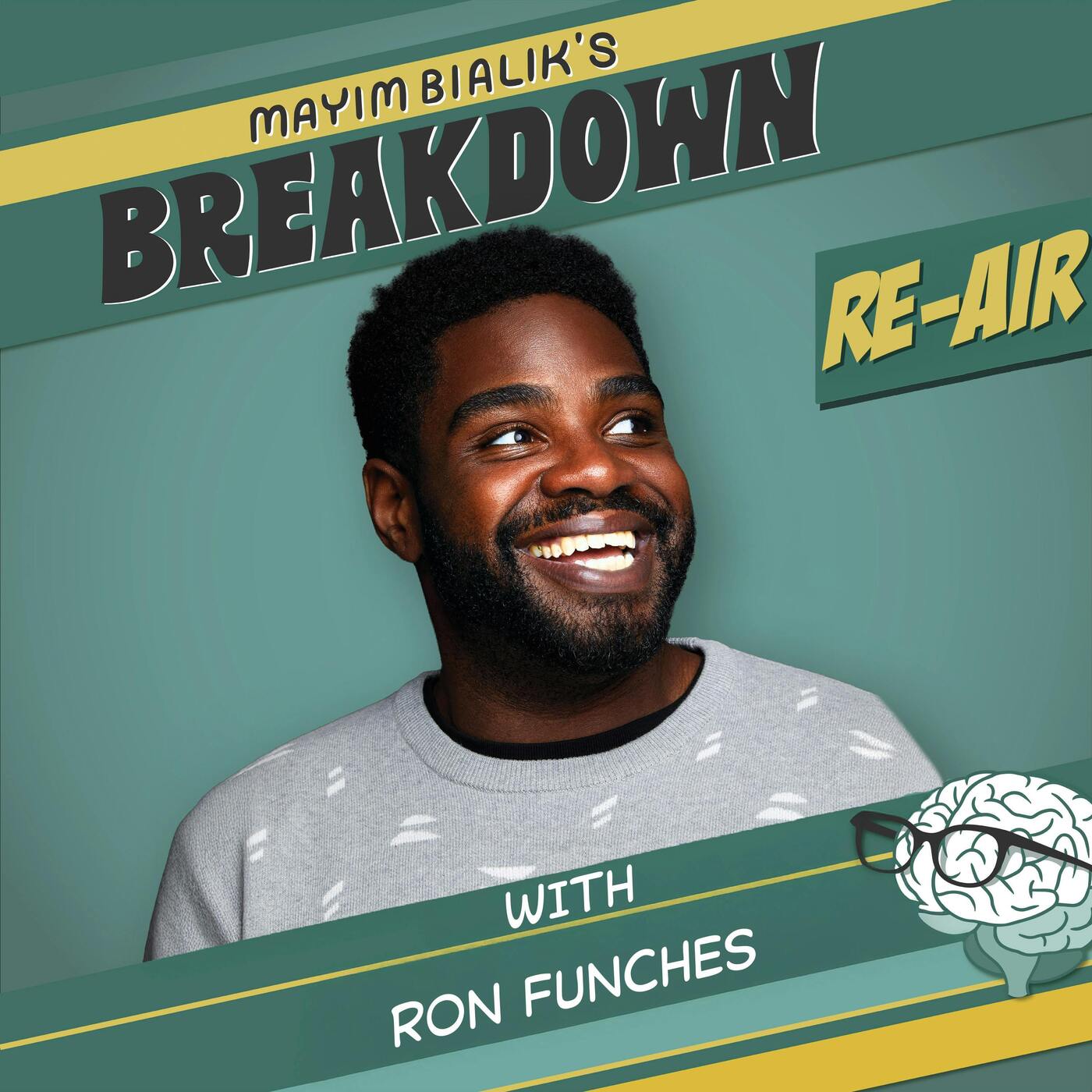
Mayim Bialik's Breakdown
Re-Air: Famous Comedian REVEALS Techniques for Manifesting Your Dreams, with Ron Funches
01:11:07
Loading summary
Transcript206 lines
- [00:05]
A
Hi, I'm Mayim Bialik.
- [00:06]
B
And I'm Jonathan Cohen.
- [00:07]
A
And welcome to our breakdown. As we kick off the new year, many of us are setting fresh intentions and trying to build momentum and really thinking about what are healthy habits that can take us through 2026. For that express reason, we're going to revisit an episode from 202023 with one of our favorite comedians, Ron Funches. You've probably seen Ron or heard his very distinctive voice in anything from New Girl to Loot to the Trolls franchise.
- [00:38]
B
Ron was actually the first person on our podcast to talk about the power of vision boards, and Mime actually goes full on vision boarding in 2026. She launched a exclusive Substack piece on it, and we wanted to include all of you on on the Power of Vision Boards. So this is why we are rerecording this episode. Ron famously has New Year's Eve parties that include Vision Boarding, helping people set up what their lives might look like in the new year, which sounds like a fantastic way to spend New Year's.
- [01:12]
A
We've been waiting for our invitation to one of these Vision Board New Year's parties at Ron's house for years, but maybe it'll come this year.
- [01:18]
B
Also in this episode is a very fun moment where I make Ron laugh hysterically with one of the best burns that he says has happened on this podcast. So check that out if you haven't heard it already.
- [01:30]
A
Wait, the burn is of me?
- [01:32]
B
That's correct. It's all in good fun. What's also fun is joining us on Substack for exclusive content like mime's Vision Board and the intersection of how science can actually back up something like a vision board and prove that it actually helps us create what we want.
- [01:51]
A
And now we hope you enjoy taking a look back at our episode with Ron Funches. Break it down.
- [01:58]
C
Thank you for having me. Of course. Thank you for letting me in your home.
- [02:02]
A
I did your podcast, like two years ago, I think.
- [02:06]
C
I think so.
- [02:07]
A
I think three years ago I was talking about Call me Kat at the time, and I think I was. Our podcast was new, so I appreciated you a little, allowing me to come on and talk about our podcast. And we're excited to have you here. I have many questions about many things. Okay, Jonathan, is there somewhere you would like to start?
- [02:28]
B
I just want to know what's up, man. How you doing?
- [02:30]
C
Thank you. Good combo.
- [02:37]
B
She comes with a list.
- [02:39]
C
I come with, like, This is a good interrogation. I'm doing well. I've been starting a New like training program where I'm eating some fun stuff and cooking more for myself. So that's made me feel good. I made a nice grilled salmon before I got here and so that was, I was like, this is a fun afternoon. Sit down on the patio and just eat it. After I made it and just made me feel like a real man. And then just been hanging out with my sons, been doing a little bit of touring, but I've been trying to cut back a bit. I mean in general, they wouldn't ask what you said, how in general, Sleepy, happy, somewhat stressed out and just trying to make it through the strike and get back to work hopefully soon.
- [03:36]
A
Absolutely.
- [03:37]
B
Firstly, cooking salmon always increases the value of the day. You know, it makes you feel good, like you accomplished something. So I understand that. But what's stressing you out?
- [03:47]
C
Oh, okay. This is. I thought about this before I got here.
- [03:50]
A
So it's funny he said he didn't have a list, but he's got a list.
- [03:53]
C
Yeah. Oh. I mean it's how you play the game. No, no, true good cop. He said that. I thought about this recently and so it made me both like happy in part of it because it was like, oh, my life's really changed. The number one thing stressing me out right now is I'm in the middle of a divor and I love that to just wrap up so I know what my life is going to be like and just so I can feel like I'm not stuck in an old pattern and that I'm moving forward. That would make me feel so much better. The second thing that is stressing me out in my life right now is that the bidet in my toilet stops functioning properly. And so it doesn't do the self cleaning function nor does it pulsate against my butt currently. And it is and I'm like, that's what I bought it for. So it's really stressing me out and my assistant is on a vacation so I have to be the one to take care of it. So it's gotta wait till she gets back. And so it's stressing me out a bit because I was like this is why I bought this and then. But I was like, oh, what a beautiful thing that that is my second biggest stressor. My third is just constantly my like just trying to take care of my diet and my health, make sure because I got two sons, two 20 years apart and you know, used to be 360 and then down a lot and then up a little and whenever I go up a little. It stresses me out because I feel like I'm gonna go back to where I was. So it's like sandwich of like real stressors, but in the middle, just like, okay, beautiful life.
- [05:32]
B
Well, it is annoying when things don't
- [05:34]
A
do what they're supposed to do, especially a bidet.
- [05:37]
B
So I just want to acknowledge that.
- [05:39]
C
Thank you. I appreciate that.
- [05:41]
A
It could be a wife, it could be a bidet. Nobody's doing what they're supposed to do in Ron's life.
- [05:46]
C
Yeah, I could do. Well, there's many dirty jokes I could make currently, but I will just not pick the low hanging fruit but let you think of it.
- [05:58]
A
Well, the first thing I was thinking when you mentioned your first dresser. And you're in good company. We're both divorced people, so you're in safe company. A lot of people before everyone was getting divorced when they heard that I was divorced. I was one of the first people that I knew, you know, in my circle. You. I was, I was a trend trailblazer in ways.
- [06:17]
B
First the flower hat, then the divorce.
- [06:19]
C
Yeah.
- [06:19]
A
And you know, I, I, I. Everybody having fun.
- [06:25]
C
I cannot let a good. That's a solid burn.
- [06:31]
A
What I was going to say is I come from a family where like, you don't get divorced. You just like suffer in silence until someone dies. Like, that's the thing.
- [06:41]
B
So that's how you know it's true love.
- [06:42]
A
That's how you know it's true love. But for me, I felt like a lot of shame. I felt a lot of shame about it. And I didn't know other people getting divorced. And then little did I know, you know, the 2000s were going to hit hard and heavy. And then a lot of people started getting divorced. I felt less alone.
- [07:00]
B
Unconsciously coupling.
- [07:02]
A
Some were unconsciously coupling, but I just, I guess you also, you got married during COVID Adorable pictures, I have to say. Thank you. It's not a sore spot to bring up.
- [07:14]
C
The pictures were great.
- [07:15]
A
A masked wedding is right. You really rocked it out. Thank you. And you have a tiny one. Like he's one. Is that right?
- [07:23]
C
He's 16 months.
- [07:24]
A
He's 16 months. Oh, my gosh, that's awesome. Do you talk about sort of the evolution of where you're at with it? You don't have to.
- [07:35]
C
You talk about ingest.
- [07:35]
A
Like the divorce. No, like with. Yeah, like what? It's like doing that with a little one. Especially like mine were 4 and 7 and it seemed like it's an added complexity. So I'm curious What that's like parenting this time around while also dealing, you know, with a larger stressor.
- [07:53]
C
Yeah, well, yeah, it's a mix of things. As, you know, I've always been. When my mom asked me about it and I tried to be honest, and she was like, well, would you have had a kid knowing that you would have gotten divorced so quickly? And I was like, it's hard to say. Like, you know, I certainly wouldn't have been like, you know, let's have this kid and then just not be together. This seems wild. And being a single, I mean, I was a single parent for many years already. I had sole custody of my oldest son for many years. And so I kind of thought that this was going to be kind of the, you know, inverse of that, where I was going to have this traditional family and come home from work and just shoot shows or do whatever I do, go on the road and come home and have this family dynamic. And then when I realized that it didn't that the, you know, ideal of it and the premise of it was better than the execution, it was a hard decision to make, but it was also more having my son was like a big trigger for to be kind of like, well, how do I want to raise him to be? What type of man do I want him to be? Would I want him to stay in something that's not working for him? Would I want him to compromise what he feels and truly believes in himself or to not follow his instincts? And I want. And I say no. You know, I always wanted to instill in my sons to believe in themselves and to follow what they believe in, even if it's a hard decision, even if other people tell you it's the wrong decision to believe in yourself. And I, you know, in order to say that, you got to kind of live that, you know, so that was a pusher into that. And now I'm just kind of look at the blessings of whatever I have, like, you know, having sole custody of my oldest son. It's been a lot of fully soul and to have someone that I can co parent with that someone that does take great care of my son and our son and does take love and just, you know, we not. We don't work together, but they seem to work very well together. So I'm happy for that.
- [10:07]
A
What's it like having kids a generation apart, essentially?
- [10:12]
C
Oh, it's awesome.
- [10:13]
A
What is your older son like? What's his take on being a brother at an age when some people have kids?
- [10:21]
C
Yeah, well, I mean, I had My first son when I was 20. So 10. Now have my other son. And then to see my oldest 20, being like, wow, you. You have such a baby face. No one should give you a child at all. I left him in a hotel room alone the other day, and I said, don't open the door for anyone. And he turned to his Spider man doll and said, don't open the door, Spider Man. I'm like, you're. That's the age I was. So now it's nice to have more resources and to be able to, you know, I just try to make sure I utilize them and not try to feel shame about it having a nanny or whatever and just I still feel older, so I feel tired. I definitely had much more energy when I was 20 and doing it, but now, you know, I think. And also my oldest son is, you know, on autism spectrum and I haven't, you know, Mike's too young, early to tell for sure. I'm sure he'll have his own character sheet to live by, but my youngest so far seems to be pretty neurotypical. And so that's a real difference for me to have a kid that's very social and likes to talk to other people. And, I mean, I remember when I was like, realized, I was like, oh, no, we're going to have sleepovers. I can tell already, we're going to have a bunch of sleepovers. And I never had to deal with that with my oldest son, so that's going to be something. And, oh, my God. Other people, parents,
- [11:58]
A
you were spared.
- [11:59]
C
I was truly spared because my oldest son was such a hermit. Didn't. I mean, other kids liked him, but he would shut the door and run from them. He. He truly preferred the company of adults usually. And so it was. He didn't like, you know, he get overstimulated. He didn't like loud noise and things like that. So he just was a. We grew up together. He was, you know, to this day, I'm just like, oh, my God, you're like the chillest roommate I could ever have. Like, he cleans the dishes, takes care of everything. He goes. Every meal that I feed Teddy, he goes behind and cleans his high chair. He's just a great big brother. But he's also happy when he leaves.
- [12:41]
B
Mind Bialix breakdown is supported by bioptimizers.
- [12:44]
A
You know, I struggled to get good quality sleep, and I just assumed it was stress. But as I learned during perimenopause and menopause, your hormones shift in a way that affects your magnesium levels and low magnesium. It makes everything harder. Not just sleep, focus, mood, your tolerance for stress. That's why I have added Magnesium Breakthrough Bye bye Optimizers to my nightly routine. It's a blend of seven different forms of magnesium designed to support relaxation and overall sleep quality. Try it. See if you wake up more rested and refreshed, you've got nothing to lose and a lot to gain. BIOptimizers offers a 365 day no questions asked money back guarantee. Magnesium Breakthrough is a huge breakthrough to improve hormonal balance, to help with focus, decrease brain fog, improve sleep hygiene. Overall, Bioptimizers makes it very easy. Jonathan what do they get when they go to bioptimizers.com breaker and use the code breaker?
- [13:37]
B
You get 50% off your entire order and a free bottle of Mass Zymes
- [13:41]
A
Bioptimizer's best selling digestive enzyme that'll be added to your order automatically when you use our exclusive code.
- [13:47]
B
That's a $20 product, free on top of your discount already.
- [13:52]
A
This is a limited time offer and while supplies last, you can't get it on Amazon, you can't get it in stores. This offer exists in one place. Our link. Our code. That's it. So maybe you were already thinking about it. This is the sign. Go to buyoptimizers.com breaker use the code breaker. Grab it before it's gone. Make 2026 the year you finally start sleeping again.
- [14:10]
B
This episode is sponsored by Wandering Jews, an open door media brand.
- [14:16]
A
If you've ever found yourself feeling like you have more questions than answers, you're in good company. The Jewish people have been like that for thousands of years. Wandering Jews with Michal and Noam is a podcast where two of today's most dynamic Jewish voices, Michal Bittone and Noam Weissman, dig into the biggest questions about life through a Jewish lens. It's the kind of conversation where you'll laugh, learn something new, and probably shout in disagreement at least once. Michal and Noam tackle the tough topics like anti Semitism in America, what happens after we die, and the future of religion with guests like Bret Stephens, Michael Rock Rappaport and Sarah Hurwitz. And this past month, in honor of Jewish American Heritage Month, they've been celebrating some of the Jewish lives and institutions that have shaped American life, from food to music and comedy. Thoughtful, joyful, and always honest. That's Wondering Jews with Michal and Noam, a production of Unpacked. Find it on your favorite podcast app or on YouTube and make sure to hit subscribe Check out Wondering Jews with Michal and Noam podcast and subscribe at Unpacked Bio nmx.
- [15:18]
B
How is your patience different with going the second time around? I meant I know for me, when my son, who is now 15, was born, hearing him cry, like, I hadn't been around a lot of babies, hearing him cry was, like, maddening. I was like, I gotta do something. And there's, you know, sometimes nothing to be done. They just want to. They just need to cry a little bit. But was it different for you the second time?
- [15:43]
C
Yeah. I mean, and with the autism especially, you have to learn a lot of patience and, like, repeating things, repeating commands, repeating whatever, you know, soothing, whatever you have to do. There's a lot of patience and repetition. So I've been well trained in that now and then also, having the second son is truly a second thing where I'm like, you're fine. Like my ex, she would, like, squish his little blueberries, you know, every month. Because I was like, oh, you're clearly the first time you had a kid. I'm like, if the blueberry takes him out, he's not meant to be here. He's weak. His gums can't handle a blueberry.
- [16:33]
A
It's interesting because I, you know, you hear people talk about when they have their second, you know, like, oh, the second child, like, the first child gets, like, the photo album, and, you know, the second one is just like, hopefully in the background of some picture somewhere. And if you have a third, like, there is no photo album. But I hadn't thought about what it would be like to have them, you know, 20 years apart. But it's true. You. You already have kind of a parenting toolbox of like.
- [16:59]
C
Yeah.
- [16:59]
A
Even though it was 20 years ago.
- [17:01]
C
Yeah. And I mean, and that is a big difference. You know, things change so much in 20 years. And there seem to be wildly different type of boys. My oldest is kind of felt, like, always like a firecracker. And my youngest feels like a wave where he's like, he's chill, but he's always on the move. He never stops moving. And so that's very tiring. And just again, the resource difference is kind of the opposite. Where my youngest, you know, there were times where, like, I would be so embarrassed and ashamed because we only had, like, one pair of shoes for him and thing. And now my youngest, you know, has like, three pairs of Jordans. So it's like such a. He dresses like a little rich man.
- [17:49]
A
The one picture that I was looking at there's a really sweet picture of your older son holding your younger one, which is also just. It's ridiculously cute. But I did notice the Jordans on the baby. It's pretty cute. Can you talk a little bit about sort of like the differences, as you said, in sort of resources and what your life was like when you became a parent the first time and then what it's like now?
- [18:12]
C
Oh, yeah, for sure. I mean, it was horrible. It was not a good idea. I was 20 and I had no education whatsoever. I went to community college for three weeks. I hadn't started comedy yet. I worked at a grocery outlet, not even a regular grocery store. Well, they were like, you get the spoiled stuff. That's what I dealt with. And then. So it was a very stressful time. It was stressful all the time, every day.
- [18:51]
B
What city were you in?
- [18:52]
C
I lived in Salemore, Oregon. So it was just. And I was lucky for as far as his autism diagnosis, because especially at that time, Oregon was on the forefront of, like, dealing with different therapies. And I ended up living right across the street from an ABA therapy place. So it was per. I mean, it's. You know, some things are just kismet in that way, and. But it was certainly, you know, food stamps and WIC and the things of that nature. So now to be able to. I mean, those are things. Even when the separation and divorce, I'm still very proud of myself to be able to, like, oh, I'm taking care of two households and I'm making sure that everyone is thriving and well taken care of, and not just monetarily, but with time and with, you know, just getting down on the floor with him and playing with him. Like, I love to do that type of stuff as well. I try to, you know, balance. Now that I know what my schedule is with him. Usually the days he's with me, I don't really. I mean, I do a podcast like this, but that's about it. Now than that, I'm just with him all day and hanging out. Sometimes I might take a nap. The nanny will take over for an hour or two. But other than that, it's just us playing and hanging out, and it's nice. I couldn't give that to my first son, especially. And it was in a positive way, especially, you know, once he was diagnosed, I was like, I need to make money. I need to figure out a career. He might need to live with me forever. And so it was very much like, once I found comedy, I was just out doing it every Night trying to get away from open mics and find paid shows. So in that regard, you know, my son stayed with me in a lot of Motel Sixes and Super Eights to this day. Sometimes I was like, where do you want to go? Vacation? I'll be like, let's go to Oregon and stay in the Motel 6. And I was just like, dude, if we ever do that again, I've made some terrible choices.
- [20:55]
B
I'm curious if you know, your son, Having your son was like a motivation that you think you needed. Do you think you would have found something if you hadn't had your son? Or were you like, I need to search right now. And like, kind of. You needed that?
- [21:10]
C
Oh, yeah, I certainly needed it. Yes. For sure. I wouldn't. That's what. My son's very spoiled. He gets whatever video games, whatever he wants. And then a lot of people are like. And it's like he truly. This is the definition of. He was shooting with me in the gym. He was part. He was the reason I was doing things. But without him, I didn't have a lot of self esteem for myself and I didn't have a lot of motivation. And I had low standards. And so living in a crappy apartment, having no type of future, I was like, this is fine for me. But as soon as I had my son, I was like, this isn't fine for him. And so that was a high key motivator for me to figure something out and to do it in a consistent and stay focused. I think certainly coming home every night and knowing that he was the reason I was doing it. I mean, and it's still selfish, but I love doing comedy. It's not like a full altruistic thing. I love it, but he certainly was the gas that made it. So I didn't just go and do a show and then hang out and do karaoke in Portland. You know, I did a show and then did another show and then came went home.
- [22:23]
B
You can love it, but it still requires an enormous amount of work. You have to overcome setback. And so, like, if you don't have that motivation, you know, maybe you don't go as far as you do.
- [22:32]
C
Yeah, I think so. Certainly for me, absolutely. And now it's just same thing with both my sons. They motivate me with my health, with my comedy, with everything to just kind of provide a fun life and to make sure that it's not a temporary situation that I'm able to, you know, take care of them for, you know, for generations.
- [22:56]
A
Speaking of Motivation. I was curious when you mentioned, you know, like, eating differently and things like that. You know, I had my first kid at 29 and my second one, whatever, a couple years later. But when I see people who are, like, deep into their 40s and early 50s with toddlers, like, I don't think I could do it. Like, I think, yeah, I don't. I don't. I don't think I would have the physical strength. I mean, there's the exhaustion level. And you're still a young man, but I wonder if that's also part of it is like, you are 20 years later, like, now, you know, you're the age that you are. Like, the body.
- [23:39]
B
That's a young dad in la.
- [23:41]
A
Exactly. No, but I'm thinking, like, that you still, like, that child doesn't know. They're like, I want the dad who can run, play, do all those things. So that's also, like, its own kind of motivation. I mean, I started. I know we. We share a jiu jitsu connection. I started doing jiu jitsu. It was something that my kids were doing. But I'm so glad that I started because, first of all, it gives me something that, you know, we kind of, like, do together, we track together. But also, like, it was something that motivated me to, like, stay active because their needs don't change just because I'm in my de.
- [24:16]
C
Yeah, no, yeah, that certainly. I mean, that was one of the reasons I. It was more of like a now or never thing with having another son. And it's very emotional in ways, and now shortsighted in some ways, where. Because I just missed having someone whose feet fit in my hands and their head was in my elbow. And that lasted, like, two weeks. He had very long legs, so it was not. I was just like, oh, wow, now I just gotta deal with you for the rest of my life. And he's the best. I love him. I'm so glad I did it. But it certainly wasn't like, oh, I want to do this, and I'm 45 or 50. I mean, I got a vasectomy after. So now, I mean, it was done. It's just two kids and I'm out.
- [25:00]
A
So two and done.
- [25:01]
C
Two and done. But, you know, and. And the most selfishly and honestly, I always still worry about my oldest son. And I wanna. You know, a lot of my ways of insulating his life had been through money. And then I realized, oh, at some point I'm gonna die, and hopefully he will still be alive at that point. And I really Wanted someone who loved him enough to also still be around him, who might want to check in on him. And so I. And I love to see that. Now. That's actually one of the biggest joys in my life, is to see how much they love each other as brothers already. Like, how excited Teddy is to watch him and to, like, see the things that he can do that he can't do, you know, and go like, oh, you know, you see it on his face. It's like, oh, I can't do that yet. But, oh, maybe one day I'll be able to jump on a trampoline like you, you know, and it's so cool to see and again, how much Malcolm takes care of him. It's just a nice bond that they have already that I'm hopefully going to cultivate for the rest of their lives, because I'm going to need them to stick together.
- [26:14]
A
This is an odd question, so feel free to tell me that it's odd. Is there something in particular also about having your older son who's on the spectrum and has a very special kind of tenderness? Is there something unique that you see in that brotherhood that you might not see if your older one wasn't on the spectrum?
- [26:35]
C
Well, I just. In general, I noticed a real shift in him and the fact that he went from. I mean, and he still does have, like, you know, stuffed animals on his bed and things like that. But he certainly shifted into this, like, oh, I'm 20. I'm the big brother. I look out for you. I tell you, don't do that. I tell you to be careful. When he was used to being the one who was told to be careful and stuff. And now he's just very kind and proactive. I mean, he's always been that way, but, I mean, it's probably one of my biggest successes is how kind he is to everyone. And my mom came to a show in Chicago I was doing a couple weeks ago, and she was talking with my aunt, and she told me a story that I didn't even know about, where she said, whenever she comes to visit my son, and oftentimes I'll be on the road, and so my son will let her in and ask her what she wants for lunch and bring her, like, a Postmates menu, and then he will order it for her and then bring it to her and then clean up the place after her. And I was like, that's such a. Like, that's what a good man does for his grandmother. And I love that he does that naturally.
- [27:55]
B
It's very sweet.
- [27:57]
A
How did you get into Jiu Jitsu? I know you're a. You're a wrestling fan. Yeah, like your whole life.
- [28:01]
C
Yeah, since I was five. Wow. Yeah.
- [28:04]
A
You were raised on like classic wwf, wwf, wcw. Who did you like?
- [28:10]
C
I mean, everyone at the time. Hulk Hogan, Ultimate Warrior, Earthquake, Coco. Beware to co Scorpio, Hot stuff. Eddie Gilbert.
- [28:21]
A
Did you go to stuff in person or you watched on tv?
- [28:27]
B
See how that list.
- [28:28]
A
Go ahead.
- [28:29]
C
No, it was. What were you saying?
- [28:32]
A
I was just curious if you went to venues in person or if you were. Got it.
- [28:36]
C
Yeah. My uncle would take me to shows in Chicago. Chicago has always been a hotbed for pro wrestling and comedy, so I would go to Rosemont Horizon and see WWF house shows when I was younger and I guess fell in love with it.
- [28:52]
A
How did you discover Jiu jitsu?
- [28:54]
C
Freddie Prinze Jr. I mean, I heard. Heard about it before him, but he really brought it to my life. He did my podcast once and then we just kind of. He also is a big wrestling fan and I think owns a wrestling league currently. And he talked about how much. Everyone else who I talked to about Jiu Jitsu had always really stuck with the physical aspects of it and the defense aspects and the aggression aspects. And he was the first person who talked to me about the spiritual aspects of Jiu Jitsu and how it made him feel, the confidence that it gave him, the spirituality that it gave him, the. Just the guidance and just the. How it helped his. He said that it felt that it helped his acting. And so when he. The way. You know, sometimes it's not even what someone says to you, it's how they say it and the love in their voice that you hear about something. If someone tells you about a dessert that you know a waiter and you can actually hear like, oh, they've tried this dessert. They really believe in it. And it was just the way he spoke about Jiu Jitsu and his professor in general that I was just like, okay. And then once I got. Was getting divorced, I was like, okay, there's going to. I've been divorced before, so I know some of the steps. I know there will be a lot of anger. And I was like, I should probably put that in a positive way. I know I would want to choke someone. I should probably get someone who will volunteer. And so we put those together. And so in January, I started going and. And. And been enjoying it ever since. I love it.
- [30:30]
A
Go two, three days a week, really.
- [30:32]
B
My Ambiox breakdown is supported by Bio Optimizers.
- [30:35]
A
I struggled to get good quality sleep and I just thought like, ugh, it's stress. But I learned during perimenopause and menopause your hormones shift and it affects your magnesium levels. Low magnesium makes everything harder. Not just sleep, but focus, mood, stress tolerance. That's why we added Magnesium Breakthrough by biology optimizers to our nightly routine. It's a blend of seven different forms of magnesium designed to support relaxation and overall sleep quality. Try it. See if you wake up more rested and refreshed, you've got nothing to lose and a lot to gain. BIOptimizers offers a 365 day, no questions asked money back guarantee. Magnesium Breakthrough is a fantastic way to improve that hormonal imbalance that especially happens with magnesium. And then you have better focus, you have better sleep hygiene in general. Bioptimizers makes it so easy. Here's what you get when you go to buyoptimizers.com breaker and use the code breaker15 off your entire order and a free bottle of Mass Times. That's Bioptimizer's best selling digestive enzyme added to your order automatically when you use our exclusive code. That's a $20 product free on top of your discount. This is a limited time offer. While supplies last. You cannot get this on Amazon. You can't get it in stores. The offer exists in one place. Place our link, our code. That's it. So if you were already thinking about trying it, this is the sign. Go to buyoptimizers.com breaker. Use the code breaker. Grab it before it's gone.
- [32:00]
B
Make 2026 the year you finally start sleeping again.
- [32:05]
A
Early birds always rise to the occasion for summer vacation planning because early gets you closer to the action. So don't be late. Book your next vacation early on VRBO and save over 120. Rise and shine. Average savings $141. Select homes only.
- [32:20]
B
So we were going to ask you what your spiritual impact or how has jiu jitsu impacted you spiritually in a lot of ways?
- [32:28]
C
I mean, I guess the most simple ways is with putting real self confidence, the feeling that I can have a connection with my body and myself and full focus. That's what I really enjoy about it. I feel like every time I do it it's like a bad. I get baptized, sweaty, I'm laying on the ground, I'm smiling. I really have to slow my brain down and focus but also stay active physically and you know, and I'm starting now to just now get some of the very Basic lessons of like, not thinking while I'm doing, but just following my instincts. And a lot of it is also going against your base instincts of like pulling away from someone or, you know, making a rash decision. And to be able to like, kind of slow down and see beyond your like, like low level and primal reactions to like, what is actual. Like is a higher decision making is very spiritual to me and I enjoy it a lot. And just some of the lessons with my divorce and I mean, he was just teaching me an escape. If you. I tell this when anyone ask is he's teaching me this escape, and he's like, there's two options. He's like, when you turn away from me or the other one, you have to turn into me. And you might get your face mushed, you might get some rug burn, but you should be able to get away. And. And it was just so profound to me of like, that's a lot of choices in life is that sometimes the only option is to go through uncomfortable situation where you get your face mushed and you get your cheeks burned, but you get out of it and the only other option is to just submit and then you've lost. So there's just, you know, there's been lots of lessons, but it's only been eight months. So I'm imagining I'm gonna get some more.
- [34:13]
B
I mean, that's a pretty powerful analogy right there.
- [34:16]
A
For most of life, you know, my Jiu Jitsu experience was, you know, I was usually one of the only females, so it's very different because one of the things I really loved about Jiu jitsu is. And I, I think this is also a bit of a spiritual principle is learning to leverage what you have. Even if it doesn't seem like it's the strongest in the room or the biggest or the, you know, you don't always feel the bravest sometimes just based on what you're kind of coming to the table with. But the notion of learning more about your body, learning about leverage, learning positioning, and often escaping is also really helpful. And I think of that as kind of a spiritual principle.
- [34:52]
C
I agree with you. And I said if I had a daughter, I would feel like I would. I mean, I wouldn't force them, but I would certainly try to introduce them to it. Because just the base level of like a lot of it being thigh based, being hip escapes being how. What do you do if someone's on top of you and you don't want them to be? I think that's lessons that should be instilled in, you know, most women that need them, unfortunately. But I certainly, if I had a daughter, I think it would still a lot of self confidence. I'm. I mean, I'm gonna put my sons in, especially. I took my oldest. He tried once. He said he doesn't want to go back, but I'm gonna put my youngest. Hopefully he's gonna like it and get into it. And let me just say what you said. It was one of the first places that really told me to, like, oh, use your. Use your weight, use your leverage. You, you know, smush me. Like, you know, going to be what you have. That's helpful for you because sometimes, you know, going on my health journey and stuff, a lot of times my weight has been always used as a way to put me down or to make me feel bad. And one of the first things he said to me was, like, make your weight my problem. And I was like, oh, my God, that's such a better way to look and better way to feel about it. Like, this is. I am who I am. You'd have to deal with whatever I bring.
- [36:13]
B
I like that a lot. Use what you have for your to your advantage.
- [36:17]
C
Yeah.
- [36:19]
B
There's a lot of talk about jiu jitsu amongst comedians. You know, probably because of Rogue.
- [36:25]
C
I think we should start a league and just fight each other. Me and you. Russell Peters can fight. Yeah.
- [36:31]
B
Everybody you have to fight while also making them laugh.
- [36:34]
C
Yeah.
- [36:35]
B
But what do you think there's. What's the parallel between comedy and jiu jitsu? Or is there one?
- [36:41]
C
Well, I don't know if it is just comedy. Other new. A lot of comedians that do it, I feel. And it might just be where we go because it's an affluent class, but the amount of, like, successful people I see in jiu jitsu, the amount of people who, no matter what their industry is, they really are good at it, they have success at it and they're looking for mastery of it beyond, just like money beyond. They're looking to really get into the details of their craft. And I think a lot of that with the comedians who do it with the actors, whatever, it's all these people who really love problem solving, really love figuring something out, really love putting forth an effort and sweating and failing. Because that's how we got to where we are. That's how I got to where I am, by failing so many times, so many bombed auditions, so many bad sets, and having something where I start at the bottom of and. And have this white belt. And I know I'm probably have it for years, and I'm just gonna go and get better. And I feel my progress. I see my progress. I think, in turn, it has helped my comedy, where I'm able to look at the details a little bit more. I'm more confident in my abilities. I'm more confident, just in general, of just like, okay, if you hate this joke, what are you gonna do? You probably don't know jiu jitsu. Come over. Come on over. If you do know jiu jitsu, don't. Because I just started.
- [38:17]
A
I think also jiu jitsu is a very creative kind of, you know, fighting form.
- [38:23]
C
Very improv. Yeah.
- [38:24]
A
Like with Taekwondo or with, you know, some of the other, you know, Eastern martial arts. There's.
- [38:30]
B
There's more fixed formats.
- [38:31]
A
There's. There's forms, and there's a lot of formality. And, you know, we bow, and there's like. Like a way that you bow. Like, someone got called out by our. Our instructor because their eyes were focused in the wrong place while bowing. Like, it's that, you know, specific. And what I remember, you know, from Jiu jitsu is kind of like, whatever works is also the rule, which is also true in comedy. I mean, it's true as an artist. Jiu jitsu really is about, like, read the room, you know, read the body in front of you. Every time it's gonna be different. Something that works with one person on any given day may not work with someone who you think is gonna have the same, you know, style or whatever. So I think when I. When I think of jiu jitsu, like, there's so much creativity to it, and that makes sense to me too. And I think the lack of structure, I would imagine, you know, really appeals to people who are used to being kind of creative like that.
- [39:25]
C
Yeah. And just, like, I love it when you. I mean, the creation. When you think of something and you go, okay, I'm gonna try to do this. And then it works. It gets so exciting. And when you're able to not just think of it, but able to physically execute it at the speed that I need so that my professor doesn't just turn me around and flip me over, it makes me. Especially when I know, you know. Cause there's certain times when I know he's like, all right, well, you've gotten me here. I'll let you get it. There's times where I am like, okay, he doesn't want me to catch him yet. And when I do, it makes me so happy.
- [39:59]
A
I'm curious if you can talk a little bit about what this strike period has been like for you?
- [40:04]
C
Sure.
- [40:05]
A
You know, everybody, depending on our version of employment or art form has been impacted differently. And, you know, for a lot of people who write, you can still write during the strike. It's just there's not a lot we can do with it. So I'm kind of curious, you know, you also have this baby, and so that's also probably been a period of time, you know, getting to know him at this age in a different way. But yeah, I kind of wonder if you could talk a little bit about that.
- [40:33]
C
Yeah, I mean, I'm probably in a very rare situation where I was like, stressed out about it, but I also was like, oh, this is actually great timing for me because I got separated last winter about October, and had to go start working on the show that I work on. I guess I can say them now, Lou on Apple tv. I couldn't say that before. That's fun to say again. Check it out. And so that started back up in January. And so right before it started up, I went to Amsterdam and Paris for like a little trip to just kind of clear my head and hang out with friends and smoke a lot of weed and then. And go to the Louvre on mushrooms, which I highly recommend. A wonderful experience and. But certainly nowhere near healed at that point. But had to go to work and I thought it would be a escape and would be like, okay, I can't focus on anything else. But what I found was that, oh, I have all the emotion from this mixed with the emotion of working 14 hour days on a set. And so I. And I think I handled it very well. I don't think I yelled at a single person or no one would have thought I was a bad person to work with. But I certainly felt it every day. I would leave and I would just be drained and I would be completely worn out and tired and just sad. And so to kind of suddenly have this break to be like, okay, well, now you can have time to go to Jiu Jitsu more, you have time to see your therapist more, you have time to go back. I mean, a lot of my life this year has been returning to the roots of things that made me happ. Got to meet where I am. So to just be had to go back on tour and do standup and see some of the people who knew me when I started, like in shows in Portland and to have people who knew me from like one year in, two years in and come and see my show and have them Be like, this is like the most authentic version of you that I've ever seen. This is. And that's what I've been really working on. So it's been a nice. In that regard. I. I mostly just been feeling for other people, for the people who I worked with on lute, the PAs, and everyone who. The makeup people, the hair people who, you know, truly. Cause you know, whenever you go on those sets, you hear about like, I got this coming up and then this and then this. Because that's what they need in order to make ends meet. They have to have three or four things lined up. And so just being stressed out about that for them and also me realizing it's helped me realize a few things where I'm like, oh, I don't think I want to tour as heavily as I used to. You know, I had my new son. I've really noticed, you know, that I'm 40, how bad it is for my health, how hard it is for me to maintain my diet and my exercise, and how those things are kind of more important to me now than, like, doing 20 sets all over the country. You know, I'd rather. I can do shows in la. I can do. I mean, I'm always going to want to perform and that's it. Again, like, just getting back to the basics of, like, oh, I don't necessarily need to sell out a bunch of theaters. I just love doing comedy. So if I can do that while also hosting some show that keeps me home and near my son, that would make me very happy because I want to do a lot of the things, like I said that I could. Didn't do with my first son. I want to. If he gets in a sport, I want to be a coach. I want to be aid. I want to go in the museum trips and hate them. You know, I want to do it because, hey, it'll give me a bunch of material. That'd be great. And it'll be a way because especially having the two kids, like, I'm really aware now of how quickly it goes and how, like, one day you have this baby, and the next day you're watching them put on a graduation cap. And I want to be as in the moment with my new son as I can be because he seems to be a special little boy from already just seems like a sweet guy. And so I want to get. Continue to mold that for him.
- [44:56]
A
I have a question about. You kind of mentioned a bit of the momentum that happens, I think, especially in comedy, where once you have some level of success. And you sort of book stuff. There's this momentum of, okay, now we book more and we book more and there's a tour and there's a thing, and it's like, more, more, more. And it's something. We were talking with Fluffy about that in particular about, you know, there's a certain kind of, like, emotional burnout, I think, in particular for comedians because it's such a. It's such a raw and vulnerable. Like, you're up there kind of sharing so much of yourself. But I think about it not just for people in our industry. Cause obviously I experience it as an actor. There's like momentum. It's like, oh, well, you did this show and so now you're gonna do this, and now you're gonna do this, and now we're going to book you for this. So I wonder if you can speak a little bit about sort of what that's like to. To take control of it a little bit and say, I'm not just going to keep going on that momentum, but, like, what do I actually want? What makes me happy?
- [46:00]
C
Yeah, I mean, I think it comes as part of the whole. Trying to have mastery over my craft is just not only on stage, but also realizing what I wanted from comedy, which at every time, I just wanted to be able to pay my bills, take care of my. And have a good life. And in order to do that, I have to have a nice work life balance. I have to go on vacations, I gotta have fun. I gotta go to concerts, I gotta see live performance because it refills my cup. It inspires me when I go see other people perform and see them happy. And in her element, I saw Maya Rudolph, who I work with every freaking day on a show, and I see how talented she is. But I saw her do her Prince cover band Princess, and it was like a whole nother. And I was just like, oh, my God, this is like. I can see how happy you are. I can see how in your element, how much she controlled that room, how sexy she was. And it was all these things where I just. Like, that is so beautiful to like. You do this because you want to, because this is what makes you happy. And then in turn, it has filled an entire room and it's sold out. And so I. I am not there yet. But that's the path that I want to be on. That's where I want to head towards. And a lot of. You know, there's a time where you were so used to being told no that when people start Saying yes, you don't know when to turn them away. You don't know when to turn. You know, when someone offers, if it's an offer, I'm like, sure, we'll do it. And then it led to me having some bad times and some bad experiences. I'm a big believer in mantras and different things. And there's this one time I just made a mantra where I was just like, you know, what I really want is less work, more money. And that's easy to say and fun to say, but it's terrifying in reality sometimes to turn down something and just go, I feel like something better is going to happen. But it has for me, it served me well and the little bit is scary. But whenever I do it, it turn if I don't feel it, if I don't feel like it's going to be fun for me. And I've had some great mentors, I've had great people around me. And my acting coach from day one, she was just like, there's like five or six reasons why you take a job. Money. Do you need that money? If you need it, take that job. Is it going to be a good experience for you? Is it going to be an experience where it's going to bring you around people? Maybe it's not going to give you the money, maybe it's not going to be that fun. But is it going to bring you around great people? Is it going to bring you around the people that you want to be around? You know, and if those things are true, then take the job. But if they're not true, don't take the job. And that was difficult for me sometimes, but it didn't. And I've seen so many of my friends who are more successful than me and like, they never take a vacation, they never seem that happy. They seem very frustrated. And I was just like, I don't ever want, like, when do you win? You know, when do you realize that you have a beautiful life and you have fun? And so I rather, you know, make a little less money and go to Japan for a couple weeks or just do what I need to, to have a fun and beautiful life. Because that's what I'm here for. I'm not here to, you know, produce content for other people. I'm here to have a fun life.
- [49:36]
A
It almost seems like there's like two phases to self esteem in the that, you know, especially for those of us who live off of other people's applause or approval or like that's how we know we're successful. Right? Is when someone hires you for the thing that you do that makes them happy or rich or whatever it is. It almost seems like that's the first hit that your self esteem gets, like, oh, I have something of value to you, or you will exploit me so that you can get wealthy. And in the process, I will be. Be more well known or I'll make money. So that's like the first phase of this self esteem shift. But then it seems like the second and more kind of mature aspect that you're talking about is then being able to say, I don't just live for you. That self esteem means, like, I have esteem for myself in that there's a place where I now get to say, is this making me happy or is it making me happy in this way? Stuff?
- [50:34]
C
Yeah, I mean, the pandemic was certainly, I think, the thing that shifted me from that because it stripped away everything I had defined myself for previously, where I was just like, I'm a comedian. I'm a comedian. This is what I do before I'm a dad, but I'm a comedian. Ron Funches. And then when I couldn't do stand up for like a year, it really, you know, it was devastating. But out of that devastation came this thing of like, oh, what really am I? Like, who am I for real? And I'm like, oh, I'm a great dad, I'm a great son, I'm a good friend. I'm like all these other things. And that to me, started to really feel solid, as opposed to judging myself based off of my last set or if someone wants to give me a special or if, you know, because it never. Because it's always a shift. Shifting goalposts. The things that I wanted so much when I first started, you get them. And then it still is just like, okay, well, I'm on a show, but why don't I have my own show? You know? And it's just like, these things are ridiculous when you say them out loud, but they really affect you mentally. And I mean, one of the greatest things I had was sometime I think I don't know where we were, but we were in the same building somewhere together. I don't even know if we knew each other at the time, but I heard you, like, you were pitching something or working on something. And it was just after Big Bang had ended and you were talking about how frustrating it was because whoever you were talking to wasn't receptive. And I really opened my eyes at times. I was like, oh, she was on Blossom. And then she just comes off of this and she's still. They still won't fucking just bet on her. And I was just like, oh, okay. It's not personal. It happens to everybody. Everyone, you know, And I still. I forget that sometimes, but it's been a helpful reminder.
- [52:33]
B
I wonder how much that actually also frees you up to do the comedy that you want to do if you're not like, oh, I just need that next special. And I won't name names, but there's been in the last, you know, six months, some comedians that have released comedy specials. And I listen to them or watch them, and I'm like, this feels like you just needed another hour. And sounds almost like a parody of themselves versus, like, really being able to say something new or, you know, they didn't feel like they were in their own skin.
- [53:04]
C
Yeah, I understand that, and I agree with that. I will just. The standup comedian, me, give some excuses and just be like, you know, not everyone is an actor. Not everyone wants to be an actor. And so sometimes these specials are the best way that they can make money in order to continue to tour. And so it's not necessarily about them being ready or wanting or feeling like they even make an error sometimes. They're contractually obligated to deliver a special every so often. For me, luckily, no one's bringing down my door for that all the time, so I get to do what I prefer, which is to kind of create and let my life change. And most of my comedy is personal. So the more I live, the more I go through things, the. The deeper I'm able to make the connections in my standup. And, you know, and I've been lucky. I'm lucky I didn't put out a special. If I put out a special a year ago, it would have been how much I love my wife the hour. So I've had to restart a couple of times with material and adjust and change. And I just, again, I always try to go back to the childhood version of me and what I loved and what I enjoyed. And I never cared if, like, my favorite artist put out. I liked wanting something to come out waiting, be like, oh, when are they going to do it? My favorite artist of all time is Outkast. And I love that every album that they put out, so sonically different, such a change, such an evolution in their lives that you can tell you knew where they were in their lives with each album from their debut, where there's these young, hungry people talking about looking up at ceiling fans. And you can see the pencil marks and the things that they're writing in the dungeon. And to them, to the hey, y', all of like, my life is a Super bowl pop festival, you know, and to have so much evolution and change, it was like they didn't operate off of a yearly schedule or two year schedule. It was about when. When the new album was better than the last one. And that's kind of how I judge my. The way I create an hour is like, when do I feel this is better than the last thing that I put out? And currently I'm getting real close, so I'm hoping I'm tape something soon.
- [55:28]
B
That's awesome.
- [55:30]
A
I want to. Before we let you go, I want to visit a different aspect of Ron. When he was little, your mom was a social worker. And my parents were public school teachers, which sometimes felt like they were therapists and parents to all the kids that they spent most of their day with. I had parents who had to deal with other people's children all day and then come home and deal with us. And I'm curious, did you understand what your mom did?
- [56:02]
C
I sound like you have any issues with that?
- [56:05]
A
Just a few, no. But I'm curious if you knew what your mom did. I mean, social workers are often a bridge in so many situations, but when there's not mental health access of a certain type. So to me, when I meet people who know social workers or who are social workers, it's such a precious, precious, in many cases, thankless kind of task. And I wonder, where did your mom work? Where was she a social worker? And what do you remember of that?
- [56:36]
C
She worked for Salvation army for many years. And what I remember mostly, and I didn't know at the time, but now it's just kind of interesting to have someone who spent their time, all their days helping other people, trying to help them connect resources, trying to get them out of bad situations, help their children, you know, have better food and better things. And. And while we were literally probably one rung above that, like, my, you know, my mom was a single mom. She was the only one bringing money in. My dad wasn't necessarily supporting the family at that time. And so we were not doing well. It wasn't like she was like, well, now my life's good and I'm gonna be the social worker. Like, she. She was going into the projects, going to Cabrina Green, going to places, and then, you know, just kind of. And sometimes she would take me and she'd just be like, you know, if you don't, this is where you can end up. If you don't, you know, take your schooling properly. If you don't, you know. And that's one thing I love about my mom, is that she was always extremely hardworking, extremely active with us and showed us other things, took us to museums, took us to musical performances and just showed us art and showed us that the world was bigger than where we were. And it's just. She's always been a helper. You know, she went from being a social worker to being a nurse, and she worked with a private nurse for a while with a bunch of, like, rich older people, and she didn't like it, and she started working as a nurse in a prison and loved it. And, you know, just being able to help people and giving care to some people who a lot of people had turned their backs on. And so she loved. She said she hated her co workers and loved the prisoners. And my mom's just a helper. And now, you know, she's got four grandbabies. She lives with my sister and splits time over here and just helps transcript kids. And whenever my friends have a trouble, like, my friend's dog dies, and she was like, can we call. He was like, can we call your mom? My mom is just like the best advice giver, the best supporter, because she's been through so much and she's seen so much, and it's always such great advice. And, you know, she was one of the. When I made the decision to get divorced and get separated, she was one. You know, I was really surprised because I felt like, you know, get some judgment. I got some of my cousins being like, you guys should try to figure it out. Like, you don't. You've never been to our house. If you've been here, you might not say that. You seen the. The. The chemistry over here. You might not say that. But my mom was just like. She's like, especially, you know, I have the little baby and everything. So I was really worried about what she said. And the first words out of her mouth is that she was perfect. She's like, I under. She's like, I can't imagine how tough this decision this is for you, knowing that you're not gonna see your son every day, knowing that your life's gonna change, knowing that you, you know, you might lose some money, you know, knowing all these things and you're still making the tough, right decision for you. And she's like, I'm proud of you. And that's just kind of like the person my mom's always been. She's been a big supporter, supported my comedy from the beginning and then fell off two years in. But.
- [60:02]
A
One final question. You know, I always imagine for people who grew up with parents who were like therapists or social workers, that it's like having a built in therapist. Is that what it felt like? Or you mentioned you've been to therapy. Was there a point at your life where you're like, I need help that's besides my mom's wisdom?
- [60:20]
C
Yeah. Oh, for sure. Yeah. When you realize you're making me again. I've been divorced twice. And so you can't blame that on other people wholly. You gotta look at your own path patterns and cycles that you have. And. And that's what I'm focusing on this year. I'm trying to stay single for a whole year because I'm a serial monogamous. I jump into other relationships and put my energy into those people instead of focusing on myself. And now I'm grilling salmon and grilling shrimp for myself. I wouldn't have done that before. I would have thought that was too difficult. Turned out pretty easy. And so I'm really, really focusing on myself and. And being able to be a great dad and great. Just happy and have a good mental mind state. So therapy has been a big part of that for sure. I remember therapist Donna, who I love very much, was seeing each other monthly, which makes me feel great because I'm like, if it was more than that, I feel like I really got some issues that she was like, I need to see you every single week or every day. But the fact that she's like once a month is fine. She's like, all right, we got some obstacles, but in general, doing good.
- [61:32]
A
I'm told that you have mood board parties.
- [61:34]
C
Yeah.
- [61:34]
A
Is this a thing?
- [61:35]
C
Yeah.
- [61:36]
A
Can you explain what a mood board is for people who don't know?
- [61:38]
B
And can we get an invite? Because that sounds awesome.
- [61:40]
C
You want to come?
- [61:41]
A
Yeah.
- [61:42]
C
It was my little vision board party that we do. It was basically a New Year's tradition for me because I don't drink, I'm allergic to alcohol, and. And I realized I'd been spending a lot of New Year's Eves just chasing women around. Ended up on party buses that I didn't want to be on. And I was like, this does not seem productive.
- [62:02]
B
That's how I met Mayim.
- [62:05]
C
On a party bus.
- [62:08]
A
So you're gonna unmeet me too?
- [62:10]
C
Yeah. That sounds like a place you hang out. And I'D heard about vision boards and just decided to have a party one day in my apartment and just was kind of skeptical, but still into it. And we did it. And I put that I wanted to get a house for my oldest son on that times we lived in.
- [62:30]
A
Is it pictures is words?
- [62:32]
C
Yeah. Okay, let me explain.
- [62:34]
A
Go from scratch.
- [62:35]
C
Sure. It's just like a business plan, but for your life. You know, you wouldn't just come into a bank asking for a loan with no business but plan. And you guys can't go into your life for the year with no guidance, no goals, no map. So it's just like whatever you want on there. Spiritual goals, physical goals, just materialistic goals like my. My bidet and my Japanese toilet. My. My toto Neorest. It was on my vision board years ago.
- [63:07]
A
And are you using magazines?
- [63:09]
C
The Internet magazines.
- [63:10]
A
Just like a bunch of magazines.
- [63:13]
C
Sometimes the Internet, Sure.
- [63:14]
A
And scissors angle.
- [63:16]
C
And we do it very craft.
- [63:18]
A
How big is this vision board?
- [63:19]
C
I mean, like poster size, but you could it really like the science fair
- [63:23]
A
in eighth grade, like that?
- [63:24]
C
Pretty much. A lot of it's like that because we present them at the end.
- [63:27]
A
Do you also bedazzle them?
- [63:28]
C
Yes.
- [63:29]
A
There's stuff to make them decorative. Yeah.
- [63:32]
C
If you want to, you know, like words of affirmation or just pictures that make you feel powerful and strong. Sure.
- [63:38]
A
I like a pom pom.
- [63:40]
C
Yes.
- [63:41]
B
And then you share them with one another. Is there any, like, discussion notes, like, how does it work?
- [63:46]
C
No one gives you notes because they're not allowed to give you notes on your goals and dreams. But we.
- [63:51]
A
That's you.
- [63:53]
C
Sure. Okay. You're really pressing on this invite. You're gonna come in and change the vibe. She's like, set the bar higher.
- [64:03]
A
Well, we don't give prizes. This. I can't win anything.
- [64:10]
C
No, but we discussed it. A lot of times it's led to people kind of like collaborating with each other when they realized that they had similar goals or could help each other in different ways. That's nice. Yes. The last one was in my house. We had like 30, 40 people.
- [64:24]
A
I would have to be very intoxicated.
- [64:26]
C
You can be.
- [64:27]
A
I would be terrified.
- [64:28]
B
No, this sounds amazing.
- [64:30]
A
I'm already crying thinking about it.
- [64:31]
B
Sounds very supportive.
- [64:33]
C
Yeah, people cry. We order a lot of healthy food and you know, healthy. Ish. We still have party. And then people do get inebriated and then they share their dreams and then they, you know, go home.
- [64:47]
A
No, I mean, I would need to be inebriated just to be in that social situation. With all that vulnerability, you'd be fine.
- [64:52]
B
You'd love it. You people would be crying. You would love a good cry. What a great way to bring in the.
- [64:58]
A
I changed my mind. Okay. He's like, I don't want her at my party. You go and you tell me how it is.
- [65:04]
B
I, I will.
- [65:05]
A
Yeah.
- [65:05]
C
I feel like you, you people would love you.
- [65:09]
B
I'm into this. I gotta build my vision board. I gotta start getting magazines. Cuz I don't have magazines.
- [65:15]
A
All our magazines just have words. It's just Harpers.
- [65:17]
B
Just all your Harpers magazines.
- [65:21]
C
Cartoon.
- [65:25]
A
It's just words and some weird abstract poems.
- [65:30]
B
Ron, you mentioned kismet way earlier in this episode. Do you feel like a divine intervention in your life? Because, you know, I make up that you're quite spiritual and setting intention and it sounds like you're practicing mantras and you have the spiritual relationship with jiu jitsu and you know, I have a lot of questions about how you got your comedy presence, because we've spoken to a lot of comedians, it turns out on this podcast, and, and they're great storytellers, obviously, but there's something about them becoming themselves on stage. You know what, what I love about your comedy is like, you're so. I was really excited to meet you in person because your comedy presence is so unique. You know, I was watching a bunch of your Instagram videos yesterday and just to like remind myself about some of your stuff and like, you feel so calm on stage. You know, you have such a presence. And so I wanted to see is that just. And from the, you know, being able to sit with you here, like, it does feel like a lot like you, but I would imagine it takes a lot to get that, to come to that and to be able to, you know, be that, especially on stage all the time. Like, yeah, how did you do that? You know, maybe not a simple answer. And then I guess the second part is like, do you feel some sort of divine intervention that got you there or, or still guides?
- [66:53]
C
You know, I mean, I guess that's something I can answer easier, which is. Yeah, I mean, I'm just a big believer in most things. I believe in more things than not. And because I think it's just more fun and just like I prefer things sauteed or then fried because it's more fun to say so that's how I like to live my life. And I've just felt that way just through different things in my life, through the timing and things in my life where I certainly feel that There is a guidance sometimes from whether it's, you know, ancestors or whatever you want to call it. It's hard to put words on it, but I just believe in multiple planes and that we happen to believe live on this current physical plane, but when we pass on, maybe we move on to another one. And that seems fun. Why not? And as far as being myself on stage, it's just. I mean, it's a true journey. It's ever actually of. It's like saying balance on a ball, you know, like, it seems chill, but it's a lot of core work. There's a lot of, like, focus and a lot of, like, going through things in my life, just moving around a bunch. Having my son at an early age, having my son have special needs. There's a lot of things that happen in my life that really folk forced me to really dive into individuality. You know, having a son who had autism was like, okay, he's going to be different. Our lives are going to be different. The way that he needs to be parented is going to be different. And I'm going to have to defend all of that. And so I need to be able to defend myself, my individualities, who I am as a person, and continue to push that and getting some success in seeing that. The way that it changed me a little bit, seeing the way. Send me some ways to change my friends, where it's like, oh, okay, wow. You used to be super fun and chill, and I could make fun about your thing, but now if I make fun about the project that you're on, you're mad because if it gets canceled, you think you're never gonna work again. I don't live like that. I think that, you know, things get canceled. I always kind of like feeling like this, where I'm like, yeah, okay, I worked on this because I was new, and then I'm doing this. Yeah, that probably. It probably sucked, sure. But I was learning, and no one else was gonna give me an opportunity to learn, so I did it. And. And just being able to kind of dig back into, like, what I love in comedy, and that is not. I mean, Conan o' Brien gave me one of the greatest compliments I've ever received. And I always think about it and guides me all the time, is that I was on a show doing a couch, and we were just joking around, and I said something improvised and made him really laugh. And then, you know, we go to commercial and he just leans over to me and he goes, you know what I like about you? Say you like comedy just for comedy. You don't like it because of what it's going to give you. I can tell you just love comedy. And that's always stuck with me. And I was like, man, I love that he could see that in me because it is true. And I never want to lose that. And in order to do that, I have to just be myself, be free, be happy. And even the divorce was a lot of that, of just like, okay, I thought I had something that I really want, wanted and was fully in love with. And when I started to feel it, not feeling right for me and not feeling like it was going to help my. Because everything's tied together. If my life is. If anything is screwed in my life, my comedy goes that way as well. So I was like, oh, if there's an issue here, it's going to affect everything I do. So I need, as hard as it is, I have to continue to dig deeper into myself. And that's where I feel like I gained most of my knowledge. Knowledge is internally. It's just through time, through things, unlocking. It's a lot of times where there's certain things I'm like, oh, I didn't know that, but there's a lot of things where I go, huh, Somehow I think I knew that. And now I. I have unlocked it. But I didn't know that. It's a weird. Yeah, I didn't know I knew, but I knew that. And that's interesting. I don't know how to explain that, but I hope that answers your question.
- [71:01]
B
It sounds. What I make up is you sound integrated, you know, to say that everything is connected and that, oh, some people will be like, the marriage isn't okay, but I can escape into comedy. But for you to be like, oh, that isn't working, and it's going to have spillover effect. It sounds like you're just integrated. And in that integration, you bring yourself to the stage and to being present. And I think a lot of people can listen to that and learn from it and relate to it, no matter what they do for a living.
- [71:29]
C
Yeah, yeah, I agree with you and that. It's just that the biggest thing, and I mean, the earliest lesson I took in, because I could just go to open mic and I'd see these people and some of them wrote these jokes that were just so great and I could. Was like, wow, I couldn't write Joe like that. Some of them be so, like, wild and on stage and so, like, charismatic. And I'm like, oh, I don't I'm not. I'm a little more introverted than that. And some of them had washboard abs, and I was like, well, I don't have that. And so there's a point where I was like, oh, I can't. I can't chase or beat certain people at things. Like, the best weapon I have is me. And so the more me I become, the more I dig into what I am and what I love and what I'm about, the more I differentiate myself. And I think it's served me well now and just that, you know, I don't get a ton of auditions, but when I do, a lot of them are meant for me. A lot of them are written in my voice. A lot of times, you know, I've had a lot of breakdowns that come Ron Funches type, and I take that as a huge compliment, even though I'm continuing to change, so who knows what that even means?
- [72:37]
A
It's been such a pleasure to get to talk to you in more depth. Thank you for letting us pick your brain. I highly recommend that people go see you. Can you tell us where you're gonna be?
- [72:49]
C
November and December? I don't remember. Can you tell me? Thank you. Let's roll it in. Oh, yeah, let's just keep it here. That's very helpful.
- [73:01]
A
You're gonna be in Vegas.
- [73:02]
C
I will be in Las Vegas. Oh, please come. I swear to God, it's gonna be a horrible time. Probably for me, not for you. I will do great. I will work real hard. But I'm imagining it's gonna be, oh, half full is probably optimistic. So if you could come by. There's a lot of entertainment choices, but if you're into the introspective stylings of a single father while you're in Las ve. Vegas, Please come back. Wise guys. November 3rd and 4th, if you're in LA, please. I do this show with my friend Blair Saki called Fun Voices. We have a bunch of friends. It's a secret lineup. It's 10:30, November 18th at the Comedy Store in the Belly Room. Other than that, I'll be in San Diego at the American Comedy Club right around Thanksgiving. Yeah, yeah, yeah. I think now that got moved a week after December 8th and 9th, so. And then other than that, I'm just hanging around Los Angeles because I'm trying not to tour as much because it's bad for. I'm trying to get my health together.
- [74:10]
B
Tell people about the podcast.
- [74:12]
C
Oh, it's called Getting Better with Ron Funches. It's comedic self help podcast and just like personal journey of whatever I'm going through. We have guests on occasion, people who I love and enjoy and want to find out how they got to where they are and how, how they're continuing to get better. And then a lot of times it's just me talking about my life for the last couple weeks and what I'm doing to get better because it's hard to book a podcast sometimes. And then they come by and then they're like, I didn't like what I said, let's not do that. And I was like, I'm a you. This is very, this is limited time that I have.
- [74:54]
A
Well, it's been so much fun having you. We wish you all, all the best and hope to see you at a gig. Yeah, I would love to see you on stage, live and in person.
- [75:04]
C
It's a pleasure. I always enjoy talking with you. It's been fun meeting you. Wow, what a great combo platter.
- [75:11]
A
That's what we say. From our breakdown to the one we hope you never have. We'll see you next time.
- [75:16]
C
It's Maya Bialix, breakdown. She's going to break it down for you. She's got a neuroscience PhD or two and now she's gonna break down. It's a breakdown. She's gonna break it down.