← Mayim Bialik's Breakdown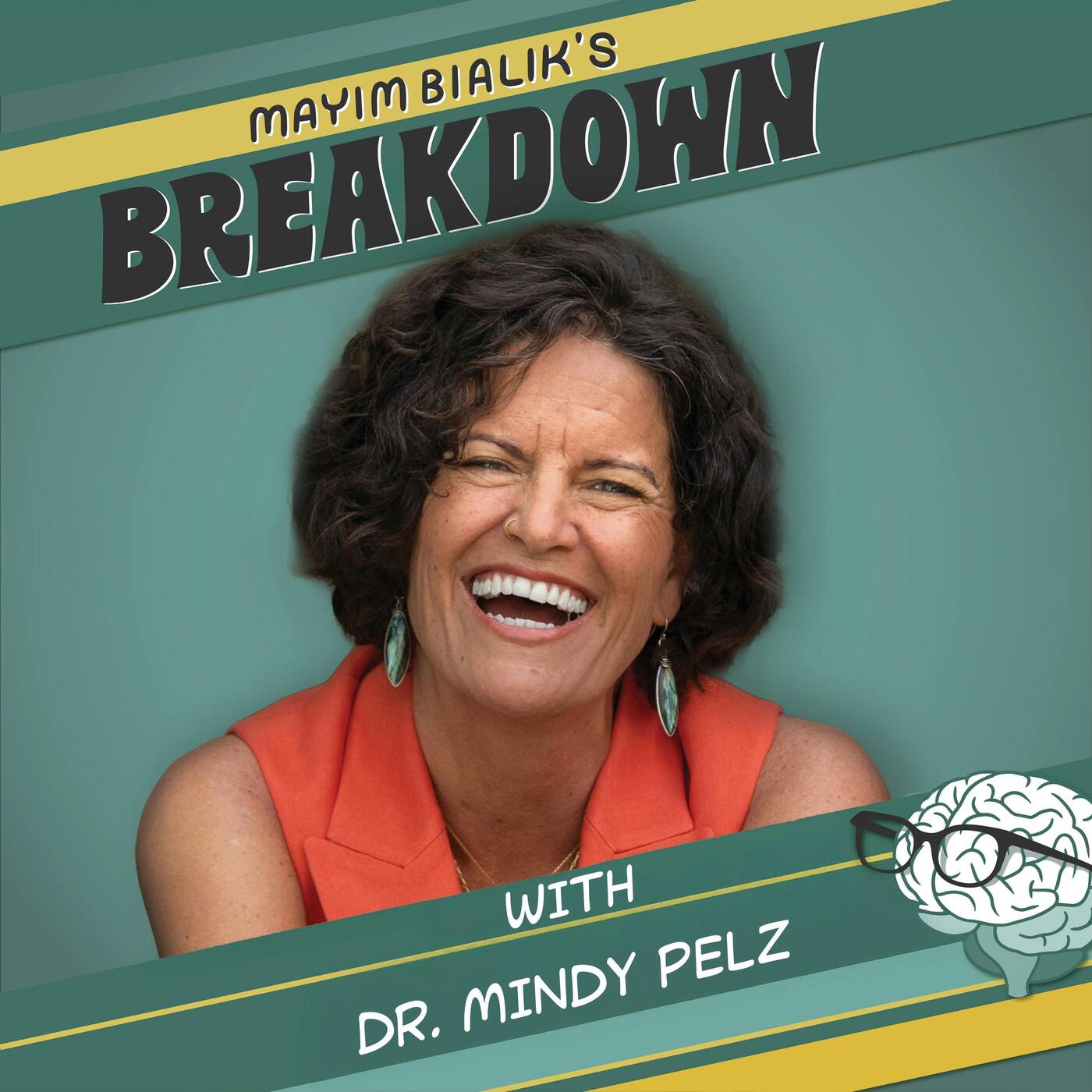
Mayim Bialik's Breakdown
Functional Health Expert Dr. Mindy Pelz on How Fasting Heals Hormones, Burns Belly Fat & Increases Sex Drive
01:00:59
Loading summary
Transcript165 lines
- [00:00]
Jonathan Cohen
My Nbialix breakdown is supported by Helix Sleep.
- [00:04]
Mayim Bialik
Spring is in the air and so are all of the allergens that come with it. Spring allergens means you need more sleep, but there are a ton of factors that can prevent us from getting a good night's rest. Night sweats, back pain, feeling the person next to you when they roll over a million times. We were so excited to hear that Helix wanted to partner with us. I've had my Helix mattress for about five years now and I have been sleeping so much better. Jonathan and also our kids love their Helix mattresses and all of those issues. Night sweats, back pain, motion transfer. Those things are significantly better with a Helix mattress. Helix delivers your mattress right to your door which is so much fun. With free shipping in the US they have a 120 night sleep trial and limited lifetime warranty plus their Happy with Helix guarantee. Rest easy with seamless returns and exchanges. The Happy with Helix guarantee offers a risk free customer first experience designed to ensure that you're completely satisfied with your new Mattress. Go to helixsleep do/breakdown for 27 off site wide that's helixsleep.com breakdown for 27 off site wide helixsleep.com breakdown day or night. Verbo Care is here 247 to help make every part of your stay seamless.
- [01:18]
Dr. Mindy Pelz
If anything comes up or you simply
- [01:20]
Mayim Bialik
need a little guidance, support is ready whenever you reach out. From the moment you book to the moment you head home. We're here to help things run smoothly because a great trip starts with the right support. And hey, a good playlist doesn't hurt either.
- [01:40]
Dr. Mindy Pelz
The top killers all have roots back to poor metabolic health. Only 17% of Americans are metabolically healthy.
- [01:50]
Jonathan Cohen
Talk to us about fasting. Is 12 hours enough?
- [01:53]
Dr. Mindy Pelz
Every day you have a fasting window and then you have an eating window. Let's just make it simple. When you fast, especially if you go 17 hours, you stimulate something called autophagy. We start to see all these chronic diseases go away. Dementia's off the table. Many cancers or autoimmune challenges. Infertility, cardiovascular disease. It's like magic.
- [02:17]
Mayim Bialik
Dr. Mindy Pelz is an expert in hormones and metabolic health. She's taught over 100,000 people how to retrain their metabolism and detox from the chemicals, preservatives and toxins we're exposed to every day.
- [02:29]
Dr. Mindy Pelz
We live in the most toxic time in human history. There's air pollution. It's laden in our beauty products. It's in our food. It's on your new clothes the worst toxin that we are exposed to is glyphosate. Recently, under the new administration, all of the gauze and the regulations around glyphosate have been reversed.
- [02:51]
Mayim Bialik
I feel like this is gaslighting on a global scale.
- [02:55]
Dr. Mindy Pelz
When you fast, you spark the intelligence inside the cell and it will actually push out bacteria, viruses, pesticides.
- [03:04]
Jonathan Cohen
For someone who is at the beginning, tell us some of the amazing changes that you've seen to help motivate people to get started to believe that it's possible.
- [03:14]
Dr. Mindy Pelz
People don't need motivation, they need momentum.
- [03:18]
Mayim Bialik
Are there certain people who shouldn't fast?
- [03:21]
Dr. Mindy Pelz
Yeah. So,
- [03:29]
Mayim Bialik
Hi, I'm Mayim B. Alec.
- [03:30]
Jonathan Cohen
I'm Jonathan Cohen.
- [03:32]
Mayim Bialik
And welcome to our Breakdown. Today we're going to be talking about something that I've had a tremendous amount of skepticism about, something that I've had very, very deep conversations with Jonathan, with doctors, with a lot of people. I have never heard the things that we're going to talk about spoken about the way they are spoken about today. What would it be like to take some of the most detrimental and threatening diseases pretty much off the table with one simple implementation of a metabolic switch? Did we evolve to do what I assumed we're supposed to do, which is wake up with a plan for the menu for the day and move through the day consuming glucose and using glucose and sleeping on a pile of glucose. Is this how we were designed? I'm sure you can imagine the answer is, is no. We were actually designed to have a very elaborate interplay between glucose metabolism and ketone synthesis. And these two things combine to improve your heart health, your mental health, your longevity, and even your transition through some of the most challenging shifts that you will experience in your life, namely menopause. But we're going to be talking to Dr. Mindy Pelz, and Dr. Mindy is an expert in all things health, hormone science and metabolism. You may know about Dr. Pels from Fast Like a Girl, the Menopause reset, eat like a girl, and most recently Age like a girl. But the bulk of our conversation is going to be about metabolism, taking control of your health and spreading the message that there is something you can do to shift so many aspects of your health and it does not cost a lot of money. You don't have to buy any gadgets. And it's something you can start implementing literally today.
- [05:50]
Jonathan Cohen
This is so much more than menopause. We're talking about something that impacts every single individual and it can contribute to all kinds of diseases that we previously didn't fully understand. The Core of our susceptibility is how our metabolism functions. And what Dr. Mindy explains to us is how to improve our metabolism, how to retrain it when it's gone off the rails, and how we can detox from all the chemicals, food additives, preservatives, environmental toxins that each one of us is exposed to every single day.
- [06:34]
Mayim Bialik
We're also going to be talking about what does it mean to make America healthy again? What does it mean to prioritize the kind of foods, the kind of systems, and the kind of mindset that we all deserve in a nonpartisan kind of way? It's a fascinating conversation and one that literally, as Jonathan said, impacts all of us. In addition, we hope that you'll follow us on Substack because there's a conversation today that is going to continue on Substack that we hope you're subscribed for.
- [07:03]
Jonathan Cohen
Just before we get to this episode, I just really want to ask you a tremendous favor. We are so grateful to be here with you and to share some of the cutting edge research that is happening in health, in well being, in the intersection of science and spirituality. And the one thing that you can do which is absolutely free to help support the show and help us and the entire team continue to bring you these episodes is make sure that you are subscribed. Anywhere you're listening or watching this episode, please click the subscribe button. We are absolutely, tremendously grateful if you do so. And let's get on to the episode.
- [07:44]
Mayim Bialik
Let us welcome Dr. Mindy Pelz to the breakdown. Break it down.
- [07:49]
Dr. Mindy Pelz
Yeah, thank you.
- [07:50]
Mayim Bialik
We're very excited to talk to you. The women among us are very excited. I mean, I think. I think actually this is a good place to start. Why should everyone care about women and how they age?
- [08:07]
Dr. Mindy Pelz
Oh, that is such a good question. Because our hormones affect our moods, they affect our behaviors. And as a woman ages, her hormones dramatically shift. In fact, she has a massive neurochemical shift, which is a real initiator of a rebound rewirement of her brain. So she's changing, she's upgrading. She's. She's deciding what she doesn't like, she's deciding what she does. Like, things are changing, and that affects every single person in her life. So what it's like. Think of it like a teenager. When your teenager all of a sudden starts to turn away from you, especially a teenage girl, we all kind of go, oh, yeah, it's the teenage years. She'll come back around. But we don't really give the same grace to women as we age. And there is a massive rewirement that's going on in a female brain. And if you're not clued in, you might take it personal, you might think you're losing her, you might push away from her. But there is a massive rewirement that if you hang in there and you understand what's going on, you can actually help assist her and grow even closer to her.
- [09:20]
Mayim Bialik
There's so many different components to what we still don't understand. Right. About this entire process. And, you know, I'm just thinking in my lifetime of how different the conversation is. What. What has it taken for us to have this kind of revolution in the way that we even approach these conversations? Because I think so many of us thought like, oh, my mom just doesn't like my dad. That's why she acts like that. Right. Or she's just crazy. That's just how women are. You know, how much of that can we modify and what has shifted really in our generation for us to be able to have these conversations?
- [10:03]
Dr. Mindy Pelz
Yeah. So the beautiful thing is, it's our generation that is actually changing the conversation. So for starters, that's how powerful we are. We are. We are literally all of us stepping into this menopause conversation. And everybody's asking questions, everybody's experimenting with new lifestyles and HRT and all the things. But is. Because the best way I can answer your question really revolves around this book. We went into contract on this book three years ago, and I had to change the focus of the book three times in three years because what happened was three years ago, nobody was talking about menopause. I had written a book called the Menopause Reset that my patients had asked me to write to. Like, how do I work with my lifestyle? There was nobody out there really putting up to date information out. And in just three years, we have like, gone from nobody talking about it. I call it a cultural hush to everybody talking about it. And it's really more of a cultural chaos now where least the conversation has been cracked open. But I like what you said before this, which is we still don't know enough to be able to assist women.
- [11:20]
Mayim Bialik
In many cases, it's the most surface level things about menopause that women get the loudest about and are allowed to get the loudest about. And one of those things is mood. Right.
- [11:32]
Dr. Mindy Pelz
And.
- [11:33]
Mayim Bialik
And another thing is sleep. And then a third thing is what is happening to my body, especially around the belly, Right?
- [11:40]
Dr. Mindy Pelz
Yeah.
- [11:40]
Mayim Bialik
Like, there's a very special belly that you get, apparently when your hormones start shifting, can you explain a little bit? What is the specific weight gain that is different from other kinds of weight gain that we start seeing at this phase of life? And most importantly, how do you get rid of it?
- [12:00]
Dr. Mindy Pelz
Yeah, well, the first thing that makes it different is that 99.9% of the women going through menopause will have not changed. What they eat, will not have changed. How they exercise, will not have changed very. Or they've changed very little about their lifestyle, and they're gaining weight left and right. Like that alone tells you that our hormones have an effect on our metabolic system. So estrogen, which is one of the biggest hormones that drives us, kept us insulin sensitive. So estrogen had an impact on your glucose and insulin system. And when she went down in the 40s, when her natural levels started to go down, you didn't get the memo, but you actually became more insulin resistant. And what I saw, what I see in our community is this drives women crazy because what they do is they double down on more working out, they double down on more dieting, trying to go back to their old strategy, but they never got the memo that it was the loss of estrogen that dramatically shifted the whole metabolic system. So that's like, if I could go to every 40 year old and like, poke them on the shoulder and be like, hey, hey, I just want to tell you what's coming down the road, they could actually get ahead of it and go into that perimenopause menopausal experience and like, actually start to improve their metabolic system, and then they won't get that menopausal belly weight gain. And happy to talk about how you do that, but it starts with awareness.
- [13:40]
Mayim Bialik
I'll be honest. This is something that even in all the conversations I've had with many, many doctors, with midwives, with obs. Right, with functional doctors. So you're telling me if I keep doing the same things, if I'm exercising the way I'm exercising and I'm eating the way I'm eating, and if all of a sudden my body starts doing things that do not look like what it looked like before, that means there's something going on that I can't see that is actually imp. See, like, I don't think most people this way.
- [14:12]
Dr. Mindy Pelz
Yeah, that's bingo. That is exactly right.
- [14:15]
Mayim Bialik
Right. We figure like, oh, I'm eating too much fat, or like I need to mix up my workout or I need to work out three times as much. And then you become this like, you know, crazy person. Working out all day. When the fact is what, what it sounds like you're saying is that there are some simple things that are on a nutritional level, they're on a hormonal level that might prevent us from basically fighting with our body when it's just doing what it's doing because estrogen is decreasing. And all we think about is like, why does my belly look like this?
- [14:46]
Dr. Mindy Pelz
Yeah, well, and this is the thing about women in general is that we go, oh my gosh, why is my belly getting bigger? And then we think it's our fault.
- [14:54]
Mayim Bialik
I think it's my fault if your belly gets bigger.
- [14:56]
Dr. Mindy Pelz
Oh, yeah. Codependency. Yeah. I mean, this is, this is the thing we saw in our online world for years, where was. I was teaching women how to fast, which we can definitely. We need to go into that because that's one of the ways that you can avoid this menopausal belly gain. But we, we, we think it's our fault. And if I could say it in the most simple way, your. When estrogen starts to decline, your body and brain do not use glucose the same way it used to use glucose. And glucose comes from the food you eat. The more sugar, the more refined flours, the more carbs in there, the more glucose you eat, the quicker that menopausal belly weight is gonna gain. You're gonna gain it. So you might have gotten away with that at 35, but you're not getting away with it at 45. Cause this major hormone disappeared.
- [16:00]
Jonathan Cohen
My ambiox breakdown is supported by bioptimizers.
- [16:03]
Mayim Bialik
I struggled to get good quality sleep and I just thought like, ugh, it's stress. But I learned during perimenopause and menopause, your hormones shift and it affects your magnesium levels. Low magnesium makes everything harder. Not just sleep, but focus, mood, stress tolerance. That's why we added Magnesium Breakthrough by Bioptimizers to our nightly routine. It's a blend of seven different forms of magnesium designed to support relaxation and overall sleep quality. Try it simple. See if you wake up more rested and refreshed, you've got nothing to lose and a lot to gain. Bio Optimizers offers a 365 day, no questions asked money back guarantee. Magnesium Breakthrough is a fantastic way to improve that hormonal imbalance that especially happens with magnesium. And then you have better focus, you have better sleep hygiene in general. Bioptimizers makes it so easy. Here's what you get when you go to bioptimizers.com breaker and use the code breaker 15% off your entire order and a free bottle of MA. That's Bio Optimizer's best selling digestive enzyme added to your order automatically when you use our exclusive code. That's a $20 product, free on top of your discount. This is a limited time offer. While supplies last. You cannot get this on Amazon. You can't get it in stores. The offer exists in one place. Our link, our code. That's it. So if you were already thinking about trying it, this is the sign. Go to buyoptimizers.com breaker. Use the code breaker. Grab it before it's gone.
- [17:28]
Jonathan Cohen
Make 2026 the year you finally start sleeping again. This episode is sponsored by Wandering Jews, an open door media brand.
- [17:38]
Mayim Bialik
If you've ever found yourself feeling like you have more questions than answers, you're in good company. The Jewish people have been like that for thousands of years. Wondering Jews with Michal and Noam is a podcast where two of today's most dynamic Jewish voices, Michal Bittone and Noam Weissman, dig into the biggest questions about life through a Jewish lens. It's the kind of conversation where you'll laugh, learn something new, and probably shout in disagreement at least once. Michal and Noam tackle the tough topics like antisemitism in America, what happens after we die, and the future of religion with guests like Bret Stephens, Michael Rapoport and Sarah Hurwitz. And this past month, in honor of Jewish American Heritage Month, they've been celebrating some of the Jewish lives and institutions that have shaped American life, from food to music and comedy. Thoughtful, joyful, and always honest. That's Wondering Jews with Michal and Noam, a production of Unpacked. Find it on your favorite podcast, podcast app or on YouTube and make sure to hit subscribe. Check out Wondering Jews with Michal and Noam podcast and subscribe at Unpacked Bio nmx. I go to a very good doctor. She's a lovely lady. But what came up in blood work was like, you look pre diabetic and I'm thinking, what's going on? Like, what am I like, I wasn't at a weight that you would think that. Like, you know, and now I'm realizing it's likely because we were on, on this train of my body's like, you don't need to process insulin the way you used to. Now we're gonna say you're pre diabetic. So most women are then. And then what we're told is like, oh, well, it's because of your age and we're just Gonna put you on a. What do they put you on? A statin? Like, what do they. They, like, make you go on a medication?
- [19:19]
Dr. Mindy Pelz
I mean, they'll put you on a weight loss drug. This day and age, they can definitely put you on a statin. They put you on hormone replacement. They'll put you on anything they can put you on to you to lose weight without teaching you why you're gaining weight, which is so important, because this is the thing that drives me crazy, is that we then outsource our power. We're like, okay, well, I must be weak. The doctor's strong, the medication strong. And we don't. If we understand what's going on through this process, it's not that hard to avoid the menopausal belly weight, and it's not that hard to lose it. I promise you. We have literally seen hundreds of thousands of women go through this process. And once they know and they have a strategy, it works. But unfortunately, you started this off and said something about how little we know. And it's true. Even your doctor, your trusted doctor, was most likely not trained in menopausal belly weight.
- [20:19]
Jonathan Cohen
How much overlap is it to men who are also gaining belly weight at a certain age? What's the similarity in terms of their metabolic breakdown and how they're processing glucose?
- [20:32]
Dr. Mindy Pelz
Well, so this brings up the question of what's the difference between testosterone in a man and the sex? Let's just say sex hormones in a man and sex hormones in a woman. So in a man, testosterone's made in the testes and goes up into the brain and converts to estrogen in the brain, based off of all of the research that we have seen on. And we stay in the lane of women mostly, but from the research we've seen, men typically don't. Well, they're not meant to lose testosterone as they age. And testosterone isn't necessarily your weight loss hormone. It'll affect your muscles and things like that. So you don't have this huge hormonal shift like we do yet. When you talk about the man boobs and the. And the. And the man belly, the, you know, the dad belly, what do we call that? The dad body?
- [21:31]
Mayim Bialik
Dad bod.
- [21:32]
Dr. Mindy Pelz
A lot of that is endocrine disruptors. These are estrogen mimickers in the body. And the male body doesn't know what to do with. Neither does the female body. But especially the male body doesn't know what to do with synthetic estrogen. So when the body doesn't know what to do with something, it stores it as Fat. So when a man has a big belly or again, the man boobs that show up, that is an estrogen mimicker. That's coming from ultra processed foods. Coming from men. Men have plenty of beauty products that they're lathering on themselves. Lotions and shampoos. It can come from heavy metals in the soils. I mean, there's. So we live in the most toxic time in human history. So when I see a man like that, I think toxicity, you clean up his diet and he'll drop that weight immediately.
- [22:21]
Jonathan Cohen
Let's talk about fasting. How do you get women. Talk to us about the process of getting women.
- [22:27]
Mayim Bialik
How do you get women skinnier? How do you make them not look like they tell the women how to fast so they don't have the belly?
- [22:36]
Dr. Mindy Pelz
Amazing. Amazing. Okay, so here's how this goes.
- [22:39]
Jonathan Cohen
I'm not suggesting they'd be skinnier. I'm just suggesting that they use insulin better so that they can all be healthier.
- [22:46]
Dr. Mindy Pelz
Exactly. So, okay, here's how this goes. We have two metabolic systems. One that gets activated when we eat. And we already talked about this, is called glucose. I call it the sugar burner system. So basically, your body goes, oh, there's an increase in food. We're gonna use that for fuel. Right now we also have a second metabolic system. And this is the biggest one. This is what I brought forward in fast like a girl. I was like, we have this whole other metabolic system sitting here that if you don't use it, you're not training your body how to burn fat. And it is called the fat burning metabolic system. And you activate that system by going at least 12 hours without food. Your body needs to signal that glucose is going down, down, down, down, down and around. Somewhere around 12 hours, it will go right over into a fat burning mode. Because your body is so intelligent. What it will say is, we haven't had a lot of food coming in, but we stored some food, and we stored that food around the belly, the back of the arms, the face, the chest. I'm gonna go get that glucose that I stored, and I'm gonna burn it right now because I don't see any glucose coming in. And when you burn that, you make something called a ketone, which is a whole nother fuel for the brain.
- [24:14]
Mayim Bialik
Sorry, this is gonna sound ridiculous. I understand. It's not healthy to make an entire box of Mac and cheese at 10:30 at night.
- [24:23]
Dr. Mindy Pelz
Yeah, good choice.
- [24:25]
Mayim Bialik
You know, it took me about 45 years to get there. But what I'm saying is, I Understand the notion of don't go to sleep on a full belly. Right.
- [24:33]
Dr. Mindy Pelz
Okay.
- [24:34]
Mayim Bialik
Then I was able to push it. And also I have, you know, fascinating eating disordered eating challenges. So for me, I was like, what do you mean I can't eat at 10pm so then I moved it to 9, and then I moved it to 8, and now I get it. I can plan my life around an. An early dinner.
- [24:52]
Dr. Mindy Pelz
Excellent.
- [24:53]
Mayim Bialik
So that my body has some time to metabolize. You take a walk after dinner, all the things. So then I'm kind of fasting. Right. From, let's say, I don't know, call it 8pm just for good measure. So I go to sleep at 8pm Hopefully I sleep. If I sleep eight hours. Right. I could keep sleeping. Because if I go to bed at 10, I get up at 6. Right. So I want to keep not eating is the idea. So skip the most important meal of the day, which is what the 1980s taught me.
- [25:31]
Jonathan Cohen
Or just delay it. Or delay it.
- [25:33]
Mayim Bialik
Or delay it. Now tell me how this is different than I'm telling my body. It's starving and it now has to use other resources.
- [25:44]
Dr. Mindy Pelz
Okay, so first you said something really powerful there that the 1980s taught you. Breakfast was the most important meal of the day. Do you know where that came from?
- [25:53]
Mayim Bialik
Probably some food lobby that wanted me to drink milk.
- [25:57]
Dr. Mindy Pelz
Bingo. It came from Kellogg's. Kellogg's. When they put out corn flakes. This was actually in the 1970s. They needed a jingle and so they said breakfast is the most important meal of the day. Yes. And it has stuck and we are all living by it. And it's not serving you. So let's re Pattern that. The first thing, I think that if we. If you can. A really good rule is to always eat in the light. And I'm going to explain this in a moment when. Right, okay. Hang with me here.
- [26:32]
Mayim Bialik
Can I hold up a flashlight? 10:30?
- [26:34]
Dr. Mindy Pelz
Well, you can try that. But when you are eating in the dark, you are. Your melatonin is being produced in the body.
- [26:44]
Mayim Bialik
How can I hide my shame if the lights are on, Mindy?
- [26:47]
Dr. Mindy Pelz
Well, you can keep your lights on, but yeah, that's a whole nother story. We can keep chatting about that. The blue light at night was a whole nother pattern. Put your blue blockers on.
- [26:57]
Mayim Bialik
So once it gets dark, this is the time that. That also evolutionarily, I should not be thinking about eating.
- [27:06]
Dr. Mindy Pelz
Yeah. Because when it gets dark, your body makes melatonin. Once you make melatonin, everything in your whole body starts to get into a more parasympathetic state. Cause you're preparing for sleep. So this was actually a phrase that Satchin Panda, who is one of the top premier circadian rhythm experts in the world, said to me. He's like, think of it like this. When melatonin kicks in and you get sleepy, so does your pancreas. And your pancreas is not pumping out insulin at 9, 10 o' clock at night. If it's dark out, it's preparing for sleep. So the meal that you eat at 10 o' clock is going to be more detrimental and cause you to gain more weight than the meal. That same meal, if you eat it at three or four or even five in the light.
- [28:00]
Mayim Bialik
So this is also why, like in many European countries, they eat a heavier meal at lunch, then they take a little snooze, a chillax, they go back to work for a few hours and then they have a, sometimes a later meal. But it's not the same kind of heaviness. It's Jonathan. It's like when our kids are like, let's eat Thai food in the middle of the day. And we're like, nope, I will never wake up if I eat Thai food for lunch. I'll just sleep through the day. Interesting.
- [28:30]
Dr. Mindy Pelz
Yeah. So during the day you don't have that melatonin issue. Plus, if you eat something. Let's go back to what food is. If you are eating something, it's supposed to be fuel. So if you eat something to your point that you said earlier, and then you fall asleep, like you're not using it. So the body's like, oh, I don't know what to do with this. I'll just go ahead and store it as fat. Whereas if you eat it and you go walk, then the body's like, oh, okay, let me use the glucose of the food you just gave me.
- [28:57]
Mayim Bialik
And that's how you train your metabolism. Right. Another, another thing that we thought was only something that athletes get to know about.
- [29:05]
Dr. Mindy Pelz
That's right, that's right, that's right. And I mean, this has been the blessing of the menopausal conversation opening up is that so many women are like, I don't know what I did, but I put on 30 pounds, 40 pounds. And so it's because the rules change. The game changed at 40, the game metabolic game changed. And if you don't understand what your body needs now, then it's just going to keep storing all that extra as fat.
- [29:31]
Jonathan Cohen
So talk to us about the fasting. Is 12 hours enough is it that the benefits kick in at 12 hours and you need to go further than that? What is the ideal for someone to start to see real change?
- [29:43]
Dr. Mindy Pelz
Yeah. So think of it like this. Every day you have a fasting window, and then you have an eating window. And so when you. The longer you stay. Let's go here. The longer you stay in your fasting window, the more healing happens. And there are six different levels of healing that happen from starting at 12 hours going all the way to 72 hours. So you decide, how much healing do you want? So at 12 to 12, 13 hours, you've now metabolically switched over your body's burning fat. It's making ketones. If you hang out there 17 hours, now all of a sudden, you're gonna hit something called autophagy, where your body will start to detox itself. At 24 hours, you'll start to repair, your intestinal stem cells kick in, and you can actually do some serious gut repair. 36 hours is when is the key number, by the way, that the body starts to go after the belly fat.
- [30:44]
Mayim Bialik
Lady, I'm hungry. Lady, I'm hungry.
- [30:48]
Dr. Mindy Pelz
So your brain is hungry, though, and your body knows what to do. So your brain may be hungry, but your body's like, okay, you can. Your brain can be chattering at you and saying, I'm hungry, I'm hungry, I'm hungry. But your body, in the meantime, is going after that belly fat. It's going after the stored glucose.
- [31:06]
Jonathan Cohen
I think the first question anyone hears when they hear about a 24 hour or 36 hour fast is, how do I do this safely and not give in to some of the feelings of dizziness, nausea, or your brain saying, hey, hey, you're hungry. How do you separate that so that you can actually do it safely and achieve the end results?
- [31:28]
Dr. Mindy Pelz
So the first thing to know is this metabolic switch. When you switch over into fat burning. The first time you do it, if you haven't gone more than 8, 9, 10 hours, which most people haven't, without eating, then it's gonna feel. It's gonna feel yucky, it's not gonna feel good. It's like if you haven't run a marathon, you don't just put on a pair of tennis shoes and go run 20 miles. Like, you gotta train for it. You have to slowly work into it. So with my patients, I used to say, we're just gonna push breakfast back a half hour. And then I'd say, how did that feel? If they're like, it was horrible, I say, just stay There, stay there and tell me when it's not horrible anymore. So maybe a couple days go by, they're like, okay, it's feeling better now. Okay, now I want to push it back an hour. Can you push it back an hour again? The body goes to a place where it's like, oh, it doesn't feel good. But if you hang there because your body knows what it's doing, you'll start to even out. Just like your body knows what to do if you're going to train for a marathon, it knows what to do.
- [32:32]
Mayim Bialik
Can you drink water?
- [32:34]
Dr. Mindy Pelz
You can drink water.
- [32:35]
Jonathan Cohen
Tea with caffeine, you can drink coffee.
- [32:37]
Dr. Mindy Pelz
But let's talk about the coffee because you can't put coffee made in it and you can't put sugar in it. Black coffee. And, and some people do okay with cream, like a good high quality cream.
- [32:49]
Jonathan Cohen
But yeah, you start to push back your meals and then you're starting to get maybe 12 hours, maybe you start to experiment with 13, 14. What's the phase to start to get to that 24 or 36 hour mark. And how often does one go and do that to get the benefits without depleting muscle stores or doing damage to the body.
- [33:13]
Dr. Mindy Pelz
So what, let's start with this concept. What you're trying to recreate is what our primal ancestors did. So they didn't have predictability. Sometimes they would make a get a big kill and they'd eat a ton and then they would go a week without food. So this is why these six different length f fasts became really powerful for my community because you get to choose how long you're going to go. My experience has shown that if you, once you can safely go and comfortably go 15 hours, it's not that hard to go 17, that's not so bad
- [33:51]
Mayim Bialik
because 15 if you stop eating. Sorry, I'm going to do math again. If you, if you stop eating, if you stop eating at 7, right. That's five hours till midnight and then 10am That's 15.
- [34:05]
Dr. Mindy Pelz
There you go, Bingo. It's not that hard.
- [34:08]
Mayim Bialik
I mean if I could stay in bed until then, that's even easier. But if I gotta wake up at, you know, 5:30 to get ready to take my kid to school, that's a long morning. But I could fill it up with so many healthy things.
- [34:19]
Dr. Mindy Pelz
So. Right, so you, so a lot of people use their coffee as like, you know, a crutch, especially in the beginning. So you have your cup of coffee and you can put a little bit of raw cream. Raw cream would be Best or you put some cream in it. That's like heavy, heavy fat cream because fat stops the movement of your blood sugar. So it's, it makes it and it satiates you. So it actually can help you not feel as hungry. There's a lot of people that put a little bit of MCT oil in their coffee. And MCT oil actually helps you go into this ketogenic state a little bit deeper. It helps you make ketones and when helps you turn off the hunger hormone so the coffee can become the crutch in the beginning.
- [35:06]
Mayim Bialik
What does MCT stand for?
- [35:09]
Dr. Mindy Pelz
Medium chain triglyceride oil. It's a piece of coconut oil. It's a small segment of coconut oil mind.
- [35:15]
Jonathan Cohen
Biox Breakdown is supported by Bioptimizers.
- [35:18]
Mayim Bialik
You know, I struggled to get good quality sleep and I just assumed it was stress. But as I learned during perimenopause and menopause, your hormones shift in a way that affects your magnesium levels. And low magnesium, it makes everything harder. Not just sleep, focus, mood, your tolerance for stress. That's why I have added Magnesium Breakthrough Bye bye Optimizers to my nightly routine. It's a blend of seven different forms of magnesium designed to support relaxation and overall sleep quality. Try it. See if you wake up more rested and refreshed, you've got nothing to lose and a lot to gain. BIOptimizers offers a 365 day no questions asked money back guarantee. Magnesium Breakthrough is a huge breakthrough to improve hormonal balance, to help with focus, decrease brain fog, improve sleep hygiene. Overall, Bioptimizers makes it very easy. Jonathan, what do they get when they go to bioptimizers.com breaker and use the code breaker?
- [36:10]
Jonathan Cohen
You get 50 off your entire order and a free bottle of Mass Zymes
- [36:14]
Mayim Bialik
Bioptimizer's best selling digestive enzyme that'll be added to your order automatically when you use our exclusive code.
- [36:21]
Jonathan Cohen
That's a $20 product, free on top of your discount already.
- [36:25]
Mayim Bialik
This is a limited time offer and while supplies last, you can't get it on Amazon, you can't get it in stores. This offer exists in one place. Our link, our code. That's it. So maybe you were already thinking about it. This is the sign. Go to buyoptimizers.com breaker. Use the code breaker, grab it before it's gone. Make 2026 the year you finally start sleeping again.
- [36:44]
Jonathan Cohen
So we're talking about how the body uses insulin, how the body burns fat. Can you talk about some of the mental health and psychological benefits of Starting to do these fasts.
- [36:56]
Dr. Mindy Pelz
Yeah. So there's a couple things that happen. You have to remember that your brain has two major fuel sources. One is glucose and the other is ketones. You only make ketones by burning fat. And some people like to make ketones by keeping their, you know, carbohydrate low. That's not a recommendation that I like, really low. I don't really recommend that. I recommend you get ketones through fasting. So the brain needs 50% glucose, 50% ketones. So if I never go eight hours without food, then I'm only giving my brain glucose. I'm never giving it ketones. So it's missing half of its fuel source. Now, if I'm over 40, what we know based off research is that my brain isn't as sensitive to glucose. This is why we call it Alzheimer's, type 3 diabetes, because the brain doesn't know how to use glucose when estrogen starts to go down. So what you need to learn how to do is figure out how to get a ketone. And if you can make these ketones by 15 hours every day, if you want to go longer, go longer. And you give, you juice your brain up with ketones so that you give it its other preferred fuel source. So that's so huge for people to understand because nobody ever taught us it was always eat so your brain feels better. Eat so you have energy. But if you actually understand what a ketone is and how powerful it is and how easy it is to get and that it's free, you will start to see. And you burn fat. So you're burning fat and you're powering up your brain. Like, who doesn't want that?
- [38:47]
Jonathan Cohen
And how do people feel when they start burning ketones? Does it impact depression, anxiety, or other mood disorders?
- [38:54]
Dr. Mindy Pelz
Yeah. So ketones will, when they start to show up, they stimulate a whole host of neurotransmitters. The biggest neurotransmitter that it will stimulate is gaba. And GABA is the neurotransmitter that calms us. So most people think now it might seem like in the beginning when you're going without food, you might feel a little like, oh, I'm gonna go a little nutso. But if you start to train pretty quickly, you'll see that you hit that 15 hour mark, you don't have hunger, and you actually strangely feel calm and clear and focused. So the first thing it does is it brings that GABA system up to be able to relax the brain. Second thing that it does is when ketones go up, it stimulates dopamine, it stimulates serotonin, it will stimulate oxytocin. It creates a whole neurochemical reaction in your body that delivers these powerful molecules to your brain that keep you happy, keep you focused, keep you connected to people. That all comes from a ketone.
- [40:05]
Jonathan Cohen
Obviously, what I'm about to ask is so variable depending on the individual, but is there an average at which you've seen in your community that people start to acclimatize and feel okay getting to that place of that 15 hours?
- [40:21]
Dr. Mindy Pelz
Yeah. So the best way that we recommend you do this process is very much like what I just said, where you just start pushing your breakfast back and you hit a point at night where you're like, I won't eat after eight, I won't eat after seven. So this means no alcohol. This means like you're not, you're not the little piece of chocolate. Like you don't want your glucose to go up. So let's say like you stop at 8 and then you start to slowly push your breakfast back. So like I said, you go a half hour and then you push it until you're maybe at an hour or two hours. Once you get to 15 hours, fast, fasted, what happens is your body is, is now acclimatized. Like it's now, okay, I get what's going on. When we do this skip this breakfast thing every morning, you want me to go in and make a ketone? So most fasters will start to notice somewhere around 15 hours, they're just comfortable. They don't, it's like, this is easy. Once they get past that initial training period, they're like, this is easy. What happens next, and we've seen this over and over and over again, is people start, this is gonna blow your mind. People start forgetting about food because they're not hungry. And so all of a sudden they're going 17 hours. I've had people that were like, I'm just eating dinner now. I'm a one meal a day person. So after that initial, like two week period of pushing your breakfast back, if you stick with it, it gets easier and easier and then it becomes innate. And then you, you choose. Like, I used to do this with my patients all the time. I would give them what I call a five, one, one, where five days a week they would do a comfortable fast, whatever was comfortable for them, 15, 16, 17 hours, one day a week, I would have them stretch their fast to something that was a little uncomfortable. So maybe it was 19, 20, like when you push your body just a little bit, it'll adapt really well. This is like why we all out. So we push our body to make it to adapt. And then one day a week, you don't, you, you don't fast. You actually don't. You just eat. So a lot of people used to do it on Sunday. Sunday was they'd go have brunch, they have, you know, a big breakfast with their family. Sunday was like their free pass day. Monday was the day that they would go longer fasting. And then the rest of the day they just did a comfortable fast. 99.9% of my patients and the people that I were following me or are following me online. That's it. That's what? That's it. It's that simple. It's super easy.
- [43:05]
Jonathan Cohen
If I'm fasting this much, how am I supposed to get my 180 grams of protein that everyone else says I need in order to work out and build muscle? Am I working out fasted like this? Do I have the energy to be pushing myself to get my zone 2 cardio for 40 minutes plus weightlifting and training? I've heard a lot of controversy, or not controversy, but difference of opinion between fasting to get the benefits of the regeneration and the adding muscle mass, making sure you're getting enough protein. How do I reconcile those two ways of thinking?
- [43:45]
Dr. Mindy Pelz
So this is where it gets really personal. And this is a podcast where, like people want, like, just tell me what to do. But each person that I'm has a little different strategy. So I'm going to try to give some general guidelines. But we live in a world where we're looking for absolutes with health, and there's no absolutes, there's only your way. So you experiment with this. Some people do really well in a fasted state going into a workout. Now, most of these people are not bodybuilders, they're not endurance athletes. They are people that just don't want to eat breakfast in the morning. They'll have their cup of coffee. They feel better going into their workout in a fasted state.
- [44:31]
Jonathan Cohen
I am not one of those people.
- [44:33]
Dr. Mindy Pelz
Yeah, we'll talk about that in a moment. Because if you start fasting, you may become one of those people. The biggest challenge, believe it or not, that I've had teaching the world how to fast is getting people to stop fasting because they feel so good.
- [44:48]
Mayim Bialik
Do those people not like food?
- [44:50]
Dr. Mindy Pelz
Yeah. And then, and they just keep going and keep going and then eventually their muscle start, they start to break Their muscle down.
- [44:57]
Mayim Bialik
Mindy, when I wake up in the morning, I think, what can I eat today? And how many times can I make that happen? And the joy of being alive is
- [45:08]
Dr. Mindy Pelz
that you get to eat all day.
- [45:10]
Mayim Bialik
Like, you take a little break, you know? And in my family, like, food meant you were alive. Like, you, like, having a chubby baby was literally like, God saying, you're gonna make it. So, like, I just come from, like, what's for breakfast and then like, what's for lunch and what snack can I have? So are there some people for whom this is something that they're very motivated to do and they're very fitness oriented and then the rest of us just like, keep eating, or do you believe this is something that could benef everyone if we just allow ourselves to have an open mind about the benefits?
- [45:49]
Dr. Mindy Pelz
Yeah, yeah. I mean, I'm. I'm being really frank with you. I'm not discrediting your upbringing or what you've been trained. We appreciate that. Yeah, I was trained to be. When I had a bad day to eat, my mom was like, oh, you had a bad day? Sit down, I made you something. So I just learned after a while that I felt so much better in a fasted state that actually most the high performance things that I did needed to be done in a fasted state. So it's. It's like a tool. Think of it like a tool. You get to decide if you're going to pull it out or not.
- [46:29]
Mayim Bialik
Who are the people who maybe are not genetically or biochemically cut out for fasting? Because obviously I want to see set eating disorders aside, meaning for a lot of people who are anorexic, this is like, I can do it right like this. I'm a good restrictor. I will just restrict and I won't eat. And like, I feel it. I just, like, smoke cigarettes and, you know, drink coffee. Just saying. Some people do that. But I'm wondering. So Jonathan, who I think is a fantastic person, if his blood sugar dips, he. He becomes a different person. And I think think that someone who likes to eat, you know, even he needs like a little snack, like every two hours, like, you know, a little bit like a beloved toddler, My feeling is maybe that's the kind of person who is not made for fasting. Like, are there certain people who shouldn't fast? Like people who are hypoglycemic, they're not able to fast this way? Correct.
- [47:24]
Dr. Mindy Pelz
Okay, here we go. You ready? Here we go. There's something called the thrifty gene hypothesis. This, the thrifty gene hypothesis goes back to the hunter and gatherer days. And it says that back in those days, we didn't have doordash, we didn't have the convenience of food. We couldn't just sit on our couch and put punch a bunch of numbers on our phone. And food appeared when we wanted it. We had to go hunt for food. So because food was scarce, our body actually went into this other metabolic system. Glucose went down, it switched over to ketones, ketones powered us up and off we went to go find food. The thrifty gene hypothesis says that the people that evolved out of those primal hunter gatherer days all had a very specific genetic profile. And it's called the thrifty gene. Like it can go long periods without food. And the belief is that in this modern world right now, if you are a human, if you were born, that you have this genetic profile. And I'm going to just say something else and I'm, I mean this with so much love for people.
- [48:42]
Mayim Bialik
Jonathan doesn't have the thrifty gene. He can't cut it.
- [48:47]
Dr. Mindy Pelz
Yeah. If you're going against your genetic profile, then you're going to start to have things like hypoglycemia, you're going to have weight gain, you're going to have diabetes, you're going to have chronic, chronic disease. So hypoglycemia is a trained behavior. You ate a certain amount of food, a certain type of food, you trained your system so that every hour food was coming so it never had to go over here. So that makes perfect sense, Jonathan, that you would be like, oh my God, I'm gonna kill somebody. Because you never trained your body to do what it's meant to do.
- [49:25]
Jonathan Cohen
I'm gonna say something that reaffirms what you're talking about.
- [49:27]
Dr. Mindy Pelz
About.
- [49:28]
Jonathan Cohen
It used to be that when I would wake up in the morning, like I needed something like within minutes, and I actually trained my body very intensely to push that, to push that, to push that. Now I, by no means I'm a 15, 17 hour type of guy, but it went from like eight hours to now maybe 10 or 12. And it's. I have seen that it changes.
- [49:54]
Mayim Bialik
I don't want to, I don't want to brag, but you know who's a good faster? This one. Oh, we, we do dry fasts, like for the Jewish. Like. Yeah. So throughout the Jewish, the hardest of hardest. So I'm not doing it to like be a hero in, in traditional Jewish practice, we have minor Fasts which are sun up to sundown, and those are dry. And then twice a year we have a 25 hour dry fast. Now mind you, we're not going to work. We're not like working out. We are sitting in prayer and meditation using very few calories, will say, and I have a 17 year old who, you know is on the early end of his f. Learning to fast for these holidays. And I said, you're going to get really grumpy and mad around noon. And once you ride through that, you're going to start like soaring. And by the time, you know, on Yom Kippur, by the time you're singing the final prayers, it's like you have this third wind and you feel kind of trippy, like, like it feels kind of, you feel ecstatic. And so we do it throughout the year as part of a religious practice, which I think is really fun because there's all this like spiritual stuff and like, it's very out there. It's like poetry and it's chanting and it's all these like body movements and it's very interesting. But yeah, that, that's something that I've never had a problem and some people like get migraines and I'm like, no, we're going to rock it out. If I do a, a, a short fast, if I, I mean, I often wake up a lot at night. If I wake up at like 4 or 5 in the morning, I will eat a banana and drink a glass of water and go back to sleep. And then I fast the rest of the day once I get up and I'm fine. So I believe I have the thrifty gene.
- [51:40]
Dr. Mindy Pelz
Well, the belief is that we all have it, but you know, that again, it's a hypothesis. So let's make sure we just point that out. Right. So, yeah, yeah, I mean, you're so, so you said something that's really important. Important. You told your son that there's a point in time you're going to kill somebody. When you first start to learn to fast, there is a point of time where you're like, oh God, no way. Like this is too much. But if you hang in there, that little window is about an hour, maybe two hours because you're metabolically switching and now your body gave you ketones. And one of the first things that ketones will do is go up to the brain and turn off hunger. It's like, I just, I've watched hundreds of thousands of people go through this process and the pattern is always the same. And there is always this difficult moment and if they hang in there, it gets easier and then it gets so easy. Like I said that we're like having to have discussions about you need to eat. This isn't fasting, isn't about, about, oh, I found this cool tool, I'm just gonna fast all the time now. You need to think about eating.
- [52:49]
Mayim Bialik
There's a huge protein craze now. Everybody's like, protein, protein. And all the rules were wrong and you need to be eating so much protein is coming out of your ears. What is happening in the one or two meals that I'm having? Like how much protein and how much food can I pack in? I mean like if you're only eating one meal a day, what's happening at that meal? I don't wanna know.
- [53:12]
Dr. Mindy Pelz
Well, so, so remember, one meal a day would never be every day. So I just want to say that for the, for the first point, okay. Second, when we talk about one gram of protein for every pound of body weight, this is a target, not an obsession. And I really am. I have seen people do 1 gram of protein for every pound of body weight and gain weight. This is a recommendation based off of many different science studies. But you now have to go and try it on yourself and see if that works. It's called N of 1. Now most people will, in my community will end up having two meals and several snacks within what we call their eating window. So one of the most famous studies ever done on fasting is what they call call 16, 8. 16 hours of fasting, 8 hour window of eating. So depending on what you're, what you're shooting for, if you're shooting for 150 grams of protein, that is not that hard to get in in eight hours. If you're snacking, if you're doing two meals, it's how we choose our protein. Are you choosing high quality protein? For me, when I go to make a meal meal, I start with the protein first. What is the protein I want to cook, what is it I want to eat? And then I build the meal around the protein. So I agree, protein is really, really important. But in an eight hour window, try it. It's not that hard to get 1 gram of protein for every pound of body weight you want to be. By the way, it's your ideal body
- [54:58]
Mayim Bialik
weight, 20 grams an hour. Think of it like that.
- [55:01]
Dr. Mindy Pelz
Couple beef sticks, like you get some hard boiled eggs, make a protein shake. Some people will put protein in their coffee in the morning, just take a scoop of protein powder and put it in your coffee in the morning. So there's, I mean, it's, you can get really creative and you know, people who haven't fasted before, it seems like mind blowing. But once you start to fast and you feel how good you feel, you know, it's not that, it's not that hard. It's just intentional. And we haven't trained ourselves to be intentional. We go off our taste buds. What does my taste buds want me to eat as opposed to, hey, I need to make sure I get protein first.
- [55:42]
Jonathan Cohen
Can you explain a little bit about the mechanism, about how fasting starts to repair the body to overcome some of the chronic diseases that people face?
- [55:54]
Dr. Mindy Pelz
Yeah. So when your body goes into what we call a hormetic stressor, I'm surely some. You've had guests talk about this. It's basically just a tad bit of stress. It gets stronger. So when we're looking at chronic diseases, I would say probably the number one commonality of all chronic disease is a messed up metabolic system. So if you have A high hemoglobin A1C up in the sixes or in the late fives, you are setting yourself up for chronic disease. This is a very well known fact. When I start, let's just use the five one, one as an example. Five days a week, I'm going 15 hours. One day a week, I'm going, maybe I'm going all the way to dinner, I'm going 22 hours. Every time you are in those fasted states, you are telling your body, go find the food you stored years ago and clean this metabolic mess up. And it starts to clean the system up and hemoglobin A1C comes down. I feel like I could probably spend the whole rest of my career just teaching people how to bring their hemoglobin A1C down. Because if they do that, then we start to see all these chronic diseases go away.
- [57:14]
Mayim Bialik
What goes away if you lower hemoglobin A1C?
- [57:17]
Dr. Mindy Pelz
Okay, well, so Alzheimer's is off, dementia's off the table. Many cancers are off the table. Autoimmune challenges, off the table. Infertility, off the table. Cardiovascular disease, highly connected to a poor metabolic system. Off the table. Fatty liver disease. Over 30% of Americans are gonna have fatty liver disease by the time we hit in the next like 10 years. So every single chronic disease has a metabolic route back to poor metabolic health. Immune system. During the pandemic, there was all these articles that came out that said 17% of Americans are metabolically healthy. Only 17%, we can see that as metabolic syndrome, metabolic disease. Poor metabolic health has gone up. Up. So has chronic disease. Now, I'm sure there's some obscure ones, but all the major ones, the top killers, all have roots back to poor metabolic health.
- [58:25]
Jonathan Cohen
And just not doing something is the way to fix it.
- [58:27]
Dr. Mindy Pelz
It's the mo. It's. It is. It is. I mean, think about it. How many more fancy diets can we come up with? Come on now. Like, this is why I'm a little cynical about the counting of protein. Protein. Like, I'm. One of my favorite memes I've seen all year is, I'm sorry, I can't go to work today. I need to count my protein. Like, come on now, let's just put protein at every meal. Let's just make it simple. And let's start tacking these fasting windows on. And you will find that your metabolic health will be effortless. And I'm not Pollyanna ish. I have probably led more people through fast than any other human on the planet. I've been doing this for over 10 years, and it's like magic. And I know it's hard because we losing weight, getting the metabolic system right, we feel like it's complicated. It's not complicated. Eat real quality food and start tacking these fasting windows on and watch what happens. I almost want you all to try it and let me come back in like two months and you tell me what you find. Because. Because I have. I cannot be convinced otherwise because I've just watched so many people benefit from it.
- [59:45]
Jonathan Cohen
I mean, this is a synchronistic moment for me personally. I was at the doctor this morning. I'm in what I consider fairly good health, but the heaviest I've been in my personal life with a couple of biomarkers that are out of range, that were surprising to me, that are sort of in the pre state where they're like, well, we can't do anything for you right now, but come back when it's a real problem. Which I'm like, is a huge red flag for me. And I had tried fasting before but was never really serious about it. Right. Like, I'd known about it, I'd heard about it, but I'd never really done it consistently enough. And this could be the moment where
- [60:24]
Mayim Bialik
we don't speak to each other until 3 o' clock every day for the rest of our life.
- [60:30]
Dr. Mindy Pelz
Give him a. Give him like three days. I give you three days. Don't talk to him for three days.
- [60:34]
Jonathan Cohen
Three days. I'm going to get on my cycle.
- [60:37]
Mayim Bialik
What did I, what did I say when you said you're the quote, heaviest you've been? What did I say?
- [60:42]
Jonathan Cohen
You said I was still skinny.
- [60:43]
Mayim Bialik
But no, what I said, I did say you're still skinny. I said, here's what it's like to be a man. I said, work out three times in the next week and you're going to lose £15 and you're going to be exactly where you want to be.
- [60:56]
Dr. Mindy Pelz
Yeah, because of, because the estrogen conversion happens in your brain. For men, they lose weight so fast like this. Is this just a no brainer to me, to a man that wants to lose 20, 30 pounds? Like you'll lose it in like a month doing this strategy.
- [61:12]
Mayim Bialik
The £10 we're talking about in my life right now, I will be working on them until I die. And people will be like at my funeral, like, oh, she lost eight of those ten, couldn't get rid of the last two.
- [61:24]
Dr. Mindy Pelz
You know what, this is an interesting part of the fat loss conversation. What's more important, the number on the scale? The size of your clothes or your blood work?
- [61:35]
Jonathan Cohen
Blood work.
- [61:37]
Dr. Mindy Pelz
Blood work. Hands down.
- [61:38]
Mayim Bialik
I mean, speak for yourself.
- [61:40]
Dr. Mindy Pelz
We become a weight obsessed society. There is one number, it is hemoglobin A1C. Get it close to 5. And who cares what size you are unless you care about it?
- [61:51]
Mayim Bialik
I don't know. For me as a, you know, a public facing person, these are, you know, different kinds of considerations. And we've talked about this before and we've talked about it especially in the framing for menopause. Like a lot of people do just want to be skinny, even over being healthy, you know, like in terms of like when we're told like lift the weights, yeah, your shoulders are going to get broader. A lot of women are like, no thanks.
- [62:16]
Dr. Mindy Pelz
Right, yep. Yeah.
- [62:17]
Jonathan Cohen
How do we break a fast safely? If you're in that 15 hour window, are there things to eat or can you just jump right back into what you would normally have been eating?
- [62:29]
Dr. Mindy Pelz
So I find that there are three things you wanna focus on. Let's go with your protein. Cause I hear you're trying to increase protein. Think of it like you're a true sponge at that moment. You haven't eaten for 15 hours. Your intestinal, microbial, intestinal cells are like, hey, let's get, give me some food. Put the most important thing into your body first and that is protein. Protein. So I love making sure that people break their fast with protein. The second thing is a lot of People, maybe you've been on a lot of antibiotics over your life. And antibiotics, what they do is they destroy all the microbes in your gut. 80 to 90% of your microbes will be destroyed. So add in some fermented something. Sauerkraut, kefir, what are some of the kimchi is a big one that people. That's great for immunity. And you can add it in maybe with like a perfect meal. A break fast meal would be a grass fed burger patty with a side of sauerkraut. Because now you have your protein and now you're feeding your microbes what it needs to be healthier. The third thing, if you're a hunger, if you're hungry is an issue, I don't want you to boomerang, which can happen where you're like, I made it to 15, oh my God. Now I'm gonna boomerang, or I'm just gonna eat whatever I want. We don't want that. We want. So a lot of people who are worried about that, we make sure that they add fat in. So I would have them have like a big, like a Cobb salad, like lots of fiber, put a lot of olive oil on there, put some protein in there, maybe some cheese. If you do okay with cheese so that you're getting the protein, you're getting the fat, maybe you can put some sauerkraut. I actually love putting sauerkraut in my salads. And so you're getting all of it. But the first meal is the most important meal for sure.
- [64:35]
Mayim Bialik
We used to always break the Yom Kippur fast with deli.
- [64:41]
Dr. Mindy Pelz
Just meat. Deli meat?
- [64:42]
Mayim Bialik
Yeah, I mean, like when I was a kid. And it's funny because they would always say, like, oh, break the fast with dairy. Like that was a thing because, like, easier on your stomach. Stomach. Nope, just corned beef, lean.
- [64:52]
Jonathan Cohen
We would always have soup. Chicken soup.
- [64:54]
Mayim Bialik
Interesting.
- [64:55]
Dr. Mindy Pelz
So chicken soup is phenomenal. I mean, there's some incredible benefits of chicken soup for not only lung health, but just chicken in general has so many great nutrients for cartilage, for skin. So chicken soup's great. A lot of times I will have people break a fast if they have a really messed up gut. Gut with bone broth and like a really dense bone broth. And then what? They'll end and then that also it's fatty, it's got protein. It's a good way to ease into food. And then they find that they're not as hungry.
- [65:33]
Mayim Bialik
We're going to hit pause here on our conversation with Dr. Mindy, there is so much more to tackle. We're going to speak specifically about what it means to make America healthy again. What are people getting wrong about their approach to aging? How can fasting treat symptoms of menopause? Also, what are the changes you can make to cut back on cravings, eliminate the detrimental effects of processed food? And the top things you should be avoiding and adding to your diet to help you balance your metabolic system effectively, efficiently?
- [66:08]
Jonathan Cohen
We are also going to cover one of the most important topics we have potentially covered in all of our health episodes, which is what is hormone replacement therapy missing? What is the conversation about hormone replacement therapy not talking about?
- [66:26]
Mayim Bialik
We can't wait for you to hear part two of our conversation with Dr. Mindy. From our breakdown to the one we hope you never have. We'll see you next time.
- [66:33]
Dr. Mindy Pelz
It's my breakdown. She's gonna break it down for you. She's got a neuroscience PhD or two and now she's gonna break down. So break down.
- [66:44]
Jonathan Cohen
She's gonna break it down.
- [66:50]
Dr. Mindy Pelz
Wherever you go,
- [66:54]
Mayim Bialik
whatever they get into, from chill time to everyday adventure, yours protect your dog from parasites with Cridellio Quattro. For full safety information, side effects and warnings, visit cordelioquatrolabel. Com. Consult your vet or call 1-885-45973. Ask your vet for Cordelio Quattro and visit quattrodog. Com.