← Mayim Bialik's Breakdown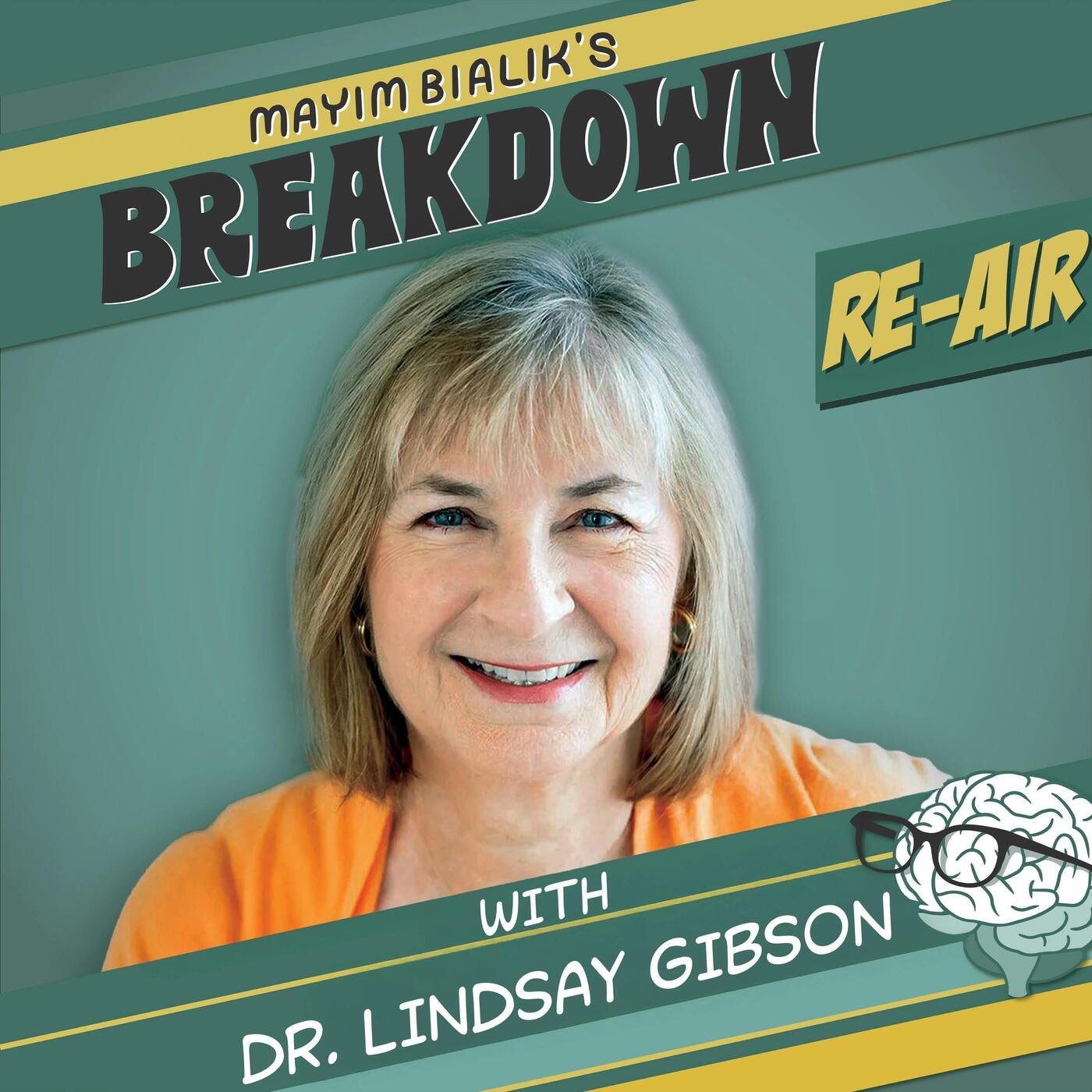
Mayim Bialik's Breakdown
How Emotionally Immature Parents Shape Adult Children: Dr. Lindsay Gibson on Guilt, Hypervigilance, Self-Doubt, and What It Takes to Heal Without Repeating the Pattern
01:07:16
Loading summary
Transcript149 lines
- [00:00]
Jonathan Cohen
Mind Breakdown is supported by Helix Sleep.
- [00:04]
Mayim Bialik
Spring is in the air and so are all of the allergens that come with it. Spring allergens means you need more sleep, but there are a ton of factors that can prevent us from getting a good night's rest. Night sweats, back pain, feeling the person next to you when they roll over a million times. We were so excited to hear that Helix wanted to partner with us. I've had my Helix mattress for about five years now and I have been sleeping so much better. Jonathan and also our kids love their Helix mattresses and all of those issues. Night sweats, back pain, motion transfer. Those things are significantly better with a Helix mattress. Helix delivers your mattress right to your door which is so much fun. With free shipping in the US they have a 120 night sleep trial and limited lifetime warranty. Plus they're happy with Helix Guarantee. Rest easy with seamless returns and exchanges. The Happy with Helix Guarantee offers a risk free customer first experience designed to ensure that you're completely satisfied with your new Mattress. Go to helixsleep do slbreakdown for 27% off site wide. That's helixsleep.com breakdown for 27% off site wide. Helixsleep.com breakdown Premier hosts on Verbo deliver
- [01:12]
Host/Interviewer (possibly a podcast co-host or moderator)
quality vacation rental stays with fast responses
- [01:14]
Dr. Lindsay C. Gibson
and clear instructions so you don't have to worry about surprises.
- [01:17]
Host/Interviewer (possibly a podcast co-host or moderator)
I asked our host a question about the house last night and he got back to me super quick. See, that's a premier host move right there. I wish I had a premier group chat. I asked them where we should have dinner last night and they left me on red. I know you saw it.
- [01:31]
Dr. Lindsay C. Gibson
It says it.
- [01:32]
Jonathan Cohen
Classic group chat move.
- [01:33]
Dr. Lindsay C. Gibson
Don't walk into a surprise book a top rated Verbo Stay with a Premier host if you know you Verbo.
- [01:44]
Mayim Bialik
Hi, I'm Mayim Bialik.
- [01:45]
Jonathan Cohen
And I'm Jonathan Cohen.
- [01:47]
Mayim Bialik
And welcome to our Breakdown. Today we've got something very special. We're actually going to be airing for the first time ever, a recording we did for from the Innovations in Psychotherapy Conference that took place in Anaheim, California last October. We actually did this recording in front of an awesome audience filled with therapists and mental health professionals. Who did we get to speak to? We spoke to Dr. Lindsay C. Gibson. She's a renowned psychologist with over 30 years of clinical experience, but she's the author of Adult Children of Emotionally Immature Parents. This is something Jonathan and I have been hearing about so much. I'm sure a lot of you have been hearing about it as well. It's blowing up on TikTok all over social media. And younger generations are continuing to find this book so helpful for understanding themselves, their relationships with their parents, and how to maintain health. Even if you are the adult child of emotionally immature parents, one of the things we got to ask Dr. Gibson about is how do you avoid being an emotionally immature parent? What are the ways that children can feel healthy and safe as we continue to parent them throughout their lives? Dr. Gibson also talks about what's important to recognize and what we can diagnose in ourselves and in our parents. She also talks about the differences between narcissism, borderline personality disorder, codependency, and emotional maturity. She also talks about the ways to strengthen our relationship with our children so that we're not repeating the patterns that we might have been taught by our emotionally immature parents. It's a fantastic conversation and we're so excited to get to share it with you. We can't wait for you to hear our conversation with Dr. Lindsay Gibson. A friendly reminder. Check us out on substack. And now we hope you enjoy our live recording from the Innovations in psychotherapy conference with Dr. Lindsay Gibson. Break it down.
- [03:42]
Host/Interviewer (possibly a podcast co-host or moderator)
We are live in Anaheim. We are currently on a stage with hundreds of of psychotherapists, healers, trauma experts. And we're going to be talking today about. I think I'm just going to welcome our guest. Dr. Gibson. Welcome to the Breakdown.
- [04:05]
Dr. Lindsay C. Gibson
Thank you for having me.
- [04:08]
Host/Interviewer (possibly a podcast co-host or moderator)
It's a very different format for us. She's right there.
- [04:11]
Dr. Lindsay C. Gibson
Here we are.
- [04:14]
Host/Interviewer (possibly a podcast co-host or moderator)
The first thing I wonder if you can kind of explain to us what does it mean to say that someone is an emotionally immature parent?
- [04:24]
Dr. Lindsay C. Gibson
The first thing I think we have to understand is that emotional maturity has its own line of development. Like we're all familiar with people needing to develop their intellectual skills, their social skills. We have emotional maturity as one of those lines of development, and it can be very independent of intellect or social ability. Okay, So a lot of times people will say, my parent could not be emotionally immature because, you know, they run their own business. He's a college professor, she's the head of the pta, whatever. But what they don't realize is that those are separate lanes of development. When you have emotional immaturity, it means that the things that you needed to develop to become a fully functioning human being in the realm of self development, relationship development, and your relationship to reality, something has gone amiss and they haven't been able to attain the level of maturity that you would hope to see. It's not Something that you know, you would identify easily as, oh well, this is what this is. They're different forms and. But there are some key characteristics that when you have those, it kind of keeps you in a set of behaviors that is in a certain line on that development lane. And it's hard to get out of that if you don't really work at it.
- [06:01]
Jonathan Cohen
Something that's so important for me here is the difference between competency, high performance and emotional maturity. It can be masked a lot that because we prioritize as a society being competent, getting things done, that is not what we're talking about whatsoever.
- [06:21]
Dr. Lindsay C. Gibson
No completely different entities. I mean, you can be highly successful in our culture. A lot of the things that contribute to success in a society like ours actually are some emotionally immature characteristics. So we have to keep in mind that just because somebody made it to the top or they're very skilled in their area, just because someone's on a
- [06:49]
Host/Interviewer (possibly a podcast co-host or moderator)
TV show,
- [06:53]
Dr. Lindsay C. Gibson
it doesn't matter. Like, you know, emotional immaturity is equal opportunity. Everybody gets to potentially have that problem.
- [07:04]
Host/Interviewer (possibly a podcast co-host or moderator)
Quite early in the book there's a little exercise called assessing your parents emotional immaturity. It's like a checklist. First one says, I'm laughing because my mother loves listening to our podcast.
- [07:21]
Jonathan Cohen
She listens to every single episode.
- [07:24]
Host/Interviewer (possibly a podcast co-host or moderator)
Hi mom. So the first thing on the list, my parent often overreacted to relatively minor things. And I was like, okay, and we're done here. Thank you, that's great.
- [07:37]
Jonathan Cohen
And then I became a psychotherapist.
- [07:39]
Host/Interviewer (possibly a podcast co-host or moderator)
That's right. So but I do want to highlight some of the rest of the things on this checklist. When I sent this to my first cousin, our moms, our sisters, she looked at it and she's like, how many qualifies? I said, I don't know if it's that kind of grading assessment. It's like check them all off and take them to your therapist. It's like just check them off and be like, fix this all this. My parent was often irritated by individual differences or different points of view. My parent often said and did things without thinking about people's feelings. My parent was inconsistent, sometimes wise, sometimes unreasonable. Facts and logic were no match for my parents opinions. My parent tended to be a black and white thinker, unreceptive to new ideas. Conversations mostly centered on my parents interests. So if you look at this list, one of the first things I thought of was how can any parent not be classified as emotionally immature? Right. And I wonder if you can talk a little bit about sort of in terms of diagnostic criteria. You know, what are we actually trying to assess when we look at, you know, this kind of list? I mean, what you say is if there's one that you check off, it might be a sign, you know, of an emotionally immature parent. And I was like, what if you check off a lot more than one?
- [09:10]
Dr. Lindsay C. Gibson
Yes.
- [09:11]
Host/Interviewer (possibly a podcast co-host or moderator)
So can you talk a little bit about from a clinical perspective, is it like if you check them all off, you're in one category and if you've got one, you could still have as many challenges.
- [09:23]
Dr. Lindsay C. Gibson
What does it look like? Yeah. So if you check one, it's going to be a characteristic that is hitting at like one of the main overall characteristics of emotional imagery. That's why I can sort of safely say if you check even one, you're talking about one of the primary problems. Okay, that's there. If you check more than one, of course you're going to be dealing with more of that stuff. But that of course is not a normed or statistical. But what I found, I really did that off of psychotherapy sessions. People that come in and talk about these very things. For instance, if you have one of those things, it could mean that the parents empathy just wasn't there. Or you could say that the parent's egocentrism was sky high. Or you could say that the parents thinking was very rigid because it's not maturely developed into an adequately complex level. So all of those things are tapping into some of the basics. So you can have people at different levels of emotional maturity, but if they hit on some of these key things like egocentrism, poor empathy, lack of self reflection and others, it's pretty hard to have other mature characteristics if you've got that going on. So that's why when I did it, I felt pretty safe in saying if you check even one, because I couldn't think of a way that they weren't all connected anyway.
- [11:03]
Host/Interviewer (possibly a podcast co-host or moderator)
Right. And also I instantly jumped to, well, which is worse, right, of all of these things. And I guess it would depend so much on the particular circumstance, right. So for example, I didn't get much attention or sympathy from my parent, except maybe when I was really sick. So then I was thinking, well, what if you're dealing with a situation where you had a chronic illness, right, and you were always sick, then it's going to look a little bit different. So I instantly. Do you know what I'm talking about? I was trying to look for like who had it worse, right. Like if you've got these four, but only, you know, but not this one. Maybe you'll be okay, but. But it seems like you don't want to have a lot of these checked off.
- [11:42]
Jonathan Cohen
You definitely don't want to. I think if you have a less, you don't want to go bingo on this.
- [11:50]
Host/Interviewer (possibly a podcast co-host or moderator)
It's the worst bingo game ever.
- [11:53]
Jonathan Cohen
And I would imagine that it's hard to classify one versus the other. Someone who is emotionally mature is likely going to have overlap between these definitional areas.
- [12:04]
Dr. Lindsay C. Gibson
Definitely. Because if you're super egocentric, if you never moved out of your self absorption phase, which is very normal for toddlers and preschoolers, if you never moved out of that, it's going to be really hard for you to develop empathy just by definition. Or it's going to be really hard for you to develop self reflection. Because if I'm the world and I'm the most important person in the relationship, and that is the fact, as far as I'm concerned, why do I need to self reflect? It's your problem.
- [12:35]
Jonathan Cohen
So I'm an expert in answering asking very difficult questions that are too broad to possibly.
- [12:40]
Host/Interviewer (possibly a podcast co-host or moderator)
It's kind of a rough audience to say you're an expert.
- [12:43]
Jonathan Cohen
I'm an expert in asking questions, not answering them.
- [12:47]
Dr. Lindsay C. Gibson
Looking forward to this.
- [12:50]
Jonathan Cohen
Where my brain goes is what does this look like for people who have these parents? It's obviously very broad, but what are some of the core characteristics that people are struggling with in their life that might make them ask, wait a second, did I have an emotionally immature parent?
- [13:07]
Dr. Lindsay C. Gibson
Well, the problem is that if you grow up with an emotionally immature parent, they are the arbiter of not only reality, but also of whether or not you're a good person. You are basing your self image, your sense of worth, your view of reality on what this emotionally immature person is telling you. That can be devastating in terms of the amount of guilt and shame, self doubt and outright fear. You know, when you have somebody who is saying, I know what's best, it's all about me and you're bad if you're making me feel bad. So lots of times when they come to therapy, they're full of self doubt. There's probably been quite a bit of gaslighting that's gone on and it's very hard for them to understand why their parent would be doing this if it weren't true. So there's a lot of reassessment, not only of how they feel about themselves, but they have to start thinking about reality, you know, on their own now and assessing whether or not their parent may have distorted that. So much of what was there, real experience gets invalidated by a nervous parent that doesn't want to go into the deep feelings. So that's how they come into therapy. And lots of times, I mean, I'm sure that everybody has had a person come into their office and start crying and apologize, you know, I'm sorry. I'm sorry.
- [14:45]
Jonathan Cohen
This episode is sponsored by Wondering Jews, an open door media brand.
- [14:50]
Mayim Bialik
If you've ever found yourself feeling like you have more questions than answers, you're in good company. The Jewish people have been like that for thousands of years. Wondering Jews with Michal and Noam is a podcast where two of today's most dynamic Jewish voices, Michal Bittone and Noam Weissman, dig into the biggest questions about life through a Jewish lens. It's the kind of conversation where you'll laugh, learn something new, and probably shout in disagreement at least once. Michal and Noam tackle the tough topics like anti Semitism in America, what happens after we die, and the future of religion with guests like Brett Stevens, Michael Rappaport and Sarah Hurwitz. And this past month, in honor of Jewish American Heritage Month, they've been celebrating some of the Jewish lives and institutions that have shaped American life, from food to music and comedy. Thoughtful, joyful, and always honest. That's Wondering Jews with Michal and Noam, a production of Unpacked. Find it on your favorite podcast app or on YouTube and make sure to hit subscribe. Check out Wondering Jews with Michal and Noam podcast and subscribe at Unpacked Bio Jewel nmx
- [15:52]
Jonathan Cohen
My MBAL breakdown is supported by Bio Optimizers.
- [15:55]
Mayim Bialik
You know, I struggled to get good quality sleep and I just assumed it was stress. But as I learned during perimenopause and menopause, your hormones shift in a way that affects your magnesium levels. And low magnesium, it makes everything harder.
- [16:08]
Host/Interviewer (possibly a podcast co-host or moderator)
Not just sleep.
- [16:09]
Mayim Bialik
Focus, mood, your tolerance for stress. That's why I have added Magnesium Breakthrough Bye Bye Optimizers to my nightly routine. It's a blend of seven different forms of magnesium designed to support relaxation and overall sleep quality. Try it. See if you wake up more rested and refreshed. You've got nothing to lose and a lot to gain. BIOptimizers offers a 365 day no questions asked money back guarantee. Magnesium Breakthrough is a huge breakthrough to improve hormonal balance, to help with focus, decrease brain fog, improve sleep hygiene. Overall, Bioptimizers makes it very easy. Jonathan what do they get when they go to buyoptimizers.com breaker and use the code breaker.
- [16:47]
Jonathan Cohen
You get 50% off your entire order and a free bottle of Masymes Bioptimizer's
- [16:52]
Mayim Bialik
best selling digestive enzyme that'll be added to your order automatically when you use our exclusive code.
- [16:57]
Jonathan Cohen
That's a $20 product, free on top of your discount already.
- [17:02]
Mayim Bialik
This is a limited time offer and while supplies last, you can't get it on Amazon, you can't get it in stores. This offer exists in one place. Our link, our code. That's it. So maybe you were already thinking about it. This is the sign. Go to buyoptimizers.com breaker. Use the code breaker. Grab it before it's gone. Make 2026 the finally start sleeping again.
- [17:21]
Host/Interviewer (possibly a podcast co-host or moderator)
You identify four kinds, four different kinds of emotionally immature parents. And this was very, very interesting to me. This is something that the social media and tick tock universe is not necessarily focusing on the way that I think it should if it's going to try and address emotional immaturity. What are the four different kinds? What do they look like?
- [17:41]
Dr. Lindsay C. Gibson
The emotionally immature parent that I identified were the emotional type, the rejecting type, the driven type, and the passive type. Okay. These have no research other than my experience behind it. But when you start using these, as I did, it was like people's parents started falling into these slots. Now, there's a neurological reason for that. I understand, but still, it seemed to capture these types of parents that I would be hearing about in therapy. So, like the emotional parent, they all have emotional immaturity, but they're showing up in different ways. The emotional parent is the parent who really has trouble dealing with their feelings.
- [18:31]
Host/Interviewer (possibly a podcast co-host or moderator)
Everything's a big deal.
- [18:32]
Dr. Lindsay C. Gibson
Everything's a big deal. Everything's about me. And overreactivity is huge. And everybody in the family will be tiptoeing around that person's emotional stability. So it's like, don't say that or you'll get dad upset or Mom's in her room. Don't disturb her. Because everybody's calm. Everybody's sense of security is based on keeping that person on an even keel. So they rule the rooster. And lots of times they'll be married to another, more passive type. And that person colludes with it by explaining to the kids about how we have to watch how we are with mom or dad.
- [19:19]
Host/Interviewer (possibly a podcast co-host or moderator)
So that's the emotional, emotional one.
- [19:22]
Dr. Lindsay C. Gibson
Yeah. Yes. Do we want to pause here? Okay. All right, just give me. So then, then we have the rejecting parent. And the rejecting parent is the person that you're just sort of wondering like, why did this person get into a situation where they have a family? Because, you know, they don't seem to enjoy relationships particularly. They don't seem to like the kids. They just want to be left alone. It can be very gruff. Kids that come out of this family end up apologizing for the rest of their life for being a nuisance, a bother. And they worry about interrupting somebody from something more important because that was their experience with that parent. One of my clients reported that at the end of the day, when her dad would come home, she would run to greet him. And she said, it felt like I was hitting a slam door. And that's the experience. So it's like, if I have affection, if I have excitement, I'm bothering somebody. I need to learn to leave them alone. And then this is almost my favorite one to talk about because this is the driven parent. And this is like, this parent would win awards in a culture like ours for being very achievement oriented, very on top of things. They get the kids into the travel, soccer. They make sure that they get the best teacher in school. Meanwhile, they're getting a master's or two themselves. Driven. And they do a lot of good for their children because they are looking at, for education activities, that kind of thing. The problem is that this is not the kind of parent that's going to be able to sit down beside the kid, put their arm around them and say, honey, what's wrong?
- [21:19]
Host/Interviewer (possibly a podcast co-host or moderator)
Because they're so busy spinning.
- [21:21]
Dr. Lindsay C. Gibson
Yeah. And they're like, let's get to it, you know, what do we need to do? What did you say? What did they say? Let's analyze this. And they don't know how to just be and be present with the kid, which is so important. When somebody has a parent like that and you begin to explore this thing about emotional maturity or immaturity, they can't believe that this could be a problem until you get into what did that feel like? And did you feel the connection? That's where it begins to show up. And then the passive parent is the parent that doesn't look like the prototypical emotionally immature parent. They're not flamboyant. They don't have obvious characteristics, and many times they're like the favorite of the child in some ways. They're like big kids themselves. They like, you know, they may play. They may play the role of the comforter to the kid. They'll, you know, go in the child's bedroom after mom or dad has blown up at them and talk with them, comfort them. Will they Stand up to mom or dad? No, no. They're very passive. So they don't take that adult responsibility to protect the child. They let it go on. And that's where the egocentrism comes in. Because it's good for them to keep their marriage, to comfort the kid on the side and yet tacitly condone the other parent's treatment of the kid.
- [22:59]
Host/Interviewer (possibly a podcast co-host or moderator)
One of the things that for each of these types I've been sort of rolling through and I think probably for the audience, I wouldn't be surprised if I'm not alone. How does one distinguish between these different types of emotional immaturity and other kinds of diagnoses like narcissism or narcissistic personality disorder? You know, I'm hearing a lot of patterns that we often hear about in alcoholic homes or in homes where there's abuse.
- [23:28]
Mayim Bialik
Right.
- [23:28]
Host/Interviewer (possibly a podcast co-host or moderator)
Where one parent is the co dependent, as it were. Right. How does one distinguish. Or as a psychotherapist, do you need to sort of be able to hold that there's this kind of overlap? Borderline personality disorder also came to me with some of these things. Like I'm seeing some nodding heads. There's a lot of other things. Right. That can be going. How do you sift through that when you're trying to be helpful to someone?
- [23:54]
Dr. Lindsay C. Gibson
Pretty much anyone who is falling into the diagnostic categories of personality disorder or major mental disorder illness, very likely in my mind, that they have emotional immaturity going on as well. Okay. But there are lots and lots and lots of people who are not diagnosable, but they will have these, you know, sort of cardinal characteristics of emotional immaturity going on. But, you know, they're functional. They're. They. This is. Remind me of your movie. There is love there, there is connection, there is attachment. And the emotional immaturity is not something that has caused the kind of problems that would lead to a diagnosis. So to me, it's a lot more of it out there than there would be if the person, if you're just going by diagnoses. So I would say that people that have those kinds of diagnoses, it's highly likely that they may have emotional immaturity, but not all emotionally immature people would be diagnosable as having a mental illness or a personality disorder. I mean, that would reduce it to absurdity to call all of that mental illness, because it's not. They just don't meet the criteria.
- [25:15]
Host/Interviewer (possibly a podcast co-host or moderator)
That's very interesting. That's very, very helpful also because I think. And we'll talk about this in a little bit when we get to the use of this term and also how it really has taken hold and really helped a lot of people encapsulate something that they were experiencing that they couldn't name. I think this is a place where it's very accessible to be able to understand it in this framework. Especially, you know, if you think about the access or lack of access that many people have to mental health care, to diagnoses. Right. You think of underserved populations who may not be even having access to those conversations. This is such a helpful thing that so many people can understand.
- [25:55]
Dr. Lindsay C. Gibson
Right.
- [25:55]
Host/Interviewer (possibly a podcast co-host or moderator)
In terms of these four categories, for example.
- [25:58]
Dr. Lindsay C. Gibson
Yeah. And the reason that I like it is that if you wade in psychotherapy and start calling their parents diagnostic names, I mean, nobody likes that. I mean, because you know better. And this is your parent, this is the person that you grew up with. You don't think that they're mentally ill, or maybe you do, but I mean, a lot of people don't. And they're like, I don't want to go along with that. I don't think that's really right. I don't think that's really them. And I, by the way, am not pushing this until they bring up stuff that makes me ask them about this. But they don't want to call their parent narcissistic or borderline or whatever because that's scary and it feels disrespectful and it feels like it's diminishing their parent. But when you use a description of their behaviors as emotionally immature, there's a little bit of grace in that.
- [27:03]
Jonathan Cohen
So when I heard the description of all four, I can't help but wonder, is anyone not in that camp? Does anyone have an emotionally mature parent? I heard guilt, shame, self doubt, fear, which I would also imagine is lack of agency, disconnection from intuition, not having confidence. Who has escaped their childhood with.
- [27:28]
Host/Interviewer (possibly a podcast co-host or moderator)
No one escapes the wrath.
- [27:29]
Dr. Lindsay C. Gibson
No one escapes. No one escapes. If you think of it on a continuum, you know, where there's a hypothetical mature and immature level of development, you're going to fit on there somewhere, right? But depending on the circumstances, that is a movable mark. Okay? So you could be relatively, and I always say sufficiently or adequately emotionally mature for that very reason. Okay? Because that's what I should yell at my children.
- [28:02]
Host/Interviewer (possibly a podcast co-host or moderator)
I'm sufficiently emotionally mature, some days, sufficient.
- [28:06]
Jonathan Cohen
Today, today I'm enough.
- [28:09]
Dr. Lindsay C. Gibson
It's enough. So we can all regress if we're feeling sick or we're tired or we're stressed none of us are as emotionally mature as we are on our good days. Right. Same with emotionally immature people. On their good days they can stretch, they can show love, they can show empathy, they can think about somebody else who for a minute. When they're well resourced and they're feeling good, when they're getting what they want and they're feeling like they're going to continue to get what they want, it strengthens them and they can show more maturity at those times. It's just that when you have some of these kind of cutoff items like the degree of egocentrism, the degree of lack of empathy, the constant lack of self reflection, and there are others that really begin to say, you know this person, even when they stretch, they return.
- [29:06]
Host/Interviewer (possibly a podcast co-host or moderator)
You can only stretch so far.
- [29:07]
Dr. Lindsay C. Gibson
You can only stretch so far. Yes.
- [29:10]
Host/Interviewer (possibly a podcast co-host or moderator)
So kind of to speak to also what Jonathan brought up another delightful checklist assessing your childhood difficulties with an emotionally immature parent. So this first checklist was kind of what might that look like? But this is what, what does the child report? Right. Or what does an adult reflecting back report? Same thing. It's not graded, but if you check off more than one of the items suggests some level of emotional maturity. So things like I didn't feel listened to. I rarely received my parents full attention. My parents moods affected the whole household. I felt like I could never do enough to make my parent happy. I was trying harder to understand my parent than my parent was trying to understand me. I always felt that my parent thought I was too sensitive and emotional. That's such an interesting one. My parents stopped listening when he or she didn't like what was being said. That is a really painful one. I often felt guilty, stupid, bad or ashamed around my parent. I often felt pent up anger toward my parent that I couldn't express. So these are some of the features, right. Of what you will recall, what you will present with.
- [30:30]
Dr. Lindsay C. Gibson
Right.
- [30:31]
Host/Interviewer (possibly a podcast co-host or moderator)
What does this person look like when they try to have relationships?
- [30:37]
Dr. Lindsay C. Gibson
Yeah, you know, it's all about what models in the mind we construct when we're growing up. And we all subconsciously, I mean there's no deliberation in this at all. We all figure out what is reality and what our relationship's about. And this is all done, you know, automatically. And a lot of times the people who grow up in these households really come to believe that other people are more important. I mean literally, literally are more important than them. It's like a fact of reality. And so they behave in ways it seems like they're always Trying to help the other person emotionally stabilize. They're overly concerned about other people's feelings and their self esteem. They're trying to help that person regulate their own emotions and self esteem. Sometimes to the point where it gets to be a bit bothersome, you know, because they're trying to regulate someone who's already regulated. But it's what they learn to do. And they also have a sort of a characteristic way of they can't believe that another person is really interested in them as an individual. If you've grown up with somebody who is very self involved, it's very hard to believe, like when you go to a therapist, that this person is truly interested in you, that they're curious about, you know, what's going on inside you. That they think you have an inner world that needs to be explored. I mean, that's not something that a truly emotionally immature person is going to be getting into unless there's some advantage to them to do that. And of course people that have narcissistic traits do do that. They love bomb and show that kind of interest. But yeah, so it kind of, it warps the person's viewpoint on how to see themselves in relationships and how other people are going to expect them to behave toward them.
- [32:50]
Host/Interviewer (possibly a podcast co-host or moderator)
Is there overlap here with codependency? I mean there's obviously so much similarity, but is that necessarily what it looks like?
- [32:58]
Dr. Lindsay C. Gibson
Not that I'm an expert in it, because I'm not, but I have a problem with giving a name to somebody's adaptive behavior. In a family system that was absolutely the thing to do. Okay. When you're growing up and you know, in real life and adult life, when you have children or you have financial involvement or whatever, there are a lot of reasons why you might want to over function for somebody else.
- [33:26]
Jonathan Cohen
Mind Bialix Breakdown is supported by Bioptimizers.
- [33:29]
Mayim Bialik
I struggled to get good quality sleep and I just thought like, ugh, it's stress. But I learned during perimenopause and menopause your hormones shift and it affects your magnesium levels. Low magnesium makes everything harder. Not just sleep, but focus, mood, stress tolerance. That's why we added Magnesium Breakthrough by Bioptimizers to our nightly routine. It's a blend of seven different forms of magnesium designed to support relaxation and overall sleep quality. Try it. See if you wake up more rested and refreshed. You've got nothing to lose lose and a lot to gain. Bio Optimizers offers a 365 day, no questions asked money back guarantee. Magnesium Breakthrough is a Fantastic way to improve that hormonal imbalance that especially happens with magnesium. And then you have better focus, you have better sleep hygiene in general. Bioptimizers makes it so easy. Here's what you get when you go to bioptimizers.com breaker and use the code breaker. 15 off your entire order and a free bottle of Mass Signs. That's Bioptimizer's best selling digest enzyme added to your order automatically when you use our exclusive code. That's a $20 product, free on top of your discount. This is a limited time offer. While supplies last. You cannot get this on Amazon. You can't get it in stores. The offer exists in one place. Our link, our code. That's it. So if you were already thinking about trying it, this is the sign. Go to buyoptimizers.com breaker use the code breaker. Grab it before it's gone.
- [34:54]
Jonathan Cohen
Make 2026 the year you finally start sleeping again.
- [34:59]
Host/Interviewer (possibly a podcast co-host or moderator)
Can you talk a bit about internalizing and externalizing reactions to growing up with an emotionally immature parent?
- [35:06]
Dr. Lindsay C. Gibson
Yeah, this is very interesting to me because when I would have people come in for psychotherapy, they would be presenting in the internalizer mode. And I'm listening to them talk about the emotionally immature people in their life and I'm thinking, why are you in here? It's like they're willing to come in, get diagnosed with a mental disorder so the insurance will pay for it. And they're telling me about a person who is so much less functional, causing so many more problems in the relationship or in their life than the person who has identified themselves as my patient is like this upside down world. It's interesting to me that you can have people have such a distorted idea of what they're trying to do. They're trying to get help for themselves dealing with this person. But it's also turning out that they are handling it in an emotionally mature way. Because the internalizer has self reflection. They're curious, they want to learn, they think things are interesting. They try to get to the bottom of things. They internally process. That's why I call it internalizing. They take it in, they think about it. And they're for that reason ideal psychotherapy clients. Right? Because they want to get to the bottom of it. They're willing to be self reflective to be fair about who's responsible for what. So they're very. They get a lot out of psychotherapy. The externalizer is the person they're talking about. So the externalizer is the person who copes with anxiety and stress. By projecting blame onto other people, they externally externalize the cause of their problems onto other people. And it feels to them like stuff is just dropping out of the sky on their heads for no good reason. It can go in a more paranoid direction where they're convinced that people are trying to bring them down because they're having so many problems in their life. But they're so brittle and their defenses are so inflexible that they really can't process things internally. So it all gets pushed out and it's now at somebody else's fault.
- [37:41]
Host/Interviewer (possibly a podcast co-host or moderator)
And you described that people who react as externalizers are more prone to addiction problems. Right. They're kind of. There's acting out behavior that's different. If you were to say that people who are raised by emotionally immature parents are, let's say, either internalizers or externalizers, does one of those favor better for not becoming an emotionally immature parent yourself?
- [38:05]
Dr. Lindsay C. Gibson
It has been my experience that the internalizer is much more likely to become a more emotionally mature parent.
- [38:13]
Host/Interviewer (possibly a podcast co-host or moderator)
Mature parent?
- [38:14]
Dr. Lindsay C. Gibson
Yeah, because they live in an inside world. They process things internally so they can imagine that their kid has an inner world and has feelings and thoughts. And they're curious, they like to learn. So they might inquire about that. They have that capacity within themselves to make that connection. Whereas the externalizer is looking at the kid's behavior, whether it's good or bad. You know, they are trying to form the kid into their view from the outside in. Yeah. And that tends to create problems.
- [38:47]
Jonathan Cohen
Is there a connection or an observation that children who have grown up with emotionally immature parents are more likely to fall into addiction?
- [38:56]
Dr. Lindsay C. Gibson
You know, if you're an externalizing type, it by definition means you're looking on the outside for the solution. Right, Right. So, I mean, that's a perfect setup for substance abuse. But it doesn't mean that an internalizer can't have substance abuse. Because I could be processing so much I'm driving myself crazy, and that's my only stress release would be to get into some kind of substance use.
- [39:17]
Jonathan Cohen
And when you describe someone constantly scanning their environment, looking to make sure this person is okay in order for them to be okay, it just seems like in order to turn something like that off, someone may go to like, wait a second, I can no longer have to focus on that if I can distract myself.
- [39:34]
Dr. Lindsay C. Gibson
Absolutely.
- [39:35]
Jonathan Cohen
And it may not be drugs and alcohol. It may be any sort of intense behavior that's going to distract them from the fact that they're not feeling okay externally.
- [39:43]
Dr. Lindsay C. Gibson
Exactly. And it Also gives them a break from their vigilance. Because when you are an internalizer, you are very hypervigilant about what's going on with other people. You're hypervigilant about your own internal process, but you're really on the lookout for what's going on. And that is so tiring. That's using parts of the brain that are very expensive, energy wise and wow, to be able to have that lifted off you through whatever your thing is, it's huge.
- [40:14]
Jonathan Cohen
Well, I would love someone to take this research one step further and say, what is the connection between that and people who have either chronic disease or autoimmune conditions as an underlying contributing factor?
- [40:26]
Dr. Lindsay C. Gibson
To me, it's like asking the question, where does the stress come out? You know, where, where is the weakness in the gasket? I mean, where's, where's the point that something's got to give?
- [40:37]
Host/Interviewer (possibly a podcast co-host or moderator)
Yeah, I mean, I, I was thinking of, you know, the myth of normal and we had Gabor mate on and that notion that caregivers are bearing a tremendous emotional burden. Right. And when you think of some of the kind of homes. Right. That might produce this sort of dynamic. And you know, in my experience, my grandparents are immigrants from Eastern Europe, so there's a very strong cultural leaning towards the females of the family kind of bearing a lot of the labor. And also for many of us who are the sandwich generation, caring for children and also aging parents. Right. We talk a lot about autoimmune conditions and the rise in women and things like that. So I'm kind of thinking of it in terms of that as well. And if the emotional burden for caretaking begins when you're a child because you're dealing with emotionally immature parents, how much more, you know, that stress load is.
- [41:29]
Dr. Lindsay C. Gibson
Is.
- [41:30]
Host/Interviewer (possibly a podcast co-host or moderator)
Is placed upon you.
- [41:31]
Dr. Lindsay C. Gibson
Right. And the, you know, the unfortunate thing is that if you're a highly capable person and there really is like, you're talking about the sandwich generation. I mean, these are real demands that are being put on them. And so they, you know, function even more. And they, and all they know to do is to continue to function more and more. And because they have been trained out of listening to their own internal stop. You know, like, or even somatic information, I can't take this anymore. That's not permitted by the emotionally immature person, it makes it very hard for them to read themselves and know when they've had too much, so they just keep accepting it.
- [42:16]
Jonathan Cohen
Trained out of listening to their own internal cues is so huge relationships. You want to get in for the jobs you want to go to, for how you're navigating life. And so when I heard earlier in this conversation all the ways that someone can be stunted, it just strikes me as you're losing your ability to effectively navigate the world.
- [42:40]
Dr. Lindsay C. Gibson
We all have this. This inner core place. You know, you call it the self, you call it the soul, you call it whatever you want to call it. But there is this inner thing that wants to actualize itself, that feels and notices its internal experience. And when that is met up with in the outside world with a person who can do that back, who sees you, sees you in that, you know, there's the life course for relative emotional maturity, because you are being set up with a line to another person where you can internalize that relationship and carry that around with you like batteries included. But whatever that thing is, it's so huge and it's so important. And that's what we're trying to get back when we're doing psychotherapy with people is we're trying to reconnect them with this source of who they are and what they really feel and this internal guidance that it gives them for their health and their life.
- [43:50]
Jonathan Cohen
Give us a picture of someone who really gets resourced. Because I think it's normalized now to not be connected to intuition, to be lost, to feel purposeless, like it's. It's on the rise. Not to attack the tools of today, but our algorithms are increasing our ability to disconnect and to feel more lost. And we're looking for external solutions. What is it like for someone to grow up? And we've heard in some of the spiritual conversations we've had on the podcast, people talk about that the body has its own intelligence and knows where it wants to go. To have a sense where. Wait a second. This situation just isn't right for me. And it doesn't matter that I just got hired here. I'm like walking out the door. And that can be taken, you know, to extreme where people don't want to work hard. That's not what I'm talking about. I'm talking about really knowing oneself in a way that has a powerful compass style influence on your life, where you're able to navigate and find your direction,
- [44:51]
Dr. Lindsay C. Gibson
that whatever it is I think comes about because the child, you know, from the get go is having internal experiences that when the parent responds to that with a sense of resonance and seeing the child and just imagining that that baby even is having a certain experience or a certain feeling, they're Telling the child that you are real inside, you are psychologically real. And I see that and I experience that in you. So whatever it is that comes out of you, psychologically or emotionally, I know that that is really you. It's not something to get rid of or it's not something to modify. It is who you really are. So when you have the mindset of my child is psychologically real. My child has an inner world.
- [45:48]
Jonathan Cohen
They matter.
- [45:49]
Dr. Lindsay C. Gibson
They matter.
- [45:50]
Host/Interviewer (possibly a podcast co-host or moderator)
And also I can handle whatever they bring out.
- [45:54]
Dr. Lindsay C. Gibson
Yes. So they don't have to cut that part off and hide it in order to have a relationship with you as the parent. But there are so many things that kids really need. Active, enthusiastic, fascinated responses from their parents. It's not just I accept you, whoever you show up as your. It's not that. And it's not that I unconditionally love you, you know, it is that I love your wildness, I love your spirit. I love that you just did that, even though I'm going to put you in timehead for it. It's like it's a resonance with the basic humanness and that includes their impulses, their emotions, whatever it is. But when a kid gets that and they're able to have it at their developmentally normal stage, it becomes something that they know about themselves. So they get self knowledge, they develop self confidence, they feel like they belong because those parts have been actively welcomed into the relationship. Not just unconditionally accepted, but actively welcomed and kind of celebrated. The parent liked it.
- [47:17]
Host/Interviewer (possibly a podcast co-host or moderator)
I really love this fantasy you're telling. So great story. My father died 10 years ago. And a year after my father died, I wrote a screenplay which I ended up directing. And it was a movie that has Dustin Hoffman in it and Candice Bergen and Simon Helberg from the Big Bang Theory and Diana Agron. And this movie that I wrote and directed deals with a lot of these concepts of children and parents. It's called as they Made Us. And you're welcome to look it up if you'd like a good cry. But one of the things that I was thinking of is like the levels to which also generationally, there's a difference in expectation. That's very interesting to me because my parents were born during World War II and there were stories told about my father's mother in particular, that at that time in history, my grandfather was literally in the war, he was serving in the army, and she was home.
- [48:19]
Dr. Lindsay C. Gibson
Right.
- [48:19]
Host/Interviewer (possibly a podcast co-host or moderator)
With two kids. And you were told, don't give the baby too much attention because it's going to keep wanting attention, if you give it attention. And mothers were told, don't breastfeed. It's too much intimacy, literally. It's too much closeness. And they would pin babies into their beds, they would pin the sheets down firmly. Which part of me is like, oh, maybe it felt like a warm embrace, but. But you know, that's not what a lot of that generation kind of came out in terms of parenting. But I'm also like, oh, greatest generation. Like, you know, then I think I'm 49, so I was born in 1975. You know, the film is not an autobiographical film, but it has a lot of elements of my family. And my parents did the best they could with the education, resources and support that they had. And there was a tremendous amount of love in my home. And also when you talk about this, I think of what was expected of me as a child. And I see a lot of people who are, you know, around ish my age. There was a way to be good. There was a way to be good. And the way to be good was to not complain. Don't ask for the things that we can't afford. Don't cry about them. Finish what's on your plate. You know, there were all of these things that meant that I was being good.
- [49:38]
Dr. Lindsay C. Gibson
Yes.
- [49:38]
Host/Interviewer (possibly a podcast co-host or moderator)
Don't be so contrary. You know, don't make too much noise when your dad's napping. My dad was a teacher and it's very stressful, you know, but it was like, he comes home, he has to nap. Don't make noise. Right. You're a little younger than me, but I think we both had this kind of way that so many of us were taught, like this is how to be good. And when you talk about this kind of freedom that a child might be given, it's kind of baffling to me. And I'm a parent, you know, I have a 17 and a 20 year old, so I know what I tried to do. But can you talk a little bit about sort of also the shifting cultural framework? Is it always okay, right, to let children have this full range? Do we always have time for that? Do we always have patience for that? You know, in homes with one parent or with parents who are both working where they. There's not that kind of time and energy and space. Like a lot of people are finding it difficult, I think, to dial in that way as parents. I know that was a lot of different things in one thing.
- [50:43]
Dr. Lindsay C. Gibson
Yeah, sorry.
- [50:49]
Mayim Bialik
This is what it's like for my
- [50:50]
Host/Interviewer (possibly a podcast co-host or moderator)
therapist, who I don't think is here. That's why we do double sessions.
- [50:56]
Dr. Lindsay C. Gibson
Well, maybe I can address one thing and then you can remind me of the other one. It's not that children need freedom to be themselves. Like, because what that suggests is that they're running wild and they get to do whatever they want to do. And we think it's just adorable. And we don't put any limits on them. No, I mean, that would be terrifying for a child. It would also be bad practice for dealing with reality when that child grows up. Right. Because you don't want to have one world in childhood and then another world that they're thrown into when they're 18. So, no, we want to have limits. We want to give them guidance. We want to let them know that, you know, this is not something that we do. So it's not the. I'm not talking about the freedom. I'm talking about the parent's ability to not lose sight of the fact that that kid is psychologically real inside. This stuff is coming up in them or happening in them for a reason. That this is, you know, their experience, this is how they feel, and that you can respond to that in a way that lets them know you get it. I'm not going to let you hit your little brother over the head with a pan, but I get it that you're angry. I might say something to you about how you're angry. And we learn about talking about feelings and stuff like that. There is that tendency to feel like, if I am crazy about my kid and I honor that inner life of theirs, that somehow I'm going to become a laissez faire parent that forgets all about guiding them or giving them limits. And that's. That does not have to be the case. Like I say, you can be putting them in time out while at the same time remembering when you did that when you were a kid. But that connection inside is not lost and the judgment is not. You're bad, and you need to stop being this way. Not just stop doing that, but stop being this way. There has been such a shift culturally and what is expected from parents. I mean, it's huge. Many, many parents are doing the best they can. They really care about their children. They're trying to do the best they can. You know, all we have is what we learned in our families, what we. What our culture tells us, maybe what we've read. That's what we have to go on. So when somebody is saying, pick your child up every time they cry, you know, they'll become, you Know, overly attached or weak or whatever. I think with the advent of so much psychotherapy now, I mean, people can't get in to see therapists now. It's so popular. This awareness of how experiences affect us has become just so widespread that people are now aware of how things affect us. I mean, human rights was not a thing until the late 1940s. And once we get this idea of human rights, that the way things feel to people, the inside experience of people matters and has to be accounted for, then we open up this whole new way of not only seeing children, but, you know, all kinds of people all over the world. We do the best we can with what we were given by our culture and by our families. And if you love your children and you try to be there for them, that's the main thing. Yes, it definitely changes.
- [54:46]
Jonathan Cohen
Both you and Mayim have said some version of the phrase, they did the best they can with the resources that they had. Can you talk about the power of acknowledging your parents without a diagnosis? But in this way, how does it help the person either see their parents with more love, have more acceptance, and maybe address some of the pain that they may be carrying from what they didn't get?
- [55:11]
Host/Interviewer (possibly a podcast co-host or moderator)
And also, how do you distinguish that recognition of parents when sometimes the decision is that you would like to take a break from them?
- [55:20]
Dr. Lindsay C. Gibson
That was so poignant that I almost forgot what you said.
- [55:25]
Host/Interviewer (possibly a podcast co-host or moderator)
Well, you. You were talking about having more compassion for your parents.
- [55:29]
Dr. Lindsay C. Gibson
Yeah. Let me address that one first.
- [55:31]
Jonathan Cohen
My perspective is that when you can acknowledge that your parents have done the best they can with the resources that they had, that doesn't mean that you weren't hurt by them, but it acknowledges the reality of them as individuals and starts to, for me, at least, allow a bit of a detachment that I can see them and honor them and say, you are just a human being who has tried to do what you can do, and now it's my job to try to give myself what I wasn't able to get or what I might wish I had more of.
- [56:02]
Dr. Lindsay C. Gibson
Right. And lots of times that is a point to be desired. I mean, a point to reach, because that gives you peace. It's fair to the parent. The problem is that usually when you've been really hurt by your parent, your problem is not to see things with fairness toward their point of view. Your problem is reclaiming yourself. And lots of times people will use that kind of understanding of their parent as a way of staying away from realizing what it did to them. And so they end up making reasons for why their parents acted certain ways, and they might use that reason. Well, her mother and, you know, even though they're trying to be fair to their parent, it can be so hard for them to stay in touch with their own feelings and what the experience did to them that any effort on the therapist part to say, well, you know, your parents did the best they could. They grew up with the 1930s really is experienced as a dismissal and an invalidation of what they're trying to come to in themselves. So we don't. We want to be careful that we don't allow that to be a reason why we don't look at that person's feelings.
- [57:29]
Jonathan Cohen
That totally makes sense. And given that this is a room full of therapists, that's an amazing message. In the dynamic of trying to ensure that people look at their stuff, I have seen it in the maybe opposite way, where if they're so angry at their parents all the time, it doesn't allow them to sort of move away from the anger and the conflict into a level of sort of accepting the things that they need to give themselves. They're still sort of going into try to go to the well and get the thing that they didn't get.
- [58:01]
Dr. Lindsay C. Gibson
Yeah. And that is a whole process. I mean, you can't move a person out of that place when that's where they need to be. I mean, if you've grown up feeling like your anger or your response is that there was something wrong with you for feeling that way toward your parent, and now suddenly you're seeing things differently, and now you're having your feelings about it. To me, as a therapist, we stay with that as long as it's there. Lots of times, emotionally immature parents will come back and they will say, well, you know, I did this because my mother did this, or, you know, that's the best we knew. It's like, yes, that's true. But you could listen to my experience of that without dismissing it as something that happened in the past to you or your culture. We could talk about it, and we know that that's there too. But how about listening to what happened with me, and let's use that as a foundation for a more intimate and closer relationship. Forgiveness comes to you. It's not something that you can manufacture or get to on your own. This is the way I think about it. It's that the process of integrating and thinking about what has happened to you, feeling your real feelings, working that through, one day, maybe it comes to you, oh, my God, you know, she felt the same way, or he felt the same way, or now I understand the stress, now I have kids, whatever it is. And then that understanding comes to you in a natural way because now you're having an empathic response toward the parent. But when therapists try to help people by encouraging them to get to forgiveness before it comes to them, or to not rent their parents room in their minds, like obsessing about what happened, it doesn't work because you don't achieve that except through this internal process.
- [60:13]
Host/Interviewer (possibly a podcast co-host or moderator)
This book was written Adult children of emotionally immature parents was written in 2015. What I know to be true is that in the world of social media, this topic has become extremely popular. And I cannot tell you how many TikToks, Instagrams, stories, Reels, posts people send me saying, you have to check out this concept of children of emotionally immature parents. It resonates with so many people. And I know this is something that probably all of you are dealing with in ways that I can only imagine. The notion that social media has become for many people, a diagnostic tool, a tool for self diagnosis, for diagnosing and pathologizing your parents and every aspect of your life. What's interesting is that, that this is resonating and kind of taking off on social media in so many ways. It's overlapping with so many things. I've seen a lot of things about your book from people who are familiar with 12 step programs, like ACA, right. Adult children of alcoholics. There's a lot about emotional immaturity that occurs in the texts of 12 step programs. Like that many people who are saying, my parents a narcissist. And this fits, right? Can you talk a little bit about where you have seen social media shift both diagnostic understandings and also in particular the resonance people have with this notion of, oh my gosh, I think this fits me.
- [61:51]
Dr. Lindsay C. Gibson
Yeah, it's interesting. To me, it seems like social media, it's like the perfect opportunity for somebody to share their inner experience with someone. You put it out there, people put hits on it. It's like your parents listening to you. You know, I mean, social media is like, we focus on the performance aspect of it and that people are out there trying to get hits and it's, you know, but to me, it's really like an attempt to be listened to. And that's part of the compelling nature of it. Because when someone is touched by something that they read about or learned about and they're putting it out there, to me, it's the genuineness of that person's account that is like catnip to people. It's like somebody is showing their feeling about what they learned or whatever, and we are drawn to that. It's like, what did you find out? Like, how come you're having this reaction to this? Why has social media had such an effect? I think it's because, in a way, it is an example of a very genuine kind of intimate communication. It seems weird to say intimate when you're broadcasting to, you know, your audience, but I think it is. I think when someone cares about something that they've just learned about and they're broadcasting that, we feel it as though it's directed to us. And then we want to, you know, we want to learn more about it ourselves.
- [63:34]
Host/Interviewer (possibly a podcast co-host or moderator)
The other arena that I've seen the conversation about adult children of emotionally immature parents kind of broad into is in, you know, this kind of online frenzy of we're going to help you figure out if you should cut off your parents. And to me, this is something that, you know, I, I would, I would hope, you know, gets more fleshed out than in simply, you know, sharing. Hey, here's the Instagram post that proves that you should cut off your parents. But can you talk, Talk a little bit? And you talk about it obviously in the book. And it's part of, I think, a larger conversation. How do you know if you have emotionally immature parents that you need to have resources to tolerate or to forgive or where do we cross the line into. I'm going to use a, you know, a phrase that people use. This is a toxic relationship and I don't want to engage anymore and I want to with withdraw.
- [64:34]
Dr. Lindsay C. Gibson
Right.
- [64:35]
Host/Interviewer (possibly a podcast co-host or moderator)
My part of relating from this parent. And I know you can't, you know, there's not any sort of clear cut. Here's when you go from this is annoying to this is abusive and this is toxic. But what does the conversation feel like when people are trying to have that? And especially how does that get sort of played out in a format like social media?
- [64:59]
Dr. Lindsay C. Gibson
My experience has been that by the time people have reached the point of thinking about estrangement or keeping their distance, there has been such a backlog of experiences of feeling dismissed, invalidated, told that they're wrong. I mean, this is not anybody's first line of response. Right. And understandably so. When you hear from the other side of the parents who are estranged, they make it sound like the therapist has talked their kid into, you know, cutting them off for no good reason because their intentions were good. Okay? And they love their kid and they were not intending to do this harm. What people have reported to me is that they have tried to tell that parent what was wrong and why it's hard for them to be around them, or what they don't want to talk about, or what they want the parent to stop doing because it hurts. They have tried that. And what they get back is the reasons why the parent did that, what the parent's true intention was, and why that person ought to have understanding and empathy for the parent. And then we started all over again. You know, it's tragic because the parent really loves their child. They want a relationship, but when they get confronted with the estrangement process, they cannot get off. The thing about it was not my intention to make you feel that way. It was not my intention attention to. And that's true. But if they could listen just to what the kids experience was there might be hope for something different to form there. But the way that I think about estrangement is if there is physical or mental or emotional harm being done to the person. That's the point at which I would begin to ask the person, exactly what are the effects and what happened? And have you thought about whether this is having a negative effect on your health? For instance, I had a client who had a very internal, very troubling kind of father. She had just had a baby. She was postpartum in a big way, and now he wants to come visit and he wants to come visit and stay at her home. She was torn up.
- [67:53]
Host/Interviewer (possibly a podcast co-host or moderator)
Even I can do this.
- [67:55]
Dr. Lindsay C. Gibson
That's a no, pretty easy one. But she was wracked with guilt because she knew that he would feel rejected. And we had to work through that. Ultimately, she decided that she was going to set a boundary and he could not come. But that is so hard for people. It's up to the therapist to help that person really examine what the effects are on them. Because sometimes, I mean, I'm sitting there thinking, this is making you sick.
- [68:25]
Host/Interviewer (possibly a podcast co-host or moderator)
You know, the word trauma is used liberally, I would say, and I'm not going to say that there's not trauma. It's not for me to say. But when you said mental harm, that also has fluctuations in terms of our cultural understanding of what's mental harm. And some of us are like, until I'm being hit over the head, right, with a pan, it's not abuse. Right. And that's one extreme. But I also do wonder, and I think I love the emphasis on working through this with a therapist. I'm a huge, huge fan of psychotherapy and I know A lot of people are switching to other modalities and. And people want an ayahuasca journey, and even some people want CBT instead of traditional psychoanalysis or these kinds of methods. But I think it's really important to not. And this is what I tell my kids, to not look to social media to solve elaborate, elaborate psychological interactions. Right. Don't determine if your parent was abusive based on that person's TikTok.
- [69:23]
Dr. Lindsay C. Gibson
Oh, yeah, right, of course. Of course. And I will say, too, that for people that it's never occurred to that what they have gone through might be abuse. It is a tremendous awakening to hear that this is behavior that can be very harmful to people and that there's a reason why it hurt and there's a reason why you recognize coil.
- [69:51]
Jonathan Cohen
If someone has struggled with emotionally immature parents and they're recognizing that, can you talk about or offer them some hope in ways that you've seen people change, regrow their sense of inner self, their confidence, and their ability to connect?
- [70:08]
Dr. Lindsay C. Gibson
Oh, absolutely. And to me, it's. It's the most beautiful thing in the world to be working with a person who is found their own sense of self, and they are now internally oriented to decide what gives them energy, what exhausts them, what they like, what they prefer not to do. It's like watching somebody come back to life because they reconnect with their own self, with their own inner guidance and with their own emotions. And when they do that, they even start talking differently. They start using more metaphor. They start expressing themselves more. They're much more in touch with their feelings. It's like watching them become a whole person again. It's really amazing. When my husband and I were on the flight out here, the attendant comes by with a drink, and on her arm there is an anatomically correct drawing of a brain with a heart coming out of it. So it was like mind and heart, but it wasn't like this kind of heart. It was like with the pipes. And it was kind of awful in a way, but it was like, I thought, wow, what a tattoo. Because that's what we're trying to do. We're trying to get the person's heart and mind working together again for that person's individuality. And that's what you end up seeing ultimately in this kind of therapy, is the person gets that integration back and they don't have to pretend that they don't feel something.
- [71:53]
Host/Interviewer (possibly a podcast co-host or moderator)
And now we know what matching tattoo to get.
- [71:55]
Dr. Lindsay C. Gibson
Yeah.
- [71:57]
Host/Interviewer (possibly a podcast co-host or moderator)
I want to mention also, you have a book coming out in April of next year, how to raise an emotionally Mature child, which is a much, much needed kind of flavor.
- [72:09]
Dr. Lindsay C. Gibson
Right.
- [72:10]
Host/Interviewer (possibly a podcast co-host or moderator)
To add to these conversations. I'm now terrified to go home to my children. I'm afraid everything I say is gonna be a problem.
- [72:19]
Jonathan Cohen
Meet and acknowledge them.
- [72:20]
Host/Interviewer (possibly a podcast co-host or moderator)
Meet and acknowledge them exactly where they are. I'll just have them read the book. Anyway, we wanna thank the Innovations in Psychotherapy Conference for having us. And we really, really appreciate being able to. To have this conversation with so many knowledgeable experts. And really thank you so much for, for being here. From our breakdown to the one we hope you never have.
- [72:43]
Jonathan Cohen
We'll see you next time.
- [72:56]
Host/Interviewer (possibly a podcast co-host or moderator)
And now she's going to break down? To break down?
- [72:59]
Dr. Lindsay C. Gibson
She's going to break it down.