← Mayim Bialik's Breakdown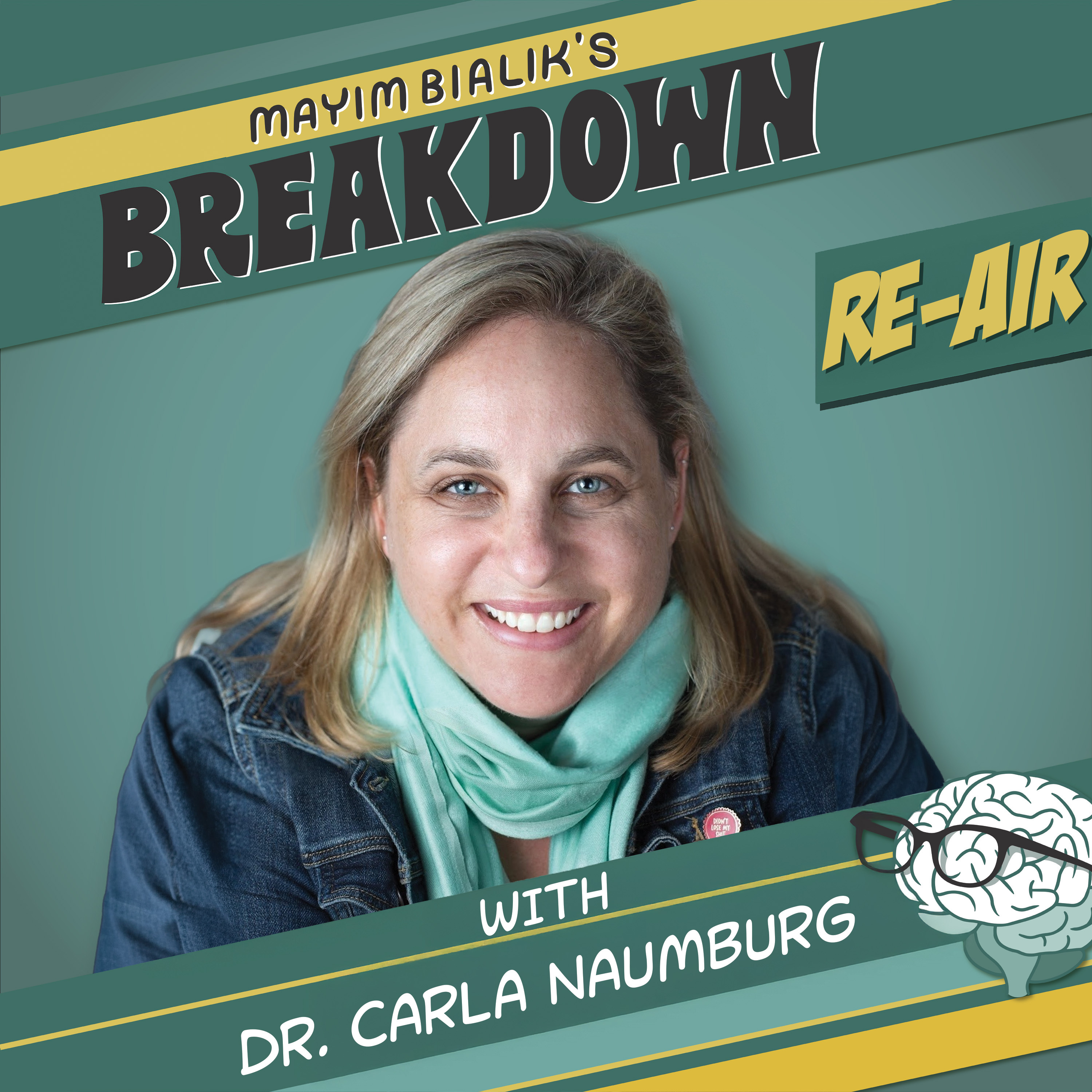
Loading summary
Transcript202 lines
- [00:04]
A
Hi, I'm Mayim Bialik.
- [00:05]
B
And I'm Jonathan Cohen.
- [00:07]
A
And welcome to our Breakdown. Today, in honor of international self care Day, we're gonna revisit a super informative, fun and very practical episode which will tell you so much about self care. It's with a personal friend of mine, Dr. Carla Naumburg. Karla wrote a variety of books, but we talk about her book, you are not a shitty parent. We which clarifies what it means to have self compassion through the parenting process. Ways to understand the role of self care in not only how we deal with our children, but how we deal with ourselves and the entire world.
- [00:42]
B
Carla helps us break down the evolution in our parenting methods from generation to generation, the importance of honesty when sharing parenting struggles, and not comparing yourself to other parents. She also talks about how meditation impacts parenting skills and the dark side of the mommy blogging.
- [01:00]
A
Carla and I actually talk about how we met, which was through the dark side of mommy blogging. She wrote an article criticizing the way that I parented and we actually became unlikely adversaries and then friends and writers. So we're so excited to look back at our episode with Dr. Naumburg. And also check us out on substack for content you cannot get anywhere else. What better way to celebrate self care than by going to our substack page? Bialikbreakdown.substack.com and now enjoy our episode with Dr. Naumberg.
- [01:31]
C
Best thing that's ever happened to you. Financially. Go easy.
- [01:34]
B
Sold my car on Carvana. Amazing offer, really.
- [01:37]
C
I hit 200 on a scratcher.
- [01:39]
B
Did the scratcher come to your house and hand you a check?
- [01:41]
A
No.
- [01:42]
B
How many scratchers did you hit to get that? I hit a button on Carvana.com once.
- [01:46]
C
Okay, that's fair.
- [01:48]
B
It's like the lottery, except you always win.
- [01:51]
C
Not like the lottery at all, actually. Exactly. Inexplicably good offers. Worth bragging about.
- [01:58]
B
Your car today on Carvana.
- [01:59]
C
Pick up these may apply.
- [02:01]
B
My MB Alex Breakdown is supported by Helix Sleep.
- [02:04]
A
We were so excited to hear that Helix wanted to partner with us. I've had my Helix mattress for I think it's close to six years now, and it helps me sleep really, really great. Jonathan and my kids also have Helix mattresses. Everybody loves them. And all of those issues, night sweats, back pain, motion transfer, all of those things are completely gone. Helix Sleep makes premium mattresses and bedding that are customized to fit your personal needs, and they're conveniently shipped to your door. Happy with their shipping process? I Even ordered my son a new mattress when he needed one. It shipped right to his apartment. It's amazing. Helix combines innovative tech with high quality materials to deliver comfort and support. They offer soft, medium and firm mattresses. There are different options. Are you a side sleeper? A stomach sleeper? A back sleeper? Helix Sleep mattresses have a supportive hybrid design. You can choose to elevate your mattress with premium cooling options. The helix lineup offers 20 plus unique mattresses to choose from any variety of mattress toppers. Helix has a sleep solution for just about everyone. Go to Helixle. Breakdown for 20 off sitewide 25% off luxe mattresses and 30 off elite mattresses. That's Helix sleep.com breakdown for 20% off site wide, 25% off luxe mattresses AND 30% off elite mattresses.
- [03:16]
B
Helix sleep.com breakdown break it down.
- [03:21]
C
I'm so excited to be here. Let's talk about all the things I
- [03:24]
A
have told you about Carla Jonathan. In, in many ways over the years, you may not have realized that this
- [03:30]
B
is the Carla you told me that she taught you to meditate.
- [03:34]
A
Carla is, is not the person who taught me to meditate. Carla is the person that I went to when I was struggling a lot because Carla has been very, very open in her writing even before her, her awesome books which have been very helpful. But Carla and I used to write together at, at Kveler, which is a Jewish parenting website. And our relationship, I think is very interesting because it started in a potentially contentious way. Carla is a very, very, a very funny and very thoughtful and very. She can be sarcastic. And she wrote, she wrote an article that referenced me somewhat playfully. But I wanted to. What are you. What?
- [04:21]
B
I want to know the shot that you took.
- [04:24]
A
Oh God.
- [04:25]
B
Of her.
- [04:25]
A
Let's just do it.
- [04:27]
C
Oh yeah, 100%. I was like, Mayim's being really nice when she says, I wrote an article that referenced her. No, I wrote an article that straight up called her out. Basically, Mayim wrote an article for this at the time new Jewish parenting website called Kevelar where she in my totally distorted memory was like, I'm breastfeeding my 4 year old and I love it. And it's the greatest experience of my life. And I love breastfeeding a 4 year old. And it's so awesome when a kid walks up to me and like uses full sentences to ask for my boob. And so my older child is about the same age as mine younger child. And I was like neck deep in. Oh, at that point I had like a toddler and an Infant. I don't know. It was just horrible. And I was neck deep in postpartum anxiety, and I was a freaking wreck. And I saw this article and I was like, this woman was my childhood idol. Not because of Blossom, but because her, like, three episode guest appearance on, wait for it, MacGyver, which was and continues to always be my all time favorite TV show. I've seen every episode, like, more times than I can count.
- [05:28]
B
That's where most people know her from, actually.
- [05:29]
C
Obvious, obviously. So that's my association with Mayim. And so I read this article and I was like, oh, no, she didn't. And so I totally wrote this rebuttal piece calling her out, being like, tell it like it is. And where that fundamentally came from was my deep sense of shame, because I only breastfed each of my daughters for about nine months. I hated every minute of. Was horrible. I felt. I felt also.
- [05:58]
A
That's a very long time. I'm not gonna let you use the word only. That's a long time. You did.
- [06:02]
C
Well, see, for me, it didn't feel like a long time. I felt like I was failing my kids. And so then I see you out there being like, not only was I on MacGyver, which totally was not in the article, but that's what I read, but I breastfed my kids for a million years. And the neighbor's kids, she was, like, out there. And so in my. My world back then was all about parenting, shame, feeling like a shitty parent. Anything could trigger me. And so I wrote a rebuttal article. And of course, Covella is a lovely place. It was, like, where I became a writer and found my voice. And it was like my first community of fellow Jewish mothers that I felt really connected to, but they were like, oh, yeah, some person's taking a stab at mine. I'm absolutely gonna post that piece.
- [06:44]
B
What was the shot exactly?
- [06:46]
A
No, it was. She was literally like. I can't remember if you referenced, like, you must have a nanny or you must have help, but, like, what she said is, this, like, holistic mama portrait of you cannot actually be what it's like. Like, it's so hard out here. It's what a lot of people kind of, you know, eventually criticized, like, people like Gwyneth Paltrow for. For, like, making it look shiny, except I was making it look shiny in, like, a hippie granola way. So Carla literally was like, this is not, like, this is not what my experience is. It's not what most women's experience is. This cannot be the whole Story. So I literally emailed her, and I was like, okay, lady, let's talk.
- [07:24]
C
And Mayim said something that I will never forget, which I think about a lot when I look at celebrities now, is that, you know, when you are a celebrity, whatever that means, you can't really complain about your life because in a public way, because people assume that if you are a celebrity, then you have unlimited internal and external resources. I don't even think they think about celebrities internal resources. Actually. I don't think they think about celebrities as real people. I think they're just like, you're rich and famous, so obviously your life is way easier than mine in every way, so shut up and don't complain. I think that was. And you said it in a much more thoughtful, graceful way. And all I could think was, oh, my. Holy shit, the woman from. The girl from MacGyver is emailing me.
- [08:07]
A
And I do want to point out, and I think this is a good window into not only kind of Carla and my relationship, but what I have been able to learn from her. I did not approach it like, bitch, you shouldn't have done that. What I said was, I. I think it was an unfair assumption that you made, and I would love to talk to you because also, this was the early days. I don't know if people, you know, some people may not have been around at this time of, like, mommy blogging was new. We were getting paid, like, you know, a very small amount of money because this was like a new enterprise, like. Of like, write your stuff and tell everything that's going on as a mom. But it was still a new. It was very. There was a lot of contentiousness. There was a lot of, who's doing it better? It was still like, should you breastfeed? Should you not? And, like, people were freaking out about vaccines. Like, it was a very interesting time where there was a lot of debate about parenting in particular online. So I wanted to not buy into that trope of, like, I'm going to write a mean article back. So we ended up, like, kind of starting to talk, and we. We built, you know, more of a friendship. And, you know, what ended up happening is, you know, I. I got divorced. My kids were 4 and 7 when. When I got divorced. And it was very, very difficult, as many people experience, to be a divorced parent, also a working divorced parent. Um, also with my own, you know, like, mishigas and baggage that I had come to life with, I was now bringing to my kids and Carla in her writing and eventually in the books that she started writing, was willing to be extremely honest about places she was not happy about in her life as a parent. And, you know, parenting in the present moment, you know, was a real game changer for me because what Carla was able to talk about is that the person that you think you are, meaning that you come into parenting with, does not have to be the person that you continue to be. Meaning. I was exhibiting rage. I was exhibiting a level of overwhelm and frustration that was out of control. My children at that point were afraid of me. Not because I was hitting them, but because of my anger, my physical presence. I threatened them with my presence and my voice. And I felt shitty. And I turned to Carla personally, not, you know, on the record, and I said, I would like to know, like, how can I keep getting there? And Carla was not the first person who had suggested meditation, but she was the first person I could hear it from. And it seemed so foreign to me. Cause I had heard of, like, oh, there's this website. And this was earlier, you know, in the consciousness of meditation. And what appealed to me was that Carla was not, you know, she was not from, you know, from an ashram where I could never go. She wasn't, you know, she wasn't raised in, you know, a culture that I think would foster a natural sense of mindfulness.
- [11:19]
C
She was.
- [11:19]
A
She was a person like me. She was like a mom who was stressed out, had a lot of stuff from, you know, her ancestral family. And I literally began learning how to meditate on Carla's suggestions. Sharon Saltzberg was one of the first people you told me to turn to. And I bought one of her books and you told me about that. There are walking meditations. Never knew that was a thing. And by walking meditation, that doesn't mean like taking a walk and listening to a guided meditation. It means as you place your feet, there are words that you say and you walk a straight line back and forth. And I started doing that at that time. You turned me onto a couple websites that you could, like, download the audio. It's much more sophisticated now to have access to these things. Right.
- [12:09]
B
My Bialix breakdown is supported by Quince.
- [12:12]
A
You know, summer makes me rethink what I reach for every day. Lighter fabrics, better materials. Pieces that just feel good the moment you put them on and look effortless. That's why we keep coming back to quints, especially in the summer. They focus on high quality essentials. Think breathable linen, soft organic cotton, even washable silk, but without the luxury markup. It's that rare balance where everything feels elevated but easy. Quince has beautiful everyday pieces like 100% European linen pants, dresses and tops with style starting at just 32 bucks. Their denim is soft and easy to wear and their organic cotton sweaters are perfect for layering on cool summer nights. Everything at Quint is priced 50 to 80% less than similar brands. Quince works directly with ethical factories and cuts out the middle people so you're paying for quality, not brand markup. And it's not just clothing. Quince has really become a destination for elevated essentials across home, kitchen, bedding and beyond, making it easy to bring a more premium feel into everyday life. Quince's 100% European linen wide leg pants is quickly becoming my summer uniform. They feel like PJs but they look like I put a lot of effort in and also really, really enjoying the Quince bamboo sheets that we purchased which are really making me happy. Elevate your summer wardrobe. Go to quince.com breakdown for free shipping on your order and 365 day returns. Now available in Canada too. Oh my gosh, that's Q U-I-N C E.com breakdown for free shipping and 365 day returns.
- [13:35]
B
Quince.com breakdown mind Bialix breakdown is supported by Shopify.
- [13:40]
A
How many times have you heard now is the best time to start your business? But also it's summer and that feels like the most overwhelming time of all. We get it. It felt completely overwhelming when we got our podcast off the ground, but it turned out to be a great decision and the next great decision we made was to use Shopify for our merch. Their expertise, easy to use, platform and so many helpful tools makes the process simple and stress free. Making that leap is possible when you've got a partner like Shopify on your side to help. Shopify will simplify your checkout process so more customers finish their purchase or if they need more time when they come back, their details are saved. One tap and they're done. Shopify handles the setup and checkout so you've got more time to focus on growing your business. And like, you don't want to spend your time fixing mistakes, you want to be spending your time in the sun, enjoying those precious summer moments with the people that you love. Shopify powers millions of businesses worldwide, from household names like Gymshark and Mattel to small business business is just getting started to our podcast with Shopify. Nothing stands between your idea and a real business, so go make it one if you're Ready to stop putting off your business and start hearing. Then you're ready for Shopify. Start your free trial@shopify.com breakdown today.
- [14:46]
B
That's shopify.com breakdown.
- [14:49]
A
You heard that right. Start your free trial today@shopify.com Breakdown My
- [14:54]
B
Imbe Alex Breakdown is supported by Shopify.
- [14:57]
A
You've heard it all before. Now's the best time to start your business. But summertime can feel like the most overwhelming time of all. And we totally need get it. Nothing felt more overwhelming than getting our podcast off the ground. But it turned out to be the best decision. And the next best decision we made was using Shopify for our merch. Their expertise, easy to use platform and helpful tools made the process simple and stress free. Making that leap is possible when you have a partner like Shopify on your side to help. Shopify will simplify your checkout process so more customers finish their purchase. Or if they need more time, when they come back, their details are already saved. One tap and they're done. Because Shopify handles the setup and checkout, you've got more time to focus on growing your business and the tools to do it. You don't want to be spending time fixing mistakes. You want to be spending your time in the sun, enjoying these precious summer moments with the people that you love. Shopify powers millions of businesses worldwide, from household names like Mattel and Gymshark to small businesses just getting started to our podcast with Shopify. Nothing stands between your idea and a real business. So go make it one. If you're ready to stop putting off your business and start hearing, then you're ready for Shopify. Start your free trial@shopify.shopify.com breakdown today. You heard that, right? Start your free trial today@shopify.com breakdown that's shopify.com breakdown I will stop talking because I want you to kind of give us a little bit of background. A lot of people are worried when they hear someone you know is writing books about parenting because.
- [16:23]
C
Oh, me too.
- [16:24]
A
I'm worried about parents. Exactly. So you, you know, your degree, you have a degree in psychology and you also have a master's and you have a doctorate and your work was clinical social work. Correct? That's where your kind of thesis lay.
- [16:39]
C
Just to be clear, my master's and my doctorate are actually both in clinical social work.
- [16:42]
A
Right, sorry, I meant you have a Master's and also PhD. Can you tell us a little bit about tell us a little about your childhood just so we can know where you fit into sort of the world. Of people who eventually become people who write parenting books.
- [16:58]
C
This is where I joke with my friends that if I ever start with a new therapist, I'm gonna need, like the PowerPoint slideshow to catch. So I won't pull out the PowerPoint, but I will just tell you guys. I am the child of multiple divorces. And this wasn't a situation where my parents married and remarried and divorced each other. They married and remarried multiple people. They divorced each other when I was not quite a year old. And without going into too many details, because I want to respect my family and their privacy. Childhood.
- [17:23]
A
I meant I don't want to respect my family.
- [17:25]
C
No, no, no, no, that's fine. It was a childhood of addiction and mental illness and multiple disruptions and moving back and forth between different parents houses in different states. My parents still to this day can't really talk to each other. So there was a lot of custody battles and awful stuff. So that was my childhood. And how did I end up writing parenting books? Because writing is the only way I have been able to. It's like my main vector for figuring shit out. So I go to therapy. I've gone to therapy since I was a kid and the court ordered it. I take medication for my anxiety and I work hard to incorporate hilarious stuff into my life every single day because laughing is my main coping mechanism. And I write books and I write about the stuff that I am struggling with. And so the real clear one is my third book, which was called how to Stop Losing youg Shit with youh Kids, which is pretty obvious what I was struggling with there. And my newest one is, you are not a shitty parent, which is about self compassion and a syndrome I made up, which is called shitty parent syndrome, which I myself struggled with for many years. And so I think that, you know, when I became a mother and my daughters are now 13 and 12, not only mime, you set a beautiful context for it, but it was a time where just social media was erupting and we were all trying to make sense of it and reality shows were erupting and there was so much judgment, and there still is, but I've chosen to kind of not be a part of that world so much anymore. But between mommy blogging and social media and all the conversations, I was like, I would look at other people's style of parenting and simultaneously think I should be doing what they're doing. And also, I totally don't agree with that style of parenting, but, like, I was just certain I was doing it wrong. And that's One of the problems when you grow up in a really chaotic, dysfunctional, traumatic household is you can say, I don't want to do it that way, but that's like saying, I don't want to go down that road, but I have no idea which other road to choose. And there's a million other roads, and you're like, I don't know which one is the right one for me. And thankfully, I have my husband, my parenting partner, who is grounded and supportive and much less anxious than I am, thank God. But it was a real process. And I remember literally sobbing in my therapist's office because I had become the parent who was feeding my kids, like, frozen chicken nuggets. And I felt so horrible about this. And that was obviously not really about the nuggets, but it was sort of about the nuggets, but, you know, so. So that was kind of where I was and what got me into writing.
- [20:09]
A
Can you talk a little bit? Because, you know how to stop losing your shit. I mean, I remember when you wrote it, and, you know, I was having a lot of parallel experiences because we have kids, you know, the same age, and can you tell us just so also we can, you know, be reminded how human even the people who write books are. What did it look like for you? I mean, was my description close?
- [20:34]
C
Um, I. Yes. Yeah. Look, I did a lot of yelling. I do a lot of yelling and screaming. I probably would have done more door slamming, but we don't have that many doors downstairs in our house. And running upstairs to slam a door and then running back downstairs, not as dramatic. Doesn't have the same dramatic effect you're looking for. But, look, my kids, I remember when they were really young, and I was with them a lot alone. Like, my daughters are 20 months apart, so I had these two really little ones. And my husband was traveling a lot for work, and it took me a long time in therapy to figure out why that particular formulation of mother along with two daughters was so triggering for me. But I was losing my shit with them all the time, just yelling. A lot of yelling is what I remember. And for me, it wasn't so much. It didn't feel like rage. It felt like intense irritability coming from a place of overwhelming anxiety. And it took me a long time to identify that my screaming at my kids was actually not from a place of rage, which isn't an emotion I identify with quite as much, but from just constant and almost debilitating anxiety is what it was for me.
- [21:34]
A
What is the anxiety meaning when you're a parent, like, what can you put your finger on?
- [21:40]
C
What is it? So let's just set the context. I am Jewish, I am the grandchild of Holocaust survivors on one side. And I grew up in a completely unpredictable, unstable, constantly changing, like, didn't know where I was necessarily gonna live from year to year. Didn't know if a parent was gonna show up to pick me up. Didn't know if that parent was gonna be drunk or not. And so for me, anxiety, I don't know, it's just how I move through the world. I literally don't have another way to describe it, but what it looks like on a day to day basis is constant worry, right? About everything. And I remember having a babysitter once and I like, gave her the list of things and I thought it was a pretty chill parent. I was like, you can take my kids out wherever you want to go, you can feed them whatever you want, you can do whatever activities. I totally trust you. And here's 27 things to remember. And she was like, holy crap, it must be exhausting to be in your brain and I want it. She said that to me, literally. And I was like, oh, honey, you have no idea. But for me, the anxiety, like, I don't. It's just worrying about everything. It's worried. I remember having a conversation with a friend once when my daughters were like three and two and disclosing to her that every single day I worried that one of my children might die. And I just worried about. And she looked at me and she was like, what are you talking about? I said, do you don't worry about that? She said, no, I never worry about that. And I was like, what are you talking about? Clearly you don't come from a lineage of people who are constantly being, trying to murder them, like, you know, whatever. So I realized that that was. I just like, same planet, I mean, two different worlds, right? And then sometimes the anxiety, like, bad shit actually happened. I remember being at my grandmother's cabin, her lake house up in upstate New York, and thinking to myself, I don't want the girls to fall down the stairs. I'm really scared the girls are going to fall down the stairs. And so I was like, every time they went down the stairs, they were probably 6 and 4 at the time. I was like, slow down, careful, slow down, careful walking down the stairs. And then one time I got in the shower and I didn't say that. And my daughter fell down the stairs and broke her arm. And I'm like, thanks, for that universe. Like, what am I supposed. How am I supposed to make sense of this? Right? How am I supposed to make sense of the fact that the one time I'm not there nagging my kids, she actually falls down the stairs and breaks her arm? She's fine now. Everything's fine, but so does that. Anxiety is just how I move through the world.
- [23:57]
A
No, that's really helpful. Do you want to say anything, Jonathan?
- [24:00]
B
I mean, this is the Matrix moment where if you hadn't put so much energy on the stairs, would they have fallen in the first place?
- [24:10]
C
Oh, shit. I can't even think about that right now, because if I think about that, then I have to go back and question my entire life. And I have a refrigerator repairman coming after this podcast, so I'm gonna have to table that one until the refrigerator is fixed. But that's. I don't. I have very mixed feelings about what you just said intentionally. Part of me is like, yeah, absolutely. And part of me is like, oh, great, now we're blaming the mother again. Right? Which is not what I think you wanted to do, but that's where my brain goes.
- [24:37]
B
I'm definitely not blaming the mother, but what I am doing is. Your other line of thinking is that you have the control to be there at every moment of all of their existences. So the other question is, well, if you went in the shower, were they totally alone? Were there any other parts, family members around? If not, should they have been inside if that was really a major risk? But, like, there is not the possibility that you could be with them at every single moment if they were allowed to be on the stairs and the stairs were a serious danger. So the question is if you thought the stairs were a serious danger. It's not about watching them at every moment. It's like, it's very tricky.
- [25:19]
A
The thing that I take from Jonathan's interpretation is that Jonathan is a person who knows how to think like you do.
- [25:25]
B
Well, of course I do. If you don't think that they may die, you don't really love them.
- [25:28]
A
Okay, there you go.
- [25:31]
C
Dear listeners, we don't actually mean that.
- [25:32]
B
No, I'm 100% joking.
- [25:34]
C
We all think that.
- [25:34]
B
No, I'm 100% Joking. So I, I, I would love to be a human being who never contemplated bad things happening.
- [25:42]
A
I don't. So I. For all the things that I have, this specific one that the two of you are talking about, I don't have it like this. And I'm not saying I'm better, believe me. I always think I'm worse. But that's interesting to me because Jonathan will have an awareness about his child that I wouldn't think to have. And obviously, this looks a lot of different ways and a lot of different people. And I also think it's interesting that Jonathan doesn't have kind of the rage and tendency to shout and be angry that I do. So, you know, obviously we're all, like, all the colors of the rainbow. But I think it's the interesting, because listening to Carla talk, I do hear a lot of things that I've heard you talk about. And I just think that's interesting.
- [26:25]
B
That's all I have in my life, had the rage, but also my life was completely unmanageable when I had that amount of rage. And I have changed a lot of the external factors in my life that were causing me to want to lose my mind. And therefore I have a lot more ability not to lose my mind.
- [26:44]
A
Was there a specific wake up call that led you to a new path, which I believe for you, eventually led to meditation?
- [26:52]
C
So it wasn't. Yes. Yeah, yeah, yeah, absolutely. So it was a night when my daughters were pretty young. So they were probably, I don't know, three and two, four and two, something like that. And I was just finishing up my doctorate in clinical social work. So literally. Literally a ph in, like, overwhelming feelings and confusing thoughts. And I sat down on my computer. I had just lost my shit with my kids, pretty epically, like, screamed at them. And then I was, okay, well, nothing good is going to come up tonight. Like, I got nothing in the barrel. I can't parent them. Fuck it. I'm just going to put them in front of the tv. And then I felt super guilty about that. But I decided to table that for a minute. And I literally sat down at the computer and typed into Google. How do I stop yelling at my kids when I was literally supposed to be an expert in this stuff, right? I was, like, defeated. Just Google, help me. And so I found a million checklists, and my little uptight type A heart was like, I can do this. I'm gonna make a list of all the things and I'm gonna do it. And it was like, you know, take 10 deep breaths and go yell into the toilet. Which I think is a super weird one. Cause at the time I had two kids in diapers. And I was like, enough with the toilet stuff. But I made my checklist, and it lasted about, like, you know, 18 hours maybe before I was losing my shit again. And then I not Only had the guilt and shame about exploding at my kids, but also the guilt and shame about failing at this thing that clearly thousands of parents had been able to conquer because they were writing about it all over the Internet. Just so people know you can actually say whatever you want on the Internet, it doesn't mean it's true. People should just know that. So anyway, so then I was like, oh, well, Google is for the little people. I am going to take my academic brain and dive into the academic literature. So I was looking up stuff on the databases about maternal emotional regulation, because if you use big words, obviously you're gonna get better information. So I was reading all these articles and at the bottom of every single one of them, it said these parents would probably benefit from some training in mindfulness practice. And I was like, that is bullshit. That is 100% bullshit. Mindfulness is bullshit. It's for people who beat drums and drink kombucha. And no offense if you like kombucha, but I think it's horrifying. So I totally just ignored it and ignored it. And then finally one day, I don't even remember which day it was, I was just like, well, nothing else is working. So I found somebody told me about a mindfulness based stress reduction course and I signed up for it. And I was like a hostile witness going to it. I was like a four year old being dragged to this conference room in this stupid building in this stupid town, and everything was stupid. And I was so annoyed. And I was like, well, clearly what I'm trying isn't working, so I need to try something new. And I learned some things that literally changed my life. So the first thing I learned, which I think a lot of people know now, but when I learned was like my world had been turned upside down, which is that you don't have to believe everything you think. And when I heard that, I was like, I'm sorry, what? Like, I have just spent decades being trained in a academic and professional culture where we are taught that our thoughts really matter. And that our thoughts are so important that we need to pay other people hundreds of dollars to sit on couches for an hour to talk about our thoughts. And that I, as a professional, should be charging you hundreds of dollars so we can talk about your thoughts. And I was like. And they were like, sometimes you can have a thought and it's just a stupid thought and you don't have to believe it and you can just move on. And literally, I can't even tell you guys how much that blew up my life. And then I learned about self compassion. And the first time I learned about self compassion, they tried to get us to put our hands over our hearts. And I thought that was the biggest crock of shit I'd ever heard. And all I could think about was Stuart Smalley on Saturday Night Live, sitting in front of the mirror being like, I'm good enough, I'm smart enough, and gosh darn it, people like me. And I was like, I am out. I still will tell you that I refuse to put my hand over my heart. I can't bring myself to do it. I, it's just not my style. But I think it works for many people. But this idea that I could notice when I was suffering and actually intentionally be kind to myself in response, I'd never seen anybody do that. I'd never heard anybody talk about it in years. I have a bachelor's in psychology and 2 degrees in social work and nobody ever talked to me about this stuff. And that was the game changer. So learning to notice my thoughts and not get swept up in them, which is essentially in mindfulness meditation, that's all you're practicing doing. Rather than believing every unhelpful thought I have and learning to be compassionate to myself, those are the two things that changed everything for me.
- [31:30]
A
So your current book, you are Not a Shitty how to Practice Self Compassion and Give Yourself a Break. And I really like the disclaimer at the front where you're like, you may have read other books of mine, but this is a different kind of approach to the way to insert in particular compassion for the things you may not be happy with or the things that you'd like to change. And you know, I, I, I read the book and I was like, I'll just bookmark a couple things and we'll talk about it. And then like, you know, many, many dog eared pages later. There are so many things in here that you present that honestly are not just for me as a parent, they're just for me as a person. Cause you know, I think everybody in this room knows, and you probably know as well, I don't just have a problem with being a shitty parent. In my head, I have a problem with being a shitty person. Meaning my children are not the only people that I lose my shit with. My children are not the only people that I can be threatening with or bully. It's embarrassing, you know, to be vulnerable like this, but it's also embarrassing to try and pretend that I'm something that I'm not So what I really loved, and you know, the reason that I think it's really important for you to get to talk to us, is that the things that you experience as a parent, you know, are an extreme magnification of all your stuff. And if you don't have kids, your stuff is still there and it's gonna be magnified, but by other people. So with kids, like, the way that I see it, being a parent is not for everyone. And I have tremendous respect for people who, you know, don't want to go down that road and want to sleep and go to Disneyland whenever they want.
- [33:22]
B
But for me, or never go to
- [33:24]
A
Disneyland, or never go to Disneyland. But for me, you know, having kids has been a lesson that if you had told me I was gonna get, I might have made a different decision. Because it's like having your issues reflected to you 24 7.
- [33:42]
C
All the time.
- [33:43]
A
All the time. And even when they are not physically with you, you know, this is my invisible string that attaches me to them. Like, even with one at the age that he's about to be up and out, that changes nothing about his and my relationship, meaning it's constantly being mirrored back to me. What works and what doesn't. I constantly can disappoint them. So again, that's just. They live in my house. So it's like having a built in part of your life constantly showing you your shit. And, you know, I remember when I would see other people parent and I would see how angry they got with their children for what I thought were seemingly like what? I had a lot of judgment about it until I became a parent. And I was like, oh, it's rarely about them. It's almost always about me. And that's what you taught me. And that's what meditation kind of gave me the space to start thinking about. Like, it's all in here. So I tremendously appreciate this book. And also, like I said, these are things that as humans, we need to focus on. It's not just children that are hungry, angry, lonely, or tired. It's us. Right? That's halt all the time.
- [35:04]
B
Maybe Alex Breakdown is supported by Superpower.
- [35:07]
A
We all know what it's like to leave a doctor's appointment feeling like you are leaving with more questions than answers. There's no real data. There's no game plan. This has happened to me so many times, especially when I was starting my perimenopause journey. And that's why we love Superpower. Their one simple blood draw gives you information on over 100 of your blood biomarkers. Superpower sends a licensed professional to your home. You can also visit a nearby lab to unlock a real understanding of your body and what's going on in it. The Superpower app includes detailed information on your heart, liver, thyroid, hormones, metabolism, vitamin and mineral levels, even environmental toxins. So from disease prevention to simply optimizing your gym game, Superpower is the most comprehensive and advanced system out there. Superpower also tracks your results over your lifetime. Each test builds on the last. You can see progress year after year. Superpower helps you you connect the dots and understand long term trends in your health data and take action on them. Stop reacting to health problems and start proactively improving your health based on real personalized data. Superpower is the most affordable 100 plus biomarker blood test starting at $199 and it's HSAFSA eligible. Unlock your new health intelligence. Make this the year you stop guessing about your health with Superpower. For a limited time, our listeners get $20 off to unlock their new health intelligence. Head over to superpower.com use code BREAK for $20 off your $199 superpower membership.
- [36:29]
B
After you sign up, they'll ask you how you heard about Superpower. Tell them Mayimbialics Breakdown sent you to support the show.
- [36:38]
C
Hi everyone, I'm Whitney Cummings and I have a podcast called Good for you where I don't deliver the news because I'm not a dork, but I will
- [36:45]
A
give you the weirdest take and truest
- [36:47]
C
opinion of on the news. The world is insane and sometimes it takes an insane person to make it all make sense. And when it comes to what's going on in the world, I promise not to bum you out because that is social media's job. If you want to laugh about this whole nightmare called Life, check out Good4U new episodes every week.
- [37:07]
B
Have you ever looked up at the night sky and wondered how it all began? And whether we can even really know?
- [37:12]
A
If you want answers grounded in actual experiments and not just speculation, we want to tell you about into the Impossible. It's hosted by Dr. Brian Keating, a cosmologist at UC San Diego who builds telescopes that peer back to the first moments after the Big Bang. Each week he sits down with Nobel Prize winners, astronauts, philosophers, and the boldest thinkers in science and technology. Tackling the origin of the universe, the search for extraterrestrial life, the physics of time, the promise and perils of AI, and the biggest ideas humanity has has ever chased. Brian's rule comes straight from Richard Feynman, show me the experiment. No dumbing down, no hand waving. Just the deepest questions taken very seriously. We had the opportunity to speak to Brian on our podcast. We talked about God, the big bang, consciousness, the limits of knowledge. We had such a great time with him, and we can't wait to learn more about him. So if you've ever wanted a front row seat to the frontier of human knowledge, this is it. Listen to new episodes of into the Impossible with Brian Keating every week. Follow the show on Apple Podcasts, Spotify, or wherever you listen to podcasts. Watch full video episodes@YouTube.com Dr. Brian Keating. You know, I have a problem with affirmations. You know, the way you have a problem with putting your hand over your heart. You do have some really good guides in here. And on page 193, you have a box that says, good enough Parenting is absolutely good enough. Right? And again, the judgmental mom in me is like, that's not true. And then I'm like, you know what? Yes, it is. And here are the points that you make, children. But let's just say people, that's the. They. They will not always get what they want or even need, and they will be okay. Like, I need to remember that with grownups, we all make mistakes. We can always apologize. We can always make things right. Again, that is true with grownups and not just children. People can have strong and unpleasant emotions all over us. I like how you say that and say the wrong things and do the wrong things. That doesn't mean that we are terrible people or they hate us or our relationship sucks. It means we're all human. This is what humans do, especially to people they love. Ouch. Wow. And we can notice when we've gotten off course and choose to treat ourselves and others with compassion at any moment. This is a very important box. It's a really important box. Talk a little bit about why this is so hard for people to put into practice.
- [39:40]
C
Well, I think the biggest reason it's so hard to put into practice is because we're not practicing it and we don't know what to practice. So my kids. I don't know about your kids. Are getting some amount of social emotional education at school. It's like a curriculum. I don't. I don't know what the curriculum is, and I don't want to get involved because I'd probably have lots of opinions that nobody actually asked for, so. But when I was a kid, there was no social emotional curriculum. We all just, like, got bullied and bullied each other and treated each other like shit and nobody talked about it, nobody cared. And that was just how the world worked. And now all of a sudden I think, thanks in no small part to the Internet and self help people, which is a real double edged sword, I say as one of those self help people, we're all of a sudden starting to talk about feelings and thoughts and behaviors in ways that we never have before. And most of us didn't grow up knowing the difference between a feeling and a thought and a behavior. And this is hugely important. And we don't know how to identify our own feelings, thoughts and behaviors and make the distinction and understand what we can and can't control and what. So look, one of the things I say to parents and to children all the time and that I try to remember when my children are having a really rough moment is that no feeling is ever wrong, right? Some of them are hugely unpleasant and horrible, but they're never wrong. You're never wrong to feel the way you feel. It might not be a helpful feeling, but it's never a wrong feeling and you're not doing something bad, right? In addition, our feelings aren't something we can control. We can influence them. We can set up things like, Jonathan, you were saying a minute ago that once you change the external factors in your life, you weren't filled with so much rage. My guess is sometimes you still feel angry even though most of the external factors in your life are presumably in a better place. We can do things like get enough sleep and get enough exercise and make sure we feed ourselves on a regular basis and like try to set up a scaffolding so that we're take our medications, whatever it is, but set up the scaffolding so we're less likely to feel shitty feelings. But the truth is we all have days where we just wake up feeling like crap, right? It just happens. So we can't control our feelings. You guys talk a lot on this podcast. This is what I think I love about the narratives we create in our minds, right? And when people around us are experiencing and expressing unpleasant emotions, we tend to create a lot of narratives in our mind about why that's happening and what that has to do with us and what it means for our relationship.
- [42:17]
A
And I think that I have no idea what you're talking about, Carla.
- [42:20]
C
I know, me neither. I don't like that's not the world I live in all the time. But here's the deal. Whether or not our narratives are accurate is not actually that interesting to me. What I'm interested in is, are they skillful? This is a term that I learned from my study of Buddhist psychology. And I myself am not a Buddhist, but I think Buddhist psychology is some of the wisest stuff out there. And the Buddhists talk about. They don't talk about good and bad, which I love, because good and bad is, like, so judgy and just makes you feel like shit. And then you finally do something good, but it doesn't last very long, and then you feel bad again. What they talk about is skillful or not skillful. And things that are skillful bring us closer to our goal, whatever it is. And so what I'm interested in, in these internal narratives that we make up, these stories we construct, is, are they skillful? Are they bringing us closer to whatever our goal is? And maybe our goal is a stronger relationship with our child. Or maybe our goal is keeping the house clean enough that we don't lose our minds. Like, I don't. Those are two different goals, and we can hold them both. But. So I think a lot of this box is about the narratives we construct. So if your kid is a freaking mess, right? Or if they're just having a difficult moment, what's the narrative we're gonna say to ourselves? And it could be, oh, I'm a terrible parent because I'm not keeping my child happy all the time. Or it could be, oh, my kid is having, you know, this big transition. They're tired because they need more sleep, and they're in a growth spurt and whatever. Or the narrative could be like, yep, shit happens. We'll get them through this, and tomorrow's another day, and I'm gonna, like, opt for option B or C rather than the shitty parent option, because I think those are more skillful. Like, they lead me in a better direction of whatever my goal is, which, presumably is to have a smoother night and not feel like shit about myself in the process.
- [44:10]
B
The core idea here is that we are constantly assigning labels, judgments, and narratives to all of our experiences, which only make the experience harder if we're analyzing it through a lens of I'm failing 100%.
- [44:25]
C
Everything is harder when the story you have is, this unpleasant thing is happening because I'm not good enough at X because I should have done something better. It feels harder. You get stuck in your own thinking. You can't come up with, like, creative solutions for how to do things differently. It just. It all feels awful. And whether or not it's true, which I would argue it's generally Not. It's not helpful.
- [44:52]
B
Where I would go next is that a lot of people who are filled with anger and rage, if you're. If you're experiencing those things on. On that, you know, the intensity of that is that you probably aren't even aware of the stories that are driving you to be that angry or annoyed. You're in a reactive cycle that you're just. Something is happening with the kids. It's tripping up some internal wire for you, and you're having this emotional reaction to be able to slow down and be like, oh, I'm upset at this because I have a need that is to keep the house in a level that I can manage. Or it's that, oh, wait a second, that super annoying feeling that I'm having is because I think the kids are not doing their homework, therefore going to fail at that. Like, there's a whole string of what I call downstream narrative thoughts that we don't even recognize as thoughts. We just move way past them. They're just, like, very quickly happening, and we're just straight to the emotion 100%.
- [45:55]
C
And as I'm sure we all know, and Mayan can explain in great detail, that part of our brain that takes control when we are flooded with emotion isn't a thoughtful part of our brain. It wasn't designed to be thoughtful. It was designed to full steam ahead, keep this person alive, react, not sit down and think it through. And so that part, our prefrontal cortex, which is the part of our brain that can think and manage our emotions and get a grip on things and perceive things, clearly just isn't functioning. It's not online. And so one of the ways that my mindfulness practice helps me is in those moments when I am flooded by emotion. I've trained myself, and I've talked about practice before, and when I say the word practice, I don't mean just do it. I mean, you're starting something new. You're probably going to suck at it when you start. It's not going to be easy. It's going to feel weird. You're going to have a hard time remembering it. You're going to be like, what did that weird woman on the podcast say?
- [46:49]
B
You mean her?
- [46:51]
C
I was talking about me, not Mayim.
- [46:53]
A
I don't have that narrative at all.
- [46:54]
C
I'm fine. And then the more we practice it, the better we get at it. But what many people do when they learn some new piece of idea, new practice, a new something is they read it or they listen to it, and then as long as life is generally okay. They're like, I'm not gonna change anything. Cause why would I? Life is fine, and I'm too busy. I don't have time for this crap. And then the shit hits the fan and they're like, oh, what was that breathing thing I was supposed to do? And they can't do it. Because your brain can't do new things when you're in a crisis, right? It doesn't work.
- [47:24]
A
Say that again.
- [47:25]
C
Your brain can't do new things when you're in a crisis.
- [47:29]
A
So if you're always in a crisis, you're never gonna do anything. I mean, you're never gonna get out of it.
- [47:33]
B
You're stuck in a very repetitive pattern. Pattern. I want to just tag here that if someone has the experience of feeling overwhelmed a lot and losing their shit a lot, there's likely something happening in their thinking that they're not aware of because they're just going right from whatever's going on as a trigger to annoyance.
- [47:55]
A
As someone who loses my shit a lot and has. I can tell you for me, and maybe, you know, Carla can let us know if I'm right. You know, for me, I mean, if I'm always at a nine and a half, it doesn't take a lot to get to the ten and a half. Meaning if my cup is always half full, it's gonna spill over quicker than if my cup is in a positive way, not a hundred percent.
- [48:20]
B
And if you're at that nine and
- [48:21]
A
a half, I always think everyone's attacking me and that I always have to defend myself. And so when anything comes in, that's what you get.
- [48:27]
B
So you have this hair trigger response. But really, what's happening?
- [48:31]
A
Don't I sound like the most fun person ever?
- [48:36]
C
I think you're delightful. And all this shit just resonates so deep with me. So I'm good here.
- [48:40]
B
Okay, so if we open the computer that is Mayim's brain and we look at, like, what happened right before the hair trigger response, really what's happening is lines and lines of code that have narrative associated with them that are, like, triggering that emotional response.
- [48:58]
C
I think there is an exception to this. I think I generally agree with you, but I think sometimes for some people, the trauma that becomes a trigger later in life actually happens before they have words. So it's like preverbal trauma. So it may not even appear as thoughts. And I think also this happens, and I am not an expert in this, so I can't say a whole lot about it. But there are also ways that trauma is held in the body. And you can have a somatic response that there may not be actual thoughts associated with it. But I think in general, Jonathan, what you're saying is absolutely correct, that these. It's like you're playing that tape in your head and it's old and you've just played it so many times, you don't even need to get to the end because you already know your body just races right past it to the explosion. And sometimes recognizing those thoughts and starting to change them is really, really important. And sometimes it's actually not.
- [49:55]
B
I 100 agree with you. I am a big proponent of it's held in your body. And likely it is 100 pre verbal. And also that the pre verbal somatic experience that whatever is part of the trigger. So when something is happening and someone's flying off the handle, they are feeling it first. Likely they're not thinking at first, they're feeling it first. And they are probably bumping up against some need, some wound, something that is being held in the body. And there also is likely a story associated with it because as time has gone on and they've become an adult and they've tried to push against whatever this thing is held in their body, they've had to try and rationalize it. They've had to say, what is going on. So for mime, when it's this notion of I'm being attacked that is 100% a physical held feeling. So she feels it immediately, viscerally. She doesn't think, oh, I'm being attacked. But if she were to slow down enough and say, what is that thing I'm feeling? It is I'm being attacked. And there's an entire lines of code as a narrative associated with I'm being attacked. This person didn't do this or that or the other thing. And then it resonates in the body. But what's happening when she's reacting like that is that the narrative is just actually short circuited and going right to the somatic response.
- [51:17]
C
If you had asked me 10 years ago, I would have been like, we need to dig into the story here. And now I'm like, I don't know if I care about the story, right? I don't. I. Maybe I do, maybe I don't. It depends on the situation, what I'm really interested in. Because, Jonathan, you said something super important. You said this about mime, so I'm not gonna say this about mime because I feel uncomfortable speaking about her. Experience.
- [51:38]
B
But we argue she set her up as the guinea pig here. I'm just playing on the scenario presented to me.
- [51:43]
C
Okay, so I'm just gonna say this, but I don't know if it's actually true in Mayim's case that often it starts with a physical sensation, right? And so, so many of us are trained to ignore the sensations in our
- [51:55]
A
bodies and forget about ignore. We don't even have an awareness that they're happening.
- [51:58]
C
So, yes, we don't even realize. Right. And I would argue that in many cases, what happens is we have a feeling or a physical sensation or some combination of both, and then we attribute a story to it, and then we behave, we act on it, and this can all happen at, like, the blink of an eye. It happens so freaking fast. Right? And what I'm interested in is can we go either go back to the bodily sensations and notice them, and is there some way we can address that? Can we identify our feelings and let it be okay that we're having one? Because here's the thing. Feelings do not want to be fixed. And when you try to fix feelings, they get really pissy and they get more intense, and they do all the things. They just kind of want to be felt. Whatever that looks like for you. You. So when we can identify our feelings and feel them instead of fixing them or trying to fix them, that kind of calms things down. Or we can just be like, you know what? I feel like in many different ways, emotionally, physically, whatever. But I actually have this thing I have to do. I'm gonna do it anyway. And this doesn't work a lot, right? This doesn't work all the time. Because if you're talking about being alive,
- [53:04]
A
I feel like shit. But I have to live, so I'm gonna do it.
- [53:08]
C
I have to get out of bed and get my kids to school or whatever. Now, for some people, there's a line there because they're dealing with a major mental illness or something really significant. They literally can't get their heads off the pillow and get out of bed. But for a lot of us, I'm more interested in what does it take in that moment to help you not yell, like, how do we interrupt that cycle? And I would argue that tangling with our thoughts is not necessarily the most helpful way.
- [53:32]
B
And I 100% agree with you. I totally agree that you need to deal with the physical sensation first. You need to ride that out. You need to feel it, give it space to exist without trying to fix it. And where I believe the story is fairly essential is if you're continually feeling this particular type of way, what's the pattern in that story?
- [53:58]
C
Yeah, for sure.
- [53:59]
B
If it's okay, I have this emotional experience, I have a trigger, I fly off the handle, or I have an intense emotion. First thing, of course, deal with the emotion, give it the space, move to a relationship with it that it doesn't necessarily lead to whatever the most extreme version of it is.
- [54:20]
C
And let's be clear, that can be
- [54:21]
B
years of work, but go ahead 100%. So just that in itself and understanding that that is related to a sense of being attacked, then when the feeling comes up, having that little help of, oh, wait, I'm not being attacked, Looking around and saying, am I being attacked? Am I really being attacked? Can really expedite the relationship with the emotion. So I 100 agree that you can't go into your head about it, but having that mental understanding can help change the relationship with the emotion.
- [54:59]
C
Yeah, look, therapy's amazing for lots of different reasons. One of it is you get insights. Another is you get coping mechanisms. You get to go into a space and dump all your shit and then walk away and be like, see you next Tuesday at 2 byee. And that's super powerful. And for me, growing up in such a dysfunctional childhood, my therapist happened to be a woman who also had children. And for her to just kind of normalize things for me and say, nope, that's okay. And she's older and her children were a little bit older, and she could just say, no, actually, that thing is fine. That thing you're doing right now, there's no problem there. And to have someone I really, really trusted say to me that particular parenting move is not a problem, I needed that reality check, and it was a game changer for me. And I know therapists aren't supposed to be saying that to you technically, but depending on the relationship with your therapist, sometimes that's really what you need, someone who's not clouded by all the bullshit in your brain.
- [55:58]
A
I'm enjoying very much the kind of process of how we get kind of to the losing the shit. But I also, I would like to talk about Carla's book, because when all those things, you know, of course, these are the things that we're looking to do, and those are the things. And I will say, like, I am a much less terrifying parent to my children now. However, there are still times when, either as parents or as humans, we miss the mark and we have tension and difficulty. And it never has occurred to most of the books about this, that the answer is self compassion, which is also, you know, part of the Eastern tradition and the Eastern philosophy, right? Meaning a lot of books about a lot of self help books, a lot of parenting books focus on like, these are the things you need to do to not lose your shit. And I think what Carla has tapped into is, and sometimes that doesn't work for everyone and what do we do then? And that's really where I think, you know, there's hope in this kind of approach. So the notion is not like you hit your kids, it's okay, or you scream at your kids, it's okay. The notion is, I think for a lot of parents, especially of our parents generation, I think it can speak for all of us in the room. They were not allowed to admit they were wrong. They were not, they were never wrong. Meaning if they messed up, you just kind of like didn't. It's not that they didn't feel bad, but you didn't talk about it. You just like, okay, now it's a new day. But no one acknowledged what happened, right? And so what, what this kind, what, what self compassion means. And I, like, there's like a heart on the COVID But what self compassion means is saying, I'm not allowed to pretend that didn't happen because that's gonna fuck up my kids because they know something's not right. If I screamed, if I yelled, if I threw things. So one of the things you talk about is naming your child's feelings, acknowledging where they're at, being able to say, we are in a tense situation, right? But we're all having feelings and we can also start again and there are things that we do to not put ourselves in that hole of, I fucked up so much, I'm probably gonna fuck up tomorrow, so let's do the same thing tomorrow. Does that make sense in terms of this kind of redirection? You talk about like connection before redirection, meaning before you say, like, oh, that was shitty, let's do this, right, to not distract away from it. But to say, I owe you to connect back with you, I owe you love, I owe you a conversation.
- [59:01]
C
I think what a lot of we parenting people talk about and post on social media and ask parents to do requires such a tremendous amount and has a lot of assumptions about where we parents are on our internal process, not only at any given moment, but over the course of our lives. And so Mayim and Jonathan, you guys are clearly my people, we can sit around and talk about things like introspection and generational trauma and, you know, trauma that's held in our bodies and blah, blah, blah. And this is like just words that roll off our tongue because this is the world we live in. But for many, many people, it's not like when I go listen to my husband talk about business shit, I'm like, I know you're speaking English, but I actually have no idea what you're saying. Like I don't know a word. So I, I get very anxious when I hear clinicians and coaches and people like that. But tell parents that they should be able to interact with their children in a certain way, especially around very heated topics at very difficult moments. Because I think that assumes a huge amount of many parents especially. Cause those of us who are really struggling with shitloss, and I'm not talking about like occasionally yelling at your kids, I see that as completely normal, par for the course. That's just the parenting deal I'm talking about. What are we talking about? We're talking about frequency and intensity, right? So when it's happening all the time and it's super intense, if you are a person like me who has struggled with that, chances are, like you pointed out, Jonathan, there's a lot more going on behind the scenes. And asking me to be able to identify my child's emotions in a difficult moment is what I call coulda, woulda advice. If I could have done that, I would have fricking done that. But clearly I can't do it in that moment, so I need something else. So what I really start with. So here's how I think about self compassion. I think about mindfulness, mindful parenting, meditation, being patient, being calm, being present, being all the things, naming my children's feelings and helping them through difficult moments, I think of all that as like goals I'm aiming for things I want to be able to do. You know, I want to get better at this. I want to whatever. I think of self compassion as the solid ground I can land on every single time I don't meet the mark on those things, which is a lot, right. So I am constantly striving to find ways to connect with my daughters. And as any parent knows, the fun thing about parenting, and I use the word fun a little sarcastically, is that as soon as you figure something out, your kid goes through a major developmental leap and that thing you thought you had figured out no longer works. So that's really enjoyable. And so as I'm constantly striving to figure out how to connect with my daughters who are teens Now I have to keep reminding myself, and this is all self compassion in action, right? Parenting is hard for everyone. It's a hard thing to do, right? For everyone. Just because it's hard, that doesn't mean I'm doing it wrong. It's just the nature of the beast. And this is such a mind shift for me because I think there's so much out there. And one of the reasons I love the stuff that you two are putting out in the world is it's so real and I am so honest. And I feel like there's a lot out there that really would lead a person to believe that if you are parenting right, it's gonna be smooth and easy the whole time. And if it's not smooth and easy, you're screwing up. And I call that the big lie because it's bullshit. And so just even. Just that, the ability when I'm having a hard moment to remind myself that parenting is hard for everyone, which is what we call this idea of common humanity, which comes out of Kristin Neff. She's a researcher out of Texas, and I have to give her full credit for her amazing work on self defense. Compassion. Just reminding myself that I am not alone in how unbelievably difficult this is. It has been a game changer in my perspiring parenting and my perspective on it.
- [62:54]
B
I completely agree. And I'll be honest, I had a little bit of problem with the title because I feel like self compassion gets this slippery slope to people not really trying that hard. And I'm not saying that's true. I'm saying that's my, you know, like, that's my bias.
- [63:11]
A
Can you say more about that?
- [63:12]
C
Tell me more about that. I'm interested.
- [63:14]
B
It goes to something that you said, which is that it is extremely hard. And even if we were doing it the right way, it wouldn't necessarily be easier, which I totally agree with. And also, there are things that we do as parents that make it harder.
- [63:29]
A
Yes.
- [63:29]
B
That we should know about. And that's not necessarily about self compassion or anything else. But, like, you know, my son had a really hard time getting to bed at night. And when I learned that his bedtime was impacted from the moment he woke up and that it was about ritual and consistency and having predictability, where I thought it was like, oh, he should, you know, be tired at the end of the night and that there's this whole emotional world that he's navigating and bedtime is just a reflection of that.
- [64:01]
C
Yeah.
- [64:02]
B
That totally changed how I understood Bedtime. And actually I was. I'm not saying I was failing as a parent and I'm not saying I was a bad person. But not having that information about that bedtime was really a reflection of his emotional world throughout the day was making my life way, way harder.
- [64:23]
C
What I say in the book is I do not believe there is such a thing as a shitty parent. I don't believe that exists. And some people are gonna be like, you have no idea. Well, let's remember. So I grew up in a really chaotic childhood with parents who I believe were doing absolutely the best they can. And it was on some level, obviously enough, cause here I am. But on many levels, it was really hard time. In my clinical social work, I did home visits, which means I would go out to people's homes and work with families who were struggling with parenting. So you can imagine you see a lot when you're actually in someone's house. And I've also worked on a locked in patient psychiatric unit where people go when they are struggling with suicidality, major mental illness that doesn't allow them to function, all these sorts of things. And you can imagine I saw a lot of parents there. So I've seen a lot of things that someone else might call shitty parenting. And I say, there's no such thing. I say there are parents who don't have the information, resources and support they need. And so, Jonathan, that story you told teed me up so beautifully. Because in that moment, your struggles with bedtime weren't because you were a shitty parent. And you actually never had that. I don't think you had that narrative. Cause I didn't hear it in the story you told. But you didn't have the information you need. And that perspective, shifting that perspective from I'm such a shitty parent because I cannot get my kid to sleep to. There were things I just didn't know. And when I learned them, everything was a little bit easier. That's the shift I want for parents. Because the problem is, you know, when you start talking about yourself as a shitty parent, it's like you're just on this crap highway to nowhere and there's no way to get off, right? There's nothing to do, there are no other options. But when we start to think that no matter how bad things are, no matter how deep you are in abuse, addiction, neglect, mental illness, whatever it is, if you can just see it as you are lacking the information, support and resources you need, and resources may be external and it may be internal, then all of a sudden there's, like, off ramps off this shitty road, right?
- [66:22]
A
Like, oh, I wanna hit on a couple points, and, you know, I have about five of these. And maybe you can just kind of, like, give us your sort of tidbit. I mean, I also want people to buy the book. You talk about disconnecting from the bullshit things that you need to do for yourself to try and reduce the probability that you're going to lose your shit. And you talk about, stop hanging out with people who are not healthy for you.
- [66:50]
B
Yeah.
- [66:51]
A
And you talk about saying no unless you really, really, seriously want to say yes. And you also talk about just think no. Can you talk about those three things? Like, give us kind of your, you know, your elevator pitch for what those three things do?
- [67:07]
C
Look, it's all about setting boundaries, right? And we as women especially. And I'm gonna say that I do see a gender divide here. We as women are not supposed to say no, Right? We are supposed to agree to things and say yes. And I think there's a lot more pressure to do that. But let's go back through each of these things really quickly. Years ago, I heard Mary Pfeiffer, who's an amazing, brilliant psychologist who wrote Reviving Ophelia. And then years later, she wrote a book on aging wisely. And she was on Fresh Air with Terry Gross, and they were talking about, what have you learned later in life? And she's like, yeah, I just walk away from the conversations I don't want to be a part of now. And she was like, she's like, 70 or something. And I am like, I was like, 40 when I heard this, and I was like, like, I just want to do that now. Like, can I do that now? Do I have to wait till I'm 70? And I realize, let's put a pin in this and just acknowledge there is a huge amount of privilege inherent in being able to walk away from conversations you don't want to be a part of. That is a very privileged thing to be able to do. But I am more and more thinking about even just at, like, school pickup. Right. I'm not talking about big life conversations. You could be. But sometimes I get stuck in these shitty conversations on the playground, and I'll just say, excuse me, I need to go. When I was. When I had a clinical practice, which I don't now, but I was working with a lot of parents, and they would talk about spending time with other parents, and I would hear through this story that these other parents were leaving them feeling like, shit.
- [68:29]
A
Is that why? You wrote that article about me?
- [68:31]
C
No. Well, yeah, okay, I did. But let's talk about that. Because that article, surprisingly enough, Mayim, wasn't actually about you. Right? That was about me and my shit and my shame and all my unresolved crap about how I was feeding my kids, which remains unresolved to this day. But we will just move on. So. But if you are hanging out. Look, we all have that voice in our head, right? We all, every single one of us has that judgmental, shamey, blamey, you suck. You're not as good as everyone else voice in our head. It's going to be there. I'm sorry I can't make it go away 100%. Not even with my awesome book. But how about we not hang out with people who reinforce it?
- [69:11]
A
You have something called, well, there's a lot of S's.
- [69:15]
C
That's my favorite letter. Cause shit starts with S. So this
- [69:17]
A
is page 173 and this is what it is. It says sip snack, stretch or soak, snuggle song or show sleep. And this is like my. One of my favorite things from this book.
- [69:28]
C
Can we back up though and offer a little context for why I'm saying this though?
- [69:31]
A
Yes, go ahead.
- [69:32]
C
Look, all I'm saying is when you are having a shitty moment, one of the ways to treat yourself with compassion I talk about in the book is to A, get curious about what you need and B, take yourself seriously. Because a lot of us are like, wow, I really need a freaking break. And then we sort of say that and put it out in the universe and then charge right back into all the to do lists and all the things I've forgotten and the doctor's appointments and the dentist appointments, blah blah, blah, blah, blah. And what I'm saying is, can you ask yourself what you need, get really curious about this, take yourself seriously and then treat yourself with some kindness. And I think for a lot of people, they confuse self care with self improvement. So when you are stuck in shitty parent mode or shitty person mode, what you think is, there is something wrong with me, I need to fix it. I need to go on the Internet and find the self care article. I need to find the expert, I need to read the book and I need to start training for a marathon or do a new diet or start a super intense meditation practice or whatever it is. And what I'm saying is. No, no, no. In that moment, maybe just what you need. And again, Jonathan, this is, this isn't letting yourself off the hook. It's not that you're not going to go back to whatever parenting snafu you made and try to either reconnect with your child or learn a new way to interact with that moment or whatever it is. All I'm saying is, first what you're going to do is notice that you're having a really hard time, that you're struggling and suffering, that this doesn't mean you're a bad parent, and that you need a little compassion. And from that place of feeling taken care of, feeling acknowledged, feeling respected, feeling important, like you matter and you're worth caring for, even by yourself, then you dive back into the parenting problem from this place of clarity and creativity, and you can sort of look at the problem from a much more solid position. So this whole list that Mayim is talking about is like, really basic stuff that you can do to treat yourself with compassion after a really difficult moment.
- [71:39]
A
I think that's a really huge thing that I never understood. Confusing self care with self improvement is a bad thing that I, and I think a lot of people do, I never thought about, because when people are like, what do you do for self care? I'm like, I go to therapy. Like, like, that's different. What do you do for self care? Well, I read this book and I, you know, that's not self care.
- [72:02]
B
And you know what you do now? You go to sleep early.
- [72:05]
A
I go to sleep early. No, I. I do more of the things that, that Carla talks about doing, which Jonathan already does. I have one more question.
- [72:13]
C
Yeah, I'm here for it.
- [72:15]
A
Well, the. The section is called if Compassioning the Crap out of Our Kids Is so awesome, why don't we do it all the time? Meaning if that were the solution, why is this happening? And one of the things you say is, we didn't know any better. And that really hits my heart because we do the best we can, and so did our parents and grandparents. The second point, though, is really important. Most of us were raised in a culture that believes we need to discipline our children in order to maintain respect and control. And what this acknowledges is that we have a very binary concept of children. They're either good or they're bad. When they're bad, you have to discipline them to make them good. And what Carla says is, there's actually something in the middle, which is sometimes we all have bad, rough, hard days, times, moments, thoughts. You don't always have to find the thing to do, which in many cases we've been taught is hitting or disciplining to get it to Change, you can notice it, it can be. And you can still feel okay. And they will be okay. Can you speak to that a little? Because I think there's also so much confusion still about harsh discipline. And you know, again, this is not about should people hit their kids or not. Jonathan and I are very clear on that. But I love this notion that that's not the only way to exist as a parent is to take a bad child and make them good. That's not how we should even frame it.
- [73:47]
C
Look, I first of all, adamantly and unequivocally anti hitting, so let's not hit our kids. And if you are, if that's a thing you're struggling with, then please get help. Because even if you are hitting your kid, I don't think you're a shitty parent. I think you're a parent who needs more information and support and resources than you have. So having said that, we're in a very interesting place in the world of parenting, by which I mean for the first time I would argue in human society, we are talking about and exploring on a society wide level the impact and importance of our relationship with our children and what it means for their future. Now, I'm not saying that parents in previous generations didn't care about their relationship with their kids. What I'm saying is that wasn't what kids were for. You had kids because you needed to pass along your genes and keep the species alive. And you needed someone to take over the farm or the blacksmithery or your law practice when you you died. Becoming a parent was a financial investment in your future. Right? And now so many parents are having children later in life. So many of us have a whole career first, right? And in our career, what we learn is that if we work harder and we do the right things, we're going to get better at it and we're going to get a promotion and we're going to get a gold star and we're going to get more money and someone will tell us we're doing it right.
- [75:04]
A
Also, that's part of the kind of capitalist patriarchal structure. Really? Meaning that's not true in every culture? Yeah.
- [75:10]
C
Yes. That's such an important point, Mayim. Thank you. And so we take this mindset into parenting totally. Unless you have like an awesome therapist or a parent that you're really close to who knows your family really well or something like that who can give you this gold star feedback, we don't have that. So what we look to for our feedback is our children's Behavior. This is like hugely problematic because children don't have prefrontal cortexes. Right? Like they don't have this part of their brain that they need to behave well and behave predictably and follow all the rules. And so like kids are in inconsistent.
- [75:49]
A
Sorry. They have a prefrontal cortex. It's not fully developed, whatever.
- [75:52]
C
Like, you know these things.
- [75:53]
A
No, I just didn't want people to be like, what do you mean they're missing the part of the brain?
- [75:56]
C
Yeah, I think, when I think about it, I think about like a big anti, like gaping ball at the front of their brain. Okay, whatever. There's a few little wiry neurons, but they're not very good at flashing yet or whatever neurons do. Somehow though, our children's behavior and their successes or their challenges and their struggles have become like. We parents take this on as like a referendum on our parenting. And that if our kids are struggling, it's because either like, we're shitty parents or we haven't like worked hard enough to find the expert that's gonna fix them. And if we haven't done that, we better have a damn good story about how hard we tried and we called everybody. And I would like to also acknowledge this is a super classist thing I'm saying right now. Super duper classist. So we gotta acknowledge that. But what I would argue is, yes, absolutely, I firmly believe that we need to teach our kids how to be functional human beings in the world. And we need to have high expectations for them. And we also need to show up with a lot of compassion when they don't meet those expectations. And we also. I just don't think disciplining. And I know they're parenting people like Mayim and Jonathan. You're gonna hear a lot of shit when I say what I'm about to say. You're gonna get the listeners coming in here unhappy with you. I just don't think disciplining is that useful because it doesn't give kids what they need. So if a kid screws up, sometimes they legit know they screwed up. Like when my 3 year old brother and I was like 13 and he put oatmeal in my record player. He absolutely knew what he was doing and he was, was a little demon and he did deserve to get disciplined. Mom. But like my daughter has gotten in trouble twice already at the beginning of the school year and it's for stupid shit where she, you know, was in a moment where she wasn't structured enough. It was her passing time between classes. She was screwing around with her friends. She got sent to the principal's office. And so after this, like, the first time this happened, I was like, well, that was dumb. Don't do it again. And the second time this happened, I was like, oh, child, I think you seem to be having a hard time knowing what to do with yourself during unstructured time. Should we have a conversation? And she's like, yeah, I won't fall out of the chair and I won't, like, look up stuff on the computer I'm not supposed to look up. And I was like, which by the way, she got busted for, like, whatever. It was dumb stuff, but nothing that bad. And I said, I think you have a good sense of what you're not supposed to be doing. Let's talk about what you can do instead. And so we talked through her options and she decided if she has extra unstructured time, she wants to drop the pictures. And she usually draws like superhero bananas, and they're amazing, so it's awesome. But in that moment, I could have disciplined her. I could have been like, if you get sent to the principal's office again, I'm going to take away your screen time or I'm not going to let you go to this party with your friends or whatever. And so that makes her scared, but it doesn't actually give her the skills she needs to do better. So instead we had a conversation about, like, let's see if we can get curious about what the problem is and then come up with a plan for doing things different. And let's notice that in order for me to do that with my child, I actually had to be in a place where I wasn't losing my shit with her. So it took me like years, and I'm not exaggerating, years of personal work and therapy and medication to be able to be in a headspace that when my kid comes home after being sent to the principal twice in a week, I don't lose my shit with her. Right.
- [79:14]
A
And you're also, you're working on your next book, which is specifically for middle school age.
- [79:21]
C
It is. So it is a middle grade version of how to stop losing your shit with your kids. It's called how to stop freaking out. So no profanity for you parents who don't want that for your kids. There won't be any swear words, but it's basically talking to kids about what are thoughts. It's for kids. It's for kids. It's for middle grade kids, which is what we think of as like 8 to 12. So it's these skills for the kids. It's gonna be highly illustrated, lots of fun pictures.
- [79:49]
A
Cause that's what the kids want. My kids are gonna be reading that?
- [79:51]
C
That. Your kids are gonna be too old for it?
- [79:53]
A
No, but. But you know what? I think it's still important. It is still important for them to understand. Fine, I'll let them read this one. I'll tell them I'm not a shitty parent, you guys. Carla said so.
- [80:04]
C
Yeah. When you get the book Miam, just, like, casually leave it out on your coffee table and be like, my friend Carla wrote this. Whatever. And don't pretend like you want them to read it. Just don't.
- [80:12]
A
Carla, tell us where people can find out more about you.
- [80:14]
C
Carlanonberg.com
- [80:18]
A
Anything else you'd like to say? Where can we find you? In other places?
- [80:20]
C
They can go to Instagram.
- [80:22]
A
Great.
- [80:23]
C
And Facebook. And look me up there. I'm the only Carla Nomberg around.
- [80:27]
B
Should we end with our hands over our hearts?
- [80:29]
C
I'm not doing it. You can't make me.
- [80:31]
A
Carla, thank you so, so much.
- [80:34]
C
Thank you, guys. I love being on your show, and I love all the wisdom and humor you're putting out in the world.
- [80:42]
B
What else is there to even say?
- [80:44]
A
I mean, I really. I like Carla. I like the way she speaks. She also has a way of. At least for me, you know, like, everybody's not for everybody. She has a way of speaking that kind of makes sense to me, you know, just the way she talks about. It's not that I haven't heard these things before, but it's the way that she talks about it. And that really just started with, you know, me knowing her as a writer and then as a friend. But I think she's really captured a lot of her personality, really, in all of her books. And I learned a lot of new things today, and I just am really grateful for her.
- [81:17]
B
Can I put you on the spot?
- [81:19]
A
Sure.
- [81:20]
B
You talk a lot about the things that are challenging for you as a parent, and I think it's helpful. We used to have a little section called Mayim Realizes. Yeah, I think we can use that section as a way of also saying some of the good stuff.
- [81:38]
C
Stuff.
- [81:38]
B
Because you've had some amazing breakthroughs with your kids.
- [81:41]
C
Oh.
- [81:41]
B
And, you know, I don't want people to over emphasize or over connect with some of the challenges that you have when there's also a lot of really beautiful things that are happening with you and your kids. Oh, yeah.
- [81:52]
A
I mean, I think, you know, honestly, I. I Did start, you know, this meditation journey, you know, years ago when Carla, you know, right around the time that her first book came out. I mean, I had been speaking to her obviously before that. But, yeah, it's been a real journey. A lot of it, I will say. I'd say most of it is about me taking care of my mental health and my mental wellness. A tremendous amount is about that. Getting more sleep is something that is highly underrated by me. So even in their earlier years, when, for example, they were nursing through the night, which was a conscious choice that I made to not night wean, for example, you know, that absolutely impacts, you know, but for me, I don't think I ever really got out of that kind of, like, survival mode, you know, with my. A lot of my parenting.
- [82:42]
B
Recently. You had a change in how you reacted to your youngest?
- [82:49]
A
Well, it's. Yeah, the Byron Katie work has also helped with that, you know, more recently when we spoke to Byron Katie and also Michael Singer. But, yeah, there's been a real process. You know, I. When she talked about fitness, I definitely feel like I have a good fit with my kids. But my older one definitely has more of my cadence of speech and humor and communication. And my younger one is a little bit more of a challenge for me. And he has often a different perception of his tone versus what I hear. And I can be very sensitive to that. It's a trigger from my childhood about how you are allowed to speak to parents. And I wanna break out of that, but it can be hard. But, yeah, I've learned the more patience I have, the more able I am to deal with things that are challenging, especially with the way he speaks to me. And I also. I've stopped hearing the tone that I think he's using, and instead I listen more for what he's trying to communicate. And he comes around a lot on his own and says, you didn't like how that tone sounded, and that's not how I wanted it to sound.
- [84:00]
B
So this is the huge part. You changed your reactivity to him because for a while you thought, oh, I can't allow that tone to have that tone with me.
- [84:09]
A
Right?
- [84:10]
B
And that was a little journey we went on. And what was happening is you were
- [84:15]
A
in conflict with him, right?
- [84:16]
B
Because you were like, oh, I can't allow him to speak to me like that. Then you switched and started to hear what he was trying to say versus his tone.
- [84:24]
A
He softened as well.
- [84:25]
B
And now in the last couple weeks, you. You've been saying how he's coming back to you saying?
- [84:29]
A
Yeah, no, it's been, it's, it's been a pretty. Yeah. I mean, you know, we have months that are sometimes like, whoo, that was a rough weekend. Many months, many weeks in a row. But yeah, so. But I still do have, you know, a lot of these thoughts about I'm doing it wrong and I mess them up and, you know, I can never recover from this and they'll never recover. But yeah, I think I do appreciate this perspective and that perspective as well.
- [84:53]
B
So for everyone who wants to put their hands on their hearts,
- [84:57]
A
from our breakdown to the one we hope you never have, we'll see you next time.
- [85:00]
B
It's Maya Bialik's breakdown.
- [85:03]
A
She's gonna break it down for you.
- [85:04]
B
She's got a neuroscience PhD or two, non fiction and now she's gonna break down.
- [85:10]
A
It's a breakdown.
- [85:11]
B
She's gonna break it down.
- [85:16]
C
From taco night in Tulum to sushi in Tokyo, every bite is rewarding and Pulse Work with MX Gold's 4X Membership Rewards points at restaurants worldwide. Wherever you dine, points are piling up. So bring your friends along for your next course. Because it's not all about the posts, it's about the company and the memories. How can Gold from Amex sweeten your next food moment? Learn more@americanexpress.com Explore Gold terms and pointscap
- [85:45]
B
apply a snarl in the woods Ancient forest spirits nip at his heels he can hide outrun a force of nature on foot he needs an instant power machine built for the wild the only escape is in the Toyota BZ woodland off road handling all electric power Leave evil in the dust John Cho stars in camping Face the Wild test drive Toyota's new all electric family at your local dealer Toyota. Let's go places.