← Mayim Bialik's Breakdown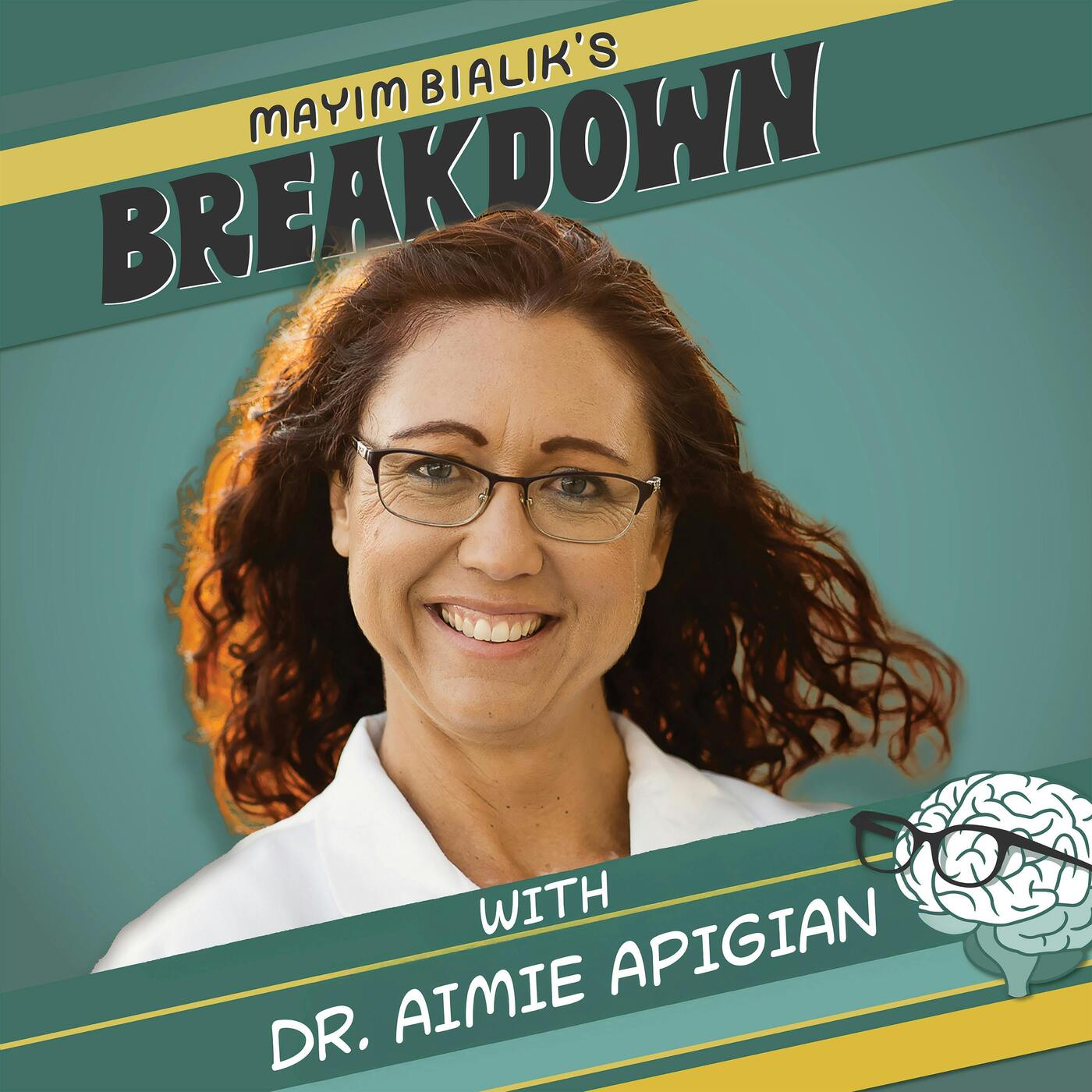
Mayim Bialik's Breakdown
The Science Behind Trauma: The Connection to Inflammation & Depression & How You Can Heal
00:51:46
Loading summary
Transcript77 lines
- [00:00]
Mayim Bialik
What does it mean that the body holds trauma?
- [00:05]
Dr. Amy Appagan
Trauma is not what happened to you, it's what happened inside of you in response. And that's exactly what we see in the physiology when we have experienced a trauma. Our body is not getting what it needs to reset to safety. It's almost like it puts on glasses and these glasses see danger everywhere.
- [00:26]
Mayim Bialik
You've mentioned brain fog and you've mentioned lethargy, sleep problems, chronic pain. You also talk about migraines and you talk about irritable bowel syndrome.
- [00:36]
Dr. Amy Appagan
There is so much nervous system regulation behind every physical health symptom, condition and diagnosis. These lasting effects of trauma start to now affect not just the cells, but our metabolism, our immune system, our digestive system. We have some specific data that will blow your mind. IBS is a result of early childhood experiences where our nervous system would have fluctuated very quickly between the two survival states. It's this common theme of I didn't know that I was going to be okay. That is the formation of a biology of trauma that becomes autoimmunity later on.
- [01:21]
Mayim Bialik
What actually is the way to process trauma?
- [01:27]
Dr. Amy Appagan
Let me show you one of the ones that I would teach them.
- [01:36]
Mayim Bialik
Hi, I'm Mayim Bialik.
- [01:37]
Jonathan Cohen
I'm Jonathan Cohen.
- [01:38]
Mayim Bialik
And welcome to our breakdown.
- [01:40]
Jonathan Cohen
What if most illnesses can be prevented? If you're struggling with a physical condition, with a mental condition, if you're anxious, if you're languishing, if you've lost your purpose in life, it could be because of something that most doctors will not tell you about.
- [01:54]
Mayim Bialik
Our guest today is going to explain how 8 out of 10 of the leading causes of death are because of this. In addition, what if 70% of US adults have experienced something that your average doctor is not even going to be able to understand or explain to themselves, much less to you? There's a word that many of us have become very comfortable using and we see it all over the place. Try trauma. Trauma, post traumatic stress disorder. I have trauma that traumatized me. I was retraumatized. What if our understanding of trauma is actually not the entire story? We're going to be speaking today with a functional medicine doctor and specialist in somatic work and in addiction. And what she's going to teach us is that the biological processes that are occurring in your cells are, are mimicking and in many cases giving indicators of what your larger body processes and emotional experiences are going to be. Dr. Amy Appagan is a double board certified physician in preventative and addiction medicine and she has a specialization in biochemistry and public Health. And in addition, she specializes in understanding behavioral disorders and how they are related to the sexual cellular processes that underlie what many of us think of as irreversible autoimmune conditions. We're gonna talk about irritable bowel syndrome. We're gonna talk about menopause. We're gonna talk about thyroid conditions. We're gonna talk about the process of depression and anxiety and how the cellular mechanisms are actually falling under a larger umbrella that has many roads in. And for so many of us, we've been told there's only one way down this autoimmune road. There's only one way down this mental health road. Fact is, it's a lot more complicated, and so much of it focuses on safety in your nervous system. And things that we've talked about here with Gabor Mate, who wrote the foreword to her book, the Biology of Trauma. If you're familiar with the work of Stephen Porges that we've discussed here, polyvagal theory, her work incorporates that somatic experiencing, the work of Peter Levine. She combines functional medicine with somatic understanding and biological specification so that literally, we can start to understand trauma really as a process of life, and we start talking about how to actually begin to heal. Her book, the Biology of Trauma, how the Body Holds Fear, Pain, and Overwhelm and how to Heal it, is available September 23rd. Dr. Amy also has a podcast, Biology of Trauma, which has. Every single episode is a little slice of understanding trauma on a biological cellular level. It's a pleasure to welcome to the breakdown. Dr. Amy Appicin. Break it down.
- [04:49]
Dr. Amy Appagan
Thank you. I am really excited to be here.
- [04:52]
Mayim Bialik
We're so excited to talk to you about, you know, a particular lens on trauma that we find incredibly fascinating. Gabor Mate is a friend of the podcast, and he's been on here and we see he wrote the foreword for your book, which is incredibly significant. You know, I wonder if you can sort of get us started. Can you explain, you know, for. For people who want to start from kind of ground zero. What do you describe as trauma? And in particular, what is the biology of trauma?
- [05:30]
Dr. Amy Appagan
It really takes me back to when I thought I knew trauma and I didn't know anything about trauma. I had come through medical school training and been taught about the adverse childhood experiences. And so I had this lens of I'm looking for something bad that happened to you, or I'm looking for gross neglect. I became a foster parent and then adopted, and my son had been through severe neglect. And so I was looking at it through that lens. But then I discovered in the process that my body was holding trauma. We can maybe go into how I discovered that, but. But it was at that point that I realized, wait a second, I don't know. I don't really understand what categorizes a trauma for the body. I've been looking at it more just a mental breakdown, what actually creates that trauma, but for the body, it's different. And as a physician, I started seeing all of these chronic health conditions, symptoms, diagnoses that are related to adverse child experiences. But people, including myself, were saying, I don't think my childhood was that bad. I mean, sure, my family had some quirks, but trauma, that would not be a word that I would use. But their body had a different story. So that's when I really went back into the biochemistry of it. I have a master's in biochemistry. So I love this idea of, show me what's happening, help me understand how is the cell responding to the stress? What is exactly happening? And that's when I saw, actually there is a very specific biology of stress and a biology of trauma, and they are very different. And so we can categorize what constitutes a stress for our body and what constitutes a trauma based on the internal experience, which ultimately is what people have been saying for the longest time. Even Gabra Mate, one of his famous quotes says, trauma is not what happened to you, it's what happened inside of you in response to something. And that's exactly what we see in the physiology.
- [07:33]
Mayim Bialik
You know, one of the notions that that Vander Koch and that, you know, Mate talk about, Peter Levine talks about, and we had him on the podcast talking about it as well. What does it mean that the body holds trauma?
- [07:46]
Dr. Amy Appagan
I thought that when I adopted my son that he was out of his trauma and so he'd be able to move on, he'd be able to have a great life. I had rescued him from the foster care system, and so his life now had a bright future because his trauma was in the past. And what I came to realize was that the body needs specific things in order to repair what's been broken, in order to resolve what still feels incomplete and what still will create patterns of responses that doesn't go away. Just when you are done with a experience, it doesn't go away. If you move out of your childhood home and a family and toxic environment, it doesn't just go away. It doesn't automatically stay in the past. So this was a big question for me for why does the body hold on and it's actually the whole second section of my book because I feel it's so important for people to understand this so that we then know what to do. But why does the body hold on? Why does the body keep score? Why do, in the words of Peter Levine and somatic experiencing. Why does this charge and this activation and this somatic implicit memory stay here? And it really comes down to the nervous system's role in keeping us alive. And the nervous system is designed to remember things so that it can protect us and predict the future. And it runs an equation in the background. If you've heard Steve Purges talk about his polyvagal theory, you might know the word neuroception. This idea that our nervous system runs an equation in the background. And that equation is constantly running. Even when we're sleeping, even when we're eating, when we're socializing, it's always running in the background. And it's the equation of danger versus safety. And when we have experienced a trauma, our body is not usually getting what it needs to reset to safety, which means it stays in danger mode. And that means that it sees danger everywhere. It's almost like it puts on glasses and these glasses see danger everywhere. So that a person can be like my son in a good home now, in a stable home. I love him. He has everything that he needs, but he still saw danger everywhere because that was his nervous system and had not received the reset to safety. This is actually one of the first things that I learned from Peter Levine in his training is this idea that the body has a response that it needs to complete. And we haven't always been taught that. Even in medical school, I was not taught this aspect of the body and the nervous system that when it starts a survival response, it needs a sense of, oh, and it's over, and a sense of completion. And when it doesn't get everything that it needs to reset to safety, it stays in danger mode, seeing danger everywhere. And that is how we bring our past with us. So our past is still our present moment. We're still living the experiences of our past.
- [11:28]
Mayim Bialik
So beautifully explained.
- [11:31]
Jonathan Cohen
Now, my ambialix breakdown is supported by bioptimizers.
- [11:35]
Mayim Bialik
I struggled to get good quality sleep, and I just thought, like, ugh, it's stress. But I learned during perimenopause and menopause, your hormones shift and it affects your magnesium levels. Low magnesium makes everything harder. Not just sleep, but focus, mood, stress tolerance. That's why we added magnesium breakthrough by bioptimizers to our nightly routine. It's a blend of Seven different forms of magnesium designed to support relaxation and overall sleep quality. Try it. See if you wake up more rested and refreshed, you've got nothing to lose and a lot to gain. BIOptimizers offers a 365 day no questions asked money back guarantee. Magnesium Breakthrough is a fantastic way to improve that hormonal imbalance that especially happens with magnesium. And then you have better focus, you have better sleep hygiene in general. Bioptimizers makes it so easy. Here's what you get when you go to bioptimizers.com breaker and use the code breaker. 15% off your entire order and a free bottle of Mass signs. That's Bio Optimizer's best selling digestive enzy added to your order automatically when you use our exclusive code. That's a $20 product free on top of your discount. This is a limited time offer while supplies last. You cannot get this on Amazon. You can't get it in stores. The offer exists in one place. Our link, our code. That's it. So if you were already thinking about trying it, this is the sign. Go to buyoptimizers.com breaker. Use the code breaker. Grab it before it's gone.
- [12:59]
Jonathan Cohen
Make 2026 the year you finally start sleeping again. Mind Biox breakdown is supported by Bioptimizers.
- [13:07]
Mayim Bialik
You know, I struggled to get good quality sleep and I just assumed it was stress. But as I learned during perimenopause and menopause, your hormones shift in a way that affects your magnesium levels. And low magnesium, it makes everything harder. Not just sleep, focus, mood, your tolerance for stress. That's why I have added Magnesium Breakthrough bye bye optimizers to my nightly routine. It's a blend of seven different forms of magnesium designed to support relaxation and overall sleep quality. Try it. See if you wake up more rested and refreshed, you've got nothing to lose and a lot to gain. Bio Optimizers offers a 365 day no questions asked money back guarantee. Magnesium Breakthrough is a huge breakthrough to improve hormonal balance to help with focus, decrease brain fog, improve sleep hygiene overall. Bioptimizers makes it very easy. Jonathan, what do they get when they go to bioptimizers.com breaker and use the code breaker?
- [13:59]
Jonathan Cohen
You get 50% off your entire order and a free bottle of Mass Zymes
- [14:04]
Mayim Bialik
Bioptimizer's best selling digestive enzyme that'll be added to your order automatically when you use our exclusive code.
- [14:10]
Jonathan Cohen
That's a $20 product free on top of your discount. Already.
- [14:14]
Mayim Bialik
This is A limited time offer. And while supplies last, you can't get it on Amazon, you can't get it in stores. This offer exists in one place. Our link, our code. That's it. So maybe you were already thinking about it. This is the sign. Go to buyoptimizers.com breaker. Use the code breaker. Grab it before it's gone. Make 2026, the year you finally start sleeping again. Now I want you to go one level deeper. What's happening on a cellular level that is producing this? Because so many of us, especially if we're on social media, we're seeing trauma this and trauma that and autonomic nervous system this, and regulate like this. But, you know, on a deeper level, not just that we can prove that someone is experiencing trauma versus stress, but you're also proposing that there is a way to understand a cellular mechanism for. So that we get out of that frozen, terrified, hypervigilant state and can try and actually heal trauma.
- [15:13]
Dr. Amy Appagan
This is one of the things that, for me, excites me the most. And I love to talk about it because it brings in the hope trauma can be otherwise. A very bleak topic to talk about. And here I am. I'm like, I love to talk about trauma. Because once we understand what's happening at the cellular level, it brings in tools that we can use. It brings in levers that we can change the outcome of what has been up until now. Just, this is what's going to happen to you. Going back to the adverse childhood experiences studies. These were studies that came out of Dr. Vincent Felitti's work in San Diego at Kaiser, working with people who were obese and they were losing weight. And he found that so many of them had these adverse childhood experiences. But it exploded into this huge research project that's now. I mean, papers are still being published all around the world about this idea that what happens when we're younger becomes our adult diseases. And it all comes down to what's happening at the cellular level during a trauma response. It's one of the aspects of how the body holds on to trauma. And when we look at a cell in a microscope, it's like a busy metropolis city. There is so much that's happening, and everything has its proper place and its systems and proteins are being made over here, and then they're being shipped over here to get tags, and then they're being shipped off to where they're supposed to go based on the tags. It is an incredible metropolis. And in a time of stress, what happens is if you're looking at that microscope and the cell, you see that it hunkers down. It hunkers down. In a way, it's like we need to be even better. We need to make even more energy, we need to be even more efficient at our processes. And the idea is that if we are in stress, there's some type of challenge, demand. Maybe it's an actual danger or a threat, but we are hunkering in in order to overcome. That's what happens at the cellular level for stress. But there comes a breaking point, and I don't know how deep you want to go into the physiology. Keep going, keep going. Because we understand what are the triggers for this crossing of the line. It's the breaking point. And emotionally we can tell that we have a breaking point, but there is a cellular breaking point. And that's what creates the, the emotional breaking point or the psychological breaking point. And what is happening is that we have a sympathetic nervous system that drives the stress response. That sympathetic nervous system is a chain of nerves that runs down our spine and it is releasing adrenaline. Adrenaline is what drives that stress response. People like to say that cortisol is the stress hormone. No, no, no, no, no. Adrenaline is the real hero of the stress response. And depending on the size of danger or threat that's in front of us will depend on the amount of adrenaline that our sympathetic nervous system generates. It's a brilliant strategy. If we only have to jump over a creek in order to be, okay, I don't need that much adrenaline. But if I have to scale a mountain to outrun a bear, I need a lot of adrenaline. Because it's the adrenaline that's going to change the cells in my mitochondria to make more ATP or energy. And so it's responding to the size of the danger with the amount of adrenaline that then changes my cells and my mitochondria. But what happens? What happens to that adrenaline? Because adrenaline is actually dangerous. It's so powerful, it's dangerous. Adrenaline damages our tissues. Adrenaline surrounds our cells to give it that signal to go, go, go. And if our cells look at the amount of adrenaline and say, we can't go that far, we can't go that much, we can't up level ourselves to the degree that you're asking us to, then we're going to shut down. So adrenaline is coordinating all of this. And it is the signal that says that our body responds to and says, what you're asking me to do, I can't do. I can't give you that level. And if I can't give you that level, I've exceeded my capacity and I'm just going to shut down. And now this is the trauma biology. And you can watch it on the microscope. That mitochondria, those cells, they're no longer hunkering down to give us more. They're falling apart. Membranes are falling apart, proteins are falling apart. Proteins are being sent to our nucleus that are signaling to send out messages and other proteins that will just decompensate things. And that's, interestingly enough, what a person feels like emotionally.
- [20:39]
Mayim Bialik
I was just, so I was just gonna say that I think that's sort of the, you know, for, for those of us who love science, you know, what you see, right? The, the, the kind of phenotype, right. It's actually just an expression of what's going on on a genetic level, on a molecular level, on a biochemical level. And it's interesting, the words that we use to describe this. It's not a coincidence that what the person experiences is exactly that. I feel like I'm breaking down. I feel like I can't do it. But what's more interesting to me is that step before, when you talk about the difference between jumping over a creek or scaling a mountain, what do people who are in a deep traumatized or PTSD or complex PTSD state, what do they act like? They act like every creek is a mountain because everything hurts. Everything is too much. Everything is too much. And, and other people will look at them and say, it's just a creek. Like, just step over it. And they're like, I cannot. My legs won't move. I can't do it. I'm gonna start crying. And then they'll generate a whole list of other problems with the creek because their body thinks it's a mountain. So one of the other things that people talk about is, you know, like being in this kind of traumatized state or post traumatized state. It feels like, you know, you're constantly being pursued by a predator, right? You have to maintain this state of kind of vigilance. I'm curious, like, why it's not enough when we see people having trauma and breaking down, why that hasn't been enough, right. For people to rally around this kind of support and why it's like, we need to know on a cellular level, yes, it's trauma.
- [22:31]
Jonathan Cohen
Before we go into the solution set. I think there's still a really interesting exploration here about the biology. Talk to us about what it feels like for people who are breaking down on A biological level before they get into a chronic disease state.
- [22:46]
Dr. Amy Appagan
And this is what I would wish everyone would know, because if we can identify it at this stage, we can prevent so much of the chronic health conditions. People wouldn't need to wait, like me to get autoimmunity, to get chronic fatigue. They'd be able to recognize the signs much earlier and say, oh, my body's needing some serious help. This is now an emergency. Let me take care of it now and not let it progress further. So this idea that there is biology happening underneath the surface, and what would they feel like? What does that feel like? These lasting effects of trauma start to now affect not just the cells, but our systems. So we now move from talking about mitochondria, DNA, proteins, to our metabolism, our immune system, our digestive system. We go to system level, and that's what's showing up in our metabolism. The trauma response shuts down our metabolism. In the stress response, it upregulates our metabolism. So there's a very big difference between the body holding on to trauma response and being in this functional freeze, if you want to use that terminology, because the impact on the systems is going to be in the background. But what I see happening is that people are so uncomfortable with that sensation of exhaustion, depression, hopelessness, that they are finding ways to. To not feel that, to avoid it, distract themselves. And a lot of times this is coming down to some version of giving themselves adrenaline. That should not surprise us after our conversation about adrenaline, because adrenaline is what can pull someone out of that low trauma state and into the stress. Where I feel alive, I feel like I have energy, my cells are working for me.
- [25:00]
Mayim Bialik
Well, so examples of this would be addiction or codependency, workaholism, caffeine, right? All of these risky behaviors, right? Like, I'm okay, I just like to do a lot of cocaine and dance all night, right? You're seeking adrenaline.
- [25:19]
Jonathan Cohen
And to clarify, people are seeking this adrenaline because on a biological level, they are having a slowdown, a shutdown that in the background is impacting them on a system level, Meaning that the small points of their cell, they're no longer making energy the way they need to. And so they have to look to an external source to drive their adrenaline in order just for them to feel at a baseline. And if they slow down enough, what they're going to do is they're going to hit a bottom and they're going to say there's something really wrong. The problem with hitting that bottom is that there aren't really available solutions for them, because you're going to go to your western doctor, they're going to run a panel of tests, and they're going to say, you are absolutely fine. There's nothing to look at here. But really what's going on is a huge warning sign. It's red flag area.
- [26:12]
Dr. Amy Appagan
Yes. And one way that I describe it is it's like our body is like a machine. So it's like a car. And if you took your car into the mechanic because you're like, it's just. It's slow. It's slow to start in the mornings. It's slow. I have to put on so much gas to just get it down the road. I didn't have to use to do that. Tell me what's wrong. And he looks at the engine, he looks at the transmission, he looks at the tires, and he's like, everything looks fine. Must be in your head. And yet the problem is actually he didn't check that the emergency brake was on. The emergency brake is on. That's the equivalent of this trauma response. It's communicated through the nervous system and in the form of it's changing our whole inner state. It's changing our whole operating system. So it's not that one thing is malfunctioned. It's just the message. The whole operating system is in shutdown mode. And so we're having to come in and give it extra gas to just be able to do what we used to do. One of the things that I hear my people say so often, and I even ask for it now because it's such a telltale sign when you first wake up in the morning, what is your very first thought? And often what they tell me is my first thought, honestly, I don't want to get up. I don't like my life. I don't want it to be morning. I want to just be able to go back to sleep. Knowing our lives and our responsibilities, that is not an option. So if that is not an option, well, then what is your other option? Your other option is, let me find the energy to keep going one more day. And so we start our day with coffee. We often are drinking coffee on an empty stomach. Do you know why? That actually creates more adrenaline than if we drink coffee with food. So all of these, I mean, it's just a way that our brain has learned how to help us live another day that we don't want to be living by understanding, oh, if I do this, I feel this way, and that's what I want. I need more energy. So let me lay in bed so that now I'm stressed because I'm going to be late for work. There's some adrenaline. So people who procrastinate, they're often the ones who have this functional freeze and are storing trauma because they need the adrenaline of having procrastinated to get them to take action and do something. Let's add on the caffeine. Let's add on some sugar for our breakfast. Here's one that I'm going to be stepping on some toes. Let's add some form of bread or wheat or something that, well, I know.
- [29:18]
Mayim Bialik
Oh, no, I'm gonna have a piece of toast. I'm perpetuating my own trauma.
- [29:24]
Dr. Amy Appagan
And the reason that we do that again, we don't know why we're eating that. We think it's just like, well, that's just what I wanted to eat this morning. No, it's not. Your body knows that those proteins in gluten bind your opiate receptors so that you can help to numb yourself and not feel that exhaustion underneath, but be able to push yourself more than what is healthy to do. But you are not feeling and hearing the warning signs.
- [29:54]
Jonathan Cohen
It is so powerful. I want to get to the difference in the response, because as you said, trauma is not the objective thing that happened to you, but the response that your body has to it. And I think we need to clarify this, because what you're talking about is often a prolonged experience. When you go back into looking at people's childhoods and they say everything seemed fine, and they start to identify it, there's a pushback, right? There's a pushback on social media that says, stop overusing this term and we're using it incorrectly. But I want to go back into the biology and to discuss what are those events, what are the adaptations that people have, and talk a little bit more about that. But before we do that, let's talk about coffee.
- [30:39]
Dr. Amy Appagan
Are you sure? I feel like I've already stepped on enough toes. I feel like I've already traumatized.
- [30:44]
Mayim Bialik
He finished his first glass.
- [30:48]
Jonathan Cohen
There was a time in my life where I didn't drink coffee, okay? I was powered by the sun and the Lord. I was smug about it, too. I was like, I don't need caffeine.
- [30:59]
Dr. Amy Appagan
You people always are smug about your solar power.
- [31:03]
Jonathan Cohen
But now I definitely am addicted to coffee. I. And I want to also touch back on the first thought that people have when they wake up in the morning, because I think that is a wildly both provocative and telling indicator. But before that what is your perspective on coffee? Taking out the coffee that most people drink, which is laced with sugar, has a ton of milk. Like if so, let's break it down from the sweet drinks that are totally toxic to our systems and overloading our immune system and poisoning us with sugar. Sorry, everyone out there, but just coffee black. You know, there's a lot of different information online right now. Some people are like coffee, the adaptogens in coffee and the tannins in coffee can have a lot of health benefits. But talk to us from a nervous system level. This spike in adrenaline or some people say causes adrenaline, some people don't. There's like a lot of debate on this. What's your perspective? And both from a morning cup of coffee and then fed or not fed while having it.
- [32:13]
Dr. Amy Appagan
I love this topic because now we're able to kind of come back and look at the nervous system and not just speaking about trauma, but just how does the nervous system work? How are we designed to operate as human beings? And every day we are designed to be in rhythm. Our body has rhythms. We know the circadian rhythm. Even the circadian rhythm is also based on and related to our cortisol levels. We have our highest cortisol levels when we wake up. At least we are supposed to. And cortisol is what helps give us energy, it helps us have motivation. And so when we look at the natural rhythms of the nervous system, there will be different times in the day when our stress response is exactly what we want to have. We want to have stress. I'm saying that stress is a good thing because it gives us the focus, it gives us the energy. And as long as we are aligned with our life's purpose, here comes our stress response and mwah. Like magic happens, especially when you can time it with caffeine. So caffeine can be a well timed tool to say, I need to get some great work done. Right now I want to step into my creativity. I've got this big project. I want to get this across the finish line. And so it can be a strategic tool that when timed correctly with our natural bodies rhythms, it makes magic happen. But here's how the majority of people are using caffeine. They're using it as a way to push through. They're using it as a way to sustain this high energy response rather than how the body was designed, which is in rhythms. I'm supposed to have a high energy time and I am supposed to have a letdown and a rest and a recovery. And many people are not Giving themselves that. And so the body can only go for so long, and then it's like, well, you're not giving me the rest that I need. So guess what? I'm going to force you to take it. And people develop back pain, and guess what they're forced to do? Lay down and rest. They develop chronic fatigue. We look at. We see this in functional medicine. They can call this adrenal fatigue, where you've pushed your adrenals so far. Is it really the adrenal fatigue? No, it's the nervous system. It's the nervous system that has been misaligned and it's been trying to be on, all on the sympathetic, all on all the time. That is not how we were designed to live. We were designed to live aligned with our rhythms. And so that is where caffeine. I'm even going to say another one that now I'm really going to be stepping on toes and saying something provocative. Nicotine microdosing. Nicotine is a powerful strategic tool when used in the right way. But here's what's happening. People are not using these tools in the right way. They're not using caffeine in the right time and in the right way. And as a result, they're burning their body out. They're pushing their body further into that trauma biology where they're now in this chronic sense of depletion. And I am addicted to caffeine in order to try to rise above that every day. Same thing with the nicotine. People are not usually using that as a strategic tool. They may be using it if they're still smoking or if they're vaping. These are not strategic tools. These have now become dependencies in order to help a nervous system push through and survive another day. But that comes back down to our trauma language. Surviving another day is trauma language. It's not the other language that we get to once we've been able to work with our nervous system and come out of that to where we are alive. We are in our aliveness. And we're using these things very strategically so that we're aligning with our body's rhythms. And we know when is our window of creativity and we know how to access it at its most. But we're not trying to stay there the whole time like so many people do.
- [36:55]
Mayim Bialik
Where does alcohol fit into this? Because I think. Because I think for a lot of people it feels like, oh, it's the end of the day, I just need a break. And some people can do that. And it feels good. But what we also know is that alcohol is a depressant and many people pretty easily can slip into a more habitual use. And then there are some people, depending on your perspective on alcoholism, there are some people then who become dependent on this depressant. Where does alcohol fit into that? And does it also lead to a conversation about what's the mechanism of depression?
- [37:37]
Dr. Amy Appagan
And this is where I wish that I did not know the science, that I could give you a different answer. The science has now come out. Even a study earlier this year showed that no amount of alcohol is now healthy for the nervous system. I know.
- [37:54]
Jonathan Cohen
It's just really in this last little while that the tide has fully turned in the, in the popular conversation.
- [38:01]
Dr. Amy Appagan
Because the conversation used to be a glass of wine a day was actually healthy for your heart, was healthy for you. And now the latest science says, no,
- [38:13]
Mayim Bialik
sorry, wait, I need to just jump in and say that, like, for about 10 or 15 years, every woman was told, like, have a glass of wine with your girlfriends. Here's your new potholder with a glass of wine. And now what the tide has turned to is, guess what? You're in perimenopause. You've been drinking wine so you don't leave your husband.
- [38:33]
Dr. Amy Appagan
Husband.
- [38:34]
Mayim Bialik
If we take away the wine, they're
- [38:35]
Dr. Amy Appagan
going to leave their husbands. And it's not just the wine. I've heard women say that about chocolate. If you want me to stop eating chocolate, I'm going to have to leave my husband. Chocolate is what helps me survive my husband.
- [38:49]
Jonathan Cohen
Is the science on alcohol being fueled by big divorce lawyers? What's the real who's really behind this? So here's this episode is sponsored by Wandering Jews, an open door media brand.
- [39:07]
Mayim Bialik
If you've ever found yourself feeling like you have more questions than answers, you're in good company. The Jewish people have been like that for thousands of years. Wondering Jews with Michal and Noam is a podcast where two of today's most dynamic Jewish voices, Michal Bittone and Noam Weissman, dig into the biggest questions about life through a Jewish lens. It's the kind of conversation where you'll laugh, learn something, something new, and probably shout in disagreement at least once. Michal and Noam tackle the tough topics like anti Semitism in America, what happens after we die, and the future of religion with guests like Bret Stephens, Michael Rapoport and Sarah Hurwitz. And this past month, in honor of Jewish American Heritage Month, they've been celebrating some of the Jewish lives and institutions that have shaped American life from food to music and comedy. Thoughtful, joyful and always honest. That's Wondering Jews with Michal and Noam a production of Unpacked. Find it on your favorite podcast app or on YouTube and make sure to hit subscribe. Check out Wondering Jews with Michal and Noam podcast and subscribe at Unpacked Bio nmx.
- [40:09]
Dr. Amy Appagan
Book a loved by guest property with VRBO and you get a top rated vacation rental that's loved for all the right reasons.
- [40:14]
Mayim Bialik
Ugh.
- [40:15]
Dr. Amy Appagan
I love my VRBO for the location. Good reason.
- [40:17]
Mayim Bialik
Oh and for the pool cuz pools are cool.
- [40:20]
Jonathan Cohen
I feel the love book of verbo that's loved by guests.
- [40:22]
Dr. Amy Appagan
If you know you've herbo. Here's the science. The the flat out science. There is so much in the immune system in our brain that is connected with our trauma response that this is the real danger of alcohol. For those whose bodies are storing trauma, it's the impact on a certain immune cell called the microglia. Let me tell you about this amazing immune cell in the brain. Microglia are the cells that are the guardians of our neurons. Our neurons are the ones that are actually the nervous system. So they're the ones that process information, make decisions. And they have these guardians. These guardians keep them safe. These guardians are the ones that prune them. So when we're talking about neuroplasticity, we. We're not just talking about our neurons, we're talking about these microglia. So these microglia are one of the most important cells in our brain and our nervous system. And when we have had a trauma experience that overwhelmed us, part of the reason for the brain fog is this unleashing of inflammation by these microglial cells. This is called a priming event. The first time that we have any event that creates this inflammation cascade in our brain. It's called priming the microglia. And from here on to our death, these primed microglia now have a lower threshold to activate and unleash that inflammation again. And part of going into a trauma response is this activation of these microglial cells creating that brain dead feeling. That sensation of I can't find my words. Everything feels dissociated and disconnected, foggy. The brain fog. This is the microglia in our cells.
- [42:26]
Mayim Bialik
Well, first of all, you know, you had me at microglia. I want you to talk a little bit. Can you go? Can you. Can you elaborate a little bit more? What kind of functions are microglia subserving? That would be A, primed by trauma and B, stimulated then by a toxin like alcohol.
- [42:47]
Dr. Amy Appagan
So these Microglia are cells that. I mean, our life depends on their function and their ability to protect our nervous system from danger, whether that be toxins, microbes, viruses. And so they're programmed to detect danger and unleash inflammation when that happens. So this is not a malfunction of our system at all. And when there are certain experiences that will exceed their ability to do their job, one of those experiences actually happens quite often is birth trauma. So anyone who was born with their cord wrapped around their neck, they will have experienced a moment of hypoxia or low oxygen. That low oxygen will prime those microglia, and they'll have a lower tolerance for stress that they will need to build up again in their lifetime. But drowning, if they had any kind of drowning, if they had any kind of head concussion or fall or just a blow where it was a whiplash, they didn't lose consciousness. But any kind of physical trauma to the head as well will activate or prime these microglia. And yet, when we look across the board at those who experience severe emotional and psychological trauma that is causing the same effect on these microglia. And what happens is that since they now have this memory programmed in them, then when other stressors happen, they cave in easier. So now someone might notice that they go develop the brain fog. If they don't sleep well for a few nights or they're traveling and all of the change and the radiation from the flights and maybe the bad food and just the combination of everything, and they're back in that place of brain fog. This is their primed microglia having been activated. So it's very important for someone who is working through their trauma and trying to change their trauma responses, to recognize that their microglia will be responding to their environment, both emotional and external factors that are not emotional at all, but will still be having the possibility of triggering that inflammation and causing a shutdown in trauma response. Because it's the microglia. Alcohol is what does that as well. So that is why for some people, they may be able to get away with it. But again, the science is showing otherwise. But especially for people who are working on their trauma, ah, they've got to know the impact on their microglia.
- [45:34]
Mayim Bialik
It's interesting because it's kind of like with certain aspects of understanding trauma, the more we know, the better. And the other side of it is that when I think of people who are going through this world not acknowledging the trauma that they have experienced, they've been conditioned by their family, a culture, a society, and in many cases, a pharmaceutical industry that Says, here's what's wrong with you, and we'll fix it. When there is trauma that has not been processed, you then have a person who gets things piled onto them, whether it's medication, other coping mechanisms, diagnoses. And what often happens is you lose your own sense of what's going on because you've been given this label. You've been told, well, you're depressed, take this pill. Oh, that pill's not enough. We're going to add this other one. And I've seen the commercials for it, right? And then they're gonna say, well, now I can't have sex because I can't achieve an orgasm because of this medica. Okay, well, take this, do this. So it's kind of like you get this, like this layering. I'm picturing, like, you know, sedimentary rock, right? You're getting all these different layers of the things. But what's actually under it is this really intricate biochemical cascade that actually can be addressed, can be, in some senses, repaired and cared for. But it takes a lot of effort, it takes a lot of time, and it takes the right practitioner and system that can support healing.
- [47:14]
Jonathan Cohen
I'm also struck by this idea that we could remove the word trauma, right? Like, because there is controversy around that word and how the word is used. You could just say some childhood experiences increase your likelihood of that. Your body is going to create inflammation, which is going to slow you down, make you feel groggy. And so where are you on this inflammation response on a cellular level? You talked about if you've ever had a knock on the head, how many, especially boys in sports, I've fallen off my bike.
- [47:50]
Mayim Bialik
Or girls in sports. Anyone in sports, really.
- [47:53]
Jonathan Cohen
Where I grew up, when I grew up, it was more likely that kids are going to get kicked in the head playing soccer. We were just rougher then. And I think that's changed now. And I will be gender neutral in it. But I'm just thinking about, you know, late 70s, early 80s, when I was growing up, my brother roughhoused with me, threw me off things, put me in headlocks. We were watching the WWF at the time. I guess it's WWE now, and we. Or Claude Van Damme movies, all of a sudden we had to play out those characters. And I was the smallest kid. Like, all my friends who had older brothers were doing that similar thing. How many people have fallen off bikes? If you're ever snow skied, water skied, you're following and hitting something, you never consider that's going to prime you. And then you talk about birth trauma. If you really want to get crazy, what, what are your thoughts on C sections and what creates. Does that also prime you?
- [48:53]
Dr. Amy Appagan
I love that you are bringing this into the conversation where it's no longer about the word trauma. It really is not. It's just about the human body, the nervous system that keeps the human body alive. And throughout my years as a physician, I have been so amazed at what watching a body fight for life. I started my residency training in surgery. A lot of patients died. A lot of patients came in through the emergency room just having had that kind of a trauma, car accident or some other accident. They had to be taken to surgery right then in order to try to keep them alive. Some of them made it, some of them did not. But watching their body fight to stay alive, it is just one of the most incredible experiences. So when we step back and see that this is not a conversation about trauma. This is a conversation about survival. This is a conversation about life. This is a conversation about all of the things that can happen to a person. Birth trauma, getting hit in the head, all of these things that we have found a way to survive. We adapt, we adjust and we keep going. And so we're really talking about the body's ability to adapt and how does it continue to then go into overwhelm and that be one of its primary responses. So that's a word for me that I exchange for trauma. It's just overwhelmed. Your body is going into overwhelm. And when we look at it through that lens, we can see that every person around the world has had overwhelm. This isn't a select group of people. It's not even healthy or helpful to sit around and compare the experiences that I've had and to your experiences. And who deserves the greater title of having had more trauma? I do. Oh, sorry. You are in a class all to yourself, honey.
- [51:07]
Jonathan Cohen
You're so inflamed at a cellular level, bro.
- [51:12]
Mayim Bialik
This is me. And shut down.
- [51:16]
Dr. Amy Appagan
And then being able to look at, you know, all of these things that we haven't accounted for as emotional trauma, but yet is very much a part of the conversation. Head injuries. And then we look at the long term effects of that. We all know the stories. Maybe some of us know the people who had those experiences, maybe were the professional soccer players, the professional football players, and watch them fall apart in their older years as their brain just, I mean, talk about trauma. And yet again, it's just a much larger conversation about this is what it means to be alive and to have things happen to us and see our body fight to stay alive.
- [52:00]
Jonathan Cohen
If I continue to play the devil's advocate, what people will say is, this is just being human. This is just what everyone goes through. If we all have trauma, and this is so many people's experience, than almost no one has it. And what I would suggest is that we're presenting a different way to live and thrive, where the ailments that we experience as we get older, the fact that we lose our joy to get out of bed in the morning, the fact that we're so sluggish that we need all these stimulants. Actually, there's another way that we could be existing that we have just accepted isn't for everyone over 40 or is only for the elite few or only the people who are taking, you know, getting hyperbaric every day and, you know, vitamin infusions and NAD drips. But actually, what's going on is that there are people of all walks of life and at all ages that could be living so much more empowered and enjoying life if only they weren't in this shutdown phase.
- [53:11]
Dr. Amy Appagan
And I love that that's how you're kind of summarizing where the decision point is for people, because that's how I see it. I see it as being able to return to choices, which, again, those who hold trauma in their body often feel that they don't have choices, that they've lost their ability to have power and make a difference or a change in their life. So this aspect is really important to me to come back to, to. You don't have to choose to do trauma work. You don't have to do any of this that will change your microglia or change your mitochondria. You don't have to. If what you're doing is working for you, then don't change. But if you want something different, if you want something better, if you want a different tomorrow, well, then there's so much that you can do, because there's so much that we understand about the nervous system. So it's not about how much trauma. And then this kind of demoralizes those who've had serious trauma experiences. For every single person in the world, it's. Is your current life serving you, or do you want something different?
- [54:33]
Mayim Bialik
We're gonna hit pause here, Jonathan, because we got this far into our conversation with Dr. Amy, and so much more had opened up. We still have so much more on our list to get to. We have to split this episode up into two.
- [54:47]
Jonathan Cohen
Make sure you're sticking around. Subscribe so that you get a notification of when this next episode drops. We are gonna talk about strategies for increasing safety, why women get more autoimmune diseases than men, and how to reverse them. She's going to talk about microdosing safety.
- [55:04]
Mayim Bialik
Also, I ask her to explain depression, anxiety. I want to understand it on a cellular level to see if we can then understand how the emotional responses are actually mimicking what's happening on a cellular level. In addition, she's going to talk about some of the emotional patterns of disease. These are things we always kind of like skirt the outside of. She makes them all connect in a way that makes so much sense. And in addition, I could not, I cannot help asking her, I need to know about menopause and how people with trauma may be experiencing the symptoms of perimenopause and menopause differently.
- [55:35]
Jonathan Cohen
She also explains this scientific definition of intuition.
- [55:41]
Mayim Bialik
That was great. I wasn't sure that we would go there. We go all the places. Please make sure that you are subscribed. Also, check out more of this conversation on substack on Mayim Bialik's breakdown and from our breakdown to the one we hope you never have. We'll see you next time.
- [55:55]
Jonathan Cohen
It's Maya Bialik's breakdown.
- [55:57]
Dr. Amy Appagan
She's going to break it down for you. She's got a neuroscience PhD or two now. She's going to break down. To break down.
- [56:06]
Jonathan Cohen
She's going to break it down.