← Mayim Bialik's Breakdown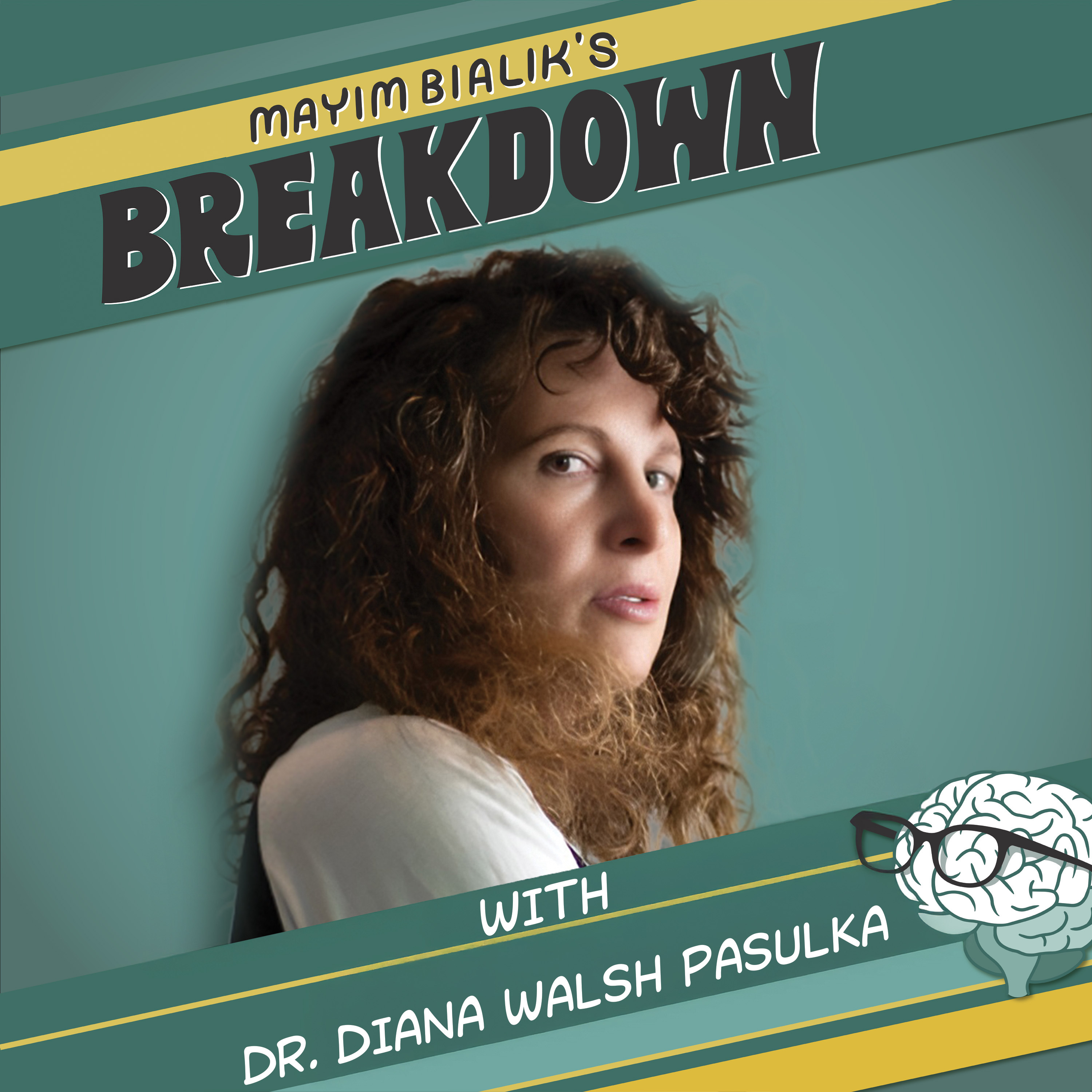
Mayim Bialik's Breakdown
UFOs In Religion: Ancient ‘Miracles’ May Have Been Alien Encounters | Dr. Diana Walsh Pasulka
00:50:31
Loading summary
Transcript84 lines
- [00:00]
Dr. Diana Walsh Pasulka
We have to rethink religion and we have to rethink aliens. I didn't believe in UFOs. Once I started to look at the data. I started to meet people who were part of a government program that we now know about.
- [00:12]
Mayim Bialik
But guess what? There's more.
- [00:14]
Dr. Diana Walsh Pasulka
I've been to the Vatican archives. I started to see the similarities.
- [00:18]
Mayim Bialik
Dr. Diana Walsh Pasulka professor of religious Studies examines the connection between ancient religions and modern day UFO experiences where thousands of years of religious texts actually describing alien encounters.
- [00:31]
Dr. Diana Walsh Pasulka
I went to Catholic archives and I looked at reports of souls from purgatory. This got me interested in looking at the alien abduction and modern day reports of UFOs.
- [00:42]
Mayim Bialik
People are now experiencing things that might sound a lot like the descriptions in many of these religious texts.
- [00:49]
Dr. Diana Walsh Pasulka
There is something within the human body that responds to the practice of prayer and it actually changes the brain. Within the Catholic tradition, a very sophisticated history and theology of non human intelligence.
- [01:03]
Jonathan Cohen
Is the Vatican withholding information.
- [01:06]
Dr. Diana Walsh Pasulka
There are probably a lot of things out there that we're going to be surprised by.
- [01:15]
Ad Read Announcer
Evening. Buyer's remorse. Buy a new car.
- [01:18]
Dr. Diana Walsh Pasulka
I'll be moving in.
- [01:20]
Ad Read Announcer
Let's get started.
- [01:21]
Mayim Bialik
Sorry, I think there's been a mistake. I bought it from Carvana.
- [01:24]
Ad Read Announcer
You what?
- [01:25]
Dr. Diana Walsh Pasulka
Yeah. Great price. I even have seven days to love
- [01:27]
Mayim Bialik
it or return it.
- [01:28]
Ad Read Announcer
So there's no.
- [01:29]
Mayim Bialik
No, no buyer's remorse. More like buyers rejoice.
- [01:34]
Ad Read Announcer
I guess I'll let myself out. Congratulations. I mean it.
- [01:38]
Mayim Bialik
Buyers rejoice. Buy your car today on Carvana. Limitations and exclusions may apply. See our seven day return policy at Carvana.com. Hi, I'm Imi. Alec.
- [01:49]
Jonathan Cohen
And I'm Jonathan Cohen.
- [01:51]
Mayim Bialik
And welcome to our Breakdown.
- [01:53]
Jonathan Cohen
Today we're digging into the world of of religious studies and how it connects to the modern day experience of UFOs and non human intelligence.
- [02:03]
Mayim Bialik
And before you think another episode about aliens. What we're going to be broadening the conversation to include the entire course of history as we know it. We're going to ask the question why UFO sightings seem to increase at historically significant times as well as the possibility that ancient religious texts prophesied current world events.
- [02:28]
Jonathan Cohen
We're going to look for those hints through the history of religious texts. Understanding that angel sightings might actually have been an experience people are having with non local consciousness.
- [02:42]
Mayim Bialik
What are the things that we allowed other people to tell us was the framework for reality? And have there always been hints that there is something outside of of the plane of consciousness that we think we're operating in that might indicate that alien sightings, UFOs, and even government disclosure might be part of a much larger plan. One of my favorite parts of this episode includes a conversation about technology. Is it a new religion? Is it the Antichrist? And how can we fit in our understanding of advances in technology with our advances in understanding experiences that we may not yet be able to explain. Our guest is Dr. Diana Walsh Pasulka. She's a professor of religious studies at the University of North Carolina, Wilmington. She's the author of so many books, but her most recent is the others UFOs, AI and the secret Forces Guiding Human Destiny. We have so much to talk to Dr. Pasulka about, and this is a conversation that really hits on our own personal theory of everything. It's a pleasure to welcome to the breakdown, Dr. Diana Wash Pasulka. Break it down.
- [03:54]
Dr. Diana Walsh Pasulka
Yeah. Thank you so much. I'm happy to be here.
- [03:56]
Mayim Bialik
You're one of those people who has information in so many arenas that intersect into so many things that Jonathan and I are curious about and that our audience is curious about. I wonder if you can sort of give us a framework for, I guess, what you believe is your unique ability to communicate regarding, in particular, things that are outside of what we would consider reality or the reality we know.
- [04:24]
Dr. Diana Walsh Pasulka
Yeah, sure. So I've been studying religion for a long time. I decided I wanted to study religion when I was 11. And so I did, actually grew up and have a PhD in religious studies, where we don't, by the way, advocate for a particular religion. We study religion academically. So I just wanted to be clear about that. So I say that if I were to bring a unique perspective to media and technology, which is what I've focused on in my work and the history of Catholicism, I would say that I look at the ways in which the things that we see inform our belief and behaviors about religion. So the things that we see. Let me give you an example. We are now our infrastructure. How does the infrastructure and the technological infrastructure impact what we believe and how we see? Even that takes us back even to Plato and Socrates. Socrates gave the first. That we know of, the first actual criticism of externalizing memory. And that was because writing was a new technology for him. This is how I describe it to my students. So Socrates was living in ancient Greece, in Athens, and during the time of his life, the new technology of writing was taking off. So in a sense, it was like Silicon valley in the 1990s. There was, like, all these young guys were really excited about writing and what it could do for them. And how they can monitor. So they were really interested in monetizing it. And Socrates said, whoa, whoa, this might be bad. Bad things might happen to us. And the kinds of things that he described are interesting because they're happening today. So when we look at technology, AI and these kinds of things, we see the trials that are happening, the AI trials. We see that there's a lot of damage that comes about when the infrastructure shifts to a new technological substrate. And so writing was definite that, and that was ancient. Human beings changed. Socrates predicted how they would change. They would externalize. He didn't use the word externalization of memory, but if you read Phaedrus is where he talks about this, this dialogue. In fact, his students started to. Instead of writing like we write, like books and treatises and stuff, they wrote in dialogue in order to preserve an oral tradition. And so you can even see that there they didn't want to have their brains and their bodies completely changed by writing. I look at the history of technologies, and I see the kinds of shifts in the way we see reality, not just how reality shifts. Maybe reality never shifts, but the way we interpret reality shifts through new technological infrastructures. And I've been doing this for a long time. So I grew up in California, not far from Silicon Valley. And my group of my cohort was in California, was one of the first to adopt computers. I had a computer in the eighth grade. We were being beta tested. They were like, I wonder how this new technology will impact kids. We were there. That's my unique perspective. I would say, I wonder if you
- [08:07]
Mayim Bialik
can give us a little bit of a framework, just from, you know, an academic perspective of what the purpose of religion is. In the same way that we might ask, what's the purpose of science fiction? What is the purpose of the stories that we tell, the framework that we give to it? And how does truth come into that equation?
- [08:32]
Dr. Diana Walsh Pasulka
Okay, that's a great question. So the functions of religion. So again, when I have students who are freshmen, they come in, they take one of my intro classes, and they say, I ask them, what do you think religion does? What's religion about? Why does it seem that every culture has a form of religion? Let's talk about that. So I give them the whole class to come up with their ideas about what religion is. And I write a lot of those things down on the board. What recurs if you look at different religions? Let's take Buddhism, Hinduism, Islam, Christianity. What recurs across these religions? And one of the things they write down is there is a. There's the discipline of prayer. There's a type of prayer in Islam. It's like five times a day. So, you know, in Judaism, there's a whole day of prayer called Shabbat or Sabbath.
- [09:32]
Mayim Bialik
Jews pray three times a day. The Sabbath is a day of rest, which involves prayer. But we actually have prayer services, you know, also every day in Judaism. But, yeah, I understand what you're saying. There's different sort of manifestations of the way that prayer makes its way into the function of religion.
- [09:48]
Dr. Diana Walsh Pasulka
Yeah, but if it's a universal pattern within religion, why are people doing it? So one of the things that we show is that it helps people. By the way, we can only say this today because we have science. And so certain scientists are looking at brain activity that happens when people are either meditating or praying. And it appears that there are certain portions of the brain that light up when people pray or meditate. So we can say. And it actually changes the brain. So there is something within the human body that responds to the practice of prayer. So I think that religion has evolved, and we haven't gotten rid of it for a lot of different reasons, one of which to keep this practice of prayer because it's very important. And my work looks at now, at why that's important. And so that's one of the functions of religion.
- [10:57]
Mayim Bialik
When we think about the thousands of years, let's say that we have, like, the Judeo Christian text and that sort of thing, the notion is, here's the answer to explain all of your questions, right? Here's the. Here's a source of comfort.
- [11:14]
Dr. Diana Walsh Pasulka
I think that a lot of people assume that about religion. So we have a lot of assumptions about religion, that it answers our questions. And this. And, you know, this. You know, it gives us comfort, but it doesn't. So if you go back into the actual biblical text, say, take the book of Job. That's a book that talks about suffering, okay? So Job is a good guy. He's like, perfect, right? But yet he suffers horribly. And so his friends come around and they say, well, you must have offended God in some way. And so they go through. But no, he hasn't. So the question remains, why do good people suffer? Which, by the way, you can see this in. Is a question in almost every major religious tradition, like traditional religion. All right? So the question then persists in the book of Job until a young man, Elihu, comes along and he basically says, who are you guys to question God? Like, we don't know why you suffer. God knows, and we cannot know because whatever God is, is incomprehensible to us. And then in order to restate that God shows up at the end of the book and restates, yes, it is a truth that you guys weren't here in the beginning of the world. Of course I'm paraphrasing. And, you know, you can't know what I do or why I do it. So in many religious traditions, once you actually lose your assumptions about them and go back into. And when I'm saying lose your assumptions about them, we're talking about people like students who have practiced religion their whole lives. So those assumptions are not easily dismissed. So even if you happen to be a practicing Jew or a practicing Christian, when we go back and we look at the text, the actual biblical text, with fresh eyes, we begin to see that those kinds of things, they're destabilized. Our assumptions are destabilized, which is good.
- [13:18]
Jonathan Cohen
Mayim Bialik's breakdown is supported by Cove pure.
- [13:21]
Mayim Bialik
It's America's 250th birthday. And there are so many wonderful things that we can celebrate about what it means to be an American. And one of them that is most important to me is freedom. And it brings us to a conversation about what we're free to choose. If Flint, Michigan taught this country anything, it's that the government's word on, for example, your water is worth pretty much nothing. Flint wasn't a one off. The problem is everywhere. And that's why Jonathan and I have switched to Cove Pure to purify our water. There are still millions of lead service lines that are actively carrying water to American homes. Many were installed before your parents were even born. And here's what the government doesn't tell you. The testing method that utilities use to check lead levels is specifically designed to collect the least contaminated sample, not the worst. EPA scientists have actually confirmed this. The most recent federal data shows that water systems serving more than 250 million Americans detected lead during 2021-2024. Lead has no taste, no smell, and it doesn't change the color of your water. But here's the scary part. There is no safe level of lead exposure. None. Even low levels are directly linked to things like brain damage, learning disabilities, and irreversible developmental harm in children. But Cove Pure removes it. It's certified to eliminate up to 99.9% of contaminants. That includes lead, but also PFAS, fluoride, pharmaceuticals. And the setup couldn't be simpler. No plumbers, no drilling. You just put it on your counter, you fill it up and you plug it in. You don't have to wait for any kettles to boil or anything like that. One tap and it is ready instantly. One of the things that Jonathan and I were shocked about was how good Cove Pure water tastes. We literally said to each other, this water tastes like I want to drink more of it. And that's why we've been so impressed with COVID Pure's taste. Also, it was incredibly easy to set up and we could not be happier. Don't wait for the government to catch up. Take back control of your water. In honor of America's 250th, Cove Pure is giving our audience 250 off. If you use our link, that's covpure.com breakdown don't wait. That's C-O-V-E-P-U-R-E.com breakdown Mayim Bialix breakdown is supported by AG1 it's summertime and that means sun, vacations and changes to your usual routine. We're so excited to take a break from our regular hustle and bustle, but sometimes that means we take a break from good habits too. Except for the 30 seconds it takes to mix ag1 1 scoop plus 8 ounces of water every morning ag1 ag1's a healthy drink with multivitamin, pre and probiotics, superfoods and antioxidants. 1 Scoop 8 ounces of water ag 1 helps to maintain energy, support gut health, and support immune health. It's clinically shown to support gut health and fill in common nutrient gaps. Summer may be your license to chill, but with all the late nights, long weekends and spontaneous plans, AG1 helps you keep one thing consistent high quality nutritional support every single day, no matter where you start your morning. The next gen formula delivers 75 plus ingredients clinically shown to support gut health, fill common nutrient gaps, and improve key nutrient levels within three months. AG1's comprehensive nutrition provides nutrients that support our bodies, our brains, and our gut health all in one scoop. We are so thrilled to use it every morning and glad that it's going to support our immune defense as we continue planning our travel Summer Vacations. Visit drinkag1.com breakdown to get a free AG1 travel case with seven free AG1 travel packs in your welcome kit with your first AG1 subscription order while supplies last. That's drink ag1.com breakdown mind B Alex
- [16:58]
Jonathan Cohen
breakdown is supported by Surf Shark.
- [17:00]
Mayim Bialik
You know, most people like me use public wi fi without thinking twice about it.
- [17:05]
Jonathan Cohen
I tell her not to.
- [17:06]
Mayim Bialik
I've, I've done it just like, oh, I've got that one text to send, or read my emails quickly or spend two hours in the airport just living your best life. Imagine my surprise when Jonathan explains explained anyone on that wi fi can potentially see your data. That's why we use Surf Shark. Surf Shark is a cyber security company that effortlessly secures you online. Surf Shark VPN keeps your online activity private by hiding your IP address and ensures your data is encrypted, making your online activity much harder to track. Oversharing online, even small details puts your personal information at risk. Once it's out there, it's tough to erase. Surfshark protects your connection devices and personal info all in one place. And the surfshark app is so easy to use. And one account secures unlimited devices so your entire household is easily covered. Alerts monitor your data for leaks, and the email scam checker protects against phishing attacks. With Surfshark, you can prevent public WI fi dangers, secure your financial information, access content securely. While traveling with the stress of planning our summer travel, we are so happy. The one thing we don't need to worry about is CyberSecurity. Go to surfshark.com mayim or use the code mayim at checkout to get four extra months of Surfshark VPN. That's surfshark.com mayim code mayim at checkout for four extra months of Surfshark vpn.
- [18:25]
Jonathan Cohen
Pay for one tool. Protect all aspects of your online life.
- [18:29]
Mayim Bialik
When we think about why people believe the things that they believe and you know, when we think about, let's say, you know, any, any ancient cultures or, or, or groups of people. When we think back to Mesopotamia or we think about, you know, people kind of wander world trying to understand how we got here, you know, what we're here for. Why was the world created? You know, those kinds of questions tend to be encapsulated by a variety of traditions that are kind of trying to explain, you know, the reality that we're living in. But I think what we'd love for you to talk about is so many religious texts also indicate that there's more than just what we see. There is a different interpretation of this world that we were placed into. And I wonder if you can talk about from an, you know, kind of a historical perspective, what does it mean when we look into texts, right, that have hints into the possibility that there's other things besides what we just, you know, kind of can, can see and touch and smell and think about.
- [19:39]
Dr. Diana Walsh Pasulka
Yes. So religions are not materialist, they're not reductive, and they don't, you know, they don't assume that we live in a world that everything is, is open to us and we can, you know, like a scientist would assume, right? And that's okay. A lot of scientists are religious. Religion functions in a way that allows us to know that there are things other than science can tell us, like things that are outside of the purview of science. And that's true. Religion does function that way. That's one of its main functions, in my opinion. Here's an anecdote to support what I just said. So one of the things that I found, I do what's called field research, which is ethnography. Let's talk about UFOs. My last three books are about that topic. So in the beginning with the book American Cosmic, I started to write that in 2012, and I didn't believe in UFOs. And once I started to look at the data, you know, about UFOs, I started to meet people who studied UFOs and were scientists and were part of a government program that we now know about. But back then, we didn't know about it. Now, this blew my mind, right? So here I am studying religion, and I think, you know, you can't, you know, nothing can surprise me. Like, in religion, you see all kinds of things. You know, a man walking on water, you know, miracles, you know, things like this. So I can't be surprised. I was, I was surprised because our US Government was basically. They had a program that was, had been around for a long time. And I was meeting the people who were members of the program and they were, they believed in UFOs, they studied UFOs, and they had material, you know, that they showed me. I went to New Mexico with Dr. Gary Nolan. We went together. I invited him to go with me. Jeff Kripal wouldn't go with me, by the way. I invited him to go. We were blindfolded, by the way, because we went to a crash retrieval space. Alleged. I recognized that, okay, the belief in UFO is a rising belief. And the reason is, is because now we have science that tells us a lot of things, maybe things that could, you know, tell us religion doesn't have all the answers. But here we have a new form of religion with a new kind of technology, right? So digital technology. And so I started to see the belief in UFOs as a, as a religiosity, a new type of religion. So, you know, it serves the function of explaining, you know, what, what we're dealing with. And for them it was. It's a lot more complicated than, than it appears to be because the people who do look into UFOs, like Dr. Gary Nolan or the person that we went with that was part of this program, you know, they have various beliefs about life because of what they study and the, obviously the cosmos, like, you know, what's out there. Well, obviously now, you know, something that, that may not be extraterrestrial, but is definitely not human.
- [23:01]
Jonathan Cohen
Let's explore a little bit more something that is not extraterrestrial, but not human. What were the, what can you say about the government programs and what you experienced in New Mexico?
- [23:12]
Dr. Diana Walsh Pasulka
I was doing ethnography, which means that you meet people who believe these things. And then I became part. I was recruited in a sense into the group that studied this topic. And the reason I was recruited was because, by the way, this is the same group that Gary Nolan had talked to him as well, was because I had a whole database of historical accounts of aerial phenomena that had similar patterns. You could say that the patterns matched with modern day reports of UFOs. So I was investigating cult communities of people who believe in UFOs. I was able to meet people who were involved in a government program who studied UFOs. And so, yeah, so I was invited out there. They invited me, by the way, because. And by the way, it's in my book, American Cosmic. Tyler is the person. James was Dr. Gary Nolan. I didn't use their names. They didn't want their names known. Since that time, Gary Nolan has said, yes, that's me in Diana's book. So I was invited to go to New Mexico to an alleged crash site. I finally went. I put it off for a couple years, by the way, because it was weird. And I thought, do I really want to go there? So I asked my colleague who was in religious studies to go with me. And he said what? He said, that's out of my comfort zone. So I asked Dr. Gary Nolan and he wanted to go like today. And so I learned more about Tyler and what he did and his position. And I learned that the government was studying UFOs. It was shocking to me, to tell you the truth. I didn't know this and, but I still didn't believe in UFOs. So it was a couple of years later that, you know, that this, this belief and evidence for it started to sink in. And I was like, okay, I believe in this now, but I believe in it in a different way. And I'm not advocating belief. So I'm still a religious studies professor. I am not going to say everyone believe in UFOs. The government, in my opinion, doesn't know what they are. And the reason they came to me was to try to get more data about what they are. And so we have people now in Congress, representatives who are saying they believe they're interdimensional maybe, I don't know, but I can say that there are definitely pattern matches between what we would call in the past, things associated with aerial phenomena and things today. So some people, like there's Dr. Lekatsky who has studied UFOs and is in the government and was part of one of these programs. He was the head of UFO government program and he's talked about things associated with UFO events that appear to be, he calls them paranormal. So they appear definitely to be supernatural and so forth, which then has crossover with these kinds of events. When you see them in religious studies and the history, the historical record.
- [26:33]
Mayim Bialik
Can you give us an example of interdimensional or non physical beings that are interacting with consciousness? Like what does that mean? And I know that, you know, it's not your job to explain atomic structure or, you know, fields of consciousness, but what do you think that means? And I guess what, how does it relate to, to what you know, from, let's say, you know, other religious texts, is the connection that there are, you know, references in religious texts to things that are similar or do these things not intersect?
- [27:10]
Dr. Diana Walsh Pasulka
There are things in religious texts that intersect. So when you do look at the history of angel contact events, let's call them, in the history of Judaism and Christianity, these are the religions I know best. What you see is you see that they do not look like Renaissance paintings of angels. Okay? So they don't look like the people who have European features and have wings and flowing robes and so forth. Sometimes they look like people in two instances in the Bible, but for the most part they look different in which sometimes they're described as balls of light, sometimes they are just described as light. So take someone like Joan of Arc. Okay, so most people know who Joan of Arc is. She's a saint in the Christian tradition. And when she was 15, she was in her father's garden and she had an experience where a ball of light showed up. She didn't know what it was and it talked to her. So a lot of people have experiences in modern day UFO experiences. They do have experiences that are just like this. Okay, so there are other types of things like Aerial phenomena like in the Catholic tradition. I wrote a book about the doctrine of purgatory. And so I went through archives of the Catholic Church and I found a lot of archive records that described beings from purgatory, souls from Purgatory, and how Catholics would then try to pray that they go back into purgatory. Oftentimes though, things happen to Catholics that they, they couldn't understand. And so these are, I, I wrote these down because these were outside of the framework of their beliefs. So they would experience things like flying houses, they would call them flying houses or balls of light that were flying. And they would then think of these as in different ways, basically. So that happens today. So people look up now, they see, of course, are they drones, are they planes, what are these things? But a lot of times they don't know what they are. But when people have experiences, say in the 1960s of UFOs, they know, they said it was a big shiny ball of light, it looked like it was all on fire. Often there are little beings associated with these crafts. Sometimes there aren't. Often there are. And you can see this in the Catholic historians historical record too. If you look at another saint, in fact, this is a doctor of the church, Teresa Avila. So she also had an experience that confused her at first. She saw a being that was about 3ft tall and she describes it this way. And we know this because we have her autobiography and she discussed it as being real, not imaginary. A lot of the interaction of these beings with these people that have these experiences appears in their minds. So they have what would I think would be like telepathic communication with them. They don't see their mouths move, but they hear what they have to say in their mind. So again, you see this also with modern day reports of UFOs, you see this in the Catholic historical record.
- [30:36]
Mayim Bialik
If I'm going to connect these dots, right, and this is very compelling to me. One of the things that you have access to as a professor of religious studies, right, and as an expert in these sort of texts is you have the ability to take information that we might call sightings of experiences that people have had over thousands of years and see what the similarities are to people who are now experiencing things that if we were living thousands of years ago, might sound a lot like the descriptions in many of these religious texts. Is that correct?
- [31:13]
Dr. Diana Walsh Pasulka
Yes, that's absolutely correct.
- [31:16]
Mayim Bialik
It's so fascinating because, you know, for so many of us, the foundations, even if we're not religious people, the foundations of our culture and the storytelling, you Know, there's so many aspects of revelation, of. Of miracles. Right. Of all of these things that we really want to put in the past. Right. That was for those crazy primitive religious people. They didn't know any about the modern world and, oh, they thought that God created lightning. But we actually know what lightning is. Right. Or we know why earthquakes happen. So you have people with a set of explanations for something that. What you're able to do is say, wait a second. If we look at these descriptions and also the meaning that we ascribe to them, we start to see that there may be one universal pattern.
- [32:05]
Jonathan Cohen
Right.
- [32:06]
Mayim Bialik
That we're seeing, and it just depends on the era, you know, what's culturally acceptable and what's intellectually appropriate to describe.
- [32:15]
Dr. Diana Walsh Pasulka
Yes. So you can also see pushback in history and today that shows that when people have these experiences, they describe them, but then people that like to interpret these experiences change the interpretation so that they, they, they domesticate them so that they're less scary.
- [32:38]
Mayim Bialik
Have we been seeing aliens for thousands of years?
- [32:42]
Dr. Diana Walsh Pasulka
I think to call them aliens is just to use another descriptor.
- [32:46]
Mayim Bialik
So what, what, what word, what word would you like to use?
- [32:49]
Dr. Diana Walsh Pasulka
Right, okay, so that's a good point. It's. So we lose a lot in interpretation, in the way in which we translate the experience into a framework that people can understand. So today. And so what I do in my work, which is hard to describe because on the one hand, people don't like to be told about their religion. So they don't like to be told that, no, your religion is really not about that. All right? So we have to rethink religion, and we have to rethink aliens, because people have grown up with Star wars, they've grown up with Star Trek. They already have in their minds what aliens are about. They're not like that. So if you actually start to look into the cases, you'll see that they look completely different. If you look into angel cases, cases of angel contact events like Teresa, like the big ones, the ones that we see all over when we Google angel, and all the Renaissance paintings come up. By the way, those Renaissance artists are using Eros. You know, the cherub is Eros, you know, the Greek gods and goddesses, they're using those artistic conventions to portray something that they looked at, and they were like, what is this person talking about? They didn't know how to represent it well.
- [34:18]
Mayim Bialik
And historically, the, the angelic representations, at least in the Old Testament, varied tremendously. And the kind of images that many of the prophets experienced, which were under either sleep or trances or meditative states. You know, those, those were very trippy, for lack of a better word. It's like it's a creature with four faces. What? Right. Like, you know, like it's got the head of a lion and the body of a bird. What? You know, like that's, that's, you know, that, that's outside of many people's kind of realm of under of understanding. But I think the, the thing that, that is sort of fascinating to me is, you know, how many things have formed our historical understanding and our cultural understanding of the nature of reality for thousands of years. That may just be a difference in nomenclature and perspective. Right. Like, I can't imagine, you know, and I've, you know, been through the Old Testament many a time. You know, I can't imagine incorporating what I think about UAPs into my understanding of traditional text. But your book is incredibly compelling, and this line of research is incredibly compelling because what you're asking us to do is kind of re examine our definition of, you know, what is sane mind.
- [35:40]
Jonathan Cohen
Bialix Breakdown is supported by FF rf.
- [35:43]
Mayim Bialik
One of the things I love most about our podcast is that we get to spend a lot of time here exploring big questions. Questions about who we are, what we believe, how we find meaning, and how people with very different perspectives can live together in community. As America celebrates its 250th anniversary, I've been thinking about one of the ideas that makes that actually possible. Freedom of conscience, the freedom to practice a religion, the freedom to question a religion, the freedom to change your mind, or to have no religious beliefs at all. It's a uniquely powerful idea because it doesn't require everyone to agree. It requires that we respect each other's right to arrive at our own conclusions. The Freedom From Religion foundation works to protect that principle by defending the constitutional separation between religion and government. Because when the government stays neutral, people are free to believe or not believe for themselves. As we reflect on America's past and imagine its future, this is an idea worth protecting. Go to FFRF or text breakdown to 5115 11. To learn more and join the movement, go to FFRF US slash breakdown or text breakdown to 511511. Remember, text breakdown to 511511. Help light the way forward message and data rates may apply.
- [36:56]
Jonathan Cohen
Mayimbialics breakdown is supported by mud water.
- [36:59]
Mayim Bialik
You know, Jonathan and I have gotten into this really great habit of drinking our mud water, and we love it, especially the turmeric latte. We feel Energized, without the jitters. And that's why we're here to tell you about the starter kit. Because it's genuinely the best way to get into mud water. If you're one of those people who loves the morning routine of coffee, but that caffeine sends you straight into an anxiety spiral. Well, mud water provides the same morning ritual but with functional mushrooms and adaptogens instead of a full caffeine hit. So you have steady energy, no spiral. The best way is to get the starter kit. It's designed to set you up with everything you need to build that habit. When you order, you get the full size tin of your chosen blend plus a free recharge frother, free gifts, free shipping. There are four flavors. There's og, that's the original chai chocolate blend, coffee, matcha and turmeric. So if you're a coffee person, a matcha person, a chai person or something in between, there is something for you. Ready to make the switch to cleaner energy? Go to mudwt.com break grab the starter kit, use the code break. You'll get 43% off. The frother alone is worth it. That's right up to 43% off with code break at M u d w t r.com after you purchase, they'll ask
- [38:07]
Jonathan Cohen
you how you found them. Please support the show and let them know that we sent you.
- [38:13]
Ad Read Announcer
Why does Progressive work hard for truckers? Because truckers unite the world. They unite kids with their first drum sets and parents with earplugs. But truckers can't do this if they're not on the road. That's why Progressive has over 360 heavy truck employees to help truckers stay on time and on track. Quote Truck Insurance today in as little as eight minutes@progressivecommercial.com Progressive Casualty Insurance company and affiliates.
- [38:38]
Mayim Bialik
What do religious leaders have access to that maybe we don't? Is there a way that we can acquire skills with which to then see these things? I mean, Jonathan and I spoke to Lorna Byrne who since she was a child experienced. I mean she describes them as, you know, kind of bits of, of light. But she said it's more about what it feels like when she experiences them, which many people think sounds crazy, right? She can call them angels. But I'm, I guess I'm wondering, you know, are there people who are more susceptible to being able to have access to whether it's angels, whether it's non human intelligence or different dimensions, what's your perspective kind of historically about who has access to. To that. And I think Joan of Arc's a great example, Right. I also think of, you know, all of the witches and Salem and, you know, women historically who were seen as a threat because they perceived things that other people couldn't perceive. You know, for many. For many centuries, right, women were persecuted for being midwives because they seemed to have a knowledge that was threatening in some way. How do you see this sort of lining up historically?
- [39:55]
Dr. Diana Walsh Pasulka
Well, first, if you look at it from the perspective of all the religions, right? So you take a lot of the religions and you place them side by side. You get to see these patterns. And so in every traditional religious tradition, you do have people who have what I would call a cultivated interior sense or cultivated spiritual sense. And within the Christian and even the Jewish traditions, this was a. This was thought to be a real thing. Okay. That it came. A lot of people had. Would, like, come alive in adolescence, like when you're about 11 or 12. And then it would be cultivated, right. And some people would have it, like, you know, how some people are good athletes and some people are not as good, right, as, you know, they do. They have gifts. Some people would have it more than other people. And those were the people who were thought, you know, they would be a prophet, you know, a person, spokesperson of God, an oracle. In the Greek time period, they would be oracles and so forth. So, yes, we still have these people, by the way, today, sadly, they don't have a place. So if they're in secular society and even in certain religious societies. This is another thing that I say that people don't like to hear that a lot of traditions, religious traditions, have become secularized. So if you look at, like, certain Christian denominations and so forth, they're very. You know, their belief system is similar to the belief system of the secular culture. They don't believe in angels. They don't believe even though their text says that angels exist. And the doctrine probably of their churches say that angels exist. No, no, no. That was maybe in the first century angels appeared, but no, not anymore. So that's a secularization process that's happened. So those folks who have the internal sense, the interior sense now, when they have these things that they see, they could call them aliens, UFOs, extraterrestrials, angels. I know people in the same family who have had an experience. One used to be an atheist and now is an agnostic, but calls it a plasma bean, and the other is Catholic, and she calls it an angel. So still, even within the same household, you can have a different interpretation of what this is, what this type of thing is. And so those people are now, you know, they think, am I crazy? So it's a really sad situation for people with a developed interior sense.
- [42:34]
Mayim Bialik
What do you think the purpose is of certain people being given this kind of interior sense? What does that do for us as a people?
- [42:44]
Dr. Diana Walsh Pasulka
So in order to answer that question, I always like to go back to the writings of Socrates and Plato. Plato was Socrates student, and Socrates never wrote anything. As we said earlier, he critiqued writing. And he critiqued it because he said that it could impede your direct connection to something that he called the good, which Christians, early Christians, later interpreted as God. Okay? So they were very impacted and influenced by Socrates and the writings of Plato. So Plato comes along, and so he wants to preserve the wisdom of Socrates. So he writes these dialogues. So in Socrates time, he believed, and in fact, he created a homeschool, basically. So he looked around and he said, wow, the kids of Athens, they're really not getting a good education. So he created the School of Athens. And so what he did was he taught them philosophy. Now, philosophy, we tend to think of it in a certain way. But if you go back to Socrates, philosophy was literally a love of knowledge. It was a direct access to knowledge. And so this was something that was a charismatic situation. So he was having a mystical experience of the good, and he was trying to train young people to do that. Now, why? He wrote a book called the Republic, and it was about justice. And his question was this. Could we live in a society of justice? His answer doesn't seem to be yes, by the way, but his answer is basically this. If we have people who are philosophers, not the kind today and, sorry, philosophers, not the kind that like, you know, teach you about, you know, ethics and so forth. No. People like Socrates who are directly hooked in to knowledge of the good, therefore they know good from bad. They know how to act. They know how to be moral, so. And do good acts and so forth. So he. So this is the answer to your question. There's a type of knowledge that's a moral knowledge that you could see it existing in religions. Oftentimes, when a prophet comes along, the hierarchy of whatever tradition doesn't want to listen to them, suppresses them and so forth. Socrates, in fact, was killed by the people of Athens for corrupting the youth when he was actually obviously not doing that. You can see this throughout time, too.
- [45:23]
Jonathan Cohen
What do we know about the Catholic Church and what it knows about extraterrestrial or UFO whatever we want to call them, or is the Vatican withholding information?
- [45:36]
Dr. Diana Walsh Pasulka
Okay, so that's a question that's always asked of me. And this. This is my answer. So first, I don't think so. So I'm not a representative of the Catholic Church. I am Catholic, and I've been studying Catholicism my whole life, so I would say. And I've been to the Vatican archives, and I also went to the observatory and spent some time in with Brother Guy. Consul Manu invited me to stay there for a bit. All right, so the question is, you know, is the Vatican. Do they know anything about UFOs? Are they hiding something? No. In my opinion, no. Okay. And this is why I say that, first off, you have to understand that the Vatican is not secularized. Okay? They are not. If they do see something that is, you know, like what we've been talking about from. They're going to interpret it as from a religious standpoint. They're not going to interpret it from a secular standpoint and say, you know, this is an extraterrestrial. They won't know that. Right. So a lot of. There's a lot of things that happen. Two Catholics, the Vatican, you know, like apparitions of the Virgin Mary and so forth. You know, things that look miraculous, they send envoys out to check it out, and they spend a lot of time studying it. But I don't think that they have things that they're hiding. I think that they would invite people to know that God is great, incomprehensibly great, and that God could create lots of different types of life in the universe. And that's not incompatible with Catholic theology.
- [47:16]
Jonathan Cohen
Interesting. So Catholic theology, believing in multiple types of life in the universe would incorporate a non human intelligence and the existence of that.
- [47:29]
Dr. Diana Walsh Pasulka
Yes. And in fact, they have. So if you look at a very famous man, Thomas Aquinas, so he created Scholasticism, which was a medieval focus, by the way, on Aristotle's work. So, you know, he went back to the Greeks, too. He discovered it in there in the tradition, and he revised it. It's a theology of angels and theology of fallen angels and a theology of things that we just don't understand that happen to human beings on Earth, things that might possibly be extraterrestrial. But he didn't say yes or no to that. He said, God can do anything. Right? So we just don't know. So always in that tradition, you'll see the possibility and the recognition that the Creator can do anything that, you know, the creator wants back to job. So there Is, though, within the Catholic tradition, a very sophisticated history and theology of non human intelligence and also the interior sense. That's not taught, by the way. I mean, I went to Catholic school. It's not taught in the Catholic school. It's not taught unless you specialize in it at Catholic University. It's not really taught there either. So that's another secularization process. Even though the Vatican is not secular.
- [48:51]
Mayim Bialik
One of the things that we've encountered in a variety of individuals we've spoken to, whether they be physicists or, you know, yogis or, you know, deep meditators, there's something that happens when you're in a particular mental state for, for lack of a better expression. And you know, we kind of know a bit more about the neurophysiology and kind of the neuroanatomy of which parts of the brain, you know, tend to be upregulated or downregulated when we are, you know, in, in a certain meditative state. And we know about theta waves and we know all these things. And I wonder if there's also something to, you know, when you talk about people having some sort of intrinsic, you know, knowledge or, or access to this kind of information, you know, is it possible that, you know, over thousands of years religions have tried to find different ways, right, to have access to these states that we now know, place you in a position to receive a different kind of information, to receive information that is more intuitive, you know, maybe in information that is in some senses like interdimensional meaning. It's beyond, you know, sort of this xyz, you know, sort of, you know, vector system. Is it possible, you know, that that's kind of what people who are experiencing these, you know, other beings or, you know, access to kind of other kinds of interaction. Is that what people are possibly tapping into? And is this then its own kind of new religion, you know, without the structures that, that have been in place for thousands of years.
- [50:41]
Dr. Diana Walsh Pasulka
It could be that definitely, I do agree with you that people are accessing a certain part of their brain when they're having these experiences. And you do see in the history of religions different techniques by different types of religion. Like Hinduism has yoga. Yoga literally means practice. And there are hundreds of different types, if not thousands of different types of yogas in order to access this part of, you know, this, this interior state which, you know, in, in the Christian tradition, there's prayer, obviously. Sufis in Islam, you know, they have a dance that they do in order to access this. So in, in all of the different traditions. There's this place, this kind of category called mysticism. And mysticism is what I talked about that Socrates was able to have. Now the thing about Socrates community was they wanted your physiology to be good. So they were athletic, they ate only certain types of things. So they were super healthy people. You see this in different religious traditions. In certain religious traditions you can't drink. You can't even have coffee and some or tea. So you have to get your physiology. And Buddhism is true. I have a friend who went to a Buddhist monastery and she thought she was going to learn about the Buddhist text and so forth, Dhammapada or something like that. But instead they basically made all of the novice monks go on a fast and basically clean up their bodies so their bodies can tune in to this. So it is a physiological thing that's happening.
- [52:24]
Jonathan Cohen
You mentioned that the Catholic Church removed aspects of teaching about the inner world and the notion of extrasensory perceptions or extra senses. Do you have a sense of why that is? You know, there's a theory obviously that it was control. If they had direct access to this type of information, then maybe they didn't need the structure of the church. What's your perspective on why some of that teaching was removed?
- [52:51]
Dr. Diana Walsh Pasulka
Yeah, I don't, I'm not conspiratorial about it. So I don't think that, you know, the hierarchy was like, let the people be, you know, not connected to God. I don't think that that's the idea. I think that it's a secularization process. So as the cultures after the 1700s, in 1750, the Enlightenment, after this happened in Europe, it impacted every single religion. And so, you know, science then became the dominating ideology, you could say. And so it, you know, and people started to change their faith, not necessarily lose their faith, but certainly the idea that the teaching of the spiritual senses, you can't see this sense. We didn't, you know, when I said earlier that it's now that we can actually say, oh look, parts of the brain do this now we can see that. We were able to see that 30 years ago. We weren't able to see that 50 years ago. People just did believe in it because they didn't see it. It's like, you know, things that people didn't think we could go to the moon, people didn't think we could go into space because that's crazy. You know, people didn't think we could fly. Look what happened to the Wright's brothers. Right. So yeah, so, you know, these kinds of Things are. It's just a matter of time. So now that we have more access to understanding that, you know, where we can see the brain and see when it lights up and when it doesn't and, you know, identify what kinds of practices help gray matter. Right. Then we can associate those with those practices. So the mystical practices have been super important, destabilizing to the hierarchy. True. But I think that it's just a process. I do know people, and I'm in agreement with this, who believe that there will be a, like, a revival of religion. And the reason is because of science, because we can now see the benefits that people have by doing religious practice.
- [54:58]
Mayim Bialik
Yeah, I mean, I think that could go in a lot of different directions. And I think obviously prayer and meditation, you know, those are really important components. And we absolutely know, you know, the benefits of that. I think a lot of people, though, are also very, very intimidated by the politicization of religion and the numerous conflicts even just in our lives right now that in many cases center around religious differences. You know, there's a lot of people who are specific in their not wanting to believe that aligning with one particular side or one particular practice gains you access, let's say, to, you know, riches in the next world or a reprieve from purgatory or, you know, from a forgiveness of sins. You know, I think, think there's a lot of complexity to that. But I think. Actually I just read an article today about the increase in participation in. In Catholic Church.
- [55:49]
Jonathan Cohen
I think a lot of people are looking for religiosity without the politicalization of religion. And how do you get that right? How do you get the benefits of the practice, of the structure of the community, of the impact of prayer? We know, and we've spoken to people who are studying it, like Anna Yousum and Lisa Miller, who are focused on how our spiritual world and cultivating a spiritual world through the religious practice of prayer and connection increases our resilience, increases our life quality, decreases depression, reduces anxiety.
- [56:25]
Dr. Diana Walsh Pasulka
I don't see how religion can't be political. So if you look at the. In the past, you know, to people who we wouldn't say were religious now because we have a certain. We have assumptions about religion, but who were religious. So we're talking about Socrates. I mean, he was so effective at what he was doing. He was killed by Athens. Right. For treason against the government. You do have what's happening with the Pope and Donald Trump today having a fight over the war in Iran. And I love Lisa's work by the way in the awakened brain. So, okay, so once people start to do that, that they're going to say, they're going to feel compelled to say things that will be interpreted to be political because they will say, no, this isn't right, or that's right. I don't think you can actually get around that. And I actually think that's good. I do think so. Because I think that the more people that act in ways that initiate this type of brain state, you could call it or thing that is a hookup, like Socrates said to the good, I think the better off all of humanity would be. But you're going to have a lot of people who are going to be political because of their. Like Martin Luther King, basically. This a good example. He called out people for following laws that were unjust. He said, this is not just There is a natural law. If Martin Luther King were to be on a desert island, he was actually asked this question, what book would he bring? He would bring Plato's Republic. So that says something about, you know, how Christians are influenced by this book.
- [58:12]
Mayim Bialik
We're going to hit pause on our conversation with Dr. Pasulka, but there is so much more to tackle. In the second part of our conversation, we're going to ask her to talk about Ezekiel's vision and what it might mean when we compare it to experiences people have of UFO sightings. Sightings. We're also going to talk about where the allegory of the cave relates to possible disclosure by the government. We'll cover aerospace engineers receiving downloads, recent deaths and disappearances of US scientists. What is the Antichrist? And will non human intelligence disrupt people's religious beliefs? If disclosure does indeed happen, make sure to stay tuned for part two of our conversation and from our breakdown to the one we hope you never have have. We'll see you next time.
- [58:58]
Ad Read Announcer
It's Maya Bialix. Breakdown.
- [59:00]
Dr. Diana Walsh Pasulka
She's gonna break it down for you.
- [59:02]
Ad Read Announcer
She's got a neuroscience PhD or two but now she's gonna break down so break down she's gonna break it down. This episode is brought to you by Progressive Insurance. Do you ever think about switching insurance companies to see if you could save some cash? Progressive makes it easy to see if you could save when you bundle your home and autopilot policies. Try it@progressive.com Progressive Casualty Insurance Company and affiliates. Potential savings will vary. Not available in all states. Ever wonder who's out there making the world go round? It's truckers. Who unites baristas with coffee beans? Truckers. Who unites dogs with their favorite chew toy. Truckers. That's why Progressive offers truckers even more protection with cargo. Plus coverage to keep truckers moving right along. Quote Truck insurance today in as little as 8 minutes@progressivecommercial.com Progressive Casualty Insurance Company and affiliates coverage subject to policy terms, limits and conditions not yet available in California, New York and Virginia.