Podcast
Merryn Talks Money
Hosted by Bloomberg · EN
Merryn Talks Money with Bloomberg senior columnist Merryn Somerset Webb is your key to understanding how markets work – and how you can make them work for you. Every episode features a relaxed but in-depth conversation with a fund manager, a strategist, a Bloomberg expert or just someone Merryn finds particularly interesting in any given week. Listen in for the kind of insights and explanations everyone can use to help them make better saving and investing choices.
384episodes
Episodes
Newest firstAll episodes
The Convergence Trade: Cathie Wood’s Boldest Predictions
Mar 2300:36:12Summary readyCathie Wood, CEO and CIO of Ark Investment Management, joins Merryn Somerset Webb to make the bullish case for the next era of innovation. From AI, robotaxis and CRISPR to Bitcoin, Tesla and SpaceX, she lays out the technologies she believes will drive faster growth, lower costs and major market disruption.See omnystudio.com/listener for privacy information.
Summary
Introducing: Leaders with Francine Lacqua
Mar 2200:01:30Summary readyWhat makes a leader successful? Francine Lacqua interviews top CEOs and global industry leaders for candid lessons on leadership, management, and the future of work.See omnystudio.com/listener for privacy information.
Summary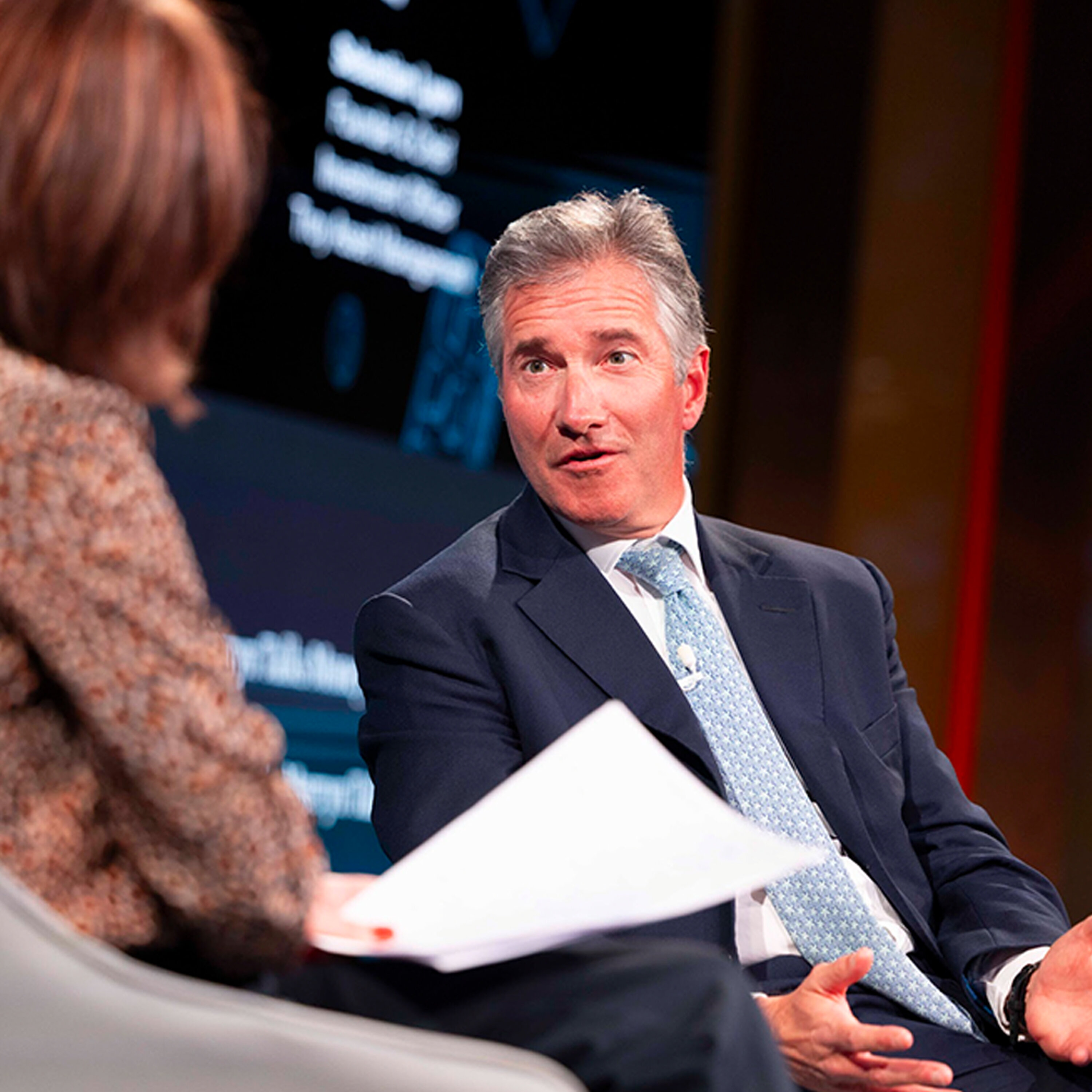
Inflation Isn’t Done: Why the Next Shock Could Be Worse
Mar 2000:27:45Summary readyMerryn Somerset Webb sits down with Troy Asset Management founder and chief investment officer Sebastian Lyon to unpack why markets look eerily calm despite mounting geopolitical shocks—and why investors should be far more focused on protecting wealth than chasing returns. Lyon argues we’ve entered a new era of sticky inflation, fragile portfolios, and looming risks in government bonds. He talks about how he’s positioning for volatility, and offers some ideas for navigating markets when the old rules—like 60/40—no longer apply. This conversation was recorded at a live Bloomberg.com subscriber event in London on March 17.See omnystudio.com/listener for privacy information.
Summary
What Are Absolute Return Funds And Should You Invest In Them?
Mar 1800:09:16Summary readyOn this week's Merryn Talks Your Money personal finance episode, Merryn Somerset Webb and John Stepek tackle another listener question: should you invest in absolute return funds? They start by explaining what an absolute return fund actually is, the pros (aiming for absolute returns makes sense) and cons (it's not easy to achieve consistently) of such an investment, and look at what to consider when trying to pick such a fund. See omnystudio.com/listener for privacy information.
SummaryWhy Contrarians Can't Get Enough of Real Assets
Mar 1600:31:07Summary readyContrarian investor Alec Cutler, manager of the Orbis Global Balanced and Cautious funds, joins Merryn Somerset Webb to discuss why global markets are shifting away from speculative growth toward the fundamentals that underpin economies—energy, infrastructure, and national security.Using his “pyramid of needs” framework, Cutler explains why investors are increasingly focusing on the resources and industries that sustain modern economies rather than the technologies built on top of them. The conversation explores opportunities in energy, AI infrastructure, global value stocks, and the changing geopolitical landscape shaping markets.See omnystudio.com/listener for privacy information.
Summary
Markets Wrap: Private Credit, War and a Lack of Safe Havens
Mar 1300:20:51Summary readyHosts Merryn Somerset Webb and John Stepek assess the market reaction to oil price volatity and question whether gold, bonds or even hard assets can offer capital protection in this fragmented and dangerous world. They also discuss the latest in private credit and what this uncertaintly means for investors.See omnystudio.com/listener for privacy information.
Summary
UK Smart Savings Dilemma: SIPP, ISA or LISA?
Mar 1100:10:10Summary readyOn this week's Merryn Talks Your Money personal finance episode, Merryn Somerset Webb and John Stepek tackle a listener’s question about an issue many young UK professionals face: where should retirement savings go after auto-enrollment—a SIPP, an ISA or a Lifetime ISA? With markets volatile, rules changing and political risk on the horizon, the pair break down the pros and cons of each option. Sign up to the subscriber event here: https://www.bloombergevents.com/ZZ3kna?utm_source=Podcast&utm_campaign=Podcast&utm_medium=Podcast&RefId=subSee omnystudio.com/listener for privacy information.
SummaryGold, Debt and the AI Boom: A Financial Historian’s Warning
Mar 900:33:39Summary readyOn this week's Merryn Talks Money podcast, host Merryn Somerset Webb speaks with financial historian Edward Chancellor about how energy constraints and geopolitical tensions could reshape markets, whether the artificial intelligence boom is a bubble and what it all means for interest rates. Chancellor argues that AI enthusiasm may be overextended, warns of rising long-term rates and sovereign debt risks and makes the case for gold, commodities, Japan and emerging markets over bonds and expensive growth stocks. Sign up to the subscriber event here: https://www.bloombergevents.com/ZZ3kna?utm_source=Podcast&utm_campaign=Podcast&utm_medium=Podcast&RefId=subSee omnystudio.com/listener for privacy information.
Summary
Markets Wrap: War, Energy and the Return of Inflation Risk
Mar 600:11:10Summary readyMarkets have swung sharply as the escalating war in Iran and across the Middle East injects fresh uncertainty into oil prices, inflation, and the path of interest rates. On this week's markets wrap, Merryn Somerset Webb and John Stepek discuss how prolonged energy supply disruption could Britain from mere chronic stagnation (which is bad enough) and into stagflation. They also explore the fault lines that higher-for-longer rates are starting to open up — from private credit stresses to long-running productivity woes.Sign up to the subscriber event here: https://www.bloombergevents.com/ZZ3kna?utm_source=Podcast&utm_campaign=Podcast&utm_medium=Podcast&RefId=subSee omnystudio.com/listener for privacy information.
SummaryExclusive: Rachel Reeves on Iran Shock, US Trade and Inflation Risks
Mar 300:29:12Summary readyHosts Merryn Somerset Webb and John Stepek react to the Spring Statement, plus Bloomberg's exclusive interview with Chancellor Rachel Reeves. She sat down with Head of Economics and Government Stephanie Flanders on Tuesday, and discussed Britain's pending trade deal with the US, why it won't affect its view on the conflict with Iran, and the UK's economic future. Read more: https://www.bloomberg.com/news/articles/2026-03-03/reeves-says-uk-won-t-make-iran-decisions-based-on-us-trade-ties?srnd=homepage-uk Sign up to the subscriber event here: https://www.bloombergevents.com/ZZ3kna?utm_source=Podcast&utm_campaign=Podcast&utm_medium=Podcast&RefId=subSee omnystudio.com/listener for privacy information.
Summary