← Misquoting Jesus with Bart Ehrman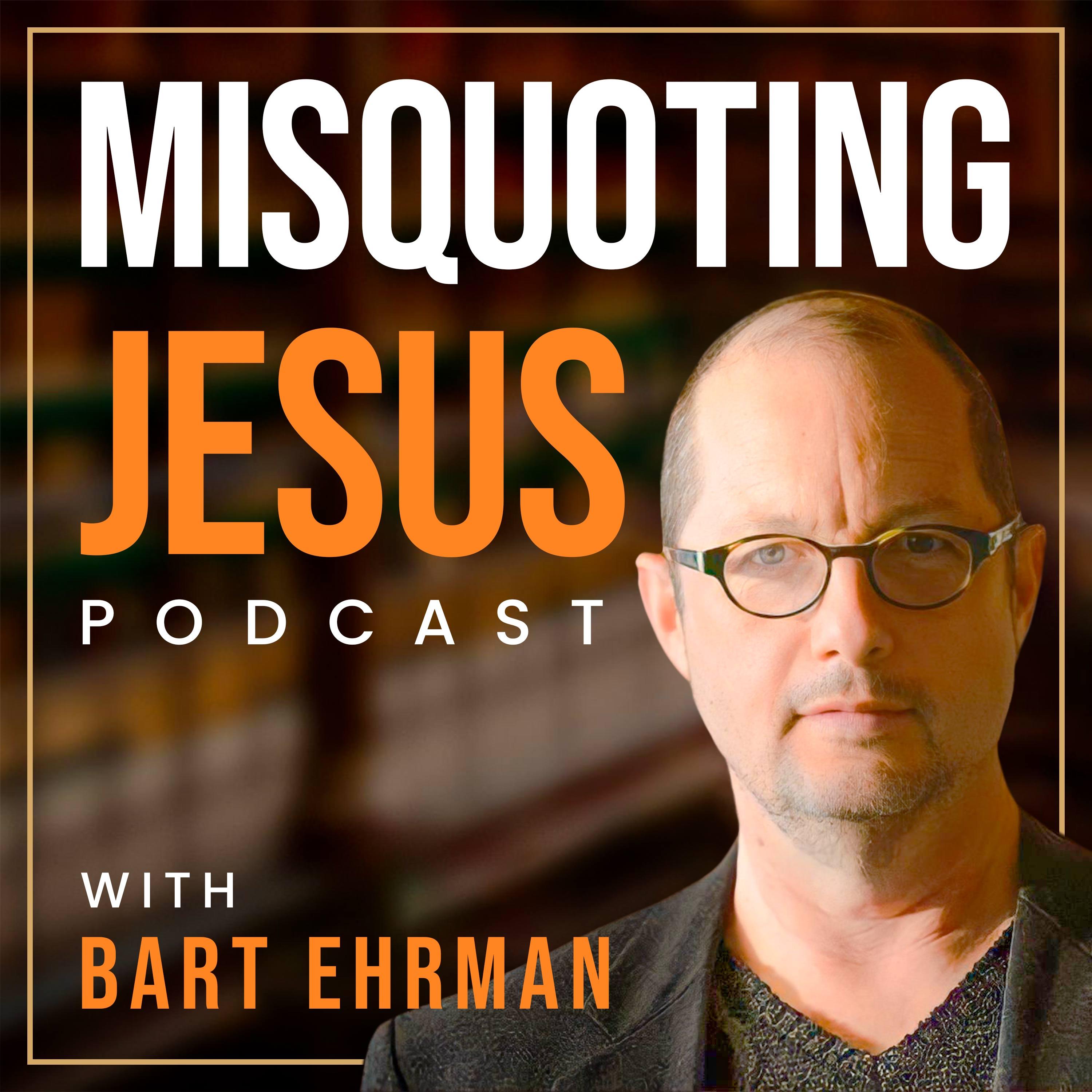
Misquoting Jesus with Bart Ehrman
Am I Going to Hell? What the New Testament Says About Death and the Afterlife
00:48:02
Loading summary
Transcript74 lines
- [00:02]
Bart Ehrman
Looking for the perfect rental.
- [00:04]
Megan Lewis
Discover top rated stays loved by guests. Rated highest by real guests. Through authentic reviews. These traveler loved stays are recognized by
- [00:14]
Bart Ehrman
the details that matter most and validated by real experiences.
- [00:19]
Megan Lewis
Choose confidently from rentals you can trust.
- [00:22]
Bart Ehrman
VRBO Book now a vacation rental loved by guests.
- [00:33]
Megan Lewis
Welcome to Ms. Quoting Jesus with Bart Ehrman. The only show where a six time New York Times best selling author and world renowned Bible scholar uncovers the many fascinating little known facts about the New Testament, the historical Jesus and the rise of Christianity. I'm your host, Megan Lewis. Let's begin. Happy New Year, Bart. Did you make any New Year's resolutions?
- [00:57]
Bart Ehrman
Ah, right. I normally don't reveal mine because it's bad luck, but you know, I've been finding it bad luck even if I don't reveal them. That strategy doesn't seem to work, I'll tell you, you know, with adding this podcast and I have these courses that I do online, I do these one off lectures and I have my daily blog and I have a day job. It's like a little bit crazy. So my New Year's resolution actually is not to cut back on things. Just everything. I, I just love it. I like everything teaching undergraduates. I love giving. I mean I just, my resolution is to work even harder on not experiencing stress.
- [01:36]
Megan Lewis
If you find a way to do that, would you please let me know?
- [01:39]
Bart Ehrman
Well, I know you are absolutely as bad as me or worse. But it's just like, you know, the thing is I do exercise every day, I sleep a lot and I read novels. You know, I do things. But you know, I find that when I stress it doesn't help, you know, it doesn't like make me more efficient. It probably shortens my life. And so this will be a stress free year, I guarantee it. So how about you Megan, what do you got for New Year's resolutions?
- [02:06]
Megan Lewis
Well, I am going to try and learn Greek. So my husband has a master's in theology and did Greek at grad school and he very kindly offered to teach me the basics of Koine Greek as I'm doing so much New Testament reading. So we're going to try at least. I'm not a philologist by any stretch of the imagination, but we're going to give it a go.
- [02:29]
Bart Ehrman
Yeah, Greek is a, it's a great language and I, you know, and it's a very, very interesting language. Very, it's kind of a logical language. It's kind of, you know, I've never, I've never been very good at Semitic languages. You Know, I had to learn them. You know, I had. I learned Hebrew and then I learned Syriac, and so it was like. But it was. Didn't really resonate with me. But for some reason, the way my mind works, the kind of logic of Greek and Latin really kind of makes sense to me. And so when you're having trouble with your. Your articular infinitives, just let me know.
- [03:00]
Megan Lewis
I. Absolute, absolutely. Well, he assures me that it's easier than Sumerian, and he's better at me than both, so.
- [03:06]
Bart Ehrman
Well, for one, it has an Alphabet.
- [03:09]
Megan Lewis
Yeah, that's true. I don't have to learn any more cuneiform.
- [03:13]
Bart Ehrman
Right, exactly. So, okay, yeah, well, listen, I'm here for you.
- [03:18]
Megan Lewis
I will probably be calling you, like, Bart. I don't understand this.
- [03:21]
Bart Ehrman
Yes. Okay.
- [03:23]
Megan Lewis
Okay. So we're starting the new year off with a bit of a bang and trying to answer the question, am I going to hell? Obviously not literally. It's always a good thing to ask yourself at the beginning of a new year. Why not? We're talking about what the New Testament actually says about the afterlife. Does it describe the fires and eternal paradise that so many of us are familiar with? And if not, then where exactly did these ideas come from? But you have written an entire book on the subject. I can highly recommend it to anyone who's looking for some reading on this. Why do you think it's an important topic to talk about?
- [03:56]
Bart Ehrman
Yeah, well, so I wrote this book. It's just called. It's called the History of Heaven and Hell, I think it's called. I guess I should know what it's called, right? No, no. What is it called? I think it's called Heaven and Hell, A History of the Afterlife. Yeah. I should know the titles of my books. At least I know what's in it. And so I wrote the book to assure you, Megan, that you are not going to hell.
- [04:19]
Megan Lewis
That's why I am glad to hear it. Thank you. We can end the episode there. Really. You've answered my question. We're done.
- [04:24]
Bart Ehrman
I know. And so we could just go off and do other. The thing is that still in America, a huge percentage of people believe that when you die, your soul goes to heaven or to hell. Fewer people believe in hell now, but still way over half the population, almost 60% of the people, believe that there's a place of eternal torment of some kind after death. And more people believe that there's some kind of reward in heaven. But the idea is that your body dies and eventually rots away, but your Soul lives on and goes to one place or another. And the reason I wrote this book is because this view about your soul going to heaven or hell is found nowhere in the Old Testament. And it's not what Jesus taught. And so why is it the Christian view? And, you know, through Christianity, it's crept into popular culture as well. In my book, I show this is not the teaching of the Bible and that it's. That it's a later development within Christianity, eventually becomes the idea of Christianity, but it's not the original idea.
- [05:27]
Megan Lewis
Thank you. And I think before we get into New Testament and Christianity in particular, it might be helpful just to start briefly with Old Testament conceptions of the afterlife. I know there's not a lot in the Old Testament by way of description, but my impression is that what is said is much closer to Mesopotamian ideas of the afterlife than what modern Christianity teaches. So no torment or reward, like you said, regardless of how you lived your life, Just kind of boredom and gloom. And it seems like instead of heaven being a reward for a life well lived, it's more that avoiding death for a little bit longer and being able to enjoy life is the best you can hope for. Does that seem like a fair comparison?
- [06:07]
Bart Ehrman
Yeah, I think so. I mean, I actually begin my book on your turf. This is the first time I've ever done this, but I've actually talked about ancient Near Eastern materials because the oldest surviving piece of literature we have in the west is the Gilgamesh Epic, which is definitely not biblical, but we have it in several ancient forms long before we have anything from the Bible itself. We're not going to go into the whole plot here, but it does have a description of what happens when a person dies. And a lot of the narratives around about Gilgamesh, the hero of the story, his best friend dying, and Gilgamesh being completely torn with anxiety that he too will be dead and buried and basically down there being eaten by worms. And it's like, you know, he doesn't like that. And so a lot of it is about the fear of death. I actually begin with that because people today, many people are afraid of death. Those who are afraid of death often are afraid. Today in our context, people are afraid of going to hell, but also people who don't believe in hell are just kind of the idea of the void, you know, the nothingness, the not existing anymore is just a terrifying idea to people. I wanted to start the book by showing that this fear of death has been around as long as there's been civilization as Long as there's been culture going back to the Gilgamesh epic. And you, you certainly find some of that in the, in the Hebrew Bible as well.
- [07:30]
Megan Lewis
So by the time of Jesus, there was a different understanding of life after death, which, you know, makes sense. There's several hundred years between the compilation of the Hebrew Bible and, and Jesus teachings. And that different understanding is an apocalyptic one which we've talked about what apocalypse is in a previous episode. We will talk more about it in future episodes. For those who kind of missed what we said before, apocalyptic thinking understands the world as being locked in a struggle between good and evil. Ultimately, God will triumph and bring about his kingdom on earth, which is the afterlife that we're talking about here. The details vary based on which apocalyptic work you're reading, but generally they include physical resurrection and the righteous living in paradise on earth with God forever and sinners somehow being punished for their crimes, either cast out into darkness or just eternal death. Do we know where this kind of judgment based belief came from? Or how it developed out of what is previously like a one size fits all afterlife?
- [08:28]
Bart Ehrman
Yeah, I guess. You know, to get to that answer, I probably should answer your first question, which I never got around to, but, but it is, it completely develops. This apocalyptic you just described that we'll talk more about in a minute. Absolutely. Comes out of an earlier view in the biblical tradition which is comparable to what you get in some other traditions which in the Old Testament. The basic line is, well, first thing to say is the Old Testament is a big book in English. There are 39 different books, most of them by different authors and living at different times. They had different views about lots and lots and lots of things. But the major view that you find in the Old Testament, the Hebrew Bible, is that life is a precious gift from God and that while you live, you are being blessed, hopefully, but at death you don't exist anymore. The way people can think about this best is that in the Hebrew Bible there's no idea that your soul lives after your body dies. Think about Adam. When God creates Adam, how does it work? How does a human being come into existence? God takes this dirt, mud or clay, and he forms like this humanoid being. But it's just this lump of clay on the ground that looks like a human. And then God breathes his breath into it and it becomes a living creature. So the way it works in the Hebrew Bible is that a human being isn't two things, your body and your soul. It's an entity that has the breath of life breathed into it for most of the Hebrew Bible, and in some places it's quite explicit where it said, it indicates that when you stop breathing, you don't exist anymore. You know, you've got a. You've got a shell of a body there, but it's not you. And so we have trouble, I think modern people have trouble imagining what, that, how that works. Because, you know, surely you live on forever, right? Everybody knows that. And it just is common sense to us that when our body dies, our soul lives on. But not, not in ancient Hebrew thought. In Hebrew thought, the word for soul and breath and air are, you know, that you can use these words interchangeably. And so your spirit inside of you is just your breath. And so today, so the analogy for today is when you die, you stop breathing. Your breath doesn't go anywhere. Not that it exists apart from you. It's what keeps you alive. And so when it doesn't exist, you don't exist. You know, that's how we think. The breath doesn't go anywhere. But if the breath is the soul, it doesn't go anywhere. It's just, it's the thing that animates you. And so most of the Hebrew Bible has that view and promotes that view. The problem with the view was that's going to lead to apocalypticism is that in the Hebrew Bible tradition, God is ultimately good and God is ultimately sovereign over this world. And God is a God of justice. When God is fair, you know, good people get rewarded and bad people get punished. And so that's, you know, and Israel is. Those are the people of God, so God rewards them and so forth. So the problem with the. He is aligning God's justice, his love and his justice with kind of finitude of the human being because many people, nations and individuals suffer horribly and then die. That's it. Whereas you have the. You have other people who are just horrible schmucks who are getting away with criminal activity, who, you know, we won't name any politicians, but, you know, pick whichever side you're on. And then they die and they get away with it. Like, they get rich and famous and powerful and then like. And by burning other people and hurting others and they. So that can't be right. And so eventually what develops in the biblical tradition is that since Jewish thinkers started thinking about 200 years before Jesus, they started thinking, look, it can't be right that we die and that's it. Because it's not fair. And God is a God of fairness and justice. And so there must be something Else that's when you start getting the doctrine of the resurrection of the dead, which I'll just add as a teaser, is different from the idea that Christians have that your soul lives forever.
- [12:50]
Megan Lewis
Because this is. This is very much a physical, bodily resurrection.
- [12:53]
Bart Ehrman
This is the key, actually. It's a bodily. Since you have this Jewish notion that body and soul are necessary together for life, the only way to live is to have your body and soul together. And so what develops back about 200 years before Jesus is the idea that there is going to be justice after you die. And what's going to happen is God is going to breathe your spirit back into you, and you will then live. You'll live eternally. But it's in the body. Your body will be raised from the dead. And right now, because of the sin of Adam or for whatever reason, our bodies die. But God's going to make it so we don't die, so we'll be raised with immortal bodies and so eternal. So when people say, even Christians today, of course, confess the resurrection of the dead, it's in the creed. But by that, most people don't understand, that means your body is going to be raised from the dead. Resurrection is a bodily idea in which you'll live forever in your body. And of course, you know, throughout. Even in antiquity and today, people. People would say, you mean I gotta live in this body? It's like my body's my problem.
- [14:02]
Megan Lewis
I mean, it's like the knees don't work properly. My back's a bit of an issue. Can I not just get a new one?
- [14:08]
Bart Ehrman
Yeah, well, you know, I mean, am I not gonna have any hair? Like, you know, if I had my hand amputated, am I not gonna have a hand? What if I was born blind? I'm gonna be vying for eternity. What. What age am I going to be like? You know, what if I die when I'm 98? Am I going to be 98 for eternity? Oh, my God, you know what? So even in antiquity, they had to explain that. And Jewish authors tried to explain, as did Christian authors later, that they tried to explain what it would be like. But the basic idea is it's going to be great and it's going to be. It's going to be perfect and you're going to love it. But it will be a physical thing. It won't be just your spirit, you know, your spirit floating around up on clouds or something. You're going to live in paradise here on Earth. It's going to be fantastic.
- [14:49]
Megan Lewis
N. You've argued else elsewhere. And again, future episode we'll come back to this that Jesus was an apocalyptic prophet. So I assume he shared this view of the afterlife that you've just described, with the caveat that we obviously don't have firsthand accounts and absolutely nothing written by Jesus himself. What does the New Testament say about Jesus personal views on the afterlife?
- [15:12]
Bart Ehrman
Well, I think it's pretty clear. When you read the earliest gospels, Matthew, Mark and Luke, we will be talking a lot probably on the, on the podcast about how we can possibly know what Jesus actually said and did. And there are ways of doing it and that scholars have developed and we have these sources. The early gospels, the Gospels are all different from each other. Just as I said, you have all these books in the Old Testament that you have different authors at different times. It's true of the Gospels too. You know, Matthew and John aren't saying exactly the same thing, different views, but there are some things that come out fairly consistently in the first three gospels, Matthew, Mark and Luke, about the teachings of Jesus, which is that he did think that this world was a corrupt place controlled by forces of evil. There are demons in the world, people are ill, and there are weather disasters and people are hungry. And there's like, you know, there's these massive problems that just seem insuperable, and they are because they're caused by powers of evil. You've got the devil and the demons and these forces of evil. So this is this view that we've talked about a little bit already is an apocalyptic view, a view that the powers of evil are in control of this world and things are going to are getting worse. But in this apocalyptic view that Jesus shared, I mean, he absolutely believes that there were these demons out there that he had to fight and that there was hunger and there was illness he had to heal. And he believed all of that, but he thought that it was going to come to an end soon. And so his main teaching is that the kingdom of God is soon to arrive. People mistake what Jesus meant by that. In the first century, when a Jewish teacher talked about the kingdom of God, they meant a kingdom. It's a kingdom here on earth. It's going to be ruled by God's Messiah. And Jesus believed, like other apocalyptic Jews at his time, that what was going to happen was very soon God was going to intervene. He was going to destroy these forces of evil that are like making life miserable and have been ever since Adam and Eve. And he's going to then destroy the evil and destroy the people who sided with evil. And he's going to reward his faithful so that those who have been faithful to God will be rewarded with this new kingdom ruled by his Messiah. And the way it will work is that it will happen not just for people who happen to be alive when it hits, but it's going to be for everybody. So that people who live 300 years ago who are really righteous, good people who suffered like crazy, are going to be rewarded with eternal life. God will raise bodies from the dead. Everybody, you've got to live in the body, because it's the only way the bodies are raised from the dead. Those who have opposed God and who have not lived good lives are going to be condemned, shown the errors of their ways, and then eternally destroyed. They'll be annihilated, they'll be wiped out once they see that they really blew it. And then the people who are righteous will be living forever then in their bodies in this utopia. I mean, God created the Garden of Eden to begin with. That's what he meant. People to be like, it's going to be paradise, and people will live in paradise forever then.
- [18:20]
Megan Lewis
So if the righteous are the ones who get to come back and live in this paradise, how does one achieve that? If you ask an evangelical Christian how to get to heaven, I think top of the list is accepting Jesus as Lord and Savior. Like, is that from Jesus? Is that something that he said we have to do in order to get to heaven? Or are there different criteria?
- [18:40]
Bart Ehrman
Well, so this is part of the complication of my saying. When you've got these four gospels that are kind of different from each other, you do get Jesus saying that sort of thing, that he is the way to eternal life, and only he's the way. You have to believe in him for eternal life. In our final gospel, the Gospel of John, all of our gospels are written some decades after Jesus himself. Mark is probably our earliest gospel, probably written around the year 70. So about 40 years after Jesus death. In Mark and in Matthew and Luke, which are closely related to Mark, all three of them stand against really what's going on in the Gospel of John. In the three of them, the earliest gospels, Jesus never says, you have to believe in me for eternal life. What he says in Matthew, Mark and Luke is, well, his first words in his mouth are in the Gospel of Mark. The very first thing Jesus says is in chapter one, where he says that the time has been fulfilled, the kingdom of God is near. Repent and believe the good news. And so the time being fulfilled is the idea that God's allotted a certain amount of time for these forces of evil, and now their time's up. The kingdom of God, this paradise on earth, is near. It's almost here. You have to repent and accept this message of Jesus. And so you need to turn your life around and get ready. And so when you read the teachings of Jesus, it's all about how you behave. I mean, for me, one of the really key passages is in Matthew 25, when Jesus is talking about what happens at the end. And Jesus says that when the king, the future king, comes the kingdoms of earth, all the peoples of earth will be gathered in front of him and he'll separate them into two groups, the sheep and the goats. The goats represent most people on earth. And Jesus says to them, yeah, you know, you did not help those who were in need. You know, you didn't help people who were hungry or who were thirsty or who were lonely or who were sick. Since you didn't take care of them, you know, go off to your destruction, you're going to be destroyed. And they're kind of confused, and they say, but, I mean, he says, no, go. Then he turns to the sheep and he says, you helped those in need. You fed the hungry. You gave drink to the thirsty. You clothed those who were naked. You took care of those who are lonely, and so enter into the kingdom. These people are rewarded or punished, not based on whether they believed in Jesus. It indicates in the story itself. They've never even heard of Jesus. They don't even know who this person is who's talking to them. But they're rewarded because how they live their lives. And I think that's what Jesus thought. God wants you to live in certain ways. That's why he gave his law in the Old Testament to teach you how to live. You know, and it's not a matter of being a Jew, and it's not a matter of being a believer in Jesus. It's a matter how you live your life. If you live in a way that's pleasing to God, God will be pleased with you and will reward you. And so it's not. It's not the message that I grew up on. It's a fundamentalist Christian, you know, you have to believe in Jesus or you're going to go to hell. It's that you need to do what God wants you to do, and he will reward you.
- [21:47]
Megan Lewis
So if Jesus is working with this apocalyptic expectation of an imminent physical kingdom, how did Christian understanding shift from that physical kingdom to a more spiritual one?
- [22:01]
Bart Ehrman
Yeah, this is the key question that I deal with in my book because it's never straightforward trying to interpret the Bible, but it's not that difficult to see what the Old Testament says in various passages about dying. And in the New Testament, the resurrection message is very clear in places, and the apocalyptic message, but it is all this message. It's this message that your body is going to be brought back and given eternal life. And yet Christians ended up thinking that your soul goes to heaven or hell. So Jesus never talked about. People listening to this are going to tell me. But Jesus does talk about people going to hell, and I understand that. I've got long discussions about this in my book where I try to show that when English Bible translators translate words like Gehenna as hell, they do us all a disservice. Jesus does not ever talk about a place of eternal conscious torment at all. And so for those who think, yeah, you missed this verse, trust me, I didn't miss that verse. You'll read my book because we don't have time to talk about all that here, but maybe we will at a later time. The question is, if Jesus and his immediate followers believed in eternal life, in the body, when people are raised from the dead at the end of time, why do Christians end up thinking that it's not that, it's that you die and your soul goes to heaven or hell? What I show in my book is that Jesus expectation that the end was coming soon, and his disciples thought the end was coming soon. Paul thought the end was coming in his lifetime. It didn't happen. You know, it didn't happen. And people then started rethinking what Jesus might have meant when he talked about eternal life and being rewarded and being destroyed. The people who were writing our early Christian literature, who developed our later Christian theology, by and large were not Jews. As people like Paul converted people, by and large, most Jews rejected the message that Jesus is the Messiah. Jesus didn't seem like the Messiah that anybody was expecting. The Messiah was supposed to be a great warrior who destroyed the enemy and set up a kingdom for Israel. And Jesus certainly didn't do that. Rather than, you know, destroying the enemy, he was arrested and tortured to death by the enemy. So most Jews thought it was crazy to call him the Messiah. Christians said he was the Messiah. Followers of Jesus, the Jews and Gentiles. Most Jews didn't accept this message that Jesus could be the Messiah. Christians took the message to Gentiles. Gentiles would be anybody who's not a Jew, that would be like 95% of the world. And so Gentiles were not raised with the idea that the body and soul would be reunited in a resurrection. Gentiles were raised mainly in Roman Empire on Greek ways of thinking, which go way back before Plato. But plato in the 4th century BCE encapsulated and popularized the typical Greek way of thinking of things, which is that the body and soul are two separate things. Plato and in Greek philosophy emphasize that the soul lives forever even though the body dies. Most of the converts to Christianity already in the first century, that's what they thought is how they're raised. It made sense to them. Your soul lives on after your body. Obviously your body doesn't live forever. That's crazy. Your soul lives on forever. And Plato argued this in a number, number of his dialogues, and it was the popular view. What ends up happening in Christianity is that the Christians, of course, believe that Jesus is right, that there will be rewards and punishments, that God is just, you're not going to get away with this garbage if you're doing it. And if you're faithful and suffer, you'll be rewarded. They combine that with the idea in Greek thinking that your soul lives on when your body dies. And so what ends up happening is that the kind of view that Jesus had gets transformed by his followers. And so the way I sometimes think about this is that in an apocalyptic view, you have a kind of a dualism between the current evil age we're in now that are controlled by the forces of evil, and a future age where it will be all good, it will be paradise on earth ruled by God, and that this is like on a horizontal timeline now. And then what I think happened is that this kind of horizontal dualism that you have originally with Jesus and his followers, as soon as theologians start kicking in, Gentile theologians, toward the end of the first century, this horizontal dualism gets flipped on its axis and becomes a vertical dualism. It's not now about what's happening now, what's going to happen then. It's about what's happening down here and what happens up there. It's up and down instead of now and then. And so it becomes more like a spatial dualism instead of a temporal dualism. And the up and down originally was that you're going to die and you're going to be destroyed or your soul is going to go to heaven. But then if the soul's immortal according to Greek thought, well, then even if you're a bad person, you got to live eternally. So now the up and down is heaven and hell.
- [27:01]
Megan Lewis
So what'd you do with those?
- [27:03]
Bart Ehrman
It's heaven and hell. So it's. Your soul is rewarded or it's punished and it's eternal. Can't kill the soul. So that's how Christians start developing the doctrines of heaven and hell.
- [27:14]
Megan Lewis
Thank you. And you kind of see this in writings by early Christians. It's a much more fully developed, like you said, heaven and hell dichotomy. So you've got the Apocalypse of Peter, which is pretty gruesome, details about what hell is, and then the Passion of Perpetua, which describes heaven and the journey to get there. Were these texts then and others supposed to be understood as metaphorical or were they very literal understandings of what happened to you when you died?
- [27:41]
Bart Ehrman
Yeah, well, Christians start developing this view and they. They appear to believe it literally. They certainly talk about it and believe it literally. And so the Apocalypse of Peter is a great example of it. Because most people won't know the Apocalypse of Peter, but it's a very important book that almost made it into the New testament into the 4th century. There were prominent church fathers who said that the Apocalypse of Peter should be part of Scripture. And some of them thought Apocalypse of Peter should be in. But you shouldn't take the Apocalypse of John because, oh boy, yeah, that's a problem. So you know, the Book of Revelation. And others said, oh, we need them both. And others said, yeah, we don't want either. There are these debates. But the Apocalypse of Peter nearly made it in. I talk about the Apocalypse of Peter in my book. It's the first Christian account we have of a guided tour of heaven and hell. People know about that guided tour business mainly from Dante with the Divine Comedy. But Dante didn't come up with this trope. It was around for a long time. And we have it in Greek and Roman circles and in Jewish circles. The first Christian example we have is in the Apocalypse of Peter. And in this account, Peter and the disciples are talking to Jesus and he's describing what's going to happen at the end of time, as you can find in the New Testament in Mark, chapter 13. But Peter wants to have more of a kind of a graphic understanding of it. And he asks you, what's it going to be like? And Jesus shows him in his hand the souls of all people. And Peter kind of enters into this scene in Jesus hand somehow, and he has this vision and he. And he sees the. He sees what's happening in the realms of the blessed and what's happening in the realms of the damned. And it is really interesting. One of the most interesting things is that the realms of the blessed are barely described. It's like, it's beautiful, it's gorgeous. Nice scenery, smells great, you know, nice gentle breeze. It's like. And it takes him about three or four sentences to describe it. But then when he goes to see the torments of the damned in hell, oh my God, it goes on and on and on because he describes individual punishments for individual sins and they're gruesome, you know, red pokers, being stuck in your eyes by demons forever, you know, or being hanged by your genitals or a flames forever and be like an adulterer. And so it goes on. So the idea of the, the idea of the apocalypse of Peter is, look, these are your choices. You can have this wonderful afterlife or you can be tormented forever. And it's your choice. And so this is the first, I think these people, they appear, they talk about it as if they really believe this is what's going to happen, just as many people literally believe it still today.
- [30:17]
Megan Lewis
Were these texts used for recruitment or were they kind of internal documents for churches to use during services or teachings?
- [30:24]
Bart Ehrman
You know, I think it was kind of like a lot of Christian literature today where you have evangelicals and fundamentalists who produce books trying to argue for the faith. And almost always they're actually written for Christians, but they're written for Christians to give them ammunition when they're talking with non Christians. And it looks like that's what these books were as well. They're written to explain this is what's going to happen. And part of it is to warn Christians. Yeah, you don't want to leave and you don't want to start living a life of sin because you too are in danger. But also I think it's ammunition for evangelism because in the early church, this kind of fire and brimstone, they realized early on this is an effective evangelistic tool.
- [31:06]
Megan Lewis
Very effective.
- [31:07]
Bart Ehrman
And it's very effective. And so they. Yeah, so that's why you start getting a lot of discourse about heaven and hell.
- [31:13]
Megan Lewis
Well, thank you. That is an absolute whistle stop tour through the development of the afterlife. I greatly enjoyed it. I hope the audience did too. We are going to take a very brief break and we will be back with Bart's weekly update.
- [31:27]
Bart Ehrman
If you're enjoying the Miss Quoting Jesus podcast, you'd probably like my online courses as well. I've produced a number so far with multi lecture courses on the New Testament Gospels and the books of the Pentateuch, standalone lectures on the Christmas story and the earliest Christian views of Jesus, and a six hour debate on whether Jesus was actually raised from the dead. If you're interested, check them out@Barterman.com you'll receive a discount on your purchase simply by entering the code MJR Podcast. Are you interested in learning about important academic topics but don't want to go back to school? You need to check out Wondrium, the service that streams university level courses taught by top scholars who are also skilled communicators. I've done nine courses for them and can tell you for high level adult learners, there's really no other game in town. For a free trial, go to barterman.com wondrium if you decide to subscribe to Wondrium, this podcast will receive a referral fee, but that'll have no effect on the cost of your subscription and you'll be supporting our show.
- [32:47]
Megan Lewis
Welcome back, everyone. It's time for Bart's Weekly Update.
- [32:53]
Bart Ehrman
This is Bart's Weekly Update, where we get to catch up on all the latest about Dr. Ehrman's book releases, speaking engagements, urmandblog.org happenings and online course launches.
- [33:07]
Megan Lewis
Bart, what do you have for us this week?
- [33:09]
Bart Ehrman
Well, you know, I was very fortunate last semester that I was on academic leave for research and so I wasn't teaching. This is a great, a great benefit for university professors and most people think, oh my God, how easy does it get? Are you kidding me?
- [33:25]
Megan Lewis
Do you actually work much? Really?
- [33:28]
Bart Ehrman
What, what is it you're doing? You like watching soaps and eating bonbons? I mean, my God. And you know, I'm not doing that. I also, you know, I wanted to watch a lot more sports. I didn't get around to the thing about an academic leave. If you're an academic, it means you still work, you know, 70 hours a week. It's just like you're doing your research. It feeds your teaching if you're at a research university like I am. And so it contributes to your teaching and to your public outreach. So that was last semester and it was great. And now I'm back to the day job, facing reality as we know it, which I also love because I'm teaching two undergraduate courses this semester that are small courses. One of them is called Jesus in Scholarship and Film, where we see how Jesus is portrayed in ancient gospels, in modern scholarship and in modern film. Fantastic. It's great. And the other one is called the Birth of Christianity, which is about what happens to Christianity after the new Testament, first couple centuries. And I love these courses. I love teaching undergraduates. They got smart students who are interested. And so it's going to be. It's going to be different, but it's going to be great.
- [34:34]
Megan Lewis
That sounds absolutely wonderful. I hope you enjoy it. And we are now going to have some questions from our listeners.
- [34:44]
Bart Ehrman
Now it's time for questions from listeners where Bart answers real questions submitted by misquoting Jesus fans. If you'd like to submit a question for future segments, please visit bart erman.com Ask Bart.
- [35:02]
Megan Lewis
But are you ready for some questions from our lovely.
- [35:06]
Bart Ehrman
We will see.
- [35:07]
Megan Lewis
We'll see. Okay, this is not an outsmart bot, so you can just give your thoughts. I'm not grading you. First question, what did Paul mean by the third heaven? And what are the other two?
- [35:22]
Bart Ehrman
Oh, boy, that's a good one. That could be a stump bark. Yeah, we wish we knew because he doesn't say. So the deal is, is that many thinkers in the Roman world understood that there are levels between humans and the divine. You find this in a number of philosophical writings, including, for example, Platonic thought. So Plato lived in the 4th century. But there's this phenomenon that's developing in around Paul's time called Middle Platonism. And the idea is that we all know that there's a big divide between God and humans. But what ancient people often thought was that there have to be gradations, kind of getting up to God. You can't just go from one to the other because it's so radical. You have different levels. And so in some ancient religions, you have multiple levels of heaven. And in Christian circles, there are developed ideas of multiple levels of heaven. And so in some texts, for example, some Jewish texts will talk about seven levels of heaven, or in Christian texts, seven levels of heaven. And some later Christian groups that were deemed heretics had all multiple levels of heaven. You have one heretical group that believed in 365 levels of heaven, and each one had a different kind of deity in charge of it until you get to the very top where God himself is in charge. And so Paul doesn't have that kind of a radical of an idea, but he does appear to think that there are multiple levels, three levels, and that he went up to the third heaven. Presumably, the first heaven is the sky. And then the second level, we don't know what it is. For Paul, it might be like the realm of the angels, for example, or superhuman beings who are above us. And then the third level would be the level where God himself lives, particularly with his holy ones. And so that's probably what he means by going to the third heaven. It's another way of saying he's gone up to the realm of God.
- [37:15]
Megan Lewis
So I have a question based on that. Does that level of heaven and understanding of gradation between mortal and divine feed into the Catholic tradition of saints and sainthood?
- [37:28]
Bart Ehrman
It kind of does, because it's a similar concept. So that in the older Jewish tradition, people had direct access to God. You'd say your prayers to God and God would answer your prayers. And there was a direct thing, although there were intermediaries, right? You have your priests who are performing sacrifices. They give you special access to God. And so you start having some kind of intermediary idea. In the Christian tradition, the idea is that the Son of God is how you get access to the Father. And so you get to the Father through the Son. And so the Son is understood and sometimes called a mediator between humans and God. And then they develop other ideas about more mediators. And so you can have the idea, for example, of angels as mediators in some parts of the Christian tradition, within the Catholic tradition, if the Son is access to the Father, the mother is the access to the Son, and so Mary is elevated in status. And the idea that saints, saints are people who are closer to God than the rest of us because they're very, very holy. And if you want access to God, you can go through these intermediaries. And so you can go through the saints just like you go through Mary and go through the sun, and the sun is way up there, and Mary's not quite as high in saints, or so it's this kind of intermediary thing. And so it is closely related to what was an earlier idea of the multiple levels. The multiple levels is the earliest idea, probably. And then you start getting these. These various kinds of human and superhuman intermediaries.
- [38:57]
Megan Lewis
Thank you. Next audience question. When did the idea of original sin become mainstream in Christian thought? The questioner said he heard it was invented by Augustine.
- [39:08]
Bart Ehrman
Right. The term original sin means different things to different people. Of course, Protestants tend to think of original sin as just that you're kind of born sinful because you know you're descended from Adam and that every one of us has some kind of sin nature in us. The doctrine itself is not accepted in Protestant circles. The Catholic doctrine that was in fact, not invented by Augustine, but it's certainly formulated by him in a more precise way. And the doctrine of original sin is that the sin nature comes into humans because of A very human act that it's the sex act itself that passes on the sin nature to human. So everybody's born. So the man's seed impregnates the woman. The sin nature is actually this entity that's located in the male seed. So necessarily, since somebody is born of the male seed in combination with a woman, that everybody necessarily has a sin nature. And it's just as much of a part of you as your blood and your bones. It just. It's infiltrated throughout you. And so. And there's nothing you can do to get rid of it. And so with that, Augustine developed a very complicated theory about how it's passed on, but also how Christ is the one who is able to solve the problem of the sin nature. Christ himself didn't have a sin nature because he didn't have a human father. And Christ himself didn't get the sin nature through his mother because, you know, you could say, well, yeah, but, you know, his mom had to have it. So didn't he get part of it too? No, because in the Catholic tradition, his mother is protected from getting us in nature by the Immaculate Immaculate Conception. She wasn't born of a virgin, but God did a miracle to make sure that she didn't inherit a sin nature to pass on to her son. And so. So all of that becomes formulated in a more crystal way in the early 5th century by Augustine.
- [41:01]
Megan Lewis
And the last question. We have a couple more questions, but this is the last one kind of on the afterlife. Where do we first get an understanding of Satan or the Devil as we see in. In modern Christianity?
- [41:13]
Bart Ehrman
Right. It's a very good question because it's completely related to what we've been talking about. When you read through the Old Testament, you don't have a devil. People think you do because they read the devil into passages that don't have him. And so people say, wait a second, the Garden of Eden is the devil, right? No, actually it's not the devil. It's a snake. It's a snake. It's originally a snake with legs. And so it's a. I mean, because God punishes the snake by taking away its legs. And so originally, somehow, it's like some kind of reptile. So there's no mention of the devil in the Book of Genesis. And people say, yeah, what about the Book of Job? Satan's in the Book of Job, right? You have Satan and God having this argument. And it is true. There's a figure in Job who's called Hasatan the Adversary. He is not Though the evil devil who is, like, ruling down in hell or who's creating. He's a member of God's counselor, his court, the counselors around him. He plays the devil's advocate because he's the one who is always kind of naysaying things, but he's one of God's advisors. What happens when Judaism develops into an apocalyptic view? It develops a dualistic view where it's not just God and, you know, the world, it's that there are these forces of evil in the world. And just as God is over the forces of good, it's not as equal, but he's got a counterpart. There's something ruling over the power of. Yeah, something. And the something is the devil, who ends up being thought of eventually as a. As one of the archangels who fell in some ways. And so you start getting the devil with apocalyptic Judaism and this power of evil. By the time you get to the New Testament, you absolutely have Satan as this force of evil who's over the demons. So it's a dualistic view that you don't have through most of the Hebrew Bible.
- [43:02]
Megan Lewis
Excellent. Thank you. And our final question is not really about the Bible. It's about you. What does the James A. Gray Distinguished professor actually mean?
- [43:12]
Bart Ehrman
What does it mean? So James A. Gray, the Gray family was and is a very important family in North Carolina. They originally had made their money off of tobacco. Tobacco money. They were and are a very generous family that endowed a lot of things in North Carolina, a lot of charities, a lot of good things, including academics. And so, for example, at our crosstown rival, Duke, the Religious Studies department is housed in the Gray building. Because the Gray family donated funds for the building and gave a lot of money to Duke. They also gave a lot of money to UNC. The Department of Religious Studies at UNC was founded in the mid-1940s, is one of the first, or possibly the first department of Religious studies in a major university in the country. A secular department of Religious Studies where you don't try and promote religion or propagate religion or try and convert anybody. You teach about religion. Just like you teach about philosophy, or you teach about crime or you teach about Nazi Germany. You gotta be a Nazi to teach about Nazi Germany. And so in the religious studies department, you're teaching about Islam and Judaism and Buddhism and Christianity, you're teaching about things. The James A. Gray professor was the second professorship set up in the university and is endowed by James A. Gray. And the professorship goes to a scholar of Biblical studies. And so it's an endowed chair, which means that there's endowment that pays you a good chunk of my salary. And so it's an honor to be a distinguished. It's a distinguished chair in the university. I'm not particularly distinguished, but they gave me one anyway. So it's an endowed chair within the university. It has no particular obligations other than to teach biblical studies. And I, you know, out of gratitude, thank the great. I know a couple of great family members who are fantastic human beings. So it's all connected with his ongoing family.
- [45:14]
Megan Lewis
Wonderful. A little bit of a look into how academia can be funded for those who are outside the field.
- [45:20]
Bart Ehrman
May I say also that the funders have no say in what I teach.
- [45:24]
Megan Lewis
Yeah, that's. That's a good point.
- [45:25]
Bart Ehrman
And so that's. In other words, it's not like they can't pull strings or anything, but they don't want to because we get along great and they. They believe in. In teaching biblical studies in a historical way to undergraduates.
- [45:38]
Megan Lewis
Before we finish the week, would you mind just summarizing what we spoke about today?
- [45:42]
Bart Ehrman
You know, of all the things I've written about, I would say that this is the one that is most important to most people because everybody, I mean, just about everybody is concerned what happens when you die. And we have these ideas in our head that have been given to us. As soon as we are conscious, we have ideas of the afterlife built into us. So they just seem second nature. And the second nature idea for most people in our context is a lot of people now think that you just die and that's it, which would be an Old Testament view. But most people continue to think that you live on in some way to be. To at least to be rewarded. And a lot of people think you live on to be punished. My book, I don't argue against that view or for the view. I'm interested in knowing where it came from, from, because it's not the view of the Old Testament. Most of the Old Testament, the idea is that you live and that's a precious gift, but then you die and that's it. The New Testament and Jesus have the idea that your body is going to be raised from the dead and you live eternally here on earth in a glorified body. The Christian idea that you die and your soul goes to heaven and hell is a kind of an amalgamation of the teachings of Jesus with the teachings of Plato. And so it's kind of a combination of this early Jewish apocalyptic view view and the Greek philosophical view. That sounds kind of complicated, but I map it out in my book and I think it's good. If you believe something, it's good to know where your ideas came from. That's that's why I try and do them.
- [46:59]
Megan Lewis
I would agree. And for those who are interested, the name of the book again is Heaven and Hell, A History of the Afterlife. And it's excellent. Highly recommended audience. Thank you all so much for listening. I hope you enjoyed the show. If you did, please subscribe to the podcast and make sure you don't miss miss future episodes. Remember that you can use the code MJ podcast for a discount on all of Bart's courses over at www.barturman.com. misquoting Jesus will be Back next Week Bart, what are we talking about next time?
- [47:28]
Bart Ehrman
Well, so next time we're going to move on to one of the gospels. The first gospel in the New Testament is the Gospel of Matthew, and we're going to talk about the genius of Matthew. People don't realize just how brilliant these books are and how interesting in ways that they people just have no idea, really. I mean that's not their fault. But I mean matth of genius gospel and I'm going to try and explain why and what it's really talking about.
- [47:51]
Megan Lewis
I have to agree with you. Everything I learn while I'm doing research for this makes me think why on earth haven't I researched this before and why does no one know this? So I hope you'll all join us for that. Thank you everybody and goodbye. This has been an episode of Misquoting Jesus with Bart Ehrman. We'll be back with a new episode episode next Tuesday, so please be sure to subscribe to our show for free on your favourite podcast listening app or on Bart Ehrman's YouTube channel so you don't miss out. From Bart Ehrman and myself, Megan Lewis, thank you for joining us.