← Misquoting Jesus with Bart Ehrman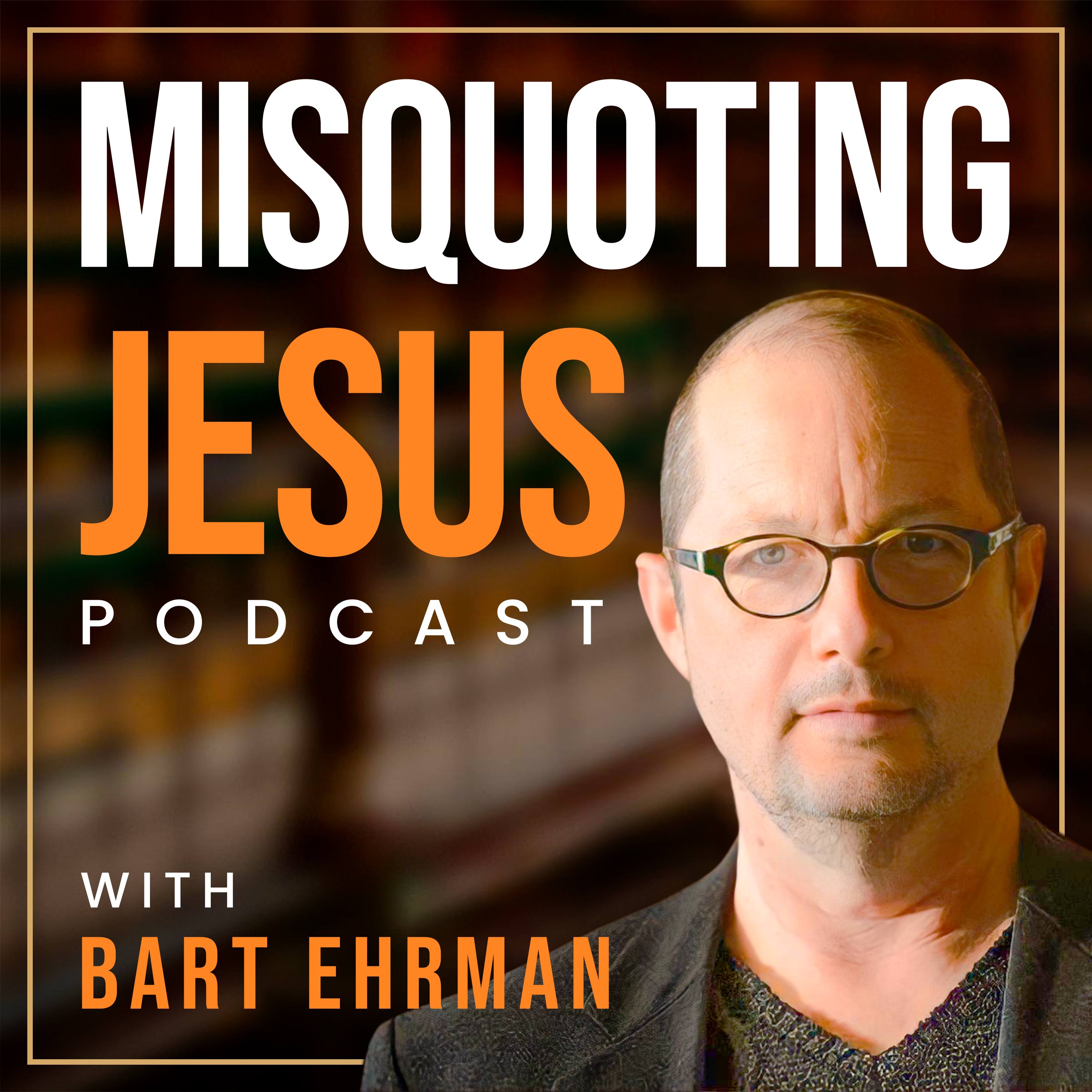
Loading summary
Transcript70 lines
- [00:00]
Commercial Narrator
Start the spring season off right with a new pair of Tokovas western boots. Handcrafted in over 200 steps from genuine leather, they're built to last and feel broken in the moment you put them on. From cowhide to exotic leathers to Kovas blends timeless style with all day comfort. Pair them with premium denim western shirts and accessories for an effortless polished look. Shop quality Western goods in store or online@decovas.com
- [00:30]
Megan Lewis
One of the main tenets of Christianity is Jesus divinity. Most denominations hold him to be fully divine and also fully mortal. But that's a whole other conversation. History is littered with humans who also claimed to be gods. Think Egyptian kings for example. Is this something that also applies to Jesus? Was he walking around telling people that he was in Fact God? Today, Dr. Bart Ehrman joins me to talk about the line between divine and mortal in the ancient world and to examine Jesus self presentation within the Gospels. Welcome to Ms. Quoting Jesus with Bart Ehrman. The only show where a six time New York Times best selling author and world renowned Bible scholar uncovers the many fascinating little known facts about the New Testament, the historical Jesus and the rise of Christianity. I'm your host, Megan Lewis. Let's begin. Okay, so Jesus, divinity, mortality, all of that fun stuff before all of that. How are you bud?
- [01:36]
Dr. Bart Ehrman
Yep, doing pretty well. Trying to think about the next book. My book is done off and now I'm like into the next one and it's even. Every time I write a book I say, you know, this is, this is the most interesting thing I've ever done. So I'm doing that now already.
- [01:53]
Megan Lewis
You don't, you don't like take just a month to breathe a little?
- [01:57]
Dr. Bart Ehrman
No, no.
- [01:57]
Megan Lewis
God no. You just straight into the next project?
- [02:00]
Dr. Bart Ehrman
No, straight into it. Yeah. Yeah. So yeah. How's your summer looking?
- [02:07]
Megan Lewis
It's okay. It's a little, there's a lot, just a lot of moving parts to be honest. There are children going places and I'm trying to work and Josh is trying to work and I'm trying to fit in a trip home as well. But fitting that in around summer camps that I booked like back in January is more tricky than it usually is. I don't normally have so much trouble, but so far everything's going pretty smoothly. All of the children are, you know, enjoying their summer, having a great time.
- [02:38]
Dr. Bart Ehrman
Good. Well, you know, and going, going home isn't like going to Philadelphia for a weekend for you.
- [02:43]
Megan Lewis
It's. Yes, it is a two week commitment.
- [02:48]
Dr. Bart Ehrman
It's going to the Isle of Sk. So. Wow. Absolutely. I do. You know, they make Talisker whiskey there, as you know, and I, you know, I hope you stop by the distillery.
- [03:00]
Megan Lewis
I've actually not done that yet. I don't, not really a whiskey person, but it's something that my stepfather appreciates. So I'm, I'm thinking we might have to do like a birthday trip there for him at some point when my next visit coincides with his birthday.
- [03:16]
Dr. Bart Ehrman
Think. Sounds good. Yeah.
- [03:19]
Megan Lewis
All right. So Jesus and was he God's? Did he think he was God's? All of this great stuff. When did you as an academic first start to think about whether Jesus believed himself to be divine?
- [03:37]
Dr. Bart Ehrman
Yeah, it was definitely after I was well into academics because I, you know, I grew, I grew up just assuming not only that Jesus was God, that of course he knew he was God and he called himself God. And I should have realized it earlier, but I didn't. That the only place is really that he comes out and says that he is a divine being or, or clearly indicates he's a divine being is in the Gospel of John, our last gospel. And I don't think I, I probably didn't, that didn't register with me big time probably till I was a PhD student, maybe even maybe when I was in my master's program. So it's. But it's the kind of thing you just don't think about because you're just kind of so accustomed to thinking it that you find him saying things in the other gospels that makes him, you know, okay, so he's God. Of course he says something like that. But yeah, no, it's only in the Gospel of John, I think is probably my PhD program.
- [04:33]
Megan Lewis
So I said in my introduction that the ancient world had people who claimed to be divine, that the human divine division is like semi permeable. I think for a lot of ancient cultures, Egyptian kings, Roman emperors could receive cult offerings once they died. Did this kind of permeability extend to non elites or does it seem to have been restricted to rulers?
- [04:59]
Dr. Bart Ehrman
Oh, so that's a, that's a good question. Because, you know, people do know about the Egyptian pharaohs, you know, being God and the, the Roman emperors being thought of as divine and being worshiped. But what about regular old folk? Yeah, so that's a good question. There are, there are other instances in Greek circles, in Roman circles, in Jewish circles, of people who are not rulers, who are, because of some special quality are considered to be a divine being. And it can be. It's usually because of some kind of superlative quality. Some people are just so gorgeous or so physically powerful or so incredibly smart. They just aren't like the rest of us. I mean, well, they're like you, but they're not like me. And so, so that, so that it's like, you know, so like, how do you explain. They've, they've got to have an element of the, of divinity within them. And so you have elements like that. But you also, you do have people who are understood to be born of the union of a, of a mortal and an immortal in various traditions that are semi God demigods. And you've got people who are, who are exalted to become gods at the end of their lives. And you. There, there's a, there's a whole range. It is very perme. Agree with that. It's very permeable. It's not like today when we think there's this huge chasm, right? We've got a, we've got the peons down here as all of us, and then there's God up there. And like, it's this huge chasm. It's more like a kind of a continuum between the supreme God and lower gods and lower gods and lower gods. And, and you get humans who are kind of half gods. And, and so it's more of a continuum than it is even in Judaism. It's more of a continuum than we have today.
- [06:43]
Megan Lewis
So it wouldn't have been considered blasphemous or anything similar for a Jewish person to have been viewed as somehow divine?
- [06:52]
Dr. Bart Ehrman
Well, it might have been viewed as blasphemous depending on who the person was. Are you kidding me? You think you're, you're divine? You're not even a good human. So, so. But it would have been blasphemous to declare that you are the God. You know, you're a God God. That would have been blasphemous. And you would have probably been thought to be a little bit crazy if you said, I'm an angel, you know, but. So it isn't so much that we don't, we don't have too many. We don't have instances that I know of, of Jewish people declaring themselves divine beings, certainly none of being taken seriously. But we do have numerous individuals who are talked about that way and a lot, a lot in Greek and Roman circles, but also some in Jewish circles.
- [07:41]
Megan Lewis
Now you said that this kind of divine mortal thing was a scale rather than an on, off switch. Do we, do we see instances of humans or people that we would Understand as humans being considered like, at the top of that scale, or are they usually somewhere below where, like the true gods would be?
- [08:01]
Dr. Bart Ehrman
So living humans are always below where the gods will be. We certainly have instances in, in ancient cultures, broadly, of people who are elevated to a divine status. And so, you know, the, I mean, just to pick one example, the. The founder of Rome, Romulus, was believed at the end of his life by many people to have been taken up to heaven and made one of the, one of the gods. And he became one of the three principal gods worshiped in Rome. Quirinus. He took on the name Quirinus. And so he started out, he started out, actually, he's kind of a demigod because his father, according to the myth, was, was a God and his, his mother was immortal. But. But he, at the end of his life, you know, he's taken up and he's one of the three principal gods. And so that's, that's a pretty high elevation.
- [08:56]
Megan Lewis
So if you're human with a divine element, maybe. Are there different ways to be considered divine in your, your, like, placement on the scale?
- [09:07]
Dr. Bart Ehrman
Yeah, yeah, there are. And it. In, again, in all these cultures, Greek, Roman, Jewish, sometimes there are. Sometimes you have a situation where a God becomes a human for a while. That happens a lot in Greek and Roman mythology, for example, and it was believed widely in the Greek and Roman world. So that could happen. You know, Zeus could come down in some human shape or even an animal shape, and the other gods could do that. Apollo and Aries, they all could do that. And in the, in the Old Testament, God comes down in human form, I mean, starting in Genesis, where he's walking through the garden in the cool of the evening looking for Adam and Eve or hiding to, to case like in Genesis, where he appears to Abraham as a human being. And so you have gods who can temporarily become humans. And that's within the Christian tradition, of course, Jesus tradition. The standard tradition is Jesus is the divine being. He becomes a human for a while, then returns. So you can have that. You can have. You can have people who are born to the union of a God and immortal. The Heracles or in Roman Hercules, his father was king of the gods Zeus or Jupiter, depending which tradition, and a mortal woman. And so he's already sort of half divine. So you can have that or you can also have a case where a human being is elevated to a level of divinity, as I mentioned, Romulus. But we have other cases. Even within Jewish traditions, we have people like in Jewish tradition, Enoch some tradition about Enoch say that he became a divine being or Moses. Moses is sometimes, sometimes actually called by Philo the the Jewish philosopher. He's called the second God, you know, or God. And because he's elevated to that level at the end of his life and so there are various ways you can do it. A human can become God, a God can become a human can be born of both, etc.
- [11:07]
Megan Lewis
Excellent.
- [11:07]
Podcast Announcer
Thank you.
- [11:08]
Megan Lewis
We are going to take a very brief break and then we'll be back to look at Jesus specifically and where he fits on this kind of sliding scale of divinity.
- [11:17]
Ryan Reynolds
Ryan Reynolds here from Mint Mobile with a message for everyone. Paying Big Wireless Way Too Much. Please, for the love of everything good in this world, stop with Mint. You can get premium wireless for just $15 a month. Of course, if you enjoy overpaying. No judgments. But that's weird. Okay, one judgment anyway, give it a try@mintmobile.com Switch upfront payment of $45 for
- [11:39]
Megan Lewis
3 month plan equivalent to $15 per month required intro rate first 3 months only, then full price plan options available, taxes and fees extra. See full terms at MintMob.
- [11:48]
Podcast Announcer
The New Testament Gospels of Matthew, Mark, Luke and John provide us with virtually all our knowledge of what Jesus said and did. This includes his birth in Bethlehem to the Virgin Mary, his baptism by John the Baptist, his miracles of healing and casting out demons, his Sermon on the Mount, all of his parables, his triumphal entry in the Last Supper, his trial and crucifixion, and his resurrection on the third day. But historians like Barthes want to know, can we corroborate these accounts? Are they historically reliable? Are some of them based on myth and legend? Join New York Times best selling author and New Testament scholar Dr. Bart Ehrman in the Unknown Matthew, Mark, Luke and John as he takes you on an illuminating journey through these ancient texts across eight captives. Lectures, you'll explore the origins, authorship and historical accuracy of the Gospels in an online course. This course is an opportunity to dive deep into the stories that have defined a faith, questioning their origins and understanding their impact. Ready to uncover the truth behind the gospels? Visit bart erman.com gospels to learn more or sign up today. Use discount code mjpodcast at checkout for a special offer.
- [13:10]
Megan Lewis
So before the break you were explaining that there isn't really a human mortal divide in the ancient worlds the way that we would understand it. It's more of a scale and people can be placed in different points on the scale and that at the same time you can kind of move from One state to the other. You can be born divine if you're like, your mother is mortal and your father is. Is a God. And I wanted to shift slightly into looking at Jesus specifically and how he is portrayed within the New Testament. So if we're looking at the Synoptic gospels, Matthew, Mark and Luke, how is Jesus usually described in. In terms of mortal divine language?
- [13:55]
Dr. Bart Ehrman
It's, you know, it's a very complicated topic, as it turns out. It seems like it should be simple, but it's not, in part because of the various concep of divinity and various terms used for divinity, just in the New Testament, including in the Gospels. So, you know, I have a book that deals with all this. I have this book that's called How Jesus Became God. And in the book, I'm not. I'm not talking about, like, how he, like, literally, metaphysically, how a human became God, but I'm talking about how it is that people came to think of him as God and came to believe that he is God and came to think he, you know, created the universe. How did that happen? Because they didn't think that when he was a teenager. They didn't think. When did they start thinking that? And why. So the Synoptic gospels, Matthew, Mark and Luke are particularly interesting because nowhere do they come out and say something like, jesus is God. You know, Christ is God. The writers don't say that, and Jesus doesn't either. But there are passages that people turn to to say, well, he is saying it, or he's hinting at it. For example, a passage people will often cite to me is in Mark, chapter two, where Jesus is healing this man who's paralyzed, and the man's carried in front of him, and he looks at him and he says to him, your sins are forgiven. And the Pharisees get all upset. How can you forgive sins? Only God can forgive sins. And Jesus says, well, which is easier to say your sins are forgiven, or to say, take up your pallet and walk. And the idea is that it's easier to say your sins are forgiven because there's no way to tell whether it works. If you say, take up your pallet and walk, he either does or he doesn't. And so he says to show that the Son of Man has authority on earth even to forgive sins. He says to him, take up your pallet and walk. Picks up his palate and he walks out of the place. So it shows that Jesus, he can do the harder thing, which means he can do the easier thing. So people use that to Say, look, only God can forgive sins. Jesus forgave sin, so he's claiming to be God. And, you know, I understand that reading. I mean, because that's, that's the reading I always held until I looked closer at the passage. Jesus does not say, I forgive your sins. He pronounces that God has forgiven his sins. Your sins are forgiven. That's different. So he's. He's. He has the authority to do that. And, and I think the passage is saying humans have the authority to do that. When he says the Son of man has the authority, I think human beings have this authority. So, so there are passages like that that people would say, yeah, that's, you know, he's claiming to be God, but I don't think so. I'll add to that, by the way, that within Judaism, the people who could declare your sins are forgiven are the priests in the temple who've just done a sacrifice on your behalf. So what Jesus is doing is he's not claiming to be God. He's claiming to have the authority of a priest, okay.
- [16:53]
Megan Lewis
Which is substantially less divine than very
- [16:56]
Dr. Bart Ehrman
different being a God priestess. The guy who lives next door just happens to be in the line, the line of Aaron who goes to the temple, you know, for a month, a year or something. So, yeah, yeah, yeah, it's very different.
- [17:07]
Megan Lewis
Are there other sections in any of the synoptics that make it look as if. Or the people used to argue that Jesus is actually calling himself God?
- [17:17]
Dr. Bart Ehrman
So one thing I want to make clear to people who aren't kind of picking up on the nuances of this is at this point, we're not talking about. We're talking about whether the Gospel writers are portraying Jesus as saying he's God. That's different from do the Gospel writers think he's God or are they portraying him as God? We're asking, is he calling himself God in these passages? And the. A passage that people might point to is that a number of passages, Jesus talks about himself as the son of man in the. In the New Testament Gospels. And one thing I need to clarify, just to really make things confusing, is that you have both the phrase son of man and the phrase son of God applied to Jesus in the gospels, but they mean the opposite of what people would expect they would mean with respect to divinity. Today, if people say Jesus is son of man and son of God, what they mean is he's human because he's son of man and he's divine because he's son of God. Okay? That's what People tend to mean divinity and divinity of your Son of God, humanity of your Son of Man, and in ancient Judaism meant the opposite. This seems weird, but Son of God in the Old Testament is a term that's used for humans, such as the king of Israel is called the Son of God. He's not a divine being. He is the human on earth that God speaks through, who operates through. And so he is closely connected with God. So he's the Son of God, but he's a human. The Son of Man in the Jewish tradition refers to a future judge of the earth that's coming from heaven, based on Daniel 7, who's a divine being. And so Son of Man is a divine being. Son of God is a. Is immortal. Jesus does use the term Son of Man for himself in the Gospels, but he does not say things. He doesn't say, like, I am the divine Son of Man, I am the cosmic judge. He says the Son of Man must go to Jerusalem and be rejected. So is that a claim to be divine? Well, he's not talking about anything divine. He's talking about taking a trip to Jerusalem. And so I don't think there's anywhere in the synoptics where Jesus plainly claims to be a divine being. And in fact, it's notable that he never talked, never talks about himself at all, really, in the synoptic Gospels. That's weird. But he's always talking about God and the kingdom of God and how you need to repent and what your ethics could be. And he doesn't go around talking about himself in Matthew, Mark and Luke.
- [19:51]
Megan Lewis
How about the Gospel of John then? Does that show a different picture?
- [19:54]
Dr. Bart Ehrman
It's completely different. Completely different. In John, Jesus does not talk about the coming kingdom of God, the need to repent. He doesn't teach very many ethics at all in the Gospel of John. In the Gospel of John, Jesus message repeatedly, chapter after chapter, discourse after discourse, is that he is the one who has been. Who has come down from heaven, he's been sent from God. He's a divine being who's come here to reveal the truth. And that if you know the truth and you believe in him as the one who's come down from heaven, then you can have. Then you will have eternal life. So it's all about himself. And he says things about himself that are. That are clearly claims to be a divine being in the Gospel of John, but nowhere else.
- [20:41]
Megan Lewis
Can you give us an example of that?
- [20:43]
Dr. Bart Ehrman
Yeah, there are a couple pretty striking examples. In John, chapter 8, Jesus is talking to his Enemies who. In the Gospel of John, his enemies are just called the Jews. Just a little bit odd, because, you know, he's a Jew, but he's like, the Jews are his enemies. And he's telling the Jews, he's talking to them about how they aren't really children of Abraham. And it's kind of a. It's an unsettling passage in John, chapter 8, because Jesus says that they're not the sons of Abraham. They're the sons of the devil. The Jews are the sons of the devil. That's not good. And. But then they say, well, how do you know about Abraham? You know. You know, you're not even 50 years old. How would you even know anything about Abraham? And Jesus says, before Abraham was I am. And they pick up stones to stone him to death because they know exactly what he's saying. One thing is he's saying he existed before Abraham. The other thing is he says, I am. Which sometimes can just mean yes, or it can be, you know, I am. But. But in this case, when he says I am, he appears to be taking the name of God from the Old Testament, from Exodus, chapter three, when Moses asked God, what is your name? And he says, my name, you know, I. I am. And so that's why they pick up stones to stone him to death, because he's actually claiming divinity. Two chapters later, he does something similar. He's talking to the Jews again, and he says, I and the Father are one. Whoa. They pick up the stones to stone him again. And then four chapters later, five chapters later, in chapter 14, he's talking to his disciples at his last meal with them. And Philip says, lord, show us the Father. And Jesus says, if you have seen me, you have seen the Father. Wow. You get nothing like that in Matthew, Mark, and Luke, like any of that. So this is quite distinct.
- [22:39]
Megan Lewis
And this doesn't seem to be claiming, like, divinity with a little D. This isn't. I'm, like, human. Plus, is this actually on a par with Yahweh?
- [22:50]
Dr. Bart Ehrman
Well, so it's hard to know. I mean, when he says we are one, he does not say we are identical. So that's. That's one important point. He is not claiming to be Yahweh, the God of the Old Testament. And that's clear. In John, as in the other gospels, for example, when he. When he prays, he prays to God, and he's not talking to himself, he's talking to a superior being. And he admits that the Father is greater than I. In John, he says, The Father is greater than I. So he's not saying that he is, you know, that he is Yahweh or that he's even equal as a human being to God. But they're unified in purpose and intent. And he is claiming to be divinity, capital D. Divinity. Not to be the God, you know, the only God, but to be God. And that's why they try to stone him.
- [23:41]
Megan Lewis
Why is it that this claim gets recorded in John but nowhere else in the rest of the Gospels?
- [23:48]
Dr. Bart Ehrman
Yeah, well, I think there are two questions implicit in that. One is why does the Gospel of John portray Jesus differently? Is one question. The other question is could he be historically right? Could Jesus have been saying these things? What is commonly thought is that John's Gospel has emerged out of a different form of Christianity from what the other gospels have. Matthew, Mark and Luke all had their own communities of faith. They weren't in the same town or the same city, in the same church. And they had various traditions about Jesus that they all understood. But especially Matthew and Mark have a very coherent picture of Jesus. It's pretty, it's very, very similar. Luke's is similar in lots of ways. John's is very different. He's in some other community that has some of the same views, some of the same traditions, but has different perspectives. And in John's community, it's gotten to a point where Jesus has been elevated even higher than he is in the other gospels. When you read Mark's Gospel, Mark has nothing about Jesus being born of a virgin. He can do miracles and he can, you know, he delivers great teachings, but there's nothing to suggest that he came down from heaven or he was born of a virgin or anything like that. He's somehow the Son of God. In Matthew and Luke, he's born of a virgin. And in those accounts, it's not that Jesus existed before he was born and then came into the world through the virgin Mary. He comes into existence when he's conceived. Luke is kind of is pretty clear on this. The angel Gabriel tells Mary that the Holy Spirit will come upon her and that's how she'll get pregnant. Which is why therefore, he shall be called the Son of God, because God really is the Father. As I was saying about it, like in Greek and Roman myths, sometimes a God will get a woman pregnant. That's what happens in Luke. When you get to John, it's different because in John, Jesus is not born of a virgin. He's said to be a pre existent being who is with God and who was God, through whom God created the universe. And then he became a human. So Christ is a divine human. And when he dies, he goes back up. And so he comes down and he goes back up. And so that's the vision that John has of Jesus. A very. You call that a high Christology, meaning that it's understanding Christ as more divine than human? Mark would have a low Christology, more human than divine. Mark probably understands in some sense he's divine, but he's not the God who created the universe as he is in John. And since that is who he is in John, he says he is. And so you get it. You get it. Only in the Gospel of John.
- [26:39]
Megan Lewis
Do you think it's. It's possible. Well, not possible. It is possible. Do you think it's likely that Jesus would have claimed to be God kind of in secret to avoid trouble, or do you think that this is just not something that would have been original to the historical Jesus?
- [26:54]
Dr. Bart Ehrman
I don't think. I. I myself do not think there's any way Jesus went around Galilee or Jerusalem calling himself God. I don't think there's any way that happened. When you look at Matthew, Mark and Luke, which are our earliest accounts of his preaching, it is not about his identity as a divine being at all. Either in secret to the disciples or publicly. It's all about how God's kingdom is soon to arrive and people need to prepare for it by repenting so that when the day of judgment comes soon they will be saved and enter into this kingdom. It's not about who he is as a. You know, as a divine being. When you get to John, it's all about him as a divine being. I can't imagine that Jesus, either in public or private, was spending his career telling people that he was God. In part because we have Matthew, Mark and Luke. They're earlier than John. Matthew, Mark and Luke are all based on earlier sources that we can somewhat reconstruct. You know, it looks like Mark was used by Matthew and Luke. Matthew had Matthew. Luke may have had the saying source Q. Where Jesus has a number of sayings, they certainly had sources for that. They have Matthew as his own materials. Luke has his own materials. When you start adding it up, you've got seven or eight sources floating around that we can reconstruct or that we actually have in our hands. And in none of them does Jesus say anything about being God. So these are earlier than John. So if you're just talking about what's historically likely to have been something Jesus said, would he have Gone around calling himself God. And these seven or eight sources don't mention that part. Like they didn't think that was significant enough to bring up. It's inconceivable. And so until you get to the Gospel of John, we have no evidence of anybody thinking Jesus called himself God. And John is written toward the end of the first century. I think it's the latest gospel.
- [28:54]
Megan Lewis
So if he didn't think he was God, if these are claims that are later, who did Jesus think he was in this kind of grand scheme of the fate of the world?
- [29:05]
Dr. Bart Ehrman
You know, I think one of the most important data points for Jesus life is his death. I think it is virtually certain that Pontius Pilate crucified him, had him crucified for calling himself the king of the Jews. For Pilate, that was a political claim because the Romans were the rulers of the Jews. And now this person is saying that he's going to be the ruler of the Jews. And so that's a political claim, it's insurrection. And so they crucified people like that. And so they crucified him for calling himself the King of the Jews. And I think he probably did, did think that he was the future king of the Jews. Not in the sense that Pilate would have understood, but because Jesus had this apocalyptic theology that indicated that God was soon going to intervene to destroy the Romans and all other forces of evil in the world and re establish Israel as the ruler of the promised land. And God will bring in this kind of paradise existence. It would transform the entire earth and there'd be a kingdom now with God, God overall. But God will be ruling through somebody on earth that would be the king, the king of the Jews and the king of the world. And I think Jesus thought he was the one. That's why they killed him for saying so, because he really did say so. I think he did teach his disciples that the kingdom's coming, you're going to be rulers and I will be the, the ruler, and that the ruler of the Jews, the king of the Jews, is the Messiah. So I think basically I'm saying I think Jesus did think that he was the Messiah, that he was the human that God had chosen to rule in this future kingdom. The word got out and he ended up being crucified for it. But I don't, I don't think he thought he was. He did not go around saying he's God. He, he was saying that God's going to bring in this kingdom.
- [30:56]
Megan Lewis
So if his divinity isn't something that came from him originally. When do academics think that this divinization occurred?
- [31:07]
Dr. Bart Ehrman
I think it happened right away, soon after his death. And I think the logic of it is that the disciples probably thought that he was. That he was going to be the future Messiah, that they also would be rulers in this kingdom. They were expecting that they make this last trip to Jerusalem. They don't know it's their last trip. They're going to the heart of Judaism, and Jesus is going there to proclaim his message. And they probably think this is the moment, this is when it's going to happen. But instead of it happening, Jesus gets arrested and he's put on trial and he's tortured and then crucified. And it just dispels every hope they've ever had and completely flattens them emotionally. It must have. According to Matthew and Mark, they fled. They fled the scene, but some of them, soon afterwards. In the New Testament, it's on the third day, but might have been later than that. Some of them said they saw him alive, and they. They came to believe that in fact he had been raised from the dead. Once they thought he got raised from the dead. That changed everything. In. In our earliest sources, when Jesus is raised from the dead, he doesn't hang around for a while and then go to heaven. Being raised from the dead means that he's raised from. From the realm of the dead up to heaven. The disciples who thought they saw him, they knew he wasn't here. Now. He's not like he can go to Galilee and hear him preach anymore or anything like that. He's he. God has taken him up into heaven. And as I said earlier, in Greek, Roman, Jewish circles, if somebody's taken up to heaven, they're made to dwell with the gods, and they become a divine being at that point. And so I think as soon as the disciples thought that Jesus was raised from the dead, they thought he'd been made a divine being. And once they thought he'd been made a divine being, it changed everything. It changed how they understood what it meant to be the Messiah. It changed how they understood Jesus. It changed how they understood salvation. But it also made them realize that he's an elevated being. And I think what ended up happening then was that they thought that it happened at the resurrection. And as time goes on, months go by, years go by, People start thinking, well, he must not have been God just at the resurrection. He. He did all these miracles. He must have been God while he was here. Maybe he became the Son of God, like at the baptism where then people started saying, well maybe actually he was born the son of God. Maybe God is one who got married pregnant. So you start getting the virgin birth narratives and then, and then you then somebody starts thinking, you know, he must have been God forever if he's God. And so then you have the pre existent Jesus that you get in the Gospel of John. So if you line up the Gospels chronologically, you actually get this development of Jesus the son of God in Mark, at the baptism, at his birth, in Luke, and from eternity passed in John. And so I think it's a development of Christology based on the belief in the resurrection.
- [34:02]
Megan Lewis
Excellent. Thank you so much for explaining. We are about out of time but we're going to have some quick upcoming events and then listeners questions.
- [34:13]
Podcast Host
Welcome to our upcoming Highlights and Events segment where we catch up on Bart's courses, community updates and all the latest news from the Biblical Studies Academy and beyond.
- [34:30]
Megan Lewis
So as many people know, Bart hosts a monthly spotlight series inside the Biblical Studies Academy. This is a monthly presentation that BART does which covers cutting edge research and debated biblical topics. Past topics and events have included the birth of the Trinity and early Christian heresies. This month Barth's Spotlight will be focusing on the Gospels as history and myth. I love this bit. Genre is like my favorite thing about ancient writing. And Bart's going to be recording this live on Sunday, June 29. If you are a Biblical Studies Academy member, you can absolutely join us for that. If you are not a member and you want to come and watch, then you can get a free 14 day trial to the Biblical Studies Academy over at Free Bart ehrman.com BSA this free trial also allows you to view over 25 online courses in our catalog and of course all of Bart's previous Spotlight series presentations. Bart, how is the series going? It sounds absolutely fantastic.
- [35:29]
Dr. Bart Ehrman
Oh it's great. It's really great because it's, you know, we've got these interesting topics in this one. I mean, you know, how much do you know in the Gospels? How much is historical and how much is his myth, legend and myth. And so it's a key question for understanding early Christianity, the Gospels, Jesus. And so, so we do these things. They're, they're like you know, a little bit over there an hour or so and with Q A. And they are a lot of fun because people are interested in them and we, we deal with important topics.
- [35:58]
Megan Lewis
That sounds like fun if people are interested. Again you can go to martiman.com bsa to get your trial started and that scholars Spotlight, not Scholar Spotlight. Bart Spotlight is going to be recording on Sunday. That's this Sunday, June 29th. And now we have some, as always, wonderful listeners questions.
- [36:22]
Podcast Host
Now it's time for questions from listeners where Bart answers real questions submitted by misquoting Jesus fans. If you'd like to submit a question question for future segments, please visit bart erman.com Ask Bart.
- [36:41]
Megan Lewis
Okay, listeners, questions. What role do you consider the Emperor Constantine to have played in the conversion to Christianity of the Roman Empire?
- [36:51]
Dr. Bart Ehrman
I think it's widely misconstrued, misunderstood, because it's often taught that Constantine made Christianity the state religion and that is because of Constantine's conversion that Rome converted at all. And I, I think both things are wrong. I know it's wrong that he, Constantine did not make Christianity the state religion of Rome. He didn't. He converted in according his own, his, his own words. He converted on October 28th of, you know, 3312. 312. And so soon after that, the next year, he did pass a kind of a decree that, that made all religions legal. Christianity was no longer an illegal religion. No other religion was illegal. You could be any religion you wanted to. So it's the first time you have a kind of a freedom of religion. It's the Edict of Milan from 313. So that opened up the door for people to convert and he himself had converted, which made aristocrats more inclined to convert. So I have, I have an entire book that deals with this called the Triumph of Christianity, where I argue that Constantine's conversion actually is not what led to the conversion of the empire. I think it would have happened anyway. And I tried to show why. I think it almost certainly would have happened whether he converted or not, given the rate of growth of Christianity at the time. What his conversion did is it made it possible for Christianity to survive without being a persecuted religion. And it opened up the avenue then for, for other elites to convert, which made a huge difference.
- [38:31]
Megan Lewis
Thank you very much. Turning now to the Book of Revelations, I heard it mentioned that John of Patmos was influenced in his story by the Roman siege and destruction of Jerusalem. Do you think this is likely?
- [38:45]
Dr. Bart Ehrman
Well, he certainly knows about the siege and destruction of Jerusalem. The, it's one of the reasons for knowing that this book was written after the fall of Jerusalem because the enemy of the Christians is called Babylon. The, the of Babylon, as she's called, who's seated on this beast with, you know, he's got seven heads and ten horns and all that. That's, that is a clear Reference to Rome, seated on the seven hills of Rome. And it's. It's the enemy of the people of God and it's called Babylon. Why is it called Babylon? Because in the Old Testament, Babylon is the city that destroyed Jerusalem and destroyed the temple and is the enemy of the Jews. Now the Romans have done the same thing. So Revelation had to be written after that. And the book, the author of Revelation, whoever it actually was, absolutely knew about it.
- [39:46]
Megan Lewis
Excellent. Thank you. You have said that Mark presents Jesus as an apocalyptic prophet who believes he is the Messiah. You've also said that the apocalyptic movement arose in Judaism around the 2nd century BCE. We have messianic prophecies going back to Isaiah during the Babylonian exile. So how are these concepts of the Messiah and apocalypticism related?
- [40:12]
Dr. Bart Ehrman
Good question. Good question. A messianic prophecy just means that somebody anticipates that God is going to raise up a king in order to be a ruler. You might take Isaiah, chapter nine, for example, as a messianic prophecy, even though it's actually talking, almost certainly talking about a king who's already there in Isaiah's day. Isaiah, first Isaiah is chapters one through 39 written by Isaiah of Jerusalem. For the most part, the passages that people tend to think of as messianic prophecies are in Second Isaiah, which were written after the Babylonian captivity. Second Isaiah, chapters 40 through 55 are all about how the, the Babylonian captivity is going to end soon. God. God's going to send the people back home to rebuild the land of Judah. And so at that point, you do get, you know, you might start getting predictions that there's going to be a king. But what most people think of as messianic prophecies in Isaiah, they come from second Isaiah, and they're probably not actually second. They're probably not messianic prophecies. And not just second Isaiah, but like Isaiah 7:14 about a child being born of a young woman. It's not predicting a virgin birth, for example. So I think, I don't think that the. I don't think that Isaiah is making predictions about some distant future Messiah. So it doesn't contradict the idea that apocalyptic Judaism came in later.
- [41:45]
Megan Lewis
Thank you. Our final question today. What is the historical consensus around Joseph, the foster father of Jesus? For example, was he a previously married elderly man entrusted to protect Mary?
- [42:00]
Dr. Bart Ehrman
Well, the answer is we don't know anything about him other than what we have in the Gospels. He's not mentioned in any other source except for later sources that are more or less riffing on the birth Narratives of Matthew and Luke. The idea that he's an older man with children from a previous marriage comes from the proto Gospel of James, which is obviously not in the New Testament, but it knows Matthew and especially Luke and is developing the story in legendary ways. And there Joseph is an older man, he does have children from a previous marriage, and he takes Mary in in order to protect her. And so that's where you start getting that early second century, well, first half of the second century with the proto Gospel of James. In the Gospels, Joseph appears only in the birth narratives of Matthew 1 and 2 and Luke chapters 1 and 2. We're not told anything about him. We're not told his age. We're not told his previous marital status. We're just told that he's betrothed to Mary in that time. And somebody reading that in antiquity would understand that that would probably mean that Mary is a young teenager, 13 or 14 years old, and that Joseph is an older man, his late 20s or early 30s. That would be the kind of the typical understanding of it. But the text doesn't say so. And Joseph does not show up in Jesus later ministry after his baptism, whereas Mary does. And so people think, well, maybe Joseph is older. And that may be right, but that's, that's just inference. We don't have any records about this man other than he's the one betrothed to Mary.
- [43:35]
Megan Lewis
Excellent. Thank you so much. And audience, thank you very much for your questions. Now, Bart, before we finish for the week, would you mind summarizing what we spoke about today?
- [43:44]
Dr. Bart Ehrman
Well, we're talking about a very important topic about whether Jesus called himself God. Did he consider himself a divine being? And I tried to show that in Matthew, Mark and Luke and their sources, our earliest accounts, there's nothing like that. It's not until you get to the Gospel of John. When you get to John, Jesus does make divine claims. The question is, are those historical? If they're historical, if Jesus really was calling himself God, how is that? All the other early sources fail to mention it. So I don't think that Jesus himself did, but that did become the standard belief and of course, continues to be the belief down till today.
- [44:23]
Megan Lewis
Thank you so much, Bart. AUDIENCE thank you all for listening. I hope you enjoyed the show. If you did, please subscribe to the podcast to make sure you don't miss future episodes. Remember that you can use the Code MJ podcast for a discount on all of Bart's courses over at www.bartehrman.com. this quoting Jesus will be back next week. Bart, what are we going to be talking about?
- [44:44]
Dr. Bart Ehrman
Well, we're shifting gears and we're going to be talking about what kind of role Christianity played in the world. In particular, did Christianity make the world a more moral place, as many Christians think? Many, many other people think that, in fact, Christianity did a lot of harm in the world. And so how do you evaluate that? Did Christianity bring greater morality into the world?
- [45:09]
Megan Lewis
Thank you all and goodbye. This has been an episode of Misquoting Jesus with Bart. We'll be back with a new episode next Tuesday, so please be sure to subscribe to our show for free on your favourite podcast listening app or on
- [45:28]
Podcast Announcer
Barterman's YouTube channel, so you don't miss out.
- [45:32]
Megan Lewis
From Bart Erman and myself, Megan Lewis, thank you for joining us.