← Misquoting Jesus with Bart Ehrman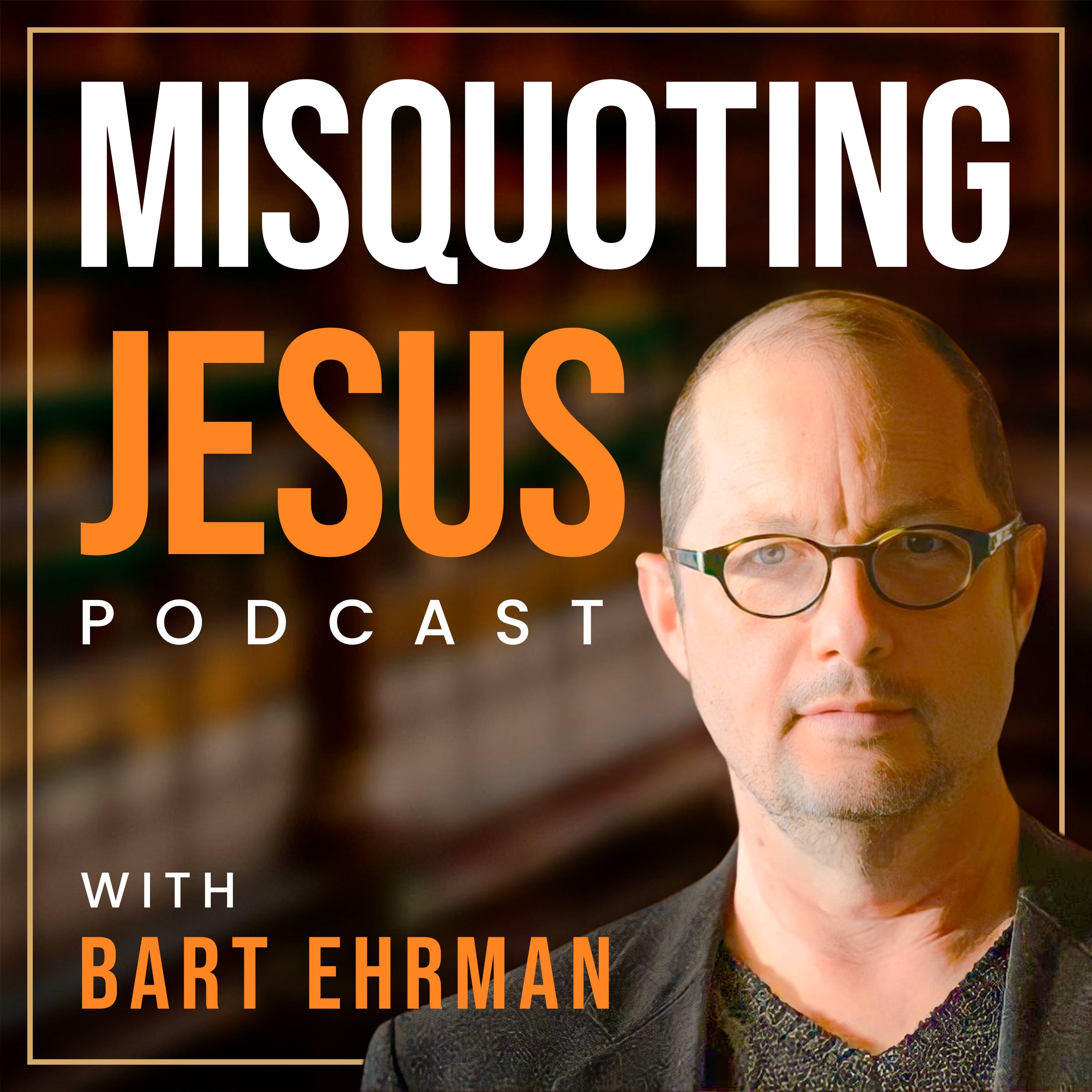
Loading summary
Transcript55 lines
- [00:00]
Bart Ehrman
Protegera las comunidades de los incendios forestales. Significance.
- [00:30]
Podcast Host
Hello everybody and welcome back to Misquoting Jesus. This week we are talking about the Apostle Paul, a central figure in early Christianity and someone who features strongly in the New Testament, both because he wrote a good part of it, but also as a character in the Acts of the Apostles. The question at hand today is whether the Paul of Acts is the same man as the Paul of Epistles. Does the writer of Acts change Paul's character, teachings and events he experienced? And why? Stay tuned for that and so much more.
- [01:05]
Megan Lewis
Welcome to Ms. Quoting Jesus with Bart Ehrman, the only show where a six time New York Times best selling author and world renowned Bible scholar uncovers the many fascinating little known facts about the New Testament, the historical Jesus and the rise of Christianity. I'm your host, Megan Lewis.
- [01:23]
Podcast Host
Let's begin. Bart, good morning. How are you doing today?
- [01:28]
Bart Ehrman
Yeah, doing well. I'm keeping up with my New Year's resolution of staying busy without being overwhelmed. It's a tricky balance.
- [01:37]
Podcast Host
It is, it is. I feel like I tread the tightrope of overwhelm and just busy enough and usually fall off into the overwhelm side of life. Yeah, but that's me.
- [01:48]
Bart Ehrman
Well, you know, I hear you.
- [01:49]
Podcast Host
Yeah, we're talking about Paul today. As I said in my introduction. Why do you think it's important to talk about the different natures of Paul that are depicted in Acts and through the epistles?
- [02:01]
Bart Ehrman
Well, you know, it kind of depends what matters to people, to people who are interested in either the Bible or early Christianity. It turns out to be a fairly crucial question because as you were saying, Paul's extremely important for Christianity. I mean, how big can he be? Of the 27 books of the New Testament, 13 claim to be written by him. Most of the missionary work we know about spreading Christianity throughout the Roman world, we know of early on was his work. He's the major theologian of early Christianity and of Christianity for all time. And so naturally we'd like to know something about him. Next to Jesus, he's the most important person in the history of Christianity. But our only sources of information are the few letters that he wrote. And you know, it's kind of hard to know much about somebody's life just by reading a few of their letters and the book of Acts, which gives a narrative description. And so a key question among scholars has long been are these descriptions in Acts of what Paul said and did, are they accurate or not? Because if they are, then we know a good bit about this person. And if they're not, then what? Then what do we really know about him?
- [03:12]
Podcast Host
What role does Paul play in the Book of Acts?
- [03:16]
Bart Ehrman
Well, he plays a major role. The Book of Acts, roughly, it can be divided up in different ways, but one of the ways is to think about, like, who the main characters are. The book of Acts is 28 chapters long, and in the first 12 chapters, the major figure is Peter, the Apostle Peter with a couple of the other disciples, sometimes like the apostle John. But the rest of the book, from chapters 13 through 28, are almost entirely about Paul. He actually converts. Before that, he converts in chapter nine, and then he takes over 2/3 of the narrative. And so he's a major figure in this book. And obviously he's the hero, the author.
- [03:53]
Podcast Host
Would the writer of Acts have had access to the epistles of Paul?
- [03:58]
Bart Ehrman
Ah, now that's a much debated question. The normal assumption among general readers is, well, of course he did. People tend to think that, that this author was a companion of Paul who traveled with him because of a few passages in the Book of Acts where he talks about himself as being with Paul. And so they assume, okay, so he was with Paul. And if he was with Paul, he must have read his letters. And it's usually thought that Acts was written after most of these letters were written. And so of course he read the letters. And so that's kind of a natural assumption. And it's an assumption that is shared by a number of scholars. But a number of other scholars, including me, do not think that the author of Acts had access to Paul's letters, or if he did, he shows no evidence of it. He actually never mentions Paul writing letters, first of all. Second of all, he doesn't quote from any of the letters. Third, many of the things that Acts himself says run contrary to what Paul himself says in these letters. We have. So those are three reasons for doubting it. But there's a complicating factor, which is that Paul, we have seven letters that we're pretty sure he wrote, but he must have written hundreds and hundreds of letters. You ask, did the author of Acts know Paul's letters? Well, maybe he knew other ones, but it doesn't show much evidence of knowing these.
- [05:18]
Podcast Host
If he did not have access to the letters, do we know what other sources he may have had for Paul's theology teachings, the events he experienced?
- [05:28]
Bart Ehrman
We don't have solid information. There are good reasons for thinking that the author of Acts had access to a variety of sources of information for Paul. One reason for thinking that is because sometimes he'll tell the same event connected with Paul a couple of times. The most famous one is Paul converts, as I said in chapter nine. And Luke narrates what happens at that event. In chapter 22, Paul is standing on trial. I'm going to keep calling him Luke, even though we don't know what his, who it was. Luke narrates while Paul describes his own conversion. And in chapter 26, Luke again describes Paul describing his conversion. So we have these three, actually three narrative accounts of Paul's conversion. And there are contradictions between them. They seem to be flat out contradictions about who saw what when and what they're instructed to do and whether they did it. And like, it's like just like contradictions, not just like add ons. And so one solution to that is that the author had heard various accounts that had many things very much similar but details different because it doesn't make as much sense that he would just like willy nilly contradict himself. Maybe he did, but so that's a suggestion possibly that he had sources of information. Another possibility, there are some passages that look like they maybe don't fit in with the other. So maybe they came from a different source.
- [06:51]
Podcast Host
Why would the author include different accounts of the same action that contradict each other in a single work? That seems a little counterintuitive.
- [07:01]
Bart Ehrman
It certainly does. And the reason it seems counterintuitive to most of us is because most of us have probably never read student papers before or PhD dissertations by people who are like 10 years beyond Luke in terms of education. And like people do this all the time and people don't realize that. But I mean, look, you can, you can just listen to a presidential debate and within 30 seconds you'll have somebody contradict themselves. And you think, why do you do that? Well, he probably wasn't paying attention. I don't know. He had some reason for doing it. And so authors do that. And so it is possible that somebody contradicts themselves. And it happens frequently even today it seems implausible today because we have ways of checking things like that. If you write a book, you've got a copy editor and you've got a general editor and you've got somebody's like you've got people reading over this and you have readers for it. And like the, the thing path is by a hundred eyes before it gets published. And even then you find contradictions. And so it seems implausible, but it's actually not that he could tell the story, forgot exactly how he Told it before and then, like, changed a few details.
- [08:09]
Podcast Host
What are some of the important theological points that Paul makes in the Book of Acts? Or maybe some of the main ways that he's characterized as a person?
- [08:18]
Bart Ehrman
So I'll start with his characterization as a person, because, like with most things in Acts, there are broad similarities with what Paul says. But when you dig deeper, you realize, wait a second, that is really quite different. I'll just give one example of that. Paul, of course, himself, in his letters, talks about being born and raised Jewish and being a very zealous follower of the Jewish law before he became a follower of Jesus. And when he goes on his mission field, he tells us that when he's with Gentiles, he lives the life of a Gentile, and when he's with Jews, he follows the life of a Jew. And he says this in 1 Corinthians, with Jews, I'm a Jew. Gentiles, I'm a Gentile. So he realized that his salvation that came through the death of Christ, freed him up from having to keep the law, if it was convenient not to. When you read the Book of Acts, you don't get that view at all. In the Book of Acts, Paul is stalwart. He never breaks the law, and he insists on not breaking the law. People accuse him of breaking the law, but in fact he never does. And. And it becomes a major theme because he ends up being arrested in Jerusalem. The last part of Acts is about him being thrown in jail and serving out long jail sentences and defending himself. And so his going to jail is a big deal, but it surrounds the fact that people were accusing him of breaking the law. And Acts goes out of its way to show that Paul never did. Well, Paul himself said he did. And so Acts is molding his character in a way that is trying to defend Paul against charges against him.
- [09:54]
Podcast Host
Do we see theological disparities in Acts?
- [09:58]
Bart Ehrman
I think we do. I think rather serious ones. One example that most people will never have noticed, at least in my experience, I know very few people who have just kind of read the Bible and realized this. Paul preaches a number of sermons in the Book of Acts to convert people, and he's massively successful converting people based on his message of Jesus. Paul himself, in his letters, describes what his Gospel message is when he preaches to people about Jesus. And so you can compare what Paul says is his central message in his own letters with what Luke portrays his central message to be in his sermons to convert people. And the very striking thing is that Paul, in his Letters is emphatic that the reason Jesus death brings salvation is because it pays the price of sins. It's an atonement for sins. Jesus death is what reconciles God to people. So it's an atoning sacrifice. It's like a sacrifice for sins paid by someone else. That's Paul's emphasis that you see, for example, very clearly in Romans 3, for example. So, okay, so that's Paul's emphasis. When you get to the book of Acts, Paul preaches a good bit about Jesus and his death, and he never talks about it as an atonement for sins. Paul has the same view in Acts that the other apostles have in Acts when they preach. When Peter preaches, for example, which is that when Jesus died, it made people realize that they had just killed the Son of God. Jesus death made them realize that an innocent man died. And that makes them feel guilty before God, and it forces them to repent of their own sins because they realize how guilty they are before God by the fact that something horrible had happened to the Son of God. It makes them become introspective and realize they've sinned. So the way it works in Acts is Jesus death brings salvation because it makes people realize they're sinful and they repent of their sins and God forgives them. It's not because Jesus death atones for their sins. He doesn't pay the price for other people. It's that God forgives people who repent. That's also the doctrine of Jesus himself in the book of Luke, unlike Mark and Matthew and John, where Mark, Matthew and John all emphasize that Jesus death is an atonement for sins. Luke doesn't have that, the Gospel. He has that God forgives sins when people repent. And he has that message in Acts. And even Paul preaches that message, even though we know that wasn't his message. He himself never talks about repentance leading to forgiveness. In his letters, he talks about atonement for sins.
- [12:42]
Podcast Host
I suspect it's impossible to know for certain. But do scholars have an idea or a theory as to why the writer of Acts would be changing Paul's theology so drastically? Or maybe a better question, did he understand that he was changing Paul's theology? Or was Paul a convenient character? He didn't know Paul's own theology, but this was a good way, a good vehicle to get his own point across.
- [13:08]
Bart Ehrman
Yeah, I wish we had the answer to that, but we obviously don't because we don't know what was going on in Luke's mind. The author's mind. I will say that still today most people who talk about Paul misrepresent him. People say things about Paul that just aren't true. You know, I frequently have people say that, you know, Paul's off the the law of the Jews was awful and that Jesus came to save people from this awful law. And Paul says the law is righteous and the commandments is holy, righteous and good. Paul affirms the law, but people misrepresent him as saying something he doesn't say today. Widely, I think that people doing that aren't consciously doing it. They don't realize that's actually not what Paul says. They've just never noticed what Paul really said, even though they've read it a hundred times. I don't know whether the author Acts knew that he was misrepresenting Paul. So there's no way to know. My sense of it is my guess is that this is somebody who was raised in a church that had allegiance to Paul and Paul was seen as the hero. But just as people changed how they understood Jesus, they understood how they understood Paul and they said Paul said things he didn't say. And so he just probably raised thinking this is what Paul taught. And as I said, he probably didn't have access to his letters or if he did, he doesn't show any evidence of it. And so he's portraying Paul the way he's heard about him. And it may not be that somebody intentionally changed it in order to lie or to deceive it. Maybe just how they that's how they heard it, even though it was wrong.
- [14:37]
Podcast Host
Excellent. Thank you. We are going to take a very brief break. We'll be right back to look at if there are differences in what Paul does, the actions that occur, and why that might be.
- [14:47]
Megan Lewis
Were the early Christian apostles as unified as they seemed? What if Peter and Paul, the two towering figures of early Christianity, were actually bitter rivals? The truth might surprise you in the free course Did Peter Hate Paul? Join New Testament scholar Dr. Bart Ehrman as he unpacks one of the most intriguing debates in Christian history. While the Book of Acts paints a picture of harmony between all the apostles, other early Christian writings suggest there was deep seated conflict. Did Peter truly resent Paul for his radical teachings? Why do Paul's letters hint at a heated dispute that remains unresolved? In this course, you'll explore these questions and more, diving into lesser known texts and uncovering the evidence behind this historical mystery. Ready to discover the hidden tensions that shaped early Christianity? Visit barterman.com peterandpaul to sign up now for free access. And as a bonus, you'll receive lifetime access to the course, including lectures, Q and A sessions and more. A $30 value. Again, simply visit barterman.com peterandpaul and it's yours at no charge.
- [16:04]
Podcast Host
So we've spoken a little bit about the things that Paul says. Some of the theological disparities between Acts and what Paul writes in his own letters. And how about events? Are there differences in what Paul says or experiences? Maybe in Acts, when you compare to the Epistles?
- [16:21]
Bart Ehrman
Yeah, again, there are. And again, it's a similar sort of thing where the broad picture sounds pretty similar, but when you start getting down into it, you'll find detailed differences, like lots of little detailed differences in why, wow, that's interesting. But then, in addition, you actually get some big differences. You know, the detailed differences are things like in the book of Acts, when Paul goes to Athens, he absolutely says he went by himself, and Timothy did not go with him. It says that quite clearly. Timothy did not go with him. When you read 1st Thessalonians 3. 1, it's clear that Timothy did go with Paul when he went. And so, you know, who cares? It's a tiny thing, but it is a thing. But there are big things. One that's always struck me as being particularly significant has to do with Paul's conversion. Paul himself doesn't say a lot of things that you get in Acts that people are familiar with. And one of them is Paul was on the road to Damascus when he was blinded by the light and he saw Jesus. That's the account in Acts that Paul's going to Damascus to persecute Christians, drag them off to jail for being Christian, and he sees the light and he's blinded by the light, and Jesus appears to him, and so on. And in Acts, what happened then is once he's blinded by the light, he confers with a Christian in Damascus, Ananias. When he leaves Ananias, who leaves Damascus, he goes straight to Jerusalem to talk to the Apostles. And so he goes, goes to Jerusalem because the disciples are there. Peter, James, and John, those people are there. So he goes there to consult with them. And so that's how it starts. That's in Acts, chapter 9. Paul tells of this event, of his becoming a follower of Jesus, and he agrees. He says the things Acts did which that he was a persecutor of Christians and that he was opposed to Christianity and that he had a revelation of Jesus. But according to Galatians, Paul indicates. He says that God revealed his Son to him, which is usually taken to mean that Christ appeared to him. Because elsewhere in 1 Corinthians, he said he saw Jesus. So he sees Jesus. But then he says, I did not confer with flesh and blood when that happened. Well, act says he immediately went and talked to Ananias. Paul says, no, I did not. I didn't talk to anybody. And then he says, and I did not go up to Jerusalem to consult with the apostles. Three years later, it's like, wait. And he says, actually when Paul says that, he says, before God, I'm telling you the truth. So Paul swears to God that he didn't talk to anybody and did not go to Jerusalem, that he was gone for three years. When you read the book of Acts, it's not the way at all. The first thing he does after he converts is he consults with somebody and then he makes a beeline to Jerusalem. The reason this matters is because people in Paul's day were saying that he got his message from Jesus own apostles, but he changed it. He altered their message into his gospel about how gentiles don't have to keep the law. And Paul is emphatic that didn't happen. So you could say, well, you know, maybe Paul's lying about it because he says, I swear to God, I'm not lying. Maybe he's lying about it. That would explain it. I think the easier solution is the Acts written decades later just got the story messed up. But it's an important. It's a rather important point. Did Paul get his message from Jesus, or to think he got his message from Jesus? Or did he pick it up from the apostles and then change it?
- [19:54]
Podcast Host
Does the version in Acts have any ramifications for the message that Luke is trying to present in the Book of Acts, or is it just a straight up mistake?
- [20:05]
Bart Ehrman
No, it's hugely important for Acts. One of the themes of Acts that we haven't talked about much is that the early Christian church was completely unified on every major point, that the leaders of the church all got along, that they all agreed that there was no friction between Peter and Paul and James and Barnabas, and like they were. So there are incidents where things. Things look like they could break open in Acts, but they get healed over very quickly. And there are people outside the apostolic band who call themselves Christian, who cause problems. But in every case, God works through the apostles to bring unity to the church, and there's no conflict. Part of that is that Paul went and consulted with the apostles right away. They agreed he went on his mission. He came back after his first missionary journey came back. They had a conference in Jerusalem where Peter and James and all the others themselves indicate that what Paul's preaching is absolutely right and true and we support it completely. When you read Paul, that is not the idea you get at all. Peter and Paul have a major knockdown, drag out argument in Antioch where Paul accuses Peter publicly of being a flat out hypocrite and yells at him. And Paul interestingly records the argument, which is about Paul's mission to Gentiles. Paul reports the argument and doesn't report the outcome. He doesn't say, yeah, and all those people in Antioch, they agreed with me. And then Peter repented and you know, and so he doesn't say anything like that. He ends with what he told Peter calling him a hypocrite. And that's the end of the story. And you wonder, well, what happened then and who did people side with? It's not that Paul says that Peter and James and the others disagreed with his basic idea that Gentiles could follow Jesus without becoming Jewish. Paul indicates that he in fact convinced them of that, although he suggests he kind of had to twist their arm about it. But Peter and Paul disagreed with the implications of that, which were rather severe because Peter insisted the Jews should keep their Jewishness. And that means they could not eat meals with Gentiles, which means they couldn't have like fellowship together. They couldn't even have a Lord's Supper together. And that's what drove Paul crazy. When you get to Acts later, it's not like that at all. They're all buddy, buddy, chummy, chummy. There's no split at all. And so it looks like Luke is trying to cover over a lot of the disharmony in the early church.
- [22:40]
Podcast Host
Does it seem as though Luke also changes aspects of Paul's theology to be more in line with maybe what others were teaching to kind of smooth over these rifts in the Book of Acts? Or does he just not mention things that are points of contention?
- [22:56]
Bart Ehrman
Well, there are a couple things here. One is that Paul and the apostles do preach the same message. So much so that if you read Peter's sermon in Acts chapter two very carefully and then read Paul's sermon very carefully In Acts chapter 13, Peter's sermon is on the day of Pentecost to Jews in Jerusalem. Paul's sermon is in chapter 13 on his first missionary journey preaching to Gentiles. If you actually compare those sermons, they are lined up line to line. They're preaching exactly the same thing. So you have that. The other side of this, though, is that not only has he changed Paul's message to coincide, it's coinciding with Luke's own message. The reason Peter's message sounds just like Paul's message is because both of them are being recorded by Luke and the message is Luke's message. But the other thing that Luke does is that he shifts Peter and James preaching to coincide with Paul's in places rather than the other way around. It's not that he's changing Paul's preaching in the Book of Acts. This is really quite remarkable. Paul himself is the one who says that Christ revealed to him his Gospel, that Jew and Gentile were equal in Christ and that Gentile followers don't have to keep the Jewish law. This is revelation given to Paul in the Book of Acts. Peter learns this first. Peter is instructed by God to go convert a Gentile centurion named Cornelius in chapter 10. And God gives Peter a vision which he shows him that it's not important to keep the kosher food laws anymore. And Peter begins preaching this before Paul does. And so Peter is the one who first realizes this Gospel message. What Luke is doing, he's not just showing that they're harmonious. He's not showing that Peter ends up agreeing with Paul. He's saying Peter got it first, so that the harmony is absolutely solid.
- [24:58]
Podcast Host
That's interesting. Would that have served to then bolster Paul's message outside of the Book of Acts among other communities?
- [25:07]
Bart Ehrman
I think part of the issue that the author of ACT is trying to do is to show that there's harmony among the Apostles, even Peter and Paul and Paul and James, so that there should be harmony among the communities and that this is what being Christian is. The spirit of God provides this harmony.
- [25:24]
Podcast Host
And.
- [25:24]
Bart Ehrman
And so if there is disharmony, then the problems need to be worked out because this is a harmonious community. And I think what it's trying to do is to take the points of view that you might get, say, among the Jerusalem apostles about how important it is for Jewish followers of Jesus to continue being Jewish. Trying to harmonize that with Paul's view that Gentiles don't have to keep the Jewish law and deal with the problem. Then what do you do in communities that have both Jews and Gentiles? How do you survive together as a unit? The author of Acts is trying to emphasize, basically, he's telling the Jews that you need to be letting these Gentiles be Gentiles and you yourself, it's not that important for you. You don't want to divide the church about this. So a lot of this is about church harmony, even though the author knows that there are conflicts going on over these very issues.
- [26:14]
Podcast Host
I have one final question to wrap it up. We've seen through this conversation that the author of Acts has changed a substantial amount of what Paul said, or if not knowingly changed it, put his own words into Paul's mouth. Does it seem as though the Paul of Acts is an entirely literary creation, or do you think it's still very much rooted in an historical figure?
- [26:42]
Bart Ehrman
Yeah, well, that's a tough question. It's a good one. You know, when somebody today writes historical fiction and so you sort of spin off. You spin off a tale from a historical figure. A lot of times when people do that, a lot of times people tend to be more historical in their orientation and try and keep the kind of fictional parts of it to a minimum. And other times they use the kind of, you know, the history as kind of a basis from which to spin off completely fictional tales. And so you could write historical fiction in different ways. So basically, that's what we're asking about the Book of Acts. Where does the line up on that spectrum? And I think he actually meant to be recording what he understood Paul said and did. I don't know for sure. We can't tell what was going on inside of his head. I don't know if the author of Acts was consciously changing things, but in the broad scheme of things, the basic foundational story is historical. There was a Paul. He was a persecutor of Christians. He ended up having a revelation of Christ where he claimed to see Jesus, and it led him to missionary work. And his big emphasis was that Gentiles don't have to keep the Jewish law to be followers of Jesus. You know that. And many other things are historical, many of the places he went historical, people he saw historical. There's a lot of historical stuff, but there are a lot of differences in details that show that he's not a historically accurate reporter in the way we think of historical, accurate reporting. In other words, when people say, look, you can't blame him for that. He lived in the ancient world. I'm not blaming him for that. I'm asking, can we trust the details as something that happened or not? And I say, in probably most cases, certainly many cases, the answer is no. Moreover, there are some very big things where he gets it wrong. If by right you mean the things that really happened, what Did Paul really preach? Did he preach atonement or not? Yes, he did. Does Luke say he did? No, he does not. Did Paul go straight to Jerusalem to find out the gospel from the apostles? Well, Luke says yes. Paul says no. I think Paul's probably right on that one. There are big issues so that it's both. It's a strange thing, like historical fiction is where it's both history and it's fiction. And the task of the historian is to figure out which is which. The task of the literary scholar is to ignore what happened in history and appreciate the story for what it's trying to teach. Those are two different tasks, and I think both of them are extremely important, but it's also important to keep them distinct.
- [29:11]
Podcast Host
Excellent. Thank you very, very much. We are going to take a very brief break. We'll be right back with some upcoming announcements. And then Bart has a book recommendation for everyone. And we love Bart's book recommendations. So stay tuned for that.
- [29:27]
Bart Ehrman (Weekly Update Host)
This is Bart's weekly update where we get to catch up on all the latest about Dr. Ehrman's book releases, speaking engagements, ehrmanblog.org happenings, and online courses launches.
- [29:41]
Podcast Host
So we mentioned a couple of weeks ago, Bart, that you have a course coming up specifically on the Book of Acts, which is what inspired this episode. You're going to be doing a live recording on November 9th and 10th of eight classes. So that's going to be like two days of amazing information. What are you particularly excited about sharing with the audience?
- [30:02]
Bart Ehrman
Well, you know, I've been thinking about this because, you know, I thought, eight lectures, okay, that'll be great. Then I thought, man, you're just going to be scratching the surface. It's like the things you and I have been doing have been great because they're getting the big issues out there. But, man, we're kind of scratching the scratches of the surface with this. And for that, I was thinking, man, I need to do a full semester course. And I remembered actually when I was in graduate school, when I first graduate school course was an entire semester on the Book of Acts. We got beneath the surface, but not that much. I mean, it's like there's so much to talk about, about, you know, what this author is trying to accomplish, why it's important he writes the first history of Christianity. And it's the only history of Christianity, really, we have for another 200 years. And so it's important, important both for seeing how he understood how Christianity spread, but also looking at the historical issues. How right is he? So this eight lecture course, I'll be dealing with all sorts of aspects of that. Probably have a talk about who actually wrote this thing and what we know about him and when was he writing. Turns out there are debates about that we didn't get into here. There are a lot of scholars who think that he was not writing until the 120s. Like in other words like 60 years after Paul's dead. And you know, the conservative scholars say, oh no, he's writing in the 50s or something around the year 60. And so they're just these disputes. So we have to deal with all of these things. And I'm really looking forward to it because there's so much in this book of Acts that is very fruitful to talk about that I think it'll be a very, very exciting course.
- [31:24]
Podcast Host
I think it'll be wonderful and we definitely try our best with the podcast. But really, 30 minutes is not, it's not a lot of time to get into some of the more complex information and theories and historical nuances that exist with these kinds of topics of study.
- [31:38]
Bart Ehrman
But you know, the complicated. You can't get deep in the weeds until you kind of approach the pool and you just, I think the questions you're asking are spot on because it gets us to like what's going to explode into even more interesting issues. But you can't get to those more interesting ones until you get these basic ones down.
- [31:54]
Podcast Host
Absolutely. Now if people are interested, you can go to bart ehrman.com ACTscourse the cost for the class is $59.95. Again, you can get the discount using the code mjpodcast or and we mentioned this a couple of weeks ago, the Axe course is also included for free inside of the New Biblical Scholars Academy community. So $39.95 gives you access to all of the courses within the BSA community. That includes the actscourse and Mark Goodacre's Synoptics course. There'll be obviously more things being released in the coming months and years. And if that is interesting, but you're not entirely sure if you want to take the plunge and commit, you can also sign up for a free 14 day trial membership if you go to Bart erman.com forward/BSA. That kind of lets you have a taste, work out if this is something that you're going to use, find useful and interesting without really committing to that monthly payment. So highly recommend you take a look at that. And if you don't feel like joining a whole community of like minded people interested In Bible scholarship, I mean, that's your choice, but you can also attend the Acts course just as a standalone thing. So take a look at that, let us know what you all think.
- [33:10]
Bart Ehrman (Weekly Update Host)
Seeking to expand your knowledge of biblical studies. In this segment, BART shares influential works shaping biblical scholarship. It's time for Barth's books.
- [33:24]
Podcast Host
We have a book recommendation. Bart, what book are you recommending for us today?
- [33:29]
Bart Ehrman
I often get asked about reference books for people and it occurred to me, like, one of the things I really should stress with people, the importance of getting really solid reference books. If you're interested in anything connected with the Bible or early Christianity, there's this major six volume work called the Anchor Bible Dictionary. It's a little bit dated now in the sense that, you know, it was actually, it came out in 1992, but it's still, it is the best thing going for anything having to do with the Bible. You can look up any article on just about anything and you're going to find a long, a reasonably sized article with bibliography written by a world expert. And so for the Book of Acts, for example, you just look at Acts in the Book of Acts and you'll, you'll find this long article that describes all the themes, the connections with Luke, the possible date, the possible author. And it's like, it'll just give you all that in one place. And you know, and you can look up Paul. There'll be multiple articles on various aspects of Paul, but you can also, you know, you look up Apollo or you look up like some minor figure in the Book of Acts. You know, you say, wow, what is that? And then you know, Simon Max Vegas and you look that up and you have an article on it even though it's old. And so there may be scholarships developing since then, but I still turn to it if I want to look up something like Caesarea, you know, I think, oh, now let me remember, I'm wondering something about Cesarea. I look it up. Okay, yeah, there's information and so it's an extremely valuable tool that every biblical scholar has sitting on their shelves. But it's also a material that I recommend to lay folk and those who get it find it very helpful. It's, it's six volumes and they're big volumes. You can probably find, find used copies to buy, I would assume. And if you've got the cash, it's really worth the expenditure because it is a place I go to all the time still and I often refer people to it. So it's called the anchor Bible Dictionary. 6 1.
- [35:20]
Podcast Host
I'm just going to say we have a set sitting on our bookshelves downstairs and I think we pieced it together from like ebay and a books and you can do it. You can find used copies that are in fantastic condition because it's a reference book. It's not going to be put in someone's book bag and hauled to and from a university campus. It's a fantastic resource and like you, it's what Josh will often turn to first when he's writing a new book or article or video script or something similar. Fantastic reference research.
- [35:47]
Bart Ehrman
Well, and it also has stuff on Ancient near east. You know, it has stuff on assyriology in it and it has stuff on, I mean, not as extensive as biblical stuff, but it has some stuff anyway. And early Judaism. It's worth checking out.
- [36:00]
Podcast Host
It is. Thank you so much for that recommendation, everyone. If you're interested, I would suggest you go and take a look and see what you can find on the wonderful thing that is the Internet now. But before we finish up for the day, could you just remind everyone what we've been talking about?
- [36:15]
Bart Ehrman
Well, we've been talking about the portrayal of Paul in the Book of Acts. Acts is our only narrative that discusses Paul's life and teachings from the early church that is within the New Testament and the only one that's semi historical. And we were talking about its historicity. How historical is it when you compare Acts with what Paul says? What are some of discrepancies in what he says and what he does and what he believes? And so it's an important issue because Paul is a critical figure for the history of all of Christianity. The more we can know about him, the better. People sort of unreflectively assume that what Acts says about Paul is historically correct, but there are problems with that. And so we're just dealing honestly with some of the critical problems that Acts poses for understanding the life and teachings of Paul.
- [37:05]
Podcast Host
Bart, thank you so much. Audience as always, thank you for listening. I hope you enjoyed the show. If you did, please subscribe to the podcast to make sure you don't miss future episodes. Remember, you can use the code mjpodcast for a discount on all of Barth's courses over at www.bartehrman.com misquoting Jesus will be back next week. Bart, what are we talking about next time?
- [37:27]
Bart Ehrman
Next time we are continuing with Paul with the question what did he actually write? We've got 13 books that claim to be written by him in the New Testament. Another the Book of Hebrews was included because church fathers thought he wrote it. And we have letters from outside the New Testament that claim to be written by Paul. Why not? If we've got first and Second Corinthians in the New Testament, why do we think Paul did or did not write 3rd Corinthians outside the New Testament? So we'll be talking about all those kinds of issues and how we go about deciding what did Paul really write?
- [37:57]
Podcast Host
It's going to be fun. Join us next time. Thank you all and goodbye.
- [38:04]
Megan Lewis
This has been an episode of Misquoting Jesus with Bart Ehrman. We'll be back with a new episode next Tuesday, so please be sure to subscribe to our show for free on your favourite podcast listening app or on Bart Ehrman's YouTube channel so you don't miss out. From Bart Ehrman and myself, Megan Lewis, thank you for joining us.