← Misquoting Jesus with Bart Ehrman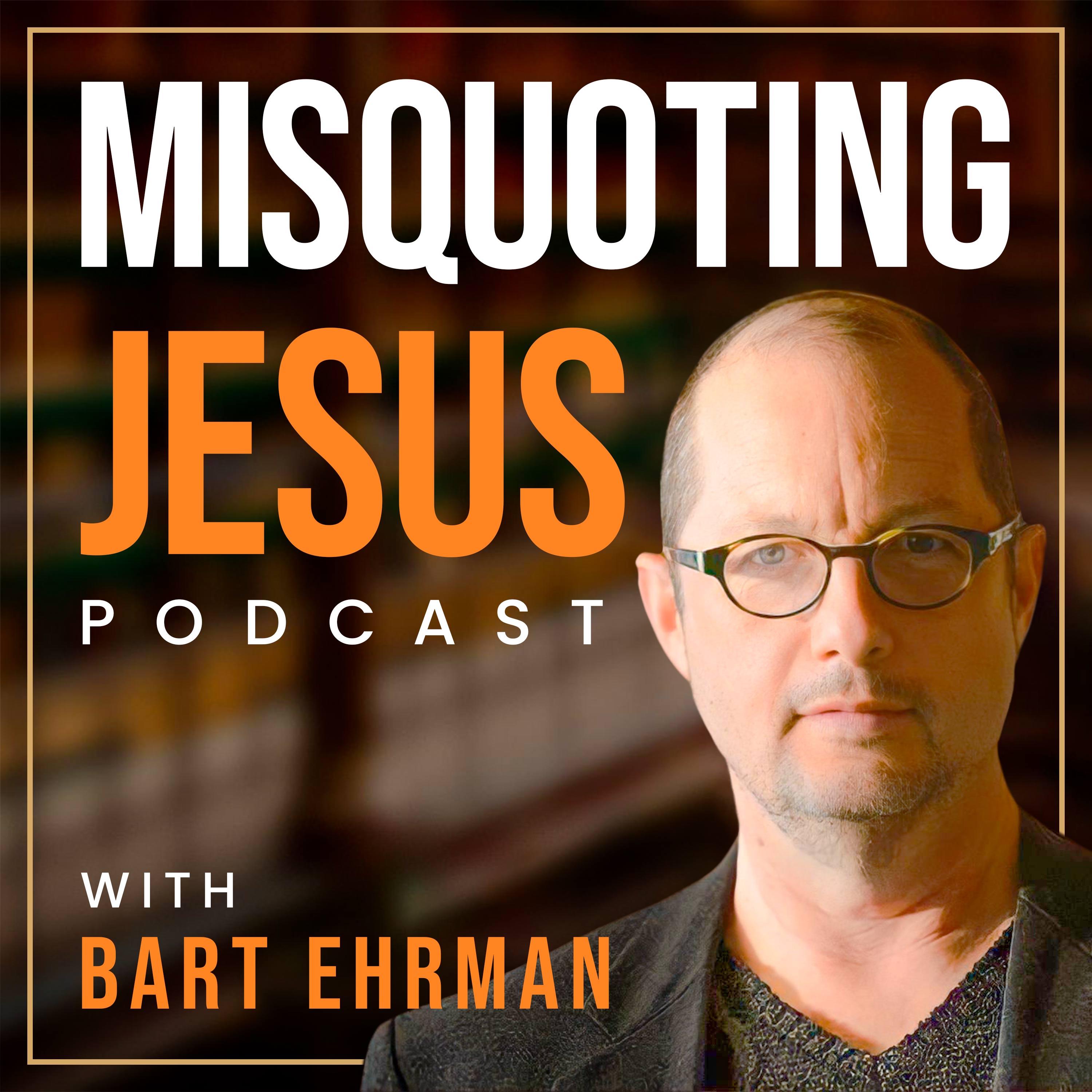
Loading summary
Transcript42 lines
- [00:00]
Grow Therapy Advertiser
We're almost halfway through the year and a lot of people are running on empty without fully realizing it. Grow Therapy helps you find care that's covered by insurance before burnout becomes the baseline. Whether it's your first time in therapy or your 50th, grow makes it easier to find a therapist who fits you, not the other way around. They connect you with thousands of independent licensed therapists across the US offering both virtual and in person sessions, nights and weekends. You can search by what matters like insurance, specialty, identity or availability and get started in as little as two days. And if something comes up, you can Cancel up to 24 hours in advance at no cost. There are no subscriptions, no long term commitments, you just pay per session. GROW helps you find therapy on your time. Whatever challenges you're facing, Grow Therapy is here to help. Grow accepts over 100 insurance plans, including Medicaid in some states. Sessions average about $21 with insurance and some pay as little as $0 depending on their plan. Visit growththerapy.com booknow to get started. That's growththerapy.com booknow growththerapy.com booknow availability and coverage vary by state and insurance plan.
- [01:16]
Megan Lewis
Anyone familiar with the Book of Revelation will tell you that it's one of the more violent, blood soaked books of the New Testament calling for the death and destruction of non believers. But what would the historical Jesus have thought of all this? Would the man who instructed his followers to love their neighbors, to give up all their worldly possessions and follow him be on board with the wholesale slaughter of those who don't fit the mold? I've got New Testament scholar Bart Ehrman with me.
- [01:41]
Bart Ehrman
Hello Megan, yes, this will be an important topic. It's the book that ends the New Testament. The climax so to say.
- [01:47]
Megan Lewis
I absolutely I am looking forward to finding out.
- [01:53]
Podcast Announcer
Welcome to Ms. Quoting Jesus with Bart Ehrman. The only show where a six time New York Times best selling author and world renowned Bible scholar uncovers the many fascinating little known facts about the New Testament, the historical Jesus and the rise of Christianity. I'm your host Megan Lewis.
- [02:12]
Bart Ehrman
Let's begin.
- [02:15]
Megan Lewis
So I think a lot of people will know we've spoken about it several times before you've written or wrote a while ago a popular book about Revelation called Armageddon published in 2023. When did you first start thinking critically about the Book of Revelation and its place in the New Testament?
- [02:32]
Bart Ehrman
I certainly thought about it uncritically for a long time before I started thinking about it critically when I was at Moody Bible Institute as a Conservative evangelical. I took a semester long course that was on, I guess it was maybe on both Daniel and Revelation put together as predicting the end of time. And I was really into that end time prediction business and used Revelation as a way of kind of showing what was going to happen at the end, which we thought was going to be within 10 years or so at the time. I guess I started critically thinking about it when I realized broadly that the New Testament was not what I had learned it was, and that it was a historical book that needs to be put into its historical context. And I realized for the first time that Revelation is not like a standalone thing, that it's the only book like it ever written that requires special rules of interpretation. There are lots of books like that written by Jews and Christians. And to understand it, of course, you need to put it in its own historical and literary context. So that was probably during my graduate work. And since then I've been a firm believer in that.
- [03:35]
Megan Lewis
So I think a good first step towards understanding a book is to think about its authority. We know that his name is John. People call him John of Patmos. Do we know anything about him other than the fact that he wrote the book of Revelation?
- [03:48]
Bart Ehrman
Well, there are things we can infer. The tradition is of course, that he was John, the son of Zebedee, one of Jesus, 12 disciples. The author does not claim that. And there are very good reasons, not only for thinking it was not that John, but thinking that this author didn't want you to think he was that John, including early on in his account. He has a vision of the throne room of God with 24 elders around the throne, worshiping God eternally. And it's usually interpreted that These are the 12 Patriarchs of Israel and the 12 Apostles. Well, this author is not seeing himself. So there are three reasons like that. So we don't really know who this person was. The things that we can infer are that he was absolutely a follower of Jesus. Near the end of the second century, there are debates about whether he had a Jewish background. I think many scholars think so. I'm not so sure. Many times you can tell something about an author by the style of writing. And this author is not a good writer. So much so that many people have suspected that maybe Greek was not his original language because he actually makes grammatical mistakes that an educated person would not make. I used to think that too. I used to tell people that. I tell students what everybody used to say, which is that he's actually an Aramaic speaker who, who now is writing in his second language, Greek. And I've come to realize that there's really very little evidence he could speak or write Aramaic, that he probably just can't write well, because like most human beings, he can't write well. What's surprising about that, I've got college students who've had about, you know, probably eight, ten years more education than he's had, and they don't write well either. So we don't know. We do know that he was, he was a prophet. In other words, someone who's understood to be a leader of the Christian community, who taught people in Asia Minor, which is modern Turkey, which would be on the. The western coast of Turkey today, and was known to the churches that he's writing to. He's writing to seven churches. He's known to them. He's known to be a prophet. He appears to be in exile on an island off of Turkey called Patmos.
- [05:55]
Megan Lewis
Do we know what his purpose behind writing Revelation was?
- [06:00]
Bart Ehrman
Well, you know, again, it has to be inferred. Throughout the book. He's emphasizing principally what is soon going to happen when God comes into the world to destroy all of his enemies. His main enemy is the empire and emperor of Rome and the Roman people. But in broader terms, his enemies are just about everybody on earth. And so the vast majority of the human population will be destroyed by God. Including Christians. Not all the Christians. The Christians who have the point of view that John himself represents will be saved and be given glory, glorious rewards. But other Christians, along with all the Jews and all the pagans, will be viciously destroyed.
- [06:47]
Megan Lewis
Could you talk a bit about the point of view that one must have in order to avoid absolute and eternal destruction?
- [06:53]
Bart Ehrman
Well, it's quite clear from this author that somebody has to be a devout follower of Jesus and that anyone else is the enemy. Jews are the enemy, pagans are the enemies. But following Jesus requires certain approaches. For one thing, it involves a good deal of religious enthusiasm in the sense you need to be vigorous about your faith and willing to die for your faith. Those who are not are lukewarm and Christ will cast them out. There are certain views that have to be accepted. This author understands that Christ and God, they're equal in a sense. They're both the beginning and the end. Christ is an all powerful divine being and you have to obviously have to agree with that. There are certain kinds of behavior that are required. Those Christians who think that it's okay to eat any meat that has been offered to a pagan idol are completely wrong and going to be damned. For eating meat that they've obtained at the marketplace. So just, you know, you have a meal with your family and you buy some meat from the marketplace and it had been sacrificed to an animal. That means you, too, will be cast into the lake of fire. Even though you're a devout Christian, he's morally very strict, religiously very strict and quite serious about his faith.
- [08:11]
Megan Lewis
Would you say then that the destruction of the unworthy is one of the key messages of Revelation?
- [08:17]
Bart Ehrman
Oh, yeah, I'd say in some ways it's the main point. The author himself describes the book as being about the wrath of God. And so that's how he understands his book, that it's how God is going to pour out his wrath very soon, and that everybody, except for. For the very close followers of Jesus who do it correctly, everyone else is going to be destroyed.
- [08:40]
Megan Lewis
And what kind of role does Jesus play in all of this?
- [08:45]
Bart Ehrman
So Jesus is portrayed with numerous images in the Book of Revelation. Most people do not read the Book of Revelation because they think it might be too strange. Many people who start never finish, because they'd find that it is too strange. Many people who finish come out saying they didn't get it. And in part it's because there's so much symbolism in the book, but the symbolism actually makes a lot of sense if you have somebody explain it to you. A lot of my book on this is trying to explain the imagery. And one problem is that since there's so much symbolism and so much imagery that people who are trying to interpret it can come up with all sorts of ideas about what it means. And if it's not rooted in a historical understanding of when the author was writing and what people at that time knew and thought about, then you're not going to. You're not going to get it. You're going to come up with something that's wrong. And so it's complicated and difficult to read for most people, but in fact, the symbolism is pretty clear. Jesus is portrayed in the book to begin with. Well, to begin with, he's portrayed as the glorious resurrected son of man who is in charge of the world. He later is, early in chapter four, he's portrayed as a lamb that has been slain. He's later portrayed as a divine warrior who comes on a horse from heaven at the battle of Armageddon. And so there are various images in this, but the controlling image is that Christ was the one who was. Who was killed by his enemies, who is now coming back in vengeance, and he is going to make them pay. For what they did.
- [10:19]
Megan Lewis
So we see Jesus as this very vengeful figure. Does John of Patmos encourage similar behavior from the faithful who are going to be saved?
- [10:29]
Bart Ehrman
You know, there have been debates among scholars, well meaning scholars, who've tried to argue that Christ and God are not being portrayed in a violent way in this book. I find that rather remarkable, I've got to say, because it is about the wrath of God. And the author tells us it's also about the wrath of the lamb. Jesus is the Lamb of God who was slain. And in this book there are people who have more sophisticated readings, sophisticated readings that try to say, look, Christ is portrayed as the innocent victim. And so it's not valorizing wrath, it's expressing that those who are victimized are going to triumph. Okay, well, so that's a nice message, but you have to read the book. What happens is the slam who is slain is the one who sends all the calamities on the earth. He is the one who sends plagues and wars and famines and slaughter. And the lamb is specifically the one who does this. And many people say, well, it's not a violent book. Yes, yeah, okay, God's doing that, but God's just. And so he has to do that. I mean, God's just. This is his justice. Okay, but they say, you know, but you know, in this book, human beings are not encouraged to be violent. And so it's not violent because it's not encouraging human violence. And that kind of makes sense unless you actually read it closely. And regrettably, some of the people who are saying this, a lot of people saying this, are scholars who can read the book in Greek, but you just wish they would read it a little more carefully. Because in the chapter 18, the people of God are told to come out of the sinful city and they are supposed to pay back double the persecutions that have been given to them. They're supposed to slaughter the enemies in chapter 18. And so there are instructions in this book for human violence against the enemies of God. And so, you know, rather than turn the other cheek or love your enemy or care for others, you're supposed to kill them. Violently kill them.
- [12:37]
Megan Lewis
Thank you. I think that covers some of the basics of the book of Revelation. Going to be back in just a minute to talk about what the historical Jesus would have thought about all of this and whether John of Patmos even realized he was quite so far off the mark.
- [12:51]
Podcast Announcer
How well do we really know the gospels that shaped Christianity? The New Testament books of Matthew, Mark, Luke, and John are the cornerstones of our understanding of Jesus, but how reliable are they as historical documents? In the unknown Gospels, Matthew, Mark, Mark, Luke, and John, join Bible scholar Dr. Bart Ehrman as he takes you on an illuminating journey through these ancient texts. Across eight captivating lectures, you'll explore the origins, authorship and historical accuracy of the Gospels in an online course. Are these accounts based on eyewitness testimony, or are they a mix of history, myth, and legend? What do historians see that most readers miss? This course is an opportunity to dive deep into the stories that have defined a faith, questioning their origins and understanding their impact. Ready to uncover the truth behind the Gospels? Visit barterman.com gospels to learn more or sign up today. Use discount code mjpodcast at checkout for a special offer.
- [13:57]
Megan Lewis
Welcome back. We've already been over some of the basics of Revelation, so now we're on to the deeper stuff, namely how different John of Patmos message was from that of the historical Jesus and what Jesus would have made of the book of Revelation. Now, before the break, you described how Jesus is portrayed in Revelation. There's some incite violence, there's some vengeful blood soaking going on. How does he compare to the Jesus that we see in the other, well, the rest of the New Testament in the Gospels.
- [14:26]
Bart Ehrman
So in the Gospels, Jesus is. There are kind of two sides to this. One is that he himself is portrayed as a pacifist. The other side of it is that he predicts that there is going to be a day of judgment coming and that the enemies of God will be destroyed. And so we need to put that out front and center. Jesus was predicting that the day of judgment was coming and people need to prepare for it by repenting of their sins so that they won't be destroyed. And so that's fair enough. That's absolutely right. I think Jesus himself did not, unlike the author of Revelation, did not propose that people engage in violence. And I think this is the clear portrayal of the Gospels. And I think historically it's right. There are people who think that Jesus was proposing a kind of violent uprising against the Romans and they can cite, you know, some passages that might support that. And I get all that. I think, though, that historically it's not right. I think Jesus was, was one of those apocalypticists who thought that God was going to enter into history to destroy his enemies, but that this is not something humans should engage in. Jesus thought that people should turn the other cheek, that people should love their enemies, they should pray for those who persecute them. I think he was concerned that you try to convert the people who are hurting you rather than try to hurt them in exchange. I think that that is very different from the author of the Book of Revelation.
- [15:54]
Megan Lewis
It is incredibly different. John of Palmos is calling for people to, like, come out of the city and violently attack those who persecuted them. Jesus says maybe try and convert them. Why do you think that John of Patmos would veer so far from what we have a record of Jesus saying and advocating for?
- [16:12]
Bart Ehrman
You have this violence thing, you have this wrath thing. I think one way to look at this is that it's not just kind of in the specifics that John says to kill the enemies and Jesus says, don't. You could say in relation, relation to that. You know, somebody could say, well, look, Jesus is saying that now, but, you know, when the end comes, when the day of judgment comes, you, you know, you enter into the. In the battle. I don't think Jesus thought that people were going to enter into the battle. I think he thought God was going to do it. But there's an overall picture that is even more disturbing in many ways than these specifics. And let me say, you know, we have barely scratched these specifics. If people want to see about this violence, just read, you know, read chapter 14 of Revelation or read chapters 18 and 19, the Battle of Armageddon, and see how this author revels in the shedding of blood. When Jesus talks about destruction coming, he never says anything about people being tormented or tortured. In the book of Revelation, Christ sends these plagues that hit the earth, and one of them is people are tortured for five months solid where they're just in excruciating pain. They can't even end their own lives to end it. That's what Christ does there, you know, so we're not talking about some kind of broad, basic things. It's violent here, not there. It's like very graphic things that are so unlike anything in the Gospels. But more than that, there are a couple big picture issues that I think stand diametrically opposed to Jesus. This violence thing I'll get to in a second, but there's another aspect of that which has to do with wealth. In the Gospels, Jesus is opposed to people being rich. It's. It's not that he says you should be generous, you know, you know, give away 10%. You know, how about, you know, give. Give a little bit to disaster relief or do. That isn't what he says. He tells people to sell everything. And he says, you can't serve two masters. You've got to choose between money and God. And people say, well, yeah, but, you know, so, you know, I mainly worship God, but I like money too. And so it's not that one should be superior to the other. It's not that you can serve God 80% and money just 20%, you can't serve two. And so it's. It's all about. Jesus is opp. To wealth, especially in a world where there are so many people in need. When Jesus says something like, you should sell all you have and give to the poor and then you'll have treasure in heaven, what people automatically think is that he means that you'll have nice mansions up there and you'll be loaded with jewels and you'll be richer than Midas. And that's what they think. And they get it completely wrong. He's not saying you're going to have material treasures in heaven. Material treasures are not the point. You're not supposed to worry about material things and you won't worry about them in heaven either. Your treasures are going to be. You're going to be given the kingdom of God where you're going to be in the presence of God and you're going to be realizing what true happiness is. And it's not in your possessions. You're not going to be given mansions. So that's what he says. But what about the Book of Revelation? It's all about wealth. God is portrayed as incredibly wealthy with all these jewels and things all around his throne. And people have these golden crowns with jewels in them. And the new Jerusalem comes down to replace this current world is a city that is 1500 miles cubed. So it goes basically from say, you know, Kansas City to New York and from Toronto down to Miami. It's that size city and it's that high as well. And it's made of pure gold with gates made of pearls. And it's like it's going to be fabulous, really wealthy. And the whole point of the Book of Revelation is that wealth is bad now because the Romans have it. God's going to take their wealth and give it to people who deserve it, his followers. It's a redistribution not to the poor needy, but to the Christians. And Christians are then going to have a glorious, unbelievably wealthy afterlife. And it's just the opposite what Jesus said.
- [20:12]
Megan Lewis
So we've got John of Patmos kind of opposing or maybe misconstruing Jesus gospel on two fronts. We've got the violence and we've got the extreme wealth. Do you Think he realized that his message was so at odds with what Jesus had said?
- [20:27]
Bart Ehrman
I doubt it. You know, every Christian thinks that whatever they happen to think is what Jesus thought. I mean, as every Christian I've ever known, they just, you know, of course, and this is what Jesus would think. And so I doubt if John knew. But the very basic ideology he has is precisely contrary to that of Jesus. When you read through what Jesus tells people about how to live, it is all about living a life of service, that you're not supposed to lord it over other people. That's what the Gentiles do. You are supposed to serve others. And so that's part of why you have the nonviolence. But also he tells people that the slaves are the ones who are great. And he says that in the end those who are great now are going to be humble then. The humble now will be great then. But it is not because they're going to be dominating anybody. It's because they're going to be serving people. Jesus washes his disciples feet like a slave and they don't want him to do it. And he says, look, if you got to do this, you're going to be my follower. It's all about serving other people and tending to their needs. And in the Gospels of course that means doing it by taking up your cross, actually going to death for it. The book of Revelation is not about service, it's all about domination. God dominates, Christ dominates. They destroy all their enemies, end up throwing them all into a lake of fire. And then what happens with the followers of Jesus, the true followers of Jesus, they then dominate the earth. They rule the earth from the new Jerusalem. They slaughter their enemies and then they rule. And so it's all about domination. And so you can see why people might like this book because you know, people like to dominate and they always have, they always did in Jesus day. And it's precisely the view that Jesus opposed. But the author of Revelation endorses it. He endorses the broad Roman view. It's just the ancient view is still the modern view that domination is good. And so I think it's completely contrary to the teachings of Jesus. And like most people today who are Christians who believe that, you know, they should exercise their power, he's got it wrong. Jesus urged service, he did not urge power, let alone exploitation.
- [22:40]
Megan Lewis
This may seem like a bit of an obvious question to people who've been paying attention, but I think it's probably a good way to wrap up the episode. What do you think the historical Jesus would have made of the book of Revelation, both how he is depicted and the kind of calls to action for his followers.
- [22:57]
Bart Ehrman
Well, he wouldn't believe it on one hand that somebody seriously thinks this is what he thought. And he would have been horrified, absolutely horrified, that this author thinks that Jesus view was that he was going to torture people and slaughter them, not just like the book of Revelation. It's not that Christ kills people. You know, kills people by giving them a sudden coronary so they drop down dead. No, no, no, no. He goes after them with plagues and diseases and with war, and he brings out the sword himself. The blood runs for 200 miles up to the bridle of a horse. That's what Jesus does to people. And. And I mean, how much opposite can you be to what Jesus himself said? So I think Jesus himself would have been horrified at this book.
- [23:42]
Megan Lewis
We are unfortunately out of time for today, but thank you. Hopefully we've managed to give a satisfying answer to why the Book of Revelation reads quite so differently to other portions of the New Testament. We're going to move on to some highlights and events, but make sure you stick with us for this week's bonus segment.
- [24:00]
Bart Ehrman
Welcome to our upcoming highlights and event segment where we catch up on Barth's courses, community updates, and all the latest news from the Biblical Studies Academy and beyond.
- [24:14]
Megan Lewis
So last week we announced a new course, the Painful Dark side of the Christmas Story, which is coming December 7th. It is two lectures with a Q and A session, and you talked a little bit about kind of what kinds of things you're going to be covering. I was wondering if you could talk a little bit about what the inspiration for this approach was.
- [24:35]
Bart Ehrman
Well, I'll tell you, I. As I've said, you know, I. I've always loved the Christmas story, and since I was a kid, I still, still resonate with it. But I think maybe a few years ago, I was just reading through the story carefully and just thinking about this incident of the slaughter, the slaughter of the innocents in Bethlehem. It's only found in Matthew's Gospel. Apparently not apparently, but in Matthew. Matthew says that the reason Herod killed all the babies was to fulfill a prophecy of Scripture found in the book of Jeremiah. And so it had to happen. And so this is an indication that Jesus really is the Messiah because it's a fulfillment of the Scripture. Rachel was weeping for her children because they were no more meaning the children had been killed. Apart from the fact that this almost certainly did not happen, there's no historical record of this why does Matthew narrate it? Because it shows that Jesus really is the Messiah. And so it's a way of kind of emphasizing the importance of Jesus as a fulfillment of scripture. But if it's a fulfillment of scripture, it means that God is the one who predicted it and then brought it to a fulfillment. But why is this a necessary thing for Jesus to come into the world? That you've got to kill innocent children and literally destroy their lives and destroy the lives of their families so that the Son of God can come into the world? What is this trying to say? And so I want to explore what, what is it trying to say? And, and not just kind of to grovel in the dark side of it, but to try and understand why does this have to happen for Jesus to make his appearance here in Matthew's view? I'm not asking really, but I mean, in Matthew's view, why is he doing this? Or does he even thinking about it? Is it like something's not important to him that innocent children died? Is that not important? That would be worth knowing or if it is important, what's it important for?
- [26:25]
Megan Lewis
Thank you. If people are interested, they can learn more and sign up@bartiman.com darkside the regular price is $24.95. Early bird pricing is good through November 23rd, and that is $19.95. As always, you can get your special discount using the Code M podcast. Now we're going to go to Barth's Scholar Spotlight,
- [26:50]
Bart Ehrman
interested in the most influential scholars of the New Testament and early Christianity. In this segment, Barthes shines a light on a scholar making waves in the world of biblical studies. It's time for Scholar Spotlight.
- [27:07]
Megan Lewis
But who are you going to be spotlighting today?
- [27:11]
Bart Ehrman
Well, you know, there are a lot of really good scholars of New Testament early Christianity. So, you know, we'll be able to do this series for a long time. I thought this time I would mention my friend, professor at Duke University, Mark Goodacre. In part, I want to mention him because, you know, we've started this thing for the bsa, the Biblical Studies Academy, where we're doing these lengthy courses, like a semester long university course. And Mark, as many people know, Mark is doing the first one of these, which is on the Synoptic Gospels. He's getting rave reviews for it. I called him up and said, you know, Mark, you know, you're making the rest of us look bad here. Can't you just like, you know, just mess up a little bit? Yeah, so it's. Apparently it's a really good course on Matthew, Mark and Luke. And the reason I chose Mark for the first one is because I knew it would be really good. Mark is a very fine scholar, and his interests, we overlap a lot in our interests. He has a really interesting focus of his interests. He's interested in what were the sources for this, that or the other thing among the Gospels, especially when Matthew, Mark and Luke all have similarities. How do you explain that? Was there a Q source? He doesn't think so. I do think so. He thinks the Gospel of John has similarities. Matthew, Mark, did they. Did John use Matthew, Mark? He thinks so. I don't think so. Did the Gospel of Thomas use Matthew, Mark, Luke and John? I don't think so. He thinks so. But he's written books on all of these things. I mean, he's written so like he's an expert on all this. Who used whom and why? Do you think so? But he's also a very. Because he's a fine scholar. He makes good arguments. And a lot of scholars don't make good arguments. I frequently have people write me and say, well, you said this, but so and so says that, and this just happened yesterday. And I won't name names, but I'll say, yeah, okay, why don't you read so and so's book and see what evidence is adduced? Because there's no evidence, this person just saying it, you know. And so Mark makes arguments. He has a very kind of refined taxonomic mind where he can kind of do all these things, make all these charts and things. And it's very interesting for people who are interested in knowing where these traditions came from, especially about Jesus.
- [29:13]
Megan Lewis
He's also a very engaging speaker, and I think he's an excellent choice for people who are maybe just getting into biblical studies because he explains things very, very clearly and very, very well now. But before we finish for the week, would you mind summarizing what we spoke about?
- [29:30]
Bart Ehrman
Yeah. This has been about the book of Revelation and the author's portrayal of God and Christ as being violent and wrathful and supporting ideologies of wealth and dominance in relationship to what Jesus himself said. That. I think that in fact, this message is not like, different from Jesus or just like a different aspect of the story. I think it's actually completely contrary to the understanding of Jesus. And so it's worth knowing that. That the New Testament ends in a very different way from the. From the way it begins. It ends in kind of celebration of aspects of the Roman world that Jesus flat out rejected, especially the idea that you should dominate others rather than serve them.
- [30:15]
Megan Lewis
Bart, thank you so much. Audience. Thank you for listening. I hope you enjoyed the show. If you did, please subscribe to the podcast to make sure you don't miss future episodes. Remember that you can use the code njpodcast for a discount on all of Bart's courses over at www.barterman.com misquoting Jesus will be back next week, but Bart won't be. I'll be joined instead by Dr. Li Jan Lin from Yale Divinity School to talk about how the Book of Revelation shaped US Immigration policy. It was an awful lot of fun. She's an incredibly intelligent woman. I hope you can join us then. Thank you all and goodbye.
- [30:54]
Podcast Announcer
This has been an episode of Misquoting Jesus with Bart Ehrman. We'll be back with a new episode next Tuesday, so please be sure to subscribe to our show for free on your favorite podcast listening app or on Bart Ehrman's YouTube channel so you don't miss out From Bart Ehrman and myself, Megan Lewis, thank you for joining us.