← Misquoting Jesus with Bart Ehrman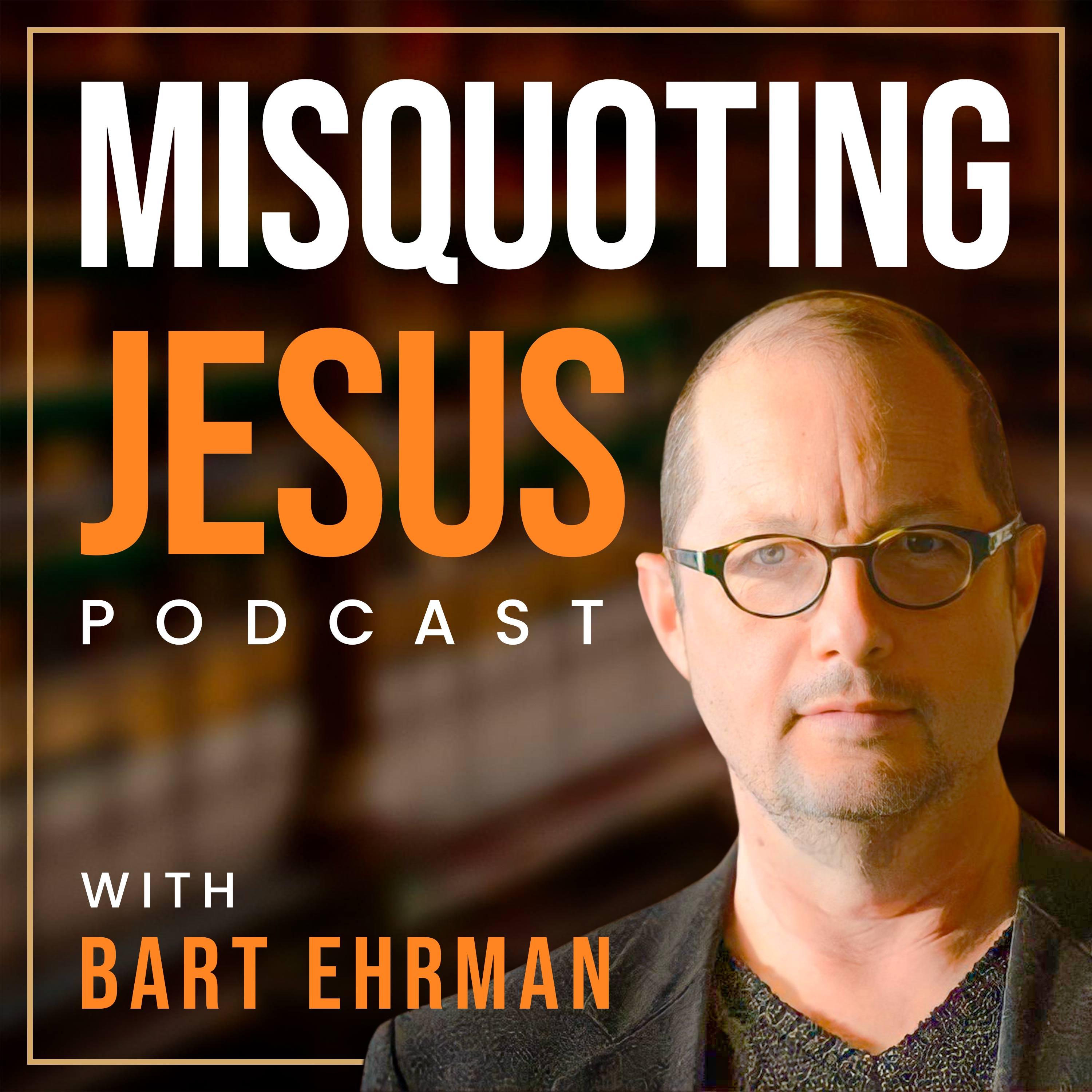
Loading summary
Transcript85 lines
- [00:00]
A
When people turn to telehealth for weight loss, they're looking for real support. That's why more people are choosing orderlymeds.com orderlymeds connects you with real doctors and access to proven GLP1 medications like semaglutide and Tirzeptatide. No guessing, just a more supportive experience and all shipped directly to your door in discreet packaging. Do your research, ask questions, then visit orderlymeds.com podcast for an exclusive offer. That's orderlymeds.com podcast. Individual results may vary. Not medical advice eligibility required. C site for details.
- [00:36]
B
Welcome to Ms.
- [00:36]
A
Quoting Jesus with Bart Ehrman, the only show where a six time New York Times best selling author and world renowned Bible scholar uncovers the many fascinating little known facts about the New Testament, the historical Jesus and the rise of Christianity. I'm your host, Megan Lewis. Let's begin.
- [00:56]
B
I'd like to welcome you to this special edition of the Misquoting Jesus Podcast. You can see Megan's not here today. It's just going to be me and a guest, Andrew Jacobs, who is going to be talking about his new book, Gospel Thrillers, Conspiracy Fiction, and the Vulnerable Bible. Before we get on with Andrew, I want to remind you, if you've heard already, or to tell you if you haven't, that this Saturday And Sunday on February 3rd and 4th, I'm going to be doing a course called the Genius of Matthew, what scholars say about the First Gospel. This will be an eight lecture course and there'll be two lengthy Q and A sessions with it. If you come to the course, if you purchase access to the course, you'll have lifetime use of it to follow. The Gospel of Matthew is a really important book of the New Testament. It's the most popular book of the New Testament, the most widely read book of the New Testament still today, probably because of its great passages, especially Jesus teachings. The Sermon on the Mount, the Beatitudes, the Lord's Prayer, the Golden Rule. These things are in Matthew. So it's a. It's a great and important book, but it's widely misunderstood and I think most people do not understand the real genius behind the book. This course will be about the Genius of Matthew and I'll be asking some really interesting questions and trying to answer them. Why, for example, does Matthew begin with with the genealogy of Jesus when Jesus isn't born into the family line? Does Matthew misquote the Old Testament or misinterpret the Old Testament in order to try and prove that Jesus is the Messiah, Jesus delivers some very strict teachings in the Gospel of Matthew and he tells his followers to keep them. Does he mean it? How could he possibly mean that? You can't get angry or you can't lust if you want to enter into the kingdom. Does Jesus, in giving his teachings, reject the teachings of Moses? Or does he teach that you have to keep the law of Moses? In some ways, Matthew seems like the most Jewish of the Gospels, but also it seems like the most anti Jewish of the Gospels. How can you have it both ways? These are some of the questions I'll be answering and trying to answer on February 3rd and 4th. The cost of the event is $59.95, but you can get a discount by using the Code MJ podcast. You'll get a discount in order to look at more information about the course and to register for it, Simply go to barterman.com Matthew okay, let's now move on to our podcast itself with Andrew Jacobs. Well, I'm pleased to have Andrew Jacobs with us here on the special edition of the Misquoting Jesus podcast. I've known Andrew for a very long time. He started his PhD program what, Andrew? In 1995 or something? Yeah, and I've known him since then. He was doing his PhD at Duke. He had me for a couple of seminars, but he didn't learn much from me because he kind of. He knew all that stuff already. Let me introduce Andrew. He is currently a senior fellow at the center for the Study of World Religions at Harvard. After he graduated in 1995, before he took this position at Harvard, he's taught at a number of places. He began teaching at University of California, Riverside and then he went to Scripps College and now he teaches some at Harvard and some at I think this semester at Boston University. Andrew is a particularly an expert on Christianity in late antiquity. His main areas are Christianity between I guess roughly the 4th to the 6th centuries or so, although he has a remarkable range. He has written three monographs all dealing with various aspects of Christianity in that period, as well as co edited an anthology of text from that period with me. He did most of the work on because it was on that period which he knows about more than I do. And he's published a translation, a book with a translation text and roughly 9 million articles. Anyway, Andrew, I'm really glad you can be with us today to talk about your most recent book, which is not particularly about late antiquity, but it's kind of related in some ways. The book is called Gospel Thrillers for those of you looking at this on YouTube you can see this Gospel Thrillers being published with Cambridge University Press. And when this podcast is broadcast, it will be out in a few days. So, Andrew, when's it coming out? Like, February 5th or so.
- [05:46]
A
It's supposed to ship to the US around February 8th is what they're saying. But it might be sooner, it might be around then. It's hard to know, but that seems to be. The target date is around the first week of February. Yeah.
- [05:56]
B
All right. So, Andrew, welcome.
- [05:58]
A
Thank you. It's a pleasure to be here.
- [06:00]
B
All right. So this thing is called Gospel Thrillers, and people won't probably know what that means because it's a term you invented, and so until they read the book, they won't know it. So could you just tell us what it means? Gospel Thriller.
- [06:14]
A
I will. So it's a term I come up with to describe a kind of subgenre of novel that began appearing in the 1960s and keeps appearing pretty regularly, such that I have about 30 of them that I talk about in this book. And they all share a plot line. There is a new gospel that's been found, or there's rumors about it. It's from the first century. It's from the time of Jesus, maybe even written by Jesus. And it's going to blow up everything we thought we knew about Christian origins. It's going to bring down Christianity or restore Christianity. And there's a race against time between the protagonists, the antagonists, to find the truth about this gospel. And there is global travel. There's international conspiracies. There's usually a Vatican assassin or two. And it all wraps up pretty neatly, as most thrillers do after a sort of whirlwind tour. Either we find the truth about the gospel, or maybe the gospel gets destroyed or disappeared or something. But generally, these are novels that allow a reading audience to fantasize about the risks to the Bible in US Culture. What would happen if someone were trying to destroy the Bible or change the Bible? What if there was some secret that's been hidden for 2000 years and it came to light? And it puts all this in the very common genre of the thriller.
- [07:31]
B
Okay, so that it sounds a little bit strange maybe at first, because when we think of thrillers, we have all sorts of thrillers, right? We have psychological thrillers that tend to be kind of making us question our own reality a bit, or we have espionage thrillers that kind of make us think about what's going on internationally and how much. How much are we in trouble. You know, a lot of apocalyptic Thrillers about. We're worried about worldwide destruction and things. So these are all things we're very much concerned about. But Gospels, I mean, what.
- [08:03]
A
What thrillers have in common is they're all about knowledge that's been hidden from us. And what would happen if some everyday Joe like you or me stumbled across this knowledge. And it's knowledge that could change the way we view the world. And so usually it's something really big like politics, nuclear secrets. The thriller really took off during the Cold War, so a lot of it was sort of east versus west, kind of Robert Ludlum, Jason Bourne, that kind of stuff. The Bible is a surprising one, but it's because the Bible is both so central to Western US identity, even for people who don't really have a relationship. The Bible, it's one of these kind of bedrock things. When you go to court, you swear on the Bible, right? It's just one of these totems of us life that is all around us. And it feels very secure. It's the Bible, and yet when you dig into it, it's not that secure. The Bible as we have, it comes to us in pieces. It comes to us sort of as you've written about, maybe sporadically, maybe edited here and there. And what if? What if? What if? This is the big question. It seems to be one of these things that feels very secure but is actually vulnerable. And that's what these novels think about. And certainly there's never going to be hundreds of gospel thrillers like there are, you know, spy thrillers. But it seems to be a really persistent genre. And by the way, these novels, to my mind, are totally unaware of each other. They just Keep appearing from 1964 to 2020. There's no, you know, I made up this term, right? I sort of spotted them and made it up. But they keep appearing year after year after year. There's something here that's really compelling about the fears and fantasies about the Bible at risk, like our nation at risk, or like our White House at risk, whatever it could be, that's totemic about U.S. identity. The Bible seems to be up there.
- [09:47]
B
So these aren't being written like they're probably Christian versions of this, probably like evangelical versions or something. But like the ones you're talking about are just. They're secular old books, right?
- [09:57]
A
These are mainstream presses. They vary in popularity from, you know, kind of pot boilers to bestsellers. Recent ones tend to appear in different series where there's already a sort of established protagonist who uncovers secrets. And this is the latest secret that he usually always he has uncovered. There are a handful that come from evangelical presses, but really not that many. Maybe like five or six. I talk about a couple of them in the book, but really it's a mainstream phenomenon. This is just something compelling about the Bible at risk, the vulnerable Bible. And that's what I talk about. And really what I try to do is not just write about these novels as a kind of literary study, but it's a kind of cultural study. What do these novels and their persistence tell us about the Bible and its vulnerability in US Consciousness?
- [10:43]
B
Okay, so most people will know about the Da Vinci Code, for example, and you're not including that kind of thing in the study, is that right?
- [10:52]
A
Yeah. We can think about the kind of larger universe of this kind of biblical vulnerability of which gospel thrillers are really the kind of central tool I used to look at it. But something like Da Vinci Code certainly operates in the same universe. What if there was some conspiratorial secret that would undermine Christian origins and everything you thought you knew about Christianity, the West, and your own identity? But what Dan Brown does in the Da Vinci Code, he just sort of works with existing materials, sometimes not very well, but he works with what he calls Gnostic Gospels and Dead Sea Scrolls, things that are out there that he interprets in a certain way and plays on those same fears and desires, but doesn't come up with the idea of a new gospel, a fictional gospel. When these novels do that, it really gives them a lot more free rein to think about the possibilities of a new discovery that could come to light, that might come to light. And there's also some nonfiction examples you could think of that work in that same universe that have been around for a while. So if you think way back to something like the Passover plot, which was this sort of, I'll say, non fiction in the sense that there's no fictional narrative, but it's this reconstruction of a conspiracy at the very dawn of Christianity to fake the resurrection or Holy Blood, Holy Grail, which is the sort of, again, I'll put in loose quotes, nonfiction book that Da Vinci Code talked about. What if Jesus was married? What if there was proof of his bloodline, and so on and so on. So all of these are in the same universe of the fears and desires about the Bible and its vulnerability. But what these gospel thrillers do specifically is focus our attention on a fictional gospel that the author has made up.
- [12:28]
B
Okay, Right, got it. Yeah. You know, I wrote a book once that I announced was, you Know, a work of nonfiction. And several people told me it was mislabeled.
- [12:37]
A
It can be a fine line.
- [12:39]
B
It can be a fine line, indeed. Yeah. So you made up this title. So I assume this is like, the first analysis of these things.
- [12:46]
A
Yeah. I don't know that anyone's ever sort of noticed them. I mean, it's. It's certainly. Look on the back of these books, they're shelved with, like, thrillers. Sometimes like archaeological thrillers, which is a kind of thing, you know, think kind of like Indiana Jones type thing. And sometimes they're in series of archeological thrillers. So there's one series where they find, like, you know, proof of Atlantis and then they, you know. And one of them is a gospel. Right. So this is one that comes up and I don't know, I almost feel like this is a kind of, like, scientific experiment, like Schrodinger's cat. Like, if I reveal these to the world, will they suddenly, like, go away? Will they ramp up and suddenly people will be claiming the title? It's. It's. Yeah, they won't.
- [13:24]
B
It's like, you know, somebody. Somebody uncovers a forgery. It doesn't stop people from forgery. It's just like, it's going to encourage people, probably. But I want to stress these are books that are out there. I mean, when I was a kid, my dad was not into, like, religion much at all. But he had several of these things. When you mentioned them, I remember seeing them on my dad's shelf just because he liked mystery novels and he liked thrillers and he liked that kind of thing. And so these were just things that were there. So you gave dates. I forgot what you said. 1964.
- [13:53]
A
1964 is the first one. Yeah.
- [13:55]
B
And which one is that?
- [13:57]
A
That is the Q Document by James Hall Roberts is the name of the author, although it turns out that was a pseudonym for a Hollywood writer. I guess he wanted to kind of bifurcate his career and have his fiction writing on one side. But this was his sort of debut novel. It did pretty good press. You know, there's. I found ads for it in the New York Times, LA Times. It was never a bestseller, but it probably did pretty respectably. It was published by mainstream presses. And it really inaugurates this genre in some ways that are very particular to this author and his interest, but also that we see recurring until, like I say, the 2000s, when this keeps going.
- [14:34]
B
So the Q Document, I think a lot of people listening to this will know about Q as a. It's a hypothetical source that Matthew and Luke used the sayings of Jesus. Is he building off people, like, having an idea of this sort of what Q is, or is it completely unrelated to it?
- [14:49]
A
Oh, no, that's the Q of the Q document. And if you want to find 15 different explanations for Q, you can just read through some of these novels because it comes up all the time. It is rarely the Q that we know or think we know from reconstructions from the Gospels of Matthew and Luke, but it is a handy placeholder for some first person authentic recording of the sayings of Jesus. So it appears in, I'd say, probably maybe five or ten of these novels, and the Q document is the first one. In fact, in this novel, there's a whole handful of documents, one of which is sayings of Jesus written in Neo Hebrew and reveal him to be. Again, this is not at all what we get from reconstructions of Q. This is not Sermon on the Mount. This is a kind of messianic warrior. So this is a reconstruction of Jesus as a kind of hardline messianic warrior fighting against the Roman Empire. And the related documents are all about what happens after he's dead. It's about, again, faking the resurrection. It's about Paul murdering someone for trying to prove the resurrection was fake. So this whole cluster of documents that just call into question everything people think they know about Christian origins and Jesus's teaching. And so the cue really acts as a kind of placeholder for, again, the what if question. What if some document came to light and it was the actual sayings of Jesus? Let's call that Q, because that's what we've called it.
- [16:11]
B
Okay, so, you know, it's a novel. It has a plot and main characters and stuff. So. So could you just kind of like, does somebody discover this thing and then like, explain how it works?
- [16:19]
A
Yeah, so we can talk about this a little bit too. I think the Cold War setting of this novel is really important as it is for the establishment of the genre. So it takes place in Japan, which is an unlikely setting for a book like this because none of the main characters are Japanese. But it turns out that the author had spent time in Japan after the war, and it does act as a kind of crossroads. So Japan in the 60s, as it's portrayed in this novel, is a place where all sorts of information and commerce is flowing through between Communist China and the West. And so the protagonist is actually a scholar, an American scholar of antiquities who, for various reasons that are uncovered in the novel, has been Disaffected from his life in the US and just transplanted to live in Japan, where he's doing piecework for a very unsavory guy, including translating and authenticating texts. Because this is a situation where texts are flowing freely along with other antiquities through this little black market empire in Japan. And one of the groups of documents has been smuggled out of China. And it is this group of documents that were supposedly authenticated by a dead rabbi who had converted to Christianity and become a Nazi during World War II.
- [17:26]
B
What's it got to do with China?
- [17:29]
A
So this is the displacement of the Cold War. Right. Things after the dissolution of the Axis powers, everything's up in the air. And these documents sort of flow on a black market. They end up in China. They get smuggled out by a priest. It's all very complicated. But the important thing is these secret routes of information and antiquities, this is what we're supposed to focus on. And of course, there's also humans being smuggled along with documents. It's the back rooms of shadowy forces after the kind of breakdown of global order in World War II, along which, among other things, these documents travel. And our protagonist is being asked to translate them and authenticate them because the unsavory person who owns them is going to have a secret auction between the Vatican and the Chinese government over who is going to have these devastating documents that could disprove Christianity once and for all.
- [18:22]
B
Oh, okay. So part of this is atheist Communism against the Vatican.
- [18:28]
A
And again, this is the kind of Cold War setting. The Cold War is East versus West. It's ideologies, as one point one character says in the book, it's not even about the people. It's ideologies fighting for the truth. Or not even for the truth, for control of the truth. It's these ideological powers fighting to control who knows what. And it turns out, spoiler alert, these documents are forgeries. They were forged at the behest of the Nazi war effort in the 40s to try to demoralize the West. And so once they're proved forgeries, they're powerless. Right. And that happens to climax the book during this secret auction between the Vatican and the Chinese representative.
- [19:04]
B
Yeah, so you get the Nazis, you get the Communists, you get the Catholics.
- [19:08]
A
Every shadowy world power converging on sleepy little Japan in the 1960s. But not that anyone can see. Right. This is all completely in back rooms. So one thing about the thriller that's different from kind of adventure novels or other kind of novels about global travel and global Powers is. It's the secrecy of the conspiracy. These are all things that are happening that you're not even aware of. And the Bible is wrapped up in that. The production of the Bible, the displacement of the Bible, the questioning of the Bible, its vulnerability is all happening behind the scenes. And it's only because someone has stumbled upon the truth that we as readers have access to it.
- [19:45]
B
You've mentioned vulnerability of the Bible a number of times. Can you explain what you mean by that?
- [19:50]
A
Yeah, this is one of the things I really came to when I was working on this project over a long period of time, the Bible as it exists. So you can go to a bookstore and you can buy a Bible. You probably have a good 15 Bibles on the shelves behind you, I'm going to guess, in all various forms. But that Bible is constructed, that Bible is invented, that Bible is pieced together very carefully by scholars, by experts over time, and that Bible undergoes revision. So right now we are in the 28th critical Greek edition of the New Testament. Right. And 29, I think, is on its way.
- [20:23]
B
Okay. So people might not know what that means.
- [20:25]
A
So go ahead, I'm going to explain. So in the 19th century, scholars began publishing an official sort of best guess that's not very right, but, you know, sort of best attempt to reconstruct an initial New Testament text, because we don't have original texts. We have copies of copies of copies of copies and fragments and so on. So this was a reconstruction based on careful, meticulous scholarly work of what that text might look like published 18 something, 1880 something.
- [20:52]
B
So scholars are using the surviving manuscripts that have differences and trying to get back to something like an original form of the.
- [20:59]
A
They're using surviving manuscripts, citations, fragments, quotations, whatever they can, plus their own ingenuity. Right. What would make sense if these are our two options, which one is more likely to be prior to the original? So that now has been Revised and edited 27 more times. So we're now in the 28th edition of that, which means that there's been enough significant change to what scholars think the Greek New Testament actually might have looked like to republish it 28 times in 140 years. And I think another version's on the way. Same with translations of Bibles. Right. So you and I, when we teach the Bible, we often work with the New Revised Standard Version, which was published in the late 80s, which was a revision of the Revised Standard Version published in the 50s. And that now has also been updated because scholars have decided through new discoveries and new methods that enough things are different in what they think the Bible should look like that it's worth publishing a new version. This is how the Bible has worked throughout its transmission is people coming up with the best version they can. What scholars don't often talk about or think about are what are the dangers in that process? It's treated kind of almost scientifically right. As we refine our instruments, we get better and better and newer, newer versions. But sometimes it's also new discoveries. What if there's a new text? And this was especially with the discovery of the Dead Sea Scrolls and the Nag Hammadi books in the 1940s, these big caches of texts from ancient Judaism and early Christianity that were not like things we'd seen before. The possibility of a new discovery reminds people that, well, actually, as long as the Bible can be revised, it's also vulnerable. And these novels bring that vulnerability to the surface. Because the kinds of things that are going on with this fantastic discovery are amplified versions of what's going on every day with people who critically revise the Bible. That is, not critically as in criticizing, but critically as in using their critical faculties to come up with a new, better version of the Bible. What if those people, nefarious motives, what if they were misled by new discoveries? What if in fact, what they've been doing all along is not providing the best version of the Bible, but covering up the truth about the Bible through their revisions and their constant editing? That's what I mean by the vulnerability of the Bible. As long as the Bible is revisable and open to revision, it's also vulnerable.
- [23:26]
B
So within the realm of religion itself, I guess fundamentalists in particular are insistent that the Bible's never changed. So you have people who still claim the King James is the inspired version, but it's precisely because of fear that somebody's changing stuff.
- [23:41]
A
Why and how? That's what these novels really dig into. It's very rare. You'll see a scholar accuse another scholar of changing the Bible because they are a heretic or a communist or being paid off by a multi millionaire. These are all the scenarios we see in these novels that all the ways the Bible's been edited and produced and translated and transmitted are all subject to various kinds of conspiracies that could have taken place over time. And these novels let you imagine that, yes, for a little while.
- [24:11]
B
So if the first one comes out in 1964, does that relate to how, like, the public at large is starting to realize that the Bible isn't a stable entity the way they might have assumed, or is that just.
- [24:23]
A
Yeah, I think it's a couple of things. I think it's a growing awareness of the kind of problem of the Bible in public life. So you have these very spectacular Supreme Court cases in the 50s, and then in 1963, which officially declare that you can't have Bible readings in public schools along with school prayer. So there's a very famous case in 1963, a Pennsylvania school child says, it's not enough that you say, I can sit out from the Bible reading in the morning. You shouldn't have it at all. This is the separation of church and state goes all the way to the Supreme Court, and this boy and his family win. Right? And the Supreme Court says, that's right. You cannot read the Bible. Half the nation cheers. Half the nation is horrified. Right. The Bible itself is now this sort of fracture point. Very visibly, very publicly. You have other things, like I mentioned the publication of the Revised standard version, the 1950s. This was this big project to publish a new scholarly, accessible version of the Bible. It was in the works for 20, almost 30 years. It finally comes out and there's outrage from people. You've tampered with the Bible, particularly the famous verse in Isaiah, which is cited by the Gospel of Matthew, Behold, a virgin shall conceive. But they say, well, it's a maiden.
- [25:37]
B
Yeah, yeah. My grandfather was really upset. Yeah, yeah.
- [25:41]
A
They were accused of being the translators, these sort of, you know, fairly harmless men. All men who did this work, you know, accused of being communists infiltrated by communist agents. Right. This is the behind the closed doors, shadowy conspiracy stuff. So all of this folds very easily into a conspiratorial mindset that you get during the Cold War, right. Where you don't know who's the enemy within, you don't know who's operating in good faith. Just this general tenor of conspiratorial thinking. Then you combine that with these really spectacular discoveries from the 1940s, which people are being made increasingly aware of in the 50s, 60s and 70s. The Dead Sea Scrolls, which are supposedly discovered in 1947 and immediately become this flashpoint, not only right at the moment when the new state of Israel is being formed and you have this sort of battle over the sort of Holy Land and who's going to be running it, but also the Dead Sea Scrolls are under largely the control of the Vatican, which is another flashpoint for conspiratorial thinking forever, but particularly now. Right. What is the Vatican going to hide if they have control over the Dead Sea Scrolls and what could emerge. It's so close to Jesus and time and space. Everyone was pretty sure for a while something would come out of there, and then it didn't. In fact, one of the reviews, I think, from the New York Times of the Q document said, well, the Dead Sea Scrolls turned out to be really boring. But this novel is interesting, interesting when it imagines some new text. So you have that, and then you have, around the same time, this cache of documents of Egypt, the Nag Hammadi books, which are sometimes Gnostic gospels. These are later versions of what seem to be evidence for a totally different system of Christian belief and salvation. And so this inspires people to think, well, how far back does this go? What about the roads not taken? Is this maybe closer to what Jesus might have taught than what we have in the Bible? So there's all this stuff floating around. It lends itself fairly quickly from the 1960s onward to a fictional plot line to contain this sort of fantasies about what if something came up?
- [27:44]
B
Yeah, so the way you're framing it sounds really closely related to biblical scholarship itself, which I suppose conservative Christians often think is a fiction of its own and that people are making stuff up. But biblical scholars tend to insist that they're doing something like objective truth, I think. And I mean, a minute ago you just said that the Dead Sea Scrolls were supposedly found in 1947. I noticed that adverb, supposedly.
- [28:11]
A
So both the story of the finding of Nag Hammadi and the story of the initial finding of the Dead Sea Scroll. So this is the initial story, which I can do in about 90 seconds. The story goes that this young boy named Muhammad the Wolf was sort of traipsing through the Judean desert, and he loses a goat and throws a rock in a cave to see if the goat's in there. And he hears a crash, and it's a jar. And he finds these big lumps that turn out to be manuscripts that have been in these jars in this cave for 2,000 years. And he takes them. Turns out he's also a smuggler, but he takes them into Jerusalem to see if someone can sell them and they can get some money from them. This is the initial batch of scrolls. But then once people know to go search the caves in that area, they find all kinds of scrolls and fragments over the next several years.
- [28:56]
B
You're talking about the actual Dead Sea Scrolls. You're not describing the rock.
- [28:59]
A
We're talking about the actual Dead Sea Scrolls. But that initial story about the boy and a rock and a goat. It's very pastoral. It's very Orientalizing. You know, we don't really have evidence for it other than this guy said that's how he found these texts.
- [29:13]
B
What's Orientalizing? Me?
- [29:14]
A
It's this sort of fantasy of Easterners have all this wonderful, rich patrimony that's been lying dormant in the east for centuries, and they uncover it almost naively without knowing what they're doing. But then the sure cool eye of the west comes in and assesses what they have and is able to rescue it and bring it back to the West. That's what I mean by Orientalizing. So to have an actual illiterate goatherd be the person who finds the Dead Sea Scrolls really fits into this idea that. Ah, that's good. So these things have come to light. You all don't know what you have here. We'll come in, we the west, and we will rescue this from you and bring it back where it belongs, which is the cool scientific laboratories of the West.
- [30:00]
B
Okay, and you're casting doubt on that because it sounds too much like a trope.
- [30:05]
A
I don't want to make it sound like I'm the first person to cast doubt on this.
- [30:07]
B
Ah, I know you do.
- [30:08]
A
This is not me inventing this. Yeah, it fits really well. Also, we're dealing at a time with this decolonizing period in the Middle east where a lot of these territories that have been under control, the Ottoman Empire for a long time after World War I, they're under various controls of European states, but that's a temporary measure. So there's a lot of anxiety about who owns these antiquities, who's going to control these antiquities. And as these new nations are being constructed out of these borders, these old nations, there's a real kind of tussle for who's going to be in control. This happens in what's going to become Israel. It's going to happen in Egypt with the Nag Hammadi books, where there's a question about who's in charge of all this? Who should be in charge? Whose is this? Whose patrimony is this? Just because it's in this territory, does that mean it belongs to you? Or does it really belong to the West, To Christianity, to. You name it. To knowledge, broadly written. So the stories often serve to support particular views of particular people with what should happen to these antiquities. So the fact that.
- [31:14]
B
So again, you're not talking about in the novels, you're talking about like, actually like the stories yeah, I'm talking about
- [31:19]
A
the actual stories that circulate in the 40s and 50s about these fines.
- [31:22]
B
Yeah, yeah. Are there alternative stories that are not Orientalizing?
- [31:27]
A
It is very possible that the people actually were looking for antiquities to sell because they wanted to sell antiquities. Right. That it wasn't that they were looking for a goat, that they heard rumors of stuff in caves and they wanted to be the ones to be able to control the extraction and circulation of these antiquities.
- [31:43]
B
Yes. Okay. Yeah, yeah. Okay. So in your book, you actually use that as an example of an actual story that, you know, most of us tell to our undergraduate classes, but then you go on and compare it with a fictional account and fiction sounds a lot like that. Right.
- [31:59]
A
You know, the novels are really working through a lot of these same narratives about the find. So there's a lot of Dead Sea scroll novels, as I call them, where there's a find that plays with or maybe subverts. So one of them, a book called Judas, there's actually an archaeological team that's scouring the area for new Dead Sea Scrolls that might not have been found. And they're attacked not by peaceful goat herders, but by Bedouin terrorists who kill them. And one man survives and he finds a Gospel of Judas. Serendipitously, we have another one by Elizabeth Peters, who's a more famous writer that people may have heard of. She later did a series of archaeological novels set in the early 20th century. But this is just a Dead Sea Scrolls novel. It's an early novel where another archaeologist has just found a big cache of documents that are clearly from the time of Jesus. But there's a race against time to find them. All they have is a list of names and caves, so they're on the hunt for those. So this idea that somehow the land of Israel is just going to produce almost as a gift to the west in the modern period, new texts that are going to reveal new truths is both a fantasy coming out of the Dead Sea Scrolls, but also it's a little terrifying. Right. This now becomes an occasion for violence, an occasion for people on the run, people being killed. These are riddled with violent. I mean, I talked about this Bedouin terrorist just massacre a camp of archaeologists. In the Elizabeth Peters novel, the archaeologist who finds these is assassinated in his hotel room. There are powers that be, and we don't know who they are behind the scenes, but we're in a race against time to beat them to the truth.
- [33:35]
B
Yeah, okay. We should probably talk more about scholarship in a minute. But apart from scholarship, the way scholarship gets reported in the media today, it often sounds novelistic. Right. When the Gospel of Jesus Wife appeared, that was front page news in some places. Maybe that is an example. Maybe people don't know what that's all about.
- [33:56]
A
So the Gospel of Jesus Wife is the most recent of a kind of very public discovery that played out not only among us academics in our tweedy coats and shabby hotel rooms, but also in the pages of the New York Times. It was a front page story, but it's not the first and it won't be the last. Where there's a discovery that could mean something about Christian origins. It's that could, that's really important. And clearly, as opposed to how the scholar who first presented this presented it and how it was reported in the press, there was a big gap because the scholars said, ah, this is evidence for a second, third century debate about the possibility of Jesus being married. Immediately the press goes to was Jesus married? Right, because that would be the bombshell secret that could change everything we thought we knew. And again, the same sorts of narratives we see in the novels got wrapped up in this kind of two to three year tangle over the Gospel of Jesus Wife, which is a sort of credit card sized Coptic fragment with just a few lines on it, one of which said, Jesus said, my wife. So it's not a gospel, it's not a whole text, it's a little Coptic fragment. So a lot of the way the concerns are framed in the novels have to do with politics. That is, what are the political agendas at work between people who are trying to find the truth or suppress the truth? Theology, that is, what are the beliefs that are at risk if this new truth comes to light? But then also the personal motives of the people involved in biblical reconstruction are also very much at play. Why does someone want to do this? Who has the knowledge and how are they using that knowledge? And all of these tangles of biblical vulnerability came to play as people started to unpack the Gospel of Jesus Wife. Where did it come from? The owner was secretive and the scholar at Harvard, Karen King, promised she wouldn't reveal his name. So she didn't. But then that led to more questions of where did it come from? How did it come to be? Was it even real? That became the big question. Is this even a real fragment? And if it's not, who did it and why? And this became the big story where finally a reporter named Ariel Sabar found the guy who owned it, pretty credibly proved that he probably forged it and then tried to delve into the motives, like what were his political, theological and personal motives for this kind of frontal assault on the Bible. And in the book he wrote, he spins out a ton of these. And it really does read like a gospel thriller to the point where he also. He can't really say because the guy who did it is not confessing. He said, no, no, this is real life forged, nothing. But it mixes up with, again, international intrigue because this guy is a German immigrant in the United States who was actually mixed up in kind of East German politics as a young man. And so you can even reach back to more Nazis. He accused a childhood priest of raping him. So we've got the Vatican tied up and all this. All of our players from the novels come into play. Academics with, according to this journalist, shady motives are involved. It petered out. Right. This is the kind of thing that sort of comes up and peters out. I don't know that anyone particularly enjoyed that ride of those couple of years while this was going on. It was a lot of headlines, but I think everyone came out feeling pretty bruised. And like I said, this is not the first time we've had something like this. I would say the most spectacular one actually started in 1960 and has not stopped until today, which is the secret Gospel of Mark, as it's called. Which is. A scholar named Morton Smith said he found this document copied into a modern book sometime in the 18th century in a monastery outside Jerusalem. And it has fragments of a different part of the Gospel of Mark, which he tried to read as evidence for changing everything we thought we knew about Jesus and Jesus's movement in terms of ritual, in terms of what was suppressed and what could now be revealed. And this has now been a 60 plus year drama of what does this mean? Why did he bring it forward? Is it even real? And if it's not, what are those political, theological and personal motives that would have led someone to forge this kind of document? He first publicized this in 1960. He published his books on this fragment in 1973. He died in 1991. And the most recent book about the secret Gospel of Mark came out last year. Yeah, this is when we for some reason can't let go. It's just really. And maybe you can talk about why you think that might be, but it's really taken hold of the kind of biblical studies community as this kind of paradigmatic what if? And how do we know? And the vulnerability of the Bible to all kinds of secret hoaxes and conspiracies.
- [38:36]
B
Well, it's a very strange case because some of us are pretty convinced it was forged, and a lot of people are convinced it was not forged. And one of the questions is whether Morton Smith forged it. The guy who found it, or this most recent book doesn't think so. I think it was forged a long time ago, but it still thinks it was forged. It's pretty simple to divide some of the lines between. You're pretty sure that people who are fairly conservative scholars and kind of religiously, theologically conservative are going to say that it's not authentic. But the people who most support it tend to be people who are fairly kind of liberal in their scholarship. And so that's probably not an accident. It raises the big question about whether it's possible to engage in these discussions in a way that can get, you know, somehow establish what happened in the past. I mean, with the Gospel of Jesus, Wife. I mean, I think it got established beyond anybody's doubt that this thing was forged. And so in that case, that would be a kind of a triumph, I guess. But it raises the question about how scholarship works, especially in something like biblical studies, where the stakes are so high. Of course, we don't talk about like, you know, is the scholar being objective or not? You know, because we don't really like that kind of terminology because it's problematic in a lot of ways. But, you know, there is a question about whether you can figure out what happened or not, you know, and is it impossible, given our predilections and our biases? Do you deal with this in the book at all? Because you do talk about how similar the fiction is to the history and how history is similar to the fiction in some ways.
- [40:09]
A
I think this is one of the things the novels actually do. They contain that kind of anxiety of uncertainty. So I think you're right. I think there's no way to know in these specific cases sometimes what the truth is about a particular find or even the particular meaning of a text. So the third real life example I talk about in the book is the Gospel of Judas, which no one thinks was forged in the modern period. They think it's an authentically ancient text, but still was incredibly controversial, both in terms of how it came to be in our possession in the modern era, and also in terms of what to make of it, how to interpret it. And these same sorts of political, theological, and personal accusations sort of rang out again in the pages of the New York Times about interpreting this text. So it's not even necessarily about forgery. It's also about meaning. How do we know what something meant? And you and I will be the first to say we can't really know for sure what something means. But once you say that about the Bible, even the most kind of like progressive liberal person, if they have some kind of relationship with that Bible, that's a very tricky proposition to accept. And everyone has some relationship with this Bible because it's everywhere. It is this totem of us identity in a lot of ways. So to say that it's vulnerable and uncertain is a very tricky proposition. Some people relish that proposition. Some people say, great, it's time to dethrone this totem and to take it down. And you know, it's a secular nation, let's stop swearing on the Bible and so on. But other people say, well, you know, it's been there, it's been around and it's a tricky proposition. But what these novels do is they take that proposition what if? And they magnify it in to some outrageous lengths. I mean, some of these texts are sort of bizarre, they're very rarely forgeries. Right. Most of these novels are actually about an authentic find coming to light. So it's actually, you know, something that really would change the world if it got out there and could change what people think. And it takes us on this really long antic ride across time zones and nations to find the truth. But then we get to the end. Usually, even if this new gospel has been found, some circumstance makes it its impact minimalized or eliminated altogether or we don't see because it's a novel, it ends. So we have this thrill ride of this vicarious experience of the fill and then we close the novel and we set it aside. We've sort of purged that anxiety and that emotion and then we set aside until the next novel comes out.
- [42:41]
B
Why do they always end that way? Why don't they end? Like, is it because doesn't make any sense that this actually did change the world? Because we know it didn't.
- [42:48]
A
I think there's a couple of things. I mean, one is that a lot of these, especially when recently appear in series, so it's the same protagonist getting embroiled in different conspiracies and different things. And if you have this kind of world changing discovery in novel three, how do you then write novels 4, 5, 6, 7, 8 and not refer to like, oh, remember when you debunked the Bible? You just kind of have to shelve it and move on. I mean, I say in the book it's Almost that image at the end of Raiders of the Lost Ark. Right. How can you imagine sequels to Raiders? Lost Ark, he found the Lost Ark. Well, what happens is it gets warehoused and put in a huge, you know, in a crate and no one ever sees it again. That's kind of functionally what happens. These novels, like, even when the protagonist knows what this discovery is, sometimes they agree not to reveal it, or sometimes they're going to reveal it, but we never see what happens. Right. And then the next novel takes us just in a different direction. Sometimes they actually destroy it. They decide it's better for this not to exist in the world, better to keep the status quo than risk whatever change this new truth is going to bring about.
- [43:52]
B
Yeah, well, you know, one thing I like about your book. You know, I think a lot of people who would write a book like, who came up with this idea would kind of go novel by novel and kind of summarize them and kind of. But this is a deep analysis that's not just doing the literary analysis, but also the cultural historical analysis. Seeing this in the context of the Cold War and in post colonial situations and that kind of thing. And so it's quite sophisticated, but it's also completely accessible and interesting. One of the big issues that comes up, of course, is just kind of conspiracy theory. Because it seems like this is the kind of thing that conspiracy folk would really like. This kind of novel is that I'm not an expert on conspiracy, but, well,
- [44:30]
A
we're all kind of experts on conspiracy. I think there's something that's in the air. I'm not the first to make this argument. People have been talking about this since the 1960s, really, that what's often called the paranoid style, that there's a kind of American aesthetic reaching back in some ways to the founding of the nation. I mean, there's conspiracy theories that are going on during the US revolution against Britain that are about, you know, Freemasons and the French and all this sorts of behind the scenes stuff, but really taking off during the Cold War, that there's a sense in which. And people have argued why this might be true. We are much more prone to believe that there are unseen forces at work kind of pulling the strings of our lives. Maybe it's bureaucrats, maybe it is spies, maybe it's whoever. Maybe it's just all the institutions we're involved in, that there's forces that we don't see that are at work in our lives. And sometimes we get a glimpse of them at work, and sometimes we don't. And I think that's actually a kind of attitude that a lot of people in the US buy in kind of easily. And I think that's why thrillers have been really popular, you know, TV, movies, books, et cetera, since the 1960s, because they do kind of channel and amplify that kind of nervous energy about the shadowy forces at work controlling the truth that we may never really know which. When you say it out loud like that, it sounds, you know, bananas, but, you know, I don't know. You don't know.
- [45:59]
B
So we don't know. But so is it principally an American thing? I mean, is this like.
- [46:05]
A
I think part of it is. You certainly have conspiracy theories in other places. Like I said, the Vatican has been like a hotbed of conspiracy theories for much of the 20th century. And that's not unique to the U.S. lots of people believe, around the world, believe, conspiracies about especially big global institutions. Right. Like that's where you can imagine all this sort of strange behind the scenes suppression of truth and twisting of knowledge could be taking place. I think what happens in the US is that we scale it up both in terms of the size of our institutions and the size of our media production. That is, we can spin out these enormous fantasies of conspiracy because we have the huge publishing industry and the huge movie industry and the huge TV industry, so that we become the ones who are kind of projecting these fantasies about conspiracy out into the world. Yeah, I mean, but you can certainly see it like Italian Cinema in the 70s has a lot of this kind of what's going on in the dark vibe to it. But in terms of scale, I think the US just becomes in so many ways just the. The producer of this kind of conspiracy theory. But also we have these massive institutions and we have a kind of particular fear coming out of the Cold War that faceless agents are stealing our own personal agency away from us. That the powers behind the scene and communism really, you know, because communism is about the institution over the person. It's about trusting the state over trusting yourself. That that becomes particular to this American narrative of personal liberty against all the faceless powers behind the scenes.
- [47:42]
B
You know, it's scary for some of us to see how conspiracy creeps into what we would think of as academic discourse. And the burden of proof is so low for anybody who's got a conspiracy.
- [47:52]
A
It's impossible.
- [47:53]
B
Right. You can't really have an argument. I mean, biblical studies, you know, mythicists, you know, are sure Jesus never existed. And there's nothing you can say it doesn't matter what you, you know, evidence doesn't seem to count anymore.
- [48:06]
A
That's one of the funny things about the aesthetics of conspiracy. It's all about, like, little clues. And so even if you debunk one clue, there's always another clue along the way, which is another thing these novels do really well. They take that energy and they contain it, because otherwise, conspiracies in the wild are just endless. I mean, they can go on forever because there's no logical endpoint. It just keeps going.
- [48:26]
B
And the novels get resolved, I guess. I mean, they.
- [48:28]
A
They get resolved or they just end. Right. They could end, like, on a. Like, here it is, and then that's the end. Right. But that's the promise of the novel. We're containing this kind of anxiety and energy.
- [48:39]
B
Yeah. So is there a takeaway of this or is it just interesting?
- [48:43]
A
I think it's a different takeaway for different people. I think for your general reader, I think the takeaway is to think more critically about the cultural state of the Bible and the kind of work it's doing, both visibly and invisibly, as a kind of center of US identity that doesn't really hold. And these novels really bring that to light because they are primarily US production. And to think about the Bible as a different kind of cultural artifact than maybe they're used to. I think I would also love for biblical studies scholars or fans of the Bible, I can put it that way. Not necessarily scholars, but the kind of people who might be listening to this podcast who are interested in the Bible in a more specific and kind of engaged way to really confront this idea that the Bible as it is now constructed by experts, that it's constantly revisable, does mean that it is constantly vulnerable. And that doesn't seem to be going anywhere. And so what do we do about that? Or do we do nothing about that and just say, yeah, that's our Bible? You know, we're going to keep revising this Bible. We're going to keep going, going, going. And sometimes that means it's going to be under threat, either literal or metaphorical threat, from people with motives or discoveries we weren't expecting. And we'll just have to accept that the Bible is this construct that is going to keep generating this kind of anxiety and energy, and maybe that will affect how we do some of our work.
- [50:09]
B
Okay, good. That's a good place to stop. Thanks, Andrew. Really appreciate it.
- [50:12]
A
Thank you.
- [50:13]
B
Really interesting. And once again, so it's called Gospel Thrillers. The subtitle is Conspiracy Fiction and the Vulnerable Bible. And it's coming out in American early February, but you can probably buy it already online.
- [50:27]
A
Yep, the ebook is available right now.
- [50:29]
B
Okay, excellent.
- [50:34]
A
This has been an episode of Misquoting Jesus with Bart Ehrman. We'll be back with a new episode next Tuesday, so please be sure to subscribe to our show for free on your favorite podcast listening app or on Bart Ehrman's YouTube channel so you don't miss out. From Bart Ehrman and myself, Megan Lewis. Thank you for joining us.