← Misquoting Jesus with Bart Ehrman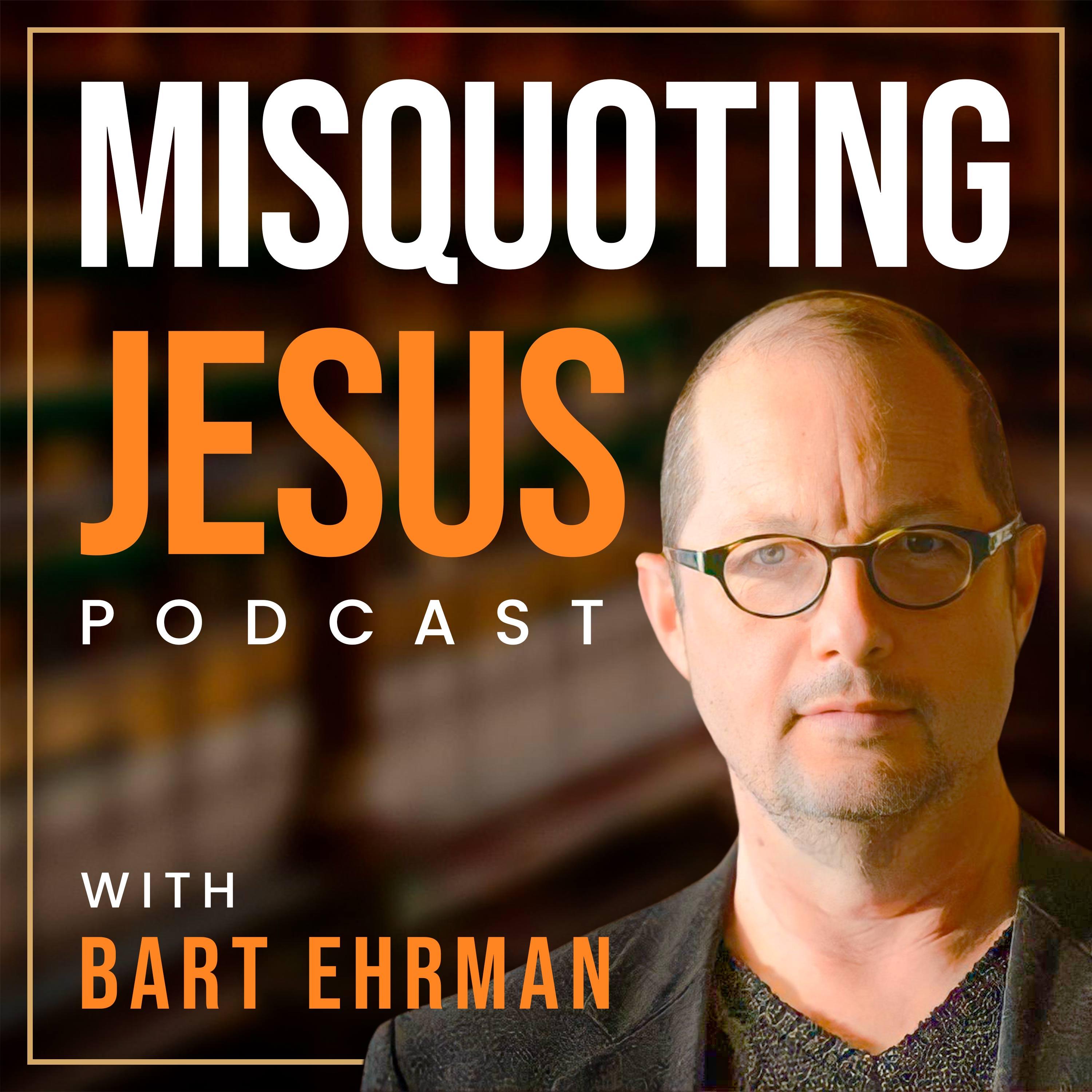
Loading summary
Transcript84 lines
- [00:01]
Bart Ehrman
Hey, he's here again.
- [00:02]
Megan Lewis
Oh, who hun?
- [00:03]
Bart Ehrman
Sammy, the puppy I had when I was a kid.
- [00:06]
Megan Lewis
This is the second time he's seen Sammy. Could this be related to his Parkinson's? I don't see him hon, but I know you do. About 50% of people with Parkinson's may
- [00:16]
Bart Ehrman
experience hallucinations and or delusions over the
- [00:18]
Megan Lewis
course of the disease.
- [00:19]
Bart Ehrman
Seeing things that aren't real and believing things that aren't true.
- [00:22]
Megan Lewis
Symptoms generally worsen but are treatable.
- [00:24]
Bart Ehrman
Learn more@mortaparkinson's.com and take the screener to see if it's time to start a
- [00:29]
Megan Lewis
conversation with your doctor. Welcome to Ms. Quoting Jesus with Bart Ehrman. The only show where a six time New York Times best selling author and world renowned Bible scholar uncovers the many fascinating little known facts about the New Testament, the historical Jesus and the rise of Christianity. I'm your host, Megan Lewis. Let's begin. The New Testament is possibly one of the most influential books in the Western world. The millions of people read it as a religious text, but only a few choose to study it as an academic pursuit. Today we're talking about New Testament scholarship as a field of research. How did it start, how has it developed and where does Barthes think it's headed next? Before that though. Bart, how are you doing today?
- [01:16]
Bart Ehrman
I'm doing pretty well today. I had a dinner with some of my blog members here in London last night and that's always great. There are a lot of people on my blog but, but the people come to these dinners, boy, they're really interesting. They were like really interesting background stories. And you know, some of them are people of faith and some people are not people of faith. And you know, a number of them are people who've left the faith. And so they're. But for a variety of reasons, they like the kind of thing I do on the blog. It's great. You know, you get together with seven or eight people and we sit around and we, we talk about New Testament scholarship for three hours. It's like, how often does that happen? I don't even do that with my colleagues.
- [01:58]
Megan Lewis
I don't think I've ever asked you before, what do you actually do on the blog?
- [02:02]
Bart Ehrman
So I started this thing 12 years ago and I post five times a week. When I post, it's always on topics dealing with the New Testament, Early Christianity, historical Jesus, but like up to Constantine, the kind of things we deal with on the, on the podcast. But I post 12 or 1500 words a day and people make comments And I reply to every question I get. I've done this for 12 years. And so, you know, it's grown. Grown into a serious deal. I thought, you know, when I started this thing in 2012, I thought maybe I'd raise, you know, $20,000 for charity or something because people have to pay a small membership fee to belong. Because it's really. The point is to raise money for charity. This last year, we raised over half a million dollars. And so, yeah, I can't quit even if I want to.
- [02:44]
Megan Lewis
No, you really can't. That's amazing.
- [02:46]
Bart Ehrman
Anyway, so it's, it's some work for me, but I enjoy doing it because I enjoy communicating to a broader audience and people really, you know, some people are cordoning onto it. So.
- [02:54]
Megan Lewis
So. Right.
- [02:55]
Bart Ehrman
You taught Sumerian last night. Was that last night?
- [02:57]
Megan Lewis
Yep, I did. It was fun. There are some. It's a good mix of students. They're all like older, like adults and continuing education folks and a lot of people with experience in other ancient languages. So there's a couple of classicists and, and someone who studied Hurrian for a while. And it's really, really interesting because the questions they have are fantastic. And a lot of the time I'm like, I need to do some research and get back to you on that one because it's been a while since, honestly, I looked at that particular grammatical area. But no, it's really interesting. It's a lot of fun.
- [03:27]
Bart Ehrman
Well, I think that's absolutely the best response because Bruce Metzger, my mentor who knew everything, would say that, say, you know, I can't remember. I'll go and look up and tell you next time. And he, you know, he just was not ashamed to do that. And like most of us who just kind of BS our way through it, it's much better to say, look, I don't know. So it's good. Well, okay as it sounds. Wow, Amazing teaching, super marriage. Good for you. Good on you.
- [03:50]
Megan Lewis
It's fun. It's fun that, that they've asked if I Akkadian next. I'm like, I can.
- [03:55]
Bart Ehrman
You can or cannot?
- [03:56]
Megan Lewis
No, no, I can. I'm actually. My Akkadian is generally stronger than my Sumerian, but I haven't done any Akkadian for a little bit. So I need to sit down with a grammar and refresh myself.
- [04:06]
Bart Ehrman
My Sumerian, My Akkadian are equal. They're equal. Equally Good.
- [04:14]
Megan Lewis
Excellent.
- [04:15]
Bart Ehrman
Non existent.
- [04:16]
Megan Lewis
Okay. Right. Oh, well, we should get into New Testament scholarship then. So like I said in the introduction, millions of people Read the New. But very few go into New Testament scholarship as a field. And I think very few people outside of the field really know what the experts who devote their lives to understanding it actually say about it. Does that seem like a fair assessment? And if it is, why do you think that is the case?
- [04:43]
Bart Ehrman
Oh, it's absolutely fair. I mean, I've had, you know, 20,000 experiences with people where it's quite clear. I mean, one of the first times when I moved to chapel hill in 1988, I had a. I was doing a weekly thing at some church somewhere in North Carolina, like for four weeks on the historical Jesus. And I was just giving basic scholarly stuff on historical Jesus and is a Presbyterian church. And this woman comes up to me at the end of it. She's like in her mid-80s, and she said, you know, I've been going to church for 65 years and I've never heard this. Why? And I looked across the fellowship hall. The guy who's the pastor of the church was actually a graduate of Princeton Theological Seminary like me. And I'm thinking, well, I know why you haven't heard it. This guy's not telling you. And so the deal is, most people hear about, you know, the New Testament in religious context and faith contexts, and even the pastors and such who know this kind of material will often not tell their congregations because they don't want to make waves or whatever. But it's a shame, because then people don't know about it. But that's why, you know, that's why you have university courses and such to deal with it.
- [05:49]
Megan Lewis
So I. When I talked to Robin Walsh last month, she talked a lot about how modern understandings of the New Testament are really deeply rooted in this very long history of scholarship. And the sense I got was that to understand the critical views of scholars today about the New Testament, you really need to know something about the background of the field. Does that seem like right to you?
- [06:12]
Bart Ehrman
It's absolutely right. On my blog or in my books or in any context, when I say things about what scholars say about the Gospels or Paul, I get people responding, saying, you're just making stuff up. And I'm thinking, people have been. Been saying this for 200 years, and the reason people keep saying some of this stuff is because the evidence is just overwhelming. And people started realizing this, you know, centuries ago. But most lay people would have no idea because they just. You read the New Testament and you just. You don't think about it critically. You just. You're reading. It's A book of faith. But the kinds of things I do is. I mean, a lot of stuff I talk about is kind of common knowledge among scholars.
- [06:54]
Megan Lewis
So if we look then at New Testament scholarship as a field, if we go all the way back to the ancient world, was there any, anything comparable there to what we think about when we're talking about New Testament scholarship? Or were the people writing about the texts in the New Testament more interested in theological issues?
- [07:12]
Bart Ehrman
They were definitely interested in theological issues. Primarily. There were some forms of scholarship in antiquity going back to the late second and early third centuries as intellectuals converted to the faith. There were very serious biblical scholars. And some of them would point out that different manuscripts, for example, had different ways of wording a verse. And read, some said this and some said that, and they try to figure out what the author originally wrote. Or you'd have people discuss like the philological issues about the meanings of words, for example, or they. So they absolutely did do that kind of thing. And sometimes they would find contradictions and they would deal with it in a variety of ways, sometimes reconciling them, sometimes explaining them, sometimes pointing out, there's a contradiction here. So there's that kind of level. But it was almost always in service of the church, almost in service, trying to explain playing these texts for believers to help them with their faith.
- [08:09]
Megan Lewis
So then how did modern New Testament scholarship as we know it come to be a field of study? How did it start?
- [08:16]
Bart Ehrman
So it. The very beginning impetus, more or less. I mean, it happens during the Enlightenment, but the main impetus to begin with was when printing was invented. You know, they had to print books. You know, early on they printed copies of the Bible, but you couldn't make a Bible out of a previously printed edition because there weren't any printed editions. So you had to use handwritten copies, copies, manuscripts. And printers early on realized, wait a second, these different manuscripts have different ways of wording these verses. So which one are we supposed to print? You know, it's a very practical question, which, well, what, what do I print? And that got scholars interested and who started studying it. And so already in the beginning of the 18th century, there was a, you know, a scholar who we've talked about on here, John mill, who, who found 30, 000 places that he mentioned in, in one of his editions of differences. And once you start that, then people start saying, wow, we've got to figure this out. And that's, that's really the beginning of biblical scholarship in the modern period is we're trying to figure out the Texts, what did they say and what did they not say?
- [09:19]
Megan Lewis
So this is then very early textual criticism.
- [09:22]
Bart Ehrman
Yeah, textual criticism is the technical term, not for interpreting texts, but for trying to figure out what an author originally wrote.
- [09:29]
Megan Lewis
And did this lead to then other kinds of investigations into the New Testament?
- [09:33]
Bart Ehrman
Yeah, absolutely. Because once it was recognized, you know, we ourselves, when we're reading a text, even if it's just. If you reading a printed Greek text of the New Testament, there's uncertainty about what it says. That immediately led to question about, well, suppose you do know what it says does that. Are we certain that what it says is correct? And so with the Enlightenment, you know, with rationalism and with people using reason over revelation and people not trusting the authority of the Church necessarily, scholars started then looking at the content. And so with respect to the Gospels, for example, it was in the 1770s that somebody for the first time started doubting whether the biblical account was consistent and accurate. Herman Samuel Weimaris did a book where he claimed that the Gospels do not present an accurate account of Jesus, that Jesus actually historically was a political revolutionary who wanted to overthrow the Roman Empire. But when he got crucified for that, his disciples decided that they kind of liked hanging out with him and, and having nice meals provided by other people. And so they stole his body from the grave and hid it and claimed that he got raised from the dead. And they started Christianity then. And so this was revolution. It was so revolutionary that he didn't publish this thing while he was alive because he knew he'd get creamed. And so he waited. And then the, the philosopher Leibniz published it later. So that was the first time somebody did a critical. A learned German intellectual did a critical study of, of the content of the. The New Testament.
- [11:07]
Megan Lewis
How are these more critical examinations received by both scholars and the general public?
- [11:13]
Bart Ehrman
Most scholars were pious Christians and who were really quite offended as people started dealing with this for a long time. Most scholars just weren't going to buy it because they were teaching theology in a more traditional way. But it did start the kind of investigation where people started wondering about these things. And you start when you start saying things like Jesus actually isn't as he was portrayed in the Gospels, it started people thinking, well, then what do we know about these Gospels? I mean, we're so you have these stories of Jesus and, you know, actually, you know, a lot of them are alike, and they started wondering, well, what kind of sources are behind the Gospels? And so instead of just taking the Gospels as like, you know, eyewitness accounts, of something they started saying, well, especially with Matthew, Mark and Luke, you have these three gospels. And from the early times, they realized that there's some relationship among these three gospels gospels. But they got really intense in the question of what is the source for what. One of their goals was to find the earliest source. So in the 19th century, this becomes the big deal, is looking for the sources of the gospels so that you can decide what the earliest version is with the assumption which turns out to be false, but with the assumption that if you get the earliest one, that's the accurate one. And so once they decide a mark as the first gospel, you have book after book after book being written, you know, using Mark as the basis for a life of Jesus that is filled in with kind of psychological imaginations about what's going on in his head. And so that happens a lot in the 19th century.
- [12:47]
Megan Lewis
So once people have kind of a more of a solid grasp on the written sources and the order that they came and their relationship to one another, does this start to answer some of the questions they were having, or did it actually just throw up more things for people to talk about and to. Question. Question.
- [13:03]
Bart Ehrman
It's one of these funny things about scholarship, is that if you've got this burning question, then you think you've got the answer to it. You think you're done now. And then another generation comes along and says, yeah, you just started. And so with this business of the sources, there of course, continued to be debates about the sources of the gospels and whether other books of the New Testament also had sources. People started wondering more extensively about what kinds of influences were on these gospel writers. The kind of thing Robin was talking about in your interview with her about trying to situate these books in their Greek and Roman contexts came to be a big thing already in the 18th century, actually. But people started wondering about that as they started to think, well, maybe these aren't just kind of given by God. And if they're not given by God, they must have some kind of historical context. So, you know, we better start reading, thinking about the classics in relationship to these things. And so they started doing that. But the other thing that happened is eventually, sort of at the end of the 19th, beginning of the 20th century, people started realizing, wait a second, just because Mark's the earliest gospel doesn't mean that it's accurate. It's still like, maybe decades away. And so what do we do about that?
- [14:12]
Megan Lewis
At what point did people. Did scholars start to think about maybe oral sources that could have been preserved in The Gospels.
- [14:20]
Bart Ehrman
So this is kind of a trajectory. I mean, it's. It's a little bit simplified, as my colleagues will no doubt tell you. But you start out trying to figure out what the words were, right? You, you do textual criticism, establishing the text. Once you know what the words were, then you try to figure out the sources of information that was available to the authors who wrote the words. Once you think you've got the. The sources of information for the authors who wrote the words, then you wonder, well, how accurate are those? And then in the. In New Testament scholarship, then what ends up happening in the early 20th century is that scholars started recognizing that these Gospels are not just literary texts, that if they're talking about a figure who lived decades earlier, they had to have sources of information and that it isn't just that, you know, Mark sat down one day and wrote a gospel. He. He had information available to him. Where did he get his information from? What ends up developing is kind of a complicated field that most people would not have heard of this. Many, many people who are interested in this field without being a scholar in it will have heard about, you know, text and, and sources and things. But this next thing most people haven't heard about, it's called. Called form criticism. It was a. A way of approaching the Gospels that became very popular in the early 20th century.
- [15:35]
Megan Lewis
So what is form criticism? What does it entail? And maybe how is it different to other modes of understanding the text?
- [15:42]
Bart Ehrman
What ended up happening is in the. In around the 1920s, some German scholars start recognizing that the Gospels have a lot of stories that are very similar to each other, but the details are changed. So similar that they. Certain kinds of stories have a certain formal similarity. They have the same form of the story. And so, for example, you might have a miracle story. And so what happens is somebody is very sick, and either they or a relative comes up to Jesus and asks Jesus to heal the person. Jesus then goes, and people doubt whether he can do it, but he reaches out his hand and touches the person, and the person is immediately, well. And then the crowds all marvel. It's like it's this, this, this, this and this. And it doesn't matter whether you talk about the daughter of Jairus or if you talk about Lazarus, or if you talk about, you know, you just got tons of stories like this, like in the New Testament, but they all have the same form. These scholars start saying, why is it always in the same form? And it made them start thinking, well, you know, it may be that these are stories that were being circulated orally. And then within certain historical contexts where you circulate a story about Jesus, it's going to take on the same shape. The story will take on the same shape because of the, of what you're trying to accomplish by telling it. For example, if you've got a story about Jesus getting in some controversy with the Pharisees, right, Jesus or his disciples do something. The Pharisees get ticked off, they blame Jesus for it. And Jesus has a back and forth with them that ends with him giving a one liner that completely wilts them. Them, right? This happens time after time after time. They wonder what. And so what they try to try to figure out was what was the context within which stories like that would have circulated. And so it's speculative, but it was, it was a kind of an interesting speculation. So like, if you got a healing story, where would you tell stories like that? Where would Christians be telling stories like that? And these form critics decided that, well, it happened. Probably you're trying to convert somebody and you're trying to explain that Jesus does miracles. And so it's got to have a kind of a climax to it. And so you've got to have somebody ask Jesus to heal and then he does heal, and they're all amazed. They don't think he can do it, but then he does it and they're all amazed. And you know, you should be amazed too, because you come up with a presupposed historical context or with the story of, you know, withering his Pharisaic opponents. Well, that could be told in a context where there's controversies between Christians and Jews about whether to keep the Sabbath or not, or whether to follow the Pharisaic rules or not. And you know, why is Jesus superior to the Pharisees? And so it's in the context of conflict. So what happens with the form critics then is they figure out the form of various kinds of stories you have in the New Testament gospels. And then you figure out what they call the Sitzemleben, which is the German term for a situation in life. What is the situation in life of these communities that they're telling these kinds of stories?
- [18:47]
Megan Lewis
So did these scholars have any real evidence that that Christian storytellers were altering or inventing stories for whatever particular sitzen laben they were experiencing at that time?
- [18:59]
Bart Ehrman
As you could probably guess, And a lot of people are probably noticing this is a very speculative enterprise. And it's pretty much what leads to the kind of thing that Robin Walsh was talking about that scholars eventually, many scholars got into the question about what kind of community was each of these authors in, where these kinds of stories would need to be told. If you have to tell stories like this, you've got the specific Zitsim Labyn, you're trying to convert somebody. But why are Matthew stories tilted one way and Mark's another way? And what about each of the communities? I will say, though, that there's absolutely evidence that stories were getting changed. One evidence is that these Gospels tell many of the same stories in different ways, sometimes in very different ways. And so if you have the story of Jesus feeding the multitudes, and you have it in Mark and you have it in John, it's the same story, but it's told very differently. That means people are changing the story. It's either that the authors themselves are just taking it on themselves to change everything, or the stories are in circulation and, you know, stories are told differently by different people. And so this was the kind of thing that led them to realize that stories are being changed. But then that creates the other problem. If the stories are being changed, how do you know what Jesus really said and did?
- [20:12]
Megan Lewis
So we've been talking mainly till now about the Gospels. Do we see the same kinds of scholarly developments happening for the rest the of rest of the New Testament, the Book of Acts, letter of Paul, and all that kind of thing?
- [20:24]
Bart Ehrman
Well, you do. And the thing about the Gospels is that they're narratives. And so the only other narrative in the New Testament is the Book of Acts. But you find a similar kind of scholarship with the book of Acts, trying to figure out where is he getting his stuff from. Unlike the Gospels, you don't have anything to compare it with. So like with Matthew and Mark, you can look at Matthew and Mark and just line them up and look at the differences between them, and that gives you some purchase on how they're trying to do things. And you can see right off the bat that Matthew actually is changing Mark. I mean, once you get your source analysis done and you know that Matthew used Mark, then you can compare Matthew and Mark to see how Matthew has changed Mark. When you do that, that was a form of scholarship that developed in the middle of the 20th century. That's called redaction criticism. So just to keep things straight here, we started with textual criticism, then we went to source criticism, and then we went to up to form criticism. Now we're up to redaction criticism. And redaction criticism says that if Matthew is changing Mark, he's changing it for a reason. I Mean, why wouldn't he just keep it if, if he, if he liked it, I mean, if he thought something could be improved, he might change it. So he did change it. And so by seeing what he's changed, you can see what his ultimate values are, what he's trying, what he's trying to say, especially in the changes. So with Acts, you don't have that luxury because Acts is the only account of the spread of Christianity in the New Testament. And so there you've got to do other things. Like Book of Acts gives a lot of information about the apostle Paul. The second two thirds of this account of the spread of Christianity is all just about, all about Paul. And Acts says things about Paul that Paul says about Paul. And so you can compare Acts with Paul and see whether Acts is accurate or not, but also try to get a sense of if he's changed things about, really happened, how's that, that affecting his way of telling stories. And so, so you could do that with Acts. The other book actually did also get the text criticism and the source criticism and things. But it tends to be a little bit different if you're dealing like with Paul writing a letter to somebody, writing a narrative, right? There are different ways of writing and, and so the methods change accordingly. But there's scholarship being done on, on every one of these books at a rather serious and deep level.
- [22:47]
Megan Lewis
So what then has been going on since the middle of the 20th century when we get a redactional criticism coming through. What, what are the new directions that New Testament scholarship has started to go in?
- [22:58]
Bart Ehrman
Redaction criticism was still big when I was in graduate school in the 70s and 80s, and I would say it's still big today. I mean, basically people agree. I mean, if you. What I would say is textual criticism is still a thriving field. There are people very active and still working try to try and figure out what the text originally was. Source criticism is really continues to be something that people do. One of the people we're going to be talking about later during this Bible conference named Mark Goodacre, has spent his life basically doing source criticism and disagrees with some, A lot of things that other scholars have said about the sources of the Gospels form criticism pretty well bit the dust. I mean, people ended up thinking, yeah, I don't know, that doesn't, you know, they had problems with it. But having said that, a lot of us are still very, very interested in issues of oral tradition and how oral tradition works. But we're much better placed than the form critics were because there's been a lot of analysis of oral cultures by anthropologists and others and lots of work on memory and how memory works by psychologists and, and sociologists. And so a lot of us are still really interested in the oral tradition thing, even though we don't do form criticism. But redaction criticisms is still pretty much alive too. What's happened since I was in graduate school is a couple of really major things, probably three major things. One is people started moving away from trying to understand these texts within their historical context. Not that they're ignoring the historical context, but what they're saying is what really matters about this text is not like where it came from or how it's function. It's, you know, its historical bit. They said, you know, there are lots of his, lots of this history we can't, we don't know, we can't understand and so we don't have information. And so they, they came up with kind of the sensible thing, some of them, and said, look, I'm just going to ignore the history behind this text. I'm going to treat it as a text and not quite so much the way Robin's doing it and others have done it, but in the sense that you, you approach it using literary criticism. There are all sorts of literary theories and all sorts of literary criticisms. And generally scholars of the Bible are about 20 years behind English departments and cultural studies and things like something that's kind of passe now in English is now hot stuff in biblical studies because we're a little slow to learn these things, I guess. But the literary studies became a very big thing where you just, you take the Gospel of John, you don't ask historical questions about it, like did it really happen? You know, what were his sources of information? It doesn't matter what his sources of information were. We've got his text, you know, so let's just study his text as a text. And so that was one of the really major ways that developed, that developed especially in the 70s and 80s and still today.
- [25:45]
Megan Lewis
So you said there were three things. What are the other two?
- [25:48]
Bart Ehrman
Well, so in addition to this literary thing, some people went the opposite direction, kind of the opposite direction. A lot of people got really interested in issues of social history. Like, what can these texts tell us? Not just in terms of, like, how do you interpret them as texts, but what can they tell us about the life of early Christianity on a social level? Like what were people doing? In some ways it was really important for understanding Paul. Paul's writings roughly forever have been interpreted for Their theological value, their content. You know, what's Paul's theology? What's his theology of salvation? What's his understanding of Christ? How does he understand the Spirit? You know, and so it's. It's very like the ideas are what mattered all the way through my graduate program. But toward the end of my graduate, in the 80s, in the early 80s, people started asking, well, well, what do Paul's letters that are written to congregations that he founded? What do they tell us about what the congregations are actually doing when they do baptism? What are they doing when they have the Lord's Supper? What are they doing when they're talking to their neighbors? What are they doing? Where are they living? What's their socioeconomic class? What is their literacy level? What kind of occupations do they have? You know, they're trying to figure out things about the communities. And this became a big thing. It's still a big thing that I became really interested in graduate school. I just cared about the ideas. But then I started realizing, wow, it's just really interesting to know what these Christians were doing. And we have hints about it that. I mean, very solid hints. So you have the literary critical thing, where you're interpreting these things as texts, and you have the social historical thing, where you're trying to understand what these texts can tell you about Christianity as a social movement. The other thing that happened, that continues to happen is that like so many other fields of study, the field of New Testament studies got completely fragmented so that people. People went off doing all sorts of things so that, you know, when people were doing source criticism, like, everybody was doing source criticism, text people are doing textures. And these days, everybody's not doing one thing. Everybody's, like, going all over the map doing this, that and the other thing. And a lot of the. The kind of modern cultural discourse has entered significantly into the study of the New Testament, where people are interested in things like. Like. Well, I mean, for a long time that we've. They've had issues about, you know, how feminist scholarship might approach the New Testament, which is. It's a patriarchal text. But can. Does it. Is it hiding kind of an original feminism of some kind is one approach to it, Or. Or how do you highlight the patriarchal nature of it in case you're not. You're a feminist who's not interested in trying to save it for modernity, or people who are interested in African American readings of this text, how it functions in different communities, East Asian communities, for example, or African communities, or African American communities. And so people doing all sorts of things. So when you go to a meeting of the Society of Biblical Literature today and you have like hundreds of papers being read by scholars who are experts on things like some of these papers have nothing to do with each other. Even if they're on the same book, they can be on the Gospel of Luke and you'll have y' all these papers all over the place. And a lot of it's really interesting stuff, but it's not cohering the way it used to.
- [28:56]
Megan Lewis
So are there any big takeaways that a layperson interested in knowing more about the New Testament can kind of bear in mind as their lives listening to, to what we do here?
- [29:06]
Bart Ehrman
Well, you know, of course, you know, most lay people are not going to go out and learn Greek and Hebrew and, you know, the languages you need to do this kind of work. Although I do recommend Sumerian to them regularly. But so not so much for the New Testament to be a scholar, it isn't just a matter of, you know, taking a few classes. It takes years and years to get to the point where you can actually do this. So nobody, you know, people aren't going to do that and they shouldn't do that. But, but you know, scholars sometimes do write books for lay people and that's, that's an important thing, is to read a number of scholars who are finding out these things and try to understand why they're saying what they say. I think that's maybe the most important thing. It's important to see what scholars say and to see why they say it, because what they say is different from how people normally approach the Bible because scholars are interested in, in, especially in historical issues and in ways of interpreting texts. That wouldn't occur to people who don't know about ancient Greek and Roman literature or who don't know the ancient languages. And scholars can tell you things that you wouldn't know, you just wouldn't be able to suspect, even just reading it in English. So it's important to know what they say. It's important to recognize that scholars have many, many disagreements on just about everything. But that means also that it's not like doing a science experiment. You know, it's not like in one of, like in chemistry, you can, you can do experiment and you know, you don't change the variables. It's going to be the same every time and presumably everybody will be convinced, you know, it's not that way with biblical studies or with other humanities, you know, with English or whatever. You can't like prove these things. And so people have more disagreements. But that also means that there are arguments and ev. And there's evidence that's being used. And even a layperson can evaluate arguments and evidence if they see it laid out clearly enough, and then they can make a reasoned decision. What I suggest people not do is reject things that they hear because they just sound crazy that a scholar is saying not do that, but also not simply accept those scholars who happen to be saying exactly what you want them to say. That's what happens a lot on all sides. I know there are a lot of people who will turn to their favorite evangelical scholar and just take his or her word as gospel truth, and that's a mistake. But, you know, there are a lot of people who, like, you know, might read one of my books and just take that as gospel proof. And that's not good either. You got to look at the evidence and see if you find it convincing. And so anybody can do that. And the goal is the scholars should be presenting this stuff to them so they can see it.
- [31:42]
Megan Lewis
Does all of this scholarship run the risk maybe, of detracting from the religious importance of the texts to those who hold them to be religious? Religious texts?
- [31:52]
Bart Ehrman
Well, it certainly can do, depending on a person's religious beliefs. When I started out getting interested in biblical studies as a. As a discipline, I was a very, very conservative evangelical who thought that there could not be any errors in the Bible. And I held that view for years. But then as I learned Greek and learned Hebrew and started studying it deeply and started really, really digging deep, deep, I began to realize that people who did not think it was inerrant, who thought there were mistakes, were right. I mean, I just finally. It wasn't. I didn't trust their word for it, but I just got to a point. I just, you know, they're right. This is a contradiction. And so that. That certainly changed my faith. And I think that knowledge can change faith, but people shouldn't be afraid of it for that reason. Because if it's knowledge, you know, if it's true, it's true, but it might not be true. You have to figure out whether you think it's true or not.
- [32:47]
Megan Lewis
Not.
- [32:48]
Bart Ehrman
But on the other hand, I'll say that even people who really like the kinds of things that I do, for example, or that other critical scholars do, you know, some of them leave their faith altogether because of things like contradictions in the Bible. And I personally think that's flipping crazy. That's not why I left the faith. I think if there are contradictions in the Bible. It doesn't mean God doesn't exist. You're presupposing if there's a God, he has to produce an inerrant Bible. Why would you think that maybe there's a God who didn't produce an inherent Bible? So. So it's got nothing to do with whether God exists or not or whether Christ is the Son of God or anything else. Most of the things that I teach were things that I learned in a Princeton Theological Seminary. I either learned them there or I got the foundations for them. A lot of them I just got the foundations. And this was a place that was training Christian ministers. So I have numerous friends who are hardcore biblical scholars, historical scholars who know the languages, know the Greek and Roman world, know the know the outside literature they know, and they agree with me on just tons and tons of things. But they're still Christians. So it doesn't necessarily cut against faith per se. It may make people change their faith and may make people think more deeply about their faith, and that may eventually lead to something. But some atheist scholars really are going for the jugular. But most of us are just saying, look, this is the historical scholarship and you need to figure out how to deal with it.
- [34:16]
Megan Lewis
Thank you very much, Bart. We're going to take a quick break and then we'll be back with some news about the upcoming conference and some listeners questions. Have you ever wondered where the New Testament Gospels really came from? Were the books actually written by Matthew, Mark, Luke, and John? As everyone seems to say, the answers to these questions may surprise you. In fact, what you discover may challenge everything you thought you knew about the Gospels. If you're ready to learn the historical truth, then you won't want to Ms. Bart Ehrman's free webinar. Did Matthew, Mark, Luke and John actually Write Matthew, Mark, Luke and John? In this 50 minute talk with Q and A, you'll learn answers to some of the most intriguing questions surrounding the Gospel's authorship. Such why did early Christians say the Gospels were written by Matthew, Mark, Luke, and John? If they're anonymous, what's the best evidence that the Gospels were written by the the Apostles? Were the apostles of Jesus educated well enough to write books? And last, if the apostles did not write the Gospels, who did and where did they get their information? Don't miss your chance to uncover the truth behind the Gospels. Sign up now for free lifetime access to Did Matthew, Mark, Luke and John actually Write Matthew, Mark, Luke and john@barterman.com forward slash authors. Thank you. Welcome back Everyone, we are now going to talk a little bit more about Barth's upcoming conference. So for those who have missed the last few episodes, Bart, what is this conference and why should people attend?
- [35:58]
Bart Ehrman
Well, you know, what we've just talked about is biblical scholarship. And these days, biblical scholarship has advanced a lot of lot. It's advanced a lot last 20 years. It's advanced immensely the last 200 years. And people, you know, by and large don't know about it. And so this is a Bible conference where there'll be 10 speakers each giving a talk for maybe 50 minutes or so with a Q A to follow. 10 speakers who are the. Some of the top scholars in the country on the Gospels. And each one is going to give a different talk on a different topic that is directed toward non scholars. And so it'll be serious scholarship at a level that everybody can understand. And so this is, this is implementing what we're talking about, you know, getting, getting people to understand what, what scholars are saying about the New Testament.
- [36:46]
Megan Lewis
Why do you think it's taken New Testament scholarship quite so long to start talking to a non academic audience in this way?
- [36:54]
Bart Ehrman
It is kind of a modern phenomenon. I mean, it, you know, it isn't like it started last year or anything, but for a long time, scholars in the New Testament really just talked to their scholarly colleagues and talked to the pastors, but weren't really kind of out there trying to talk to a broader audience. In 2005, when I published my book, Misquoting Jesus, it's a book about textual criticism. It's about how you have these manuscripts, they're all different from one another. We have to figure out what the original said. There are places we don't know what the original said. It's interesting to see why scribes might have changed the original. It's about those kinds of topics. And all of my friends who knew I was writing that book thought I was crazy because nobody's going to be interested in that stuff. And nobody's ever written a popular book on it. A book for a general audience. And they thought, man, you are nuts. But it was the first time. And so people read this and what? Huh? I had no idea. I know you had no idea. Scholars and all this stuff and you, you know, they don't tell you. So I think what's happened, especially over the last 20 or 30 years is scholars have recognized, you know, we have really important information and for some reason we're keeping it to ourselves. That's not. You do find scholars writing books for general audiences now, not as much maybe as they, they should. And part of the problem is that scholars are never trained to communicate to normal human beings. And when you're studying, doing a PhD in any field, in any field, but you know, in the humanities, you do a PhD and you learn the jargon, you learn that you know the history, the discipline and you can presuppose tons of stuff and you just can't do that that with laypeople. And most scholars don't have never had any practice even trying to talk to a normal human being about it. So they're hopeless at it. So that's part of it. But, but not the 10 who are going to be at this conference. Let me tell you, I was going
- [38:39]
Megan Lewis
to say the 10 we've got actually know what they're doing with this. So we'll be okay.
- [38:42]
Bart Ehrman
We'll be, we'll be more than okay. This is, this is going to be something.
- [38:46]
Megan Lewis
So the conference for those who are interested is New Insights in the New Testament. It will be on the 23rd and 24th of September and there are 10 different speakers. We went over a couple in the last two episodes. We're going to finish going over the rest in subsequent episodes of the podcast. So you kind of know who's going to be talking, what you're you might be in for. The cost is $59.95. Early bird pricing is $49.95 but that is only good until Saturday, August 26th. That is this Saturday. So if you would like to buy tickets for that early bird price, you need to do it this week. I suggest you put pause the podcast. Go do it right now. We'll wait and you can do that@ntconference.org so it'll be fun. And join us next week and we'll go through a couple more of the presenters that will be joining us for that. But now we are moving on to some questions from our listeners.
- [39:42]
Bart Ehrman
Now it's time for questions from listeners where Bart answers real questions submitted by misquoting Jesus fans. If you'd like to submit a question for future segments, please visit barterman.com Ask Bart.
- [39:59]
Megan Lewis
Alright Bart, we have more listeners questions. Thank you all for all the questions you send in. You can do that via the website, which is bart ehrman.com first question, were the gospel writers aware of literary devices like cliffhangers? And the example given is that Mark kind of ends on up in the Air.
- [40:17]
Bart Ehrman
Boy, does he. Mark certainly knew about a cliffhanger. Oh boy. Yeah. No, the gospel writers are you know, I think they're underappreciated by people who just kind of read through them very quickly. You know, you just read it and it's kind of. You're getting the information and you're not really appreciating the story. We've had a couple of episodes on some of the gospel writers and just. And they're genius. And we're going to have another one soon. And these are authors who do understand how to. To write a story and are very clever in ways that you don't detect. You really read it closely with. With a few exceptions. And Mark. The end of Mark will make anybody sit up and take notice. But there's a lot more to it than that. Yes. So the answer is yes, they did know about literary strategies.
- [40:58]
Megan Lewis
Next question. Do you still enjoy any of the Christian art or entertainment from your fundamentalist days? The viewer says. As an atheist myself of nearly 30 years, there are a handful of Christian recording artists I loved in the 80s that are still among my favorites.
- [41:12]
Bart Ehrman
Oh, I don't listen to Christian music anymore, although I, I certainly did in the early days when Larry Norman and people like that were getting a lot of flack for using syncopated music because that was from the devil. I mean, I remember all that and I, I really enjoyed. I enjoyed a lot of that at the time. Keith Green and I had these, you know, various things. But I don't, I absolutely don't listen to that stuff anymore. I do appreciate serious, you know, classical Christian music, you know, Bach and such. But that's it with music, I guess. Except I really do like a lot of the Christian musicals that I liked back then. I still adore Jesus Christ Superstar. I just think it's the most fantastic soundtrack ever. There are others I didn't like then. I still don't like now. I think Godspell is. Really. Has a couple good tunes. That's about it. So. So I have my favorites. But, but that kind of thing I, I still appreciate.
- [42:06]
Megan Lewis
So, kind of related to that then, what do you think are the best Jesus or Christianity documentaries in terms of accuracy? Are there any that are worth watching?
- [42:14]
Bart Ehrman
Documentaries? Not asking about films, they're asking about documentary.
- [42:20]
Megan Lewis
No. So they, they named From Jesus to Christ and the BBC documentary Jesus the Real Story and A History about Christianity.
- [42:28]
Bart Ehrman
Yeah, so I think the one that is probably among scholars considered to be probably one of the best is the Jesus to Christ one. I actually found it a little bit unsatisfying. I'll put it like that. We. We got a bunch of scholars together to watch it when it came out, including Liz Elizabeth Clark, who's in it. And we were at Dale Martin's house, he was a friend of mine and we were New Testament scholar at Yale, and we were, we were all together watching it. And I found it really frustrating. And for the reason I found virtually all of these documentaries frustrating. One reason every New Testament scholar find these things frustrating, because the talking heads say something they disagree with. So, you know, oh God, really, you know, but, but this particular one that's probably the most famous and probably the best. The thing that really irritated me was, does, you know, you have the talking head who gives the 10 second sound bite. Then you got the narrator who comes in and entered and says something. Then the next talking head comes in for his 15 second sound bite and you go like that. And this one just drove me nuts because you'd have somebody like John Dominic Cross and come on and say, well, we know that Jesus went to the neighboring town Sephorus, where he probably learned Greek, and that's why he knew about Greek. And possibly he went to the theater and, you know, there. And so he's talking about the importance of Sephiroth, this Greek town near Nazareth. And the narrator says, the next sound bite comes on. And Eric Myers, an archaeologist at Duke, says, so there's, Jesus did not go to Sephorus. And he, you know, and he goes to explain why he didn't go to Sephiroth. But the narrator doesn't point out. They just contradicted each other, right?
- [44:00]
Megan Lewis
They just keep going.
- [44:01]
Bart Ehrman
They keep going. And so the leader, the listener, doesn't realize, oh my God, those people are completely at odds. And so what you end up with in these documentaries is this kind of generalized, vague understanding of something. You don't, you don't get any information because it's kind of vague. And when they contradict each other, it doesn't even matter.
- [44:20]
Megan Lewis
We have one final question. How do we know about the apocalypticism in Mark and the other examples? How do we know that it is not another example of Jesus being misquoted by the gospel authors. Is it possible then that Jesus was not an apocalypticist? That was added later in.
- [44:37]
Bart Ehrman
It's certainly possible. And that was the argument of the person I just mentioned, John Dominic Cross Johnson, who thinks that Jesus is not an apocalypticist. And it became a view that hit kind of the popular audiences, I guess, especially in the 1980s, early 90s. A number of scholars started writing books about the historical Jesus with different views, but all of them were arguing that he was not apocalyptically oriented. The reason they argued that is because scholars had thought he was apocalyptically oriented ever since the days of Albert schweitzer, in his 1906 book, the Quest of the Historical Jesus, argued that Jesus was an apocalypticist. That eventually became the dominant view. That continued to be the dominant view. So these people writing these books arguing that he's not an apocalypticist, and that's why I ended up writing my book on Jesus, the apocalyptic prophet of the new millennium and came out in 1999, because, in fact, the standard view continued to be that he was an apocalyptic. But nobody would know it because everybody was saying that he's not right. And so I call them, because you don't normally write a book, book that says exactly what everybody already thinks. Do you see what I mean? And so it's only if you say something else. So if you think that he's not an apocalypticist, you do have to explain it. And there. And they have explanations for it. But the big problem is that our earliest sources consistently portray him with apocalyptic words on his lips, sources that are independent of each other. That's what Mark's view is. It's the view of Q, the source that was available to Matthew and Luke, the same source. It's found in Matthew's own material. That's not in either of the other gospels. It's in Luke's materials. It's not in the other gospels. It's all of these sources have the earliest sources. We have consistently portray him that way. You know, it's not like somebody's making this stuff up later. It doesn't look like what happens later is as time goes on, gospels start devaluing the apocalyptic message. When you get to John, it's almost disappeared. The last gospel has virtually disappeared. When you get to the Gospel of Thomas. In Thomas, Jesus argues against the apocalyptic message. So what's happening is, is Jesus has predicted the imminent end of the age is upon us, and it doesn't happen. And so as time goes on, the authors start changing it. You have to make arguments that that early material, in fact, is not the earliest material.
- [46:53]
Megan Lewis
Thank you very much. And now, before we finish for the week, would you mind just summarizing what we talked about?
- [46:58]
Bart Ehrman
Well, we're talking about the importance of biblical scholarship, especially New Testament scholarship, and how it developed over the years. There are many, many areas within New Testament scholarship, fellowship, and all of them have been just about. All of them are worked on by. By lots of people. One of my big points is that for somebody really to understand the New Testament, it helps to know what people who devote their lives to studying it will say about it, especially from a historical perspective, which is different from what one normally hears in a faith community. It's not that that's a superior way of reading the New Testament, but if you really want to know what it says, then you need to approach it from a historical and literary perspective, whatever you personally believe. And so I was just explaining this field developed and what its impact is on understanding the New Testament and its value.
- [47:45]
Megan Lewis
And if people are interested in the current state of New Testament scholarship, you can join us on September 23rd and 24th. The conference name is New Insights in the New Testament, and you can get tickets@ntconference.org audience thank you so much for listening. I hope you enjoyed the show. If you did, please subscribe to the podcast to make sure you don't miss future episodes. Remember that you can use the code mjpodcast for a discount on all of Barth's courses over at www.barterman.com. misquoting Jesus will Be Back Next Week Bart, what are we talking about next time?
- [48:17]
Bart Ehrman
Yeah, so in the next episode, we're going to be dealing with a really interesting and important question. In the Gospels, Jesus repeatedly predicts that he's going to die and be raised from the dead. Did the historical Jesus really predict that? Okay, that's controversial. We'll find out.
- [48:32]
Megan Lewis
Thank you all and goodbye. This has been an episode of Misquoting Jesus with Bart Ehrman. We'll be back with a new episode next Tuesday, so please be sure to subscribe to our show for free on your favorite podcast listening app or on Bart Ehrman's YouTube channel so you don't miss out from Bart Ehrman and myself, Megan Lewis. Thank you for joining us.