← Misquoting Jesus with Bart Ehrman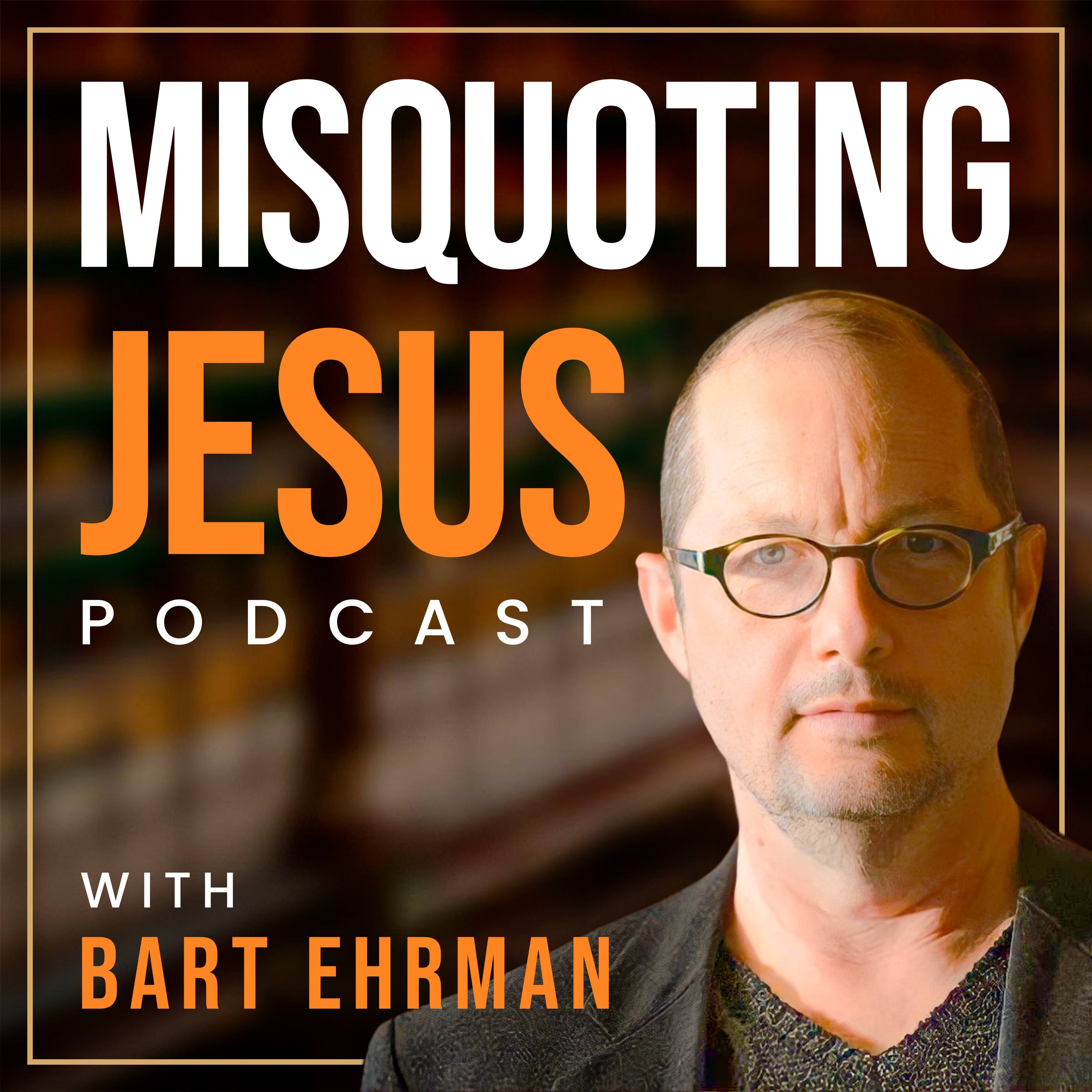
Loading summary
Transcript472 lines
- [00:00]
VRBO Narrator
A vacation rental should come with support, not surprises. That's why VRBO comes with a VRBoCare guarantee and 24. 7 life support from real people. So if something goes sideways, VRBoCare can help. If the host cancels Verbocare.
- [00:12]
Megan Lewis
If the listing says heated pool, but
- [00:14]
VRBO Narrator
there's actually no pool to heat. Definitely a verbocare thing.
- [00:17]
Megan Lewis
If my teenager starts calling me Leslie
- [00:19]
VRBO Narrator
instead of mom, that's a family thing. Leslie.
- [00:21]
Megan Lewis
That makes sense. Sorry.
- [00:22]
VRBO Narrator
Book with support, not surprises. VRBoCare and 24. 7 Life Support. If you know you're VRBO, terms apply. See vrbo.com trust for details.
- [00:34]
Megan Lewis
Welcome to Ms. Quoting Jesus with Bart Ehrman, the only show where a six time New York Times best selling author and world renowned Bible scholar uncovers the many fascinating little known facts about the New Testament, the historical Jesus and the rise of Christianity. I'm your host, Megan Lewis. Let's begin. Welcome back to this special two part launch episode of Misquoting Jesus with Bart Ehrman. Bart and I are going to be continuing our conversation about his best selling book, Misquoting. The story behind who changed the Bible and why. This episode we're looking less at Barth's personal journey through faith in academia and more at the actual scholarly issues at play here. Namely, who changed the texts of the books of the New Testament and why did they do it? But before we get into that, Bart. Hi. How are you doing?
- [01:25]
Bart Ehrman
I'm doing well, thanks.
- [01:27]
Not bad. I'm at my mountain house in western North Carolina that I retreat to to write and think. So I'm spending my days writing and thinking, how good can it get?
- [01:37]
And Megan, last time you announced that
- [01:39]
you were an assyriologist who studies ancient things about you.
- [01:41]
Just like, tell us, what languages do you have to do?
- [01:44]
Megan Lewis
Yeah, for my graduate studies, I minored in Biblical Hebrew and my main language requirements were Sumerian and Akkadian.
- [01:52]
Bart Ehrman
Sumerian and Akkadian?
- [01:54]
Megan Lewis
Yes. Okay, can you maybe take a couple of minutes and explain to us why this is an important topic?
- [02:00]
Bart Ehrman
Yeah, well, it's important for a couple reasons. For people of faith, it's obviously important
- [02:04]
to know what the Bible says. And this entire study that scholars call textual criticism, which is trying to reconstruct what the original texts said, what the authors actually wrote, this whole discipline is designed in order to show what the authors wrote on the assumption that people want to know what the Bible says. You've got to know what the words are.
- [02:26]
And you can't know what the Bible means if you don't know what it Says, and so it's a very fundamental
- [02:31]
basic and the oldest, it's the oldest discipline in biblical studies. Biblical studies is a very complicated set
- [02:38]
of disciplines, but trying to figure out
- [02:40]
what the words were was virtually the first thing that came along. Once they invented printing in the 15th century, they had to know which words to print.
- [02:48]
And since different manuscripts had different wordings,
- [02:51]
they had to make decisions.
- [02:52]
And so that for people of faith who want to know what the Bible
- [02:54]
says, obviously it's important to know the words.
- [02:57]
But. But, you know, even for people who aren't people of faith, anytime you're reading
- [03:01]
an author, you want to know what the author actually wrote. You're not interested in the mistakes that printer made, you know, or a copy editor or something. You want to know what the author said.
- [03:11]
And so that's why textual criticism is actually used.
- [03:14]
It's not unique to the New Testament or the Old Testament. Every book from the ancient world has scholars who study it to try and figure out the words originally were. And not just the ancient world, but up into modern times, up to 19th century authors, they, you have textual critics trying to figure out what the, the author actually wrote.
- [03:33]
Megan Lewis
Fantastic. And you've kind of explained it as you're talking, but what is textual criticism? Exactly.
- [03:39]
Bart Ehrman
So people get it confused because I
- [03:41]
get a lot of emails from people
- [03:42]
saying, you know, well, you know, textual
- [03:44]
criticism this, that or the other. And they think it means something like interpreting texts. When you read a text, if you're like a historian, you apply textual criticism instead of just kind of using common sense or something. And it's not that textual criticism is not about interpretation or about understanding a text.
- [04:02]
It's not about criticizing a text.
- [04:04]
It's not about trying to figure out what historically happened behind the text. It's none of those things. It's a technical term referring to trying to establish what the text originally said and how it got changed. And so with the New Testament, it's trying to figure out when you're studying the Gospel of Luke, it's not trying to understand what it means, it's trying to figure out what the oldest form
- [04:27]
of the words are, hopefully the words
- [04:29]
that the author wrote.
- [04:30]
Megan Lewis
And then when you've got as many manuscripts as we have for the New Testament, that is quite the challenge.
- [04:36]
Bart Ehrman
Well, it is because we have so
- [04:38]
many manuscripts of the New Testament. We have far more manuscripts than for any other book in the ancient world.
- [04:43]
It's not surprising that we do, because
- [04:46]
our books, mainly from antiquity, have been preserved to us through the Middle Ages. And who was copying books in the
- [04:52]
Middle Ages in the West? Well, it was monks and monasteries. Given the choice of copying the letters of Paul or the plays of Plautus, you know, which are they more likely to copy? Well, they make a lot of copies of Paul, not to make copies of Plautus. But what that means is since you've got so many copies out there, We've
- [05:11]
got over 5,700 complete or small fragments of the New Testament.
- [05:16]
Given that number, then you're going to
- [05:18]
have a lot of differences because scribes make changes.
- [05:21]
And so with that many differences, it's a little bit harder than if you have only two differences. And you have to decide if you've got hundreds of different thousands, that complicates.
- [05:30]
Megan Lewis
Thank you. One of the. Maybe the byproducts of having so many copies of these manuscripts is that each time a manuscript is copied, there's an opportunity for additions to be made or mistakes to be made or things to be taken away from the texts. What kinds of changes do we most commonly see in the New Testament?
- [05:49]
Bart Ehrman
It's actually a fairly easy question to answer because there's kind of a limited
- [05:53]
number of things you could look for
- [05:54]
in scholars, typically, in a very broad
- [05:57]
sense, differentiate between what are almost certainly just accidental slips of the pen, accidental
- [06:04]
mistakes, and what look like they're probably made intentionally. Like, if you have an entire story
- [06:11]
that is added in some manuscripts and
- [06:13]
missing from other manuscripts, somebody's either taking
- [06:16]
it out or putting it in.
- [06:17]
And there are some changes that they
- [06:18]
certainly look like they're intentional.
- [06:20]
So these accidental changes are the ones
- [06:22]
that are usually the easiest to find,
- [06:25]
and they're by far the most numerous. Probably the most numerous changes in our
- [06:29]
manuscripts are just misspelled words.
- [06:31]
You know, scribes can be forgiven of this because they didn't have dictionaries, let alone spell check. My students turn in a paper with misspellings. I just don't get it because, you know, the computer puts a red line under it. It's not that hard to figure out. Whereas, you know, these scribes, sometimes they didn't care how it was spelled. You know, like, you get the same word within two or three lines, and sometimes it'll be spelled differently two or three times. There you. They all count.
- [06:55]
And so accidental changes happen a lot.
- [06:58]
Megan Lewis
So do we see a change throughout time in what kinds of mistakes are made with manuscripts? I understand that the earliest scribes were not professionals.
- [07:07]
Bart Ehrman
Yeah. So I think it's a little bit hard for people to get their mind around when you're thinking about the books
- [07:13]
of the New Testament.
- [07:14]
Say you've got somebody who writes the
- [07:16]
Gospel of Matthew, and whoever it is, we call him Matthew. We're not sure what his name was.
- [07:21]
He writes his account of the life
- [07:23]
and death and resurrection of Jesus.
- [07:24]
Long book for us.
- [07:25]
It's in 28 chapters. They didn't use chapters and verses, but it's a long book.
- [07:30]
So he writes this thing. He probably writes it for his own
- [07:34]
church community so that they'll have a written account of Jesus words and deeds.
- [07:39]
But then if somebody else wants a copy, how do you get a copy? Well, they don't have photocopy machines. You got to make the copy. And the other way to get a copy is for somebody to copy it by hand. The author might make two copies, or he might have a secretary makes a second copy. Or it may be that somebody from a local church comes in and sees they've got a written account of Jesus life. Whoa, we want that. And so they make a copy. But the earliest Christians making copies just happened to be the people who were
- [08:06]
literate in the congregation. The Christian communities were small. They were famously populated mainly by people without educations.
- [08:16]
And so if you have somebody in your church who can read and write, that's the guy who does it. It's only centuries later that you start
- [08:22]
getting something like professional scribes who actually are trained to do the job. And naturally, a professional scribe will do a better job than somebody who just happens to be literate. It does change over time.
- [08:34]
Megan Lewis
Do the professional scribes make different kinds of errors or changes to the manuscripts?
- [08:39]
Bart Ehrman
They tend to make fewer accidental mistakes, although not always. We have some manuscripts that were done by what we would call professionals. I mean, technically, I guess a professional
- [08:50]
would be somebody who gets paid for the job.
- [08:52]
I would consider monks in monasteries. They're not actually. They're not getting an hourly wage. They're trained to do this kind of work.
- [08:59]
People who are trained tend to make fewer accidental mistakes.
- [09:03]
And as time goes on, they start
- [09:06]
having a different view of what they're copying.
- [09:09]
So Matthew makes his gospel and somebody
- [09:10]
copies it because they wanted an account.
- [09:12]
They're not thinking, oh, this is the Bible. They don't have a sense that they're copying God's word now.
- [09:17]
They just.
- [09:18]
They've got a written account of Jesus life. That's great. But later on when you start thinking,
- [09:22]
this is the Bible, this is inspired
- [09:24]
by God, then you take a little
- [09:25]
bit more care when you're copying, so you're less likely to change it on
- [09:29]
the other hand, since a lot of
- [09:31]
these later copyists, for example, were monks or Christians who were highly trained, but were literate and intelligent and probably theologically educated, they tended to to make changes
- [09:44]
that would be more theologically important.
- [09:46]
In other words, if the text is
- [09:48]
saying something that they think that could
- [09:50]
be really misread, you know, or somebody might misunderstand that, if they don't, they'll
- [09:54]
clarify it by rewording it, you know, or sometimes they'll say, you know, this
- [10:00]
looks like, boy, a heretic could use this one. They'll change it in order to make it clear, actually, it's not saying what this heretic might want it to say.
- [10:08]
And so they put it in other words. So that tends to happen when you've
- [10:11]
got more educated, highly theologically trained scribes.
- [10:15]
Megan Lewis
Does that then mean that we have different manuscripts that may be espousing different theologies based on who has been copying them?
- [10:22]
Bart Ehrman
Yeah, you know, I wondered about that
- [10:24]
for a long time.
- [10:25]
The first big book that I wrote
- [10:27]
for like a serious scholarly audience.
- [10:29]
My first couple of books were very technical books for the six people in
- [10:34]
my field of expertise who cared.
- [10:35]
So I have a couple books that
- [10:37]
are really technical on this kind of thing.
- [10:39]
But then once I wrote a book
- [10:40]
for kind of a broader audience, it
- [10:42]
wasn't for like a, you know, Barnes and Noble crowd, but it's for, like,
- [10:45]
scholars in New Testament and early Christianity and related fields who might be interested in this kind of thing. My book was called the Orthodox Corruption of Scripture.
- [10:54]
And what I did was I tried
- [10:55]
to isolate every instance I could in our surviving manuscripts of places where it looked like the text had been changed in order to incorporate the scribes understanding of who Christ was.
- [11:10]
Is he really God? If he's God, is he really human? If he's God and human, is he two things, or is he one thing or what? There are all these disputes in early Christianity. And so I tried to find every
- [11:20]
instance where looks like these were intentional changes, it looks like they are, that certainly affect the understanding of Christ.
- [11:28]
I looked for manuscripts that had one leaning or another. Like, is this manuscript done by somebody who believes that Jesus has so much God that he's not really human and
- [11:38]
so they've changed it?
- [11:39]
Or is this manuscript done by a scribe who thinks Jesus is fully human and he wasn't really God in the sense that he was always God, and so they have these different views, but we don't have manuscripts that line up that way, so we don't have manuscripts
- [11:52]
that are definitely this theological persuasion or that theological persuasion.
- [11:57]
What we have are textual changes that
- [12:00]
are made at various times in various places by various scribes that happen to be surviving in our surviving manuscripts.
- [12:07]
So there may have been at one time, and early church fathers say that there were at one time manuscripts that were done by scribes of a certain
- [12:15]
theological persuasion where the jizz, like, made a radical change throughout the manuscript.
- [12:19]
None of those manuscripts survived, probably because later Christians didn't want to copy heretical manuscripts.
- [12:26]
Megan Lewis
Do those changes then make it into the New Testament as we have it, as it is currently read in churches?
- [12:32]
Bart Ehrman
Oh, definitely, yeah. Lots of these changes do. And there are some of these changes that it's clear somebody's changed the text, and it's not clear which way the change went. You have two forms of the text, right? You have verses saying one thing or
- [12:46]
verses saying a different thing.
- [12:47]
So somebody's changed it, and they could mean radically different things. And the Bibles will print one of those.
- [12:53]
Obviously, they don't print both of them.
- [12:55]
I'll give you one example. Can I give you an example?
- [12:57]
Megan Lewis
Please.
- [12:58]
Bart Ehrman
This is one of my favorite examples. It was the subject of one of
- [13:01]
the first articles I ever wrote.
- [13:03]
People are used to this phrase, sweating blood. Oh, boy. Sweat and blood. Where does that come from? It comes from Luke 22, as it turns out. In Luke chapter 22, you have the
- [13:14]
account of Jesus going to the garden to pray right after the Last Supper and before he's arrested, where he goes and asks God to remove this cup from him because he doesn't want to go through with it if he doesn't have to. And in some manuscripts, what it says
- [13:29]
is that Jesus went into deep agony and he starts sweating, and his sweat was like great drops of blood falling
- [13:38]
to the ground, and an angel came and comforted him. So That's Luke chapter 22, verses 43 and 44. You'll find it in most Bibles.
- [13:48]
There are a number of manuscripts, including
- [13:50]
our oldest and best manuscripts, that don't have those verses about Jesus sweating blood and an angel comforting him. And so scholars have to decide, did
- [14:02]
somebody add those verses to an account
- [14:04]
that did not have them, or did a scribe take away those verses, delete them from an account that did have them? This is a running debate among scholars,
- [14:14]
and it's never been satisfactorily resolved in the sense that everybody agrees, although everybody who takes a stand on this thinks that it has been satisfactorily resolved to their view. And I'm one of those. And so this article I wrote I wrote in graduate school.
- [14:28]
It's one of the first things I wrote. But it got published in a journal
- [14:30]
and, and it shows up again.
- [14:32]
I expanded in my book Orthodox Corruption Scripture.
- [14:34]
I argue what happened is that the
- [14:36]
oldest and best manuscripts don't have these verses.
- [14:39]
They're at odds with other parts of
- [14:40]
the Gospel of Luke. They don't fit in the context very well.
- [14:43]
I argue for a lot of reasons
- [14:45]
that the verses were not original and that the person who added them wanted to add them in order to show that Jesus was fully human.
- [14:53]
He's sweating blood, he's really upset. And so it's trying to promote the
- [14:58]
humanity of Jesus against people who are saying that he was so divine he didn't really suffer much.
- [15:03]
Megan Lewis
That's really interesting. Thank you. And for people who want to know more about this, we will get into it. We're planning episodes on all of the Gospels individually. So yes, we will revisit that at a later date. When you have this kind of debate, how do you go about trying to determine the original meaning? Do you just go with the oldest manuscript? Do you go with the majority view? What kinds of things play into that argument?
- [15:30]
Bart Ehrman
Yeah. So you know, you're trying to decide
- [15:31]
were these verses in there or not?
- [15:33]
You know, there's no question that somebody changed the manuscript. Yeah. So people say, how do you know people change the man. You're just saying they're changing manuscripts.
- [15:40]
All.
- [15:40]
You're just making that up, not making it up. You got too many. Because they say somehow. So you got to explain it. Something's happening here. And so I'm going to take a minute to explain this because it's kind of a lengthy thing. So what scholars do is people who
- [15:54]
are experts in this field divide the
- [15:56]
kinds of evidence that they look at
- [15:58]
into what they call external evidence and internal evidence.
- [16:03]
So the external evidence is what kinds of manuscripts support having the verses and
- [16:10]
which ones support not having the verses.
- [16:12]
And when you're looking at what kinds of manuscripts, you've got all sorts of questions in mind.
- [16:15]
For example, you might want to know
- [16:17]
how many, how many manuscripts have one reading but not another reading. And so for example, you might think off the top of your head, yeah, well, majority rules, right? You suppose you've got 600 manuscripts that have the verses and five manuscripts that
- [16:31]
don't have the verses.
- [16:32]
Well, you say 600 to five. That's a no brainer. Except it's not. And the reason it's not is this. Suppose Luke wrote his thing and there
- [16:41]
were two copyists of Luke's original.
- [16:44]
Okay, so you got the original and then you've got scribe A and scribe B and they both make a copy. And the two copies differ about whether those verses are in either one of them added it or one of them took it away. So you've got copy A, copy B. And suppose copy A is copied by 30 scribes and copy B gets destroyed
- [17:06]
in a fire before anybody copies it.
- [17:08]
Then you've got one of the readings in 30, 30 manuscripts and the other none. So it's 30 to 0. Right. You can't just count because it's not 30 to 0, it's 1 to 1. Right. Scribes have known for centuries.
- [17:23]
You can't just count the manuscripts.
- [17:25]
So they look at other things. They look how old are the manuscripts? If these five manuscripts that have it are from the third and fourth centuries and 600 have it, but they're like from the 13th and 14th centuries, like they're a thousand years later. Well, that does matter. You might want to look a little bit at the number, but you have to think about the number. But you look at the age of the manuscript, you look about whether one reading is found in only one locality. Oh, this is found only in manuscripts copied in Italy, whereas this other one's found everywhere in the Christian world. And you look at some manuscripts are better than others. I mean there are places where it's obvious this manuscripts made a lot of mistakes. Well, if you get a reading that's found in manuscripts that make a lot of mistakes generally, and you've got another reading that's found in manuscripts generally don't make many, well, that tips the balance. Okay, so I'm going to stop with that. That's just the external evidence. Now, would you like me talk about the internal? I would, I would because this is where it actually gets a little more
- [18:19]
interesting for me and for a lot of people.
- [18:21]
You not only look to see which manuscripts have these things, you look to see which reading makes the best sense on internal grounds. So external evidence is what witnesses what manuscripts have. Internal grounds is what makes better sense of which reading. So you've got two manuscripts, two different readings, and you ask a number of questions. One question is if you've got a reading that seems to be problematic, like you've got a verse in Matthew, that you have the same verse in Mark, but Matthew's form comes in two different forms. Some manuscripts word it one way, some word it another way, and the ones that word it the other way actually
- [19:03]
contradict what Mark says.
- [19:05]
Okay. And the other Agree with Mark says. So a scholar asks herself, okay, which is more likely for a scribe to have done? Is a scribe likely to have created
- [19:16]
a contradiction with Mark, or is a
- [19:19]
scribe more likely to resolve the contradiction? Well, you know, scribe's more likely to resolve the contrary. Okay, that means that the reading that harmonizes is less likely. Original, which seemed backwards, but it's been proved time and time again that that's right. So you look at that. You look at which readings would scribes
- [19:39]
be more likely to create.
- [19:40]
You look at the wording itself. Is this wording, like this author normally words things? Does it use the vocabulary he normally uses? Does it use the grammar he normally uses? Does it fit within its context, or does it not fit in its. Because the author, you know, is probably going to write like the author. And so if you get verses in there that doesn't sound like the author, that's a suggestion that somebody else wrote them. And so what you end up doing is you look at this external evidence, then you look at these kinds of considerations on the internal level, and what you hope is that you get a match that the external evidence and the internal evidence agree. When that happens, pretty much people say, okay, that's that. What happens generally, though, is that you get different kinds of evidence, different kinds of external, different kinds of internal, and they go different directions. And that's where it gets interesting for scholars, because then you can make an argument. That's when you write an article to argue which way is it based on, you know, what you think is more compelling.
- [20:31]
Megan Lewis
Is it then helpful to have so many different manuscripts so you can go and check different readings, or does that complicate the picture more?
- [20:39]
Bart Ehrman
Both. It's helpful and it creates headaches. Because for a lot of texts from
- [20:45]
the ancient world, we don't have lots of manuscripts.
- [20:48]
We have a lot of authors from the classical world. You know, I mean, just famous authors. I mean, you know, Plato, Homer's got a lot of manuscripts, but Plato and, you know, Euripides or the Greek Dramatism or even, like, into Latin.
- [21:02]
So like Cicero and stuff.
- [21:03]
Sometimes we have a work in only one manuscript.
- [21:07]
What textual criticism does is just try to get rid of things that are obvious mistakes and try to figure out what it originally says.
- [21:13]
Kind of get highly informed guesswork. But if you've got two manuscripts, then, you know, you can compare them and you can decide, well, this one's more
- [21:20]
likely right or that one more likely right.
- [21:21]
Or you could say, you know, they
- [21:23]
both look wrong, and then you come up with some conjecture about it.
- [21:26]
But if you've got like, you know, 800 manuscripts of the Gospel of John or whatever, then you, wow, you got to find them all. And so it takes a long time
- [21:35]
to collate those manuscripts, which means you
- [21:37]
find all the differences and then to
- [21:40]
figure out which are which.
- [21:41]
Megan Lewis
So you mentioned earlier that scribes would change or add things to the New Testament based on their own theologies, make things clearer, make things less available to people they would view as heretics. Do you see similar changes based on their social concerns and the world they were living in?
- [21:57]
Bart Ehrman
Yeah, this is a big issue. After I wrote my book, the Orthodox Corruption Scripture, that was just about theological controversies affecting the text and specifically controversies over who Christ was in the first several centuries. But then I thought afterwards I would write another book. And I really wanted to.
- [22:14]
And I didn't get around to, got onto other things.
- [22:16]
Some people have written these other books that involve things like, you know, there
- [22:20]
are all sorts of controversies in early Christianity.
- [22:22]
It's one of the reasons I just love the study of Christianity, starting with Jesus.
- [22:27]
But going up, you know, for the first three or four hundred years is basically what I do.
- [22:31]
One of the reasons I love it
- [22:32]
is because there's just so much controversy.
- [22:34]
There's controversies with non Christians, with pagans,
- [22:37]
you know, Gentiles who are polytheists.
- [22:39]
There's controversies with Jews. There's controversies within Christianity that aren't related to theology directly. My idea for this next book was going to be I was going to
- [22:49]
look at these very social issues where I'd have a chapter, for example, on scribes changing the text because of their
- [22:56]
views of women, making changes in order,
- [23:00]
for example, to lower the status of women as it was getting lowered within Christianity progressed over the centuries.
- [23:06]
Early on, women had a fairly central
- [23:09]
role in the early Christian churches, but it wasn't long before their voices got squashed.
- [23:14]
And did that affect scribes? Or what about Jewish Christian relationships? You know, Christians are in conflict with Jews. Did the anti Judaism that you find
- [23:24]
in some Christian circles affect scribes who might have been anti Jewish?
- [23:28]
And I even got interested in stuff like magic. People actually were using biblical manuscripts as magical props actually to do that. And so, like, did that affect scribes?
- [23:38]
Did that lead them to change?
- [23:39]
So I had all these. I said, give me a chapter in each one. Some of those things have been written
- [23:43]
on by other scholars.
- [23:45]
I had a student named Kim Haynes
- [23:46]
Eitzen, who is now. She's been chair of the religion department at Cornell for a long time. I think maybe she left that position, but she's still at Cornell, but she
- [23:54]
wrote a book on women and how
- [23:55]
scribes are altering things with women.
- [23:57]
Now I've got a PhD student now
- [23:59]
who's writing a book on scribal changes affecting Jewish Christian relations and that kind of thing. So, yeah, the answer is yes.
- [24:05]
Megan Lewis
And I'm assuming the same answer that these changes are incorporated and remain in the New Testament manuscript. Well, the New Testament translations that we use today.
- [24:14]
Bart Ehrman
Let me give you two examples. Can I do that, please? Okay, so one that involves anti Jewish Christian relationships I find is very interesting. It's a passage that people know, if
- [24:24]
they know much about the Bible.
- [24:26]
This is only in the Gospel of Luke.
- [24:28]
When Jesus is being crucified in Luke's Gospel only he prays to God. He says, father, forgive them, for they don't know what they're doing. That verse is missing from some manuscripts.
- [24:38]
Megan Lewis
Interesting.
- [24:39]
Bart Ehrman
And it's a question why? Why would a scribe take that out?
- [24:42]
That's the kind of thing I'm really interested. I'm interested not only what was the
- [24:45]
original text, of course I'm interested in
- [24:47]
that, but also why would somebody take that out? Was it an accident? Like did they just like skip a line? Did their eyes skip or something?
- [24:53]
Or is there something else?
- [24:54]
What's really interesting is that in early Christianity, that verse was taken to refer to Jesus forgiving Jews for having him crucified. He wasn't praying forgiveness for Romans, according
- [25:07]
to this early Christian interpret, praying for forgiveness for Jews.
- [25:10]
I've written a little bit about this,
- [25:12]
but I've argued that, you know, why
- [25:13]
would a scribe want to take those verses out? You don't want Jesus praying for forgiveness for Jews. God didn't forgive the Jews. God destroyed Jerusalem because what they did to Jesus, he didn't forget. So Jesus obviously is not going to pray for forgiveness and God's not going to ignore his prayer. And so it looks like somebody's taken this verse out in order not to
- [25:31]
have Christ pray for forgiveness for Jews.
- [25:34]
And so that's interesting with the women thing. This one's interesting because in this case, it's hard to know whether you can argue that there's any external evidence for it. But it matters for Paul's understanding of women. As you probably know, Paul is sometimes
- [25:51]
classified as a real misogynist by people today as being somebody who's really opposed to women. I think it's a misreading of Paul. I don't think Paul was a misogynist in the way that people label him.
- [26:03]
There are passages that tell women be
- [26:05]
quiet in the churches.
- [26:07]
One of them is in the book of First Timothy that claims to be written by Paul, but I don't think Paul wrote it. And I'm not alone in that. Most critical scholars don't think Paul wrote it, but we'll probably have a session on that one. But there is a passage in First
- [26:18]
Corinthians that Paul did write.
- [26:20]
In 1 Corinthians 14, 33 and 34, Paul tells the women in Corinth to
- [26:27]
stop talking in church, but to be
- [26:29]
silent, and that if they've got any questions, ask their husbands at home. And he tells them, you know, that
- [26:34]
not appropriate for them to be talking.
- [26:36]
So women are not allowed to speak in church. Which is a verse that of course gets used to say, you can't have women preachers, you know, or let alone priests. But the thing is, there's very good
- [26:46]
reason for thinking Paul did not write those two verses.
- [26:49]
All the manuscripts have them, verses. But some manuscripts don't put them in the same place. Some manuscripts put them in a different place in 1 Corinthians 14. And so some scholars have argued that what's happening is these started out as a note in a margin by somebody who is, like Paul's forbidding some things happening in church. And some scribe also adds, and, you know, women be quiet in church. You got any questions? Just puts it as a marginal note. Next scribe comes along, says, oh, my predecessor left those verses out, put them in the. It sticks them back in, and that manuscript gets copied, and all of a
- [27:24]
sudden they're part of the Bible.
- [27:25]
And so there. There are good reasons for thinking that that's what happened.
- [27:29]
You know, it'd be a scribal error rather than something Paul really wrote.
- [27:32]
Megan Lewis
Interesting. Do you have any other instances when notes like that are incorporated into a manuscript, the actual text of the manuscript?
- [27:41]
Bart Ehrman
There are places where it's suspected. It's always very difficult to prove. The thing about doing history, as I've said in our first episode, I'll probably
- [27:49]
say virtually every episode is that it's about establishing probabilities, what's the most probable explanation for this?
- [27:56]
And probability would certainly be helped if when you've got like a passage that looks like it's been put in or that some manuscripts actually do put in, it'd be helpful if you also happen
- [28:07]
to have it in earlier manuscript where
- [28:09]
it's in the margin. Even though we have thousands of manuscripts, there are tens of thousands of manuscripts, hundreds of thousands. We don't have. And so we just we almost never
- [28:18]
get the smoking gun. That's the problem.
- [28:20]
Megan Lewis
How were the earliest printed editions of the New Testament put together? You go into that in some detail in misquoting Jesus. But did the scholars doing that work rely on a couple of manuscripts, or did they try and get access to as much as they possibly could?
- [28:36]
Bart Ehrman
As most people know, printing with movable
- [28:38]
type was invented by Gutenberg in the 15th century.
- [28:41]
The first thing he printed was a
- [28:43]
copy of the Latin Bible. And so the Gutenberg Bible is a
- [28:47]
very important book that took several years to print because it was hard to
- [28:51]
set print back then.
- [28:53]
So, you know, this is happening in Western Europe, and in Western Europe, Latin
- [28:56]
is the language of the Bible.
- [28:58]
Greek is for the Easterners. So even though the Bible was really written, nobody in the west reads Greek, basically, except for really trained classicists. But some years later, in the early
- [29:08]
16th century, scholars realized, you know, the
- [29:11]
Bible was written in Greek, we need to go to read it.
- [29:13]
Megan Lewis
We should probably do that.
- [29:15]
Bart Ehrman
The first one who actually had a Bible produced and printed and available to
- [29:21]
the public was a classical scholar named Erasmus, whose New Testament came out in 1516.
- [29:28]
He was racing against the clock.
- [29:31]
He was a Protestant and he knew that Catholics were coming up with their own edition, and he wanted to be the first.
- [29:37]
And so he was very good at Greek and everything, but he knew he wanted to print. He said, but how are you supposed to do it? Well, you've got to have some manuscripts, right? He basically had a 12th century manuscript that he had access to for the Gospels. And he kind of hunted around and got a few manuscripts together. He had to borrow a manuscript, the
- [29:56]
book Revelation, from one of his friends who happened to have a Greek manuscript
- [30:00]
of Revelation, but it was missing the last page. Basically, he takes his manuscript and he did, with his copy editing notes and gave it to a printer and said, here, print this. And so he did. And it was rushed out, as he himself admitted, based on a very late manuscript. We now have manuscripts that are probably at least a thousand years old. Not full manuscripts, but our earliest fragments
- [30:22]
go about a thousand years earlier than that.
- [30:24]
And we have full manuscripts from the 4th century. Now this one's from the 12th century. So, you know, it's late and it's got a lot of changes from the original text in it that earlier manuscripts don't have. But the thing is, since it was the first one to come out, printers started reprinting it and everybody then started reprinting and he made a couple more additions. He made a few corrections here and there. It was a Real problem for the end of Revelation as manuscript didn't have the last six verses. So what he did is he took the Latin version, the Vulgate, the Latin Vulgate, and he translated the Latin into Greek and he printed that as the ending of Revelation. Awesome. He came up with, like, wording that's not found in any Greek manuscript of Revelation, but, you know, it's found. This thing was printed so much that after a century or so, people were
- [31:09]
calling this thing the Textus Recaptus, which
- [31:12]
is a Latin for meaning the received text. It was the text that everybody thought was the Greek New Testament, including the King James translators.
- [31:23]
They translated Erasmus Textus rhe kept us.
- [31:27]
And so that's why the King James has readings in it that scholars today don't think are original, because it's not
- [31:34]
based on very good manuscript tradition.
- [31:36]
Megan Lewis
That's really interesting. So as new manuscripts have been discovered or made available to scholars and academics, has the New Testament again for the translations that people use in churches, has that been updated? Do translators go back and update based on new manuscripts, or do they just kind of stick with what they have?
- [31:57]
Bart Ehrman
What ended up happening is this Textus
- [32:00]
Rhecaptus was around forever.
- [32:02]
Basically, it was around till the 1880s
- [32:04]
when two English scholars, who are two
- [32:06]
of my personal heroes, John Fenton Anthony
- [32:10]
Horton and Brooke Westcott Westcott and Hort,
- [32:14]
they did a new edition of the
- [32:15]
Greek New Testament that looked at the newer manuscripts. And.
- [32:17]
And so basically today there are scholars who are always working on making it better and better. There's not much to make better because it's about. It's about as good as it's ever going to give in our manuscripts. But translators today who produce a new
- [32:29]
translation or a new revision of the translation follow the new Greek versions that are available.
- [32:36]
The only exception is we have some
- [32:37]
translators that insist that the King James
- [32:41]
was closest to the original, and so they might update the King James.
- [32:44]
So you have the new King James
- [32:46]
Bible, which doesn't really change the manuscript basis. It updates the language a little bit. But other translations, the niv, the nrsv,
- [32:56]
they're all based on modern scholarship of the manuscripts.
- [32:59]
Megan Lewis
Excellent. Thank you very much. We have one more question before we go to our break. If you could pick just one book of the New Testament that you would most like to have the autograph, the original manuscript, manuscript of, what would it be and why? And do you think the discovery of autographs would influence or change biblical studies?
- [33:20]
Bart Ehrman
So I'll answer the second one first. Because it's easy to Answer. Do I think having autographs would change? I don't know, but I sure would love to find out because we don't know what was in them, you know, and so we think we're pretty close. And I think even those of us who talk about, you know, the, the hundreds of thousands of differences in the
- [33:39]
manuscripts, almost all of us think that
- [33:41]
basically we have a pretty good idea what Mark wrote. You know, there are places where we're going to disagree. We're going to disagree about the sweating blood. We're going to. There are hundreds of places we're going to disagree. But basically we think we've got the idea pretty down pretty well and maybe we'll find a magic. It's hard for me to answer the first question. I would love to have the Gospel
- [33:59]
of John, and I'll tell you why.
- [34:01]
The Gospel of John has long been
- [34:03]
suspected as having gone through various editions.
- [34:08]
When you read the first 18 verses, fantastic beginning.
- [34:14]
I'm sure we'll have a whole episode on this.
- [34:16]
In the beginning was the Word, and
- [34:17]
the Word was with God, and the Word was God.
- [34:20]
And then it goes on to saying the Word became flesh and dwelt among
- [34:24]
us, and we beheld his glory, glory as the only begotten before the Father.
- [34:28]
This is talking about Christ is the
- [34:30]
word of God, this pre existent being that becomes human. But the writing style and the theology of these 18 verses is so different from the rest of the gospel.
- [34:39]
In many ways it's similar.
- [34:40]
In many ways it's different. Some scholars have suspected that the original Gospel of John didn't have it, that
- [34:46]
it was added as a second edition. And also the last entire chapter. There's more consensus about this. There's a lot of scholars.
- [34:55]
This might even be a consensus among historical scholars think that chapter 21 was
- [34:59]
added on, that it wasn't originally there. The Gospel of John ends, of course,
- [35:03]
with Jesus being raised from the dead and appearing to his women disciples.
- [35:06]
But then you have chapter 21, which has a whole nother chapter of Jesus
- [35:10]
showing up and talking to his followers.
- [35:13]
But there are very good reasons for
- [35:14]
thinking it wasn't originally there.
- [35:16]
So I would love to have the autograph of John. The question is, how do you know it's an autograph? We can have a long talk about this because even if you found the
- [35:25]
autograph, there will be large debates and it'll be almost impossible to show that this is the autograph.
- [35:31]
Megan Lewis
We should definitely talk about that another time because it is an excellent question. Thank you very much. We will take a very brief break here, but we will be back in a minute with Bart's Weekly Update.
- [35:45]
Bart Ehrman
If you're enjoying the Misquoting Jesus podcast, you'd probably like my online courses as well. I've produced a number so far with
- [35:54]
multi lecture courses on the New Testament
- [35:56]
Gospels and the books of the Pentateuch, standalone lectures on the Christmas story and the earliest Christian views of Jesus, and a six hour debate on whether Jesus
- [36:07]
was actually raised from the dead.
- [36:09]
If you're interested, check them out@Barterman.com you'll receive a discount on your purchase simply
- [36:16]
by by entering the code mjpodcast.
- [36:25]
Are you interested in learning about important academic topics but don't want to go back to school? You need to check out Wondrium, the service that streams university level courses taught by top scholars who are also skilled communicators. I've done nine courses for them and can tell you for high level adult learning, there's really no other game in town. For a free trial, go to barturman.com wondrium if you decide to subscribe to Wondrium, this podcast will receive a referral fee, but that'll have no effect on
- [37:00]
the cost of your subscription and you'll be supporting our show.
- [37:09]
This is Bart's weekly update where we get to catch up on all the latest about Dr. Ehrman's book releases, speaking engagements, urmandblog.org happenings and online course launches.
- [37:23]
Megan Lewis
So Bart, what is happening in your world professionally with the courses and all the exciting things that you do?
- [37:29]
Bart Ehrman
Yeah, well, so I've got an exciting
- [37:31]
thing going on with the course that I'm doing.
- [37:33]
Some people listening to this might know
- [37:35]
that I've started doing online courses that are available on my personal website, Bart
- [37:39]
ehrman.com these are courses that you can
- [37:42]
purchase and listen to. Then a course called the Unknown Gospels,
- [37:46]
for example, and the unknown gospels in this course are Matthew, Mark, Luke and John. And so I'm doing a new course now and one of my real interests that I've had Since I was 17 years old is not just the New Testament, but the Old Testament, the Hebrew Bible. I've done a course on Genesis as
- [38:02]
one of my courses, a six lecture course just on the book of Genesis,
- [38:05]
explaining again what scholars say about it,
- [38:06]
why they say it.
- [38:07]
And that was so much fun. But now I'm doing another course that's
- [38:10]
just as much fun.
- [38:11]
I'm going to do it live. So if anybody's listening to this before it goes live, I'm going to be doing this course live on November 12th and 13th. And whether you hear this before or after that, anyone can purchase the course after, you know, because the whole thing
- [38:24]
is to have these courses available off my website.
- [38:26]
So this course is on the rest of the Pentateuch. Exodus, Leviticus, Numbers and Deuteronomy. And I'm calling it Finding Moses. And so there are lots of really interesting issues. One is kind of the obvious one. Was there really of Moses? Did he exist? And if he did exist, what can
- [38:44]
we say about him?
- [38:45]
But there's also issues like did the Exodus happen? And if so, is there archaeological evidence for it? If so, do ancient people talk about it or is it just the Bible? And what about the Jewish law? Most of the Pentateuchs filled up with the law. What's that law all about? You know, are Jews these legalists who think you gotta, like, if you don't obey God, he's going to send you to hell. You know, you break the Ten Commandments, forget it. What is the law? This is an eight lecture course that's called Finding Moses. I'm really pumped about this because I was just. I'm working on it now, coming up
- [39:13]
with the lectures and I think it's going to be a lot of fun.
- [39:16]
Megan Lewis
I can tell it sounds really exciting. It's kind of like getting access to a university level education without having to pay university level fees. So highly recommended.
- [39:26]
Bart Ehrman
This is the kind of thing you would get in a university.
- [39:28]
And it's.
- [39:28]
Yep, that's the idea. Make it available. So it's not just available to scholarly nerds like you and me, but to regular nerds.
- [39:37]
Megan Lewis
I was about to object to being called a nerd, but I really can't. That would be very dishonest.
- [39:42]
Bart Ehrman
Laypeople are really interested in this stuff and sometimes they get interested without knowing they're going to be interested because you hear about it. Whoa, I didn't know that it's that kind of course.
- [39:50]
Megan Lewis
One of the funny things I find about academia is that we tell each other that no one is interested in our own little branch of esoteric knowledge. But then you get out on YouTube, you start podcasting, you start doing an online lecture series, and actually most people are really interested in your small corner of ancient history.
- [40:08]
Bart Ehrman
I think a lot of scholars have
- [40:10]
never learned how to talk to a normal human being.
- [40:12]
They can talk about football or they can talk about what they're going to do at the store, but they can't talk about what they do because, well, that's too complicated. No, it's not just try to figure out how to communicate. That's what this podcast is about. You know, how do you communicate with
- [40:25]
normal people about things that are, that actually are fairly complicated?
- [40:31]
Now it's time for questions from Liz listeners, where BART answers real questions submitted by misquoting Jesus fans. If you'd like to submit a question for future segments, please visit barterman.com askbart
- [40:49]
Megan Lewis
Bart, we have some questions from our listeners this week and we've asked people for just questions about misquoting Jesus. If they read the book and they have questions for you, this is the forum to send them to. So without further ado, how common was dictation in the days of Jesus and his disciples?
- [41:06]
Bart Ehrman
Ah, that's a question that's very important and interesting and complicated. I'll give you the short story. Dictation was very common for people who
- [41:14]
wanted to write something like a book, but did not have writing literacy.
- [41:20]
That kind of thing happened on occasion. What more commonly happened is people who did have writing literacy didn't want to go to the trouble of writing things. And so typically what would happen is
- [41:30]
if you were like an elite person with an education and you wanted to write something like your Cicero and you want your secretary to write a letter, you dictate it to him.
- [41:40]
Paul dictated his letters.
- [41:42]
We have good evidence for that in the New Testament itself that Paul dictated his letters.
- [41:46]
And so people writing books would often
- [41:47]
dictate and the scribe would write it down.
- [41:49]
The thing is, when they dictated, the scribe wrote down what the person dictated. Many people have the mistaken understanding that, like, it'd be kind of like today. I say, yeah, Megan, I'm thinking about writing an article about, you know, about women in early Christianity. And so here's what I like to say. Would you come up with that for me? That's not dictation. Dictation is when I say, okay, write these words down. So that did happen in the ancient world. It did not happen outside of educated circles. So Jesus would not have had somebody
- [42:18]
to dictate to or the disciples.
- [42:20]
It did happen and it did affect the New Testament.
- [42:23]
Megan Lewis
This is just a personal follow up question from that. Would the people writing have been slaves trained in reading and writing, or would they have been professional scribes?
- [42:32]
Bart Ehrman
Well, this is a great question for a number of reasons, and we may
- [42:36]
want to have an episode on slaves sometimes because slavery in the ancient world was very real and in some ways disturbing phenomenon. But it was very different from what we think of as slavery because of our experience in the west, especially in the in the Americas, one difference was
- [42:50]
slaves were trained and educated and sometimes they had high status.
- [42:54]
And some were philosophers and some were tutors and some were.
- [42:57]
And some were scribes. And so sometimes you did have scribes who would copy. You also had people who were professional
- [43:03]
scribes who were free. They weren't slaves, but they made a living off of it.
- [43:07]
And so especially that was prominent less
- [43:09]
in literary circles than in legal circles
- [43:12]
because you know, you've got to have a land deed or you've got needed
- [43:15]
marriage certificate or a divorce certificate, or you need and inherit a will drawn up.
- [43:19]
You can't write.
- [43:20]
The lawyer is the guy who can write.
- [43:22]
Megan Lewis
Thank you. Second question. Are there any particular difficulties in translating the word Paul uses to maybe condemn homosexuality?
- [43:33]
Bart Ehrman
Okay, we're coming with great ideas for episodes here. The word translated in some Bibles as
- [43:39]
homosexuality is a word that Paul may have made up up. The word is arsenokoites. It doesn't occur before Paul. It's found in First Corinthians 6.
- [43:50]
It shows up a couple times in
- [43:51]
Paul's letters where Paul says that arsenicoitai will not inherit the kingdom of heaven.
- [43:56]
It's a word that is made up
- [43:58]
of two Greek words, one of which means male, an adult male, and the
- [44:03]
other is a word that mean is
- [44:05]
the word coitus from having. Having sex.
- [44:08]
The word has something to do with males having sex, but it doesn't say what. It doesn't say what. So people think, well, it must mean males having sex with males. And yeah, it might mean that.
- [44:20]
Some people think it means male prostitutes, for example.
- [44:23]
Some people pointed out that this term, when it does start occurring in Christian
- [44:26]
texts after Paul, it's used in economic contexts and so somebody getting paid for
- [44:31]
and we don't exactly know what it means. But homosexual is not the right word. Not the right word. The reason it's wrong isn't just because
- [44:37]
Paul made up this word. We're not quite sure what he meant by it.
- [44:40]
The reason it's the wrong word is
- [44:41]
because in English today, when we talk about homosexuality, our general idea is that some people have different orientations and different
- [44:50]
people have different ideas about this, even
- [44:52]
though there's pretty good consensus among scientists.
- [44:55]
But people do have different. Or some people are inclined towards people
- [44:57]
of their own sex and some are the opposite.
- [44:59]
And if somebody's inclined to their own sex and has sex with people of their own sex because of this inclination that orientation, they are homosexual.
- [45:05]
In the ancient world, they never had a concept of orientation. This is a post Freudian Understanding that
- [45:12]
is so commonplace in our heads, we think it's just natural.
- [45:15]
Of course people have orientation.
- [45:17]
So in the age world, people had same sex relations as much as people do today. And people had what we would consider to be inclination, but they didn't think in terms of sexuality. So Paul's not condemning an orientation or acting out an orientation because he doesn't know people have orientations. And so homosexuals just completely the wrong word for it.
- [45:37]
Megan Lewis
Interesting. Thank you. I had absolutely no idea about any of that.
- [45:41]
Bart Ehrman
Welcome to my podcast.
- [45:45]
Megan Lewis
See, it's great. I learned something, the audience learned something. It's perfect. Okay, one more audience question and then we will do our summary for the day. Would you have become an agnostic if you had not become a biblical scholar?
- [45:59]
Bart Ehrman
That's a really good question.
- [46:00]
I don't know the answer to it.
- [46:02]
I don't know what I would become if I had not become a biblical scholar. Nobody in the world thought I'd become a scholar, period, let alone a biblical scholar. So I don't know what would have happened to me. Generally. The reason I became an agnostic is a long story.
- [46:14]
That's probably another thing, but it's not because of my biblical scholarship. As I said in our last thing, the short answer, which I know I'm
- [46:21]
going to get a lot of email
- [46:22]
now, so I probably shouldn't say it,
- [46:24]
but the short answer is I left
- [46:26]
off believing in God because I came to a point where I could no longer believe that there was a powerful and loving God who was in control of the world, who answers prayer, who intervenes when people are in need and is in any way active. And I came to that view not because of the Bible, but because of my recognition of the amount of horrible, horrible suffering that is ongoing in our world. And people praying, praying that God will do something and nothing happens. And just the horrible suffering made me, you know, I know what the Bible says about it. I wrote. I wrote a book about what the Bible says about it that we'll probably deal with at one point. And I know what philosophers say. I know what religious scholars say. I know what preachers say. I know what they all say. I just got to a point, I didn't believe it anymore.
- [47:13]
Would I have gotten to that point
- [47:15]
if I weren't a biblical scholar?
- [47:16]
Okay, my guess is I probably would have. I would guess so because I think
- [47:20]
it's part of my innate nature to be concerned for people who are suffering. And at some point I think I would have just said, you know, it just doesn't make sense to me anymore.
- [47:29]
Megan Lewis
Well, thank you very much for sharing that and sharing your experience and knowledge. Audience excellent questions. Thank you so much for submitting them. If you have a question that you would like answered during our next listener's questions, please submit it at www.barterman.com Ask Bart before we wrap up, Bart, do you want to give a quick summary on what we've talked about today?
- [47:53]
Bart Ehrman
Yeah. Well, for me, this is fundamental stuff. This is what I most got interested
- [47:57]
in when I first learned about the Bible.
- [47:59]
Do we know what the words are? We've got these thousands of manuscripts, but we've got hundreds of thousands of differences in the manuscript. And sometimes, most of the time, these
- [48:06]
differences don't matter for anything.
- [48:08]
But sometimes they affect how we understand the Bible. One thing we didn't get into is the only passage in the New Testament that explicitly says that there are three divine beings who are one is in two verses. They're in the Texas Recaptus, and they weren't originally there. And so that might matter. I'm not saying that you wouldn't believe in the Trinity now, but there are passages that really are affected by which
- [48:35]
words there are, and scholars have to figure it out.
- [48:38]
And it's not easy. I have friends who spent 40 years
- [48:41]
working on this stuff, and they can't
- [48:43]
agree among themselves and they're complete experts. And so it's important for many people
- [48:48]
to know what the Bible teaches.
- [48:50]
But you can't know what the Bible
- [48:52]
teaches if you don't know what the Bible's words were.
- [48:54]
And so this is a very important
- [48:55]
topic, in my opinion.
- [48:57]
Megan Lewis
Thank you, Bart. Thank you audience also, for joining us today for the second part of our very first episode. It's been an absolute pleasure for both of us and hopefully you enjoyed it too. If you did, remember to subscribe to the podcast to make sure you catch all future episodes. And again, if you have questions for Bart, submit them at www.barterman.com askbart. And if you are interested also in the courses that Bart was talking about earlier, you can visit barterman.com and use the code mjpodcast for a special discount on all of those courses. Misquoting Jesus will be back next week. But what are we going to be talking about?
- [49:35]
Bart Ehrman
We're going to talk about how we got the New Testament. You got these 27 books. Why did we get those? What about the others? I mean, there were other gospels written. Who decided? When did they decide? I mean, whoa, that's a big one. That's one that I think a lot of people ask these days.
- [49:50]
And so I'm really, really eager to talk about it with you.
- [49:52]
Megan Lewis
You and me both. Thank you so much. Thank you, audience. And goodbye. This has been an episode of Misquoting Jesus with Bart Ehrman. We'll be back with a new episode next Tuesday, so please be sure to subscribe to our show for free. Free on your favorite podcast listening app or on Bart Ehrman's YouTube channel so you don't miss out. From Bart Ehrman and myself, Megan Lewis, thank you for joining us.