← Nephilim Death Squad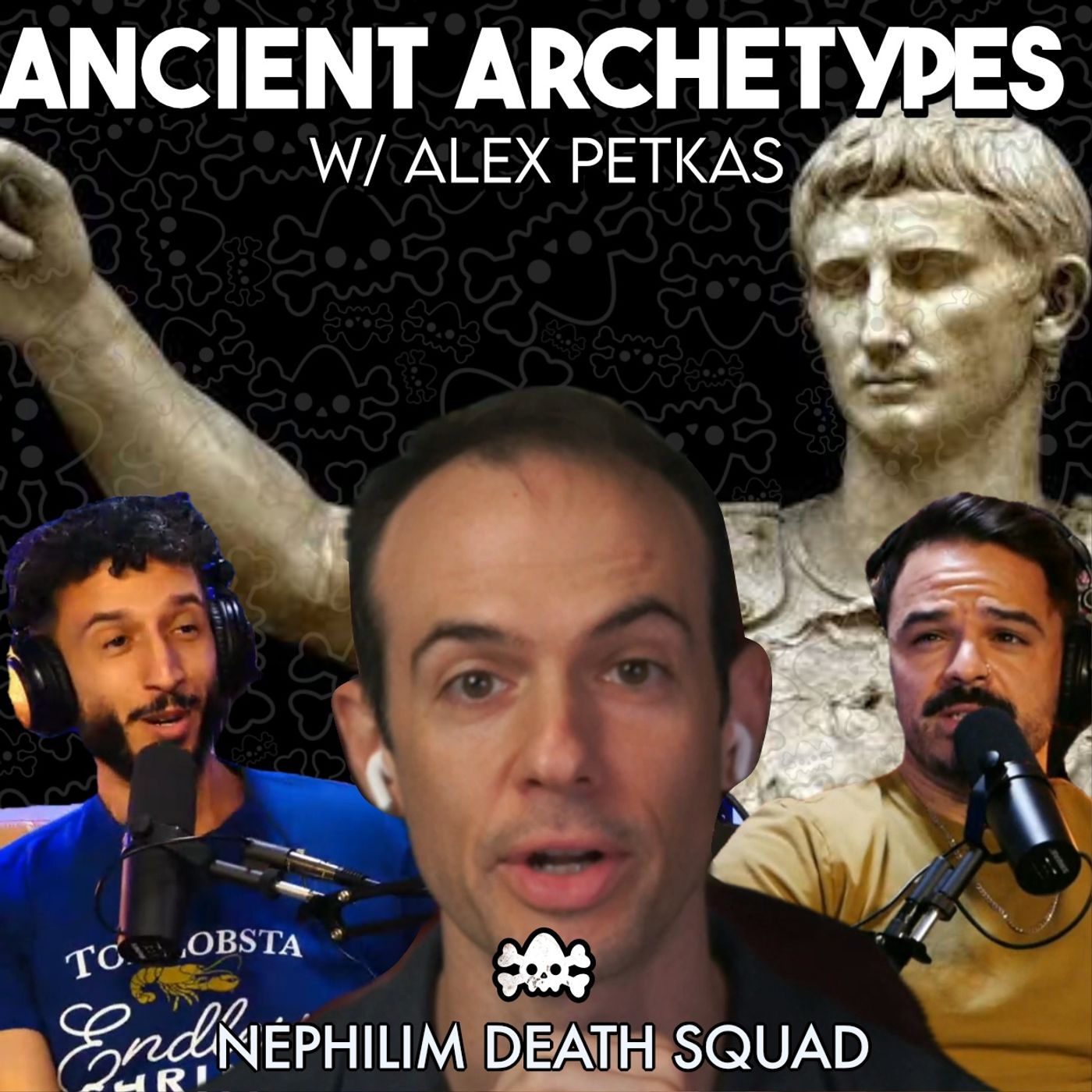
Nephilim Death Squad
221: Ancient Archetypes to Fix Modern Men w/ Alex Petkas (Cost of Glory)
01:54:11
When you erase history, you erase the scaffolding men use to build themselves. Classicist and Cost of Glory host Alex Petkas joins Nephilim Death Squad to revive the ancient playbook—Plutarch’s lives, Achilles vs. Odysseus, Socrates’ defiance, Cato’s...
Loading summary
Transcript334 lines
- [00:00]
Commercial Narrator
Imagine if today was the day your idea changed someone's life. Imagine if you could help someone pay for college, help your community build a new playground or help a child make it to that dream competition with GoFundMe. It's all possible. GoFundMe is the world's number one fundraising platform trusted by over 190 million people every week. Ordinary people meet their goals and do extraordinary things. Your ideas matter. GoFundMe isn't just for emergencies. Want to raise money for your kid's soccer team? Or raise funds for a small business? A creative project or event? GoFundMe helps you turn ideas into reality and help adds up. Fundraisers you start for someone else raise up to five times more. So think right now. Who could use your help? Change rarely comes from waiting. It comes from someone deciding, today I'll start. Don't wait for someone else to bring change today. Start your fundraiser in just minutes@gofundme.com that's gofundme.com to start your fundraiser. Gofundme.com this is a commercial message brought to you by gofundme. Trying to lose weight? It's time to try hers@forhers.com for you. You can access affordable doctor trusted weight loss treatments tailored just for you. These include oral medication kits or compounded GLP1 injections through hers. Pricing for oral medication kits start at just $69 a month for a 10 month plan when paid in full upfront. No hidden fees, no membership fees. You shouldn't have to go out of your way to feel like yourself. Hers brings expert care straight to you with 100% to personalized treatment plans. That puts your goals first. Reach your weight loss goals with help through hers. Get started at forhers.com for you to access affordable doctor trusted weight loss plans. That's forhers.com for you. F O R-H-E-R-Com for you. Paid for by hims and hers health. Weight loss by hers is not available everywhere. Compounded products are not FDA approved or verified for safety, effectiveness or quality. Prescription required restrictions@forhers.com apply. Imagine if today was the day your idea changed someone's life. Imagine if you could help someone pay for college, help your community build a new playground or help a child make it to that dream competition with GoFundMe. It's all possible. GoFundMe is the world's number one fundraising platform trusted by over 190 million people every week. Ordinary people meet their goals and do extraordinary things. Your ideas matter. GoFundMe isn't just for emergencies. Want to raise money for your kid's soccer team? Or raise funds for a small business, A creative project or event? GoFundMe helps you turn ideas into reality and help adds up. Fundraisers you start for someone else, raise up to five times more. So think right now. Who could use your help? Change rarely comes from waiting. It comes from someone deciding, today I'll start. Don't wait for someone else to bring change today. Start your fundraiser in just minutes@gofundme.com that's gofundme.com to start your fundraiser. Gofundme.com this is a commercial message brought to you by GoFundMe.
- [03:02]
Host 1
Top Lobster Productions.
- [03:06]
Alex (Guest, Historian and Podcaster)
We are being hypnotized by people like this.
- [03:12]
Host 1
News readers, politicians, teachers, lecturers. We are in a country and in a world that is being run by unbelievably sick people.
- [03:25]
Alex (Guest, Historian and Podcaster)
The chasm between what we're told is going on and what. What is really going on is absolutely enormous.
- [03:32]
Host 1
Oh, yeah, dude, this is not.
- [03:34]
Alex (Guest, Historian and Podcaster)
It's like we all know what's going down, but no one's saying what happened.
- [03:38]
Host 2 (David Lee Corbo aka The Raven)
To the home of the brave?
- [03:40]
Alex (Guest, Historian and Podcaster)
They control us now. When no one's talking about it, man, it's finally slaves. And everybody's just walking around heading the clouds.
- [03:47]
Host 2 (David Lee Corbo aka The Raven)
I won't awaken to a dead in the grave, but any too late, we.
- [03:51]
Alex (Guest, Historian and Podcaster)
Need to be ready to raise up. Welcome to the end of days. Everybody is slaves. Only some are aware that the government releasing poison.
- [04:01]
Host 2 (David Lee Corbo aka The Raven)
Welcome back, ladies and gentlemen, to another episode of Nephilim Death Squad. I am David Lee Corbo, AKA the Raven, that is Top Lobster, the father of disinformation. Before we get into today's guest, a little reminder. Sometime around the half an hour mark, we're going live exclusively to Patreon.com forward slash Nephilim death Squad. Sign up there. Continue enjoying this live stream. Engaging in the live chat, gaining access to episodes before the general public, before the pores. And also early access to Bohemian Grove tickets. We are talking about it, which is work.
- [04:33]
Host 1
It's coming together.
- [04:34]
Host 2 (David Lee Corbo aka The Raven)
It's coming together. Also, a discount code off of merchandise from Top lobster dot com. Can we not. We don't have to do the shirt that I'm wearing, but let's pull it up on the screen if we can. Oh, hey, we would do that. Binaural beat down. Oh, and the Miami MK Ultra Dolphins.
- [04:48]
Host 1
Why not? Why not? Go buy your favorite shirt.
- [04:50]
Host 2 (David Lee Corbo aka The Raven)
It's disrespectfully matched to your sneakers.
- [04:54]
Host 1
I mean, I'm. Whatever we're at, we're at a weird turning point in the United States. We might as well match our clothes to our shirts to our shoes. As the ship sinks.
- [05:04]
Host 2 (David Lee Corbo aka The Raven)
As the ship sinks.
- [05:05]
Host 1
Let's get into the guest. This is a. This is disrespectful.
- [05:07]
Host 2 (David Lee Corbo aka The Raven)
Yes. We are joined today by Alex of the of Cost of Glory. Alex, thank you for joining us today. Before we get into the conversation, let's show off this website. Let's talk a little bit about what it is that you do, what it is that you focus on.
- [05:21]
Alex (Guest, Historian and Podcaster)
Yeah. Great to be here with you gentlemen. I'm a former academic. I was a professor of ancient Greek and Roman history and philosophy, and I quit my tenure Track job in 2020 to, you know, escape what everybody can kind of guess I was trying to escape. And now I am a. A guy on the Internet and a podcaster. I have the Cost of Glory podcast where basically I'm. I'm trying to showcase some of the greatest leaders from. From Rome and from Greece in their biographies, kind of in. In Technicolor. But the. The object of the Cost of Glorious is to kind of get people to maybe not fall in love with Julius Caesar, but at least appreciate who he really was. And people around him like Pompey and Cicero, also famous Greeks like Pericles. And there's a biography collection. I said I was like, a historian of Rome and Greece and a student of philosophy. Well, there's this ancient philosopher, Plutarch, who I'm following, who basically thought that biography was the best way to kind of become a great man. You study biography, you study their lives. And it's not just about it kind of being great in magnitude, but also about being good, too. So that was like his, His. His angle on. On how you can, like, you know, become your true self. So I think it's a really cool idea, and I'm trying to kind of recreate that for people today who may have no point of reference for ancient Greece and Rome and try to make it accessible. And I do some other programs around this. Like, we have a little online rhetoric school and, you know, we do retreats and in Rome and in Greece. In a couple of weeks, actually, we're going. So. So you're interested in those kind of like. And for men too, in particular. We do, like, men's only stuff, which I think is really hard to find these days. And that's one of the reasons I thought it was important.
- [07:24]
Host 2 (David Lee Corbo aka The Raven)
Well, it is really important. And you're talking about strong leaders and you're talking about you leaving academia, right?
- [07:32]
Host 1
And yeah, the men only part really does resonate with you leaving academia because from the, I mean, some previous studies that I saw, like, I think women are way more likely to graduate from college. They do much better all throughout school, it seems like program that's aimed at them and has ignored men. But I, I have a question about. What do you mean by you, you do a retreat about rhetoric with men. What is, what does that entail?
- [07:59]
Alex (Guest, Historian and Podcaster)
Yeah, well, so rhetoric is, you know, it's, it's got a kind of a bad name these days. You know, that's just a bunch of rhetoric. And here's the rhetoric of this political party, but it's the, the Greek word is rhetorike. It means the speaker's art. And it was this kind of discipline that was developed and first in the great democratic cities of, of ancient Greece, especially Athens, where public speaking was the quintessential skill for success in life, especially in the public arena, you know, persuading assemblies and courtrooms. And it wasn't just about kind of like, you know, developing confidence as a speaker and persuading people. It's, it also grew into this whole art of like developing your character for public life too. And, and so it, it's, it's a discipline that also encompasses the study of history because, you know, a lot of what you do in, in a great political speech then as now is, is to draw on great historical examples and inspire people with them. And you have to kind of build that data bank. And so what, what we think is, is really lacking, my friends and I, in, in education is this like, emphasis on becoming a public man through cultivating the ability to, you know, speak in front of crowds. And so we, we do, we, we go and we see some sites in, you know, the morning, for example, and then in the afternoon we just like have debates and impromptu speeches and study some of the, you know, the techniques by which you can persuade, analyze an occasional speech, have like Jeffersonian dinner kind of experiences where we just like enjoy male camaraderie, but in a serious vein where we're kind of like standing up and making arguments and debating things of interest. And it's, it's so, it's kind of like fun but also self development at the same time. And I think that's what, one of the things that we've lost. We used to have institutions like this. Toastmasters went co ed in the 70s. Toastmasters used to be like super cool and I don't know, like, like a Fraternity, almost. But I mean, if you go now, it's. That's not the vibe at my local Toastmasters. I mean, it's useful, but it's not the same thing. And so. Well, you could see there's.
- [10:21]
Host 2 (David Lee Corbo aka The Raven)
There is a huge need for this, and you could see people trying to fill that void. But you get weird stuff.
- [10:27]
Host 1
Like somebody just mentioned the men in the river holding each other, like, where.
- [10:31]
Host 2 (David Lee Corbo aka The Raven)
They grab each other and they scream in each other's faces and then they sob and they embrace each other. And it's like. It's really strange. It's almost like this masochistic kind of a thing where you're. You're paying a dude to scream in your face and then belittle you and then. And then you have an emotional breakdown.
- [10:49]
Host 1
With what Alex seems to be talking about here with. With biographies are learning about the different archetypes of men and how to embody them. And these guys, this. I mean, it's all over the place. People are embodying female archetypes. The male, like, archetype is already kind of fractured in the minds of most young people where they don't really know what it is. They'll say, toxic masculinity. And it's like, no, that's like. It's a. It's an exaggeration or a caricature of.
- [11:18]
Host 2 (David Lee Corbo aka The Raven)
But then those caricatures do rise. You get like an Andrew Tate who has, like, you know, some redeemable qualities, but then he's also telling you, have sex with the Hiram of women. The Lamborghini is the most important thing. You know, he's not got a family that he's raising or anything like that. It's just. It's just this, like, really cartoonized version of masculinity.
- [11:37]
Host 1
I think it's important what, what you're going to tell us probably today. Can we. Can we go through the common archetypes that were in ancient Greece from the actual philosophers that we probably should be drawing some inspiration from?
- [11:50]
Alex (Guest, Historian and Podcaster)
Yeah, great question. Well, a lot of the. So one of the great archetypes is Achilles. He's. He's this great warrior. He's. It's a mythological figure. Fair. He's depicted in Homer's Iliad. Maybe he existed. I like to believe that some Achilles or somebody like him existed. He's. He's this kind of super fighter, the best man on the battlefield. And. And he strives.
- [12:16]
Host 2 (David Lee Corbo aka The Raven)
He's half.
- [12:17]
Host 1
Half man, half God as well.
- [12:19]
Alex (Guest, Historian and Podcaster)
Man, half God. You know, as Homer tells the story, sometimes he seems like A man. Sometimes he seems like more than a man, but. But he, he's mortal too. So, you know, he has the choice at. At Troy. And kind of throughout his life it's like prophesied that he will. He has the choice to either live a life of peaceful obscurity, a long prosperous life back in his home country. And he actually thinks about leaving the battle. At some point he gets insulted by Agamemnon, the kind of leader of the Greeks at Troy. And he's like, screw you guys, I'm going home. I'm going to go live my long, happy life with wealth and hot women. But the other side of the choice for him is to have a short life but everlasting glory. And he eventually chooses the everlasting glory route. And famously he gets shot in the heel by Paris later. This is after the narration of the Iliad. That's what happens to Achilles. And so that's one of these paradigms of flaming out in this grand inferno of, of excellence for the sake of maybe a higher goal or maybe it's, you know, on behalf of the Greeks, maybe it's kind of on behalf of your own reputation. So that's like one paradigm, another kind of contrasting paradigm that is, is the other hero of the other poem attributed to Homer, the. The Odyssey. Odysseus is also a fighter at Troy. He's also one of the great warriors, but he's not. He's not as good as Achilles and you know, he doesn't pretend to be, but he's really good at persuasion. He's really good at kind of mastering trickery, sometimes deceit. He's really like good politically wise and counsel. He's the guy who comes up with the idea for the Trojan Horse to, to defeat the Trojans by, not by brute force, but by kind of stratagem. And he's also a kind of family man in a way that Achilles. Well, Achilles has a son, but, you know, Odysseus, right, He's got. He's left this happy life on his island of Ithaca, way off on other side of Greece, and, and he tries to get home after the battle of Troy and the Trojan war takes him 10 years. He, you know, he meets all these monsters and strange people. All of his crew die. He finally gets home 10 years after the Trojan War ends. So he's been away for 20 years and his wife has been there kind of fending off these suitors and kind of trying to stay faithful to Odysseus. And all these men are around her saying, hey, Baby, he's dead. You know, pick a winner, you know, and she kind of keeps them at bay. And meanwhile Odysseus's son Telemachus is, you know, he was a infant when Odysseus left, so they don't know each other, his son. And, and, and so he comes back and he kind of clears the suitors out of his house and reclaims what is his. And, and it's a kind of a, he's a model of like how, okay, dying in battle and glory is a good thing, but also like founding a legacy that's going to live on. Generation, generation to, to reclaim what you built. You know, it's, I think Odysseus is kind of a hero of like building this, this society around a great household. So, so these are like two, two options in life that I think are equally valid and, and maybe suited to different times and different characters. Sometimes you don't have a choice. You just, it's Achilles or bust. Sometimes there's no great war to fight and you, you build a legacy. And there's many more archetypes like the, the philosopher archetype embodied by a guy like Socrates, questioning the, the kind of corrupt values of his society, rejecting the whole game. The kind of roulette table of honors that seems to promote people up to high office that don't deserve it and don't, don't really know any better how to run a state than, than your average Joe on the street and kind of getting ridiculed and eventually murdered or you know, executed by your own people for that reason. And you know, one could spin out, spin off many examples, but I think that one, one of the big takeaways that people, you know, the classics used to be this foundation piece of education in the west, in America as well as Britain. And you know, I got a little bit of classics when I was younger, but I kind of got to college and I felt like I realized that I knew nothing of what people were supposed to know. A hundred years ago, somehow I discovered this. What I think it gave you is this library of examples to choose from of like manly excellence. Various forms of manly excellence. Yeah. Scaffolding that you could kind of pick your path. And I think we've lost that and we're kind of grasping at straws now. And this is why you get these weird, you know, scream into a pillow, sweat lodge men's retreat experiences like what is masculinity? And you know, ask, ask, ask US psychology professor what, what masculinity is. And you know, maybe they'll come up with something, but it's not, it's not grounded in this deep historical experience. And so I think that's, it's amorphous.
- [17:50]
Host 2 (David Lee Corbo aka The Raven)
It's like this floating thing. It's, it's interesting to me that you should be studying these, these male archetypes and then at the same time remove yourself from academia because of a thing that I think is only allowed to propagate when you remove strong male archetypes. In other words, the very thing that's rotting academia from the inside out right now, and we've been watching this for a while, is a thing that Imagine.
- [18:20]
Commercial Narrator
If today was the day your idea changed someone's life. Imagine if you could help someone pay for college, help your community build a new playground, or help a child make it to that dream competition with GoFundMe. It's all possible. GoFundMe is the world's number one fundraising platform, trusted by over 190 million people every week. Ordinary people meet their goals and do extraordinary things. Your ideas matter. GoFundMe isn't just for emergencies. Want to raise money for your kid's soccer team? Or raise funds for a small business, A creative project or event? GoFundMe helps you turn ideas into reality and help adds up. Fundraisers you start for someone else, raise up to five times more. So think right now. Who could use your help? Change rarely comes from waiting. It comes from someone deciding, today I'll start. Don't wait for someone else to bring change today. Start your fundraiser in just minutes@gofundme.com that's gofundme.com to start your fundraiser. Gofundme.com this is a commercial message brought to you by GoFundMe.
- [19:21]
Host 2 (David Lee Corbo aka The Raven)
Lowes knows how to get you ready for holiday hosting with up to 35% off select home decor and get up.
- [19:27]
Alex (Guest, Historian and Podcaster)
To 35% off select major appliances.
- [19:29]
Host 2 (David Lee Corbo aka The Raven)
Plus members get free delivery, hallway, basic.
- [19:32]
Alex (Guest, Historian and Podcaster)
Installation parts and a two year Lowe's protection plan.
- [19:36]
Host 2 (David Lee Corbo aka The Raven)
When you spend $2,500 or more on.
- [19:38]
Alex (Guest, Historian and Podcaster)
Select LG major appliances valid through 10, one member offer excludes Massachusetts, Maryland, Wisconsin, New Jersey and Florida.
- [19:45]
Host 2 (David Lee Corbo aka The Raven)
Florida installed by independent contractors.
- [19:47]
Alex (Guest, Historian and Podcaster)
Exclusions apply seelows.com for more details.
- [19:50]
Host 2 (David Lee Corbo aka The Raven)
Exists and couldn't exist without you creating this idea of toxic masculinity. Without you shaming men for being men pretty effectively for the better part of of almost two decades now. Maybe, I guess technically you could trace it back. It starts before that.
- [20:07]
Host 1
There's been a long march.
- [20:08]
Host 2 (David Lee Corbo aka The Raven)
It's been a long march. And now this thing that you have, you know, escaped is, is it's leaving academia. It's, it's entered the, the real world, you know, the, and it's affecting average people at their jobs and, and you know, at their dinner tables. What exactly was the straw that broke the camel's back? What were you seeing before you left?
- [20:32]
Alex (Guest, Historian and Podcaster)
Well, I had, I had a kind of personal experience and then a general experience and I, I'll start with the, the, maybe I'll start with the personal. So I, I was involved in a kind of educational startup that some buddies of mine in grad school started. We were running tours in Greece and like retreats that in, in, in Greece also in Rome. I was more involved on the Greek angle. But you know, long story short, essentially there was. We had all these, you know, talented young students coming to us. We had these talented grad students, but it was like a mixed gender environment. And at some point the, there was like this core tiny and transient minority of like hardcore leftists that were on staff. Like it's just hard to do anything in academia without, you know, involved involving hardcore leftists. And they started to resent the, the, the leadership of this startup and, and who were all men. White men. Right, of course.
- [21:42]
Host 2 (David Lee Corbo aka The Raven)
And is that the premise for their resentment is this, it was male aspect.
- [21:46]
Alex (Guest, Historian and Podcaster)
They said other things and they, they eventually got, you know, they kind of assembled this list of grievances that had, you know, the typical thing, you know, white supremacy, you know, patriarchy, misogyny, but it was just like normal dudes trying to hold a business together, you know, and like so, so, so untalented people would not get promoted. Things like that.
- [22:15]
Host 1
There's a concept, there's a.
- [22:17]
Alex (Guest, Historian and Podcaster)
And, and so, you know, it's it, it. But I think that those, those accusations were kind of, you know, an excuse that was really about this resentment of, of like kind of male friendship and like strong leadership and, and also this kind of ideological programming that you get from basically K through 12 and a lot of even public schools. Some of these kids were kind of cushy private school educated, you know, at the typical kind of white leftist profile in, in the, you know, Ivy League environment. And there was eventually an open letter published, you know, decrying all the crimes of the institute. And we were involved in, with a lot of the top classics programs in the US and in the UK too. And they were sending students to us in the summers. It was great and everybody liked us. And then all of a sudden it was like, oh, these people are, we had no idea. These people are horrible, horrible racists and white supremacists. Look, they're all white males. There's not equal representation. And, and so there was a cancellation and I didn't suffer from it like heavily, but one of my friends was the co founder and he eventually got like forced out of this institution that he spent 10 years building. It was, it was, it made me so mad. And this was kind of late teens, so peak woke before the, the resistance started, you know. And so that was kind of my personal experience of seeing like seeing the character of a lot of the most, you know, respected prominent classicists, experts in Greece and Rome and you know, the gatekeepers, these Ivy League professors, you know, writing op EDS in the New York Times. These kind of people. Can I ask you, does people suck?
- [24:14]
Host 2 (David Lee Corbo aka The Raven)
So does the group still exist?
- [24:17]
Alex (Guest, Historian and Podcaster)
So it does, yeah.
- [24:18]
Host 2 (David Lee Corbo aka The Raven)
And what's it, what's its form now?
- [24:20]
Alex (Guest, Historian and Podcaster)
It's called the Paideia Institute. It's, it's still worth, worth going to if they run, they run tours. I think it's, it's, it hasn't, it's struggled to kind of recover from this. But my, both. There were two co founders. One of them was a conservative Catholic. And that was, you know, why he became the kind of Girardian scapegoat, the focal point of all the ire because he was kind of an unapologetic conservative. And then the other guy was, was a sort of New York kind of center left liberal guy and who has since moved, been pushed like, you know, as he says, I, I was a liberal that got mugged by reality. And so he, he, he eventually is kind of pulling, pulling himself to the right. I shouldn't say that too out loud because he tries to be kind of conciliatory, but so it still exists. But it's, you know, it's, it, it doesn't have the cachet that I think it used to. Hope my friend will forgive me for saying that. I think he knows that it just did a lot of damage. And now I think a lot of the professors after suddenly woke is like not cool or it's, you know, it's questionable. A lot of people are like apologizing to him and for, for how it all went. So I don't know. I just. The whole thing gave me this impression of like a lack of character among, among elite academics, you know, and this, this maybe ties into the general objection that I had, which was I just felt like there was, there was no leadership in the discipline and you know, classics is this Used to be this grand, you know, super prestigious. Like Greeks, Greek and Latin are really hard to learn. There are high standards. Not everybody can make the cut. You gotta work hard and very meritocratic, you know, and very culturally influential. I mean, look at all the sword and sandal movies, you know, Spartacus, Ben Hur. That kind of comes from this tradition of people knowing stuff about Greece and Rome and knowing what the great stories were. And we've lost so much of that. Discipline has shrunk so much that, you know, budgets are getting cut, people are getting fired, programs are getting terminated. And all the people with these cushy jobs in the Ivy League schools are like, oh, you know, what our real problem is is, you know, colonialism, white supremacy. And yeah, it's like you are, your, your discipline is not going to exist and you are basically. I felt like I was on a ship where the captains were, you know, drilling holes in the bottom of the boat and getting drunk and saying, well, it's good if the ship sinks because it's a bad ship. So I don't know, it seems futile to me.
- [27:05]
Host 1
Has there, I mean, I. Through your studies, has there been any kind of similar point in Roman history where people have done this to themselves on purpose?
- [27:15]
Alex (Guest, Historian and Podcaster)
You know, I, I don't know.
- [27:16]
Host 1
It's a good question.
- [27:17]
Alex (Guest, Historian and Podcaster)
I think that, I think that modern leftism is really a novel phenomenon. There's a right and left in Roman politics, but like the left wing of Roman politics is Julius Caesar. It's like very manly, soldierly. It's like populists. It's like tough guys, tough soldiers versus squishy aristocrats who are, you know, sitting on their laurels. And that's just not how it's, it's almost the opposite today. So, yeah, I'd have to think hard about. But there are, there are, you know, there's patterns of resentment, for sure, in, in, in, in Roman history and in Greek history, you see, you see the kind of like sort of left wing resentment, the kind of hatred of greatness or the hatred of the powerful. Always throughout history. This is like a universal phenomenon. Envy is what the Greeks called it. Thanos is this, this emotion that makes people want to just like not, not follow the great, but hate them because they're powerful and suspect that, oh, if they got up in that position, they must have bribed somebody. They must, they must not deserve it. It's just really toxic to a culture when, when you get those kind of divides.
- [28:36]
Host 2 (David Lee Corbo aka The Raven)
Yeah, because it's a reductionist point of view. Right. You didn't get there because of hard work and discipline and good ideas. You got there because you are a member of an exclusive white male patriarchy that only promotes from within. And if you're outside of the club, then you can't get in. And what that does is it diminishes any great achievement. And then when you look back in history and you see anything that resembles that, then all of the history that built the very country that allows you, all the things that you have, was built off of exclusivity to a white patriarchy group. Right. And so it has no merit, despite how much the fruits of. Of the tree that it is have. Have, you know, been good. None of it has any merit. And all of it should be torn down.
- [29:22]
Alex (Guest, Historian and Podcaster)
And.
- [29:22]
Host 2 (David Lee Corbo aka The Raven)
But that's the thing too, is, you know, flawed argument, but it gets even more flawed when they go, and what should it be replaced with? And there is no real idea about what it should be replaced with. The idea is kind of just like diversity.
- [29:37]
Host 1
I think there's an idea they have a clear idea of what they want to replace with. They just won't necessarily say it out.
- [29:43]
Host 2 (David Lee Corbo aka The Raven)
Loud because I don't think they have the idea like these, these average. The people, like, let's say, you know, I've been arguing on Facebook for a.
- [29:48]
Host 1
Couple of days with people.
- [29:49]
Host 2 (David Lee Corbo aka The Raven)
They have no idea.
- [29:50]
Host 1
The rank and file have no idea. But the thought leaders do.
- [29:53]
Host 2 (David Lee Corbo aka The Raven)
Yes.
- [29:53]
Host 1
They're like the people that are the professors within the college understand exactly what they want. I don't know if they're so explicit with the general population. They might be with their. Their students.
- [30:05]
Host 2 (David Lee Corbo aka The Raven)
Yeah, Their cohorts. Right. In private sessions when they're speaking about where, you know, they ultimately want this to go and they'll say it in jest. And we're seeing a lot of that now. It's manifesting as actual violence on the world stage.
- [30:16]
Host 1
I mean, it's. It's manifesting as. I think it's. I think what a lot of them have said and what they've promoted has manifested as a celebration of what happened last week.
- [30:27]
Alex (Guest, Historian and Podcaster)
Yeah.
- [30:27]
Host 1
You'll see people kind of like laughing, smiling. It's like, oh, which is the normal. Talking about this for a while.
- [30:32]
Host 2 (David Lee Corbo aka The Raven)
It's the exact thing that you would expect to get from something that. That has its roots in just disdain.
- [30:38]
Host 1
Well, it's.
- [30:38]
Host 2 (David Lee Corbo aka The Raven)
If you have disdain for the white male patriarchy, then obviously you will celebrate when the thing that you disdain is murdered in grotesque fashion on the world stage.
- [30:48]
Host 1
Would you say that that's the Embodiment of Achilles, but on this like, weird, perverse left wing side, because they are.
- [30:53]
Commercial Narrator
Imagine if today was the day your idea changed someone's life. Imagine if you could help someone pay for college, help your community build a new playground or help a child make it to that dream competition with GoFundMe. It's all possible. GoFundMe is the world's number one fundraising platform, trusted by over 190 million people every week. Ordinary people meet their goals and do extraordinary things. Your ideas matter. GoFundMe isn't just for emergencies. Want to raise money for your kid's soccer team? Or raise funds for a small business, A creative project or event? GoFundMe helps you turn ideas into reality and help adds up. Fundraisers you start for someone else, raise up to five times more. So think right now. Who could use your help? Change rarely comes from waiting. It comes from someone deciding, today I'll start. Don't wait for someone else to bring change today. Start your fundraiser in just minutes@gofundme.com that's gofundme.com to start your fundraiser. Gofundme.com this is a commercial message brought to you by gofundme.
- [31:54]
Host 1
Seeking glory through. It's almost like war. Whereas that, now the people on the right are still trying to embody, I guess the Odysseus side where they're, let's engage in debate, let's have this conversation. How can we organize a structured society? And I'm struggling right now to see, like, I'm struggling to determine which way is the right way or does one lead to another?
- [32:18]
Alex (Guest, Historian and Podcaster)
Yeah, no, I do think that a lot of the left wing leaders now kind of, kind of fantasize about murals of them painted on brick walls. Like Che Guevara esque. Man of the people. Yes. Part of the resistance. Civil rights hero. Yes. But I don't know, I kind of would go with Dave on this. I think that there is a real lack of vision fundamentally and there's just not a hopeful future. You see the kind of center left people saying we need to get back to abundance. And there's this recent book about this and I don't know, I don't think that they're really willing to lean into building a future enough to have that vision. Because to build any ambitious vision you need stuff like hierarchy and merits and structure and patriarchy, what they would call patriarchy. So yeah, I, I think that. What, what? Well, and one of the, one of the other things that they've done to kind of hamstring. Any attempt at building a better society is to make people kind of allergic to history. Like, that's. That's the practical outcome of this, as you put it. It's. It's. It's. It's logically incoherent, the idea that the entire foundations of society are built on this evil, you know, racist patriarchy.
- [33:49]
Host 2 (David Lee Corbo aka The Raven)
And therefore, there's no reason to look at it and learn from it, because all you're learning from is monsters.
- [33:53]
Alex (Guest, Historian and Podcaster)
Exactly. And. And that's. And. And that's precisely the. The thing that you need to do to build an ambitious future. You need to study the past. And not just study it for lessons, but, like, to get inspired by it. This is. Yeah, this is the kind of paradox of studying history and what I would call the classical spirit. You know, you look back into the past and you find these examples of men whose achievements still echo hundreds of years later. You're like, all right, how can we do things that will echo hundreds of years later? Well, you don't really get that kind of expanded imagination if. If, like, year one is 1967, you know. Yeah.
- [34:33]
Host 2 (David Lee Corbo aka The Raven)
It's just really fascinating because it actually shows itself in the physical, in our architecture, where, like, we actually can't build anything.
- [34:41]
Host 1
Yeah.
- [34:41]
Host 2 (David Lee Corbo aka The Raven)
Our McDonald's, which is now just a gray cube with, you know, some wood paneling.
- [34:46]
Alex (Guest, Historian and Podcaster)
Distinctive, at least.
- [34:47]
Host 2 (David Lee Corbo aka The Raven)
Yeah. And I would love to talk about, you know, the. The architectural implications, because I think that that's huge. I think there's something to the psyche when you look around and you see these beautiful, inspirational things and you want to achieve for hire. But I also want to say that it's fascinating to me that we have made a relatively cushy society, and we've now allowed people to have such a disdain for the white male patriarchy to the extent that they're willing to remove it. Not just statues, not just history, but also by way of violence. But these same people, because of the comforts of society, have zero relationship with violence. You're talking about leaders and warriors, and we are being cast aside by the pudgy and the disgusting. I mean, honestly, that's what it really is in so many fashions. It is morbidly obese individuals who have never been in close proximity to violence, wishing violence upon others, and are even willing to engage in it. And I think that is what happens when you don't have a healthy relationship with violence, when you don't really know what it is, when your violence comes from the media, when you see it in your Movies. When you see it in your shows, when the 90 pound blonde white chick does a backflip and kicks the crap out of a dude in an action film and you go, that doesn't even make sense. Sense. That can't happen. It actually lulls it hypnotizes these morons into a false understanding of the realities of violence. And so they're willing to advocate for it, they're willing to engage in it, you know, to some degree. And I, I guess there's just not been very many rude awakenings. It's just very bizarre to me to watch this phenomenon. I've been a martial artist for a long time and as somebody who has a, has an intimate relationship with violence, I don't engage in it in, in real life because the implications are pretty well understood.
- [36:49]
Host 1
Terrific.
- [36:50]
Host 2 (David Lee Corbo aka The Raven)
It's horrific. Exactly. It's, it's actually terrible when you watch somebody's head bounce off the concrete and they start seizing and you go, oh no, a human life is in jeopardy now. But these people don't have that and they are glorifying it. They're calling for it and when it happens, they celebrate it.
- [37:07]
Alex (Guest, Historian and Podcaster)
Yeah, it's. I think that's a good way to, to frame it. And to me, as horrific as the events of the last week have been with the assassination. Yeah. Which affected me very deeply. You know, the, the one bright light on this, besides the fact that I feel this is galvanizing a lot of good people, serious people, and making a lot of people kind of center left, say, what the hell? What party am I? What, who are these people? You know, that the, the left wing right now, they've, they've totally lost the, the kind of spirited, strong young men and example after example in history shows, I mean, Even in the 1960s, the spirited kind of manly young men are the revolutionary elements. Like, if you want to actually achieve some kind of dramatic change and like have a fighting chance at some kind of inner turmoil, you have to have those people. And that's precisely the people that the left have been pushing away for years. And there's just not a lot of like, vigor. It's, it's kind of a Potemkin village. It's like a paper tiger now. And so, you know, I think that we're still going to see these probably sadly more kind of random acts of, you know, leftist inspired violence. And I, I hope this is the last time. But, but, but it's, it's like, it's like a dying animal clawing. Yeah, yeah, out, lashing out with, without A lot of, like, real effectiveness.
- [38:49]
Host 2 (David Lee Corbo aka The Raven)
I, I want to say this when we. Go ahead. Go ahead.
- [38:52]
Host 1
When the animal's at its most dangerous, it's like it's in a corner. The, the idea of injured, the transgender idea. I mean, this is also, if you really want.
- [39:00]
Host 2 (David Lee Corbo aka The Raven)
Now we're gonna have to get off of.
- [39:01]
Host 1
Well, yeah, let's get off of you.
- [39:02]
Host 2 (David Lee Corbo aka The Raven)
Yeah. And, and before we do, though, I, I do want to say on that topic, it's very strange to me that they don't have the wherewithal to realize that the trained individuals, the armed individuals and, and, and the actual people who are capable of physical combat almost exclusively exist on the right.
- [39:21]
Host 1
Well, there's a, There was a great meme going around of like, it's like this really. It's like soy Jack face, but he, his, his face, like, resembles a demon.
- [39:30]
Host 2 (David Lee Corbo aka The Raven)
Yeah.
- [39:31]
Host 1
And then on the other side, it's, you know, like, kind of like the, the gayer version of this soy Jack. And in the demon side, it says this is the right wing version of like, rebellion. It's like, I'm gonna debate you and destroy your, like every. Like I'm gonna destroy your entire foundation. And then the other kind of like gayer looking Soy Jack has a gun and it says, like, I'm gonna shoot you. Yeah, there's a difference here. And I'm, I'm a little bit worried that the right. If they decide to cross that Rubicon of violence, of actual violence like that.
- [40:05]
Host 2 (David Lee Corbo aka The Raven)
What.
- [40:05]
Host 1
That looks nasty. And also, do. Do they have to? Because the battle is almost already won. That's the reason why I think it's.
- [40:13]
Host 2 (David Lee Corbo aka The Raven)
It'S, it's Mosfee doll Askren. You know, it kicks off and it's a knee to the forehead and the whole thing's over instantly. I think that's what they would find out. Anyway, before we do this, guys, if you want to Continue watching this, patreon.com/nephilim death squad is where we're going. Otherwise, just give it about a week and it'll release for free on, you know, YouTube, etc. Yeah, I mean, what do you, what do you think about that, Alex? This idea that these people are. Are poking and prodding the side that actually is. If there were any remnants of strong leaders and, and masculine men, they. They exist on the right.
- [40:55]
Alex (Guest, Historian and Podcaster)
Yeah, I think that the, the, the rights. There's a post by Curtis Yarvin on this recently that the. You have to distinguish being between violence and for force. And the left's version of force is kind of you know, grassroots political violence. The rights version of force is law and order. And I think that, that the response to, to Kirk has kind of shown like, you know, contrast the Floyd riots in, in 2020, you know, that we're not seeing massive eruptions of violent mobs, but, but like, calls for action. I mean, you can only call for action without seeing results for so long with. Before people start to get like, oh, nothing's going on, we got to do something. But I, I don't know. I think that, that, that that's the response that people generally want on the right. Like some kind of legitimate, maybe not military cracking, but like a legal reckoning, you know. And so I, that's. It's a kind of a difference in mindset, you know, Let me ask you this. Order re established.
- [42:08]
Host 1
That's a, that this is going to be on the responsibility of the Trump administration to do something, and not necessarily physically drastic, like you're saying. But there has to be a response because you're, you're right. These people, they crave order like this. I think something that Jordan Peterson really nails the order, the distinction between order and chaos. And the right wing, the masculine, the true masculine is order. It's that firm hand of like, when you grab your child and you're like, we're not doing that, versus what I think the feminine thinks the masculine response should be. You see this a lot with lesbians who have, like, the highest violence rate against each other, or women who are embodying this masculine tone. Just teachers, you know, people like that where they'll, they'll overdo it and they'll, they'll cross that line into what they think is supposed to be masculine. It just turns out to be nasty. Yeah, violence like, like, it's like a mask coming off, like a demon underneath. That's not what masculinity is. But, yeah, there has to be a strong response from the Trump administration, which they have not had as of yet. But it's still, it's been a couple of days. You have to satiate your side to keep them calm, because if not, I don't know where this is going to go. It can get real nasty.
- [43:17]
Host 2 (David Lee Corbo aka The Raven)
Well, this is a conspiracy show. And so I, you know, you're talking about order and order and chaos. What about the idea of order out of chaos? Right. You have historical precedent, you know, the Bolsheviks creating what, what looked like grassroots revolutions, you know, to kind of disrupt the, the cultural fabric of a place. I wonder if there are examples within Rome that you could point to. But what do you think about the idea that this is a subverted sort of cultural manipulation to pit one wing against the other so that out of the chaos, order could be birthed? That is a big fear of mine. And I wonder if that has shown itself in any of your research.
- [44:07]
Alex (Guest, Historian and Podcaster)
Yeah, that's fascinating. Well, I have no idea. I mean, I, I try to talk to smart people and figure out what's going on today, but I can, I can say about, about Rome that one of the distinctive features of the late Republic, which is a period that I am focusing on a lot in my, in my show, is that you can kind of hire a mob to. To. To do something. You can hire a gang of thugs, but you can also kind of like, pay a mob to. To show up and be the people clamoring against whatever and make it kind of seem grassroots when it's actually on the kind of payroll of some oligarch. And a great example of this is the.
- [44:55]
Commercial Narrator
Imagine if today was the day your idea changed someone's life. Imagine if you could help someone pay for college, help your community build a new playground, or help a child make it to that dream competition with GoFundMe. It's all possible. GoFundMe is the world's number one fundraising platform, trusted by over 190 million people every week. Ordinary people meet their goals and do extraordinary things. Your ideas matter. GoFundMe isn't just for emergencies. Want to raise money for your kid's soccer team or raise funds for a small business, A creative project or event? GoFundMe helps you turn ideas into reality and help adds up. Fundraisers you start for someone else, raise up to five times more. So think right now. Who could use your help. Change rarely comes from waiting. It comes from someone deciding, today I'll start. Don't wait for someone else to bring change today. Start your fundraiser in just minutes@gofundme.com that's gofundme.com to start your fundraiser. Gofundme.com this is a commercial message brought to you by GoFundMe.
- [45:56]
Alex (Guest, Historian and Podcaster)
The. Well, the. All the late Republic. This is happening in the kind of final years of the breakdown of the transition from Republic to empire. We'll go into it a little bit, but in particular, the Catalinarian conspiracy is a really interesting kind of place to zoom in on some of how these patterns play out. So for just a little bit of background and kind of in a nutshell, what we're talking about, Rome is a collective government, right? They have consuls and praetors elected officers, they have a people's assembly, they have a kind of aristocratic council, the Senate, and no one man runs the show. But after kind of debate, when the actual point happens, is it 46 BC, is it 31 BC? But basically Julius Caesar gets himself involved in this huge civil war as a general of Rome, as, as one among many leaders of Rome. And by the end of it, he's kind of the, the most, he's by far the most powerful man in Rome. Not clear that he wanted to establish a monarchy, but he might have been thinking that that was the solution to this. Kind of years of turmoil and that's the 40s BC. And then it's, it's, he gets assassinated, of course, famously. And then his son, son and adopted son, Octavian Augustus becomes the first emperor by fighting some more civil wars. And that's this huge transition from, you know, this kind of collective government that the American founders really looked to for how we should establish our own constitution to this monarchy. That is what Jesus was born under, right? Like the, the emperor, you know, revered as a God. And Christian martyrs saying, no, I will not burn incense before the emperor, he's just a man. And they get thrown to the lions. That world was very different from Caesar's world. And so one of the things that you have in the late republic is this massive wealth inequality. And the top citizens of the oligarchy are getting huge troves of treasure from foreign wars. They're getting all kinds of, you know, political gifts given to them to plead the case of so and so provincial. They have all these clientele, just sweeping sources of like, political influence and revenue all across this huge, really Mediterranean wide empire. And then the poor people of Rome or the average people even, are not getting a share of the cut. Even like the kind of upper classes, but not high, like upper middle, let's say upper middle class versus the, the top tier. There's a massive chasm in, in power and influence. And so there's a lot of discontent about this inequality. And, and this, this man Cataline famously tried to stage a kind of coup, a revolution. It's happened in 63 B.C. and it failed. It got caught. And you know, Catiline ends up dying in battle. But very interestingly, the people that were thought to be behind Catiline's revolt, so Catiline is this indebted aristocrat, he's sort of down on his luck, doesn't have a lot of money or influence, but so there are powerful backers behind him who did have the money and influence. One of them is Marcus Crassus, the richest man in Rome. And another one is, at least some people thought Julius Caesar himself. A young Julius Caesar, he's sort of mid-30s at this point, kind of hasn't made his rise yet, hasn't fought any of his great wars. But, you know, people have got their eye on him. He's on his way. And people thought that Caesar and Crassus were kind of behind Catiline. So if Catiline had won his revolution or, you know, successfully orchestrated his coup, they. They might have a. You know, Crassus and Caesar would be running the show with Catiline as their puppet, maybe. So it's this fascinating example of, you know, somebody trying. Seeing the. The discontent and the resentment. And much of it was justified too, we're saying, and trying to kind of have a bloody revolution, and then they're getting suppressed by the forces of law and order. And you could even question whether the forces of law and order were the good guys in that situation. But, you know, it was a powder keg, and they managed to kind of put a lid on it in. In 63. But. But it's sort of those same forces of resentment, inequality, indebtedness, that allow the final kind of turn 15 years later to a proper civil war that Caesar is. Is on the populist side of and, you know, provokes this transition from republic to empire.
- [51:09]
Host 1
It has a. It has slight January six vibes. I mean, it does really mimic the economic divide, you know, to not sound like a leftist, it's like you really gotta, like, walk a line. But there is a huge economic divide between the upper 1% of people who are taking money, who are gaining profits from, like, Lockheed Martin, they're selling weapons to, you know, different countries, just profiting off of war. As our young men go off and die for these wars, come back with nothing. And you look at the left, and I'm like. To be completely honest, I'm a little bit sympathetic with their arguments because, yeah, a lot of these people, they are nihilistic because they don't have a family, they never will. I mean, half of the dating pool is either crazy, truned out on medicine, they'll never own a house, they'll never have. I mean, everything is stacked against them. And I get it.
- [52:01]
Host 2 (David Lee Corbo aka The Raven)
So I'm saying they have nothing to conserve.
- [52:03]
Host 1
Yeah, it's like, why would I. I understand that, but it's. It's also a trap that you're falling into. Like, they've been lied to. By these people. Sam Hyde nailed it this morning with his video.
- [52:12]
Host 2 (David Lee Corbo aka The Raven)
I saw a little bit of that.
- [52:13]
Alex (Guest, Historian and Podcaster)
Yeah. He's like, let's catch that.
- [52:15]
Host 1
Yeah, yeah, go check it out.
- [52:16]
Host 2 (David Lee Corbo aka The Raven)
It's intense, man. But you'd have a hard time arguing against it.
- [52:19]
Host 1
Yeah, he. He basically says that, you know, these people, you've given up, you've been lied to and you've given up your. Your right to have children, to have this place. And it's. You know, there's a lot of stuff working against you, but if you've just outright admitted this and you've spoken it out loud and you've given up the fact that you can do that, then. Then it's over.
- [52:38]
Alex (Guest, Historian and Podcaster)
Yeah.
- [52:38]
Host 1
So I don't, I just don't know where you go with.
- [52:41]
Host 2 (David Lee Corbo aka The Raven)
But that's like my, the way my mind always goes is like, who is, who's benefiting off of this? When you go back to even the Black Lives Matter protest, which this feels like.
- [52:51]
Host 1
Another question I have, like, this guy Crassus, you're saying he's like one of these upper tier people. What is his motive? It sounds a lot like a George Soros kind of thing.
- [53:00]
Host 2 (David Lee Corbo aka The Raven)
That's what. Yeah, that's exactly where I was going.
- [53:02]
Host 1
Okay.
- [53:02]
Alex (Guest, Historian and Podcaster)
Yeah, yeah, yeah. Crassus is sort of a bit like the Soros of, of Rome. I mean, because he's so. He's from a good family, but he not like a tip top family. And there was an earlier civil war. I mean, so many civil wars in the late Republic in, in the 80s BC. So like 20 years before this incident. The Crassus is a young man and he manages to basically make a fortune buying and selling confiscated estates of. Of enemies of the state. You know, he's like house flipping, but, you know, sounds like this is the.
- [53:38]
Host 2 (David Lee Corbo aka The Raven)
HGTV back in the day.
- [53:40]
Host 1
No, it sounds like Soros.
- [53:42]
Alex (Guest, Historian and Podcaster)
Yeah.
- [53:42]
Host 1
Began his by. By selling out his own people. Okay, continue. I'm sorry.
- [53:47]
Alex (Guest, Historian and Podcaster)
So. So he builds this fortune and he gets in a kind of arguably disrespect, disrespectable way. And, and, and he does it. He. Because he's aligned with this dictator, Salah. But basically what Crassus does is he builds. He builds this fortune not to just be a rich guy, but to use it to build a power network. And what he does is he lends money at very favorable rates to a lot of needy men who are not of the kind of top tier. He's going after the B plus players, maybe these kind of outsiders, kind of upper middle class types New men in the Senate. And he says, you know, Crassus is your man. I can help you kind of make your career. I've got, I've got a political machine. We can get your son a quester ship. You know, you're going to be a made man if you, if you go with Crassus. And so he has this huge swath of kind of like no name politicians, senators, but whose votes still count in the Senate. You know, so he can really move a huge block block of kind of backbenchers in the Senate and, and he knows everything that's going on in the city at all times because he's got this incredible network of people that he's, that owe him money. And he's like, oh no, you don't need to pay me back. There's get, get to it next month. It's all right, you know, I got you. And so that's how he kind of keeps the, keeps the chains on them and, and you know, eventually he is.
- [55:23]
Host 1
Sounds like usury.
- [55:24]
Host 2 (David Lee Corbo aka The Raven)
It does.
- [55:25]
Host 1
What was his ethnicity?
- [55:26]
Alex (Guest, Historian and Podcaster)
I'm just questioning.
- [55:28]
Host 1
Never mind.
- [55:30]
Alex (Guest, Historian and Podcaster)
100 Italian. 100 Italian. But. Well, the thing is like, you know, usury in Rome is, is, is charging too much interest. But, but it, money lending was seen as, as disreputable. Importantly, it was not something that you were supposed to engage in as, as a senator. You actually formally borrowed from it. So you know, he just basically, I don't know, he sets up a pot of money somewhere else and he has somebody else do the actual lending, sign their actual name on the contract. There's ways to get around this stuff. So he's this kind of like shadowy puppet master. And one of the people that he promotes in his career is Julius Caesar. You know, he is a huge, huge financier of Caesar's very expensive career. You know, Caesar's always throwing these lavish games to get popularity. He's going off and fighting wars that require a lot of funds, you know, hire soldiers. And Crassus is basically when Caesar, Caesar's playbook is he's a respectable, noble, kind of a bit like a. I mean, I say he's a bit like a Donald Trump in that he's from the kind of, you know, in the tabloid magazine classes of America at least. And, but he kind of sets himself against that establishment at some point. He kind of turns on them. And this is one of the reasons why they hate him so much, right, because he was one of them and he kind of betrayed the, the consensus and goes against them. And so essentially crassus when Caesar's doing that playbook, Crassus was doing the same thing. And that, that's why he, he built his political network so he could kind of challenge the establishment aristocracy. I think that probably Caesar had better motives than Crassus, but Crassus was really out for power. And eventually it's Crassus, Caesar and Pompey that formed this triumvirate in the year 59 to kind of master the state and to kind of. Even though it's a Republican name, it's really like the rule of three men running the show in Rome. So you know, I forget where what, what the kind of topic that we were discussing around Crassus was, but essentially he's, he's, he's gonna be playing the populist card on some level for, for all of his career. You know, Crassus is a guy that can hire higher mobs to, to intimidate other politicians. He's, he's famous for getting criminals acquitted who definitely had it coming by bribing the jury. That's typically how you do that sort of thing. You could bribe witnesses, but you know, there's always ways to kind of get people off of serious political charges. So, you know, the, the influence of money in politics is this very age old question. And Crassus is one of like supreme examples of, of that.
- [58:34]
Host 1
It, it sounds like the, the beginnings of what's that called Operation Gladio or Project Gladia where it's like there's money inserted, there are mobs that are kind of like sicked on the public in order to create a reaction for what they desire afterward. Is that, Would you draw that comparison as well?
- [58:54]
Alex (Guest, Historian and Podcaster)
Yeah, well, there are, there is, I'm trying to think of a specific example with Crassus. Like one of the things that he. So he, he supports this mobster at some point who, he, who owed him a favor because Crassus got him acquitted. The guy was basically going to be executed and Crassus paid off the jurors and, and this guy, you know, just starts running, running the streets with his, with his thugs. And, and when, when he gets attacked by some of the more respectable politicians, you know, he'll say that, oh look, the aristocrats are trying to, trying to deprive the people of their desserts. You know, this mobster Clodius's name gets eventually gets himself elected to office, if you can believe that, and he passes a law to have a free grain dole to all of the Roman citizens. It's basically like welfare he passes one of the early welfare laws. There's so much money, there's so many poor people in Rome. And whenever politicians attack this, you know, he can get, he can get a group of people to pelt them with fruit as they're walking out of the Senate and make them seem like, you know, fat cats when really they're just trying to kind of hold the order together. So there's all kinds of ways to game the system.
- [60:19]
Host 2 (David Lee Corbo aka The Raven)
Like that sounds very familiar. Appealing to the disenfranchised with, you know, kind of freebies and then mischaracterizing anybody who should stand up against those systems.
- [60:31]
Host 1
While being funded by the guy who is part of this.
- [60:35]
Host 2 (David Lee Corbo aka The Raven)
Yeah, it sounds very familiar. Well, I mean, you're highlighting the importance of understanding history right now. Which just brings us back to the original conversation about removing any interest in learning about history because history was built by strong men who are toxic pieces of.
- [60:56]
Alex (Guest, Historian and Podcaster)
One of the things I, I think is interesting is how, how left and right are different in various periods of history. You know, like in the French Revolution, the, you know, the revolutionaries were all like Rome obsessed, Cicero nuts. They're all trying to be these great kind of republican figures standing against the monarchy. And there's this deep, deep interest in, in history. And like Plutarch's biographies in particular among the Robespierre and Danton, all these guys are like fancying themselves great men of the past, you know, even though they're, they're like the left, sometimes the hard left in, in France. And so it, I think that we're, we're really at this new stage of leftism where erase erasure of history. I think you have to have Karl Marx for that to happen, to this like conspiracy that all of human history has been about, you know, promoting the interests of the, of the fat cat capitalists. Yes, that the cultural Marxist wave that comes later in the 30s with the Frankfurt School, this idea that the patriarchy, the colonial patriarchy has kind of been telling the narrative for all these years and they're trying to brainwash you. That's not really there even in the French Revolution. Maybe the seeds of it are there. Certainly not there in the American Revolution, which you could also argue is a kind of left wing energy. So yeah, I think that a lot of times people try to pick sides in history and this is one of the great things about it is it's difficult to pick sides. You have to think about the issue more objectively. Like what is left right really mean? What is populist versus centralized or aristocrat really mean. So, yeah, I think we're in a different situation today.
- [62:59]
Host 1
Yeah, the titles change, the motives change, but the direction doesn't. It seems like the period of Rome that we're describing was a democracy that's sort of corrupt, falling apart, and then it turns into a monarchy. I've. I've been actually like, you know, a couple years ago thinking about and been sympathetic to the idea of monarchy because I'm like, it just seems better. Seems like it makes more sense because there's one guy and when he messes up, you can cut his head off, but there's also one guy at the top. And then when he, when he declares himself God, this gets very messy too. Whereas democracy, what we have now, it's a God that has already failed. I mean, it's just falling apart on the edges everywhere, people still defending. And I'm just kind of like. But we can't really. We're not going to vote our way out of this. We've. They've cornered the system of people's minds and forget about. I'm wearing a shirt right now that says MK Ultra Dolphins. It's about John C. Lillian. If you want to get into conspiracy and MK Ultra and pharmaceuticals and how people's, you know, just like people are out of their minds, Literally out of their minds, we cannot meaningfully have a democracy under these conditions.
- [64:07]
Host 2 (David Lee Corbo aka The Raven)
And, well, that's, you know, not only the. The things that are in the food, if you want to get super conspiratorial or the frequencies, but just the propaganda machine, the media in general, what it's been feeding people at scale. We're probably the most sedated populace in the history of the world. And we are plugged into the media like no other generation before us, and we're just being fed propaganda, propaganda, propaganda especially. I say that this is aimed predominantly at women and children, but more predominantly at women.
- [64:38]
Host 1
If you're the consumer market, they're doing like 80 of the purchases and making all these financial decisions, so that's who you're going to target. Then the next thing you do is appeal to their better nature, which is like, oh, don't you. Don't you want things to be nice?
- [64:52]
Host 2 (David Lee Corbo aka The Raven)
And that's that weaponized empathy thing I was talking about on Facebook, where they've taken things like empathy and tolerance and they've weaponized us or weaponized them against us. And it's like you are being made to be empathetic and tolerant to things that are corrosive to not only, you know, Your well being, but your children's, well, well being. And so, yeah, a lot of this enters by way of women's media. I will say this very often. If you, if you see anything, you know, a show that's aimed at women, that's where you will get all your trans characters. That's where you're gonna get your concepts like polyamory, right? Like this idea of having, like multiple suitors or, or whatever. This is where you're gonna get the idea of. Of, you know, gay parents or, or any of these things. They don't exist in media for men, right? And if they do, it's usually shouted about, you know, they'll. They'll inject it in like somebody's, you know, a superhero movie, a Marvel film. And. And mostly the. The audience that that's aimed at are, you know, white men 30 to 50, you know, generally speaking. And they will get pretty upset if you put that in there in their movies and then that movie will.
- [66:06]
Alex (Guest, Historian and Podcaster)
Will.
- [66:06]
Host 1
Well, we've gotten to the point where they're like.
- [66:09]
Host 2 (David Lee Corbo aka The Raven)
Well, now they're like.
- [66:10]
Host 1
They're just kind of like, oh, just let me. Okay, like, if I agree, we'll.
- [66:14]
Host 2 (David Lee Corbo aka The Raven)
Can we. Can we get back to the fun? Can we get back to the fun?
- [66:18]
Alex (Guest, Historian and Podcaster)
This segment brought to you by the message.
- [66:20]
Host 2 (David Lee Corbo aka The Raven)
Yeah, exactly. You know, but I did see, and I wonder if you saw this, Alex. There was like a resurgence. There was a blip on the radar. It was in the past decade, stoicism became very popular.
- [66:34]
Alex (Guest, Historian and Podcaster)
Right.
- [66:35]
Host 2 (David Lee Corbo aka The Raven)
And I think it's since gone away. But like, I have somewhere in my library of books that I rarely ever look at. You know, I don't know if it's like musings by Marcus Aurelius, like, there are these. There was this resurgence, a love for stoicism, this desire to implement it. And I think it was maybe the infancy of people starting to get upset about what they were seeing and correctly identifying, you know, some sort of solution, which was strong male figures. But then it went away. And I don't know why it went away. It seems like you would have. That ball would have kept going. Maybe I'm wrong. Did you see that, Alex? Did you see this? It's. Was it within the past 10 years this, this love for stoicism came.
- [67:22]
Host 1
Stoicism.
- [67:23]
Host 2 (David Lee Corbo aka The Raven)
Stoicism. I've mispronounced it 17 times on this show.
- [67:26]
Host 1
I don't want to interrupt, interrupting. You could have done it sooner.
- [67:28]
Alex (Guest, Historian and Podcaster)
I would have appreciated.
- [67:30]
Host 2 (David Lee Corbo aka The Raven)
Unbelievable stoicism.
- [67:32]
Host 1
Tell me about it. I see, I see, Alex. Just.
- [67:36]
Host 2 (David Lee Corbo aka The Raven)
Unbelievable.
- [67:37]
Alex (Guest, Historian and Podcaster)
Man.
- [67:38]
Host 1
Unbelievable.
- [67:40]
Alex (Guest, Historian and Podcaster)
Yes. So however you pronounce it, you know, I think.
- [67:46]
Host 2 (David Lee Corbo aka The Raven)
No, please. The right way is how you pronounce it. Stoicism.
- [67:50]
Alex (Guest, Historian and Podcaster)
Stoichiometry is. No, so this. I think this is a good trend. Well, it was, and I think it was for exactly the reasons you said, Dave, that, like, people felt this disconnection from the past. They wanted manly role models. Marcus Aurelius, great emperor, good man, strong. The meditations are, you know, really. Meditations change a lot of lives. Yeah, yeah, yeah. And, you know, Seneca is another. He's a great writer. He's, you know, the conciliare of Emperor Nero. Not quite as. As admirable a character in his personal life. Not a bad guy, but a great. A better writer than Marcus Aurelius and Epictetus, famously, the slave who gets freed eventually. This, like, slave philosopher, showing you that, you know, no matter what, you have the choice to be virtuous and to be free, even if you are a slave. I mean, it's a lot of really good lessons in these. These authors. And I think that. Well, my sense is that this. This took off for the reasons you said. People are kind of grasping for some kind of depth, and then it's sort of run its course for two reasons. One of them is, you know, when I was in my early 20s, I got into stoicism, and I'm like, this is. This is it. This is, like. It's so simple. You know, this is so useful. There's so many maxims. You know, focus on what you can control, not what you can't. You know, cosmic. Cosmic order. Like, there's. There's a lot of good stuff, but stoicism, after a while, I think most people who are kind of high openness get a little bored with it because there's only so much depth you can go into. There's, like, these three big authors, their metaphysical system, you know, their. Their account of, like, the universe is. Is a little weird. And, you know, the universe is consumed in fire every 5,000 years or something. You know, there's. You kind of hit. Hit the bottom of it sort of.
- [70:02]
Host 1
Soon.
- [70:03]
Host 2 (David Lee Corbo aka The Raven)
There were other things that kind of padded that, Right. Like, at the same time, we got 12 rules for life from different. Jordan Peterson.
- [70:09]
Alex (Guest, Historian and Podcaster)
Yes.
- [70:09]
Host 2 (David Lee Corbo aka The Raven)
The Rings of Power, I think, was also made, was like five Rings of Power or something like that. And then there was also the Art of War. So, like, there was a. There was a bunch of, you know, this resurgence, and it was. It was men looking for direction and scaffolding, and then Maybe it was just too dry, it wasn't enough. There needed to be something else on top of it.
- [70:33]
Alex (Guest, Historian and Podcaster)
Yeah, I think, I think that's right. And, and I'll get to my. What I propose a solution in a second. But I think that the other aspect of this is that it kind of got domesticated. You know, it, it sort of got turned into a squishy self help meme that didn't really demand a lot of you at the end of the day. Didn't really demand you. You could keep doing your, you know, Lambo hustle or you could keep doing your kind of boring desk job and you know, hey, stoicism is for women too. Hey, you know, if you're a mom, you can be a mom stoic. And it gets so kind of, you know, pop Buddhism ified that, that men sort of start to lose interest. Like there isn't. It's not really calling me to some higher level. Yeah.
- [71:22]
Host 2 (David Lee Corbo aka The Raven)
It's like, okay, once I refined myself by way of these rules or these laws or what have you, then what.
- [71:30]
Alex (Guest, Historian and Podcaster)
Right, right, exactly. And I think that, that Plutarch is a great solution practically because, you know, if you've gotten enough into Rome, the best place to start, like going deep, is familiarizing yourselves with the great men of Rome and, and, and Greece and Plutarch, Plutarch's Lives, this great, great classic that was, it was the most popular ancient book, one of the Most like top five most popular books of all in the 18th century in America. It's hugely popular among the founding fathers. Great examples of, you know, people resisting tyrants, launching coups, fighting battles, dying honorably, all this stuff. One of the characters of Plutarch's Lives that was really influential is Cato the Younger. This, who's Rome's greatest Stoic. I would say he didn't write anything that we have today, but he sort of cited his stoicism, or at least Stoicism was kind of part of his, you know, public presence, self presentation in his resistance to Julius Caesar, his defense of the Republic. So I mean, these, these lives are just so much more textured and give you like, like we were talking about that scaffolding of, of archetypes, like what should you be striving for? What should you put your Stoic principles in the service of? I think that Plutarch gives you a lot of data points for that. One other philosopher that I really like who is not a great read, I have to admit, but very smart and influential is Aristotle. And if you, if you pick up Aristotle's Ethics. And you skip to book four. I think it's right at the beginning of book four, towards the beginning, he talks about this. This quintessential virtue of greatness, which is greatness of soul. And megalopsikia is the Greek word great. It's come sometimes called greatness of mind, magnanimity. But it's this idea that. Or it's a virtue that you can cultivate where you desire great things, consider yourself worthy of them, and are correct in that judgment. So it's like good ambition. It's the highest form of ambition. And you're correct in your judgment that you deserve great things because you are actually virtuous. So it means you desire to be worthy of the esteem of your fellow men. And this is like Abraham Lincoln. This is. This is George Washington. This is. So many of our great leaders like you, you aspire to like. Well, to honor is what Aristotle says, to like leadership, you know, in the service of something good. And that requires you to be. To merit the esteem of your. Of your fellow men. And I think this is something that a lot of Plutarch's heroes exhibit. And that's why the founding fathers, like George Washington, were obsessed with Cato. And, you know, John Adams is obsessed with Cicero. He's obsessed with the Pamenondas of Thebes, Another great kind of Democratic leader. Really brave man. So that's. I think that's where I think we should go after the Stoicism thing has run its course. Like, you can still be a stoic and then admire these guys and. And, you know, add something on top of it.
- [74:57]
Host 2 (David Lee Corbo aka The Raven)
It's interesting because, you know, there's no place to go after the Stoicism, and what you're saying is a good direction. But it was in response to this subversion, this ideological subversion of America. And after you armed yourself with the tenets of Stoicism, there was no battle to fight, because the nature of the subversion was one that only took place in dialogue. And then they managed to effectively shut that dialogue down. Right. So the dialogue was no longer taking place in the town square, but it's taking place on the Internet, where the censorship moderators can remove you from the conversation entirely. So the Stoicism should lead you almost to the public square of dialogue, right? To now express these ideas and these values. But then you're. You're being turned off. You can't even express them. There's trigger words that'll, you know, the algorithm will notice you, and you will get your account Banned or you will get. So now the public square is unfairly moderated, and it's, it's leaning in one direction so it snuffs out the flame that's been ignited by the stoicism. There's no outlet for it. And you can't go directly to combat if there is no public square, meaning in the public square where the dialogue used to happen, if the dialogue couldn't be reconciled, then actual, you know, combat of some sort would take place. Right. And this would, like, snowball into an actual war or a civil war. Now there is no dialogue.
- [76:27]
Host 1
Do you think, do you think that's why there's been a concerted effort? I mean, we'll talk about, like, white men. There's been a concerted effort to spike the idea of being white people are not supposed to be proud of. And then that gets mixed up with white pride. And, you know, obviously there are extremes of this, but we have a generation of people who are, I think that they were or are still ashamed of either their skin color or what people have told them what they are. And their, their fathers and their, their.
- [76:58]
Host 2 (David Lee Corbo aka The Raven)
Family are called the monsters and conquerors and racists and homophobes.
- [77:01]
Host 1
And. Right. But now, now there's a movement in the other direction which is kind of like these ideas of Aristotle. But I'm also careful with, like, even with myself, with that idea of, like, what do I deserve as, as a man? Because I know when I was younger, I might have thought I did not, you know, I was like, man, who am I to, to deserve this thing? And guess what? You're not going to get that thing because you're, oh, yeah, you've already told yourself, like, I don't deserve this, therefore I will not work for it.
- [77:31]
Host 2 (David Lee Corbo aka The Raven)
I'm worthy of it.
- [77:32]
Host 1
Older, I said, no, no, no, I deserve the nice things. Like, I just, I work for this stuff. I, I, I know who I am. And then you kind of, it's weird. You manifest, you get those nice things. But there is also a slippery slope of I deserve I am, therefore. And then your ego, like, I, you've got to check.
- [77:53]
Host 2 (David Lee Corbo aka The Raven)
And it's almost a question, right? If you suppress that in a, in a, in a, let's say a race, like the white race. Enough. Could you theoretically create the sentiment of supremacy as, as a disproportionate snapback?
- [78:05]
Host 1
Yes. And this is what I struggled with recently, where it's like, and you've seen it. Or I'm like, I gotta dial it back. Because, yeah, I'm like, I have, with things that I've created. And then people who have, you know, kind of wronged me in a sense, I was, I was very humble, deal within dealing with them. But then the reality was, wait a second. I created that. I created the thing that you're using now for success, but I never threw it in your face. But I also have to realize that I created that thing. And then the slippery slope is me.
- [78:38]
Host 2 (David Lee Corbo aka The Raven)
I, I, I, I, I, I.
- [78:40]
Host 1
And I can, I, we can go crazy with that.
- [78:42]
Host 2 (David Lee Corbo aka The Raven)
Oh, yeah, right.
- [78:43]
Host 1
And I'm like, oh, I don't want to go there. And it seems like that's. It could be where we're headed. Is that, is that a, I mean, a concern?
- [78:51]
Host 2 (David Lee Corbo aka The Raven)
Does it.
- [78:51]
Host 1
Yeah. Does that resonate with what, what you're saying there?
- [78:54]
Alex (Guest, Historian and Podcaster)
Yeah, totally. And it's certainly something Aristotle is concerned with. It's interesting because. So one of the ways that he just kind of refines this concept of greatness, of soul is to distinguish it. All of his virtues are kind of means between two extremes. So courage is this mean between the extreme of cowardice on the one hand, and like rashness on the other hand. And so greatness of soul is a mean between vanity on the one hand and then what he calls smallness of soul, which we might say is humility. But I think actually real humility, even like Christian humility, is about knowing fully who you are. And when you, when you look at yourself in relation to the omnipotent God, you realize you're, you're less than a worm. But you should also realize where you stand in relation to your fellow men and that all good things come from God. But, you know, you might actually deserve that job more than the other guy. And to recognize that does not contradict humility. And so I think that greatness of soul can actually probably should coexist with humility in that sense of like, knowing what you. Who you are, like having a really accurate opinion of your own capabilities and your own achievements and your own virtue, which people tend to overestimate. Yes. On, on the vanity end, but people also tend to underestimate it. And I think that actually the characteristic vice of our day has a lot to do with exactly what you were talking about that people, you know, especially the sort of like white, especially males, probably especially white males, have been told, you're bad, you're bad. Look, look at all the things you did throughout history. You oppressed all those, those poor women and the colonials and, and, and so, you know, we're, we're taught to kind of lead with this modesty or this, this humility or false humility even. And Aristotle says actually false humility or, or what do you call smallness of soul is worse than vanity? I think vanity, you can actually like put somebody like that to use. The small of soul is more, is further away from, from greatness of soul and it's, and it's kind of useless.
- [81:15]
Host 2 (David Lee Corbo aka The Raven)
But that's. That other people, that vanity is what allows the archetype of the fool to become the hero. Right. Because it's like the foolishness to think that you can go out and do this thing.
- [81:26]
Host 1
I stumble upon something great.
- [81:28]
Host 2 (David Lee Corbo aka The Raven)
Yeah. But whereas if you had smallness of soul to too much of a degree, then you would, wouldn't go out and meet the challenge. You kind of need to be a fool to go out and meet the challenge, roll that dice and then potentially become somebody that overcomes and is renowned. Right. Becomes the hero. So yeah, without that, if everybody is moving around with, you know, smallness of soul, then nobody is going and, and, and fighting the monster. Nobody fights the dragon, nobody overcomes the dragon. And then we all just remain under its, you know, under its. What do they got?
- [81:59]
Alex (Guest, Historian and Podcaster)
It's claw. Yeah, yeah. At least, at least vanity. There's like some clay on the table you can work with. Like, you can mold that into, into a proper kind of desire for I, I should actually deserve this. Like somebody that, that person can have a conscience and say, all right, I gotta actually earn this. And they can learn from their mistakes. Right. You get punched in the face when you, when you go too far, far, and maybe you can actually become great, but without even trying, you know, you're never going to get there.
- [82:32]
Host 2 (David Lee Corbo aka The Raven)
Where do you, I mean, do you see? We're in a, we're in a weird place. We just had the assassination of Charlie Kirk. We have this boiling point, it seems that we've reached and given all of your historical context, a lot of people will look at. We were talking earlier, before the show started, there was that meme. How often do you think about the Roman Empire? And I, I would put a little caveat on that. And I say most people, if they are, are thinking about the fall of Rome as it applies to the, the, you know, the American Empire. I think that that has probably been the droning thing that's been on people's.
- [83:12]
Host 1
Mind, but not, I mean, throughout this conversation, the parallels and not just this conversation, but ones we've had with Jeremy Ryan Slate and you know, just thought about previously, the, the correlation and Between Donald Trump and Caesar.
- [83:27]
Host 2 (David Lee Corbo aka The Raven)
That's an interesting one.
- [83:28]
Alex (Guest, Historian and Podcaster)
Yeah.
- [83:29]
Host 1
This idea of the populist movement, I, I, I think even the left nails it with, like years ago when they did their play of Donald Trump being assassinated the way Caesar was. It's almost an admission of what they, what they're seeing and what's being played out.
- [83:43]
Host 2 (David Lee Corbo aka The Raven)
And I was telling you about that whole correlation. It's like the first emperor of Rome ushered in what was the gold called? The golden age. And, and Trump is talking about this golden age, and, and then he just happens to be the first sitting president at Caesar's Superdome. I thought was fun. He's the first president at a Super Bowl. So there's a lot of weird kind of like themes, these themes. And, and, and given the arc of history, it does seem that history has a tendency to, to rhyme. And so I don't, I mean, where do you put us in comparison? Do you have a lot of optimism about the direction that America is headed, especially given recent events, or is history teaching you maybe to be more cautious with that optimism?
- [84:26]
Alex (Guest, Historian and Podcaster)
Yeah, well, it can always blow up in your face. I, I tend to be an inveterate optimist by disposition, but I do think that we, you know, like, if you ask people in Britain, we've got it better. We're, we're like the last hope.
- [84:43]
Host 2 (David Lee Corbo aka The Raven)
Britain just had that, like, there's like millions, right, of people marching in the streets of England right now. And it's fascinating to watch that unfold as well.
- [84:53]
Alex (Guest, Historian and Podcaster)
Yeah, definitely. And, and I think that they're, they're kind of looking to us to lead the way. And it's funny how the, the cultural direction is sort of switched across the Atlantic. But. So the reasons for optimism don't necessarily involve a civil war like they do in Caesar's case. I think they, they don't and they shouldn't. But if you look at Trump versus Caesar, some interesting parallels include, you know, Caesar is a populist. He is building his constituency with the, the have nots, not necessarily the dirt poor. You can only do so much with the dirt poor, but it's with the kind of competent, you know, just middle class sons can be soldiers, go fight for Caesar. The, the middle to upper middle class versus the super elites. And he's building a really wide power base. So one of the things that he does is to foster his rise. That is sort of un Trump, like, is he goes and he wages this great campaign in France and he conquers basically all of France for Rome, the Gauls or this tribal people that had occasionally invaded Italy and they actually sacked Rome 300 years before Caesar's day. So, you know, they were, they were a real formidable force and Caesar found some excuse that they, you know, they were pushing some ally of Rome around and he kind of goes in there and he fights a battle, establishes the beachhead, kind of it works out from there to kind of gradually conquer the place and make it seem almost like an accident incident, as the Romans love to do in their conquests. They're just like, you know, defending their, the interests of their friends on every separate occasion. But it's an incredible achievement and you know, a lot of, a lot of lives lost, of course. But the Gauls love to fight battles just as much as the Romans. So, you know, it was a, it was a fair game, I think, to put it bluntly. But the, the, what this did for Caesar is it gave him this, this power base of, of people that respected him and saw his competence and maybe and it kind of made a name for him. And I think Trump's rise was very different. Of course, you have the real estate empire and he's already kind of a celebrity in New York even before he starts the Apprentice, which just becomes this incredible kind of training ground for him to, to develop that like camera readiness and, and the kind of meme power that he has. Kind of quick witted, you know, Twitter game that he's got so much of his like, public Persona that he, that he had.
- [87:52]
Host 2 (David Lee Corbo aka The Raven)
Yeah, it's kind of wasting time.
- [87:55]
Alex (Guest, Historian and Podcaster)
Yeah, yeah. You mean like, where is it now?
- [87:59]
Host 1
Yeah, I mean, he's a, he is 80, so.
- [88:03]
Alex (Guest, Historian and Podcaster)
Yeah, it's, you know, the sword's gotten a little dull. Yeah. But, but I think that illustrates that. So Caesar's an anti establishment figure. That's, that's, you could argue that's kind of leftward. And, and Caesar's an era of the gracky. Who are these great populists who wanted to redistribute land not to the dirt poor again, but to the kind of left out middle classes. And that's a lot of what Trump is to trying been doing. And so it's a lot of what Caesar did. There's some interesting differences. So Caesar was an advocate of granting more citizenship to the, to these certain, you know, loyal provincials people in Italy and like northern Italy that had not had Roman citizenship but had fought in his wars. He wanted to expand citizenship to them, but it wasn't about, you know, flooding Rome with, with kind of dependent clients that would be, you Know, social. Social program, you know, spongers for. For the rest of their lives and like, permanent political clients of the. Of the party. But, you know, they were people that had. They were kind of from the upper classes. And so I think the immigration or the citizenship issue is like. Plays out really differently in Rome. But. But the way that he ended up as the first man in Rome is because the oligarchy refused to accept him as a. Like, a legitimate deserver of his honors. Like, they, you know, his enemies, especially Cato, he's off in Gaul fighting this incredibly terrifically difficult war, and he wants to come back and, you know, get the honor that he deserves from Rome. He wants a triumph, you know, big triumphal procession, and he wants to run for consul again in absentia. And no, we don't need to get into the constitutional details, but basically, his enemies and. And his former friend Pompey say, no, you can't come back to Rome unless you basically lay down all of your armies and put yourself at the mercy of the current government. And Caesar said, well, essentially, you're. You're asking me to give, like, to. To. To concede all of the. The dignity that I earned from. From my conquests, and you're punking me. And that's unjust. And I think that that was like, a really legitimate claim. I mean, was it worth fighting a civil war over? Many people would say no. Caesar thought it was, but he. He, at the same time, he didn't want to fight a civil war. I think that's really important to emphasize that people don't. Don't believe him when he says that. But there's so much evidence. He tried everything he could not to fight a civil war, to de. Escalate the situation once it had started. He invades Italy, he crosses the Rubicon. Once it starts, he's like, all right, I. I crossed the red line to show you that I'm serious. I'm serious. But come on, we don't. It doesn't have to go this way. He tries it again and again and again, but he's not willing to essentially allow himself to be become. It's like political suicide to. To. To. To concede to their demands. It's like, you will never hold office in this town again. Caesar, for all of the. The bad things you did 10 years ago. You know, he had some indiscretions in his past that weren't. They weren't crimes. They were, you know, political pushing of the envelope. They.
- [91:49]
Host 1
They just want him grabbing by the stuff. Huh?
- [91:52]
Alex (Guest, Historian and Podcaster)
Yeah, that. That Kind of stuff. And you know, the sort of thing that, I mean, it's comparable to the way that, you know, if Trump had lost in 2024, you know, he would have, they would have hounded him in the courts and he was, you know, a negative net worth of a billion. Right. So there's something similar, I think that we were at a kind of similar crisis point, possibly like if the election had been stolen. Not that it ever was stolen. I don't know.
- [92:25]
Host 1
YouTube. We're not saying that totally was.
- [92:27]
Alex (Guest, Historian and Podcaster)
Yeah, but, you know, we, we could have faced a really similar crisis. And I think that we, we dodged it by, by the efforts of a guy like Charlie Kirk, frankly. Right. So, you know, there, since, since that happened, I think there's hope that we can perform things internally, but we have a lot more working against us than the Romans did because we have, you know, these civil conflicts tend to just eat away at the bonds of trust and culture already. But we've just been spending the past half of a century telling people they don't need to read history, telling people that the basic social institutions that have been around for millennia are corrupt and need to be rejected. Marriage and children and gender and all this stuff. I almost feel like, I feel like.
- [93:25]
Host 2 (David Lee Corbo aka The Raven)
We could do a lot of that rebuilding if we gave men back their spaces and, and we eliminated these sort of party line, ideological lines that separate us and keep us from talking honestly. And I know it sounds, because it's a kind of, kind of comedic bent to it. Get women out of the room, get these guys together. And I mean like, you know, the thin armed men with the ponytails that are blue as well as military, get them in the same room and get them exchanging these ideas. Like there needs to be a dialogue. The dialogue was kept from being, you know, had from, for a long time, like I said, by these moderators. The public spaces, the public dialogue spaces, the town squares cannot be digital exclusively. They need to be physical rooms where sit down and share these ideas. And it needs to happen repeatedly until we can come to some sort of a general agreement where these bad ideas can go to die and good ideas can rise to the top. This, this sort of civil war thing is inevitable if we don't have spaces like the ones that, you know, were subverted, that you were a part of previously and now are, are, are, you know, continuing to do.
- [94:43]
Host 1
But Alex, do you think, do you think that 2024, by taking the reigns of political power, do you think that that was enough? Because at the time, I don't Want to sound like a. I guess I don't care if I sound like a political extremist, but I saw it and I said, yeah, that's the only way for this to go. Because if the right wing does not take back power, the left is playing for keeps here. I feel like we're at a point where if you, as a, as the right wing of politics, if you do not take power decisively for the, I don't know, for the, the time being.
- [95:21]
Alex (Guest, Historian and Podcaster)
A generation, maybe it's. It takes a while, right, dude? Yeah, people.
- [95:27]
Host 1
I, yeah. And it's a lot more difficult than Rome because we have the apparatus that we're using now, which I, I firmly believe like an, just an MK Ultra program. This form of mind control, this soft form of mind control through psychedelics, through medicine, through whatever, whatever you want to call it, through programming television. It is, I mean, man, it is ingrained in our culture and it's not fair to even hold an election and tell these people to make a conscious decision. But the point is that, you know, Donald Trump wins this election for another four years, you have control. He's still battling within. And I don't even really know his true intention, but is that, is that far enough to avoid a civil war? Because it seems like that quelled it for a time where you can kind of hold this together. And it's like, you know, it's not easy to hold this thing. It's struggling. But then we have another four.
- [96:24]
Host 2 (David Lee Corbo aka The Raven)
Yeah, we got another election cycle coming up.
- [96:26]
Host 1
As a matter of fact, in. By 2026, like, like these issues that we should be dealing with are going to be off the table and it's just going to be, how could I get elected the next time? Or how could my, you know, J.D. vance get elected for the next. And I'm like, what a waste. Like, we are in goes too fast. We're in the throes of turmoil. And realistically, you have a year and a half to fix this before you have to start campaigning for the next one. It's insanity.
- [96:49]
Alex (Guest, Historian and Podcaster)
It is insanity.
- [96:50]
Host 1
It's why I'm like, you know, you start looking at monarchy and he's like.
- [96:53]
Host 2 (David Lee Corbo aka The Raven)
Yeah, I get it takes a long time.
- [96:55]
Host 1
At what point did Julius Caesar decide, like, like, you know, he's like, I don't want to do this civil war thing, but, like, we're gonna do this. Like, was there a deciding factor? Because I'm looking at, like, what it may be here.
- [97:07]
Alex (Guest, Historian and Podcaster)
Yeah, the. Well, just to go on your earlier point, I, I, it, it Occurred to me that one of the problems we have is this managerial bureaucracy, which is. Tends to be very feminine in the way that. That it works. Works. You know, these, like, large bureaucratic institutions kind of like feminine quality. Often. Yeah. The HR office and also just like, what, what. What the. What the ancients would look at it is kind of like the rule of eunuchs. You know, these. Yeah. You know, the kind of cadre of. Of, you know, bureaucrats and courtiers, many of whom, you know, get castrated on purpose because that means that they can inhabit the bureaucracy without ever having the hope of rising to the top. Because nobody wants to be the subject of a eunuch. And then, you know, that. And so they're just going to kind of like, operate behind the scenes.
- [98:02]
Host 2 (David Lee Corbo aka The Raven)
So that's a wild decision to make. Like, this is what I want to do.
- [98:06]
Host 1
Not a wild decision. I mean, you cut it off. You see it with.
- [98:09]
Host 2 (David Lee Corbo aka The Raven)
Oh, yeah.
- [98:10]
Host 1
I mean, at the smallest level, it's like the skinny college dude that's around all the women and.
- [98:15]
Alex (Guest, Historian and Podcaster)
Yeah.
- [98:15]
Host 2 (David Lee Corbo aka The Raven)
Male feminists.
- [98:16]
Host 1
He's castrated himself in order to kind of like, stay behind the scenes. He's like, maybe I'll get a crumb. You know, it's like, yeah, that's, that's. That's another archetype that's. Not that we haven't mentioned today, but I guess here we go.
- [98:26]
Host 2 (David Lee Corbo aka The Raven)
The male.
- [98:27]
Alex (Guest, Historian and Podcaster)
Male feminists. As many bad ones as there are good ones. But the Romans were really suspicious of permanent bureaucracies. So they, they don't have like a department of, you know, like. What's the word? Procurement. They don't have like a military supply office. They just have private contractors do everything. Because if you, if you have like a department of, you know, an irs, they don't have an irs. They have private contractors doing all that. They, The. The state sets up these contracts. All right, we need taxes from the province of Asia. And then a couple of companies come together and they're like, all right, we think that we can get you, you know, 10 million sesterces this year and Rome. And you know, the other companies like, well, we think we can get you 12 million. And so this. The state's like, all right, 12 million. They've got the more credible. You know, they've got a good team. We trust them. And then those guys go. And they go collect 15 million and they keep 3 million for themselves. Right. These are the publicans that. That, you know, are criticized in the Gospels. But. And there's all these ways that they just contract this stuff out, this causes problems. I'm not saying that we should do that, but they sensed that if you have a permanent bureaucracy in any realm, that that eventually becomes a power center that is not subject to kind of Republican churn of offices and kind of voter pressure in the political process. I think this is a really big issue that we have to solve here. And there are. I was just in D.C. recently, and I had some friends, some listeners on my show, and the administration, and it's like they're really. They understand the problem. At least I think so. That gives me some. Some hope. But it's a. The Doge thing. It's really hard, right? It was tried during Reagan, and, you know, we've just scratched the surface.
- [100:28]
Host 1
But we're struggling at both ends, though. I mean, we have public entities controlling the government as well, as well as government entities controlling the government without any kind of recompense. So we're like. You talk about Rome. We're in a lot of trouble.
- [100:43]
Host 2 (David Lee Corbo aka The Raven)
How much of this is our fault? Right? We're talking about men and strong leaders being the. The solution. And, you know, Hicktown Honey is one of the supporters of the show. She said something if you scroll up a little bit, she said, no, it's more. It's higher up. It would be nice if y' all would have shut down gay losers ideas immediately rather than, I want to smack them through the computer. So what she's saying here is like, you know, this idea of strong men, right? How much of it falls on the shoulders of. Of the strong men who came before, you know, when this ideology started to take a stranglehold. I was a kid.
- [101:22]
Host 1
The problem is, though, you do need that push and pull of the liberal ideology versus the conservative ideology, because one will consistently go too far. And we've been talking a lot on this show about. We're watching the conservative or the right wing. We're like, that's gonna go too far, right?
- [101:38]
Alex (Guest, Historian and Podcaster)
But.
- [101:39]
Host 1
And I wanted to go. But I'm just like, that's just naturally gonna go too far.
- [101:43]
Host 2 (David Lee Corbo aka The Raven)
But there was a time when there were voices that should have been piping up because a lot of us said, this is gay. A decade, you know, two decades ago, even back when they were telling men that they need to be more in touch with their feminine side and that it's okay for men to cry. Like, that was kind of like the getting the foot in the door, the feminization of. Of men was happening. And I guess we didn't have, you know, hindsight is 20 20. But there were not enough influential voices standing up and going, no, we don't need to do that. And you know, I guess it would have taken somebody with incredible foresight about slippery slopes.
- [102:22]
Host 1
Somebody just has read a couple of books, right?
- [102:25]
Host 2 (David Lee Corbo aka The Raven)
Maybe somebody that understood a little bit of history. But how much of this falls on. It almost feels like it all falls on the shoulders of, of strong men who should have put a stop to this.
- [102:36]
Alex (Guest, Historian and Podcaster)
That's how, that's what I think. I mean, it's. The feminization of culture is about the feminization of men. Ultimately. It's about men kind of, you know, exceeding the, the, the responsibility. I think a lot of it is kind of contemptible self interest. And you know, I'm, I'm. Let he who is without sin cast the first stone. But, you know, I, so I get it because like, if you're, if you're kind of anti patriarchy as a man in the, in the 90s or the aughts, like, you know, there's hot girls in that Feminism 101 class right back.
- [103:16]
Host 2 (David Lee Corbo aka The Raven)
When they were actually still hot. Now they're all goblins.
- [103:20]
Alex (Guest, Historian and Podcaster)
Then there really were. I promise to trust me.
- [103:23]
Host 2 (David Lee Corbo aka The Raven)
I swear, dude, I swear there were.
- [103:27]
Alex (Guest, Historian and Podcaster)
So. And I think that, that, that pattern kind of plays out in the corporate offices where being an actor ally or whatever, this, this can kind of, it gets you these like short term kind of honey pot benefits and, and it gets you public acclaim. And you know, the, the, the newscasters and the, the whole kind of system the ideology was, was there maybe despite the, like, it was already kind of percolating through in the, in the 50s, 60s, 70s. But then it took, it took men in positions of authority to capitalize on it and say, oh, I can become more popular. I can, I can, you know, whatever it is, get richer or have more dates. If I concede to this, even though it's kind of questionable that short term thinking is precisely, I think where the problem lies is like men of responsibility not really thinking about their grandchildren. But this is what happened about boomers.
- [104:33]
Host 1
Well, Woodrow Wilson is like, I, I mean, I hate the guy. And this actually stems almost directly from him. When I think women's suffrage was 19, 18, 19 19. And at first he, he opposed it. He's like, this is ridiculous. What are you talking about? We're gonna let these guys vote. And then he turned, he turned to realize that, oh, I have a really huge voter base here that I push a lot of progressive policies with. And then within a year he's A supporter of it, and then it gets passed and it's like, oh, so you've just used this as opportunity and now the country's ruined again. You know, among creating the Federal Reserve and a couple of other things like, man, this is.
- [105:10]
Host 2 (David Lee Corbo aka The Raven)
Weak men create hard times. Weak, unprincipled men create hard times. And if you look at it now, it's very clear that the female voter base is the direct recipient of the emotional leverage. I posted something on Facebook that said, you know, the poorest southern border, the migrant crisis that we have, was facilitated by low information, high emotion voters, which are predominantly women, because they are the ones who are subjected to appeals to emotion. And that's what we saw.
- [105:45]
Host 1
Look at the map. Just look at the voter map. If you, if you remove, I mean specifically college educated female voters, it's like dark red. Not to say that. Yeah, not to say that obviously, like Trump's policies are all 100% correct, but it's like it's way more correct than the opposition.
- [106:03]
Host 2 (David Lee Corbo aka The Raven)
So, you know, my alarms go off whenever the media is, is emotion is manipulating you emotionally, or at least, at least seeks to. I, I, I, that repels me, I pull in the opposite direction of that. But that is the modality by which most of the detrimental legislation gets passed. It is, it is emotional manipulation. And then you're forced to ask, well, if it's not me, if I see when you're trying to manipulate me emotionally, like, I, I hate the idea of school shootings, but every time something happens, you use the children to try to, you know, take away our guns or something like that. And I go, I'm not going to be manipulated. Who's that working on? It's, it's working on women.
- [106:45]
Alex (Guest, Historian and Podcaster)
And so in my, in my boomer mom, which I, I hope she's not listening. I know she would not listen to something like this, but you know, it's really terrible for them. And yet it's, it's not so easy to roll back because if you think about it, like, there are a lot of really high talent, high, high character, respectable women that, all right, my, like my wife, for example, and the wives of many of my friends, like strong, you know, good values mothers, you know, serious people. And then are they gonna vote and this like, bum can all who's a man, are they not gonna vote in this like, idiot, like offset iq, leftist, whatever, is gonna vote? So it's, it's not so easy to, to solve in that way, but I think it really does, it damages them because they're they're like the. The eye of Sauron of propaganda. Sauron is like, on. Yeah, because they're. It's on them.
- [107:50]
Host 2 (David Lee Corbo aka The Raven)
And the only remedy I think we need to bring back hitting women. All right, fine, fine. That's too far.
- [107:57]
Host 1
That's too far.
- [107:58]
Host 2 (David Lee Corbo aka The Raven)
But no, there is. There is. It's so obvious to me. You just put it perfectly. The. At the eye of Sauron, the. The most sophisticated propaganda machine in the history of humanity is aimed at women.
- [108:11]
Host 1
It's a crazy thing, too. With my wife, she's very much the same way. She's, like, sensible. As a matter of fact, if she didn't understand what I was like, because I'm constantly telling her, I'm like, look at this. Look at this. If she didn't understand the propaganda, she would probably just omit, like, voting or omit even understanding politics at all. Because, like, she's like, I'm worried about my kids. And it's like, well, that's your archetypal role. Like, you've embodied that correctly.
- [108:34]
Alex (Guest, Historian and Podcaster)
Yeah.
- [108:34]
Host 1
The problem is that we've. We've asked you now to go out and do more. But with her, there's the. There's a thing that I sense constantly where I'm like, if I don't, like, continue to red pill her, if I just, like, let her go.
- [108:46]
Host 2 (David Lee Corbo aka The Raven)
Yeah, you got to keep reeling them back in.
- [108:48]
Alex (Guest, Historian and Podcaster)
No, no, but.
- [108:49]
Host 1
Because the ifs are. Saron is completely on.
- [108:51]
Host 2 (David Lee Corbo aka The Raven)
Yes, it is.
- [108:52]
Host 1
And it's. It's hard to resist if you're being bombarded with this nonsense where after a.
- [108:56]
Host 2 (David Lee Corbo aka The Raven)
While you're like, that's you. Right. But I mean, like, you have. You've cut yourself out, you know, property here, and you got your family unit together, and you're. You're really focused on that. Most people are drowning in debt. Most people have. They make not enough money, so both parents have to go out into the workforce, which means the state is raising your child. Right. And so most family units are dispersed.
- [109:18]
Host 1
Most people will tell you politics is not important. And I agree, in a sense. But then when you look at where. Because the politics is paying attention to you right now, and it's moving you. It's aimed at you, it's aimed at culture, and it's gonna. It's gonna touch you. So if you're not paying attention to it, it's gonna ruin your family. And in 2020, I know a bunch of people who, like, either they're divorced or they have disaffected marriages. Now, just with one thing that happened there One major difference that was never spoken about. An ideological framework that was never fleshed out within their marriage. Ripped it apart.
- [109:53]
Host 2 (David Lee Corbo aka The Raven)
Yeah.
- [109:54]
Host 1
And it's like, well, you're not playing your roles. And it's. It's hard to say these things to people.
- [109:59]
Host 2 (David Lee Corbo aka The Raven)
Yeah.
- [110:00]
Host 1
Because it's. It's hurtful. It's like. It's a con I had in some ways.
- [110:04]
Host 2 (David Lee Corbo aka The Raven)
It's. It's like. It's hard to say them. And the longer we wait, the harder it gets. And we should have been saying this 10 years ago.
- [110:10]
Host 1
Well, I don't. I don't know if I'm even doing the right thing, but I had a conversation with my daughter at 7 years old about the WNBA, and she's 7 years old, and I'm like, I have to explain the economic ramifications of. When you insert. It's crazy. Why the Do I gotta explain this to a little kid? But I'm like, hey, that's actually, you know, this is propped up and funded by the NBA, a place that people pay for. So these women are now performing and dedicating their lives to a sport that doesn't exist without. They don't really want to see it. And now I'm the bad guy. Because I'm like. But I'm not the guy that's. I'm not buying the tickets either, but nobody is.
- [110:47]
Host 2 (David Lee Corbo aka The Raven)
Everybody gets mad at me when I buy a ticket and I show up and I throw a dildo on the court.
- [110:52]
Host 1
I don't want my family or my friends or the people I'm talking to to take part in the delusion. Because it's. It is a delusion. It's an economic delusion. Saying, like, there's a viable market for this. It's like, there is not. There is not. If it was just on them to, you know, rent these stadiums and. And broadcast, to tell that it wouldn't exist because there is no market response for this. But the delusion is there. And then people take that and they snowball that. And God knows where that leads if you let them buy into that one delusion. And my daughter's like, you know, I go. I go, this is actually not good. And she's like, well, I'm a girl. And I was like, I know, but let's sit down. Let me. I gotta explain this to you. This is gonna be hard. But it's like, this is the times we're living in, and if you let people get away with it, then you eventually, you look back, you lose your family, and it's like, where are we at?
- [111:34]
Host 2 (David Lee Corbo aka The Raven)
So I think all of that is to ask, like, how hard should we be hitting them? Like really hard or just a little hard? Like open hand or closed hand? I don't know what the rules are anymore.
- [111:43]
Alex (Guest, Historian and Podcaster)
With, with logic. With facts and logic. Right.
- [111:45]
Host 2 (David Lee Corbo aka The Raven)
Ah, all right.
- [111:46]
Host 1
With rhetoric. With rhetoric. That's how you change people's minds.
- [111:50]
Alex (Guest, Historian and Podcaster)
Well, well, you know, I, your, your example with your wife, lobster is it's like, you know, now we have their natural inclination. The natural inclination of most women, if they have kids, is to like, raise their kids. Like, like be good mothers. But now there's an ideological incentive for, for somebody to come along and say, oh, you know, is that what your husband tells you you're good for? That's. Is that all you're good for? You hit her to tell you that? Yeah.
- [112:22]
Host 1
No, you point out that that person is, well, a single mother.
- [112:26]
Alex (Guest, Historian and Podcaster)
There you go.
- [112:26]
Host 2 (David Lee Corbo aka The Raven)
I was just gonna say point out. That's why she's single.
- [112:28]
Host 1
It's happened many times.
- [112:29]
Host 2 (David Lee Corbo aka The Raven)
She's fat.
- [112:30]
Host 1
And if I'm not, I'm not to br. Brag about myself, but I have some self worth. If I wasn't good at what I do. Yeah, my wife could fall subject to that propaganda. But I'm like, hold on a second. I hear what she's saying, but all of her relationships have never worked out. So let's talk about that. And then you just move that. Like that's rhetoric, right?
- [112:47]
Alex (Guest, Historian and Podcaster)
Yeah.
- [112:47]
Host 2 (David Lee Corbo aka The Raven)
They just look at the fruits. Look at the fruits of their life.
- [112:50]
Alex (Guest, Historian and Podcaster)
Yeah, but, but, but it creates this weird incentive for, for, for women to like, pay attention to politics a lot and, and because they're more social pressures. Yeah. But it's interesting, the women's suffrage 1919, 1920 Toastmasters is founded resolutely as an all male Group in 1924. It's like not too long after that. I wonder if there's a correlation. There is a response to it. It's a kind of response. It's like a haven for men to come and like, discuss politics. And in this older way, you know, we used to have these institutions like the Lyceum Club. This is, you know, one of these debate clubs. Lincoln gave his first speech that kind of put him on the map. This famous speech of the Lyceum Club. We used to have like the Leather Apron Club that Ben Franklin founded, you know that I think it turned into the American Philosophical Society and all these like, institutions where men would get together and like you were saying, you know, have to kind of defend their Arguments in front of other men. And, you know, if you make a kind of a habit of, of snide remarks and carping, you know, eventually people are going to either, you know, ask you to not come again or they're going to like, physically beat you up. And that, that we've lost that sense of, all right, you have to restrain yourself and you have to actually think through your position.
- [114:23]
Host 2 (David Lee Corbo aka The Raven)
It goes to show you, like, because that's proximity.
- [114:26]
Alex (Guest, Historian and Podcaster)
Right?
- [114:26]
Host 1
Well, the IRL stuff is very important when someone's next to you, like, I disagree with you. Here's why. But I have to navigate and navigate it in a way where you don't want to punch me. Yeah, because. But that's also, yeah.
- [114:38]
Host 2 (David Lee Corbo aka The Raven)
Within proximity of being punched. The, the Illuminati did a great job. They were like, no women. And then they took over the world.
- [114:43]
Alex (Guest, Historian and Podcaster)
World.
- [114:44]
Host 2 (David Lee Corbo aka The Raven)
See, that's like, that's how, how much men can get done if they don't allow women into their spaces. They can go, we can conquer the world. Conquer the world. Yeah, yeah, the Masons. Exactly. Well, you know, we look at these, these groups as nefarious. But, but you know, the only way you even get to be nefarious is if you don't have women involved.
- [115:04]
Alex (Guest, Historian and Podcaster)
I think, you know, it has to start early. You know, I think especially middle school up. Really, we need to start really making this an option that's available, at least an option that's available to like, send your kids to an all boys school. There should be all boys public schools. I think there are a few of these. I have some friends working on this. But, you know, there's a reason that, that they're not. Because look at who controls the department of education and the kind of educational apparatus and they know the effect that having a mixed gender formation will have. I mean, it's, it's just really, you don't develop those strong friendships. You know, you're. Men don't want to compete against women. They want to compete for women. Right?
- [115:41]
Host 2 (David Lee Corbo aka The Raven)
Dude, I have been in gyms where they've incorporated. You know, we've, we've had women and, and it's been like, so confusing because I'm here to hurt you.
- [115:50]
Host 1
They. I've, I've, I've sparred with women, too. And it's.
- [115:53]
Host 2 (David Lee Corbo aka The Raven)
With women and it's like, what am I doing? What am I supposed to do?
- [115:55]
Host 1
Then they hit you and you're like, yeah, I do.
- [115:58]
Host 2 (David Lee Corbo aka The Raven)
Yeah.
- [115:58]
Host 1
Like, she actually hit me pretty good. Yeah.
- [116:00]
Alex (Guest, Historian and Podcaster)
Yeah.
- [116:01]
Host 2 (David Lee Corbo aka The Raven)
Beat your husband up. Well, listen, we're, we're coming up on the hour 50 mark, we have another show to do in a little bit. This has been a wonderful conversation. I don't know if we should, if we should. I think we did a pretty good job of almost black pilling people a little bit. You know, just, just, just given the way that history goes and, and, and where we are now before we wrap it up, do you have any, any hope for these things? I know you said you're optimistic. Could men's groups be an answer forward? Do you see a way forward?
- [116:36]
Alex (Guest, Historian and Podcaster)
I think they're the answer, honestly. And you know, I've, I've got my own. That I'm kind of firing up. I have other friends that are firing up other stuff. There's, there's stuff out there, you know, you get together in person with other men and, and while you're at it, study the greats together, you know, like, listen to My Life of Julius Caesar if you're piqued your interest or the life of Cato. And I mean, there's all kinds of paradigms to get into and to discuss with your friends and you know, have a beer together or, or, or have no beer and just like meet strictly for the purpose of like men's fellowship. We just totally lost that culture and we really need to bring it back.
- [117:11]
Host 2 (David Lee Corbo aka The Raven)
That's interesting. You know, if we, if we start doing that, people would say it's gay, but we should do that.
- [117:16]
Alex (Guest, Historian and Podcaster)
It's a psyop. That's, that's why that kind of came on. What are you gay?
- [117:21]
Host 2 (David Lee Corbo aka The Raven)
What are you gay?
- [117:22]
Alex (Guest, Historian and Podcaster)
They know exactly how to kind of pry us. You know, that, that's, that's a powerful lever and you gotta, and they're only.
- [117:29]
Host 2 (David Lee Corbo aka The Raven)
Showing us the, the ones that are gay.
- [117:31]
Host 1
I think that's why they scream in each other's faces. Right? Yeah, the people, the people who do like that there is something that's strange about dudes where they'll be like, what are you gay? And then you'd be like, I don't know, you like, slap your, your friend in the ass. Be like, yeah, I'm gay. Like, it's, there's something very manly about like, almost the inversion of that. It's like, all right, now let's talk about Julius Caesar.
- [117:54]
Host 2 (David Lee Corbo aka The Raven)
Well, all right, let's, let's show off the website where, where people can find.
- [117:58]
Host 1
Resources we don't have. We have one more question.
- [118:00]
Host 2 (David Lee Corbo aka The Raven)
Oh, that's right.
- [118:01]
Host 1
Very important question.
- [118:01]
Host 2 (David Lee Corbo aka The Raven)
Maybe the most important question. I get caught up in it. Alex. This is something that we ask Everybody at the close of the show, and we always get fascinating answers. Are you having fun?
- [118:15]
Alex (Guest, Historian and Podcaster)
I'm having a hell of a lot of fun. I'm not also. You mean, like, now? I'm having a hell of a lot of fun in life.
- [118:22]
Host 2 (David Lee Corbo aka The Raven)
I mean, like, in your pursuits and things that you're doing, the. What you are geared towards.
- [118:28]
Alex (Guest, Historian and Podcaster)
It's. It's stressful. I. I feel like I can never stop working, but I. I couldn't possibly be doing anything else if I had the choice. I'm having fun. I gotta say.
- [118:39]
Host 2 (David Lee Corbo aka The Raven)
That's awesome, man.
- [118:40]
Alex (Guest, Historian and Podcaster)
You guys seem like you're having fun too.
- [118:42]
Host 2 (David Lee Corbo aka The Raven)
We are. We got one black pill response recently where the guest was like, fun, fun.
- [118:46]
Alex (Guest, Historian and Podcaster)
What do you mean?
- [118:47]
Host 2 (David Lee Corbo aka The Raven)
What do you mean?
- [118:47]
Host 1
He got mad at us and he's.
- [118:48]
Alex (Guest, Historian and Podcaster)
Like, I gotta go.
- [118:49]
Host 2 (David Lee Corbo aka The Raven)
And then he was like, I'm. I have to go now. And I was like, that's crazy. But most.
- [118:54]
Host 1
We're gonna bring him around, though.
- [118:55]
Host 2 (David Lee Corbo aka The Raven)
We're gonna bring him around. You know what it is, though, Alex?
- [118:57]
Alex (Guest, Historian and Podcaster)
Is he Russian? The Russians hate him.
- [118:58]
Host 2 (David Lee Corbo aka The Raven)
No, he wasn't Russian. He was just looking deep into the abyss.
- [119:02]
Alex (Guest, Historian and Podcaster)
Yeah, yeah.
- [119:03]
Host 2 (David Lee Corbo aka The Raven)
But we. We talk to people who are pursuing a thing that drives them. And I think that that's the key. If you're. If you're pursuing what you think that you're meant to be doing, then, yeah, you're having fun. And so, yeah, in that sentiment, we're also having fun. Let's show off the website. Alex, tell everybody where they can go to get a gander at your work.
- [119:23]
Alex (Guest, Historian and Podcaster)
CostOfGlory.com is my website. I'm on Spotify, Cost of Glory, Apple podcasts. Also in YouTube, we started putting some documentary videos together over the audio at Cost of Glory on X. So pretty easy to find. Check. Check it out.
- [119:40]
Host 1
Very cool. Very cool. I just threw you a follow, man. Guys, go follow him. More masculine. Great work, Alex. Thank you again for coming on the show. And we'll wrap it up. Right, Anything else?
- [119:53]
Host 2 (David Lee Corbo aka The Raven)
Men's groups aren't gay unless they're gay.
- [119:56]
Host 1
Totally not gay.
- [119:57]
Host 2 (David Lee Corbo aka The Raven)
Yeah, unless they're actually gay, because those exist too. But don't, you know, scrutinize them. Make sure you know what they're about.
- [120:04]
Host 1
All right, guys, until next time, don't forget to obey, submit, and comply.
- [120:10]
Alex (Guest, Historian and Podcaster)
The greatest hypnotist on planet Earth is.
- [120:12]
Host 1
A oblong box in the corner of the room. It is constantly telling us what to believe is real.
- [120:19]
Alex (Guest, Historian and Podcaster)
You can persuade that what they see with their eyes is what there is to see. Because they'll think face of an explanation that portrays the bigger picture of what and they have.