← Nephilim Death Squad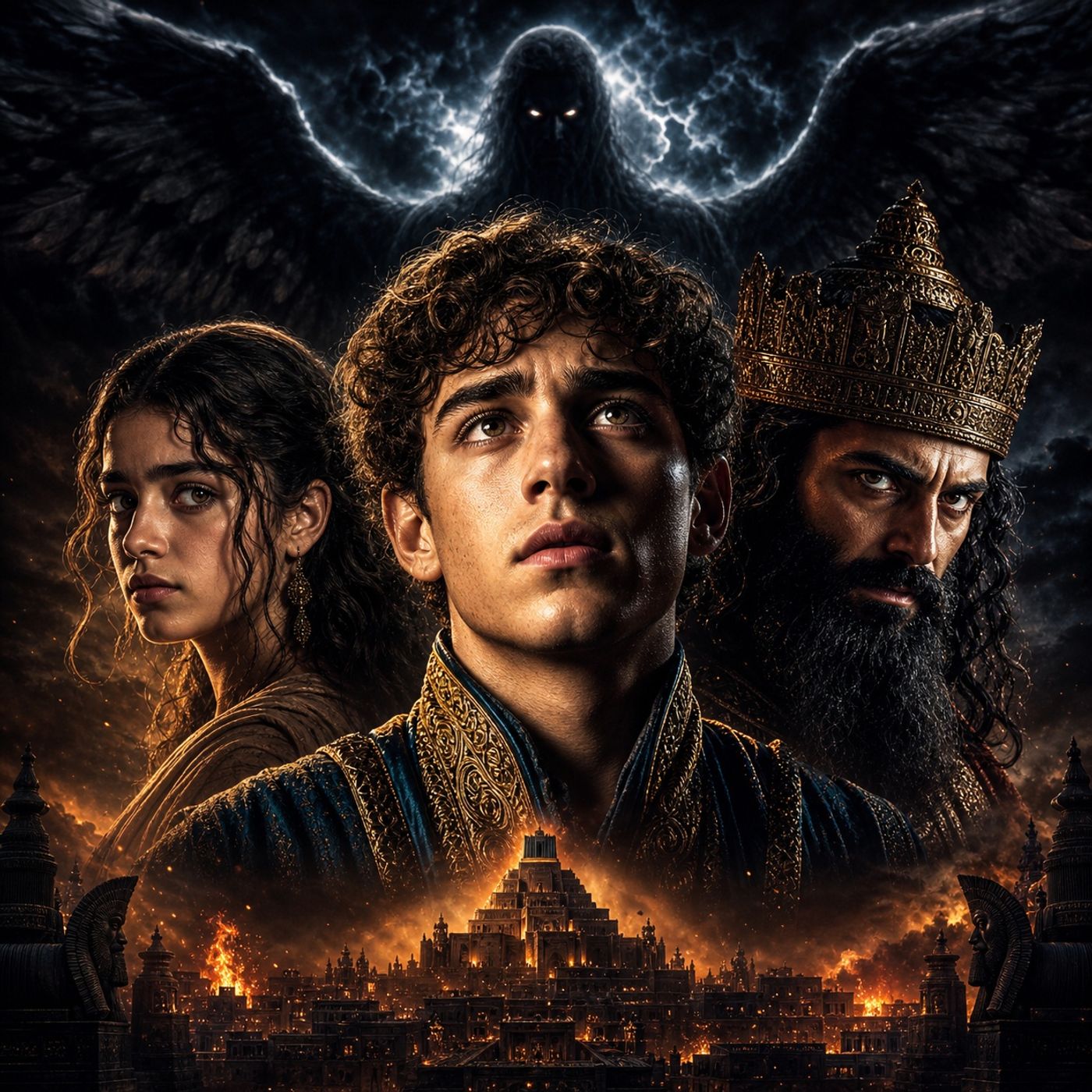
Nephilim Death Squad
Daniel In Exile w/ Brian Godawa
01:37:43
Join David Lee Corbo (The Raven) and Top Lobster on Nephilim Death Squad as they welcome best-selling author Brian Godawa for an epic deep dive into his new Daniel Trilogy (Chronicles of the Watchers series). Godawa reveals how he retells the biblical...
Loading summary
Transcript227 lines
- [00:00]
Liberty Mutual Ad Voice
Liberty Mutual customizes your car and home insurance. And now we're customizing this ad for your morning commute to wake you up, which could help your driving. Science says that stimulating the brain increases alertness. So here's a pop. How many months have 28 days? What gets wetter as it dries? What has keys but can't open? Locks? If you don't want to hear the answers, turn off this Liberty Mutual AD. Now 12 months. A towel, piano. Enjoy being fully alert.
- [00:27]
Brian Godawa
Liberty. Liberty. Liberty. Liberty. VRBO makes it easy to claim your
- [00:32]
Host 1 (Interviewer)
dream summer spot with early booking deals
- [00:34]
Brian Godawa
from homes with pools to poolside loungers. When you book a vrbo, you don't have to reserve any loungers. They're all yours. All you have to do is book early book with vrbo.
- [00:45]
Liberty Mutual Ad Voice
Liberty Mutual customizes your car and home insurance. And now we're customizing this ad for your morning commute to wake you up, which could help your driving. Science says that stimulating the brain increases alertness. So here's a pop quiz. How many months have 28 days? What gets wetter as it dries? What has keys but can't open Locks? If you don't want to hear the answers, turn off this Liberty Mutual AD. Now 12 months, a towel, piano. Enjoy being fully alert.
- [01:12]
Brian Godawa
Liberty. Liberty. Liberty. Liberty
- [01:18]
Host 1 (Interviewer)
is a.
- [01:20]
Host 2 (Interviewer)
What is Bohemian Grove?
- [01:22]
Host 1 (Interviewer)
Bohemian Grove is a. A disaster. It's gonna be performances from a bunch of your favorite content creators. Live podcasts are going to be streamed from that place, and then we're all going to get together at the second standard coffee shop location. It's last time it was almost a race war. It's not going to be a race war this time. But we're also going to arm you, and I mean physically, with weapons. So we're going to kill the Al deception and then we're going to sit down with our council. And our council will be selected at Bohemian Grove.
- [02:07]
Host 2 (Interviewer)
Top lobster productions.
- [02:22]
Brian Godawa
They're still here today.
- [02:31]
Host 1 (Interviewer)
When the last trumpet sounds and the heavens crack. Despot death squad. Welcome back, ladies and gentlemen, to another episode of Nephilim Death Squad. I am David Lee Corbo, AKA the Raven. That is Top Lobster, the father of disinformation.
- [03:09]
Host 2 (Interviewer)
What's up, guys?
- [03:10]
Host 1 (Interviewer)
Before we get into today's guest, a little reminder. If you'd like to support the show, a great place to do it is patreon.com forward/nephilimdeathsquad. You're gonna get early access to episodes ad free viewing experiences. You're gonna get admission. What is admission to Sort of private communities, nephilim death squad communities, as well as discount codes off of merchandise from top lobster.com and on top lobster.com you're also going to find the tickets for general admission to Bohemian Grove. That is 8, 8. August 8th. There's only one day tickets left. The VIP have totally sold out. And. And so if you want to be there with the guys in Wildwood, Florida, and all the content creators, go on over to toplopsa.com and you'll see beneath that link. I'm sorry, beneath that banner, there's all kinds of information. So you guys don't have to ask.
- [04:00]
Host 2 (Interviewer)
Where should I say, what should I do? Don't join a polygamy group.
- [04:03]
Host 1 (Interviewer)
Don't do that. Yeah, don't really vet the church if you're going to join one down here.
- [04:08]
Host 2 (Interviewer)
We have a great guest today. Been trying to work out getting him on the show for a while, but things have fell through. I'm a fan of his work. I like what he's doing.
- [04:16]
Host 1 (Interviewer)
This is already. We were having a little bit of a brief discussion before the started. A lot of fascinating topics that we're going to get into today. Joining us today is Brian Gadawa. Did I pronounce that right? I should have asked you before the show started.
- [04:27]
Brian Godawa
Dang.
- [04:28]
Host 1 (Interviewer)
One shot, one take. Usually. Usually it's gwa G. Well, I can see how that might be. Before we get into the conversation, let's talk a little bit about where people can find your work. And then we're going to play a brief promo for your books.
- [04:42]
Brian Godawa
Gawa dot com. That's my name. G O D A W A dot com. It's. And it's an interesting website. I make it interesting.
- [04:49]
Host 1 (Interviewer)
So very fun. So a lot of what we're going to be talking about is. Is Daniel.
- [04:56]
Host 2 (Interviewer)
Well, I kind of. I want to go through some of your older work as well. But Izzy. Izzy Centric had referred you. He said that he was a friend of yours.
- [05:04]
Host 1 (Interviewer)
Would have been a long time ago.
- [05:06]
Host 2 (Interviewer)
We had him on. You were still living in Tampa. Yeah, well, I mean, we might have just first started the show, so you were mentioned. And I love, I love your takes on, like, taking some of this older biblical stuff and sort of creating a narrative around it because there's so much missing that we're not privy to. And you've done a great job here with some of your Nephilim work. But yeah, we're going to get into all that. But you have a new book. Can we play the trailer for it?
- [05:33]
Host 1 (Interviewer)
Now? Yeah, yeah, let's go.
- [05:38]
Host 2 (Interviewer)
Okay, here we go.
- [05:40]
Brian Godawa
What if the gods of ancient Babylon
- [05:43]
Liberty Mutual Ad Voice
were not myths, but fallen angels?
- [05:46]
Brian Godawa
You know, the Bible story of Daniel.
- [05:49]
Liberty Mutual Ad Voice
A faith empires cannot break. But you've never experienced it like this. The Daniel Trilogy by best selling author Brian Godawa.
- [06:01]
Brian Godawa
Part of the Chronicles of the Watchers,
- [06:04]
Liberty Mutual Ad Voice
a series of supernatural biblical novels charting the influence of spiritual warfare on human history.
- [06:12]
Brian Godawa
Jezebel, Moses, Judah Maccabee and now the Daniel Trilogy. The first novel, Daniel Exile in Babylon, available in E book, paperback and audiobook at Amazon.com Chronicles of the Watchers by
- [06:31]
Liberty Mutual Ad Voice
Brian Godawa at Amazon.com
- [06:35]
Host 1 (Interviewer)
Very nice. So I am a big fan of this idea of, like Top said, expanding on these biblical concepts because so much is missing, right? We're just sort of armed with what we need to know. But as far as, you know, deeper context or, or really even humanizing these characters in the Bible, making them relatable in the, in the sense of it's not just a, it's not just an idea in an old book. These are real people that really existed who had real experiences. And to try to expand on those experiences is, I think it's, it's a great idea. I, I kind of want to go with what you said, Top. We're going to get into some of these earlier books and I kind of want to do that first. Maybe if, if, you know, you guys don't mind Jezebel. Where did you go with that?
- [07:26]
Brian Godawa
Well, first of all, they're part of the series Chronicles of Watchers. And Chronicles of the Watchers is actually a spinoff series from Chronicles of the Nephilim, the first series. And what these books are, is the whole premise of all my series. They're all integrated, right? And the whole premise is to retell biblical stories where there are Nephilim or Watchers. That supernatural component that is connected to the storyline that I call the War of the Seed, which is that, you know, see the serpent versus the seed of Eve. And the idea is how to try and trying to stop the, the Messiah from, from being born as well as the, these very supernatural elements that do show up in the Bible, but they're not always very clear. And so like you said, I wanted to retell the stories and be biblically consistent. So I do that. But then I fill in the in betweens with fiction, but I, I base it on historical research and mythological research. So for instance, in the Jezebel story, I retell the Jezebel story. But what I do in all these novels, I do in Jezebel as well. And in the Daniel novel, and that is I, I'm not just telling the human story of what's going on, but I'm telling this the what might be going on behind the curtain of the spiritual world. And so the premise of all of these is what if the gods of the ancient world, you know, we've got down in Egypt we have Amun, Ra, Horus, right. In Canaan we have baal, Asherah and various others. And of course, in Mesopotamia we have Marduk and Ishtar and other deities, right? And so we know their mythologies. But what if these gods of the ancient world were actually the fallen angels that the Bible talks about and they're simply masquerading as the gods of the nation so that there's some demonic reality behind those myths. I'm not saying they're. The myths are real, but I'm saying that there's some demonic reality where they get these ideas from and they're spinning their stories. Right. And so what I do in the novel and in Jezebel is one of the other premises of the series is there is a. In. In the Bible talks about the link between the heavenly realm and the earthly realm. And so Deuteronomy 32, verses 8 through 10 talk about how these, the, the Gentile nations of the earth are under the authority of these fallen sons of God versus Yahweh, who's the authority over Israel. Right? And that's sort of what part of the watcher paradigm that goes throughout the whole Bible as well. And so if that's true, then there must be something going on in that spiritual realm. Again, we get glimpses of them like in Daniel chapter 10 of what these, these principalities and powers are doing behind the scenes. But the principle is that it's connected to what's going on in the earthly realm and these spiritual principalities are connected to the earthly principalities. And that's, that's the concept of what's going on. So I thought, well, if I'm telling the story of what's going on, for instance, in Jezebel and how this, you know, she, she was the most wicked queen in all of, of the history of. I don't know, you could, you could argue for history, but certainly for Israel's history as well. Excuse me. And she, while she's, well, she gets married to King Ahab in order to cement an alliance with tire. But that represents a compromise with idolatry that these, she then brings into, into Israel her BAAL worship. So I Tell that story what's going on as she's influencing Israel to bring in more BAAL worship. Meanwhile, what's going on behind the scenes with the fallen angels as gods? Baal, Asherah, Anat. Right, these beings. And so I create the storyline.
- [11:41]
Liberty Mutual Ad Voice
Liberty Mutual customizes your car and home insurance. And now we're customizing this ad for your morning commute to wake you up, which could help your driving. Science says that stimulating the brain increases alertness, so here's a pop. How many months have 28 days? What gets wetter as it dries? What has keys but can't open Locks? If you don't want to hear the answers, turn off this Liberty mutual ad now. 12 months. A towel piano. Enjoy being fully alert.
- [12:08]
Brian Godawa
Liberty. Liberty. Liberty. Liberty. The Syncrowave 212 from Miller is making TIG Welding more approachable than ever. Autoset takes the guesswork out of getting started by automatically adjusting your weld parameters. An intuitive graphic interface means less time setting up and more time under the hood.
- [12:30]
Liberty Mutual Ad Voice
And the optional water cooler keeps you welding longer.
- [12:33]
Brian Godawa
Whether you're a welding expert or just getting started, the Miller Syncrowave 212 lets you tackle more with Tig. Again, it's going to be speculative and fictional because we don't know. Right. But I try to tell the storyline in a way that works with what's going on historically. So, for example, when we have the. The prophets of BAAL versus Elijah on Mount Carmel, I actually have those principalities and powers and what they're doing versus the archangels behind the scenes. Right.
- [13:04]
Host 2 (Interviewer)
And sleeping.
- [13:07]
Brian Godawa
No, but, but, but by that point, by that point in the story, of course, BAAL is not allowed by God to have any, any of that power. Because we do see, actually, we do see these spiritual beings with some power and influence over history. Like, like I said, Daniel 10, which, what we'll talk about more today. But you know, Daniel 10 talks about the Prince of Persia and the Prince of Greece and they're battling and that battle reflects the earthly wars that were going on in history between Persia and. And Greece, at least in Daniel's day, it was in the future, but it was coming. Right, so, so there is some kind of real connection. Right? But when God wants to display his power and show that the, you know, the power of these fallen watchers, these gods of the nations, are nothing compared to him. Right? So he stops their ability. And so Baal's not able to call fire from the skies is the point. Right. So, yeah, that's what's going on. And of Course there's going to be, you know, there's child sacrifice in, in Jezebel. And, and, And I show the. Even though this is an ancient story, you're going to see the parallels between modern world with abortion and feminism and such. So that's kind of cool. But I. I don't. I try. It's not like I try not to trumpet it, you know, like it's this political message, you know, but I make those connections real because I think they are real, you know, so my advertising for the books are a little bit more contemporary. Like, you know, you'll see a picture of Jezebel and the ad will say, smash the patriarchy. You know, that kind of thing.
- [14:41]
Host 1 (Interviewer)
That's a good move. Yeah. It does appear to me that Jezebel is like this archetype. Right. And that's what a lot of the characters in the Bible are. It kind of goes back to this. One of my favorite sayings from Ecclesiastes is there's nothing new under the sun. These things just kind of come in these cycles. And you can see a lot of. A lot of that. A lot of this character that is Ahab plays out in a lot of men in modern day. And this character that is Jezebel does play out in this modern feminism.
- [15:09]
Host 2 (Interviewer)
What's crazy until right now. It's one of these things in the Bible where you have to read it a bunch of times and like, one time you'll read it to understand. Just to kind of understand the story.
- [15:18]
Host 1 (Interviewer)
Yeah.
- [15:18]
Host 2 (Interviewer)
The second time you'll read is like, to understand the history. I have to reread a lot of this stuff to understand the lineages. But you just said Jezebel was from Tyre, and then that reminded me of the. Ezekiel 28, the king of Tyre, where there's that overlap of Satan and the King of Tyre and they're like mimicking each other as above, so below sort of thing. Yeah, I didn't realize that. How do you. Do you know the. The time span between that story in Ezekiel and when Jezebel was coming into Israel? Is there like a significant gap?
- [15:50]
Brian Godawa
Yes. Yeah. So Jezebel is around the 9th century, I think, BC and Ezekiel is a prophet in the exile. So that's going to be the 6th century B.C. so it's a couple hundred years later. Definitely. Well, let's see. I thought so. I think it was like 900, 800. Yeah. So about two, 300 years later. So, yeah, there's a. There's. There. There's a lot of history going on. Between there. Right. But. And I do that. The interesting thing for me is those gods, since they're immortal beings, you know, these, these angels, they are the, they are the through line throughout all the stories, you know, so you've got these same beings showing up in all these stories and various different storylines and such. Yeah, but you're right about the, what was I going to say about this? The, the Jezebel story. Oh yeah. So reading it, you know, you get these modern connections, but I thought I forgot where I was going to go with that.
- [16:54]
Host 1 (Interviewer)
Basically I was saying that you have these archetypes in, in and King Ahab, you know, in, in men that exist today and you have the same thing, you know, an echoing sentiment of the character that is Jezebel in modern day feminism.
- [17:05]
Brian Godawa
Yeah, I'm sorry. Thanks for.
- [17:07]
Host 1 (Interviewer)
Sorry.
- [17:08]
Brian Godawa
Where I was going with that was what's interesting too is like I don't try. While I have clear villains and, and heroes, I'm not, I don't, I don't like the modern day anti hero worship, you know, So I do have clear heroes and villains. But even within the classical paradigm of classical hero stories, you know, the hero has to have failures and flaws that he has to overcome. So that's for sure. Even, you know, all my, even my holy characters and my prophets all have, have distinct character problems. But also my villains are not always, not cardboard villains. So for, for example, Jezebel, I don't depict her as this wicked, you know, wicked queen, a witch queen, you know, like Snow White or something like that. You know, in the Snow White story, I actually have her as. She's an actual honest pagan who, who believes in her Canaanite gods. And they actually do believe in bringing, they actually see Israel as a backwards, unsophisticated culture. Right. And they are less sophisticated technically than Tire because remember, Tire was a, you know, a, A, a, a nation that was involved in cosmopolitan trade with all the world because they're on the ocean. Right. So they were much more sophisticated cult. So she actually thinks she's bringing sophistication and sort of helping these religious bigots understand the new ways. Right. So she's, she's, she becomes obviously she becomes what she is in terms of her evil. But what I'm saying is she, she starts out as this person who has good intents within her own worldview, if that makes sense.
- [18:52]
Host 1 (Interviewer)
That actually is, is a much more effective, I don't want to call it a plot device. It's really a peek into human nature. Because as far as Your convictions go, they're not long lasting if you don't have a sense of righteousness about you, self righteousness, you know, and, and whether or not that is real righteousness, you know, in its accurate form, or if it's just your own delusions, it's crazy
- [19:17]
Host 2 (Interviewer)
because what he's describing is playing out again right now. So, like, like you said, the, the idea of abortion or child sacrifice and feminism back then will play out again now. But right now, what we're looking at with the alien deception. And again, I saw our friend Timothy Albarino tweeting this like, hey, Christians better catch up to what's happening, because, yeah, Christians will be seen like Israel as this backwards culture.
- [19:39]
Host 1 (Interviewer)
I saw you make that tweet. Yeah.
- [19:41]
Host 2 (Interviewer)
Once they, you know, they start doing disclosure and they reveal whatever alien stuff they have going on and Christians oppose it, we will be that backwards culture that hasn't caught up yet. And cosmopolitans that, you know.
- [19:52]
Brian Godawa
Yeah, I mean, well, we have been considered that for 2,000 years, you know.
- [19:56]
Host 2 (Interviewer)
Yes.
- [19:57]
Host 1 (Interviewer)
Yeah, that's true. Nothing new under the sun. There we go again.
- [20:00]
Brian Godawa
Fundamentalists and all that.
- [20:01]
Host 1 (Interviewer)
Yeah, yeah, yeah. Standing in the way of progress. You know, I, I could see that happening 100. So I, I do think that you're, you're right on, on the money with that. There was a high likelihood what we get from Jezebel is easily mocked. And I'm not saying it's not deserving of mockery, but you know, the way that she deals with the, the olive vineyard owner and things like that on behalf of King Ahab, who slumps into a depression and gets real sad and then has his girl, boss, wife go and take care of the job for him. But you know, that, like I said, on its face is easily mockable. But if you're once again humanizing these people and you consider them real historical characters, then you have to try to imagine what it is to be in the mindset of an individual who, who goes that far. And yeah, righteous kind of indignation would, would lead you down that path. Not just a hollow slop, I was gonna say.
- [20:58]
Brian Godawa
So that's another thing I try to do in these stories is a lot of times that when we're reading the Bible, we see the highlights and we don't see a lot of the in between. And sometimes those highlights kind of come out of nowhere. And you're like, where. Why would they do that? You know what I mean? And if I recall correctly, you know, because by the way, we're talking about Jezebel which is a few years back for me. So I've been focused on Daniel the last year. So I'm trying to remember some of the stuff of Jezebel. But if I recall correctly, that whole. Yeah, that whole vineyard thing, just the way it, it works out, you kind of read and go, that doesn't, that kind of sounds odd and that normal people don't seem to do things that way. But so what I try to do is I try to fill in the story that, how they got there with the vineyard and all that, so that when she makes that suggestion, it makes sense. Right. So that's another thing that the fiction, when we're, we're novelists who are trying to make true to the Bible, you know, because there's a lot of biblical fiction novelists out there, and most Christians get it. You know, sometimes you get these Christians, you know, I've got the Bible and that's all I need. Or, you know, you're playing with the word of God because you're making it fiction. You're like, no, no, that's not what we're doing. We're trying to expand the in between parts of the story in order to make sense of the parts we do know and believe. Which, by the way, is not much different than what a pastor does when he's exegeting a passage and he's filling in with the background, you know, and trying to explain, well, here's why this passage is in the Bible, because you've got all these ancient Near Eastern contexts that make sense of it. Right? So that's, that's one of the things that I do, like selling vineyards for or getting rid of vineyards or taking vineyards. And, and there's many other things as well. Like in the Book of Daniel, there's a lot of highlights that we. And strange things that occur that we don't know why. What, what's going on there. Right. And so I try to, I try to draw from that ancient Near Eastern culture because a lot of times, and this is another big problem with a lot of Bible stories. And you've, you've already talked, pointed this out, but there's a lot of things that will occur or be referenced in the text, and we don't know what they mean because it has a different ancient context. And I think that there's obviously been in the recent years a greater appreciation of this, I think, in the Christian world going into this ancient Near Eastern context. And a lot of that has to do with the occultic worldview that is in Canaan or Babylon, wherever they are at this, this, this, these references to pagan worldviews that we don't necessarily pick up. There's a lot of that that happens in Daniel as well, because, you know, like you mentioned Ezekiel. Ezekiel refers a lot to a lot of occultic paradigms as he's mocking the gods or what have you that you would understand if you're Mesopotamian, but not necessarily modern day.
- [23:58]
Host 1 (Interviewer)
Yeah, well, that, that's sort of, I think what might be responsible for a large resurgence in people who are interested in Christianity or at least people who are in the know, claim that the numbers, you know, are seeing a significant uptick. My aunt actually was talking to my wife yesterday and she was talking about this whole resurgence of people to, to the church. And I think part of it has to do with exactly what you touched on there. You can observe some of these pagan concepts or, or occult concepts in modern day conspiracies in a big way. You know, you have the whole Epstein thing, gets a huge spotlight on it. Suddenly you're left to tango with like, what is Moloch? You know, and. Yeah, well, if you go to the Bible, you're gonna find that. So.
- [24:42]
Host 2 (Interviewer)
And it seems like your series is gonna have like an excellent through line. Again, I haven't read the, the Nephilim series or the Watcher series, but I assume that these characters, they don't change. Like from, from our show. We got in a lot of trouble saying this, that like, you know, we think that the aliens and, oh yeah, you know, certain spirits are just rebranding of what they were in previous times. They tell you a different name and present a slightly different image, but they do the same thing. So in your books, if you're going by that idea, you'll have this. The same characters recurring throughout, throughout your entire series of work.
- [25:17]
Brian Godawa
Yes. Now obviously the Bible goes over several thousand years, right? So, and here's the, here's one of my, one of the things that I, when I first started all of these books, I thought to myself, okay, we tend to, I think the, the average evangelical, at least let me speak for myself. Before I studied this stuff, my understanding of the demonic world was very minimal. And yeah, I believe in angels and demons, but it's very alien to me, you know, and I don't experience, I haven't experienced any of that kind of stuff in my own life. But also I tended to sort of think of the, the evil world as this unified, you know, all these hordes of demons. Right. And they're all unified in this one goal to fight God and, and his people and his kingdom. And of course I still believe that. But, but what I didn't think through was I thought well, you know what demons, including the fallen angels, they're personal beings, they're individual beings. They're not like animals even or you know, inanimate objects. So they have individual wills is my point. And I thought if God even if, if they're evil. Yeah. They may be united in their attempt to overthrow Yahweh or get, you know, Yahweh's people to worship or humankind to worship them. Right. But they're going to have their own individual goals as well. It's kind of like the mafia or gangs, right?
- [26:40]
Host 1 (Interviewer)
Yeah.
- [26:40]
Brian Godawa
So you're going to have G. And plus, the whole paradigm of the, the principalities and powers, the watcher paradigm in the Bible is precisely that when there's, there is war in the heavenlies and there's war not just between the angels, archangels and these fallen angels, but within themselves. This is where you get in Daniel 10 talks about the Prince of Persia is, is, is, is you know, fighting with Michael the Prince of Israel. But then he says, the angel says, but the prince of Greece will come and fight against the prince of Persia. What's that all about? Well, the context of Daniel is the four kingdoms that the four gentile kingdoms that will rule over Israel until Messiah comes. That's the whole overarching theme. So you've got, and that's why you've got the statue of the four kingdoms, you get the four beasts. It's all recapitulation of the same concept that there will be the Babylonian kingdom over Israel, then there will be the Medo Persian, then the Greek and then finally the ancient Roman kingdom when Messiah comes and brings those kingdoms down with his kingdom. And so now I know there's various interpretations of Daniel prophecies but, but the idea there, the basic idea is the these four gentile kingdoms. Well when Daniel's talking about prince of Persian Greece, that's reflecting the fact that in the near future from Daniel he was under the Persian kingdom when he was writing that the latter portions of Daniel, the Greek kingdom would come and that was Alexander the Great's Macedon. You know, he was Macedonian Greek and that Greek kingdom overthrew the Persian kingdom. So that's why he describes the prince of Persia versus the prince of Greece. These aren't earthly kings he's talking about there. These are the heavenly ones. But if those are all both fallen deities and they're fighting amongst themselves that reflects the earthly hostile conflicts, if that makes sense. And so I wanted to make the villains have their own inner squabbles, just like you would see in any mafia movie, you know. And so they're jockeying for power, overthinking, overthrowing each other. And then when one kingdom overthrows another kingdom, the principality of that kingdom also overthrows and maybe in chains or puts in bonds that other king, that other principality. Right. So there is a lot of that going on. However, it's the spiritual realm as well. And I don't think there's a one to one correspondence of all the gods in every pantheon with some fallen watcher. You know, I think there's basically, you know, one, one principal deity over the each nation, but maybe he has some minions that help him. Right. But the idea there is that, is that since they are spiritual entities, we know that like Satan can disguise himself as an angel of light. Right. So they can take on different. This is my pr, this is my premise. I'm thinking if we've got these watchers over the nations, sure, they've got main entities of power, but they're also overthrowing each other. And I don't think there's a one to one correspondence. So I think they can change identities if they need to. You know, like one guy's pretending to be BAAL and maybe he gets overthrown and he moves to another country and he becomes Marduk or something like that. Right. So look, we don't know. It's all speculation. And I'm writing fiction, so I've got that freedom. I'm not claiming this is doctrinal truth. Right. But I'm trying to make theological sense of the principle of the watcher paradigm.
- [30:15]
Host 1 (Interviewer)
So. Okay. And I think that's a reasonable thing to do. And throughout our research I find the same thing. It seems like these things will kind of rebrand. I, you know, they have a pride in an arrogance about them. They would like the worship or the fear. They will often settle for just pulling worship away from God.
- [30:34]
Host 2 (Interviewer)
We've even spoken to like just regular people who say that they're in contact with this entity or that entity. And I'm like, probably not. You're probably in contact with like a lower level demon that just called itself that.
- [30:46]
Host 1 (Interviewer)
Yeah, they'll go, I'm talking to Azazel. I'm like, it's probably just. Yeah, probably not Nephilim. So I, well, we know that, we
- [30:55]
Brian Godawa
know Azazel is, is bound in the earth, so.
- [30:59]
Host 1 (Interviewer)
Right. Yeah. And, but you get that Ozymandias, I think, is. Another one is. Or Asmodeus or.
- [31:04]
Brian Godawa
Yeah, Asmodium is.
- [31:07]
Host 1 (Interviewer)
So I'm sure there is a lot of great reasons, and I can see the through line, why you would go from the Watchers and Chronicles to Daniel. But I'd love to hear it from your perspective. Why did you choose Daniel?
- [31:20]
Host 2 (Interviewer)
It's the best name in the Bible.
- [31:22]
Host 1 (Interviewer)
Okay, relax. Calm down. Okay. But I could, because I can kind of see it. I know why, but I'd love to hear it from you. Why Daniel?
- [31:29]
Brian Godawa
Well, in a way, I'm glad I did this later. In a way, Daniel has, like I've already mentioned, Daniel 10 has one of the most explicit passages where we see the Watcher paradigm in effect. And I am equating the Watchers with the principalities over the nations. You could make some fine nuanced distinctions there. And the word Watcher is only used in the Book of Daniel, chapter four. And that shows heavenly beings who have power to decree something over nations. Right. Or over kings, like over King Nebuchadnezzar. And so I am using those synonymously. And so in a way, Daniel's this one of the most strongest pictures of that world. I'm kind of. I'm sorry that I had in my Chronicles of the Nephilim series. I was just kind of going through the Bible picking the stories. And I wasn't doing every story, obviously, but, you know, those that relate to the Watchers or the giants, and. And I don't know why I skipped over Daniel. I just don't know why I did. So the Chronicles of Watchers is sort of like picking up the stories that I should have done in Chronicles of Nephilim. So they're all integrated in that sense. So Jezebel and Moses were books in the Watcher series that you could literally, if you read my book starting with the first book in Chronicles of the Nephilim is Noah primeval. And at the end of each of my novels, I then say, here's the next novel to read in chronological sequence, if you want. And. And sometimes it's not always in the same series. Right. But the truth is, is every book, every novel is a story in and of itself. It has a beginning, middle and end. And so people would be set. So if you want to just you. You just, oh, I love Abraham. I'm going to read the Abraham Allegiant. Or, you know, I love Daniel. I'm going to start with Daniel. That's fine. You'll. You'll be Fine, if you like it, then you'll go back to the beginning of this series and read the rest. Right? So they're all integrated in that sense. But Daniel, you know, the question should be why, why, why a trilogy? Because normally I've, I've written one book for each each of these biblical heroes. And you know, there's a couple reasons why when I sat down, number one, I do think Daniel is one of the eight, one of the center points of the, of the messianic storyline in the Bible. And you know, he has some, some of the strongest messianic prophecies. I mean, you know, the 70 weeks is arguably the most explicit, precise reference to the coming of Messiah exactly when. Right. And so that's pretty powerful to me. But also it has deep links with the book of Revelation. Now I've already written a series called, my third series called Chronicles of the Apocalypse and that's a four book series. And that whereas most Revelation series talks about our future and how they think everything's going to be fulfilled in our future, I wrote a story of the origin story of the book of Revelation when John was writing it. In the first century Christians are being persecuted by Nero, Paul and Peter lose their lives. Right. I'm telling that story and how the ancient 1st century Christians may have understood the book of Revelation related to them. And so there's a lot of connections in that series to Daniel. And there's also a lot of connections in my last novel, the Judah Maccabee, which I won't go down this rabbit hole, but the Maccabees is not in the Bible. But it is an important story in the redemptive history of Israel because it does represent a fulfillment of some of Daniel's prophecies. And so I've got a lot of references to Daniel. So now I'm finally able to go and tell Daniel's story and I'm going to be able, since I'm not God, I can't, like, I can't write a novel and then know exactly what I'm going to write, you know, my future novel. So I actually write the future novels and I go back and cheat. And so, yeah, so Daniel's got so many different, you know, aspects to it. But then why, why three novels? Well, as I sat down, thought, okay, what I'm going to tell about Daniel, I realize there's a couple elephants in the room that are going to require a lot of work. And one of them, of course, is prophecy. We all know that the second half of Daniel is just, you Know, all prophecy and it's wild stuff. And like, how are you going to make that interesting and entertaining as well as something that sort of explains, you know, your viewpoint? That's going to be tough. And that's going to require some. Some storytelling in order to make it work. You don't just sit there, you know, I'm not. I'm not writing a systematic theology. Well, this represents that. That represents this and that and that. So I'm trying to integrate it into interesting, entertaining stories. And then the other elephant in the room was, you know, when you read Daniel one, it's kind of cool, you know, how. How Daniel be, you know, is brought to Babylon as a slave, as a. As a captive. And he's one of the nobles from. Actually one of the royal nobles, probably from Jerusalem. So they're teaching him in the ways of being wise men in Babylon. And that was a whole school that began at this. What's called the House of the Tablet, where they learned to become scribes and then they learned about divination techniques, astrology, you know, liver. Liver omens, you know, these kinds of things. And at the end of chapter one, it just says that Daniel had to. Had to learn the language and literature of the Chaldeans, which includes all these divination things. And by the end of three years, it jumps to the end and says, you know, the King says, you're 10 times better than all my other magicians and sorcerers, you know?
- [37:11]
Host 2 (Interviewer)
Right.
- [37:12]
Brian Godawa
And I just go, wait a minute. We all know Daniel for being the man of conviction who doesn't compromise. How can you possibly go through that. That schooling and to become a wise man and get to the top and not disobey? Because we know that the Torah forbids a lot of those practices. Right. So I thought that's going to be a story in and of itself because you can't just. You can't just jump over that, you know. And so my first novel, Daniel Exile in Babylon, only focuses on the first three years of Daniel's schooling. But I promise it is a fascinating journey and action adventure and such.
- [37:54]
Host 2 (Interviewer)
Brian, you're doing a thing right now where. Because like, as you're talking, I'm like,
- [37:57]
Host 1 (Interviewer)
I'm realizing what a great question that is.
- [37:59]
Host 2 (Interviewer)
But I'm also losing money because I'm just like, I gotta, I gotta buy that.
- [38:03]
Host 1 (Interviewer)
I gotta buy this.
- [38:03]
Host 2 (Interviewer)
Yeah, there's a Christian library right outside the door here. So I'm like, we have to have all those books.
- [38:07]
Host 1 (Interviewer)
Yeah.
- [38:08]
Host 2 (Interviewer)
In the library at some point. Okay. Okay.
- [38:11]
Host 1 (Interviewer)
That's a great. I love how it sprouts out of a great question.
- [38:14]
Host 2 (Interviewer)
No, because it is a great. So I have, I got a lot of questions.
- [38:16]
Brian Godawa
Yeah, it was my own question.
- [38:17]
Host 1 (Interviewer)
Not as good as that question.
- [38:18]
Brian Godawa
When I write these novels, I'm working through this problems myself. I don't often know the answer and it's just like, how would he do that? You know, so it's cool.
- [38:27]
Host 2 (Interviewer)
So you're saying wise man, is that the same thing as a magi? The same that visited Jesus?
- [38:32]
Brian Godawa
Yeah, so, so yeah, there's a whole, whole thing there going on. So the, the, the wise men in Daniel is the Babylonian term that actually goes back to a Babylonian word, an Acadian word called Umanu or Umani. But by the Persian period, those wise men, you know, the Persians took over, but, but as kings often did, they, often they, they conquered, you know, like Cyrus conquers Babylon. But he doesn't like, you know, kick them out. Right. So he allows them to continue to go on and he just takes over control of whatever their system is. And then the, over, over decades, then the Persian system sort of takes over. You know, it, it's what we call it subverts or assimilates. And the wise men, the word for the wise men is magi. And, and so by the time of Jesus, the magi are coming from Parthia, which was, you know, Persian controlled territory and, or by that time they're called Parthians, you know, so it's the change of kingdoms is all kinds of mixtures and stuff. But so the Magi that were looking for the Christ were part of that school that goes 500 years back to Daniel, which is one. Also one of the interesting things that drove my research that I wanted to find an answer for because consider this and I have some of this in this novel we've known about the Bethlehem Star. You know, they followed Bethlehem Star and there's all kinds of explanations. It was a supernatural event or whatever. But, but some of the coolest theories by Bible believing Christians out there are that, you know, and some of them would be, let's see, there's Dwight Hutchinson. You can look up the Messiah star online. He's got a lot of free material. Dag Kilman the Witness of the Stars is a classic one by Bollinger. That's an old one. You can get it free online. What these guys do is they. Oh, and then one of my favorite is Ernest Martin and he writes a book called, it's online. It's called the, the Bethlehem Star. I think you can get that free online as well. What the theory is is that the, the magi were actually following actual astronomical events that have to do with stars and alignments of constellations and particularly the King star. The king planet Jupiter lining up with the king constellation Regulus. And so this is not astrology. So astrology is, is the ancient belief. And this isn't. When people hear astrology and they hear zodiac constellations, we think of modern day goofy horoscopes and that stuff. In, in the ancient world, in Babylon, the, the personal horoscopes wasn't until like the first century BC before that time they just believed that the stars had mostly influence over kings and powers, not over individuals, people. And so it was, it was more of a. The, the, the stars gave influence upon kingdoms. But even then it wasn't absolute. It wasn't like this is going to happen, you can't stop it. It was more like the omen. They would read omens in the stars, right? And they would say, oh, you know, there's an eclipse in the lower corner of the. Or there's a obscuring in the lunar eclipse in the lower right quadrant of the moon. They, they, they kept close track of all the astronomical events over all of history because they saw the regularity. But then they also saw some of the varieties and they started to interpret those as omens. And so consequently if they saw an omen, they could, they say oh, this could be the death of a king or something. Well then they had various incantations and rituals that they could do to help displace that omen. So that wouldn't affect the king. So it's not this absolute scenario. But also that God does mock and that God condemns definitely that aspect of it, you know, of this notion of astrology that the stars exerting power of mankind. But if you read there's actually references to constellations in the Bible, Job is a big one. It talks about what uses a word called the Maseroth. I think it's like, right, job at 38 and the Maseroth are the constellations. And there are constellation names such as the Pleiades and Bear and Orion that we know of as constellations. So this is the other element that when we hear zodiac or constellations, we think, oh, that's, you know, astrology. No, no, it's, it's basically astronomy. They gave astronomical name or they gave names to astronomical constellations because they were regular. And so that was then how they started charting the sky. So when you hear, you know, like Virgo and, and, and Leo the lion and stuff like that. Those weren't, those weren't magical words or anything. Those were just names of constellations. So it's not inherently astrological to refer to constellations.
- [43:37]
Host 2 (Interviewer)
Sure.
- [43:37]
Host 1 (Interviewer)
I mean, it's literally an observation. Right, you're just.
- [43:40]
Brian Godawa
Exactly. So there's a lot of observation before they get into the interpretation. And so anyway. But nevertheless, there is this, these Christians make this argument that God, in effect. I'll jump to the end point, which is in effect, God, when he created the universe and placed the stars in their places, he actually, he actually embedded the gospel message into the stars. So the constellations that we know of have retained their names mostly through history. Now there have been changes over and changes of interpretations of what, how many constellations and such, but basically there's been enough research to show that the, you know, Virgo and Leo and all that stuff, they, they go back into very deep ancient times, even into Egypt and such. And so maybe even back to Enoch, which, which then argues that the zodiac constellation is literally a picture, a pictorial representation of the Gospel. Virgo, the virgin has, has birthed a child. And it goes around his dual nature, which it was like, you know, both God and man can be seen in the, the twins, I think the Sagittarius twins. And, and then of course, Leo the line, which is Judah the king and his kingdom. There's this whole paradigm that's really fascinating that I, that I discovered. But then also this whole thing about what about the Bethlehem star and the alignment of the stars and how that led these pagan kings. And you think, why would the pagan kings think that there's a king of the world in the armpit of, of the world of, of Israel? Right. It's like, well, they obviously must have gotten something from Daniel. And if you think about it, Daniel was there 70 years. He's. He gets to the top, he becomes a ruler amongst the. He obviously had such a great influence, maybe even some of his scriptures that he wrote about Messiah, but still this whole thing about the alignment of the stars, and there's nothing in Daniel about that. So I thought, well, I needed to tell that this is one of these fill in the fiction things where I then came up with a speculative reason how Daniel might have understood astronomy and how they began to incorporate it to, to prophesy the coming Messiah into his own scriptures, you know, so that by the first century, these Parthian magi are following that, you know, that paradigm in order to find the king.
- [46:11]
Host 1 (Interviewer)
That's interesting. I mean, Those, those examples, by the way, are great reasons to not throw the baby out with the, with the bath water when it comes to astrology and things like that. It is something that, you know, you said really determine the kind of ebb and flow of, of kingdoms, much less are you going to have a boyfriend this month kind of a deal. You know what I mean? Like, that's what it's been reduced to for some of these new age practitioners. And I agree, you know, just uttering the, the names of the constellations is not some thing to be condemned. It's really just an observation of a thing that is there. We have a request recurring guest on the show Ed Mabry, who's fantastic and he talks about the Maserath and how this is the story of God and you know, or it's, or it's God's. Yeah, God's story. And so what that does is when people push back against Christianity and they go, well, these pagan religions or belief systems predate Christianity by hundreds or thousands of years. And, you know, the Bible wasn't written until this and that. Ed Mabry will go, actually, no, it was written, it was written in the stars. It is the Masero. It is the first story told. And so I, and I always kind of keep that in my back pocket.
- [47:26]
Host 2 (Interviewer)
That's how you get like Nimrod, Semiramis and Hermes and they mimic the, the story of Christ, but not quite because the stars are like, they're telling the big picture, but they're not telling the minutia of what's actually happening there. So, yeah, everyone's telling the same story, but there's only one that's legitimate.
- [47:42]
Host 1 (Interviewer)
Yeah.
- [47:43]
Brian Godawa
And you know, one of the things that I, that I've appreciated this links back to what we're talking about earlier too, is I, I try to, look, I. This whole system of stuff, you know, Babylonian divination and astrology is just way too much. But, you know, I try to, I try to understand some of it and, and be as accurate as possible, you know, but, but in a way that's entertaining again. And you don't have to go, you don't have to become a scholar to apply, appreciate it. That's, that's the, that's the, the talent, I think, of a good writer, is it? I'm not claiming I'm a good writer. I'm just saying my goal to be on the back.
- [48:18]
Host 2 (Interviewer)
Brian.
- [48:18]
Brian Godawa
Yeah, my goal to be a writer is to take all this, you know, accurate, scholarly, academic stuff and about the occult and make it Work within a story and be. And be relatively accurate. So earlier when we talk about Jezebel, I've. I've since had had two actual modern witches contact me and tell me that they got saved reading through Jezebel. And also a modern druid, a guy who'd been a Christian became a druid for many years. He also, these novels have. Has drawn him back to the Lord. So that, that gives you this sense of. To accurately depict. Because this touches on another issue that Christians are concerned about. You know, are you going to. Going into all this occult stuff and demonic stuff? You know, isn't this just sort of elevating evil, you know, and, and making an evil entertaining or whatever and. No, no, it's to accurately depict the evil against which God and his kingdom and his goodness is fighting.
- [49:21]
Host 1 (Interviewer)
Yeah.
- [49:22]
Brian Godawa
That shows you the power of his redemption. If you don't accurately depict that evil and that occult world behind it, the demonic world he's fighting, then your redemption is going to be weak and placid. Which is why, you know, you see a lot of Christian stories, whether movies or novels these days, weak and, you know, wimpy. And they're not, they don't really touch the soul of people because they're not depicting evil in, in. In its evilness.
- [49:49]
Host 1 (Interviewer)
Well, that's what I. So I'm not saying that anybody should participate or engage with any of these things, these occult practices, but a lot of the way that modern day Christians pull away from it or, or, you know, turn away from it is it's based in fear. And when you look at a character like Daniel, Daniel is among this court of sorcerers. Right. I mean, when they're, they're having dream interpretations and, you know, there's however many. I think it was like hundreds of different people that came to interpret. Was it Ahab's dreams and Nebuchadnezzar. My mistake. Yeah. Nebuchadnezzar. Daniel steps forward and he interprets it, but he's. He's in this. Yeah, I would call it an arena. It's an arena and there are all these players in it. And Daniel's not moving through this world, at least not from the scripture that we can, you know, peer into and like sort of in this spirit of fear about what these magicians and sorcerers are doing, you know, he steps up. Even, even the, he actually helped, like,
- [50:51]
Host 2 (Interviewer)
he helps them out. He could have let these guys get killed, you know, that's true.
- [50:56]
Host 1 (Interviewer)
But he steps forward.
- [50:57]
Host 2 (Interviewer)
He steps forward and he would have been killed too. Yeah. So he comes.
- [51:01]
Brian Godawa
But, but here's the difference though. God reveals the, the truth of the, he reveals the dream that no one else knew. Correct. And he reveals the meaning of the dream. And the difference with the dream interpretation in ancient Babylon was based on manuals. So they kept track of all kinds of dreams over over a thousand years. And so you would just consult the manuals. Okay. If you dream of a frog doing this, it means. Right. So you would consult the manuals. In this case, God is showing like I, I don't have, I don't refer to human, you know, wisdom. I give you the truth directly. And by the way, what you're mentioning is a very good point. And that's, that's how I, how I dealt with Daniel, which is how I think we as Christians should deal with this reality, which is, you know, learning language and literature of the Chaldeans. So Daniel can learn their language, traffic within their world and even understand their systems, study their systems of the occult, of divination. But he doesn't have to participate in them so he can have knowledge even so much so that you know, they could wear. Which is if you see the connection with today we can learn and understand what's going on in the occult without participating. Now you have to be careful because you can be, you can be pulled in and become oppressed. Sure. But the idea here is we need to, Paul did this on Mars Hill. Right. You need to understand the system of evil that's going on and how it works and operates in order to apply the gospel to it. And in this sense I have Daniel learning all the mythologies of Babylon, learning all the divination techniques. He doesn't engage in divination. But think about it like this. He could say something like, you know, well, you know, King says, you know, such and such omen occurs, you know what's going to happen. And you could say, well, according to your omen texts, it says this, right. And that doesn't mean you're supporting it, you're simply re quoting to them what they believe because that's what you've been forced to do as a captive slave.
- [53:01]
Host 1 (Interviewer)
That's my thing is it looks a lot like Christianity today. The fear that keeps anybody from even having conversations about these topics. Right. Because that's, that's off the table for a lot of modern day Christians is having conversations, deep and thoughtful conversations about these topics that these other pagans and occult practitioners believe in. And that is not the same sort of energy that I imagine like Moses stepping forward, forward and, and Turning his, his rod into serpent.
- [53:29]
Host 2 (Interviewer)
Moses was also familiar with these techniques. He grew up.
- [53:31]
Host 1 (Interviewer)
Oh yeah, well, that's what I'm saying. It's like, yeah, we're meant to not practice, but engage with, you know, stand in opposition to and engage with our God is, is mightier. And so. But how could you ever step up to that line if you don't even. You won't even look at it.
- [53:49]
Brian Godawa
Absolutely. And that, by the way, that's another theme of all my novels including, including the Daniel, which is understanding that occultic world in contrast or in conflict with Yahweh and his worldview. And, and that's how we're supposed to live, like you say now as well. Right. And so consequently, even in the Moses story, you know, it's interesting because this gets, this points to one of these ancient Near Eastern contexts that give meaning to things in the text that we don't necessarily see. And for example, Moses was trained in all the wisdom of the Egyptians. In fact, he was an Egyptian idol worshiper until God took him, you know, brought him out. And so Moses writes, you know, the five books. But if you look in there, you see influence of Egypt not just in the language, but in some of the ideas. So much so that it's arguable, for example, that Genesis 1 engages in a, what's called a polemic. And there's a lot of polemics in the Bible where you're writing a story. He's writing a story about, you know, the creation, but within. Edit embedded within his. In that story of Genesis 1, he's making references in, in conflict with the typical Egyptian understanding. Right. So, you know, the Egyptian understanding would be that, you know, a mound, the, the primal mound, it comes out of the chaos waters. Right. And, and Moses describes, oh, you know, God's separating the waters from the land, etc, but it's Yahweh, and it's Yahweh spirit over the deep, not Amun. Right. And not these other deities. And then there's a whole system where, you know, Egypt had these primal 8.8ogdoad, 8 primal deities that created the, the universe. And one is a spirit of wind and one is water and all this kind of stuff. And, and Moses uses the same language in describing how Yahweh was actually creating the spirit and the winds and the, you know, and, and such. But it's showing that it's demythologizing. It's. These aren't spiritual beings. They are natural world things in control of the hand of Yahweh. Not your Ogdoad. Right. There's a lot of that polemical. A lot. All throughout. In fact, that's one of the things that shows up in a lot of my novels is precisely that what, what
- [56:21]
Host 1 (Interviewer)
I find to be the case is a lot of these pagan and occult practices are about engaging with fundamental building blocks of this realm that we inhabit and systems that God has created, but twisting them and misattributing them to some other entity. And so, you know, in that way, I'm not going to. I don't want to say they have a lot in common with us, but they're not operating outside of the realm of reality. Meaning the nature of the realm that we inhabit is as such, you know, occult practitioners are going to engage with, with frequency in their chance, and they're going to engage with geometry in the pentagrams and such that they create, and they're going to have sacrifices. You know, and this is something that's consistent throughout the Bible. But they're going to be doing this in an effort to manipulate reality. Yeah, by. By screwing with fundamental laws that, that God has created. And they're doing it at the behest of. Or the idolization of a false God. Yeah. In that way, they have done a thing that Christians have pulled away from entirely. And I'm not saying we should be practicing that. There's no need for sacrifices anymore. There's no need for any of these things. But to, to inherently call it demonic. It's like, it's not inaccurate. It is demonic. What they're doing. They are paying homage to false gods. They are interacting with, you know, false gods. But this is the way of the world. We're called to be in the world, not of it. And from, from. As a Christian, you should be able to stand here and observe this thing and go, yeah, that is the nature of the world. Don't. Don't interact with it. Don't do those things. Right. That we're no longer called to, you know, engage in sacrifices or anything like that. The law is, is fulfilled and Jesus Christ is now the way to salvation. But we should be able to observe those things and not be so full of fear that you think that by nature of observing it. Because really what that is, is it goes back to a quote that, you know, we were talking about a couple of episodes ago. Fear is, is faith and evil. Don't practice this thing, but don't have fear of it either. I mean, you know, Daniel didn't have fear of these things. Moses didn't have Fear of these things. David didn't have fear. Fear of these things because greater is our God. Right. So. But it doesn't feel like that is the modality that Christians of, of the modern day are operating in. It feels very much like modern day Christians are gripped by fear.
- [58:53]
Brian Godawa
Yeah, I totally agree with you. And, and to be fair, it's like I feel like I've come out of some of that in many ways in my own tradition and evangelical tradition and such. And you know, it's just sort of like. Yeah, you're right, it's a, it's a fear, it's a fear that then negates it. It just dismisses. Right. It's like, oh, none of that's relevant, you know, so stay away from it, you know, and, but like you're saying is we need to educate ourselves and understand how the, how the other world, the other world thinks and to be able to understand then how the gospel applies to those people. Otherwise you can't reach those people, you know, the Christians who are fearful and won't seek to understand any of that material. They're unable to reach that pagan world because they don't make any points of contact with them. So I'm tracking with you totally. And I think that's one of the reasons why I write my stories is because I do see, like you're saying, I see a fundamental sort of reality. It's like you say, it's a spiritual world reality and there are real things going on. God creates the world in with mathematical precision. Right. And accuracy. And you know, even, even our secular theories of, you know, spooky connection at a distance physics and all this kind of stuff, I think a lot of intersects with the spirituality and spiritual world. So you have to understand that. And, and like Jesus said, you know, on earth as it is in heaven, you know, a lot of date, modern day, sort of liberal, classical, liberal people will say, you know, that's Gnosticism. Right. You know, Gnosticism is as honor as above, so below. And you know, yeah, that's true. Gnosticism had that belief they don't understand that's rooted in a very, very ancient long tradition that the Hebrews also believed not necessarily in the way the modern world. Like you said, it's not a, as above, so below as in I engage in these rituals, incantations and I can then control reality. No, but it was this notion of these principal territorial powers over nations that were connected.
- [61:06]
Host 1 (Interviewer)
Yeah.
- [61:06]
Brian Godawa
And so that's a, that's the true reality. In fact, let me Give you one example. You know, you use the word demon and Damon. So Damon is an ancient. Is where the word demon actually comes from. And the Greek concept as well as the ancient concept was that these were the Akkadian and that's Mesopotamia. The Akkadian word was shedu. And what it was was. It was simple. It wasn't a good or bad being. It was just simply a territorial power. So in Deuteronomy 32:17, Moses talks about how Israelites came into Canaan and worshiped those gods of Canaan. And it says they sacrificed to those gods that were demons and not God. The word for demons is actually shedu. And that's the Acadian notion. Right. And what I'm getting at is that's this belief of the territorial spirits and powers of the ancient world, but through the. It was through Christianity that made that. Well, through Judaism, of course, because those were fallen watchers. Right? But nonetheless, when Paul then starts describing the, you know, sacrificing food to idols and stuff, and he says, these gods, they're. They're demons. They're sacrificing not to idols but to demons. It's Christianity that cemented the notion of Damon as being exclusively evil, is my point. But in the ancient world, they thought they could be good or evil, but God's saying, no, no, they're evil.
- [62:43]
Host 1 (Interviewer)
That's exactly it. So, so within Jungian psychology, and also, I think this, this does come from sort of this Greek idea of Damon's. There's this idea of integrating it, that it needs to be integrated, needs to be mastered and integrated into the individual and then turned into like a creative driving force. And I think that's actually, that's the, you know, it's like, yeah, this thing is sort of external and maybe, maybe a shadow is the way you might describe this thing. But then to have the idea that you have to integrate it when we're called as Christians to, to go and sin no more, right? And to, to not give in to these things that whisper to us. And like, I think that is where the, the big gotcha comes into play, right, Is. Is like I said, Youngian psychology has you doing, like, shadow work and integrating this thing. And I'm like, and, and people will get upset with that narrative. They'll go, no, that's not exactly what it means. It's like, no, they're the. All these things are connected.
- [63:39]
Host 2 (Interviewer)
This is, this is the, the crux of the argument that we had with, with Timothy. It's a. It's about like, Are these entities, can some of them be neutral? And he referred to the Book of Judges, I think, like, I forgot exactly where in it. Some town that was neutral. And he was like, see?
- [63:53]
Host 1 (Interviewer)
Yeah, something with an M. I forgot the name of it.
- [63:56]
Host 2 (Interviewer)
Mirage. Mirage.
- [63:58]
Host 1 (Interviewer)
Yeah, yeah, yeah.
- [63:58]
Host 2 (Interviewer)
But he say, like, likening that to a spiritual entity. And we're like, well, God says, you're either for me or against me. So there is no neutral. Maybe they're, they're actors that kind of don't want to be so bad. But there are two sides. It's either you're detracting from God or you are pointing at God and with him.
- [64:15]
Host 1 (Interviewer)
And it's interesting because when you look at that, the concept of a daemon, it says the idea of integrating it is recognizing and honoring your inner guiding voice. Which is like if we go to, we have a clinical psychologist friend who, who talks about schizophrenia and the influence of demonic entities. So maybe, maybe it sounds flowery language, right? Honoring your inner guiding voice or quote God within, which is like, all right, we're in a weird place. And this is transforming it from neglected force into a creative driving force. And if you combine that concept with all of the instances of people being inspired by something outside of themselves to create works of art or something like that. Channeling is really what that's called.
- [64:59]
Host 2 (Interviewer)
Yeah, like the, I mean, the nine Muses, in short, Greek mythology.
- [65:02]
Host 1 (Interviewer)
Yeah. Which is, it's where a lot of this, this kind of, you know, idea comes from. Yeah, it's a slippery slope.
- [65:11]
Brian Godawa
What you're getting at too is that you're, you're, what you're, what you're explaining is exactly also what God is doing in the Bible, which is this polemical subversion. Right. So. So for example, you're saying the young in psychology and modern day notions. It's not that, oh, those are meaningless. Those are nothing. They don't exist. It's like the Christian saying, other gods don't exist. I used to believe that, but now that I follow the Bible more closely, the Bible says they do exist. And this isn't polytheism for me. Exactly. But this isn't polytheism. Right. We're not saying polytheism, but it's definitely not the modern day Western monotheism that's rooted more in a medieval understanding of things and it's going back to more ancient world, the biblical worldview that says there are Elohim, there are gods.
- [66:06]
Host 1 (Interviewer)
Yeah.
- [66:06]
Brian Godawa
But they're not like God at all. And they have, you know, it's not like Kinotheism or, or polytheism. But you have to understand that worldview correctly, which is what gets you to saying, okay, so all these systems, modern day, you know, occultic or even secular systems, they're actually rooting into, connecting into the spiritual world in some way. And they're being deceived, they're being manipulated, they're by demonic entities or what have you. That's the polemic that says there's some reality to what they're saying. It's just not the reality they think it is. And so in the Bible, again, many times, one of my favorite examples is Rider of the Clouds. You know, there's many passages which includes Daniel 7, the son of man rides on the clouds up to the ancient of days. But there's many times when God is described, when he comes to, to judge nations or cities like Egypt, he says, I ride on the clouds. In Isaiah, he comes on the clouds, his chariots in the clouds, Day of clouds. Well this cloud concept, you don't, you don't read about that back in the days of Moses because they're in Egypt, a very different world. But when they go into Canaan, they, and they encounter the, the storm God baal. And BAAL in the, in his act, in the actual texts of the BAAL epic, he's described as the charioteer of the clouds, the rider of the clouds. And so within their ancient context, the storm God clouds represent, you know, the, the power of nature and he brings the rains and such like that. Well, there wasn't rains in Egypt. Right. So you don't see the, the, you don't see water language about God in, when they're in Egypt, but you do in Canaan. And he's using the language that they used of baal, but they're using it of Yahweh. Yahweh is the right on the clouds. Why is that? Because, you know, modern liberals will say, well, you know, they try to subvert it and say, well that's because the Canaan are. The Israelite notion of Yahweh evolved out of the ancient Canaanite notion of baal. And they made Yahweh into, from BAAL and all this. No, no, it's, he's entering into this land in conflict with it and saying, yeah, BAAL is not the writer on the clouds. He's not the storm God who brings the rains. Yahweh is the storm God. Yahweh is the one. Right. And so they're using that common understood language to say, no, your God's not the God of gods. Our God is. You know, and so that's a common thing throughout the whole Bible.
- [68:37]
Host 1 (Interviewer)
You know, we do have that. I feel like that is, we're not called to keep the Gospel to ourselves, right? We're called. The Great Commission is to go forth and make disciples of men. And that doesn't exclude pagans and occultists. And a lot of the fault of modern day Christianity is that they can't speak the same language as these people who are having real and profound experiences that are outside of the materialistic paradigm that we have in the West. If you can speak the same language as them and say, yeah, yeah, I acknowledge the thing that you're interacting with. You are having profound and meaningful experiences. And if you can just kind of get to that point and have some of that guard let down. Because of course, you imagine these people are being told by anybody who will listen to them that they're kooks, that they're out of their mind for saying they're having spiritual experiences or any of these things. If you can have a conversation and eventually get to this point where it goes. Now I gotta break it to you. You're having a fundamental misunderstanding of the nature of the things that you're interacting with, mostly because the things you're interacting with are telling you their nature. So it's like. It's not like all of this is bull, you know, you are having really profound spiritual experiences that go back to the people of antiquity. This is actually something that's fundamental to the human experience. This isn't outside of it. And the Bible does have answers for these things, but most Christians don't know that. So it's like you've received the gospel, you've received salvation, you know, by. By faith, through grace, and then you've kept it to yourself.
- [70:18]
Brian Godawa
Wait, no. By grace, through faith.
- [70:20]
Host 1 (Interviewer)
I'm sorry, by gay. You heard? As I slowed down, I was like, which one is it?
- [70:23]
Host 2 (Interviewer)
Yeah, I know I always do that.
- [70:26]
Host 1 (Interviewer)
But. But then you've kept it to yourself. And I think it's a huge disservice because these people. I find that the testimony given by individuals who came through paganism and then were saved, you know, by Christ is really potent, really powerful. It's. It's some of the most meaningful testimony that I've ever heard given. And these people, in other words, I think they're important. I think these people who can see through that veil, who don't just believe in. In, you know, whatever America has given them or really just the modern day world at all has given them, you know, you go to work, you do your 9 to 5. The supernatural is pseudoscience. It doesn't exist. There are people who go, no, I don't buy that. And they, they push through that and they, they interact with something that is real. It's right here all the time. This is, you know, spiritual warfare. And I'd love to get into that conversation after this. But, but those people that are willing to do that, those are passionate people. Those are people that if you can help them, you know, find this narrow path, their testimony can go on to help, you know, endless amounts of people.
- [71:46]
Host 2 (Interviewer)
Actually, our second show today, the guy, Seth Kickliter does come from that field.
- [71:50]
Host 1 (Interviewer)
Yeah.
- [71:50]
Host 2 (Interviewer)
New age practitioner who kind of figured, figured out what we're talking about now. He has a great book about it. But I wanted to ask you a question. At the very beginning you were talking about when you're writing these character arcs for your characters within the story, these biblical characters, you include their first flaws. When I read the book of Daniel, I don't see many flaws in the, I don't see any flaws realistically. It's a, yeah, it's, it's a, such a long span of time and from, from the beginning to the end of this story and it's kind of like just Daniel just does all this awesome stuff.
- [72:26]
Host 1 (Interviewer)
He just seems like he crushes super hard.
- [72:27]
Host 2 (Interviewer)
Yeah, he. Yeah. And it, but it doesn't make him as more.
- [72:32]
Host 1 (Interviewer)
As a. Relatable.
- [72:34]
Host 2 (Interviewer)
Relatable. Relatable as like a David character. Right. We, yeah, we really love David because he's, he's failing and he, and he's doing great things and he's, he's a human being. Daniel is just kind of always on
- [72:46]
Host 1 (Interviewer)
it, unshakable, unshakeable, never, never having doubts.
- [72:50]
Host 2 (Interviewer)
Where do you wait? I mean, I'm sure if I pick this thing apart, you'd gleam some, some aspects of his character. But what do you, what are you seeing in this?
- [72:58]
Brian Godawa
Yeah, well, that's very good question. A lot to say about that. So. Yeah, all my, all my biblical heroes are sinners saved by grace. Right. So Daniel does not start out as a holy perfect obedience to God because no human does. Right. And so. But it doesn't, like you said, it doesn't show that. Well, think about this too. He's there 70 years and it shows like the first, you know, 20 years of Nebuchadnezzar. It has like three or four incidents out of all those 20 years. And then a Couple incidents during Belshazzar. Belshazzar. And then during Cyrus. Well, like, there's so much that's not shown. It's only showing the highlights of that so that it's so.
- [73:45]
Host 2 (Interviewer)
It's so spread apart.
- [73:46]
Brian Godawa
Where exactly?
- [73:47]
Host 2 (Interviewer)
Chapter to chapter. And. And then they go, wait a second, there's a guy, Daniel, that could help. And I was like, what do you mean? He just did this. But it's like, no, this is 20 years. Yeah, a long time.
- [73:56]
Host 1 (Interviewer)
You go, how are you forgetting?
- [73:58]
Brian Godawa
And look. But the nature of literature is such that you have to. You know, and the Bible has its chosen themes and what it's focusing on. This is why also, you don't really read about any females. There might be a couple queen references in Daniel, but there's no females in there. So I have a love interest, a romantic interest in my story with Daniel, because I. You got to have a love story, man. I love love stories. Right. But it's feasible. It's just. What. Why doesn't Daniel talk about any of that? You know, I think each writer has its own purposes, its own theological reasons why they're doing things. And so, like every writer, they're focusing on their theme, and everything else has to be let. You can't tell the story of the whole world with everything that ever happens. Right? And so once you understand that, then I. I step in and I try to figure out this is where the fiction and speculation fills in. And so I. I draw from what Daniel ends up, and I know that's how he ends up. And so how does he begin? And so, you know, the story begins where Daniel's, like 15 years old and he's a noble in the royal family, you know, and there's. There's some indications of that in the text. And I thought, well, what. What might a. What. What might be relevant to a story like this where a kid who's actually maybe an achiever because he's in the royal line, Maybe he's even in the royal line. Not directly, but close enough that if enough people were killed, he might become king himself. So maybe Daniel had some aspirations of royalty himself, so he wanted to be the best at everything. Right? And of course, what does that breed? That breeds pride, that breeds a lack of trust in God. So Daniel has to learn that trust through his journey, so that by the end of the first novel, he's got that character that we now know he has. Right? So I'm telling this story of him overcoming this pride in himself that is, you know, we know that pride is the big story of, of kings in Daniel and also how God is in control of all kingdoms and authority. Right. That's the glorious message of Daniel. Even the wicked kings who think they're in control, they're being used by God for God's purposes. God's literally using them for his purposes. But what about the little people? What about the little people? You know, imagine all these millions of poor people live and die and suffer and squalor. Does God care about them? That's another issue that to me, I want to explore in my novel because the, the focus of Daniel is on this greater kingdom. But I, it definitely, God does care about the small person, so I try to integrate that. So by the time we get to the end of the story, then, you know, we have Daniel entering into his storyline. But even then, my second novel, there's going to be, I'm not going to telegraph, you know, what it is, but just because Daniel's arrived and has this conviction, could he still have flaws in his character? And yeah, I think you can, you can be a person who is very obedient to God and yet slip or yet have a flaw that comes through. And that's going to be the case in, in the second novel as well. I'm not going to tell, tell you what it is.
- [77:08]
Host 2 (Interviewer)
Yeah, somebody, somebody that is overtly obedient to God that might slip over self righteousness. Yeah, maybe. Or maybe even some sort of gullibility. Human. Human gullibility. Where do you put the idea? I'm sure this doesn't fly with you. Where do you put the idea that Daniel was possibly a eunuch being in the king's court? Because then the love interest goes out of the window and there's a lot of weird stuff that happens with that.
- [77:33]
Brian Godawa
So that was one of the things that I had to find out for myself when I wrote the story. And I thought, you know what? I knew there wasn't certainty in it. There was a pretty strong argument for it, but I thought, you know, if I could even find, you know, 20% of the scholars think he may not have been, then that's enough for, for me to tell my fictional story. Because it's possible, right? It just needs to be possible, not probable. But I was surprised to find in my research that now I'm more likely the opposite. It's more likely there's no way he could have been a eunuch. And so the arguments that he could have been, you know, are that, you know, it's well known and it's a fact that, you know, particularly Neo Babylonians, you know, when they would take foreign, you know, foreign captives and bring them into the palace, they would you make them eunuchs because they don't want the blood of these slaves. Right. Intermingling with the royalty and certainly not with the harem and all that stuff. But, you know, and that is a common thing, but it's not absolute, by the way. It's just not absolute, you know. And then they talk about the chief of the eunuchs over Dan, you know, choosing Daniel and stuff. Well, that phrase, chief of the eunuchs, I found out it's better. It's, it's one of these generic terms, terms that over time it begins as, as literally what it was thousand years earlier. But then over time it evolves to just be a reference to the chief of the staff. Because in the beginning the chief of the eunuchs all were eunuchs. And so he's a chief of the staff. But now it becomes chief of the staff of the palace or what have you. But it doesn't mean he's a eunuch and it doesn't mean that they're all eunuchs. And that's, that's established. In fact, you've got an example of that in the Bible when Potiphar in Egypt is called chief of the eunuchs, but he's got a wife, so he's got a family going on there. So it just is just a term that is better translated. And in, in the Potiphar passage, they translate it as like chief of staff. So it, you know, depending on their context, you know, the, the bias of the translators. So there are many translations that will actually just call it chief of staff. And Daniel as well. So that doesn't mean that they were eunuchs. But most importantly was I found out, I actually found actual documents, Babylonian letters written by Babylonian wise men and Neo Assyrians. So it's around the same time period to their kings and talking about the omens and stuff. And it's through that that you find out they all had like these long legacy of family lines of such and such scribe or wise men. Was the son of the scribe and the wise men. And so, so there's. They have a family legacy. They have families. Secondly, they, you know, I found out that they didn't live in the palace and didn't work in the palace. They were separate, they lived in the city and they had their separate house of the tablet that was like their school and their, you know, where they worked. And they would come and consult with the king and go with him out to the field, out to battles and stuff to help him with their omens and stuff. But they weren't, they didn't live in the palace. But most importantly, I found an actual document where they talk about the, you know, the actual restrictions or requirements for a wise man. And it includes that there shall be no blemish on the body, including no loss of limb and no leprosy on the skin, and no eunuchs. So now I understand why Daniel said, why the king in Daniel said, choose from me men who are without blemish. Like, why is he asking for that? What? Well, that was part of the requirements of becoming a wise man. Well, that would make sense to make sure they're not a eunuch, but then make them a eunuch. Right. But also just the notion is it's. You couldn't be a eunuch being a wise man. And so. And there are instances in historical documents where we have various scribes or various slaves, captives who aren't eunuchs. So that, that made me realize, okay, more than likely he was not a eunuch. And so I do have a love story and it's one of my favorites. It's kind of like Sleepless in Seattle because Daniel is torn away. He falls in love. He's young, right, but he falls in love with one of his maid servants who's a Jewess. And he gets pulled. Torn from her when he gets brought. Brought to Babylon as a captive. So there engaging in letters to each other. And it's. They're trying to escape their situations and get back to each other. But this is also a, whatever, a device that I use in the story to allow me to jump back and forth between Babylon and Jerusalem, because in Jerusalem we have the prophet Jeremiah at this time period. And one of the most amazing things to me about this time period was, you know, we read these prophets like Jeremiah and Ezekiel and Daniel. And a lot of times I just don't think of the fact that they're going on, they're living at the same time. They may have known each other. In fact, he probably did know Jeremiah, Daniel. And so I'm like, this is really interesting and I want to integrate them into this story. So I have Jeremiah and what's going on in Jerusalem, and she becomes his love interest, becomes sort of embroiled in that aspect of it. So we see what's going on there. And yeah, so this is how fiction allows us to be able to explore these, these different aspects of what could have been reality of the day.
- [82:47]
Host 2 (Interviewer)
That's a great idea too, man. I love that. And you also have this. I don't know if you'll get. Get to. In the first story, but his friends Shadrach, Meshach and Abednego.
- [82:56]
Host 1 (Interviewer)
Right.
- [82:56]
Host 2 (Interviewer)
These are guys that kind of create this supporting cast around him to really bring out his personality, see how he would interact with other people. But again, not much mention about these guys in the Bible, except for that they crushed. They crushed. Thrown to the fire.
- [83:10]
Brian Godawa
That's all they do. They just show the crushing. They just show, we won't do it, King. And they go into the furnace of fire and that's it.
- [83:15]
Host 1 (Interviewer)
Hell, yeah.
- [83:16]
Brian Godawa
But absolutely. So, you know, like, you know, like this chosen series, you know, where they give the background to each of the disciples and it's. That's what I do with the. The three brothers of. And they're not brothers, but I mean, Jewish. You know, the brothers in captivity. Right, Right. And I give them each unique characters because they were in real life. Right. And it's kind of like this is why I also call it Harry Potter Meets God, because he goes into this school to learn to become a wise man. And they're all young boys. Right. And. And so you've got the school bullies. I've got that going on. I've got them. You know, they're. They're a band of misfits. Right. So I have one of them, Michelle, is the kind of like a jock. He's built, and he's kind of a fighter, and he would rather be a. He would rather be a guard, you know, so he's kind of like got the military mindset, but he's got to please his. He wants to please his father to become a scribe. And he just. He's having a hard time doing that because he doesn't have the brains like they do. And then I have another one of the characters which, you know, this is one of my spoilers, but I. I think it's. It's a. It's not a big one, but it makes. It makes the story extremely interesting. One of the characters, Hananiah, I have as an autistic. So he's got an autism issue. And of course, they don't have that term back in those days. Right. But it becomes, of course, it's a struggle socially when they get into difficult situations that become endangering. But also he becomes a key factor in a couple major plot points where he saves the day because of his autism. He's able to see. He's able to see things and have memory. Like imagine studying astronomy with all these constellations and, and it's all about making connections, isn't it? And that's what an autistic person can often have the ability to do is to see these connections that we don't see. So I have him chosen.
- [85:06]
Host 2 (Interviewer)
Use this as well with Matthew. I think Matthew is described as more of like a prickly personality by scholars, but this show, he's kind of autistic and it kind of makes sense. He's a numbers guy. He's right.
- [85:17]
Host 1 (Interviewer)
Exactly.
- [85:17]
Host 2 (Interviewer)
Stuff down. He's watching.
- [85:19]
Brian Godawa
I found that out after I was doing this. I'm like. Because I've never seen the chosen, but you know, I'm like, okay, well that's kind of cool. And so yeah, it's doing something similar. But it really is relevant to their scenario because they're having to learn a lot of information and how are they going to bring that information together in such a way without special revelation necessarily, that will then be rooted in, in, in the Babylonian wise men traditions. So that by the time of the first century. And so Hannah and I is going to be a key to that. He ended up, he ended up being far more important to the story than I had first realized, which has really become exciting.
- [85:57]
Host 1 (Interviewer)
So we're creeping up on the, on the latter end of the show here. And I, I did want to ask about this before we started wrapping. What, what role does. We talk kind of a lot about it in regards to Christians and their fear and inability to interact with these concepts and you know, and sort of give rebuttal or even evangelize because of that fear. What role does spiritual warfare play? You know, let's say in particular this first Daniel book.
- [86:26]
Brian Godawa
Yeah, yeah. Okay. So one of the things I do is I mentioned earlier that I try to. So I've got the story. Story that's in Babylon. Well, it's in Babylon and Jerusalem. But in Babylon you've got the key God, Marduk. Right. He's the king of the gods and Ishtar and Nergal, the under lord of the underworld and Naboo, the scribal God who's actually the son of Marduk. So I have these characters as the spiritual entities and they're battling and such. But the, the fictional storyline that I come up with in the spiritual realm, I try to reflect what's going historically. So when Nebuchadnezzar, when Nebuchadnezzar defeats Carchemish, the city of Carchemish, which was the last stronghold of the Assyrian empire. Right. I have. You'll see Marduk going in and basically beating the heck out of Asher, the God, the, the, you know, the, the head God of the king of the gods for Assyria and he crucifies him because that's what Assyrians, you know, did you. I don't know if you knew this, but Assyrians were the ones that came up with crucifixion.
- [87:36]
Host 1 (Interviewer)
Oh, I didn't know that.
- [87:37]
Brian Godawa
So it was on X's at first, you know. But anyway, so, so he does that. But also I draw from the Babylonian mythology and I like to incorporate elements of the Babylonian theology into the spiritual world for their storyline. So when you read my stories, it's not just a storyline of the gods. You're going to actually learn a little bit about the worldview and their mythology. For example, you know, I have. There's a myth about, called the Anzu bird. And the Anzu bird is this hybrid monster in the spiritual realm. And you know, he's like a lion and an eagle and, you know, any flies and stuff like that. So he's in the mythology, he steals the Tablet of Destinies, which is the, which is the talisman of power that the king of the gods, you know, control has. And Marduk has to go and kill him and get the tablet back. So I incorporate that into my storyline, but in a way that fits in with also the story of Daniel. And so reading this, you're going to get, you're going to get that taste and flavor of their mythology, but it's in the spiritual realm. It's not going to be, you know, I'm not saying the mythology really happened, but I'm just saying in the spiritual realm, how might these beings operate? So we have, there are Mushushu dragons, you know, if you've seen the Ishtar Gate with these right. Dragons that have a lion body and front claws and eagles talons at the back, a dragon head and a serpent tail. Very, very common. That was the emblem of Nebuchadnezzar. That was the emblem of his family fascination. And so I have those as real spiritual creatures as well. You know, so in the spiritual realm and that, that keeps it in that realm of the angels fighting with the, the gods of the world. Very cool.
- [89:31]
Host 2 (Interviewer)
You've made it so that I have to now read these books.
- [89:34]
Host 1 (Interviewer)
I would love to see an adaptation, by the way, sort of thing.
- [89:37]
Brian Godawa
By the way. You can start with Daniel Times, people. I'm going to wait Till all three books are done. You don't have to. Every book is a beginning, middle, and end and the same in the whole series. So you can start with this Daniel book, and if you really like it, then you can say, okay, I'm gonna go back and read the whole series. You'll be fine. So. And don't, don't wait till whole series comes out, because you won't need to. It's a complete beginning. Like we were talking. Daniel has these major key points in his life, and I'm telling each of those key point stories in the trilogy.
- [90:05]
Host 2 (Interviewer)
I can feel already that, like maybe the first book that's already out right now has a lighter vibe. He's a younger dude. And as we go into the second and third book, it probably gets pretty dark and a little bit gnarly. Let me ask you, any plans for Bigfoot? Nebuchadnezzar?
- [90:26]
Brian Godawa
Well, I can. I can tell you what I'm gonna do with that. Nobody's gonna know. Nobody's gonna catch until it happens. Gonna be so cool. But I am dealing with that, that, that notion. What about werewolves and all that kind of stuff? So. Yeah, in fact, I might even have something similar to vampires in the second novel.
- [90:46]
Host 1 (Interviewer)
Oh, interesting.
- [90:49]
Brian Godawa
And something similar to zombies. What?
- [90:53]
Host 1 (Interviewer)
Fast. And honestly, I think I'm a bit. I'm really into all of the, sort of the Cryptids and everything, and I think there is. There's more than likely a biblical basis if any of these things are actually real. You can find instances, Instances of them in the Bible. And. And, you know, I just. I'm a big fan of. Of believing that the Bible has explanations for so many things that people think don't exist, and if they find out they do exist, think that Christianity could never address it. I find that to be overwhelmingly not the case.
- [91:24]
Host 2 (Interviewer)
I think it's going to be a great time to be an author of a biblical narrative in the way that you're doing. Especially with the new. The new. What is it called? The Resurrection. Not the Resurrection. Oh, oh, Mel Gibson movie.
- [91:38]
Host 1 (Interviewer)
Mel Gibson movie.
- [91:39]
Brian Godawa
Right. Which, by the way, by the way, I wrote a book called Jesus Triumphant. It's the last novel of my Chronicles of the Nephilim series. And I tell the story of Jesus going into the Hades and what may have happened in that school days.
- [91:53]
Host 1 (Interviewer)
That's very cool. That's where this picks.
- [91:55]
Host 2 (Interviewer)
That's where his movie picks up.
- [91:56]
Host 1 (Interviewer)
Honestly, I'm pumped about that. You know, I saw you have a little bit of a discussion with somebody on Twitter who said Like Mel Gibson's sentiment of this movie will be like an acid trip. And then people pushing back again.
- [92:07]
Host 2 (Interviewer)
They said that's why Christians shouldn't watch. And I was like, what do you think the spiritual realm looks like?
- [92:11]
Host 1 (Interviewer)
Seriously?
- [92:11]
Host 2 (Interviewer)
Yeah.
- [92:12]
Host 1 (Interviewer)
What do you think it is to experience that? It's insane.
- [92:15]
Host 2 (Interviewer)
Like when an angel presents itself, it's got a thousand eyes because it's in some sort of 10th dimension coming to ours and we don't know how to perceive it. It's an acid trip.
- [92:23]
Brian Godawa
Exactly.
- [92:23]
Host 2 (Interviewer)
Yeah.
- [92:24]
Host 1 (Interviewer)
Very cool.
- [92:24]
Brian Godawa
Well, not literally. I wouldn't say literally, but yeah.
- [92:27]
Host 2 (Interviewer)
Well, it's similar, but yeah, I think that the acid is. Is the tool to peel. Peel a little bit.
- [92:32]
Host 1 (Interviewer)
Like many psychedelics or drugs, I think there are degrees to which another realm becomes perceptive or perceivable rather.
- [92:41]
Brian Godawa
You know, I don't. I haven't studied that extensive, but I do. And on the Iron and Miss show us guys, we've talked about this before, that I do believe that they can make a connection with the spiritual world, but it is a forbidden use and connection because the word for drugs is sorcery in. In the Hebrew and the Greek. So pharmacia and sorcery can have connection with the. The spiritual realm for sure and open up breaking in illegally. Yes. Yeah.
- [93:11]
Host 2 (Interviewer)
That's why they're getting kicked out the DMT realm. Two more quick questions. Any, number one, any plan on covering, since you're doing a lot of this stuff where you're covering history of the Bible that's not talked about? Like, any plan on what Jesus was doing the first 30 years of his life? Oh, that's interesting because that's a big question mark. Nobody really knows.
- [93:32]
Brian Godawa
No, not planned. I wish will be doing his birth narrative, though, with the magi.
- [93:41]
Host 1 (Interviewer)
Very cool.
- [93:43]
Brian Godawa
That's later. Yeah.
- [93:45]
Host 2 (Interviewer)
And David, you want to take the final question?
- [93:47]
Host 1 (Interviewer)
Yeah. This is something that we like to ask all of our guests and surprisingly, always yields fascinating fruit. So in all of your pursuits, how many books now, Brian?
- [94:00]
Brian Godawa
17 novels, 25 books total. What?
- [94:05]
Host 1 (Interviewer)
Three or two more at least on the horizon. Unless we're doing that.
- [94:09]
Brian Godawa
Let me give this out too. I forgot to mention this. All this time we're talking about all this theological stuff. I know a lot of Christians are interested in that. And plus, when they read my books, they'll go like, this is fantastical. Where's he getting this stuff? Is he making this up? So what I often do is with more of my recent books, I write an additional book of the Biblical historical theological research behind the novel. So it's usually called the spiritual world of. So within the second novel coming out, I'm going to have the spiritual world of Daniel in Babylon where you can look at, look into stuff. And my other novels have those as well. The Chronicles of Nephilim have appendix, an appendix at the end, just a shorter thing, but 100 pages usually. Like Michael Crichton used to do, you know where he used to have an appendix about the real science behind his fiction? Well, I do that as well because I know that as for myself as well as others, they like to know, is this rooted in something and what is it? I like to go deeper.
- [95:02]
Host 1 (Interviewer)
So that's a great resource. That's an excellent resource. So, so in all of your.
- [95:07]
Host 2 (Interviewer)
Already know the answer, but yeah, I
- [95:08]
Host 1 (Interviewer)
know what the answer is. In all of your pursuits and everything that you're doing, are you having fun?
- [95:16]
Brian Godawa
I am, yeah, I'm having them. I really am having the most fun I've ever had in my life. And this is a, this, the context of that is very heavy because I, I was in Hollywood writing movies for 25 years and that was, that's my dream. That was my dream, you know. And over time I, it kind of switched and I became more successful in writing my novels. And so I followed the opportunity rather than my dream. A lot of times people stick with the dream. No, no, this is my dream. And then they lose out. And God started making the novels more successful and much better living. Making a much better living. And so I followed it and now I'm focusing more on the novels and, and, and it's more of a fulfillment of who I am because a lot of this stuff that I put in my novels is weird stuff that I've always studied and been interested in. But most Christians, if you talk to them, like most Christians in my life, they're just, their eyes glaze over and like, what, you know.
- [96:12]
Host 1 (Interviewer)
Yeah.
- [96:13]
Brian Godawa
And so this is my opportunity to put it into something and people get it and they, they, and they learn it through this good storytelling. And that's been the most exciting thing of all to me. And God has blessed it with a lot of success of sales and, and, and audience. So yeah, I, I, I gloried him because when I started this, I thought, Christians are going to think I'm a heretic. And there are some who do. But most Christians get it because I'm like, you know, I'm retelling Bible stories and I'm adding this fictional element there and it's supernatural. They're going to think I'm playing with the word of God, you know. But you know what? I knew what I was doing. I knew it was right and I believed in it. So I said, I'm just going to do it anyway. And God happened to bless it. So I'm grateful for that.
- [96:53]
Host 2 (Interviewer)
I think if you, if you do it right, like series like the Chosen specifically for me, the Chosen and the House of David, I feel like they've done it right, but it makes me want to reread those books and study them. So I, I love them.
- [97:07]
Host 1 (Interviewer)
It's.
- [97:08]
Host 2 (Interviewer)
But I'm also keenly aware this is a show. They take their creative liberties. That's fine. But it gets me more interested in the Bible.
- [97:15]
Host 1 (Interviewer)
Yeah.
- [97:16]
Host 2 (Interviewer)
So, yeah, if your books are doing that, then I think you're on the right track.
- [97:19]
Brian Godawa
And they are.
- [97:20]
Host 1 (Interviewer)
It's not that you have to believe every detail, but it helps you to, to root yourself in that these were real events and these were real people. It takes it from just being this conceptual ancient text to some thing that is a documentation of real events.
- [97:35]
Brian Godawa
The most encouraging thing that I've received from a lot of my readers is, is precisely. Well, number one, that they're reading the series two and three times and sometimes four times over, which that shocks me. But I understand why because I put a lot of depth into it. I just never thought people would get the depth. I thought, okay, I'm going to make it entertaining because that's my priority. But my also priorities underneath that, if you want, you'll. You'll know that there's more to it. A lot of people are getting that and they know that they have to read it multiple times to get it. But secondly, and more importantly actually is the number of people who tell me, like, you know, this, this is so encouraging. It's making me go back to the Bible. Or like I've gotten the Bible and this is, this has given me a new fresh spirit in understanding. I'm going back to the Bible, not getting into my novels, but going back to the Bible is the ultimate goal of it all.
- [98:24]
Host 1 (Interviewer)
That's awesome.
- [98:25]
Host 2 (Interviewer)
Love that. One more time. They can find you@godawa.com, right?
- [98:30]
Brian Godawa
Yeah. But all my books are exclusively available@Amazon.com.com, amazon, and they're all, almost all in Kindle, paperback, hardcover, large print and audiobook. So you can get them in almost any format you want. And it's really cheap on Kindle.
- [98:50]
Host 1 (Interviewer)
Awesome.
- [98:50]
Host 2 (Interviewer)
Excellent. Go buy a physical copy, people.
- [98:52]
Host 1 (Interviewer)
Yeah, it's nice to have a physical
- [98:53]
Host 2 (Interviewer)
copy when it really goes down. Brian, thank you for your time. This is a incredible. I can't wait to talk again. Especially when you have something new coming out or just.
- [99:03]
Host 1 (Interviewer)
I'm glad we managed to get it done too. After the whole.
- [99:06]
Host 2 (Interviewer)
Yeah, thank you. And guys, until next time, don't forget to obey, submit and comply. We'll see you later.
- [99:14]
Brian Godawa
They bred with daughters of men and
- [99:18]
Host 2 (Interviewer)
they will do it again and the
- [99:22]
Brian Godawa
end is written in the book in the pages they for.
- [99:53]
Host 1 (Interviewer)
When the last trumpet sounds out in the heaven.