Podcast
Nina’s Notes Podcast
Hosted by Nina Patrick · EN
28episodes
Episodes
Newest firstAll episodes
#190:🎙️Why AI Looks Smarter Every Year | Neuroscientist John Krakauer
1w ago01:12:39Tap to summarizeJohn Krakauer, neuroscientist & neurologist, builds therapeutic games for a living, and he is also one of the most honest skeptics you will hear on what actually helps the brain. In this conversation we get into the messy truth behind brain training, why he does not buy most of the hype, and the one long-term study on dementia that he genuinely cannot explain away.From there we go somewhere bigger. We talk about why AI keeps looking smarter every year (and why part of that might be us getting a little dumber), why "uploading your brain" belongs in the same bucket as imagining a plane flying backwards, and why the whole idea of longevity might be a misnomer, since most people do not want more years, they want to be young again.In this episode you will learn:- How most brain training falls short of what it promises, and the surprising result that made Krakauer pause- Why language lets us describe impossible things fluently, and what that means for claims about consciousness and brain uploading- Why medicine reaches for the gadget and skips the hard behavioural work, and why it can be harder to rehabilitate doctors than patients- What immersive, almost psychedelic digital experiences might offer for healing without any drug involvedChapters00:00 Introduction to John and his work in neurotechnology02:06 Overview of the Champlimaud Institute for Brain Research and Repair03:59 Digital Neurotherapeutic Center and its impact06:51 Comparing Hopkins and Champlimaud's approaches to neurotherapy09:55 The concept of digital psychedelics and immersive experiences15:02 Decoupling psychedelic experiences from drugs19:52 Long-term effects of brain training and cognitive games24:50 The potential of digital psychedelics in stroke and neuroplasticity29:56 The importance of sleep, diet, and exercise for brain health34:58 The future of brain uploading and collective consciousness40:06 The role of exergaming and immersive therapy spaces44:48 Prevention and treatment of stroke and neurodegenerative diseases49:54 Barriers to behavioral change in medicine and wellness55:07 The cultural and societal aspects of longevity and aging01:00:09 The human desire for youth and the meaning of aging01:04:58 The limitations of AI and the imagination of future technology01:09:56 Book recommendations and reflections on culture and philosophyThanks for reading Nina’s Notes! This post is public so feel free to share it. Get full access to Nina’s Notes at www.ninasnotes.xyz/subscribe
Transcribe →
#189: Why Your Doctor Might Be at Your Next Hotel
3w ago00:53:27Tap to summarizeIn this episode, I sit down with Dr. Frederik Dierick, a family and sports medicine physician turned founder of Pioneer Wellness Group, to explore how hospitality could become one of the most effective (and most overlooked) tools for helping millions of people live longer, healthier lives.Listen & watch on 🔴YouTube 🟢 Spotify, & 🟣 Apple PodcastsFrederik makes the case that hotels and resorts are uniquely positioned to deliver science-backed longevity care at scale: guests arrive with time, attention, and motivation that almost never exists in a doctor’s office. We dig into what it actually takes to build a luxury wellness experience that’s grounded in real clinical science (not spa-day wellness theater), why nutrition is the most sensitive topic in medicine, where AI fits in as a health accountability partner, and what it will take to democratize longevity so it’s not just for the ultra-wealthy.CHAPTERS* 00:00 The Journey to Longevity Medicine* 05:47 Creating Transformative Experiences in Hospitality* 12:01 Practical Applications of Health in Hospitality* 18:00 The Future of Longevity in Hospitality* 23:57 The Challenges of Personalized Medicine* 29:10 Challenges in Patient Care and Systemic Issues* 38:35 Democratizing Longevity Medicine* 45:07 Nutrition: The Most Sensitive Topic* 51:16 The Future of Health HospitalityABOUT DR. FREDERIK DIERICK Dr. Frederik Dierick trained as a family and sports medicine doctor before founding Pioneer Wellness Group, a consultancy on a mission to turn hotels and resorts into the world’s most powerful health platforms. He works at the intersection of clinical medicine and hospitality, helping brands build wellness experiences rooted in real science rather than trend-driven spa treatments.CONNECT WITH PIONEER WELLNESS GROUP: * Website: https://www.pioneerwellnessgroup.com* LinkedIn: https://www.linkedin.com/in/frederikdierick/ABOUT NINA’S NOTESNina’s Notes explores the intersection of longevity science, neuroscience, and human optimization. Hosted by Nina Patrick, PhD in pharmaceutical sciences and longevity researcher, each episode translates cutting-edge research into actionable insights for living longer, better.CONNECT WITH NINA’S NOTESNewsletter: www.ninasnotes.xyzLinkedIn: https://www.linkedin.com/in/ninapatrick/Website: https://www.ninapatrick.xyzKeywords: longevity, health optimization, hospitality, wellness, science, experience, behavior change, AI health coaching, preventive medicine, luxury wellnessThanks for reading Nina’s Notes! This post is public so feel free to share it. Get full access to Nina’s Notes at www.ninasnotes.xyz/subscribe
Transcribe →
#188: The 5-Minute Brain Scan That Detects Dementia Early
Jul 100:58:12Tap to summarizeCan a 5-minute brain scan detect dementia years before symptoms?Jurij Dreo, co-founder and CTO of BrainTrip, draws on 20+ years of EEG research to reveal how brain activity can be measured, interpreted, and used to catch the earliest signs of cognitive decline and dementia — often before they’re visible or irreversible.In this episode of Nina’s Notes, host Nina Patrick (PhD) and Jurij explore the real potential of EEG technology, why it’s been underused in clinics, and where brain-health diagnostics are headed next. If you care about protecting your memory and measuring your cognitive capital, this one’s for you.🎙️ Listen on Spotify, Apple Podcasts & YouTube.TIMESTAMPS 00:00 – The fascination with the brain 03:49 – Neuroscience vs. genetics in clinical practice 06:17 – Understanding EEG: the hidden talent 11:50 – EEG waves and brain health 18:31 – EEG in cognitive decline & dementia 25:32 – Cogniscore: a new approach to brain health 29:26 – Understanding Cogniscore & cognitive assessment 32:24 – The accessibility of EEG testing 35:34 – Advancements in EEG technology 38:24 – Interpreting cognitive assessment results 44:17 – Next steps after cognitive assessment 45:59 – When to get a Cogniscore assessment 47:43 – Daily practices for brain health 52:01 – The brain of Marie CurieWHAT YOU’LL LEARN* Why EEG beats other brain-imaging tools for early detection* How brain waves reveal your mental and cognitive state* The challenges of turning EEG research into clinical tools* How EEG can flag early dementia and cognitive decline* How AI and machine learning decode EEG data* Network-level brain activity and why it matters* How accessible EEG assessments are right now* The future of EEG for diagnosing brain disordersABOUT JURIJ DREO Jurij Dreo is a Slovenian leader in neuroscience and brainwave analysis with over 20 years of experience. His work targets one of the defining health challenges of our time: cognitive decline. Through validated brain-monitoring methods, he’s built a system that detects the earliest signs of memory loss — making it possible to intervene before decline becomes irreversible. From clinical research to directing EEG labs, he bridges science and real-world application, setting new standards for how high performers protect and strengthen brain function over time.BrainTrip: https://braintrip.net/BrainTrip LinkedIn: https://www.linkedin.com/company/braintrip/Jurij Dreo LinkedIn: https://www.linkedin.com/in/jurij-dreo-38360b198/ABOUT NINA’S NOTES Nina’s Notes explores the intersection of longevity science, neuroscience, and human optimization. Hosted by Nina Patrick, PhD in pharmaceutical sciences and longevity researcher, each episode translates cutting-edge research into actionable insights for living longer, better.CONNECT WITH NINA’S NOTESNewsletter: www.ninasnotes.xyzLinkedIn: https://www.linkedin.com/in/ninapatrick/Website: https://www.ninapatrick.xyz#EEG #BrainHealth #Dementia #CognitiveDecline #Neuroscience #Longevity #BrainTrip #Neurotech #MemoryLoss #NinasNotes #AIinHealthcare #Biohacking #HealthyAging #Neurotechnology #DigitalHealth Get full access to Nina’s Notes at www.ninasnotes.xyz/subscribe
Transcribe →
#184: 🎙️ Forget Your VO2 Max. This Scientist Says Your Social Score Matters More.
Jun 300:48:55Tap to summarizeLoneliness can cost you up to 20 years of healthy life. More than poor sleep. More than any supplement. And until now, there was no way to measure it.Dr. Axel Schumacher spent 25 years at the forefront of genomics and epigenetic clock research and says your social life is a more powerful longevity biomarker than anything in your bloodwork. In this episode, he walks through the Social Connectivity Value (SCV): a framework he developed to map your social network, identify the relationships that drain your energy, and turn your social health into a number you can actually track. What you’ll learn:* Why loneliness can cost 12–20 years of healthy life (men are hit harder than women) and why the “smoking 15 cigarettes a day” statistic doesn’t change behavior without a way to measure it* How to build a sociogram using Dunbar’s three layers, assign energy values to every person in your life (including the ones dragging you down), and calculate your SCV score* Why looking for a romantic partner through your close friends almost never works, and the “super connector” strategy that statistically gives you access to 150 new people from a single introductionWhat’s the link between loneliness, AI companions, and living to 150? We get into all of it.Timestamps* 00:05 – Intro* 01:35 – Meet Dr. Axel Schumacher* 02:21 – From Genomics to Social Science (The Pivot)* 04:28 – How Loneliness Affects Your Health Span* 06:36 – The Loneliness Epidemic & Declining Birth Rates* 07:47 – Why Is Social Health So Hard to Measure?* 09:56 – The Holt-Lunstad Meta-Analysis Explained* 10:47 – Introducing the Social Connectivity Value (SCV)* 12:44 – The Sociogram: Mapping Your Social World* 13:13 –Building Your Sociogram: Mapping Social Connections* 14:54 – The Dunbar Layers: Your 3 Social Circles* 15:22 – The Invisible Load: Identifying Energy-Draining Relationships* 17:03 – The Invisible Load of Toxic Relationships* 20:09 – The Role of Family and Close Connections* 22:38 – What Is Your SCV Score?* 24:51 – How Your Nervous System Responds to Others* 28:08 – Tracking Your Social Life Like a Biohacker* 30:44 – Introverts vs Extroverts & Social Energy* 31:49 – AI Companions & The Future of Connection* 35:31 – Should Your Partner Be Everything?* 37:34 – Weak Ties & Super Connectors* 41:37 – The Mathematical Magic of Super Connectors* 42:57 – Rapid Fire: Social Media — Net Positive or Negative?* 43:51 – SCV vs Epigenetic Clocks: Which Matters More?* 44:59 – The Best City for Human Connection* 47:12 – One Weekly Habit to Protect Your Social HealthABOUT DR. AXEL SCHUMACHER: Longevity scientist and epigenetics researcher with over 25 years of experience, believes the most powerful biomarker for how long you live isn’t in your blood it’s in your relationships. After decades at the forefront of genomics and biomarker discovery, he now focuses on quantifying human connection, developing the Social Connectivity Value (SCV), a first-of-its-kind framework to measure your social network as a health metric and longevity tool.RESOURCES MENTIONED: * Website: https://www.grailmaster.com* YouTube ‘Inside the Dating Mind’: https://bit.ly/4s2U2i4* Axel’s Longevity Protocol: https://bit.ly/4qIL0pZ* Sociogram Preprint with DOI: https://doi.org/10.31235/osf.io/m6h58_v1* X: https://x.com/TheGrailmaster* Instagram: https://www.instagram.com/the_grailmaster/* LinkedIn: https://www.linkedin.com/in/draxelschumacher/ABOUT NINA’S NOTES: Nina’s Notes explores the intersection of longevity science, neuroscience, and human optimization. Hosted by Nina Patrick, PhD in pharmaceutical sciences and longevity researcher, each episode translates cutting-edge research into actionable insights for living longer, better.CONNECT WITH NINA’S NOTESNewsletter:LinkedIn: https://www.linkedin.com/in/ninapatrick/Website: https://www.ninapatrick.xyzThanks for reading Nina’s Notes! This post is public so feel free to share it. Get full access to Nina’s Notes at www.ninasnotes.xyz/subscribe
Transcribe →
#182: 🎙️ What Menopause REALLY Does to the Female Brain with Nahid Zokaei
May 2000:52:42Tap to summarizeThis week on the Nina’s Notes Podcast, I sit down with Nahid Zoukaei, an Oxford researcher, cognitive neuroscientist, and founder of Cerebella, to explore why menopause may be one of the most overlooked neurological transitions in a woman’s life.We talk about the connection between menopause, brain fog, memory loss, and Alzheimer’s risk, why women are often dismissed when reporting cognitive symptoms, and how hormonal changes can directly affect the brain during midlife.Dr. Zoukaei also shares the science behind estrogen and brain health, the future of non-drug cognitive therapies, and what women can do today to better protect their long-term cognitive health.KEY TOPICS:* How hormonal changes during midlife affect memory, focus, mood, and cognition.* Why menopause-related brain fog is a real neurological symptom, not “just stress.”* Exploring why women make up the majority of Alzheimer’s patients.* How estrogen supports memory, cognition, and overall brain function.* Why women’s midlife health has been historically overlooked in science and healthcare.* How non-drug cognitive interventions may help support women’s brain health.* The importance of sleep, exercise, hearing health, and staying mentally active during midlife.TIMESTAMPS:* 00:00 – Why 60% of Alzheimer’s Patients Are Women* 00:39 – Leaving Academia to Build a Women’s Brain Health Startup* 05:13 – The Menopause–Alzheimer’s Link Explained* 06:27 – Understanding Menopause and Brain Health* 13:55 – Brain Fog Is Not Taken Seriously And What Brain Fog REALLY Means* 17:36 – Women Are Being Gaslit About Menopause Symptoms* 19:18 – Menopause as a Window to Prevent Alzheimer’s* 23:34 – Why Most Brain Training Apps Don’t Work* 29:06 – Building Brain Games for Women in Midlife* 35:11 – Early Symptoms Women Should NEVER Ignore* 38:35 – Why Women’s Health Research Is So Behind* 42:11 – What Women Can Do TODAY for Better Brain Health* 45:41 – Why So Many Women Quit Their Jobs During Menopause* 47:21 – The Worst Advice Doctors Give WomenABOUT NAHID ZOUKAEI: Nahid Zoukaei is a cognitive neuroscientist, Oxford researcher, and Founder of Cerebella, is focused on advancing women’s brain health through science-backed digital therapeutics and non-drug cognitive interventions. After more than a decade researching dementia, cognition, and aging, she now works at the intersection of neuroscience, menopause, and Alzheimer’s prevention helping redefine how women’s cognitive health is understood and supported during midlife.RESOURCES MENTIONED:Website: https://www.cerebella.health/WhatApp Community: https://chat.whatsapp.com/H5tNvI5LPAE4OmOOeBrHc1Professor Aimee Spector’s Lab: https://profiles.ucl.ac.uk/1239-aimee-spectorNahid Zoukaei Linkedin: https://www.linkedin.com/in/nahid-zokaei-b3795563/ABOUT NINA’S NOTES: Nina’s Notes explores the intersection of longevity science, neuroscience, and human optimization. Hosted by Nina Patrick, PhD in pharmaceutical sciences and longevity researcher, each episode translates cutting-edge research into actionable insights for living longer, better.CONNECT WITH NINA’S NOTESNewsletter: https://www.ninasnotes.xyzLinkedIn: www.linkedin.com/in/ninapatrick/Website: https://www.ninapatrick.xyzThanks for reading Nina’s Notes!This post is public so feel free to share it. Get full access to Nina’s Notes at www.ninasnotes.xyz/subscribe
Transcribe →
#180: 🎙️ She Reversed Her Biological Age with Katrin Dreissigacker
May 600:53:56Tap to summarizeIn this episode, I sit down with Dr. Katrin Dreissigacker, a plastic surgeon turned longevity architect and founder of Epigenedit, to explore why hyperbaric oxygen therapy may be one of the most overlooked tools in longevity science.We talk about her journey from a small village in East Germany to becoming known as the “Queen of Needles,” how she reversed markers of biological aging, improved her VO2 max in midlife, and why oxygen, mitochondria, skin health, resilience, and reinvention are all deeply connected.Key Topics:* Hyperbaric oxygen therapy and its role in longevity* Innovations in aesthetic medicine and needling techniques* The impact of oxygen saturation on aging and skin health* Biomarkers of aging and how hyperbaric oxygen influences them* The use of peptides and biohacking for healthspan extensionTimestamps:* 00:00 – Reversing Biological Age? The Power of Oxygen* 00:30 – From East Germany to Elite Medicine* 02:30 – Why She Chose Medicine (Unexpected Path)* 02:57 – What Is Aesthetic Medicine (Beyond Vanity)* 05:14 – “Queen of Needles” & Revolutionizing Fillers* 08:46 – First Encounter with Hyperbaric Oxygen Therapy* 11:24 – From Pandemic to Longevity Innovation* 12:43 – Why She Built Her Own HBOT Chamber* 16:22 – Can HBOT Really Improve VO2 Max?* 18:02 – How HBOT Actually Works (Simple Explanation)* 20:11 – Mild vs Medical HBOT: What’s the Difference?* 21:23 – What It Improves: Sleep, Recovery & Aging* 24:00 – How Often Should You Do HBOT?* 26:17 – Risks, Side Effects & Common Fears* 30:40 – The Real Benefits (Why You Don’t Feel It Immediately)* 33:29 – Skin, Collagen & The ‘Glow Effect’* 36:04 – Who Should NOT Use HBOT?* 38:22 – Peptides: Hype or Breakthrough?* 42:48 – Biggest Misconceptions About HBOT* 44:24 – Most Overused Aesthetic Treatment Today* 47:10 – Daily Habits for Longevity & Energy* 48:08 – What Shows Up on Your Skin the Most?* 49:49 – Reinvent Yourself at Any AgeABOUT DR. KATRIN DREISSIGACKER: Physician, pioneer in aesthetic medicine and Co-Founder of EpigenEdit, believes ageing is not something to fight but something to design. After three decades at the forefront of aesthetics, she now focuses on longevity science, using tools such as mild hyperbaric oxygen therapy to support cellular regeneration, performance, and vitality from within.RESOURCES MENTIONED:* www.epigenedit.com* Instagram: @epigenedit_europe / @katrin_dreissigacker* LinkedIn: www.linkedin.com/in/katrin-dreissigacker* Katrin’s individual practice: www.katrin-dreissigacker.comABOUT NINA’S NOTES: Nina’s Notes explores the intersection of longevity science, neuroscience, and human optimization. Hosted by Nina Patrick, PhD in pharmaceutical sciences and longevity researcher, each episode translates cutting-edge research into actionable insights for living longer, better.CONNECT WITH NINA’S NOTESNewsletter: www.ninasnotes.xyzLinkedIn: www.linkedin.com/in/ninapatrick/Website: www.ninapatrick.xyzThanks for reading Nina’s Notes! This post is public so feel free to share it. Get full access to Nina’s Notes at www.ninasnotes.xyz/subscribe
Transcribe →
#175: 🎙️ INTERVIEW | The Power of Early Prevention and Stem Cells with Dr. Yi Song, Author of The Regeneration Effect and Founder of Zenerchi
Apr 100:53:20Tap to summarizeHey friends,Dr. Yi Song has spent her career bridging Eastern and Western medicine.What she’s found is that most people are already losing the health game before they feel a single symptom.In this conversation, Dr. Song breaks down why treating symptoms is not the same as healing, what stem cell therapy can actually do (and what the industry gets dangerously wrong), and how meditation and energy flow aren’t just ancient metaphysics - they’re measurable, teachable tools for longevity.If you’ve ever wondered whether regenerative medicine is real or hype, or how to find a clinic you can actually trust, this episode will sharpen your thinking.Key Topics:* Why early prevention is the most overlooked lever in healthcare* Stem cell types, functions, and what mesenchymal stem cells can treat* How stem cell production declines with age — and what to do about it* Navigating the unregulated stem cell clinic landscape safely* The six principles of natural longevity from The Regeneration Effect* Meditation, energy flow, and metaphysical states of consciousnessTimestamps:* 00:00 The Intersection of Eastern and Western Medicine* 08:05 The Importance of Early Prevention in Healthcare* 13:19 Exploring Stem Cell Therapy and Its Benefits* 16:18 Understanding Stem Cells: Types and Functions* 19:56 Applications of Mesenchymal Stem Cells in Treatment* 22:39 Preventative Measures for Joint Health and Aging* 28:05 The Decline of Stem Cells with Age* 29:17 Skepticism and FDA Approval in Stem Cell Therapy* 30:58 Quality Control in Stem Cell Treatments* 33:45 Identifying Reputable Clinics for Stem Cell Therapy* 35:21 The Importance of Personalized Treatment* 38:12 The Regeneration Effect: Principles for Longevity* 40:46 Six Principles for Health and Longevity* 46:24 Rapid Fire Longevity Questions* 49:52 Myths and Realities of Stem Cell TherapyRESOURCES MENTIONED:The Regeneration Effect Book — https://book.regenerationeffect.comStemCell Therapy Experts — https://stemcelltherapyexperts.comCell Therapy Experts Podcast — https://youtube.com/CellTherapyExpertsFree Regeneration Effect eBook — https://gift.regenerationeffect.comConnect with Dr. Song: https://regenerationeffect.comABOUT DR. YI SONG: Dr. Yi Song is a regenerative medicine physician and author of The Regeneration Effect. Drawing on decades at the intersection of Chinese medicine and modern science, she guides patients through personalized stem cell protocols and holistic longevity frameworks at StemCell Therapy Experts.ABOUT NINA’S NOTES: Nina’s Notes explores the intersection of longevity science, neuroscience, and human optimization. Hosted by Nina Patrick, PhD in pharmaceutical sciences and longevity researcher, each episode translates cutting-edge research into actionable insights for living longer, better.CONNECT WITH NINA’S NOTESLinkedIn: https://www.linkedin.com/in/ninapatrick/Website: https://www.ninapatrick.xyzKey Wordsholistic health, early prevention, stem cell therapy, meditation, longevity, Chinese medicine, regenerative medicine, energy flow, aging, biohacking Get full access to Nina’s Notes at www.ninasnotes.xyz/subscribe
Transcribe →
#173: 🎙️INTERVIEW | What Actually Happens at a Psychedelic Retreat?
Mar 1800:44:02Tap to summarizePlant medicine is moving from the fringe into the mainstream.In this episode of the Nina’s Notes Podcast, I speak with Danny and Sarah, founders of Behold Retreats, who have guided more than 1,500 people through plant medicine ceremonies around the world.Their participants range from professional athletes and high performers to people seeking deep emotional healing.We explore what actually happens inside a psychedelic retreat, how medicines like ayahuasca, psilocybin, and Bufo are used in ceremonial contexts, and why these experiences are attracting people interested in healing, personal growth, and expanded consciousness.Danny and Sarah also explain the concept of ego dissolution, the importance of integration after psychedelic experiences, and the difference between using these medicines for healing versus expansion.Topics we discuss:• What happens during a plant medicine retreat• The meaning of ego dissolution (sometimes called “ego death”)• The biggest misconceptions about psychedelics• Why athletes and high performers explore plant medicine• Healing versus expansion in psychedelic experiences• Why integration is essential after ceremonyPlant medicines have been used for thousands of years in indigenous traditions. Today, they are becoming part of a growing conversation around mental health, consciousness, and human potential.Learn more about Behold Retreats: https://bit.ly/4rwJszzThanks for reading Nina’s Notes! This post is public so feel free to share it. Get full access to Nina’s Notes at www.ninasnotes.xyz/subscribe
Transcribe →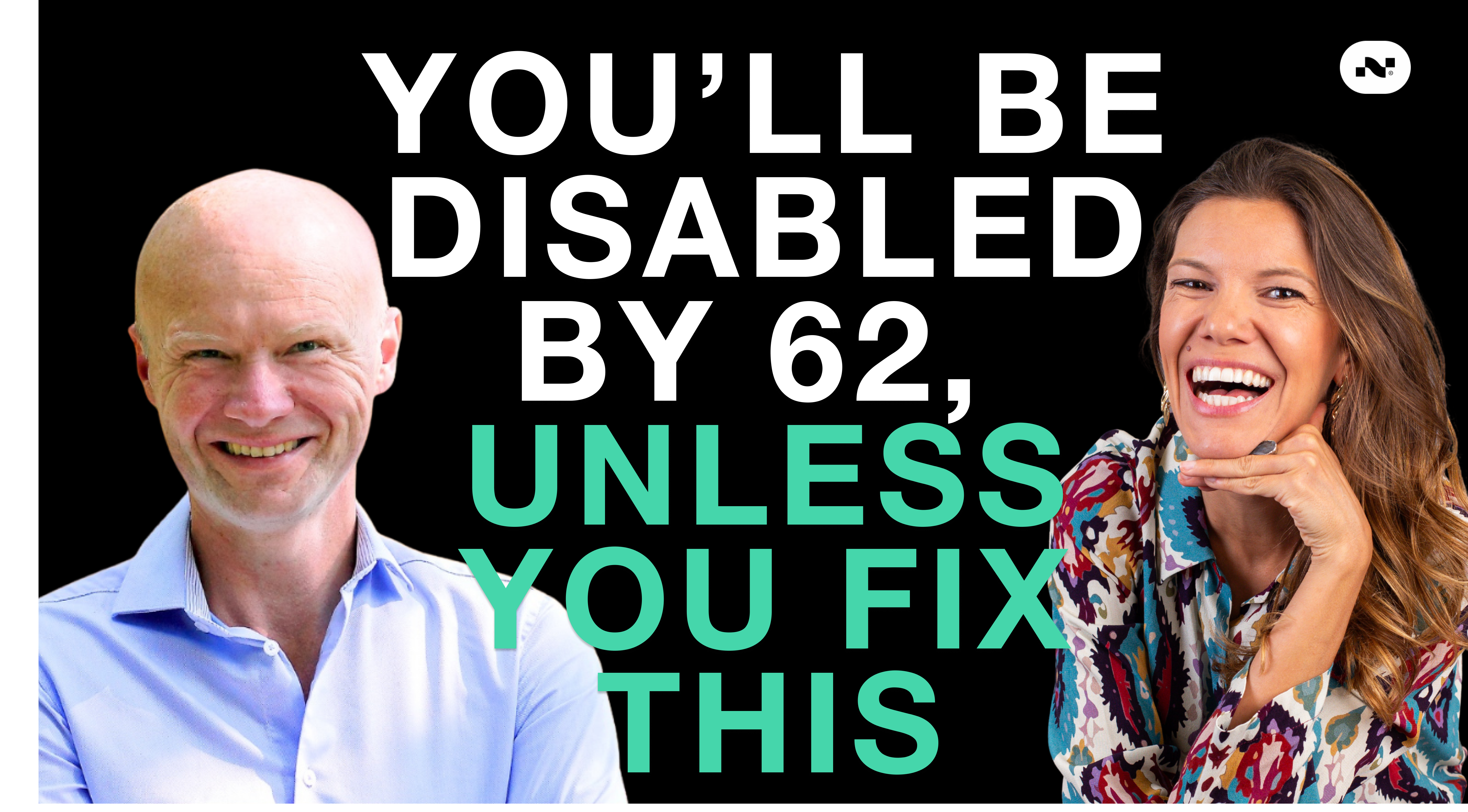
#172: 🎙️ INTERVIEW | You'll Be Disabled at 62 - Unless You Fix This in Your 40s with Roderick Lambert, Founder of Midlife Metabolic Health
Mar 1100:36:20Tap to summarizeHey friends,Most longevity conversations focus on labs, supplements, and biomarkers. This week’s guest, Roderick Lambert, goes deliberately upstream of all of that.After 15 years of struggling with obesity and a doctor warning him at 35 that he could have a heart attack within five years, Roderick overhauled his life, lost 24kg in seven months, and never looked back. Today he coaches people aged 40–60 on the root causes of metabolic decline and accelerated aging.The calories in, calories out model isn’t just bad advice. It’s physically inaccurate.You’ll discover:* Why mitochondrial dysfunction is the root cause of most chronic diseases* How fat produces up to 6x more usable energy than glucose* Why the 40–60 window is your last real chance to turn back the clock* The role of light, circadian biology, and coherence in cellular health* Why “you can’t get well in the environment you got sick in”* How to build habits that stick, without willpowerCheers, NinaTimestamps:* 00:00 Roderick’s Journey: 15 Years of Obesity* 05:30 The Doctor’s Warning That Changed Everything* 12:00 Why Calories In/Out Is Inaccurate Physics* 18:00 Mitochondria: Far More Than the Powerhouse of the Cell* 25:00 Accelerated Aging and the 40–60 Window* 31:00 Food First: Fat vs. Glucose as Fuel* 38:00 Light Diet and Circadian Biology* 44:00 Fasting, Movement, and Building Habits* 50:00 Accountability as the Missing LinkABOUT RODERICK LAMBERT: Roderick Lambert is a metabolic health coach and founder of Midlife Metabolic Health. After reversing his own metabolic syndrome in his early 40s, he now works with clients aged 40–60 to address the root causes of accelerated aging through first principles nutrition, light biology, movement, and mindset.ABOUT NINA’S NOTES: Nina’s Notes explores the intersection of longevity science, neuroscience, and human optimization. Hosted by Nina Patrick, PhD in pharmaceutical sciences and longevity researcher, each episode translates cutting-edge research into actionable insights for living longer, better.CONNECT WITH RODERICK LAMBERTWebsite: https://midlifemetabolichealth.comFacebook: https://www.facebook.com/MidlifeMetabolicHealth/LinkedIn: https://www.linkedin.com/in/rodericklambert/ Get full access to Nina’s Notes at www.ninasnotes.xyz/subscribe
Transcribe →
#168: ☀️ Joyspan vs Lifespan: What Makes Aging Worthwhile | READ ALOUD
Feb 1100:09:15Tap to summarizeLiving longer isn't the same as living well. In this episode, I explore a concept that might matter more than your health span or lifespan: your joy span, the years you spend actually liking your life.Dr. Kerry Burnight, professor of geriatric medicine at UC Irvine, argues that how we respond to aging determines whether we thrive or suffer. And the good news? You can lengthen your joy span at any age through everyday choices.What You'll Learn:- The difference between lifespan, health span, and joy span- Dr. Burnight's 4 non-negotiable actions: Grow, Adapt, Give, Connect- Why asking questions makes you more likeable (science-backed)- How to continue learning as you age (including free college options for 60+)- Why I believe this matters at 38, not just in your later yearsIn The Video, I Share Practical Challenges:- Journal prompts to assess your current joy span- How to adapt when life throws you curveballs- Creative ways to stay connected and give back- Dr. Burnight's quizzes to get your baseline (link below)Timestamps:00:00 Understanding Joy Span vs. Health Span01:00 The Four Non-Negotiable Actions for Thriving03:36 Adapting and Growing as we Age05:35 The Book of the Week07:15 Check this OutLinksJoyspan Quizzes: https://www.hachettebookgroup.com/wp-content/uploads/2025/07/JoyspanExtendedExcerpt.pdfCONNECT WITH ME Newsletter: https://www.ninasnotes.xyz LinkedIn: https://www.linkedin.com/in/ninapatrick/ Website: https://www.ninapatrick.xyzjoy span, health span, aging, quality of life, mental health, connection, lifelong learning, geriatric medicine, Dr. Kerry Burnight, thriving, Nina’s Notes Get full access to Nina’s Notes at www.ninasnotes.xyz/subscribe
Transcribe →